Shared posts

04 Mar 16:47

What to say when someone is being an asshole

by Karen

Posted in Blog

“If I had known you would become pregnant, I wouldn’t have invested in your company.”

This is what an investor said to Michelle Crosby, Founder/CEO of WeVorce.

Her response: “What do you mean?”

Immediately the investor realized what he said and apologized for being an asshole.

—-
That was one of the interesting stories from the YC Female Founders conference I went to today.

An hour after leaving the conference, I hopped on a phone call for work. This guy was describing to me what a pain his new employees were, bickering with each other. He told them to “stop behaving like a bunch of women” and then kept rambling to me.

I stopped him and said: “So you said that your employees are behaving like a bunch of women. What do you mean?”

Immediately he apologized, said it was the wrong choice of words, and said he meant to say “stop behaving like a bunch of children.”

Haha. What a magic phrase: “What do you mean?”
Next time someone is being an asshole, try it out

Leave a Comment

04 Mar 15:06

Rosie the Riveter, Inked

by Emma Carmichael
by Emma Carmichael

Cheyenne Randal photoshops tattoos onto old photos of notable humans, and it's alternately hilarious and terrifying. Hepburns, we never knew ye like this. [Shopped Tattoos]

0 Comments
27 Feb 21:33

Pretty Okay

by amalah

I hope I've told y'all this before, but just be sure I'll tell you again: You are the best. You. And you. All of you. I'm making swirly-type all-inclusive hand motions at my laptop screen. Thank you for all being so polite and kind and encouraging this week, in comments and emails. I've read every single one and hopefully can start plowing through some replies soon.

(As for the TwitBookFace thingies, I hope you'll forgive me for being too skittish to look over there right now. Everything is too calm and reasonable! The crazy/mean people must be hiding somewhere else! Let's...not go looking for them.)

Anyway, I'm not entirely sure what to write about next. It's been a lot to process. I guess let's start with some blunt talk about ADD/ADHD medication. What could go wrong? That's not controversial at all! Ha ha! Man, it's too early to be this drunk. 

Noah started his medication yesterday morning. We waited until he could see his regular therapist on Monday, who guided us through the conversation about ADD and what it is and what the medication does. And what it doesn't, since Noah was very scared that it would change him or make him "different."

(She read selectively from a great book called Help Is On the Way. A little long for Noah's attention span, but he really absorbed the main points that ADD is not his fault, lots of other kids have it too, and that he's surrounded by people who can help. Very nice, if you're looking for something like that.)

Noah was not alone in those fears, once upon a time. Back in kindergarten, when we first suspected Noah also had ADD/ADHD in addition to All The Other Acronyms, Jason was very much against the idea of medication. For the "usual" reasons: That it's a cop-out, an excuse, a way to make our lives easier by doping our kid up. And yes, he worried it would change Noah in some fundamental way. Diminish him. Fade him like a copy of a copy. 

I have only given out two doses so far, so I am far from an Informed War Weary ADHD Med Veteran here, but I can already give you my opinion on those reasons: HAHAHAHAAAAHAHAHAHAHAHAHA. 

It was Noah's ability to describe what his brain "sees" and "feels like" that made us realize that no, it wouldn't be about US at all. It's about making his life easier and easing some very real suffering. Noah's confidence and self-esteem were crumbling; his anxiety about being "bad" or getting in trouble all the time was giving way to depression. This is for him, not us. 

(Not to mention that the medication doesn't kick in until he arrives at school, and wears off like clockwork not long after he gets home. You're welcome, rest of the world! Enjoy my calm kid and send him back once he starts bouncing off the walls again.)

I picked Noah up at the bus stop yesterday and resisted the urge to just blurt out, "WELL? ANYTHING TO REPORT?"

He was in a cheerful and chatty mood — his lost library book had been found (he did return it; he just forgot that he returned it), they learned about newspapers in social studies and he wanted to make one at home.  

And then, no fucking lie:

"Thanks for giving me that medicine, Mom. My ADD is gone and I figured out that I'm not a dumb kid. I'm a smart kid who is good at school now."

Just like that, all matter of fact. Are you kidding me?

My questions poured out almost all at once. Really? REALLY? You could tell? (Yes.) Things felt different? (Yes!) Any headaches? (No.) Stomachaches/dizziness/dry mouth? (What? No.) Did you eat all your lunch? (Yes.) How do you feel now? (Fine.)

(Mom, why are you crying?)

He told me that he still chose to play alone at recess, preferring the company of an imaginary Olaf the Snowman from Frozen. He seemed relieved about that, though, and confessed that he'd been afraid that his imagination would go away with the ADD. Aw, buddy, no

Over the next couple hours, I watched and listened. I took notes. Noah was still doing his usual nonstop talking talking talking Star Trek LEGO Movie Lord of the Rings etc. But he was talking at a lower volume, and not quite as fast and breathless. He was not spinning around the room. He had a snack and I told him to do his homework. He didn't want to do his homework, but before his shoulders rose too far in protest, he stopped and said okay

"Can I take a break halfway though? I have a lot of homework."

Of course.

"Did you see that, Mom? How I calmed down and said okay?"

I absolutely did. 

We high-fived. Noah beamed at me.

Over the next couple hours, I scanned for evidence of a crash as the medicine wore off. He worked on his newspaper (he called it School Bus News and filled it with gossip and much intrigue), and started fidgeting a bit more. He asked for another snack, but said okay when I told him it was too close to dinner. He again asked if I noticed his lack of a tantrum or protest. I gave him a thumbs up. Hell yeah. 

Then...he grabbed a therapy chew to gnaw on. I had to remind him not to stand on the couch, and he didn't seem to hear me the first time. Jason sent him to retrieve Ezra from a neighbor's house and we watched him through the window as he stimmed and spun and hollered for no particular reason. Yep. Right on schedule. 

At dinner he told us the ADD was back because everything was distracting him again. Could he have more medicine? 

Tomorrow morning, I told him. 

He hung upside down over the arm of his chair and groaned. But he said okay

Later, he briefly complained of a stomachache. I wrote that down too. 

***

Over and over and over again, I've been reminded and warned that it can take a few tries and some time to find the right medication and dosage, so don't get discouraged. The last thing I expected was any sort of immediate result right out of the gate. I tried to stay skeptical and detached last night, but ultimately failed miserably because I was too busy being absolutely charmed and delighted by my happy, confident child. 

Obviously, I don't doubt there's a hefty placebo effect going on — we told Noah that the medicine would help, and his confidence level was already on the rise once he had a name for what he has, and understood that he wasn't a "freak" or "weird" — he has ADD, like a lot of other kids. We'll see what happens today, and tomorrow, and so forth.  

But for now, day one, done. And pretty damn okay. 

27 Feb 21:28

The Stubbornest Little Isopod in All the World

by Jia Tolentino
by Jia Tolentino

From NPR, this tremendously weird and moving story about a foot-long crustacean who refused food for five years running:

Giant Isopod No. 1 arrived in Japan, settled in, and at first everything was fine. It ate normally, did all the things one would hope a giant isopod would do (stay still, then scuttle, wave its front legs, stop, stay still) until one day, on January 2, 2009, something happened.

It was mealtime, and after nibbling lightly on some horse mackerel, No. 1 stopped eating and walked away from its food. It wouldn't finish.

The isopod's caretaker tried everything, but to no avail.

Months went by. Then years. No.1 didn't eat anything for all of 2010, then for all of 2011, then for all of 2012. By this time, word got out that a big crab was on some kind of hunger strike at Toba Aquarium, and people began showing up for its feedings, or rather, not-feedings, to see if it would finally break fast.

It didn't. [...] According to Rocket News, "Over time, the animal learned how to seem to appease its human keepers by moving its mouth and front legs around the food pretending to eat. In the end, it never actually took a bite. … No. 1 would simply play with its food."

No.1 didn't eat for all of 2013. That's five years without a meal. No animal in captivity has refused food for that long, the Japanese press said. This was some kind of record. Why wouldn't the animal eat? Nobody knew.

The caretaker discovered the isopod's death this Valentine's Day, after lowering in the last mackerel the creature would ever get the chance to refuse. [NPR, photo via]

1 Comments
27 Feb 15:09

Why, Japan? of the Day: Giant Isopod Plushie

Why, Japan? of the Day: Giant Isopod Plushie

Giant isopods (daiogusokumushi in Japanese) are passionately loved by some people in Japan. They found the creatures mysterious and cute. A giant isopod in Toba Aquarium has eaten no food for over 4 years. This giant isopod doll is close to the real ones in shape. The doll has cute round eyes and is very soft and comfortable to the touch.

Submitted by: Unknown (via Strapya-World)

Tagged: wtf , pillows , Japan , giant isopod
26 Feb 19:00

Lumio Book Lamp

by swissmiss

Lumio Book Lamp

The Lumio Book Lamp is the most magical product I have come across in a long time. When I opened it in my studio yesterday everyone went wwwoooooaaaah! It is truly stunning.

When shut, Lumio masquerades as an elegant wood hardcover book. When opened, it magically transforms into a sculptural light illuminated by a high-performing LED.

Sending a virtual hug to the inventor Max Gunawan. And just like that, Lumio has become my favorite object.

26 Feb 14:08

Kitty of the Day: Mercury Won't Let His Missing Limbs Stop Him From Doing Anything

This little guy is a testament to all of us for facing life's challenges and overcoming them.

Mercury

Meet Mercury: a 7-week-old kitten who loves to run, jump, play and wrestle. The only thing that sets him apart from any other kitten is that fact that he's missing his front two legs and most of his toes. It's believed that Mercury was the victim of a weed whacker incident, based on yard work that had been done around the neighborhood. He was taken in and nursed back to health. Despite his challenges, he is able to run and play like most any other kitten!

Mercury

Way to go, Mercury!

Submitted by: Unknown (via Raising Mercury)

25 Feb 18:34

Interview With My Mom, The Olympian Who Wasn't

by Lauren Vespoli
by Lauren Vespoli

Marathoning the Olympics from my couch, I love seeing athletes experience the games for the first time. So many are ordinary people who have unearthed a real, unique talent and pushed themselves to the brink to get to where they are. They aren’t PR-produced personas, or jaded by years of competition under the public microscope. Many have a sense of wonder and enthusiasm that is simply contagious to their global audience. Take, for instance, 19-year-old U.S. figure skater Jason Brown.

When I watch these ordinary Minnesotans or Bermudians or whomever living their dreams on the Olympic stage, I think of the last Russian Olympics—summer, Moscow, 1980—where my mother was supposed to compete in the quadruple scull.

Thirty-four years ago, my mother would have been one of those extraordinary, ordinary competitors, a 24-year-old chemical engineer from Connecticut whose coach also happened to be her husband. (Rowing is sort of the reason my family exists: my mom, while training as college rower, met a national team coach whom she began dating. A year after they were married, my father started his own company building boats.)

But the United States—along with 64 other countries—boycotted the 1980 summer Olympics in Moscow in protest of the Russian invasion of Afghanistan. So instead of representing the United States of America in the most prestigious athletic contest in the world, she and her teammates were invited to the White House, where they stood in line to shake President Jimmy Carter’s hand.

I couldn’t imagine what that would feel like. So, like a good/nosy daughter, I asked.

First thing’s first: How did Dad end up as your coach? And what was it like to be coached by your husband?

Nancy Vespoli: We got to know each other while I had just started rowing in college, and he said, “You could be as good as these women on the Olympic team.” And I didn’t know why he would think that, but I figured he must know something, because he was a world champion. He gave me workout programs to follow. Then, [after college] when I was in Boston and he was in New Haven, he had showed me how to do the weightlifting and I did that and the water workouts on my own. Then once I moved to New Haven, I worked out at Yale and I would always work out by myself and Dad would come out and coach me on the water.

One time I was crying because he was pushing me to work harder. He just thought I could do it—I don’t know why he thought I could do it, or what makes someone Olympic material, but he just believed it.

In 1979, I rowed the Head of the Charles and he was rowing a single, too, so he rowed with me on the course the week before the race. He didn’t think I was rowing hard enough, and he told me I had to row harder—and I started rowing harder. I think that’s what helped me win it. He pushed me. And he was one of the best coaches in the country, and possibly in the world.

He said “Oh you can do better than these women,” and I just started doing it.

When did you find out that you wouldn’t be going to the Olympics?

The news wasn’t as easy then. The tryouts for the quad, we were staying at Princeton in dorms and there were no TVs. You had to read the paper every day. We were working out two or three times a day, and I didn’t really have time to read the paper. My main focus was on making the team and resting in between workouts. I don’t remember a clear announcement. I kept thinking that maybe they would change their mind or maybe the Soviets would withdraw from Afghanistan.

Being an optimist, I thought maybe it wasn’t really going to happen, but I think it struck me more deeply later in life than it did then. All that work going into making the team, and it was so close to the time of the Olympics that you’re more focused on that.

Later in life you realize that that moment in time, you can’t get back. It’s your age, the amount of time you put in and how much time you have to put into it, and to do that again for another four years wasn’t something I wanted to do. I had just gotten married and gotten a master’s degree in chemical engineering. I wasn’t going to put my life on hold. That was going to be my time. It was just all taken away from you, to have that experience of marching in the opening ceremony. We competed in world championships, but it's the whole Olympic experience of bringing all the counties and all the sports together, and the whole world is paying attention, and to be a part of that just got taken away. 

Wow. How did you balance everything—your marriage, your master’s, your training? Was it ever overwhelming?

No. Well, Dad and I weren’t married until after I got my master’s [in 1979]. I was going back and forth all the time between Boston and New Haven. That’s all I did—I studied, I trained, and I visited Dad. How did I balance it? I got a lot of sleep and I stayed to a strict schedule and I ate well and I didn’t go to any parties or socialize because I was always seeing Dad anyway. I wasn’t going to go out by myself in Boston. I was just focused. They say work expands to the time available, or Dad always says that.

Was that lifestyle ever lonely?

It’s different nowadays because you know who’s around. We didn’t have cell phones so we didn’t have that connection. I didn’t know many people in Boston, and my roommates did different things. I didn’t feel lonely because people didn’t know where everyone was that easily. There was no Facebook, there was no texting or cell phones. No one knew where anybody was. And I’m the kind of person that doesn’t mind being alone. I mean I basically trained by myself, which is unusual.

Do you think it would be possible to balance all of that today?

A lot of the athletes don’t do it, I think. Now they train full-time, but I think it can hurt them in the long run because once they’re done it’s a big hole in their lives. They could go into coaching or something to do with the sport, but if they don’t, what do they do? I think they do a lot more training now and it’s a lot more demanding.

How did you react when you learned you wouldn’t be going to the Olympics?

For some reason I was thinking it couldn’t be real: how can they do that after we put so much work in? I wasn’t thinking about what was right or wrong—we had to do what our president asks us to do.

We ended up going to Europe because we had all these races planned prior to the Olympics. We competed in Germany, Holland and Switzerland. And we did quite well. After our last race before the Olympics, we just came home. In July, we got invited to go to the White House and there were some celebrations at the White House—there was an event on the lawn, and concerts, we had our picture taken on the Capitol steps, the whole Olympic team, and there was a parade. When we were at the White House we got in line to shake hands with the president and Mrs. Carter. Most of my [rowing] teammates didn’t want to do it in protest, but I felt that since we came to the White House we should be respectful. Only two girls on the rowing team and I shook the President’s hand. The other teams didn’t boycott. To me, it didn’t seem right.

Did going to the White House at all make up for the fact that you had been denied a chance to compete in the Olympics?

It was better than not having anything. To be treated like that in Washington and go to the President’s house—those are things we’d never have done otherwise. But it’s not equal to competing in the Olympics, to competing against the best athletes in the world.

Someone told me once what the percentage was of athletes that Moscow was their only Olympics. It was very high. Some people stayed on for another Olympics—some rowing people did but I think a lot of athletes didn’t. There wasn’t as much financial support then, or as much help getting part-time jobs. You couldn’t keep going unless you had some sort of funding or were in a sport the public really cared about.

What would you say to today’s Olympic athletes?

Absorb the whole experience, because you might never have another chance—you could get injured, or something could happen. This is a unique experience that the whole world is interested in, and is probably the only peaceful world event that touches everyone’s interests. It celebrates the human spirit.


Lauren Vespoli lives and writes in New York. She jogs casually and has accepted that this will never make her an Olympic athlete. 
6 Comments
24 Feb 19:16

Shoppingᵁᴷ - The shopping basket icon at the bottom of the app...


Shoppingᵁᴷ - The shopping basket icon at the bottom of the app changes to a trolley when your shopping list contains more than 10 items.

/via Stuart

21 Feb 19:19

This is the best opening paragraph in any news story ever

by Xeni Jardin


Phil Toledano for The Atlantic magazine.

This has got to be the best lede of all time. And a great article, too. Caitlin Flanagan, writing about fraternities, law, liabilities, and corruption in the Atlantic magazine:

One warm spring night in 2011, a young man named Travis Hughes stood on the back deck of the Alpha Tau Omega fraternity house at Marshall University, in West Virginia, and was struck by what seemed to him—under the influence of powerful inebriants, not least among them the clear ether of youth itself—to be an excellent idea: he would shove a bottle rocket up his ass and blast it into the sweet night air. And perhaps it was an excellent idea. What was not an excellent idea, however, was to misjudge the relative tightness of a 20-year-old sphincter and the propulsive reliability of a 20-cent bottle rocket. What followed ignition was not the bright report of a successful blastoff, but the muffled thud of fire in the hole.

"The Dark Power of Fraternities" [The Atlantic]


21 Feb 19:10

Johnny Weir's Sochi Looks

by Emma Carmichael
by Emma Carmichael

In a perfect GIF, after the jump. (Suggested soundtrack.

We are not worthy. [via]

3 Comments
20 Feb 21:12

stuck-pot rice with lentils and yogurt

by deb

stuck-pot rice with lentils and yogurt

I once read that if you ask a guy what his favorite item of clothing is, he would pick the oldest thing he owns — some t-shirt he’s had since high school or nearly threadbare sweats. And if you ask a woman, she usually picks the last thing she bought. [Nobody mentioned four year-olds but obviously: fireman hat.] Gender stereotyping copy aside,* when it comes to recipes, this has me down to a T: my favorite thing to cook is usually the last thing I made. Because of this, I fail 100% of the time at “content-planning strategies” [or as it sounds in my head when I read phrases like this: blargle-blargle blargle] because while I’m supposed to be telling you about this great dish I made last week for Valentine’s, I only want to talk about what I made for dinner on Tuesday night. Because it’s my new favorite everything.

what you'll need, plus a fork
i rinsed my rice. for once.

When I first read about stuck-pot rice many years ago, I guffawed a bit, because who needs a recipe for that? I come from a long line of cooks that cannot make rice without burning it; any night where rice is on the stove ends with a gunked-up pot soaking overnight in the sink. It’s tradition; one day I will teach this guy too!

deb, your pot is too small!

... Read the rest of stuck-pot rice with lentils and yogurt on smittenkitchen.com


© smitten kitchen 2006-2012. | permalink to stuck-pot rice with lentils and yogurt | 219 comments to date | see more: Beans, Budget, Gluten-Free, Grain/Rice, Middle Eastern, Photo, Vegetarian

18 Feb 17:22

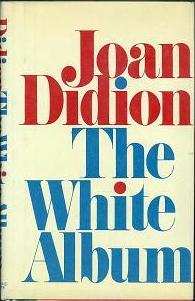
Take a look at Lena Dunham’s book cover

by Katie Mcdonough

Lena Dunham on Monday shared a snap of the book jacket for her forthcoming collection of essays, "Not That Kind of Girl."

It reminds me of this really lovely edition of Joan Didion's "The White Album" and, as my colleagues Mary Elizabeth Williams and Laura Miller pointed out, also takes a little something from Helen Gurley Brown's "Sex and the Single Girl" and Jacqueline Susann's "Valley of the Dolls."

It's a fine-looking book jacket, and clearly a nod to other influential women writers. Well played, people who designed Dunham's book jacket!

Continue Reading...

17 Feb 19:38

On Being a Busy Adult With Many Important Things To Do

by amalah

Did I ever tell you the story about the first time I met the director of my kids' preschool? I'm sure I did, but since I don't feel like opening another browser tab and tracking the entry down (SUCH WORK. MUCH EXERTION. WOW.), Imma just retype it, rerun style.

I brought Ezra in to meet his teacher and had Ike with me, and after Ezra ping-ponged around the classroom like a meth-addled hamster, we met the director out in the hallway. I introduced her to a sleeping Very Much Baby Ike and she immediately made the connection to South Park, and then immediately got an OH SHIT look on her face, because...well, that was neither very Montessori nor Responsible Adult In Charge Of A Preschool of her, now was it?

So of course, I loved her immediately. But from afar, in secret, because I didn't want to weird her out with my typical HI HI HI I'M A HUMAN CAPS LOCK thing of coming on too strong with anyone I think might want to be my friend.

Plus, she didn't have any kids, so what the hell would we talk about? What life is like when you don't get peed on all the time? All the movies she's seen in the theater that I hope check out on cable in like three years? 

That was — oh my God, the sands through the hourglass, you guys — three years ago. She has a kid now, a boy, and it turns out we managed to get a LOT of conversation traction out of South Park and Ike's Yoda costume and then Ike's Doc Brown costume. It turned out she was the one responsible for this, as she later requested that next year we all dress as something Game of Thrones related. I told her we'd come as the Red Wedding. And instead of being horrified at that macabre idea, she finally suggested that we, you know, hang out sometime. 

Long story short, that's how I recently made a new friend.

A new friend who has the power to leave official-looking envelopes for me when I pick my kids up from school; envelopes you think are because you keep forgetting that damn reenrollment form at home, but are actually full of things like the House of Cards deck for Card Against Humanity, complete with handjob references.

Long story short AGAIN, that's why I recently ended up getting knocked over on my ass by a milk-stained IKEA umbrella that fell out of my car and popped open when it hit the ground, smacking me in the face because I was also on the ground, having just extricated the back of my coat from my minivan's sliding door, after five frantic minutes of waving my arms around in vain like a zombie from The Walking Dead, because those precious Cards had fallen off the passenger seat when I opened the door and blown under the car, just out of my reach. Because my coat. Was stuck. And the umbrella was there and milk-stained because Ike had dropped a milk jug from McDonald's (WHAT. JUDGE. WHO CARES. NUGGETS.) on the floor and onto all the crap we keep there (shopping bags, hoodies that don't fit anyone anymore, IKEA umbrellas). I'd grabbed it all to bring inside (because umbrellas shouldn't get wet? unsure of thought process here), then tossed it precariously on the passenger seat once the Cards fell out in a panic. But then it all fell out on me once I retrieved the Cards, which are totally a Proper Noun, Shut Up.

So of course I had to immediately email her and tell her what her gift had led to — me, on the ground outside my house, covered in detrius while triumphantly holding up a print-out of a Netflix-based marketing stunt, while my toddler watched idly by on the sidewalk, eating fries. She was like, that sounds about right, also we should all get a babysitter for when the Veronica Mars movie comes out. 

Long story short AGAIN AGAIN, this is why you should buy your South-Park-named offspring a Yoda hat. It's like a Bat Signal for people who Get You.  

Photo (91)


15 Feb 16:43

The Best Valentine for Teh Intarweebs, From Ursula Vernon

by John Scalzi

Yes, that’s just about perfect. 

Ursula notes: “We do not endorse actual violence against your enemies.” Yes, well. She’s right, I suppose.

See more of Ursula’s fantastic (and Hugo Award-winning) art here.


14 Feb 19:50

"Animals," by Frank O'Hara

by Jia Tolentino
by Jia Tolentino

I am a firm non-believer in Valentine's Day, but I'll take any occasion to reread a good poem about love.

Have you forgotten what we were like then
when we were still first rate
and the day came fat with an apple in its mouth

it's no use worrying about Time
but we did have a few tricks up our sleeves
and turned some sharp corners

the whole pasture looked like our meal
we didn't need speedometers
we could manage cocktails out of ice and water

I wouldn't want to be faster
or greener than now if you were with me O you
were the best of all my days

More Frank O'Hara at the Poetry Foundation. Photo via.

3 Comments
14 Feb 19:36

Scientists: Death of 99% of Relationships Can Be Traced Back to the Exchange of “Love Coupons”

by Liz Galvao
by Liz Galvao

In a groundbreaking new study at New Jersey University, scientists have determined that the death of 99% of human relationships can be traced back to the exchange of “love coupons.”

Love coupons (also known as love discounts, love IOUs, or love gifts with purchase) are slips of paper, usually homemade, that act as gift certificates for acts that people in relationships previously gave of their own will, such as hugs, sensual massages, or emptying the goddamn dishwasher for once without complaining. They’ve gained popularity on Pinterest and in countless women’s lifestyle magazines as a means of resparking a dying relationship. Love coupons are not legal currency.

“The simple truth is, they do not work,” said Dr. Stephen Stefani, the chair of the committee on break-ups and separations at the university. “Either people don’t use them, or their partners become irritated when they do. They’re empty gestures, and they create resentment on both sides.”

The study surveyed a random group of one hundred adults of varying ages, backgrounds, and sexual orientations. All had been in relationships in which love coupons were exchanged. Ninety-nine of the participants were no longer in those relationships.

One anonymous female participant shared her experience. “I was having a really hard time making rent one winter, and I’d just spent a ton of money on Christmas gifts,” she said. “Why does Valentine’s Day have to be six f***ing weeks after the holidays? I thought love coupons would be cute and cheap. My girlfriend and I broke up ten days later. I ended up helping her move. I don’t even know why I made that one of the coupons.”

The study also examined the residual effects of cheap boxes of chocolate from the drugstore, teddy bears holding hearts, and lingerie left in the Victoria’s Secret bag, not even wrapped or anything. None were as detrimental to a couple’s stability as love coupons.

“They are truly the death knell of any relationship, and every relationship,” said Dr. Joyce Sisters, head of the economics department at NJU. “You can’t put a discount on something that’s free to begin with. Someone who’s been giving begrudging blow jobs for months is not suddenly going to be excited to do it because of a coupon. Trust me.”

“Tragically, there’s something about humans that keeps us always wanting more for less,” she added. “Even if it makes our consumer behavior illogical. It’s why I love BOGO week at Payless.”

Among concerns raised in the study were the issues of consent involved in the exchange of written permission for sex acts. “Consent may be given at the time the coupon is issued, but is it still there when the coupon is redeemed?” asked Dr. Cosmo Tipps, adjunct professor of Women’s Studies at the university. “I don’t know that that’s a given, and that’s why I’m hesitant to encourage these coupons. They create expectations that can be disappointing for both parties. Also, they’re stupid and they’re dumb and I hate them.”

An anonymous male participant agreed. “My ex-wife got me some of these right before our separation,” he said. “I didn’t really get it, to be honest. I think she cut them out of construction paper? One time I tried to redeem one and she snapped at me, all, ‘Not now!’ It was like, whatever, I didn’t even want to take a romantic bath together. I’m more of a shower guy. But then, Karen never understood that.” He shook his head and stared off into the horizon. “Karen never understood a lot of things.”

Still, not everyone in the study agreed. According to Jennifer Burlington, a participant who adamantly refused anonymity: “Whatever. I think they’re cute. I gave some to my boyfriend for his birthday last week and we’re still together.” [Ed.-- As of press time, Burlington is single.]

Since the results of the study have been made public, Etsy stores and sex shops have seen a marked decrease in the sale of pre-made coupon books and sexy IOUs. “We can’t get them off the shelves,” said Josephine Chalmers, owner of Cupid’s Love Nest & Adult Video Store. “And we can get anyone off. That’s our motto.” She pointed to a sign behind the register: We Can Get Anyone Off: That’s Our Motto.

The fate of love coupons may be uncertain, but data has shown that sales still remain strong for songs written about girlfriends, boxes full of little slips of paper with things you love about someone, and special seashells you saved from that time you went to the beach, remember? The university intends to study the correlation between all of these items and sexually transmitted diseases.

For their time, participants in the survey received coupons for one free non-sexual back-rub.

Liz Galvao writes stuff and hosts the music podcast I Forgot My Sweater. You can find her on Twitter or in Brooklyn, where the sex shops look like Apple stores.

3 Comments
14 Feb 18:51

Tart cherry cocktail

by noreply@blogger.com (Kitchen Ninja)
tart cherry cocktail

Ready for a more modern take on the classic Cosmopolitan?

You've probably heard a lot about tart cherry juice lately. The new darling of the morning show health segment, tart cherry juice is making big headlines for its anti-inflammatory properties – all the benefits of arthritis meds but wicked tastier.

Leave it to The Ninj, then, to turn this new healthy superfood into a cocktail.

I created this tart cherry cocktail for Serious Eats and it's the perfect drink for Valentine's Day. Well, for any day, in my book, but I'm going with a theme here.

Head on over to my post at Serious Eats to learn how to shake up a tart cherry cocktail for you and your honey.
14 Feb 18:14

Nom Nom Nom

by Maggeh

I made a new Pinterest board, It Wants to Eat Your Young.

If you like this, you might also like:

Little Tiny Animals on Fingertips board
Girls Pretending to Play Sports board
Break into Blossom board

The post Nom Nom Nom appeared first on Mighty Girl.

12 Feb 03:07

True Detective: The Best Show on TV

by Christopher Orr

What must David Fincher think when he watches this show?

It’s a thought that first occurred to me in the opening minutes of the series premiere of HBO’s True Detective a month ago, and it has recurred more or less continuously throughout each subsequent episode. The eight-part series, which has just crossed its season midpoint, is Fincherian in the best sense: Zodiac good, Kevin-Spacey-in-the-police-cruiser-in-Se7en good. The resemblance is due in part to the show’s subject matter (the hunt for a serial killer); in part, to its look (crisply cinematic); and, most of all, to its mood: vivid, unsettling, with evil lurking palpably just outside the frame.

So while I have no real idea what David Fincher thinks when he watches True Detective—or whether he’s even watched it at all—I can’t help but imagine he must think something along the lines of: How can it be that I have nothing to do with this show?

Which is a long way of saying that True Detective is the most compelling series currently on television, one that boasts an almost embarrassing array of riches: a mesmerizing performance by current Hollywood It Man Matthew McConaughey; an only marginally less notable turn by co-star Woody Harrelson; an intricate structure and hyper-literate dialogue by writer/creator Nic Pizzolatto; big-screen-worthy direction by Cary Joji Fukunaga; and an anthology format that has the potential to help change the way high-end television is produced.

The show is presented in alternating narratives set 17 years apart. In 1995, two homicide detectives—Rust Cohle (McConaughey) and Martin Hart (Harrelson) investigate a series of apparent serial killings in southern Louisiana. Flash forward to 2012, where the two former partners, both now retired from the force, are themselves interrogated by another pair of policemen (Michael Potts, Tory Kittles) regarding their conduct in the long-ago case.

The result is a relatively conventional (though masterfully executed) procedural mystery nested within a broader meta-mystery. It is clear from the start that Cohle and Hart successfully closed their original serial-killer case in 1995. But it is equally clear that the present-day investigators are reopening the case, and subjecting the detectives’ accounts of its closure to skeptical scrutiny—Cohle’s in particular.

And who can blame them? The Cohle of 1995 was an odd enough character, a brilliant misfit prone to rococo outpourings of evangelical nihilism. But the ensuing years have not been kind. Cohle’s ill temper and philosophic inclination are still in evidence, but his purpose has been leeched away. In place of the spare, clean-cut obsessive who would work all night on a case is a grizzled burnout making his way through Lone Star beers with arithmetic efficiency in the interrogation room.

Hart is a more common type: a swinging-dick cop, capable and popular around the station; a family man who’s not quite ready to be just a family man. His metamorphosis from one side to the other of the show’s 17-year chronological canyon may not be as severe—his hairline has receded, and he’s left cop life for a “security firm”—but as becomes clear over the first four episodes, he, too, is now a different man.

The pairing of Cohle and Hart, the misanthropic genius and the “ordinary” observer who set his eccentricities in context, is not a novel one, of course. Holmes and Watson are the classic prototypes—unless one tries to reach all the way back to Don Quixote and Sancho Panza—and Patrick O’Brian’s Maturin and Aubrey seem even clearer models for Pizzolatto’s detectives. (I’d be astonished if he did not have them in mind when he created the characters.)

But while the pairing isn’t entirely new, it is nonetheless sublime. In interviews, Pizzolatto has declared that he has no interest in serial killers, that the situation that gives rise to True Detective is just that: a situation, an excuse to bounce his leads off one another—the clear-eyed zealot and the self-deluding everyman—under extreme pressure. (Call it a “sit-dram.”) Yes, there are times, particularly in the first couple episodes, when Pizzolatto lays McConaughey’s dialogue on a little thick, with the “paraphilic love maps” and “smell[ing] the psychosphere” and so on. (To whit: this, among many other comparable parodies.) But this is language that takes delight in itself, for itself. If you cannot appreciate Cohle’s describing the illusion of selfhood as “a jury-rig of presumption and dumb will” in episode three, well, this may not be the show for you.

McConaughey continues his run of great recent performances (Mud, Dallas Buyers Club, The Wolf of Wall Street). He has pared himself down physically from his surf-hunky days courting Kate Hudson, but more than that he has pared down his craft, finding virtue in stillness. As he’s thinned out, he’s discovered new depths. Harrelson’s role is in some ways, the more difficult: the straight man, the narrative afterthought. But he, too, underplays neatly, in particular as Hart’s older self. Possibly the show’s most intriguing mystery so far is neither the 1995 killings nor the 2012 re-investigation, but the question of what exactly happened in 2002—an era we have not seen, and one that I do not expect we will—when Hart and Cohle suffered an undisclosed but irreparable rupture of their partnership.

Pizzolatto is cunning in his scattering of such narrative breadcrumbs, his teases of events yet to come. We first heard about “that big throwdown in the woods” in episode two, but have yet to witness it; the stunning final shot of episode three (itself approached, then retreated from, minutes earlier) promised a confrontation that still lies ahead.

Yet perhaps the greatest revelation of True Detective lies in its decision to have all eight episodes shot by the same director, Fukunaga (and, to a somewhat lesser degree, the same cinematographer, Adam Arkapaw). Customarily, top-tier shows—The Sopranos, The Wire, what have you—vary directors over the course of a season, and I’d occasionally been surprised at how little difference it seemed to make, episode to episode. What didn’t occur to me (though it should have) is that the multi-director format essentially requires the suppression of directorial style, a deliberate—and necessary—aiming for the lowest common denominator.

The genius of True Detective (again, somewhat obvious in retrospect) is that having a single director entails granting him license to direct. Fukunaga, moreover, is a talent on the rise: I still haven’t seen his 2011 adaptation of Jane Eyre, but his 2009 debut feature, Sin Nombre, was a stunner. It is certainly no coincidence that True Detective is the only television show I can recall ever watching and thinking, over and over again, I wish I could see this in the theater. Fukunaga’s compositions are clean and meticulously balanced; his aerial shots and use of landscape superb (I loved the container ship passing in the background in episode three, with not a sliver of blue water in view); and the pyrotechnical panache of his six-minute, continuous-shot conclusion to episode four—well, the closest comparison that comes to mind is a similar bravura scene engineered by Alfonso Cuaron in Children of Men.

It is True Detective’s limited, eight-episode story arc—if there are future seasons, as seems likely, they will feature different stories and different casts—that enables the signing of talents such as McConaughey, Harrelson, and Fukunaga. (And that benefit is in addition to solving the hanging-around-one-season-too-many malady that has afflicted so many of television’s best shows.) Showtime is evidently aiming for something similar with the Steven-Soderbergh-directed, Clive-Owen-starring miniseries The Knick later this year. It’s a format that could prove to be the next big step in the ongoing migration of talent from the large screen to the small.

What else can I praise about True Detective? The title sequence—it’s a small thing, but it serves as a tremendous place-setter, moody and evocative. The song, “Far From Any Road” by The Handsome Family, finds a perfect balance midway between honkey tonk and satanic hymn. And the visuals, by Elastic, not only advertise that the Louisiana locale is the show’s third principal character, but also hint at its corrosive effect on the other two.

Could True Detective go astray in its latter half? Of course. That’s always a danger, and in this genre more so than most: a puzzle is, after all, only as good as its solution. But all signs to date seem promising, even the modest correctives that seem already to have taken place. The stately, gothic mood-setting of the first couple of episodes—a kind of dark-magical realism—has accelerated somewhat as the case unfolds, and conventions that might have proven confining have been disrupted. The first three episodes, for instance, all closed by zeroing in on present-day Cohle; the fourth telescoped outward to a (literal) helicopter’s-eye view of chaos unfolding on the ground in 1995. Where will future episodes veer? I don’t know. But I can’t wait to find out.


11 Feb 21:17

Update

I have a bunch of things open right now.
11 Feb 15:29

The Cost of Getting Knocked Up (So Far)

by Meaghan O'Connell


NECESSITIES:

Pregnancy test, most expensive one that was on the shelf because I figured now is not the time: $23
breakfast with best friend after stricken fiance goes to work, FREE, because, "Girl, you're pregnant!" "Oh god."
prenatal vitamins at drug store after breakfast "I guess this means I'm committing? Better get the smallest bottle…" $20
subsequent bottles of prenatal vitamins: $45
ALL OF THE TUMS: $10
pregnancy pillow, the aptly-named Mini-Snoogle: $32
three week supply of crackers for when I couldn't get out of bed without eating crackers: ehh, $20?
relationships costs of lying in bed surrounded by humidifier, crackers, Tums, huge pillow, and growing fetus: untold

Subtotal: $150

MATERNITY CLOTHES:

Okay fine I definitely need a new bra and a new sports bra because wow: $44
And now my coat no longer zips up and it's January, Maternity coat: $42 on sale Old Navy (really proud of this price)
a maternity shirt from The Gap that I wore every day so I bought another one in pink, $42 total
maternity leggings because Dustin is afraid waistband of regular leggings is "crowding my son": $9 on sale
black pants, why did I buy these, they were on sale at Old Navy, $25
another bigger bra a few weeks later, because wow: $26
two new pairs of underwear since only 1/3rd of mine fit anymore: $16
maternity jeans, forcibly bought by my mom when she came to town (thanks mom!): FREE for me, $39 for mom.
three tank tops (one white, one black, one gray) to put under all my shirts that no longer cover my body: $45
more leggings: $12
five more pairs of underwear a month later, because it's really soul-crushing to wear underwear that's too small for you: $25
okay I gave in and bought a skirt from Storq, this new maternity store for fancy people, it is black and comfortable and I wear it every day now, but still feel kind of guilty: $65

SUBTOTAL: $300
Devastating.

SO MANY BOOKS

The Birth Partner by Penny Simkin, so great! Gift from my nurse cousin. FREE
Ina May's Guide to Childbirth (the best/worst/best)$12
The Expectant Father (aww / kinda dumb book) $15
What to Expect When You’re Expecting (had to) $15
Expecting Better $26.95 (hardcover! worth it)
From the Hips $22.99 (totally into it, even the dated graphics)
Operating Instructions, Annie Lamott, FREE with a giftcard from my birth partner's mom (some very real shit in here, worth reading)
The Baby Book, Dr. Sear's, FREE from a friend, though I'm sure I will pay the price emotionally

Subtotal: $91.94

CLASSES:

class at the birthing center you're required to take to give birth there, $40 each, $80
4-week childbirth class: $395 for both of us, which is ridiculous but we're still doing it
prenatal yoga: $18/class, um I've tried to go twice a week the past couple of months but you know how that goes. So maybe $250? Oof.
Hypnobabies home-study course, which is insane but let's do this: FREE, hand-me-down from a friend (would be $150!)
cloth-diapering class (jury's out) and then a "babywearing" class because why not just do it all in one morning: $20

Subtotal: $745 OH GOD

HEALTHCARE:

DISCLAIMER: results not typical (I hope!). I don't qualify for Medicaid and didn't have a job with benefits at the time, and my partner works at a company with fewer than 50 people so they are not required to offer benefits to dependents. The first few months I paid for prenatal care out of pocket, and from January on I'll be paying a hefty insurance premium.

three monthly OBGYN visits in 2013: haven't billed me yet but guessing $750
three ultrasounds in 2013, see above: $780, originally $1780 but when they learned I was paying out of pocket they knocked off $1K. I'll take it.
bloodwork (and peework?) from a lab, out of pocket: $117
"platinum" level insurance premiums, sans discount: $515/mo for the premium, no co-pays for visits, $35 for ultrasound, no deductible. So far $1130 (birth will be a $500 (minimum)).

Subtotal: $2777 and counting

STUFF FOR THE BABY:

Oh yeah, that.

One four-pack of muslin swaddling blankets because Dustin was sick of "browsing" at baby stores and refused to come with me unless we actually bought something: $50

Subtotal: $50 We have a few months!

GRAND TOTAL: $4,113.94 ($1336 without the healthcare costs)

This is a little frightening knowing that I am still going to be pregnant for three more months and then there is a, um, NEW HUMAN to pay for, but as you can see by going through this, there are definitely ways we could have saved money. For starters, we could have checked out books from the library, gone to a sliding scale clinic for healthcare in 2013, not taken a $400 birthing class. These are all decisions we made with eyes open, though perhaps actively choosing not to add these costs up as went (yow), and with priorities consistently evaluated. I feel fine if not great about these costs, but don't want to imply that any of it is necessary. Though the Tums, for me, were very, very necessary. And that damn Snoogle. BUY THE SNOOGLE!

0 Comments
10 Feb 20:22

Here We Go, Ohio

by John Scalzi

Couples Sue to Force Ohio’s Hand on Gay Marriage:

CINCINNATI (AP) — Four legally married gay couples filed a federal civil rights lawsuit Monday seeking a court order to force Ohio to recognize same-sex marriages on birth certificates despite a statewide ban, echoing arguments in a similar successful lawsuit concerning death certificates.

The couples filed the suit in federal court in Cincinnati, arguing that the state’s practice of listing only one partner in a gay marriage as a parent on birth certificates violates the U.S. Constitution.

“We want to be afforded the same benefits and rights as every other citizen of the United States,” said one of the plaintiffs, Joe Vitale, 45, who lives in Manhattan with his husband and their adopted 10-month-old son, who was born in Ohio. The pair married in 2011 shortly after New York legalized gay marriage.

A spokesman for Ohio Attorney General Mike DeWine, whose office will fight the lawsuit, declined to comment.

Good for them; I hope the plaintiffs win. It’s embarrassing for the state I live in — and which I have lived in for a dozen years, and which I like quite a bit — not to offer equal rights to all of its citizens. Hopefully this takes us further down that road.

While I’m at it, good on the federal government for expanding benefits and services to married same-sex couples, even if they live in a state that doesn’t recognize their union (like, for instance, Ohio). I think it makes it more difficult for these states to continue the calumny that some marriages should be treated with more respect and recognition than others. Again: Good.


31 Jan 16:32

#542: The Butt Dial of Jealousy and Specious Accusations

by JenniferP
A.N

I'm sharing this for the gif at the end.

Beyonce asking" Why are you so jealous?"

We haven’t had a gif party or a “Yo, maybe you are way cooler than that person you are dating” thread in a while, so, here you go.

Dear Captain Awkward:

My partner of 5 years moved 200 miles away last week for a job. I’m sad he’s gone and I’m missing him, but I really support what he’s doing —  he was having a hard and stressful time finding work in his field in our city and has been unhappy for some time. We agreed that, for now, we want to keep our relationship exclusive and revisit that decision in a few months. 

On Saturday, I went to the corner store and one of the workers — I’ve seen him many times, but we’ve never really talked — initiated a conversation with me. I felt a little forced into it (“Hi there, lady who never talks to me when she comes in to buy cigarettes”) but he’s a part of my neighborhood and I wanted to be polite. He turned out to be a big talker and amusing storyteller, and we had a 15-minute conversation about his family, his country, and so on. Very innocuous and kind of sweet; I tend to be reserved and don’t necessarily get to know people I see daily. He asked about my partner, and I told him that he’d moved.

Joel from Eternal Sunshine of the Spotless Mind saying "I assume you fucked someone tonight. Isn't that how you get people to like you?"

A sad, disheveled man saying cruel things…totally hot, amirite?

As I left, I tried to dial my partner’s number to tell him that the corner store guy had asked about him and that I had actually had a conversation with someone in my neighborhood. I was feeling pretty good, and also relieved that the conversation hadn’t gone in an awkward direction. I realized that I had butt- (or face-) dialled my partner at some point, and thought that I had just left a long, boring message on his voice mail. I hung up and called him back, and his voice was shaking with rage when he answered. He had been listening in on the conversation the entire time. He accused me of being with another man, a mutual friend of ours who was in town and had gotten in touch with me about getting together (this friend has made his attraction for me clear in the past, so I had opted to not get together with him without my partner). When I told him that I had been talking to the corner store guy, he didn’t believe me and said that he heard the whole conversation and clearly heard our friend’s voice. I explained that it was, indeed, the guy from the store, and he then demanded to know why I spent 15 minutes talking to him, as if there’s something wrong with that. I was too amazed to be mad, so I responded pretty patiently and tried to reassure him that everything was OK.

He then hung up and refused to talk to me about the incident. He said that I told him “my truth” but that he didn’t believe me, in the end, and that he didn’t have the emotional energy to deal with this and didn’t want to talk about it. I couldn’t believe it – I was gobsmacked.   

I’m at a loss.  

My partner is a big talker who could easily chat with a stranger for 15 minutes. I had told him our friend called and didn’t plan to see him. I don’t see anything wrong with anything I said, and there was nothing remotely flirtatious that could have stung to overhear — and he refuses to tell me what about the conversation bothered him so much.

How can I open this topic with him and deal with this in a mature way? It really bothers me to think that he thinks I’m lying blatantly to him, only a week after I left him with a promise to see him in a couple of weeks. It bothers me that, had I decided to see our friend, he would consider it a betrayal because this friend has the hots for me. It bothers me that he’s putting some type of arbitrary limits on how long a conversation should be before it becomes evidence of something else. We’ve had some issues with trust in the past – he’s thought that I’ve been lying to him when I haven’t been – but we’ve been stable for a long time now.

Hello, and thanks for your question.

My reaction to the part of the story where “15 minutes is too long to talk to someone” and your romantic partner thinks he gets to judge or proscribe anything about your routine social interactions was:

Wonder Woman holding up a finger and saying "Aw Hell No"

And the thing where he called your explanation “your” truth as a way to dismiss it?

Okay, in the most empathetic light I am capable of here: Say your partner has a history of jealousy and insecurity. Say things are not going too well in New City. Say that the agreements you made re: exclusivity feel extra-fragile and not realistic right now, and he suspects your heart was not in such an agreement. Say he’s generally feeling crappy and nervous and jealous, and the thought of that mutual friend who likes you was gnawing at the corner of his mind. Say he overreacts and takes it out on you.

That might be somewhat ….I won’t say forgivable, let’s call it “imaginable” or “navigable”… if he were to apologize to you for calling you a liar, and if he were to back way off on future attempts to control you. “I am so sorry about the other day, I was being a jerk.”

Might. Maybe.

Absent that, what the hell are you supposed to do here? How are you supposed to fix something when you didn’t do anything wrong, and the “problem” is completely manufactured by your partner’s projections? There really isn’t anything you can do to make this right, because it’s not on you to make this right. You asked for a way to discuss this maturely, but that’s pretty hard when the other person has taken all their marbles home. Accusations like this from jealous and controlling dudes basically translate as “I am having negative feelings that I don’t like, so I will make them all your fault and make sure you have negative feelings, too.”  And it’s working, because you are the one who is worried about how you can work this out, when really, you’re not the one with ground to make up here.

In your shoes, I do not know that I would be reaching out to him at all. He’s the one who shut down conversation, so isn’t it kind of on him to open it back up? What if you didn’t contact him and waited for him to seek you out? My prediction is that he will sulk for a few days and then, if he reaches out, he will magnanimously pretend to have forgiven you or try to breeze by it like nothing happened. It’s part of the cycle, him hoping that you won’t want to rock the boat by revisiting the uncomfortable topic and that you’ll be in a mood to “make it up” to him.


To which you might say:

I’m still very bothered by our conversation the other day. Accusing me of lying was really out of line, and you actually don’t have a say over how long I converse with someone. I’d like an apology.”

If for some reason he does want to accuse you of lying some more, how’s this for a script?

“Where the hell is this all coming from? Please. Explain.”

Another script:

If you need reassurance about my feelings & commitment, you can ask for that and I can do what I can to give it. If you need us to revisit the arrangement we made about exclusivity, I’m happy to talk it through. But I can’t hang with you ‘shaking with rage’ because I talked to a man-shaped person for a few minutes. I need to know that you see how very over the line that is, and that I’m not the one who needs to apologize or work to make this right.

A man says angry things at the camera and then roll-bounces away on roller skates.

Internet, please help me find what video this is from so I can watch it over and over again.

If the next words out of his mouth aren’t some variation of “You’re right, I’m sorry…” it’s a sign that maybe it’s time to board the Nope Rocket. I mean, why would he even want to be with a lying liar who will cheat on him with a visiting friend, or, literally the first person she runs into at the corner store? You seem like a cool person who deserves way better than that. Maybe your butt was trying to save you when it dialed that number.

……

Winter Pledge Drive 2014, with its daily reminders about supporting the site, ends tomorrow! Thanks to everyone who has contributed so far. The contributions really make a difference in the life of this adjunct professor.


30 Jan 12:49

Genius Moves of the Day: World's Best Chess Player Beats Bill Gates Badly

What do you think happened when Bill Gates challenged the greatest chess player in the world to a match? He was embarrassingly defeated. Magnus Carlsen, 22, beat the founder of Microsoft in just over one minute of playing. Watch Carlsen's eyes as he continually stares at the chess board as though he has every move figured out almost before Gates even makes it.

Submitted by: Unknown (via nrk)

28 Jan 12:59

Chicken Wing Magic

by BenBirdy1

Wing magic. With harissa.
Up until about a year ago, I was mentally insane. Because I thought—and often said—that it wasn’t possible, or worthwhile, to make good chicken wings at home. “That’s why God invented sports bars!” I announced, on my way to ours, to order buffalo wings, “extra extra crispy with an extra side of celery.” Which I still love to do. But I was very, very wrong about the possibilities of my own oven. I have now spent a year mastering the at-home wing and, finally, they are even better than the ones at the sports bar. Sacre bleu! But true.

These are the roasted wings, with nothing on them yet. (Right?)
There are two secrets, and here they are: salt and time—plenty of both. Basically, you salt the wings heavily and let them sit in the fridge for a couple of hours—ideally overnight or, less ideally, for the 20 minutes it takes your oven to preheat. I usually strike a middle ground in the 4-6 hour range. Then you put the wings in the oven and you leave them there to roast for a full hour, turning them halfway through—but only because you are bored and excited than because they actually need turning. Then you either eat them as is, because they are perfect, or you sauce them in any number of classic or high-end wing-saucing styles. That’s it.

Are your proud of me for acknowledging the Super Bowl, even just obliquely?
What happens is this: the salt seasons the meat to the bone, and the long heat renders all of the fat so that a) there is not a speck of flab on the finished wing and b) the wings end up frying in their own melted fat, turning perfectly, magically crisp. It’s a magical kind of one-two—like how, when there’s a Monday holiday, not only do you get the day off, BUT ALSO the week is only four days long. Let me clarify, though: if you prefer wings that you’d more likely describe as “juicy,” where you are happily gnawing flaccid meat laced through with rubbery veins, these are not your wings. But if you like wings where the deeply golden meat pulls clean off the bones in crisp-chewy shreds, then this is your method, trust me.
BBQ. These are too sweet for me, but they are crowd-pleasers, especially when it comes to the younger set.
Although our friend Zaim maturely preferred the harissa ones.
But you need to take it seriously. Because if you do things to the wings before cooking them—marinate or glaze them, say, or do some other fancy thing because you don’t trust me here that simple is best—then that thing you did will get in the way of the fat melting, and the wings will never crisp properly and/or they will burn.
Ben and our friend Sahar. Unstill Life with Chicken Wings.
Okay? And you know I’m very live-and-let-live about everything, especially (with the possible exception of pizza toast) when it comes to recipes. You want to swap in pecans for walnuts, sub out cardamom for mace, use the sagging cabbage you already have instead of buying cauliflower? Great! But here: salt and time. The rest can come after. After, you can do whatever you like to the wings, and you’ll have created a versatile and delicious kind of a crunchy-perfect blank canvas for your favorite seasoning. I favor spicy: classic buffalo or harissa (see below) but the world is your wing.


Chicken Wing Magic

This recipe can be easily multiplied. I usually double it to feed 6 serious wing-eaters with a couple unserious children thrown in the mix.

3 pounds chicken wings
3 teaspoons kosher salt (or half as much table salt)

Line a large rimmed pan with parchment paper (or the wings will stick). Arrange the chicken wings on the pan and salt them, first on one side and then on the other. Use all the salt. Cover the wings and refrigerate them for 4-6 hours (or, more ideally, overnight, or less ideally, for less time). Look at the gross picture down below to see about how spaced out the wings should be; if they're too crowded, they'll do more steaming than frying, so you should spread them onto a second pan.

Take the chicken out of the fridge and start heating your oven to 375. Put the chicken in the oven and roast for an hour until the wings are deeply golden, very crisp and frying in puddles of their own fat. I use small wings, but if yours are larger, they may take longer. If they are not browning for some reason, turn your oven up 25 degrees. I flip the wings halfway through the baking, but I think it’s just because I want to interact with them. That’s it. Then you'll sauce and serve, without putting them back in the oven.

And then:

Some saucing options. I find that something like ½ cup of whatever will sauce 3 pounds of wings without drowning them—but by all means scale it up, if that’s your thing. Methodwise, what you want to do is put the hot wings in a large lightweight bowl with the sauce of your choosing, so that you can flip them around restaurant style, coating the wings lightly but thoroughly. All of these are good.
  • Classic Buffalo. ¼ cup of butter and ¼ cup of Frank’s Original Red Hot, melted together. Serve with blue cheese dressing and celery sticks, if you like.
  • BBQ. ½ cup of bottled barbecue sauce. (I know!)
  • Harissa.¼ cup of harissa mixed with the juice of ½ a lemon. Top with cilantro leaves.
  • Miso-Citrus.2 tablespoons of white miso stirred together first with 1 tablespoon of hot water and then with the juice and grated zest of ½ a tangerine or orange. Top with slivered scallions.
  • Lime-Butter.¼ cup melted butter, mixed with the juice and grated zest of 1 lime, 1 clove of minced garlic, a handful of chopped cilantro, salt to taste, and 1 (optional) teaspoon of sugar or honey.
  • Chimichurri.½ cup of finely chopped parsley mixed with ¼ cup each white vinegar and olive oil, 1 clove of minced garlic, 1 tablespoon of chopped capers, salt to taste, and an optional whiff of anchovies or fish sauce.


(I stuck these two gross pictures down here.)

24 Jan 22:05

Some 15th Century Rainbow Beasts That a Cool Scribe Drew in the Margins of His Book of Hours

by Jia Tolentino
by Jia Tolentino

More of these images here. I bet this anonymous scribe was so weird and so awesome: the library description of the manuscript cites Border decoration on every page without a full border: one bird, flower, grotesque, piece of jewelry, insect, or, occasionally, a household utensil, in each of the three outer margins, traced and painted on the following verso. [Public Domain Review]

2 Comments
24 Jan 16:07

"Lady/ Assaulted As Teenager/ Or Current Business"

by Jia Tolentino
by Jia Tolentino

By now you've likely heard about Mike Seay, the man in Ohio who, in the middle of grieving for his 17-year-old daughter, received a promo letter from OfficeMax addressed to "Mike Seay/Daughter Killed in Car Crash/Or Current Business.” Amy Merrick at the New Yorker has written a good encapsulation of where so-called "life-stage marketing" has taken us: marketers "sell[ing] lists of rape victims and AIDS patients," women receiving endless coupons for baby gear two months after they miscarried.

Mike Seay's case is made even more unnerving by the company's response: “We were not seeking personal information and did not ask for it." Seay pointed out that the wording is so precise that "a human being most likely wrote the phrase that appeared on the letter," which conjures a certain George Saunders-ish image of a trauma-logging ad team, recording horrific pain off Facebook and then taking coffee breaks. That will be my mental image until there's more transparency about how this sort of thing happens! Right now OfficeMax is refusing to let on, and Seay's considering getting a lawyer to compel them to tell him.

"Jia Tolentino/ Insecure In Winter/ Or Current Business." Damn, I'm still stuck on that "lists of rape victims" thing. Isn't it fun how solid the odds would be if a company just put any woman's name in that blank and paired it with sexual trauma? One in four, maybe more. "Lady/ Assaulted As Teenager/ Or Current Business." But what will you sell us that you haven't already tried? [New Yorker]

5 Comments
23 Jan 17:23

The Confused, Dangerous Logic of Quebec's 'Charter of Values'

by Jake Flanagin
 norhafydzah mahfodz/Flickr

“That’s it, I’m moving to Canada.” It’s probably one of the most consulted entries in the modern American liberal’s phrasebook. That, or, “I’m moving to France.” Although it’s far easier said than done (visas can be tricky), it’s not hard to see why the sentiment is so popular among fed-up Democrats. Canada and France, home to universal healthcare, state-funded arts, and rigorous gun control, are generally havens of progressive values. One would think the province of Quebec, which stands at the cultural intersection of French and Canadian progressivism, would be the ideal liberal locale.

But Quebec could soon veer sharply away from the policies of tolerance and multiculturalism that Canada is known for—opting instead to follow France down the rabbit hole of government-enforced secularism, all in the name of “values.”

The Quebec Charter of Values (Bill 60) was originally proposed in May 2013 by Bernard Drainville, Quebec’s minister of democratic institutions and active citizenship and a member of the nationalist-separatist Parti Québécois, which won a minority mandate in the 2012 general election. Among other things, the legislation seeks to prohibit public-sector employees from wearing “objects such as headgear, clothing, jewelry or other adornments which, by their conspicuous nature, overtly indicate a religious affiliation”—items like kippahs, turbans, hijabs, and even larger-than-average crucifixes. The ban would apply to all civil servants, including teachers, doctors, nurses, and police officers. It remains unclear whether the bill will pass and withstand legal challenges, but 60 percent of Quebecers now support the charter’s ban on religious symbols.

In an interview with Al Jazeera, Drainville attempted to defend the controversial measure: “From a historical perspective, Quebec was a very religious society for a very long time. In the 1960s we decided as a society to separate the Catholic Church from the state. We basically decided to become a secular state. And I suppose what we are doing with the charter is the logical extension of this decision made in the 1960s.”

What Drainville said is true: Prior to 1960, Quebec was an intensely religious and socially conservative province. It was run by the likes of Maurice Duplessis, the sixteenth premier of Quebec, whose right-wing, nationalist policies ushered in an era known to Quebecers as La Grande Noirceur, or “The Great Darkness.” The election of Liberal Party Premier Jean Lesage in 1960 launched a decade-long end to The Great Darkness—La Révolution Tranquille, or “The Quiet Revolution,” was characterized by a swift provincial shift to the political left. Schools and hospitals were removed from Church control, Duplessis’s suffocating anti-union policies were abolished, a social-democratic welfare state was created, and political ties with France were substantially strengthened (capped off by a 1967 visit from Charles de Gaulle, in which he delivered his famous “Vive le Québec libre!” speech).

But this leftward shift has been accompanied by less liberal nationalism that endures today. Quebec is home to another controversial charter, the Charter of the French Language, which declares French the official language of the province and requires all product labels, restaurant menus, and public and commercial signage to be printed in French (other languages are permitted, but the French text must be of equivalent or greater prominence.) The so-called “language police” who enforce these regulations mean business. Last February, agents from Quebec’s Office of the French Language (OQLF) ordered the owner of an Italian restaurant to replace Italian words on his menu (like pasta and calamari) with French alternatives (pâtes and calmars). In 2000, the owner of an Indian restaurant was threatened with a $7,000 fine for providing customers with paper coasters printed with the phrase, “Canada’s No. 1 selling British ale.” Last December, a Montreal hospital faced a fine of $20,000 when a disgruntled employee reported two Haitian co-workers for conversing in Creole on the job.

Demonstrators protest against Quebec's proposed Charter of Values in Montreal, in September 2013. (Christinne Muschi/Reuters)

There are, of course, significant cultural and political differences between France and Quebec. As the Montreal-based columnist Lise Ravary recently wrote, “We share a language, a common history, cultural references and not much else. Ours is a unique francophone take on North American culture.” Still, there are more parallels between the two than a shared passion for la langue de l’amour. Both societies successfully overturned political cultures in which clerical meddling was the norm: the French in 1789, the Quebecers in 1960. The former revolution was far bloodier than the latter, but each produced anti-clerical attitudes that persist to this day.

French secularism, or laïcité, is a two-fold concept: It denotes the absence of religion in government affairs, and the absence of government in religious affairs. And it was enshrined by the 1789 Declaration of the Rights of Man and of the Citizen, which read: “No one may be disturbed on account of his opinions, even religious ones, as long as the manifestation of such opinions does not interfere with the established Law and Order.” The French hold their strain of secularism quite dear, and even have an agency, the Stasi Commission, committed to rooting out undue overlaps of church and state where they exist.

The basis of French secularism, like our Constitution’s Establishment Clause, is an arena for fierce debate. Drainville might argue that the display of overt religious symbols by public employees would “interfere with the established Law and Order”—the idea behind similar French laws, including a 2010 ban on wearing face-covering garments in public, and a 2004 ban on wearing religious symbols in public schools.

But Drainville and his allies seem less interested in warning of potential disruptions to public order than in making questionable appeals to progressivism. At a hearing for the bill last week, Michelle Blanc, a transgender woman, spoke for nearly an hour in support of Bill 60, appealing to Quebecers’ largely pro-LGBT sentiments (same-sex marriage has been legal in the province since 2004). “When I see a veil, the mental image I have is of all the gays who were hung high and low in the public square … in certain Arab countries,” she said. But Muslims are not an ideological monolith. As Michel Seymour, a professor of philosophy at the University of Montreal (and a Quebec sovereigntist), told The Globe and Mail after testifying against Bill 60, “There are fundamentalists who don’t wear headscarves. There are people who wear headscarves who aren’t fundamentalists. We’re firing at the wrong target.”

The charter also seeks to affirm gender equality through its restrictions on dress: “The National Assembly reiterates the importance it attaches to the value of equality between women and men … [and] recognizes that it is appropriate to provide for certain measures to ensure that these values are upheld,” the bill states. The wording suggests that certain religious symbols—the Islamic veil, for instance—speak to the wearer’s inherent disregard for gender equality. Again, this is not something that can be assumed of all 1.6 billion adherents of the world’s second-largest religion.

Similar faux-feminist arguments were made by French politicians to defend the 2010 ban on veils, but they were ultimately corruptions of feminist philosophy, ensnared in Western ideas of female empowerment. As Hind Ahmas, a divorced mother and French Muslim who chooses to wear a niqab, told The Guardian in 2011: “The politicians claimed they were liberating us; what they’ve done is to exclude us from the social sphere. Before this law, I never asked myself whether I’d be able to make it to a cafe or collect documents from a town hall. One politician in favour of the ban said niqabs were ‘walking prisons’. Well, that’s exactly where we’ve been stuck by this law.”

This co-opting of liberal values essentially confuses the concept of secularism. There is little difference between a Muslim imposing Muslim dress on a non-Muslim, and an atheist demanding all Muslim women go bareheaded. Yet the Parti Québécois is raising the specter of the former to justify the codification of the latter into law. Some advocates of Bill 60 appear less concerned with progressivism, or even secularism, than with fending off the perceived encroachment of religious (mainly Muslim) fundamentalism. Claire Rochette, a Bill 60 supporter who spoke to The Globe and Mail, summed it up perfectly: “[Bill 60] is essential for the survival of the Québécois. Our ancestors have fought to survive for 400 years. We suffered enough from the Catholic Church. We don’t want any religion to dominate us again.”

In many ways, the Church’s take is actually more progressive than that of the secularist Parti Québécois. As Monsignor Pierre-Andre Fournier, in a statement from the Assembly of Quebec Catholic Bishops, warned last September, “While it may be true that the state is secular, society is pluralist.… People are free to believe or not believe … no official religion, but no official atheism, either.”


22 Jan 22:02

How Kids Dealt With the Stress of Desegregation

by Jennie Rothenberg Gritz
U.S. Deputy Marshals escort 6-year-old Ruby Bridges from William Frantz Elementary School in November 1960. (AP Photo)

Fifty years ago, Look magazine published a Norman Rockwell painting of a small black girl walking into a newly desegregated New Orleans school. The wall behind her is smeared with racial slurs and splattered tomatoes, and the U.S. deputy marshals protecting her have tense shoulders and clenched fists. But 6-year-old Ruby Bridges is calm and erect. "She never cried," recalled one of the marshals, Charles Burkes. "She didn't whimper. She just marched along like a little soldier, and we're all very very proud of her." 

Children like Ruby were soldiers, facing angry mobs and even death threats during their daily trips to school. By 1963, when Martin Luther King shared his dream that "little black boys and black girls will be able to join hands with little white boys and white girls," Ruby had spent more than two years in the trenches. Child psychologist Robert Coles was with her for most of that time, and in the March 1963 Atlantic, he described how Ruby and her classmates were adapting to desegregation. Some children were fearful, and others were cruel. But before long, most seemed to forget their parents' warnings and give in to their natural tendency to play. As Coles wrote: 

One of the first children to return, a girl of six with blonde curls, approached Ruby, and, loyal to her mother's words, she told Ruby that she was not supposed to play with her. A few minutes later their teacher watched them busily jumping rope together. ... Living in an immediate world where what matters most to them is freedom of motion and the satisfactions of the moment, [children] end up singing and playing together with ease.

Read or download the entire article below.

In the South These Children Prophesy (March 1963)