Shared posts

19 Sep 21:08

Electronic “Sand Timer” Simplifies Board Game Timekeeping

by Jeremy S. Cook

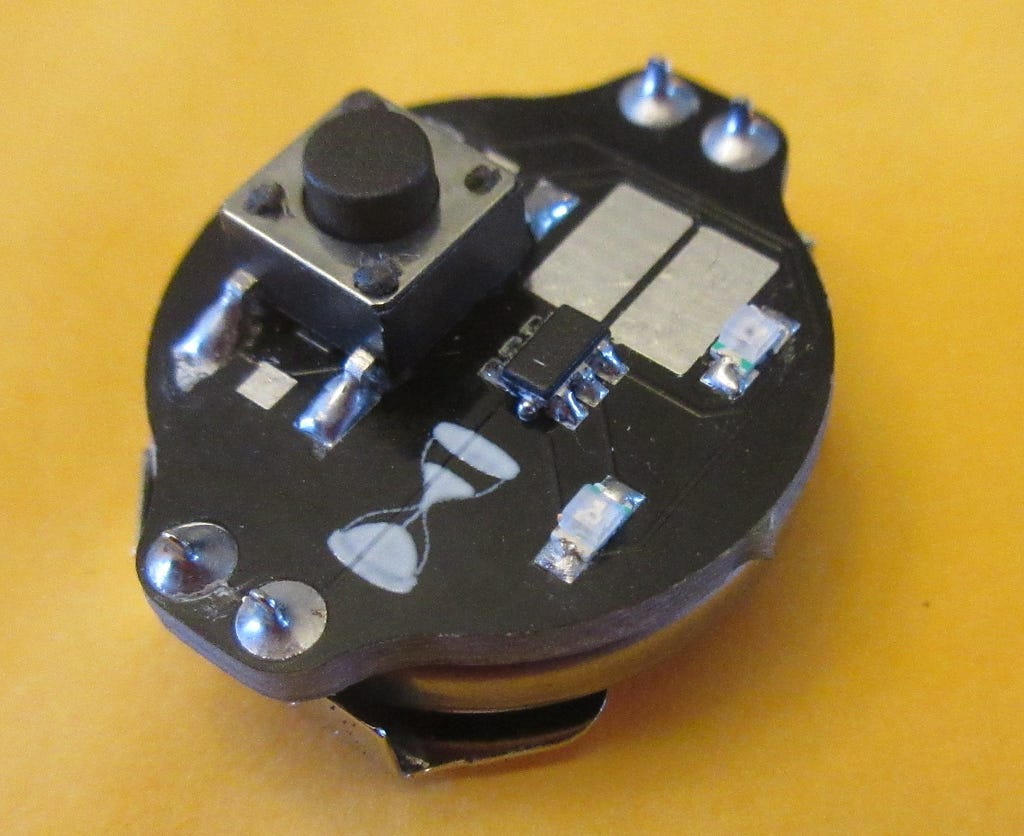
Sand and electronics usually go together only slightly better than if you were using water, but this electronic sand timer seems to be an exception, if only in name. That aside, no sand was used in the construction of the device… unless you count the silicon in the electronics, which would entirely negate the previous sentence. However you want to classify them, these gadgets take the place of hourglasses in board games, representing a major improvement over their non-electronic silicon cousins.

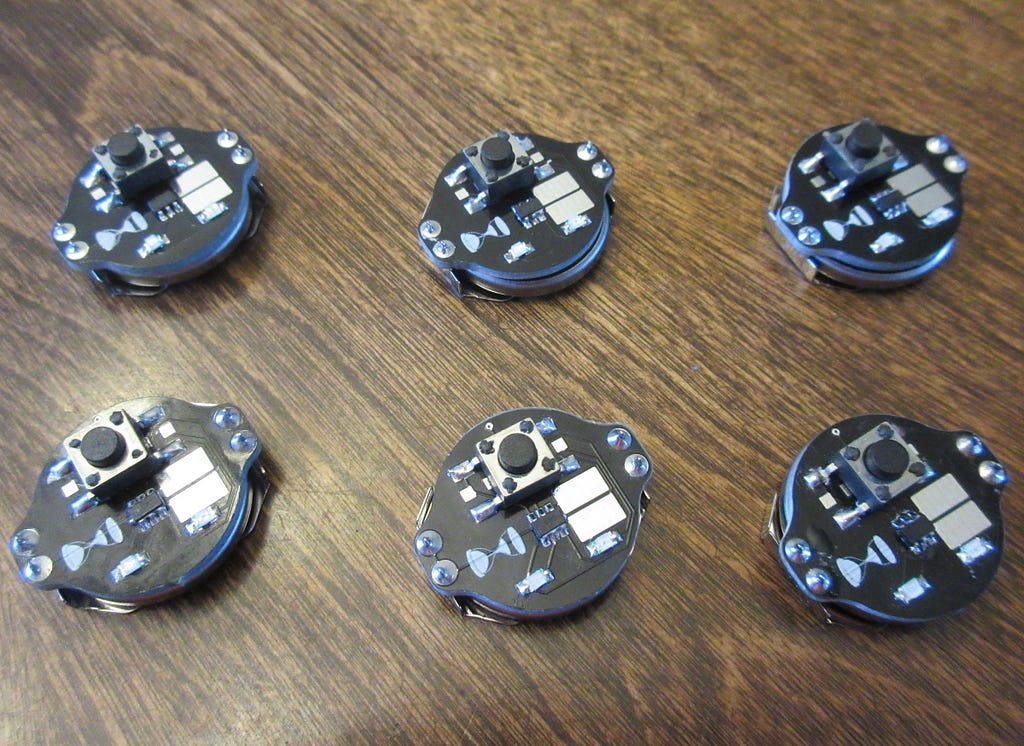
One improvement is that these units don’t need to somehow be physically reset by draining sand from one end to another. You simply press a button and it starts, blinking a green LED progressively faster, then a red light for around 20 seconds when done. They’re also incredibly compact, fitting inside the same footprint as the mechanical type — approximately the size of a quarter — while being much shorter. Speaking of that, perhaps the most impressive thing about its product listing on Tindie — $22 for 6 units — is the image of its PIC10LF320 microcontroller. This is dwarfed by a grain of rice, and makes George Washington on the quarter on the other side of it look like something from Easter Island.

The electronic sand timers run on included coin-cell batteries, which can power them for years at a time. Timers can be configured to finish after between 15 seconds and three minutes, and when you finally do have to change the batteries, it will still remember your settings.

https://medium.com/media/2c33aaedf99b75bd2acf0fea84bc4397/href

Electronic “Sand Timer” Simplifies Board Game Timekeeping was originally published in Hackster Blog on Medium, where people are continuing the conversation by highlighting and responding to this story.

19 Sep 20:54

Impossible Burgers are hitting their first grocery stores tomorrow

by Jon Porter
Image: Impossible Foods

The Impossible Burger, a meat-free burger that’s previously only been available in restaurants, will be available to buy in grocery stores for the first time this week. Starting tomorrow, September 20th, you’ll be able to buy the plant-based burger in 27 Gelson’s Markets stores in Southern California. Impossible Foods says it will bring the burger to more grocery stores — including some on the East Coast — later this month, and it plans to reach every region of the US by the middle of next year.

The launch brings Impossible Foods into even closer competition with Beyond Meat, which already sells its own meat-free burger in grocery stores in addition to restaurants. When it announced its latest burger back in June, Beyond Meat said that...

Continue reading…

19 Sep 07:31

Juno Captures Stunning Images of a Solar Eclipse on Jupiter

by Kristin Houser
While performing a close flyby of Jupiter, NASA's Juno spacecraft captured several stunning images of a solar eclipse on the gas giant.

Mr. Shadow

On September 12, NASA’s Juno spacecraft performed its twenty-second close flyby of Jupiter, careening down until it was just 8,000 kilometers (4,970 miles) above the gas giant’s clouds

From that epic vantage point, Juno then snapped a stunning series of photos of the shadow of Jupiter’s moon Io on the planet. In other words, it captured images of a solar eclipse on a planet besides Earth from space.

While performing a close flyby of Jupiter, NASA's Juno spacecraft captured several stunning images of a solar eclipse on the gas giant.
Image Credit: NASA/JPL-Caltech/SwRI/MSSS/Kevin M. Gill

New Perspective

The images of Jupiter’s solar eclipse are breathtaking. It almost looks like someone drilled a hole through to the planet’s center, or perhaps spilled a really, really big vat of Vantablack on Jupiter’s surface.

But no, the images depict a natural phenomenon that happens regularly here on Earth — but thanks to Juno, we’re able to appreciate it in a way never before possible.

While performing a close flyby of Jupiter, NASA's Juno spacecraft captured several stunning images of a solar eclipse on the gas giant.
Image Credit: NASA / JPL-Caltech / SwRI / MSSS / Björn Jónsson

READ MORE: NASA’s Juno Mission Checks Out Eclipse on Jupiter [Space.com]

More on Jupiter: A Giant Volcano on One of Jupiter’s Moons Is About to Erupt

The post Juno Captures Stunning Images of a Solar Eclipse on Jupiter appeared first on Futurism.

18 Sep 17:07

Descript Acquires Lyrebird and Lands $15 Million in Funding From Andreessen Horowitz and Redpoint

by Bret Kinsella

TechCrunch reported this morning that Descript has acquired synthetic voice generation company Lyrebird and closed a $15 million funding round led by Andreessen Horowitz and Redpoint. Lyrebird is well known in the voice technology community for its online voice synthesis demo which enabled users to speak a number of phrases and the service would generate a synthetic voice of the user. That demo appears to be gone as the old Lyrebird website now redirects to a page on Descript’s site.

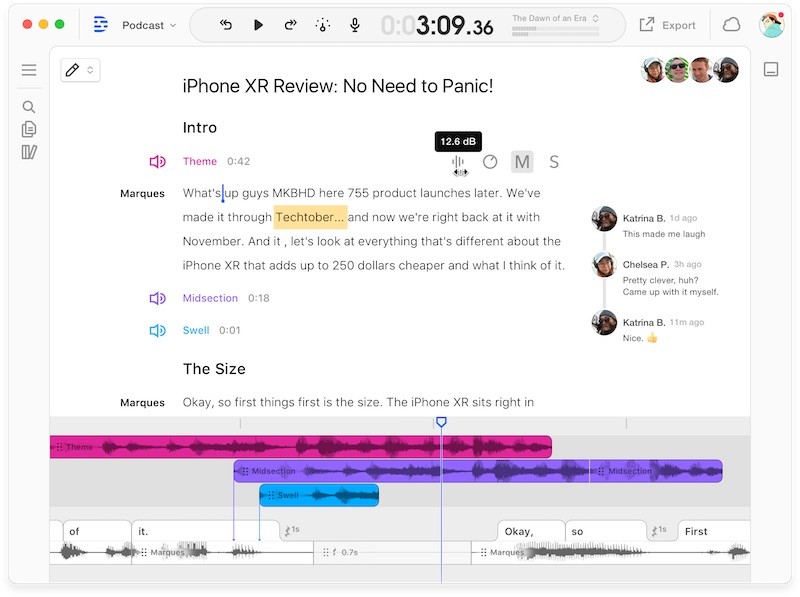
Lyrebird had previously raised $120,000 as part of its Y-Combinator participation in 2017. Pitchbook lists the company’s post-money valuation as $1.71 million at the time. Terms of the acquisition of the Montreal-based company were not disclosed. The reason Descript wanted Lyrebird’s technology is for the new Overdub feature that will enable podcasters to more easily add audio to previously recorded materials. Descript was originally focused around what it calls Audio Word Processing for podcasters but a recent update also enables users to record podcasts directly in the software and automatically generate transcripts.

The new investment from Andreessen Horowitz follows a $5 million seed investment by the firm in December 2017 when the company was founded and separated from its progenitor, Detour. Descript’s post-money valuation at the time was $25 million according to Pitchbook data. Andrew Mason, best known as the founder of Groupon, also founded Descript which he spun out of Detour, an earlier company which raised $10 million and eventually was sold to Bose for an undisclosed amount. Detour was an audio tour guide solution and the company built the solution underlying Descript in order to more easily edit their audio files.

How Lyrebird and Overdub Will Benefit Podcasters

Descript started as an audio transcription software solution and later added a “white glove” human transcription option. The key value behind the solution is the transcription editor. It enables you to correct text inline without changing the audio in order to correct transcription errors or you can delete the text and have the audio automatically reflect the removal. Lyrebird is the technology behind Descript’s new Overdub feature. If the user has taken the step to create a Lyrebird synthetic replica of their voice, they can actually insert words or replace words in the text editor and Descript will insert the audio as if the speaker had said the word or phrase.

The benefit according to Descript is saving time when minor updates need to be made to audio files. In the past, if a number was stated incorrectly and needed to be updated in an audio file, the podcaster would need to record the correct word and then splice it into the audio. This takes time and can be cumbersome for podcasters that are not skilled in audio production and editing. Changing by text and having the Lyrebird solution overdub the audio takes a matter of seconds. It may not quite match the quality of splicing in a human voice recording, but it does offer the benefit of efficiency.

Descript has taken steps to prevent this technology from being used for deep fakes. Mason notes in a blog post this morning “Rest assured, you can only use Overdub on your own voice. We built this feature to save you the tedium of re-recording/splicing time every time you make an editorial change, not as a way make deep fakes… in order to train a voice model, you need to record yourself speaking randomly generated sentences, preventing others from using pre-existing recordings to create a model of your voice.”

Collaboration is the Differentiator

Mason suggests in the TechCrunch interview that Descript’s collaboration feature is its key differentiator. There are many transcription and audio editing tools on the market but they are designed for use by individuals. “In live multiuser collaboration, there is still no other tool out there that has done what we have done with large uncompressed audio files. That is no small feat, and it has taken time to get it right. I have seen this transition manifest from documents to spreadsheets to product design. No one would have thought of something like product design to be huge space but just by taking these tools for collaboration and successfully porting them to the cloud,” Mason told TechCrunch’s Ingrid Lunden.

This comment is underscored by the fact that the editor and collaboration tools are the company’s core innovation. Mason said that Descript has not developed its own natural language processing (NLP) technology but instead uses Google tools for transcription. His view is that this space is largely a commodity today. The editing and collaboration tools are what makes Descript unique and now Lyrebird enhances that with some core technology differentiation.

Follow @bretkinsella Follow @voicebotai

Verbit Raises $23 Million from Viola Ventures to Expand Automated Transcription and Captioning Solution

Tom Livne CEO of Verbit.ai Talks Voice and Transcription – Voicebot Podcast Ep 89

Rupal Patel CEO of VocaliD Discusses Customized Synthetic Voices – Voicebot Podcast Ep 102

Voice Startup Funding in 2019 Set to Nearly Triple Says European VC Mangrove and “Voice Economy” to Be a Trillion Dollar Market in 2025

The post Descript Acquires Lyrebird and Lands $15 Million in Funding From Andreessen Horowitz and Redpoint appeared first on Voicebot.

18 Sep 12:03

MouseAir Launches Fake Mice for Kitty Entertainment

by Jeremy S. Cook

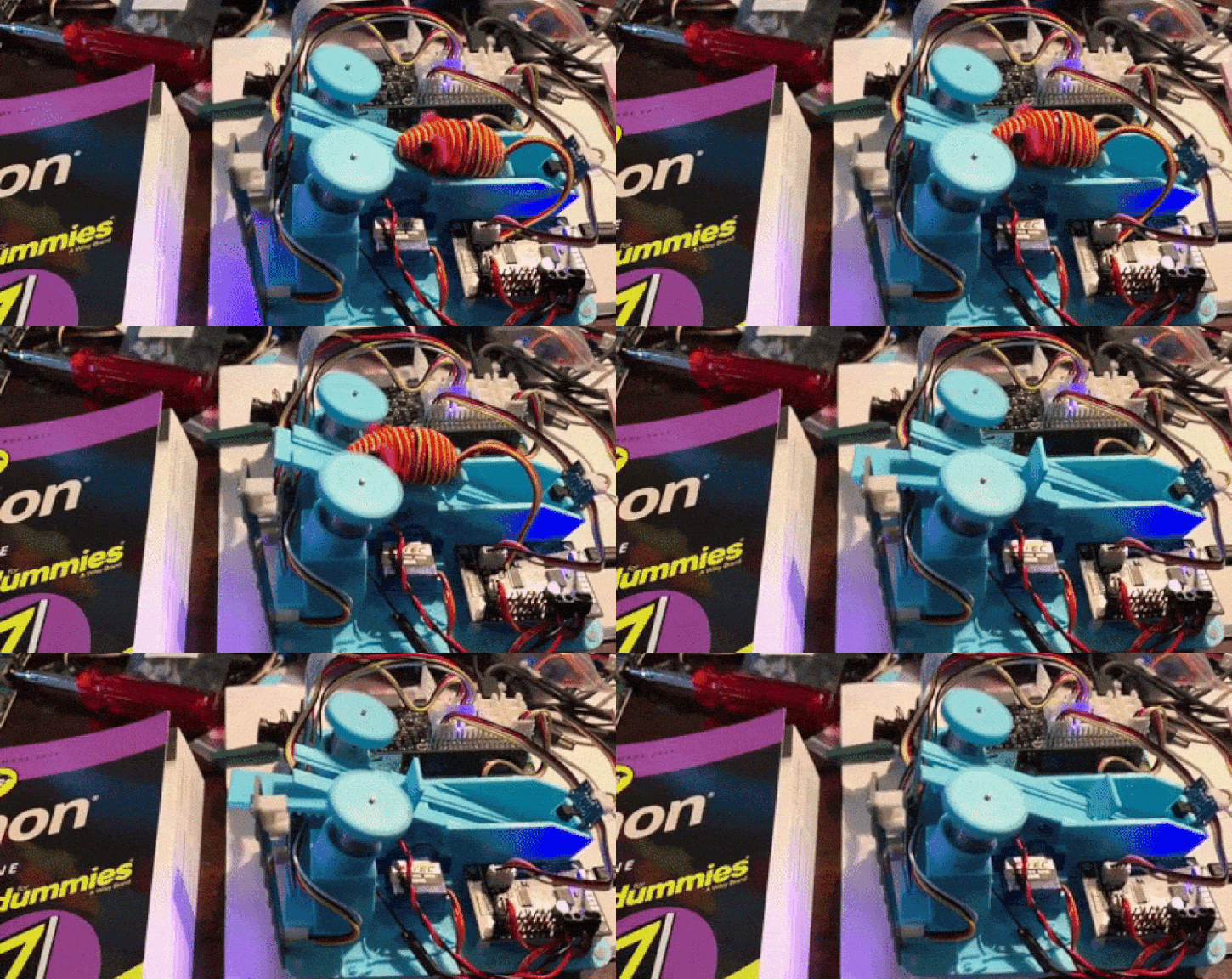
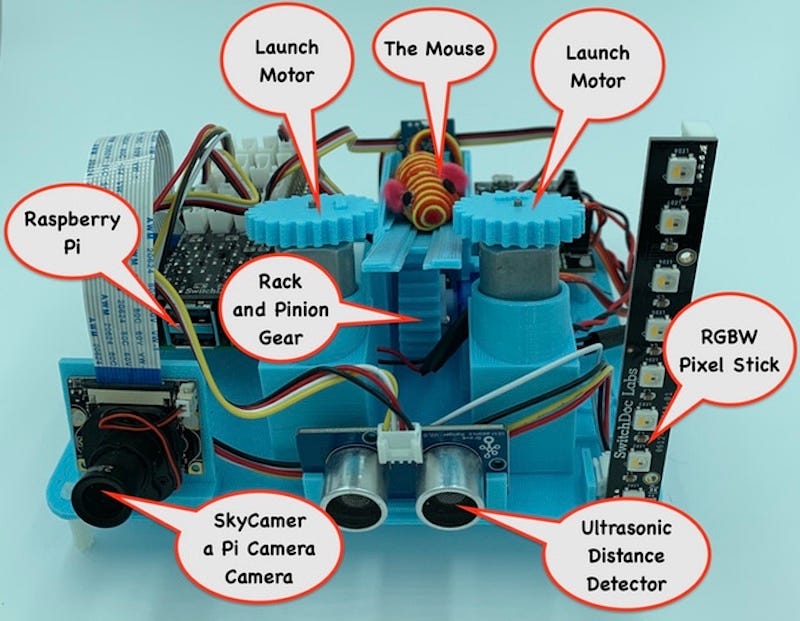
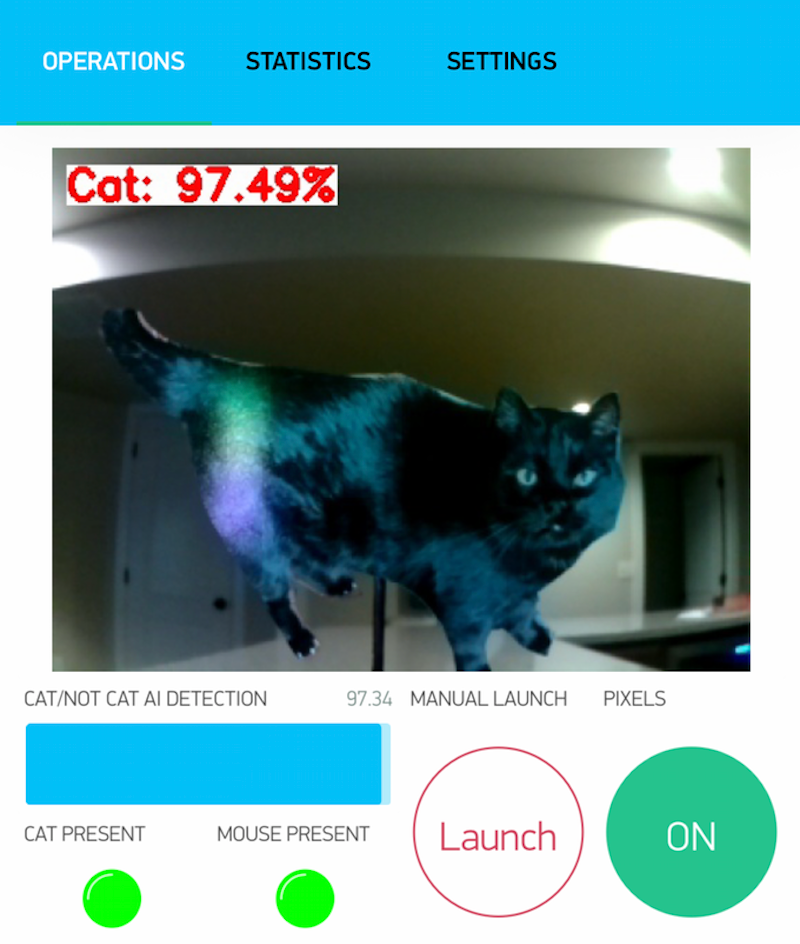
One could argue the relative merits of cats versus dogs as the superior pet, but if you happen to be a cat person whose feline companion is in need of a bit more entertainment, MouseAir presents a very interesting solution. The device uses a camera and artificial intelligence via a Raspberry Pi to determine when a kitty walks into view, then fires a mouse for it to chase.

Physically, the build consists of a rack-and-pinion gear that slowly pulls the mouse into launch position under servo control. During this process, a pair of motors spins up like some sort of softball pitching machine, and when the stuffed animal mouse hits the launch spinners, it’s flung into the air for the cat’s entertainment.

A Pi2Grover connector interface and a dedicated MouseAir board assist the Pi with thrower control, while a mouse detector IR sensor is employed to prevent “dry firing.” An ultrasonic distance is available on the front, along with an arrangement of RGB LED lights that could provide user interface for humans — or perhaps felines. A Blynk control panel and a webpage is also implemented for control details.

The contraption is now funding on Kickstarter, with reward levels that vary as to what is provided versus what you supply. The project is open source, so how it works — or if you want to make it a little differently — is entirely up to your imagination!


MouseAir Launches Fake Mice for Kitty Entertainment was originally published in Hackster Blog on Medium, where people are continuing the conversation by highlighting and responding to this story.

18 Sep 11:54

Ce capteur vous indique en quelques secondes si un produit se recycle ou non

by Mélanie D.

Ça nous arrive à tous : après l’utilisation d’un produit, comment savoir s’il peut vraiment être recyclé, et si oui, dans quelle poubelle. Un casse-tête quotidien, duquel un studio de design souhaite nous sauver. Cohda a mis au point un gadget, capable d’analyser nos déchets et de nous indiquer s’ils sont recyclables ou non.

RID (Recycling Identification Device) est un petit appareil qui utilise une technologie basée sur la spectroscopie dans l’infrarouge proche (SPIR), qui émet une lumière invisible vers un objet. Puisque chaque objet absorbe différentes longueurs d’onde de lumière, le gadget peut identifier la composition de chacun, et donc nous informer sur la manière dont l’objet doit être recyclé.

Sans avoir à vous prendre la tête, et en quelques instants, vous saurez si vous devez recycler ou non un objet. Si c’est recyclable, R.I.D s’éclairera en vert. Si ce n’est pas le cas, en rouge. L’avantage ? Ce capteur n’a pas besoin de connexion Internet, ni d’application dédiée. Il ne requiert qu’un coup de charge occasionnel !

Malheureusement, pour le moment, il ne s’agit que d’un concept. Les créateurs recherchent donc le soutien du gouvernement pour réaliser ce projet, pour que les administrations le distribuent aux citoyens, afin de rendre le processus de recyclage plus efficace.

Crédits : Cohda
Crédits : Cohda
Crédits : Cohda
Crédits : Cohda
Crédits : Cohda

L’article Ce capteur vous indique en quelques secondes si un produit se recycle ou non est apparu en premier sur Creapills.

17 Sep 20:17

Google may reveal ‘Nest Wifi’ with beacons that double as smart speakers on October 15th

by Sean Hollister

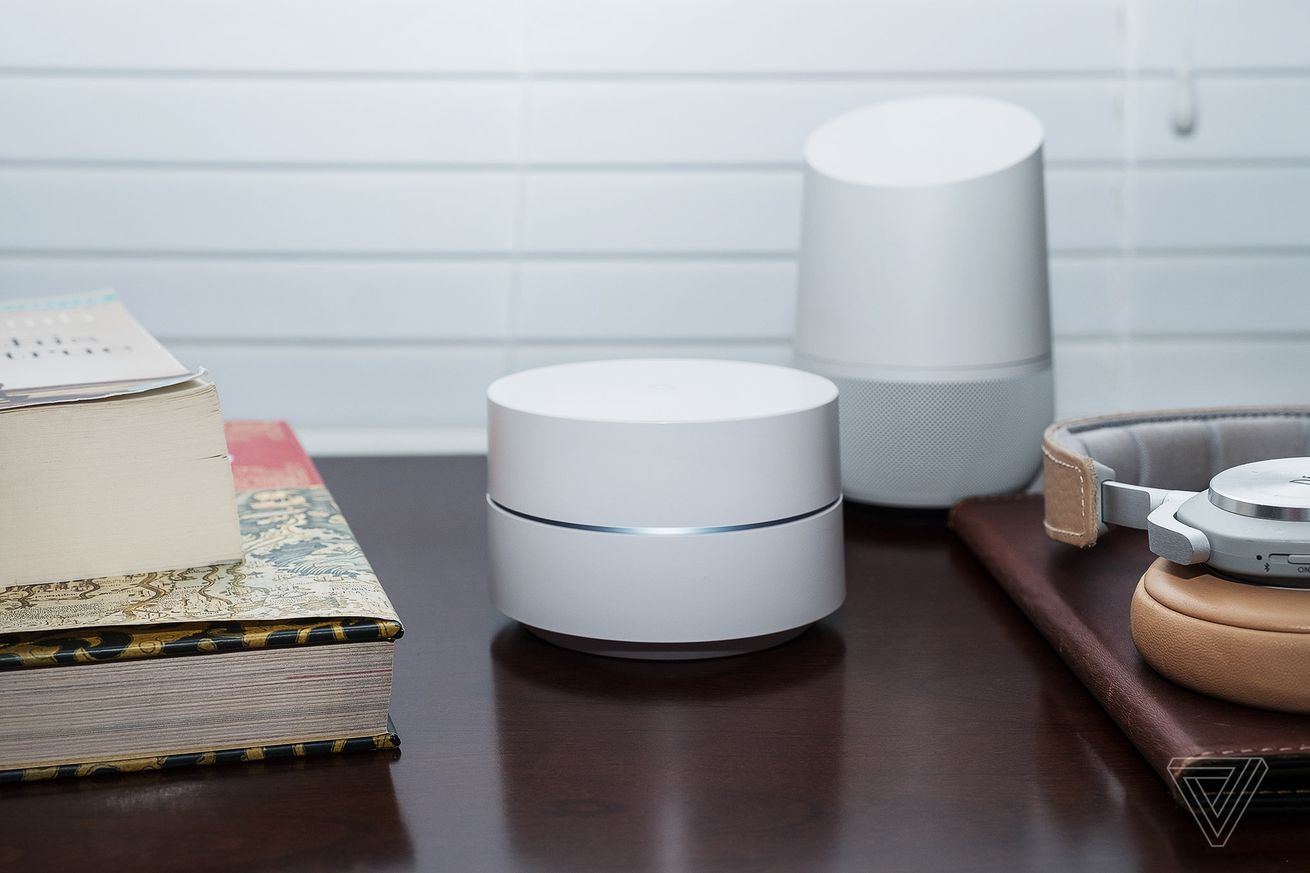
Google’s mesh Wi-Fi router — Google Wifi — is nearly three years old, but it may be getting a radically different design next month. 9to5Google is reporting that the company is prepping a new “Nest Wifi” that pairs a single new hub router with two new “beacons” that will double as Google Assistant smart speakers, giving you the equivalent of two additional Google Home Mini speakers to cover additional rooms of your house with both Wi-Fi and sound.

You may note that Google would be effectively copying Amazon’s second-gen Eero router by going with a pair of beacons to extend Wi-Fi coverage across your house, which could have pros and cons. In our review, we found the second-gen Eero to be just as capable as the first-gen model overall, but...

Continue reading…

17 Sep 06:11

Amazon on the hunt for paw-some UK pets

by Scott Thompson

Amazon has launched a Face of Amazon Pets 2019 competition in the UK.

People are invited to enter by sharing their best pet picture or video via social media, stating why their cat, dog etc should win and including the hashtag #AmazonPets2019. The winner will receive the likes of a professional photoshoot, a £1,000 Amazon promo code and the chance to feature as the star of the Face of Amazon Pets. The competition closes at midnight on 6th October.

Amazon has also launched Pet Profiles on Amazon.co.uk. Customers can fill out breed, age and preference information as well as upload their own shots to create a profile for their pet. They will then receive personalised product recommendations and deals from the Pet Supplies Store.

“We want to celebrate all creatures great and small by giving them a chance to be the Face of Amazon Pets and, with almost half of all UK households owning a pet, we’re expecting the competition to be ‘fur-midable’," says Matthew Redfearn, Pet Supplies Category Leader, Amazon.co.uk.

"We know the UK love pampering their pets which is why we’re also delighted to launch Pet Profiles on Amazon to help our customers get great deals and personalised recommendations for their furry, scaly or feathery friends.”

Sign up for our free retail technology newsletter here.

14 Sep 22:21

Cette machine circulaire presse les oranges et transforme les pelures en gobelets grâce à l’impression 3D

by Mélanie D.

La firme italienne de design Carlo Ratti, en partenariat avec la compagnie d’énergie ENI, ont créé ensemble la campagne “Feel the Peel”. Ce projet à l’aspect environnemental comprend un presse-orange géant circulaire, qui peut contenir jusqu’à environ 1500 oranges !

Après en avoir extrait le jus, la machine sèche la pelure restante et la transforme en filament bioplastique. À l’aide d’une imprimante 3D, on en fait des gobelets biodégradables, dans lesquels le jus fraîchement pressé y est versé !

Bien sûr, rien n’est parfait. Après usage, ces gobelets doivent être jetés ou mis au compost. Malgré tout, ce projet illustre parfaitement la facilité de montrer le développement durable en tant qu’expérience interactive, qui récompense le consommateur pour avoir participé. Un marketing respectueux de l’environnement, efficace et innovant !

Crédits : Carlo Ratti

L’article Cette machine circulaire presse les oranges et transforme les pelures en gobelets grâce à l’impression 3D est apparu en premier sur Creapills.

03 Jul 19:07

This Tetris-Like Game Is Played Telepathically by Three People Simultaneously

by Cameron Coward

Telepathy is a hallmark of both the fantasy and science fiction genres. In fantasy stories, telepathy is usually performed magically or by people with supernatural abilities. But science fiction tales take a more realistic approach where characters can communicate telepathically using some sort of technology, such as brain implants. Given how little we know about the brain and how it works, it’ll be a long time before real telepathic communication is possible. However, researchers from the University of Washington have developed a brain-to-brain interface that allows three people to play a Tetris-like game together.

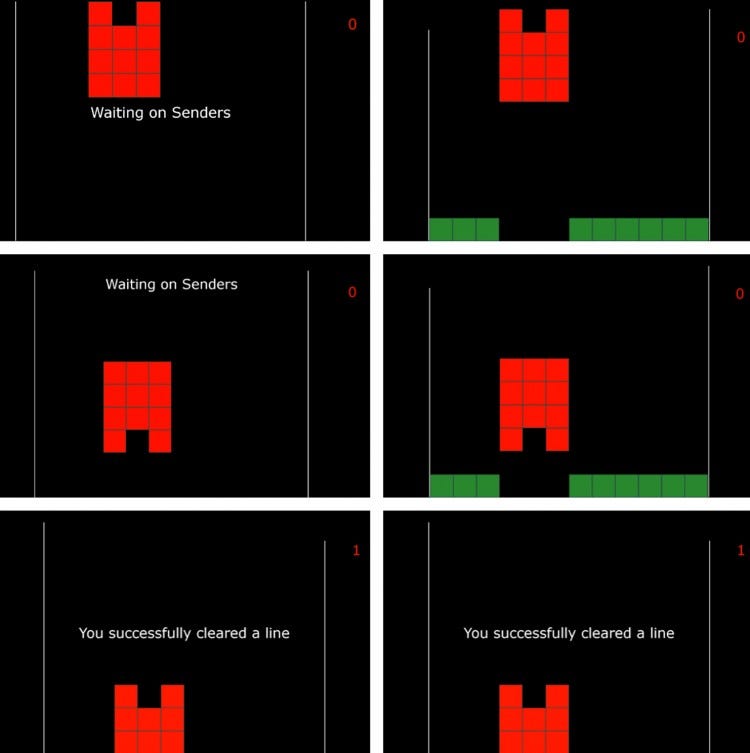
The game itself is similar to Tetris, but far more simple. The only things on the screen are a block at the top and a line at the bottom. Players have to rotate the block in such a way that it will fit into a gap in the line when it falls down. This game would, of course, be extremely easy for a person to play on their own. But the players aren’t controlling the game by themselves, and instead are coordinating the gameplay with two other players through brain-to-brain interfaces. The person who actually controls the game is dubbed the “receiver,” while the other two people are the “senders.”

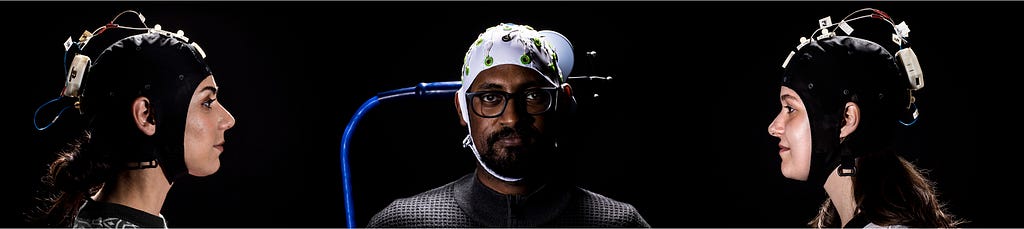
The senders can see both the block and the line, but can’t actually control the game. The receiver can only see the block — not the line. Each person is sitting in a separate room and can’t see or hear the others. The idea is that the senders will let the receiver know if they should or should not rotate the block. To do that, they concentrate on either a “yes” light that blinks 17 times per second, or a “no” light that blinks 15 times a second. Concentrating on one of those lights produces unique brain activity that can be picked up by a electroencephalography cap that the senders wear.

Once the senders make a decision, it is sent to the receiver using a unique device that can stimulate brain activity. If the answer was “yes” they will see bright arcs of light. If the answer is no, they won’t see anything. The receiver can then use the same method as the senders to make a decision on whether the block should be rotated. In testing, they had five groups of three players participate in 16 rounds of the game. They found that, on average, the players successfully cleared the line 13 out of those 16 times. The game itself may be simple, but this technology is a huge step forward for brain-to-brain interfaces.


This Tetris-Like Game Is Played Telepathically by Three People Simultaneously was originally published in Hackster Blog on Medium, where people are continuing the conversation by highlighting and responding to this story.

01 Jul 20:03

DIY Smart Glasses Built with a Raspberry Pi Zero W

by Cameron Coward

The Google Glass smart glasses were originally released as a limited prototype run back in 2013. They were intended to provide a science fiction-like heads-up display (HUD) that users could wear as they went about their daily lives. But they were a massive flop. That wasn’t necessarily because the technology itself was lacking — it was really more of a result of them causing privacy concerns and being incredibly unfashionable. However, that doesn’t mean the concept isn’t interesting, which is why Redditor Infranix has built his own DIY smart glasses using a Raspberry Pi Zero W.

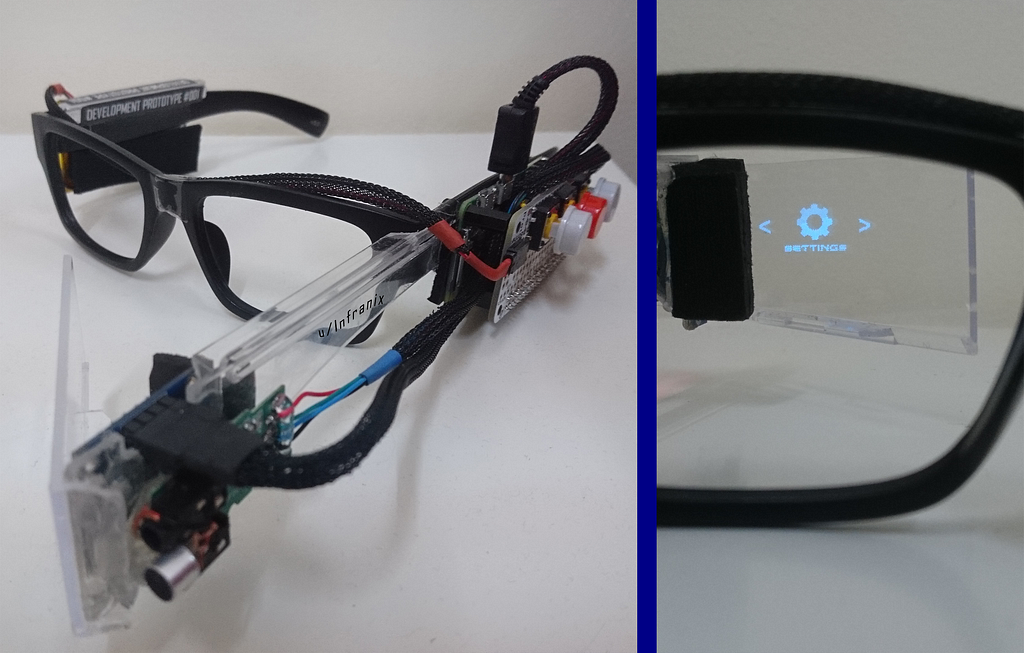
The original Google Glass smart glasses were essentially a small computer mounted to the frame of a pair of glasses. Users could interact with it using a touch pad or voice commands, and information was displayed on a small projection in their field of view. The Google Glass also included a forward-facing camera that could be used to analyze the world or take photos and video — a major factor contributing to the privacy concerns. Infranix’s smart glasses work in a similar way, but omit the camera.

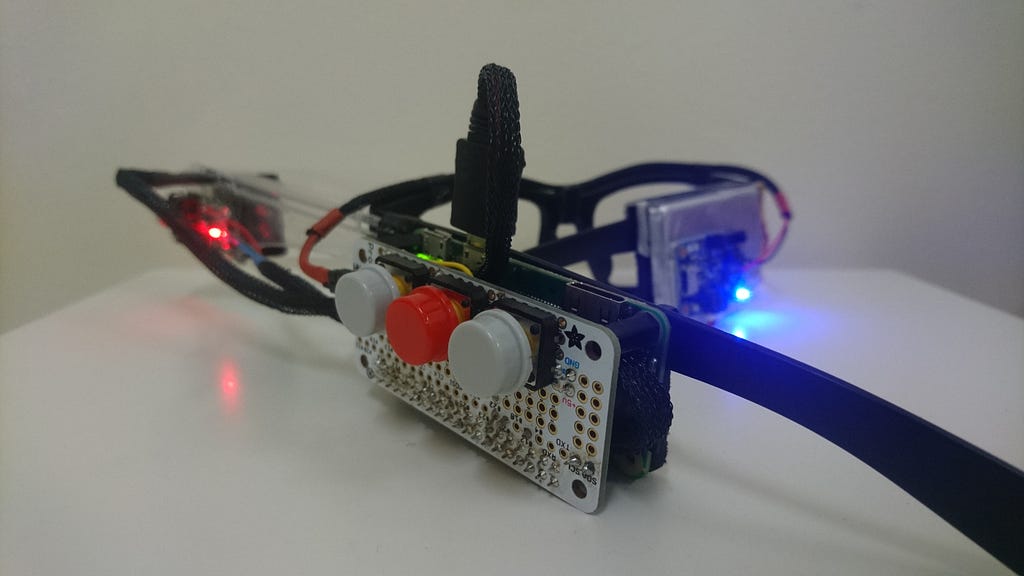
The computer that Infranix used is a Raspberry Pi Zero W single-board computer (SBC) that is mounted to one side of the glasses. On the opposite side, there is a 1200mAh LiPo battery and charging circuit. A small microphone is used to pick up voice commands, which are then processed using a speech-to-text app and used to trigger some action via a Python3 user interface software. The final component is the heads-up display, which Infranix built used a small OLED screen that is reflected off of a piece of transparent plastic so the user can see it. It may not be as polished as the Google Glass, but this is still a fantastic wearable project.


DIY Smart Glasses Built with a Raspberry Pi Zero W was originally published in Hackster Blog on Medium, where people are continuing the conversation by highlighting and responding to this story.

01 Jul 15:50

Carrefour et Auchan : un ROI de 7 avec leurs programmes fidélité gamifiés

Le programme de fidélité personnalisé et gamifié de UntieNots, en test chez de nombreux acteurs de la grande distribution comme Auchan France et Carrefour Belgique, affiche ses premiers résultats : les joueurs dépensent en moyenne de 10 à 12% plus et réalisent une visite supplémentaire chaque mois.
28 Jun 20:54

World’s First AI Universe Simulator Knows Things It Shouldn’t

by Kristin Houser
Researchers used AI to create a universe simulator that's incredibly fast and accurate, even when they tweak parameters not included in its training data.

Great Mystery

Since we can’t travel billions of years back in time — not yet, anyways — one of the best ways to understand how our universe evolved is to create computer simulations of the process using what we do know about it.

Most of those simulations fall into one of two categories: slow and more accurate, or fast and less accurate. But now, an international team of researchers has built an AI that can quickly generate highly-accurate, three-dimensional simulations of the universe — even when they tweak parameters the system wasn’t trained on.

“It’s like teaching image recognition software with lots of pictures of cats and dogs, but then it’s able to recognize elephants,” researcher Shirley Ho said in a press release. “Nobody knows how it does this, and it’s a great mystery to be solved.”

Speedy System

The scientists detail how they created this universe simulator, which they’ve named the Deep Density Displacement Model (D3M), in a study published in the journal Proceedings of the National Academy of Sciences.

The goal was to teach D3M how to model the way gravity shapes the universe. To that end, they started by feeding the system 8,000 different gravity-focused simulations created by a highly accurate existing universe simulator.

That system needed 300 computation hours to create just one of its simulations, but after training on the data, D3M was able to produce its own simulations of a cube universe 600 million light-years across in just 30 milliseconds. Those simulations were more accurate than those of the existing “fast” systems, which need a couple of minutes to create a simulation.

Knowledge Gap

But speed isn’t the most remarkable thing about D3M.

That would be its ability to accurately simulate what the universe would look like even if the researchers changed parameters that weren’t included in its training data. For example, they could tweak the percent of dark matter in their universe, and D3M could accurately simulate that universe’s evolution.

In addition to helping physicists like Ho better understand the universe’s evolution, this strange behavior has the potential to help computer scientists better understand AI.

“We can be an interesting playground for a machine learner to use to see why this model extrapolates so well, why it extrapolates to elephants instead of just recognizing cats and dogs,” Ho said in the press release. “It’s a two-way street between science and deep learning.”

READ MORE: The first AI capable of simulating the universe works so well it’s scary [The Next Web]

More on computer simulations: Scientists Produce Most Precise Black Hole Simulations Ever

The post World’s First AI Universe Simulator Knows Things It Shouldn’t appeared first on Futurism.

28 Jun 09:55

Ce packaging de crème solaire change de couleur pour vous prévenir quand il faut en mettre

by Manon Bodeving

Bien plus qu’un soin dont on s’enduit l’été, la crème solaire peut devenir un véritable atout pour votre peau si elle est bien choisie. Elle se doit de préserver la beauté du teint et sa fraîcheur, tout en repoussant les UV néfastes. Sous la crème de jour ou dans une BB crème, le plus important, c’est qu’elle soit adaptée à l’usage que vous allez en faire et que vous n’oubliez pas d’en mettre ! Pour cela, une marque australienne d’écrans solaires a imaginé la solution…

Blue Lizard vend des protections pour la peau depuis plus de vingt ans. Ses crèmes solaires résistent aux éléments et ont gagné la confiance d’innombrables dermatologues. Pendant des années, elles n’étaient presque exclusivement disponibles que dans leurs cabinets, désormais elles sont sur le marché pour le grand public. Et Blue Lizard est justement là pour vous le remémorer grâce à son emballage qui change de couleur : le packaging blanc devient bleu lorsqu’il est exposé aux rayons UV. Une manière de vous rappeler de mettre (ou remettre) votre protection solaire et de prendre soin de vous !

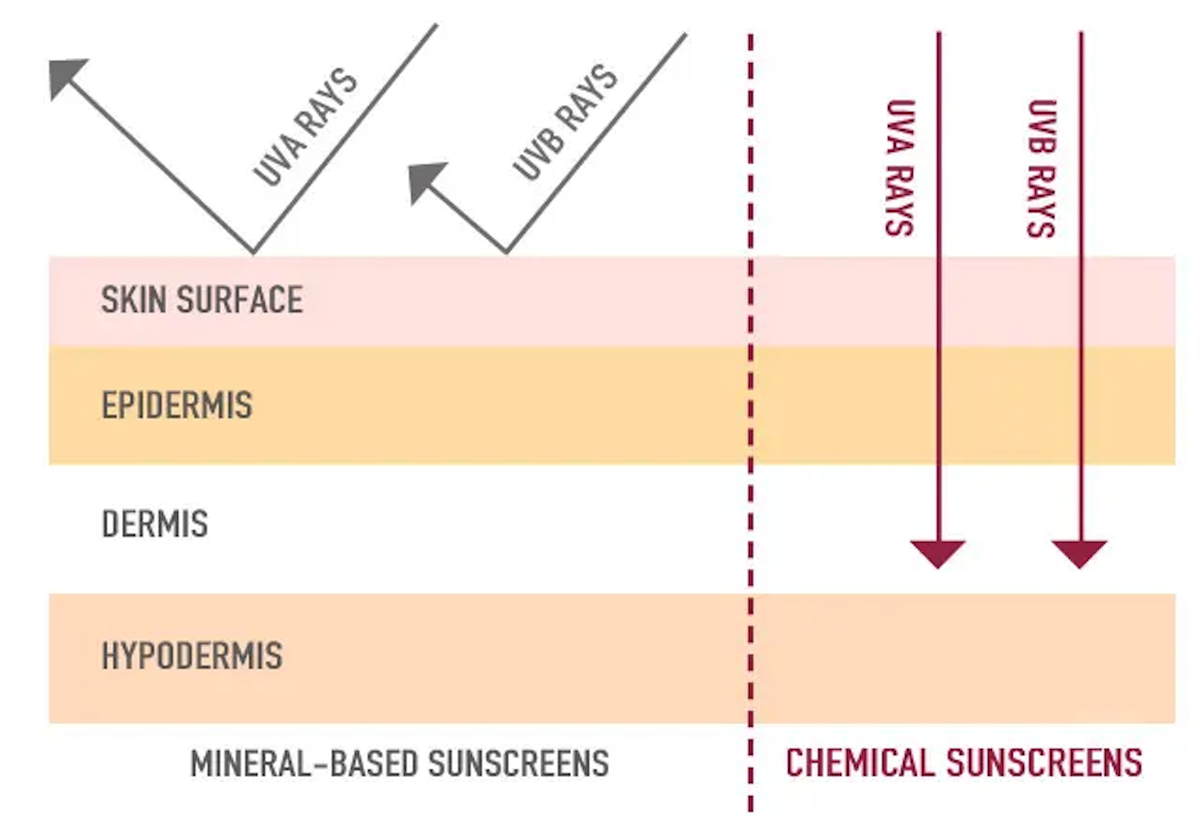
Dans la composition, on retrouve des produits minéraux ou à base de minéraux qui offrent une véritable protection. “Ces écrans solaires utilisent de l’oxyde de zinc ou du dioxyde de titane (et parfois les deux) pour former une barrière invisible sur la surface de votre peau, qui réfléchit et diffuse les rayons UV loin de votre corps. Ces minéraux ne se dégradent pas à la lumière UV, donc vous restez protégé“, peut-on lire sur le site australien.

La marque Blue Lizard n’a pas manqué de créativité pour se démarquer. Le packaging s’associe parfaitement à l’idée qu’elle a voulu faire passer, soit prendre soin de tous de manière naturelle. Alors si cet écran solaire vous intéresse, on vous conseille de vous rendre sur le site de Blue Lizard. Et si les emballages insolites vous intriguent ? Découvrez les dix packagings créatifs qui révolutionnent l’univers de la beauté et de la santé détectés par Creapills pour ALL4PACK Paris.

Blue Lizard crème solaire

Crédits : Blue Lizard

Blue Lizard crème solaire

Crédits : Blue Lizard

Crème solaire à base de minéraux VS.
crème solaire chimique

Blue Lizard crème solaire

Crédits : Blue Lizard

Imaginé par : Blue Lizard
Source : updateordie.com

L’article Ce packaging de crème solaire change de couleur pour vous prévenir quand il faut en mettre est apparu en premier sur Creapills.

26 Jun 09:32

Watercolor Landscapes to Visually Travel

by Manon

Avec son art, Ekaterina Mango nous emmène autour du monde. Elle propose en effet un voyage visuel au travers de ses aquarelles colorées. Peintre autodidacte, elle a ici dépeint des endroits précis de 23 pays, tels que le lac Blausee en Suisse; l’île de Skye en Ecosse; la Place d’Espagne à Séville, en Espagne; ou le Parc National des lacs de Plitvice, Croatie… C’est l’amour d’Ekaterina pour les voyages qui l’ont poussée à décider de faire cette série, composée, donc, de différents paysages et vues. Certains endroits n’étant pas forcément très touristiques, Mango espère que son public sera intéressé à les (re)découvrir.

20 Jun 19:45

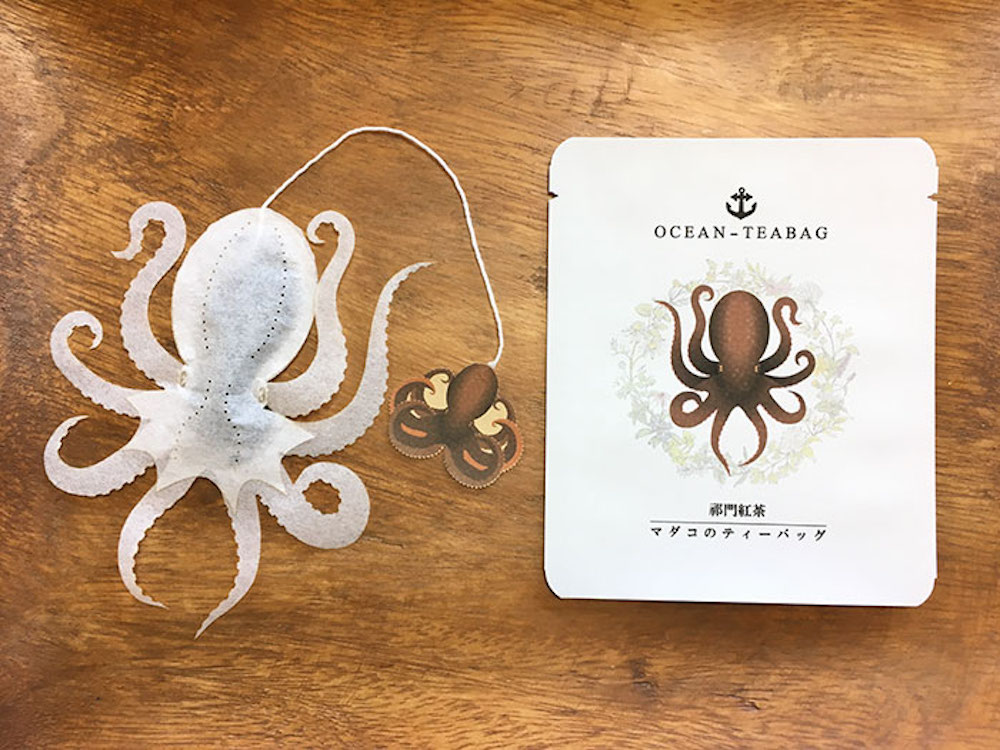
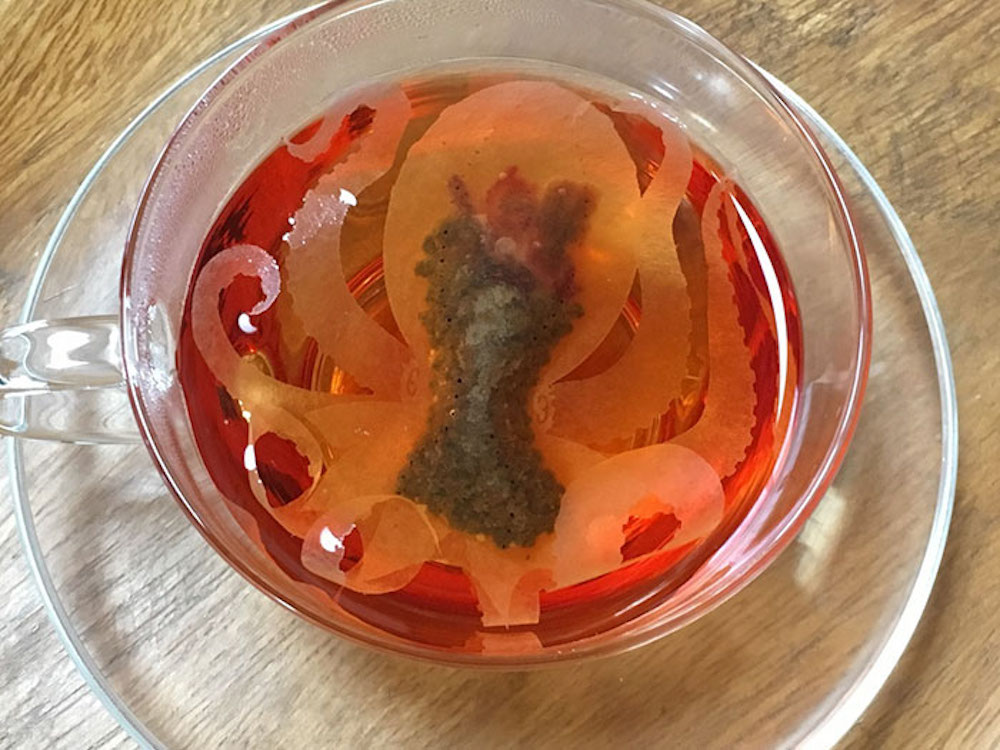
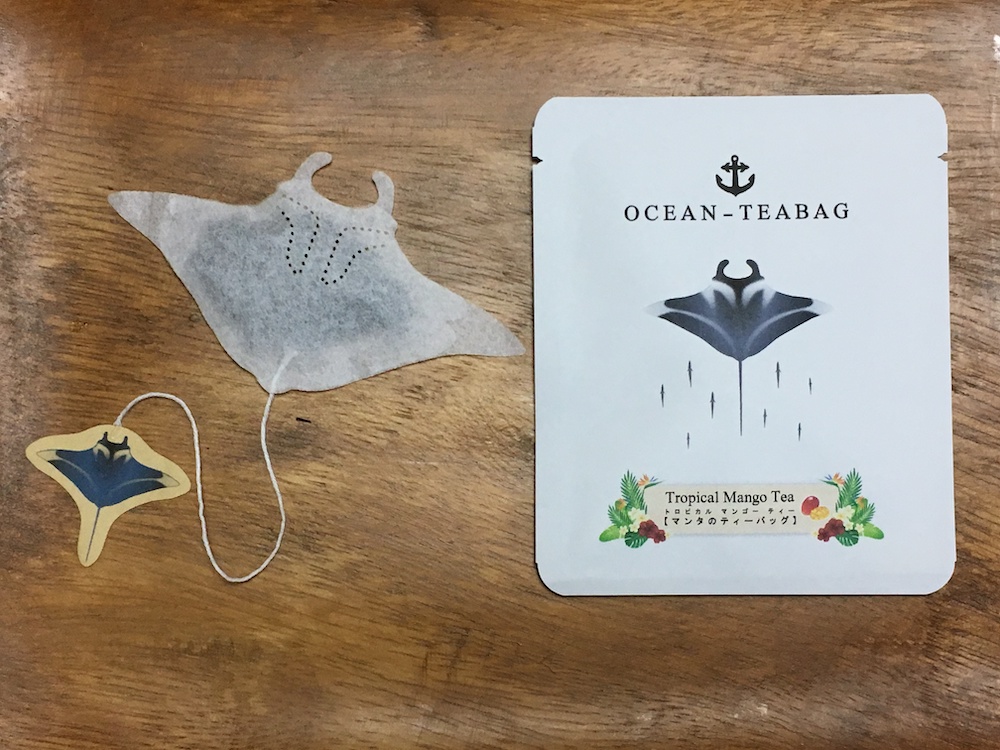
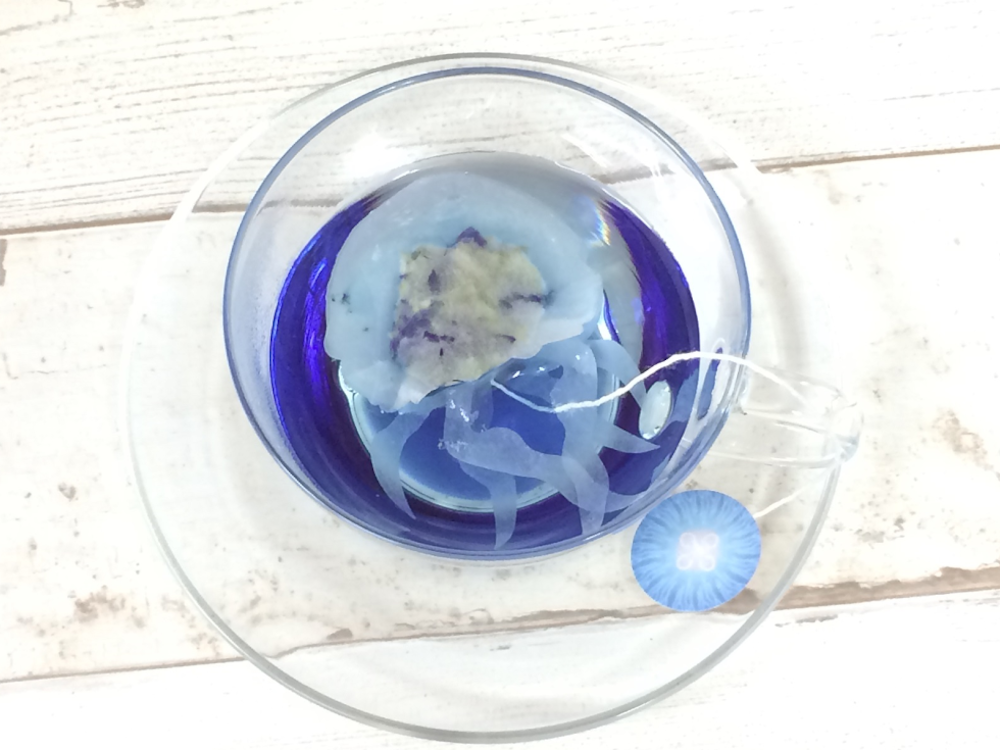
Au Japon, ces sachets de thé en forme d’animaux marins prennent vie dans votre tasse

by Mélanie D.

Quoi de mieux qu’une bonne tasse de thé après une longue journée ? Malgré la fait que la culture du thé et sa popularité ne cessent d’accroître, le design du sachet de thé est toujours relativement traditionnel, et n’a pas changé de forme depuis des années. Il serait enfin temps de trouver une approche davantage créative à ce packaging ennuyeux, non ? C’est ce qu’a fait Ocean Teabag, une entreprise japonaise, qui a réinventé le sachet de thé !

Avec leurs adorables petits sachets en forme de créatures des océans, la marque chamboule les codes établis dans le domaine. Ocean Teabag s’est donc associé avec une boutique des curiosités, ainsi qu’une librairie, Village Vanguard, pour créer cette petite série de sachets.

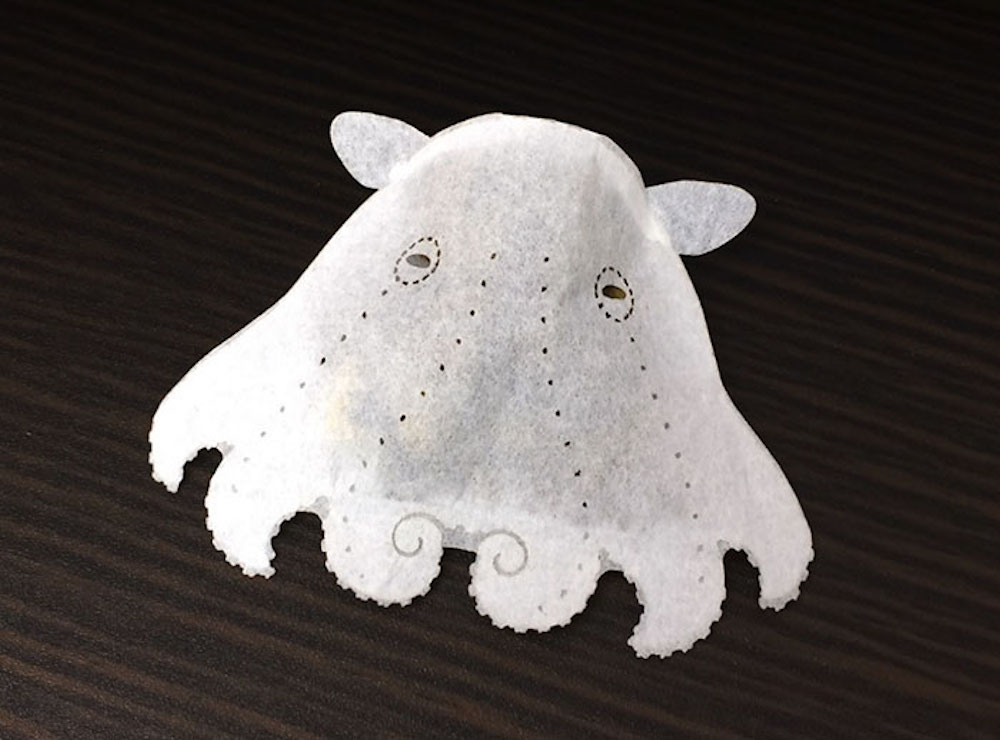
Ces sachets en question incluent donc une méduse, une pieuvre, un isopode, un calamar, et encore plein d’autres. Une fois dans votre tasse d’eau chaude, le sachet donne l’illusion qu’un animal marin est en train de nager dans votre thé !

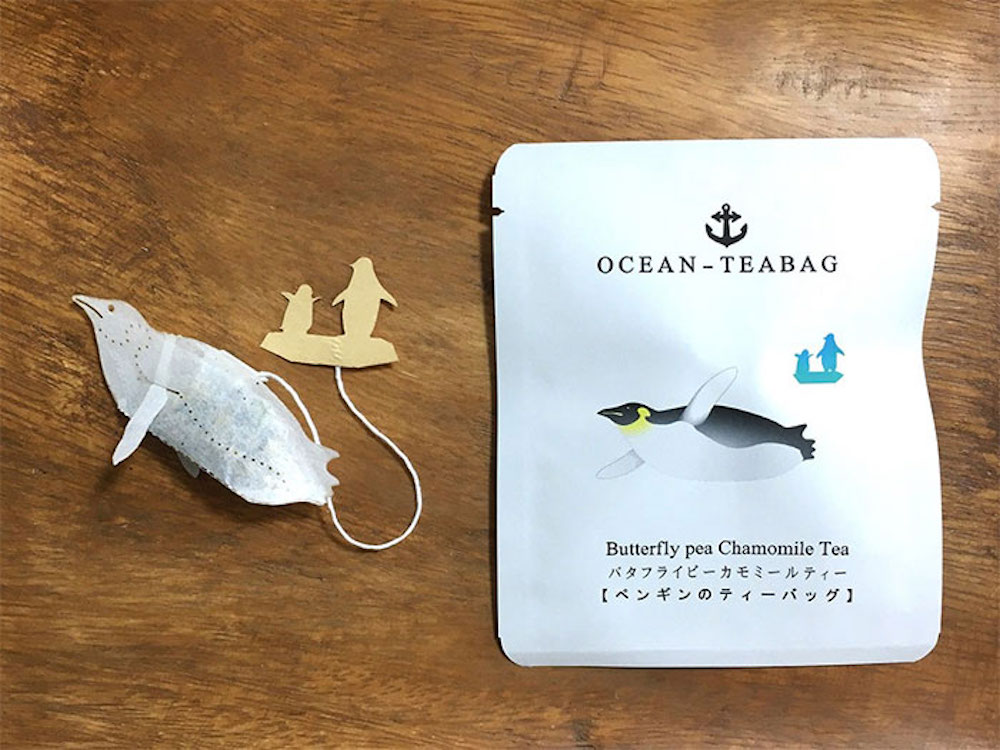
Le sachet en forme de calamar est rempli de Thé Noir Pu-erh, inspiré par l’encre que celui-ci rejette. Celui de la pieuvre renferme du Thé Keemun. Alors, même si ces deux-là sont les plus populaires parmi les acheteurs, il existe d’autres sachets tout aussi adorables, comme celui en forme de pingouin, rempli de Thé à la Camomille.

Mais Ocean Teabag ne compte pas s’arrêter là : dans un futur proche, ils prévoient de créer d’autres sachets, qui bougeront ou qui pourront briller dans le noir. Mais pour l’heure, vous avez déjà le choix parmi plus de 50 sachets sur leur site internet.

Seulement, affiché au prix de 1820 yens (à peu près 15 euros le sachet), le thé aura intérêt à être savouré et bien observé. Il n’empêche malgré tout que le concept est d’une créativité sans limite. Et surtout, c’est très joli à voir !

Sachet de Thé Océan Animaux

Crédits : Ocean Teabag

Sachet de Thé Océan Animaux

Crédits : Ocean Teabag

Sachet de Thé Océan Animaux

Crédits : Ocean Teabag

Sachet de Thé Océan Animaux

Crédits : Ocean Teabag

Sachet de Thé Océan Animaux

Crédits : Ocean Teabag

Sachet de Thé Océan Animaux

Crédits : Ocean Teabag

Sachet de Thé Océan Animaux

Crédits : Ocean Teabag

Sachet de Thé Océan Animaux

Crédits : Ocean Teabag

Sachet de Thé Océan Animaux

Crédits : Ocean Teabag

Imaginé par : Ocean Teabag
Source : laughingsquid.com

L’article Au Japon, ces sachets de thé en forme d’animaux marins prennent vie dans votre tasse est apparu en premier sur Creapills.

19 Jun 21:44

New Version of Monopoly Has a Smart A.I. Banker That Prevents Cheating

by Geeks are Sexy

Monopoly is one of the board games where people cheat the most and is known for turning entire families against each other. The new “Voice Banking” edition replaces the person in charge of the bank with a Smart A.I top hat that takes care of all transactions.

The new virtual banker is no Siri, though, and does not require access to your wi-fi network or the Internet. Players start the game by identifying themselves via one of four buttons located on top of the hat, and then sends verbal instructions to the assistant via commands such as “Buy Atlantic Avenue.” The assistant takes care of all financial transaction, so no paper money is included with the game, which eliminates one method of cheating.

For those interested, the “Voice Banking” edition of Monopoly is available for pre-order on Amazon and will be available for shipping on June 26 for $29.99.

The post New Version of Monopoly Has a Smart A.I. Banker That Prevents Cheating appeared first on Geeks are Sexy Technology News.

14 Jun 16:22

Actualité : Adresses électroniques piratées : l'inquiétante vente de HIBP

by Jérôme Cartegini
© HIBP. L'expert en sécurité Troy Hunt s'est fait un nom dans l'univers de la cybersécurité en lançant en 2013 le célèbre site Have I Been Pwned (HIBP). Ce site d'utilité publique référence les fuites de données afin de permettre aux internautes de savoir si les mots de passe associés à leurs adresses emails ont été compromis. Pour ce faire, il suffit...
13 Jun 20:13

Funko Releases a “Paint Yourself” Warhammer 40K Pop Vinyl Intercessor Ultramarine

by Geeks are Sexy

Funko has recently started releasing various Warhammer 40K collectible Pop Vinyls, but their latest one, which will be available on June 29 for Warhammer day, is a little special: You can paint it yourself! I mean, you already do it for most of your collectible Space Marines figures, so why not do it with a Funko Pop?

On June 29, the Intercessor Ultramarine Pop will be available from the Games Workshop website and in Warhammer stores.

[Via: warhammer-community.com]

The post Funko Releases a “Paint Yourself” Warhammer 40K Pop Vinyl Intercessor Ultramarine appeared first on Geeks are Sexy Technology News.

06 Jun 15:36

New Experiment Will Test EmDrive That Breaks the Laws of Physics

by Kristin Houser

Dream Machine

For nearly 20 years, scientists have debated the viability of an EmDrive, a hypothetical type of engine that could propel a spacecraft without the need for any fuel.

If that sounds too good to be true, that’s because it probably is — a working EmDrive would literally break one of the foundational laws of physics — but that hasn’t stopped scientists from top research organizations including NASA and DARPA from pursuing the tech, because the payoff would be so extraordinary.

Now, a team of German physicists is conducting a new EmDrive experiment — and this one could end the debate surrounding the controversial concept once and for all.

Thrust Bust

In 2001, British scientist Roger Shawyer proposed the idea of generating thrust by pumping microwaves into a conical chamber. They’d then bounce off the cone’s walls, exerting enough force to power spacecraft.”

The problem is that this would essentially be creating force out of nothing, which isn’t possible according to the law of conservation of momentum.

Still, a handful of researchers claim they’ve managed to generate some thrust in their EmDrive experiments — though the amount is so low that it’s thus far been hard to say whether the device was in fact generating the thrust or whether it was caused by some outside influence, such as the Earth’s magnetism or seismic vibrations.

Sensitivity Training

To clear up the controversy, the team from Technische Universität Dresden has built a super-sensitive instrument for measuring thrust that they believe to be immune to the outside interference plaguing other studies.

They plan to publish the latest results of their EmDrive experiments in the journal Acta Astronautica in August, according to a new Wired profile of their work, and lead research Martin Tajmar told the publication he thinks we might be just a few months away from finally putting the EmDrive debate to bed.

 READ MORE: A MYTHICAL FORM OF SPACE PROPULSION FINALLY GETS A REAL TEST [Wired]

More on EmDrive: China Claims It’s Made the Impossible EmDrive Possible

The post New Experiment Will Test EmDrive That Breaks the Laws of Physics appeared first on Futurism.

05 Jun 18:41

Amazon will soon make having a chat with Alexa feel more natural

by Frederic Lardinois

At its re:Mars conference, Amazon today announced that it is working on making interacting with its Alexa personal assistant more natural by enabling more fluid conversations that can move from topic to topic — and without having to constantly say “Alexa.”

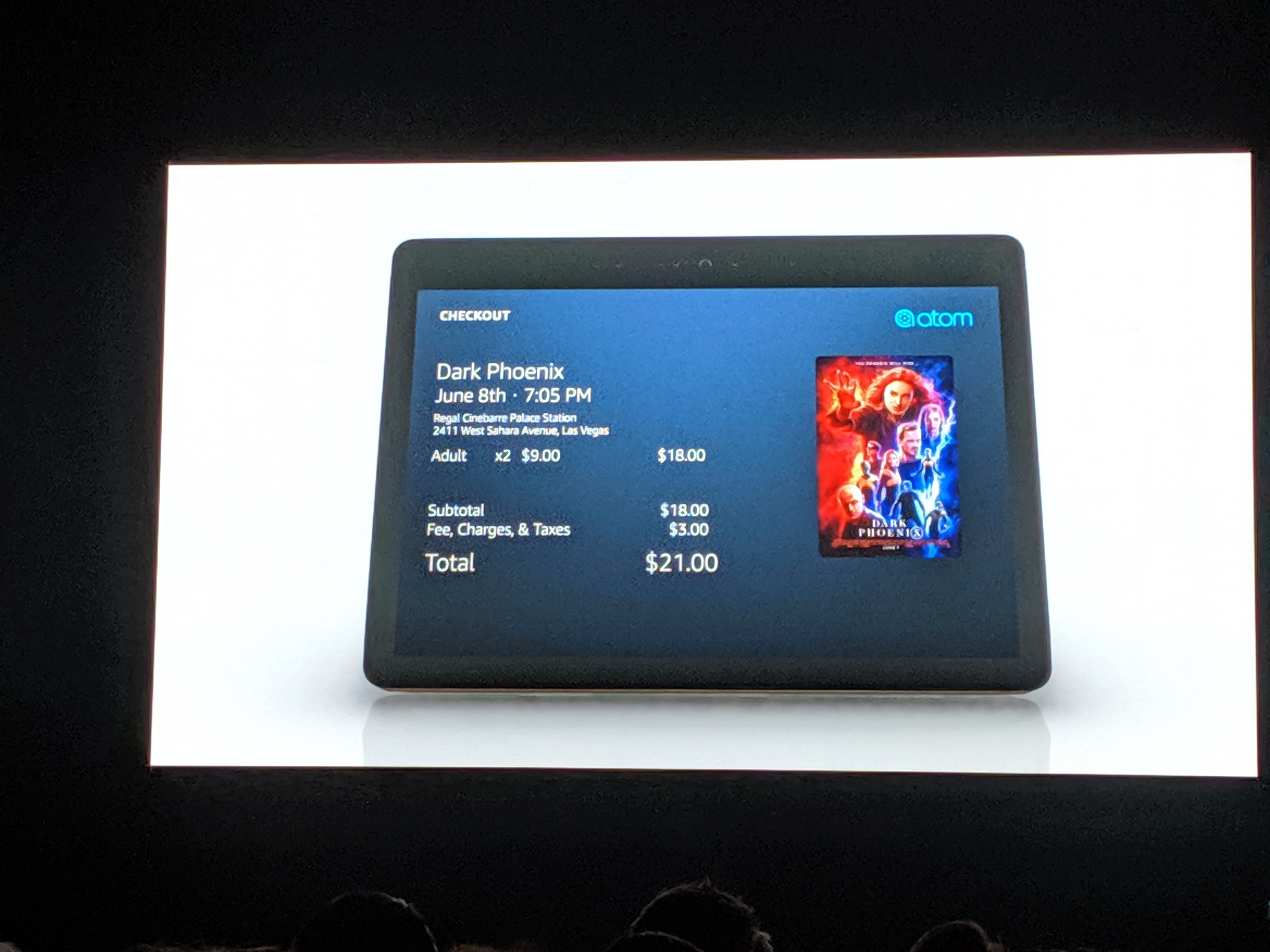
At re:Mars, the company showed a brief demo of how this would work to order movie tickets, for example, taking you from asking “Alexa, what movies are playing nearby?” to actually selecting the movie, buying the tickets and making a restaurant reservation nearby — and then watching the trailer and ordering an Uber.

In many ways, this was a demo that I would have expected to see from Google at I/O, but Amazon has clearly stepped up its Alexa game in recent months.

The way the company is doing this is by relying on a new dialogue system that can predict next actions and easily switch between different Alexa skills. “Now, we have advanced our machine learning capabilities such that Alexa can predict customer’s true goal from the direction of the dialogue, and proactively enable the conversation flow across skills,” the company explained.

This new experience, which Amazon demoed on an Alexa Show, with the appropriate visual responses, will go live to users in the coming months.

Over the last few months, the company also announced today, Alexa became 20% more accurate in understanding your requests.

In addition, developers will be able to make use of some of these technologies that Amazon is using for this new dialogue tool. This new tool, Alexa Conversations, allows developers to build similar flows. Traditionally, this involved writing lots of code, but Alexa Conversations can bring this down by about a third. The developer simply has to declare a set of actions and a few example interactions. Then, the service will run an automated dialogue simulator so that the developers don’t actually have to think of all the different ways that a customer will interact with their skills. Over time, it will also learn from how real-world users interact with the system.

05 Jun 06:02

[NUMBERS] Le podcast, un marché publicitaire à 1 milliard de dollars aux Etats-Unis en 2021

by Patrick Randall

Le marché des publicités dans les podcasts a progressé de 53% en 2018, par rapport à 2017.

L’article [NUMBERS] Le podcast, un marché publicitaire à 1 milliard de dollars aux Etats-Unis en 2021 est apparu en premier sur FrenchWeb.fr.

04 Jun 19:44

Gorgeous Variant Fan Covers and Artwork for Supergirl Comics

by Geeks are Sexy

A series of gorgeous variant cover for Supergirl comics by artist Artgerm.

[Source: Artgerm | Via GG]

The post Gorgeous Variant Fan Covers and Artwork for Supergirl Comics appeared first on Geeks are Sexy Technology News.

01 Jun 22:10

Paper Strandbeest Is Strong Enough To Walk

by Jenny List

Most readers will be familiar with the work of the Dutch artist Theo Jansen, whose Strandbeest wind-powered mechanical walking sculptures prowl the beaches of the Netherlands. The Jansen linkage provides a method of making machines with a curious but efficient walking gait from a rotational input, and has been enthusiastically copied on everything from desktop toys to bicycles.

One might think that a Jansen linkage would be beyond some materials, and you might be surprised to see a paper one. Step forward [Luis Craft] then, with a paper walking Strandbeest. Designed in Blender, cut on a desktop CNC paper cutter, and driven by a pair of small robots linked to an Arduino and controlled by a Bluetooth link, it has four sets of legs and can push around desktop items. We wouldn’t have thought it possible, but there it is.

He claims that it’s an origami Strandbeest, but we’re not so sure. We’re not papercraft experts here at Hackaday, but when we put on our pedantic hat, we insist that origami must be made of folded paper in the Japanese style rather than the cut-and-glue used here. This doesn’t detract from the quality of the work though, as you can see in the video below.

We think this is the first paper Strandbeest we’ve seen, but we’ve brought you countless others over the years. Here’s [Jansen]’s latest, wave-like take on the idea.

31 May 21:27

Leap Motion racheté par une société de contrôle haptique anglaise

by Pierre Lecourt

Six ans se sont écoulés depuis le Buzz planétaire de Leap Motion. La marque qui, avec de simples capteurs infrarouges et un algorithme un peu fou, permettait de comprendre les objets situés dans son champ de vision. En 2013, la Start Up recevait 300 millions de dollars et réussissait un financement participatif magistral.

Leap Motion

Faute de développements réellement utiles, d’intérêt pour les dévellopeurs à vrai dire avec un modèle économique passant exclusivement sur un store un peu moisi piloté par Leap Motion lui même, la sauce n’a pas pris. Si la société avait simplement demandé des royalties sur les  matériels et une faible licence sur le logiciel, peut être que le sort en aurait été autrement. Mais avec l’obligation de vendre ses développements sur le store de la marque, personne n’a eu ni la publicité méritée, ni les retours financiers pour continuer à développer des applications.

Leap Motion North Star

Résultat, après une approche d’Apple pour acquérir cette technologie de contrôle gestuel, c’est finalement un autre acteur du monde de la VR qui s’en empare. UltraHaptics développe des solutions de retours haptiques pour la VR comme pour le mobilier tactile. Avec Leap Motion, ils pourront proposer une solution probablement plus efficace encore. La marque vise surtout les kiosques, les tableaux de bord et autres outils domotiques. On imagine l’intérêt d’une borne interactive située derrière la vitre d’un magasin ou l’intérêt de coupler un retour haptique qui crée une sensation de toucher d’un objet virtuel avec la visualisation précise de vos mains dans l’espace quand vous avez un casque VR vissé sur la tête.

C’est probablement la fin de Leap Motion comme produit accessible directement au grand public.

Source : The Wall Street Journal

Leap Motion racheté par une société de contrôle haptique anglaise © MiniMachines.net. 2019

28 May 21:53

Astounding AI Guesses What You Look Like Based on Your Voice

by Jon Christian
By analyzing only a short audio clip of a person's voice, this artificial intelligence reconstructs what they might look like in real life.

Vox Humana

A new artificial intelligence created by researchers at the Massachusetts Institute of Technology pulls off a staggering feat: by analyzing only a short audio clip of a person’s voice, it reconstructs what they might look like in real life.

The AI’s results aren’t perfect, but they’re pretty good — a remarkable and somewhat terrifying example of how a sophisticated AI can make incredible inferences from tiny snippets of data.

Biometric Characteristics

In a paper published this week to the preprint server arXiv, the team describes how it used trained a generative adversarial network to analyze short voice clips and “match several biometric characteristics of the speaker,” resulting in “matching accuracies that are much better than chance.”

That’s the carefully-couched language of the researchers. In practice, the Speech2Face algorithm seems to have an uncanny knack for spitting out rough likenesses of people based on nothing but their speaking voices.

Face/Off

The MIT researchers urge caution on the project’s GitHub page, acknowledging that the tech raises worrisome questions about privacy and discrimination.

“Although this is a purely academic investigation, we feel that it is important to explicitly discuss in the paper a set of ethical considerations due to the potential sensitivity of facial information,” they wrote, suggesting that “any further investigation or practical use of this technology will be carefully tested to ensure that the training data is representative of the intended user population.”

Editor’s note: This story mistakenly identified Speech2Voice as a Carnegie Mellon University project, not an MIT one. It has been updated.

READ MORE: Speech2Face: Learning the Face Behind a Voice [arXiv]

More on neural networks: A Neural Net Hooked Up to a Monkey Brain Spat Out Bizarre Images

The post Astounding AI Guesses What You Look Like Based on Your Voice appeared first on Futurism.

28 May 16:38

Wireless LEDs Aren’t A First, But You Can Make Your Own

by Brian Benchoff

Wireless LEDs. That’s what [Scotty Allen] found in Japan, and if you find something you just have to replicate it.

[Scotty] found these wireless LEDs in a display stand for model makers and gunpla. Because you don’t want to run wires, drill holes, and deal with fiber optics when illuminating plastic models, model companies have come up with wireless LEDs. Just glue them on, and they’ll blink. It requires a base station, but these are wireless LEDs.

After buying a few of these LEDs and sourcing a base station, [Scotty] found the LEDs were three components carefully soldered together: an inductor, two caps, and the LED itself. The base station is simply two coils and are effectively a wireless phone charger. Oh, some experimentation revealed that if you put one of these wireless LEDs on a wireless phone charger it’ll light up.

The next step is of course replication, so [Scotty] headed out to Akihabara and grabbed some wire, resistors, and LEDs. The wire was wrapped into a coil, a LED soldered on, and everything worked. This is by no means the first DIY wireless LED, as with so many technologies this too hit fashion first and you could buy press-on nails with embedded wireless LEDs for years now. Check out the video below.

27 May 07:54

Hypervoix (2/2) : les enjeux de la voix au-delà de la voix

by Hubert Guillaud

L’enjeu des assistants vocaux ne se limite pas à leur seule conception sonore et vocale, comme nous le rappelions dans la première partie de ce dossier. A l’occasion de la journée d’étude Hypervoix qui avait lieu le 15 avril à Paris, retour sur les autres enjeux de conception que posent les assistants vocaux en élargissant le champ des questions et des critiques.

Assistants vocaux : quelles voix pour le design ?

Anthony Masure (@anthonymasure), maître de conférences et chercheur en design, co-organisateur de cette journée d’étude, a introduit la matinée (voir sa présentation) en dressant le bilan d’une précédente journée d’étude, intitulée Vox Machines (dont nous avions rendu compte). Il est revenu notamment sur les projets produits par les étudiants du master Design transdisciplinaire, cultures et territoires de l’université de Toulouse-Jean Jaurès, suite à cette journée, qui ont questionné, par exemple, les enjeux de la normativité des voix (via la question des accents régionaux), ceux de l’interaction entre la voix et sa représentation visuelle (ou comment rendre tangible les voix et les sons, via les projets dernier contact et swiiiing) ou encore d’éprouver de nouvelles formes de commandes vocales (via un sextoy à commande vocale par exemple)… Autant d’exemples et de prototypes qui soulignent combien les usages stéréotypés des assistants vocaux tels qu’ils se proposent aujourd’hui peuvent être subvertis.

Pour Anthony Masure, une conception critique des assistants vocaux nécessite d’interroger les limites des systèmes proposés actuellement. Comment rendre les techniques qui sous-tendent le fonctionnement de ces objets, intelligibles ? Comment ouvrir les usages ? Comment associer les interfaces vocales aux interfaces graphiques ? Comment travailler la question vocale dans toutes ses dimensions et penser l’interaction sonore au-delà de la voix ?… Telles sont quelques-uns des enjeux que posent ces appareils à l’heure où la question vocale incarnée dans les assistants vocaux et leur apparente simplicité ne cesse de masquer la complexité de leur fonctionnement. C’était par exemple tout l’enjeu du travail de Kate Crawford et Vladan Joler qui ont tenté de mettre à jour toute la complexité d’Amazon Echo, de ses impacts techniques de transcription entre la voix et le texte jusqu’au rôle des transcripteurs et écouteurs humains qui se dissimulent derrière ces systèmes présentés pourtant comme complètement automatisés.

le lustre d'iPhone de Made In MachinaDerrière l’aspect ludique de ces appareils, la question de la voix n’est pas sans impacts et enjeux. Par exemple, celle de penser l’interaction vocale au prisme des questions de genre, de classe ou de race. C’est ce que questionne le collectif Feminist Internet qui a travaillé notamment à des prototypes d’une Alexa féministe, pour susciter de la conversation autour des stéréotypes sexistes que perpétuent les assistants trop souvent dotés de voix féminines pour souligner leur serviabilité (et ce alors que les appareils auraient plus de mal à répondre aux commandes provenant de femmes que d’hommes). Bien souvent, contrairement à ce qu’annonce leur marketing, ces appareils qui ne sont pas conçus pour susciter des conversations, mais juste là pour apporter des réponses formatées. Cela montre qu’il est plus que jamais nécessaire d’hybrider la conception des interfaces vocales avec les enjeux de la société d’aujourd’hui. C’est ce que propose par exemple les designers du projet Made in Machina/e, qui veulent faire se rencontrer le design Ikea avec la culture de la fabrication des contrefaçons de matériel électronique des Shanzhai, à l’image des multiples interrogations que pose leur lustre d’iPhone, qui propose de composer son lampadaire de téléphones… On a besoin d’une conception critique des objets technologiques, souligne Anthony Masure en faisant référence au projet de l’artiste Jennifer Lyn Morone, qui a décidé de se transformer elle-même en entreprise, transformant sa santé, son patrimoine génétique, sa personnalité, ses savoir-faire, son expérience en ressources pour en tirer profit. Comment se transformer soi-même en produit qui exploite ses propres ressources ? À l’image des assistants personnels qui exploitent ce qu’on leur dit de nous pour produire leur propre rentabilité depuis l’exploitation de nos données…

« Le design ne peut avoir pour vocation d’accompagner sans heurts le développement du capitalisme cognitif qu’incarnent les assistants vocaux », conclut Anthony Masure. Il n’est pas là pour produire de l’acceptation sociale de procédés qui ne sont pas acceptables. C’est assurément aux designers de trouver des formes d’ancrages permettant de contrecarrer les faisceaux de prescriptions que ces technologies produisent par-devers nous.

Promesses et illusions des interfaces vocales

« Derrière leur promesse de fluidité, d’interaction « naturelle », les assistants vocaux jouent de ce qu’ils disent et entendent, comme de ce qu’ils montrent et cachent de leur fonctionnement. La question de leur conception se joue précisément là, entre ce que l’on voit et ce qui est masqué, entre ce qui est rendu visible, lisible, audible et ce qui est invisibilisé, illisible, et également inaudible ». Cette question de la tension entre visibilité et invisibilité des processus techniques qui façonnent les dispositifs vocaux, est l’une des clés de lecture du programme Hypervoix, explique Cécile Christodoulou, qui copilote ce programme de recherche de la Fing avec Véronique Routin (voir sa présentation).

Depuis leurs apparitions, les principaux usages des assistants vocaux sont demeurés simples et constants : poser une question, lancer sa musique, demander la météo ou programmer une alarme sont toujours en tête des usages. Pourtant, de nouvelles pratiques apparaissent, principalement liées aux fonctions domotiques et ludiques des applications que l’on trouve dans les magasins d’applications vocales qu’ont ouverts Amazon et Google. Pour l’instant, comme le souligne l’étude d’usage de voicebot.ai, le problème de ces applications vocales tierces consiste plutôt à les trouver qu’à les utiliser… Si la découverte était améliorée, peut-être que certaines applications pourraient alors venir bousculer la monotonie des usages des interfaces vocales. Cela ne signifie pas pour autant que l’application vocale de la relation client dont rêvent nombre de grandes entreprises qui se lancent sur le créneau de la voix sera simple à construire… Mais que peut-être, certaines d’entre elles pourraient se faire une place dans le paysage des usages des interfaces vocales.

Le système technique des assistants vocaux demeure complexe, comme l’ont montré Kate Crawford et Vladan Joler. La simple formulation d’une requête telle que “quel temps fait-il ?” implique, pour que l’IA donne une réponse, des ressources naturelles, des lignes d’assemblage, des données et du travail humain pour entraîner la machine. On s’aperçoit que la forme de ces objets, qui semblent si anodins, masque une complexité technique invisible et un coût social, environnemental et économique significatif. Nous sommes encore bien loin de la machine auto-apprenante, intelligente, que les assistants vocaux nous promettent, à l’image du témoignage publié par la Quadrature du net qui montrait comment nos conversations avec les machines sont écoutées, retranscrites, analysées par des humains, véritables « dresseurs d’IA » invisibles. L’impact social des techniques vocales est un enjeu encore bien insuffisamment documenté.

Un autre enjeu majeur de ces technologies repose sur la communication entre l’homme et la machine (ou l’humain derrière la machine) : comment se fait-on comprendre par la machine ? Comment formuler sa requête ? L’art de la conversation avec les machines semble encore à explorer, tant nous sommes loin de la fluidité ou du « naturel » annoncé. Et ce alors que chacun a sa “façon de parler”, son tempo, son style d’interaction, directif, poli, articulé ou non… Sans compter les particularités locales et culturelles : en français par exemple, “Avec ça”, est interprété par erreur comme le mot clé d’activation “Alexa”. « À l’avenir, faudra-t-il inventer de nouveaux langages humain-machine, une langue commune et spécifique à l’interaction avec les machines ? »

La relation de confiance entre l’utilisateur et ces objets connectés est également importante : comment rendre visible la voix ou l’écoute, comment savoir si un objet est équipé d’un micro ou doté d’une voix ? Récemment, lors d’une mise à jour de la suite domotique Nest Secure (le système de sécurité domestique de Google), Google a annoncé que la commande vocale était désormais active, sans avoir jamais prévenu ses clients dans la notice de l’appareil qu’un micro était pré-installé dans l’appareil. Un exemple parmi d’autres qui questionne la confiance que l’utilisateur peut accorder aux concepteurs de ces dispositifs. À titre prospectif, se pose la question de la conception des systèmes vocaux et de leur capacité à rendre visibles l’interaction vocale et l’écoute.

Image du projet AliasLa question de la confiance, de la surveillance, capacité intrinsèque de ces outils, et de l’intrusion dans nos vies privées, ne cesse d’interroger les acteurs du secteur. Plusieurs projets tentent d’apporter des réponses ou de questionner ces enjeux, à l’image du projet Alias, développé par Borek Karmann et Topp Tore Knudsen. Alias se présente comme un « parasite », un couvercle imprimé en 3D qui se fixe au sommet d’une enceinte intelligente ; à l’intérieur, un microphone et deux haut-parleurs produisent un bruit blanc qui empêche le haut-parleur cible de s’activer. Le système permet à l’utilisateur de paramétrer un mot d’activation personnel pour « libérer » l’écoute de son assistant vocal et de permettre aux utilisateurs de retrouver du contrôle sur ces machines.

Finalement, on peut également interroger la réponse unique donnée par l’assistant vocal. À la différence de l’écran, la voix ne permet pas de proposer en simultané plusieurs réponses. C’est une des grandes limites aujourd’hui des assistants vocaux, incapables d’un art de la conversation. Comment la réponse est-elle choisie ? Quelle est sa qualité, pertinence, précision ? L’Arcep, autorité de régulation, alertait dans un rapport sur cet enjeu politique et économique des terminaux : “lorsqu’elles sont contraintes à une restitution orale, les enceintes connectées ne fournissent souvent qu’un seul résultat pour une requête, choisi par l’algorithme de classement. […] il reste que la nécessité d’une réponse unique constitue une restriction structurelle à l’ouverture d’internet.”

Face à ces enjeux (et il y en a d’autres, comme la faible portabilité des données vocales ou les limites de l’interaction quand elle est uniquement basée sur la voix), le défi est de parvenir à mieux cartographier et prioriser ces questions au croisement de la recherche, du développement et de leurs impacts sociaux.

Partager la parole avec les machines

« Le premier outil de régulation d’un État de droit est la parole », explique la philosophe Cynthia Fleury. C’est dire si la voix et ses impacts ne sont pas à prendre à la légère, rappelle la designer Zoé Aegerter de l’agence de design fiction spécialisée dans les questions vocales, Postillon prospective (voir sa présentation .pdf). Notre société est en apparence bavarde, mais ce n’est pas sans finalité. La parole est un moyen d’agir ! Si la parole reste un exercice difficile, qui nécessite d’en maîtriser des codes multiples qui ne sont pas accessibles à tous, celle-ci ne se déploie pas de la même manière et par les mêmes personnes selon qu’elle s’exprime sur un plateau télévisé, à l’Assemblée nationale ou à la terrasse d’un café. En cela, la parole est influencée par les dispositifs dans lesquels elle s’exprime. D’où l’importance de la conception des dispositifs et espaces qui l’accueillent.

Le concerteur vocalise les SMS du publicC’est ce que réalise la designer avec le projet de « concerteur » des causeuses électroniques. Le concerteur est une boîte vocale à laquelle on envoie des messages par SMS et qui, via une voix de synthèse, permet d’écouter les réactions du public à la question à laquelle ils ont répondu par SMS. Pour Zoé Aegerter, ce prototype est un moyen d’humaniser les interfaces en réduisant la distance entre l’humain et la technique. A l’heure où l’humain perd le monopole de la parole et doit le partager avec les machines, il est nécessaire de réfléchir à développer des modes de communication inter-espèces plus accessibles.

Trop souvent encore, la machine ne comprend pas l’intention. Quand on demande la météo à un assistant vocal par exemple, l’intention non explicite de la question consiste à savoir si l’on doit prévoir de prendre son parapluie ou comment s’habiller en conséquence… Cela montre que la réponse apportée (« forts risques d’averses annoncés pour demain ») ne correspond pas toujours exactement à l’intention non exprimée. C’est tout l’enjeu du travail de design et de conception des dialogues de la machine d’implémenter des réponses qui correspondent mieux aux attentes humaines. Pour l’instant, l’assistant vocal demeure un pantin technologique qui dépend entièrement des choix de conception qui le façonne. Dans un prototype de jeu pour enfant réalisé pour EDF afin de les sensibiliser aux enjeux écologiques dans l’habitat, la designer a conçu une application vocale où des comédiens donnaient une voix à des objets domestiques que les enfants devaient reconnaître et trouver. Cette voix des objets était elle-même une synthèse, une rencontre hybride entre la voix humaine et celle des machines. Une manière à nouveau d’interroger les enjeux du rapport humain-machine, pour tenter de trouver des pistes pour vivre avec les machines vocales. La designer a produit d’ailleurs des cartes de scénarios de réflexion sur les formes de prospective autour de la parole, en proposant des scénarios qui interrogent les espaces, les identités, les environnements cognitifs comme l’économie de la parole. Un moyen complémentaire pour cartographier les enjeux à venir de la voix à mesure qu’ils vont envahir nos interactions.


Image : cartographie de scénarios d’enjeux prospectifs de la parole par Postillon Prospective.

Vers une relation schizophrénique avec les interfaces vocales ?

Notre collègue Rémi Sussan, journaliste pour InternetActu.net, avait la mission, lors de cette journée d’étude, d’éclairer l’avenir des interfaces vocales.

L’avenir des interfaces, de la relation entre l’homme et la machine, semble balancer, hésiter, entre deux visions, deux tendances opposées : d’un côté la machine qui s’intègre à nous, qui connecte nos cerveaux à des extensions, les augmente ; de l’autre la projection de l’homme dans la machine, notre intégration à des formes de réalité virtuelle. On peut d’ailleurs envisager une synthèse entre ces deux approches : la réalité virtuelle totale, celle où le cerveau se connecte directement au monde virtuel. C’est bien sûr l’idée de base du film Matrix, mais également celle du cyberespace imaginé par l’auteur de science-fiction William Gibson dans son roman Neuromancien.

Les auteurs de science-fiction ont imaginé des futurs lointains qui ne sont bien sûr pas près de se réaliser. Mais on observe déjà des recherches contemporaines qui apparaissent comme des petits pas vers les fantasmes les plus fous… Outre le cyberespace, l’une des présentations sciences-fictionnelles les plus excitantes de la réalité virtuelle est celle donnée par Bruce Sterling dans son livre La Schismatrice. Il y imagine une « arène » où les joueurs doivent se combattre en se retrouvant dans le corps d’une créature dont ils ne connaissent pas la nature et les capacités. Ils doivent donc apprendre à contrôler leurs corps en même temps qu’affronter leur adversaire.

On imagine souvent la réalité virtuelle comme une technologie essentiellement audiovisuelle, mais pour son créateur, Jaron Lanier, l’un des aspects les plus intéressants de cette technologie est justement de permettre à la conscience d’incarner un autre corps.

Côté interfaces cerveau-machine, les auteurs de SF s’interrogent beaucoup sur les conséquences de la délégation de nos facultés mentales à un système technique extérieur. Dans son excellent roman (le meilleur probablement sur le transhumanisme) Accelerando, Charles Stross met en scène un personnage qui ne quitte jamais ses lunettes, qui concentrent la plupart de ses données personnelles et qui est truffée d’algorithmes et d’IA. Ayant perdu ses dernières, il se demande un moment qui il est, il est frappé d’une espèce d’amnésie : « Cliquez sur mon arborescence mémétique, je suis perdu. Oh merde. Qui suis-je ? Qu’est-il arrivé ? Pourquoi tout est-il flou ? Je ne retrouve plus mes lunettes… »

Cette expérience extrême, les chercheurs en lifelogging (activité qui consiste à enregistrer sa vie en permanence) Jim Gemmel et Gordon Bell, en ont eu un avant-goût. Gemmel a eu l’impression de perdre une partie de sa mémoire à la suite d’un crash de disque dur, tandis que Bell s’est demandé si mylifebits, son logiciel de lifelogging, n’allait pas dégrader la capacité de son cerveau biologique à se ressouvenir.

La télépathie, elle, est l’horizon fantasmatique de l’interface cerveau-machine. Du reste, lorsque le neurologue allemand Hans Berger créa le premier électro-encéphalogramme d’un cerveau humain en 1924, c’était au cours de recherches sur ce mystérieux pouvoir paranormal. Reste que la télépathie est un sujet récurrent de la littérature de SF, qui se développe souvent sous la forme d’une évolution du genre humain comme dans Les enfants de Darwin de Greg Bear, ou via des machines, à l’image du professeur Xavier, dans la saga X-Men qui utilise une machine, le Cerebro, susceptible d’accélérer ses pouvoirs mentaux.

Pourrons-nous un jour lire les pensées grâce aux machines ? Là encore, on en est loin, mais des recherches existent déjà dans ce sens, comme celles de Marcel Just et Tom Mitchell à l’université Carnegie Mellon.

Dans sa trilogie Nexus, Crux et Apex, l’écrivain transhumaniste Ramez Naam imagine une molécule capable de relier les cerveaux entre eux. Dans sa Trilogie du Vide, l’auteur de science-fiction Peter Hamilton imagine un « internet de la pensée ». À l’aide d’outils technologiques, les pensées et les sensations de tout un chacun deviennent accessibles à tous. Mais la réalité est encore bien loin de la fiction. Pour l’instant, on en est encore à tester des « interfaces-cerveau-cerveau », comme celle utilisée par Rajesh Rao et Andrea Stocco, à l’université de Washington.

Reste enfin la question de l’IA. Comment celle-ci peut-elle s’intégrer à une interface cerveau-machine ? Dans son roman Aristoï, Walter Jon Williams imagine que ses personnages sont dotés de « personnalités artificielles ». Autrement dit, à l’intérieur même de leur cerveau vivent des entités purement virtuelles, boostées par des implants IA, avec lesquelles le « moi » d’origine peut discuter et à qui il peut demander différents services. Telle personnalité artificielle est capable par exemple de contrôler les niveaux de stress ou de prendre certaines décisions…

Sommes-nous prêts à devenir des « personnalités multiples » et à abandonner ainsi l’unité de notre moi, à héberger en notre sein des entités extérieures à notre esprit ? Nous n’en sommes peut-être pas si loin d’une certaine manière, s’amuse Rémi Sussan. Il existe déjà, aux marges, toute une sous-culture qui tend vers ce but, celle des « tulpamanciens »

En tout cas, ces romans comme ce genre de mouvements marginaux nous montrent que bien souvent, l’imaginaire précède la technologie, et non l’inverse. Et que des promesses des interfaces vocales à la télépathie ou à la schizophrénie… Il n’y a parfois qu’un pas !

Hubert Guillaud

Avec la complicité de Fanny Maurel et Véronique Routin.

Si la question des enjeux et de la prospective des interfaces vocales vous intéresse, le programme Hypervoix de la Fing (éditeur d’InternetActu.net) organise le 6 juin une journée de scénarios extrêmes pour mieux en cartographier les enjeux.

25 May 20:57

Little Lamp To Learn Longer Leaps

by Roger Cheng

Reinforcement learning is a subset of machine learning where the machine is scored on their performance (“evaluation function”). Over the course of a training session, behavior that improved final score is positively reinforced gradually building towards an optimal solution. [Dheera Venkatraman] thought it would be fun to use reinforcement learning for making a little robot lamp move. But before that can happen, he had to build the hardware and prove its basic functionality with a manual test script.


Inspired by the hopping logo of Pixar Animation Studios, this particular form of locomotion has a few counterparts in the natural world. But hoppers of the natural world don’t take the shape of a Luxo lamp, making this project an interesting challenge. [Dheera] published all of his OpenSCAD files for this 3D-printed lamp so others could join in the fun. Inside the lamp head is a LED ring to illuminate where we expect a light bulb, while also leaving room in the center for a camera. Mechanical articulation servos are driven by a PCA9685 I2C PWM driver board, and he has written and released code to interface such boards with Robot Operating System (ROS) orchestrating our lamp’s features. This completes the underlying hardware components and associated software foundations for this robot lamp.

Once all the parts have been printed, electronics wired, and everything assembled, [Dheera] hacked together a simple “Hello World” script to verify his mechanical design is good enough to get started. The video embedded after the break was taken at OSH Park’s Bring-A-Hack afterparty to Maker Faire Bay Area 2019. This motion sequence was frantically hand-coded in 15 minutes, but these tentative baby hops will serve as a great baseline. Future hopping performance of control algorithms trained by reinforcement learning will show how far this lamp has grown from this humble “Hello World” hop.

[Dheera] had previously created the shadow clock and is no stranger to ROS, having created the ROS topic text visualization tool for debugging. We will be watching to see how robot Luxo will evolve, hopefully it doesn’t find a way to cheat! Want to play with reinforcement learning, but prefer wheeled robots? Here are a few options.

23 May 19:22

Microsoft’s new language learning app uses your phone’s camera and computer vision to teach vocabulary

by Sarah Perez

Eight Microsoft interns have developed a new language learning tool that uses the smartphone camera to help adults improve their English literacy by learning the words for the things around them. The app, Read My World, lets you take a picture with your phone to learn from a library of more than 1,500 words. The photo can be of a real-world object or text found in a document, Microsoft says.

The app is meant to either supplement formal classroom training or offer a way to learn some words for those who didn’t have the time or funds to participate in a language learning class.

Instead of lessons, users are encouraged to snap photos of the things they encounter in their everyday lives.

“Originally, we were planning more of a lesson plan-style approach, but through our research and discovery, we realized a Swiss army knife might be more useful,” said Nicole Joyal, a software developer intern who worked on the project. “We wound up building a tool that can help you throughout your day-to-day rather than something that teaches,” she said.

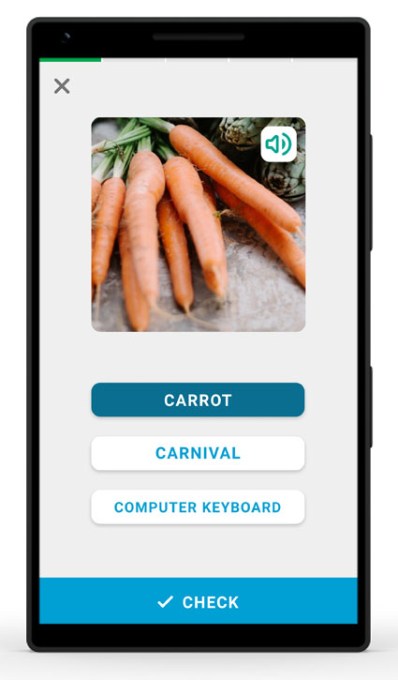
Read My World uses a combination of Microsoft Cognitive Services and Computer Vision APIs to identify the objects in photos. It will then show the word’s spelling and speak the phonetic pronunciation of the identified vocabulary words. The photos corresponding to the identified words can also be saved to a personal dictionary in the app for later reference.

Finally, the app encourages users to practice their newly discovered words by way of three built-in vocabulary games.

The 1,500-word vocabulary may seem small, but it’s actually close to the number of words foreign language learners are able to pick up through traditional study. According to a report from the BBC, for instance, many language learners struggle to learn more than 2,000 to 3,000 words even after years of study. In fact, one study in Taiwan found that after nine years of learning a foreign language, students failed to learn the most frequently-used 1,000 words.

The report also stressed that it was most important to pick up the words used day-to-day.

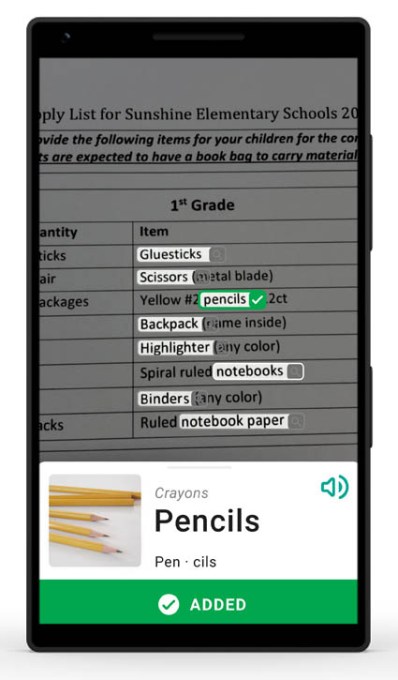
Because the app focuses on things you see, it’s limited in terms of replacing formal instruction. After gathering feedback from teachers and students who tested an early version, the team rolled out a feature to detect words in documents too. It’s not a Google Lens-like experience, where written words are translated into your own language — rather, select words it can identify are highlighted so you can hear how they sound, and see a picture so you know what it is.

For example, the app pointed at a student’s school supply list may pick out words like pencils, notebooks, scissors and binders.

The app, a project from Microsoft’s in-house incubator Microsoft Garage, will initially be made available for testing and feedback for select organizations. Those who work with low literacy communities at an NGO or nonprofit can request an invitation to join the experiment by filling out a form.