Shared posts

22 May 21:00

Driverless Range Rovers Collaborate in Tiny Freeway Model

by Jeremy S. Cook

Researchers from the University of Cambridge have deployed a fleet of 1:24 scale autonomous Range Rovers to explore how cars can communicate and work together. Results are promising, with cooperative driving improving traffic flow by 35% in normal driving operation, and a staggering 45% when driving more aggressively.

The experiment takes place on a two-lane simulated freeway marked out on a room’s floor. When properly communicating, SUVs in the right-hand lane can preemptively slow down in order to allow drivers to quickly avoid a stopped car in the left lane, avoiding the need to wait for a random gap in traffic. Driving can be further interfered with by adding a human-controlled aggressive driver, which vehicles also avoid nicely when in communication. Perhaps this improvement is also a lesson in polite and aware driving in general, though data flowing between vehicles gives such systems a vastly improved ability to react.

To accomplish this autonomous and collaborative driving simulation, each mini Rover is embedded with a Raspberry Pi Zero W and uses an L293D motor driver IC for control. While the improved traffic flow and communication is the point of the exercise, the models themselves are quite impressive, and more info on the experiment is available on the project’s research paper.

https://medium.com/media/2c51ea511369cd4131d2e2a365609433/href

[h/t: BBC]


Driverless Range Rovers Collaborate in Tiny Freeway Model was originally published in Hackster Blog on Medium, where people are continuing the conversation by highlighting and responding to this story.

21 May 05:24

Google announces a new $999 Glass augmented reality headset

by Adi Robertson

Google has announced a new version of its business-focused Glass augmented reality headset, which it’s now designating an official Google product instead of an experiment. The Glass Enterprise Edition 2 costs $999, although, like its predecessor, it’s not being sold directly to consumers. It’s got a new processor, an improved camera, a USB-C port for faster charging, and a variety of other updates.

Google still isn’t positioning Glass as a mainstream product. But it seems to be expecting greater sales of the Glass Enterprise Edition 2. The device has been moved out of the Google X “moonshot factory” and into the main Google family of products, letting Google “meet the demands of the growing market for wearables in the workplace,” a...

Continue reading…

17 May 12:27

Google’s Translatotron converts one spoken language to another, no text involved

by Devin Coldewey

Every day we creep a little closer to Douglas Adams’ famous and prescient Babel fish. A new research project from Google takes spoken sentences in one language and outputs spoken words in another — but unlike most translation techniques, it uses no intermediate text, working solely with the audio. This makes it quick, but more importantly lets it more easily reflect the cadence and tone of the speaker’s voice.

Translatotron, as the project is called, is the culmination of several years of related work, though it’s still very much an experiment. Google’s researchers, and others, have been looking into the possibility of direct speech-to-speech translation for years, but only recently have those efforts borne fruit worth harvesting.

Translating speech is usually done by breaking down the problem into smaller sequential ones: turning the source speech into text (speech-to-text, or STT), turning text in one language into text in another (machine translation), and then turning the resulting text back into speech (text-to-speech, or TTS). This works quite well, really, but it isn’t perfect; each step has types of errors it is prone to, and these can compound one another.

Furthermore, it’s not really how multilingual people translate in their own heads, as testimony about their own thought processes suggests. How exactly it works is impossible to say with certainty, but few would say that they break down the text and visualize it changing to a new language, then read the new text. Human cognition is frequently a guide for how to advance machine learning algorithms.

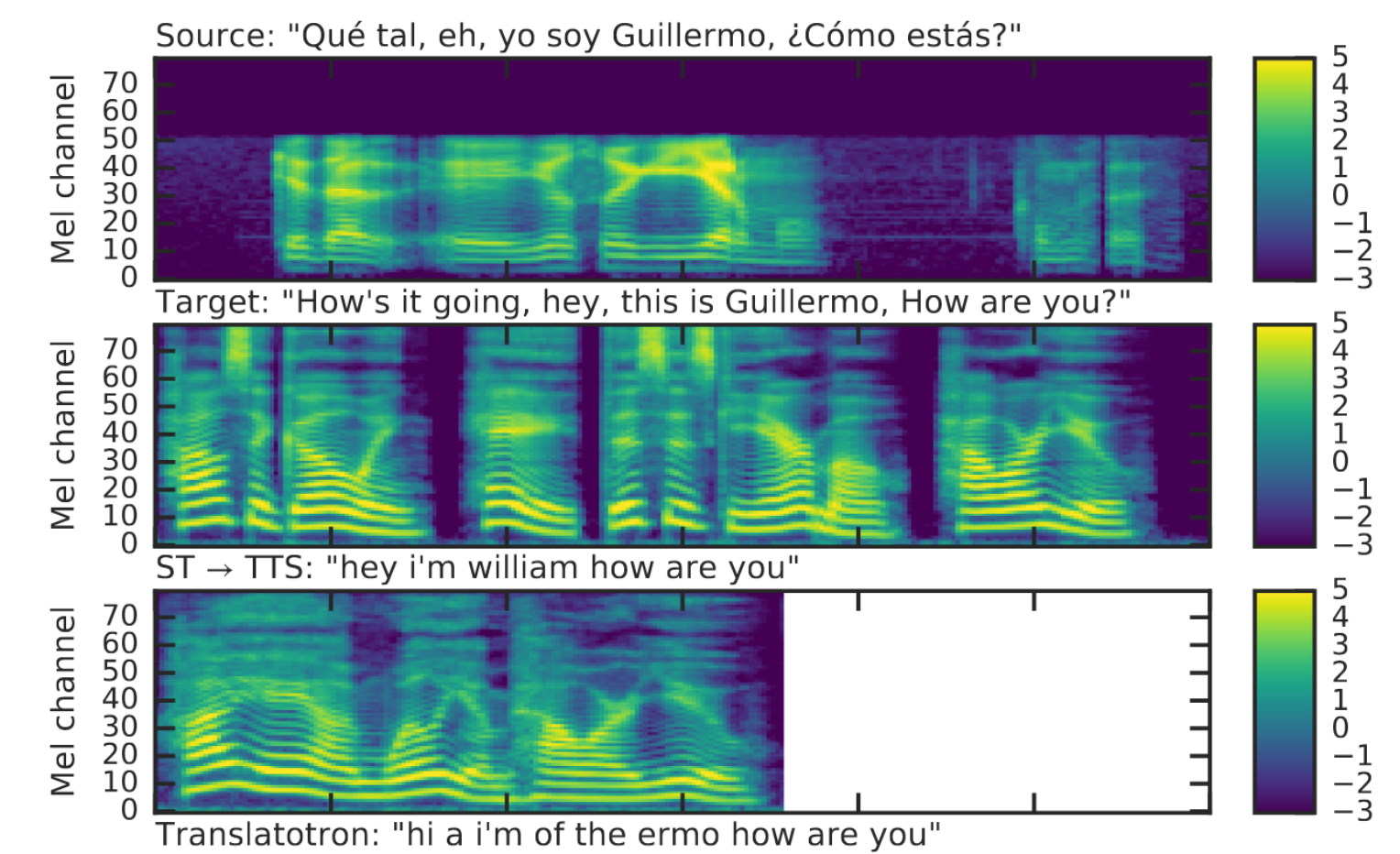
Spectrograms of source and translated speech. The translation, let us admit, is not the best. But it sounds better!

To that end, researchers began looking into converting spectrograms, detailed frequency breakdowns of audio, of speech in one language directly to spectrograms in another. This is a very different process from the three-step one, and has its own weaknesses, but it also has advantages.

One is that, while complex, it is essentially a single-step process rather than multi-step, which means, assuming you have enough processing power, Translatotron could work quicker. But more importantly for many, the process makes it easy to retain the character of the source voice, so the translation doesn’t come out robotically, but with the tone and cadence of the original sentence.

Naturally this has a huge impact on expression, and someone who relies on translation or voice synthesis regularly will appreciate that not only what they say comes through, but how they say it. It’s hard to overstate how important this is for regular users of synthetic speech.

The accuracy of the translation, the researchers admit, is not as good as the traditional systems, which have had more time to hone their accuracy. But many of the resulting translations are (at least partially) quite good, and being able to include expression is too great an advantage to pass up. In the end, the team modestly describes their work as a starting point demonstrating the feasibility of the approach, though it’s easy to see that it is also a major step forward in an important domain.

The paper describing the new technique was published on Arxiv, and you can browse samples of speech, from source to traditional translation to Translatotron, at this page. Just be aware that these are not all selected for the quality of their translation, but serve more as examples of how the system retains expression while getting the gist of the meaning.

13 May 20:41

LiDAR Combined with Voice Assistant for Novel Interface Device

by Jeremy S. Cook

Consider smart home assistants. While useful, their interface methods generally consist of responding to voice commands, and some implement a small touchscreen. Normally, there’s no awareness of the surrounding area to tell where, for instance, you’re standing, or if there is an object on the table next to it.

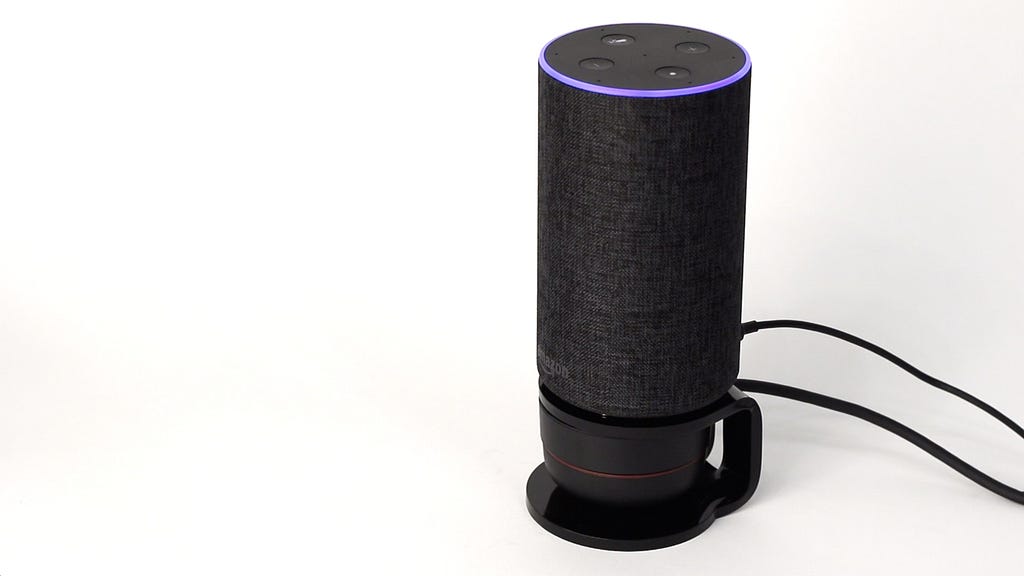
SurfaceSight provides smart assistants with increased contextual awareness. (📷: Gierad Laput)

SurfaceSight — a new project from Gierad Laput and Chris Harrison from Carnegie Mellon University’s Future Interfaces Group — takes a (literal) new spin on things, placing a rotating LiDAR unit underneath an Amazon Echo. This technology, most well known for its use in autonomous vehicles, is able to detect when something is in front of the sensor, and can group readings into contiguous objects. With this data, it uses machine learning to classify the type of item sensed, and can even track hand movements and respond to gestures.

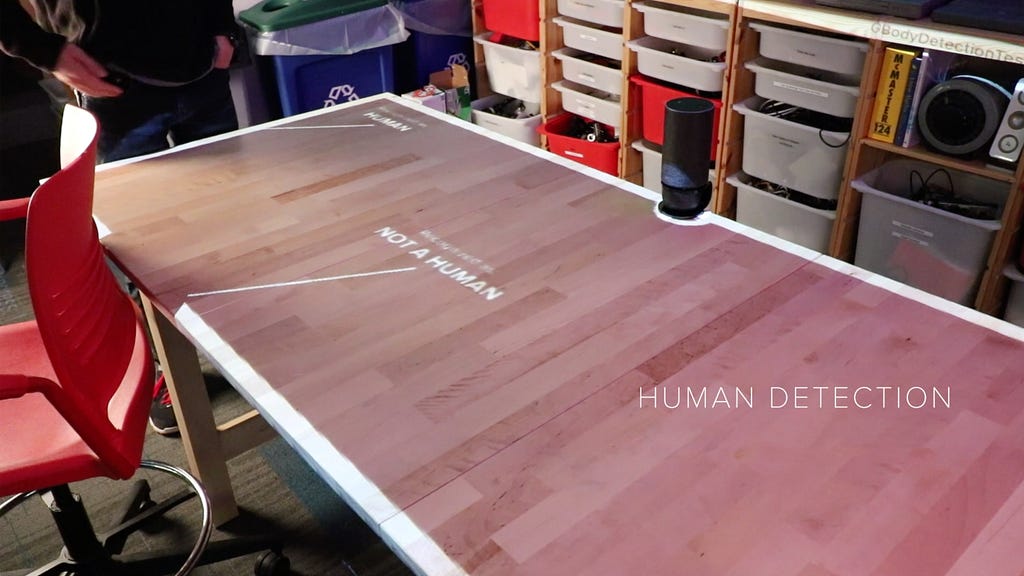
SurfaceSight can also track people and estimate which way they are facing. (📷: Gierad Laput)

The video below shows off some truly impressive abilities, as it’s capable to discriminate between different types of similarly sized objects. It can even roughly sense in which direction a human is facing and modify the way it interacts in response. Possible applications for such tech could include a smart wall or desk surface, or perhaps functionality to tell you where you left your keys or sunglasses!

https://medium.com/media/99efb05232f2a35abefa8cb7d673fc42/href

LiDAR Combined with Voice Assistant for Novel Interface Device was originally published in Hackster Blog on Medium, where people are continuing the conversation by highlighting and responding to this story.

13 May 10:29

Louis Vuitton and Royole put two web browsers on a handbag

by Jon Porter

Of all the companies to embrace flexible displays in 2019, we didn’t think the fashion brand Louis Vuitton would be among them. Yet, that’s exactly what it’s done with its new lineup of handbags featuring 1920 x 1440 resolution flexible AMOLED displays from Royole. Engadget reports that LV plans to produce two variations of the so-called Canvas of the Future handbags, one with a single display on each side, and the other with two.

On the runway at Cruise 2020, the screens were set to show an array of colorful urban visualizations, but in a video posted to Instagram one of the bags could also be seen showing a pair of scrolling web browsers. Louis Vitton says that the idea for the handbag is for it to become an extension of the...

Continue reading…

13 May 10:28

Sephora débarque sur Google Nest Hub

by Mirabelle Belloir

Sephora propose des tutos et des astuces beauté sur Google Nest Hub. Il s'agit d'une sorte de Google Home muni d'un écran. Cet appareil se commande à la voix et va être vendu sur le site de Sephora à partir du 28 mai 2019.

 Lire l'article
11 May 21:28

The Transcaliber VR Controller Can Render Different 2D Shapes by Changing Its Mass

by Cabe Atwell

We humans, are able to estimate the shape of an object by feeling their mass properties while holding them in our hands without needing to see what they are. This sense doesn’t translate well in the VR world, as most controllers offer a static design, with most feedback being vibrational with no options to sense an objects weight or perceived shape. Now some engineers from the University of Tokyo have designed a VR controller that allows you to “feel” various objects in a virtual space by changing its shape.

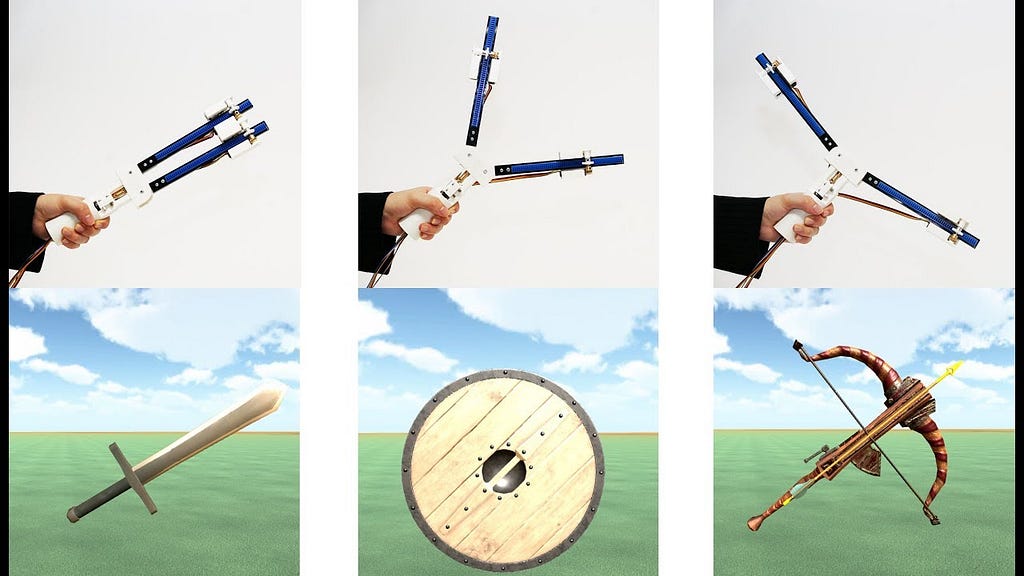
The Transcalibur VR controller uses an angular mechanism to open and close a pair of arms that are outfitted with weighted shifting devices, which changes the controllers mass by moving into different positions. (📷: Jotaro Shigeyama)
“We built a computational perception model using a data-driven approach from the collected data pairs of mass properties and perceived shapes. This enables Transcalibur to easily and effectively provide convincing shape perception based on complex illusory effects.”

The Transcalibur VR controller was designed using an angular mechanism (a worm gear drive and a pair of worm wheels) to rotate two independent arms made from acrylic plate and plastic gear tracks. Each arm is equipped with a weight mechanism (also consisting of a worm gear and wheel) that house lead bearings, which travel along the arms to adjust mass for the virtual object rendering.

The controller renders the VR shape using computational perception models obtained by data collection of targeted forms (i.e.: a sword, shield, or crossbow). That data is fitted to a regression model, which predicts the optimal shape, and configures the controller accordingly. It’s currently unknown if the Transcalibur will ever become available on the market, but here’s to wishful thinking that it might.

https://medium.com/media/d3d57af0f93df605a1afa19e57a0ef5c/href

The Transcaliber VR Controller Can Render Different 2D Shapes by Changing Its Mass was originally published in Hackster Blog on Medium, where people are continuing the conversation by highlighting and responding to this story.

07 May 12:12

Ce découpe pastèque fonctionne comme un moulin à vent pour créer des cubes

by Mélanie D.

L’été approche (bientôt), son beau temps et ses températures élevées aussi … Ça donne soif, on vous ne le fait pas dire. La période parfaite pour se ruer sur les pastèques : rafraîchissantes et sucrées, elles nous sauvent lors des épisodes de canicule. Mais pourtant, aussi délicieuses soient elles, quelle galère lorsqu’il s’agit de devoir les découper ! Alors, afin d’éviter les petits bobos, on a peut-être la solution …

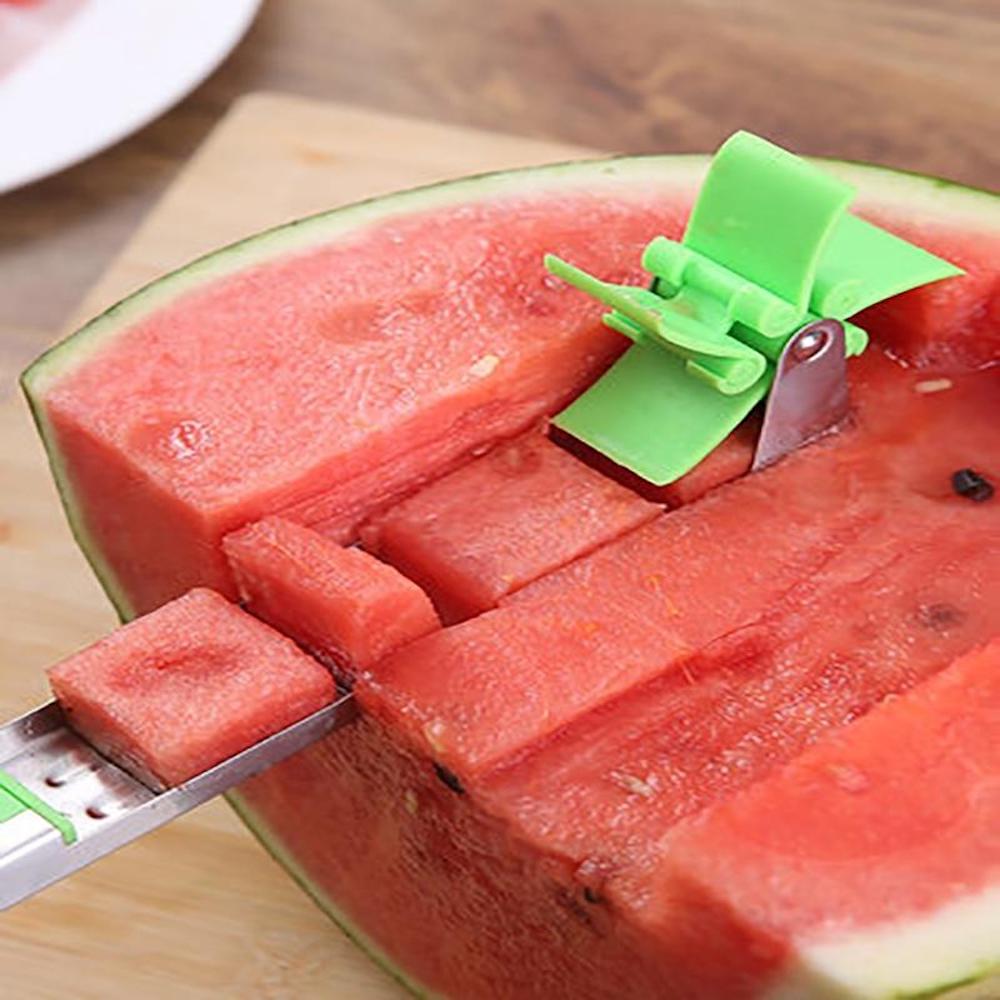
Ce gadget bien pensé, qui ne paye pas de mine, sert à couper votre pastèque ! Grâce à son système malin de “roulette” et avec une légère pression vers l’avant, le découpage se fait tout seul. Les cubes de pastèque découpés sont ensuite recueillis grâce à une petite barre de stockage en acier, placée juste à l’arrière. Et grâce à un système de coulissage, cet espace de stockage peut aussi varier de tailles de cubes selon les envies !

Sans effort, ces cubes parfaitement carrés sont découpés avec cette “roulette”, qui fait d’ailleurs penser à un moulin-à-vent. Grâce au mouvement opéré à la main, cet outil facile d’utilisation ne requiert qu’une simple pression vers l’avant, afin d’obtenir vos précieux bouts de pastèque !

Disponible ici

Le petit plus ? Étant donné que les bouts de cette roulette à couper sont arrondis, aucun danger pour vos petits doigts.

Alors, qu’en pensez-vous ? Parfait pour vous désaltérer sans en mettre partout. Et si vous avez encore du mal à éplucher ou découper d’autres fruits et légumes, on vous conseille cet article sur 20 accessoires de cuisine créatifs, pour vous faciliter la vie !

Crédits : Commonlee

Crédits : Commonlee

Crédits : Commonlee

Crédits : Commonlee

Imaginé par : COMMONLEE
Source :

L’article Ce découpe pastèque fonctionne comme un moulin à vent pour créer des cubes est apparu en premier sur Creapills.

07 May 11:46

What Wireless Communication Standard to Use for Your Next Project

by Alex Wulff

The hobbyist wireless communications space is becoming increasingly crowded with different radios and protocols — this guide will help you choose the right one for your next project!

TL;DR

If you’re just looking for a recommendation without any information, read this section. I go into much more detail below.

  • I need to transmit a small amount of data a long distance without too much power: LoRA
  • I need to transmit a lot of data back and forth from the internet from a remote device: Cellular
  • I need to transmit a lot of data back and forth from the internet from a non-remote device: Wi-Fi
  • I need to communicate with a phone: Bluetooth Low Energy (BLE)
  • I have extreme budget and/or power constraints: Generic 2.4GHz (nRF24L01)
  • I need a really small transmitter: Generic 433 MHz
  • I need extreme flexibility and customization: Amateur Radio

Low-Power Wide Area Networks (LPWANs)

If you’re looking for a system that allows you to send a little bit of data a long distance without much power, LPWANs are the way to go! The main players in this space are LoRa and Sigfox.

LoRa

LoRa, short for long range, is a standardized communication protocol that uses the 900 and 400 MHz ISM bands to send data upwards of a few miles. LoRa modules are inexpensive and easy to integrate with microcontrollers such as Arduino devices or computers like the Raspberry Pi. You can pick up a LoRa module from Amazon for around $20.

The Things Network gateways

Some companies, such as The Things Network, maintain and operate a series of internet-connected gateways that allow you to connect your LoRa devices to the world wide web. These gateways are relatively sparse, however, and offer a fraction of the coverage of cellular networks.

Sigfox

Sigfox coverage in Europe

Sigfox is another LPWAN standard that also uses the 900 MHz ISM band to transmit information. Unlike LoRa, the Sigfox network is centered around internet-connected gateways. Sigfox modules tend to be more expensive than LoRa modules but offer more features.

Connecting to the Internet

Another common use case for wireless communication technologies is sending data back and forth from the internet. The most common technologies that developers utilize for this application are Wi-Fi and cellular.

Wi-Fi

You’re likely already very familiar with Wi-Fi. It offers extremely fast data transfer rates (that you can’t really take advantage of with a slow microcontroller) at medium ranges. Boards like the Raspberry Pi have Wi-Fi built-in, and you can purchase inexpensive modules for around $1 that allow microcontrollers such as Arduino devices to utilize Wi-Fi.

Wi-Fi is a great communications standard choice for indoor projects. Wi-Fi utilizes relatively little power and offers decent ranges of typically a few hundred feet.

Cellular Networks

Cellular modules are more expensive and use more power than Wi-Fi modules but offer unparalleled internet coverage. Some microcontrollers, such as the Particle Electron, have cellular modules built in. You can also buy 3G Arduino-compatible modules for around $30. You can purchase USB cellular dongles that allow devices like the Raspberry Pi to communicate over cellular networks.

Cell service can be expensive and cellular modems use a lot of power, so only choose cellular networks if you need to.

Device-to-Device Communications

If you need to have two microcontrollers communicate with one another then you’re in luck; there’s plenty of options out there.

Low-Cost 2.4 GHz

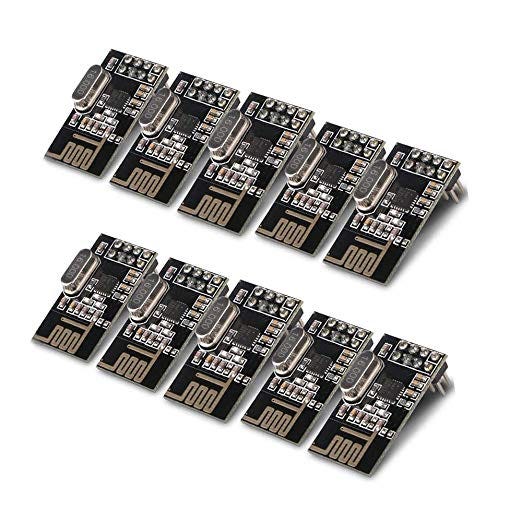
rRF24L01 modules

There are tons of low-cost modules that utilize the 2.4 GHz band to create point-to-point communication networks. One of my personal favorites is the nRF24L01. Each radio is less than $1 and they’re extremely easy to use. These devices can communicate at a maximum range of a few hundred feet and are only capable of sending small data packets. This module is a great choice if you need to get two microcontrollers talking, or want a low-power communications solution.

Zigbee

Zigbee is a standardized communication technology designed to allow interoperable communications between devices. The XBee form-factor is extremely popular for Arduino devices. These modules are much pricier than some radios but offer great reliability and interoperability between existing devices.

Generic 433 MHz

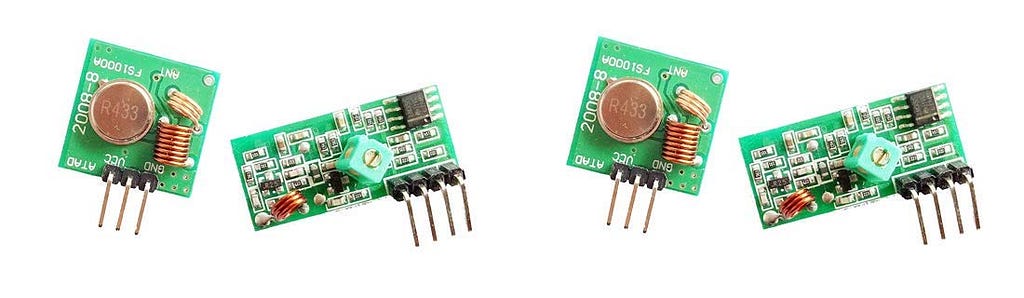
These devices are perhaps the simplest communications hardware you can reliably use. They are incredibly inexpensive but can still transmit a small amount of data a few hundred feet. The only downside is you need a separate module for transmitting and receiving. So, if your application only needs to either transmit or receive data these are a great choice.

Communicating with Phones, Tablets, and Computers

There’s really only one contender in this space: Bluetooth. Every major phone and tablet and most computers have Bluetooth communications chips; this makes communicating with a variety of different devices extremely convenient. Standards such as Bluetooth Low Energy (BLE 4.0) allow tiny wearable devices to operate for months at a time without recharging or changing batteries. You can pick up inexpensive Bluetooth 4.0 modules for $10, or more well-documented modules from companies such as Adafruit for around $20.

Amateur Radio

The term “amateur radio” refers to radio activities in amateur radio, or “ham radio”, bands. Amateur radio equipment can be difficult to operate, and you need a license to do so, but it offers the utmost flexibility for unique communications tasks. It requires much more radio knowledge to construct a functioning amateur radio communications system than some of these cheap modules but it is a rewarding experience.

That’s all! If you enjoyed this, you can check out my website and more of my writing. Think there’s anything I missed? Let me know in the comments!


What Wireless Communication Standard to Use for Your Next Project was originally published in Hackster Blog on Medium, where people are continuing the conversation by highlighting and responding to this story.

14 Mar 07:32

“Patients casse-couilles” : le livre qui rassemble les perles entendues aux urgences

by Victor M.

Si on associe généralement les urgences d’un hôpital à un lieu effrayant et anxiogène, vous allez voir aujourd’hui qu’elles peuvent aussi être la source de bonnes doses de fous rires. Sonia Camay, médecin urgentiste depuis maintenant 12 ans, a vu défiler un nombre incalculable de patients. Et si le rôle du médecin urgentiste est de prendre en charge le patient pour préserver sa santé, il doit aussi savoir l’écouter et discuter avec lui… Ce qui donne parfois lieu à des discussions plutôt insolites.

Sonia Camay a donc eu l’idée d’écrire un livre référençant ses meilleures anecdotes hilarantes et les fameuses perles qu’elle a pu entendre de la bouche des patients qui ont croisé son chemin. Baptisé “Patients casse-couilles”, ce recueil de phrases et d’anecdotes insolites entendues dans les couloirs de l’hôpital nous montre une facette totalement différente des urgences.

Crédits : Sonia Camay / Les Éditions de l’Opportun

Entre les patients qui se trompent de mots, ceux qui visiblement ne connaissent pas très bien leurs corps, les enfants tyranniques ou encore les parents un peu trop portés sur la chose, les différents thèmes abordés avec beaucoup de légèreté montrent que le quotidien de médecin urgentiste peut parfois donner lieu à des situations absolument improbables. On imagine déjà la réaction de Sonia Camay et de ses collègues qui ont dû répondre, avec sérieux et professionnalisme, à ces perles de patients à mourir de rire.

Commander le livre

L’équipe de Creapills a sélectionné pour vous 15 perles insolites de patients, présentes dans le livre. Le recueil “Patients casse-couilles” sera disponible à partir du 21 mars prochain pour 9,90€, mais vous pouvez déjà le pré-commander ici. Une bonne idée qui aborde le sujet anxiogène des urgences en dédramatisant la situation à travers ces expériences vécues par une médecin urgentiste dont les journées ne sont visiblement pas de tout repos !

Crédits : Patients casse-couilles

Crédits : Patients casse-couilles

Crédits : Patients casse-couilles

Crédits : Patients casse-couilles

Crédits : Patients casse-couilles

Crédits : Patients casse-couilles

Crédits : Patients casse-couilles

Crédits : Patients casse-couilles

Crédits : Patients casse-couilles

Crédits : Patients casse-couilles

Crédits : Patients casse-couilles

Crédits : Patients casse-couilles

Crédits : Patients casse-couilles

Crédits : Patients casse-couilles

Crédits : Patients casse-couilles

Imaginé par : Sonia Camay pour Les Éditions de l’Opportun
Source : franceinter.fr

L’article “Patients casse-couilles” : le livre qui rassemble les perles entendues aux urgences est apparu en premier sur Creapills.

14 Mar 07:28

Comme le bon vin

by CommitStrip

14 Mar 07:23

Industrial E-Stop Button Becomes Novel Computer Interface

by Jeremy S. Cook

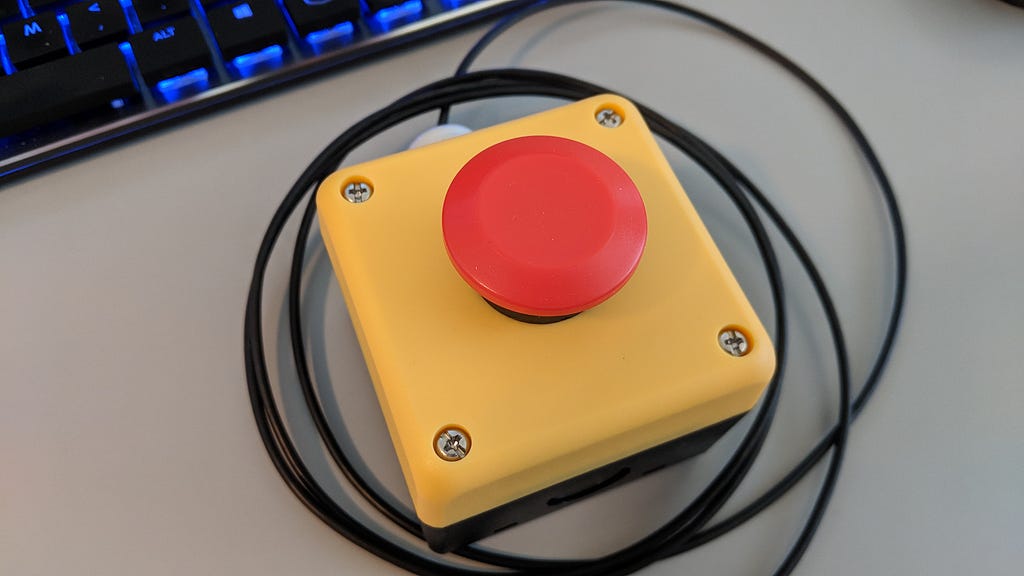
When typing away at your computer, there are likely times where a few keystrokes just don’t cut it, and a big red emergency button would be more appropriate. This, you might assume, is the type of thing that only appears in a cartoon, perhaps featuring an elaborate trap to catch a very fast bird.

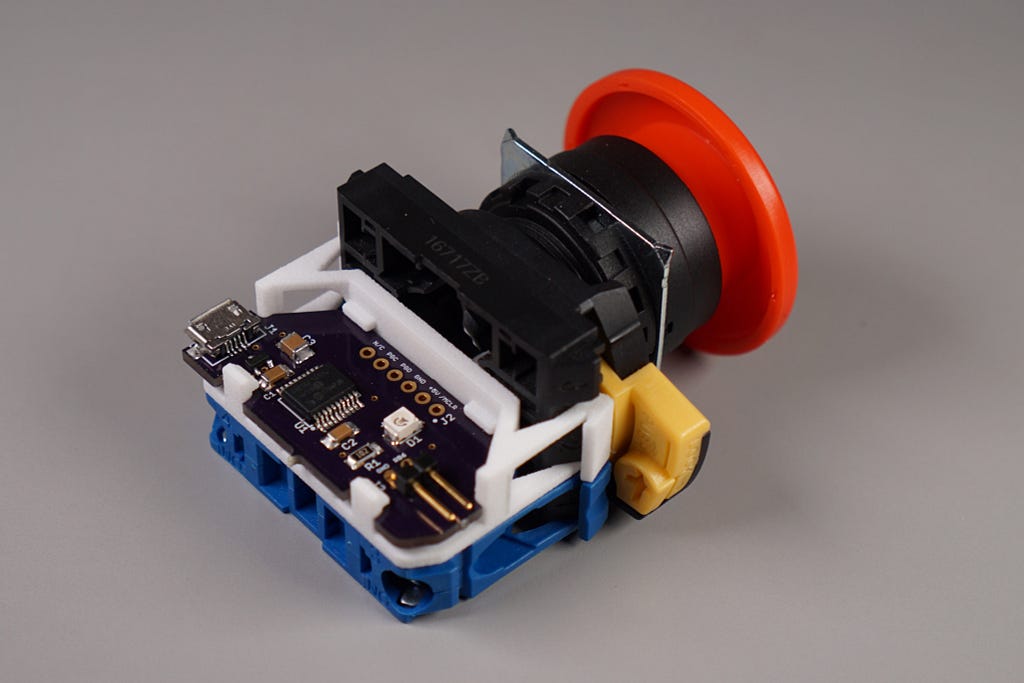
This assumption, however, would now be wrong as Glen Atkins has integrated an HID-capable PIC16F1459 chip inside of an industrial mushroom push button switch. Instead of stopping a heavy assembly cell until reset, his board/software now either inserts a poop emoji into a Microsoft document, or executes a sequence that locks his Linux box at work. Both make sense in their own context, either when firing off an angry email, or clocking out for the day with a final button press.

Electronics-wise, the device is nearly identical to his Single ESC Key USB Keyboard from May 2018, but this build takes things to a whole new level. Rather than merely wire an input from the button’s internals and leave things loose — or glued — inside, he designed a 3D-printed holder based on the manufacturer’s 3D model to nicely mount his custom circuit board. This produced a secure assembly that looks internally almost like it was meant to be there. Notably, per its new USB connection, the unit is no longer appropriate for actual safety-critical applications.


Industrial E-Stop Button Becomes Novel Computer Interface was originally published in Hackster Blog on Medium, where people are continuing the conversation by highlighting and responding to this story.

06 Mar 07:04

How Augmented Reality Soothes Kids Scrapes and Cuts

by Derek E. Baird

Japanese toymaker Bandai has developed a digital spin on mom or dad kissing your boo-boo to make it all better: augmented reality band-aids.

Targeted at kids aged 3–6, these digital band-aids are designed to soothe a child with some consoling words from their favorite animated characters.

Right now, this augmented reality technology is limited to the Japanese kids’ market and characters, but if it catches on, don’t be surprised if American characters like Mickey Mouse, Sponge Bob or My Pretty Pony don’t end up on your kid's knee telling them that everything is going to be okay.

Still, it’s interesting to see the many ways that smartphones and AR technologies are beginning to integrate themselves into our daily, and most basic, tasks.

And while it would be pretty cool to see Luke Skywalker pop up on your hand, nothing is as satisfying to a child as a kiss on the forehead and squeeze from their parent.

Related


How Augmented Reality Soothes Kids Scrapes and Cuts was originally published in Virtual Reality Pop on Medium, where people are continuing the conversation by highlighting and responding to this story.

05 Mar 21:59

En Chine, Starbucks a lancé une tasse à café insolite en forme de patte de chat

by Claire L.

Mais jusqu’où ira la folie et la passion pour les chats ? Les chats sont extrêmement populaires, notamment sur le web, et ça, les marques l’ont bien compris. Elles sont nombreuses à jouer sur cet attrait des chats pour proposer à leurs clients des produits insolites qui sauront satisfaire leur passion pour ces adorables boules de poils.

La dernière marque à avoir joué sur la corde sensible est le géant du café Starbucks qui propose à ses clients en Chine une tasse qui prend la forme d’une patte de chat. Dans le cadre de sa collection “Printemps 2019” sur le thème des fleurs de cerisier, la marque a a proposé à ses clients cette fameuse tasse “Cat Paw” qui prend la forme d’une tasse classique dans laquelle une patte en verre a été sculptée.

Lorsque vous versez votre boisson dans la tasse, ce n’est pas l’intégralité du récipient qui se remplit mais la fameuse patte qui est du coup mise en évidence. Mais ce que Starbucks n’avait visiblement pas prévu, c’est l’attrait du public chinois pour sa nouvelle tasse “patte de chat”

Dans une vidéo partagée sur YouTube par la CGTN (à visionner ci-dessus), on peut voir des clients se bousculer et littéralement se battre pour se procurer l’une de ces tasses en édition limitée. 😓

Initialement commercialisée 199 yuans (environ 26 euros), cette tasse est aujourd’hui proposée sur des sites tiers pour une valeur pouvant atteindre 10 fois ce montant. Si l’initiative était amusante et originale pour la marque, les conséquences et les bagarres engendrées par le côté “exclusif” du produit ont hélas tendance à ternir son image…

Crédits : Starbucks

Crédits : Starbucks

Crédits : __happy_day__

Crédits : __happy_day__

Crédits : __happy_day__

Crédits : koaphan

Imaginé par : Starbucks China
Source : designtaxi.com

L?article En Chine, Starbucks a lancé une tasse à café insolite en forme de patte de chat est apparu en premier sur Creapills.

27 Feb 20:51

How Amazon took 50% of the e-commerce market and what it means for the rest of us

by Jonathan Shieber
Jun-Sheng Li Contributor
Jun-Sheng (Jun) Li is an Executive in Residence at Canvas Ventures and was the former senior vice president of Walmart's global e-commerce supply chain.

As SVP of Walmart’s global ecommerce supply chain for five years until 2018, I had a front row seat to how brick-and-mortar retailers were responding to Amazon’s dominance in e-commerce. Most of us were alarmed. And who could blame us? Today, Amazon has nearly50% of all e-commerce trade.

The way I see it, if you are a brick-and-mortar retailer, you either embrace a digital strategy to become omnichannel or do nothing and become irrelevant.  To fully appreciate the gravity of the situation, let’s step back to understand how we got here. And importantly, start with what I believe is the single, biggest challenge for retailers today.

Holy Grail: Become Truly Omnichannel

Omnichannel retailing has become the goal that every retailer is aiming for — but few know how to achieve. In a nutshell, omnichannel simply means providing customers a seamless, continuous experience wherever customers would like to shop – across any device or store location – with a unified brand experience.

For example, I can buy a pair of shoes from Nordstrom using my smartphone and choose to pick up my purchase at a store or have it delivered to my home. If I want to return the shoes for any reason, I can do so by mail or return them at a store. My interaction with Nordstrom consistently flows from one channel to another.

But from a brick-and-mortar retailer’s perspective, that’s easier said than done.

A Lot More Moving Parts

They say the “devil’s in the details” and I would add the “details are in the supply chain.” And today’s supply chain is more complex than ever – especially if you’re a traditional, brick-and-mortar retailer striving to transform into an omnichannel. To start, you have to get your head around doing things very differently. You will be:

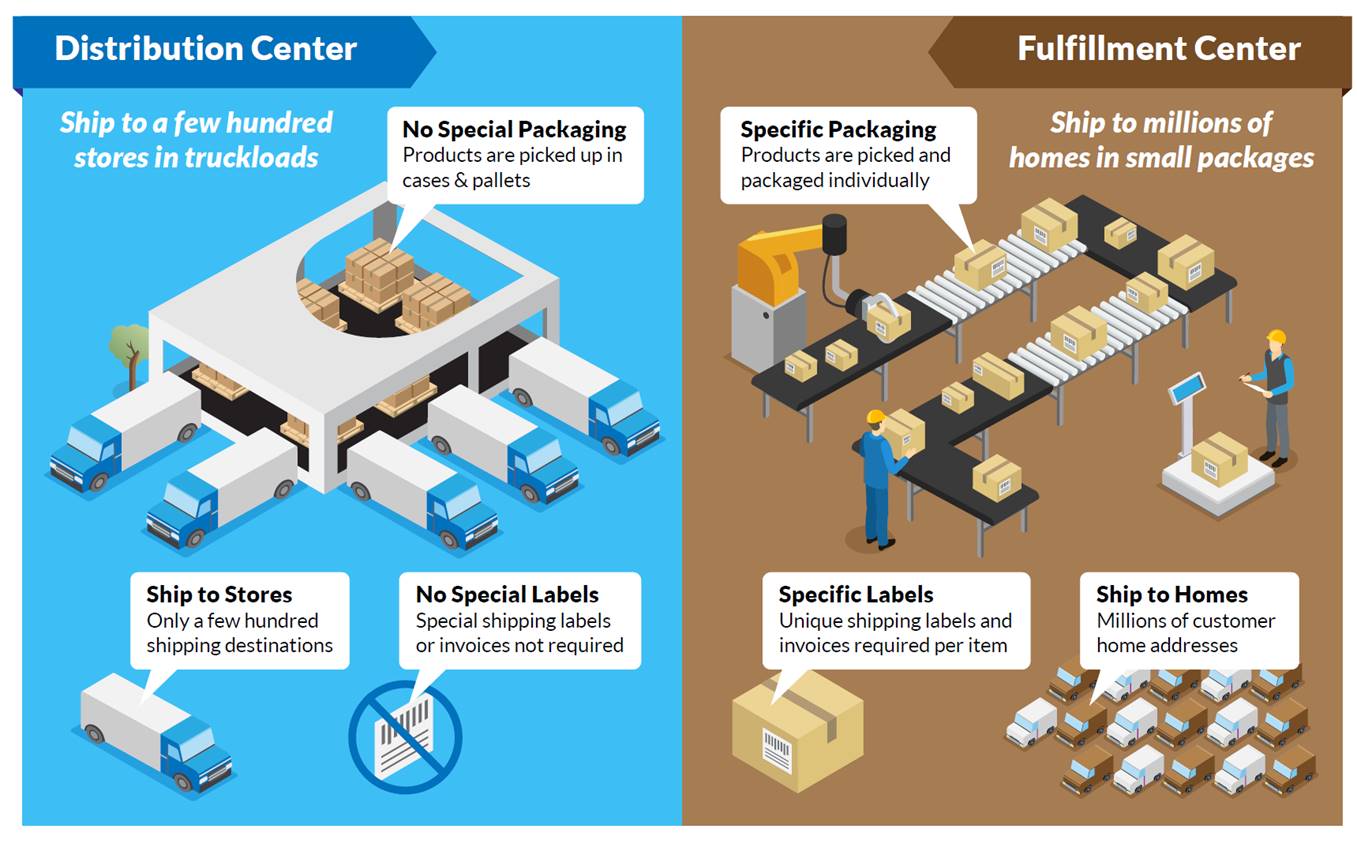
  • Distributing products to millions of homes instead of hundreds of stores
  • Managing millions of SKUs (stock keeping units) instead of thousands
  • Shipping to homes in parcels (including last-mile delivery) instead of truckloads to stores
  • Running fulfillment centers (FCs) in addition to distribution centers (DCs). FCs ship goods directly to customers. DCs ship goods to stores.

Want to Be an Omnichannel?

Be Ready to Add “Fulfillment Centers” to Your Existing Mix of “Distribution Centers”. The level of complexity will increase by orders of magnitude.
Three Key Challenges to Omnichannel Excellence

These are the top-three most intransigent challenges you will face in your omnichannel quest:

  • Organizational and Management Constraints
  • People can be resistant to change. Many find it hard to think in new paradigms.
  • Different business units have different processes, KPIs (key performance indicators) and incentives.

Sharing of assets across all channels can be difficult. For example, how should you allocate warehouse space and balance the availability of products (i.e. inventory) between online and in-store sales?

Process and Systems Challenges

  • First you need to plan: you must aggregate demand forecasting and planning for both physical and online sales by channel.
  • Then figure out what you have: Determine product assortment across all channels: DCs, FCs, your own stores and even third-party locations like a marketplace vendor.
  • Lastly, you need to know where to ship your products from. You must instantaneously track what was sold against a global inventory spread across a myriad of locations.

Continuous Innovation

A brick-and-mortar retailer will need to continually learn new processes and technologies that impact your supply chain. For example:

  • Learn new processes when integrating FCs into your supply chain network. This includes new ways to receive, sort, store, pick, pack, ship, house products in lockers or stores for drive-through and pick-ups. These processes are completely different from what is used at traditional DCs or stores.
  • Keep abreast of packaging technology, both the method of packing (optimizing how much you can fit into a package) and the materials (consider what’s best for long distance, the environment, costs, and the protection of the product, especially if it involves home delivery of groceries with thermal foam or totes.)
  • Meet the demands of home grocery shopping and “last mile” deliveries. In addition to delivering goods in full truckloads from DCs to stores, you must learn how to operate so-called “milk runs” from stores to customer homes. When delivering groceries to a home, you must adhere to certain time slots and sometimes make “live deliveries” to ensure perishable goods are received promptly and safely. This entails a constantly refreshed and technologically modern TMS (Transportation Management System).

 Amazon Had a Wide, Open Field

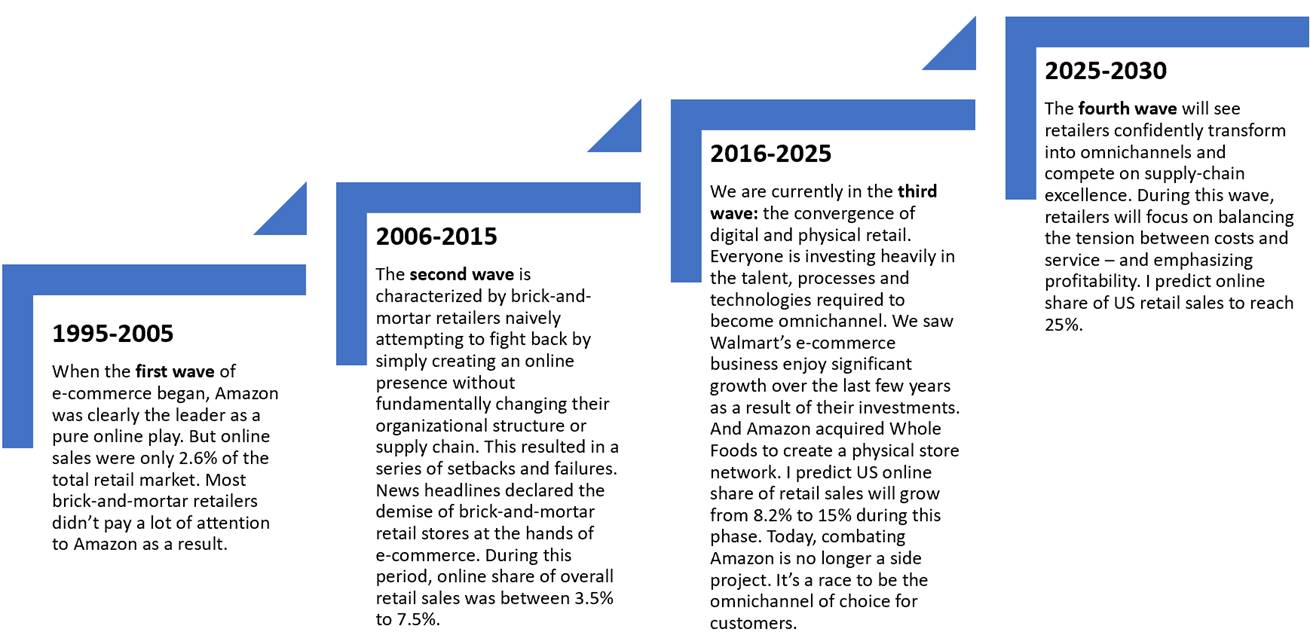
Going back to the headline of this article, how did Amazon become the e-commerce behemoth that it is today with seemingly little resistance from traditional retailers? Was the brick-and-mortar executives asleep at the wheel? To answer that question, some historical framing could help: 

The Four Waves of Ecommerce
So What’s a Retailer to Do?

I think we’re at the point of no return. The omnichannel train has left the station.  What would I do if I ran a retail business today? First, I would accept the fact that customers now love to shop both online and offline, and they expect 2-day shipping for certain products and near flawless execution. The bar has been set high by Amazon. Then I would create a game plan that leverages my existing physical assets like warehouses, distribution centers, and stores to offer new services like ship-from-store or pickup-at-store. I would also build new fulfillment centers specifically to fulfill online orders and ship to customers’ homes.

Although Amazon dominates e-commerce, there are multitudes of department stores and retail brands with successful digital platforms. I was on the Walmart team from 2013 to 2018 when Walmart invested heavily in their omnichannel strategy.

On February 19, 2019, Walmart announced their FY 2019 Q4 results which showed the company grew e-commerce sales by 43 percent year-over-year in its last quarter, blowing past estimates for the holiday season.

Of course, many factors go into an effective omnichannel strategy. The biggest factor, in my mind, is simply to gather the corporate will and get started.


26 Feb 07:05

HoloLens 2’s Field of View Revealed

by David Heaney
microsoft hololens 2

At MWC yesterday Microsoft announced the $3500 HoloLens 2 augmented reality headset. On stage the company boasted the headset’s “more than 2x” field of view compared to the original. However, no specific values were given.

Today on Twitter Microsoft’s Alex Kipman clarified the details. The headset provides 52 degrees of augmented viewing when measured diagonally, according to Kipman. Given that the Microsoft website states the headset’s aspect ratio is 3:2, this would give a horizontal FoV of 43° and a vertical of 29° using the basic Pythagorean theorem.

That 43°×29° is an impressive increase over the 30°×17.5° of the original. It’s now roughly equal to the 40°×30° of the $2295 Magic Leap One.

But how is this “more than 2x” the field of view of the original, you might ask? Well it seems Microsoft was referring to the total FoV area — not the per-axis measurements. A 43°×29° FoV is actually around 2.4x the area of 30°×17.5°.

This is an impressive leap forward and will make holographic objects feel much more immersive than before. But in perspective, it is still significantly narrower than even a typical VR headset. There is also a ways to go before either AR or VR headsets are capable of filling the entirety of human vision.

HoloLens 2 is the state of the art in augmented reality — using a custom designed laser MEMS display system. However AR technology still has a long way to go before becoming consumer friendly. Just like VR 10 years ago, AR will need several breakthroughs before it is truly ready for consumers. But based on what Microsoft showed us at MWC, we’ve never been more excited for AR’s future.

Tagged with: augmented reality, HoloLens 2, microsoft, microsoft hololens

The post HoloLens 2’s Field of View Revealed appeared first on UploadVR.

20 Feb 23:14

A DIY E-Ink Calendar Powered by a Raspberry Pi Zero W

by Cameron Coward

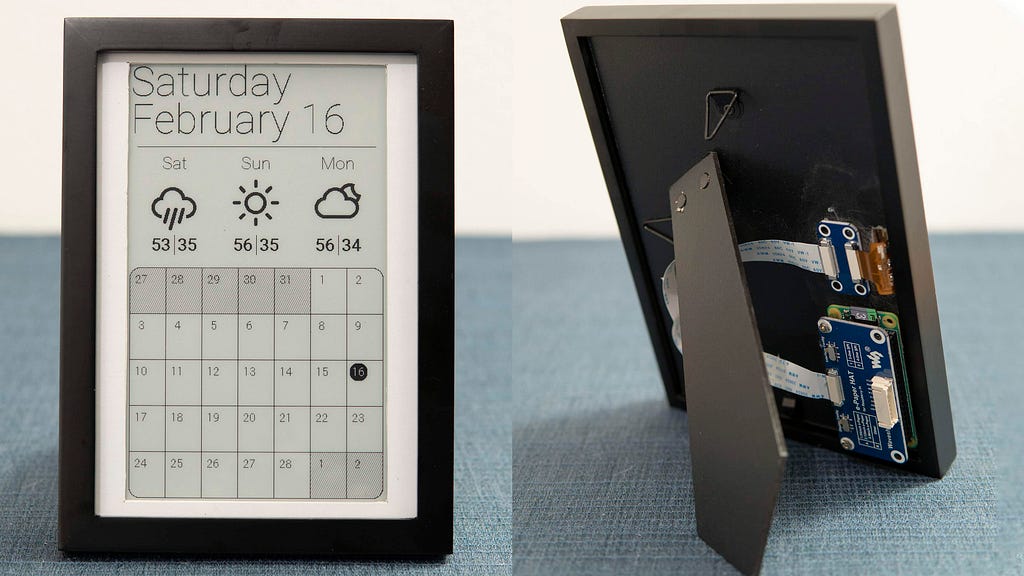
E-ink displays are fantastic to look at, but come with two serious caveats. Most of them are monochrome, and they’re very slow to refresh. Multicolor e-ink displays are available, but they refresh even slower. That means they’re only suited to a handful of specific applications, like in e-readers. Another device that they’re perfect for is a digital calendar, and Redditor Heyninclicks built their own using a Raspberry Pi.

In addition to the calendar functionality, this build also incorporates a weather display. Both are a great use for an e-ink display, since they don’t need to refresh very often and don’t need to refresh quickly when they do. In this case, that e-ink display is a 7.5" monochrome model made by Waveshare. It’s housed within a simple, but elegant, black picture frame.

A Raspberry Pi Zero W was used to update the display, and Heynineclicks created the graphics themselves. The weather data comes from Darksky, and the software to update the display was programmed specifically for this project. The final product looks great, and is a really practical way to always have a calendar and the weather on hand.


A DIY E-Ink Calendar Powered by a Raspberry Pi Zero W was originally published in Hackster Blog on Medium, where people are continuing the conversation by highlighting and responding to this story.

14 Feb 07:10

Vocalize.ai Acquired by Sensory

by Bret Kinsella

Vocalize.ai, a speech recognition benchmarking company, announced today it has been acquired by Sensory, a company known for on-device speech recognition, biometric security, and natural language understanding technology. Joe Murphy, the founder and CEO of Vocalize.ai, formerly worked at UL and saw an opportunity in the summer of 2017 to launch an independent testing and benchmarking company focused on the performance of voice assistants. Sensory was a customer of Vocalize.ai before the acquisition and the companies had discussed building out and sharing a testing studio. That consideration along with other synergies led to the acquisition discussions. Todd Mozer, CEO of Sensory Inc., commented:

“Sensory has always done in-house technology testing through simulations. However, we saw a growing need for an independent testing source that wasn’t influenced by our data or testing methods, that could also provide more real world, black-box testing. Vocalize.ai offers exactly what we needed and was in fact tremendously helpful in shaping our new TrulyHandsfree 6.0 release.”

Creating Common Evaluation Criteria for Voice Technologies

Since its founding, Vocalize.ai has conducted private studies for hardware and software makers as well as issued public reports on voice assistant performance. The company reported in September 2018 that Google Assistant was outpacing its peers in understanding accented speech and in June 2018 that SonosOne and the Amazon Echo Dot exhibited performance that audiologists would characterize as hearing loss. More recently, Vocalize.ai has focused on privately commissioned benchmarks but did collaborate with Voicebot.ai in the fall of 2018 on a study related to wake word “false positives” where voice assistants wake-up and start listening by accident.

The Vocalize.ai announcement says it will remain an independent company serving clients beyond Sensory. Deal terms were not disclosed and there is no record of previous investors. The company’s core asset is a testing software suite that automates numerous test protocols, most of them based on standards developed by audiologists. However, Mr. Murphy is also conducting tests beyond speech recognition performance that assess other capabilities of leading voice assistants.

Follow @bretkinsellaFollow @voicebotai

Sensory is Enabling Offline Smart Speakers with No Cloud Connectivity to Maximize Security

Google Assistant Takes Lead in Understanding Speakers with Accents

Sonos One, Eufy Genie and Amazon Echo Dot Exhibit Characteristics of Hearing Loss in New Study

The post Vocalize.ai Acquired by Sensory appeared first on Voicebot.

12 Feb 08:46

Baidu made a smart cat shelter that uses AI to tell cats and dogs apart

by Shannon Liao
The cat says: “Coming!” The camera says: “You’ve arrived, brother!”

China’s top search engine company Baidu made a smart cat shelter in Beijing that uses AI to verify when a cat is approaching and open its door. The cat shelter is heated and also offers cats food and water.

Besides running China’s main search engine, Baidu also works on AI tools in general and owns iQiyi, a Netflix-like rival that uses algorithms to determine what viewers may be interested in watching next. While cat shelters ordinarily seem out of the scope of what Baidu does, the company says that the idea first came to one employee, Wan Xi, who uncovered a small cat hiding in his car last winter and began to sympathize with the plight of other stray cats. Wan then apparently shut himself at home to develop software and work on a...

Continue reading…

11 Feb 17:18

Google Docs gets an API for task automation

by Frederic Lardinois

Google today announced the general availability of a new API for Google Docs that will allow developers to automate many of the tasks that users typically do manually in the company’s online office suite. The API has been in developer preview since last April’s Google Cloud Next 2018 and is now available to all developers.

As Google notes, the REST API was designed to help developers build workflow automation services for their users, build content management services and create documents in bulk. Using the API, developers can also set up processes that manipulate documents after the fact to update them, and the API also features the ability to insert, delete, move, merge and format text, insert inline images and work with lists, among other things.

The canonical use case here is invoicing, where you need to regularly create similar documents with ever-changing order numbers and line items based on information from third-party systems (or maybe even just a Google Sheet). Google also notes that the API’s import/export abilities allow you to use Docs for internal content management systems.

Some of the companies that built solutions based on the new API during the preview period include Zapier, Netflix, Mailchimp and Final Draft. Zapier integrated the Docs API into its own workflow automation tool to help its users create offer letters based on a template, for example, while Netflix used it to build an internal tool that helps its engineers gather data and automate its documentation workflow.


30 Jan 21:39

Waterproof Chemical Sensor Collects Biometric Data During Water Sports

by Cabe Atwell

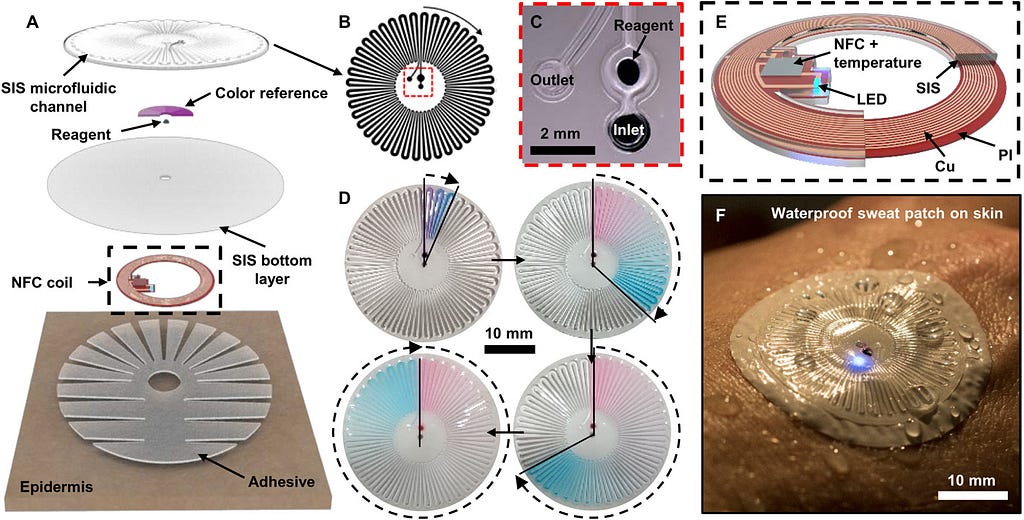
Researchers from Northwestern University’s Rogers Research Group have developed a wearable biometric sensor that collects and analyzes athlete’s sweat, even while they are swimming underwater for prolonged periods. Our sweat carries a host of chemical information about our bodies, such as salt, sugar, hormones, drug, alcohol, and electrolyte levels, which are indicative of our overall health. Just like other demanding physical activities, swimming makes us sweat even while underwater, but there hasn’t been an effective way to collect and analyze it while under water.

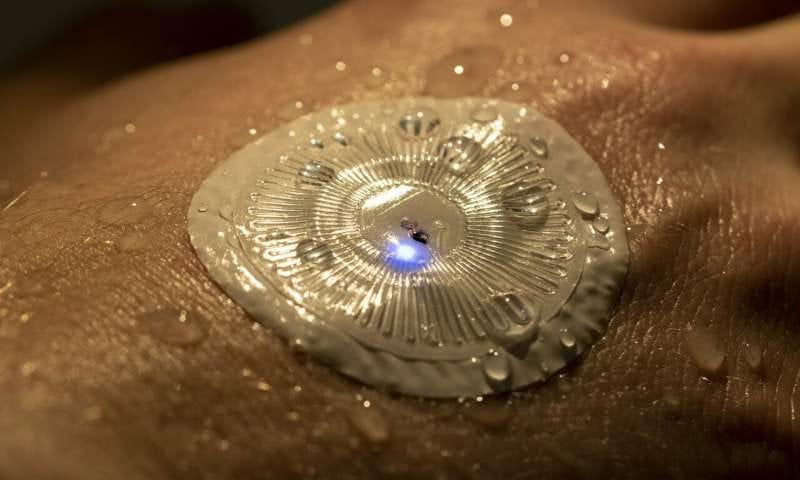
The waterproof skin patch allows for monitoring biometrics during water sports. (📷: Rogers Research Group)

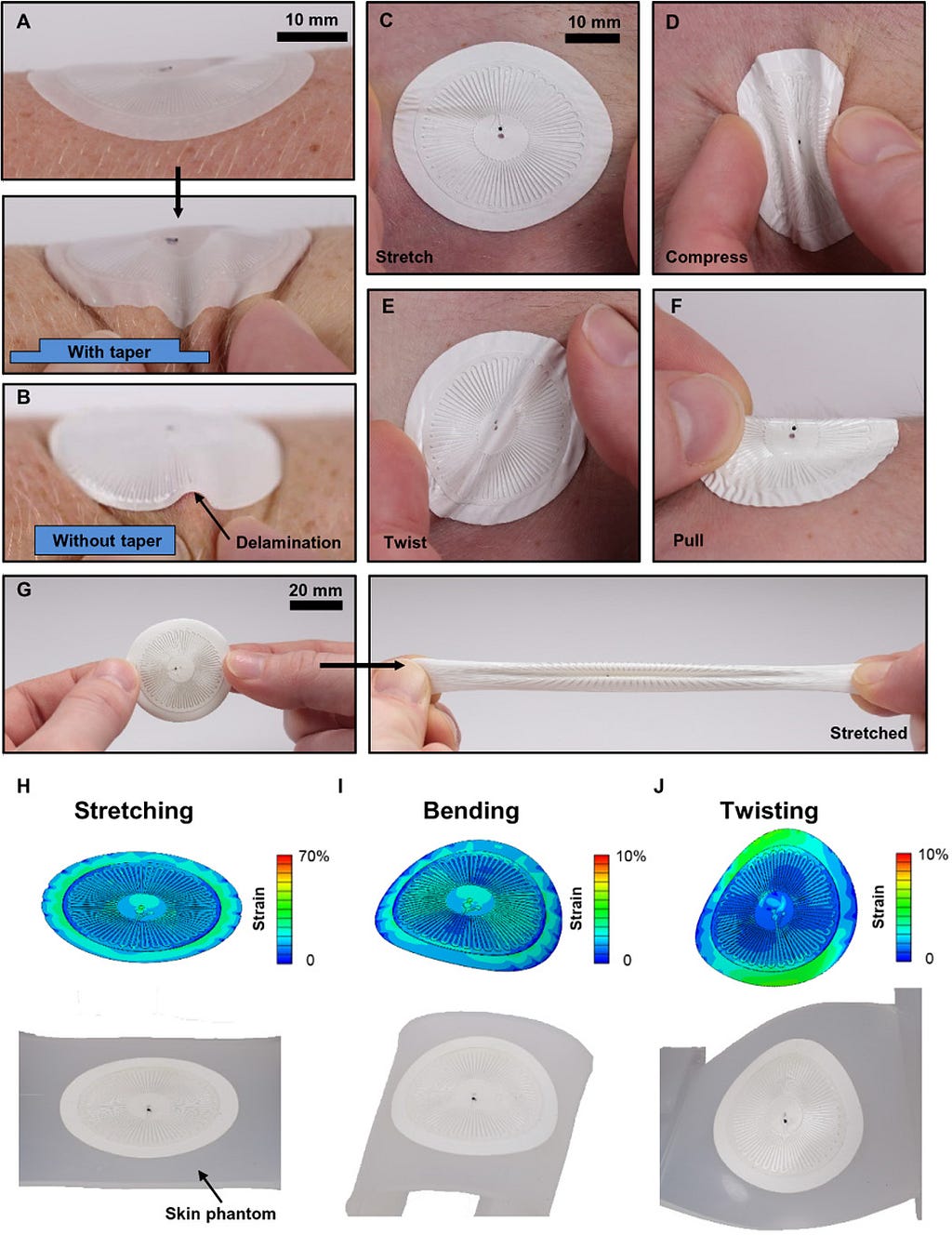
The researchers’ sweat sensor features a waterproof elastomeric moldable polymer circular patch that’s deformable and adheres to skin no matter the conditions. The underside of the patch has a tiny hole that allows sweat to enter; while a myriad of separate microfluidic channels push the sweat to an internal sensor where it is analyzed. An embedded NFC chip can then transmit the data to a mobile device that medical professionals can use to view the results.

The Rogers Research Group’s chemical sensor features an elastic patch with a tiny hole underneath that allows sweat to enter. The collected fluid travels through small channels to the sensor, where it is analyzed and stored. (📷: Rogers Research Group)

Each microfluidic channel serves as different miniature test lab — with one for fluid levels, another for chloride concentration, another for sweat loss, and so forth. The sweat is mixed with different chemicals within the micro-channels, causing it to change different colors, each representing that specific test, allowing athletes to see body chemistry changes in real-time.

Besides sending the collected data wirelessly to a mobile device for further analysis, the wearer could also take a pic of the patch, and an app could tell them if they need to drink more water or risk dehydration, something that can happen even while swimming.

The elastic polymer patch allows the sensor to deform to the skin creating a seal that prevents water from entering. (📷: Rogers Research Group)

The wearable sweat sensors are already in clinical use at the Lurie Children’s Hospital in Chicago, where they are used to screen newborns for cystic fibrosis through measuring chloride levels in their sweat. They will also be fielded to athletes to put them through ‘extreme test-cases’ before they become available to the market.


Waterproof Chemical Sensor Collects Biometric Data During Water Sports was originally published in Hackster Blog on Medium, where people are continuing the conversation by highlighting and responding to this story.

29 Jan 22:59

The Pentagon compiled research into invisibility cloaking, wormholes, and warp drive

by Makena Kelly

A document released this month revealed a secretive multimillion-dollar Department of Defense program from the late 2000s compiled research into invisibility cloaks, warp drive, and many other areas of fringe space science as part of a now-defunct program aimed at detecting and potentially explaining strange sightings in the Earth’s atmosphere.

The five-page document includes a list of papers written for the program, originally sent to two members of Congress last year. The pages were released on January 16th as a response to a Freedom of Information Act (FOIA) request from the Federation of American Scientists.

Between 2007 and 2012, the Defense Intelligence Agency (DIA) spent $22 million on this UFO program, which was formally known...

Continue reading…

28 Jan 22:17

MIT Creates Antennas for Wearables That Harvest Energy From Wi-Fi Signals

by Cameron Coward

Once of the biggest challenges in developing wearable devices is energy storage. Wearables, like any other mobile device, need to be as small and light as possible. That means that bulky, heavy batteries are a major constraint in their design. This new antenna design created by researchers at MIT, as well as many other institutions, solves that problem by harvesting the energy from the radio waves all around us.

Researchers have designed a flexible, battery-free “rectenna” — a device that converts energy from Wi-Fi signals into electricity. (📷: Christine Daniloff / MIT News)

That, by itself, isn’t a new concept; energy-collecting antennas, called rectennas, have been around for a long time. But, traditional rectenna designs have a lot of drawbacks: they’re relatively expensive by area, they’re rigid, and they can only harvest energy from a limited portion of the radio wave spectrum. This new design utilizes an inexpensive material called molybdenum disulfide (MoS2) that results in thin, flexible rectennas that can collect energy from a wide range of radio waves.

With the MoS2 material, they are able to build the rectifier portion of the antenna at just three atoms thick. That means these antennas can be incorporated into thin, lightweight, and even flexible wearable devices. Such an antenna can harvest electricity with up to 40% efficiency from wireless signals up to 10 gigahertz, which includes Wi-Fi and cellular signals that are always around us — but which usually just go to waste.

Because they’re inexpensive to construct, these new rectennas have potential in a wide range of industries. They could be used to power implantable medical devices where the safety of batteries is a concern. Thinking on a much larger scale, the researchers believe these could also be used to power entire smart roads, bridges, and other civil engineering structures.


MIT Creates Antennas for Wearables That Harvest Energy From Wi-Fi Signals was originally published in Hackster Blog on Medium, where people are continuing the conversation by highlighting and responding to this story.

05 Jan 13:03

Google’s Project Soli radar is sensitive enough to count sheets of paper and read Lego bricks

by James Vincent
Project Soli uses miniature radar to detect gestures.

What does the computer interface of the future look like? One bet from Google is that it will involve invisible interfaces you can tweak and twiddle in mid-air. This is what the company is exploring via Project Soli, an experimental hardware program which uses miniature radar to detect movement, and which recently won approval from the FCC for further study.

Imagining exactly how this tech will be put to use is tricky, but a group of researchers from the University of St Andrews in Scotland are exploring its limitations. In a paper published last month, they show how Project Soli hardware can be used for a range of precise sensing tasks. These including counting the number of playing cards in a deck, measuring compass orientation, and...

Continue reading…

02 Jan 08:48

This awesome homemade jukebox is controlled by swipeable song cards

by Jacob Kastrenakes

In an era where everything is controlled by touchscreens and oblique voice commands, there’s something incredibly satisfying about a gadget with simple, tactile controls. That’s probably why designer Chris Patty’s homemade jukebox looks so charming: it’s controlled by physical cards, each printed with an artist and album art on the front, that you swipe to play a song.

Patty created the jukebox as a Christmas gift for his father, after his family decided to only swap handmade presents this year. He later posted a short video of the creation to Twitter, where he’s received enough positive responses that he’s working on an open source version of the software and instructions so that fans can make their own.

Continue reading…

19 Dec 22:37

Steppingstone VR Uses Multi-Platform Electromagnetic Propulsion To Fight Sim Sickness

by Jamie Feltham
Steppingstone VR Uses Multi-Platform Electromagnetic Propulsion To Fight Sim Sickness

Steppingstone VR thinks its new approach to VR locomotion might be the one to solve simulation sickness.

The company is working on a motion platform that uses electromagnetic propulsion to physically move players around as they stand/sit on a platform. You can see it in the early prototype video below; the platform gets its power supply from a specialized floor, a little like bumper cars, allowing it to quickly adapt and move in response to the player’s input in VR. The sensations of physically moving that the player feels should help to combat sickness in games with smooth locomotion such as Skyrim VR.

But this is just the first step (sorry) for Steppingstone VR. Over emails, CEO Samy Bensmida tells me that the consumer version of its product aims to include multiple moving platforms that users will be able to step onto. Tiles will move backward as you step onto them, in theory allowing you to physically walk around a massive game world without ever leaving the center of a space. You can see a similar concept in the video below, though Bensmida explains that this system uses wheels, whereas Steppingstone’s electromagnetic propulsion will allow it a greater deal of autonomy.

“You will walk all day long in Skyrim with your legs, no harness, and get all the congruent inertial cues,” Bensmida said.

And, yes, as expensive as it looks, Bensmida says the product is “100% consumer” with the aim of streamlining it to be viable for homes. Based on the prototype, there’s a lot of work to be done to get Steppingstone towards anywhere near something we’d consider making space for it and we’d still be concerned about the safety of navigating multiple moving platforms when essentially blindfolded in VR.

Still, Bensmida seems confident the team will pull it off, and is preparing a Kickstarter crowd-funding campaign to help it get there. It’s currently estimated to utilize a “consumer safe” 12V voltage and the campaign will likely run for around $150,000.

Would you put down electromagnetic flooring in your house if it meant complete and utter VR immersion?

Tagged with: Steppingstone VR

The post Steppingstone VR Uses Multi-Platform Electromagnetic Propulsion To Fight Sim Sickness appeared first on UploadVR.

19 Dec 07:29

Samsung’s stylish The Frame and Serif 4K TVs will soon come in more sizes with better picture quality

by Chris Welch

Ahead of CES, Samsung is announcing upcoming refreshes of its two most stylish 4K TVs, The Frame and Serif. These are lifestyle pieces that aim to make people rethink what a TV can and should look like. They don’t offer Samsung’s best picture performance — that’s still reserved for the proper QLED lineup — but they’re definitely good for attracting conversation in the home.

The Frame is being upgraded with an improved picture over its previous two iterations. The 2019 model will feature Samsung’s quantum dot display technology for a wider HDR color palette. Aside from offering a better picture, The Frame will also now come in a new 49-inch size. (Last year’s edition came in 43-, 55-, and 65-inch sizes.) Samsung markets The Frame to...

Continue reading…

16 Dec 18:56

These are the Planters You are Looking For!

by Geeks are Sexy

Etsy user RedwoodStoneworks uses silicone molds and a little plaster to make what have to be the most awesome planters that have ever been created. Don’t believe me? Check those out:

From RedwoodStoneworks:

Each piece is finely finished, I make each one from scratch, sanding and beveling all rough edges for a smooth finely finished look! All details for realistic finish are hand painted.

[Pop Culture Planters]

The post These are the Planters You are Looking For! appeared first on Geeks are Sexy Technology News.

14 Dec 07:18

These face-generating systems are getting rather too creepily good for my liking

by Devin Coldewey

Machine learning models are getting quite good at generating realistic human faces — so good that I may never trust a machine, or human, to be real ever again. The new approach, from researchers at Nvidia, leapfrogs others by separating levels of detail in the faces and allowing them to be tweaked separately. The results are eerily realistic.

The paper, published on preprint repository Arxiv (PDF), describes a new architecture for generating and blending images, particularly human faces, that “leads to better interpolation properties, and also better disentangles the latent factors of variation.”

What that means, basically, is that the system is more aware of meaningful variation between images, and at a variety of scales to boot. The researchers’ older system might, for example, produce two “distinct” faces that were mostly the same except the ears of one are erased and the shirt is a different color. That’s not really distinctiveness — but the system doesn’t know that those are not important pieces of the image to focus on.

It’s inspired by what’s called style transfer, in which the important stylistic aspects of, say, a painting, are extracted and applied to the creation of another image, which (if all goes well) ends up having a similar look. In this case, the “style” isn’t so much the brush strokes or color space, but the composition of the image (centered, looking left or right, etc.) and the physical characteristics of the face (skin tone, freckles, hair).

These features can have different scales, as well — at the fine side, it’s things like individual facial features; in the middle, it’s the general composition of the shot; at the largest scale, it’s things like overall coloration. Allowing the system to adjust all of them changes the whole image, while only adjusting a few might just change the color of someone’s hair, or just the presence of freckles or facial hair.

In the image at the top, notice how completely the faces change, yet obvious markers of both the “source” and “style” are obviously present, for instance the blue shirts in the bottom row. In other cases things are made up out of whole cloth, like the kimono the kid in the very center seems to be wearing. Where’d that come from? Note that all this is totally variable, not just a A + B = C, but with all aspects of A and B present or absent depending on how the settings are tweaked.

None of these are real people. But I wouldn’t look twice at most of these images if they were someone’s profile picture or the like. It’s kind of scary to think that we now have basically a face generator that can spit out perfectly normal looking humans all day long. Here are a few dozen:

It’s not perfect, but it works. And not just for people. Cars, cats, landscapes — all this stuff more or less fits the same paradigm of small, medium and large features that can be isolated and reproduced individually. An infinite cat generator sounds like a lot more fun to me, personally.

The researchers also have published a new data set of face data: 70,000 images of faces collected (with permission) from Flickr, aligned and cropped. They used Mechanical Turk to weed out statues, paintings and other outliers. Given the standard data set used by these types of projects is mostly red carpet photos of celebrities, this should provide a much more variable set of faces to work with. The data set will be available for others to download here soon.

13 Dec 13:21

Salesforce Opens Up Lightning Platform to World’s 7 Million+ Javascript Developers

by KevinSundstrom

In a move that will open its platform to the more than 7 million worldwide Javascript developers, Salesforce today announced its Lightning Web Components Framework; a technology that makes it possible for developers to use the Javascript programming language to customize browser-based web applications built on top of Salesforce’s core capabilities in the same way they might use Javascript to customize the browser side of any other web app.