Shared posts
16 Aug 20:25
BoooTube, the worst-rated videos on YouTube
that baby yoga video is, uh, something else
22 Jul 16:40
How I Learned to Stop Worrying and Love the Tenure-track-faculty Life
Rkonowvery interesting perspective...
Katie.romano, Rkonow likes this
22 Jul 15:59
This Illustration of $1 Billion Will Make You Weep Brain Fluid
by Neetzan Zimmerman
Rkonowi really enjoyed this visualization of money.

J.w.dillow likes this
19 Jul 20:36


Ikea Resurrects the Little Table That Inspired Ikea as You Know It
by Kelsey Campbell-Dollaghan

Ikea is coming full circle square. This week, the company announced the return of Lövet, the humble table that inadvertently sparked the flatpack revolution in 1956 when, in a fit of desperation, a young designer chopped off its legs in order to cram it into his car.
    
|
19 Jul 16:12
A librarian's story of why his library banned a book, with a twist
Rkonowthought it was an interesting experiment
 |
submitted by johncoxon to books [link] [146 comments] |
30 Jun 23:00
Episode 64- Derelict Dome
Rkonowlove buckminster fuller. this show rules too. check out ALL the episodes.
In the Cape Cod town of Woods Hole, buildings do not usually look like this:
 (Credit: Will Coley)
Producer Katie Klocksin was pretty surprised when she came across it. She found a way inside.
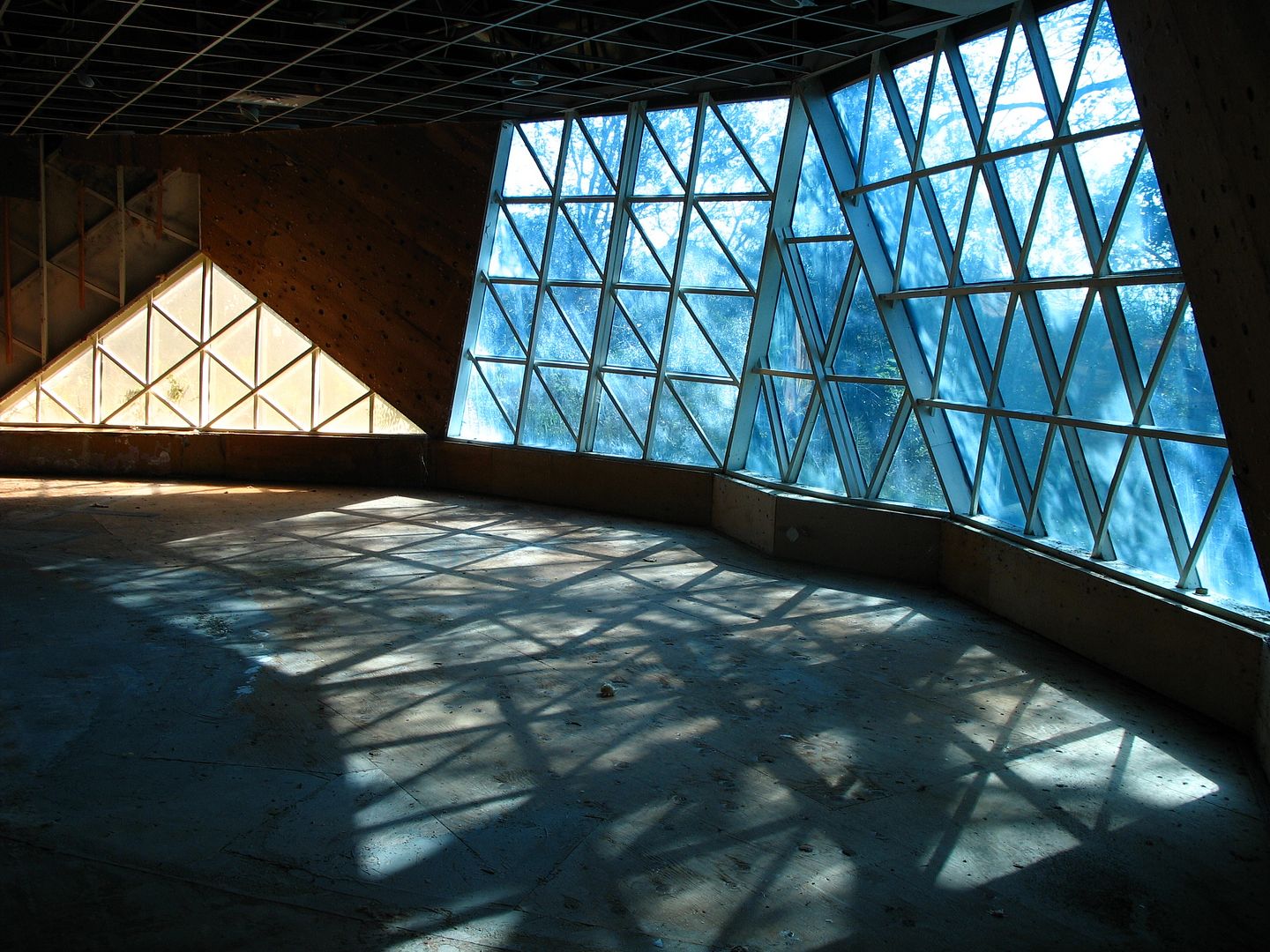 (Credit: JP Davidson)
Katie started asking around about the Dome. She found it was built by the late Buckminster Fuller, who called himself a “comprehensive anticipatory design scientist,” out to solve the problems confronting “Spaceship Earth” by changing the way we make buildings.
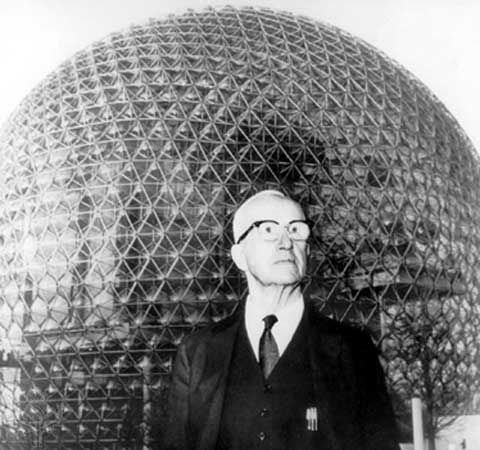 (Courtesy of the Fuller Institute)
“Bucky” Fuller invented and patented the geodesic dome, a spherical structure made from small triangles. The design is based on a lot of complicated math, but the idea is that by relying on the strength of of the triangle, these buildings could be made from cheaper materials, like plastic and aluminum instead of steel and concrete.
In 1953, Fuller was commissioned to build a dome in Woods Hole by architect (and aspiring restauranteur) Gunnar Peterson. The dome would become the posh Dome Restaurant. Diners could gaze through the building’s triangular windows out on onto the sea. A zither player named Ruth Welcome entertained guests.
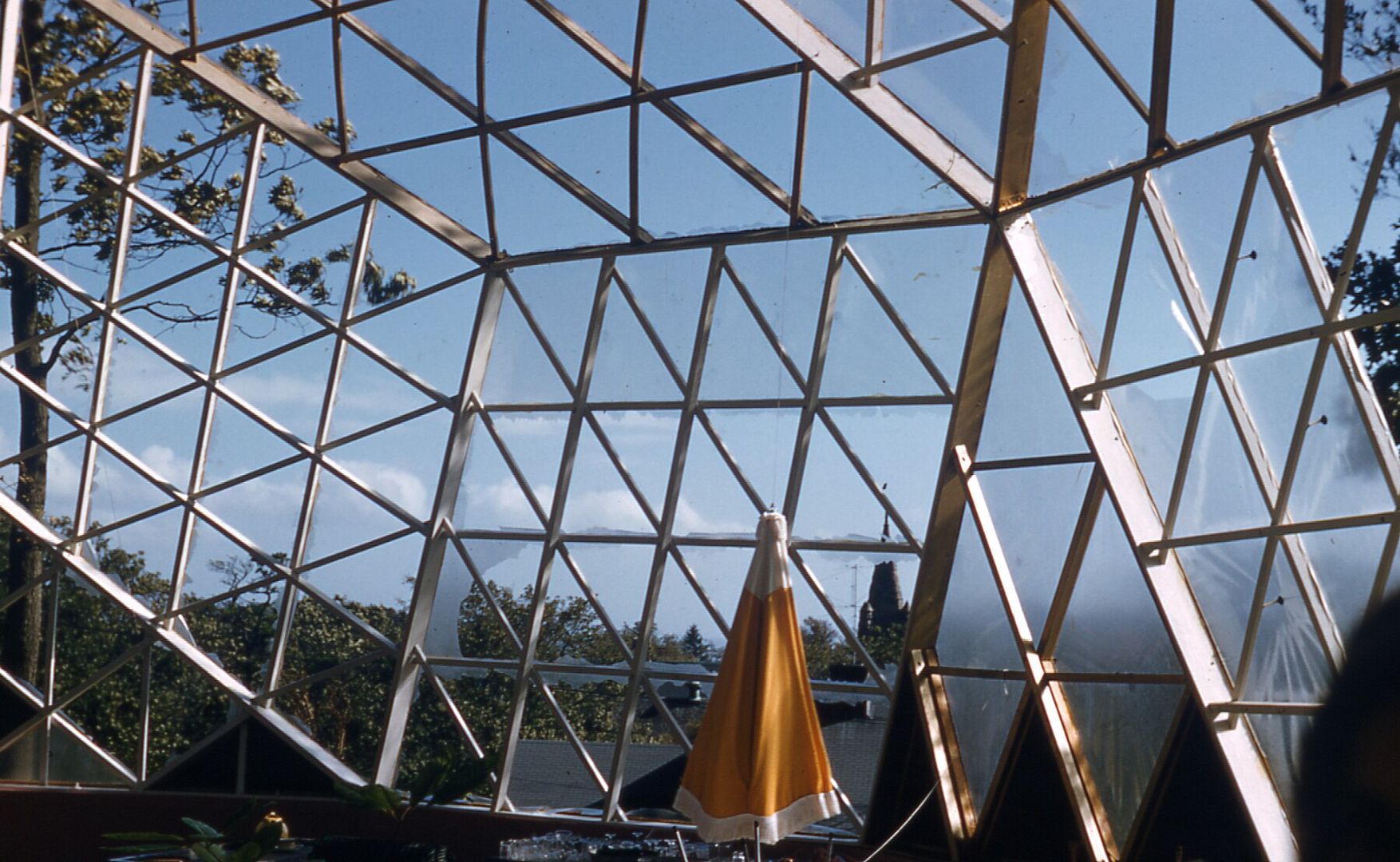 (Courtesy of Woods Hole Historical Museum)
Despite its Utopian aspirations, the building had some structural problems. The glass windows heated the restaurant up like a greenhouse, so the owner installed fiberglass over most of the dome, blocking the ocean views. It leaked constantly, and was difficult to maintain. The dome was also hit pretty hard by 1970’s interior decorating.
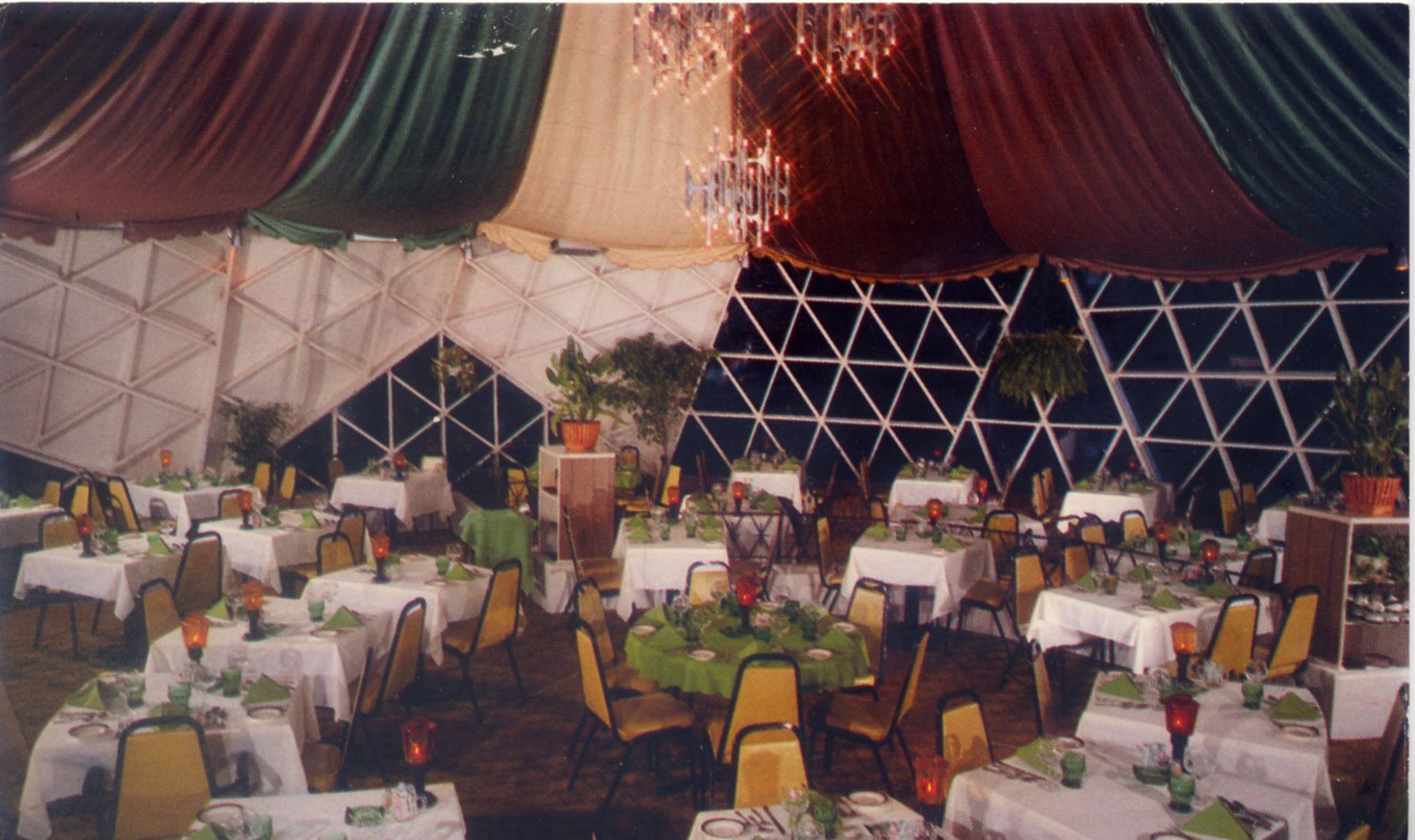 (Courtesy of Woods Hole Historical Museum)
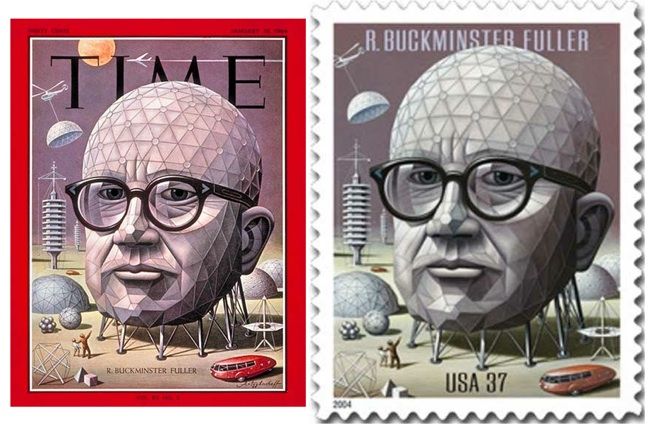
Even though the Woods Hole dome did not radically change the world, Bucky Fuller would go on to become one of the most influential thinkers in design and architecture of the 20th Century. A painting of Fuller by Boris Atzybasheff appeared on the cover of Time Magazine in 1964, and then again as a US Postage stamp in 2004.
Today, the Dome Restaurant lies vacant.
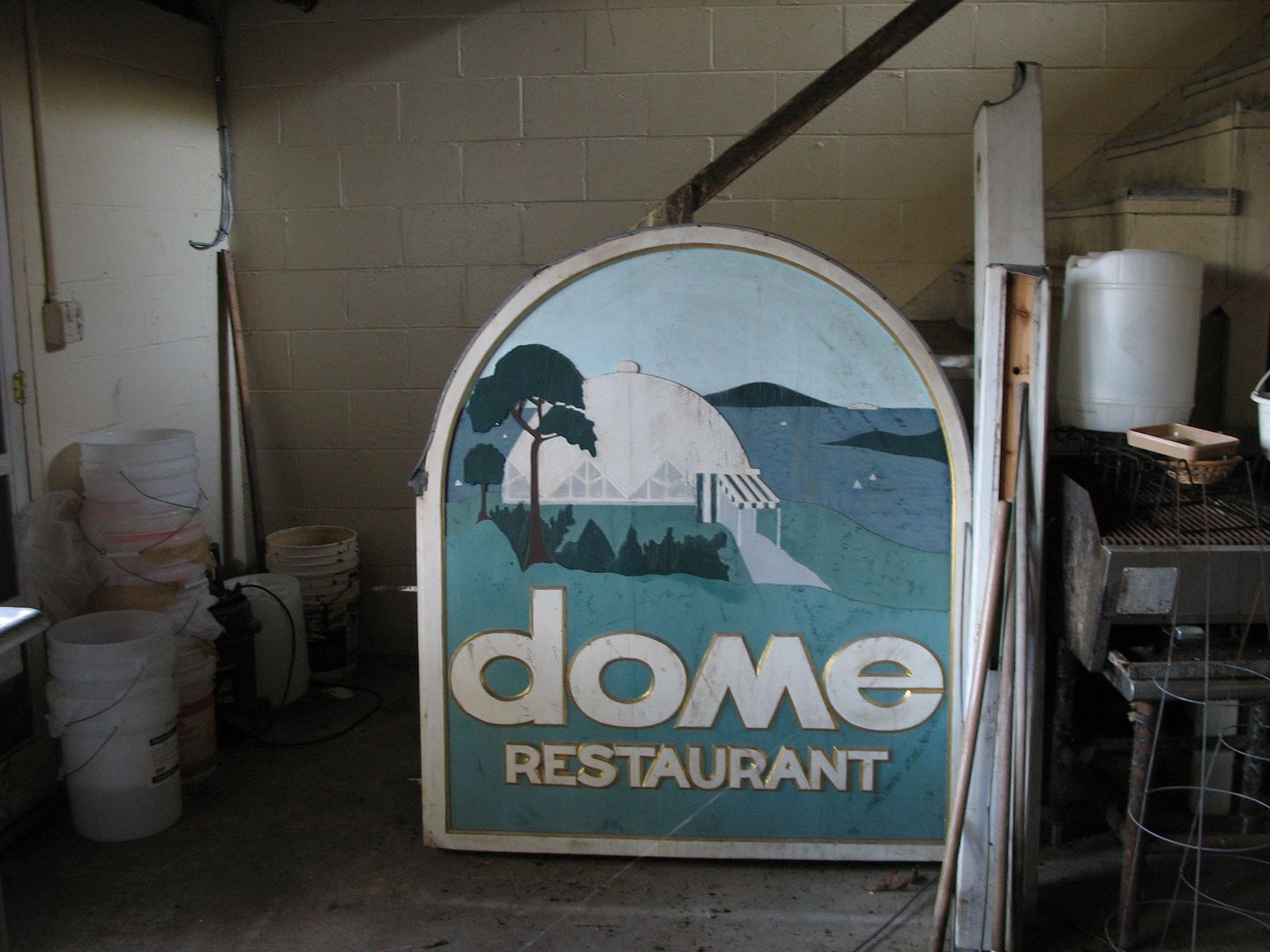 (Credit: JP Davidson)
A new development project could lead to the dome’s restoration, but for now, it remains a decaying curiosity, inviting exploration from microphone-wielding out-of-towners.
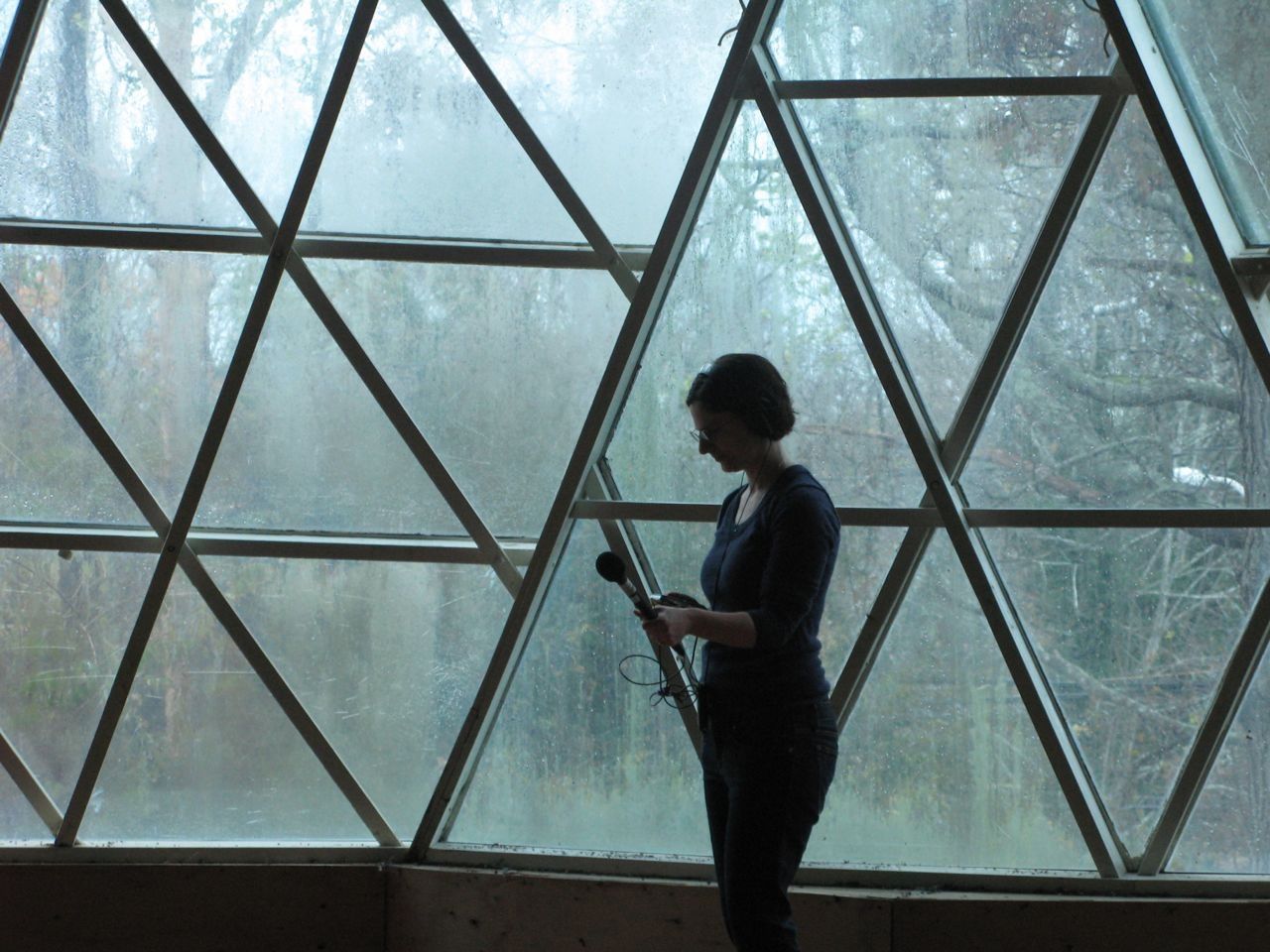 (Credit: Will Coley)
Katie Klocksin is an independent radio producer based in Chicago. She made a different version of this piece at the Transom Story Workshop, which ran on the PRX podcast HowSound. Thanks to Rob Rosenthal (who runs both the Transom Story Workshop and HowSound) for pointing us to Katie’s story.
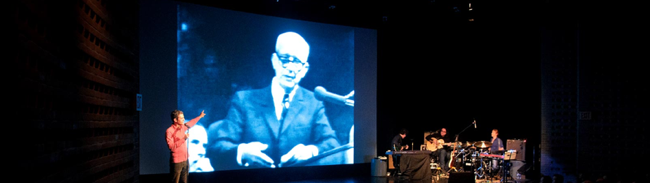
For more on Bucky and his domes, find out if The Love Song of R. Buckminster Fuller is playing anywhere near you. It’s a live documentary (my new favorite media format) from Sam Green, whom listeners may remember from Episode #16 about Esperanto.
21 Jun 20:23
Prince Of Persia Code Review
Rkonowthis is amazing even for non-code nerds. he even published his journals from the development.
18 Jun 15:08


Russell Brand Destroys MSNBC Talk Show Host for Treating Him Like Shit
by Neetzan Zimmerman
Rkonowi didn't care about this but seeing him catch their lack of substance and jumping all over it is amazing.
Comedian Russell Brand was invited to appear on MSNBC's Morning Joe yesterday, ostensibly to talk about his controversial world comedy tour Messiah Complex.
|
|
J.w.dillow and -1 others like this
11 Jun 19:48
Raising the Flag
by porn in the woods
Rkonowthese are worth a look. i have one of his books and the art is superb.
29 May 11:23

How I wireframe projects
by Chris Winn
Rkonowthis is one of the better ux articles i've read in a long while.
Great design seems to come either from fits of absolute madness or perfectly clear thinking. When it comes to creating a web application, website, or mobile app for which I am being paid money, I generally prefer the latter. So I believe strongly one should never write a line of code or paint a single pixel without a solid game plan.
Refactoring code can be fun, but when it comes to a large development project, it’s nearly malpractice. Wireframing, therefore, is a crucial process that lets you make mistakes before those mistakes become expensive.
There are a wealth of tools out there for web designers. I happen to hate them all. The web-based tools, created before what I call the “maturity era” of client-side frameworks like EmberJS, feel awful in the browser. The native wireframing apps, on the other hand, can be just as clunky, expensive, or out-dated. And my creativity was quickly sapped by a sea of black and white boxes and Comic Sans headers.
Are you proud showing this to a client? Do you gain a sense and feel for the flow of the project? Does it inspire you to move to the next step? And when the answer to these questions is no, some decide to skip wireframing altogether — an even worse, if understandable, mistake.
So I decided to throw every tool out the window and upend my process. Here’s what I do instead and what you should do, too.
Start on paper
Like a lot of designers, I always start on paper — a grid notebook with a great pen or pencil. It gives me the freedom to explore layouts and ideas. I scribble. I doodle. I make mistakes. I goof around. Each page of my notebook is committed to a particular view. I make notes along the side, like a question I need to explore more.
Paper gives me a chance to walk away from computers and free up my mind. Clients never see these pages.
Pick your stack early
Determine your application stack early in the process based on the client’s needs. Is this a simple blog-style website? Sounds like Wordpress or Drupal, or maybe a static site generator like Jekyll. Perhaps it’s a more robust application. Sounds like Ruby on Rails to me. Maybe you’re pushing the front-end, though, and Ember or Backbone is part of the discussion.
It’s important to pick your foundation based on the needs of the application. Your client depends on you to make the right decisions, and the most important decisions come in the earliest stages.
(M)Vc
Once I have my sketches complete and my stack selected, I start coding. That’s right. My wireframe is the application. In the case of a Rails project, I generate controllers and build out views, but never controller method or models. There are no migrations or database. There is no logic behind the views. There are only routes pointing directly to views with markup.
I include a set of tools I’ve found invaluable in my new process. Twitter Bootstrap gets my layout and CSS off the ground quickly. I will plan to fully replace Twitter in the future, save maybe for the generated layout code.
Fixie.js and Holder.js let me quickly build lorem ipsum text and placeholder images because it’s too early to worry about final content and photography — but it’s not to early to think about where these things will go.
Advantages
Working this way revolutionized my process. Here’s why it’s better.
- It’s interactive. I can click through my application and navigate the workflow in real-time. My clients have loved this.
- It’s re-usable. Almost all of the markup and views will be used when I’m building the real application. Nothing is thrown away.
- It’s beautiful. No more black and white boxes. My wireframes feel clean and modern thanks to Bootstrap — and of course I lay on top a custom CSS file that fine-tunes some elements (like link colors to match brand, if I know this early).
- It’s still fast. Without committing to any models or controller logic, it’s still lightning fast to fix mistakes or try new things.
- It’s collaborative. I am as comfortable hacking away on the server-side as I am appreciating beautiful typography, but if you’re a designer-only or developer-only, this process encourages collaboration.
- It’s versioned. I commit the wireframe application to Github like any other development project. I can always go back and re-use something that went away.
When your wireframe is approved and everyone is ready to move forward, progressing to development is as simple as jumping back into the wireframe and building out.
Goodbye, Hello
I’m never going back to the old way. My wireframing process is fast and efficient. More importantly, my clients love it. They are blown away that they can click and use their project before it’s ever really built. More recently we’ve even introduced some internal tools that let them give instant feedback to the page they’re viewing and have plans to integrate our content development process into our live wireframes.
Try it out. You won’t go back.
29 May 09:17


Impossible Programs: a great lecture on some of computer science's most important subjects
by Cory Doctorow
Here's a 40-minute video in which Tom Stuart gives a talk summarizing one of the chapters from him new book Understanding Computation, describing the halting state problem and how it relates to bugs, Turing machines, Turing completeness, computability, malware checking for various mobile app stores, and related subjects. The Halting State problem -- which relates to the impossibility of knowing what a program will do with all possible inputs -- is one of the most important and hardest-to-understand ideas in computer science, and Stuart does a fantastic job with it here. You don't need to be a master programmer or a computer science buff to get it, and even if you only absorb 50 percent of it, it's so engagingly presented, and so blazingly relevant to life in the 21st century, that you won't regret it.
At Scottish Ruby Conference 2013 I gave a talk called Impossible Programs, adapted from chapter 8 of Understanding Computation. It’s a talk about programs that are impossible to write in Ruby — it covers undecidability, the halting problem and Rice’s theorem, explained in plain English and illustrated with Ruby code. The slides are available

|
|
Alex Kravchenko, Tryer3000 likes this
13 May 02:38
Hey, Edu*Innovators! Apply for the d.fellowships
by jferrell
Rkonowsounds rad if i had an actual edu idea.
 We’re now accepting applications for our d.fellowship program during the academic year 2013-14. The focus of the application process this year is to identify and select outstanding Edu*Innovators who will work with our d.K12 Lab Network. We’re looking for mid-career professionals and entrepreneurs with the passion and drive to make real change in education. If you’re dedicated to this mission, read on!
What’s a d.fellowship? Our program is a creative leadership accelerator for professionals with the potential to scale their expertise and incorporate new ways of working. As an education-focused d.fellow, you’ll receive a full-time salary and benefits to commit to a 10-month experience during the academic year. During this time, you’ll develop and launch an initiative using the resources of our d.K12 Lab Network, the d.school, Stanford and the Silicon Valley community.
How does it work? This fully funded, full-time intensive includes both residency periods at the d.school to learn and strengthen design thinking leadership skills, here in sunny Palo Alto, CA, and periods in the field to gain insights and test out prototypes of your ideas. We imagine you’ll split your time about 50/50, but of course that will vary depending on your project.
Can I keep my current job during my d.fellowship? In some cases, depending on the partner organization, the fellow may stay on their employer’s payroll and work closely on prototypes and program development, but be relieved of regular duties. (For example, a classroom teacher could stay employed by their school or district during the fellowship, but would not perform regular classroom duties.)
Here’s a timeline of what to expect:
Fall Quarter: Sept. 3 – Dec. 7
Focus on Learning & Leading
Fellows dive deep into the practice of design thinking by participating in and leading experiential learning. They also take part in weekly seminars that feature Stanford faculty and outside experts in leadership, entrepreneurship, creativity, ethnography, scenario planning and more.
Winter Quarter: Jan. 7 – March 15, 2014
Focus on Leading & Doing
Fellows rev through the design thinking cycle (Empathy, Define, Iterate, Prototype & Test) to sharpen their prototypes. Fellowship events continue when the fellows are not in the field.
Spring Quarter: April 1 – June 30, 2014
Focus on Doing
Using what they’ve learned during the winter and fall, fellows refine their projects and launch them into the world.
What type of people are you looking for? The d.fellows are restless experts, high-performers with an instinct for the edge, self-starters with an impulse for change and the savvy to make it real. Read about our current class and our program leadership here. Read about our d.K12 Lab Network here. We are not seeking applicants outside of the education space at this time.
Possible Areas of Focus (some things we’d love for d.fellows in education to work on)
Future of High School: How might we build a high school model that deeply engages students in real-world projects that build the design thinking, entrepreneurship, and character skills and competencies they need for life + work in the 21st Century?
Future of Blended: How might we leverage technology to build on and develop approaches to personalized learning in, out and in-between school structures?
Challenge-Based Learning: How might we use design thinking to lead the wave of challenge-based learning platforms?
Common Core + X: How might we lead the way to deeply engaging the common core and to building performance-based assessments and other tools and curricula that support those standards?
Redesigning the Role of the Teacher: Blended, personalized, ecosystem-orientated and challenge-based learning all fundamentally shift the traditional role of the teacher. How might we reinvent teacher roles, teacher training and development, and school structures to meet and shape this future?
Why should I apply? Do you have a big idea for how to change teaching + learning? The d.fellowship program gives you the space and resources to rigorously pursue your leadership potential. Rather than come in for a year, study something new, then go back and practice it, you will learn by doing all along.
So it’s an accelerator? Yes, and it’s focused on you, not just your current big idea. At the d.school, we aim to unlock the potential of innovators, knowing that often the innovations will follow. You might be at the transition point in your career between talented practitioner and transformative leader. You might be learning to evolve and scale your expertise into a contribution that is potentially much greater than your individual output to date. If we catch you at the cusp of this transition, if we support you, challenge you and accelerate your leadership, what might that mean for your future? Let’s find out.
Here’s what we need:
• A current CV
• A 1000-word story about who you are and what’s led you to our doorstep
• A 500-word statement explaining your vision for the impact you want to have in the Education sector and the initiative you’d like to incubate at the d.K12 Lab
• A one-minute video on what you need to realize your potential
DEADLINE TO APPLY IS 11:59 pm PST on Monday, May 13. You must send all application materials to fellowships@dschool.stanford.edu by that deadline to be considered for the next round in the selection process. PLEASE PUT YOUR NAME ON EACH PIECE OF YOUR APPLICATION. We’ll accept file formats including .docx, .pdf, .mp4 and .mov.
Open application finalists, focused on the Education sector for 2013-14, will be chosen the week of May 27. All applicants will be notified at that time. Finalist interviews will take place in early June, and d.fellows will be chosen shortly after. The fellowship begins Sept. 3.
No more posts. Check out what's trending.