Shared posts

02 Jun 14:25

Ultra-Orthodox protesters block roads and trains across Israel over military draft

by The Associated Press
Israeli mounted police disperse Ultra-Orthodox Jews blocking a road during a protest against army draft in Jerusalem, Monday, June 1, 2026.

Tens of thousands of ultra-Orthodox demonstrated across Israel on Monday, blocking roads and trains and setting cars on fire to protest mandatory enlistment in Israel's military.

(Image credit: Ohad Zwigenberg)

02 Jun 04:41

The Intel Arc G3 Series Inside Story: How Intel Created a Purpose-built Gaming Handheld Silicon That Isn't a Hamstrung U-Segment Chip

by btarunr
During the Q&A session with Intel detailing its new Arc G3 series processors for handheld game consoles, we've learned some of the interesting design choices Intel had to make in order to create the perfect chip for the form-factor that doesn't compromise in areas where it's most needed to shine in. For starters, Intel doesn't believe that the Arc G3 is a "processor with integrated graphics," but rather a "GPU with an integrated CPU." Such a philosophy was needed to serve as a bedrock for this chip. Beyond the marketing shift, the session revealed fascinating, previously under-the-radar engineering workarounds Intel is using to challenge AMD's dominance in the portable space.

Fitting Panther Lake into a handheld thermal design power (TDP) required more than just tweaking clock speeds. Intel is employing an aggressive silicon harvesting strategy, utilizing "fallout" dies that don't validate for the full Panther Lake specification. To hit the required power and thermal constraints of a handheld device, Intel has systematically disabled key IP blocks. The Arc G3 cuts the P-core count from four down to just two, drops the number of display engines from three to two, and halves the Thunderbolt capability from four ports to two. This surgical reduction brings the die into a manageable TDP, prioritizing GPU performance and securing supply for the burgeoning handheld market.
02 Jun 04:15

Angry devs vow to flee GitHub Copilot as metered billing takes hold

Developers seem to hate Microsoft’s new usage-based billing policy for GitHub Copilot as they report burning through a month's worth of credits in hours. “This is a staggering shift from a 'predictable subscription' to a 'stressful meter-based' service that hinders my productivity rather than helping it,” wrote one developer on GitHub's user forum who said they were paying for Microsoft's $39-per-month Copilot Pro+ plan but burned through about 8 percent of their monthly AI Credits allocation in two hours under the new billing system. “At this rate, my 7,000-unit quota will be depleted in less than two days.” Their outrage is a consistent and growing theme among the business users of AI who suddenly see eye-popping bills after years of experimenting with a nearly free service. One GitHub Copilot developer requested a single change to their project and burned more than $6, they wrote. “Not after a day of usage. Not after dozens of prompts. After ONE request,” the developer stated on GitHub’s user forum. “I understand that large projects require context, but this level of consumption feels completely unreasonable and impossible to predict. How are individual developers supposed to budget for this when a single feature request can consume such a large portion of the monthly allowance?” The changes went into effect across the site on Monday. In GitHub’s April post announcing the new billing scheme, Microsoft said the change was made from monthly billing to usage-based because GitHub Copilot is “not the same product it was a year ago.” “It now powers far more complex, agentic workflows that consume far more compute. This change is designed to deliver a more sustainable and reliable product experience by aligning pricing to actual usage and costs,” the post to its user community reads. “We believe GitHub Copilot remains the best value and experience for agentic coding. Usage-based billing aligns cost more closely to actual usage and value, while continuing to offer developers the freedom to choose the models and agents that work best for them.” GitHub Copilot lets developers access a range of AI models from within their development tools. That had allowed some users to make large numbers of requests across multiple models while paying as little as $10 per month for Copilot Pro, or $39 per month for Copilot Pro+. Now, each request from users is dynamically priced depending on the model used, the request, and the amount of material submitted by the user, as well as the complexity of the answer returned. “Woke up to the new billing UI this morning. Figured I'd test it out on some actual work — just needed Claude 4.8 to help fix a couple things on a site I'm editing,” one Reddit user posted. “It gave some pretty mediocre suggestions. Didn't really solve the problem, I still had to do most of the work myself … Then I checked the actual usage page. 1,180 credits used. 16% of my monthly Pro+ allowance. Gone. For basically nothing.” The comments online have been overwhelmingly negative, with users on GitHub’s forum and Reddit vowing to abandon the product and move their work directly to Anthropic, OpenAI, and some creating their own workarounds through a series of free or cheaper AI vendors, like RooCode, LM Studio, or OpenRouter. “I’ve opted to stick to Pro+, burn through my allocated credit in a week, and then pivot to using OpenRouter for the remainder of the month,” one user posted. “OpenRouter offers a similar set of advantages that Copilot has over other providers. It can be used within the same VS Code interface. Plus it has more models and credit rolls-over for up to a year." The Register asked Microsoft about the user complaints and a GitHub spokesperson responded with a statement saying it had introduced a new billing policy, and provided a link to a FAQ. "Usage-based billing is now in effect. Pricing for GitHub Copilot now reflects actual usage with spending limits, usage dashboards, and model selection available to help manage costs. We're also introducing Copilot Max for users who need more capacity," the statement reads. ®
02 Jun 04:09

Ohio hits pause on datacenter tax breaks draining its coffers

Johnathan Smith

Damn that's a lot of tax money lost for what is essentially no permanent jobs and a relatively big load on some of the infrastructure.

The US state of Ohio has suspended tax breaks for datacenters, amid claims that the policy cost the state more than $1.5 billion in revenue during in 2025 alone. Ohio's Republican Governor Mike DeWine declared a pause in the state's server farm subsidy, directing its Tax Credit Authority to stop considering new datacenter sales tax exemption requests while officials review the industry’s costs and impacts. According to the Associated Press, the amount of money involved in Ohio’s tax break has ballooned, hugely exceeding earlier estimates, while opposition to the building of giant bit barns has also grown, as in other areas of the US that have become datacenter hotspots. Nonprofit research org Good Jobs First puts the cost of the sales tax exemption to the state at more than $1.5 billion in 2025, about 11 times the state’s $136 million forecast. It cites figures from news network Signal Ohio, which found the figure had inflated from $555 million in lost revenue the previous year, which was itself four times more than the state government had forecast. However, the pause is only on the approval of new tax exemptions – those projects in operation that have already had their tax breaks rubber-stamped will continue to feel the benefit. The sales tax exemption granted by Ohio is understood to be generous, covering not only building supplies for construction of the data halls, but also the server racks, cooling facilities, and other infrastructure to fill them. According to Good Jobs First, the revelation means Ohio joins the small club of US states now losing more than $1 billion annually on tax breaks for cloud-hosting campuses. The other three are Virginia – the “datacenter capital of the world” – Texas, and Georgia, where subsidies are projected to cost $2.5 billion this year. The organization has been agitating for greater transparency in the concessions afforded to datacenter operators for some time, claiming that in many cases, schemes which were supposed to attract investment and create jobs were resulting in taxpayers helping some of the richest corporations on the planet buy servers, equipment, and power infrastructure. Last November, it published a list of 36 states that exempt building materials and IT equipment for datacenters from sales and use taxes, yet only 5 states disclose estimated or actual total costs of those exemptions. In April, it upped the ante by claiming that many US states and local authorities are violating generally accepted accounting principles (GAAP) by failing to disclose revenue lost to bit barn tax subsidy schemes. One of those it pointed the finger at is Indiana, but the state has since come clean and confirmed the tax exemptions cost it $655 million annually. Most of that - $561 million - is going to Amazon Back in Ohio, a campaign has started to get a constitutional ban on datacenters that consume more than 25 MW of power. The group behind it, Ohio Residents for Responsible Development, claims to have gathered 25,000 signatures in five weeks. According to reports, communities in other parts of the US, including Nevada, California, and Maryland are planning to hold ballots on some form of datacenter ban in their areas as well. ®
01 Jun 14:52

A cancer vaccine made just for you. mRNA is back and it's fighting melanoma

by Allison Aubrey
Connie Franciosi, 80, was part of a trial that looked at using an mRNA vaccine and an immunotherapy drug to prevent the recurrence of melanoma.

A study finds that an mRNA vaccine is highly effective at preventing recurrence of this dangerous skin cancer, when used in combination with Keytruda, an immunotherapy drug.

01 Jun 01:44

Most generative AI and custom model projects will be a bust: Gartner

Analyst firm Gartner thinks at least half of all generative AI projects “will overrun their budgeted costs due to poor architectural choices and lack of operational know-how,” and most organizations that try to build custom models “will abandon their efforts due to costs, complexity and technical debt in their deployments.” Those findings headline the Hype Cycle for Generative AI the firm published last week, which considered 30 AI technologies and found none have reached the “plateau of productivity” – Gartner-speak for products and technologies that have gone through two or three generations of evolution, stabilized, and produce verifiable real-world benefits. To reach the plateau, tech ascends the Peak of Inflated Expectations, falls into the Trough of Disillusionment, and slowly climbs a Slope of Enlightenment. Gartner labels Domain-specific GenAI models – models built from scratch or fine-tuned on domain data – as likely to produce superior results and fewer hallucinations compared to the output of general-purpose models in fields such as healthcare, finance, law and other industries. But the firm advises building these models “requires significant compute resources, specialized expertise and ongoing maintenance,” and rates their maturity as “adolescent” and placed it just before the Peak of Inflated Expectations and at least two to five years from becoming mature enough for mainstream use. Just one of the technologies Gartner considered is climbing the slope: Generative-AI-enabled applications such as coding assistants, graphics and video creation, and summarizing content. The firm worries that intellectual property concerns and the tendency to create inaccurate output continue to plague these tools but feels rapid evolution of underlying models means these applications are quite mature – as shown by over half the target market having adopted such applications. The Hype Cycle rates AI agent communication protocols – a specification that defines the rules that allow agents to interact with each other and the wider environment to enable an AI agent to interact with its environment or – as the least mature AI technology. The analyst firm notes that Model Context Protocol (MCP) and agent-to-agent protocol (A2A) are currently the most popular such tools, but says several alternatives are already emerging and that all are evolving quickly as early adopters find weaknesses and omissions. Gartner thinks two technologies – Disinformation Security and World Models – have the greatest potential impact. The analyst firm describes the first as tools that help an organization fight back against disinformation campaigns that use deepfakes, impersonation, and other content to besmirch a company or individual – or to create content involved in cyberattacks. “Attack vectors are varied and can include using GenAI-created content to fool voice or face biometric authentication, or to trick identity verification processes used in account recovery workflows,” Gartner’s analysts suggest. “Once authenticated as the perceived user, malicious actors can take nefarious actions such as planting ransomware, stealing intellectual property, theft of funds and spreading disinformation.” The commercialization of open LLMs has been challenging for builders “Most employees have never seen a deepfake of their leadership or someone they know, and this is a liability in the event of an attack against your organization,” the document states. Gartner thinks red-teaming exercises to detect deepfakes are therefore in order and suggests monitoring social media and forums for nasty AI content about your brand. Good luck with that effort, because Gartner rates these tools as five to ten years away from maturity. World Models are abstractions of a physical environment that Gartner says “empower AI to perform more sophisticated prediction and planning tasks, moving beyond mere pattern recognition in observed data. By simulating and understanding the dynamics of environments, AI can better handle uncertainty or missing information and therefore make informed decisions that account for future possibilities and contingencies.” They’re also useful to guide robots through the human world or to create AI-generated videos that more accurately depict the laws of physics. Gartner also thinks that organizations that want to build their AI on open models won’t be able to access the best technology unless they’re willing to consider Chinese tech. “The commercialization of open LLMs has been challenging for builders and many Western tech companies are being selective with releasing open models, which has relegated innovation in this space to China,” the firm observes, adding that while these models “continue to advance in terms of quality and speed of innovation, the innovation ecosystem for open models has shifted east to China.” ®
31 May 16:59

A robot startup is wreaking havoc on short-term rentals in San Francisco — Airbnb hosts allege 'guests' secretly tested robots indoors, left the units completely trashed

by Hassam Nasir
Picture this: you're the owner of a dainty place in San Francisco. You put it up on Airbnb, considering the area is sprawling with AI bros, thinking you'd get a pretty good return on your investment. What you actually get in return are scratched kitchens, damaged appliances, bizarre rearrangements, and just straight up missing items.
30 May 16:12

Huawei's chip law looks less like Moore and more like marketing

Huawei is touting a semiconductor advance - including something it calls the "Tau Scaling Law" as a successor to Moore's Law - but at least one chip expert says the news is more branding than breakthrough. The Chinese tech titan unveiled its advances at the 2026 IEEE International Symposium on Circuits and Systems (ISCAS) in Shanghai during a speech titled "New Semiconductor Path in Practice" by He Tingbo, president of its semiconductor business. He, who is a she, said Moore's Law has seen diminishing returns, and instead presented the Tau Scaling Law as "a new principle for guiding the future development of the semiconductor industry." Tau Scaling, according to He, is about "a shift from geometric to time scaling as the new guiding principle for electronic system evolution." She said that, at the device level, this is about signal propagation time, which is linked to interconnect RC (resistance and capacitance) parasitics, pipeline length, and circuit depth. In other words, it is about optimizing the resistance and parasitic capacitance of transistors and interconnects to cut signal delays, which every chip company puts a lot of effort into anyway. As an example of how Tau Scaling works, He said LogicFolding is one solution Huawei has devised - set to feature in its Kirin 2026 system-on-chip, the latest version of its silicon for smartphones, later this year. "It is built on a brand-new free logic design concept, expanding from a single-layer to a double-layer architecture," He said, meaning that it stacks transistors into two layers. A similar-sounding technology has also been the subject of research by Intel and TSMC. "Before LogicFolding, it took three years to lift transistor density from 126 to 155 MTr/mm² [million transistors per square millimeter]. In 2026, LogicFolding takes it all the way to 238 MTr/mm², in one single step," according to He. Huawei claims its high-end chips based on the Tau Scaling Law are expected to feature a transistor density that is equivalent to a 14 Angstrom (1.4 nm) manufacturing process by 2031. But Manoj Sukumaran, senior principal analyst at Omdia, poured cold water on Huawei's claims. "The '14 angstrom equivalent by 2031' is not a process-node claim. Huawei is stuck on 7nm. They're hybrid-bonding logic dies on top of each other, so projected area halves and equivalent density rises. That's density achieved though clever packaging, not transistor shrinking, and is not comparable to a real TSMC/Intel 1.4nm transistor," he told The Register. Intel expects to introduce its 14A 1.4nm chip process in 2028, with volume production in 2029, CEO Lip-Bu Tan said recently, and TSMC is operating on a similar timescale. "I feel the key gains (~12.7 percent performance, ~41 percent efficiency) could be real, but it is likely to come from shorter interconnect and clock trees, not the transistor, which is also why they never mention leakage," Sukumaran added. "Huawei had to get creative and they are in the right direction on that front. They presented a clever but costly workaround for a node gap under sanctions. But it also has a ceiling: each added stacking layer gives diminishing returns." ®
30 May 14:59

Qualcomm Launches Low Cost Snapdragon C Platform

by Charlie Demerjian
Johnathan Smith

Looking like another qualcomm dud.

Qualcomm is launching a new low end laptop CPU line, the Snapdragon C.
Read more ▶


The post Qualcomm Launches Low Cost Snapdragon C Platform appeared first on Semiaccurate.

29 May 14:52

(PR) LG Display Begins Mass Production of World's First 240 Hz RGB Stripe OLED

by Nomad76
Johnathan Smith

Maybe I'll finally get an oled monitor later this year.

LG Display, the world's leading innovator of display technologies, announced today that it will begin mass production of the world's first 240 Hz RGB Stripe OLED panel, accelerating its push into the premium monitor market.

RGB Stripe OLED features a structure in which red, green, and blue (RGB) subpixels are arranged in a linear stripe, enabling clearer rendering of small text and numbers compared to conventional displays. This reduces eye strain and provides a more comfortable viewing experience during prolonged use, such as document work, stock and financial trading, coding, and content editing.
28 May 14:52

Tue, May. 26 Electoral Vote Predictor

Johnathan Smith

Despite the polls and how uniquely awful paxton is, I still have a hard time seeing anyone with a (D) next to their name win a state wide texas election.

Paxton Is Already Pivoting to the General

Today is the day that, barring the unexpected, Donald Trump will eject a perfectly electable U.S. Senator from his seat, and will replace him with just about the worst candidate imaginable. If the Republicans do lose control of the Senate in 2026, or even in 2028, it is likely that Trump's prioritizing petty personal needs in Texas will be the linchpin of the whole thing.

As we noted yesterday, even if you had no idea what the state of the race was right now, a review of the ads currently in heavy rotation would tell you what you needed to know. Sen. John Cornyn (R-TX), who is about to be sacrificed on the altar of Trump, has shifted into desperation mode, and is accusing state Attorney General Ken Paxton (R) of being even more enthusiastic about gender-reassignment surgery for minors than Kamala Harris is. This is nonsense, of course, but desperate times call for desperate measures, as they say. Meanwhile, Paxton has gone positive, and is running ads full of sunshine and rainbows. Paxton is one of the least positive people in American politics; for him to spend his last-few-days-of-the-primary ad budget on these ads is plainly an effort to sorta rebrand the candidate in anticipation of the general election. The message, to normie Republicans and independents, is "I'm not such a bad guy! Don't believe all the stuff you've been reading about me for the last 20 years!"

We do not believe, for one moment, that Paxton has any real hope of reinventing himself. His reputation is well-established and well-earned. And, it would seem, Paxton doesn't really believe it's possible either. That being the case, all he can really do is try to portray his general-election opponent, state Sen. James Talarico (D), as somehow even worse. As part of his pivot to the general, Paxton is already hard at work trying to do that. Part I of the plan, so far, is to use the old Trump trick of adopting a snotty name. Thus far, it would appear that the best that Team Paxton has come up with is "Tala-freak-o." Very clever!

Part II of the plan is... interesting. Roughly 4 years ago, Talarico made a speech in which he said that human beings should aspire to reduce their meat consumption, for both health and environmental reasons. This is not a particularly radical idea; one can find numerous bestselling, non-fanatical books that make the same point (the collected works of Michael Pollan come to mind). Texas, however, is a state where meat—particularly the barbecued variety—is central to many residents' identity. And so, Paxton has decreed that Talarico is a literal meat-hater, a weirdo who eats—hold on to your chair—a vegan diet. Ewwwwwwwww! This has been going on, here and there, for a couple of months, though Paxton aggressively renewed this line of attack yesterday.

We obviously do not know Texas political culture as well as someone who has been elected statewide three times, as Paxton has. So, we are open to the notion that if Talarico really was a vegan, that might be effective as a signifier that "He's not like us regular folks." Not unlike Mehmet Oz and his crudités. We are less persuaded that this will work on someone who is not a vegan, which Talarico is not.

Indeed, the moment we heard about Paxton's rather desperate attempt to slur his likely soon-to-be opponent, our thought was "This is an engraved invitation to Talarico to visit every damn county fair in Texas, and to get photographed eating a hot link, or a beef rib, or a turkey leg." It would seem that the Talarico campaign had the exact same thought, since the candidate's PR team released this "statement" the first time that Paxton deployed the vegan line of attack:

Talarico wearing
a shirt in the style of the Texas flag, eating a barbecued turkey leg

In case you can't tell, that is a barbecued turkey leg he is eating.

The bottom line is that just as Cornyn is running from a clear position of weakness in the primary, Paxton is already running from a clear position of weakness in the general, despite the fact that the general hasn't even started. We suspect that many Texas voters might just notice that Paxton has nothing to offer besides "The other guy suuuuuuuuucks!" Other Texas voters might just notice that a dishonest, adulterous Republican is doing a worse job of living up to the message of the Bible than a seminarian who happens to be a Democrat.

Finally, it is at least possible that if Paxton stumbles coming out of the gate, and there are several polls showing him as a significant underdog to Talarico, Sen. Tim Scott (R-SC) and the NRSC might just conclude that they are better off using $250 million or so to try to protect three or four or five GOP-held Senate seats as opposed to protecting one that might be a lost cause. For what it is worth, Paxton's worst Paxton-Talarico poll had the AG down 8 points, 42% to 34%. A couple of others had Talarico at 46% or 47%. If the leading candidate is at or above 50%, or the trailing candidate is down by 10 points, those tend to be "time to think about cutting bait" polls.

Anyhow, it's going to be very interesting to watch. Absolute crack for politics junkies. (Z)

27 May 15:27

Microsoft's GitHub bans security researcher who posted zero-day Windows exploits because company 'ruined their life' — expert claims action is vindictive and promises further retaliation

by Bruno Ferreira
Microsoft's GitHub bans security researcher who posted zero-day Windows exploits
27 May 03:34

Zuck defends monitoring employees to win AI race in purported leaked audio

Meta CEO Mark Zuckerberg appears so determined to win the AI race that he is willing to sacrifice some employee privacy to make it happen. In a leaked audio recording published by the worker advocacy group More Perfect Union, Zuckerberg purportedly answered an employee's question about "device monitoring" with a six-minute monologue in which he said Meta employees are very smart and to win the most competitive technology race in history, he would need to collect their keystrokes, mouse clicks, and screenshots to make its own AI measure up to its rivals. “We are using this to feed a very large amount of content into the AI model, so that way it can learn how smart people use computers to accomplish tasks. I think that this is going to be a very big advantage if we can do it,” Zuckerberg purportedly said during an April 30 meeting in which an employee asked about the "top of mind" issue. Meta did not reply to an email from The Register seeking comment and has not confirmed the authenticity of the audio clip, but a company spokesperson confirmed in April that Meta would monitor employees to train AI. Meta's tracking tool is called Model Capability Initiative, according to reports. The audio was posted the same day Meta announced 8,000 job cuts. It captured Zuckerberg's thoughts on the news, first reported by Reuters, that Meta planned to install software on employees' computers to monitor activity for AI training. More Perfect Union did not reply to an email from The Register seeking comment. "So if we're trying to teach the models coding, for example, then having people internally build tools that or solve tasks that help teach the model how to code, we think, is going to dramatically increase our models' coding ability faster than what others in the industry have the capability to do, who don't have thousands and thousands of extremely strong engineers at their company," he purportedly said in the audio. "So that's one example. Another thing that our system needs to be very good at is using computers, so the way that you get a system to be good at using computers is by having it watch really smart people use computers. So that's basically the essence of what we are trying to do here." In one part of the audio, Zuckerberg said the software would not be used to surveil employees' actions on the job, though he stopped short of saying the data would be anonymized. Rather, he said the purpose was narrowly focused on making its AI work better than competitors. “The content is sort of, you know, stripped out in like as much as is possible,” he purportedly said in the leaked audio. “It's like none of the data has been used for like looking at what people are doing, or surveillance, or performance tracking, or anything like that.” That aligns with what a Meta spokesperson told Reuters: that MCI data would not be used for performance assessments. European employees are reportedly exempt from the program because the EU's General Data Protection Regulation likely prohibits this type of monitoring without explicit consent, according to multiple reports. Meta is not the only major technology company turning to its own workforce for AI training data. The Information reported this week that Microsoft and xAI are also leveraging internal employees to generate and refine training datasets. In a similar vein to what Zuckerberg purportedly said, Microsoft, which employs thousands of software engineers, reportedly views its workforce as a competitive advantage for improving GitHub Copilot. In the recording, Zuckerberg purportedly said Meta settled on using its own employees over contractors because they were smarter. “One basic insight and hypothesis that we have is that a lot of data generation across the field is done by these like contract companies,” Zuckerberg purportedly said. “(B)ut in general, the average intelligence of the people who are at this company is significantly higher than the average set of people that you can get to do tasks if you're working through these contractors.” However, the contractor pipeline is also being watched. In January 2026, Wired reported that OpenAI's data vendor, Handshake AI, began asking freelance contractors to upload real work products from past and current jobs, including contracts, financial models, presentations, and code repositories. OpenAI provided a tool to help contractors strip confidential information before uploading, but intellectual property lawyers warned the approach carries significant legal risk. Zuckerberg said this sort of surveillance and the difficult conversations around it are the cost of competing at the frontier of AI. "How do we navigate running the company through what is just this incredibly dynamic period?" he said. "There's lots of things that people would like more certainty on than we have." ®
27 May 00:48

NVIDIA GeForce Graphics Drivers 610.47 WHQL Drops Control Panel Support

by AleksandarK
Johnathan Smith

People are melting down in the comments over this. The new app seems mostly fine, they fixed most of the bugs and missing features as far as I can tell.

NVIDIA has released its latest GeForce Graphics Drivers 610.47 WHQL today, introducing significant changes for consumer PC users. With this driver update, NVIDIA is retiring its Control Panel for GeForce Game Ready and Studio Drivers after 20 years of service. Starting with this version, users will find the Control Panel completely removed from their system after a clean installation. Those updating from older drivers to the newest version will need to remove the Control Panel manually. Interestingly, NVIDIA notes that despite officially dropping support with this release, the Control Panel will still be available for download through the Microsoft Store for anyone who needs it to adjust a few settings. From NVIDIA's side, there will no longer be any feature updates, bug fixes, or maintenance for this software. However, enterprise users will retain access to the Control Panel for a few more update cycles, as RTX PRO GPU users on their driver branch will continue to receive support.

The company is migrating all Control Panel functionality to the NVIDIA App, meaning that even professional users of RTX PRO GPUs will eventually transition to the NVIDIA App once enterprise features are enabled. In other related updates, the GeForce Graphics Drivers 610.47 WHQL also includes an updated CUDA version, now running v13.3, and game-ready support for "007 First Light," "LEGO Batman: Legacy of the Dark Knight," "EA SPORTS F1 25: 2026 Season Pack," and "World of Tanks: HEAT." This driver release also addresses some general bug fixes, such as improving multi-monitor gaming stability when using V-SYNC, although issues with power management for mobile GPUs on Windows remain.

DOWNLOAD: NVIDIA GeForce 610.47 WHQL.
26 May 14:10

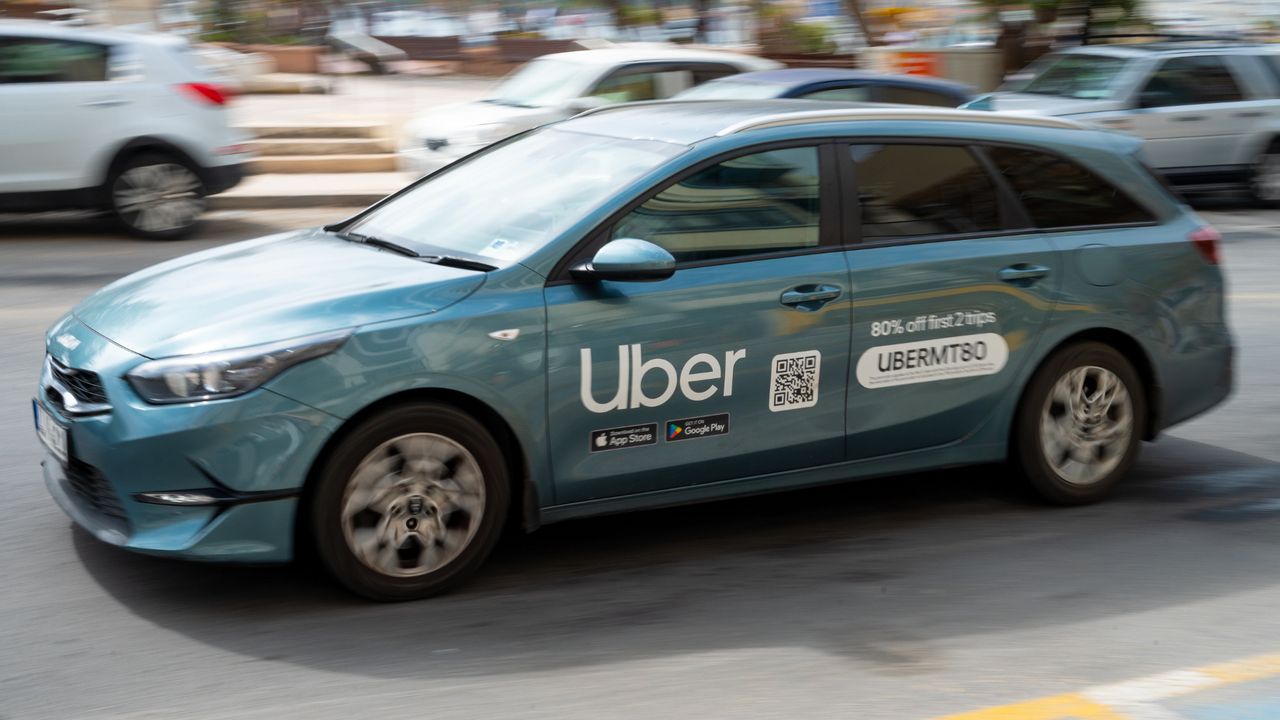
Uber chief warns no link yet between AI tokenmaxxing and shipping successful products — company pumps the brakes on all-out AI spending

by Mark Tyson
Uber might be having a serious rethink about lavishing cash on AI services as management still can't draw a clear link between LLM use and beneficial results.
23 May 18:44

America's top cyber-defense agency left a GitHub repo open with passwords, keys, tokens – and incredibly obvious filenames

The US Cybersecurity and Infrastructure Security Agency (CISA) left open a GitHub repository named “Private-CISA” containing plain-text passwords, private keys, tokens, and secrets – with obvious file names like “external-secret-repo-creds.yaml” and “AWS-Workspace-Firefox-Passwords.csv” – for six months. GitGuardian researcher Guillaume Valadon, fresh off a recent talk on Kubernetes secret leaks, found the public repository on May 14, and told The Register that he “quickly understood that the leak was bad and that time was running out. A national agency having 844 MB of production infrastructure material in a public GitHub repository for six months is as serious as a secrets leak gets.” Valadon, who previously spent nine years at France’s CISA equivalent, ANSSI, told us the leak included tokens for CISA's internal JFrog Artifactory, Azure registry keys, AWS credentials, Kubernetes manifests, ArgoCD application files, Terraform infrastructure code, GitHub personal access tokens, and Entra ID SAML certificates. GitGuardian reported the leaky repository to CISA on May 14, and the agency took it down a day later. A CISA spokesperson told The Register that it was aware of the report and is investigating. "Currently, there is no indication that any sensitive data was compromised as a result of this incident.” It’s not a good look for the nation’s infosec agency, which hasn’t had a permanent boss since Trump took office, is facing hundreds of millions of dollars in budgets cuts on top of deep cuts to staff and funding last year, and has suffered its share of embarrassing security snafus in the interim. In a Tuesday blog, Valadon said he initially thought the repo “was a hoax, given how suspicious the directory names (Backup-April-2026/, All Backups/, LZ-Artifactory/, Kubernetes-Important-Yaml-Files/, ENTRA ID - SAML Certificates/ ...), file names (external-secret-repo-creds.yaml, CAWS GitHub Token.txt, Important AWS Tokens.txt, AWS-Workspace-Firefox-Passwords.csv, Kube-Config.txt ...), and their contents (private keys, personal and professional GitHub tokens, AWS secrets, ...) seemed too good to be true,” Valadon wrote. It wasn’t a hoax – “The Cybersecurity and Infrastructure Security Agency is aware of the reported exposure and is continuing to investigate the situation,” but it was a “catalogue of unsafe practices,” he added, containing passwords stored in plain text, backups committed to Git, and an “explicit” how-to guide for disabling GitHub's secret scanning. After initially reporting the leak through the CERT/CC portal, and only receiving an auto-acknowledgement as of the morning of May 15 – a Friday – Valadon alerted security journalist Brian Krebs about the publicly exposed secrets, which seemed to speed up CISA’s processes. By 6 pm EST that night, the feds took down the repository. Valadon told The Reg he gives CISA credit for quickly deleting the repository. “Most of our responsible disclosures take much longer, and many are never fixed,” he said. “Managing to take the repository offline in a day is impressive work.” He doesn’t know if any other parties with less altruistic intentions found the secrets first, although the fact that the repository was never forked (based on public GitHub events) would seem to indicate that it wasn’t widely circulated on the dark web. “The only ones that can answer definitively is GitHub,” Valadon said. GitHub did not immediately respond to The Register’s inquiry. GitGuardian isn’t aware of any of the exposed credentials being abused by unauthorized individuals “Each category of secret in the repository unlocks a specific attack path,” Valadon said. “Stacked together, they cover the full range: from destructive attacks and ransomware extortion to quiet, long-term persistence inside CISA's build and deployment pipeline. That last scenario worried me the most, and it's why I escalated through every channel we had until the repository was taken offline.” Plus, the committer used both a CISA-issued contractor email and a personal Yahoo email across the same commits, and created the repository using a personal GitHub account. “That mixed-identity pattern is one of the hardest surfaces for security teams to cover, and it's where the worst leaks happen,” Valadon said.®
23 May 18:25

Anthropic’s Bun Rust rewrite merged at speed of AI

Johnathan Smith

A 600,000 line PR changing the entire language of the whole repo? I mean wow, but I would hate to be a reviewer on that.

A pull request with a Rust version of Anthropic’s Bun, a JavaScript toolkit and runtime originally written in Zig, has been merged to the main Bun repository. This comes just days after its author, Jared Sumner, said "there's a very high chance all this code gets thrown out." Sumner posted on X (formerly Twitter) five days ago that "99.8 percent of bun's pre-existing test suite passes on Linux x64f glibc in the rust rewrite," a clue that what was initially described as an experiment was likely to make it to production. Three days later, the Bun team released version 1.3.14, with Sumner stating that if the Rust rewrite was merged, "this would be the last version in Zig." Today that merge took place, adding more than one million lines of code. Sumner said it passes Bun's test suite on all platforms, fixes some memory leaks, and shrinks the binary size by between 3 and 8 MB. "Most importantly, we now have compiler-assisted tools for catching and preventing memory bugs, which have cost the team an enormous amount of development and debugging time over the years," he said in a comment. Performance is either neutral or faster, he said, though the codebase is "the same architecture, the same data structures." No async Rust is used. Bun users have hit memory leak issues when deploying it as a production runtime. According to Sumner, "Rust won’t catch all of these - leaks from holding references too long and anything that re-enters across the JS boundary are still on us. But a large percentage of that list is use-after-free, double-free, and forgot-to-free-on-error-path, and those become compile errors or automatic cleanup." A second pull request, removing upwards of 600,000 lines of Zig code, was automatically flagged by GitHub as "AI slop" and closed, but will presumably reappear in some form. The size of these commits makes them near-impossible for humans to review. "What a nice reviewable little commit. I'm sure it will not contain any bugs," said one comment on the Rust merge. Although the idea of the Rust port has been well received, the speed of the transition has taken the community by surprise. In normal circumstances, porting a major project so quickly would be risky, but this has been accomplished using AI tools. According to Sumner, it is "essentially the same codebase ported to Rust." Asked whether the Rust version would be maintained mainly by Anthropic’s Claude Code, Sumner said "this is already the status quo; we haven’t been typing code ourselves for many months now. Even pre-acquisition [by Anthropic] this was pretty much accurate." Sumner was formerly a strong Zig advocate, but Zig’s no-AI policy is at odds with the Bun team’s way of working, and recent versions of Bun use a Zig fork with contributions that cannot be merged upstream, and which Zig’s maintainers said would not be welcome regardless of the AI aspect. Version 1.3.14, the last one still to use Zig, adds a built-in image processing API for decoding, transforming and encoding images. It is designed as a drop-in replacement for the Sharp image processing library for Node.js. The new release also adds experimental support for the HTTP/3 (QUIC) protocol in Bun’s integrated server. The full release notes describe these and other new features. Is it possible to move this fast and not break things? Bun's migration from Zig to Rust will be watched with interest by AI advocates and sceptics alike. ®
23 May 17:29

Tue, May. 19 Electoral Vote Predictor

Johnathan Smith

I still can't believe this level of grift is actually happening. It's just so openly corrupt.

TrumpWatch 2026, Part I: The Greatest Grift on Earth

Yesterday, Donald Trump's lawyers saw the writing on the wall and realized his and his kids' "lawsuit" against the IRS was going to be carefully investigated by the judge in the case, which would put his latest, greatest grift at risk. So, his lawyers filed a "notice" dismissing the fake case with prejudice (notice is in quotes, because it should be styled as a request to dismiss the case). Moments thereafter, Trump's former personal attorney, and current acting Attorney General Todd Blanche announced the official creation of a $1.776 (get it?) billion slush fund to be doled out by a committee appointed by Blanche. Supposedly, anyone who has felt they've been wronged by the Justice Department is eligible to receive some funds. But you should take that promise with several grains of salt.

Such flagrant and large-scale grift, and all in one fell swoop, has no real precedent in American history. Wherever Boss Tweed, the Teapot Dome guys and Spiro Agnew are right now, they're surely impressed. If you tried to put this into a movie, the audience wouldn't buy it. But you can't make this stuff up. Really. If you don't believe us, check the story at The New York Times, Forbes, Bloomberg, ABC News, CNBC, or Vox. They can't all be wrong. But if you don't trust any media outlet, then how about a press release from Rep. Jamie Raskin (D-MD), ranking member of the House Judiciary Committee? Here is the first paragraph of Raskin's statement:

Donald Trump is orchestrating a $1,700,000,000 fraud on the American taxpayer to line the pockets of his MAGA political allies, another installment in his ongoing effort to turn the federal government into a personal cash machine for his unpopular extremist movement. This is a massive and unprecedented presidential plunder of the American people. Worse still, this is only the beginning—a declaration that the prior payouts were just a down payment, and that he now intends to earmark billions more in taxpayer dollars for his political allies, sycophants and private militia of unemployed insurrectionists.

Nice that Raskin wrote the number out in full rather than writing $1.7B. Makes it look bigger. Raskin should have written $1,776,000,000.00 though, with the silly number tricks and the "cents."

Here is the backstory. Trump sued the IRS for $10,000,000,000.00 because IRS supposedly leaked his tax returns. He also filed a couple of other lawsuits against the government. The IRS had to respond to the lawsuits. Instead of saying: "Buzz off, see you in court," the agency, which is ultimately under Trump's control, said: "Let's make a deal. We will give you $1,776,000,000 ($1.776B) to settle all the lawsuits." So, Trump was effectively negotiating with himself, which may be the only way he can actually come out on top in a negotiation. Trump the defendant wanted the problem to go away so he offered Trump the plaintiff a great deal and Trump the plaintiff took it.

The nature of the deal is that Trump gets a giant slush fund run by a secret board Blanche appoints (but that Trump can fire) and which makes secret decisions about what happens to that money. One thing that seems likely is that the Jan. 6 rioters who tried to overthrow the government by force will get some of it. There were 1,600 of them. Suppose each one gets, say, $100,000. That would leave $1,540,000,000 in the slush fund for Trump to do whatever the wanted. Rioters happy, Trump happy, Raskin unhappy, but you can't please all the people all the time.

At the moment, some of the details are fuzzy, presumably intentionally so. Most obviously, it's not clear who can, and cannot, lay hands on the money. Reportedly, the "settlement agreement" bars Trump and his two sons (i.e., the parties to the now-dropped lawsuit) from claiming any portion of the fund. But the Trumps have spent their whole lives doing end runs around rules like this. For example, what if the secret committee decides that the Trump Organization has been damaged to the tune of $1.2 billion? Well, that payment would not go to the Trumps, technically, it would go to the "person" that is their S-Corp. And yet, the money would end up in their pockets, anyhow. Alternatively, this is also a president who has claimed that [THING X] is true of some amount of money, and then moved on to [THING Y] once attention died down. For example, does anyone know anymore where the ballroom donations went, or whether they will ever actually be used on this project? Or where all the inaugural celebration funds went? We certainly don't.

Will this scam work? Who knows? George Washington didn't try to rip off the government. Neither did John Adams, Thomas Jefferson or any other president until now. Could someone stop this? Well, there may be a few potential obstacles:

  1. The Courts: Trump filed his lawsuit in the Southern District of Florida and the judge, U.S. District Judge Kathleen Williams, was skeptical that the lawsuit is legit and that the parties are "sufficiently adverse to one another." She asked six attorneys not associated with the case to weigh in and they filed a brief that basically says the lawsuit is bogus and that Trump is effectively on both sides of the case and is negotiating with himself. At the moment, Williams says that the dismissal has stripped her of jurisdiction, and thus she has no remaining power to do anything here. However, the matter could be brought back to life, very possibly by the next non-corrupt AG.

  2. The Law: Obviously, it's not illegal to sue the IRS, but the law is clear about what one can sue for. Federal law allows suits against the IRS or a person who is not an employee for up to $1,000 per disclosure or "actual damages." Aside from the conflict of interest and the fact that a party can't be on both sides of a lawsuit, there are additional defenses that an agency would normally pursue: (1) the statute of limitations is 2 years from discovery of the leak; Trump has railed against the release since it occurred in 2019, during his first administration, so the suit should have been dismissed on that basis; (2) Charles Littlejohn, the contractor who's guilty of the leaks, is not an IRS employee, so the suit should have been brought against Booz Allen (his employer) or Littlejohn; and (3) about those alleged damages, Trump would be very hard pressed to prove any actual damages based on the leak, let alone $10 billion in damages. Former IRS and Justice Department officials filed an amicus brief in the case making these arguments. The government did not. And it's also illegal to promise not to audit a taxpayer or a business, which Trump was also angling for, and which would be much more valuable to him than the slush fund. It's not clear if that concession is, or is not, in the as-yet-unreleased settlement agreement.

    Precedent here is also important. Trump is among about 150 ultra-rich people like Elon Musk, Jeff Bezos and Michael Bloomberg whose tax information Littlejohn released to some news outlets. Back in June 2024, the IRS settled a lawsuit by Ken Griffin, whose information was also leaked. Griffin had demanded $1,000 per unauthorized disclosure, the maximum allowed by law. He got an apology but no money after 18 months of litigation.

  3. The Lawyers: If this "deal" actually goes through, the lawyers involved are in for a lot of scrutiny. If there's any evidence of collusion or conflicts of interest—looking at you, Todd Blanche—the state bars will be all over it. The communications between the lawyers on either side will be pored over with a fine-toothed comb for evidence of kickbacks or other criminal conduct. Trump wants something from Blanche: $1.776 billion. Blanche wants something from Trump: The job of AG. Let's make a deal?

  4. Trump's Family and Businesses: The Trump businesses, which were party to the now-dismissed suit, are based in New York and Attorney General Letitia James has been very adept at holding them accountable for their crimes. Here, there are a few avenues she could pursue under state law: fraud, misuse of public funds, misappropriation, conspiracy to defraud New York taxpayers—and that's just off the top of our heads. Even if Trump can claim immunity, which is a big "if" given that he sued in his personal capacity, his family and businesses cannot.

  5. Congress: Assuming Republicans grow a spine (less plausible) or Democrats flip the House in November (more plausible), they could launch investigations. If enough members agree there's a problem here, they could impeach, or try to claw back the money.

    Art. I, Sec. 9 of the Constitution includes this sentence:
    No Money shall be drawn from the Treasury, but in Consequence of Appropriations made by Law; and a regular Statement and Account of the Receipts and Expenditures of all public Money shall be published from time to time.
    This would seem to say that Congress would have to appropriate the money. Would the votes be there? We doubt it, since any senator or representative voting for it would have to defend that vote until the cows come home. Could Trump just write a check for $1,776,000,000.00 and sign it and give it to his board to scan using the banking app the board uses? Needless to say, the audacity here is breathtaking and the legality questionable at best if Trump tries to take the money without a formal appropriation from Congress.

    Another possibility is that Trump plans to pay this money out of the Judgment Fund—a permanent fund set up by Congress to pay monetary damages for certain claims without having to go back to Congress each time for the money. But if so, the statute that created the Judgment Fund doesn't allow payments for claims like the ones Trump brought. Which means that if this is Trump's plan, he would be breaking the law.

If Trump tries to pull this off without an appropriation, it is possible that a future AG would regard this as theft and could indict Trump for it. Of course, Trump is almost certain to pardon himself on the way out the door. But the AG could take the position that: (1) self-pardons are not valid and (2) a pardon can only be issued after someone has been convicted of a federal crime, and indict Trump anyway, saying: "Eventually the Supreme Court will have to decide if my position is correct." The AG could also request that the judge refuse bail because Trump is a flight risk. Further, since the theft would have taken place in D.C. the U.S. attorney for D.C. could indict Trump, in which case the pardon wouldn't matter since the president can pardon only crimes against the United States and this could be regarded as common theft or maybe fraud (writing a bad check or equivalent), which violates D.C laws.

One last observation. Actually, more like a question. Why on Earth would Trump try this before the midterms? Just the attempt is going to be an anchor around the neck of the GOP. And if he actually pulls it off, then the anchor will grow much, much larger. Democrats will use this, and the billion-dollar ballroom, and several other grifts, and note that somehow there's money for Trump and his cronies, but not for, say, healthcare for ordinary Americans. That's not only powerful stuff, it would also be political malpractice for the Democrats NOT to exploit it. Trump's not the sharpest tool in the shed, but his political instincts are usually pretty good. Isn't this something that could wait until, say, November 4, 2026?

We have absolutely no information that helps explain what is going on here, so all we can do is speculate. We have seven theories, some of them pretty far out there. After all, we are a full-service operation. Here are our theories, from most to least likely:

  1. The Judge: Perhaps Trump's lawyers have read the tea leaves and figured out that Williams was on the cusp of dismissing the lawsuit. They might have re-filed, or they might have appealed, but they may have concluded it was too difficult to stretch things out for roughly 6 more months. So, this could be a case of "We have to get while the gettin's good."

  2. Blanche's Self-Interest: It appears that Blanche was the driving force behind this agreement. His primary concern right now is getting appointed as the permanent AG. That will be a moot point by the time November rolls around. So, if he wants to kiss the boss's ample posterior 1,776,000,000,000 times, he has to do it now. Compared to how much Blanche cares about his own prospects, the fate of the Republican Party is but a grain of sand on the beach.

  3. The Money: The exact state of Trump's finances has always been something of a mystery, though he certainly appeared to be in dire straits as of 2024, particularly given that he still owes $600 million or so in the fraud and E. Jean Carroll cases. It seemed that his fortunes were saved by his various grifts, most obviously Trump Media & Technology Group and the two bitcoin products. However, the TMTG stock and the bitcoins have both fallen off a cliff, value-wise. If Trump did not cash out, or if he secured loans with stock/bitcoin that is now nearly worthless, he could be dealing with a serious cash crunch right now, and he might not be able to wait until November for an infusion of funds. And again, anyone corrupt enough to pull this "compensation fund" scam is corrupt enough to redirect a bunch of the money to their own pocket, no matter what they have promised otherwise.

  4. The Emperor's Clothes: This whole thing stinks to high heaven, and surely there are many unhappy Republicans in Congress right now, who know they are going to get hammered for this. It would only take a few defectors in the House for Congress to go after Trump for this, and we can absolutely envision a coalition of the Democrats, plus Rep. Thomas Massie (R-KY), plus a few other budget hawks/swing-district Republicans getting a bill to the House floor via discharge, and sending it over to the Senate.

    The Senate is a bigger problem because of the filibuster. Still, the members there don't want to be known as the defenders of the Trump slush fund. If you start with the 47 Democrats and independents, add in the Republicans who hate Trump and are leaving the Senate anyhow (Bill Cassidy, R-LA; Mitch McConnell; R-KY; Thom Tillis, R-NC), add in the Republicans who are moderates and tend to oppose this kind of self-dealing (Susan Collins, R-ME; John Curtis, R-UT, Lisa Murkowski, R-AK), add in the Republicans who are facing tough reelection battles and don't want to give their opponents a cudgel to yield (Jon Husted, R-OH; Pete Ricketts, R-NE; Dan Sullivan; R-AK) and then top it off with the maverick budget hawk Rand Paul (R-KY), you can see a dim, but real path to 60 votes in the Senate.

    Anyhow, the closer that we get to the midterms, the less leverage Trump has to punish defectors, and the more that members who hope to keep their jobs will fear the wrath of the voters. So, Team Trump may have counted noses, and decided that right now is when the iron is hot, in terms of preventing Congress from getting involved. Mild support for this theory comes from the fact that the newly defeated and newly unencumbered Cassidy was furious yesterday, calling the $1.776 billion a "slush fund" that tramples all over Congress' power of the purse.

  5. Trump Is Losing It: It is clear that Trump is not well, cognitively. How unwell is hard to say, but he's certainly got issues. Meanwhile, he's also surrounded by yes men who are terrified of crossing him. It is at least possible that if he gets fixated on "MONEY!", he can't be talked down, and can't be made to properly understood that a longer timeline would be better.

  6. Trump Wants to Lose the Midterms: The previous entry on this list is a little on the conspiratorial side, and the conspiratorial bent deepens even more fully moving forward. Anyhow, it could be conscious, it could be subconscious, but perhaps Trump would be happier if the Republicans lost one or both houses of Congress in November. Even when he's leading a trifecta, he gets very little done, anyhow. By contrast, if the Democrats control at least one chamber of Congress, he can spend 2 years blaming them for everything under the sun. It won't work on all voters, but it will get the base excited in a way that passing one or two substantive bills a year does not.

  7. Trump Is Dying: Trump is about to undergo his fourth physical in the last year, and has shown other physical symptoms of... something he refuses to discuss. He could think he might be dying, or he could be actually dying. If so, well, it is unlikely that President Vance will sign off on a $1,776,000,000.00 fund whose board answers to the Estate of Donald John Trump. So, it may be necessary to get this done before it's too late.

Again, these are just our best guesses. And we acknowledge that some of them are pretty conspiratorial. But it's not like Trump hasn't given us reason to be suspicious of sinister things going on behind the scenes. Anyhow, if readers want to tell us we're out to lunch, or want to offer alternate theories as to why Trump would pursue something so impolitic just months before a crucial midterm election, the e-mail address is comments@electoral-vote.com.

We'll also say a couple of other things about the politics of this. First, the "1776" thing is just a little too precious. We don't think a single person will say "You know, I wasn't liking this idea, but it's patriotic, so OK!" However, we could imagine people who look at this and conclude that all of Trump's "patriotism" is just performative B.S., and that other "patriotic" projects, like the Arc de Trump, are actually scams.

Second, the terms by which the slush fund will operate are pretty broad, because they want to be able to pay out a lot of different kinds of cronies. But what happens if James Comey applies for some money? Or Letitia James? Or Sen. Mark Kelly (D-AZ)? The shadowy figures who are going to administer the fund won't pay those people, of course, and the Trump targets will be able to go on TV and/or file lawsuits that bring all kinds of attention to the fact that the whole thing is just self-dealing. That trio, joined by a few others, could give Trump & Co. several black eyes before this is all said and one.

You know this is Bad Stuff when the billionaire-friendly, Jeff-Bezos-owned Washington Post has an editorial attacking the deal. If it doesn't fly with billionaires, is it going to fly with average Americans?

And that brings us to the end of an item with a very rare contributors' signature. Can you tell which part was written by which person? If it helps, the word count is fairly even; around 33% each. If you'd like to check your guesses, click here. (V, L & Z)

23 May 15:30

Mon, May. 18 Electoral Vote Predictor

Johnathan Smith

How does this guy get any votes at all?

Trump Doubles Down on Dismissing Affordability

Donald Trump is probably spending too much effort going after his "enemies" like Bill Cassidy and Thomas Massie, and not enough effort paying attention to what his base wants. People outside Louisiana don't care about Cassidy's fate and people outside KY-04 don't even know who Massie is. Everyone else cares about affordability. It is the new key word politicians have to learn to talk about. In the right way. Just before going to China, a reporter asked Trump "To what extent are Americans' financial situation motivating you to make a deal?" Trump said: "Not even a little bit." Bad answer. Watch:


Then he goes on to say that all that matters is Iran not getting a nuclear weapon. But in the Democrats' ads this fall, only the first 9 seconds will be shown, ending with his answering the question with "Not even a little bit." For effect, the ads could repeat the "Not even a little bit" part a couple of times. The pitch could be "Democrats care about you. Republicans don't care about you, not even a little bit."

That was bad enough. On Friday, Trump doubled down and again said: "I don't think about Americans' financial situations. I don't think about anybody. I think about one thing: We cannot let Iran have a nuclear weapon." That was so off-key that even Fox covered the story. This is political malpractice and will be the interview that launched 1,000 ads. He could have said: "On the domestic front, my top priority is affordability. In foreign affairs, we can't let Iran get a nuclear weapon." Many previous presidents could walk and chew gum at the same time. This one apparently can't. This has to be a golden opportunity for the Democrats—to use those 9 seconds to pound on an issue the voters care a lot about. It is one thing to say: "There is not much any president can do about the economy." It is something quite different to say "I don't care about your financial situation." Bill Clinton famously said: "I feel your pain." Trump doesn't even recognize that millions of voters are in pain. (V)

23 May 15:01

Trump administration to force foreigners in the U.S. to apply for a green card abroad

by The Associated Press
An information packet and an American flag are placed on a chair at the U.S. Citizenship and Immigration Services Miami Field Office on Aug. 17, 2018, in Miami.

Foreigners in the U.S. who want a green card will need to leave and apply in their home country, the Trump administration announced Friday, in a surprise change to a longstanding policy.

(Image credit: Wilfredo Lee)

23 May 00:39

Steam Controller Charging Puck May Lack Protection—Redditor Nearly Starts Fire With Short Circuit

by Cpt.Jank
Valve's Steam Controller hasn't even been available for a month, and one user has already sounded the alarm bells on the controller's charging puck, which has exposed power pins for charging the wireless game controller. One Reddit user, u/Toikka, posted their experience with the Steam Conroller's puck, which unexpectedly started melting and nearly caused a fire after the user accidentally bridged the puck's exposed pogo pins with a metal Google Pixel Watch 3 smartwatch band, resulting in "sizzling" as a result of a short circuit. The user notes that this is likely user error, but some comments in the thread have pointed out that it seems reasonable to expect a $99 controller with exposed charging pins to have some sort of short circuit protection via a handshake with the controller or similar. Steam Support seems to agree, as the Redditor notes that the gaming giant's hardware team "has been in touch and is investigating," requesting that the user send the damaged items back in exchange for a replacement puck.

The relevant part of the user's post reads: "So my smartwatch's metallic strap accidentally touched the Puck's exposed contacts and started sizzling due to a short circuit. The smartwatch was on its own charger and the strap of it hit the Puck at the exact wrong angle. Almost started a fire." Notably, Valve's official manual for the Steam Controller warns against allowing metal items near the charging puck, because "magnetic parts may attract metallic items" and notes that "to reduce the potential risk of sparks and resulting property damage or possible injury, make sure that the wireless adapter and charging puck and Controller are free of metallic objects before connecting." There is, however, no warning to indicate that any contact with a metal object may result in a short circuit.
22 May 14:23

Republicans call off vote on Iran war resolution that was on the verge of passing

by The Associated Press
House Minority Leader Hakeem Jeffries, D-N.Y., speaks during a news conference, Thursday, May 21, 2026, on Capitol Hill, in Washington.

Republicans struggled Thursday to find the votes to dismiss legislation that would compel President Donald Trump to withdraw from the war with Iran, delaying planned votes on the matter into June.

(Image credit: Mariam Zuhaib)

21 May 17:37

Motherboard Sales fall 44% as Memory Prices Disrupt PC Upgrades

The ongoing rise in memory and graphics card prices is now having a measurable effect on the DIY PC market. According to newly published figures from China, motherboard sales dropped by 44% in April 2026 compared to the same month last year.
21 May 16:23

Samsung and SK Hynix employees are reportedly abandoning overseas training programs to nab up to $400,000 performance bonuses — online dating grades rise as female members 'seeking out SK hynix employees'

by Etiido Uko
Samsung and SK Hynix employees are reportedly considering terminating overseas training programs to be eligible for performance bonuses as AI-driven semiconductor profits fuel record bonus projections worth hundreds of millions of won.
21 May 16:22

Intel CEO Lip-Bu Tan stamps out chip bugs with aggressive new quality standards, says major validation errors can result in termination — 'B0, you keep your job. Anything above that, you are fired'

by Anton Shilov
Lip-Bu Tan wants Intel to radically improve its chip development discipline and achieve production readiness with A0 silicon revision.
21 May 14:46

Officers who defended Capitol from rioters sue to block payouts from fund

by The Associated Press
Johnathan Smith

This fund existing seems like one of the most overtly fascist things that has happened. I cannot imagine how anyone can think this is justified without being a fascist.

FILE - Trump supporters try to break through a police barrier, Jan. 6, 2021, at the Capitol in Washington.

Two police officers who helped defend the U.S. Capitol during the Jan. 6 riot are suing to block anyone from receiving payouts from a new settlement fund.

(Image credit: John Minchillo)

20 May 15:01

(PR) Samsung and Google Give First Look at New Intelligent Eyewear

by TheLostSwede
Johnathan Smith

I guess we have more companies trying to make smart glasses. I thought everyone had given up.

Samsung Electronics and Google today unveiled new intelligent eyewear at Google I/O 2026 by giving a first look at two premium styles created with eyewear partners Gentle Monster and Warby Parker. Designed to work as a companion device to a mobile phone, the new eyewear enables users to access help through voice interaction and connect seamlessly to their phones, all through a familiar form factor.

Co-created with the eyewear partners, the intelligent eyewear combines breakthrough AI capabilities with comfort and style, merging Samsung's leadership in hardware engineering and Google's AI technology with premium eyewear design. Each eyewear brand brings a distinct design approach to the device. Renowned for their legacies in fashion eyewear, Gentle Monster presents styles with disruptive yet refined aesthetics, while Warby Parker showcases refined and timeless designs.
19 May 15:07

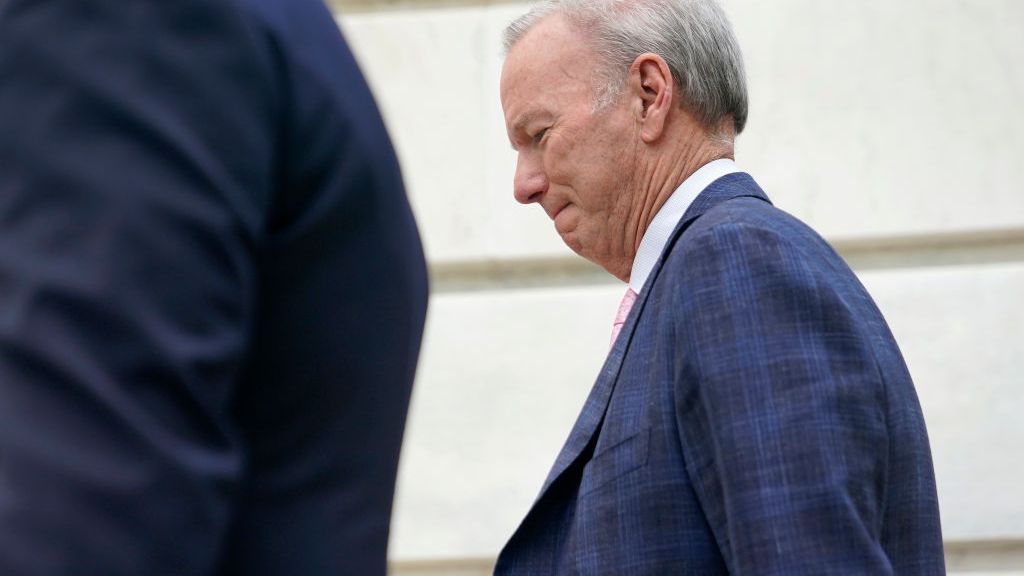
College students drown out AI-praising commencement speeches with boos — 'deal with it' one speaker fires back as students heckle positive pitches for AI's role

by Ben Stockton
Ex-Google CEO Eric Schmidt found himself booed and jeered as he gave the commencement address at the University of Arizona, telling the students AI will "shape the world."
18 May 15:29

New burn bans and Trump's battle with immigration and DEI are impacting forest fires

by Chiara Eisner
Johnathan Smith

I guess mega fires are now "america first".

A fire fighter conducts a controlled burn in southern Washington.

Firefighters say setting fires on purpose is one of the best  ways to protect against massive wildfires later. But the Trump administration is banning or stalling preventative burning across the U.S.

(Image credit: Chiara Eisner)

18 May 03:23

Samsung Starts Shutting Down Chip Production Lines Ahead of 18-Day Worker Strike

by AleksandarK
Samsung is gradually winding down its factory production as an 18-day strike looms over the company facilities. According to South Korean news outlets, Samsung is slowing its manufacturing operations to enter what is referred to as emergency management mode, which essentially limits production capacity. According to the Seoul Economic Daily, about 43,286 factory workers have joined the picket line for the strike, which is more than half of the entire semiconductor division (DS unit) labor force. As factories face worker shortages, production lines are gradually stalling. In emergency mode, Samsung will restrict the number of new wafers introduced into the production process, which is a long and demanding procedure that typically runs 24/7. Interestingly, the factory can still operate at minimum production capacity thanks to the extensive automation involved, but operating machines still requires human involvement.

TrendForce estimates that about 3-4% of the world's global DRAM supply could be disrupted, along with about 3% of the world's NAND Flash supply. At a time when DRAM and NAND Flash shortages are at their peak, this will exacerbate the global supply chain situation. The targeted production lines in the strike are for HBM, (LP)DDR5, and some custom logic production. If Samsung's customers perceive uncertainty from the production capacity stall, many could shift to competitors like SK hynix or Micron. With more than half of the workforce absent, there will not be enough factory workers to keep production lines running, and output will drop significantly.