Shared posts

10 Aug 09:26

Der Spiegel & the fate of newspapers

by Jeff Jarvis

Spiegel Online asked me to join a conversation about the fate of newspapers, prompted by Axel Springer’s sale of its local publications. The German translation is here. And here is the English text:

dertagGutenberg’s magnificent machine industrialized information and communication. That has lasted almost 600 years. Now the internet forces us to question every industrial-age assumption about every business, including news.

Journalists have been gatekeepers and lecturers who synthesized information into narratives that they controlled, their work subsidized by bundling news into publications that also delivered nonnews — entertainment, sport, lifestyle — which drew audience and advertising. It was a lovely oligopoly while it lasted. But it is over. The Onion has written print’s obituary.

Now who says that news must come on paper, in articles, once a day, the same for all, and from a newsroom, let alone from a journalist? Are we in the content business, producing and protecting a scarce commodity? Or shouldn’t we come to see news as a service whose outcome is not products on paper or pages on screens but instead informed people and communities?

The internet gives journalists unprecedented opportunities to reimagine our relationships with the public we serve; the forms that news can take; and the business models that can support it.

Relationships: Using the net and its services — Google, Facebook, Twitter, YouTube, Instagram — as platforms, the public can now share what they know and what they witness on their own, without mediators — that is, without media. But there is still a need for journalists, perhaps greater than ever. Journalists must add value to that flow of information, confirming facts, debunking rumors, finding sources, adding context and explanation, and, most importantly, asking the questions and getting the answers that are not in the flow — that is: reporting.

News organizations can also act as platforms for communities to share information. Take, for example, Waze, the app Google is trying to buy that enables countless commuters to automatically and inexpensively share traffic anywhere, serving individuals better than mass media — radio reports — ever could. Waze also learns where we live and work. Does your newspaper know that about you?

Forms: Just as news publications are being unbundled, so are news articles. The single narrative is being broken up into separate assets: what’s new may come from Twitter; background from Wikipedia; details from a database; quotes from YouTube; explanation from a graphic. This allows each of us to traverse a news event in our own way. Are journalists still storytellers? Only when that’s the best way to impart information.

Our business models: Ah, here’s the hard one. We cannot preserve old models in a new reality. Just because we used to sell access to content and had pricing power over advertising, there is nothing to say that is our right to continue.

In our new balance sheet, the net brings greater efficiency and considerable cost savings, eliminating manufacturing and distribution costs and enabling specialization and collaboration: Do what you do best and link to the rest, I always say.

Our value, I believe, will come from building relationships with people as individuals, no longer as a mass. That is the core of Google’s business model: delivering relevance and recognizing value because it knows what each of us is looking for, where we are, and what we want. Those are signals Google is equipped to gather, analyze, and act upon. Media’s content generates signals about interests and needs. So we in media must learn to use that as the basis of building new relationships and extracting greater value from them.

It is my fondest hope that Amazon founder Jeff Bezos will bring his expertise in building relationships and relevance to his purchase of The Washington Post, turning it from a content factory into a platform and information service for a wiser Washington.

I loved newspapers. My basement is filled with clips from them, so proud am I still of my bylines in print. I loved magazines. I started one and every week bought them by the pound. Whenever I’ve foretold the death of print, someone will say, “But people like paper.” Yes, I respond, and people used to like horses. But horses were economically (and environmentally) unsustainable and we moved on.

So move on. What matters isn’t newspapers. What matters is news and journalism and how they can help communities organize their knowledge to better organize themselves. That is my definition of journalism.

09 Aug 14:37

Full-Length Thor: The Dark World Trailer Online

Full-Length Thor: The Dark World Trailer Online

'Before the universe, there was darkness. And it has survived...'

A new trailer for Thor: The Dark World has appeared online, despite the fact that this is Odin's Day and not - as has become traditional for this film - Thor's Day. But don't worry: the Thunder God is very much present and correct, standing up to defend the world against a tide of darkness that threatens "the very fabric of reality".


This time around Asgard is under threat from the Dark Elves of Svartalfheim, led by Christopher Eccleston's Malekith, and Earth too faces destruction at the hands of this still-mysterious force. Meanwhile, Natalie Portman's Jane Foster gets an outing to Asgard to visit the in-laws, and Chris Hemsworth's Thor is forced to call on his treacherous brother Loki, who seems to be the one person around who might have useful information on this new enemy. We guess that's who he was studying with between the first Thor and The Avengers.

Much of this footage was shown at Comic-Con, but there are new segments of death and destruction (especially around Greenwich, which is in for a really bad day) and this is missing the finally shocking shot of that selection (read our Comic-Con article for more on that, but beware potential spoilers). What it does have is more of Tom Hiddleston's Loki in prison and more crashing wreckage than previous clips.{Thor The Dark World Pyramid Poster}{Thor The Dark World Empire Images}

It's all directed by Alan Taylor and also stars Idris Elba, Anthony Hopkins, Rene Russo, Kat Dennings, Zachary Levi, Jaimie Alexander, Stellan Skargard and Ray Stevenson.

Thor: The Dark World hits cinemas on October 30. Check out our interview with Tom "Loki" Hiddleston about the film and his appearance at Comic-Con below.


09 Aug 14:26

20 Science Fiction Moments that will make you cry.

http://io9.com/15-science-fiction-moments-that-will-make-absolutely-an-1055589450

A few Whedon moments make this list - the only surprise, that they're not higher up. And certain tear-jerking moments from Serenity and Dollhouse are strangely missing...

09 Aug 14:09

WhatsApp adds voice messaging as it hits 300 million monthly active users

by Nathan Olivarez-Giles
Theverge1_1020_large

WhatsApp — the hugely popular messaging app found on Android, the iPhone, Windows Phone, BlackBerry, and even Symbian — is now in the voice messaging business. On Tuesday, while also announcing that it now has 300 million monthly active users, WhatsApp began updating its apps to enable users to send voice memos to one another.

Continue reading…

09 Aug 13:57

Fresh Meat: 10 new Android apps worth checking out

by Steve Raycraft

New apps need lovin’ too, right? Every day there are thousands of new entries on the Google Play store, but many go unnoticed and never receive the attention they deserve. We’ve shown in the past that this community can discover great apps and launch them to new heights. Our weekly column Fresh Meat highlights new apps with less than 100k installs. Browse our new Android app picks below and let us know which ones you enjoy.

ZocDoc

ZocDoc

Description: Find & book doctor appointments in 3 simple steps: enter your zip code & insurance, see a list of doctors & their available times, and click to book an appointment! IT’S FREE!

Google AdSense

Google Adsense

Description: The Google AdSense app provides an easy way to access key data from your AdSense account. Access reporting features anywhere, directly from your mobile phone. The first version of the app gives you access to: the key earnings information, top custom and URL channels, ad units and sites reports, payment alerts.

Motorola Migrate

Motorola Migrate

Description: One of the biggest pains of a new phone is losing some of your important stuff. Now you can move your photos, videos, SIM contacts and even your call and text history—from your old Android phone to your new Motorola phone in just a few steps, wirelessly.

All-in-One Agenda

All-in-One Agenda

Description: All-in-One Agenda is a widget showing events of your digital life be it calendar appointments, Facebook events, birthdays or weather forecast, and allows you to manage them with easy.

Twisty Launcher

Twisty Launcher

Description: With Twisty Launcher opening your favorite apps is easier than ever. All you need to do is hold your phone in your hand and flick to the left twice to open your camera. Twisty Launcher will look for this hand gesture from the background, so you can perform the gesture from inside any app. This makes it super easy to not miss a quick photo opportunity.

Floating Music Widget

Floating Music Widget

Description: You can’t disagree that ICS lockscreen music control is a really convenient thing. But have you ever thought about being able to control your music from anywhere? If yes, then this application is just for you.
This is basically a music control widget you see on the lockscreen, except you can launch it anywhere.

Klyph for Facebook

Klyph

Description:  Everyone gets tired of the ugly, slow official Facebook app so why don’t you give a try to Klyph: a new client for Facebook. With a nice and smooth UI designed following the Android Design Guidelines, Klyph looks like the Google+ app but for Facebook.

Lyrics4Tube – Lyrics Player

Lyrics4Tube

Description: Lyrics4tube is a unique, efficient application which instantly provides you with lyrics while you are looking up and listening to all types of music. Lyrics4tube is applicable to youtube, android music player, as well as winamp and last.FM music players.

1 Second Everyday

1second

Description: We believe in try before you buy. The App is FREE for 30 days. If you like your experience, it’s only $0.99 to continue :) For over 2 years now, I’ve been recording 1 second every day, so I’ll never forget another day ever again. This project has had such a profoundly positive impact on my life, that I’ve passionately developed an App that will make it extraordinarily easy for anyone to do this too. Reliving every single day of my life at age 30 in 6 minutes has provided me with a treasured perspective on life. It holds me accountable for making each day count.

Office Mobile for Office 365

Office Mobile

Description: Microsoft Office Mobile is the official Office companion optimized for your Android phone. You can access, view and edit your Microsoft Word, Microsoft Excel and Microsoft PowerPoint documents from virtually anywhere. Please note: Office Mobile requires a qualifying Office 365 subscription.

09 Aug 13:47

50 Sci-Fi/Fantasy Novels That Everyone Should Read

by Bill Crider
06 Aug 21:56

Judge who accepted private-prison bribes to send black kids to jail sentenced to 28 years

by Cory Doctorow


In 2009, I wrote about Judge Mark A. Ciavarella, one of two Pennsylvania judges who was paid bribes by a private prison contractor to send black children to prison and keep the for-profit prisons full. Ciavarella, who once sent an African-American child to jail for three months for posting negative comments about her assistant principal on MySpace, has been sentenced to 28 years in prison. He was convicted of racketeering, and has been stripped of his state pension.

But after a federal investigation, it was discovered that Ciavarella and his colleague, Judge Michael Conahan, received more than $2.6 million from privately run youth centers owned by PA Child Care. In 2011, Ciavarella was convicted of racketeering and sentenced to 28 years in prison. He was also forced to pay $1 million in restitution.

Once Ciavarella was convicted, the Pennsylvania Supreme Court tossed out 4,000 convictions issued by the judge.

Ciavarella appealed to the Third Circuit Court of Appeals in Philadelphia to have his 28-year sentence overturned. On July 25, the court denied his request.

Judge to serve 28 years after making $2 million for sending black children to jail [Amir Shaw/Rolling Out]

(Thanks, John Jack!)


06 Aug 21:54

Most Popular Online Backup Service: Crashplan

by Alan Henry

Most Popular Online Backup Service: Crashplan

Backing up your files locally is important, but if something like fire or flood happens, your data and your backups are gone. That's why online backup services are great: They keep your data offsite. Last week we asked you which were the best, then we looked at the top five. Now we're back to crown the crowd favorite.

Read more...

06 Aug 21:53

First signs of Key Lime Pie spotted in the wild

by Dustin Earley

With the launch of the new Nexus 7, a handful of other flagship devices and Android 4.3, Jelly Bean, already come and gone, we can turn our complete attention to Key Lime Pie, or what is presumed to be Android 5.0. For as much as we’ve heard about the upcoming “K” update rumored to hit Android this fall, we’ve yet to see any real proof of its existence. What we have today is still a stretch, but we think it may be some of the very first signs that Key Lime Pie is being tested for release.

In the Chromium Project bug tracker, previously noted for leaking future Android build numbers, an issue with the Nexus 4 and 7 with cloud print has popped up on Android build KRS36B. Why is KRS36B important? Every Jelly Bean build name has started with “J”. Ice Cream Sandwich with “I”, and Gingerbread with “G”. This build, KRS36B, is from Key Lime Pie. This reveals absolutely nothing about the update itself, but is a great sign that a fall launch date for the next big version of Android is likely.

This October, we fully expect to see a new Nexus 10, a new Nexus phone (a 4-inch Moto unit? 5-inch LG handset?) and Android 5.0, Key Lime Pie. The closer we get to this fall, the more leaks we expect to see, and more rumors we expect to hear. The countdown is officially on.

06 Aug 21:53

Obama Administration Trying To Resurrect SOPA's Streaming-Is-Felony Policies

by ReadWrite Editors

Streamers of illegal content on the Internet, be aware: the government really wants to punish you for your malfeasance.

2012 was all about the common people of the Internet banding together to protest the possible enactment of the Stop Online Privacy Act (SOPA). Faced with mounting opposition from voters and—more importantly—big business donors like Google, Congress back-pedaled the legislation.

But a new report from the Department of Commerce’s Internet Policy Task Force wants to revive one key element of the former SOPA bill that's sure to raise eyebrows among copyright watchers: streaming copyrighted works on the Internet would be considered a felony.

Copying and distributing copyrighted material (i.e., bootlegging or ripping) is already considered a felony. and streaming copyrighted material is punishable just as a misdemeanor, since it's seen a violation of public performance rights.

This was a provision in the original SOPA bill, and now the Department of Commerce is exhuming it again, demonstrating for the umpteenth time the influence of Hollywood in the halls of Washington.

No legislation has been proposed from this report yet, but it will be something for which to keep an eye out in upcoming months.

Image courtesy Dusit/Shutterstock.

06 Aug 21:52

Google rethinks hyperlinking in Drive with a built-in search field

by Jacob Kastrenakes
G_large

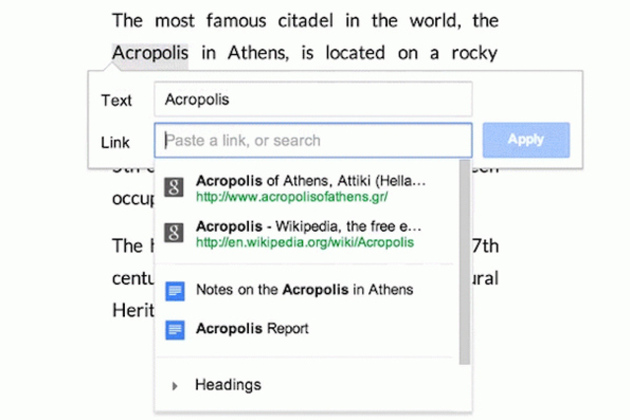
Google has thought up a new way to add web links to documents for its latest update to Drive. Before, inserting a link required knowing the exact URL that a person should be sent to, but now both Docs and Slides will include a built-in search field that automatically suggests the top results for the phrase being highlighted. Of course, you can still enter the exact link if you already know it — but if it's easy to find through a Google search, the new method may be the quickest way to add it. The linking tool pops up directly beside the highlighted text, and also suggests other Drive documents and individual paragraphs that could be linked to as well. It's a simple change, but it may just take one step out of your workflow.

Continue reading…

06 Aug 21:40

Details On Upcoming Police Torrent Site Crackdown Revealed

by Andy

Early June, City of London Police informed TorrentFreak that they had begun targeting sites that provide access to unauthorized content for “criminal gain.”

The ongoing initiative is part of a collaboration with Hollywood studios represented by the Federation Against Copyright Theft and the major recording labels of the BPI. Many torrent sites received letters in which they were warned they were breaking the law. Shutting down, the letters implied, would be the safest course of action.

“We have grounds to suspect that as owners and/or operators of the XXXXX website, you are committing the offense of communication to the public under s.107(2A) of the Copyright, Designs & Patents Act 1988 (“CDPA”). Section 107(2A) is an indictable offence punishable by up to two years’ imprisonment,” the National Fraud Intelligence Bureau warned.

At the end of June the UK government announced the formation of a new intellectual property crime unit to launch in September with £2.5 of public funding. It then became clear that the new unit at City of London Police and the threats to torrent sites were closely connected.

To our knowledge only a couple of sites have actually shut down after receiving a police letter. Admins of other sites discussed the threats with TorrentFreak on condition of anonymity but we get the impression that for them it will be business as usual next month.

The Intellectual Property Crime Unit issued threats to sites not just in the UK but all over the world and it’s expected that they will coordinate with organizations such as Europol and Interpol to an attempt to shut them down.

Of course, the police won’t be initiating these actions on their own. They are working closely with record labels and movie studios who are providing the initial guidance and intelligence. While this is nothing particularly new, it seems that the new unit could be the missing link on information sharing absent for almost a decade.

“The introduction of a specialist team in the City of London police to deal with online IP crime provides the focus to deliver the information sharing first envisaged in the Enterprise Act 2002,” intellectual property law litigator Iain Connor told UK law firm Pinsent Masons.

Up until 2002, law enforcement agencies had limited ability to share information for use in civil cases, Connor says, but even since then copyright cases have not been a police priority. He points out that the prosecution of SurfTheChannel admin Anton Vickerman was a private prosecution brought by the studios, but that dynamic will change with the introduction of the new unit.

“The new IP crime unit provides rights holders with the opportunity to refer intelligence on criminal activity to the authorities safe in the knowledge that action will be taken and that when a prosecution is secured, that prosecution can be used to obtain financial recovery through the civil courts,” Connor said.

Previously, private organizations like FACT have been accused of acting like the police, even though they have no formal official powers. It seems likely that with the advent of the new unit in September, FACT and the BPI will be able to call on the police to carry out actions on their behalf, almost as if they were an extension of their own organizations.

Earlier legal analysis on the threats to torrent sites is available here.

Source: Details On Upcoming Police Torrent Site Crackdown Revealed

06 Aug 16:31

Civil Forfeiture: America's daylight robbery, courtesy of the War on Drugs

by Cory Doctorow

"Taken" is a blood-boiling, beautifully written expose on America's "civil forfeiture" laws by which people who are tangentially related to suspected drug offenses have their assets seized, even when no charges are filed and no guilt is found. The story, which Sarah Stillman wrote for The New Yorker, revolves around the notorious town of Tenaha, TX, a small town on US 59 where a corrupt system allowed cops to pull over people -- mostly brown people -- and simply take away all their possessions: their cars, their cash, even the gold crosses around their necks. The victims of the scam were threatened with the loss of custody of their children as well as time in jail, and the funds raised by this were used by the local District Attorney for frivolities like popcorn machines, as well as for donations to influential churches that helped elect her to her office.

But the story isn't limited to one town in Texas. From West Philadelphia -- where frail, elderly African-American couples have their homes seized in dawn no-knock raids because their children or even grandchildren are suspected of involvement in drug trafficking -- to towns across America, civil forfeiture is a cash-cow and an end-run around the Fourth Amendment, a way for cash-strapped towns and counties to pay for their law-enforcement infrastructure through literal daylight robbery. And it's a vicious cycle: the more the cops steal from the poor and powerless, the more money they have to hire more cops to commit more theft.

“The eye-opening event was pulling those files,” Guillory told me. One of the first cases that caught his attention was titled State of Texas vs. One Gold Crucifix. The police had confiscated a simple gold cross that a woman wore around her neck after pulling her over for a minor traffic violation. No contraband was reported, no criminal charges were filed, and no traffic ticket was issued. That’s how it went in dozens more cases involving cash, cars, and jewelry. A number of files contained slips of paper of a sort he’d never seen before. These were roadside property waivers, improvised by the district attorney, which threatened criminal charges unless drivers agreed to hand over valuables.

Guillory eventually found the deal threatening to take Jennifer Boatright and Ron Henderson’s children unless the couple signed away their money to Shelby County. “It’s like they were memorializing the fact that they were abdicating their responsibility to fight crime,” Guillory said. “If you believe children are in sufficient danger that they should be removed from their parents—don’t trade that for money!” Usually, police and prosecutors are careful about how they broker such exchanges. But Shelby County officials were so brazen about their swap-meet approach to law enforcement, he says, “they put it in the damn document!”

Patterns began to emerge. Nearly all the targets had been pulled over for routine traffic stops. Many drove rental cars and came from out of state. None appeared to have been issued tickets. And the targets were disproportionately black or Latino. A finding of discrimination could bring judicial scrutiny. “It was a highway-piracy operation,” Guillory said, and, he thought, material for a class-action lawsuit.

The Use and Abuse of Civil Forfeiture [Sarah Stillman/The New Yorker]

(Thanks, John Morelli!)

(Image: Tenaha, Texas Water Tower, Hourick/Wikimedia Commons, Public Domain)


06 Aug 16:24

[Hands-On] Klyph Is A Slick Holo Facebook Client That Looks Nearly As Polished As Google's Native Apps

by Bertel King, Jr.

Klyph-ThumbNot everyone is a big fan of the official Facebook app. Most people probably just tolerate it as a better alternative than accessing the mobile site from a web browser, and judging by the persistently average rating on Google Play, a sizable number of people actively hate it. That's why there's always a steady stream of third-party Facebook clients to choose from, such as the promising Klyph for Facebook. This particular option takes the popular social network and douses it in the same coat of paint as Google+'s Android app.

Done With This Post? You Might Also Like These:

[Hands-On] Klyph Is A Slick Holo Facebook Client That Looks Nearly As Polished As Google's Native Apps was written by the awesome team at Android Police.


06 Aug 16:21

Firefox 23 Launches With Built-in Share Button, New Security Features On Desktop, Updated “Awesome Screen” On Mobile

by Frederic Lardinois
newfirefox1

Mozilla today launched Firefox 23 and with it, it’s adding a couple of interesting features that extend the browser’s capabilities beyond just displaying websites. On the desktop, Firefox recently added the ability to integrate a number of social sites like Facebook, Cliqz, Mixi or new sites like msnNOW into a persistent sidebar in the browser. Now, it is expanding this feature by adding a persistent share button to the browser.

This feature currently works with Facebook Messenger for Firefox and Cliqz and, as the Firefox team notes, allows you to ” post an interesting article to your profile, share a recipe with your friends or send an idea for a gift in a private message or email, all without leaving the Web page you are visiting.”

Mozilla expects to launch more service that will support the share button soon and the organization says it expects other sites to start supporting its social API soon, too. “There is endless potential for integrating social networks, e-mail, finance, music, to-do lists, sports, news and other applications into your Firefox experience,” the Firefox team writes in today’s announcement.

This update also brings mixed content blocking to Firefox’s stable release channel. When you use Firefox 23 to visit sites that use both secure HTTPS sources and also loads data from regular HTTP pages, the browser will now try to prevent man-in-the-middle attacks by blocking any scripts from running on these sites (though it will allow the browser to download static images).

With this release, Mozilla is also finally dropping support for the <blink> element – a scourge of 90s amateur websites – from the stable version of its browser. On OS X, Firefox now also supports the new scrollbar style.

You can find the full changelog here.

Firefox 23 For Android

On Android, Mozilla is also adding quite a few new features to its browser. The title bar on Firefox’s Awesome Screen (it’s personalized new-tab page), for example, now autocompletes URLS “to get you to your favorite sites faster.” It also now knows when a site in your favorites is already open and will just take you there when you click on its icon instead of opening a new tab. Similar to the behavior of Chrome and other mobile browsers, the URL bar also now automatically hides as you scroll down.

This new version of Firefox for Android also gets an updated RSS reader that automatically detects RSS feeds. If a page has a discoverable feed, you can now do a long-tap on the Awesome Bar and the option to “subscribe to page” will pop up.


06 Aug 16:19

Obama administration looks to make unauthorized streaming a felony

by Brad Reed
Obama Administration Streaming Proposal FelonyAlthough pressure from activists and major tech companies helped kill off the Stop Online Piracy Act (SOPA) last year, it looks as though the Obama administration wants to bring a key part of it back from the grave. The Washington Post reports that the Department of Commerce’s Internet Policy Task Force last week released a report that recommended classifying illegal content streaming as a felony.

Continue reading...
06 Aug 13:15

Amazon launches an online marketplace for fine art

by Aaron Souppouris
Amazonartpad_large

Amazon has partnered with more than 150 galleries and dealers across the US to sell fine art via a new portal, Amazon Art. Through the site, users can browse "more than 40,000" works of fine art from a range of galleries, including Paddle8 in New York, Holden Luntz in Miami, McLoughlin Gallery in San Francisco, Modernbook in San Francisco, and Catherine Person Gallery in Seattle. Amazon says the store will showcase artworks from over 4,500 artists, making it the largest online collection of art available for purchase directly from galleries and dealers.

Continue reading…

06 Aug 13:04

The Old Reader's Big Move

image

As Ben mentioned in our previous post, our top priority right now is improving the stability of The Old Reader.  To start, we’re going to get The Old Reader a much needed hardware upgrade.  This week, we’ll be relocating the application to a top tier host located in the United States, tripling database capacity and adding over 10 times the network capacity.

The move is going to entail exporting all of the posts from about 6 million subscriptions, moving that data approximately 5000 miles and then importing it into the new database servers. This is a big move, and unfortunately it’s going to require about 48 hours of downtime.   

The new environment will be ready to roll on Tuesday at which point we will begin the transfer and maintenance window.  We’re shooting to begin that maintenance window at approximately 12AM GMT Wednesday.  During this time, we’ll be frequently updating Twitter, Facebook and Status page to make sure you know as soon as it is back up and running.

We really do apologize that we’ll be down for so long. We’re avid users ourselves, and a couple days without The Old Reader is pretty tough for everyone. However, on the other side of this migration lies the stability and capacity that our favorite reader truly needs. Thank you for using The Old Reader and for your incredible patience.

06 Aug 13:03

Hot off the presses

by Jeff Jarvis

Screenshot 2013-08-05 at 6.25.08 PM

Some quick thoughts on Jeff Bezos’ purchase of the Washington Post:

A reporter asked me whether this was “an act of philanthropy.” Probably yes, but I hope it is much more than that. I am glad Bezos is using his wealth to save a great and necessary American institution. But I hope and pray the real value he brings is his entrepreneurship, his innovation, his experience, and his fresh perspective, enabling him to reimagine news as an enterprise.

I’m ready for folks to cry for joy that Bezos knows how to sell content. He’ll know how to build pay walls, damnit! But I don’t think that’s his key value here. He knows how to sell and deliver unique not commodity content: entertainment mostly.

No, Bezos’ key competence is in building relationships. This is wishful thinking on my part, as I have been arguing that we in journalism need to stop thinking of ourselves as manufacturers of a mass commodity called content and start understanding that we are in a service business whose real outcome is informed individuals and communities. Thus we must be in the relationship business.

I have been arguing with newspapers lately that they must gather small data about their individual users — where they live, where they work, what their key interests are — so they can serve people with greater relevance and value. I hope that skill — building profiles and using them to improve relevance — is the first that Bezos brings to the Post.

I have one fear of Bezos: his secrecy. A news organization must be open (there I’m a disciple of the Guardian’s Alan Rusbridger). I also want to see innovation and experimentation at the Post done in the open so the rest of the industry can benefit from it. Then perhaps Bezos can save more than one newspaper.

I do trust the Bezos understands the value of the Post and the necessity of — using my CUNY dean’s phrase — journalism’s eternal verities. I also trust that Don Graham would not have sold his family’s jewel to anyone who did not understand that.

Now mind you, Bezos also invested in Henry Blodget’s Business Insider. I’m a fan of Henry and what he has done there, but he is controversial in the halls of journalism schools. Bezos praises the Post for waiting to get things right. Henry is rather quicker on the trigger. I’m glad Bezos has an interest in both models; I think each can learn from the other.

Bottom line: I’m hopeful.

I am left with tremendous admiration for Don Graham, whose family not only built the Washington Post into its glory and protected it from political pressure to serve the people. Today, Don Graham made no doubt the toughest and bravest decision of his life: He admitted that he did not have the strategy to save his newspaper so he found someone he believes will. That takes courage.

06 Aug 00:24

HTC Fetch Show Up On Clove UK: A Compact, Trackable GPS Tag For Luggage, Keys, Et Cetera

by Jeremiah Rice

fetchthumbWe've been scratching our heads about the "HTC Fetch" ever since we saw it pop up in a trademark application earlier this year: the brief Justia description sounded more like an accessory than a phone. Today the Fetch BL-A100 showed up for preorder on UK retailer Clove, with a tiny image and a pretty conclusive description. It's a GPS-enabled tracking tag, designed to let you keep track of your stuff via your smartphone.

Done With This Post? You Might Also Like These:

HTC Fetch Show Up On Clove UK: A Compact, Trackable GPS Tag For Luggage, Keys, Et Cetera was written by the awesome team at Android Police.


06 Aug 00:22

What Is ‘Top Secret’?

by Xeni Jardin
David E. Sanger at the New York Times: "When far too much information gets classified, nothing is really classified. Respect for the system erodes when information readily available in open sources is ostensibly guarded with high-level classification."


06 Aug 00:22

Sentencing phase continues in Manning trial; State Dept. argues leaks caused damage after admitting they did not

by Xeni Jardin
The State Department treated Pfc. Bradley Manning's leaks to WikiLeaks as a "very, very serious crisis," an ambassador testified at Ft. Meade Monday, denying reports that he told Congress otherwise two years ago. The words attributed to him then: the cables were "embarrassing but not damaging." Adam Klasfeld of Courthouse News reports from Manning's ongoing court-martial. The defense hopes to reduce prison time with the argument that the leaks caused less damage than the "hacker hysteria" they sparked would suggest.


06 Aug 00:20

Make a Surprisingly Moist Sponge Cake in the Microwave

by Adam Dachis

Make a Surprisingly Moist Sponge Cake in the Microwave

We've microwaved cakes before, but they often turn out with a somewhat unusual texture. Instructables user jessyratfink claims to have figured out how to overcome that problem with a delicious five-minute sponge cake recipe.

Read more...

06 Aug 00:19

While We're Trying To Follow His Game Of Checkers, Jeff Bezos Is Playing Chess

by Mg Siegler
tumblr_lnnhypk5Ds1qbeqyj

A few years ago, I just didn’t get it. I couldn’t for the life of me understand how a company like Amazon could operate, let alone flourish. I spent the majority of my time following Apple, a company which in many ways was the antithesis of Amazon. Apple was all about huge margins, big profit. Amazon seemed to avoid profit like the plague. The more razor-thin the margin, the better. They were Bizarro Apple.

And clearly, I’m not the only one confused by Amazon. When The Washington Post broke the news today of The Washington Post being acquired by Amazon founder and CEO Jeff Bezos, the flow of snark was fast and furious. “Bezos acquisition of WaPo shows just how much this man loves low-margin businesses.” “So, now Jeff Bezos owns two lifestyle businesses.“ Etc. Etc.

I piled on as well, but only to ensnare some folks in a conversation about what I’ve been thinking about for the past year or so: Jeff Bezos is no fool, he’s a genius. And if you can’t spot that, you’re the fool. Certainly, I used to be.

While the game Amazon is playing is not as straightforward as Apple’s, that doesn’t mean it’s a bad game to play. In fact, you could argue that it’s a better game to be playing right now in the respective life cycles of the two companies.

I understand, of course, that Amazon isn’t buying The Washington Post, Bezos personally is. And in an age where Newsweek (incidentally, once owned by The Washington Post) is getting sold for perhaps fifty cents on the literal dollar, and The Boston Globe is being sold for effectively negative $40 million, this move may seem to make less sense than Bezos’ Amazon operations. But I would not bet against Bezos here either.

Here’s the thing that most people, and certainly many in the tech press, don’t seem to understand about Amazon, and by extension, Bezos: when it comes to business, there’s a game being played almost flawlessly. The goal is actually to not make a huge profit too early, and Bezos manages it perfectly. You want to avoid showing your cards too early as you continue to lay the groundwork for an ever-larger business. Occasionally, you’ll have to show those cards and win a hand to prove that you can. But the rest of the time you call and fold, as you await the monster to take the entire pot.

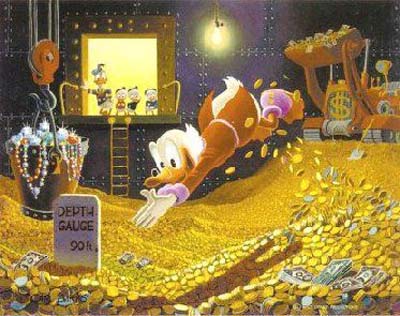
I know that sounds crazy. Cash is king, right? Not always. Just look at Apple. They are the kings of cash. $13 billion in profit one quarter, $9 billion the next, and so on. The vault is so full of gold coins that even Scrooge McDuck would need a lifeguard to swim in it. And yet, Apple’s story the past year has largely been one of a company in flux. Will they ever right the ship? Is it over?

These silly doomsday projections are mainly a result of Wall Street swinging from ultra-bullish to extremely bearish on the company in that same timeframe. The “problem”? Apple was too successful, too quickly. Because the iPhone was such a good business — a bigger business than all of Microsoft, in fact! — Apple posted profits that were only surpassed by a few of the best quarters from the largest oil companies. As a result, the company shot from a has-been to the most valuable public company in the world.

But growth and more importantly, growth potential is what matters most to Wall Street. And when you happen to stumble into one of the best businesses in the world (the high end of the carrier-subsidized smartphone market), the only way to keep that growth going is to find an equal or greater business (or several smaller ones that add up to a larger one). It’s not clear if Apple will ever find this business, even with the fabled television and watch products. The iPhone business was just that good.

But Amazon has no such problems on Wall Street. Again, they’re Bizarro Apple. They’re not showing their cards. While their businesses keep growing from a revenue perspective, profit has gone from negligible to non-existent to an actual loss this past quarter. And Wall Street loves them for it!

Why? Two reasons.

First, they know that Bezos is devouring Amazon’s profits by pouring them into infrastructure build-outs. Data centers, shipping centers, etc. These are one-time costs that should pay off in the long run.

Second, they believe that at some point in the future, Amazon will flip a switch and, voila, profit. In fact, Amazon has the ability to do it at almost anytime, as Bezos has made clear in the past, but people seem to forget. As Adam Lashinsky reminded us in a profile of Bezos last year:

Bezos even takes a practical approach to his love-hate relationship with Wall Street. Having worked at a hedge fund in his twenties, he understands the investor mentality probably better than most CEOs. Perhaps as a result, for the first many years of Amazon’s existence, Bezos frustrated investors by refusing to realize Amazon’s profit potential. Then, around 2007, Amazon’s investments began to bear fruit, and investors were delighted. The stock is up 10-fold in the past six years. “We believe in the long term, but the long term also has to come,” says Bezos, explaining that periodically Amazon wants to “check in” with its ability to make money. Thus, in 2007, Amazon more than doubled its profit, to $476 million, on a 38% increase in sales to almost $15 billion.

A game.

Here’s what else you may not realize: while Amazon may be earning little-to-no profit each quarter, they continue to bring in money that they can actually use. How? As former Amazon employee Eugene Wei explained last year:

Almost all customers paid by credit card, so Amazon would receive payment in a day. But they didn’t pay the average distributor or publisher for 90 days for books they purchased. This gave Amazon a magical financial quality called a negative operating cycle. With every book sale, Amazon got cash it could hang on to for up weeks on end (in practice it wasn’t actually 89 days of float since Amazon did purchase some high velocity selling books ahead of time). The more Amazon grew, the more cash it banked. Amazon was turning its inventory 30, 40 times a year, whereas companies like Barnes and Noble were sweating to turn their inventory twice a year. Most people just look at a company’s margins and judge the quality of the business model based on that, but the cash flow characteristics of the business can make one company a far more valuable company than another with the exact same operating margin. Amazon could have had a margin of zero and still made money.

Forget profit, the emphasis has been on free cash flow since 1997, as David Lee reminds us.

And so I repeat, Bezos is a genius. He’s flying under-the-radar until he can buy the radar. And probably the company that makes all the radars as well. With Amazon, it’s not “now or never”, it’s “next”.

It’s certainly possible that Amazon slips up and they are never able to live up to the ambitions that Bezos has been building towards for the past two decades. But even pure mishaps like the LivingSocial and Pets.com investments didn’t do much to deter the trajectory.

So while The Washington Post purchase may sound insane, it’s probably a much more calculated maneuver by Bezos. He’s likely once again playing chess while we’re all trying to parse the way he’s playing checkers. And if it fails, what’s $250 million for an ever-more-wealthy billionaire anyway? Have you seen Amazon’s stock price recently?

[image: 20th Century Fox]


06 Aug 00:18

Jeff Bezos To Acquire The Washington Post For $250M

by Anthony Ha
jeff bezos

Yes, you read that right. The Washington Post Company just announced that it has reached an agreement to sell its newspaper publishing business to Amazon founder and CEO Jeff Bezos for $250 million.

“I, along with Katharine Weymouth and our board of directors, decided to sell only after years of familiar newspaper-industry challenges made us wonder if there might be another owner who would be better for the Post (after a transaction that would be in the best interest of our shareholders),” said Post Chairman and CEO Donald Graham in a press release. (The Graham family has owned a controlling stake in the Post since the 1930s.) “Jeff Bezos’ proven technology and business genius, his long-term approach and his personal decency make him a uniquely good new owner for the Post.”

In the same release, Bezos promises that “the Post’s values will not change.” He has supposedly asked Post CEO and Publisher Katharine Weymouth, President and General Manager Stephen P. Hills, Executive Editor Martin Baron, and Editorial Page Editor Fred Hiatt to remain in their roles.

In addition to acquiring the Washington Post itself, Bezos is also buying the Express newspaper, The Gazette Newspapers, Southern Maryland Newspapers, Fairfax County Times, El Tiempo Latino and Greater Washington Publishing. Slate magazine, TheRoot.com, Foreign Policy, Kaplan, Post–Newsweek Stations, Cable ONE, and other parts of the business will be remaining with the Washington Post company. Since it has sold off its namesake newspaper, the company will be changing its name to a yet-to-be-announced title..

Other recent media sales, such as the $70 million acquisition of the Boston Globe by Boston Red Sox owner John Henry, were less surprising since the owners had publicly declared their interest in selling. (The Post’s editorial staff was taken by surprise, too.)

Just to be clear, this is a purchase by Bezos as an individual, not Amazon. Earlier this year, he also invested in the Business Insider news site.

In a letter to the Post staff, Bezos wrote:

I won’t be leading The Washington Post day-to-day. I am happily living in “the other Washington” where I have a day job that I love. Besides that, The Post already has an excellent leadership team that knows much more about the news business than I do, and I’m extremely grateful to them for agreeing to stay on.

There will of course be change at The Post over the coming years. That’s essential and would have happened with or without new ownership. The Internet is transforming almost every element of the news business: shortening news cycles, eroding long-reliable revenue sources, and enabling new kinds of competition, some of which bear little or no news-gathering costs. There is no map, and charting a path ahead will not be easy. We will need to invent, which means we will need to experiment. Our touchstone will be readers, understanding what they care about – government, local leaders, restaurant openings, scout troops, businesses, charities, governors, sports – and working backwards from there. I’m excited and optimistic about the opportunity for invention.


05 Aug 22:08

Here comes the Galaxy Note III: Samsung schedules September 4th press conference

by Zach Epstein
Samsung Galaxy Note 3 Release DateSamsung on Monday sent invitations to the press and bloggers for a press conference on September 4th in Berlin, Germany. The "Unpacked" event, which is scheduled to take place just ahead of the annual IFA trade show, will likely yield a number of new devices. The star among them, however, is expected to be Samsung's Galaxy Note III phablet. The new supersized smartphone is expected to feature a 5.7-inch display, a 2.3GHz Snapdragon 800 processor or an eight-core Exynos 5 Octo chipset depending on region, 3GB of RAM, a massive battery and Android Jelly Bean. Samsung may also unveil its Galaxy Gear smartwatch at the event, along with several new tablet models. A picture of the invitation Samsung sent to the media — which states that we should "Note" the date Septmeber 4th — follows below.

Continue reading...
05 Aug 11:37

A Tipping Point Against The Copyright Monopoly Regime Is A Lot Closer Than You Think

by Rick Falkvinge

The key to changing the world’s copyright monopoly regime lies in Europe and the European Union. The reason for that is that the United States is completely dependent on a number of Industrial Protectionism (IP) schemes since the failure of its industrial capacity in the mid-1970s, having moved ahead from that failure with disguising lopsided rent-seeking schemes as “free trade agreements”. The first of these was the WTO, the body created to oversee the TRIPs agreement. There have been many more since. You cannot change the United States from within on these matters.

Externally, the United States puts significant unilateral pressure on any country that doesn’t submit to these agreements, up to and including trade sanctions. (You will not have a hard time finding a case where the United States has threatened a country with trade sanctions or visa problems for having a too lax copyright monopoly regime, for example – the U.S. even does this on a regular basis in something named the “Special 301 Report”.) That’s why Europe is key to change.

Europe has the world’s largest economy, slightly larger than that of the United States. (China is in third place.) For trade sanctions to be effective, they have to be directed against a smaller player. This is why the United States can have effective trade sanctions against Cuba, but not the other way around. Therefore, the United States cannot execute trade sanctions against Europe without getting hurt more itself.

However, the laws and enforcement of the copyright monopolies, patent monopolies and other protectionism schemes are at the national level in the European Union. That means that a state in Europe can change its laws significantly, and still enjoy the shield against trade sanctions that comes with being a member of the European Union. (The country may get some heat within the EU, but that’s not going to have any consequences if there is political momentum in the direction of the change. EU rules are routinely ignored when politically inconvenient.)

So Sweden could change its copyright monopoly laws and be free to ignore the rattling of American sabers, knowing safely that the threats cannot be put into effect. So could Poland or Germany, if there was political will. But Sweden is not a very interesting country in terms of political clout. It was just meant to be the proof of concept; the important first stage.

Remember: Sweden, Europe, and the world. In that order.

(As a side note, countries in Latin America also have a politically expedient climate for this change and the gradual dismantling of Industrial Protectionism schemes, but lack the necessary shield from an economic union, and even so, their combined economy is roughly half of that of the US or the EU – not enough on its own.)

On June 7, 2009, the proof of concept materialized as the Swedish Pirate Party took two out of Sweden’s twenty seats in the European Parliament. That sent shockwaves through the political establishment. I thought that this would be the signal for Pirate Parties to form in more countries, seeing that success was achievable; that was actually wrong. There were already Pirate Parties in some fifty different countries by that date. Things had moved much faster than I had anticipated.

To see why Europe is the next step, we need to understand the political dynamics of the Industrial Protectionism supporters (copyright monopoly and patent monopoly rooters). These schemes have essentially been forced onto Eastern Europe by the countries in the west of Europe – notably the UK, France, and Germany. But tides are changing. In the European Parliament, there is now an estimated one-half still in favor of monopolistic protectionism, one-third sceptical or against it, and one-sixth undecided. Shift that balance by more than a sixth, and the protectionist dismantlers will get political majority.

But there’s more than just the European Parliament. Europe is run in many different ways in parallel, and I mentioned the UK, France, and Germany. It is enough to win one of those three countries to tip the political majority in Europe toward the line of the countries in Eastern Europe: the political line exposing copyright monopolies and patent monopolies of today for lopsided rent-seeking schemes that are generally bad for everybody with the possible exception of the United States.

Let’s take a closer look at Germany. The Pirate Party there has enjoyed quite a bit of success, but has come tumbling back down to a more baseline level of support after failing to live up to extreme amounts of hype around the party. If it manages to get a kingmaker position in the German Parliament, it has the power to shift Germany’s stance completely on these matters (and the other parties would gladly give up such a peripheral issue – peripheral to them, anyway – in exchange for the Office of Chancellor).

To do this, the German Piratenpartei needs 5% in the elections on September 22 of this year. If that happens, and the kingmaker move succeeds, then there will be a majority in Europe against copyright monopolies and patent monopolies.

The German Piratenpartei is currently polling at 3%-4%.

Just another small nudge forward for the German Piratenpartei, and Germany is won. The instant Germany is won, Europe is won.

And the day that Europe decides that it is not going to honor protectionistic monopolies, then that’s just the way it is. The day the world’s largest economy (Europe) decides that copyright monopolies are bullshit, they will practically cease to exist overnight elsewhere, too. The same goes for any gradual dismantling.

In other words, we are ridiculously close to a tipping point which will end this destructive war on information, knowledge, and culture. We are ridiculously close to a tipping point which will start dismantling the atrocious copyright and patent monopolies, worldwide. Specifically, we are about 1.5% of political support in Germany away from that tipping point.

The plan was to win Sweden, Europe, and the world. In that order. And it’s executing brilliantly.

About The Author

Rick Falkvinge is a regular columnist on TorrentFreak, sharing his thoughts every other week. He is the founder of the Swedish and first Pirate Party, a whisky aficionado, and a low-altitude motorcycle pilot. His blog at falkvinge.net focuses on information policy.

Book Falkvinge as speaker?

Follow @Falkvinge

Source: A Tipping Point Against The Copyright Monopoly Regime Is A Lot Closer Than You Think

04 Aug 22:56

Fifth Bourne Film Planned

Fifth Bourne Film Planned

Jeremy Renner's Aaron Cross will be back

Though The Bourne Legacy didn’t seem to perform quite as well as Universal might have hoped, it did make $267 million worldwide and was apparently successful enough both financially and creatively for Universal to start active development on a sequel.

Anthony Peckham, who wrote Invictus for Clint Eastwood and the first of the Robert Downey Jr/Guy Ritchie Sherlock Holmes outings, has been hired to write the script. The film will continue the story of Jeremy Renner’s Aaron Cross, the medically enhanced operative who was part of the Treadstone-adjacent program known as Outcome, but ended up on the run when the security types behind the various programs decided to burn them down following the Jason Bourne incident.

Peckham’s announcement comes as something of a surprise, since Tony Gilroy has been the man primarily writing (and, in the case of Legacy, also directing) on the Bourne series to date. We wonder if this means he won’t be involved at all going forward, and who will step in to shoulder the burden?


04 Aug 22:53

Sherlock Series 3 Trailer Arrives

Sherlock Series 3 Trailer Arrives

He's baaack...

On a day when Sherlock co-showrunner Steven Moffat’s other show is getting all the attention thanks to the announcement of its new star, it seems only fair to spread a little of the love to Holmes and Watson. Thank goodness, then, there’s a new teaser for Sherlock's third season online.

It’s a brief – very brief, at a 26 scant seconds – series of clips that points to the various reunions our hero will get with Una Stubbs’ Mrs Hudson, Rupert Graves’ Lestrade, Mark Gatiss’ Mycroft, Louise Brealey’s Molly (though we have an idea she knows more about how Sherlock managed to survive his great fall than the others) and, of course, Martin Freeman’s Watson.

While we’ll see a lot of character development for Watson this year, the third series opens with The Empty Hearse, which promises an answer to the mystery of Sherlock’s survival.

“There are only so many ways that one can survive a fall off the roof,” Gatiss told the audience at this year’s San Diego Comic-Con panel for the show. “There is no black magic.” When asked if the audience could figure it out from clues dropped in “The Reichenbach Fall”, Moffat giggled, “Of course! What’s taking you so long?” One thing the trailer truly doesn’t let slip is exactly when it’ll be back on our screens. Current signs point to autumn, but there’s no firm date yet.


04 Aug 22:52

Peter Capaldi Is The New Doctor!

Peter Capaldi Is The New Doctor!

Who casting clock strikes 12

Peter Capaldi, The Thick Of It

It’s somehow heartening that, years after it was written off as a joke, shoved into limbo and left to moulder, Doctor Who has now evolved – or re-generated – into something special enough to warrant an entire live show built around the annoucement of the next occupant of the TARDIS. Now, in its 50th year, we know that the 12th incarnation will be Peter Capaldi.

Capaldi, who is still probably best known as the foul-mouthed Malcolm Tucker from The Thick Of It (and to some, forever as the Angel Islington from TV's Neverwhere), will be outsmarting evil, running around, making silly jokes and generally being a meddling mad man with a box. Matt Smith will re-generate into Capaldi's form during the Christmas special this year. “I’m surprised to see the Doctor looking back in the mirror,” he said in the announcement show. “He’s not there yet, but he’s reaching out.”

Bets have been taken for months on the identity of the new Doctor, since the role has these days taken on the fervour of a huge sporting event or picking the new Pope. Suggestions have run the gamut from bookies’ favourite Capaldi to baby Prince George. But without any disrespect to the third in line to the throne, Capaldi is a fantastic choice, someone with some age and experience on his side. Plus, he has form with Team Who, having appeared in 2008's The Fires Of Pompeii and Torchwood's Children Of Earth. He even wrote to The Radio Times about his love of the Doctor when he was only 15, so you know he's not faking enthusiasm to get the role (unless he's been planning this for a very long time).

The Doctor Who 50th Anniversary special meanwhile, will be broadcast on November 23.