Shared posts

04 Aug 22:56

Five Best Online Backup Services

by Alan Henry

Five Best Online Backup Services

If you're backing up your data but you're not saving it offsite, you're putting it at risk. If something happens to your home or electronics, all that data could be lost. That's why there are tons of affordable, easy-to-use online backup services that you can send your data to seamlessly for safe keeping. This week we're going to look at five of the best, based on your nominations.

Read more...

04 Aug 13:20

Amazon wants you to write 'Slaughterhouse-Six', will begin publishing Vonnegut fan fiction

by Jacob Kastrenakes
Vonnegut_large

Billy Pilgrim has come unstuck in time, and now you can officially set him down anywhere you want to. Amazon's Kindle Worlds publishing arm is set to add the biggest titles from Kurt Vonnegut — author of sci-fi satires including Slaughterhouse-Five and Cat's Cradle — enabling anyone with a keyboard to write and profit off of stories set inside one of Vonnegut's many worlds. "Billy Pilgrim, unstuck in time, is going to quickly become a Kindle Worlds favorite," Donald Farber of the Vonnegut Trust said in a statement.

Kindle Worlds opened in May in an attempt to both profit from and legitimize fan fiction. To do so, Amazon has had to individually secure the rights to every property that it wants to allow authors to publish fan fiction...

Continue reading…

04 Aug 10:08

Find your lost phone with Android Device Manager

by Unknown
Have you ever lost your phone in between the couch cushions or forgot it in a restaurant? Or maybe searching for your phone before you rush out the door is part of your morning routine? Let the new Android Device Manager help you out! It's one of a few simple features you can use to keep your device—and the data you store inside—safe and secure.

Locate and ring your misplaced device 
If you ended up dropping your phone between those couch cushions, Android Device Manager lets you quickly ring your phone at maximum volume so you can find it, even if it's been silenced. And in the event that your phone or tablet is out of earshot (say, at that restaurant you left it at last night), you can locate it on a map in real time.

You can also remotely add a screen lock to your device through the Android Device Manager. Whether you’re on a phone or a tablet, a screen lock is an important security step to protect the information stored on your device, in case it accidentally gets into the wrong hands. Being able to do this through the Android Device Manager means that even after you lose your phone, you’ll still be able to add a lock (or change an existing lock) to your device.

Protecting your personal information and data
While losing your phone can be stressful, Android Device Manager can help you keep your data from ending up in the wrong hands. If your phone can’t be recovered, or has been stolen, you can quickly and securely erase all of the data on your device.

Availability and getting started 
This service is now available on devices running Android 2.2 or above; to use it, you also will need to be signed into your Google Account. There will also be an Android app to allow you to easily find and manage your devices. Stay tuned!

Posted by Benjamin Poiesz, Product Manager, Android

Updated August 7 to reflect availability of Android Device Manager. Access it at www.android.com/devicemanager.

 Updated September 24 to reflect ability to remotely add screen lock through Android Device Manager.
04 Aug 10:01

Six blatant lies about spying from the NSA up to Obama

by Cory Doctorow

ProPublica has produced a video showing, point-by-point all the ways that US government officials, all the way up to Obama, have told blatant lies about the details and extent of NSA spying.

Since Edward Snowden leaked a trove of documents detailing the NSA's sweeping surveillance programs, Director of National Intelligence James Clapper acknowledged that part of his congressional testimony in March was "erroneous." But that's not the only questionable comment by administration officials about the programs.

Has the Gov't Lied on Snooping? Let's Go to the Videotape (via Techdirt)


03 Aug 23:44

Android Device Manager beginning to push to phones

by Jerry Hildenbrand

Android Device Manager

The settings on a few phones have turned up an entry for the new Android Device Manager — have you checked yours?

Update: TJ, a reader and admitted Android nerd shot me the apk file. You can download it here. The normal concerns of security and such apply, of course. 

It looks like the first stage of the new Android Device Manager is pushing out to a few people, but the service is not yet live. Google told us their new "find my phone" service would be hitting all Android devices running Android 2.2 or higher sometime this month, and while there's nothing to be found on the web side, the device administrator is showing up slowly.

Oddly enough, there doesn't appear to be an associated apk file or a new version of Google Play services attached, and right now nobody is really sure where to find the details. The good news — and this is really good news — is that the reports are coming from everywhere, not just the U.S. Look for Android Device Manager to be a world-wide roll out.

You'll surely want to check and see if you're one of the chosen few, so here's how you can do that. Grab your phone, and open the settings. Under the Security section, look for the Device administrators section. Tap it, and see what's there. We're not seeing it yet on any devices in the office, but Reddit is full of folks with the new settings. If you see it, too, be sure to shout out in the comments.

Source: Reddit


03 Aug 22:32

The New Old Reader

image

We’re pleased to announce that The Old Reader will officially remain open to the public! The application now has a bigger team, significantly more resources, and a new corporate entity in the United States. We’re incredibly excited to be a part of this great web application and would like to share some details about its future as well as thank you for remaining loyal users. We’re big fans and users of The Old Reader and look forward to helping it grow and improve for years to come.

First off we want to say that it’s rare to have an application that inspires as much passion as The Old Reader has as of late. We think that’s a sign of greatness and all credit for that goes to the wonderful team that has been running the show including Dmitry and Elena. We’ve gotten to know them pretty well this past week and they are smart, honest, and passionate people. We’re happy to announce that they are still a part of the team and we hope they will be for a long time to come.  The new team will be managing the project and adding to the engineering, communications, and system administration functions.

So now for the future. The Old Reader is going to retain all of its functionality and remain open to the public. Not only that, we’re going to do everything in our power to grow the user base which will only accentuate the things that make this application special. To facilitate these improvements, we’re going to be transitioning The Old Reader to a top tier hosting facility in the United States this coming week. It’s going to require some downtime and for that we sincerely apologize, but it’s also going to mean A LOT more servers, 10x faster networks, and long-term stability. We realize that doesn’t make the downtime easy but rest assured that things are looking up.

Over the coming weeks we’ll talk more about the new team of The Old Reader. We’re looking forward to introducing ourselves and making significant improvements to this incredible application. Thanks for reading and thanks for using The Old Reader!

03 Aug 09:11

YouTube Expands Live Streaming To Channels With Just 100 Subscribers, Opens Custom Thumbnails & Merchandise Links To All

by Frederic Lardinois
youtube_thumbnails

Google today announced a number of updates to YouTube that will allow more video producers to use YouTube for live streaming. All channels in good standing with at least 100 subscribers will be able to live stream from their accounts within the next few weeks.

By bringing the number of required subscribers down to 100, Google is opening up this service to a large number of new users. Earlier this year, Google dropped changed the limit to include channels with at least 1,000 subscribers, so there is a clear trend here. It’s not clear, however, if Google will ever open up live streaming to all users on YouTube.

With today’s update, YouTube is also giving its users the ability to upload custom thumbnails for their videos. Until now, YouTube told its users to make sure that they shoot their video with thumbnails in mind, so that they can select a good one directly from the video. Starting today, users can simply upload a custom thumbnail for their shows. As Google notes, though, it will revoke the ability to upload these thumbnails from creators who don’t follow its Community Guidelines.

Another new feature in today’s update is the ability to use annotations to link externally to online stores and the user’s associated websites, which will give users new ways to monetize their shows.

Users can now also program related videos for their viewers. This allows them to create a playlist of shows for their viewers and YouTube will “show viewers of your videos the next episode from the series and a link to the whole playlist. Just mark your playlist as a “series” in the playlist settings.”

As a YouTube spokesperson told me, today’s update essentially turns everybody with a verified account on YouTube into a partner. All of these feature are (or will shortly be) available to all users, with the obvious exception of live streaming, where you do need to have at least 100 subscribers to activate it.


03 Aug 09:10

2,919 Movie Pirates Walk Free as BitTorrent Trolling Scheme Falls Apart

by Ernesto

falls apartOver the past several years we’ve covered dozens of ‘troll’ lawsuits against hundreds of thousands of alleged copyright infringers.

While many cases have been dismissed in the past, the one we’re reporting on today is quite special.

It started back in March when a lawsuit filed by the Swiss company Contra Piracy targeted individuals said to have downloaded and shared the 50 Cent movie All Things Fall Apart.

Contra Piracy, a claimed non-profit group, said they had monitored 2,919 individuals infringing the movie on more than 280,000 occasions. In order to stop these infringements they said they would need the identities of file-sharers from ISPs.

The Swiss firm didn’t hide the fact that they were nothing to do with the making of the film and they also admitted not being involved with traditional movie distribution channels. Instead, they licensed “BitTorrent distribution” and “enforcement” rights from Los Angeles-based Hannibal Pictures.

Confronted with the case, Chief Magistrate Judge Elizabeth Laporte wondered whether Contra Piracy actually had the rights to pursue this case in court. In one of her orders she noted that a “bare right to sue” for copyright infringement isn’t enough to allow the case to proceed.

Responding to this comment Contract Piracy handed over the rights agreements it had with Hannibal Pictures. The company argued that since they licensed the “BitTorrent distribution” rights, they should be allowed to sue.

However, Judge Laporte disagreed and in an order last week she dismissed the case with prejudice, concluding that Contra Piracy lacks jurisdiction. According to the Judge, Contra Piracy’s only intention is to obtain quick settlements, which means they lack the legal rights to pursue a copyright-related action.

In her order Laporte mentions that when Contra Piracy was asked what options they had to commercially exploit the BitTorrent distribution rights, the company admitted that they had very few, and that they were not actively involved in any.

“Plaintiff’s employee acknowledged that there are little [to no options] and did not claim that Plaintiff engaged in any such commercial use,” she notes.

In addition, the Judge said that the agreement between Contra Piracy and Hannibal Pictures only talks about divvying up the revenue from out-of-court settlements. No legal venues were discussed, and Contra Piracy further admitted that copyright enforcement was central to its business model.

“Plaintiff acknowledges that it is in the business of providing counter-piracy services to copyright owners by accepting assignments of copyrights and suing to enforce these copyrights,” Judge Laporte writes in her order.

Finally, the agreement also makes it clear that Contra Piracy does not intend to take any cases to trial, but that they just want to obtain the personal details of the alleged BitTorrent pirates so they can demand quick cash settlements.

“The agreements are noticeably devoid of any provision for the disposition of any revenues that could be obtained from verdicts or court orders of fees or costs upon success in court, suggesting a business model of using the information obtained from early discovery into the identities of individual defendants to negotiate quick settlements under the threat of embarrassing and expensive litigation without actually litigating claims on their merits,” the Judge explains.

The above leads to the conclusion that Contra Piracy only has a “bare right to sue,” which is not enough to pursue people for alleged copyright infringement. “The case is dismissed with prejudice,” Laporte concludes.

And so All Things Fall Apart for Contra Piracy.

To our knowledge this is the first file-sharing related case that has come to a Righthaven-type conclusion, showing that it’s worthwhile delving deeper into the licence agreements that are at the basis of these mass-BitTorrent lawsuits.

Source: 2,919 Movie Pirates Walk Free as BitTorrent Trolling Scheme Falls Apart

03 Aug 09:08

UK phone companies turned a profit by shoveling customer data into GCHQ's maw

by Cory Doctorow

A fresh set of Snowden leaks show that the UK spy agency GCHQ turned spying into a profit centre for Britain's telcos, who received huge cash payouts in exchange for turning over their customers' private communications and developing spyware to infect customers' computers in order to extract more data.

But the fresh leaks also claim to be showing another side of the secret deal, with telecom majors allegedly receiving rewards for developing the spying software for GCHQ on their own. Such software could come in a form of Trojan viruses installed on targeted computers, the reports say, stating that the companies’ involvement in data collection is much larger and more complicated than previously thought.

The reports also list network attacks and deliberate disinformation as the tactics employed by the UK’s intelligence agency in their task for ‘dominating’ the internet.

So far, all but one of the providers listed in the report failed to directly confirm or deny the claims, some saying they comply with the law of the countries they operate in. German market leader Level 3 denied providing access to its communication networks to “any foreign government,” according to SZ. But the news agency then speculated that the company could still serve as a hub for outside data transfer, as in 2011 it acquired the Global Crossing, inheriting its foreign networks – and, possibly, agreements.

Telecom giants give GCHQ unlimited access to networks, develop own spyware – Snowden leaks [Russia Today]


02 Aug 23:24

Samsung Galaxy Mega (6.3) video walkthrough

by Alex Dobie

Galaxy Mega

There are smartphones, and then there’s the Megaphone

In case you’ve neglected to notice, smartphones are getting bigger, and in 2013 in particular we’ve seen manufacturers push past the six-inch screen mark and into the bizarre no man’s land between phones and tablets.

The Samsung Galaxy Mega is one such device, with a titanic 6.3-inch display. On the face of things, it’s essentially an oversized Galaxy S4, in the same way the S4 Mini is an undersized Galaxy S4. But there’s more to it than that, and the result of Samsung’s efforts is a product that’s closer to a highly portable mid-range tablet than a smartphone. (Though it’s perfectly capable of making calls, should you desire to do so.)

Check out our video walkthrough after the break, and be sure to share your own thoughts on this 6.3-inch megaphone down in the comments.

read more


02 Aug 22:21

Placebo buttons

by Maggie Koerth-Baker
The "close-door" button in the elevator, the crosswalk button at the intersection, even the thermostat in your office — there's a good chance that they're all placebos. Over the last 20 years or so, many (though, weirdly, not all) of these buttons have become technically useless, but are left in place both because it's expensive to replace existing equipment and because, psychologically, they still serve a purpose.


02 Aug 22:21

UK border cops can seize and retain all your data without suspicion or charge

by Cory Doctorow


Tim Hardy: "UK border police have the power to seize all your personal data without reasonable suspicion and keep it effectively forever even if you are not charged with or suspected of a crime."

How would you feel if the police stopped you on a whim, took your phone, your laptop, your digital camera, your MP3 player, your USB sticks and your memory cards then copied everything on them?

How would you feel if they told you they were going to keep all your photographs, your documents, your address book, your financial data, your browsing history, your emails, your chat logs, your electronic diary, your music and recordings and anything else they liked for at least six years - indeed maybe they’d keep them until you reached the age of a hundred in case they might prove useful one day?

How would you feel if they then demanded all of your passwords and threatened you with years in jail if you refused to hand them over?

Welcome to Britain.

These are the rights granted to the police at the border controls of this country.

Within the UK, police officers are authorized to seize phones and download information only after making an arrest. The border control officers have no such limitations.

Seizing personal data without reasonable suspicion (Thanks, Tim!)

(Image: Hard Drive 016, a Creative Commons Attribution (2.0) image from jon_a_ross's photostream)


02 Aug 22:19

SCR Screen Recorder for Android Captures High-Quality Screencasts

by Alan Henry

Android (4.0.3+, Rooted): Recording screencasts on Android can get a little tricky. Some apps only support certain devices, and all of them require root access. SCR Screen Recorder is one of the first that supports a broad array of devices, including Tegra-powered Android tablets like the Nexus 7.

Read more...

02 Aug 22:17

What's A Rockmelt? Meet Yahoo's Acquisition Du Jour

by Taylor Hatmaker

To satiate its apparently voracious appetite for things-that-looked-hip-for-a-hot-second, Yahoo has gobbled up yet another ailing product. In this lightning round, the Mayer regime snagged the social browser Rockmelt for a reported $60 million to $70 million.

According to a post on its company blog:

We’re excited to announce that Yahoo! has acquired Rockmelt!

Rockmelt was designed to make sense of the Internet. The team has built a simple and beautiful technology that combines social, personalization and discovery to help you not only find what you’re looking for, but also stumble across some cool stuff along the way.

The parallels between Yahoo! and Rockmelt are obvious: we share a common goal to help people discover the best personalized content from around the web. We can’t wait to integrate the Rockmelt technology into our platform as we work to deliver the best experiences to our users in new and exciting ways.

I have to confess here that, three years ago, I was actually a Rockmelt user. Sort of. In an effort to compartmentalize work and play on the same computer, Rockmelt seemed like a viable option. I was actually even a little bit excited about it. That tempered excitement waned as it became clear that between Internet Explorer, Firefox, Chrome and Safari, there just wasn't room for a dedicated "social browser." Flock—no, not that Flock—is another example of this.

Social giant Facebook (or Twitter, for the literal IT-crowd) is the de facto social browser for the rest. Hell, we can't even get most people off of the one thousand fractured versions of Internet Explorer. Social news readers, like perennial favorite Flipboard, carved up that middle space, figured out mobile, and ate Rockmelt's lunch. With the launch of its (since discontinued) Axis browser last year, arguably even Yahoo ate Rockmelt's lunch. 

Yahoo will be shutting down Rockmelt's existing apps by the end of the month, but Rockmelt didn't ever really understand mobile anyway—and it was way too late to the party. As of 2012, Rockmelt's app was a far cry from the company's surprisingly smooth, if unrealistically sequestered, desktop social browser experience circa 2010. 

For Rockmelt, it's a surprisingly graceful exit. For Yahoo, it's well ... just a little bit off. But when has Yahoo not been just a little bit off? 

Still, Rockmelt isn't pricey, people still sort of know what it is well enough to buzz/snark about it for a minute. Most importantly, absorbing the hobbling startup's technology aligns with the big Y!'s social Web browsing aims. It's a little awkward, but that's plenty on brand for the Yahoo we knew before Mayer went in and turned it upside-down anyway. 

Image via Flickr user Adam Tinworth.

02 Aug 20:17

Google to launch Android device manager for finding lost phones this month

by Dustin Earley

Left your Android phone at a bar? Misplaced it in your couch? Desperately trying to find out where a thief has run off to with it? Unless you have some sort of third-party lost phone tracking tool installed on your phone, you’re out of luck. Android has been sorely lacking in a Find My iPhone equivalent for some time now, but that’s finally about to change with Google’s new Android Device Manager.

Set to release later this month for any Android device on 2.2 and higher, Android Device Manager (ADM) is a new tool for Android that allows users to manage lost or stolen phones from afar. Features of ADM include the ability to ring your phone at maximum volume, whether your phone’s on silent or not, locate your phone using GPS to place your device’s location on a map and securely wipe the data on your device if you fear it may have fallen into the wrong hands.

According to the blog post announcing Android Device Manager, it be available on the web and via an Android app for tracking devices as well. It’s a shame that it’s taken this long for Google to finally launch something like Android Device Manager, but we’re glad to see it nonetheless. Will you be using Android Device Manager?

02 Aug 20:17

Germany cancels pact with US, Britain – Obama/NSA gets the credit

by Eideard
Germany cancels pact with US, Britain - Obama/NSA gets the credit
02 Aug 14:33

XKCD's creator shares the secrets of 'Time,' his 3,900-frame comic

by Nathan Ingraham
537_large

Randall Munroe's web comic XKCD has long been known for pushing boundaries in strange ways, but his latest experiment topped them all. Over the course of four months, "Time" grew as a frame was added every 30 minutes or so, ending up with over 3,000 individual frames by the time it wrapped up earlier this week. Now that the epic comic has finally wrapped up, Munroe is talking a bit about the backstory behind "Time" and some of the clues he dropped in the comic to help the passionate fanbase that grew up around it piece the story together. As reported by Wired, "Time" takes place not in the past, but 11,000 years in the future. "In my comic, our civilization is long gone," said Munroe. "Every civilization with written records has existed...

Continue reading…

02 Aug 13:26

What Makes The Moto X The Smartest Smartphone Around

by Dan Rowinski

What do you really want in a smartphone? Do you want the biggest screen possible? The best camera? The most elegant operating system or the one that gives you the most freedom to make it yours?

How about a phone that learns about what you want, where you are and responds to your gestures, commands and wishes?

That is what Motorola wants you to think and it is releasing a smartphone to do just that. The Moto X is the first smartphone designed by both Motorola and Google after the search giant bought the original cellphone make almost two years ago.

What is Google’s magic touch? Well, if you put all the power that is Google into a smartphone operating system and add intuitive capabilities that employ the device’s sensors, you start to get the idea.

Touchless Control & Active Display

The Moto X's biggest feature is Touchless Control. If you thought Siri was smart as a way to control your iPhone with your voice, Google is upping the ante to let you use your voice not just to search, but to control almost everything that the device can do, from reading your text messages to opening apps, making phone calls, asking about the weather and more. Voice commands work even when you haven’t turned the phone on or from across the room or in your pocket. 

All you have to do is tell your phone, “OK Google Now …” and then a command. The select few that have had access to Google Glass will recognize this command, since Google's augmented reality goggles react to voice commands preceded by “OK Glass.”

Google Now is Google's semantic search, which tries to figure out what you want to do or what you are looking for before you actually search for it. For instance, today I was traveling to New York City for the Motorola event. Google Now checked my last search for New York City and gave me directions and estimated time of arrival to the event. It knows I live in Boston and like sports and will give me the Red Sox score before I want it. Google is trying to extend this smart search technology into the operating system of the Moto X.

The Moto X also responds to the way you handle it. Google estimates that people pick up their device and turn it on between 60 and 100 time a day. Usually that is just to check the time. With a feature called Active Display in the Moto X, the phone will allow you to see the time and notifications on the sleep screen of the device, fading in and out. Rick Osterloh, senior vice president of product management at Motorola calls this “breathing.” 

You can preview your notifications from the sleeping Moto X and drag one to open the app. Active Display will activate when you pick up the phone or flip it face up. The Moto X's 4.7-inch OLED display will only light up the pixels it needs to show time and notifications in Active Display, significantly saving on battery life.

The camera on the Moto X also responds to gestures. Called the “Quick Capture Camera,” the phone's camera app activates if you twist a sleeping phone in the air like a corkscrew. The camera will pop up and you can then tap anywhere on the screen to take a picture. That means you don’t have to unlock the phone, open the camera app, configure settings and snap. Just twist and go. 

A feature called Moto Assist will know when you're performing certain actions and need to interact with the phone in a certain way. For instance, if you are driving, the Moto X will detect your speed and read you text messages or let you change music. If you're in a meeting (which Moto X would know from your calendar), it will automatically silence itself and send an auto-reply to any connections.

The X8 System Makes Moto X Possible

The Touchless Control, Active Display and gesture-based actions are governed by a proprietary Motorola/Google system called X8. Unlike the Android system that runs the rest of the Moto X, Google and Motorola are not planning on making X8 open source. This is their magic, and they're holding on to it.

The X8 Mobile Computing System is really a hardware feature. It is running eight computing cores, starting with a Qualcomm dual-core Snapdragon S4 Pro chip. Four other cores do nothing but running the graphical processing units (GPUs). A dual-core 1.7 GHz Krait CPU runs most of the phone's other functions. 

Two cores are focused only on the natural language processor used for Touchless Control and the “contextual computing engine” that knows when you are holding the device and how you interact with it. 

This is a smart use of hardware by Google and Motorola. The Moto X is not just about speeds and feeds (though it has plenty of power for the casual gearhead); it's optimized towards performance and feature functionality. 

Google Aims The Moto X Right At The Ordinary User

Motorola’s Osterloh said that Google is aiming the Moto X at the mass market, not the tech elite or people looking for the cheapest smartphones they can find. The normal, everyday smartphone buying public is the market that Google wants to capture. The Moto X thus manages to be interesting while lacking the pretension of the iPhone, HTC’s flagship One device or Samsung’s Galaxy S4. 

Motorola will make a wood-back Moto X in Q4Motorola will make a wood-back Moto X in Q4

Google wants people to customize the look of their smartphones. Consumers can choose the front and back colors of their phone and add customized writing on back (such your email, in case you lose your phone) as well as a message to the bootup screen when you turn the phone on. Through a website called “Moto Maker,” consumers can choose from a wide variety of back covers and textures like hot pink or forest green.

More than 2,000 variations are supposedly possible with Moto Maker. Motorola’s slogan for the Moto X is, “Responds to you, Made for you, Designed by you.” The phone will be assembled in Fort Worth, Texas.

Motorola will certainly attract some customers to the Moto X with the customization alone. The look and feel of the Moto X eclipses that of Samsung’s Galaxy S4 and the features that Motorola has added are simple and intuitive, not scattershot and buggy the way Samsung’s are. 

The Moto X is coming to five carriers in the U.S. (the four major carriers plus U.S. Cellular) starting at contract prices of $199 for a 16 GB version ($249 for 32 GB version). Motorola promises that consumers will get their phones from the Fort Worth factory within four days of ordering. The availability of the Moto X will vary by carrier, but generally will be on the market by the end of August. 

Does Motorola still have any consumer mindshare to attract people to the Moto X? We will soon see.

01 Aug 22:48

No Moto X for the UK

by Alex Dobie

No Moto X for this chap

New line of products planned for European market instead, spokesperson tells Pocket-Lint

There's disappointment tonight for buyers in the UK hoping to pick up Motorola's much-hyped Moto X handset. British tech site Pocket-Lint says a Moto spokesperson has confirmed that the device will not be coming to the UK. Instead, the Moto X is apparently the first in a new family of Motorola phones, and more devices in this family will be launched globally in the future.

The site quotes a Motorola spokesperson as saying — 

read more


01 Aug 22:12

Folder Actions Brings OS X-Style Automation to Windows

by Eric Ravenscraft

Folder Actions Brings OS X-Style Automation to Windows

Windows: On OS X, Folder Actions are a powerful way to automate your folders. Folder Actions for Windows brings those easy-to-use tools to the PC world.

Read more...

01 Aug 22:09

NSA bribed UK spooks GBP100M for spying privileges

by Cory Doctorow
"The top secret payments are set out in documents which make clear that the Americans expect a return on the investment, and that GCHQ has to work hard to meet their demands. 'GCHQ must pull its weight and be seen to pull its weight,' a GCHQ strategy briefing said." -The Guardian


01 Aug 20:08

Amazon Experiments With Its Own Take On Pinterest Called “Amazon Collections”

by Sarah Perez
collections 2

Amazon has quietly launched its own direct challenger to Pinterest with the debut of a feature called “Amazon Collections.” It’s a more attractive, image-heavy website where consumers can save, share and discover new products by browsing those others have saved. Like Pinterest, users create separate lists, called Collections, such as “Want List” or “Fashion,” for example, and they can find and follow other users who share their same interests through the service.

The company had been testing this feature beginning with a number of bloggers ahead of a larger, public debut, and some of those with early access have already detailed their experiences using the site to put together outfits, or other initial impressions. Some were even paid to be advisors. The earliest references we’re seeing from beta testers writing about the service were posted in late April.

Today, the link to “Your Collections” appears in the list of options when you hover over “Your Account” from the drop-down menu on Amazon.com’s homepage, which gives the service a more prominent placement on Amazon’s site.

Initially, all users start off with a few empty collections (“My Style,” “Want List,” and “Possibilities”) but you can make your own Collections, too.  To add an item to a Collection, you simply click on an “Add to Collection” button below the product image on Amazon.com’s website. However, because Collections is a new feature, this button has not yet been rolled out to all the products on the site at this time.

To work around this problem, Amazon provides a “Collect” button that can be dragged to your browser’s bookmarks bar, letting you add any product on Amazon to your collections. This does not appear to be a way to “collect” non-Amazon products at this time, though, as nothing happens when that buttons is clicked off-site.

Users can add descriptions for their saved items, edit or remove them from their lists, or even delete entire collections at once. The service also offers a way for users to browse through default categories like Books, Men’s Fashion, Movies, Music, Women’s Fashion, Featured, and more, all of which are laid out in a Pinterest-inspired image pinboard format where there’s heavy emphasis on the item photo and little other info besides the product name and a “heart” button for favoriting things. In order to see pricing and further product details, you have to click through.

Currently, Amazon Collections’ friending and following model is limited — the site shows the popular items others are pinning to which boards and when they posted those items (e.g. “3 minutes ago”), and you can then click on those users’ names in order to follow them on the service. But there doesn’t seem to be an option for discovering your friends who are on Amazon Collections, such as through address book upload or Facebook integration.

This is not Amazon’s first experiment with providing consumers with an alternative way to shop its site, we should point out. In years past, it has launched a number of other product visualization tools, like its 2008 grid-like storefront Amazon Windowshop, which later arrived on iPad in 2010, or its 2011 dabble in augmented reality via Amazon Flow. It has also worked to make the site more social, through integrations with Facebook for tracking birthdays or figuring out what things Facebook friends want as gifts.

But this is the first time Amazon has gone so far as to boldly duplicate the overall look-and-feel of a competing service, which, to some extent, validates the traction Pinterest is seeing with e-commerce referrals. The move also comes at a time when Pinterest has been beefing up its e-commerce efforts, with new tools for online retailers, including web and mobile product pins, analytics, personalized recommendations, and, just today, price alerts.

Amazon’s entry into more social, visualized product discovery may end up being bad news for another startup, Canopy, which only yesterday debuted a service that makes Amazon shopping more attractive and interactive. The company tells us they even noticed a few senior Amazon engineers using their site around two to three weeks ago and several more since, which prompted them to speed up their launch.


01 Aug 20:07

Hello Moto X

by Chris Velazco
moto-x02

After Google acquired Motorola Mobility last year, I wondered what was next for the smartphone company. It spent ages clearing out its pipeline of smartphones that were already in development before rumors of an X Phone made in America started making the rounds. In those early X Phone days, Rick Osterloh, Motorola’s SVP of Product Management said the team that worked on the device was plopped in front of a whiteboard and asked to describe the product they wanted to make. That brainstorming, plus loads and loads of user testing, came together in the form of the Moto X.

Motorola isn’t the same company today as it was when Google snapped it up last year — it’s smaller, leaner, and if recent reports are indication, gutsier than ever. The Moto X is that new Motorola’s coming out party, and I think they’ve finally got something worth celebrating.

The Details

Before I launch into a lengthy harangue about how this phone makes me feel, let’s dig into the X’s vital statistics. Just about those rumors were true, folks: 4.7-inch AMOLED display running at 720p? Yep. 10-megapixel “ClearPixel” camera with 1080p video recording? You bet. Android 4.2.2.? Check. microSD card slot? Sadly, no. That would all make for a decent, if unremarkable little smartphone, were it not for what the Moto X packs inside its plasticky frame.

The real star of the show Motorola’s X8 chipset, which actually consists of a 1.7GHz dual-core Qualcomm Snapdragon S4 Pro, Adreno 320 GPUs, 2GB of RAM and specialized processors meant to handle natural language processing and information from the X’s myriad sensors. If that thing sounds familiar, well, it should.

Verizon and Motorola’s recent Droid launch took some of the shine off the X’s more intimate event this morning. Why? A lot of the X8-centric features that seemed to make the Moto X so smart — those always on voice commands, the motion-sensitive Active Display, and the twisty camera activation gesture — will in all likelihood wind up on most of Motorola’s new phones going forward, the Droid Ultra line included.

Oh, and the device is expected to launch very soon. Think the end of August/early September — it all depends on when Motorola’s carrier and distribution partners make their announcements. Speaking of carriers, AT&T and Verizon will both sell the 16GB black and white versions of the X for $199 (on contract, of course) when it launches later this month, but only AT&T customers will able to customize them using the MotoMaker website. Additional caveat: it seems like the 32GB storage upgrade can only be purchased from MotoMaker for the time being, which is frankly pretty lame.

Not a particular fan of either carrier? That’s fine too: the Moto X will also be available for purchase as an unlocked device, and as a developer edition with an unlocked bootloader (for easily hackability), though Motorola doesn’t seem to have locked down pricing for either version just yet.

Easily the most impressive part of the Moto X package though is how users can customize it using Motorola’s MotoMaker web app. When it goes live later this month, users can pick from some 16 colored resin back plates, as well as a black or white front facade, and seven accent colors for your volume and sleep buttons. And in case you were wondering, yes, there is a wood case in the works. It’s apparently undergoing some late-stage testing, but should hit proverbial shelves in Q4 of this year. Throw in the ability to engrave your name (or whatever, really) onto that backplate and you’ve got yourself a pretty tremendous level of choice here.

While we’re talking about how the X is put together, it’s worth pointing out that Motorola isn’t giving up on its global supply chain here. U.S. customers who order customized Moto X’s will get units assembled in Texas (and in four days or less to boot), but the rest of the world will get their X fix from the usual slew of foreign manufacturers.

Motorola is gearing up to make itself a purveyor of a smarter kind of smartphone, but it does mean that there were few surprises to get worked up over this morning. Even so, the X is exciting for what it represents. It’s hard not to think of the X as Motorola’s take on Google’s Nexus concept — the phone itself is a template for Motorola’s vision of mobile computing. But what’s it like to use?

Hands-On Impressions

Motorola’s clearly all about making the phone your own thanks to its MotoMaker customization options, which is a good thing because the untouched black and white Xs look pretty damned dull. That’s not to say they’re ugly — the composite weave pattern on the back is handsome and distinctive, and the whole thing exudes a sort of minimalist charm, but it feels like Motorola’s main concern with these default builds was to keep design from getting in the way of functionality.

The X feels surprisingly small for a device with a 4.7-inch screen since there’s very little physical cruft — there’s only a hint of a bezel running around the display’s left and right edges, and there isn’t a whole of space surrounding the speaker, 2MP front-facing camera, and microphone along the face’s top and bottom. It’s awfully comfortable too, owing largely to considerable curvature of the X’s rear end. Osterloh said that the device’s 2,200mAh battery was specifically engineered to fill up that shapely rump, and he expects the device to last up to 24 hours on a single charges thanks to the X8 chipset’s power-sipping tendencies — we’ll see about that.

And then there’s the software. On one level, it’s all very familiar — the X runs a very lean build of Android 4.2.2, and you could easily mistake it for stock if you didn’t know what you were looking for. And I don’t doubt that a decent chunk of people will use it that way, but there’s plenty to like when it comes to Motorola’s additions.

So far, the touchless controls work like a charm (even those this is technically non-final software). Once a brief setup process was completed, I successfully asked the X to give our video producer Steve a ring and do a Google search for “TechCrunch”. Meanwhile, a few vigorous shakes coaxed the X into firing up its camera, and flipping the thing over and over caused the active display to show off the time and how many messages I had waiting for me. And since Android is largely unencumbered here, whipping through pages of apps and scrolling through webpages was generally very smooth — though it could be smoother.

I’m reserving final judgment on this thing until I’ve had the chance to play with it for more than three hours, but I actually rather like the X. Do I wish Motorola could have pushed the technical envelope further? Sure. I also think the customization angle, neat as it is, is essentially a ploy to make an unassuming phone stand out in a crowd. And frankly, it’s a little frustrating to see that a solid chunk of what the Moto X can do will soon be replicated by — you guessed it — just about every other new Motorola phone in the works.

It’s far, far too early to tell if Motorola has a hit on its hands — especially because the X will ultimately compete with Motorola phones with similar feature sets. If nothing else though, Motorola’s X represents a dedication to creating a smarter breed of smartphones, and I doubt that’s something the rest of the industry is going to ignore.


01 Aug 20:04

One weird trick for sleazy marketing success

by Rob Beschizza
Armed with a cheap laptop and a pre-paid debit card, Alex Kaufman figures out what happens when you actually buy something from on one of those “One Weird Trick” ads. [Slate]


01 Aug 20:03

LockScreen One Touch for All Adds Shortcuts Without Giving Up Security

by Alan Henry

Android: Enabling pattern unlock is smart, but the flexibility of lock screen shortcuts means that many of us don't bother because it's just easier to be able to quick-launch apps before unlocking first. LockScreen One Touch for All is a new utility that combines both, offering flexibility without sacrificing privacy.

Read more...

01 Aug 14:37

[New App] Motorola Migrate Android App Posted To The Play Store, Syncs Files And Settings To New Phones

by Jeremiah Rice

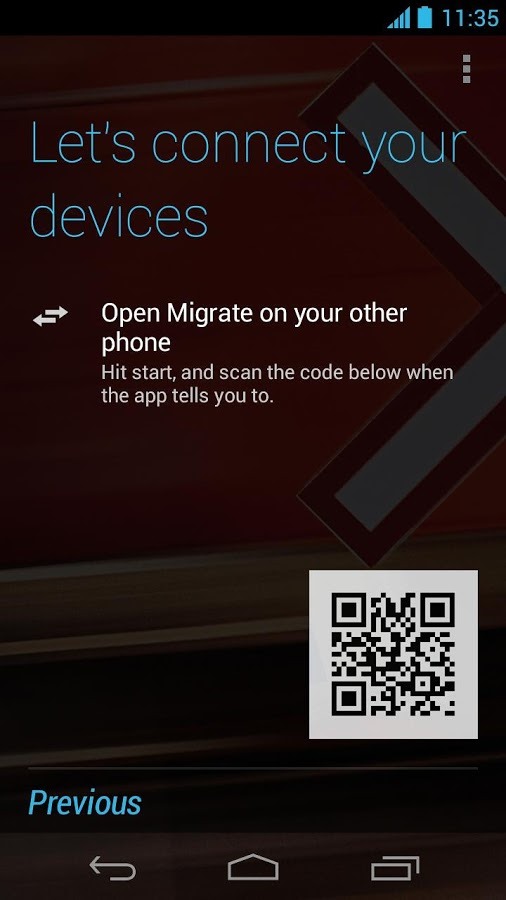
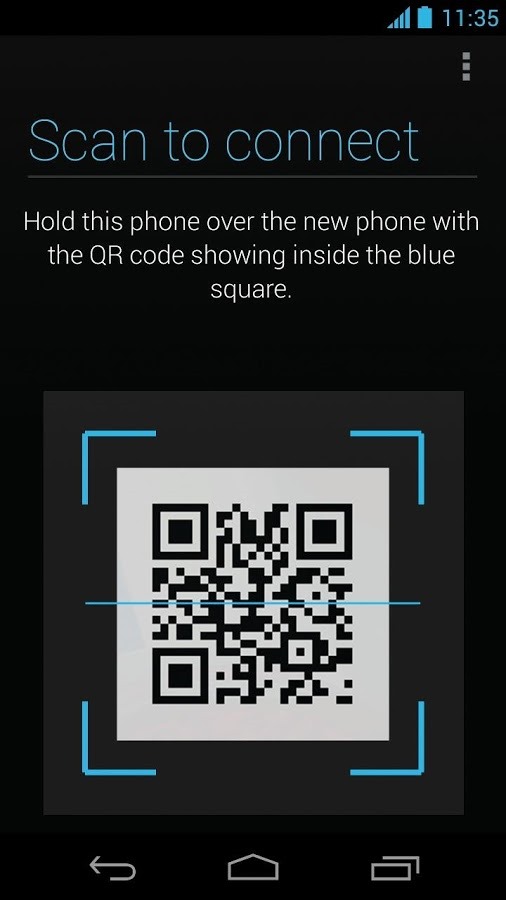
unnamedIn addition to the Connect Chrome extension, yet another of Motorola's specially-built pieces of software has gone live before today's Moto X press event. This time it's an Android app, apparently designed to easily sync between an old phone and a new one. It's called Motorola Migrate, and it's available now for all phones running Android 2.2 or higher.

unnamed (1) unnamed (2) unnamed unnamed (3)

The idea is pretty simple: log into the Motorola service on your old phone, select among call history, text messages, SIM card contacts, media, and some very basic settings, open Migrate on your new phone, scan a QR code, and get going.

Done With This Post? You Might Also Like These:

[New App] Motorola Migrate Android App Posted To The Play Store, Syncs Files And Settings To New Phones was written by the awesome team at Android Police.


01 Aug 13:26

O2 Becomes Second UK Operator To Turn On LTE; Will Go Live August 29, But With No iPhone Support

by Ingrid Lunden
Screen Shot 2013-08-01 at 08.18.06

Looks like the honeymoon period for EE and LTE in the UK is over. This morning, Telefonica’s O2 announced that it would turn on its LTE network on August 29, becoming the second operator to offer 4G in the country. Initial cities will be London, Leeds and Bradford, with 10 more cities to come by the end of the year. The first services at the end of this month will cover 5 million people — that’s potential, not actual, subscribers, and will not include support for the iPhone 5, which will not work on the 800MHz spectrum that is part of O2′s initial rollout.

The end of the honeymoon also signifies the beginning of the price wars.

Initial tariffs will start at £26 ($39) per month, O2 says. In comparison, a contract-free, data-only, mobile broadband rate from EE is currently priced at £15 per month, and a voice-and-data tariff starts at £21 per month. There will likely be different allowances included in these figures — for example, the voice-and-data service is SIM-only and you bring your own device. Plans from EE that include devices also start at £26 per month. O2 says that those interested in registering for its LTE service can sign up here.

But you can argue that O2 will be launching with a bit of a setback: its initial rollout of LTE will not support the iPhone.

Back in February 2013, O2 was part of a group of operators — BT, EE, O2, Three and Vodafone — who were all awarded spectrum for 4G services at a total cost of £2.3 billion ($3.5 billion). As part of that, O2 forked over £550 million for spectrum in the 800MHz band. But the iPhone currently does not support LTE in that frequency, while Samsung’s LTE devices (and others) do.

O2 is posturing with confidence over this discrepancy.

Telefonica UK’s CEO Ronan Dunne told the BBC that he “would be frankly gobsmacked if their roadmap didn’t address that issue.”

Still, that’s not the same as a concrete guarantee that this will be addressed soon. Given the iPhone users are still some of the mobile world’s biggest adopters of premium-priced devices and services, and also some of the world’s most avid users of mobile data, this could be an issue. (Remember, O2 is the UK’s equivalent of AT&T: it was the first network to have the iPhone and has continued its strength in that category as a result, even as Samsung and other Android makers have gained a lot of smartphone users in the process. Kantar WorldPanel for example noted a month ago that Android OEMs took over 55% of smartphone sales in the previous 12 weeks, compared to iPhone’s 30%, and Android is currently growing faster than iPhone in sales.)

EE’s LTE network, which launched in October 2012, has a big head start just in terms of setting out its stall. It is currently live in 95 cities and aims for 110 cities covering 60% of the population by the end of the year. In June of this year it announced 687,000 customers and is aiming for 1 million by the end of this year. First mover doesn’t always mean biggest in the long run, of course: Three, at the time a totally new operator, was the first to offer 3G in the UK market years ago, but it’s far behind the other three incumbent players today.

It looks like O2 made a point of acting as fast as it could; it notes that the news comes a day after Ofcom cleared the use of spectrum for 4G services. “It’s great that I am able to announce O2 4G the day after the spectrum has been cleared for use,” noted Ronan Dunne, CEO of Telefónica UK, in a statement. “Digital connectivity will be made ubiquitous by 4G and become the oxygen of modern life. It is our intention to use 4G to inspire the nation through the possibilities of technology, encouraging people to live more, do more and be more with O2.”

The hurdle, at least in the early days for all UK operators, will remain whether consumers will be willing to pony up more money for faster mobile services than they have today. O2 is supposedly going to be bundling in extra services like music with its packages to entice users. I’m not sure how well that ever worked for 3G services, although consumer tastes for streaming media, and device specs, have certainly contributed to a more fertile ground for marketing and service bundles like these to work better this time around.


01 Aug 13:26

PC Obsolescence In Action: Users Who Own Smartphones And Tablets Are Dropping Their PC Usage In The UK

by Ingrid Lunden
old computers

We have seen much market analysis pointing to pressure on PC sales with the rise of smaller and less expensive Internet-friendly devices like smartphones and tablets. Today, UK communications regulator Ofcom published some figures in its 2013 Communications Market Report that point to how that is playing out in terms of usage. When consumers are active users of smartphones (now at 51% penetration in the UK) and tablets (now double the penetration of 2012 at 24%, 56% of which is iPad), those consumers are swaying away from using laptop and desktop PCs as their primary internet devices. In fact, when consumers own and use both, internet usage on them outweighs PC usage completely. The numbers are a testament to why PC sales overall are in decline: people are finding that they are just fine without them.

As you can see in the table here, Ofcom found that when consumers own smartphones and tablets but don’t use the tablets much themselves, they are much more likely to use PCs to connect to the Internet: 64% of users opted for the latter, compared to 23% for their handsets and 10% for tablets. The same goes for those who may own both but don’t identify themselves as much of users of either: here, PCs account for 78% of all internet usage (61% on laptops and 17% on desktops). Overall, across all internet users in the UK, PCs are the most popular device, accounting for 74% of all internet usage.

However, it’s clear that for those who are actively using tablets, these are acting as PC replacements. Those who identify mostly with their tablet devices are nearly at parity with PCs: 48% say they use their wireless handhelds instead of PCs at 49%. But those identifying with both — “with a smartphone and who personally use a tablet” — tip the balance: 50% are using these two for their primary internet device, just edging out PCs at 49%.

It’s also telling that we are very much moving towards smaller devices overall, with laptops more popular than desktop machines every category. (It appears that Ofcom didn’t bother to canvas opinion from people who own or identify only with desktop machines.)

Overall, Ofcom’s report (a 436-page tome) makes for a compelling case for the effect that tablets, as well as smartphones, are having in general across the media landscape.

Looking at metrics like “media stacking” (conducting unrelated media tasks while watching TV) or “media meshing” (interacting or communicating about the TV content they are viewing), consumers who are tablet users are working out to be the most avid multi-taskers in almost every single category (music and social networking being the only two standouts, and in both cases by just a percentage point). The other major social phenomenon driven by digital devices is ‘media stacking’. Overall, Ofcome notes that half (49%) of people weekly use their smartphones and tablets for completely unrelated activities like internet browsing (36%), social networking (22%) and online shopping (16%).

Still, while we continue to to see rapid growth among users of more portable devices, figures also seem to speak to how we will likely be looking at a multiple-device world for some time to come.

In fact, sometimes the presence of the multiple devices is actually leading to more usage of legacy products. For example, at the same time that Ofcom notes the influence of tablets on multitasking in TV consumption, it also points out that in fact the proportion of people watching the “main” TV in the house has actually gone up, to 91% compared to 87% in 2012. Part of this has to do with advances in those legacy products, Ofcom believes.

“Our research shows that increasingly families are gathering in the living room to watch TV just as they were in the 1950s — but now delivered on bigger, wider and more sophisticated sets,” writes James Thickett, Ofcom’s director of research. “Unlike the 1950s family, however, they are also doing their own thing. They are tweeting about a TV show, surfing the net or watching different content altogether on a tablet. Just a few years ago, we would be talking about last night’s TV at work or at school. Now, we’re having those conversations live while watching TV – using social media, text and instant messaging.”

The true test of how conducive tablets are to more usage may only come at a time when these are the primary device we have for interacting, and we’re past the phase of early adopter=most enthusiastic users.

Download full report here.

Image: Flickr


01 Aug 13:21

Google Play TV Shows Now Available In The United Kingdom: UK Residents Can Watch As Much Honey Boo Boo As They Want

by Jeremiah Rice

unnamed (6)Attention, people of England, Scotland, Wales, and Northern Ireland: you can now buy television shows from Google Play, both on the web and via your Android devices. Google threw the switch on the content earlier today, making the UK the first country to get access to TV shows on Google Play outside the United States. Content appears to be a decent mix of US and UK shows at the moment, though it's probably a bit anemic when compared to the US store due to good old-fashioned licensing issues.

Done With This Post? You Might Also Like These:

Google Play TV Shows Now Available In The United Kingdom: UK Residents Can Watch As Much Honey Boo Boo As They Want was written by the awesome team at Android Police.


01 Aug 13:19

If recording your calls without a playing them back isn't surveillance...

by Cory Doctorow
...then downloading music without listening to it isn't piracy