Shared posts

25 Feb 12:52

27 New Android Apps And Live Wallpapers From The Last 2 Weeks (2/12/14 - 2/24/14)

by Michael Crider

roundup_icon_largeWelcome to the roundup of the best new Android applications, games, and live wallpapers that went live in the Play Store or were spotted by us in the previous 2 weeks or so.

Please wait for this page to load in full in order to see the widgets, which include ratings and pricing info.

Looking for the previous roundup editions? Find them here.

Featured App

DigiCal Calendar & Widgets

Today's roundup is presented by DigiCal Calendar & Widgets from Digibites.

Done With This Post? You Might Also Like These:

27 New Android Apps And Live Wallpapers From The Last 2 Weeks (2/12/14 - 2/24/14) was written by the awesome team at Android Police.


25 Feb 12:50

Mt. Gox Implodes

by John Biggs
Mt. Gox, one of the first bitcoin exchanges, is down after an apparent long-term operation bled the company of 744,408 BTC - about $350 million at today's rate - over a period of years. Bitcoin is trading at about $500 today and Mt.Gox transactions have halted. Read More
25 Feb 00:00

SanDisk intros first 128 GB microSD memory card

by Simon Sage

SanDisk 128 GB card

Class 10 and ready for HD video

Mobile World Congress

At Mobile World Congress, SanDisk announced the world's first 128 GB microSD memory card. It's Class 10 UHS-I with read speeds around 30 MB/s and should be compatible with any device that can support SDXC, which includes most Android devices launched over the last few years. SanDisk also took the opportunity to announce a 64 GB embedded NAND module tailored specifically to Android devices, though right now they're just sampling it to partners.

If we're going to be going around shooing 4K video on our devices, it's a good thing that memory is increasing so we can actually save that footage. Plus, the Samsung Galaxy S5 ROM size may also make you wish for a little bit more room. Beyond that, it's hard to imagine loading up that much music manually. Still, at times like this I really feel for those that don't have access to their SD card slot.

There's no specific word on pricing or timing just yet, but Amazon and Best Buy are going to be the exclusive outlets for the new cards. How much room do you have free on your device storage? Are you going to pick up one of these 128 GB cards? Does having this much room enable any new use cases?


24 Feb 23:59

Samsung Galaxy S5 UK availability starts to take shape

by Richard Devine

Galaxy S5

Major carriers and high-street retailers already offering registration pages

Mobile World Congress

The Samsung Galaxy S5 is official and there's bound to be a ton of people out there that want to know where to get one. Samsung announced April 11 as the grand release date for 150 countries and some of the UK carriers and retailers are starting to show their hands.

Honestly, if it wasn't available on all the major carriers and usual retail sources we'd be more surprised. But it's always good to get an early heads up, especially since we're about six weeks out from launch. At this point EE, and Vodafone have posted registration pages for the Galaxy S5, as have Carphone Warehouse and Phones 4U. Three has also confirmed its intention to carry the new phone.

We'll keep updating as and when more sources and information becomes available.

More: Hands on with the Samsung Galaxy S5


24 Feb 23:57

It’s The End Of The @Facebook.com Email Address As We Know It (And I Feel Fine)

by Darrell Etherington
Facebook is putting an end to its @facebook.com email project, which means your life will probably go on exactly as it had been with no discernible changes whatsoever. For future reference, don’t email me at darrell.etherington@facebook.com, unless you want to receive no response, which is exactly what would’ve happened before this change was announced anyway. The reason for ditching… Read More
24 Feb 21:17

WinZip Moves To The Cloud With Launch Of ZipShare, A Way To Zip, Manage & Share All Your Online Files

by Sarah Perez
WinZip, makers of the file compression utility first launched in the early 90′s that still sees north of 30 million downloads per year, is today making a shift to the cloud. The company is launching ZipShare, a file zipping, management, encryption, and sharing service that works with the major online file hosting platforms. Currently, ZipShare lets users zip and share files both from their… Read More
24 Feb 20:14

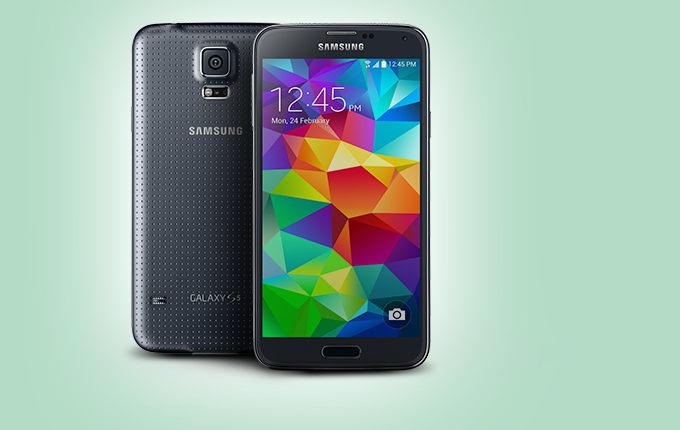
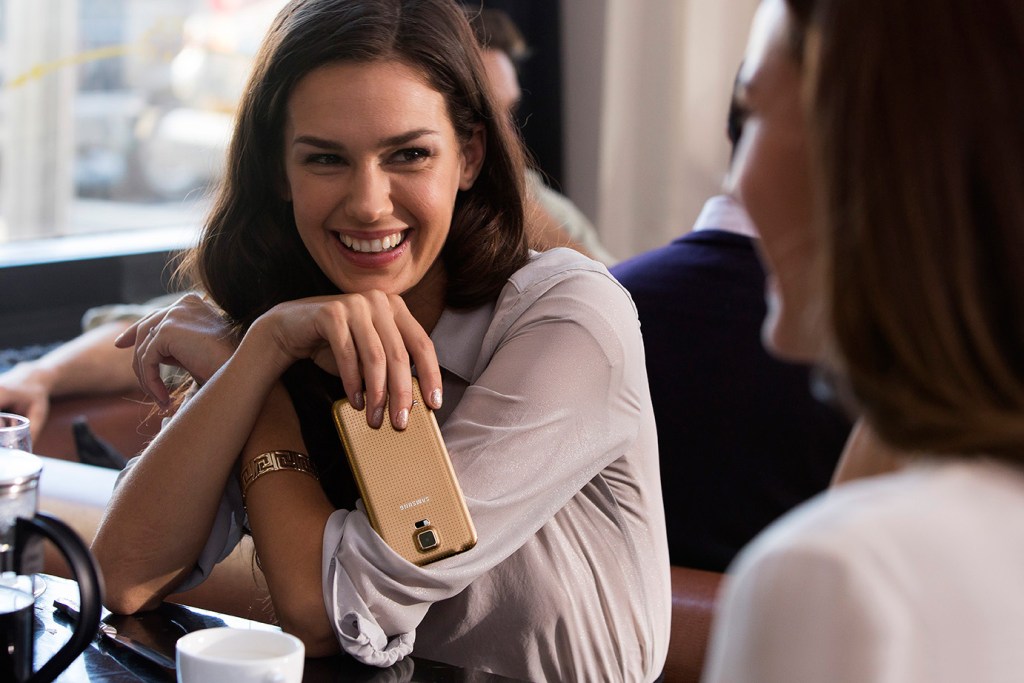
Samsung’s Dust- And Water Resistant Galaxy S5 Gets Official With Heart Rate Monitor, Fingerprint Scanner

by Darrell Etherington
samsung-gs5-feature

The Samsung Galaxy S5 is here, and now we know everything about the 2014 flagship from the Korean smartphone maker. It’s pushing into phablet territory with a 5.1-inch, 1920×1080 display, and it comes with a fingerprint reader on the home button, as well as a heart rate monitor around back near the camera flash. The Galaxy S5 is also dust and water resistant, which may be the most useful new feature to ship on the phone.

Samsung’s Android 4.4-powered flagship doesn’t deviate that far from its predecessors in terms of case design, packing the larger screen into a larger chassis but sticking with a plastic (though there is a higher end metal variant) backing, rounded corners and a pill-shaped home button, but the fingerprint scanner and heart-rate sensor are significant hardware additions. The Galaxy S5 also seems to have a significant focus on health and fitness with this update, which could preface a similar move with the next generation of iOS software and hardware.

  1. Glam_Galaxy-S5_Gold_01

  2. Glam_Galaxy-S5_Blue_01

  3. Glam_Galaxy-S5_Black_02

  4. Glam_Galaxy-S5_Blue_02

  5. Glam_Galaxy-S5_Gold_02

  6. Glam_Galaxy-S5_Group

  7. Glam_Galaxy-S5_White_01

  8. Glam_Galaxy-S5_White_02

  9. Glam_Gear-2,-Fit,-Galaxy-S5-Black

  10. Glam_Gear-2,-Galaxy-S5-Black_01

  11. Glam_Gear-2,-Galaxy-S5-Black_02

  12. Glam_Gear-2,-Galaxy-S5-Blue

  13. Glam_Gear-2,-Galaxy-S5-White

  14. Glam_Gear-Fit,-Galaxy-S5-Black

  15. Glam_Gear-Fit,-Galaxy-S5-Blue_01

  16. Glam_Gear-Fit,-Galaxy-S5-Blue_02

  17. Glam_Gear-Fit,-Galaxy-S5-Gold

  18. Glam_Gear-Fit,-Galaxy-S5-White

  19. Glam_Galaxy-S5_Black_01

  20. Lifestyle_13

  21. Lifestyle_14

  22. Lifestyle_15

  23. Lifestyle_03

  24. Lifestyle_04

  25. Lifestyle_05

  26. Lifestyle_06

  27. Lifestyle_07

  28. Lifestyle_08

  29. Lifestyle_09

  30. Lifestyle_10

  31. Lifestyle_11

  32. Lifestyle_12

  33. Lifestyle_02

  34. Lifestyle_01

  35. SM-G900F_copper GOLD_12

  36. SM-G900F_copper GOLD_13

  37. SM-G900F_copper GOLD_14

  38. SM-G900F_copper GOLD_15

  39. SM-G900F_copper GOLD_01

  40. SM-G900F_copper GOLD_02

  41. SM-G900F_copper GOLD_03

  42. SM-G900F_copper GOLD_04

  43. SM-G900F_copper GOLD_05

  44. SM-G900F_copper GOLD_06

  45. SM-G900F_copper GOLD_07

  46. SM-G900F_copper GOLD_08

  47. SM-G900F_copper GOLD_09

  48. SM-G900F_copper GOLD_10

  49. SM-G900F_copper GOLD_11

  50. SM-G900F_shimmery WHITE_09

  51. SM-G900F_shimmery WHITE_10

  52. SM-G900F_shimmery WHITE_11

  53. SM-G900F_shimmery WHITE_12

  54. SM-G900F_shimmery WHITE_13

  55. SM-G900F_shimmery WHITE_14

  56. SM-G900F_shimmery WHITE_15

  57. SM-G900F_electric BLUE_13

  58. SM-G900F_electric BLUE_14

  59. SM-G900F_electric BLUE_15

  60. SM-G900F_shimmery WHITE_01

  61. SM-G900F_shimmery WHITE_02

  62. SM-G900F_shimmery WHITE_03

  63. SM-G900F_shimmery WHITE_04

  64. SM-G900F_shimmery WHITE_05

  65. SM-G900F_shimmery WHITE_06

  66. SM-G900F_shimmery WHITE_07

  67. SM-G900F_shimmery WHITE_08

  68. SM-G900F_electric BLUE_01

  69. SM-G900F_electric BLUE_02

  70. SM-G900F_electric BLUE_03

  71. SM-G900F_electric BLUE_04

  72. SM-G900F_electric BLUE_05

  73. SM-G900F_electric BLUE_06

  74. SM-G900F_electric BLUE_07

  75. SM-G900F_electric BLUE_08

  76. SM-G900F_electric BLUE_09

  77. SM-G900F_electric BLUE_10

  78. SM-G900F_electric BLUE_11

  79. SM-G900F_electric BLUE_12

  80. SM-G900F_charcoal BLACK_02

  81. SM-G900F_charcoal BLACK_03

  82. SM-G900F_charcoal BLACK_04

  83. SM-G900F_charcoal BLACK_05

  84. SM-G900F_charcoal BLACK_06

  85. SM-G900F_charcoal BLACK_07

  86. SM-G900F_charcoal BLACK_08

  87. SM-G900F_charcoal BLACK_09

  88. SM-G900F_charcoal BLACK_10

  89. SM-G900F_charcoal BLACK_11

  90. SM-G900F_charcoal BLACK_12

  91. SM-G900F_charcoal BLACK_13

  92. SM-G900F_charcoal BLACK_14

  93. SM-G900F_charcoal BLACK_15

  94. SM-G900F_charcoal BLACK_01

‘Seeing’ Your Heart Beat

On the new Samsung phone, the heart rate monitor will track your pulse and provide that info in S Health 3.0, Samsung’s fitness monitoring app, which already tracks steps taken and calories burnt. An optical heart rate monitor that works with your fingertip also appears on the new Galaxy Gear 2 smartwatches. For those who are curious about the inclusion of such a feature, Withings ships a step counter with a built-in monitor, which adds another dimension to health tracking and can be used in combination with other data to give a clearer picture of overall health.

Pay By Finger Swipe

The other big new hardware feature here is the fingerprint sensor. Many will no doubt accuse Samsung of copying Apple once again, but the fingerprint sensor here is quite different from Apple’s on the iPhone 5s. It can register three separate fingerprints, and registration takes eight swipes (it’s swipe-based, rather than asking you to hold your fingerprint down as with Apple’s). You can unlock the phone using fingerprint recognition, but also use it to authorize PayPal to make payments online – for anything. That’s much wider-reaching than Apple’s usage of fingerprints, which is limited to unlocking and to finalizing purchases made via iTunes.

Lifestyle_02Since it’s using PayPal, that means this could be used to pay for physical goods at retail, too, which potentially opens up a lot of mobile payments options for Samsung. All will depend on how easy the fingerprint tech is to use in practice, however, and how resistant it is to attempts to foil or dupe the security system.

4K Video And Adjustable Focus

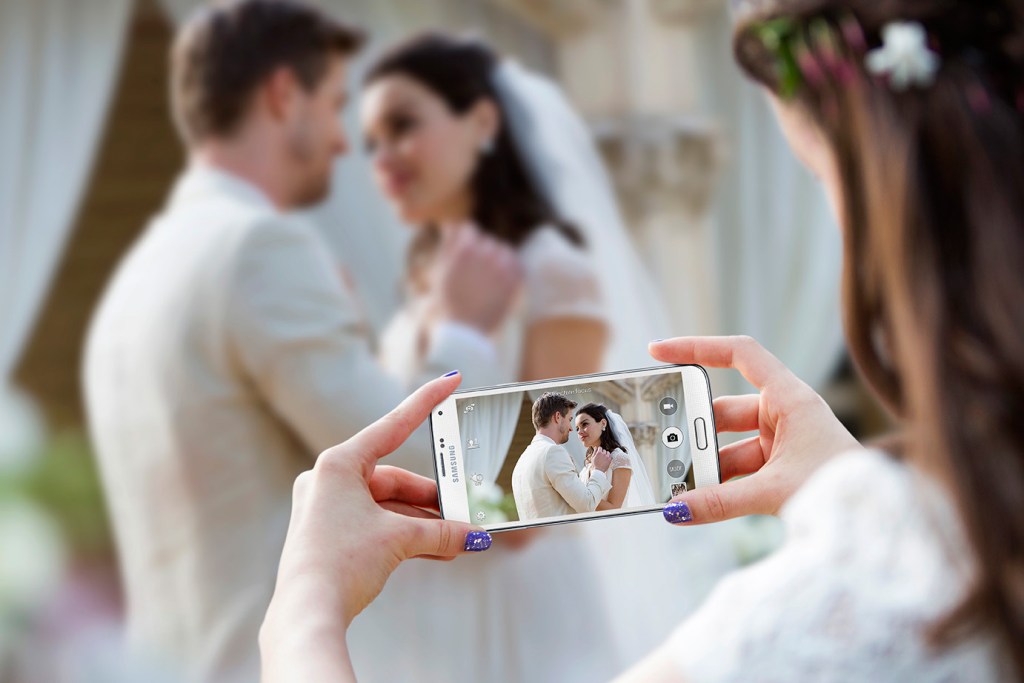
Another highlight of the Galaxy S5 is the new camera, which now offers 16 megpixels on the rear – and video capture of 4k resolution (even though the screen on the device itself can only manage 1080p, or one quarter of that). The Galaxy S5 isn’t the first phone announced to have 4K video capture capabilities, but it is part of a limited early group, and that’s something that might be more appealing to consumers now that 4K TVs are becoming more affordable and consumers are looking around for content sources: at this rate, home videos could beat broadcast TV to the punch.

Lifestyle_04The new camera also has a slow motion function like in the iPhone 5s, as well as post-capture refocus selection, like in the expensive and cumbersome Lytro light field camera. This is another feature that should make its way to many mobiles this year, but it should definitely help Samsung sell some smartphones to shutter-happy mobile photogs.

There’s also hybrid autofocus, which includes both contrast detection and phase detection, which is the same kind of system used in advanced DSLRs and mirrorless digital cameras. Samsung promises this autofocus will be able to lock on in as few as 0.3 seconds, making it the fastest ever for a smartphone.

Everything Else

Other specs for the Galaxy S5 include a microSD slot for expanding storage (which could work with the newly announced 128GB capacity for iPhone-beating storage) and a Download Booster software feature that combines LTE and Wi-Fi data connection for superfast downloading of larger files, though at the expense of your mobile data bandwidth. The rugged design means you can take it anywhere, but you’ll have to deal with a flap for the Micro USB 3.0 charging/power port on the bottom.

It packs a 2.5GHz Snapdragon 800 quad-core processor, 2GB of RAM, NFC, LTE, Bluetooth 4.0, and either 16GB or 32GB of storage, so no real surprises here. It does offer a black and white mode for power saving (and promises up to 10 hours of LTE web browsing or 12 hours of video playback), which is interesting, and it should go on sale in April according to Samsung.

24 Feb 18:50

American Folk Blues Festival 1962 - 1966: British festivals featured some of the greatest American blues artists of all time

by Cory Doctorow

This Metafilter post by Madamjujujive has extensive links and background on The American Folk Blues Festival 1962 - 1966, annual festival that brought some of the greatest blues acts of the USA to British audiences in the UK and put them on stage with British acts like Mick Jagger, Jimmy Page and Eric Clapton. The Youtube clips from the show are spectacular, featuring artists like Sonny Boy Williamson, Muddy Waters & Howlin' Wolf.

The American Folk Blues Festival 1962 - 1966; Vol 2; Vol 3 - The festival was an annual event with dozens of classic blues greats like Sonny Boy Williamson, Muddy Waters & Howlin' Wolf playing to appreciative UK audiences. "Attendees at Manchester in 1962, the first ever venue for the festival in Britain, included Mick Jagger, Keith Richards, Brian Jones and Jimmy Page. Subsequent attendees at the first London festivals are believed to have also included such influential musicians as Eric Burdon, Eric Clapton, and Steve Winwood. Collectively these were the primary movers in the blues explosion that would lead to the British Invasion."
24 Feb 18:45

Harold Ramis of 'Ghostbusters' and 'Groundhog Day' fame dead at 69

by Chris Welch

Harold Ramis, known best for his portrayal of Egon Spengler in the Ghostbusters films and as the filmmaker behind several beloved comedies, has died at the age of 69. Ramis died due to complications stemming from autoimmune inflammatory vasculitis, a rare disease that he began battling in 2010. The Chicago Tribune reports that Ramis at one point had to relearn to walk as a result of the disease, which "involves swelling of the blood vessels." His health again took a turn for the worse when he suffered a relapse of the vasculitis in 2011.

After getting his start with Chicago's famous Second City improv troupe, Ramis went on to establish a highly successful career in Hollywood. He co-wrote National Lampoon's Animal House and went on to...

Continue reading…

24 Feb 17:33

Whistleblower: NSA secretly continues Merkel surveillance by bugging other German officials

by Cory Doctorow


An anonymous NSA leaker revealed to the German magazine Bild am Sonntag that the agency has been spying on senior German government figures. The move is apparently a response to Obama prohibiting the agency from spying on Chancellor Angela Merkel (or other world leaders) without his authorization -- by spying on the people with whom Merkel communicates, the agency is still able to intercept a large fraction of her most sensitive communications without presidential authorization.

Two amazing facts about this story:

1. The NSA is out of control. The president of the United States, the man who has the final say over NSA policy, directly ordered them to stop spying on Angela Merkel. NSA spooks then cooked up a way of continuing to spy on Chancellor Merkel anyway, using a flimsy pretense unworthy of four-year-old. (This is assuming that Obama himself didn't wink-nudge them and say, "Actually, go ahead and keep spying on her but not personally, OK?"

2. Snowden isn't alone. When the NSA breaks its own rules, other whistleblowers come forward. This probably won't stop any time soon.

On Sunday it was revealed that the NSA, forbidden by President Obama from tapping German Chancellor Angela Merkel's phone directly, has ramped up its spying on her senior government officials, according to the German Sunday paper Bild am Sonntag. The paper said that the information's source is an anonymous, high-ranking NSA official stationed in Germany.

NSA moves from bugging German Chancellor to bugging German ministers [Megan Geuss/Ars Technica]


24 Feb 16:55

Privacy-Focused Blackphone From Silent Circle Goes Up For Pre-Order For $629

by Darrell Etherington
Blackphone

The Blackphone, a security focused smartphone from Silent Circle and Geeksphone, is kicking off pre-sales today after an official unveiling back in January. The Blackphone is billed as the “world’s first smartphone which places privacy and control directly in the hands of its users,” which essentially means that it offers a forked version of Android called PrivatOS and comes pre-loaded with apps that offer special privacy features.

Blackphone retails for $629 for an unlocked handset, with specs that keep up with most standard Android gadgets in that range, including a 2 GHz quad-core processor, a 4.7-inch IPS display, LTE connectivity, 2GB of RAM, 16GB of storage and an 8 megapixel rear/1.3 megapixel front camera. Those specs aren’t set in stone, however: official PR dictates that they could be subject to change before the phones actually start shipping later this year.

The privacy tools include Silent Circle’s apps, which include Silent Phone, Silent Text and Silent Contact for secure, private handling of each of those features via encryption so that only you and someone receiving said communications with a compatible device can access the contents. There’s also a Wi-Fi connection manager for greater security on public networks, and a software that makes it possible to securely remote-wipe your device, and facilitate its recovery.

Another selling point: PrivatOS will get updates directly from provider SGP Technologies, rather than relying on carriers to approve and deploy them, which could make for even greater levels of security. Plus bundled in your cost of device are multi-year subscriptions to a number of security services, including 2 years of Silent Circle, 2 years of Disconnect (secure/non-trackable search), 2 years of SpiderOak (secure cloud storage) and some gift subscriptions to Silent Circle so that your friends and family won’t have to sign up separately to talk with you ‘off the record.’

The Blackphone is clearly designed to capitalize on the general paranoia (and justified fear) invoked by the Snowden revelations regarding the breadth of government surveillance, but whether that will translate to significant sales remains to be seen. All those subscriptions sound like a lot of work if you want to keep up the cloak, but it could be worth it if you’re the type of person who doesn’t put a price on peace of mind.

24 Feb 14:51

New Farscape TV Movie In The Works?

New Farscape TV Movie In The Works?

What the frell?

A couple of intriguing stories involving Sydney-based writer Justin Monjo have just been picked up by the Australian site If. One involves a new HBO series for Peter Dinklage (which we'll get to separately), and the other is potentially exciting news for Farscape fans. Monjo - one of the original Farscape writing team - has revealed he's at work on the screenplay for a new Farscape TV movie, following on several years after finale The Peacekeeper Wars.

There are no direct quotes from Monjo in If's piece, but he's paraphrased as saying that the new feature would shoot in Australia (as did the original series, produced by Hallmark for the Nine Network). Here be spoilers. Plot-wise, it would pick up the child of John Crichton and Aeryn Sun, born after a complex pregnancy at the end of the Peacekeeper Wars mini-series. D'Argo Sun-Crichton, as he was named, will be 19 in the new film.

He's been in hiding out on Earth for most of his life, since he's the target of villainous aliens, but when he's finally discovered - manifesting latent "special powers" - he rejoins his parents for more adventuring. The stars are, after all, his playground...

Post-Peacekeeper Wars there was talk of a Farscape web-series, but it never materialised and eventually became the recent comics by Keith R.A. Candido. Tor.com are under the impression that these would remain canon, so future Farscape would be targeting an extremely hardcore Farscape fanbase who not only watched the show but continued to read about it afterwards.

We're not sure that's an entirely viable idea (given Farscape's original unceremonious dumping in the face of low ratings). Neither, to be honest, would we have necessarily wished for a new Farscape to focus on Crichton and Aeryn's super-kid. And finally, it's not actually clear from If's story whether this new movie is in active development or Monjo has simply written it on spec. 

But the prospect of a reunion of the surviving Farscape cast - both human and Henson-created - has us cautiously excited nonetheless. Would you like to see it in production, or should Farscape be left a happy memory? Are those comics any good? Give us your thoughts in the comments below, and we'll keep you posted on any further news...


24 Feb 14:49

A Cat's Guide To Taking Care Of Your Human

by Rob Beschizza

"Humans often stare at random inanimate objects for hours at a time. Your duty is the break that spell. ... The worst offender among these objects is the light box."

Especially interesting in some overarching semiotic sort of way, given that your cat actually hates you.


24 Feb 14:45

Gmail adds unsubscribe button to rid your inbox of promotions

by Jacob Kastrenakes

Google is making it a bit easier to rid your inbox of spam. It's beginning to add an unsubscribe button to Gmail that will automatically appear in the header of emails that it detects might be unwanted messages from marketers. IDG News Service reports that Google announced the new feature at an event last week, and that the unsubscribe option began to roll out thereafter. Clicking the button won't lead you through the marketers' standard unsubscribe dialogue though — it will instead have Google send an automated email to the marketer requesting that it remove you from future mailings.

Continue reading…

24 Feb 12:30

Macrofocus timelapse video of snowflake formation

by Cory Doctorow
In Snowtime, Vyacheslav Ivanov captures the crystallization and growth of a single snowflake in macrofocus, timelapsed to a neat two minutes with musical accompaniment from Aphex Twin. It's wondrous.

snowtime (Thanks, Rodney!)


24 Feb 12:30

FreeFixer Removes Unwanted Programs from Your PC

by Mihir Patkar

FreeFixer Removes Unwanted Programs from Your PC

Windows: Over time, your Windows PC will have accumulated a whole bunch of unwanted programs, services and other things that slow it down. FreeFixer sorts and lists everything on your hard drive and offers more information about each to help decide whether it's needed.

Once FreeFixer runs a full scan, it will give you a long list of items like registry startups, scheduled tasks, processes, services, namespace service provides, SVCHost and Explorer modules, Firefox extensions and searh engines, and more. Each item comes with an icon, full file path, and a "more info" link to find out further details about that item. After randomly clicking 15 of them, I'm satisfied with the information FreeFixer is able to give about the items.

To safeguard you from deleting things you shouldn't, FreeFixer does not list critical system files. It further marks files from trusted software publishers (like Apple, Trend Micro, Microsoft, etc.) as "trusted files" in green. These too can't be deleted and they won't appear when you generate a log file. The advantage of this is that when you publish a log file on a forum to identify a problem, it's easier for those helping you.

FeedFixer can be scheduled to run these scans periodically in the background. It also has a File Nuker utility to delete any unwanted file on your next reboot, as well as a Windows System File Checker tool.

If FeedFixer is still a little complex for you, then check out ADWCleaner to remove all toolbars and malware in one click.

FeedFixer (Free) | via GHacks

24 Feb 12:28

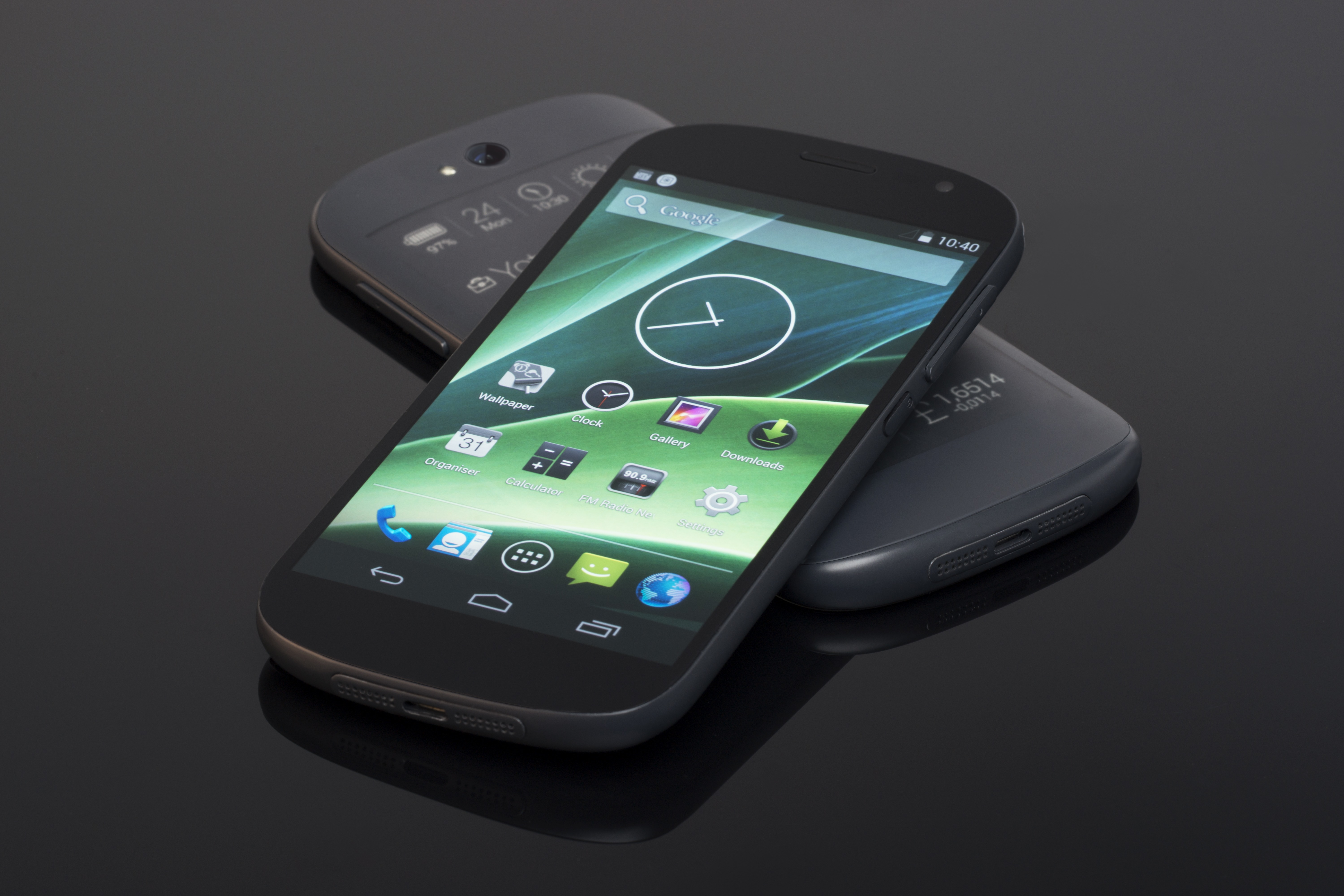
[MWC 2014] Yota Devices Announces The New YotaPhone, Now With Full Touch-Enabled Rear E-Ink Panel

by David Ruddock

unnamed

I honestly think the YotaPhone was one of the coolest smartphone innovations of 2013, and while I wouldn't exactly be the first in line to buy a device from an unproven OEM, Yota Devices has once again piqued my curiosity with their announcement of the "next generation" YotaPhone here at MWC.

YotaPhone_Photo_3

The new YotaPhone solves what was arguably the biggest problem with the original's otherwise innovative concept - interacting with the e-Ink display.

Done With This Post? You Might Also Like These:

[MWC 2014] Yota Devices Announces The New YotaPhone, Now With Full Touch-Enabled Rear E-Ink Panel was written by the awesome team at Android Police.


24 Feb 12:26

Sony Xperia Z2 hands-on

by Alex Dobie

Xperia Z2

Iterative improvements across the board add up to a sleeker, more capable Xperia phone

Mobile World Congress

Sony likes to release two flagship phones each year. We've bemoaned the fact before, but the Japanese electronics giant continues to persue an aggressive timetable of half-yearly replacements for its high-end "Z" series. Back in September at IFA, we met the Xperia Z1; just six months later we're getting our first look at the Xperia Z2 at Mobile World Congress in Barcelona. At first glance it's tough to tell the Z2 apart from the Z1 — they're both more or less the same size and shape — big, blocky phones, and products of Sony's "Omnibalance" design language. If you weren't a fan of Sony's Z series phones before, there's little here to change your mind. But even if it doesn't lend itself particularly well to good ergonomics, it's a solid look, and one Sony's sticking to.


24 Feb 12:26

How Developers And Consumers Can Get Android Apps On The Nokia X

by Dan Rowinski

The Nokia X Android smartphone won't come with access to the Google Play store and its million-plus apps. So how is Nokia going to woo developers to build apps for its shiny new Android device after going whole hog on Windows Phone with Microsoft over the last few years?

Nokia's short answer: It won't have to, as it should be relatively straightforward for consumers to load a variety of Android apps on Nokia’s latest handset. 

The Nokia X is built on the Android Open Source Project (AOSP), version 4.1.2 Jelly Bean. Nokia has made very few alterations to the AOSP for its new smartphone, and so says that most existing Android apps should work on the Nokia X without modification.

Nokia's Android-app strategy embraces the global nature of the Android ecosystem. While U.S. users are accustomed to getting Android apps through the Google Play store, that’s not the case in many other parts of the world, where consumers use third-party app stores to get Android apps and often “sideload” Android apps directly from app developers.

“Same code base, new consumer base,” Nokia’s head of developer relations Amit Patel said in an interview with ReadWrite, describing the slogan Nokia will pitch to developers. “We are looking for Android developers that already have an app and are after a boatload of new consumers.”

Here's what consumers and developers need to know about getting apps on the Nokia X.

Three Ways To Download Apps

Patel described three different ways developers can distribute apps for the Nokia X, which are also the same ways consumers can download them:

  • The Nokia store: This will feature Nokia's own selection array of apps. Nokia says developers can use their standard Android Application Package Files (APKs)—which are sort of zipped-up software "suitcases" for transporting app and related software—and basically drag and drop them into the Nokia Store. Nokia has a tool that will scan the app for compatibility, and says that most apps won't need to change a thing. 
  • Third-party app stores: As noted above, these are already common app sources in many countries. For instance, Yandex in Russia is one of the biggest providers of Android apps for users there. Third-party app stores will be available as links through the Nokia store, allowing users to download just about any app from anywhere.
  • Sideloaded apps: Android allows the ability to directly download an APK from any source, which means that all users will have to do is find the file and install it. (Though it's worth noting that this can be a risky proposition, depending on where users are finding their apps.)

Three New APIs

Nokia didn’t attempt to get a Google Mobile Services (GMS) license from Google to use the Google Play store or any of Google’s Android core apps. So Nokia had to create its own application programming interfaces (APIs) to handle basic functions on the Nokia X that support consumers and developers.

While most developers will be able to simply drag and drop their apps into the Nokia Store to make them work, some will have to change certain features to tie them into Nokia/Microsoft services instead of Google's. Here are the three APIs that Nokia is giving developers to work with in the Nokia X:

  • Location: Nokia will provide developers with a new location API to replace Google Maps. The Nokia X’s location service API will be the Nokia HERE Maps.
  • Notifications: Nokia uses the classic drop-down notification bar in Android, but app notifications have to run through Nokia, not Google. As such, Nokia has its own custom-made notifications API that will also integrate into the phone's home screen.
  • In-app payments: Nokia couldn’t use Google’s robust international payments system to help app developers get paid, so it built its own. The Nokia X will support payments in every country that the phone is distributed to, often using direct-carrier billing with cellular partners across the world. 

Patel says that the tools and website for Nokia developers are ready for developers this week. Developers won't need to rewrite their source code for the Nokia X or repackage their APKs to publish to the Nokia Store, the company says; at worst, they'll only have to make slight modifications involving these three APIs. Patel claims that the developer time to publish even with the modifications is eight hours or less.

Three Messages To Developers

If Nokia does one thing really well these days, it is sell low-cost smartphones to emerging markets across the globe. The Nokia X is designed precisely to fit into this strategy.

“Overall, what we are saying is that we will provide developers reach and a low time to market,” Patel said. 

Nokia's big sales pitch to developers goes like this:

  • Massive reach: The Nokia X will launch the week of March 3 in markets around the world, including China, India, Indonesia, Thailand, Eastern Europe and the Middle East. With a budget-friendly price, attractive design and access to apps, Nokia thinks its smartphone will be a huge hit. That, in turn, would offer developers that work with Nokia access to big new markets.
  • Money: Nokia will make sure that developers can get paid by offering its own payment service in lieu of Google’s. Nokia also believes that the pay-per-download model is not effective (it is what the iOS App Store and Google Play use in the United States) and instead will use a “try-and-buy” approach to let users download the apps and pay for them if they want to keep them. Nokia claims that users are five times likelier to pay for apps with the try-and-buy approach.
  • Time to market: Nokia seems eager to make sure that developers have to do very little work to get into the Nokia Store. Most APKs that work with Android Jelly Bean 4.1.2 will work just fine in the Nokia Store, the company insists.

“Developers can use their existing Android developer environment and just use a plugin to edit and modify the existing source code [to implement for the Nokia Store],” Patel said.

Nokia Not Restricting Google Apps

Nokia is taking a very egalitarian approach to app distribution for the Nokia X. As long as an app has a functional APK, it will work on top of just about any version of AOSP. And unlike some other non-standard Android smartphone makers, Nokia won't go out of its way to block Google apps like Gmail, Maps and so forth.

Its approach is a departure from Amazon’s Kindle Fire and Android Appstore approach. The e-commerce king goes well out of its way to make sure that users of its devices can't touch Google properties in any way, shape or form (at least without rooting their devices and reinstalling Android functions that Amazon purposely left out).

Amazon doesn't allow users to visit the Google Play store or use the Chrome browser or the native Gmail app for Android. Nokia hasn't bothered fencing Google out of its device. Technically, a savvy user or developer could easily load Google’s apps into the Nokia Store or sideload them onto the Nokia X.

That comes with a caveat: The only restriction on app downloads are those that require root access on the device. If an app needs root access, it cannot be downloaded to the Nokia X unless the user actually roots their device. Many of Google’s Android apps do require root access for hardware integration—Maps, for instance, does—and hence will be blocked from the Nokia X.

The key differentiator for Nokia is allowing local markets to use their own third-party Android app stores. For instance, Yandex is Russia is the de facto app store for Android in the country, not Google Play. In this way, Nokia can localize experiences without needing developers to port to the Nokia Store. The scenario is similar in countries like China and India, where local app stores are more prevalent on Android devices than Google Play. 

24 Feb 12:24

Mt.Gox Resigns From Bitcoin Foundation’s Board, Clears Twitter Account

by Catherine Shu
Bitcoin

Mt.Gox has resigned from the Bitcoin Foundation’s board of directors. The foundation made the announcement on its blog after the news was first reported by the WSJ. In addition, Reddit users also noticed that Mt.Gox has cleared all tweets from its official Twitter account. We’ve emailed Mt.Gox for comment.

Mt.Gox CEO Mark Karpeles was one of three elected industry members who held seats on the board. The Bitcoin Foundation said that would release more details, including information about election procedures, soon.

Problems faced by Mt.Gox since it paused Bitcoin withdrawals on Feb. 6 have contributed to a steep decline in Bitcoin’s value and focused attention on the instability of unregulated markets. Mt.Gox said last week that it suspended withdrawals because of a “technical issue.”

24 Feb 12:23

Nokia’s Mobile UI Mixology Serves Up A Hybrid Family Of Devices To Outshine Budget ‘Droids

by Natasha Lomas
nokia-x-main

This morning Nokia finally took the wraps off a long rumoured (and leaked) Android phone – unveiling a family of smartphones, called the Nokia X range, with the first three handsets being the Nokia X, X+ and XL, the first two with 4-inch displays, and the latter on the cusp of phablet territory with a 5-inch pane.

The Nokia X family forks Android, using the Android Open Source Project, in order to replace Google’s services with Nokia’s own, and with cloud offerings from the soon-to-be-parent of Nokia’s mobile making division, Microsoft.

“The Nokia X takes people to Microsoft’s cloud, not to Google’s cloud,” said Nokia’s Stephen Elop at today’s launch.

The strategy here is for Nokia X handsets to work as “feeder” devices — or, using another metaphor, as a gateway drug — to encourage users who are in the market for a low end smartphone today to upgrade to a full-fat Windows Phone-powered Nokia Lumia tomorrow.

To achieve this Nokia has brought together different elements from multiple platforms to make up the Nokia X, creating a mobile UI cocktail that’s one part-Android, one-part Windows Phone, with a sprinkling of Nokia’s Asha UI and even a philosophical dash of MeeGo/Maemo. Nokia’s Jussi Mäkinen told TechCrunch that the development team that’s been beavering away on Nokia X for the past year are especially excited to be working on an open source project again.

Yesterday, at Microsoft’s press event, the Windows Phone VP Joe Belfiore conceded that Microsoft’s mobile platform has “slightly more natural appeal in the low end” — owing to its relative lack of apps vs Android/iOS.

But the problem has been pushing the price-tag low enough to compete with budget Androids. The Nokia X family fixes that, with an initial price-point range of: $122, $136 and $150 for the X, X+ and XL respectively. (The entry level Lumia, the Lumia 520, was announced at last year’s MWC with a price-tag of $180).

Expect the Nokia X family to be expanded to include even cheaper handsets, as Elop talked up the opportunity around sub-$100 phones, and also for Nokia to continue trying to squeeze the price of an entry level Lumia even lower.

TechCrunch got hands on with the Nokia X handsets here at the Mobile World Congress in Barcelona. Read on for our first impressions.

Design

The Nokia X and X+ are the same handset on the surface, with the X+ having beefed up internal memory (and thus a higher price-tag). All three devices in the range have a clean look, with matte plastic casing that feels soft and smooth in the hand. Edges are squared off, with rounded corners and gently curving backs.

On the X and X+ the handset has a pleasingly chunky feel, while the XL takes the same design and stretches it so it’s bigger across the front but also thinner. The result is a large handset, that looks very bold — especially when painted in the bright orange colour variant — yet isn’t too heavy in the hand (which was a problem for Nokia with its early Lumia flagships).

As with the rest of Nokia’s handset portfolio, all the devices in the Nokia X family are offered in a choice of eye-popping colours — including a luminous green for the Nokia X/X+ (which came out more yellow in the shots below, thanks to the on-sight green lighting), and the aforementioned ‘high-vis jacket’ orange.

Cyan, yellow and red are also offered, along with white and black for people who want something more vanilla. All three handsets have user-removeable/replacement batteries, with the casing peeling off of the front of the phone to come away as a single piece.

The Nokia X/X+ is pictured in the gallery below.

  1. nokia-x-side

  2. nokia-x-onedrive

  3. nokia-x-keyboard

  4. nokia-x-case

  5. nokia-x-back

  6. nokia-x-app-store

  7. nokia-lower-menu

  8. nokia-x-android-apps

  9. nokia-x-apps-close

  10. nokia-x-notification-lockscreen

  11. nokia-x-main

Software

Hardware design is not the real story here. It’s the software that ushers in a new era for Nokia, being as the foundation layer for the Nokia X was not made in Espoo or Redmond but Mountain View.

That said, the Android Open Source Project that the Nokia X builds upon isn’t immediately obvious. And that’s absolutely the intention here. The new family of devices has a new interface, called the Nokia X software platform, that brings its own particular flavour.

This is where Nokia’s mobile UI mixology comes into play, because the interface blends elements from multiple platforms. Most obviously the homescreen has a similar look to Windows Phone, with tile-esque objects rather than Android’s smaller icons.

These tiles aren’t identical to Windows Phone’s Live Tiles but are clearly close cousins. They also aren’t as dynamic, with relatively few changeable elements (at present) vs the Windows Phone-powered Lumia devices’ Live Tiles — however the larger gallery/pictures tile on the Nokia X does change to reflect the most recent photos you’ve snapped.

Scrolling down the homescreen brings more of your apps into view — and, on the demo handsets I was testing here at Mobile World Congress in Barcelona, this is where the Android element seeped most obviously into the experience, as more Android app icons started cropping up embedded on the tiles.

The design distinction between the third party (Android) apps and the clean-looking white silhouettes of the native Nokia apps is obvious — and one way for Nokia to flag up/outline its own services here vs stuff that’s being piped in from the Android ecosystem.

Android apps are curated within the native Nokia store on the device (which takes the place of Google’s Play store), but can also be downloaded from various third party Android app stores, such as the Yandex app store. If you’re looking for an app on the Nokia store and don’t find it, Nokia will return a link to another store where the app can be downloaded (if it’s available).

The Nokia X interface also incorporates an Android-style notifications tray up top — a flick gesture down from the top of the phone brings this into view. And there’s a parallel contextual bottom menu that can be pulled up at certain points within apps, such as the camera, which is apparently a borrowing from Nokia’s Asha UI.

Swipe gestures are also used to move between app screens/menus. While the only static button on the handset is a back button — a touch-key, rather than a physical button on all three devices — which sits at the bottom of the handset. Tapping this takes you back to the previous screen, or you can long press to land back on the homescreen.

The navigation is elegant and simple — I figured out the long press return to homescreen feature intuitively, for instance — although the demo devices I was trying out did have some trouble with the back feature sometimes. It’s not the final software build, however.

Beyond the homescreen, another big software addition here is Nokia’s FastLane feed — an alternative to the recent apps menu on Android. This is also something that Nokia first implemented on its Asha platform — and has now ported over (or up) to the Android-based Nokia X line.

FastLane provides a feed of activity that’s taking/taken place on the device and in the user’s digital surroundings, pumping in notifications about comments on photos you’ve posted to social networks like WhatsApp and Facebook, or showing a thumbnail of the latest picture you snapped with the phone. It also plugs into the calendar so future events in your schedule can be incorporated into the top of the stack too.

You can see FastLane pictured below, running on the larger Nokia XL device.

  1. nokia-xl-fastlane-main

  2. nokia-x-xl

  3. nokia-xl-back

  4. nokia-xl-calendar

  5. nokia-xl-hands-on

  6. nokia-xl-keyboard

  7. nokia-xl-main

  8. nokia-xl-side

  9. nokia-x-hybrid1

  10. nokia-x-apps-close

FastLane provides a neat at-a-glance view — one which feels richer than a standard notifications tray, and does more than just offering a stack of recent apps.

Tapping on any event in the FastLane feed takes you back to the app/event in question so it’s a handy shortcut too. On the demo devices I was testing, the feed was fast and responsive, and certainly looked like it would provide a useful chronological overview of usage and social goings-on, all in one.

The information you see in FastLane can be configured, via a settings menu, so you can tweak which notifications, apps, social networks and device usage history appears in the feed. (Individual FastLane items don’t appear to be deletable via the feed interface itself, though).

The phone’s lockscreen also supports notifications, with a space for social missives to slot into view at the bottom portion of the screen. These can be swiped away to remove them.

Performance & verdict

It’s too early to fully gauge performance from a brief hands on with non-final build software, especially as several of the devices I was looked at lacked connectivity. That said, the Nokia X interface certainly looks promising. Mäkinen told TechCrunch that a core part of the work the Nokia X development team has been doing is optimizing Android so it can deliver a fast, smooth performance on more affordable hardware — and on that front there is certainly room for Nokia to improve on and outshine the budget Droidy hoards.

Android devices can certainly be very affordable — and at sub-$100 they are still more affordable than Nokia’s current Nokia X family — but the experience of very low end Android handset hardware can be very poor indeed (even Google itself complained about this, via its then mobile making arm Motorola, at the launch of the Moto G — a device also aiming to improve the performance of low end Android).

So Nokia’s strategy of pairing bold, colourful hardware design with performance optimized software that’s clean-looking, easy to use and also brings access to a large majority of Android apps, feels like a winner. The Nokia brand also still resonates strongly in many of the emerging markets where these handsets are going to be pushed hard — giving Nokia and Microsoft their best chance yet to recruit a new generation of loyal smartphone users by going where the growth is.
23 Feb 19:23

Huawei announces the Talkband B1 with a pop-out earpiece for phone calls

by Jared DiPane

Today Huawei has announced its first wearable device, the Talkband B1, which combines fitness tracking with the ability to make phone calls. When you first think about the combination it is a bit awkward, but the way in which Huawei has made it, it makes perfect sense. The Talkband B1 will do things similar to what Fitbit and the Nike Fuelband are doing in terms of tracking steps, calories, and your sleep pattern — but it goes beyond that. The band itself is on the thick side, which would make it seem unappealing, until you realize there is a pop-out earpiece.

The pop-out ear piece supports wireless calling, so you can remove the flexible display from the band and use it to complete phone calls when on the go. For those who look to reduce the number of electronics in their day to day life, this dual purpose band will definitely appeal to them. Huawei states that the band will last for six days of use on a single charge, and charges in about two hours.

Currently there is no pricing announced for the Talkband B1, but it will be hitting China next month, and then in Q2 a broader roll out to countries like Japan, Middle East, Russia and Europe.

23 Feb 19:23

Netflix Reportedly Enters Paid Deal With Comcast To End Slowdown Standoff

by Gregory Ferenstein
5416543588_261d2b99e8_b

Netflix has reportedly entered a precedent-setting deal with Internet service provider, Comcast, to end a public feud over the speed of streaming video.

The Wall Street Journal reports that Netflix will be paying Comcast for “direct access to Comcast’s broadband network”, which will provide much smoother service for those frustrated by Netflix’s recent slowdown.

Netflix eats up an incredible amount of global bandwidth. In 2012, Netflix was estimated to hog a 1/3rd of traffic in North America. This number probably spike last week, when 2% of Netflix’s 33 million views binge watched their new (ultra-addicting) political thriller, House Of Cards.

As one of the addicted, I can attest to the noticeable slowdown in streaming. It could take a few minutes to load up video–and I have Comcast.

“In exchange for payment, Netflix will get direct access to Comcast’s broadband network,” explains The Journal. If Netflix is indeed paying Comcast for quicker access, it sets an important precedent for the future of the Internet.

For the most part, websites have always enjoyed a practice of Net Neutrality, where all services were given the same bandwidth. However, recent court challenges threatened the future of Net Neutrality, giving Internet providers like Verizon and Comcast the opportunity for potentially lucrative new payment schemes.

Critics worry that this kind of pay-for-service will erode the meritocracy of the Internet. “Absent net neutrality, the Internet could turn into a high-priced private toll road that would be inaccessible to the next generation of visionaries,” wrote President Obama’s Senior Technology Advisor, Todd Park, about the White House’s commitment to net neutrality.

The  deal between Comcast and Netflix, which has supposedly been in the works for “more than a year”, may be legally outside of the traditional net neutrality rules.

The Federal Communications Commission is considering how to advance net neutrality and it’s unclear if they’ll find a way would prevent more deals like the one reportedly inked between Netflix and Comcast. Certainly, this will ramp up the political pressure to find some kind of solution to balance network congestion and open Internet access.

[Image Credit: Flickr User Nomadic Lass]

23 Feb 17:36

Mozilla announces $25 smartphone, additional 12 Firefox OS markets for 2014

by Richard Devine

Telefonica and Deutsche Telekom launching 12 combined new markets in the first half of 2014

Mobile World Congress

At Mobile World Congress in Barcelona today we've been spending a little time with the folks from Mozilla, getting an update on the performance and future of Firefox OS. During the presentation, Mozilla COO Jay Sullivan, announced a partnership with Spreadtrum which will provide chipsets for $25 Firefox OS smartphones. You read that right. Just $25.

Sure, such devices may not meet the requirements many of us look for in a smartphone, but Mozilla isn't targetting us. This new bar in the entry-level smartphone space Mozilla says is to help people get online, to ditch their feature phones once and for all.

Additional news on the future of the fledgling platform sees 12 new markets coming online in the first half of 2014. Telefonica will be launching Firefox OS in Argentina, Costa Rica, El Salvador, Ecuador, Germany, Guatemala, Nicaragua, and Panama, while Deutsche Telekom will take it to Croatia, the Czech Republic, Macedonia, and Montenegro.


23 Feb 17:35

Five Best Standing Desks

by Alan Henry

Five Best Standing Desks

Sitting all day is generally a bad idea, and standing desks can give you the flexibility to stand and move around, and leaves you a little freer to get that activity that we all need, standing desk or no. However, some standing desks are definitely better than others—they're either more customizable, more affordable, easily adjustable, bear more weight, or are just better for most workspaces. This week we're looking at five of the best.

Earlier in the week we asked you which standing desks you thought were the best, from the DIY to the high-end. You responded with your picks, but we only have room for the top five. Here they are, in no specific order:

UpLift 900 Sit-Stand Ergonomic Desk (Frame)

Five Best Standing Desks

The UpLift 900 Sit-Stand Ergonomic Desk is a simple, sturdy, height adjustable (26"), motorized desk without too many extra bells and whistles, but is still flexible and sports a powerful enough motor to really give you the option of sitting when you choose and standing when you prefer. Your nomination was really for the frame—which you can buy on its own and customize the rest to your liking (or DIY the rest), or order as part of an already-completed UpLift 900 desk, with a 48" x 80" desk surface installed. All in all, the desk system is designed to withstand over 335lbs (152 kg) of weight on the desk surface at any time, is available in black or white, and the base on its own retails for $549. All models come with a five year, all-inclusive warranty. The entire UpLift 900 system with its default configuration will set you back $769, but it goes up from there when you start adding components like cable management, casters, monitor arms, keyboard trays, and more—but it's pretty nice that all of those are available right out of the gate, and can be added to build and customize your perfect desk.

Those of you who nominated the UpLift and some other UpLift models praised the company's flexibility in ordering, giving you the option to just buy frames or components to complete or build out your dream desk as you choose. You also noted that UpLift offers free shipping, which is a huge deal when you're ordering large motorized components like these—they can easily add hundreds onto the overall purchase price. Check out the nomination thread here for more.


UpDesk UpWrite

Five Best Standing Desks

The UpDesk UpWrite is a simple, all-white, standing/sitting workstation with adjustable height (26") and single-touch motorized controls. You have the flexibility to make it as tall as you want when you choose to stand, or lower it on those days where you need to sit. It supports 300lbs (136 kg) of weight, is wide enough at the base to accommodate treadmills (for those of you who nominated treadmill desks), and, perhaps its claim to fame, the UpWrite features a 30" x 60" erasable whiteboard work surface. You can use it to jot down notes, draw sketches or designs, or just personalize your workstation. UpDesk says the surface works fine with both wet and dry erase markers, and cleans up easily. It's not cheap though, the UpWrite will set you back $1149 with $129 shipping in the US, although it comes with five year limited warranty with your purchase. Some of you also noted that if the price point is too high (or you just don't want a motorized version), there's a hand-operated version for $300 less.

Those of you who nominated and praised the UpWrite noted UpDesk's customer service and support, who many of you commented were really great, and noted that delivery and setup of the UpWrite (or any other UpDesk model, for that matter) was simple and hassle-free. You also mentioned that the motor was powerful enough to switch from sitting to standing positions in less than 30 seconds, which is pretty impressive for a motor that's pushing 300lbs (136 kg) of equipment around, potentially. Check out the nomination thread here to read more.


VARIDESK Pro

Five Best Standing Desks

The VARIDESK Pro is less of a full standing workstation as it is an attachment to go on top of your current desk, but that doesn't mean it's not flexible or customizable. It's perhaps one of the most affordable in the roundup (sans the DIY option, of course) at $300, but at its heart the VARIDESK is more of a height adjustable monitor stand and keyboard tray. That's not a slight by any means—the fact that it goes on top of your desk means you don't have to buy a new desk or completely rearrange your cubicle to use it—it'll work just about anywhere. It can be switched from standing to sitting work positions, thanks to its scissor-style unfoldable arms (and a spring-assisted lift so you don't have to heft all the weight of your stuff), and it can be adjusted to lock in any height you prefer. It's wide enough for dual monitors (23" x 36" work surface). It has 15.5" of adjustable height, supports 35lbs (16 kg) of weight, and comes with a one-year limited warranty.

Those of you who nominated the VARIDESK Pro praised its portability and flexibility—you don't need to reinforce a desk to put one on top, and you can move it easily enough from workstation to workstation if you change desks in the office, have to move offices, change jobs, and so on. The price point doesn't hurt compared to other options, and you noted that the build quality was solid as well. Read more in the nominations thread here.


Ergotron Workfit

Five Best Standing Desks

Ergotron has been making height adjustable and customizable workstations for ages, and the Workfit series is one of their flagship products. It's actually a number of different desks, articulating arms, and standing workstations, but you guys nominated the Workfit A and the Workfit S most specifically (you can see them individually at the link above). The Workfit A is an articulated arm that's designed to clamp onto your existing desk, attach to your monitor, and lift it and your keyboard up to the height you prefer to work. Beneath the display is a work surface for papers, desk accessories, or anything else you need to have front and center while you work. It comes in two flavors—one with a suspended keyboard tray and another with a keyboard tray that's attached to the primary work surface. The Workfit S on the other hand is a fully adjustable standing desk attachment that goes on the front of your current desk and has the display mounted at the top, as opposed to on an arm. The entire workstation, including the display at the top and the keyboard and mouse tray, are on an adjustable track that can be moved up or down depending on your personal preference.

All of Ergotron's systems are designed for easy adjustability without a ton of switches or locks, and while they're not motorized, they are easy to move around. Both models also come in dual-display setups, so you don't have to feel locked in to a single monitor workspace like the designs shown above. Prices vary depending on your configuration though you choose. The Workfit S ranges from $379 to $479 for single monitor setups, and the Workfit A runs from $379 to $499 in most cases (they have Apple friendly versions that are even more expensive.) You can see all of the single monitor setups here. If you have dual monitors, the Workfit S goes up to $399 to $499, while the Workfit A bumps up to $399 to $519, depending on your selections. You can check those out here. Workspace width and depth vary, of course, but if you're going for a model that's not just a monitor stand and a keyboard tray, on average you're looking at 10" x 23" space for papers and accessories, and an overall weight capacity of between 20-30lbs (9-14kg). All of Ergotron's products come with a five year warranty. Read more in the nominations threads here and here.


The DIY Standing Desk

Five Best Standing Desks

There are tons of workstations with adjustable heights, motorized controls, huge desk spaces, and more, but sometimes the best standing desk is the one that you make yourself. We've highlighted tons of DIY standing desks, from affordable IKEA hacks to collapsable and expandable wall-mounted desks, to the super-cheap. You can see more on our standing desks tagpage. Many of you shared your own DIY options in the call for contenders post. The beauty of the DIY option is that it gives you a way to try out a standing desk in your own workspace, without spending a ton of money, but still build something that's perfect for you and your space.

Those of you who praised making your own noted that, of course, you can customize it to fit any workspace you already have, turn your existing desk into a standing model, build it up to be just as high as you want and support all of the equipment you have, and perhaps most importantly, with the right stuff lying around, it can cost you a whopping zero dollars. Check out the nominations thread here.


Now that you've seen the top five, it's time to put them to an all out vote to determine the Lifehacker community favorite:

This week's honorable mentions go out to the NextDesk Terra and the Ergo Depot AD17 standing desks, both of which earned high praise from The Wirecutter in their roundup of the best standing desks, and they tested tons. If you already have a desk that you'd like to convert to a standing desk, you still have tons of other options (including some of the nominees not mentioned here) but they also suggest the Kangaroo Pro Junior as an attachment for your desk that will get you up, standing while you work, and moving around in no time.

Have something to say about one of the contenders? Want to make the case for your personal favorite, even if it wasn't included in the list? Remember, the top five are based on your most popular nominations from the call for contenders thread from earlier in the week. Don't just complain about the top five, let us know what your preferred alternative is—and make your case for it—in the discussions below.

The Hive Five is based on reader nominations. As with most Hive Five posts, if your favorite was left out, it didn't get the nominations required in the call for contenders post to make the top five. We understand it's a bit of a popularity contest. Have a suggestion for the Hive Five? Send us an email at tips+hivefive@lifehacker.com!

Photos by Marco Arment and Lairbob.

23 Feb 15:37

22 Adorable Before And After Pictures Of Animals Growing Up

by Bill Crider
23 Feb 12:34

Three UK to offer Samsung Gear 2 Neo, heavy price cut on original Galaxy Gear

by Richard Devine

£99 with a Samsung device purchase, £149 without from March 4

The Gear 2 Neo is only just official but we're already hearing the first snippets of UK availability. Three is set to sell the new smartwatch, but as yet hasn't announced firm details on pricing. If you're looking for a deal, Three is also offering heavy price cuts on the first generation Galaxy Gear.

Well now it's public. Gear 2 Neo is coming to @ThreeUK. Gear 1 will be £149 outright or £99 if you buy a Samsung. From March 4th :P

— Brendan Arndt (@wildlime) February 23, 2014

Brendan Arndt is Three's Device and Accessory Portfolio manager, so he's pretty well placed to pass on such information. Three already sells the Galaxy Gear throughout its retail network so you should be able to pop along to your local store and pick one up at the lower price from March 4.


23 Feb 12:34

Microsoft announces 'spring' update for Windows 8.1

by Tom Warren

Microsoft is at Mobile World Congress today, and the company is announcing its first significant update to Windows 8.1. Microsoft's Joe Belfiore, who is now responsible for phones, tablets, and PCs at the software maker, revealed the update is coming "this spring" and is largely focused at improving the experience for mouse and keyboard users. Several leaks of an update, known as "Update 1," have shown these particular changes several times, and Belfiore is confirming that the update will include improvements like a title bar at the top of modern apps, and power / search buttons on the Windows 8.1 Start Screen.

Continue reading…

23 Feb 11:09

Samsung announces the Tizen-powered Gear 2 and Gear 2 Neo

by Jerry Hildenbrand

Gear 2 group

Samsung has dropped the bomb this evening, and announced not one but two new smartwatches — the Gear 2 and the Gear 2 Neo. You'll note the absence of the Galaxy tag, and that's because these two aren't Android devices.

Both the Gear 2 and the Gear 2 Neo are the first consumer devices from Samsung running Tizen, and Samsung is excited about that. And they should be. Tizen is capable, and they have been working on the OS for quite a while. We think we're going to see good things here. A smartwatch is more than it's core operating system, and Samsung has made the logical choice to use the OS they help develop in-house.

There are some substaintial changes since last year's Galaxy Gear, but at first glance they look very similar. We're OK with that, because we want the Gear to keep it's unique style and exceptional build-quality. The software, while completely different, also has a familiar look and users should be comfortable with the changes.

The watches themselves resemble last year's Galaxy Gear on the surface. There are a few changes, the Gear 2 camera has been moved (buh-bye unsightly wart!) from the strap to the case, and an IR port has been added. We're not surprised, as Samsung has said that wearables will play big in their SmartHome initiative in 2014.

The specs

The Gear 2 Neo lacks the 2MP camera found on the Gear 2, but other than that the devices are the same. The 1.63-inch screen is still the Super AMOLED type, and the processor and RAM should be more than sufficient to run the apps you'll want your Gear 2 to run.

  • Display: 1.63-inch Super AMOLED (320 x 320)
  • Processor: 1.0 GHz Dual Core Processor
  • Operating system: Tizen-based wearable platform
  • Camera (Gear 2 only): 2.0 Megapixel Auto Focus (1920x1080, 1080x1080, 1280x960)
  • Video: Codec: H.264, H.263; Format: 3GP, MP4; HD(720p, @30fps) Playback & Recording
  • Audio: Codec: MP3/AAC/AMR/Vorbis; Format: MP3, M4A, AAC, OGG
  • Camera Features: Auto Focus Camera, Sound & Shot, Location Tags, Signature
  • Fitness features: 1. Heart Rate sensor; 2. Pedometer; 3. Exercise (Standalone Modes: Running, Walking; Companion Modes: Cycling, Hiking); 4. Sleep & Stress (Downloadable)
  • Music: Music Player with Bluetooth Headset and Speaker
  • Watch-on Remote: Remote Controller via IrLED Sensor
  • Basic Features: Bluetooth Call, Camera, Notification(SMS, E-mail, Apps)
  • Apps: Media Controller, Schedule, Smart Relay, S Voice, Stopwatch, Timer, Weather
  • Downloadable features: Calculator, ChatON, Flashlight, Quick Settings, Voice Memo
  • Gear 2 strap options: Charcoal Black, Gold Brown and Wild Orange
  • Gear 2 Neo strap options: Charcoal Black, Mocha Grey and Wild Orange
  • Ruggedness: IP67 Certified Dust and Water Resistant, Noise Cancellation
  • Featured apps: Banjo, BMW, CNN , Conde Nast, Expedia, eBay, Evernote, Feedly, GARMIN, Glympse, GM (Onstar 4GLTE), iControl, Line, Path, Paypal, RUNTASTIC, Volkswagen, Weather Channel, Under Armour (Map my fitness).
  • Samsung Services: Samsung Apps
  • Connectivity: Bluetooth® v4.0 LE, IrLED<
  • Sensors: Accelerometer, Gyroscope, Heart Rate
  • Memory: 512MB RAM
  • Storage: 4GB
  • Dimensions: Gear 2: 36.9 x 58.4x 10.0 mm, 68g; Gear 2 Neo: 37.9 x 58.8 x 10.0mm, 55g
  • Battery life: Li-ion 300mAh; Typical Usage 2~3 days, Low Usage up to 6 days

Both the Gear 2 and the Gear 2 Neo are slated to be available in April. We'll have a close look at both just as soon as we can get them on our wrists! The full press release follows.

Samsung Offers Unmatched Freedom and Style with the Next Generation of Gear devices

The stylish Gear 2 and Gear 2 Neo offer consumers increased connectivity, customization, and control

Barcelona, Spain – February 23, 2014 – Samsung Electronics Co., Ltd. today introduced the Samsung Gear 2 and Gear 2 Neo designed to take the freedom, convenience and style of wearable technology to the next level. The Samsung Gear 2 and Gear 2 Neo offer consumers enhanced connectivity and a completely integrated approach for the most personal wearable experience.

“Samsung continues to lead innovation in the wearable market by creating devices that are completely integrated into the lives of consumers through extended connectivity features, stylish customization options and a robust application ecosystem,” Said JK Shin, CEO and President of IT & Mobile Division, Samsung Electronics. “With the Samsung Gear 2 and Gear 2 Neo, we have enhanced everything consumers love about the Gear to offer unparalleled smart freedom in their everyday life.”

The next generation of mobile freedom

Samsung achieved a significant improvement as a leading smart wearable provider with Samsung Gear 2 and Gear 2 Neo. Both devices offer a lightweight design with premium finishes that reflect modern trends.

A Camera is equipped to a main body instead to strap, making the Samsung Gear 2 a sleek and sharp smart companion. Consumers are now available to express their mood or coordinate with their outfit with modern and sophisticated strap color options including Charcoal Black, Gold Brown and Wild Orange for Gear2 and Charcoal Black, Mocha Grey and Wild Orange for Gear2 Neo. The home screen background, clock face and font are also customizable to reflect their personal taste.

The Gear 2 and Gear 2 Neo are essential companion devices, allow users to accept or ignore incoming calls and messages, and providing instant notification options based on a user’s activity and habits.

Both devices act as an extension of a consumer’s daily life, offering users more control of their lives with standalone features, such as controlling electronic products such as TV, settop box through WatchON Remote application in their own home with an embedded IrLED sensor. The addition of a standalone music player with Bluetooth headset means people can leave their smartphone at home and still enjoy their music on the go.

Both devices also offer personal fitness coaching in real time, allowing users to develop a customizable fitness routine and monitor their heart rate in order to improve their overall well- being.

Finally, the Samsung Gear 2 and Gear 2 Neo let users connect to a wide variety of Samsung devices and access an enriched application ecosystem as the first wearable powered by Tizen based wearable platform. Samsung Gear 2 and Gear 2 Neo are compatible with more than dozens of Samsung Galaxy smartphones at launch.

Samsung Gear 2 and Gear 2 Neo will be available around the world starting from April. Full details and product images are available at www.samsungmobilepress.com or m.samsungmobilepress.com.

23 Feb 00:29

Why YouTube’s Automated Copyright Takedown System Hurts Artists

by Ben Jones

youtubesadsmallDay in and day out automated bots detect and report millions of alleged copyright infringements, which are then processed by the receiving site without a human ever looking at them.
Needless to say, this process is far from flawless. In the past we’ve covered countless false, inaccurate, and just plain hilarious DMCA claims, but YouTube’s takedown process is particularly problematic.

As we have noted previously, YouTube copyright claims are in a class of their own, thanks to a one-sided notification system that has no evidentiary requirement. Nowhere was this more apparent than the Mega song takedown of late 2011, but it’s a constant problem.

The main issue is that automated bots don’t (or rather can’t) understand fair use, although to be fair, it’s an area of copyright law most labels seem to want to ignore when it suits them, and one that won’t be fixed until Lenz v Universal finishes its slow trip through the courts.

But in the meantime, many artists are still stuck dealing with systems that ignore significant sections of copyright law in order to keep things under lock and key, artists like Dan Bull for example.

Dan, as regular TorrentFreak readers will know, is an artist that relies heavily on fair use to create his music, and he recently gave fans an idea of just how much of a pain it can be.

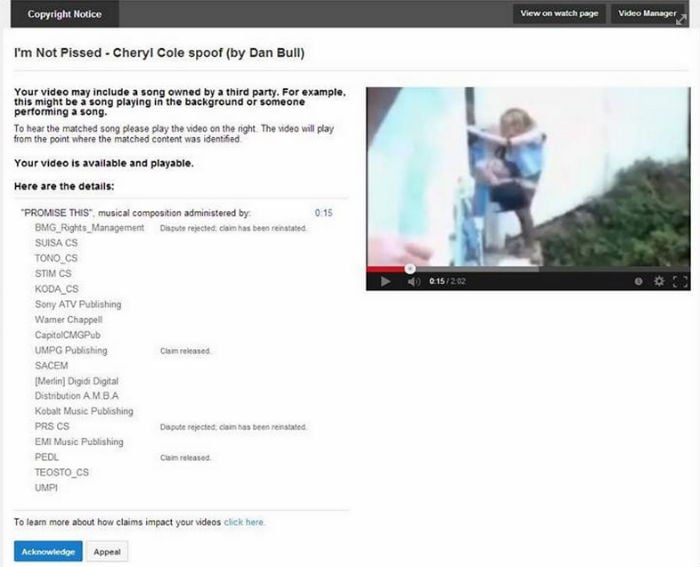
For his 2010 [NSFW] song “I’m not pissed”, he reveals a screen-grab showing 18 separate claims that have been made against it. While some of them were released after being disputed, two of them, BMG Rights Management and PRS, rejected the dispute and stand by their initial claim.

“It is up to me to prove myself innocent by asking eighteen different publishing companies through an automated system to revoke the automated claims. Each publisher has a month to reply, with no obligation to even do so. If even one of the eighteen publishers says ‘nope’ then it’s back to square one,” Bull explains.

“Any financial loss or restrictions on my channel are entirely on me, and will not be compensated for once the claim is lifted. This has been going on since last year with no end in sight,” he adds.

notpissed

It’s a situation that discourages new artists and stifles creativity. Despite the claims of the major labels, and until some actual consequences are introduced for false, inaccurate, or over-reaching claims, it’s going to harm the greater creative world, just to enable the big guys to profit.

Meanwhile, Dan has expressed his ire at YouTube in the way he knows best, through [again NSFW] song.

And yes, he’s pissed now.

Source: TorrentFreak, for the latest info on copyright, file-sharing and VPN services.