Lawrence Lessig is Professor of Law at Harvard Law School but is probably best known to readers for his work with Creative Commons, the Free Software Foundation and Electronic Frontier Foundation.
As a fair use advocate he seems a most unlikely adversary to quarrel with on those grounds. Nevertheless, that was exactly the path chosen by Australian music label Liberation Music in 2013.
The story began in June 2010 when Lessig delivered the keynote address at a Creative Commons conference in South Korea. The lecture, discussing cultural and technological innovation, included several clips from amateur music videos, some of them depicting people dancing to a song called “Lisztomania” by the band Phoenix.
The “Lisztomania” craze had developed when young people all around the world latched on to a video created by YouTube “avoidant consumer” and used the Internet and technology to develop and distribute their own derivatives. In his lecture, Lessig described the phenomenon as the latest iteration in the classic “call and response” tradition of communication.
In June 2013 Lessig’s video, which necessarily used snippets of the Lisztomania track, was uploaded to YouTube. On the last day of that month Lessig received a notice from YouTube warning him that the video had been blocked after it was deemed to contain content from Viacom. Liberation Music, the label behind the Phoenix track, then issued a DMCA notice and caused YouTube to shut down the video.
Lessig was subsequently warned by YouTube that further copyright breaches could lead to his account being closed down. In response Lessig submitted a counter-notice but was informed by Liberation Music that they would “commence legal proceedings in the United States District Court for the District of Massachusetts … for copyright infringement” if Lessig didn’t withdraw his notice.
While Lessig did retract his counter-notice, in August 2013 and with support from the EFF he sued Liberation Music, asserting his right to use the music clip under the fair use doctrine. Liberation acted in bad faith when it sent the takedown notice, Lessig’s lawsuit said, and “knowingly and materially” misrepresented Lessig’s video as infringing copyright.
Now, according to the EFF, Lessig has settled his dispute with Liberation after the label agreed to pay him damages and “fix” its copyright policies.
Liberation will pay Lessig an undisclosed sum for the damages it caused with the wrongful takedown. The money will go towards supporting the EFF’s work on open access and the label will also “adopt new policies” that respect fair use.
“Liberation Music is pleased to amicably resolve its dispute with Professor Lessig. Liberation Music agrees that Professor Lessig’s use of the Phoenix song ‘Lisztomania’ was both fair use under US law and fair dealing under Australian law,” the label stated in the settlement agreement.
“Liberation Music will amend its copyright and YouTube policy to ensure that mistakes like this will not happen again. Liberation Music is committed to a new copyright policy that protects its valid copyright interests and respects fair use and dealing.”
When Liberation took on Lessig they clearly picked the wrong person, but the professor hopes that the label’s mistakes will help others understand that fair use has its place, but copyright abuse does not.
“Too often, copyright is used as an excuse to silence legitimate speech,” Lessig said in a statement.
“I’ve been fighting against that kind of abuse for many years, and I knew I had to stand up for fair use here as well. Hopefully this lawsuit and this settlement will send a message to copyright owners to adopt fair takedown practices — or face the consequences.”
Welcome back to Android Gaming Weekly, our weekly recap of new game releases. We still plan to cover upcoming releases and games we’re playing, but this column is dedicated to new games that you can install and start playing right now. Check out our top picks and let us know in the comments below if you have any suggestions for next week.
Gentlemen…Ricochet!
Description: Gentlemen…You are cordially invited to the (once) great town of Smallbridge, known for its unique sport: Ricochet! Meet the townsfolk who will challenge you to play their very own Ricochet tables. Every table is a fun combination of skill and physics-based puzzles.
Description: Demonrock: War of Ages is a reverse-defense game with beautiful 3D graphics and intuitive gameplay! Lead your hero’s soldiers to victory against hordes of monsters.
Description: From the developers of the multi-million selling franchise and based on content from the 90% Metacritic rated Colin McRae Rally 2.0, Colin McRae Rally for Android features 30 amazing rally stages with a combined distance of over 130km. Go flat out through the dirt of the Australian outback, take on dramatic climbs through the mountains of Greece and get sideways on the tight and twisty roads of Corsica.
Description: You are an astronaut awaking from cryonics not in the solar system, but…out there…in a far and unknown place of the galaxy. In Out There, you will have to survive, tinkering your ship with what you can gather drifting in the void and spot garden planets to refill your oxygen supply.
Description: Dual Survivor is all about saving the human race in times of desperation. If you’re reading this, then you are humanity’s last hope! Our redemption, our salvation. You are the resistance! Will you stand your ground and guide us to a viable planet where the human race can re-populate?
Description: Delicious candy was stolen by mysterious Mr. Pac. Help this cute little hungry ghost to collect the lost candy. Beware of onion! Mr. Pac uses dark magic to control the onion army. They will come in different formations.
Description: Kuro is a young man on his quest to become the Shadow Blade. He must seek the teachings of the last remaining ninja master. You will guide him through challenging levels, around countless traps and either sneak past enemies or go right over their dead bodies.
Description: Return to a world of fast-paced, tilt-only arcade action! You’ll flee a relentless onslaught of dastardly dots, desperately darting between single-use weapon orbs. Each orb provides a unique burst of fiery relief! Sometimes it’s lasery relief. It really depends.
Description: Dating back to its original release in 1993, Ridge Racer has the honor of being the longest running racing franchise in history. Over 25 releases on arcade, home and portable consoles, PC, mobile, smartphones and tablets. The ultimate arcade racing franchise brings the console experience to your Android device! Slipstream past your rivals and drift around tight turns at over 150 MPH!
Description: Harness your skills and battle your friends for monster domination! Fright Fight is a 3D Real-Time Online Multiplayer Brawler infused with RPG system elements.
Google Voice Search has been slowlyrolling out to the Google Chrome browser for some time now, and now the beta version is just listening for your command. The listening search box is present on Google.com and in new blank tabs, and just like with the Google Now Launcher it is always listening for the command "Ok Google". Say that and Google Voice Search springs to life, waiting for you to perform a search, set a timer, or whatever else it is you want to do through Google.
The latest beta version has the option enabled, though according to the Google Chrome Blog the feature "will be rolled out to English (U.S.) users on Windows, Mac and Linux over the next few days, with support for additional languages and Chrome OS coming soon."
All you need is the latest Chrome beta for your hands-free Googling, and you can download that right here
Music startup 8tracks just released a new app for the Xbox 360. Live Gold subscribers will be able to play 8tracks playlists for free on their consoles. In other news, the service just reached 8 million monthly active users, representing 30 million hours of music streamed per month. As a reminder, its competitor Pandora announced during its earnings that Pandora users now stream 4.54 billion hours… Read More
Last December, Google introduced its Google Maps Engine public-data program as a way for organizations to easily publish their map data online using its tools. On Thursday, the search giant expanded that program, launching a an interactive digital atlas called “Google Maps Gallery” intended to help those outfits make their maps easier to find online.
Google's program looks like a response to mapping vendor Esri, which earlier this month announced that its thousands of government customers in the U.S. could make their geographic information system data open to the public.
“Governments, nonprofits and businesses have some of the most valuable mapping data in the world, but it’s often locked away and not accessible to the public,” Jordan Breckenridge, product manager of Google Maps, wrote on the Google Enterprise blog.
Powered by Google’s cloud infrastructure, Google Maps Gallery makes it easy to access all kinds of mapping data, from population statistics to municipal projects to emergency evacuation routes. Businesses, nonprofits and governments can also manage their own maps with styling and branding, as well as synchronize them with maps from legacy systems.
Android malware isn't as big of a concern as some mainstream media reports would have you believe, but it is enough of an issue that Google started beefing up its security a few years ago. There's the "Bouncer" server-side scanning that checks apps before they go live, and your device runs app verification as new packages are installed. Now Google is about to patch a hole in the local app scanning by making it run continuously.
Dear Lifehacker, I heard it's dangerous to microwave food in plastic containers or plastic wrap because of scary food-contaminating chemicals. Is that true? What other things are safe or unsafe to use in the microwave?
Signed, Nervous Nuking
Dear Nervous, The microwave is a powerful appliance, and with that power comes great potential for harm—things like sparks or explosions and, yes, possible toxins leaching into your foods. Don't worry, though, your microwave most likely won't kill you. Just heed these do's, don'ts, and other recommendations for safe microwave cooking.
Containers
More often than not, you're going to need to put your foods and drinks in something to microwave them. Here are the materials that work best as containers and the ones to avoid.
Do:
Glass containers. These are probably the best to use, since there's zero debate about how safe they are in the microwave
Most paper plates, towels, and napkins. However, because some paper towels are made with plastics and some paper plates and cups are coated with plastic, National Sanitation Foundation (NSF) International recommends only using those products marked as microwave-safe
Ceramics, although Ceramics Today recommends only porcelain and stoneware, rather than ceramic dishes that may have been low fired, because those could possibly explode; their article offers a test to figure out if a piece would be safe to microwave (if you knock on it and it has a clean ring, it's probably fine). Plates with metallic paint can also cause sparks
Wax and parchment paper, as well as microwave cooking bags are deemed fine too, according to NSF International
Metal containers (e.g., canned foods in their cans), for the same reason above
Brown paper bags from the grocery store. Per the USDA: "They are not sanitary, may cause a fire, and can emit toxic fumes. Intense heat may cause a bag to ignite, causing a fire in the oven... . The ink, glue, and recycled materials in paper bags can emit toxic fumes when they are exposed to heat. Instead, use purchased oven cooking bags"
One-time storage containers like take-out containers, margarine tubs, or yogurt containers
Plastic trash bags, garbage cans, or film canisters. I had no idea people consider these cooking vessels, but nevertheless the University of Nebraska warns against using these items for microwave cooking
Debatable:
Plastics. This is the big one people fear cause cancer. Even BPA-free products leach hormone-like chemicals (although new research suggests it might not be as bad as previously thought). The jury's still out, though, on the health implications of microwaving or dishwashing plastics. The Environmental Working Group advises against microwaving foods or drinks in any kind of plastic container at all. The FDA, however, approves containers for microwave use based on their measures of the chemicals leaching out; as Harvard Health reports: "The maximum allowable amount is 100–1,000 times less per pound of body weight than the amount shown to harm laboratory animals over a lifetime of use. Only containers that pass this test can display a microwave-safe icon, the words "microwave safe," or words to the effect that they're approved for use in microwave ovens."
Styrofoam. Similarly, some Styrofoam products are marked "microwave safe"
If you do decide to microwave in plastic containers, just make sure they're not cracked, old, or discolored
. And when covering food with plastic wrap, make sure the plastic doesn't touch the food.
Eggs intact in their shells or boiled eggs. The problem, WebMD reports, is the pressure builds up in the sealed egg "container," which can cause it to explode (even if the boiled egg is peeled). Best to pierce the egg in multiple spots before nuking
Dried hot peppers. About.com's Chemistry site notes that the capsaicin chemical in peppers is volatile and can catch fire. "Don't microwave any chemical you wouldn't want released into the air. Don't microwave dry materials."
Caution:
Take care when boiling water in the microwave, because it can be "super-heated" and possibly explode. A chopstick or other stick in the cup would prevent this
As with the eggs, cut or prick items that may be more likely to explode because of internal pressure, such as hot dogs, sausages, and potatoes. Also make sure you vent any container so steam can escape
Other Objects
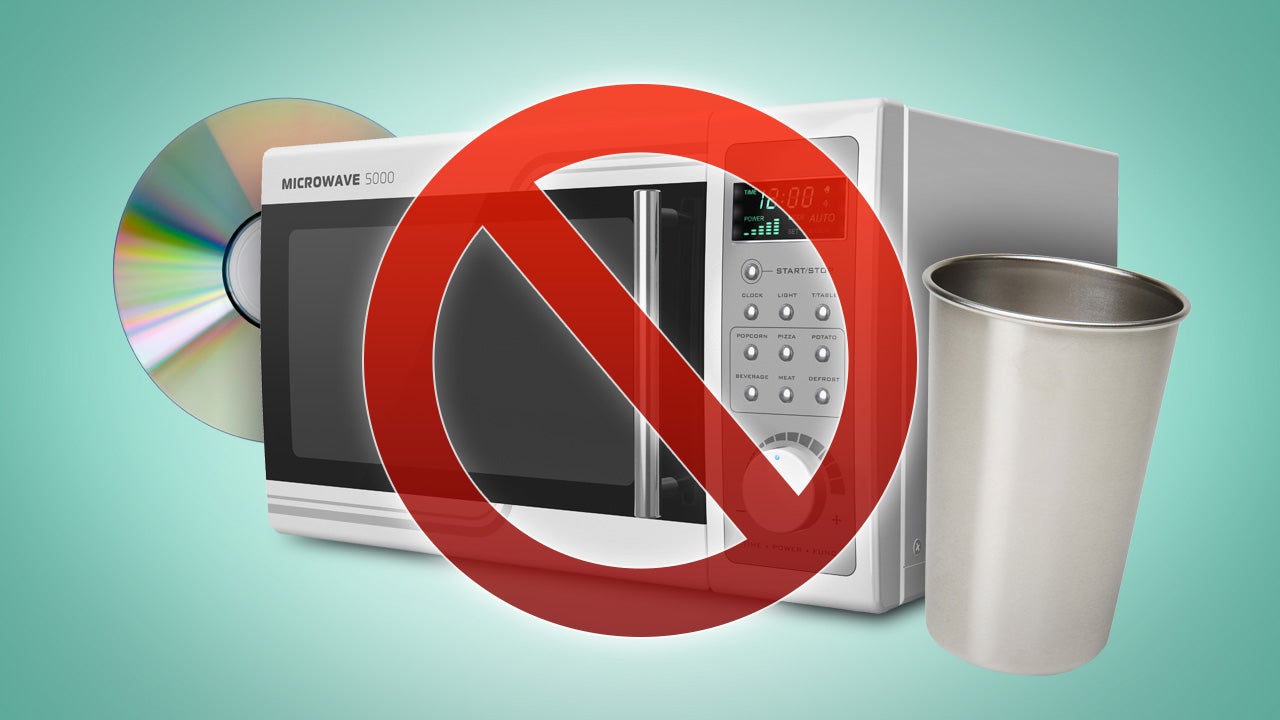
You probably already know most metals shouldn't be put in the microwave unless you want a sparks and lights show. The list of other things you shouldn't put in the microwave is pretty long, but there are also some unusual, non-destructive ways to use your microwave.
Do:
Wet sponge, to disinfect it. Make sure you squeeze out the dishwashing soap first
Potting soil, to sterilize it, especially good for starting seeds
Pretty much anything that's been done on the Is It a Good Idea to Microwave This? show (videos and wiki here). The microwave specialists tested hundreds of items, including talking greeting cards, firecrackers, spray paint, Pikachu (the doll), and a propane tank. These usually resulted in melting, flames, sparks, and smoke
Living things. Enough said
Debatable:
Soap. Well, this is really only debatable if you don't want to be amazed or waste a bar of soap
CDs. Sometimes you might just want to see a light show or destroy a CD
On January 17, 2014, my little sister died unexpectedly. She was just 46 years old. I got the call late in the day on that Friday afternoon, just as I was wrapping up my workday and figuring out the upcoming week's deadlines.
I immediately shifted into robot mode as I booked my flight back home to Chicago, found a hotel, and began to make arrangements for a funeral I had not anticipated. Somewhere between the calls to other relatives, the choosing of just the right floral arrangements, the decision of where to even have them send the body, I texted my boss to tell her the news. Fortunately, I work for a genuinely great individual who simply texted back, telling me how sorry she was and to "take whatever time you need."
According to our company policy, the death of an immediate family member warrants five days of bereavement. That's generous, given that most companies only allow for three days of paid time off, and, sadly, some places of employment have no such benefits whatsoever. Worse, though, there doesn't seem to be much of a plan at any company for when the real grief sets in, during the days that follow when you are back at your desk, shuffling papers, participating in meetings, and answering questions from colleagues who innocently ask, "So where have you been—on vacation?"
If you've recently experienced the loss of a loved one
, here are a few thoughts on how to deal with the worst of what life has to offer while still making it through your 9-to-5.
1. Be Kind to Yourself
If there's one time in life when we deserve to wrap ourselves up in complete compassion, it's this. Take the time you need. It's understandable to function at a slower speed. Deadlines still need to be met, but that doesn't necessarily mean you need to be the one to meet them. Gather the troops—your boss, your team, your closest co-workers—and ask for others to share a bit of the burden. (By the same token, if you know someone else is struggling with a loss, help by volunteering to take on some of his or her workload.)
At times like these, we often think we're alone
. But the truth is, we're always alone, and it's only when we choose to invite others into our lives that we're not. A former boss of mine once told me that we never get what we deserve; we only have a chance at getting what it is we want if we ask for it. So ask.
2. Remember Action is Always a Good Thing
With the death of a loved one, we may be inclined to shut down or to give up. Grief is a powerful force that can stop us in our tracks. But, as Shawshank Redemption's Andy Dufresne put it, "Get busy living, or get busy dying." In other words, while taking some time to rest is a good thing, don't weigh anchor in darkness and despair. Action is key.
In the beginning, all we may have in us is, at most, just going through the motions: Get up, go to work, go home, go to bed, rinse, repeat. It doesn't matter. Just keep moving. Keep doing. Keep focusing on things outside of you and your grief. And if that something you focus on is an upcoming project at work, infuse all of your energies into knocking it out of the park. It will help you to not dwell on the sadness, and it may give you a feather for your cap that you will appreciate and be proud of down the road.
Everyone has an expiration date. Taking action, no matter how small the steps may be right now, helps us use our time here on Earth actually living, rather than just biding our time waiting to die. And taking that action—moving your body—isproven to bring with it physiological benefits that help elevate mood and thoughts and spirits.
3. Honor Your Loved One by Choosing to Live
Death—especially when unexpected—has a way of wiping away the filters we've put on our lives and giving us a fresh perspective about where we are and where we may be headed. Meetings at work discussing minutiae that used to matter to you will no longer be important. Working with colleagues on a task force toward a once-common goal will no longer seem a priority. Getting trapped in the mundane day-to-day tasks of life will become magnified, making you feel as if you've lost sight of what your life was meant to be. Suddenly, you're seeing yourself in your own movie, similar to that character played by Jack Nicholson asking everyone in the room, "Is this as good as it gets?"
The urge to change may hit hard. You always wanted to study gorillas in Rwanda—should you quit your job and go? You never imagined you'd be working 24/7 as cook, maid, babysitter, home improvement maven, and financial manager, without even a dime to show for it—should you divorce your spouse and abandon your kids? Is it too late to run away and join the circus?
Know that all of these thoughts are normal. Know, too, that experts strongly suggest not making any major life changes during periods of grief
. And know that you have been given a great gift. With the passing of your loved one, you've been given perspective. Thank him or her for helping you to recognize where you're at, what matters to you, and what you're spending your precious time and resources on. Later, you can start re-evaluating your life's goals and purpose and figuring out—before it's too late—what you might need to do to get to where you were meant to be.
Three days is not enough to manage the grief of losing a loved one
, and at the same time, to return to the workplace as a productive and fully present employee. Taking the time you need, being kind to yourself, staying active and outside of your own head, and choosing to use your loved one's passing as a chance to refocus on your own life and living it to the fullest are ways in which this grief-stricken writer is learning to work through death to experience a better life, especially while at work.
Paolina Milana is a former journalist turned marketing, PR, and media pro. She is a partner in Acre of Diamonds Entertainment, developing original content & programming. She also is part of the Women Media Pros training team, and is currently serving as Content Strategist for YP. Find Paolina atPaolinaMilana.com.
In yet another stunning revelation about digital espionage (though how stunned can we continue to be at this point), The Guardian reports that British surveillance organization GCHQ ran a program between 2008 and 2012 that collected images from Yahoo chat users’ webcams. The program managed to collect a high volume of webcam imagery, including sex chat content, from over 1.8 million global… Read More
New apps need lovin’ too, right? Every day there are thousands of additions to the Google Play Store, but many go unnoticed and never receive the attention they deserve. We’ve shown in the past that this community can discover great apps and propel them to new heights. Our weekly Fresh Meat column highlights new apps with fewer than 100,000 installs. Browse our new Android app picks below and let us know which ones you enjoy.
Don’t Pause
Description: Don’t Pause will run continuously once you start it and when you are playing music it automatically puts your notifications on vibrate. After you finish your music, Don’t Pause automatically changes your setting back to the normal ringer.
Description: Type Machine saves everything you type in every app. Open it at any time to find old entries. Filter them by app. Drag the history slider to see what you typed letter by letter. Tap to copy. Never lose a piece of text again!
Description: The application Requires root for generating ICMP Packets ONLY. TCP and UDP packets doesn’t require ROOT. This application was made for : 1- security people to test firewall policies, 2- educational purposes such as learning about network packets and how it can be used to denial-of-service (DOS) attack on a system or a server
Description: Expand your THIEF experience with the official Companion app! It gives players access to much engaging content, such as characters bios, art, screenshots, concept arts and trailers, as well as exclusive features: – Connect to your game and track all your stats and stolen loot – Consult the official wiki and interactive maps brought to you by IGN and Prima Games.
Description: Flipp is the easiest way to browse flyers/weekly ads and save money. In fact, you can save up to 40% each week using flyers. With all your favorite stores at your fingertips, you can quickly search for the items you need, highlight the best deals and clip items straight to your shopping list.
Description: Never forget where you parked again! Auto Finder automatically marks your location whenever it detects you’ve parked. No more wandering around the parking lot looking for your car.
Description: Sitting on a pile of receipts, waiting to get paid? Forget about filing an expense report! With Abacus, you file your expenses as you go, and get paid back right away, direct to your bank account.
Description: Glove does all the work of figuring out which carrier will give you the best wireless service and then gives you a personalized carrier recommendation. It does this by using crowdsourced data to determine the network quality of each carrier (including Verizon, AT&T, T-Mobile, and Sprint). It applies that data to the places you use your phone most in order to figure out the best carrier for you.
Description: Make your phone talk to you when you’re getting a call or a text! Just type whatever you want your phone to say, then hit “play.” Once you’re satisfied, save it as your ringtone or notification sound. Boom! Simple as that.
Description: By downloading HTC Power To Give, plugging in your phone and connecting to Wi-Fi, your spare computing power will become part of an enormous grid, providing processing power to a project you’ve selected from a range across the world. Medical, environmental, scientific and many other projects will benefit. Projects that could otherwise take hundreds of years could be executed in a drastically shorter time.
Sony has announced that it will shutter 20 of its 31 retail stores in the United States by the end of 2014. The move is an attempt "to further streamline costs and continue focus on existing partner relations." Essentially, Sony has realized it's wasting money and other resources by pumping them into its limited US retail presence — especially when most consumers either buy online at Amazon or head to other stores like Best Buy for the company's items. "While these moves were extremely tough, they were absolutely necessary to position us in the best possible place for future growth," said Mike Fasulo, president and COO of Sony Electronics in a press release.
The closures come as part of a large, wide-reaching attempt to restructure...
Whether the future holds a technological utopia or a dystopian nightmare, you can enjoy it in the present with these wallpapers.
We're changing up our Wallpaper Wednesday series a bit, folks. Every week we share a bunch of wallpapers, only to have you guys share just as awesome ones in the comments, so starting this week, we're moving our wallpapers to the comments with you guys, so we can create a collaborative collection each week. That way, we give your suggestions the same weight as ours, and each collection won't be so focus on one person's tastes or style.
So share your wallpapers (preferably with a link and resolution) below!
Late last year, Disney/Marvel and Netflix struck a pact to produce four linked 13-part superhero series around the characters Daredevil (which had recently reverted to Marvel), Jessica Jones, Iron Fist and Luke Cage, AKA The Defenders. Today the New York Governor’s office announced that instead of trying to fake grimy corners of the Big Apple in Los Angeles or Canada, the shows will be shot in and around the city thanks to a tax deal.
The ambitious series, which features Cabin In The Woods man Drew Goddard writing and overseeing Daredevil and Twilight veteran Melissa Rosenberg tapped to guide the Jessica Jones series so far, plans to show the four heroes’ stories across their separate 13-episode runs before combining them for an eight-episode miniseries crossover, making it 60 episodes in total.
“New York is where the entertainment industry started, and this unprecedented commitment from Disney and Marvel is further evidence that we’re bringing it back bigger and better than ever before,” said Governor Cuomo in the statement. “And when the entertainment industry thrives, it fuels dozens of other industries and businesses. The competition for these projects is fierce and Disney could have chosen to film these shows anywhere, but they knew that shooting in New York means getting to work with the best in world. These shows bring New York’s superheroes home where they belong – along with hundreds of jobs and millions of dollars in new business.”
With filming on the various series set to kick off this summer, the plan will apparently bring around a thousand jobs to the city including 400 full-time gigs. It’s the biggest film or TV project ever attempted in the city, which means previous record holders Marc Webb and the Amazing Spider-Man team will really have to go some to beat that when the third film kicks off production.
Now that Mobile World Congress is winding down, HTC would like to turn our attention back to the HTC M8 and its March 25 launch events in New York City and London. In a new teaser video that’s been posted to HTC’s YouTube channel, the mysterious handset is referred to directly as the “All New HTC One,” seemingly confirming the rumors that the HTC One name would live on with the HTC M8.
The “HTC Technical Translations #1: BoomSound” focuses on HTC’s BoomSound technology, but the All New HTC One is officially shown off for the first time in all its pixelated glory. We still have about four weeks to go before the March 25 unveiling of the All New HTC One, so don’t be surprised if HTC treats us to a few more videos between now and then.
Today Google is bringing its Google Now-infused Android launcher to more devices. Anyone with a Nexus device or Google Play edition smartphone running Android 4.4 KitKat can now install Google's launcher, which puts Google Now just a swipe away on your home screen. It also lets users say "OK Google" to activate the feature — but again, this only works when you're on the home screen. Since it's currently limited to Nexus and GPe hardware, other changes are relatively minor. But Google Now Launcher does bring some handy user interface additions like a new wallpaper chooser and larger app icons to more devices; previously these were only found on the Nexus 5.
If Google were to release its launcher on a wider scale, it would enable users...
Have you ever left a movie theater just as the credits start to roll, only to find out that there was a totally-amazing-oh-my-god-you-missed-the-best-part bonus scene tacked on to the end?
It’s okay. We’ve all been there. Those sodas are huge, and those bathroom lines get stupid fast.
AfterCredits for iOS tells you at a glance whether or not you’re missing out. Read More
Asus likes to take its sweet time releasing accessories for its devices, so we're just now seeing the official wireless and wired docks for the 2013 Nexus 7. Google released the updated Nexus charger a few months ago, but these are designed specifically for Asus' 7-inch slate.
The PW100 is wedge-shaped with a 60-degree angled surface. The video above only shows it charging in landscape orientation, so the inductive coils might not reach high enough to work in portrait.
The idea of rewarding yourself to build better behaviors isn't new, even if the phrase "gamification" is. There are more tools out there to turn everything you do into a game than are worth trying, but the best of the pack can really help you get motivated. Let's take a look at some of the good ones, and when they can be most effective in your life.
We've explained when gamification works and when it doesn't. We've also discussed the science of gaming in general. It makes sense that you can apply all of those principles to improving your life, being more productive, and doing the things you've always wanted to do. There are times when gamification isn't the best way to get you to your goals, but in many cases, it can help you build behaviors to the point where you don't need the game anymore to keep them up.
Here's a rundown of some tools that can help you apply that philosophy to different parts of your life—whether you just like to feel rewarded, or you need help turning good behaviors into habits.
General Productivity: HabitRPG
We've mentionedHabitRPG before, but if you're looking for an all-around productivity tool that speaks the language of games, quests, and quest rewards, this is the app for you. HabitRPG is a to-do app; it doesn't hide the fact that it's designed to help you keep track of everything on your agenda. When you check off a task or complete a project, you're rewarded with experience points and gold, the same way you would be if you were playing a game.
As you get things done, you'll gain levels, which unlock more features. When you miss your to-dos, your health takes a hit, and if you miss too many things on your to-do list, your stats begin to take a hit and you lose momentum towards the next level or set of bonuses you were aiming for. The service even has a "multiplayer" element where other HabitRPG users can help you out, offer advice, or just help you stay motivated to get things done. If you really wish your productivity system were less boring, HabitRPG is a good way to make it a bit more fun. It's free, available on the web as well as for iOS and Android, and ironically enough, it fits in nicely with other productivity systems like GTD.
Tracking a Single, Difficult Goal: SuperBetter
If you're struggling with something particularly hairy, like quitting smoking, starting an exercise routine, or anything else that's takes willpower, SuperBetter is perfect for you. Author and game developer Jane McGonigal, PhD built the service with the science of gamification front and center, and it shows. Rather than just awarding points in the hopes that will keep you motivated, SuperBetter breaks down your goal into a journey to be a better you—with all the trials, challenges, and setbacks that come with trying to make a major change.
The service does give you quests to complete and rewards to achieve, but it also lets you put "bad guys" in your way, like bad habits, your own weaknesses, or anything that might hold you back. Need help? Invite "allies," and then brainstorm or track your progress in your "secret lab." In addition to giving you the right tools, SuperBetter helps you track your physical, mental, and emotional progress, offering encouragement and unlocking new challenges and rewards the whole way. As you progress, you boost your stats in various areas, level up, get high scores, and, slowly but surely, work towards those goals.
Tracking Your Mood and Mental Health: Mindbloom
Don't underestimate the power of tracking your mood. It can go a long way towards identifying the pain points and stress areas in your life. It's useful for dealing with stress, and coping with anxiety. It also offers you an easy way to connect the dots between the things that make you feel good and the behaviors that inspire you.
MindBloom has a suite of apps that makes this kind of personal tracking really easy. The Life Game gives you a tree, with branches that represent different areas of your life that are important to you. The game rewards you for doing things that nurture each of these branches, like taking care of yourself, your health, your family, your finances—whatever you put on the tree. Juice on the other hand is more of a mood and energy tracker. The app connects the dots between the things you do and the level of energy you have so you can see what you may have done, eaten, or experienced in the morning that set you off for the rest of the day, or what you may have done that left you feeling good all afternoon. You can also use it to rate and track your sleeping habits. Life Game is a webapp, and Juice is available for iOS, Android, and Windows Phone.
If you're not into mobile games, give our one-minute mood tracking "personal inventory" form a try. As you fill out your "inventory," you'll get a score to help you figure out where you stand. After doing it for a few days, you'll see trends emerge, hopefully trends that you can easily identify and make changes to and improve your overall score (and, by proxy, your life.)
Working Towards Your Fitness and Nutrition Goals: Fitocracy
Fitness and nutrition are probably the biggest areas where gamification apps have flourished. That doesn't make all of them good, though. We've been huge fans of Fitocracy, partially because it turns getting fit, exercising, and sticking to your exercise goals into a really fun game—one that awards points, badges, levels, and status in a massive and inspiring community of like-minded people.
We like it even more because it uses gamification in a really clever way—as a guise to really get you both active and involved with a community of people who won't let you give up. That, as co-founder Dick Talens has said a few times, is Fitocracy's "secret weapon." It lures you in with badges and levels and PVP battles with other members, and then gets you hooked when you realize it's full of people just like you. People of all shapes and sizes, doing all sorts of exercises, and struggling with all kinds of health challenges. That's not to understate how much fun it is to log your workouts, use the iOS or Android apps, or celebrate when you level or complete challenges. It's all fun, but more importantly, it's effective.
If you're looking for other options, consider SlimKicker, which is more calorie counter and strict fitness tracker and less social network, but still comes with badges and levels. Pact, a service we've mentioned before, makes you put your money—real money—where your mouth is, and rewards you with cash for exercising and eating well. If you just like the act of playing a game, consider Zombies, Run!, the app that puts you in the middle of a zombie apocalypse, running to survive or delivering messages between safe zones. If you have multiple health goals to track at once, Health Month applies the science of games to help you build better habits. On the one hand, it may inadvertently encourage you to tackle too many things, but on the other, it's really good about helping you follow through. Finally, if you have a fitness tracker, there's probably some service built-in to it, which is great, but you can definitely do better—or better yet, tie it in with one of these services for the best possible benefit.
Household Activities: ChoreWars
Whether you live alone, with a spouse, with kids, or with roommates, there are basic chores that need to get done and (usually) no one likes to do them. Chore Wars turns doing the dishes, vacuuming the floor, taking out the trash, and doing the laundry into an RPG in similar fashion to HabitRPG, but specifically geared towards making sure the household chores get taken care of. You can play single-player or multiplayer with other people in your household. Roll a character for each person in your home, list the chores you need to have done, and assign experience points to each chore. As everyone in the house completes their quests, they earn XP, which in turn helps them level.
As you progress, you'll randomly encounter monsters, pick up dropped loot and gold, unlock treasure, and improve your character. The "dungeon master," or the person who has admin access to the household account, can assign new quests and challenge the party with something new. When you encounter monsters, your HP and character progression comes into play—you'll actually fight the monster, and how well you've built-up your character up to this point will make a difference, so there's incentive to actually do the chores beyond digital loot and stats. If you have roomies who would resonate with the idea of gaming their way to a clean house (especially so you don't have to do everything yourself), or kids who could get into making their chores a game, it's a great idea. It's web-based, and completely free.
Getting Out and Around Town: FourSquare
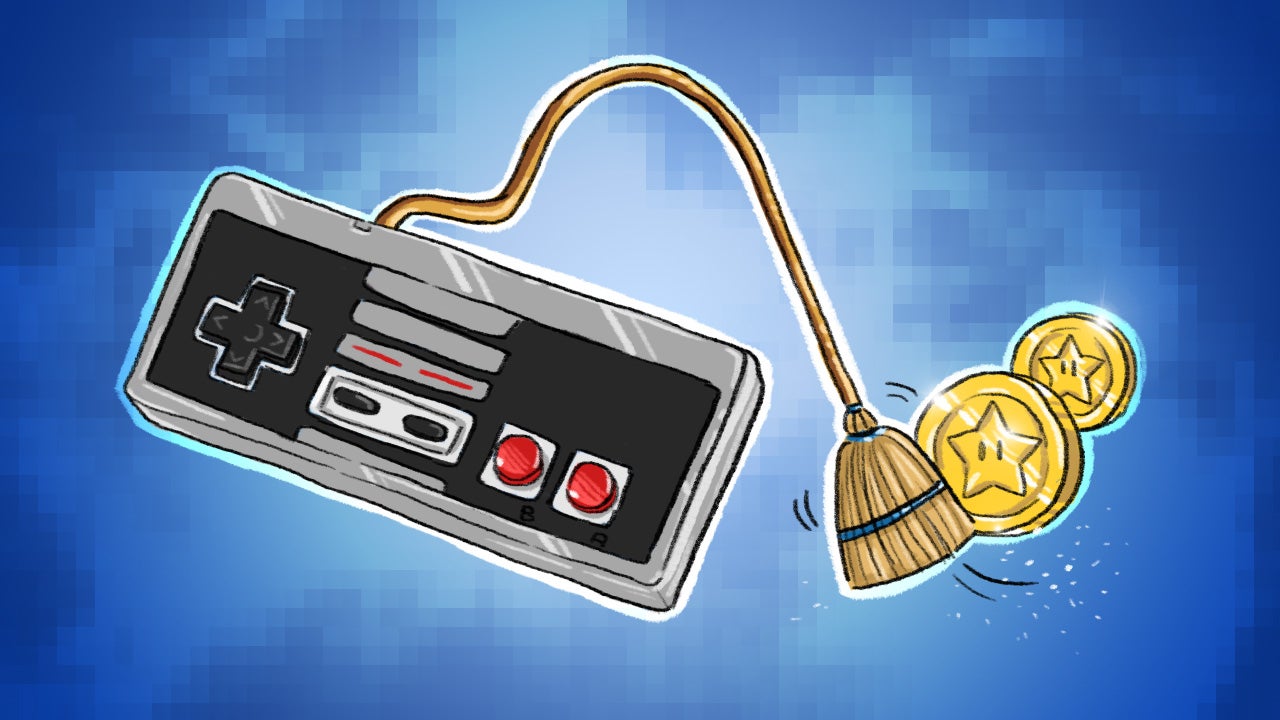
Foursquare was probably one of the original "gamification" services, long before we used that word to describe an app or website that gave you points and badges for doing specific things. Back in the day, Foursquare was just about checking into places, fighting for mayorships, and earning badges. You still do that (I just wrestled the mayorship of the park next to my house from a particularly clingy neighbor), and those mayorships and check-ins can still get you perks at different businesses. Those perks usually come in the form of discounts, free food or drink, and coupons for future use.
Foursquare has changed a lot recently, and almost all for the better. It's helpful for a lot of things, like finding free Wi-Fi, free food, and learning more about a place before you visit or walk in. Foursquare has added tips, menus, hours, more detailed user reviews and ratings, even live location-based notifications to help you find well-liked places in the areas you're passing through, along with what you should do or try while you're there.
It's much more valuable than it even was back in the old days—but it hasn't lost any of the fun and thrill of checking in to a new place, earning points, comparing your score on a leaderboard with your friends, and seeing where your friends around the world are going, taking pictures of, and reviewing. If you're looking to do some exploring in your backyard, fire up Foursquare and see what's trending, what's popular in a given neighborhood, or what's popular at a certain time of day—then rack up the points for visiting and leaving your feedback.
Managing Your Finances: SaveUp and SmartyPig
Saving money is hard. SaveUp wants to make it a little easier, a little more fun, and it wants to reward you for doing it. The service turns saving money into a game, where you earn credits for making good financial moves, like putting away some money into an emergency fund, paying down debt, and sticking to your budget. The service connects to your banks and monitors your accounts—much like Mint or any other all-encompassing financial service—to issue you credits as soon as you move your money.
As you earn credits, you can use them to enter contests to earn real prizes, or you can have SaveUp put its money where its mouth is. Trade in your credits for a donation to your new car fund, for example, or for a gift card to use so you don't have to spend money yourself, or just for straight up cash. You can see some of the winners and what they've won here. While you're on the site, you can check out how it works and its security here.
If you'd like an alternative, consider SmartyPig. While they don't really make saving a game exactly, it is easy, fun, and it builds on the principle of paying yourself first—you create digital piggy banks for your specific savings goals, whatever they may be, and SmartyPig automatically moves money into those piggy banks on a schedule you set. It's a great way to make saving for something more fun, watch as you work your way to your goals, and earn interest on it at the same time. When you do reach your savings goals, SmartyPig rewards you with a "cash boost" in the form of a cash rewards card or a retail gift card that's a percentage of the goal you just met. It's another great way to get money for saving money.
As you can see, there's no shortage of services willing to turn every aspect of your life into a game that either rewards internet points and experience, real-world rewards and perks, or just serve as a gateway to a happier, healthier you. These are just the tip of the iceberg, but some of the ones we've found to be the most useful. You don't have to gamify everything, but if its a technique that resonates with you, turning your challenges or the habits you want to build into a game can yield greater rewards than points on a screen.
It's a rare but welcome sight: The United States House of Representatives has passed a commonsense bill by a wide margin. Reuters reports that the House on Tuesday passed a bill that would make it legal for consumers to unlock their cellphones once their contracts have expired so they can be used on other networks, although there is a pretty big catch. According to Reuters, the bill still bans "bulk unlocking," which means that consumers still wouldn't be allowed to "sell their old devices to third parties that could unlock phones in bulk." The language added against bulk unlocking has led some consumer groups to withdraw their support for the bill.
The CPD defends the practice, and its technical champion, Miles Wernick from the Illinois Institute of Technology, characterizes it as a neutral, data-driven system for preventing crime in a city that has struggled with street violence and other forms of crime. Wernick's approach involves seeking through the data for "abnormal" patterns that correlate with crime. He compares it with epidemiological approaches, stating that people whose social networks have violence within them are also likely to commit violence.
The CPD refuses to share the names of the people on its secret watchlist, nor will it disclose the algorithm that put it there.
This is a terrible way of running a criminal justice system.
Let's start with transparency, because that's the most obviously broken thing here. The designers of the algorithm assure us that it is considering everything relevant, nothing irrelevant, and finding statistically valid correlations that allow them to make useful predictions about who will commit crime. In an earlier era, we would have called this discrimination -- or even witchhunting -- because the attribution of guilt (or any other trait) through secret and unaccountable systems is a superstitious, pre-rational way of approaching any problem.
The purveyors of this technology cloak themselves in the mantel of science. The core tenet of science, the thing that distinguishes it from all other ways of knowing, is the systematic publication and review of hypotheses and the experiments conducted to validate them. The difference between a scientist and an alchemist isn't their area of study: it's the method they use to validate their conclusions.
An algorithm that only works if you can't see it is not science, it's a conjuring trick. My six year old can do that trick: she can make anything disappear provided you don't look while she's doing it and don't ask her to open her hands and show you what's in them. Asserting that you're doing science but you can't explain how you're doing it is a nonsense on its face.
Now let's think about objectivity: the system that the CPD and its partners have designed purports to objectivity because it uses numbers and statistics to make its calculations. But -- transparency again -- without insight into how the system runs its numbers, we have no way of debating and validating the way it weighs different statistics. And what about those statistics? We know -- because of transparent, rigorous scholarship, and because of high-profile legal cases -- that police intervention is itself not neutral. From stop-and-search to arrest to prosecutorial zeal or discretion, the whole enterprise of crime statistics is embedded in a wider culture in which human beings with social power and representing the status quo can and do make subjective decisions about how to characterize individual acts.
Put more simply: if cops, judges and prosecutors are more likely to give white people in rich neighborhoods in possession of cocaine an easier time than they give black people in poor neighborhoods in possession of crack (and they do), then your data-mining exercise will disproportionately weight blackness and poorness as being correlated with felonies. Garbage in, garbage out -- there's nothing objective and scientifically rigorous about using flawed data to generate flawed conclusions.
But even assuming that this stuff could be made to work: is it a valid approach to crimefighting?
Consider that the root of this methodology is social network analysis. Your place on the heat-list is explicitly not about what you've done or who you are: it's about who your friends are and what they've done. The idea that people's social circles tell us something about their own character is as old as the proverb "A man is known by the company he keeps." Certainly, it wasn't a new idea to the framers of the Constitution (after all, the typical framer was both a member of a secret society and had recently participated in a guerrilla revolution -- they knew a thing or two about the predictive value of social network analysis).
But the framers explicitly guaranteed "freedom of association," in the First Amendment. Why? Because while "birds of a feather stick together," the criminalization of friendship is a corrosive force that drives apart the bonds that make us into a society. In other words: if the Chicago PD think that crime can only be fought by discriminating against people based on their friendships, they need to get a constitutional amendment before they put that plan into action.
Finally, this program assumes that its interventions will be positive, and this assumption is anything but assured. The idea that being told that you are likely to commit crimes will prevent you from doing so is no more obvious that the idea that being treated as a presumptive criminal will lead you to commit crimes. What's more, well-known, well-documented cognitive biases (theory blindness, confirmation bias) are alive and well in the criminal justice system: if someone on the blacklist is suspected of doing something minor, we should expect the police, prosecutors and judge to treat them more harshly than they would someone plucked from off the street. If you're already in a machine-generated ethnicity of pre-criminals, society will deal with you accordingly.
What's more, this will lead to more arrests, harsher charges and longer sentences for pre-criminals -- seemingly validating the methodology. It's the Big Data version of witchburning, a modern pseudoscience cloaked in the respectability of easily manipulated statistics and suspicious metaphors from public health.
You can befriend a dog by letting it smell you, but you can make a cat love you by offering it your earwax. Is this kind of disgusting? Yes. Does it actually work? Apparently it does.
Redditor and former animal control worker sirdrizzzle makes the tantalizing suggestion:
Ex animal control person here. To win it over in a pinch, stick your finger in your ear and give it a twist, cats love earwax.
Of course, you also have to take your finger out of your ear and put it in the vicinity of the cat (but that's a given, right?). This may seem a little insane to those unfamiliar with cat quirks (like myself) but the cat-earwax phenomenon is apparently very common. If you look at Yahoo, the PetsWelcome blog, Ask.com, Answers.com, Is It Normal?, and The Cat Site, you'll find plenty of evidence. There's even a blog named this circumstance. You can also watch the video above for a real, live demonstration!
So, if you need to make friends with a cat, stick your finger in your ear. Seriously.
Signing users in to a mobile or web app isn't necessarily hard, but keeping their credentials safe is something that's often best left to specialists. The OpenID Foundation today announced the launch of OpenID Connect, the organization's latest standard for authenticating users and building distributed identity systems. The standard has the backing of Google, Microsoft, Salesforce, Deutsche… Read More
Google has begun pushing its “Auto Backup” photo archival software to Mac and Windows users via the company’s social networking platform, Google+. The promotion is new, we’ve confirmed, though the software itself was first launched back in December. At that time, Google began offering the desktop utility as a part of its older Picasa photo-sharing platform, which… Read More
Papyrus is a promising note-taking app for Android that we first spotted at the Samsung Developer Conference, and they've finally reached the 1.0 milestone. Papyrus has been enjoying quite a bit of popularity in their beta period, having built up the core functions, but the latest update includes a premium feature for PDF importing. This means you can take documents sent to you by e-mail or elsewhere, and mark it up within the app. You can also export the final product as a PDF if you like.
Papyrus is a pretty slick app. Besides being optimized for active styluses like S Pens, the app is vector-based, meaning anything you write or draw can be scaled up without any loss of quality. Though the core app is free, there are a few of extras, like the new PDF import and a cloud storage feature pack, that are tucked away behind in-app purchases.
Heavy storms on the coast of Wales stripped away the sand on the beaches of Cardigan Bay, revealing the stumps of an ancient forest that stopped growing 4,500 years ago. Also revealed: A sort of proto-boardwalk, built by the inhabitants of the lost forest as rising sea levels began to drown it.
The die has been cast and now every single ISP in the United States will want a payout from Netflix in exchange for ensuring that its video streaming services are delivered efficiently to its subscribers. Once Netflix struck a deal to pay Comcast an unspecified amount of money as part of a new peering arrangement, that set the precedent for every other ISP in the country to strike similar bargains. And sure enough, Multichannel reports that both AT&T and Verizon have said that they're now working with Netflix on their own peering arrangements to ensure that Netflix users aren't subjected to laggy videos. While this is good short-term news for Netflix subscribers it remains to be seen how these deals cumulatively affect Netflix's bottom line, especially if ISPs decide they want to jack up the rates in the coming years.
The Walt Disney Studios is launching a new app today for iOS devices and the web called Disney Movies Anywhere, giving users a place where they can watch the Disney, Pixar, and Marvel films that they've purchased, while also finding new ones. The app isn't intended as a competitor to digital content retailers like iTunes. In fact, Disney Movies Anywhere is integrated with iTunes, which… Read More
WhitePages Current, a free Caller and text identification application for Android users, has been updated today to counter the plague that is the “one ring scam.” In case you’re unfamiliar, scammers are now trying to exploit smartphone owner’s “missed call” screen by programmatically dialing thousands of numbers per hour, all of which they immediately hang up on… Read More
 Lawrence Lessig is Professor of Law at Harvard Law School but is probably best known to readers for his work with Creative Commons, the Free Software Foundation and Electronic Frontier Foundation.
 Now, according to the EFF, Lessig has settled his dispute with Liberation after the label agreed to pay him damages and “fix” its copyright policies.









 Foursquare