Shared posts

11 May 05:56

becomming: xlizardx: Apparently this is "The clearest photo of...


becomming:

xlizardx:

Apparently this is "The clearest photo of Mercury ever taken."

why isnt everyone getting so excited about this, it is literally another planet look at how beautiful it is stop what your doing and look at how alien like this planet is what is living there oh my god mercury

03 May 05:42

wickedclothes: Glitter Wing Dragon Ear Cuff Dragons are...


wickedclothes:

Glitter Wing Dragon Ear Cuff

Dragons are commonly known as powerful, benevolent creatures. This ear cuff resembles a golden dragon with glittering wings. Requires an ear lobe piercing to be worn. Sold on Etsy.

This looks so cool. o:

03 May 05:41

Torvald

by Erik Loomis

1478931_10152125765055959_9172230497431338851_n

It’s been awhile since LGM had a cat mascot. So allow me to nominate my cat Torvald, who turned 11 today (or yesterday if you are on the east coast). A plutocrat with a revolutionary birthday, Torvald was born under my house in Albuquerque in 2003, two blocks down from the house where Jesse’s girlfriend OD’s on heroin in Breaking Bad. Torvald has managed to overcome his own catnip addiction, but still struggles to manage his addiction to eating his way through my pens, as is seen in this image. There are many stories, from the time he faced off a raccoon through a window over my bed at 3 am in Santa Fe to the time he decided to sneak out in a Denton, Texas monsoon to raise who knows what kind of hell and came back much the worse for wear to the time he decided he liked a gin and tonic when I wasn’t looking (no vodka for this cat). I look forward to many more years of being woken up far too early in the morning by this greedy libertarian pawing me in the face at 7 am demanding canned food and then ignoring me for the next 8 hours.


03 May 05:40

COMIQUES:Arrows

by Anne Emond

Arrows

Related Posts:

  • No related posts…
02 May 07:33

National Day of Prayer: Unconstitutional & Anti-Sex

by Marty Klein, Ph.D.

To give America an extra edge during the Cold War against godless Communism, President Harry Truman designated the first Thursday in May as the National Day of Prayer. Every year since, that’s when government officials from city council to president ask citizens to join them in the most blatantly religious activity there is: pleading to a divinity to suspend the laws of the universe, and to bend destiny on behalf of the petitioner.

In response to the unconstitutionality (and sheer offensiveness) of such a public ritual, the American Humanist Association created the National Day of Reason in 2003. The National Day of Prayer clearly violates the First Amendment of the Constitution because it asks federal, state, and local governments to use tax dollars and taxpayer resources to engage in admittedly religious ceremonies.

The National Day of Reason celebrates the application of rationality and logic in human affairs and their positive impact on humanity, including in science and good public policy. Unlike a day of prayer (which excludes the 20% of Americans who are non-believers, as well as religious people who think it’s inappropriate), every American can celebrate reason, as we all use (or attempt to use) it on a daily basis in settings ranging from the supermarket to our careers.

The National Day of Reason is a good moment to examine the way religion is actively undermining sexuality in America today:

* Deliberately conflating contraception and abortion: It’s bad enough that they’re obsessed with criminalizing abortion for non-believers; they manipulate believers (and put them at risk for unwanted pregnancies) by mislabeling some kinds of birth control as “a kind of abortion.” And they simply lie about how Emergency Contraception works.

* Undermining medically accurate school sex education: Under President George W. Bush, organized religion successfully funneled hundreds of millions of taxpayer dollars into abstinence-only sex education. Curricula were blatantly sexist, wildly inaccurate, and religiously oriented. By 2008, dozens of high-quality studies across the country had documented the failure of these programs to reduce teen sexual behavior or unintended pregnancy. But an entire generation of children learned that sex can kill you, males can’t control themselves, condoms don’t work, and young people who “give in” to sexual urges are bad.

* Claiming religious piety makes people morality experts: Whenever public policy focusses on sexuality (pornography, strip clubs, library books, internet filtering, art in museums, etc.), religious institutions insist they deserve a special seat at the decision-making table. They repeatedly make three false claims: if it’s about sex, it’s about morality; if it’s about morality, they’re the experts; and non-believers are less moral than believers. And so, for example, organized religion has successfully limited the number of pre-teens getting vaccinated against HPV by transforming it from a public health issue to a moral issue.

* Lying about the effects of pornography use: Organized religion has led a disinformation campaign aimed at persuading believers that looking at adult porn destroys marriages and families; makes men rape women; and leads men to look at child porn. Indeed, organized religion spreads the lie that the very desire to look at porn is evil. This encourages couples to fight about porn as adversaries, rather than examine their sexual dissatisfaction as partners. It also makes organized religion a primary recruitment tool for the porn addiction (and sex addiction) industry.

And like the boy who kills his parents and then asks the court for leniency because he’s an orphan, the Church today has the nerve to use “freedom of religion” as a cover for discrimination, special government favors, or people breaking their civic covenants. And so they turn the public’s health insurance opportunities into a moral issue about “supporting” birth control; they turn the professional oaths of physicians and pharmacists into matters of “conscience;” and they reject marriage equality for all Americans because treating everyone fairly goes against their religious “values.”

People have a right to pray both in private and in the public vehicle of their (tax-supported) houses of worship. I fiercely defend my neighbors’ right to their religious freedom. But I’m exasperated that believers can’t see how wrong it is to have the government sponsor an admittedly religious activity.

According to the National Day of Prayer’s vice chairman John Bornschein, “This is purely about prayer and praying for our leadership and asking for God’s wisdom and blessing over our leaders.” I’d prefer leaders who are too wise to believe in a god who can be prayed to. I’d prefer leaders who understand the results of praying to a god who supposedly creates sexuality, then fears and hates it, demanding that we diminish it.

I prefer leaders who strive to be wise, using reason and collaboration instead of asking for it and then waiting around, hoping it drops onto them from the sky.

As a nation of adults, it’s time we replace the National Day of Prayer with the National Day of Reason.


02 May 06:04

Happy Ami Day! Here's to more Amis Ami-ing around like the Amis they ami. Ami Ami Ami. The name loses all meaning. Existence loses all meaning. Ami is all meaning. None is Ami. All is Ami. *poof of amilightenment*

I am the Ami-Life equation!

(also thank you :3 )

02 May 06:02

yourmotherseyes: The Vagenda Magazine asked their Twitter...


yourmotherseyes:

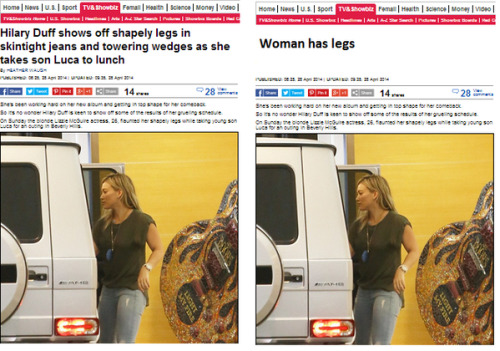
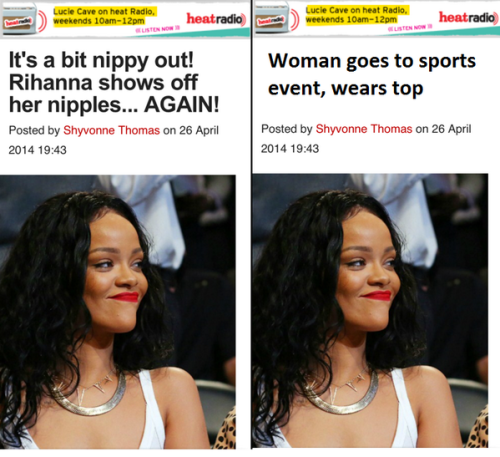
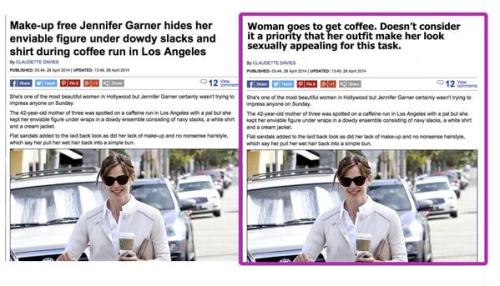
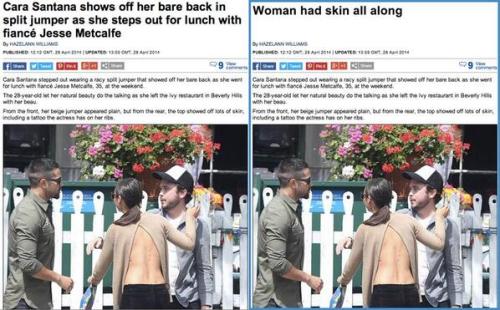
The Vagenda Magazine asked their Twitter followers to tweet them edited headlines

This is my favourite thing at the moment

This is like looking at headlines through those special glasses from They Live! except instead of exposing the alien subliminal messages, it exposes the patriarchy.

01 May 07:50

Swinging Modern Sounds #53: The Distribution Problem, Part Three

by Rick Moody

There are certain friends of youth that are somehow the perfect music friends, the kinds of friends with whom you might not have that much in common—maybe one of you is in the engineering department and you’re in the English department, or one of you is pre-med and the other is not, or one of you is completely besotted with Marx and Engels, and the other doesn’t even know who Marx and Engels are, or one of you is an alcoholic, and the other is not—but on the music front you are united. There is no light between you.

If there’s a new album that you want to hear, this friend of youth, the music friend, will want to hear it, too, and you can go out driving and listen to the album, or you can go twisting around the dial, attempting to hear the song, the album, that you both want to hear. Your music friend will go to the woebegone flea market and sort through the dusty old LPs with you, or will go to that really hip record store with the disdainful cashiers, and there you will waste an hour and a half, engrossed, scarcely two hundred words passing between you. Your music friend can play certain embarrassing things on keyboards, like the piano solo from “Sweet Home Alabama,” or your music friend knows every single word, every single word, from Born to Run even though these are not songs that either of you likes that much (not as much as you like The Wild, The Innocent, and the E Street Shuffle). Your music friend always teaches you about some new album that you would not otherwise have heard, having heard about some of these from an older sibling, and you, in turn, break in some new stuff on your music friend.

At some lamentable moment in your life, the moment when your youth begins to give way to your adulthood, you and your musical friend relocate to different addresses. From these different addresses, you employ what effort you can to attempt to keep each other from finding some other music friend, or you attempt to conduct your musical friendship from a distance. For example, you might hold the telephone up to some playback device—today you might use a tablet—while a song is playing that will perfectly summon the old days of the record store or sitting in front of that bank for hours at a time singing songs, or drinking beer and playing certain records in their entirety in someone’s falling-down rental apartment. Holding the telephone up to the playback device brings all those days back, and suddenly it’s not like you are in the hard years of early adulthood, the lean years, the years when it’s harder to keep close the people you once knew. Suddenly the interval is erased.

When the friendship begins to give out a little, just because of what time does, still its particulars will always come back to you, by which I mean the feelings of your music friend, when certain songs are played, and this is the value of certain songs; certain songs are markers of eras, and this is how you know that you are alive, that you are sentient, that you are a thinking and feeling person, because you can date your life to songs. Later on, you won’t even be sure if these are good songs—they might be very bad songs, but they are songs from your life, and the songs from your life often have people attached, and that will be something precious to you.

I had several of these friends, myself, but one of the very best of these music friends was my friend Dana, who lived in Providence and went to college in Providence when I was going there. I had my problems in those days, and maybe Dana had some of her own. And we fell together and fell apart in those years like we were bits of ocean flotsam. One thing we could always do together was talk about music, and Dana was from New York City, and she knew all these people who played in clubs downtown; Dana knew people who played at CBGBs and the Mudd Club, and she had used some magical fake i.d. to get into these clubs.

So Dana, late into the night, would play 45s. Dana’s thing was that she really liked 45s. She liked one really good song, and then she would play that song over and over again, and then she would play the b-side of the 45, perhaps (we had some good discussions about the b-sides of 45s), and then she would put on another. Albums were less substantial to Dana, although she had some, because they didn’t have all perfect songs. The single was a thing of beauty. I can remember, though I don’t even like this song very much now, the brand-new 45 of “Every Little Thing She Does Is Magic,” by The Police. I believe it did not have a picture on the sleeve. It was just a regular old 45, with the song title printed on the label. I had been disappointed by everything by The Police after their first album, and the more popular they got, the less I liked them, but I liked this song, because it was a song that Dana had, a 45 she had, and we could play it on her shitty turntable in the French House of our college, and it was a celebration of youth, and how youth is itself magic, and how the music friend is a more powerful kind of love than any other kind of love. Girlfriends came and went, and boyfriends came and went, and infatuations came and went, but no infatuation was as good as the infatuation that was music.

This was a whole time, you know, a time when people actually loved to own music, the bygone days that the music industry is always trying to recapture, the period when Dana and I would go to the record store on Thayer Street and basically go through every single album they had there, and look at each one and decide about each and every one—whether or not to buy it. I remember putting off buying that album by Magazine for a long time, because I wasn’t sure I liked the sleeve or not. I remember scraping together $10 I didn’t even have to go see R. E. M. at some forgotten club in Providence because Dana’s musician friends said we had to see them now. Or was it The Individuals?

When I think back on that time, it is so poignant that it’s almost painful. I assume that music will always be wound so fundamentally into the lives of the young, and I assume that my having trouble finding records that I feel as passionately about as the ones I loved then (Stands for Decibels, by the dBs) is just a manifestation of time growing short, but I thought, in my ongoing attempt to describe how digital music is changing the way we consume music, that it would be good to speak to a representative young person about her music listening habits, and, in order to be sure I got one with appropriate genetic material, and a bona fide music jones, I chose the teenage daughter of my old music friend, who I am going to call simply Charlotte, no surname, to make sure that she continues to have a bit of reliable anonymity in her teen years. Charlotte goes to a certain boarding school in the Northeast, having just started there last fall, which is when this conversation first began. She was just a regular public school kid in Dutchess County before that. And how the kids listen to music will be detailed below.

***

The Rumpus: Tell me five things you are listening to right now.

Charlotte: Right now I’m listening to Cults, Leonard Cohen, the 1975, Black Atlass, and some older hip hop like Tupac and Nas.

Rumpus: Can you tell me, in each case, how you found your way to this music and what you like about it?

Charlotte: I found out about Cults, the 1975, and Black Atlass through some of the music blogs that I follow on the Internet. I can’t remember which ones exactly, but it might have been The Needle Drop or Indie Shuffle. I found out about Leonard Cohen through my voice teacher but also I once read a novel where he was all the main character listened to, so that’s when I really started listening to him. I found out about Tupac and Nas through one of my classmates at school who also is really into music.

BlackAtlassI really like all of them for different reasons though. I like Cults a lot because their sound is really unique and kind of retro and their songs have really original melodies. I really like the 1975 because while their sound isn’t extremely unique, the lead singer’s voice is. The guitar in their songs is also pretty awesome. Black Atlass is one of the most out-there bands I listen to. Their music is kind of harsh almost, but at the same time I find the melodies and the way the song changes predictable and comforting. They have the kind of songs that feel almost like they have electricity in them or something. I like rap music, but I don’t like the attitudes and arrogance that all the rappers have had in the last couple years. All they rap about is like drugs and money and that sort of thing. Nas and Tupac have more instrumental songs, and often feature singers who have parts in the song. Their songs are the kind of songs where the best parts are the lyrics, because they tell stories.

Rumpus: How do you find your way to particular music blogs? Is that a resource that your friends are using as well?

Charlotte: I found my way to particular music blogs through various sources. One blog I discovered through a friend from camp, who also introduced me to various other awesome things (like bite-sized cupcakes). Another blog I discovered by reading the bios of the editors of the magazine Nylon. However, most of the blogs I discovered by Google searching “indie music blogs” because sometimes I feel like I’m stuck in a music rut.

None of my really close friends listen to the same music as me, except for one, so none of the same music blogs as me.

Rumpus: What do you think is different about the music you listen to? And how would you describe the kinds of music favored by your classmates and other people your age?

Charlotte: Most kids my age don’t invest time in discovering new bands like I do, so they listen to what’s on the radio. Since I live in a pretty small town, the only accessible radio station for kids my age is the Top 40 station. I am just making a generalization though.

I think that the difference between my music and the music on the top 40 stations is the level of ease that it takes the artist to create the music. Most (again, a generalization) music on top 40 stations is written and produced and created by a whole team of people, and then just the singer becomes famous for singing the words and tune that are handed to him. With smaller, less known bands, the artists are creating their own words and melodies. They work a lot harder to make their songs and don’t necessarily follow the trends in the industry (like rising pop stars), so they don’t get discovered as easily. Top 40 music is constantly changing to follow the rises and falls of trends in the industry.

Rumpus: To what extent are YouTube or Vimeo part of what interests you as a music fan? Do you care about what a band looks like? Or, once you are into an artist, do you chase down videos? And how much listening do you do on YouTube?

charlotte1Charlotte: In my opinion, YouTube is essential for listening to music. YouTube is where you get to watch live versions, special performances, and interviews. iTunes gives you access to music, but YouTube really gives you access to the band itself.

I don’t really enjoy music videos, though. I like to have my own associations with songs, and I find that watching music videos obstructs that for me. It’s kind of like when you read a book and visualize the setting or characters and then watch the movie. You then forever see Emma Watson as Hermione Granger instead of how you originally visualized the character. However, I am constantly watching band interviews on YouTube. It’s the whole idea that even though the band has no clue who you are, you feel as if you could have been their best friend since grade school because you know so much about them.

In regards to how a band “looks” though, I don’t really care. As long as they make good music, they could have three eyes and a tail. Although I will admit that it’s a bonus when there is a particularly attractive band member. But I would never like a band just because of their visual appeal and vice versa.

Rumpus: What about the CD? What do you think of the CD?

Charlotte: The CD is almost as outdated as a cassette, in my opinion. However, someone (such as me) can use this to their advantage. It may be easier—and a money saver—to click the “buy” button on an iTunes album than buying the actual CD from f.y.e. But I have a love-hate relationship with iTunes, so I try to avoid it as much as possible. I’ve found that in most library systems, the CD collection is extensive. They have everything from world music to classical music to pop music to new age rock. The best part about this is that as long as you have a library card, downloading the CDs onto your iPod is completely free. I’ve used this to my advantage many times, and probably half the music on my iPod is from the Mid-Hudson Library System’s album collection.

In terms of actually playing a CD just to listen to music, it’s not as convenient as just popping your iPod onto an iHome…

Rumpus: What do you think of the LP?

Charlotte: I love LPs. It’s a sound that really can’t be replicated. I am really lucky because we own a record machine, and my mom has a copious amount of records. However, for someone who doesn’t have this advantage, an LP is something hard to come by. Record machines are expensive, and so are records. It’s also just hard to find records. If it were easier and more accessible, I would solely listen to vinyl.

Rumpus: It happens I know your mother’s collection of vinyl rather well, having listened to it with her back in the day. In fact, both your parents are passionate music fans, and have been for most, if not all, of their lives. How formative are their tastes in what interests you? Are you influenced by their tastes? Or reactive against their tastes? Or both?

Charlotte: It’s interesting because recommending music goes both ways in my house. Most of the time, I’m the one playing the music for my parents. However, my mom has an extensive knowledge of punk, and just most music in general, from about 1960 until 2000. Without her, I probably wouldn’t listen to the Rolling Stones or the Talking Heads or the Sugarhill Gang. Her music collection has sort of slowly become sort of mine, and I’m grateful for that.

My dad knows a lot about music “legends” such as Johnny Cash, Bob Dylan, Led Zeppelin, and Neil Diamond. He knows more about the areas that my mom knows less about (and vice versa), so I take information from both of them. It’s also really nice that both my parents are so supportive of my music. I know parents that hate the music their kids listen to, but my parents genuinely like hearing new bands that I’m discovering.

There are some things that they like that I don’t like. They both enjoy listening to classical music, which is a genre that I resist most of the time. But most of the time, my parents and I are in sync with our musical tastes.

Rumpus: How much disposable income do you have to buy music?

Charlotte: I have little to no disposable income to buy music. For the most part, I will take CDs out from the music library at my school. I go to a boarding school in Massachusetts, and they have a huge music library with over 7000 CDs. It’s pretty sick. I have also infiltrated my mom and dad’s CD collections. Other than CDs, I do the occasional YouTube conversion or two. When I have iTunes money though, I always use it. The quality of music is so much better and I like seeing the album artwork. The album artwork always says a lot about a musician.

Rumpus: So, in this light, as an avid consumer of music who is not yet able to pay for music, do you worry about the plight of the musician who finds it hard to get paid for her or his music?

Charlotte: I find myself to be in an extremely unfortunate predicament. There is no one who believes more than me that artists should be supported. I used to do a lot more YouTube converting, but a few years ago I tried to limit it as much as possible. I feel an intense guilt for not paying for music by musicians I like, but I try to support the bands I like in other ways. I go to their concerts or buy apparel and posters. I probably owe several thousand dollars to the music industry, and I know that it must be incredibly irritating for an artist trying to succeed that YouTube converters exist.

Rumpus: Do you think the issues that you’re sketching out here—lack of disposable income, YouTube conversion, mass downloading of tracks from free sources—are issues that are frequent for your friends and peers who are into music?

charlotte2Charlotte: I think that these issues really do depend on the person. Of my friends that are into music as religiously as I am, I can think of two opposite examples. One of my friends comes from a wealthier background and her parents give her an allotted amount of money each month to spend on iTunes. Since this allotted amount is quite a sum of money, she doesn’t find the need to ever convert from YouTube. Another friend of mine is in the same situation as me. When it comes to buying music, we are on our own and have little to no money to use toward iTunes and therefore resort to downloaders.

I do think that converting music from YouTube or illegally downloading is a big issue with people my age and acquiring music. It is a bad situation because a large portion of music listeners are young people without jobs. The price of a single on iTunes has gone up by 30 cents in the last five years, making it even more difficult for these young people to buy music. In the Internet era, free downloaders are easy and accessible to those who don’t have enough money to always buy music on iTunes.

Rumpus: And yet you seem as though you actually want to own music, which is slightly novel to me. For example, you haven’t mentioned Spotify, Pandora, or iTunes Radio, which means that you are not terribly interested in streaming services. Is that accurate? Do you friends stream music? Do you know other people your age who are less interested in music streaming?

Charlotte: I know a lot of people that use Pandora, Spotify, and iTunes radio. I think it is very popular among people who are less interested in music because it is a great way for them to discover new music through bands/songs they already know and like. A lot of my friends have come to know a lot of new bands through Spotify or Pandora, which I think is great. However, at the risk of sounding pretentious, I don’t find Pandora or Spotify particularly helpful in finding new music myself. I know all the songs they play, for the most part, and they are constantly replaying the same bands/songs. Besides that, I don’t like how you can’t pick which song you listen to, and you have to have WiFi to listen to the music. But I do know that streaming music is something that is extremely popular.

Rumpus: If you had money to purchase music, would you purchase music? Or, to put it another way, one worry on the part of artists and record labels is that your generation is so conditioned to think of music as something that’s free, that you will never be willing to pay for it. True, do you think? Or untrue?

Charlotte: That is something that I think is extremely true, but not for me. I know that if I had money to buy music, I would. If not for the fact that I want to support my favorite artists, then just for the sound quality and album artwork. YouTube converters are pretty crappy.

But I also know that if something can be free, it’s hard to get yourself to pay for it, given the opportunity. This is the biggest dilemma with YouTube converters. In some eyes, they are good, because they help people that can’t afford to buy music on iTunes have music on their iPods. The more valid argument, though, is that since music can be acquired for free via these converters, consumers’ desire to buy music will plunge, since they can get it for free. However, like I said earlier, I would pay the $1.29 every time just for the album artwork.

Rumpus: It’s been many weeks we’ve been talking now—have you had any musical experiences this month that have been dramatic, or which are otherwise relevant to this conversation?

MidnightinParisCharlotte: I just started boarding school, so I’ve been meeting people from around the world. It’s really different from where I used to live, because everyone has come from a different country with different cultures and values. I have been introduced to a lot of new music, and have also been introducing people to the music I like. Last week I played Kate Nash’s song “Pickpocket” to my friend Carissa, which she really liked. She’s really into movie soundtracks (like I am), and played me the soundtrack for Midnight in Paris. I really liked it, which I didn’t expect, because I really hated the movie. She also knows a lot of French music from the 60s and 70s, which I have found that I really enjoy too. Without her, I would have never discovered music from that place/era.

Rumpus: Have you found in the last few months that your tastes have changed at all? Have you encountered any new music that has really interested you? Or have your habits as a music consumer changed at all?

Charlotte: Actually, yes, I have discovered some new music that I really like. I just downloaded the American Hustle soundtrack and I am in love with it. It has some really great songs on it—songs that I would have never listened to otherwise. My favorites are “Jeep’s Blues” by Duke Ellington and “Live and Let Die” by Wings. Because of this soundtrack I have gotten into more jazz artists like Miles Davis and Charlie Parker.

Related Posts:

01 May 06:42

Goodnight, Bob Hoskins

by Big Bad Bald Bastard
Now here's some news that bummed me out, Bob Hoskins died of pneumonia at the age of 71. Mr Hoskins was best known for playing the human lead in Who Framed Roger Rabbit?, but I think his best role was as the lead in one of my all-time favorite films- The Long Good Friday. In the film, Mr Hoskins played the head of a British crime syndicate who becomes aware that the people in his organization are dropping like flies around him. As the snare in which he's caught steadily tightens, he engages in a desperate struggle to determine the nature of his enemy. In one memorable scene, he has his operatives round up a bunch of associates and bring them to an abattoir in order to interrogate them:


Ultimately, he learns that his foes are implacable- they are not the "reasonable businessmen" or corruptible law enforcement officers that he is used to dealing with, and therefore he is out of his element in his efforts to save himself.

Mr Hoskins totally owns the movie, no small feat playing opposite Helen Mirren. While most of his career was spent as a supporting player (you know, "that guy" in a spate of movies), in The Long Good Friday you can see him as a forceful lead, playing an almost entirely unsympthetic character that is nonetheless fascinating.

While I am not much of a filmgoer, I have long been a fan of Mr Hoskins. I'm gonna miss the guy so much, I'll even give him a pass for starring in Super Mario Brothers, the movie.
01 May 06:40

Having Breathlessly Reported One Benghazi Lie After Another For A Year And A Half...

by driftglass
baron

...the unholy nexus between Bloody Bill Kristol's Weekly Standard and Roger Ailes' GOPTV now reports:
HEARD ON FOX

Hayes: Americans believe there is 'some kind of a cover up' on Benghazi

Steve Hayes, senior writer for the Weekly Standard, told viewers Wednesday on “Special Report with Bret Baier” that the American public is “fascinated” by the Obama administration’s handling of the aftermath of attacks in Benghazi that killed four Americans.

“They do believe that there was some kind of a cover up. I think they have reason to believe,” Hayes said.
...
They invent the story.

The catapult the flaming shit out of the story 24/7 for a year and a half with every means at their disposal.

Then they report on "the Murrican people's" belief that there must be something going on here!

You want to know why the Pig People keeps harping on the same, ghoulish lie no matter how many times Reality punches their teeth down their throat? Why the same people who humped every Conservative bigot, cheered every traitorous, blood-soaked, Republican war criminal, slept through thirteen -- Count!Em!Thirteen! -- Bush "Benghazis" and got everything wrong for 30 years are now suddenly so deeply, impeachment-ly concerned about four American dying in a dangerous place far, far away?

Because Vince Foster.

Because Whitewater.

Because it fucking works.


And as one, long-discredited hack once said:
...
They are a cultural deadloss and their beliefs are a pestilence, and until the plague rats of the Right
toolz
are directly confronted, quarantined and driven into the sea, there will be no end to the havoc they wreak on our civilization.

driftglass
30 Apr 22:06

Walpurgis

by syrbal-labrys

So many pagan friends and acquaintances, even military members, are preparing to dance round Maypoles, or go watch the Morris Dancers, or any number of festive and often fiery ways of celebrating Beltane.  Even as a child, on May Day, I made paper baskets to fill with wildflowers so I could hang them on the doorknobs of neighbors dear to me — knock and run away laughing.  I’ve celebrated this holiday in the past with bonfires; I’ve even leapt over them in the late, darker hours of the night naked and then adjourned with my mate to a mattress ‘neath the fir trees.  We’ve done crude Morris dances, with bells on our arms, and we’ve raised a Maypole here in my garden.

DedicationphotoBut not recently.  The very word “Beltane” is like ashes in my mouth.  Some of my readers know this dates to 2003, when on May Day, George Bush made his merry-month-of-May-Mission-Accomplished speech.  Being a veteran, a former intelligence analyst — it looked so damned little like a victory to me that I was instantly suffused with rage.  I already had a running list of the dead of Bush’s twin wars in my head and a nigh electric crystal ball burning in my brain said the deaths were not done.  On that day, I began the planning of the Walk of the Fallen Memorial Labyrinth that I built with my own hands later that summer.

Beltane was never the merry-month-of-May day it had been again.  I tried to reclaim a sense of the sacred by doing my ritual bit on Walpurgisnacht, May Eve, instead.  It struck me as passing strange, if amusing, that the day of the canonization of a Christian saint, Walpurga, became the horrifyingly pagan festival of spring, license, fire and frolic.  Initially, I hoped stepping away from the youthful feeling frolic of Beltane to the more crone-like Walpurgisnacht  – specially amusing since the saint’s feast day is my wedding anniversary — would allow me to escape the seeming poison of George Bush’s running mouth.  But it seems this fire festival simply remains soured for me.

1fuck this shitSpring isn’t my favorite season anyway, being the forerunner of the summer that always kicks my rear with insistent “work, work, work!” light and burgeoning weed armies to battle in the gardens.  The older and more weary I get, the better I like to watch autumn rust it all into cold and dark so I can sit reading by the fire or snuggle in a featherbed.  I generally keep five “sabbats”: the Feast of the Wolf(Lupercalia-like in mid-February), Walpurgisnacht (barely — housecleaning, a meat meal & dessert), Summer Solstice (rose-decorated bonfire and much drinking), Samhain (fire, labyrinth walkings, solemnity), and Yule (my favorite, lots of lights, good food, good smells — for almost two weeks!).  Poor Beltane linked arms across the wheel of the year, with solemn Samhain — but Samhain sends me into the fruitful Fallows; Beltane/Walpurgisnacht sends me into the forge of summer!  I for one, smiled to see a bite taken out of the sun on the Eve of Walpurgisnacht!

I’d like to love this sabbat of the neo-pagan world.  I surely note the necessity of spring/summer for growth and food and all that.  But, perhaps old Walpurga is right for me after all — I will go through the motions, but with less enthusiasm than once was there — chanting harmonizing “charges” of historical gods and goddesses fireside — that time is passed for me.  Specially since the political poison delivered on May 1, 2003 makes me feel like a completely different Walpurga, altogether!  One that, like American society, like Liberty in a skirt, found herself racked into a different shape and named with names like “torturer, baby killer” that better fit those in power.  Hail, Walpurga, and Merry May fuck George Bush, the Stupider.


Tagged: Beltane, labyrinth, poison, politics, Walpurgisnacht, war memorial
30 Apr 22:03

Should I Wurie about my cell phone or is there no need to get Riled up?

by Gideon

I don’t want to hear anything about the “puns” in the title. Just shut it.

As you’re no doubt aware, the Supreme Court of the United States heard argument yesterday in two cases, Riley v. California [PDF] and United States v. Wurie [PDF].

As I wrote about extensively in this March 28th column in the Connecticut Law Tribune, the issue in these two cases is under what circumstances can police search the contents of your cell phone after they arrest you and what is the extent of those searches.

We’d all feared what a disaster the oral argument might turn out to be, given that the Court is made up of all really old people. Well, we need to put that aside because the Court came prepared. Aside from one really bizarre exchange about phone encryption, they were mostly spot on about the phone, the amount of content the phones have and the potential for danger if they permitted a blanket rule allowing searches.

The most heartening thing is that they got how we live our lives today: we pack every conceivable personal detail into a phone and it contains more data than the modern laptop does. They were attuned to that.

Based on my reading of the transcript, I think a rule permitting full searches of cell phones after every arrest is out. There just isn’t any support for that. The question then becomes is there support for the preferred rule that there should be no searches of cell phones unless the police get a warrant: the so-called “seize and hold” option.

I think, in the end, we’ll get something close to this. My sense was that all the liberal justices plus Kennedy were on board. But who the hell knows. Orin Kerr, writing at VolokhPost isn’t as convinced or heartened: he sees a middle ground, akin to what was enunciated in Arizona v. Gant: that searches for the instrumentality of the crime the person was being arrested for could be conducted without a warrant. Frankly I don’t see the support for that in the transcript: the problem is going to be implementation of such a rule.

Other observers of the argument are more cautiously optimistic, as I am: see this piece at Reason, for instance. I think the problem the Court will have with finding a majority for any of these middle ground positions is illustrated by this exchange between Justices Sotomayor, Kagan, Ginsburg and the attorney arguing for California:

JUSTICE SOTOMAYOR:  Could I ask you a question about the extent of your theory?  We’re talking about smartphones, which are minicomputers.  But your theory would apply to iPads, computers, anything that’s, for example, sitting next to a person in a car, at their desk if they are arrested at their desk, anywhere if they are carrying it in their hand because you see a lot of people carrying the iPad or something comparable, a tablet of some sort.  Your theory would permit a search of all of those things.

MR. DUMONT:  Our theory extends to objects that are on the person or immediately associated with, for instance in a purse.  It doesn’t necessarily extend to things that are sitting nearby. The Court has drawn a clear line there.  It’s

JUSTICE GINSBURG:  Well, how would you? What is the rule?  You’re saying on the person. Suppose it’s in the car in a holder or suppose it’s in the passenger’s seat?  Are you saying that’s ­­you don’t want to express an opinion about that?  You only want to talk about what’s in somebody’s pocket?

MR. DUMONT:  I’ll say I think the Court has drawn different rules for that situation.  If it’s on   the car seat and if the person’s been removed from the car, then under Gant if there’s reason to think there might be evidence of the crime of arrest on the phone they can search it and if there’s not they can’t. That’s the rule the Court drew, but it’s a different rule Under Robinson.

JUSTICE KAGAN:  Well, suppose I’m carrying my laptop in my backpack.

MR. DUMONT:  And if your backpack is on your back when you’re arrested, yes, we think that’s ­­ we think that’s included.

And that’s why. Because the state’s position is so absurdly broad, that I think even Kennedy would hesitate to give them the power to exploit any exception. As this piece from Bloomberg puts it:

In the test case the court heard, the defendant was an alleged gang member, so the searches could logically include his e-mails, texts and photos, not to mention his bank account. His tattoos were part of the reason he was suspected of belonging to a gang, so records of visiting the tattoo parlor might have logically been included. Come to think of it, why not his medical records, in case he’d had a tattoo surgically removed? As Justice Elena Kagan put it, “It sounds good as a limiting principle, but it ends up you can imagine in every case that the police could really look at everything.”

The good thing, of course, is that the supreme court’s term is drawing to a close, so they will issue an opinion shortly. And then we’ll know whether to leave our cell phones at home, or whether we can take them with us, with the knowledge that the Fourth Amendment to the Constitution of the United States protects us from these extensive searches by the government.

30 Apr 22:00

Citation Needed

by bspencer

Normally I wouldn’t bother pointing you to a single wingnut comment, but this one is such a perfect distillation of white male victimhood, that I couldn’t resist sharing.

 It would be more accurate to say that white men don’t like a world where
everything they do or say is stripped of context, hunted down,
comedically exaggerated, and harshly punished, and everyone else’s
personal biases and bigotries get a slap on the wrist, are ignored, or
sometimes are even praised. Why on earth would you expect me to be in
favor of a system that works against my interests? Everyone else
nakedly agitates for their group interest and identity.

When wingnuts open their mouths I automatically assume they’re being disingenuous, because they always are being disingenuous. But when it comes to talking about their status as victims they are 100% sincere: they really do believe they are put-upon, second-class citizens. Certainly, they have to concoct insane lies to make the case for their victimhood, but the lies are forgiven because they’re in support of their hurt feelings. 

 It would be more accurate to say that white men don’t like a world where
everything they do or say is stripped of context 

Couple points here: 1.) In what context would Sterling’s or Bundy’s comments be acceptable? 2.) How were the comments stripped of context?  You can find Bundy’s long-form freak flag by simply watching television.

hunted down,
comedically exaggerated, and harshly punished

This is just a flat-out lazy lie: the comments were not exaggerated–you can find them verbatim just about anywhere. Sterling was harshly punished (and will have mere millions of dollars to comfort himself with) and Bundy rebuffed law enforcement and was lauded by mouthbreathers across the country. When the punishment begin? No, really? I want to know, so I can have my popcorn ready.

 and everyone else’s
personal biases and bigotries get a slap on the wrist, are ignored, or
sometimes are even praised

Which bigotries are these? I’m sure a list is forthcoming!

Why on earth would you expect me to be in
favor of a system that works against my interests?

Translation: Why on earth would you expect me to be in favor of a system that does not preserve my privilege in any and all situations?

Everyone else
nakedly agitates for their group interest and identity.

Another dirty lie. When I agitate I am always fully clothed. In fact I wear a Che Guevara t-shirt on top of a “This is what a feminist looks like” t-shirt on top of a “Hope and Change” t-shirt.


30 Apr 21:58

You're a really kind, smart, funny person, and you deserve to be happy <3

Awww thank you. :)  My inbox is so lovely this morning. o_o  You people.

30 Apr 21:58

awkwardarbor: didgeridooyouloveme: caseyanthonyofficial: That...


awkwardarbor:

didgeridooyouloveme:

caseyanthonyofficial:

That gazebo is so fucked

Are you sure gazebo is the correct word?

Are

you 

sure?

idk why you’re confused, that poor gazebo needs help

This is what I imagine it looks like when your cat attacks you. >_>

30 Apr 21:53

Traitor to the Mens: Get the T-Shirt!

by John Scalzi

So, yesterday, over at Reddit’s “Red Pill” subreddit, THE MENS were complaining about this thing I wrote, and what a tool I am, when one of them made a bold accusation:

"I can't find it now but several years ago his wife attacked a man in a bar with a baseball bat." — "Red Pill" Reddidiot, re: Krissy (1/2)—
John Scalzi (@scalzi) April 29, 2014

I suspect the idiot is referring to a time when some drunk dude grabbed Krissy at a bar and she rammed him into a wall for it. No bat. (2/2)—
John Scalzi (@scalzi) April 29, 2014

"Scalzi thought it was all cool." — Same Reddidiot. He's right about that. Proud of my wife for jamming that asshole into the wall.—
John Scalzi (@scalzi) April 29, 2014

For those wanting a contemporaneus telling of the Krissy backing a guy up in a bar story, it is here: whatever.scalzi.com/2006/09/09/don…
John Scalzi (@scalzi) April 29, 2014

Also: Here's a picture of Krissy with a bat. This may have confused the poor soul. scalzi.com/whatever/pinat…
John Scalzi (@scalzi) April 29, 2014

But, you know: Woman defending herself from assault is TOTALLY MISANDRY. Because reasons. THAT POOR MAN.—
John Scalzi (@scalzi) April 29, 2014

.@Stepto Indeed. HOW DARE I approve of my wife defending herself. I AM A TOOL OF THE MATRIARCHY.—
John Scalzi (@scalzi) April 29, 2014

"Why didn't YOU defend your wife?" "Because among other things I wasn't there." "You… LET your wife leave the house UNACCOMPANIED?"—
John Scalzi (@scalzi) April 29, 2014

Remember, gentlemen, that if you note violence or harassment against women, you're a WHITE KNIGHT and therefore a TRAITOR TO THE MENS.—
John Scalzi (@scalzi) April 29, 2014

I think I'm going to make a t-shirt that says "TRAITOR TO THE MENS" on it.—
John Scalzi (@scalzi) April 29, 2014

To which Deirdre Saoirse Moen said, hey, I could design that. To which I said, DO EEEET.

And so she did!

Remember how I said there should be t-shirts? Thanks to @deirdresm, NOW THERE ARE. deirdre.net/scalzi-traitor… http://t.co/6wJWXsIkaH
John Scalzi (@scalzi) April 30, 2014

And they are awesome. Here’s Deirdre with the details of the design.

I think I’m going to buy two. At least.

Also, as a closing thought:

It's white knighting to assume women can't defend themselves. It's not white knighting to stand with them against the shit thrown their way.—
John Scalzi (@scalzi) April 29, 2014


30 Apr 09:49

Cruel and unusual: the new lows we hit in our thirst for blood (updated)

by Gideon

The death penalty is a disgusting, cruel and barbaric business. It is nothing more than a manifestation of our basest instinct for revenge, wrapped in primal anger and fear. It is the worst of us.

In this pursuit of revenge under the guise of justice, the depths we have fallen to are stunning: state governments are sanctioning secret protocols to poison people to death, just so their nefarious concoctions cannot be questioned by those who are subject to die by them.

Our blood-thirst has driven us so mad that we are willing to make threats about impeaching state supreme court justices for staying executions and those justices are willing to back down rather than ensure that no person suffers torture.

So it was, in a sense almost inevitable that the debacle in Oklahoma would occur, an event that was so eerily foreshadowed by a statement of the attorney for one of the condemned.

I can’t reproduce anything more poignantly than those who were covering it live, so there it is:

lockett

and

lockett-2

What have we done? What are we doing? Is this who we want to be? As CT’s Supreme Court considers the continued viability of capital punishment for the 10 remaining on death row, it would do well to keep in mind the kind of inhuman torture that we are endorsing – explicitly or implicitly – by keeping this punishment alive.

Of course, this puts the latest findings that a full 4% of death row inmates may be actually innocent in a disturbing and urgent light.

Shame on us all. Today is a day future generations will turn away from in history books and shed a quiet tear. For today was the death of humanity.

Update: See this post by Gamso and this by Philip Bump at The Atlantic Wire. Both must reads.

30 Apr 09:49

A psychologist I was seeing today told me that I’ve been through so much in my life but...

A psychologist I was seeing today told me that I’ve been through so much in my life but she’s impressed by how good I am at picking myself back up every time, and knowing what help I need and finding and getting it.

30 Apr 09:47

Federal Judge Strikes Down Wisconsin Voter ID Law

by Ampersand

carvote4

From the Milwaukee Journal-Sentinel:

In a decision that could have implications nationally and in Wisconsin’s November elections, a federal judge on Tuesday struck down the state’s voter ID law, saying it violated the Voting Rights Act and the U.S. Constitution. [...]

“There is no way to determine exactly how many people Act 23 will prevent or deter from voting without considering the individual circumstances of each of the 300,000 plus citizens who lack an ID,” U.S. District Judge Lynn Adelman wrote in his 70-page ruling. “But no matter how imprecise my estimate may be, it is absolutely clear that Act 23 will prevent more legitimate votes from being cast than fraudulent votes.”

Adelman, who is based in Milwaukee, found the state didn’t have an appropriate rationale for imposing a voter ID requirement. In-person voter impersonation — the only type of fraud a voter ID law can prevent — is nonexistent or virtually nonexistent in Wisconsin, he wrote.

“Because virtually no voter impersonation occurs in Wisconsin and it is exceedingly unlikely that voter impersonation will become a problem in Wisconsin in the foreseeable future, this particular state interest has very little weight,” he wrote.

“The defendants could not point to a single instance of known voter impersonation occurring in Wisconsin at any time in the recent past.”

Adelman, a former Democratic state senator known for sponsoring the state’s open records law, determined that in practice the law requiring voters to show one of nine types of photo IDs at the polls established an unconstitutional burden on the right to vote. It also violated the federal Voting Rights Act because its effects hit Latinos and African-Americans harder than whites, he wrote.

Under the voter ID law, minorities “must pay the cost, in the form of time or bother or out-of-pocket expense, to obtain what is essentially a license to vote,” he wrote.

He issued an injunction barring the voter ID law from being enforced.

State Attorney General J.B. Van Hollen, who defended the law, immediately pledged to take the case to the 7th Circuit Court of Appeals in Chicago.

Of course, this will be appealed to the Seventh Circuit – where there is a one-in-three chance that one of the Judges on the panel will be Judge Posner – and then, possibly, the Supreme Court. So although this is very good news for today, it may be that Republicans will succeed in the long run in preventing real voters from voting in order to fight a nearly nonexistent problem.

Further reading:

Election Law Blog’s Rick Hasen’s quick reactions to the decision.
After federal judge’s decision, is Wisconsin’s Voter ID law in serious danger?
An A-to-Z guide to the ongoing voter ID fights in the states

30 Apr 09:46

Dispatch from the Carnival: Bloodlust

by Tessa Fontaine

I went to live among the freaks.

Three months in: “His eyeball was sinking,” Dale says, “so the socket’s probably smashed. Both his cheekbones are shattered, that’s for sure.” Dale is a giant game jock with thick, sagging hoops in his ears.

I wrap my mouth around a giant turkey leg and peel off a chunk of meat. Nod.

“Fucker,” he says. “I mean, I stay out of it.”

“What happened?” I ask, wiping grease from my lips with the back of my hand. The midway’s asphalt is growing hot beneath our feet. Dale unfurls his game’s canvas awning, and pins a few stuffed bulldogs, brown cigars sagging limp from their felt teeth, to the corners. The fair will open in 40 minutes, and by then Dale will be calling marks into his game, I will be in fishnets refilling my fire-eating gas can, and the high school band now rehearsing the National Anthem in the rodeo ring will figure out how to hit those high notes.

“You know, same dumb shit,” he says and I nod, but I do not know, not much. It’s what I’m hoping I’ll learn tonight.

What I know so far is that the carnie with the sinking eyeball was a game jock, and after some minor conflict exploded, the ongoing ride vs. game jock rivalry unfolded in another brutal beat down. This was the way of the carnival, I was told. A manic buzz always broiling that could be neither created nor destroyed, but spun on in little hurricanes of violence and excess. I’d just begun to glimpse the edges.

“I’m gonna buy a ranch after this season,” Dale says. “Get some sheep, steer. Nothing too big.” The August sun shines off his bald head, heat as consistent as the always-humming milk factory across the street.

“Maybe Wyoming,” he says, rubbing the cuts across his knuckles.

The stereotype of the American carnie as rough and lawless, toothless and tweaking, had proved both true and untrue, as stereotypes go, in my time thus far performing with a circus sideshow inside a carnival. We were show people, a category I was often reminded as being separate from carnies, but I’d heard people on all sides call themselves freaks. The carnival is a kingdom of self-identified outsiders. But what beat on everywhere, unwavering, was the threat of violence, a heavy breath on the back of the neck. Which is why events like what would be taking place tonight were scheduled: the carnie jamboree.

*

The party begins once the front gates are locked.

Rides across the midway that usually hold a few workers repairing a bucket seat or scrubbing barf are empty, though the bunkhouses behind our tent are full of carnies laughing and whooping, draping one another in togas. Usually this manic bounce pulsed through the kids with mouthfuls of cotton candy, wisps hardening in little red crystals around their mouths as they flailed off the scrambler, but not tonight. Tonight, that buzz broils everywhere. I am sure, even promising my faraway family in text messages, that I will be on the front lines of unbridled wildness.

I’ve run away with a traveling sideshow called The World of Wonders. We have sword swallowers and fire-eaters, knife throwers and a headless woman. Magic illusions. The human blockhead. Contortionists. And much more. Though most of our performers are skilled and seasoned, I’m new and arrived with only the ability to eat fire and my good attitude, which has slowly soured. Or toughened. Adapted. Dale yells, “Marry me, Ms. Hollywood,” every time I pass on my way to the bathroom.

“I would, but I think your wife would be mad,” I say, pointing to John, the wiry carnie in the balloon dart game beside him whose hand, I’d just heard, had been re-broken the night before. And this is how I learned to measure my success in the carnival. The speed of my retorts.

This, our ninth fair of the season, is a combined state fair for both Oklahoma and Arkansas, and though the corndogs and funnel cake and frozen bananas are now all too familiar, this is the season’s first carnie jamboree. I’m primed for chaos. Imagining an orgy with more face-splintering, circling meth pipes, destruction. Now that I’m an insider, I’m ready to come face to face with the blood and bones.

What does not occur to me at the moment of this bloodlust, will not until much later, is that I am actively seeking the violence. I want to witness the worst. Why? For the story I’ll tell about it later, sure, but there’s something else. Something uglier.

*

fontaine3Earlier in the evening, a few of the lot men closed one of the bumper car rides early and carried the cars one by one out of the pen. The detached cars formed a long row behind the ride, glittering red and green and gold ovals ringed with rubber. The bumper pen was filled instead with tables holding huge trays of ribs, chicken, potato salad, green beans, and macaroni. Up front were auction items: leather work gloves, tool sets, an electric kettle, and ten or fifteen different kinds of liquor in decorative bottles with attached shot glasses. Our world-record-holding sword swallower, who lives in his van with two cats, donated one of the swords he frequently deep-throats.

In the bathroom, women spritz cotton candy body spray across their chests, vanilla surprise into their hair. “Want some?” one asks as I pass. In another version of my life, I’d have said no.

“Yes please,” I say, grateful, and hoping to cover some of what sweating through the Arkansas summer in full costume smells like.

Our sideshow crew rolls in to the jamboree and immediately our half-man returns from some dark corner with a baggie of Jell-O shots dangling from his teeth.

“It’s time,” he says, taking off one shoe—a leather work glove—and passing me a plastic cup. I start to squeeze it, but he grabs the shot out of my hand.

“Not like that,” he sighs. “Watch this,” he says, wedging the tip of his tongue between the Jell-O and plastic, then wriggling the tip and twisting the cup in a full circle.

“Did the strippers teach you that?” I ask. He worked as a strip club DJ for 13 years.

He raises his eyebrows, gives me a thin smile and begins tonguing another. “They taught me a whole lot more than that,” he says, swallowing and then twerking against my leg for a second before walking away.

I sit down and wait for something to happen. Something nasty. All around, people are talking and laughing and sipping, but I stay put. I have an idea that if I can get my face right up against one of the tent-pole beat-downs I’ve heard about, or directly beside John’s re-broken hand—now full of sores and boils from wrapping it in dirty pieces of cloth for so many months—then maybe I will have some way of measuring the vague darkness of this place. I want to think of myself as in a warzone, reporting back from the front lines in some meaningful way to compensate for my real status, which I keep chanting in my head over and over: deserter. If what I am doing is vital, maybe somehow it can be more ok that I left a very sick mom, a struggling family.

Here’s the worst thing that happened, I’ll be able to report. This is how close I was to it.

Of course, what I actually see are carnies sipping Budweisers and grinding and occasionally disappearing into the fairground’s darkness.

A well-dressed man with a full set of teeth sits beside me. Clearly a boss. Without looking up from his plate of food, he asks if I know why our sword swallower used to be called Lizard Red.

I do not, I tell him.

fontaine1“For years, Lizard Red ran our reptile show,” he says. “One night, I woke up to a pounding on my door at 3 a.m. The rain was pouring and thunder was booming. ‘Get up,’ Lizard Red yelled, ‘The storm broke our 16-foot python’s cage and she’s somewhere down the midway.’” The boss chuckles as he bites into his BBQ sandwich, a lightness in his voice like he’s telling his favorite joke. “I wasn’t wearing any clothes,” he says, “and my first thought was—what do you put on to chase a giant python in the middle of a huge storm? I panicked, and put on all the clothes I could find. By the time I waddled out of my trailer, Lizard Red was walking down the center of the midway in the pouring rain with the giant snake wrapped around his body.”

“What did you do?” I ask the boss.

“Nothing,” he says. “We put the snake in its cage and opened for business the next morning.”

“I thought that story was going to end with something terrible happening,” I say.

“That’s our business. Steering clear of disaster.”

*

All week, the thick smell of BBQ smoke wafted over the Mirror Maze and Alpine Bob’s from carnietown, where Merlin, whose job it is to dispose of all the carnival tickets at the end of each day, lights them on fire. He cooks ribs.

“Had to find something to do with the tickets,” he said, holding a plate of ribs inside our big red and blue circus tent earlier that day, grease pooling in small orange rivulets across the Styrofoam. With over 135,000 visitors to this fair each year, thousands of tickets pass from the tellers to riders each day and make their way into the sweaty palms of kids in line for the Crazy Mouse roller coaster they’re finally tall enough to ride. And then they make meat.

Merlin stands across the bumper car ring and I smile, wave. He glares back, skin like run-over leather. I’d asked him earlier if I could interview him. “Nope,” he’d said.

The auction is jovial so I duck out toward the bathrooms on the far side of the fairground to see if teeth are snarling elsewhere. The carnival is empty, dark. The boats bob silently in their pool, a half-moon reflected on the water. Carousel horses stand stalled, mid-prance. Though I can still hear shouts from the jamboree, there is also now the soft chirp of cicadas in the low trees around the fair, the factory whirring and motoring on through the night, and a baby inside a trailer, crying.

I avoid the upturned pile of funnel cake beside the pickle on a stick. The carnival buzzes on elsewhere, somewhere, with tweakers and blood and those lucky enough to be fucking and here I am, in the center of it, but somehow always outside of it, too.

You’ll never believe what I saw, I start composing in my head, my eyes searching wildly across the grounds. They land on a mirror outside the Monkey Maze that shrinks my head, doubles my feet. It’s all wrong. Defeated, I return to the jamboree.

The country-rap remix of the summer blares from the bumper car’s speakers. A toothless, bone-skinny woman charges me from head on, then apologizes profusely and walks off. Take me with you, I want to say. Instead, I see Dale.

Dale’s silver hoops jiggle as he laughs and slaps the back of the carnie he’s talking to. I begin to walk over, a snarky joke readied, but he joins another group and they all turn to walk into the darkened fairgrounds.

“Dale!” I call, and he turns back to me.

“What about horses on the ranch?” I ask him.

“Sure,” he says. “Hell yeah.”

“When the season’s over?”

“Yeah,” he says. Then, “well, if I can save up enough. If not, then next year. Definitely next year.”

“Next year,” I echo.

“Night, Hollywood,” he says, walking toward the low moon.

fontaine2

*

The two honky-tonk bars down the road are closed and, despite Ft. Smith being the town where Elvis received his first military haircut, no rock n roll music blares from anywhere off the fairground. A few carnies form a semicircle around our half-man and ask him a series of anatomical questions. I want to say here that a fire starts or massive fight breaks out, something to commemorate the end of the night, but the jamboree just trails off into a tray of leftover ribs being scraped into a garbage bag for someone to take back to their bunkhouse.

Two people remain. One is a man whose lower jaw juts from his neck like a basketball hoop, the soft upper lip resting somewhere much closer to his head and his thick moustache nestled tenderly against the bleached blond locks of the woman who’d earlier body-slammed me on the dance floor. Despite a booming dubstep remix, the couple sways slowly, gently, a hint of vanilla mist as I pass.

Listen: here’s how close I was to the worst thing, I want to say when the next phone call comes from my family—there’s always an impending emergency call—I tasted iron when blood splattered my face, I smelled the sweat and sex on the crying girl. We’ll exchange field notes. My stepdad will recount my mom’s latest brain surgery, the leak of yellow fluid down her face, dried blood always underneath the nails, new staples on top of the puckered wounds running in every direction across her head. I can be close to this kind of horror. A third of her skull is permanently removed. This morning’s squinch of her eyes and gape of her mouth means pain in her post-language life. How is she? Always fighting. I want to say, I won’t always run.

The whoops and hollers continue in the distance, the night’s electricity, true to the second law, neither created nor destroyed, but still glowing somewhere further away than I know how to reach. The couple wraps their arms around one another’s shoulders and walk into the darkness, but the night’s controlled burn smolders on elsewhere. A vague threat of trouble and violence that can’t be put out, won’t be put out, until the season is through. I’ve just got to figure out how to find it. How to record the front line, capturing everyone else’s bloodletting so my own dumb freak heart stays in the shadows, quietly spilling and spilling and spilling.

***

Rumpus original art by Xavier Almeida.

Related Posts:

28 Apr 21:50

Today’s Reminder That the 80s Really Were Another Time Entirely

by John Scalzi

Thoughts:

1. Seriously, what the hell is even going on in this video.

2. They spent over a million dollars making this video. I’m not sure I’ve seen a music video from the last decade that cost (or at least looks like it cost) more than a thousand bucks. Maybe they give Lady Gaga that much to make a video these days? Everyone else, it’s like, here’s an iPhone, go make a video with that and then shove it up on YouTube.

3. I think there should be a series on VH1 that consists entirely of a split screen, one half of which is a video from the 80s, the other half of which is the artist today, watching the video for probably the first time in 25 years. The cringing would be spectacular. The first show should feature this video. And this one. And then the show would be canceled, out of pity for the artists.


28 Apr 21:49

thevoxbox: theconcealedweapon: Abled people complain about disabled people needing accommodations,...

thevoxbox:

theconcealedweapon:

Abled people complain about disabled people needing accommodations, because “in the real world there are no accommodations”.

But abled people receive accommodations all the time. Cars are an accommodation for those who can’t run a steady speed of 60 mph. Stairs are an accommodation for those who can’t jump from one story to the next. Phones are an accommodation for those who can’t communicate telepathically. Calculators are an accommodation for those who can’t do large math problems in their head. Lights are an accommodation for those who can’t see in the dark. Stoves are an accommodation for those who can’t heat things with their eyes. Clocks are an accommodation for those who can’t tell what time it is just by the position of the sun. Jackets are an accommodation for those who are susceptible to frostbite when it’s cold. 

Abled people receive accommodations all the time, but since it’s considered socially acceptable to need those accommodations, they’re not considered accommodations. But imagine if you lived in a world where you needed those accommodations but most people didn’t. That’s what it feels like to be disabled.

This is an incredibly important post. As one of my favourite professors said, “Technology is not innocent." As in, all technology had to be designed by a human being. And chances are, if that human being had any biases or assumptions that could be translated into the technology they created, they probably wound up in there. Practically everything is designed specifically for abled people. Think about cars, for example. Could you drive a car one-handed? Well, yeah, very likely, but since most people have two hands, they designed the cars to use both hands. Two hands to grip the steering wheel, buttons and levers on both sides of said wheel, etc. There is nothing that says cars are better when you design them for one specific degree of physical wellness, but yet that is exactly how they’re designed.  This extends to virtually everything human-made you see. I do mean everything.

So for the love of heaven, please don’t whine and complain when you see disabled people of any variety getting “special accommodations.” All technological design is purposeful. Every piece of technology you see was designed to accommodate someone. If you’re lucky enough to be accommodated by something’s most common design, don’t be an ass to people who would be better served by an alternate version.

28 Apr 21:47

Stonewalling Rape: Police Can Investigate, But Will They?

by Thomas

One thing that comes up over and over in discussing rape and how to stop it is the role of the criminal justice system.  Advocates for survivors are adamant that survivors don’t have to report and don’t have to use the system.  Many other people, for various reasons, think that survivors have an obligation to go to the police and prosecute.  Some of these people are well-intentioned, and others really just want to say that any survivor who does not report should be ignored. I’ve written at the greatest length about this specifically with reference to kinky communities, where the “cops or STFU” brigade is not well-intentioned, but rather mostly composed of people who know full well that successful prosecution is almost impossible, that contact with the police will be affirmatively awful for the survivor, and just want a rallying cry to shout down all survivors.

I won’t repeat a general explanation of why the criminal justice system is broken here.  For a lot of people in a lot of social positions, contact with the cops is not likely to go well.  That’s just the reality we have to live with, and anyone who doesn’t see that is neck-deep in their own privilege.  That explains why, for example,  people of color, or sex workers, or trans people might decide the cops are more likely to be a danger to them than to help them, and that’s not specific to rape. But there is another reason even the most privileged folks may not want to go to the police about a rape.  When the rape doesn’t fit the stranger-rape or overt-force storylines that make for the least difficult prosecutions (and sometimes even when it does), there is reason to believe that there may be no real investigation at all. It’s a journalistic convention to start with anecdotes, to humanize the story.  These are systemic problems, and I’d prefer to start with how many rape complaints languish without real investigation, how many cases are dropped without an interrogation of a certain number of witnesses and whatnot.  But that data is spotty or nonexistent; and people being people, it is necessary to start with a terrible story to humanize the problem.  So I’ll do this in the usual way.

[Content note for an ugly story about a woman who was sexually assaulted, then stonewalled.]

Hannah at Howard and the D.C. Police

Hannah (the name Amanda Hess used in her excellent reporting back when she was with the Washington Citypaper) was at a party at Howard — somewhere in the house, and her friends didn’t know where.  Her friends, her wingwomen, were looking for her, worried.  A big guy who said he had been paid to keep people from the second floor physically prevented them from going upstairs to look for her; then he made a show of looking himself, but all the bedroom doors were locked.  He was sweating.  Hannah’s friends thought he looked nervous, like he knew something was wrong.  The women yelled and made noise, ignoring the bodyguard’s and the owner’s orders that they leave, and eventually Hannah emerged from a bedroom: intoxicated, obviously out of it, barely able to negotiate the stairs.  Her friends had been with her much of the night, and she hadn’t had enough alcohol to be that drunk.  Something was wrong.  As they left, they  got half-way down the block before Hannah told them enough for them to figure out that she had been raped.  Then she threw up.  The women stormed back to the address of the house party, demanding to know who had taken Hannah into the bedroom.  The men inside gave a fake name, then slammed the door. Hannah did what the “cops or STFU” crowd insist on.  She went to the “proper authorities.”  Hannah’s friends took her, still throwing up, to Howard University Hospital.  Her friend filled out the intake form, “raped, possibly drugged.”  Then, Hess writes:

According to the girls’ testimony, when a doctor finally saw Hannah, she determined that she was too incoherent to consent to receive a rape kit, because she couldn’t verbally confirm that she had been raped. According to the girls, the doctor told them to take Hannah home, let her sleep it off, make sure she didn’t shower, and then return to Howard University Hospital for a rape kit the next day. When the girls begged the doctor to treat Hannah’s symptoms of sexual assault and drugging, the girls claim that the doctor told them to leave the ER. (The doctor testified that she informed Hannah’s friends that they would have to wait six to eight hours before Hannah was treated, and that the girls chose to leave the hospital without treatment). 

The rape kit is an important collection of forensic evidence, and a standard procedure — but DC antirape activists had to fight a long battle to make them available.  Before the Sexual Assault Nurse Examiner program, survivors often had to wait ten or twelve hours in an ER for the exam to be performed by residents with no experience, who in turn made terrible witnesses because they had no experience with the procedure or with testifying.  But after the SANE program got funding, no hospital wanted to host it; eventually, Howard agreed to host, but every survivor would need the approval of the DC Police before a kit would be done. Hannah went back to the hospital, having not showered, eaten or defecated.  In the waiting room, she ate a sandwich from Subway; a nurse then told her that the rape kit would be useless because she ate, though she had never been instructed not to eat.  But she didn’t give up.  When she spoke to the first police officer, who came to the hospital in person, he took a statement and then got another officer on the phone, Officer Spriggs of the Sexual Assault Unit.  By DC police policy, Spriggs was supposed to interview Hannah in person, but he didn’t do that.  Instead, he only spoke with her by phone.  The two sides tell different stories about what was said.  The officer later said under oath:

“She told me that she was at a party. And she remembered kissing a guy,” Spriggs testified. “I repeated back to her what she said to me. And there was a pause,” he said. Back on the phone with Minor, “I said, this young lady, she’s not reporting anything, she’s not reporting a crime to me. I’m not bringing a sex kit up here.” Spriggs then testified as to why he didn’t press Hannah to explain why she needed a kit: “I’m not going to feed you any information to give you an opportunity to embellish you story,” Spriggs testified. “If you are reporting something to me, then you should be able to tell me what that is. And she did not report any crime to me.”

But Hannah testified:

she did tell Spriggs she had been raped, but that he informed her “I would not be able to receive a sex kit because I do not know the person or whoever it was last name,” she said. “I didn’t know the last name. So I could not receive the sex kit.” 

The officer who responded in person left without filling out a report.  But Hannah called her sister, who called the police again.  Twice.  Two more police came to the hospital.  They again called the Sexual Assault Unit.  This time, the SAU officer asked a sergeant’s guidance, and the sergeant said that no investigation would be opened.  No investigation, no rape kit.  How did the second set of officers to show up in person treat the survivor, now in the hospital for the second time trying to press charges?

“They were barking at me,” Hannah testified. “They did nothing…to help me or to even try to make me feel like they would help me.…They just did not do their job, and they were rude and not being police officers to me.…And the way my case was just dismissed, the way I was dismissed, the way my story was not heard all the way through, was wrong, negligent.” Hannah’s sister testified that she attempted to reason with the officers. “I was trying to just ask them some simple questions about the procedure and what the protocol would be. I was told, you know that they were no longer going to answer any questions from me to the point where I felt threatened,” she testified. “I felt like if I was going to ask more questions [that] they were going to, like, try to detain me.…And I didn’t want any trouble with the police.”

Hannah’s sister believed that if she pushed them any harder to investigate who raped Hannah, they would arrest her. This is what it’s like to advocate for a rape survivor when the cops have decided they refuse to take a report.  This is what the “cops or STFU” crowd ignore.  Then they made it worse:  in what was a step, in their sergeant’s own admission, to cover themselves, the responding officers opened a miscellaneous report where they claimed that Hannah said she wasn’t really raped and just wanted to kit to test for infection.  This report, unlike a rape report, was an open, public document with her full name and address.  They never interviewed any other witnesses or went to the scene of the crime. The story has an ending; I won’t say a happy one.  Hannah sued the hospital, and another hospital that refused to help her get a rape kit done, and all the doctors, and the city.  I followed the case against the hospitals through court filings, which I have access to via a subscription service, and the case against the medical providers survived a summary judgment motion from the defendants and, prior to trial was dismissed in what is almost certainly a settlement for undisclosed sums.  The city got away with no liability for the police conduct, though Hannah appealed that decision and rape crisis clinics and survivor advocates filed friend-of-the-court briefs urging a different outcome. One thing has changed:  the Violence Against Women Act has required hospitals to provide rape kits without police preauthorization since 2009.

Managing The Numbers

Why would police refuse to investigate a case?  There is no indication that the man who raped Hannah was anyone special or powerful, that the police might want to protect.  So why did she encounter so much flat refusal; refusal to interview in person, refusal to do a kit, refusal to take a report, refusal to even provisionally credit her account?  There are two obvious reasons.  One is that they — all of them, the officers in person and on the phone and the hospital staff, didn’t believe her, or didn’t believe there was something wrong with what was done to her.  As the security guard at the party, the one who blocked her friends while she was assaulted, later testified, “You’ve got your church girls and your street girls.”  Those belief systems are not particular to police, and police certainly are not immune from them.  But there is a reason that is unique to police, that that is to keep the crime numbers low.  (That these are the two reasons isn’t just my opinion.  It is the finding of this policy brief.)

Rape is one of the Seven Major Crimes that have federal reporting requirements, and that are widely used to measure performance within departments.  If you’ve watched a cop show within the last decade, you’ve probably heard of CompStat, the statistical package that NYPD and others use, and that precinct officers’ careers can hinge on producing the numbers that the department brass demand. The Village Voice broke the story in 2010 that the NYPD had deliberately downgraded reports of rape.  Daryl Thomas is in prison today and will be for decades, but he was only caught after a neighbor saw him in the act.  Before that, six victims had reported the rape.  These are stranger rapes, overt force rapes, the kind that even the most intransigent rape apologists usually grudgingly admit are rapes, the kind the system is supposed to handle well.  One might think that the police would hop right on these reports, notify the community and try to catch the rapist.  And they might have, if anyone had seen the pattern.  But most of the reports were marked down to criminal trespass by desk sergeants under pressure to show improvements in crime statistics.  With the data falsified, the very information systems that are supposed to allow police to identify patterns and trends do the opposite. The Voice also reported the story of journalist Debbie Nathan.  She was shoved off a park path and into the woods one evening by a young man.  She couldn’t free herself, and he twice said he wanted to have sex with her, according to the Voice.  He pinned her down, and rubbed his penis against her until he ejaculated, then ran off.  Thinking that the park, Inwood Park at the Northern end of Manhattan, had limited exist, she called police right away.  Here’s what happened (emphasis supplied):

It took two hours and three 911 calls for the cops to finally reach her apartment.

***

“I stressed that I was at all time overpowered,” she says. “The female officer, I thought she was acting weird. She wasn’t writing anything down.”

The officers interviewed her for two hours. At some point, one of them said they didn’t know how to classify the crime, so they called the Special Victims Unit, and spoke to them without Nathan being able to hear what they were saying. After awhile, the Special Victims unit told the officers that the crime was misdemeanor “forcible touching.”

Police downgraded what was obviously attempted rape to a misdemeanor.  After local groups and elected officials put pressure on the police over the downgrade, the department apologized.  But the classification wasn’t the only problem.  She later reviewed the report (emphasis supplied):

“My story had been scrubbed of everything except the fact that the perp grabbed me, pushed me, and mentioned sex,” she says. “Almost every detail of the crime was missing from the report.”

The officers had left out her being overpowered and pushed into the woods, the duration of the assault, the masturbation. The report, she says, even said she had reported no sexual assault.

“After special victims downgraded my crime to a misdemeanor, an officer from my precinct tweaked my report so it described a misdemeanor,” she says. “They had written non-report to conform to a misdemeanor. They were so sloppy, they forgot to rewrite the report to conform to felony.”

Yes, that’s right.  The police report told a different story than what she said.  That account, the thing that would be used as evidence to show whether her statement was consistent or inconsistent later, and that a jury might use to decide if her story was true, was scrubbed in ways that would make it harder for her to prove what happened to her later. Suppose the man had been identified! Having eliminated from the report all the details necessary to make out a felony, they couldn’t prosecute him for one.  And then, if Nathan decided to sue civilly, for money and for a judicial determination that he did it, that report could be used against her, as evidence that the allegations were embellished later!  If she wanted to prove her case, she actually would have been better off if she had not gone to the police. This isn’t just a New York problem.  New Orleans.  Baltimore.  Lincolnshire, England.  Earlier in Philadelphia.  D.C.  Still D.C.:

The detective sent to investigate told her that bringing charges against the perpetrator would ruin the rapist’s life. He told her that her “words said no, but what about the other signals she was sending?” He said she did not need a sexual assault exam in a hospital (and police never ran tests on her rape kit).

Since the judge threw out Hannah’s lawsuit, D.C. apparently has no motive to change the entrenched refusal to investigate.  (D.C. activists don’t quit, and may be making headway.)

Cops And Colleges: Sadly Similar

Over the last few years, college students first began speaking out and then filing complaints with the Department of Education about colleges’ handling of rape complaints.  The structural factors at work are largely similar — a mix of entrenched attitudes about rape and institutional incentive to minimize the problem.  Just as local police are subject to reporting requirements, colleges have an obligation under the Clery Act to report rape and other crimes.  They don’t want to.  A thorough discussion of this issue is for a different post (good places to start include here and here), but similar structural forces often produce similar particular tactics.  Compare what Debbie Nathan found in New York, above, with what one woman found when she reported her rape to the University of Texas – Pan American, according to the HuffPo:

Espinosa told HuffPost that what bothered her about the school’s initial determination of insufficient evidence was that during her first hour-long interview with three administrators, they only wrote down three paragraphs and misspelled her name. She also said that when she reported the incident to campus police, their account of her abuse did not reflect what she told them. She complained of the discrepancy and was told by police they would make a note and put it in her file, Espinosa said.

The Huffington Post story isn’t about just one institution.  It recounts stories at five different institutions where either campus police or investigators did not take down a full and accurate account of what the survivors said.  Worse, the accused were sometimes allowed to respond in prepared, written statements, giving them the advantage of being able to present a proofread, fact-checked narrative that said what they wanted, and that was internally consistent.

The Rape Kit Backlog

When Hannah went to the D.C. police, she was trying to get their permission to have a rape kit.  The Violence Against Women Act stopped police from acting as gatekeepers for rape kits, and now hospitals must offer one to a survivor of sexual assault.  The rape kit collects vital forensic evidence, forensic evidence that can be the only thing that rape apologists in the system or juries accept as true.

Yet those kits often just sit.  The process of collecting the evidence lasts four to six hours; the survivor has to be mighty committed to go through that.  And then the carefully collected evidence is left to rot.  The backlog nationally is 400,000 kits.

What happens when these kits are tested?  In Detroit, the backlog reached about 11,000 kits.  However, with the help of Law and Order: SVU actress Mariska Hargitay, prosecutor Kym Worthy found private funding to begin testing the stored kits.  In the first 1600 kits, they identified 100 serial rapists, 59% of whom matched DNA in available databases, and 14 prosecutions started as a result.  Clearing the backlog also linked offenders to sexual assaults in more than twenty other states.  Since most rapes are committed by serial rapists, a focus on prevention would dictate that finding serial rapists and stopping them would receive the highest priority.

Excuses for the backlog are weak.  Obviously, the first explanation is always budgetary constraints.  Jurisdictions that process backlogged kits do not typically use their own crime labs, which have time-sensitive work to do, but pay outside labs; Detroit reported a cost of $1,200 to $1,500 per kit.    That’s a significant number, but compared just to the social cost of each rape that can be prevented, it’s a pittance.  There are an array of public and private efforts right now to clear the backlogs nationwide, including finding funding to pay for it.

The other excuses are that where the identity of the assailant is known, the kits are unnecessary.  This is where finding serial rapists is critical, however.  Given the low rate of rape reporting, the same rapist may have many victims before two or three go to a hospital and report, and those may be years apart.  Anything that makes it more likely that multiple rapes by the same attacker will be noticed is critical, because the pattern itself if critical information to prosecutors.  It’s a lot easier to find out that three victims have gone to hospitals for rape kits in ten years and turned up DNA from the same person, than canvassing the social circles of the same person from different periods and possibly in different places.

Running Interference

Above, I identified two reasons that the system may fail at its earliest stage.  In brief: rape culture, and institutional incentives.  But the incentive to keep the reported numbers low has insidious cousins in some circumstances.  Sometimes, people within the system decide to protect the accused, or protect an institution from scandal.

The latest iteration is highly informative, but unique only in that the media has reported the details so thoroughly.  The New York Times reported that when Jamais Winston, later the Heisman Trophy winner, was accused of rape, the police simply did not do their job.  The “errors” are so numerous:

  • The detective did not attempt to identify Winston, whose name the survivor did not know, right away.
  • A month later when she saw him on campus and was able to supply the detective with his identity, he did not go to see Winston in person right away.  He waited two weeks, and then;
  • Instead of visiting Winston in person, he called Winston on the phone.  This is a violation of basic procedure, and lost any chance that Winston would say something spontaneous that could help the prosecution.
  • The detective did not even write a report for two months.
  • One of Winston’s friends videotapes Winston’s conduct without the survivor’s knowledge, but police did not find out about that until the video had been deleted.
  • The detective filed to request video from the college bar where Winston met the survivor, though the bar has extensive video; that video was taped over before it was requested.
  • The detective closed the inquiry without telling the survivor.
  • The police did not collect Winston’s DNA.

Florida State has a federal, statutory mandate to investigate whether or not the police do so.  The Athletic Department at FSU know about the allegations not later than January, 2013 (the conduct occurred on December 7, 2012), but did not even seek to speak to Winston until after he had played in the NCAA championship game in 2014, a full year later.

In short, the police and the school simply stonewalled.  They have no idea what happened, and they never will, because they chose to sit on the allegations while all the evidence that could substantiate the survivor’s account disappeared.

This is more than a little reminiscent of the Steubenville situation — like Florida State, the football team is not just a football team, but a local institution, a cultural cornerstone, and a part of the economy.  Steubenville did lead to two juvenile convictions, and to CNN’s Candy Crowley wringing her hands in concern for the young rapists.  But what was drowned out in the furor over the involvement of hackers from Anonymous offshoot Knight Sec helping to publicize the case is that important evidence was deliberately destroyed in the early investigation.  School IT worker William Rhinaman was indicted by a grand jury for destroying evidence and lying about it.  The indictment alleges that the tampering goes back to the date of the rape, and while specifics of the evidence that the grand jury heard are not to my knowledge available, my expectation is that he deleted video or statements from student phones seized by administrators.  (It is possible he deleted information from the school’s network instead.)

In Tallahassee, the FSU booster organization routinely hired local police as security.  In Steubenville, Rhinaman played for the same Steubenville high school team.  Sometimes, the ties between law enforcement and the accused are even closer.

Ben Roethlisberger has never been convicted of rape, though he’s been sued civilly for it and other accusers have surfaced.  In Georgia, where a college student accused him of raping her, he had two police officers with him, one from a Pittsburgh-area town and one a Pennsylvania state police officer.  Sgt. Jerry Blash, who was supposed to investigate the Georgia case against Roethlisberger, had already had his picture taken with the quarterback earlier in the day, and made openly disparaging comments about the accuser in front of Roethlisberger’s entourage.  His conduct was so blatant that when the Georgia Bureau of Investigation completed its review of what had happened, Blash resigned from the force the day before the documents were released.

This isn’t about football, or isn’t just about football.  The same motive to protect the institution, at the cost even of letting abuse continue, runs through church scandals, not only the Catholic church, but allegations within other religious groups.  Any time people believe that protecting an institution is more important than justice for rape survivors, they will be tempted to obstruct and stifle investigation; when they are themselves the investigators, this means in reality no investigation at all.

False Accusation Calculations Rarely Reckon With This

Among the most divisive topics in dealing with sexual assault in any community is the possibility of false accusations.  Nobody seriously maintains that there are zero false allegations, but many people seriously maintain that they are common.  This is strongly against the weight of the evidence, and the typical way in which this assertion is supported is by pointing to the number of allegations made to the police that do not result in convictions, or that do not result in prosecution, or that are classified as unsubstantiated or some other code for not worth pursuing.  And typically, such calculations make no attempt to estimate how many allegations were credible, plausible, could have been prosecuted, and just … weren’t.  In Philadelphia, when John Timoney took over as Chief in 1998, he tasked the department with reviewing the rapes that had been ignored and the department re-investigated 1822 cases.   The size of the review in Philadelphia, along with the harder-to-quantify issues in many other cities, is just one more reason to reject out-of-hand the laughably simplistic assertion that because the complainant goes to the police and the investigation goes nowhere, the allegation should therefore be deemed false.

Conclusion: “Cops or STFU” Is An Excuse For Inaction

Rapes happen.  In our schools, social circles and clubs; all around us.  Most people are not rapists, most men are not rapists, but there is a significant contingent in the population.  They are good at looking like everyone else, and what they say and do will seem just enough like everyone else that they can escape casual notice.  They may be charming.  They often have some loyal friends and supporters.  And if they have not been caught, they’ve figured out ways to do what they want that will receive social support.

The simple way to think about a problem like this is to say, “figure out who they are and lock them up.” I’d love that outcome.  But it won’t happen in a vacuum.  In the real world, today, there are a number of reasons that we can’t count on the criminal justice system to rid us of rapists.  Some of those reasons are the same cultural stuff that operates on everyone.  The same things that make civillians leap to the defense of their local repeat rapist, that make school administrators see them as deserving of a second chance instead of punishment, cause some police to fail to get them behind bars.

Saying, “go to the police” won’t change that.  Instead, if we want survivors to be able to uniformly go to the police, we need to work to make the police an institution that survivors can count on; to do their jobs and not to retraumatize the survivor.  (Some people think that the problems in the criminal justice system are too deep and structural for that ever to be true, and one can make a persuasive case for that.  Only cops can put the unrepentant repeat rapists behind bars, though; and I don’t see campaigns of vigilante violence as a realistic structural solution to replace prison when rapists don’t want to change.)

Stating “tell the police” as a mandate is really just a declaration that rape is “not my problem.”  Usually, I hear it from people who are trying to “not take sides” because they have a reason to want to believe it didn’t happen, even though they sort of know it did.  That’s not a solution; that’s not making the world better; that’s not going to cut it.


Filed under: Uncategorized Tagged: rape, sexual assault
28 Apr 21:28

That would be so much more awesome though

Me (Browsing Amazon): Hmmm… a Nancy Drew Starter Set

Trish: Does it come with cousins?

Me: o_O … no? I think it comes with the first 5 Nancy Drew novels.

Trish: Oh! I thought it was a kit that helped you become Nancy Drew.

28 Apr 21:24

Roger Ailes' Non-Apology Apology

by driftglass

To understand the Fox News framing/context on he Cliven Bundy issue -- or on every issue -- all you ever need to do is ask your nearest Crazy Uncle Liberty what he thinks about it.   What you will hear is that Fox News/Hate Radio/Conservatism is doing God's work fighting off the Liberal Commie horde every fucking day.

Period.

End of sentence.

And if they occasionally make an honest mistake in their holy mission, well, what about Benghaaaaazi, huh? What about Nancy Pelosi or Saul Alinsky smartass!

And although you will never, ever succeed in budging the Conservative lizard-brain out of its that defensive, teeth-bared catatonia (and why it behooves you not to waste your breath trying) it is often educational to take an up-close peek at the how the gears of the Noise Machine grind up reality and extrude Roger Ailes-brand fascist ordure, which is DNA from which every awful thing on the Right is spawned.

Yesterday, for example, as the video above shows, Howie Kurtz has handed the job of offering up Roger Ailes' version of atonement and expiation for the sin of Loving America So Damn Much that they married Cliven Bundy in haste before bothering to ask any Liberal on the face of the Earth what an old, white, male, Fox-loving, radical anti-gummint gun-fetishist and law-breaking moocher was likely to say on the subject of The Negro fully vetting him for incipient Archie Bunkerism.

As so today, as a public service, we take a fast look at the official, Fox News "Fine! Fine!  We're Soooo Fucking Sorry! There! Are you happy now you fucking parasites! !?" moment, which was the most "Yeah, but... Yeah, but... Yeah, but... Yeah, but..." 'apology' you are likely to hear outside of a Charles Manson parole hearing.

Sure, Fox News brought on two Conservatives and a token, neutered Centrist to officially say they were rill sorry they gave The Racist Cliven Bundy all that airtime, but you gotta understand that...
...he was a story before Fox News/Hate Radio ever showed up!

...Cindy Sheehan was bad too!  After all, not only did she say she felt she shouldn't have to pay her taxes to support the treasonous Dick Cheney's meatgrinder clusterfuck that had gotten her son killed, she also had the temerity to actually suggest Dubya should be impeached!  (Next up on Fox:  The 1,897th panel of wingnuts calling for The Kenyan Usuper to be impeached...)

...it clouded the real issue -- fomenting an armed moocher uprising against the "overzealous" US government -- which Mistah Kurtz thinks might be "true".

..the reason it's bad is that "it gives ammunition to Fox-detractors".  Because now the Liberal Leftist Commies and their Liberal Left Commie media will just use this to unfairly impugn the Conservative Movement which everyone knows is NOT racist.

...the Incident at Moocher Pass had nothing to do with the goodhearted souls of the Tea Party who just want Small Gummint, but was instead just a bunch of fringe anarchists acting all crazy 'n shit.

...and don't forget, the Bureau of Land Management dared to show up to try to enforce a legal court order, and they were carrying guns!  Can you believe it?  Cops?  Upholding the law? Carrying guns?  What is this, Russia?!
Conservative blogger Matt Lewis (who looks more eerily like Tron's Master Control Program 

every time I see him) went on to explain that while this incident was certainly unfortunate, he is old enough to remember the Dark Ages before Hate Radio and Fox News when the Mainstream Media "filters" kept America from hearing about the glories of Conservatism, and we certainly would not want to go back to those bad old days now would we!

But the moment that genuinely chilled me was when Conservative blogger Matt Lewis stated that "Conservative outlets" and "Sean Hannity" were expecting this to be a "Ruby Ridge/Branch Davidian situation where Cliven Bundy would be turned into a marty".  And then he added, with a big 'ol smirk on his face:
"...and that might have been the best thing that would have happened for Conservatives.  Unfortunately President Obama gave him enough rope to hang himself."
As long as there is a Democrat in the White House, Fox News and Hate Radio will continue to use every means at their disposal to try to touch off an armed rebellion against the federal government of the United States using any excuse they can gin up.

Anyone who thinks I'm exaggerating has not been paying attention.

driftglass
28 Apr 11:08

Haiku: Empty

by Huff

I’ve not gone away
I just have nothing to say
[Third line left empty]

writers block


28 Apr 10:14

Goddess, Lady, Mistress

by stabbity

Or, things I really fucking hate being called.

There are two main reasons I so passionately hate being called by anything but my name. One, it proves you haven’t been paying attention, and two, it’s creepy and gross to act like we have a d/s dynamic when we don’t.

I understand the fear of making a bad impression by not being respectful enough, but come on guys. It is not that hard to figure out what title a woman might want you to use, if any. All you need to do is read her goddamn profile. If you can’t be bothered to do that, then why the fuck are you messaging her in the first place? When people call me Goddess or Mistress, I know they have no interest in me as a person because there is nothing in my profile that makes me sound like I have any interest whatsoever in high protocol or grandiose titles. The only reason I can think of that someone would call me Goddess is because that title turns him on and he really doesn’t give a shit what I think of it.

If English isn’t your first language or you’re not great at picking up social cues, it’s always fine to ask people what they like to be called. If someone reacts badly to that, they’re the jerk, not you.

However, you are the jerk if you whine and cry about how I haven’t put detailed instructions for contacting me on my profile. If you want strict rules right off the bat to the point where you don’t have to think for yourself, you should be grateful that it was so easy to figure out that I’m not the right dom for you. I do not owe you the opportunity to trick me into thinking we’re at all compatible when clearly we are not.

What I really don’t understand is what people get out of using titles with people they don’t have a d/s relationship with. Not only is it tremendously creepy to decide for me that we’re in the type of relationship where you call me by a title, but I just don’t understand what’s so great about calling some random woman Mistress. Without some sort of personal relationship behind it, all you’re really doing is slotting some woman you don’t know into a role in a fantasy you’ve already created. If that’s all you care about, buy a blowup doll and leave me out of it. I am a  person, not a prop and you can goddamn well ask for my consent before you start a scene with me.

Calling me Mistress or Lady or Goddess or whatever when we haven’t sat down and negotiated titles is no more appropriate than it would be for me to start ordering people around because they’re submissive. It may be less rude, but it’s certainly not cool. Even I did like being called Goddess, that wouldn’t mean I was your Goddess.

Finally, and this only applies to a couple of titles in particular, I hate it when people presume to use a title that belongs to someone else. That is, there is a particular thing my boyfriend calls me and that title belongs to him and him alone. When other people use it I just want to slap their hands and tell them “No! Drop it, that’s not yours!” Hey, I didn’t say it was rational :) It’s less of a risk than my two main reasons, but I can’t be the only one who doesn’t like anyone else using an endearment that I’ve decided belongs to my partner.

Now if only there was some way to make the people who need to read this actually do so.

27 Apr 21:13

Get Your Fascist Religious Tripe Here at the GOP Trough

by syrbal-labrys

1vote1My, my, the things you learn when NOT going to church on a Sunday morning.  For instance, I had NO idea that the United States of America was sustained solely by heterosexual marriage.  Or, well, as some people envision it, rather a poorly paid religiously approved sacred whoredom.  You see, apparently Phyllis Schlafly and others want us women to know that we can’t possibly had equal pay because it will destroy marriage and therefore America.  So, basically, keeping us poorer then men will ensure men can continue to get free nooky and domestic services?

For some time, here, there, and everywhere I have been saying that reminds me of the Germany of WWII.  THEY got OVER that logic with the defeat of their dear leader; what the hell will it take to wake Americans up to smell the bullshit?

Not very spiritual of me, here at this blog, you say?  Well, it is certainly personal to me — I have a daughter and two grand-daughters.  I never wanted to be treated like a domestic animal, and I don’t want other women and girls to endure that sort of sexual servitude either.  One of the enduring reasons I am pagan is because the neo-pagan ideals generally do not deny the Divine Feminine.  In my opinion, the patriarchal religions that reduced females to “fallen beings” without even a divine avatar showing the ideal of power and creativity as a feminine trait, TOO — well, if there was something I’d call the FALL, that would be it.

Fuck that noise.  We are half the human race, and the other half, even supported by women brainwashed into compliance need a smack down.  At the ballot box, in back alleyways, and yes, in the bedroom.  Lysistrata that nonsense if necessary! (And yes, it was written as a comedy play — but try it out and see who laughs last!)


Tagged: feminism, freedom-from-religion, Lysistrata, religious discrimination
27 Apr 06:50

is there a non-extremelyfuckingracist way to ask about someone's heritage? If they are clearly asian, is there a way to ask which part of Asia their ancestry is from? I don't know how to word this, I'm very sorry.

Here’s a good test. Imagine you just met someone who appears racially white and has brown hair and hazel eyes. For some reason you’re incredibly curious about their ethnic background, which might be from anywhere from Ireland to Ukraine. How would you raise the topic of their ethnic ancestry in a polite way, and most importantly, how would you explain why knowing their exact ethnic ancestry is so important to you?  

It’s always fine to simply talk about your personal ethnic ancestry first. If the other person wants to continue that line of conversation, they’ll talk about their own. If they don’t, drop the subject and move on to another one.

-Solace

27 Apr 06:50

Respectability politics game

jkthinkythoughts:

bankuei:

Respectability politics is simply telling which part of your community you’ll offer up for oppressor violence in exchange for less on you.

This.

#this is exactly what people are doing #when they don’t let trans girls use the girls’ bathroom on the off chance that boys will sneak into the girls’ bathroom #they think it’s okay to throw trans girls under the bus and force them to use bathrooms full of boys #in exchange for cis girls never having to risk even one boy sneaking into their bathroom #(which they can do anyway regardless of whether trans girls are allowed in) #(it’s not like bathrooms have locks) #cis girls aren’t any safer and trans girls are in constant danger

I like this because it puts trans women and cis women together as women by default.  Even with inclusive thought I think often there’s a subconscious thing to see trans women as a separate group that are allowed into womanhood by liberal minded people.  Since we’re not brought up to see trans women as women, it’s not a default inclusion.  Because of this, the argument about bathrooms (and inclusiveness in other spaces) isn’t thought of in the construct of the above, but that the default is to exclude trans women unless the safety of cis women can be guaranteed.  It’s not seen as giving trans women over to cis men to abuse or assault in exchange for men leaving cis women alone because the presumption is that trans women shouldn’t be in women’s washrooms anyway.

If we look at it from the trans-inclusive point of view that we espouse, which is how Summer is framing it, then trans women by default belong in women’s washrooms, and if cis men threaten women with violence over it (“we could sneak in and assault you then!”), that’s a problem with cis men.  And to not allow trans women into women’s spaces would be giving into patriarchal threat, throwing a group of women under the bus, and valuing some women more than others.  The traditional way of seeing it is, “if we let you in, men will hurt us”, and that’s easier for a lot of cis women to go along with versus “we want to kick you out so men will hurt you instead of us.”

It’d be no different if cis men came out and said “if you allow brunettes into women’s spaces we’ll assault random women!”  The solution then would not be to force brunettes out of women’s spaces and into men’s spaces.  Thinking about it this way changes the whole context, and I think it’s important to wrap our minds around this, because it’s what’s really happening.