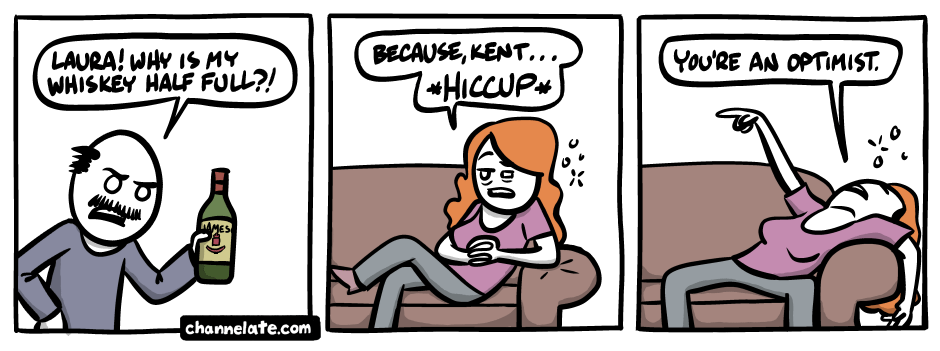
Got a shipment of books (You Used to Be Funnier) in for the upcoming Salt Lake City Comicon. So that means they are now stocked in the store. Also means the 3 book combo is stocked as well. Grab one if’n you’d like.
What has four eyes, two tails and the tiniest fingers you've ever seen? A pair of Grey Mouse Lemurs! The Duke Lemur Center welcomed twins, a male named
Filbert and a female named Scuppernong, on June 18th. At birth, they were no longer than an inch from nose to the base of the tail and weighed about
.2 ounces (5 grams). They two have grown quickly! At just 3 weeks old, Scuppernong and Filbert weight about an ounce each (28 grams and 32 grams, respectively).
Filbert is adventurous, exploring outside the nest box and showing interest in the fruit his mother eats. Scuppernong is more timid than her brother,
preferring the nest box. At 2 months old, the twins are health and continuing to grow. Scuppernong is 1.5 ounces (44 grams) and Filbert is 1.6 ounces (46 grams).
These primates belong to the group that includes the world's smallest primates, though the species is the largest of the Mouse Lemurs. Adults weigh about 3 ounces (90 grams) and stand no more than 3 inches tall. At the Duke Lemur Center, they live socially the same way they do in their native habitat of Madagascar—females live in groups and males live solitary lives.
The Duke Lemur Center houses the only breeding colony of Grey Mouse Lemurs in North America. The program has been very successful, boasting a 100% success rate with infant Grey Mouse Lemurs. Scientists at Duke and all over the world are excited about the new advances in Mouse Lemur research. Genome sequencing and advances in noninvasive imaging technology allow scientists to peek inside a mouse lemur's brain to study the aging process.
Photo Credit: Duke Lemur Center

A fearsome lion towers over its prey.
OK sure, so somebody stuffed Napoleon's horse, but in general, no one pays too much attention to the animal victims of war. No one except Dr. Sami Khader, that is.
Dr. Khader lives in the Palestinian city of Qalqilya. It's a place that's seen its fair share of hate. Since 2003, the 40,000 or so people who live there have been encircled by the walls of the infamous Israeli West Bank Barrier. It's also home to Palestine's only zoo, where Dr. Khader is the resident veterinarian and director.
Scattered around his room are plastic soda bottles of various sizes that serve as mobile terrariums for the doctors’ creatures. On the table two snakes are curled up at the base of their bottles, on the floor a scorpion paces back and forth in its container and a soda bottle pokes out of the doctor’s leather bag, though I can't see what creature is living in that. Maybe it’s just a Coke. All the animals were either found by the doctor or dropped in by the Qalqilya townspeople, and scattered among the living are skeletons, pinned insects and a stuffed bobcat.

Dr Sami Khader, director, resident veterinarian, and self-taught taxidermist at Qalqilya's zoo.
“Do you want to hold it?” Dr. Khader asks, gesturing to a snake on the desk. He casually describes being bitten by another snake recently, by a species that could, apparently, have killed him in an hour had it not been for a delayed shot of antivenom.
“It was a very stupid day," recalls Dr. Khader. "I was giving a lecture at a school and I brought some snakes to show the kids. It was dark and I reached into the wrong container. Usually I pick the snake up by its head, but this day I chose the wrong snake and I was bitten. I acted like nothing happened. I finished the presentation then went to the hospital.”
I’m not here to gawk at snakes in bottles, though, I’m here to see an exhibition of stuffed animals that Dr. Khader has created from the beasts that were killed in the Second Intifada, the four-year period of fighting that claimed the lives of 4,000 Palestinians and more than 1,000 Israelis.
It is probably worth mentioning at this point that Dr. Khader appears to be an entirely self-taught taxidermist.

During this period of warfare, Dr. Khader had the impossible task of looking after the entire zoo alone. Hordes of animals perished during the Israeli siege of the city; mostly starving to death or dying from untreated diseases. However the zoo’s location also played its part in the death toll. The back of the complex is surrounded by three schools, which has caused problems, Dr. Khader explains to me, when “tanks have come into the city, and the shabab [Palestinian youths] have started to throw stones. The response when it happened was tear gas, bombs, and bullets, many of which came over the walls into the zoo. Most of the animals in that area died after suffocating on the gas.”
From Sami’s office we walk to the museum complex, through a narrow arch and into an oval-shaped room. Bottles containing foetuses, stillbirths, and a growth marked “cancer” sit on the walls. It’s an extraordinarily creepy exhibition.
Almost 100 exotic animals in various states of decay are crammed together in a dark and winding room. It’s stuffy and hot, but surprisingly doesn’t smell, and the heterogeneous mix of species shine in lurid yellow, orange, and blue mood lighting.


On the ground pelicans, monkeys, and a stuffed rabbit head mounted on a fake log commingle in suspended animation. Above, the heads of lions, gazelles, and deer gaze down upon the other animals. Some pieces are complete while others have eyeballs missing, shoddy bone work and cavities with stuffing pouring from them.
The pinnacle of this disturbing display is a 15-foot stuffed giraffe called Rudy, who stands at the entrance. “One night soldiers ran inside shooting," says the doctor. "It was dark and loud, so the giraffe went crazy and started running around. He knocked his head against an iron bar and fell.” That blow wasn’t enough to kill the giraffe, at least not directly. Rudy ended up dying from a stroke as the powerful pressure required to move blood from the heart to the brain of a standing giraffe became too high. “When a giraffe lies down, it means it will die,” says Dr. Khader.


Rudy and Brownie, the Romeo and Juliet of the taxidermy exhibition.
It gets worse. Rudy’s death sent his mate Brownie into a deep depression. “The female was 12 months pregnant at the time,” Dr. Khader explains. “She saw the male after he had died, and she would cry all the time. She stopped eating and eventually the mother miscarried." One day, another tear-gas canister was fired into the zoo. Brownie suffocated. She is now preserved alongside Rudy in the exhibition.
Today, as the fighting has retreated, the zoo is a refuge from the draconian security measures imposed on Qalqilya by the occupation. Outside the museum Palestinian families, summer-camp groups, and boisterous teenagers from all over the West Bank come to enjoy one of the few open spaces in urban Palestine, complete with a large playground, mini-amusement park, paddle-boat pond, and even some living zoo animals.

Children in the part of Qalqilya zoo where they keep living animals.
Dr. Khader once described the zoo as “a small prison within a larger prison” and a drive through the Qalqilya district reflects this reality, the city and surrounding area have been subjected to some of the most severe aspects of the occupation. In 2003 the wall cut entire communities off from surrounding villages and land, decimating the local economy and clearly Qalqilya is unable to recover. The cumulative effect has been that in Qalqilya district unemployment is the highest in the West Bank and Israeli-imposed building restrictions have led to a population density greater than that of Gaza City.
Obviously, this means there isn't a crazy amount of money to throw at the zoo. This lack of funding and decreased attendance since the Second Intifada has forced the zoo to improvise. The ever-resourceful Dr. Khader has been making his own syringes, and even constructed a DIY blowgun to administer tranquilizers. Clearly the doctor loves this place.
“The zoo is important for Palestinians," he tells me before I leave. "It’s a place for people to come together. Politics have no place here. One day this will just be a zoo, and you can come and write about the lions, not the intifada.”
Find more of Daniel's work at his website.
More visits to public exhibits:
I'm Sick of Pretending: I Don't "Get" Art

Hace tres años publicábamos un vídeo que se hizo bastante viral, y no era para menos: una bailarina brasileña elegía a voluntarios del público y practicaba con ellos la llamada Surra de bunda, una mezcla de baile festivo y facesitting violento que tenía pinta de acabar con un tabique nasal torcido a golpe de ojete o una vértebra fuera de sitio. Ahora parece que hay quien pretende imitarlo con una coordinación física bastante peor iguales dosis de violencia. No sé hasta qué punto esto debería resultar erótico, pero parece que debe de doler.


SnobIGUAL ERA BOA IDEA, NON SEI
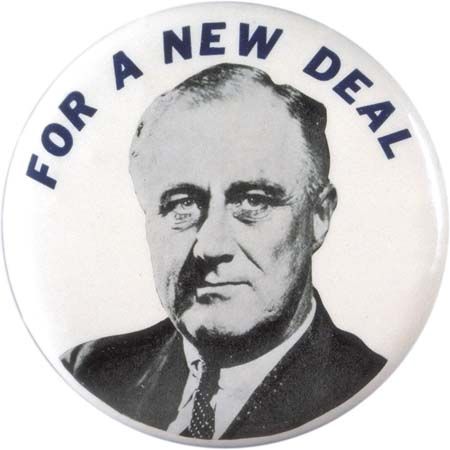
The following is an article from Uncle John's Endlessly Engrossing Bathroom Reader.
A massive government effort to get people back to work and restart the economy, the New Deal had its detractors, then and now. But it remains one of the most popular and effective government programs in American history.
CRASH AND BURN
In October 1929, during the first year of Herbert Hoover's presidency, the U.S. stock market crashed. By 1933, unemployment had climbed from 4% to 25%, plunging the nation into the Great Depression. Hoover, a Republican, took a lot of the blame for it and was beaten by a landslide in his 1932 reelection bid by the Democratic candidate, former New York governor Franklin D. Roosevelt. FDR promised American a "New Deal" -sweeping government intervention to revive the economy, and new laws to make sure the collapse was never repeated. His legislation was quickly passed through the Democrat-controlled Congress.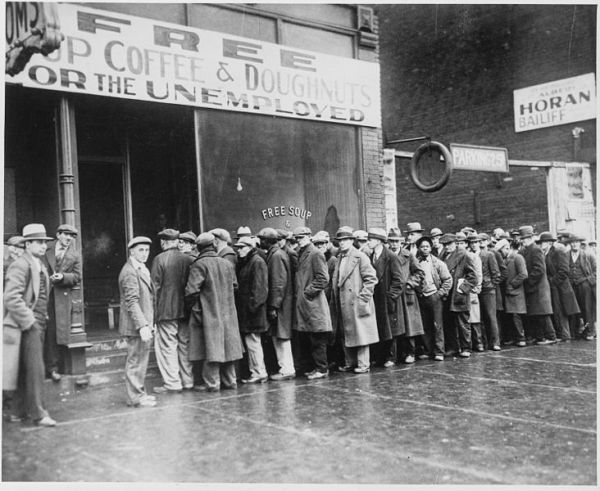 Although heavily criticized at the time as socialism or even communism, the New Deal put millions of Americans back to work, provided security for senior citizens, and in the process helped to stabilize the American economy. Most importantly, it gave Americans hope. Here's a look as some of the many agencies created in the New Deal to institute Roosevelt's reforms.
Federal Emergency Relief Administration. The first relief agency of the New Deal, it provided emergency welfare and aid. More than $3 billion was allocated to states and cities for homeless shelters, soup kitchens, and vaccinations, as well as literacy training and free childcare for job-seeking parents. FERA also provided temporary work for as many as 20 million people- construction and maintenance jobs, such as repairing public buildings, laying sewer pipe, and raking leaves for $15 per week. The agency was terminated in 1935, and its projects were absorbed into other programs.
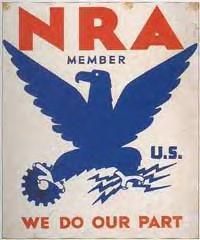 National Recovery Administration. The aim of the NRA was to stimulate economic recovery by asking businesses to set a 40-cents-per-hour minimum wage and standardizing the work week at 40 hours for white-collar jobs and 36 for blue-collar. More than 23 million people worked under NRA-abiding companies, but violations of the code were common. Also, participation by firms was voluntary, so the agency didn't really have a lot of authority. In 1935 the Supreme Court declared the NRA unconstitutional because the federal government had overstepped state labor laws. Nevertheless, minimum wage and work hour laws were later passed by Congress.
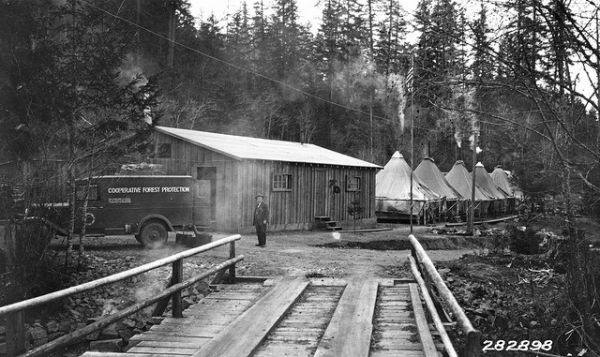
Civilian Conservation Corps. Not only did the CCC raise awareness of the importance of preserving natural resources, but in doing so it created 250,000 conservation, forestry, and land improvement jobs in 2,600 locations. Nicknamed by workers "Roosevelt's Tree Army, " CCC workers planted more than three billion trees from 1933 to 1942, accounting for half of all organized planting in American history. But "conservation" meant a lot of things for the CCC- workers constructed fire towers, built 100,000 miles of fire roads, fought and prevented wildfires, preserved wildlife habitats, controlled floods, and prevented soil erosion. One clever element of the CCC was how it reallocated labor resources to areas where there were labor shortages. American cities had far too many needy workers, so the CCC moved them to sparsely populated rural areas, where there was work to be done and few to do it.
Public Works Administration. In one of the first New Deal programs enacted in 1933, the government allocated $4 billion for the construction of what was ultimately 34,000 projects, including airports, highways, aircraft carriers, bridges (including San Francisco's Golden Gate Bridge), hospitals, and schools. By June 1934, the PWA had planned all of its projects and allocated all of its money. So in 1935, Congress created a new agency called the Works Progress Administration to develop more civic construction and job creation programs in the same vein.
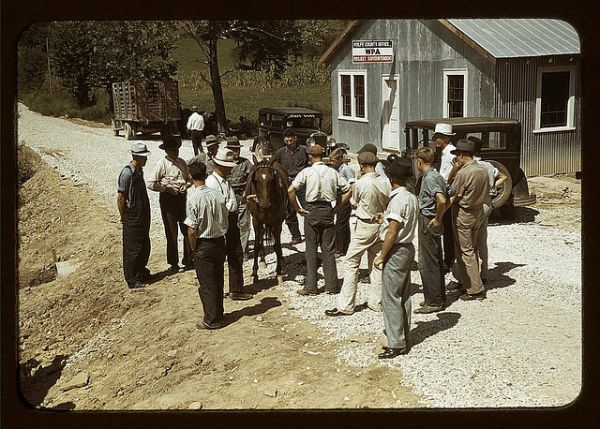
Works Progress Administration. Picking up where the PWA left off, the WPA employed 8.5 million people between 1935 and '43 at an average wage of $2 per day for civic construction projects such as roads (650,000 miles), bridges (78,000), buildings (125,000), and 700 miles of airport runways. The WPA was the nation's largest "employer" at the time, and the largest New Deal agency -it spent $11 billion over its life span. Some WPA projects still in existence: Dealey Plaza in Dallas (where John F. Kennedy was shot in 1963), LaGuardia Airport in New York, Timberline Lodge in Oregon, and the presidential retreat Camp David (which was initially a resort for all federal employees). One notable branch of the agency was the Arts Program, which hired thousands of artists, musicians, actors, photographers, and writers to use their talents for public works. For example, future major authors Saul Bellow and Ralph Ellison wrote state guidebooks, and painter Jackson Pollock produced murals.
Federal Deposit Insurance Corporation. During the Depression, customers lost faith in banks. Many had failed and closed suddenly, and their customer's money was irretrievably lost. But banks are an important part of the financial system -no modern economy can function without them. Created by the Glass-Steagall Banking Reform Act of 1933, the FDIC restored faith in banks with a government-backed insurance policy on deposits. If a bank failed, a consumer's account was insured up to $5,000. (Today, the guarantee is $250,000.)
Agricultural Adjustment Administration. In order to increase the market price of crops and livestock, and thereby make farms financially stable again, there had to be either a greater demand or less supply. The AAA paid farmers a subsidy to grow less. The AAA opened in May of 1933, by which point the year's crops were already planted. Since it was too late to pay farmers not to plant, the agency destroyed existing stockpiles and reduced the size of livestock herds. Twenty-five percent of the nation's cotton fields were razed, and six million piglets and 220,000 pregnant cows were slaughtered. Destroying crops while so many Americans struggled to put food on the table made the AAA very controversial. Besides, it didn't work- large farms benefitted most; they simply evicted tenant farmers and sharecroppers, let the land go fallow, then collected a fee from the government. And by 1937, wholesale food prices hadn't changed much from before the AAA went into effect.

Federal Housing Administration. During the Depression, home mortgages were mostly short-term- about 3 to 5 years, as opposed to the 30-year standard of today. The FHA, born out of the National Housing Act of 1934, regulated interest rates and mortgage terms so home ownership was more within reach for middle- and low-income families. The agency also helped ensure that enough affordable housing existed for purchase by offering loans for home-building companies, which had suffered greatly in the economic downturn.
Securities and Exchange Commission. Fraud, deception, and insider trading contributed to the stock market crash, so in an attempt to make sure it never happened again, Congress passed the Securities Exchange Act in 1934. In addition to requiring disclosure of a company's financial information and dealings to investors, it made securities (stock) fraud a crime and established the Securities and Exchange Commission. Its five commissioners are appointed by the president to police the financial world.
National Labor Relations Board. Created by the National Labor Relations Act of 1935, the board's purpose was to protect and enhance the rights of workers to organize into unions and collectively bargain for better wages and better working conditions.
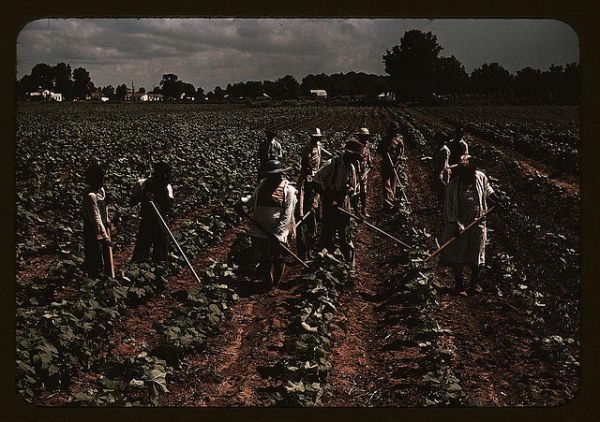
Farm Security Administration. Formed by the Resettlement Administration Act of 1935, this agency delivered aid to the nearly one million farm families who'd fled the Dust Bowl agricultural disaster in Arkansas and Oklahoma for California, as well as those evicted by farm bosses after AAA subsidies. The FSA purchased ruined farms from victims of the Dust Bowl and relocated the farmers to 34 government-owned group farms, where they grew food for themselves while learning modern techniques from agricultural scientists. The FSA also set up refugee camps for farmers and provided educational grants to farm families. But the most famous project of the FSA was its photography branch- it sent out photographers, most notably Gordon Parks and Dorothea Lange, to document the plight of Depression-era farmers.
Social Security Administration. The SSA provided financial assistance for single mothers, a free food program for children of low-income families, and unemployment insurance. But most famously, the SSA created and managed a federal pension system for retired people. Not only did it allow aging citizens to retire from the workforce (without starving), it also opened up their jobs to new workers. Social Security payments were financed by a payroll tax, and they still are: It remains in effect today, covering 40 million people and accounting for a quarter of the federal budget.
__________
 The article above is reprinted with permission from Uncle John's Endlessly Engrossing Bathroom Reader.
Since 1988, the Bathroom Reader Institute had published a series of popular books containing irresistible bits of trivia and obscure yet fascinating facts. If you like Neatorama, you'll love the Bathroom Reader Institute's books - go ahead and check 'em out!
If you’d like your friends to think you’re in a loving relationship, you can follow the example of Keisuke Jinushi, a Japanese photographer who has mastered the art of making his right hand the perfect photo girlfriend.


(via)
 (Photo: The Dapper Dan)
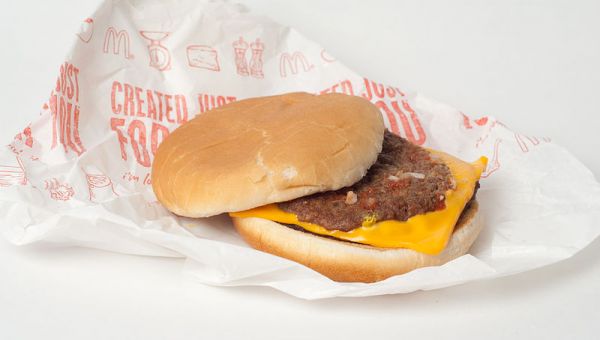
When starvation, rather than obesity, is your problem, then McDonald's has the solution. Economist Stephen Dubner, one of the authors of Freakanomics, argues that the McDonald's McDouble (pictured above) is the most nutritious food ever devised:
Stephen Dubner, who co-authored the best-selling book, hosted a debate on his blog after a reader suggested the McDouble packed a better nutritional punch for the penny than is often assumed.
The double cheeseburger provides 390 calories, 23 grams of protein – half a daily serving – seven per cent of daily fibre, 19 grams of fat and 20 per cent of daily calcium, all for between $1 and $2, or 65p and £1.30,The Times reported. [...]
Mr Dubner added: “The more I thought about the question, whether the McDouble is the cheapest, most bountiful, and nutritious food ever, the more I realised how you answer that question says a lot about how you see the world, not only our food system and the economics of it, but even social justice.”
Link -via Ace of Spades HQ
 Patton Oswalt took to Twitter Saturday afternoon to fire off a series of two-part tweets on controversial topics that were all split into two different tweets at the worst possible times. It's a super funny gag, and Oswalt cites the Twitter feeds of Neil Hamburger, Jim Norton, and Colin Quinn as his inspirations for it.
Check out all of the tweets Oswalt sent out Saturday below:
When it comes to doing laundry, I firmly believe in using environment-friendly detergent and I ALSO believe
— Patton Oswalt (@pattonoswalt) August 17, 2013
whites and "darks" should be kept separate. Sorry if that sounds too "tree-huggy" to my conservative followers.
— Patton Oswalt (@pattonoswalt) August 17, 2013
Saying that gay marriage is unconstitutional is as hateful & ignorant as saying — Patton Oswalt (@pattonoswalt) August 17, 2013
all abortion should be illegal, no exceptions. Just go ahead and UNFOLLOW me, you right wing hate-mongers. — Patton Oswalt (@pattonoswalt) August 17, 2013
Oh, you think repealing voting laws in the south is justified, you racist asshole? I suppose you ALSO believe that
— Patton Oswalt (@pattonoswalt) August 17, 2013
Hitler was absolutely right about the Jews. And I don't care how many "white power" redneck followers I lose by Tweeting that.
— Patton Oswalt (@pattonoswalt) August 17, 2013
You think ANYONE should be able to buy a gun for ANY reason, you idiot? Well, why don't we just — Patton Oswalt (@pattonoswalt) August 17, 2013
Let NAMBLA members fuck anyone they want. Am I so crazy for wanting my kid to grow up in a safer world? — Patton Oswalt (@pattonoswalt) August 17, 2013
These idiots who deny that clumsy change is real, and a pressing threat are no different from misogynists who claim that
— Patton Oswalt (@pattonoswalt) August 17, 2013
Women enjoy rape. Grow the fuck up, all of you.
— Patton Oswalt (@pattonoswalt) August 17, 2013
Why do right wing asshats want "Hollywood out of government", but don't want the Fred Thompsons or Arnold Schwarze — Patton Oswalt (@pattonoswalt) August 17, 2013
Neggers out of government? Yes, please! (Sorry for any misspelling) — Patton Oswalt (@pattonoswalt) August 17, 2013
For you simpletons who see everything in "black" and "white": if racism, misogyny, hatred and fear are BLACK, then
— Patton Oswalt (@pattonoswalt) August 17, 2013
My grandchildren had better be WHITE. And I mean PURE WHITE, or we're not going to have a country anymore. #tolerance
— Patton Oswalt (@pattonoswalt) August 17, 2013
God's greatest miracle? How about science? Penicillin? Gift from God. Polio vaccine? Gift from God. Even aspirin, Pepto-Bismol and ROL — Patton Oswalt (@pattonoswalt) August 17, 2013
AIDS is a gift from God. I don't know why people are still so backward in their thinking about this. — Patton Oswalt (@pattonoswalt) August 17, 2013
Our country's worth isn't in how many billionaires we produce or countries we conquer. History will judge use solely on how we tr
— Patton Oswalt (@pattonoswalt) August 17, 2013
Eat the poor, disabled and hopeless. It's the only way we can insure our future.
— Patton Oswalt (@pattonoswalt) August 17, 2013
And I'm sorry, but I fucking HATE FOX NEWS. Bunch of race-baiting corporate shills. All of their medieval, fact-free clapt — Patton Oswalt (@pattonoswalt) August 17, 2013
Rap is performed by monkeys in expensive clothes. Sorry if I offended you, white conservatives, but it's the truth. — Patton Oswalt (@pattonoswalt) August 17, 2013
Gonna hop off Twitter for awhile. Enjoy the sunshine, breathe the air. Hope no one was offended. Cross my heart and hope to
— Patton Oswalt (@pattonoswalt) August 17, 2013
0 CommentsDie, all of you. Seriously. #peace
— Patton Oswalt (@pattonoswalt) August 17, 2013
.... take the intestine, stomach, and bladder of the yellow fish, shark and mullet, and wash them well. Mix them with a moderate amount of salt and place them in a jar. Seal tightly and incubate in the sun. It will be ready in twenty days in summer, fifty days in spring or fall and a hundred days in winter....As summarized by the Language of Food blog, "The British encountered these Chinese in Indonesia or elsewhere in Southeast Asia, borrowed the word ketchup, brought it home, and started right in on messing with the recipe." The fish gut sauce first changed into a concoction of salted and fermented anchovies, which is still made in some fashion, but by the 1700s, the British had put their own spin on the recipe (Google books preview), calling for strong, stale beer, noting "the stronger and staler the Beer is, the better the Katch-up will be." The slightly older English Katchup recipe (Google books, free ebook download) calls for your "best white-wine vinegar" and your "best Lagoon white-wine," still heavily relies on anchovies, but also notes you could add "the clear liquid that comes from mushrooms."
Standup Dan Telfer just released a brand new 24-minute standup special online, and here it is in its entirety. Telfer explains on his website that he would release it for $5 directly to fans like a lot of comedians are doing now, but that he's not famous enough yet, so he put it out for free and he's asking viewers to donate to his Paypal if they have it in their hearts to do so.
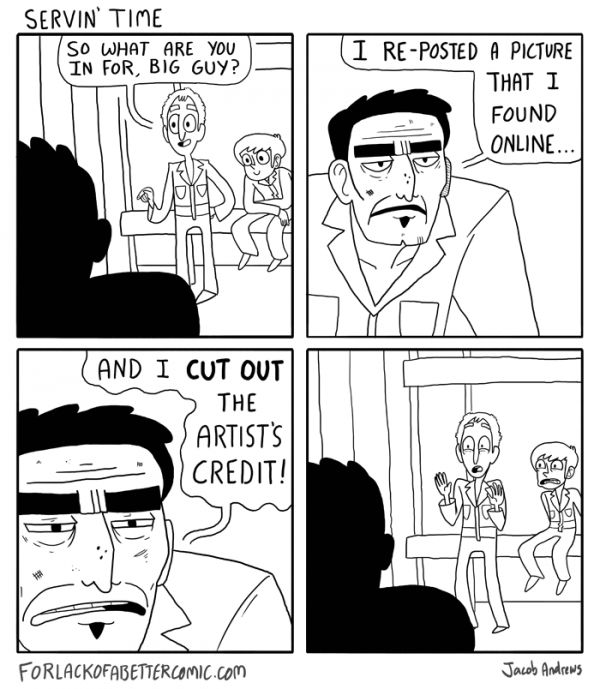
Forget to include the artist? That's a fine. Deliberately remove the artist's name or watermark? You're facing hard time. Jacob Andrews shows a scene from a world presumably ruled by webcomic artists.
An Ocelot kitten born at the Cameron Park Zoo is
being called a “miracle baby” because it was born to a mother who was beyond
the known breeding age for Ocelots.
The kitten, a male named Aztec, is the first infant born to Cameron Park Zoo Ocelots Maya and Gustavo. Maya is 14 years old, an age which is considered somewhat past the prime age for successfully producing offspring. Ocelots reach sexual maturity at two to two-and-a-half years of age and their life expectancy is seven to ten years in the wild and up to 20 years in captivity.
Photo Credit: Cameron Park Zoo
In November 2012, a team of veterinary specialists from the Cincinnati Zoo’s Center for Conservation and Research for Endangered Wildlife (CREW) performed a reproductive assessment on Maya. Even though she was past her breeding prime, Maya was still cycling and the assessment showed that there could be a slight chance of a successful pregnancy. The team, along with Cameron Park Zoo veterinarian Terry Hurst, collected semen from Gustavo and performed an artificial insemination procedure on Maya. Unfortunately the procedure was not successful, and the assumption was that because of her age and the condition of her ovaries, Maya would not be able to become pregnant.
On May 31, 2013 Maya was not feeling well and was left in her night house. Later that morning, zoo staff members were surprised and excited to find a baby Ocelot had just been born! Maya was given a nest box and hay for bedding her infant and then left alone with her baby to allow time to bond. Apparently, Gustavo and Maya decided to have their baby “the old fashioned way” and Maya has proven to be an attentive mother. Aztec has not made his public debut in the exhibit, but zoo officlas hope to announce that very soon.
Ocelots are native to much of South America and Mexico. They are expert hunters, and are fiercely territorial. They are listed as a species of Least Concern by the International Union for Conservation of Nature.
Consider this the Czech equivalent of "The Flying Purple People Eater." The song "Jožin z bažin" (Joey from the Swamp) was written in 1978 by comedian Ivan Mládek. This performance has English subtitles and those groovy fashions of the time. -via Daily of the Day




 (
(