Los arrebatos de violencia y chunguez de Tezuka son espeluznantes, y Toshiko Tomura es uno de los personajes más fascinantes que me he echado a la cara.
El libro de los insectos humanos. Osamu Tezuka. 1970.
Los arrebatos de violencia y chunguez de Tezuka son espeluznantes, y Toshiko Tomura es uno de los personajes más fascinantes que me he echado a la cara.
El libro de los insectos humanos. Osamu Tezuka. 1970.
 |
| Ricardo Carballo Calero recibe el premio de "Ferrolano del año" ( 1977) instituido por los periodistas locales. En la foto, muestra la placa Maite López, compañera de Radio Popular (COPE) |
|
"De hecho, ambas formaciones son válidas, ahora y hace un siglo. La mayoritaria y preferible es la que preserva el sonido: racinguista".
No obstante, la respuesta es bastante lacónica. Se supone que la otra formación válida es "racingista", pero no la concreta ni tampoco razona su posicionamiento. Además, no se entiende que siendo válida, el diccionario de la RAE no la registre, aunque puede ocurrir. Esto es motivo de controversias.
|


Dos elementos representativos de la cultura mexicana se juntan para dar origen a la “tortilla bendita”: una tortilla con la imagen de la Virgen de Guadalupe. El creador de esta prensa mecánica para tortillas, es el arquitecto mexicano, residente en París, Meir Lobaton Corona.
El dispositivo es muy parecido a las prensas que todos los mexicanos conocemos, lo que lo hace diferente es que en la parte superior tiene grabado, en relieve, la silueta de la Virgen de Guadalupe. Al momento de colocar la bola de masa y presionar, la imagen queda estampada en la tortilla.

Con este simple dispositivo, Lobaton conecta el simbolismo y la tradición más antigua de la gastronomía mexicana, la tortilla, con una de las imágenes religiosas más respetadas en México. La tortilla es consumida por todos los mexicanos, sin importar las clases sociales, al igual que la Virgen de Guadalupe es venerada en muchos hogares mexicanos.
Probablemente el diseñador de esta prensa la diseño, para darle un toque “bendito” a toda esa comida deliciosa que va acompañada de tortillas como los famosos tacos y unas enchiladas. Hasta el momento me parece que no está a la venta, solamente funciona como pieza de diseño.

Vía | Design Bloom
En Directo al Paladar México | Garrafa para vino blanco. Regalo para San Valentín
En Directo al Paladar México | Manteles individuales con instrucciones para construir platillos
-
La noticia Tortillas con la imagen de la Virgen de Guadalupe fue publicada originalmente en Directo al Paladar México por Sweet Cannela.

    
|

Composteláns despreguizándose na mañá do primeiro día de 2014 que non vai chover. Aproveiten!!!
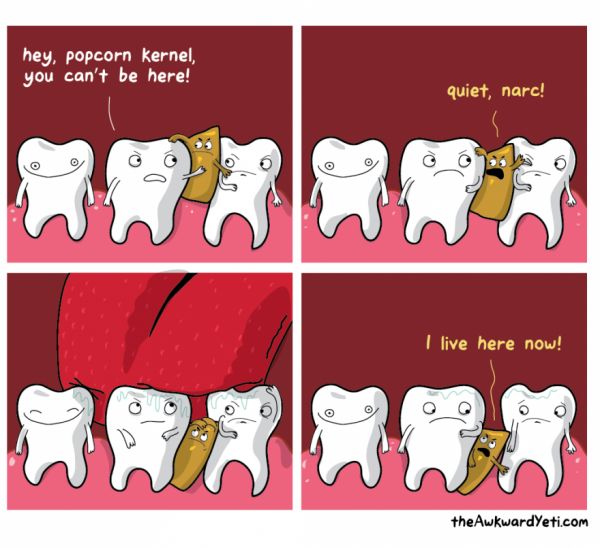
This happens every time you eat popcorn! Don't tell me you don't relate. It's more likely to happen with the thin skins that come off the kernel, though.
The same thing also happens to me with rye bread and steak, and a lot of other foods. I guess my teeth are spaced a bit funny. If nothing else, the experience forces me to get out the dental floss -and once you floss one tooth, you may as well floss them all. (It's mighty hard for me to correctly type dental floss instead of mental floss.) This comic is from the Awkward Yeti.

Red originally appeared on My[confined]Space NSFW on February 15, 2014.

I went in-conversation with Petra Collins for the Girls Rule issue of Dazed. You can now read the full article below.
If you’ve ever been on the internet, you’re probably familiar with the artist Petra Collins. I’ve also written about her on this blog many times, and she and I have since made a couple of short films together, both of which (quite serendipitously) are about murderous girl gangs. We also both made T-shirts with vaginas on them, except hers was bleeding.
For those of you who don’t know: Petra made her name creating beautifully nostalgic images of youth in her hometown of Toronto, Canada. Still just 21, Petra’s career started in her mid teens. She’s the founder and curator of The Ardorous, an online platform for girls to show their artwork, and she’s also a staff photographer at Rookie, Tavi Gevinson’s awesome mag for teenage girls. This year Petra made the move to NYC, and has since curated an all-female art show titled Gynolandscape, become a muse to Ryan McGinley, and has started making music videos for artists like Sky Ferreira and Blood Orange. Through her cinematic lens, Petra has become an expert at using the female body as a tool to both seduce and provoke, and never fails to find the humor in both.
Karley Sciortino: We’ve worked together a bunch of times, but I’m only just realising that I’ve never asked you when or why you started taking photographs..
Petra Collins: Well, I hate saying this because it sounds sort of pretentious, but since I was very little I’ve always made art, in some form or another. It wasn’t a career choice; I was just doing it because I needed to, because it made me feel whole. Then, when I was 15 I took this photo of my younger sister’s three girlfriends sitting on my bed, and one of them was smoking, and when I got the image back it really surprised me – it was really interesting in a way that I didn’t expect, with a strange sadness and beauty to it. After that I decided to keep documenting those girls, and so for the past five years I’ve been taking photos of my younger sister and her friends. That was unconsciously my first photo project, and what started everything. It’s really crazy because now all the girls have graduated and are going to university.
Karley Sciortino: I’ve seen some of those photos. Some that stand out in my mind are of them at prom.
Petra Collins: Yeah, I shot them at prom, at parties that they went to, in their high school, them taking selfies…
Karley Sciortino: The other day I tweeted that a better name for our generation than “Millennials” would be “Generation Selfie.”
Petra Collins: Seriously. I think the selfie is really interesting because there’s so many levels to it. In a way, it’s an image that doesn’t hold that much truth, but rather is a representation of how someone wants people to perceive them. It’s supposedly a personal image, but it’s always taken with a second party in mind. It’s part of how we all curate our lives online, through Facebook or whatever.
Karley Sciortino: Yeah, so in a way the selfie is the purest representation of how we want the world to perceive us. I recently wrote an article about how social media has turned everyone into their own brand, and suggested that the people who don’t un-tag unflattering photos of themselves are actually just bad at doing their own PR.

Petra Collins: Lol.
Karley Sciortino: I don’t know if I’ve ever told you this, but when I first saw your work and then found out you were so young I thought, “She must have famous parents.” I didn’t think someone could be so cool while still so young without some assistance. But then when I met you I realized you’d actually just taught yourself to be cool on the internet.
Petra Collins: Ha, it’s true. The school of Tumblr!
Karley Sciortino: Yeah, it’s crazy how much of a game-changer that is – to grow up with a catalogue of everything that was ever cool or influential or relevant since the dawn of time. I just missed that, because I didn’t have internet at home until I was 13, and even then we just had like AOL chat and other similar non-cool-making resources, and then people like you and Tavi come along, and are intimidatingly cool at age 15, and that makes me hate you, honestly.
Petra Collins: Uh… thank you? So, when you started Slutever, did you set out to create a feminist blog?
Karley Sciortino: Honestly, that wasn’t my intention. I was just writing about what interested me, and I ended up writing a lot about sex and sexuality, I suppose just because I’ve always been a very sexual person, but it wasn’t until my blog started getting popular, and other people and press began referring to me as a feminist blogger that I sat back and thought, “Wait, is that what I am?” Don’t tell anyone, but I actually didn’t know that much about feminism at the time!
Petra Collins: No, same with me! I feel like we went down the same path, because I just started taking photos to work through my own person frustrations, but I didn’t really know what I was doing, and it was through being defined as a feminist that I discovered feminism. But that was only in my last year of high school, which isn’t that long ago.
Karley Sciortino: What frustrations were you working out?
Petra Collins: Well, in the beginning my images were very sexual, and at that time I was dealing with my emerging sexuality. I remember thinking that my worth as a person was based on my looks, and basically being a sex toy. That sounds bad but it’s really what I thought, and it felt very confusing, and I guess I was trying to combat feelings of the male gaze through my images. I wanted to create images that represented my own sexuality, not a sexuality that was dictated by someone else–like, “How do I make this mine?” But it’s a long, hard process to figure that out, and I’m still figuring it out.
Karley Sciortino: I recently interviewed Marsha Rowe for Dazed – she was the founder and editor of the iconic second-wave feminist magazine, Spare Rib. She told me, “What strikes me about modern feminism is that it focuses quite narrowly on the body. So much anxiety gets centered on the woman’s body, and it feels somehow detached from what other things are going on in the wider world.” We went on to talk about the obvious connection of girls’ obsessions with their bodies, and the unrealistic, airbrushed images of perfection we are bombarded with in advertising, in magazines, on TV, etc.
Petra Collins Yeah, it’s so fucked up. It’s almost hard to realise that those images aren’t real because we see them so much.
Karley Sciortino: Right, so we hold ourselves up to these unrealistic standards. It’s strange because as a society, we look at these super retouched images in the media and we’re angry, because we know it creates unhealthy aspirations for women, and just makes us feel bad about ourselves. But simultaneously, whenever we see an unretouched paparazzi shot of a celebrity on the beach, we relish in the opportunity to criticize them for having cellulite or whatever. Rather than appreciating it as a realistic depiction of a female body, we print the photo in a tabloid magazine and draw a big red circle around any imperfection, underneath a headline like, “Scarlett Johansson’s cellulite beach nightmare!” or whatever. So as a society we are very hypocritical about what we want. We want to see images that are at once aspirational and relatable, and yet we condemn them for being both.
Petra Collins: Honestly, I don’t think there’s an hour of the day where I don’t think about my body, which is really messed up. I actually find it weird when I meet a girl without body issues. I just think, “Where did you come from?!” And it makes me so sad to see my sister and her friends, who are all so amazing and beautiful, just hating themselves.
 Petra’s censored Instagram shot
 Karley Sciortino: As someone who’s curvier, I sometimes feel insecure about my weight. But then at the same time, because I understand that I’m in a position of even a small amount of influence to young girls, I feel it’s important to project a body-positive image in my writing and in my videos, because obviously I think girls of all sizes can look amazing, but I still can’t escape the harsh self-critique. And then I get anxiety that I’m projecting this confident imagine that isn’t entirely sincere, ya know? But anyway, keeping on the subject of body, your Instagram got deleted recently after you posted an image of yourself in a bikini with a visibly unshaved bikini line. Given that there’s millions of photos on Instagram of girls in bikinis, it was obvious that your photo was censored because of the hair. Quite awesomely, everyone from Vogue to the Huffington Post wrote stories about how Insta censored your pubes.
Petra Collins: Right, the issue was that the image of my body didn’t meet society’s standard of “femininity.” It’s an example of the pressure to succumb to society’s image of beauty literally turning into censorship. I actually did this giant research project about female body hair in my first year at university. I was beginning wonder why I felt the need to remove my hair, ritualistically, almost every day, without ever considering why. So as a little social experiment for myself I decided to stop shaving, just to see how uncomfortable I would be with exposing myself in that way. It was partially about training myself not be affected by what other people think. And now, three years later, I still have the hair. And I still get so many stares. It’s so funny how shocking armpit hair on a girl is to people–they spot it and they just like can’t look away! But I love it now, it’s such a cool accessory. I love the combination of armpit hair and a slutty dress.
Karley Sciortino: That’s hot. Maybe I should stop shaving, both to look more edgy and to just avoid getting ingrown hairs. Literally, sometimes I feel like my life is just one giant ingrown hair. So, who are some female artists that you love?
Petra Collins: I love Lauren Greenfield‘s work. She did that photo series Girl Culture, about girls lives and private rituals, and she made that documentary Thin, about a rehab center that treats women with eating disorders. What about you?
Karley Sciortino: I love Camille Paglia – she’s a very controversial feminist who writes largely about art, sex and pop culture. She’s very pro-sex, pro-porn, and she can be pretty harsh, but she usually just says what everyone else is thinking. And of course, I love Joan Didion, who somehow is able to perfectly articulate everything I’ve ever thought and felt and wondered about, and even some things I didn’t even realize I thought or felt until I read her words. So… should we talk about the fact that we both made shirts with vaginas on them? Mine was a photo of my hairy vaj, and yours was a line drawing of masturbating, menstruating woman with pubes, sold at American Apparel, and it sparked some backlash.
Petra Collins: I know. I find it funny that with all the sexually violent, disgustingly derogatory images we see everyday in the media, that a woman’s period is still something people find so shocking. Menstruation is a natural part of growing up and becoming a sexual person, and yet it’s so hidden, so I really wanted to put it on a shirt and bring the power back to vaginas. That’s what I love about your shirt too – it really demands attention, and calls attention to the fact that the vagina is its own sexual organ. It’s not, ya know…just for dicks.

Alaska, quizás la estrella del pop más importante de España, con permiso de su esposo Mario Vaquerizo, tiene una trayectoria tan larga a sus espaldas (más de 30 años) que probablemente no se acuerde de un montón de cosas que ha hecho o ha dicho a lo largo de su dilatada carrera.
Menos mal que existen las hemerotecas. Teenage Thunder tiene acceso a los archivos de la extinta web Lamesacamilla.com, y de este sitio web hemos rescatado unos scans de la revista Primera Línea, que antes de convertirse en una publicación para tronistas, era el medio de comunicación de los jóvenes que querían estar a la última.

Estos recortes, publicados en marzo de 1989, proceden de la última entrevista que concedieron Alaska y Dinarama (Alaska, Carlos Berlanga y Nacho Canut) poco antes de disolver el grupo. Estaban en periodo de promoción de su disco Fan Fatal, una grabación que parece mentira que sea de 1989, con lo avanzada que es. Volviendo a escuchar este disco a uno le dan ganas de llorar al pensar en la música que se hace en España en el siglo XXI. Fangoria, el siguiente proyecto de Alaska y Nacho, estaba a punto de nacer.
En estos recortes que os ofrecemos en exclusiva, Alaska, Carlos y Nacho dan su punto de vista sobre lo que un artista puede o no hacer sobre un escenario, hacen el retrato robot de un fan fatal, que es el apelativo con el que se conocía a sus fans por aquel entonces, y, como guinda, nos cuentan los tres sus trucos y secretos en la cama. Si pinchas en las imágenes, podrás verlas ampliadas para tener los textos más grandecitos.
Si te da pereza leerlo todo, te ponemos aquí los consejos sexuales de Alaska, para que veas lo majos que somos:
CONSEJOS DE CAMA DE ALASKA
1: Ser hiperactiva
2: Ser superapasionada, aunque pases total del otro.
3: No dejarse sorprender. ¡Nunca!
4: Uno no debe acostarse nunca con la novia o el novio de alguien que le cae bien, pero no debe prescindir de acostarse con la novia o el novio de alguien que odie. ¿Comprendes?
5: Nunca hay que quedar mal en la cama
6: No debes decir nunca que has inventado algo en relación al sexo.
7: ¡Hay que ser una perra absoluta!


The post Los consejos sexuales de Alaska appeared first on .
Snob:_________((

All photos by Erin Fonseca
It’s 7:20 PM on Tuesday night, and I’m wandering the after-hours Wall Street wasteland looking for the apartment of “Ali C.,” where I have an appointment to cuddle. Like a massage, it’s $60 for 45 minutes. Since November, clients have been paying to lie in bed with Ali (or rest their shoulder in the crook of her neck on the couch), who runs a one-woman “cuddle therapy” business, Cuddle U NYC, out of her studio apartment.
There’s no "happy ending" handjob at the end. This isn’t a Chinatown massage parlor in more ways than one—a required pre-cuddle phone conversation establishes with all clients that the experience will be physical and possibly emotional, but not sexual. In fact, to hear both client and proprietor tell it, cuddling with her can be a verbal affair.
I’m not the ideal cuddle client per se. For one, I’m so cheap that I’ll probably end up paralyzing my face using at-home acupuncture. I’m not a man and therefore not as likely to visit a cuddler. Ali cites this gender imbalance, as do most of the professional female cuddlers that have been profiled, including Portland-based Samantha Hess. I don’t have “Asperger’s,” nor am I “overweight,” as Ali describes male clients who might come to her because “they don’t attract people to them.” I’m not in need of “re-mothering,” which she says is the main concern of the few women who use her services. I don’t feel under-touched, nor am I recently divorced.
I decide to approach the session like a blowjob class, but for cuddling.
From private sessions offered by sole proprietors like Ali to “Cuddle Parties"—which to me seem a bit like inappropriate flash mobs—professional cuddling doesn’t qualify as a growth market per se. Yet the industry is having a moment in the Internet Age for think-piece reasons I really am not going to pretend to care about explaining (search “millennials"; that’s what Google is for).
The economy—and the fact that it’s nice to work sporadically from home in a job where technically the only perquisite is having two functioning arms (sorry, John McCain) and a bed with clean sheets—seems incentive enough for any unemployed person comfortable with touching but not sex work. Ali identifies as a writer (she mentions a novel) and is living off her savings from a previous career.
I enter Ali’s nondescript but not inexpensive condo building—is there any other kind in the financial district?—and her doorman checks my name. He does this with all 30 of her clients, who must provide their driver’s license upon arriving in her home so she can take a photo of it with her iPhone.

I read that she greets new visitors with a hug, and feeling like I should adhere to new-client protocol, I lean in for one when she opens the door. Ali is surprised, but adapts so quickly I don’t have a chance to feel like an idiot. It shouldn’t be worth noting she isn’t even a touch awkward or insecure, but I so rarely interact with people that aren’t, I find myself making a special mental note of it.
Ali looks like Vashti Bunyan in her forties, with well-groomed eyebrows and clear attention paid to split ends. Expert eyeshadow is noticeable behind square D&G frames, and we’re wearing similar outfits: dark blouses and grey-black skinny jeans with leather boots. She has an almost palpably maternal presence, with the warm attentiveness of the ideal kindergarten teacher. She nods and widens her eyes in agreement with almost everything I say. I feel liked almost immediately, I and have to make a conscious effort to sit up when I realize I’m relaxing and tucking my legs underneath me on the couch, as I do when petting a particularly receptive cat.
It was just last week that Ali, “New York City’s first professional cuddler,” got what all entrepreneurs need: press. She’s not happy with the original news story, she tells me right away, referring to the piece quite frequently during our interview. I hasten to point out that she’s not the first to be frustrated by a media coming-out party hosted by the New York Daily News. (Almost every single professional cuddler currently getting press in the United States was at one time profiled by the Daily News, which, as far as I can tell, has had an editorial meeting and decided to run a cuddling vertical). She has ten new clients already.
Despite some unflattering photography angles, the Daily News piece isn’t bad exactly, or not for the reasons she thinks. But Ali says she “learned from the experience,” confidently directs our photographer not to take photos from certain angles, and changes into a “cuddle outfit” for our appointment more in line with the Lululemon brand of the hip-fit woman than the floral pajamas from her first photo shoot.
In the Daily News photo, the sturdy man cradling Ali, with his handlebar mustache and Adidas exercise pants, makes me squeamish, for no other reason than that the session looks so un-clinical. Which cuddling is, obviously. But Ali is confidently branding her company not as a cuddle service but as “cuddle therapy.” The fluffy phrase doesn’t detract from the simple logical jump that would render Ali a (cuddle) therapist.
While a large-scale business called the Snuggle House in Wisconsin was shut down after fears of prostitution, I can’t help letting the question of the sexual misconduct get eclipsed by another: How illegal is unlicensed therapy?
I ask Ali if she calls herself a therapist. “In a lot of ways I do.” And does she feel the weight of that responsibility? She pauses and then begins to speak a bit slower. “Um... yes. Well. Yes, I do. Yes. Since the article came out I’ve had... a couple of men, but mostly women, contacting me saying, ‘Are you hiring? How do I learn to be a cuddler?’” This makes her “nervous.”
Ali responds more enthusiastically when I ask if she feels like she’s healing people. “Most people are coming to me because they’re hurting. It’s because they’re in pain.” It is her belief that no one comes “just to cuddle.” Men tell her about their childhoods and experiences with women.

When I talk to David Orr, an IT specialist based in New Jersey who was also interviewed for the Daily News piece, he supports her assessment that “it definitely is therapy.” Orr points out that some people might “just want to sleep” during their sessions, but that seems like “a waste of time.” He suffers from seasonal depression and scheduled a cuddling session as one strategy among many to combat it.
Ali's speech is peppered with new-agey healing terminology, words that I find generally self-explanatory as to their final goal but not the practice that might achieve it. After a few anecdotes about how she overcame her own “dysfunctional family life” with “inner bonding,” which she says is the source of both her life philosophy and snuggle therapy, I admit to being confused and ask if she can explain her source. The concept is drawn from a self-help book she read six years ago called Healing Your Aloneness: Finding Love and Wholeness Through Your Inner Child. She sought out the book because her mother never “related to her in a way that was loving.”
I ask what practicing inner bonding might look like.
“So, if you imagine yourself, little Kaitlin at six. If something bad happened to you at six. Feeling those feelings... Find out how your inner child is feeling and feel those feelings, and hold yourself.”
Except for the incident in which my sister cut a hole in a two-tone hat that took me six months to knit in third grade, I don’t have any notable childhood trauma.
We decide to try cuddling. I immediately become less comfortable. Ali asks if I want to reconstruct a touchy-feely moment I might have had with my mother. She mentions a female client who told her that "no one has ever brushed my hair." Ali spent the second session combing her hair on the couch. My mother is a really small, comforting person who often paints my nails while we watch TV. I rest my head on Ali’s shoulder, trying to pretend she’s my mom. Then I sit up.
“Ideally, you’re just sort of giving up control and being nurtured.”
I admit I don’t want to give up control, so we move to the bed where I might be less antsy.
She suggests I close my eyes and let “our heartbeats... synch up, and that will modulate [my] nervous system.” I close my eyes and try to relax as she spoons me. This lasts for about a minute. She points out that I may not be giving into the therapy. I concur.
She rubs my palm for a little while, which would work on a normal person, but I actually stop my manicurist from giving me hand massages because I don’t know what to look at while she's touching me.
I realize after five minutes of pretending to get cuddle therapy that I’ve grossly underestimated how frigid a person I am. But Ali is cheerful, suggesting that I don’t want her services because I don’t need her help emotionally. After a couple of anecdotes, we agree I had a very normal, supportive childhood and mother. She doesn’t ask about my father.
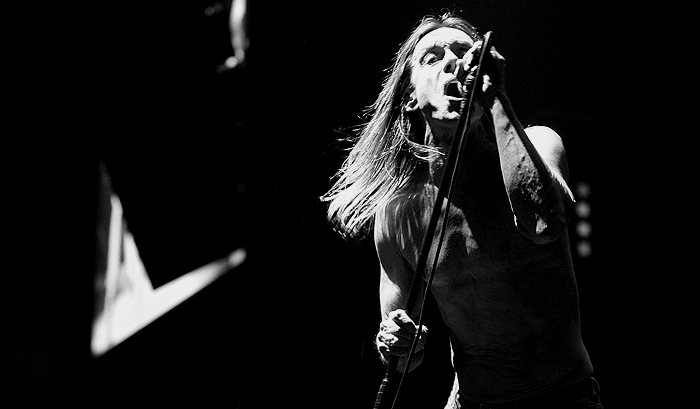
Foto: DP
Para acompañar la lectura del artículo, nuestra lista en Spotify
Es extraño pensar que Iggy Pop es una figura bastante famosa hoy en día, cuando no hace tantos años interesaba únicamente a una minoría. De la cual, además, una buena parte estaba compuesta por nostálgicos de su primera banda, The Stooges. En todo caso, el que esté en boga —incluso apareciendo en anuncios de refrescos, ¡este mundo nunca deja de deparar sorpresas!— es una oportunidad como cualquier otra para bucear en su discografía. Una discografía irregular, hay que decir, y con muchos altibajos: algunos discos fantásticos, otros horribles, y más de alguna joya oculta en forma de canciones poco conocidas que deberían haberse convertido en clásicos. Como hay muchas cosas que contar, dividiremos el artículo en dos partes. Que lo disfruten.
The Stooges (con The Stooges, 1969)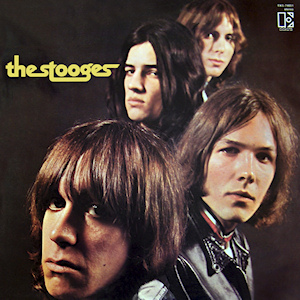
El homónimo debut de The Stooges resultó ser bastante menospreciado en su día, aunque en los años siguientes fue adquiriendo la categoría de clásico absoluto. Pero entonces ni el público ni la crítica prestaron demasiada atención a un disco de sonido primitivo y descarnado. Es cierto que The Stooges no eran grandes instrumentistas que digamos, pero tenían gracia para escribir canciones muy directas y reconocibles, de esas que se te clavan instantáneamente en el cerebro. Precisamente la sencillez y efectividad de esos temas provocó que muchas futuras bandas recurrieran a tocarlos durante sus comienzos, como ejercicio y como diversión fácil de ejecutar, lo que contribuyó bastante a generar el enorme culto que ahora existe en torno a este álbum. Culto que se consolidó muy especialmente a raíz de la explosión del punk. Un disco troglodita y fascinante a partes iguales. No es para todos los paladares, desde luego, pero sin duda se ha inoculado en el ADN de la música rock para siempre.
No fun: Una de las canciones más célebres del disco y también una de las que más versiones ha conocido. Un riff absolutamente reconocible al instante, un ritmo obstinado y absorbente… todo ello adornado con una de las características melodías vocales de Iggy, con la que nos habla sobre uno de sus temas preferidos por entonces: el aburrimiento existencial. Una canción extremadamente sencilla pero que no cualquier banda hubiera sido capaz de producir. Un clásico inmortal. Primitivo, sí, pero inmortal.
I wanna be your dog: El otro gran clásico del álbum, que también ha sido interpretado por muchas otras bandas, es esta canción oscura y retorcida, igualmente reconocible al instante. Tiene esa atmósfera tan extraña y especial de este primer álbum, y resulta hipnótica con esas obsesivas notas agudas y esos cascabeles de fondo que le dan un aire definitivamente ultramundano. Otro clásico inmortal.
1969: Muy en la onda de «No fun», es la canción que abre el disco y que marca el estilo predominante en este primer álbum. Una vez más, canción de una simpleza casi selvática pero que a la vez resulta difícil de imitar. La letra de Iggy sirve para ilustrar la relación entre los Stooges y la oleada hippy que los rodeaba: es decir, una relación más bien tenue. Ellos estaban en otra onda, más desencantada y oscura, muy alejada de la felicidad del Verano del Amor. El propio Iggy idolatraba a Jim Morrison, pero llevaba las facetas más afiladas de Morrison al extremo, al menos en lo tocante a su mensaje y su actitud escénica, inusualmente nihilista en aquellos tiempos.
We will fall: Una curiosidad del primer disco es este extraño desvarío de diez minutos construido sobre un conocido mantra oriental («Om sri ram jai ram jai jai ram») que muestra bastante influencia de la Velvet Underground —no en vano John Cale fue productor de este disco— y que una vez más muestra cómo los Stooges adoptaban a su manera los tics de la Era de Acuario, en este caso unas influencias orientales que poco tenían que ver con los sitares y melodías etéreas de los Beatles. Ideal para escuchar por la noche, dejando llevar la mente a otros lugares. Desde luego le da otro significado al concepto «psicodelia». Toda una experiencia de canción.
Fun House (1970, con The Stooges)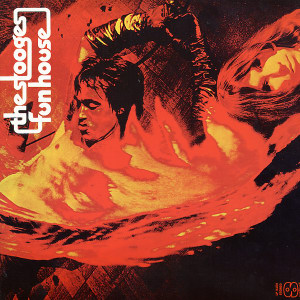
El segundo disco fue un intento de reflejar con mayor fidelidad en el estudio la energía que el grupo solía desplegar en directo, ya que los escenarios eran el medio donde mejor se captaba su naturaleza salvaje. Sigue un estilo similar al disco de debut, aunque más punzante y enérgico. Hay de nuevo algunas canciones memorables (y algún experimento inaudible como esa esquizoide «L. A. Blues» en la que grabaron ruido por separado sin haber escuchado lo que hacían los demás). Otro puntal en el legado de la banda —para muchos su mejor disco— y otro LP que con los años terminaría rodeado de una aureola de culto, aunque en su momento también fue ignorado por prensa y público.
TV Eye: El inconfundible grito inicial de Iggy da paso a uno de los temas más conocidos de The Stooges, que podría haber encajado perfectamente en el primer disco porque tiene un riff de guitarra muy en la onda de aquel. Existe una actuación de la época donde tocaban esta canción y podemos comprobar que hasta qué punto The Stooges eran una rareza en mitad de la confusa escena hippy, con un Iggy que parecía haber viajado en el tiempo desde la futura explosión punk. De esa actuación (en la que también tocan «1970» de este mismo disco) proceden las famosas e impactantes imágenes de Iggy caminando sobre el público mientras se untaba de mantequilla de cacahuete.
Down on the street: Otro de los puntos fuertes de Fun House es este cadencioso tema, puntuado por el arrebato de agresividad y caos domesticado en el estribillo, donde los Stooges demuestran la intensidad salvaje que eran capaces de alcanzar.
1970: Canción en la onda del primer álbum, primitiva, sencilla y directa a la médula. Otro de los cortes más célebres del disco, y una nueva demostración que la etiqueta de «padres del punk» no es gratuita.
Pese al escaso éxito de estos dos primeros álbumes, el grupo trataba de salir adelante como podía e incluso ficharon a un segundo guitarrista, James Williamson, para sus directos. Pero no era el único problema de la banda, que ya por entonces estaba minada por el caos interno. El alcoholismo del bajista Dave Alexander, los devaneos de Iggy con la heroína y la falta de repercusión comercial provocan finalmente la primera disolución de The Stooges. Aun así, todavía habría tiempo para un inesperado tercer álbum.
Raw power (con The Stooges, 1973)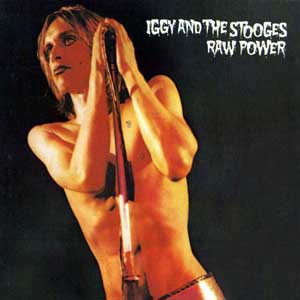
Iggy se traslada a Inglaterra y comienza a grabar un nuevo álbum con la ayuda de su amigo David Bowie a la producción. Cuenta con James Williamson a la guitarra, el mismo que había ayudado a los Stooges en su última etapa. En principio pensaban grabar con un nuevo grupo de acompañamiento, pero la desconexión de Iggy y Williamson con la escena británica les hace difícil encontrar compañeros de viaje entre los músicos ingleses. Así, por sugerencia de Williamson, Iggy llama de nuevo a los hermanos Asheton para reformar The Stooges, aunque ahora se harán llamar Iggy and the Stooges. El guitarrista original, Ron Asheton, se ocupará ahora del bajo (porque Williamson, sin ser tampoco un virtuoso, era mejor guitarristaque él). Esta nueva formación de The Stooges grabará un tercer y último disco en mitad de un ambiente de gran tensión, por lo que la reunificación se transformará rápidamente en un nuevo proceso de descomposición interna. Toda esa tensión, no obstante, es bien canalizada hacia una música furiosa y agresiva. Algunas canciones se convierten en nuevos clásicos en la breve discografía del grupo. Aunque su característico sonido crudo y salvaje se combina aquí con alguna canción más sofisticada e incluso suave, este es otro disco que contribuirá a la construcción de su futura leyenda como padres del punk. Por primera vez los críticos hablan bien de un álbum de The Stooges, pese a las polémicas mezclas finales hechas por Bowie, que según Iggy dinamitaron la energía de la banda. Esas mezclas han dado mucho que hablar entre los fans a lo largo de los años. No es difícil percibir que efectivamente se pierde energía por el camino: las guitarras y la voz están en demasiado primer plano mientras que la sección rítmica queda muy atrás (incluso hay momentos en que apenas se oye la batería). Eso sí, pese a sus quejas, el remix que el propio Iggy Pop hizo en 1997 y que se suponía iba a mostrar al mundo cómo debía haber sonado este disco… ¡era incluso peor! Así pues, nos quedamos con la mezcla de Bowie, imperfecta, pero que es la que hemos escuchado toda la vida. Aunque por su parte Bowie se excusa diciendo que se limitó a intentar arreglar —con poco tiempo y escasos medios— una primera mezcla hecha por Iggy que sonaba todavía más deslavazada, por lo que no había mucho que hacer. En fin: esto es lo que pasa cuando ninguno de los dos es ingeniero de sonido ni está por ahí Mick Ronson para arreglar las cosas. Buenos músicos, pésimos ingenieros de sonido. Pero aun con sus problemas de sonido, este será el tercer disco clásico de una banda maldita.
Search and destroy: Sin duda una de las mejores canciones de The Stooges, rock & roll agresivo —aunque menos oscuro que lo habitual— que Iggy canta magníficamente bien con un inesperado tono de voz susurrante, tono que contrasta con la cruda base instrumental. Una vez más, el tipo de tema que infinidad de bandas han tocado en sus comienzos. Y otro clásico absoluto.
Raw power: En la misma onda rockera de «Search and destroy», este es el otro gran clásico del disco. Una canción sencilla y de cadencia bailable, aunque también una de las que resultó más arruinada por las polémicas mezclas de Bowie. «Raw power» es tan poderosa como afirma su título, aunque para comprobarlo es mejor acudir a las diversas interpretaciones en directo que Iggy ha hecho a lo largo de los años.
Gimme danger: Con un inicio inesperadamente acústico —influencia de Williamson— recuerda mucho a futuros discos de Iggy en solitario (es más; algún fragmento de melodía de «Gimme danger» volverá a aparecer muchos años después en un tema como «I wanna live», grabado por Iggy en 1996), esta canción es una de las novedades respecto al antiguo sonido troglodita de The Stooges y que apunta la nueva dirección a seguir junto a James Williamson.
Kill City (1975, con James Williamson)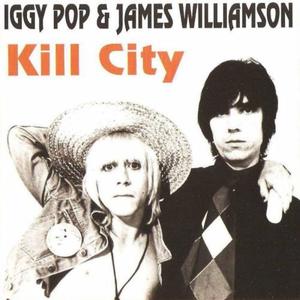
Iggy y James Williamson habían estado trabajando en nuevo material para un hipotético cuarto disco de The Stooges, pero la situación interna en la banda resulta insostenible y se separan antes de empezar la grabación. Así pues, el cantante y el guitarrista siguen elaborando esas canciones por su cuenta y deciden publicarlas a nombre de ambos. Un disco más que apreciable donde quizá lo peor es el sonido en sí, un tanto irregular, pero donde las canciones son buenas e incluso hay alguna que podemos considerar un clásico por derecho propio. Eso sí, vemos cambios: el estilo primitivo de The Stooges empieza a quedar atrás y nos encontramos con influencias del glam rock, de los Rolling Stones… un rock & roll más propio de los primeros años setenta, por así decir. Este disco fue bastante infravalorado en su día, pasó completamente desapercibido y casi nadie se molestó en comprarlo, pero merece mucho la pena redescubrirlo porque encierra alguna que otra sorpresa.
I got nothin’: Probablemente mi canción favorita del disco. Melancólica y rabiosa a partes iguales, con una fantástica atmósfera etérea y decadente. Creo que es un clásico infravalorado en la discografía de Iggy, una maravilla que ha sido ensombrecida por algunos de sus otros éxitos de los años setenta, pero que en mi opinión debería figurar siempre en cualquier lista de sus mejores canciones. Fantástica.
Kill city: El corte que da título al disco es una buena muestra del giro hacia un rock más convencional, cambiando la vieja furia de los Stooges por un mayor groove y por estribillos más pegadizos. Otra muy buena canción que combina la onda Raw Power con un estribillo más hard rock, e inconfundiblemente setentero.
No sense of crime: Un tranquilo medio tiempo que muestra otra faceta del álbum, la más reposada. Las melodía vocal puede incluso llegar a recordar a The Who en algunos momentos (concretamente a «My wife», escrita y cantada por John Entwistle). Todo lo que The Stooges se habían alejado de los convencionalismos de final de los años sesenta, es un camino que Iggy y Williamson recorren de vuelta para volver a sonar relativamente convencionales y más en consonancia con los tiempos en temas como este.
The Idiot (1977)
Iggy se separa de james Williamson y recurre de nuevo a David Bowie para que le ayude con la composición y la producción del que será su primer verdadero disco en solitario, pero con Bowie, cómo no, retorna la controversia. La sombra del británico planea por todas partes e incluso participan algunos de los músicos de su banda de entonces, como el guitarrista Carlos Alomar, que también dejará su huella. El propio Bowie terminaría reconociendo que en este disco usó a Iggy como conejillo de indias para experimentar con el nuevo estilo que planeaba para su propia carrera, influido por nuevos sonidos que estaban llegando desde el continente europeo, el anticipo de la new wave. Sonidos que rozan con lo electrónico, con un tono más sombrío que se anticipa a los ochenta y con prácticamente nada que recuerde a The Stooges o al trabajo grabado con Williamson. Un disco que divide a los críticos y a los fans. A mí, particularmente, no me gusta. Lo considero un más que notable bajón respecto a Kill City. Eso sí, le fue relativamente bien a nivel de ventas: se coló en el Top 30 británico y en el Top 11 estadounidense, siendo la primera vez que Iggy conseguía asomarse por las partes altas de las listas.
China girl: Este es el tema más conocido del disco entre otras cosas porque el propio Bowie lo grabaría más adelante, durante su exitosa etapa de los ochenta, para que Iggy cobrase algunos cheques en concepto de derechos de autor. No es una mala canción, pero como casi todo en este disco suena plano e impersonal, con un sonido y una producción definitivamente mejorables. Al menos en mi opinión.
Sister midnight: Como veremos, esto sigue sonando más al Bowie de «Fame» que a lo que podría esperarse de Iggy Pop (y de hecho no sería raro que un oyente despistado confundiese a ambos al escuchar esto). No en vano está compuesta por Carlos Alomar, quien también aportó el riff de la susodicha «Fame». Interesante como experimento, aunque interesante a nivel anecdótico como casi todo en este álbum.
Lust for life (1977)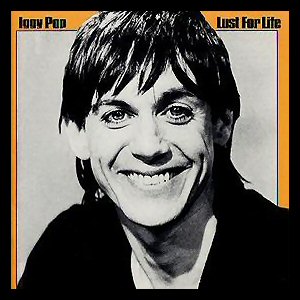
Editado solo unos meses más tarde que The Idiot y también grabado bajo el ala protectora de Bowie, nos hallamos sin embargo ante una cosa muy distinta. También es un disco más Bowie que Iggy en muchos aspectos, pero el resultado es mucho mejor porque Bowie se dejó de experimentos. Aquí grabaron una música que pegaba bastante más con la personalidad de Iggy. De hecho contiene dos de las mejores canciones nunca grabadas por la Iguana y que además son las más famosas de su carrera en solitario (curiosamente, ninguna de ellas está compuesta por él). El resto del disco es apreciable, aunque en mi opinión irregular. Sé que no todo el mundo comparte esta opinión, pero al menos yo veo cierta desigualdad entre algunos cortes geniales y otros más olvidables. En todo caso, los dos mayores clásicos que contiene ya justificaban por sí mismos la compra del disco.
Lust for life: El tema título es probablemente el más famoso en toda la carrera de Iggy. Escrito por Bowie en estado de gracia como compositor, el inglés tuvo muy en cuenta que tenía que crear un tema adaptado a la idiosincrasia de Iggy, no a la suya propia, y donde hubiese algún guiño al viejo estilo de los Stooges. El resultado es una auténtica joya. Sencilla pero hipnótica, y completamente irresistible. Un clásico inmortal. No creo que haya mucha gente que no la reconozca ya desde los compases iniciales, incluso gente que no esté familiarizada con la carrera de Iggy. Un nuevo clásico inmortal a sumar a los que ya hemos citado antes de The Stooges. Absolutamente maravillosa.
The passenger: La otra gran joya del disco, compuesta por el guitarrista escocés Ricky Gardiner, que se destapó con un himno destinado a pasar a la historia. Qué decir, es otra canción fantástica.
New values (1979)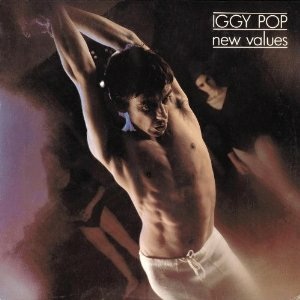
Iggy rompe temporalmente su asociación con Bowie y vuelve a juntarse con su compatriota James Williamson. El guitarrista tejano toma el timón de la composición y juntos graban lo que para mí es uno de los discos más personales e interesantes en la carrera de Iggy. Es verdad que aquí no hay una «Lust for life» o una «The passenger», y quizá por ello New values tuvo mucho menos éxito que su predecesor y es conocido por mucha menos gente. Pero creo que demasiadas personas lo pasan por alto, que ha sido injustamente ensombrecido por la alargada sombra de la popularidad del mencionado Lust for life. Aunque New values es un álbum decididamente inconexo y con una producción un tanto seca, contiene varios temas verdaderamente memorables que ya en su día justificaban por sí mismos la adquisición del vinilo. Las ventas bajaron mucho, pero ojo: tenemos aquí unas cuantas joyas ocultas que merece mucho la pena redescubrir. Gran disco.
Five foot one: Directa y descarnada, es una canción que va ganando con las sucesivas escuchas (y que he de decir, siempre ha sido una de mis favoritas de la carrera de Iggy). En la letra, nuestro protagonista se queja con sarcasmo de su baja estatura. Efectivos riffs de guitarra, una energía que —como casi siempre en este álbum— está contenida pero pugna constantemente por explotar y un fantástico tramo final en el que Iggy repite obsesivamente una de las mejores frases que ha escrito nunca («I wish life could be sweet as magazines») junto con el cachondo lamento «¡ya no voy a crecer más!». Fantástica. Para mí, un nuevo clásico que hubiese merecido mejor suerte en la memoria de los fans.
I’m bored: Otra gran canción. Iggy retorna a una de sus temáticas favoritas, el aburrimiento, con este tema de ritmo sincopado y guitarras cortantes como cuchillas (un signo reconocible de Williamson en la producción). Una vez más, grandes riffs, un solo de guitarra muy sencillo pero verdaderamente arrollador, una sección de viento discreta pero que acentúa el tema en los momentos adecuados y un Iggy que canta con mayor seguridad en sí mismo que nunca antes, adoptando un tono chulesco y grave que le va muy bien y que empleará muy a menudo en el futuro.
Girls: En la misma tónica que las anteriores (casualmente estas tres, con un sonido similar entre sí, me parecen las mejores del álbum). Una vez más las guitarras mandan pero sin excederse, e Iggy vuelve a adoptar ese tono de voz grave y teatral, casi de narración hablada, que tan bien domina. Muy buena.
Soldier (1980)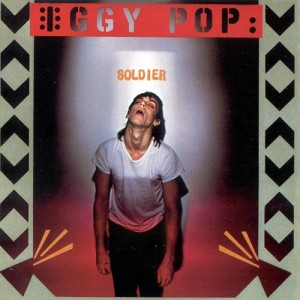
Los Stooges habían sido uno de los referentes básicos para la oleada punk que por entonces acababa de sacudir la industria musical, así que no resulta extraño que para este nuevo disco Iggy se asociase con Glen Matlock, el primer bajista de los Sex Pistols y según dicen cerebro musical de la fugaz banda punk británica. En principio, la intención de Iggy era la de reunir a sus dos amigos y principales colaboradores: James Williamson y David Bowie, para que entre ambos le diesen forma al álbum. El guitarrista estadounidense iba a hacerse cargo del timón como productor al igual que en New Values, y David Bowie iba a aportar también su granito de arena… pero se produjo un más que significativo choque entre ambos. Antes, Williamson y Bowie no habían tenido que competir por imponer su criterio en un disco de Iggy, y finalmente se vieron incapaces de trabajar juntos. Todo un síntoma de lo diferentes que eran las dos vertientes de la carrera de la Iguana hasta entonces: el lado más rockero alentado por James Williamson, y el lado más pop-moderno alentado por Bowie. ¿Cuál fue resultado de este choque? Williamson sencillamente terminó marchándose y aunque Bowie impuso su huella en varios temas, en mitad del conflicto fue finalmente Glen Matlock quien tomó las riendas y ejerció un mayor peso e influencia en la grabación. La huella de Matlock se nota considerablemente en varias canciones, por lo que no resulta extraño que Soldier fuese el disco más «gamberro» y cachondo de Iggy hasta la fecha. El insólito tándem Matlock-Bowie desgaja el disco en dos mitades: por un lado la faceta rockera —aunque no particularmente agresiva y bastante menos afilada que en New Values— de Matlock, y por otro lado los toques modernos y las influencias de la new wave que estaba muy de moda y que a Bowie (y a Iggy) tanto les gustaba. Al final, Soldier es un trabajo muy entretenido al que quizá le faltaron un par de singles de impacto —fue un fracaso comercial— pero que no es un mal disco.
Dog food: El single más conocido del álbum, una hilarante canción en la que, por así decir, Iggy glosa las bondades de la comida para perros, la comida de los más míseros. Musicalmente combina una estructura propia de los Stooges con los característicos arreglos Bowie de aquella época, así que nos encontramos con un híbrido bastante extraño que anuncia (una vez más) un inminente giro en la carrera de la Iguana.
I snub you: Otro divertido tema en donde Iggy se apropia de la chulería bufonesca característica de sus discípulos punkis. Fue escrito a medias con Barry Andrews, de la banda XTC, lo que muestra el interés que Iggy tenía por la new wave melódica de la que XTC eran unos más que dignos representantes.
I’m a conservative: Uno de los mejores temas del disco, una canción punki en la que Iggy se burla de la hipocresía y proselitismo de los ciudadanos biempensantes de derecha. Eso sí, las visiones políticas de Iggy no son fáciles de resumir y pese al mensaje de esta canción, en los ochenta apoyó a Reagan, por ejemplo. Más adelante, sin embargo, ha atacado a presidentes de ambos partidos (Clinton o Bush) y ha mostrado bastante escepticismo con respecto al sistema de su país, así que resulta difícil ubicarlo políticamente.
Party (1981)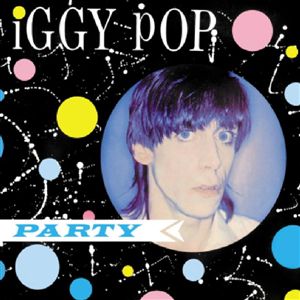
El peor álbum de Iggy hasta la fecha. Cambia de colaboradores y también cambia una vez más de sonido. Se asoció con Ivan Kral —guitarrista conocido por su trabajo para Patty Smith y John Cale—, pero este nuevo tándem creativo no funciona. En absoluto. No encontramos aquí ni la agresividad de los Stooges, ni el filo rockero de James Williamson, ni el desenfado punki de Matlock, ni la variedad que Bowie imprimió a Lust for life. Es un álbum carente de personalidad, que fue grabado por Iggy como podría haber grabado cualquier otro artista de la época. También fue un disco completamente ignorado, como el anterior, pero esta vez con mucho mayor motivo.
Sea of love: Lo mejor el disco es esta vieja balada que había sido un hit verdaderamente enorme en la América de finales de los cincuenta y que también han interpretado otros famosos artistas estadounidenses. Una buena versión que destaca en mitad de un álbum más bien olvidable.
Happy man: Una muestra como otra cualquiera de lo perdido que empezaba a estar Iggy en esta época es esta incursión en el ska al estilo Madness, pero sin la gracia de estos. Una cancioncita indigna de él, que podría haber sido compuesta en la verbena de cualquier fiesta fallera. La pongo para destacar esa falta de dirección, pero descuiden: el resto del disco no es mucho mejor.
Zombie birdhouse (1982)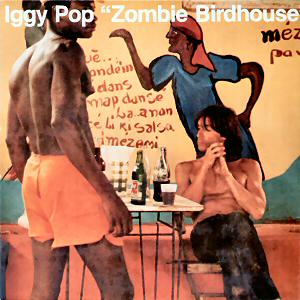
Iggy parece empeñado en querer subirse al carro de los ochenta, de encajar con lo que está de moda (de «venderse», vamos) y edita otro álbum en la misma línea de Party. Esta vez recurre como escudero al guitarrista de Blondie y su sonido va desplazándose de la new wave al techno-pop, pero el resultado es incluso más desastroso que en el álbum anterior. En aquellos años el rock guitarrero no estaba de moda —excepto en el mundillo heavy metal, mundillo por otra parte denostado por la crítica contemporánea—, nadie se acordaba de The Stooges excepto un puñado de nostálgicos y el empeño de la Iguana por alejarse de sus inicios para adentrarse en estilos comerciales —pero que no domina— sigue sin dejar a nadie contento. Un disco muy flojo, con supuestos experimentos pseudoelectrónicos que pretendían ser modernos pero que hoy suenan desfasados e incluso por momentos ridículos.
The horse song: Una muestra de lo que podemos escuchar en este álbum. No es que la canción esté mal del todo, pero todo un disco entero repleto de este tipo de material puede explicar que los antiguos fans de Iggy no se molestasen ya en prestarle atención. Por otra parte, los potenciales nuevos fans tenían a otros artistas haciendo este mismo sonido pero de manera más convincente, así que tampoco sentían el deseo de empezar a interesarse por Iggy a estas alturas de su carrera.
Blah Blah Blah (1986)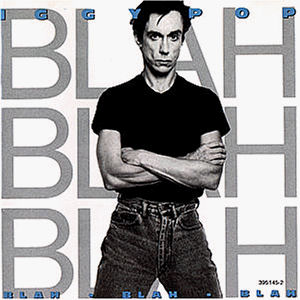
Tercer intento de encajar en los sonidos que están de moda. Ante la falta de repercusión de los dos anteriores, Iggy recurre a la ayuda de su viejo amigo Bowie, cuya presencia podría garantizar por sí misma el éxito. Dicho y hecho, por fin obtiene el éxito comercial que lleva media década de los ochenta buscando ansiosamente. Eso sí, lo logra con un disco que —aunque parecía difícil— escandaliza todavía más a sus viejos seguidores. Vendió bien y fue su mayor éxito desde Lust for life, pero no, no se parece en nada a Lust for life. La verdad es que esto es como un subproducto barato de lo que Bowie hacía en aquella misma época. Personalmente, ya no es que no me guste el estilo del disco (que no es mi estilo favorito) sino que en este mismo estilo podían hacerse las cosas de manera más convincente, como demuestran sin ir más lejos diversas canciones de los discos del propio Bowie en aquellos años y que me gusta bastante más, en general. En fin, seguramente sea este el peor disco en la carrera de Iggy, o uno de los peores. Completamente prescindible.
Real wild child (Wild one): La principal responsable del éxito del horrendo Blah Blah Blah es esta versión de un viejo y oscuro clásico del rock & roll australiano. Una versión lograda, a su manera, pero si decimos que esto es con mucho lo mejor del disco creo que damos una buena idea de que lo demás no es precisamente descollante.
Instinct (1988)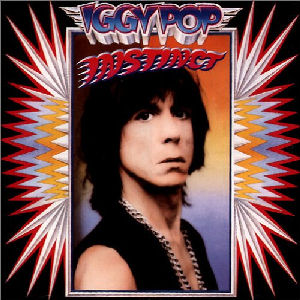
El éxito de Blah Blah Blah hace que Iggy no quiera despegarse del todo del sonido más comercial de los ochenta, pero en por otra parte empieza a echar de menos las guitarras, que —particularmente en los Estados Unidos— han seguido pegando fuerte. Así que una vez más cambia de colaborador principal: esta vez une esfuerzos con otro antiguo miembro de Sex Pistols, el guitarrista Steve Jones. El resultado de la nueva asociación es bastante irregular. Sí, vuelven las guitarras, pero lo hacen en una especie de pop-rock endurecido un poco en la onda Billy Idol. Con todo, tiene sus buenos momentos. Sin ser un gran disco, que no lo es, resulta bastante menos embarazoso de escuchar que el flácido Blah Blah Blah. Iggy empieza a retornar al reino de donde nunca debió haber salido: el del rock más directo aunque Instinct supone un paso todavía tibio en esa dirección. Pero es un paso adelante al fin y al cabo. Comercialmente no funcionó mal y aunque probablemente es un disco prescindible en conjunto, desde luego no resultaba difícil hacer algo más digno que Blah Blah Blah.
Cold metal: La canción más efectiva del disco, su single principal y quizá la única que destacaría. En cierto modo marca el camino que habrá de seguir Iggy en lo venidero. Esto es: rock, riffs de guitarra… una música con más sangre, en definitiva. O al menos una música que se le adapta mejor, porque en directo seguía siendo el Iggy de costumbre, salvaje y enérgico (eso sí que no cambiaba nunca). En el videoclip vemos a Steve Jones con su flamante melena de la época, con la que se dedicaba a intentar llevarse a la cama a medio Los Ángeles (el vídeo, por momentos, es involuntariamente hilarante, al menos visto desde hoy, tan repleto como está de tópicos horteras del hard rock ochentero). El mejor detalle de ese clip —y cómo no, el más elegante— es la presencia de Andy McCoy, el de los Hanoi Rocks, que por aquellos tiempos militó en la banda de directo de Iggy aunque no participó en la grabación del disco. McCoy era capaz de quedar bien incluso en un vídeo tan hortera como este. Por lo demás, una fantástica canción que para mi gusto es lo mejor del álbum, con diferencia. Una canción que, por qué no, merece la categoría de nuevo clásico en el repertorio de Iggy.
En el siguiente episodio veremos cómo suceden varias cosas importantes: el retorno definitivo de Iggy al sonido más rockero, lo cual se traducirá en varios fantásticos discos que le devolvieron su reputación durante los noventa. También veremos la inesperada resurrección de The Stooges… en fin, una nueva época dorada para la Iguana después de los numerosos tropezones de los ochenta.
 Ana Curra: «Hubo dos Movidas, la light que se ha vendido, y la de los perdedores y transgresores»
 Begin with a bang: las mejores canciones que abren un álbum
 Hic sunt dracones
 La historia de The Who en 50 canciones (1ª parte: 1965-1969)
 La historia de The Who en 50 canciones (2ª parte: 1970-2013)
 20 canciones veraniegas para la playa y la montaña
SnobDesconcierto Cultural fai as cousas para que a min me parezan MAL. :D
Desconcierto Cultural organiza este sábado en Compostela o Festival Primos Hermanos, que busca a unión entre músicos galegos e asturianos e que incluirá os concertos de Xabel Vegas e Elle Belga (Casa das Crechas), Pablo und Destruktion (Kuntshalle) e Tuya e Fasenuova (Cachán). A sidra será galega.

Feeling sad and/or anxious about Valentine’s Day? Well this might cheer you up: my new Breathless column for Vogue, published yesterday, is about how V-Day day is a bit traj… and I also wrote about love a bit too, so it’s not all bad :) You can read it HERE!
SnobA mellor consulta sexual!

Photos by Michael Kirby Smith
Saying that you hate Valentine's Day, in two-thousand-and-fourteen Anno Domini, is a tired cliché. Year after year people harp on about how it's just a day designed to induce windfall profits for the money-grubbing, power-hungry CEOs of international greeting-card companies, how crowded all the restaurants are, why we should boycott the day altogether... even how to cheat on the one you love. But it's also important to remember that a lot of people will be eating delicious food and then having some real weird sex tonight. And that's a good thing! But for those of us who don't have significant others to rub our parts on tonight—or other nights, for that matter—it's nice to have an all-knowing goddess of romance and lust to take us by the hand and guide us to a greater understanding of doin' it in a way that is healthy and pleasurable for all parties involved. To that end we, asked Karley Sciortino to dig through her Slutever mailbag and answer a few questions from readers about their sex-related woes.
I have a female friend I'm at art school with, and she recently started texting me erotic photos and porn. Then, last night, she texted me asking me to fuck her. I was shocked! I said I couldn't, but then she responded saying the sex would be incredibly hot and different. I'm confused, actually, because I don't really like her and I wholeheartedly don't want to have sex with her, but I know that will make her sad. By the way, I'm 26 and she's 21, but I prefer women older than she is, like 35–45. What should I do?
—Zach
As a general rule, if someone tries to have sex with you, you should go for it—it's only polite. But if you wholeheartedly don't want to, or you have to be somewhere else because of an emergency, etc., then there are methods of getting out of it. For example, why don't you text her something like: "Hey, no hard feelings, but I think we're better as friends… but maybe you could introduce me to your mother?" Alternatively, if that seems too difficult or insensitive, you could use my preferred method and, the next time she contacts you for sex, just say, "Oh, shit, sorry, I can't hang tonight. I have a birthday party to go to." And then the next time she sends you a sexy text, make a similar excuse, and so on, and if all goes to plan she will eventually just get the hint and stop sexting, allowing you to ease with only mild awkwardness back into the friend zone, after which you can both pretend like the whole thing never happened, even though you'll both always remember that it did, and it will probably be somewhere in the back of your minds every time you speak to each other, from now until eternity.

I'm a 19-year-old French girl, and I'm wondering: Do you ever feel bad after a one-night stand? I’ve had a few in the past couple months, and I just hate the feeling afterward, like the guys didn't take my number and it made me feel like an "easy girl." It’s not like I expect guys to fall in love with me just because we have sex, LOL, but I still feel disappointed afterward, like I'm not "the one.” You might think, You're just not cut out for one-night stands, but when I'm in the moment I feel good and very sure of myself. The weirdness and regret only come the day after. How do I cope with that? Also, do you think you have to to wait to have sex to form a lasting relationship?
—AnnaMaria
Well, I have a few ideas about this. First of all, most people have experienced feeling not-the-best after a one-night stand, because things that seem like good ideas in the early hours of the morning often reveal themselves to be unnecessary acts of stupidity and desperation the following day (especially when you're riding the subway home in painful high heels, covered in the bodily secretions of a mediocre stranger). So you're not totally alone there. But this is 2014: You don't have to wait for a guy to ask you for your number! Especially if he's already been inside you, for Pete's sake. Have you ever considered that, after you parted ways, your one-night stands might be wondering why you didn't ask for their info? The morning after a random hook-up is a vulnerable moment for both parties, so you can't put all the responsibly on the guy. Yet it's also important to consider: Did you really want to see those guys again, or did you just want them to want to see you for the sake of your own ego?
I generally think that regret is counterproductive, because there's no use wasting time feeling sorry for yourself about a past decision that you can’t change. Deal with it—it's been done; move on with your life. But regret is useful when you find yourself continually regretting the same behavior, because then regret becomes a warning sign that you need to change something. I'm not suggesting that you’re not cut out for causal sex altogether, but it does seem like the way you're engaging in it isn't working out for you, and something needs to be adjusted.
Casual sex has the power to make you feel totally amazing and satisfied, but it can also make you feel like a piece of shit. The difference in results usually has to do with the person's motivation—i.e., are you having casual sex for the “right reasons" or the “wrong reasons”? You know it's a “right reason” when your decision to have sex is very clear and autonomous. For example: You (soberly) find someone attractive and interesting and want that person inside you; you're curious and want to explore your sexuality, and you think anonymous sex is an important experience to have; or you’re horny and want to experience something new and different. Now, here are some "wrongs reasons": peer pressure; because you're drunk; pressure from a guy; or because you're secretly hoping that the sex will lead to something more serious while pretending to yourself, and your partner, that the encounter is purely physical and fun. And judging by your question, I think that last "wrong reason" might be the case for you.
I don't think you have to wait to have sex to form a lasting relationship. But I also think that drunkenly fucking guys and then not making an effort to get their phone number is not the best way to get a boyfriend. Your behavior is making you feel bad, so you should try something different and see if it makes you feel good! Go out with someone from OKCupid, don't blackout, wait a few dates to have sex, and who knows… maybe something ~magical~ will happen, LOL.

I've been going out with my boyfriend for a couple of months, and I'm happy about the relationship. However, when it comes to sex… well I'm kinda new at these things. He does everything perfectly to me and I'm satisfied, but I have no idea how to please him. I'm scared that if I suck his dick, for example, I'll look like a complete slut, and I don't want that! What should I do?
—Quinn
OK, what? On one hand, it's nice to know that people like you can still exist in the modern world. On the other hand, I feel scared about your cluelessness and think you need to watch some porn right now. I guarantee your boyfriend watches porn, so this will give you some insight into what's going on in his mind when he jerks off and/or thinks about sex. After you've watched a woman with bad plastic surgery anally gang-banged and then bukakke'd by a group of prison inmates, you'll understand why the image of your girlfriend giving you a BJ could never be seen as slutty, and only as a gesture of true affection and intimacy (even if you're making pornface). While pornography is pretty well known to misinform men as to how to please a woman (e.g., "The easiest way to make a girl cum is to bend her over, smack various parts of her body with your hands, and then vaginally spear her without foreplay"), porn can still be a good source of basic information—about what goes where, possibilities of positions, etc.—and it will likely inspire you with some sexy ideas.
If you're still paralyzed in bed after that, why don't you just ask your boyfriend, "What do you like?" or "How can I please you?" Sometimes the hardest-seeming problems have the simplest solutions! Of course, when asking questions like these, delivery is important. Try not to scream the question or to sound overly panicked. Instead, if you make your voice sound all breathy and comforting, like Scarlett Johansson's in Her, I'm almost positive you'll get the response you're looking for.