Shared posts

18 Nov 00:51

The Harder They Come

The Harder They Come 1972

Year: 1972

Duration: 01:42:49

Directed by: Perry Henzell

Actors: Jimmy Cliff, Janet Bartley, Carl Bradshaw, Ras Daniel Hartman, Basil Keane, Bob Charlton, Winston Stona and Lucia White

Language: English | Creoles and pidgins

Country: Jamaica

Also known as: Balada Sangrenta, Caiga quien caiga, Hard Road to Travel, Kingstonin kovanaama, Tout, tout de suite

Description: Ivan Martin is just a poor boy from the Jamaican countryside attempting to make a go of things in the city. He hopes to make it big as a musician, but the Man is determined to keep him down. With no job, no skills, and no money, what's a young man to do but turn to life of drugs and crime? Ivan becomes a popular outlaw. But the Man isn't going to like that.

This is an outstanding flick about the hopelessness of poverty when family, the church, the state, and the marketplace all fail. It also has an awesome soundtrack.

Review:

Screenshots:

The Harder They Come[(001023)15-42-52] The Harder They Come.avi The Harder They Come[(068665)15-48-26] The Harder They Come[(078752)15-43-50] The Harder They Come[(083482)15-43-59] The Harder They Come[(087219)15-44-06] The Harder They Come[(106332)15-44-51] The Harder They Come[(108132)15-45-00] The Harder They Come[(108210)15-45-07] The Harder They Come[(108262)15-45-14] The Harder They Come[(108286)15-45-23] The Harder They Come[(118939)15-46-03]

Download:

The Harder They Come 1972

18 Nov 00:28

Science Shows Something Surprising About People Who Love Watching Sports

by erickgfernandez@gmail.com (Erick Fernandez)

We know how passionate sports can make us feel, especially if a team wins a big game or loses one. Maybe you've felt like you're in a romantic relationship with your sports team. Science has found it can go even further, that your team might affect you to the point of impacting your body weight.

The emotions seem real, but does watching sports actually change our brains?

According to ASAPScience, the answer is yes. Here's what's actually happening in our brains when we watch our team play:

Source: YouTubeWe feel dominant: "After watching your team win, levels of testosterone skyrocket, especially compared to experiencing a loss," according to ASAPScience. So if you're a tortured New York Mets fan or a Philadelphia 76ers fan, there aren't many surges in testosterone... Read More
18 Nov 00:18

Monday Cute: March of the Pikachus - Does it matter why?

by Sam Maggs

According to Seoul Sync, this is a Pikachu Parade, something that took place over the weekend to celebrate Park Se-Joon, the first Koream to win a world Pokémon championship. The parade happened four times a day, along with card games, quizzes, and more.

A similar Pikachu flash mob appeared in Yokohama, Japan during their Pokémon day in August. My heart can’t take it.

Are you following The Mary Sue on Twitter, Facebook, Tumblr, Pinterest, & Google +?

17 Nov 23:59

DICK CURLESS "The Drag 'Em Off The Interstate, Sock It To 'Em" Hits Of Dick Curless 65-73

by noreply@blogger.com (RYP)
Dick Curless cut an imposing figure. Tall, lanky, and weathered, with a battered cowboy hat and an eye patch slung over his right eye, Curless possessed a booming baritone voice so powerful, he could seem like the toughest singer in country during the '60s and '70s. Perhaps that's why he was so perfectly suited for truck driving country -- he sounded and looked like a trucker. But Curless couldn't be reduced to an equation as simple as that, and he was one of the most interesting figures in '60s/early-'70s country music, since he was producing music that was traditionalist yet modern, music that was more versatile than it seemed on the surface, touching on folk ballads, Western swing, blues, and even rock. Best of all, this pure country singer was from Maine, not the South, which may be the reason he was so individual: He existed outside of the country mainstream, so he had his own distinctive voice in his words and music, which can be best heard on Razor & Tie's excellent 1998 collection, Drag 'Em off the Interstate, Sock It to 'Em Hits of Dick Curless. He had enough depth to his music to make his two Bear Family boxes compelling -- and that's where his surprising sensitive side is revealed -- but that's far too much information for an introduction. Here, his work is boiled down to 16 charting hits, a couple of lesser-known singles and a couple of excerpts from his great 1973 album Live at the Wheeling Truck Drivers Jamboree. Curless started out with songs of the road and songs of main, coming out of folk tradition but with a Johnny Cash spin, with the wonderfully ominous "A Tombstone Every Mile" making him a star and a favorite with truck drivers. This side of Curless -- including other great hits like "Travelin' Man," "Nine Pound Hammer," "Tater Raisin' Man," "Bury the Bottle With Me," and "The Baron" -- accounts for the first half of the disc, with the second given over to wild, wooly songs of the road, truck stops, drink, loose women, and heartache. Topically, it's all over the place and the music is, too, as he croons ballads and swing tunes, rocks out on the lewd "Chick Inspector (That's Where My Money Goes)," and acts out as the bartender on "Loser's Cocktail," one of the greatest unheralded barroom songs in country history. Though this roughly divides into two halves, both serve up some of the finest hardcore country of the '60s and early '70s -- the kind that true connoisseurs adore. And, for those listeners, Curless is a necessary listen, with this standing as the best overview and summary of his extraordinary music. (Stephen Thomas Erlewine, Allmusic)trax:
01 Travelin' Man 02 I Aint Got Nobody 03 A Tombstone Every Mile 04 Six Times A Day (The Trains Came Down) 05 Nine Pound Hammer 06 'Tater Raisin' Man 07 The Baron 08 All Of Me Belongs To You 09 Big Foot 10 Bury The Bottle With Me 11 Big Wheel Cannonball 12 Hard, Hard Travelin' Man 13 Drag 'Em Off The Interstate, Sock It To 'Em J. P. Blues 14 Juke Box Man 15 Loser's Cocktail 16 Snap Your Fingers 17 Stonin' Around 18 Chick Inspector (That's Where My Money Goes) 19 Evil-Hearted Me 20 I'm Gonna Move To The Outskirts Of Town 21 The Last Blues Song
...served by Gyro1966...
17 Nov 23:44

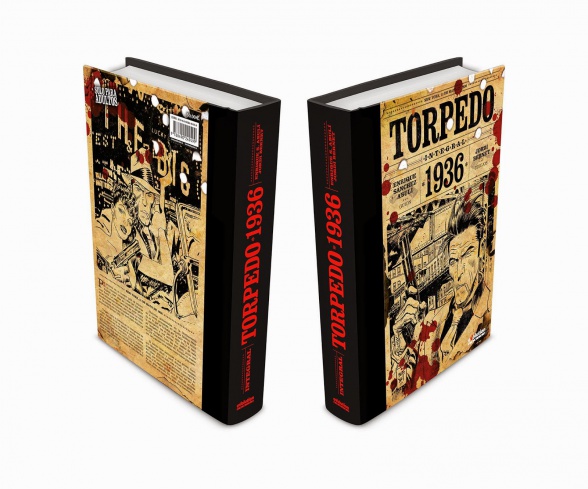
Torpedo 1936 (Integral)

by Jon A. Sedano

Jon A. Sedano

Torpedo 1936 (Integral)Luca Torelli es uno de esos hombres que si te lo topas por la calle, es mejor que cambies de acera. Carente de escrúpulos, este personaje creado por Enrique Sánchez Abulí, y al que supo darle vida el dibujante Jordi Bernet, se ha convertido por méritos propios en uno de los bastardos más grandes del mundo del cómic. De hecho esta expresión, bastardo, sirve muy bien para plasmar el nacimiento de Torpedo, mote con el que se conoce a Luca, ya que el primer dibujante que tuvo la serie, el americano Alex Toth, se negó a plasmar en las viñetas alguna palabra más fuerte que esta, motivo entre otros por el que la serie tardó un par de años en arrancar.

Tras esto, Abulí se alió con Bernet, quien años después se encargaría de ilustrar en la revista El Jueves las historias ‘Clara… de noche’, lanzando así en 1981, dentro del número 32 de la revista Creepy española, la primera historia de ‘Torpedo 1936’.

Al contrario de lo que ocurría con Toth, la elección de Bernet fue más que acertada, ya que el dibujante catalán consiguió plasmar perfectamente el tono oscuro y violento de los guiones de Abulí. Después de los dos primeros números realizados por el americano, Bernet se encargó de la labor artística hasta el año 2000, momento en el que cesó la serie tras varias diferencias entre los autores.

Torpedo 1936 (Integral)

Desde su nacimiento en Creepy, ‘Torpedo 1936’ fue publicándose en multitud de revistas españolas centradas en el cómic, como eran Thriller, Totem o Viñetas entre otras, además de álbumes y relatos, llegando a ganar el Premio Alph-Art al Mejor Álbum Extranjero de Angoulême en 1985. Después de esto, en 1990, la serie dio el salto al suplemento dominical El País Semanal, donde se publicarían cinco historias, ya que la sexta, de nombre ‘Lolita’, fue censurada por su dura temática: su protagonista era una prostituta menor de edad con la que Torpedo mantenía relaciones sexuales explícitas. Al año siguiente, en mayo de 1991, la editorial Makoki comenzó a publicar una revista dedicada al personaje, hasta que, como ya he mencionado, un problema de derechos en los que se vio inmiscuido el cantante Lokillo, rompió el tándem artístico, poniendo fin a la carrera de Torpedo.

Pero si de algo podemos estar seguros, es de que Torpedo, durante los años en los que ocupó cientos y cientos de viñetas, se embolsó además de ‘mucha guita’ dentro del cómic, multitud de buenas críticas. Y no es para menos, ya que su excelente narrativa y su espléndido dibujo lo convierten en una obra indispensable para el público adulto.

Luca Torelli es un siciliano nacido en 1903 que se ve obligado a emigrar a Estados Unidos a temprana edad. Allí, decide convertirse en un asesino a sueldo o ‘Torpedo’ que es como se conoce a estos en la jerga de la época. A partir de este momento cada capítulo se centra en alguna de sus misiones, que pueden ir desde liquidar a alguien hasta simplemente amedrentarle, aunque por el camino iremos viendo cómo este personaje juega sucio hasta con su sombra. Junto a su compañero, o más bien perro faldero, Rascal, Torpedo nos introduce hasta el tuétano de la sociedad más decrépita de la época.

Con una gran dosis de humor negro, el cómic, que está realizado en su mayoría a modo de historias cortas autoconclusivas de ocho a diez páginas, recupera el estilo noir clásico que más adelante inspiraría a otros artistas, como claramente se puede apreciar en el Sin City de Frank Miller, quien se consideró fan de la obra.

Torpedo 1936 (Integral)Torpedo es malvado, inmoral, traicionero, mujeriego, machista, etc. y todo esto está perfectamente relatado en cada una de las viñetas, razón por la que está destinado al público adulto. Con situaciones e ilustraciones que nos recordarán a películas interpretadas por Bogart o James Cagney, los relatos se acercan al clásico cine negro. En una Nueva York situada en plena depresión de los años 30, Luca irá haciéndose un nombre entre los bajos fondos de la ciudad, con relatos capaces de arrancarnos una sonrisa o de sorprendernos por su extrema crudeza. Porque pese a que el lector coja ‘cariño’ al protagonista, este último no deja de ser una mala persona, traicionando o llenando de plomo a cualquiera por lograr conseguir algo de dinero, haciendo así que el lector se replantee su afinidad.

Por otro lado, el rostro de Luca es capaz de transmitir cualquier tipo de sensación sin dejar lugar a dudas. Así, este ‘galán’ italiano logra en manos de Benet mostrar odio, tristeza o placer solo con una simple viñeta, sin necesidad de una narrativa escrita que lo explique el contexto de la historia.

Torpedo se convierte así es un cómic que todo lector adulto, sobre todo el amante de la novela negra, no debe perderse. Esta es una de esas obras gráficas que sobresalen frente al resto, y no solo por su tamaño, del cual hablaremos continuación, sino por su excelente y rebosante calidad, de esa que no se encuentra todos los días.

La edición que Panini acaba de editar bien merecería una reseña aparte, no solo por haber logrado incluir en un solo tomo todas las historias de Torpedo publicadas de forma cronológica, sino porque han sabido cuidar cada mínimo detalle. Hasta ahora podíamos hablar de dos ediciones de la obra, la publicada por Toutain y la de Glénat, a las que se suma esta nueva que revisa las dos anteriores, logrando situarse por encima de ambas.

Torpedo 1936 (Integral)

Izq. Edición de Glénat / Dcha. Restauración de Panini

Hablamos no solo de una mejora en el sombreado, por ejemplo logrando que este capte todo el detalle que por niveles técnicos en las anteriores no se apreciaba con la misma calidad, sino también de una labor de rediseño de ciertos títulos o de la mejora de algunas tipografías. El cómic ha sido reescaneado completamente para lograr no perder ningún detalle, por ínfimo que sea. Los grandes títulos que antes ocultaban ciertos dibujos o parte de algunas páginas ahora han sido rediseñados buscando tapar lo mínimo. Cada página ha sido cuidada con un mimo exquisito, que se traduce en una edición impresionante.

Torpedo 1936 (Integral)

Además de lo comentado, el integral ‘Torpedo 1936’ de Panini ha sido editado bajo un lujoso formato cartoné que incluye en su interior las 61 historias publicadas sobre el personaje, divididas en 720 páginas en blanco y negro, con un precio de portada de 60 euros. En su parte final podéis encontrar además un artículo de Javier Mesón, quien se encarga de la web ‘Tocata y Fuga’ en la que se puede apreciar todo el proceso de reedición.

Enrique Sánchez Abulí (Francia, 1945) inició su carrera en el mundo del cómic en los años sesenta, con la obra Hazañas Bélicas. Aprendiendo el oficio de escritor de su propio padre, pronto vimos numerosos trabajos suyos en diferentes publicaciones hasta que en 1982 publica junto a Esteban Maroto, Zodíaco, lanzando también meses después Torpedo 1936, que se publicó hasta el año 2000. Fue con esta obra con la que alcanzó la fama internacional, trabajando a partir de entonces en diferentes revistas o series, como puede ser El Jueves o Playboy.

Jordi Bernet (España, 1944) es un dibujante español que nació en una familia dedicada a la historieta. Desde que a los 13 años publicase un par de chistes en la revista Pepe Cola, comenzó su andadura como dibujante cogiendo el testigo de su padre en Bruguera, donde se encargo de ilustrar las historias de Doña Urraca. Desde aquel entonces no ha parado, siendo sus trabajos más longevos el de ‘Torpedo 1936’ (1985-2000) o la serie ‘Clara de noche’ que desde 1992 hasta el año 2011 dibujó para la revista El Jueves.

Guion
Dibujo
Edición
5

La editorial Panini ha conseguido recopilar y mejorar con creces esta obra indispensable del cómic español dentro de un lujoso volumen. Un ejemplar que no puede faltar en la estantería de cualquier lector adulto.

10

Torpedo 1936 (Integral)Por primera vez en nuestro país, un volumen integral recoge todas las historias de Torpedo 1936, La mejor historieta de serie negra de las últimas tres décadas, que cosechó un éxito mundial desde sus inicios a ambos lados del charco. Torpedo narra la historia de un inmigrante de origen italiano, la de un asesino a sueldo que reparte su particular justicia, por la calles de Nueva York, durante la Gran Depresión. El mérito debe atribuirse a dos genios como Enrique Sánchez Abulí y Jordi Bernet. Dos auténticas figuras del cómic nacional, un tándem creativo irrepetible, que han dado vida a una leyenda del tebeo. Fruto de unos guiones llenos de ingenio de Abulí que muestran el lado oscuro del alma del ser humano, y del mágico pincel seco de Bernet, con su gran sentido del ritmo cinematográfico.

Autores: Enrique Sánchez Abulí y Jordi Bernet.

Torpedo 1936

La entrada Torpedo 1936 (Integral) pertenece a La Casa de EL - Artículos y noticias sobre cómics, cine, series y videojuegos.

17 Nov 23:40

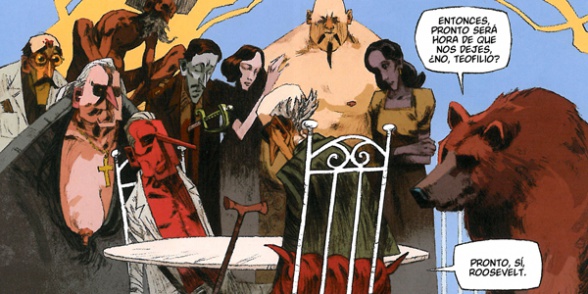
13 Rue Del Percebe

by Txipi

caja13rue
Hola esta vez les dejo las series de "13 Rue del Percebe" creadas por Francisco Ibañez, en la que se  podria considerar como una de sus obras mas originales. Su formula es bien sencilla, tomando como punto de partida un edicificio que actua a modo de plantilla de todas sus viñetas,  nos muestran  los entresijos de una curiosa comunidad de vecinos en la que se van sucediendo todo tipo de ridiculas situaciones. Tan simple como eso…  Muy recomendable, disfrutarlo.

SINOPSIS
Publicada por primera vez en la revista Tio Vivo (Ediciones Bruguera) con fecha de edición del 6 de marzo de 1961, 13 Rue del percebe es una de las más populares creaciones de Francisco Ibañez, además de una de las más longevas y de las que mejor han aguantado el paso del tiempo. Como muestra de la popularidad de la serie, basta mencionar que cuando Ibañez abandonó Bruguera por diferencias con la editorial y pasó a trabajar con Grijalbo, creó para la revista Guai! en 1986 la serie 7 Rebolling Street, con el mismo concepto y formato que 13 Rue del percebe, pero con distintos inquilinos y edificio.

Las historietas, de una página, nos muestran a los vecinos de un destartalado edificio en diferentes situaciones cómicas, con un chiste-viñeta dedicada a cada vecino.

PERSONAJES
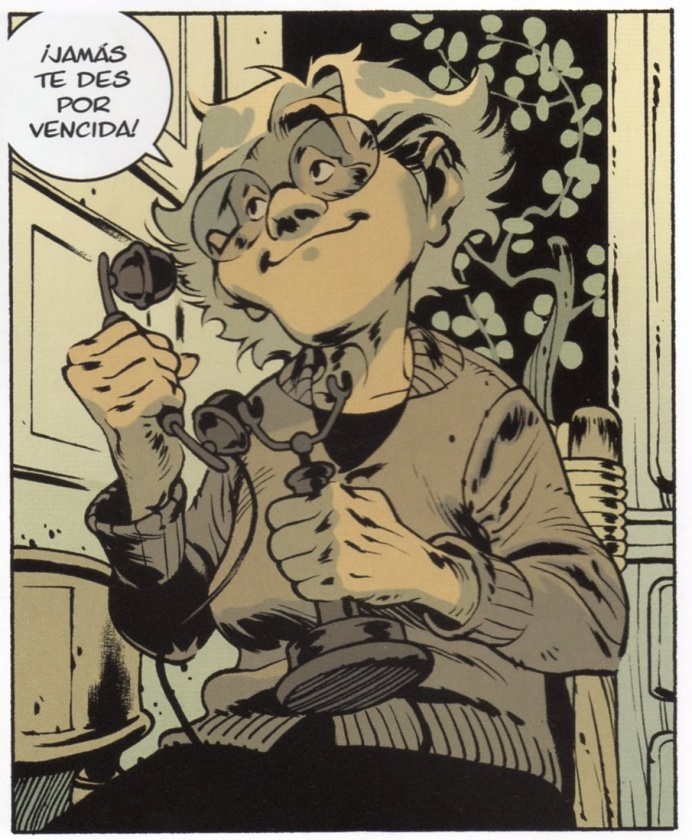
En el ático vive un moroso de mucho cuidado que siempre se las ingenia para que sus acreedores las pasen canutas y un gato y un ratón que se han intercambiado papeles y es el ratón el que se las hace pasar canutas al gato. En el tercer piso vive el caco más torpe del barrio, un especialista en robar cosas inútiles, y unos terribles niños gamberretes que traen por el camino de la amargura a su madre. En el segundo, una anciana que siempre tiene problemas con sus animales de compañia y un sastre bastante desastroso (en las primeras entregas, el piso del sastre estaba habitado por un científico loco, con monstruo incluido, que luego abandonaría el edificio y durante algunas entregas vemos como la portera lo va enseñando a nuevos inquilinos potenciales). En el primer piso vive un veterinario que está siempre en apuros con sus "clientes" animales y la dueña bastante rácana de una pensión muy particular. En la planta baja conviven un tendero bastante caradura y timador y la portera del edificio. Y por último, tenemos el ascensor del edificio, fuente continua de anécdotas, y un pobre que vive en el agujero de alcantarilla que hay delante del edificio.

Idioma: Español.
Editorial: Bruguera, Ediciones B.
Año: 1991
Guion:
F.Ibañez.
Dibujo: F.Ibañez.
Tradumaquetadores: Sr Ogro, Xilander, Jargimen, Balrog, Cantoseegla, Cilurnigo (CRG).
Archivos: 11
Formato: CBR.
Tamaño: 450 Mb.

53Sin título-Escaneado-011245

13 RUE DEL PERCEBE (EDICION LA PARAETA)
Tomando como base el fantastico trabajo realizado por " Señor Ogro " de 13 Rue del Percebe, he dividido su integral de 442 paginas en cuatro tomos con una nueva presentacion en la que se le han añadido portadas, prologos, anexos, etc... En una edicion dedicada al blog de La Paraeta de Vinatea. Recordemos que este integral de “Sr Ogro” contiene la recopilación íntegra de la serie “13 Rue del Percebe” ordenadas cronologicamente, que vieron la luz en la mitica revista Tio Vivo principalmente…

1234

Descargar comics:
17 Nov 23:27

Insight: "A major cause of being poor is not having enough money..."

by blankdawn
"It shouldn't come as a huge surprise that giving them money is a great way to reduce that problem." Giving small amounts of money to poor people works more efficiently than any other anti-poverty approach, doesn't lead to "laziness," improves health and happiness, fights crime and addiction, and just might lead to the kind of minimized consumption needed to prevent ecological crisis. (Works even better when it's enshrined as a right, as a few real life examples have shown.)
17 Nov 23:26

A Happy Ending for Two Rescued Red Panda Cubs

by Andrew Bleiman

Ep4 Red Pandas FINAL FINISHING MASTER.Still016

With four breeding pairs, the Smithsonian’s National Zoo has one of the most successful Red Panda breeding programs in the United States.  But even strong programs experience challenges:   Earlier this year, two Red Panda cubs – named Henry and Tink – almost didn’t make it.  But thanks to expert care, these two little ones are thriving, and you can see their story in this video.

AA002901.MXF.Still006
AA009301.MXF.Still007
Ep4 Red Pandas FINAL FINISHING MASTER.Still022
Photo Credit:  Smithsonian's National Zoo


Henry was so sick at birth that keepers weren’t sure he’d survive his first day of life.    Because Henry is genetically valuable to the Red Panda Species Survival Plan, the zoo put as many resources as necessary into saving this little cub.  Henry stopped breathing, and he was on oxygen for one month.  He later overcame a bout of pneumonia, and by the time he was three months old, Henry had increased his weight ten-fold – a huge accomplishment given his rough start in life.

Tink was cared for by her mother for a short time, but she was not growing.  Keepers determined that her mother was not producing enough milk.  Again, the National Zoo’s staff swung into action and removed Tink from her mother’s care.  Today, Tink is gaining weight and growing just as she should.

Henry and Tink are constant companions, and even though Henry is much bigger, the staff says he is extremely gentle with his friend.  The two play, explore, and simply hang out together.

You can see Henry and Tink’s story in this web episode of Wild Inside the National ZooView the entire series to learn more about the behind-the-scenes operation of the National Zoo.

17 Nov 22:45

The Chipotlification of American Fast Food

by ourt
The Atlantic's Adam Chandler analyzes Taco Bell's latest "Live Más app" and how it's a result of the "Chipotlification" of fast food.

"Fast-casual" food chains like Chipotle implement business models that allow customers to customize every single facet of their food order, leaving other fast food chains struggling to keep up.

"Millennials are spurring the fast-casual craze, which has become the fastest growing segment of the restaurant industry. The fast-casual standard-bearer has been Chipotle, which, in addition to using locally sourced food, also allows consumers the chance to customize their meals. Ditto for the hamburgers at places like Five Guys. Millennials have demands: Sometimes, it's spicy and mild hot sauce, other times, it's a burger with A1 and caramelized onions."
17 Nov 19:33

Five ways Sesame Street changed the world

by Todd VanDerWerff

How many TV shows have changed the world?

The list is short. Indeed, you could probably count it on your two hands (and, okay, maybe a couple of toes). But somewhere on that list, you essentially have to have Sesame Street, the educational stalwart that turns 45 this month.

The show began on National Educational Television, then transitioned seamlessly when NET became the still existent PBS. And its artistic importance to children's television cannot be overstated. It codified and created many of the ideas about how TV could be used to teach kids that we still use today. But its influence went well beyond that. By becoming such a bedrock of educational television, Sesame Street changed the country — and eventually the world.

Don't believe me? Here are five good reasons.

1) Sesame Street invented children's programming as we understand it — and changed adult programming too

It's not as though the show invented children's educational programming out of whole cloth. There were a handful of pioneers in the field that preceded it onto the airwaves. But for the most part, pre-Sesame Street children's programming was a collection of junkily animated programs that appealed to the lowest-common denominator. People figured kids would watch pretty much anything (because they will).

The late '60s were by and large the worst period for American television

Sesame Street changed that. Even if you strip out the educational aspects of the program, it was filled with beautifully realized, well-developed characters who could speak to kids at their level. It was filled with weird humor and great songs. And it was filled with an endless sense of possibility, with the idea that just about anybody — from a giant talking bird to the first lady — could come around the corner and feel at home within its environment.

The television world of 1969 wasn't great. The late ‘60s were by and large the worst period for American television, filled with programs that essentially didn't care if they shoveled endless amounts of junk into the audience's head. Newton Minow's famous description of TV as a "vast wasteland" actually occurred in 1961 when he was jumping the gun just a bit, but the reason it resonated was because it quickly came to seem prophetic in an era when Petticoat Junction and Gomer Pyle USMC could become massive hits.

And yet here was Sesame Street, obviously made with craft and care, directed at helping the most vulnerable members of society get something out of TV. It was greeted with fantastic reviews, and more than a little grousing about how adults didn't have anything this good to watch. Fortunately ...

2) Sesame Street solidified the place of PBS — which helped kick off the TV drama revolution

If the late ‘60s were a lousy time for good TV in the US, then the early ‘70s were one of the best eras. Alongside Sesame Street arrived such groundbreaking programs as All in the Family, Mary Tyler Moore, and M*A*S*H, with Saturday Night Live's debut right around the corner. But what's often forgotten about this era is that one of the foremost drivers of quality TV at the time was PBS, which imported some of the best British dramas of the era — particularly Upstairs Downstairs — and proved TV drama didn't have to be an endless series of episodic detective dramas.

(PBS)

(PBS)

But there's likely no PBS without PBS Kids, and there's probably no PBS Kids without Sesame Street and Mister Rogers' Neighborhood, the two shows that stood as children's programming cornerstones for decades. (The former continues to run, while new programming from the production company behind Neighborhood does well for the current PBS Kids.)

For all of the quality primetime programming PBS has offered over the years, the shorthand for the network still comes from its kids programming, and whenever threats are made to pull government funding from PBS, the quickest way to fight back against them is to suggest that those responsible are coming for Big Bird. The irony is that Sesame Street is mostly self-sufficient, thanks to merchandising fees and other revenue sources. But the platform it airs on continues to be available throughout the country because the show is seen almost as a public good. When NET became PBS, there was absolutely no guarantee it would catch hold. But it did, and Sesame Street was a big part of that.

3) The show focused on the education of preschool children, which wasn't a given at the time

Sesame Street's stated mission was to help preschool kids, often kids in the inner city who watched lots and lots of TV, learn the most basic things they would need to know — letters and numbers and colors and such. There have been thousands of studies indicating that the show was successful at this, that it was able to convey those concepts to kids who paid attention — and even those who half-paid attention.

The amount preschool kids could learn, as it turned out, was potentially huge

But what was most notable about the show's focus was that it was aimed at preschool children, who weren't necessarily seen as capable of absorbing much in the way of information. Instead, kids quickly proved they could learn how to count and what the letters were, thereby pushing kindergartens to teach more and more advanced concepts. The amount preschool kids could learn, as it turned out, was potentially huge. And Sesame Street was a big reason anyone came to know that.

Wrote Lisa Guernsey in Newsweek on the event of the show's 40th anniversary:

When people think of Sesame Street as the essence of educational television, what they don't realize is how much the show has educated the educators. "Before Sesame Street, kindergartens taught very little," says [Joan Ganz] Cooney, "and suddenly masses of children were coming in knowing letters and numbers." Independent research found that children who regularly watch Sesame Street gained more than nonviewers on tests of letter and number recognition, vocabulary and early math skills. One study, in 2001, revealed that the show's positive effects on reading and achievement lasted through high school.

4) Sesame Street helped television diversify

Yes, there were a handful of primetime programs in the ‘60s that opened up to racial minorities, but they tended to be gimmicky or call attention to their progressivism. Sesame Street was different. In the world of the show, people were diverse, because they were diverse in the world outside of television screens. The show has always done its level best to have characters — human or Muppet — who reflected any kids who might be watching at home, and in so doing, it opened television up to the kind of casual diversity many shows embrace today. The only other program of the era to be as significant in this regard was Star Trek.

But Sesame Street also diversified television's storytelling options. It could tackle big, difficult topics like death or the birth of a younger sibling, right up alongside silly pop culture parodies. It could do sketch comedy, and it could do musical numbers. Its characters could be one-joke, or they could have surprising pathos and depth. It reflected the world as children might have seen it, and that meant it reflected a bevy of emotional states and storytelling styles.

Sesame Street

Sesame Street characters appear at PBS's Television Critics Association press tour session. (Rahoul Ghose/PBS)

5) It became a shining example of the United States's soft power

Soft power, the ability to influence the world through cultural exports rather than military might, has been one of the US's chief advantages in recent decades. Even if the world doesn't always like us, it tends to like our movies and TV shows. And, to be sure, Hollywood movies were traveling the globe long before Sesame Street was a twinkle in somebody's eye.

But it's hard to miss how successful the Sesame Street format has been at crossing borders and adapting itself to other cultures. The parent program itself has visited other lands directly, but it's also spawned several different versions in countries from South Africa to Germany to China.

Sesame Street changes and morphs depending on whatever cultural context it's dropped into, but it remains recognizably the show that was created in 1969 — one whose characters have become international ambassadors of teaching kids to read and, yes, expressing the American ideal of turning just about any medium into a way of pacifying young ones.

Television is unquestionably a better medium because Sesame Street exists, but it's also possible the world itself is a better place. Not bad for a bunch of well-meaning educators and some puppets.

17 Nov 18:54

Dentro de poco… el libro de Virucom

by Jose Viruete

La idea de sacar un libro de Virucom no es en realidad, mia: a lo largo de los años, un par de editoriales se han interesado por sacar algùn recopilatorio de artículos. Ha sido la preparación del fanzine de Campamento Krypton lo que ha resucitado mi interés por tener algo en formato físico. Me lo he pasado en grande con la elaboración del fanzine y ahora que tengo algo de tiempo, creo que es el momento adecuado… ¡ESTAMOS PREPARADO EL LIBRO DE VIRUCOM!

kimjongplatillo
VAMOS QUE NOS VAMOS

Esto está ya en marcha y estoy escribiendo  ya nuevos artículos. Porque sí: más del 50% de la publicación será material nuevo. ¿Y los artículos clásicos? Pues habrá una selección de estos que, de nuevo, estarán corregidos, aumentados y actualizados a estos tiempos modernos que corren. Y además contará con ilustraciones originales a cargo de diversos artistas con los que ya estoy hablando. Va a ser una obra con un montón cultura pop de los 80,90 y 00 con todos los temas que nos gustan, tratados con nuestro sello habitual, saltándonos obviedades y lanzándanos al fango por vosotros. Ya lo sabéis.

latele
Dejaos de tanta tele y a leer

Vamos a lanzar el crowfunding esta misma semana, pero antes de hacerlo quería preguntaros a vosotros, mis lectores. ¿Qué artículos queréis que estén en el libro? ¿Cuáles son vuestros favoritos? ¿De cuales queréis que haya una secuela, o una nueva entrega? ¿Qué tema imprescindible creéis que debemos tocar en el Virulibro? ¿Y qué recompensas podíamos ofrecer a los mecenas?

En breve tendréis toda la información… de momento os adelanto que será una edición limitada y con el precio ajustado para el disfrute de nuestros lectores. Podéis seguir toda la información en el facebook y el twitter. ¡Esto en marcha y va a molar mazo!

17 Nov 01:55

The War Nerd: “Martyrdom” — What’s the Payoff?

by Gary Brecher

war-nerd-martyr

If you’re an American, you don’t like the whole idea of “martyrs” much. The first quote you’re likely to think of is George Patton’s great line rejecting the whole idea of martyrdom in war: “No son of a bitch ever won a war by dying for his country. He won it by making some other poor son of a bitch die for HIS country.”

It’s a great line. Is it true? If I had to give a simple yes-or-no answer, I’d have to come down on the “no” side. There have definitely been armies that have been a little too fond of dying, like the Imperial Japanese, especially after 1942.

But even in Patton’s kind of war—mid-twentieth century conventional wars—dying was an important part of your job as a soldier in some contexts. And the further you go from Patton’s kind of war, the less true his little quip dissing martyrdom seems to work.

It’s especially hard for us to cozy up to the idea of martyrdom, now that the whole concept has been monopolized by jihadists. Every damn day, Islamic State announces that another of its fighters has died “…in a martyrdom operation.” A suicide bombing, in other words. Nothing about Islamist fighters horrifies or disgusts people like these announcements. It seems completely alien to us, the whole notion of walking into a crowd and pulling a string to set off your explosive vest, or driving a car packed with explosives into a security checkpoint.

But it shouldn’t really be so hard to understand. Every tribe has a martyr tradition, including ours. You can start right at the top, with Jesus. That’s a martyrdom too far for most Muslims, who tend to be weirded out by the notion of a “crucified God.” Jesus died a lot harder than the average suicide bomber does. Crucifixion was designed to be a slow, horrible death; dying instantly in the explosion of a VBIED is easy by comparison. I used to sit in church looking at the cross above the altar, wondering if I could measure up — and a few seconds pressing my left thumbnail into my right palm as hard as I could was enough to convince me that I was not martyr material. Three days of that? Ugh. I couldn’t do it. And I didn’t even know yet about the real torment of crucifixion, the slow strangle as you try to lift your torso up so you can draw another breath.

Much better to be one of those saints who lucked into a nice quick death, like John the Baptist, who was beheaded. He got off easy, considering his high rank in the Church hierarchy — had his head chopped off in one swing of a nice big sword. [as shown in the painting above]

The only quicker way to die is in an explosion, which happens to be how most contemporary suicide bombers die. If you’re driving a car loaded with HE, with one hand on the wheel and the other holding a dead-man switch, and you know you’re dead the instant you let go of that switch, what do you have to be afraid of? If you’re of these Wahhabi suicide bombers, you must figure you’ve got the whole afterlife thing tapes, so you don’t have to worry about that. And while you’re on this side of the Great Divide, you won’t have time to feel any pain between letting go of the switch and scattering yourself like a Jackson Pollack painting all over the checkpoint. So it doesn’t seem all that strange to me that there are so many volunteers for the job.

And all that talk about these guys wanting their 72 virgins in Paradise isn’t as important as it might seem. There have been plenty of atheist martyrs. Soviet soldiers who’d been drilled in atheism from birth charged across mine-fields, yelling “Oooo-raaaa!” without dreaming of any afterlife. They were way nobler martyrs than the idiots blowing themselves up in the Middle East right now.

But what about us Americans? The word martyr has a papist sound that made good southern WASPS like Patton growl at the back of their throats. But actually we have plenty of martyrs – you were probably raised on some American martyr’s story, even if they didn’t use the ‘m’ word about it.

Take Nathan Hale, Connecticut’s finest. Hale, who was hanged by the neck until dead (for damned good reason) by the British, stressed “country,” not “God,” in his last speech: “I only regret that I have but one life to give for my country.” Hale’s secular, Enlightenment martyrdom was good enough to get him declared the official State Hero of Connecticut. I was a little surprised to find out Connecticut had a hero, or even wanted one. If they did, you’d think they’d choose some bedridden rich lady who managed to read every issue of The New Yorker from cover to cover for 50 years, or the state’s most dedicated rose-grower, holding up a bleeding thumb, the red badge of CT courage.

Actually there’s something a little sly, very CT-like, in making Hale the state hero, because—let’s face it—Hale was a goddamn spy, caught red-handed by the Brits and deserving of a dangle from the tallest and best-trimmed oak in the CT suburbs. His one-liner shows that the idea of martyrdom was still out there, bouncing around in the be-wigged heads of Our Nation’s Founders. Even during that brief, blessed lull when Americans, for once in their goddamned history, weren’t talking about religion and Jesus all the time.

If you want American martyrs who combine God and Country, you can’t do better than a certain John Brown. You may remember him as the guy whose body “…lies a-moulderin’ in the grave” but whose “…soul goes marching on.” You can’t get much martyr-ier than that. In fact, Brown, with that wild jihadi beard, gaudy set of mental-health issues, and awkward way of being absolutely right in hindsight is a martyr’s martyr by any tribe’s standards. He could teach the goddamn Irish or Shi’ites about martyrdom, even if he was born a Baptist.

You can go down the list of posthumous winners of the Medal of Honor and find plenty of martyrs. But God doesn’t need to come into it at all. We have our own secular/military martyrs just like the Soviets, using “martyr” to mean “someone who does something in battle to help the cause, even though he knows he’ll die doing it.” Here’s a typical medal-winner’s martyrdom, from the early days of the Korean War:

COLLIER, JOHN W.

  • Rank and organization: Corporal, U.S. Army, Company C, 27th Infantry Regiment.
  • Place and date: Near Chindong-ni, Korea, 19 September 1950.
  • Entered service at: Worthington, Ky.
  • O. No.: 86, 2 August 1951.

Citation: Cpl. Collier, Company C, distinguished himself by conspicuous gallantry and intrepidity above and beyond the call of duty in action. While engaged in an assault on a strategic ridge strongly defended by a fanatical enemy, the leading elements of his company encountered intense automatic weapons and grenade fire. Cpl. Collier and 3 comrades volunteered and moved forward to neutralize an enemy machine gun position which was hampering the company’s advance, but they were twice repulsed. On the third attempt, Cpl. Collier, despite heavy enemy fire and grenade barrages, moved to an exposed position ahead of his comrades, assaulted and destroyed the machine gun nest, killing at least 4 enemy soldiers. As he returned down the rocky, fire-swept hill and joined his squad, an enemy grenade landed in their midst. Shouting a warning to his comrades, he, selflessly and unhesitatingly, threw himself upon the grenade and smothered its explosion with his body. This intrepid action saved his comrades from death or injury. Cpl. Collier’s supreme, personal bravery, consummate gallantry, and noble self-sacrifice reflect untold glory upon himself and uphold the honored traditions of the military service.

You could argue that, until Corporal Collier actually jumped on that grenade to save his friends, he was just being brave, not actually deciding to be a martyr. But if you jump on a grenade, you have officially entered martyr territory, and any thanks you get will be posthumous.

There’s another classic American example: The Alamo. Davy Crockett? Sam Bowie? None of those men expected any quarter. They were going to die. If that ain’t martyrdom, a lot of raccoons died in vain during the Disney era.

I won’t go into detail, because I don’t believe in encouraging Texans, but those Disney heroes’ decision to stay at the Alamo, delay Santa Ana’s army, and die, was totally reasonable—and it worked, giving a bigger Texan army time to gather and defeat Santa Ana at San Jacinto, making that one-legged egomaniac the first, but not the last man to mutter to himself, “Why the fuck did I ever go to this stinking sweat-marsh called Harris County?”

So the notion of martyrdom isn’t really as weird or alien as it might seem at first. War is a death exchange, and the question is how to get a good price for your life. Even in Patton’s kind of war—the classic WW II conventional ground warfare—martyrdom did lead to victory. The reason Patton didn’t see it was it had happened on the Eastern Front, where Soviet armies would send in the Penal Battalions first. Their job was to die, period, wear out the defenders, set off the mines.

After three years of martyrdom by those poor bastards, the Wehrmacht was so worn out that Patton could say that line about “…making some other poor bastard die for HIS country” with a straight face. He meant, among other things, “I’m not going to make YOU, my American soldiers, die like Soviet Penal Battalions”—which is always a nice thing to hear if you’re about to go into combat.

So Patton’s line makes sense as a motivational speech—but not as military policy, even in the “rational” wars of the 18th century. Consider the 1706 Siege of Turin, a campaign so Englightenmenty and rational that French military theorists were debating the principles of siege warfare in a live-fire experiment that cost them thousands of casualties. Even in the middle of this bloody feast of reason, there was room for one of the great military martyrs—or, if you prefer, “suicide bombers”—of history, a soldier named Pietro Micca.

Micca was part of the Turin garrison, assigned to counter-tunneling in the network of “mines”—tunnels dug by the French invaders, and counter-tunnels by the defenders. Micca and another soldier were on guard when a party of French grenadiers, crack troops, snuck in under cover of the smoke from a bonfire set to burn the corpses of the days’ dead—one of those little details that give you a nice touch of what fun life in a besieged city can be. If the French broke into the defenders’ tunnels, they’d be under the heart of the city’s fortifications. Micca decided to die to keep that from happening. He locked the door leading to the lower-level tunnels, suavely told his fellow sentry to get out while he could, and when his friend hemmed and hawed about fleeing, Micca came up with one of the great hero’s-last-words ever spoken: “What are you waiting for? You’re slower than a year of famine!”

His friend left, probably dazzled with the sheer martyr-ish beauty of that quip, and Micca calmly lit the fuse on several barrels of gunpowder, while the French started smashing in the door he’d locked. It is not known if Micca actually said, at this point, “Say hello to my little friend” in an Al-Pacino pseudo-Cubano accent, but the results were much like those you remember from Scarface: huge explosion, enemies blown back, tunnels collapsed, city saved.

Micca’s death was perhaps the best example of sane martyrdom in conventional warfare. “Sane” in the sense that by sacrificing his life, he prevented the defeat and sacking of Turin, which would have cost thousands of lives. Which is why there’s a statue of Micca in Turin, holding his fuse and pointing his giant moustache defiantly at the hated French invader.

micca

Micca is the best-case scenario for military martyrs: One life spent to save thousands. It’s simple arithmetic, even if it’s not as easy to do as it is to carry out. But as you move away from conventional war toward irregular/asymmetrical weirdness, the notion of “martyr” isn’t so easy to reduce to math. Guerrilla martyrdom is a very strange phenomenon, shading off into religion and tribal memory as much as any purely military considerations.

In this kind of war, defeat and mass death can be a good, effective opening move. You start a rebellion, knowing everyone who marches out with you will die; you all get wiped out; and a few years later, your successors march into the fortifications of the occupying power.

That’s not a fantasy. It actually happened, more than once—though almost all the examples are recent ones, because this strategy depends on a certain squeamishness in the occupying army, and armies didn’t get squeamish until very recently.

As far as I can tell, nobody saw this two-stage pattern until I spotted it, and goddamn it, I want a little credit for once. Not money, because I know by now that you D.C. schmoozers would sooner die than throw a quarter my way—but a little credit, at least. I’ve had enough of you ripping my stuff off, using me as a natural resource, playing whalefall to your hagfish. So listen up, hagfish: What follows is the Brecher Two-Stage Martyr/Killer Theory of Insurgency, and if you don’t mention me when you get your six-figure, three-letter agency grant to research it, I’ll give you a sample of stage two, if it takes my last wheezing breath.

The example that led me to this pattern (and which consumed a miserable decade of my life) is early 20th century Ireland. Imagine George Patton repeating his line, “No son of a bitch ever won a war by dying for his country” to the handful of literary weirdos, sentimental Celticists, and assorted other freaks who had occupied downtown Dublin in the name of “…a 32-county, Irish-speaking Republic” on Easter Monday 1916.

What kind of response would Patton’s bad-ass pragmatism have gotten from the eager martyrs holding out in Dublin, waiting for the inevitable retaliation by the British Army? They were a strange group, but then most Europeans were a little insane around 1916, and this lot had decided it would be better to die in Dublin, which they actually knew and liked, than in some unpronounceable Flemish town on the Western Front. As Yeats said, “They…decided, ‘We will sell our lives at a better market” than the one run by the German machine guns and artillery.

So they sold their lives, as planned. The British Army, not in any mood to fuck around with this home-front insurgency in the middle of the fight of its life, shelled the occupied buildings, shot the survivors, and declared the matter closed.

So far, this looked like the worst debacle among debac-ulous Irish rebellions, which is saying something. But that’s where it gets interesting; that’s where the notion of effective martyrdom via tactical debacle starts to play itself out. Because, weirdly enough, these guys won. Nobody had managed to leave the British Empire by force since America did it in 1783, but Ireland did (26 counties’ worth, anyway) in 1922, just six years after those freaks got themselves killed in downtown Dublin.

And it was martyrdom that won, the whole cult of martyrdom. At first, Dubliners cursed and jeered the survivors of the Easter Rising—I mean, you’d be mad too if a handful of nutters had brought the world’s most powerful army’s revenge down on your home town. But then the songs started—and if you know the Irish, you know it’s all over once they start singing. Soon there were a half-dozen songs celebrating every martyr who died in 1916.

These pub songs were the social media of rural Ireland, circa 1920, and they were very effective. They inspired a whole generation of saner, smarter, more cold-blooded and effective revolutionaries thinking about how to try another rebellion—one that could actually succeed. A guy named Michael Collins came up with the concept of urban-guerrilla warfare, focusing on killing spies before going after soldiers, and next thing you know, Ireland’s independent, the first country to exit the Empire against the Empire’s will in over a century.

And this pattern is being repeated, right now, across the planet: A first-wave insurgency that seems insanely quixotic, totally doomed, useless…which then inspires a second insurgency, more effective, more cold-blooded, more interested in killing than in dying.

You can see the pattern in the weird differences between the first and second Intifadas against Israeli rule. The First Intifada, from 1987-1993, was mainly about Palestinians dying, often by choice, at the hands of much-better armed Israeli forces. Casualties were typically lopsided: 160 Israelis killed vs. more than 2000 Palestinian dead.

The image this first Intifada tried to engrave on the world media’s eyeball was of Palestinians, unarmed or with nothing but rocks, getting mowed down by expensive military vehicles. Again—it looked crazy, but it wasn’t. It was a typical first-stage sacrifice.

The Second Intifada, or “Al-Aqsa Intifada,” starting in 2000, involved armed Palestinians not just dying but killing. Casualties for this rebellion were much more evenly distributed: 1008 Israelis killed vs. 3034 Palestinians.

That’s a ratio of 3:1 (almost precisely 3:1, in fact), and though it may seem to favor the Israelis, it actually terrified them, because the better-armed occupying force expects something more like the 13:1 Palestinian/Israeli KIA of the First Intifada.

This two-stage formula is playing out right now, in parts of the world most people don’t pay much attention to—like the slow-burning Muslim/Malay insurgency in Southern Thailand. In the Southern Thai town of Su So in 2004, a Muslim insurgency announced itself in a way that made the Easter Rising look cunning and practical by comparison: the local men and boys simply stood around outside the Thai National police stations waving machetes and yelling until they were shot down.

Crazy, right? Not really. The insurgency is burning very well in that part of Thailand now, and the hundred-odd men who were mown down in that apparently pointless, suicidal demonstration outside the cop-shops knew exactly what they were doing. They were offering themselves as kindling, to get something bigger, colder, more effective started.

So — Sorry, General Patton, sir, and I admit I’d never have the courage to tell you this to your face — but the fact is, you CAN win a war by dying. There are several ways you can do that: in conventional war.

And in irregular wars—where martyrdom really comes into its own—you can start a huge conflagration by burning yourself and your comrades up in a martyrdom operation, even these crazy-seeming first-stage mass sacrifices like Dublin 1916, or the First Intifada of 1987-1993, or the obscure massacre of Su So in 2004.

Irregular wars depend on group cohesion and morale, and in that kind of war, the worse the martyrdom of the first stage, the more effective the revenge of the second-stage fighters. The whole point is to focus the hatred of the occupied people, bring it to combustion level, and then direct it toward a second stage devoted to revenge.

The biggest weakness of this sort of two-stage campaign is that you absolutely must control the propaganda war, or the sacrifice is useless. The First Intifada was a very good example of controlling the media war; Palestinians were now seen as victims, rather than dangerous “terrorists,” by most world media, and I’d bet that on a more local level, the Malay men who stood around outside Thai police stations in Su So a decade ago are now celebrated by local song and story as saints, heroes, men too good for this dirty world.

But, as Bill Murray once reminded us, “Don’t cross the streams.”

— don’t mix your second-stage revenge-insurgency with your first-stage martyrdom-demonstration. If you do — and it’s an easy thing to do, when you’re carrying the whole burden of revenge by some angry tribe on your shoulders — you end up wasting the magical power of martyrdom, the cleansing effect it offers to your fighters, and just seeming like another gang of bloodthirsty thugs.

And that is where Islamic State has gone very badly wrong. In the first place, most of their ‘martyrs’ aren’t even local, so the notion that they are the designated avengers of eastern Syria or western Iraq probably doesn’t have much resonance with the locals. And the propaganda they’ve been disseminating via social media, aimed at two contradictory audiences – a Sunni crowd eager for revenge at all costs and a world media hesitating about what storyline to take – has tilted way too far toward gore and sex slavery. So you can win by dying, but the lesson of military martyrdom shows that, like everything else in this damned world, a good death is not as easy as it seems.

[image via Wikimedia Commons]

Gary Brecher

8320ad7218821615d8a87d53f23fae11
Gary Brecher is the War Nerd.
17 Nov 01:54

sdzsafaripark: Cheetah cub TLC (watch the full video on...


sdzsafaripark:

Cheetah cub TLC (watch the full video on YouTube)

17 Nov 00:42

Miniature Pigs: Extremely Satisfying to Watch

by A B


Photo by Kristin


Photos by Honey I Shrunk the Pigs and Junglelure


Photo by Diane


Photo by Honey I Shrunk the Pigs


Photo by James


Photos by Petpiggies


Photo by Kristin

17 Nov 00:39

18 Times Paris Hilton Committed Gloriously Bad Crimes Against Fashion

That’s not hot.

The time Paris somehow convinced Nicole that they would look good in matching Canadian tuxedos.

The time Paris somehow convinced Nicole that they would look good in matching Canadian tuxedos.

Getty Images/ David Klein

The time she let us know that she owned the ugliest '90s chunky shoes ever made.

The time she let us know that she owned the ugliest '90s chunky shoes ever made.

Getty Images

The time she tried to pull off a bucket hat.

The time she tried to pull off a bucket hat.

Let's be honest, only Gilligan from Gilligan's Island can truly pull it off.

Newsmakers

The time she looked like she skinned a Wookiee.

The time she looked like she skinned a Wookiee.

Getty Images


View Entire List ›

17 Nov 00:32

What kills us, in one chart

by Julia Belluz

cod

(Chart via The New England Journal of Medicine)

Taking the long view, the New England Journal of Medicine looked back over a century to see how we die has changed.

As you'll notice, chronic killers (such as cancer and heart disease) gain prominence, and so do other diseases of aging (Alzheimer's). As medicine and our understanding of the germ-theory of disease progressed, deaths from infectious agents (tuberculosis and pneumonia) fall away.

But, the authors caution, there's reason to temper optimism: what kills us will continue to change — and medical advancements may not keep up. "An obesity epidemic, feared in 1912, has come to pass," they write. The climb in life expectancy stalled around the turn of the millennium — and may even be reversed. If we want to continue to progress, health systems need to adapt to the new reality:

In many respects, our medical systems are best suited to diseases of the past, not those of the present or future. We must continue to adapt health systems and health policy as the burden of disease evolves. But we must also do more. Diseases can never be reduced to molecular pathways, mere technical problems requiring treatments or cures. Disease is a complex domain of human experience, involving explanation, expectation, and meaning. Doctors must acknowledge this complexity and formulate theories, practices, and systems that fully address the breadth and subtlety of disease.
17 Nov 00:30

The ideology of musical notation

by dontjumplarry
"[P]eople who read staff notation ... were middle-class; and those who used alternative notation systems, such as the Tonic Sol-fa method, which was widely used for choral singing in the nineteenth century ... were predominantly working-class." Sociologist Anna Bull on how classical music, and the way it is taught, reproduces class inequality.
17 Nov 00:26

Oldies

by tschaicosby
And a lot a lot of this-->
17 Nov 00:16

23 titulares que ha dado Pablo Iglesias a Ana Pastor en ‘El Objetivo’ de La Sexta

by Borja Terán

Ana Pastor ha realizado la primera entrevista a Pablo Iglesias después de ser nombrado Secretario General de Podemos. La periodista ha hecho una de las entrevistas más incisivas a las que se ha sometido el mediático líder, buscando respuestas a las dudas que generan sus propuestas de regeneración y prestando especial atención a la hemeroteca, con el rescate de controvertidas declaraciones de archivo de su pasado. Iglesias no ha dado datos específicos a muchas de las cuestiones, pero sí ha dejado titulares que definen su estrategia y discurso político. Ha sido el programa más visto de ‘El Objetivo’ con más de 3 millones de espectadores y 14,6 por ciento de share.

1. “Nosotros nunca hemos hablado de impago de la deuda”.

2. “Nos preocupa que nuestras palabras se utilicen para hacer daño a propuestas razonables”.

3. “Mi primera medida sería acabar con los desahucios y la segunda acabar con las puertas giratorias”.

4. “A veces creo que soy demasiado arrogante y debo aprender a ser más humilde”.

5. “La batalla de las ideas tiene en la televisión su terreno principal”.

6. “Hay que explicarle a los bancos que lo más importante es que una familia no duerma en un cajero”.

7. “La corrupción es un sistema que permite que gobiernen los que no se presentan a las elecciones”.

8. “Para solucionar el problema del paro necesitamos aumentar ingresos para hacer políticas expansivas”.

9. “La confiscación es una medida extrema. Sí planteamos desprivatizar como han hecho en Suecia”.

10. “Hay que reducir la educación concertada a situaciones experimentales”.

11. “Estamos con el pueblo canario en contra de las prospecciones que puedan afectar al medio ambiente”.

12. “Envidio que en Venezuela hubiera un referéndum revocatorio al Presidente”.

13. “No me gusta que haya militares en este país que no sean españoles”.

14. “Zapatero hizo cosas buenas como cooperación al desarrollo, la retirada de las tropas de Irak o el matrimonio homosexual”.

15. “Pedro Sánchez dice últimamente muchas cosas que ya ha dicho Podemos”.

16. “El problema de este país es la impunidad, no el aforamiento”.

17. “No es controlar (los medios), es proteger la libertad de los periodistas”.

18. “No puede ser que en este país alguien llame a un periodista para decirle: esto no lo escribes”.

19. “Aquí algunos han utilizado el dolor de las víctimas del terrorismo para hacer política”.

20. “La pregunta sería si somos mayores de edad para elegir en las urnas al jefe de Estado o que sea por sangre azul”.

21. “No quiero que Cataluña se vaya. Quiero que construyamos un país juntos”.

22. “Creo que Cayo Lara hoy ha hecho una demostración de altura política” (con su marcha de la candidatura electoral de Izquierda Unida).

23. “Siempre que se habla de pactos yo digo: programa, programa, programa”.

ANÁLISIS

Lo que los analistas políticos (no) han aprendido de las redes sociales y la TV tras el efecto Pablo Iglesias

Y ADEMÁS…

Pablo Iglesias, ¿triunfador gracias al poder de la televisión?

Lo que ha aportado ‘El Objetivo’ de Ana Pastor a la TV nacional

La política de La Sexta para ganar audiencia… y credibilidad

Jordi Évole, ¿la manipulación televisiva a favor del periodismo?

Ana Pastor, crónica de una destitución anunciada

Así despidió Ana Pastor su último desayuno en TVE

17 Nov 00:13

Homemade Marinara Sauce Is Easy to Make—If You Avoid These Common Mistakes

by Rochelle Bilow

Is there any dinner that’s easier to make and more satisfying than pasta and marinara sauce covered in a flurry of shredded Parmesan? We think not. But before you reach for a jar of store-bought, sugar-spiked tomato sauce, consider this: It’s pretty darn easy to make at home. Ready to get started? Here’s how not to muck up your marinara.

1. Fresh Tomatoes Make Everything Better
This might seem crazy, but Bon Appétit digital food editor Dawn Perry never uses fresh tomatoes for her marinara. Sacrilege? Hear us out: Besides being a pain to peel, fresh, in-season tomatoes just taste better eaten raw (preferably with a little salt and butter). Out-of-season tomatoes are good for nothin.’ Choosing canned tomatoes makes your sauce simple and unfussy to prepare. But with so many varieties of canned tomatoes lining the supermarket shelves, what to choose? Remember this advice from Perry: The tomatoes’ quality degrades the more they’re processed. Simple whole, peeled tomatoes are the least-processed, which makes them ideal for sauces. Pass over crushed or diced tomatoes—and forget about pre-flavored varieties. You can add garlic and basil into the mix yourself.

san-marzano-tomatoes
Canned tomatoes are key for a good marinara—just make sure you buy whole, peeled ones.

2. Load It Up With Veggies
The first step to many classic sauces is to sauté onions, carrots, and celery. But in the case of a simple marinara, you just don’t need all of that business. The bitterness of celery distracts from the sweetness of the tomatoes, while the carrots make your sauce orange (whoever heard of an orange marinara?) A good marinara is all about simplicity. Keep it simple with chopped onion and garlic. Perry uses a mix of butter and olive oil to sauté the aromatics before adding tomatoes, which brings us to our next mistake…

3. Quick Means Fast
Yes, this sauce comes together in a flash—Perry’s weeknight marinara cooks in a skillet, and wraps up in about 35-40 minutes—but that doesn’t mean you can fast-forward through the most important step: sweating out the onions and garlic. For most soups and sauces, a short five to seven minutes will suffice, but in the case of marinara, your onions will be sweeter and softer if you sweat them for a good 15 minutes over medium heat. “Nobody wants to eat a crunchy marinara sauce,” Perry wisely says. Don’t be afraid to add a pinch of sugar to help coax out their inherent sweetness, too. This is also the perfect time to begin seasoning: Add a generous amount of salt and pepper when the onions hit the pan, again when you add the tomatoes, and again to adjust after finishing the sauce.

Once your onions have cooked down, add the tomatoes and their juices right into the pot. Perry uses a potato masher to crush the tomatoes, rather than chopping them or crushing them with her hands, which can be messy and also wastes precious juice. Cook at a lively simmer with a lid partially covering the pot. You’re aiming for a little bit of reduction, but if too much liquid evaporates, the sauce will be dry, rather than, well, saucy.

4. It’s Gotta Be Smoooooth
Most marinara sauces are blitzed into oblivion in a blender—think about the jarred varieties; they’re silky smooth. But when making marinara at home, you have the power to choose how chunky or smooth you want it. Perry lands somewhere between the two: The perfect marinara has some textural intrigue. (“It shouldn’t be slippery!” she says.) An immersion blender is the perfect tool for this job but if you’re using a food processor or a blender, keep this guideline in mind: pulse, don’t purée.

bucatini-with-butter-roasted-tomato-sauce
A little texture is a good thing when it comes to tomato sauce

5. A Few Shakes of Oregano Flakes and We’re Done
“If you just add a few shakes of dried oregano at the end, it’s just gonna taste like bad pizza topping,” says Perry. And she’s right. If you’re using dried herbs, like oregano or thyme, add them with the onions. Cooking dried herbs over medium heat will help them release more of their natural oils, making them much more fragrant and flavorful. If you’re using fresh herbs like basil, don’t add them until the very last moment (otherwise they’ll turn brown and taste muddy). And use whole leaves for a bright note with earthy tones—they’ll combat the acidic sauce nicely. A few herbaceous don’ts: Never use rosemary, which is too heavy and overpowering for a quick, light sauce. Save it for a heady bolognese, instead. And never use dried basil, which tastes like flaky air.

6. Plate the Pasta, then Sauce, Right?
One of the most egregious marinara-making mistakes is not finishing and plating it correctly. After pulsing your sauce with the immersion blender, add up to a half-cup of pasta cooking water (you are also making pasta, right?). The starchy hot water will thicken the sauce, giving it better noodle-coating capability. And for goodness’ sakes, don’t just ladle a spoonful of the marinara over a plate of dry spaghetti on a plate. Add pasta that’s just under al dente to the sauce and use tongs to swirl it around and coat completely—the macaroni will finish cooking in the marinara. You can also simmer meatballs or sausages in there, but the point is this: Use that sauce as a vehicle for cooking whatever is lucky enough to be served with it. If you’re making a big batch, use a large pot or Dutch oven rather than a skillet, which will get too crowded to mix it all up. You can, of course, remove half of the sauce before adding your pasta, and freeze it. Lastly, but perhaps most importantly: Don’t forget the Parm!

Have extra time? Extra credit for homemade pasta!

The post Homemade Marinara Sauce Is Easy to Make—If You Avoid These Common Mistakes appeared first on Bon Appétit.

17 Nov 00:10

«As mans hai que queimalas, porque o cartiño non vén só»

by alicia pedreira
«Nunca fago os cucuruchos coa páxina das necrolóxicas do xornal, é unha cuestión de respecto e educación», afirma
17 Nov 00:05

SOBRE A "CAMA DO DEMO" E A ANTIGA TORRE DE ALDÁN

by Pescudas Arqueoloxía
Situación do penedo, á esquerda da Casa Torre de Aldán

A beira da carretera que discurre dirección Cangas-Bueu pola costa atópase a Casa Torre de Aldán, pertencente ós Condes de Canalejas, e que actualmente pouco ten que ver coa antiga fortaleza que representaba a notable linaxe dos Aldao. Os Aldao pertencen a un dos linaxes máis importantes do Morrazo, vinculados lexendariamente cos reis suevos, e que foron cabaleiros e ricos homes chegando a desenvolver cargos e dignidades nas Cortes de Castela e León.


Emprazamento do alto do Penedo, co pombal á esquerda e o pazo de Aldán no centro

Ó carón do pazo atópase unha inmensa mole de granito, que nun dos seus extremos conta cunhas escaleiras labradas na pedra que facilitan o acceso a súa parte superior.

Vista frontal do penedo

Pasando ó caron dun antigo pombal accedemos ó alto do penedo, onde o primeiro que destaca é un impresionante sartego que, a primeira vista, parece dunha cronoloxía moi tardía. Cunhas dimensións de 180 x 52 cm, o sartego está completamente labrado no mesmo granito. Ata os anos 1960 o sartego conservaba a súa tapa, ata que unha veciña do lugar a roubou para facer un banco no seu xardín. Agora mesmo estamos seguindo esta infomación, intentando dar coa súa actual ubicación.

Sartego no alto do penedo

A historiografía sitúa a súa orixe, sen moitos datos agás a tipoloxía, nunha cronoloxía altomedieval, máis concretamente na época sueva-xermánica. Mesmo os propios Condes de Aldán falan dela como a tumba do antigo fundador da casa Aldán, que sería un normando vido do norte.

Sen embargo, para os veciños de San Cibrán esta é a "cama do Demo" (ou a "cama do xudeu"), quen ía todolos sábados á procura dunha rapaza da parroquia de San Cibrán para lecer con ela no sartego e, así, ter un fillo cada semana.

A "cama do Demo"

Se cruzamos a carretera e a ponte medieval que cruza o río Orxás, e seguimos a senda que viaxa a súa beira chegamos á leira de Frendoal, antigamente propiedade do condado de Aldán.

Antiga ponte medieval sobre o río Orxás

Alí, atopamos un segundo sartego medieval, dividido pola metade. O curioso nesta ocasión é que o sartego está desubicado e reconvertido en dous bancos, situados preto do pequeno castelo inacabado e construído nos anos 1960 para o lecer dos condes, xunto co campo de críquet.

Sartego medieval reconvertido en banco

De mesma tipoloxía que o anterior, o sartego está totlamente abandoado, chegando incluso a ser utilizado como soporte para facer ás brásas dos asados.

Pequeno castelo inacabado na zona de lecer da leira de Frendoal, co campo de críquet no primeiro plano
Fotograma dun documental de RTVE de 1982, onde se pode ver ó Conde de Aldán practicando o críquet na súa leira de Frendoal

Outra construcción destacada é o vello acueducto de mampostería denominado Arco da Condesa ou Arco dos Mouros que serve para salvar a corrente do río. Este acueducto podería estar relacionado na súa orixe romana coa necesidade de abastecer de auga á máis que probable salazón romana que estaría situada xusto debaixo do propio Pazo de Aldán.

Arco da Condesa

Unha antiga canalización que sería mellorada pola linaxe Aldán en época medieval para o regadío dos númerosos cultivos dos que se abastecía.

Detalle da imbricación entre as pezas da canalización

Se seguimos a canalización dende o Arco da Condesa entre os carballos e eucalitos imos chegando a unha antiga mina, no alto de Frendoal, da que se abastecía o acueducto. Finalmente, a auga chegaría a unha vella estructura que, afectada pola construcción da carretera, agora só é apenas visible, entre a numerosa vexetación, nunha pequena parte.

Percorrido da canalización atravesando o monte

Antiga mina de onde parte a canalización

Pero, voltando ao penedo no que comezamos a pescuda, temos que sinalar uns cruriosos e significativos rebaixes e furados no granito, ao sur do sartego, formando unha estructura rectangular ao longo de todo o penedo. Estas modificacións no penedo servirían para asentar perpiaños e postes, interpretando así que neste outeiro estaría asentada unha antiga construcción. Unha construcción que tería 9,40 metros de longo e 2,5 de ancho.

Rebaixes e furados  no granito

Esta construcción relacionouse, polo feito de estar ubicada paralelamente ó sartego, cunha posible antiga capela cristiá. Sen embargo, o feito de que a súa orientación non sexa a típica do mundo cristiá (Este-Oeste), xa que se orienta de Norte a Sur, e que a tradición popular non lle de un significado cristiá (o contrario, por exemplo, do que sucede có sartego situado na illa de Ons, ó que os illeiros denominaron "Laxe do Crego"), fai pensar en que esta teoría podería non ser a correcta.

Ubicación do sartego (ao sur da estructura), e a continuación dos rebaixes cara o norte.

Máis acertada, ao noso parecer, é a teoría que fai ubicar no alto deste penedo a orixinal e primitiva Torre de Aldán. De todos xeitos, o seguro e que o seu máis detido estudo facilitaría unha definitiva interpretación.
16 Nov 22:38

The World Is Running Out of Chocolate — But Scientists Have a Plan to Fix That

by coleenjose@gmail.com (Coleen Jose)

It's official. We're consuming way more chocolate than we're making, adding to the longest streak of production shortfalls in more than 50 years.

The world ate an estimated 70,000 metric tons more cocoa than it produced last year, the Washington Post reports. Meanwhile, two of the world's largest chocolate manufacturers — Mars, Inc. and Barry Callebaut — warned that by 2020, the amount of chocolate we consume could balloon to 1 million metric tons, a 14-fold increase. By 2030, the chocolate deficit could reach 2 million metric tons.

So what's the problem? Well, unfortunately farmers can't just grow more chocolate. Read More
16 Nov 17:38

It's pretty obscure, you probably haven't--wait, what?

by Johnny Wallflower
The mathematician who proved why hipsters all look alike

Jonathan Touboul is a mathematician and a neuroscientist. Recently, he has been thinking about hipsters. Specifically, why hipsters all seem to dress alike. In his line of work, there are neurons that also behave like hipsters. They fire when every neuron around them is quiet; or they fall silent when every neuron around them is chattering.

Because he is a mathematician, Touboul began to look for a way to explore this idea using equations. In other words, he constructed a mathematical model. His key insight is that people (and neurons) do not instantly perceive what is mainstream. There's a delay. And in situations where the delay is large enough, the contrarians can inadvertently synchronize with each other.

"In wanting to oppose the trends, there actually emerges some sort of hipster loop," Touboul said. A day before Halloween, Touboul put a draft of his paper on the arXiv, calling it "The hipster effect: When anticonformists all look the same."
16 Nov 01:28

7 Reasons Why Dating Feminist Men Truly Sucks

by Janet Bloomfield
Snob

GEN. SAN. TA.

DFree / Shutterstock.com

Cosmo magazine is running an article encouraging women to date feminist men (written by a man, of course) and I would like to take a moment to encourage women to think that one through. Dating a feminist man might boost your feminist street cred, but the actual dating part will suck. Here are 7 reasons you should never even think about dating a man who claims he is a feminist.

1. The sex will suck.

He will embrace the Yes Means Yes standard of sexual consent and any hopes you have of coming home after a long shitty day at work to be swept off your feet by a man overcome with his lust for you can be dumped in the circular file right now. He will greet you at the door, notice you are not in the best of moods (a good start, I admit) and then launch into enthusiastic consent. “May I place my arms around you and give you a consoling embrace? Are you comfortable with me kissing your cheek? May I assist you in removing your coat? This may involve some contact with the upper portion of my body. Do you feel at ease with that?” By the time he has your coat off, you will want to punch him in the face, but because you believe in true equality, you will understand that violence against everyone is wrong and you will refrain from doing so. The rest of the evening won’t get better. By the time he requests permission to remove your panties, you will be choking on disgust and you will go to sleep on the couch.

2. Your confidence will plummet as he encourages you to wallow in your victimhood and blame everyone but yourself for your failures.

When you start to talk about why your day was so shitty he will nod sympathetically and (after obtaining consent) pat you on the back tenderly and make soothing affirmative noises as you search for someone to blame. He will agree that it was the baristas fault you spilled latte all over that report you had to hand in to the senior management team because she made the coffee too hot. He will agree that the bitch in the next cubicle is vindictive and steals your ideas all the time. He will agree that nothing is ever your fault and in doing so, he will basically be saying that you are a child and your actions are futile and you might as well just give up now because there is no way you are strong enough and smart enough to navigate the world of grown-ups.

3. He will empower you by never letting you fall flat on your ass and you will never learn a goddamn thing.

Your feminist boyfriend will be your constant crutch. He will be there to support you no matter how stupid or irrational or just plain idiotic your actions. He will never hold you accountable and will always make excuses for you. He will defend you from critics, even when the critics are your bosses and you screwed up big time. He will demand that everyone make allowances for you and your bad habits will become so in-grained they will become second nature. He will accept you sulking and endlessly repeating the same stupid mistake, assuring you that everyone else is wrong and you are right. He will be supportive, loyal and make sure you never grow or evolve as a person.

4. You will look like hell as he encourages you to “reject patriarchal beauty standards.”

Your feminist boyfriend will encourage you to spend the 20 minutes you usually waste combing your hair and applying the bare minimum amount of make-up you need to look professionally groomed and polished in bed. He will go ahead and shave and keep his hair trimmed and neat but that’s just part of male privilege and it is always and only misogyny to suggest that women need to meet similar standards. He will reassure you that hair and sin oils are perfectly natural and feminine odors are always pleasing, except to those that genuinely hate women. Only insecure men are uncomfortable with a natural woman.

5. Your feminist boyfriend will want to share everything with you. No seriously, everything. He’ll even have sympathy menstrual cramps.

Your feminist boyfriend will reject traditional masculine pursuits such as any sports or entertainment that involves the glorification of violence or unrealistic body standards or the depiction of traditional gender roles. He will embrace My Little Pony and frown when you suggest playing Call of Duty. He will reject most movies and television shows as perpetuating harmful gender roles and promoting rape culture and you will have to hide your 50 Shades of Grey book under the mattress and sneak off on Sunday afternoons when he is volunteering at the homeless shelter to watch the latest Jennifer Aniston movie, which will probably suck as much as your boyfriend.

6. He’ll actually cut your sentences off and tell other people what your opinion is for you more often than an old-fashioned macho man will.

Your feminist boyfriend will know all the talking points and will insert himself into any conversation with catch-phrases like “wage gap” and “heteronormativity” and “cis-gendered” and “privilege” and when you fail to make mention of these important issues yourself, he will finish sentences for you, because he knows exactly how you feel on every subject and wants to show his support and admiration for you. You will really want to punch him now and you might question whether some people really are “asking for it”.

7. You will be a sad, lonely, cranky, selfish, teetering on the edge of insanity basket case when he leaves you for that hot chick in tight yoga pants who knows how to cook.

Eventually, your feminist boyfriend will decide adults are way more fun to hang around with than giant toddlers who have tantrums and blame everybody else for their own problems. Adults who understand how human sexuality work and who respect the differences between men and women are also a lot more fun to fuck. You’ll watch him throw his arm around her (without asking first!), steer her down the street towards the theater playing the latest film of the patriarchy and sigh and wonder where all the good men have gone. And maybe, just maybe, one day you’ll realize the good men haven’t gone anywhere.

They just don’t want anything to do with you. TC mark


16 Nov 01:08

Stoners,,,,

by dw
Video: 
16 Nov 00:56

On nerd credibility...

by noreply@blogger.com (MRTIM)

16 Nov 00:55

Zidrou, pensador de historias

by Juan Carlos Saloz

Juan Carlos Saloz

Norma Editorial ha convocado a los medios en una rueda de prensa en la que se ha repasado la trayectoria de Zidrou, en compañía de los mejores dibujantes españoles que han tenido la oportunidad de trabajar con él. Aprovechando su próxima publicación, ‘El paseo de los sueños‘, que verá la luz el primer trimestre de 2015, la editorial le ha hecho un merecido homenaje en la que los asistentes tuvimos la oportunidad de conocer mejor cada una de sus obras ilustradas por dibujantes de nuestro país. El acto presentado por Luis Martínez, editor de Norma, e introducido por el fundador de la compañía, Rafael Martínez, se ha desarrollado en el Hotel Podium de Barcelona.

La familia Zidrou

Para quienes no tengáis la oportunidad de conocerle, Benoît Drousie (Zidrou) es un guionista de cómics nacido en Anderlecht (Bélgica) en el año 1962. Comenzando a trabajar en la década de los 90 en la revista ‘Spirou‘, pronto creó dos series míticas del cómic juvenil francés, ‘Elève Ducobu‘ y ‘Tamara‘. Sin embargo, no tardó demasiado en pasar al cómic adulto con un realismo crudo que se ha convertido en su sello de identidad. Ha cosechado, de esta forma, un gran número de premios, convirtiéndose así en uno de los referentes del cómic internacional en la actualidad.

La anciana que nunca jugó al tenis y otros relatos que sientan bien

En 2011 se publicó ‘La anciana que nunca jugó al tenis y otros relatos que sientan bien‘, un libro editado por Norma que va por su segunda edición. La publicación cuenta con una serie de relatos cortos emotivos e intensos, como una octogenaria que vive únicamente acompañada por sus mascotas, una pareja que comparte momentos muy emocionales de intimidad y adolescentes que dejan volar su imaginación describiendo sus sueños futuros. Entre el grupo selecto de dibujantes con el que cuenta se encuentran dos artistas del más alto nivel que acudieron a la presentación, Jordi Lafebre y Josep Homs.La anciana que nunca jugó al tenis y otros relatos que sientan bien

Lafebre, compañero de batallas de Zidrou desde que comenzase a trabajar con él para la revista belga ‘Spirou’, había trabajado anteriormente en revistas eróticas del nivel de ‘Penthouse Comix‘ o ‘Wet Comix‘. Actualmente, y desde que se lanzó al estrellato con ‘Lydie‘, de la que os hablaremos más tarde, dibuja las historias de su guionista favorito, entre ellas ‘La mondaine‘ o ‘La belleza del verano‘, que saldrá en un futuro próximo.

A Homs, por su parte, quizás le conozcáis por sus tareas para Marvel, además de haber sorprendido al público con sus magníficos dibujos de ‘El Ángelus‘. En la actualidad, sin embargo, se ha alejado un poco del mundo de Zidrou para preparar una adaptación de ‘Millenium‘, de Stieg Larsson, junto al guionista Sylvain Runberg.

De este cómic, Homs destaca que, pese al desconocimiento que tenía sobre el guionista en un primer momento (pues hasta entonces Zidrou albergaba una temática más juvenil), tras los consejos de Jordi Lafebre y la posibilidad de llegar a algo mucho más íntimo de lo que había hecho hasta el momento, acabó aceptando de buena manera trabajar con él. El guionista belga, por otra parte, comenta lo siguiente:

Cuando estábamos en fase de preparación del libro, temíamos que finalmente no fuera a salir o que iba a desaparecer, directamente, de las mesas, y al final fue todo lo contrario. Fue una certeza y ha recibido críticas muy positivas. Fue el principio de lo que tenemos hoy aquí.

Por último, Homs explicó que el proyecto que podríamos ver en el futuro en el que volvería a colaborar con Zidrou, lleva cinco años en fase de preparación. Aun así, como salió el proyecto de ‘Millenium’ en mitad de la organización, decidió aceptar esta oportunidad para, en cuanto terminara con ello, seguir manos a la obra con lo que se traían entre manos. El nombre de la obra será ‘Shi‘ (cuatro en japonés) y es una amalgama de las ideas que el dibujante tenía el gusanillo de realizar.

Lydie

‘Lydie’ es la obra por antonomasia de Zidrou, la que más éxito ha cosechado al alcanzar hasta 5 premios internacionales. Se trata de un volumen único editado, cómo no, por Norma. Su historia es una de las más crudas y amargas que haya escrito el guionista actualmente afincado en España. Versa sobre la crónica de una madre que ha perdido a su hija, Lydie, al nacer.  Sin embargo, ella dice que permanece ahí, por lo que las personas de su alrededor se esfuerzan en darle la razón y de no quitarle la esperanza como si de un “milagro cotidiano” se tratara.

lydie

El dibujante encargado de la obra no es otro que Jordi Lafebre, del que os acabamos de hablar. Empezando a colaborar con Zidrou en ‘Spirou’, los otros ilustradores lo toman como la referencia clara en la que se basaron a la hora de querer trabajar con el guionista, pues en ‘Lydie’ demostró que un buen trabajo en equipo puede acabar en una verdadera obra de arte. Si queréis saber más sobre el libro, podéis leer a través de Norma las 5 primeras páginas.

Jordi Lafebre

Jordi Lafebre

A la hora de hablar de ‘Lydie’, la emoción brota en la sala y Lafebre no se corta a la hora de decir lo siguiente:

Cuando acabé ‘Lydie’ acepté que quizás no hacía nunca un libro mejor que este. Hay cosas que te ocurren donde tú simplemente eres actor en la comparsa. El guion de ‘Lydie’ es especial y tiene una magia que hizo que a la gente le gustara desde el primer momento. Yo mismo me sentía transportado con una especie de energía que me empujaba a hacer cambios en el dibujo. Provocaba cosas en el dibujo que no tenía preparadas y hoy día, aunque hay cosas que técnicamente corregiría, sigo aceptando que su magia no se puede calcular.

El punto más emotivo, sin duda, ha sido cuando el propio Lafebre contaba que la grafista del cómic lloraba mientras lo corregía. Además, deja claro que desde que leyó el guion se sintió teletransportado por una energía que acabó al ser editado, concluyendo con estas palabras:

El libro habla de milagros cotidianos, pero es que ‘Lydie’, en sí mismo, es un pequeño milagro.

La Mondaine

La rueda de prensa ha avanzado con la última obra por el momento que une a Zidrou con Lafebre, ‘La Mondaine‘. La historia de Aime Loizeau, que acaba de entrar en la brigada antiprostitución y otros vicios de París de principios de siglo XX, es una nueva trama que conjunta la bondad, la pasión y el amor en un entorno realista que acostumbra a plasmar con excelencia. Aunque no es tan trágico como el cómic anterior, sí que puede verse un estilo similar a este. Editada por Norma en dos volúmenes, tenemos oportunidad de degustarla desde este mismo año.

Según el propio Zidrou, después de ‘Lydie’ necesitaban romper el molde que habían creado para no estancarse en historias trágicas. Sobre todo por parte de Jordi Lafebre, pues el escritor ya había demostrado que tenía capacidad para trabfiajar en varios estilos aunque esto fuera visto, sobre todo en Francia, como algo extraño. Este proyecto no ha podido salir mejor, pues ha recibido muy buenas críticas por parte de los medios de comunicación y de los propios lectores.

La Mondaine

Especifica Zidrou que al principio tenían miedo de si la gente lo llegaría a entender, pues muchos lo tomaban como un libro histórico que hablaba sobre la policía francófona cuando el argumento, en realidad, se sitúa mucho más lejos. Esto, finalmente, no ha sucedido, pues la acogida, como decíamos, ha sido magnífica.

Como conclusión, dejan claro que el molde será roto de nuevo en su nueva colaboración juntos, ‘La belleza del verano‘. En este ejemplar explicarán la historia de una pareja que se divorciará en cuanto termine el verano, y como colofón final a su vida juntos deciden rememorar los mejores veranos que han pasado juntos en las décadas de los 60 y los 70. Al parecer será una trama mucho más agradable que las anteriores sin quitar, por ello, la emotividad que impregnan a sus tebeos.

La piel del oso

Dejamos atrás a Lafebre para acercarnos a Oriol Hernández, barcelonés debutante con ‘La Piel del oso‘ en cómics de este formato. Como profesor de ilustración digital en la escuela Joso, es uno de los dibujantes con más futuro del cómic español, consiguiendo con este libro el premio a autor revelación en el Salón del Cómic de Barcelona de 2013 y la medalla de bronce en el International Comic Awards del Salón del Cómic de Japón de 2014.

La piel del oso

Oriol Hernández

Oriol Hernández

‘La piel del oso’ es una obra que une de forma excelente la mafia italiana con el mundo de Zidrou. Aunque según ha dicho Oriol, en un principio pensaba que no podía encajar con su estilo, pues anteriormente había sido autor de manga y tenía un procedimiento muy distinto a lo que acostumbraba el belga, a medida que fue conociéndole terminó por convencerse de que debía trabajar con él. En un principio comenzó haciendo la historieta ‘Mamá Noel‘, algo muy breve que nunca pensó que acabaría repercutiendo en un producto de tanta relevancia como ‘La piel del oso’.

En este ejemplar, la adaptación del guionista al dibujante fue casi completa, pues desde un principio Oriol tenía claro que quería dibujar sobre gángsters. A raíz de una ilustración que este le envió a Zidrou, este pensó la historia enviándole en un principio las 16 primeras páginas hasta que acabaron por conformar la trama. Sobre esto, el escritor explica:

Me he adaptado a su universo con el resultado del guion de ‘La piel del oso’. Cuando puedo escuchar al corazón del dibujante, lo hago para que así salga un obra mucho más interesante.

Sin embargo, el éxito de ‘La piel del oso’ no va a quedarse en lo que hemos visto hasta ahora, pues Norma está preparando una nueva edición con una portada exclusiva del dibujante. Además, esta no será su última colaboración juntos, ya que pronto saldrá ‘Los 3 frutos‘, una fábula medieval sobre reyes, pactos y hechizos demoníacos. Parece que llamará mucho la atención, puesto que es un estilo en el que no acostumbra a trabajar el guionista.

El folies bergère

Folies Bergere

Esta vez nos movemos de Oriol Hernández a Francis Porcel, nacido en 1977 y creador de ‘La ciudad de los muertos’, que publicó con tan solo 22 años. Desde 2012, sin embargo, se encuentra en contacto con Zidrou y el mercado belga, creando así ‘El folies Bergère‘, una historia sobre la Primera Guerra Mundial que consiguió la medalla de plata en la International Comic Awards del Salón de Cómic de Japón de 2014, quedando encima, de esta forma, de ‘La piel del oso’.

El folies Bergère es una compañía de batalla de la Primera Guerra Mundial que se encuentra revolucionada, con integrantes muertos de frío, cansados y sucios. En el cómic se explica que uno de ellos, Roubignoles, ha sido condenado a muerte y que, sin embargo, no muere aunque le disparen a quemarropa. La imposibilidad de la muerte de este soldado pasa a ser investigada por el sacerdote Erick Peyroux, en una aventura que no ha dejado a nadie a medias desde que saliera al mercado.Le folies bergere

Según han comentado, Francis Porcel también fue recomendado por Jordi Lafebre a la hora de trabajar con Zidrou, y aunque hasta entonces había hecho singularidades relacionadas con la ciencia ficción, su obsesión por la Primera Guerra Mundial hizo que Zidrou finalmente acabara escribiendo esta historia para él. Porcel lo explica de la siguiente manera:

Antes de escribir esta historia era un apasionado por la guerra. Las armas, los aviones… me encantaba. Sin embargo, después de escribir ‘El folies bergère’ me he dado cuenta de lo que de verdad significa, de la crudeza que hay detrás. Zidrou me ha cambiado la vida.

Con una trama más que vistosa contada con planos de cine amateur, como si de un cámara grabando las escenas se tratase, ‘El folies bergère’ se presenta como una de las crónicas con más realismo de la carrera de Zidrou, algo curioso que teniendo en cuenta que habla sobre personas casi inmortales. Tras esta obra, aun así, dibujante y guionista se volverán a unir en ‘¡Bufón!’, un cómic en fase de preparación que según el propio Zidrou es una “horrible bonita historia”.

¿Quién le zurcía los calcetines al rey de Prusia mientras estaba en guerra?

Pero si de historias amargas y realistas hablamos, no hay ninguna como ‘¿Quién le zurcía los calcetines al rey de Prusia mientras estaba en guerra?’, dibujada por Roger Ibáñez. Este tebeo, de título extraño pero con importante simbología detrás, representa uno de los más importantes del guionista, pues el propio Zidrou explica que se basó en una historia personal, la de su tía, para escribir el guion.Prusia

En ‘El rey de Prusia’ (llamémosle así para acortar), una madre coraje ha convertido su vida en la de su hijo, un hombre discapacitado de 40 años que no puede valerse por sí mismo. La señora Hubeau debe estar pendiente de él en todo momento cuidándolo como si no tuviera más de diez años. Sin duda es una historia que puede verse en la vida real y que representa un increíble homenaje para todos aquellos padres coraje que deben cuidar de sus hijos que, por desdicha del destino, sufren alguna grave discapacidad.

El cómic ha ganado el premio a mejor obra extranjera en la Expocómic de 2013, y aunque Roger prefirió hablar en catalán sobre su experiencia, os traducimos alguna de sus declaraciones:

A partir de una historia corta de diez páginas en la que trabajamos juntos por primera vez, Zidrou y yo decidimos dibujar esta obra, pues me sabía a poco. Venía de escribir una serie, algo que aunque signifique estabilidad cansa mucho, y necesitaba cambiar de aires, algo que me lo proporcionaba un proyecto como este.

Sobre la estructura del producto, que fuera de ser escrito de forma lineal explicaba la historia a través de anécdotas, Zidrou comentó lo siguiente:

Podría haber seguido contando 200.000 momentos de la vida de la señora Hubeau. Para mi es una heroína, ella sí que es una heroína de verdad.

Prusia

El cliente

Man

Man

‘El cliente’ es la primera asistencia de Man (Manolo Carot) con Zidrou. Trabajando como ilustrador y director artística, Man comenzó publicando para revistas eróticas como ‘Kiss Cómix’. También ha dibujado para las series ‘El hombre con miedo’ y ‘Kunf Fu Kiyo’ entre otras historietas para el mercado francófono. Actualmente se encuentra trabajando con Homs en ‘Millenium’, lo que también ve como un gran paso en su carrera, aunque quizás no tanto como lo fue su libro junto al guionista belga.

‘El cliente’ es un volumen único que explica una historia de amor hacia una prostituta, algo que fuera de quedarse ahí acaba remitiendo a la mafia, incluyendo el secuestro de la hija del proxeneta y varios elementos singulares más. Sin duda se trata de una aventura cruda que repite inclusión de la mafia como en ‘La piel del oso’ aunque de manera mucho más amateur.

Según Man, el ejemplar es el resultado de un gran número de pruebas por publicar algo que terminaron quedando en nada. Después de intentar llevar a cabo varias series e historias propias, decidió aproximarse a la figura de Zidrou para llevar a cabo, al fin, un proyecto sólido. La preparación fue curiosa, pues Man tuvo que visitar varios clubes de alterne para informarse lo suficiente al respecto. Aun así, su pasado en el dibujo erótico le sirvió sobremanera para poder ilustrar un cómic que, sin embargo, aporta mucho más realismo que sus obras anteriores. Sobre el escritor, argumenta lo siguiente:

Zidrou es como un padre artístico. Te va aconsejando consiguiendo enseñarte sin obligarte a nada.

El Cliente

Aun así, el autor es crítico con él mismo explicando que podía haberlo hecho mejor. Aunque, desde nuestra humilde opinión, el estilo utilizado no pudo ser mejor para un volumen que atrae muchísimo al público adulto.

El paseo de los sueños

Por último, la rueda de prensa remitió a la obra de pronta publicación ‘El paseo de los sueños‘. En esta historia, Mai Egurza debuta en una gran producción. La joven ilustradora nacida en Irún, Guipúzcoa, ha realizado varios trabajos como colorista e ilustradora de cuentos infantiles y revistas, aunque hasta el momento nunca había hecho un cómic propio. Gracias a Norma Editorial, disponemos de un ejemplar adelantado que reseñaremos en un futuro próximo.

Luis Martínez, Mai Egurza y Roger Ibáñez

La forma en la que se conocieron ambos trabajadores es, si más no, peculiar. Se encontraban en una cafetería con otros dibujantes cuando comenzaron a hablar sobre sus obras, algo que repercutiría más tarde en una apuesta del guionista por Egurza. Esta apuesta, en un principio, parece haber sido muy fructífera. Se aleja del estilo crudo de libros anteriores de Zidrou para presentar algo remitido a un público más femenino que, sin embargo, tiene una historia con los ingredientes para puede gustar a todos los públicos.

‘El paseo de los sueños’ nos acerca a la vida de Napoleón Cavallo, que se despierta constantemente en la cama de Linh Yu, una joven asiática a la que no conoce de nada. El problema, que resulta ser sonambulismo, acaba conformando un misterio que llega a toda la ciudad, pues parece ser un problema contagioso y preocupante.

Para concluir el acto, se ha anunciado que Mai Egurza volverá a trabajar con Zidrou en ‘Las peras‘, una historia sobre tres chicas gorditas que tienen que vivir en un mundo dominado por la superficialidad y donde el prototipo de belleza está bastante alejado de lo que ellas pueden ofrecer.

Rafael Martínez y Zidrou

Rafael Martínez y Zidrou

La entrada Zidrou, pensador de historias pertenece a La Casa de EL - Artículos y noticias sobre cómics, cine, series y videojuegos.

16 Nov 00:42

A Quintana tendrá este año un mercado navideño

by santiago / la voz
16 Nov 00:04

Bizarre Items for Sale on Alibaba

by Lisa Marcus

Alibaba.com is China's biggest e-commerce site, dominating 80 percent of China's online shopping sales, according to the Wall Street Journal. Also according to the WSJ, sales on its online sites were $248 billion in 2013, more than eBay and Amazon.com combined. 

Yet some of the items for sale on the site are quite unusual, and not the average fare of Amazon or Ebay. Below are some examples. See more exampleshere.

Images: Alibaba.com

   A herd of pregnant cows

A rectum analysis machine, for those times when home rectum analysis seems like the best plan

A delightful mask (perfect for wearing during home rectum analysis)

     
 A wax likeness of Steve Jobs