"Thanksgiving Day, Nov. 28, 1986" first appeared in print in Tornado Alley, a chapbook published by William S. Burroughs in 1989. Two years later, Gus Van Sant (Good Will Hunting, My Own Private Idaho, Milk) shot a montage that brought the poem to film, making it at least the second time the director adapted the beat writer to film.
For John Dillinger
In hope he is still alive
Thanks for the wild turkey and the Passenger Pigeons, destined to be shit out through wholesome American guts
Thanks for a Continent to despoil and poison
Thanks for Indians to provide a modicum of challenge and danger
Thanks for vast herds of bison to kill and skin, leaving the carcass to rot
Thanks for bounties on wolves and coyotes
Thanks for the AMERICAN DREAM to vulgarize and falsify until the bare lies shine through
Thanks for the KKK, for nigger-killing lawmen feeling their notches, for decent church-going women with their mean, pinched, bitter, evil faces
Thanks for Kill a Queer for Christ stickers
Thanks for laboratory AIDS
Thanks for Prohibition and the War Against Drugs
Thanks for a country where nobody is allowed to mind his own business
Thanks for a nation of finks — yes,
Thanks for all the memories all right, lets see your arms you always were a headache and you always were a bore
thanks for the last and greatest betrayal of the last and greatest of human dreams.
—William S. Burroughs
[body_image width='922' height='615' path='images/content-images/2014/11/25/' crop='images/content-images-crops/2014/11/25/' filename='joel-golby-things-youre-too-old-at-25-609-body-image-1416937152.jpg' id='6715']Happy birthday. The candles represent your dreams. Photo via Flickr user Ana C.
I don't know how old you are. I don't care, is the thing, because once you hit 25 you absolutely stop caring about the age, names, and personal details of people around you—they're all just sort of sacks of meat bouncing through a beige landscape and occasionally having sex or buying things. In August, I hit that milestone. Even though I still have a childlike face and body that will allow me to order off the kid's menu forever, I started to feel a change inside. Someone said "on fleek" to me and I didn't even bother to find out what it meant. I went to McDonald's at the end of a night out and thought, Actually, no, and then went home and instead had a single carrot. I started a savings account. Young me—rebellious me, with no responsibility outside of a job transcribing phone calls—young me is absolutely gutted at this development. Old me—that is to say, the new me—could not give less of a shit.
Sometimes, when twilight is descending, I go find a bench by the sea and watch the young people peacock up and down the promenade. It's then that I think back fondly to the things that 20-year-old me used to do—sorting Skittles by color, then dropping them into six bottles of vodka, and later dropping a perfect rainbow of vomit into and around the toilet at my mom's house; really enjoying Christopher Nolan's Batman movies and telling people how much I enjoyed them; reading a book and thinking it was important. And then I think:
What an awful, awful garbage person I was. No one wants to hear my thoughts on Slaughterhouse Five, and they never did in the first place. Fuck!
In-depth analysis from our SEO guy tells me most VICE readers are either 25 or approaching 25 and, as such, are in dire need of guidance. Consider me your wise old sage. Because I've been there: Hitting 25 is the first true reminder that life is finite and you are dying by the second (fun!!!). And because of this, it's a good age to open your eyes, clear your head, and stop doing things you are too fucking old for anymore. Here they are:
[body_image width='969' height='672' path='images/content-images/2014/11/25/' crop='images/content-images-crops/2014/11/25/' filename='joel-golby-things-youre-too-old-at-25-609-body-image-1416937243.jpg' id='6716']Some young people enjoy a Jägerbomb. Photo via Kris Fricke
1) Doing Drugs to Impress People
Any time I've ever done cocaine, I just want to call my parents. Once, while smoking weed, I watched as one of my friends very slowly pissed herself. Is that what drugs are supposed to do? Either way, it's not for me. Not anymore.
If your thing is getting fingered in a cab by a dude with coke on his hands, then please, by all means, go and do that right now. I'll even hail one for you. But when you hit 25 I think you know whether you actually like doing drugs—with all the requisite waiting around for a drug dealer and the furtive toilet visits and all the times you are expected to rip your shirt open to the naval like that famous soccer lady and shout "I LOVE DOING DRUGS"—or whether you are just doing them because the cool kids do them. We were shown boring videos about peer pressure in high school, and for fuck's sake, they ended up being right. There's no point doing drugs after 25 unless you're in it to win it, so unless you're a full-blown addict, it might do you good to stop now. (It might also be a good idea if you are a full-blown addict.)
2) Being ID'd
It's really fun being ID'd when you are young and actually have ID, because there is something glorious about the face people pull when they are counting backward and trying to figure out your age from your year of birth. But then when you are ID'd
twice in the same night by the same fucking bartender and you are 25 years old, it becomes more tedious. Also, I'm way too good at ordering from a bar to actually be the age I look, which is 14. Also also, if I were 14 and trying to get ~drunk~ I wouldn't be asking you about the of Fernet, or ordering a $20 Old Fashioned. Especially not by myself. :(
3) Eating Bread with Wild Abandon
The days of me eating an entire baguette with some brie and then fitting into my jeans the next day are over.
4) Trying to Understand Young People with Their Young-People Music
I will give $100 to the first person who can sit me down and convincingly explain how Nick Jonas is considered talented and likable or how can decipher anything Ariana Grande is saying ever.
5) Drinking Four Loko or a Jägergrenade
A Jägergrenade is a special kind of Jägerbomb that somehow incorporates a shot of tequila into the mix. A sidewalk slammer is when you drink a bottle of OE down to the label, fill the rest with Four Loko, and wake up on a stranger's lawn covered in mysterious contusions without your wallet or phone. When you're 25 and not a crust punk, you can get away that kind of shit maybe,
maybe, once a year—at most. Ration wisely.
6) Panicking at an ATM
When you are poor, the cash machine is kind of like the Wizard of Oz, as in you treat it like there's a tiny person inside who decides to either gift you with money or make you look like a fucking idiot. The worst one is when you put your details in and ask him for $10 and the little dude whirrs and clicks and your stomach rises and your heart beats in your throat and then he goes, "Sorry, this machine can only dispense twenty-dollar bills." And then you have to walk away in shame because you only have 15 bucks in your account. When you get to 25 you are so over this guessing game that it's not even funny. Fuck ATMs, and fuck banks. Fuck that tiny cash-machine troll who loves to deny you the ability to go see a movie or eat a decent meal. But also—crucially—fuck having to pay for a pack of Ramen noodles with a mug full of dimes. Basically, by the time you're 25, you should just take a few minutes to figure out how to manage your dough.
[body_image width='1040' height='696' path='images/content-images/2014/11/25/' crop='images/content-images-crops/2014/11/25/' filename='joel-golby-things-youre-too-old-at-25-609-body-image-1416937328.jpg' id='6718']Yeah, it's out of order. Forever. As in, you have no money. Photo via Flickr user Johnny Wilson)
7) Experimenting with a Haircut
If you've got to 25 and you haven't got every fringe or dye job or shaved patch hair mistake out of your system yet, then you've been doing hair wrong for a solid quarter century. Stop trying to stay current. Anything that requires more than two products or curling implements is an needless complication at your age. When you go to the hairdresser's, ask for a short back and sides for boys or "a bit off the ends, but not too much off the ends," for girls. That's it. That's your haircut forever now. Enjoy it.
8) Talking to Anyone Under the Age of 22
I know there's that thing about the youngest people you can viably have sex with being half your age plus seven, but I don't know what I would say to a 19.5-year-old girl beyond, like, "Hey, has anyone ever tried to explain floppy disks to you?" Most of my conversations are basically just loudly referencing shit that happened when I was around that age, which means the girl in question would have practically been a zygote. Consider this my resignation from talking to anyone born after 1994.
9) Engaging in Small Talk
Sometimes I get introduced to people and I say, "Oh, nice to meet you," and they say, "Uhhh, we've met before." That's when you decide to never speak to that person again, if you can help it. Think about it: If they were that good at small talk, you would have remembered them. You only drink sidewalk slammers once a year these days, after all, so that shit isn't on you. At this point, the unmemorable person will start yammering on about some boring-as-fuck PR job. Slowly back away while suggesting that they become interesting in the future.
[body_image width='960' height='720' path='images/content-images/2014/11/25/' crop='images/content-images-crops/2014/11/25/' filename='joel-golby-things-youre-too-old-at-25-609-body-image-1416937391.jpg' id='6719']Earth humans enjoying their small talk. Photo via Flickr user Taulu
10) Taking Convoluted Subway Rides
I never actually watched
Sex and the City, but I'm pretty sure that lady took cabs, like, all the time. And how?! Her job was to literally write once a week about the people's whose dicks had been inside her. I have a real job (sorta), and I write several articles per day. Suck on that, Bradshaw. But anyway, if Hopstop is telling me I have to travel to basically Midwood in order to catch a train that'll ultimately take me less than a mile west of my starting point, I'm just getting in a car. If fictional sex lady can afford it, so can I.
11) Shopping at the Mall
I don't think my body is physically strong enough, in my increasing old age, to permeate the cologne barrier surrounding a store like Hollister anyway. Everything in Forever 21 is basically made of tissue paper meant to disintegrate immediately after purchase. Their blouses are like the ghosts in Field of Dreamsunable to physically exist after crossing a certain physical boundary, which, in this case, means the entrance to the mall. Stop buying shitty clothes.
12) Having Terrible Friends
If we go for a drink and I have to basically interview you to make conversation, I'm not having fun. When you invite me to a Facebook event that doesn't even occur for six more weeks, I think you're an idiot. If you say, "We should hang out more" but don't suggest a time or a place for us to hang out, you're not even trying. (We also probably hate each other.) I have difficulty enough managing the three friends I already have, and I don't have time to add more anyway.
[body_image width='1024' height='768' path='images/content-images/2014/11/25/' crop='images/content-images-crops/2014/11/25/' filename='joel-golby-things-youre-too-old-at-25-609-body-image-1416937447.jpg' id='6720']Go home, dude. Photo via Flickr user DEM
13) Bad One-Night Stands
Pretending to care about people's jobs in PR is the absolute definition of hell. Pretending to care long enough to seduce them, accompany them on a 15-minute cab ride, navigate their tiny, dark apartment, knock a lamp over, and awkwardly fuck them? That's a Herculean task. And oh, by the way, for all that effort there's a 99.9 percent chance it's going to be terrible. If you find someone who doesn't work in PR and you don't hate fucking, hang on for dear life and never let go. (But don't get married or anything. Ew.)
14) Spring Break
If you're 25 or older and this idea seems appealing, I can't help you.
15) The Bitter, Bitter End of a Night Out
Next time it hits 3 AM and you run out of ideas and someone asks, "Where next?" experiment with saying, "Let's go to our separate homes and sleep." Nothing good has ever come out of trekking through the snow to the only bar anyone can think of that might possibly be open. What do you expect's gonna happen when you get inside—that your shitty, drug-thirsty friends are suddenly going to get more pleasant rather than desperate and sad? Stop deluding yourself.
16) Hangovers
When you get to be 25 and realize the solution is literally just "drink a glass of water" and maybe "eat a banana," you feel really, really dumb.
17) Waiting in Line
Call your parents right now and thank them for taking you to Disney World as a kid. Once you're aware of your own mortality, waiting in line to ride some spinning tea cups is basically impossible. Your mom loves the shit out of you.
18) Kissing Bartenders' Asses
I am sick of acting like the person handing me a drink is doing me some huge favor. I'm not your friend: This is a business transaction, and I'm not some 21-year-old who's not gonna tip you. Also, your job is to pour liquid into dirty cups, occasionally pick those cups up when I am done with them, and sometimes drop the cups in a stack on the floor. You're not Jesus, all right? You're a dude who wears a bottle opener attachment on his belt. PLEASE TAKE MY MONEY.
19) Not Having the Heating On
Wearing every sweater you own at once is not the adult option.
20) Festivals
I went to Bonnaroo once when I was 20 and didn't have fun. That said, there's
no way I would have fun now. The best thing that happened to me was taking acid when Phish started playing, falling asleep, and waking up to the same song being played 12 hours later. That band sucks, but like, I didn't know time had passed and thought I was lost in a guitar solo! After that? The second-best thing was using the portable toilets on the first day, before the area surrounding them became an impenetrable moat of human shit. That was literally the second-best thing that happened during the entire festival.
21) Utilizing Presents from Cheap Relatives
Everyone has the one family member who, every year, gifts a box set of sickly-sweet smelling items—usually a lotion, a "bath gel" (IDK what that really is), and some sort of body wash. In your early 20s, the trick was to save them up and, once you ran out of normal products, coast off the gifts for a good month stretch. Your grandma/aunt/whoever was cheap for giving you such a shitty present, but you're even cheaper if you're willing to be covered in glitter and smell like a goddamn pineapple for a month to save $4.
22) Reading Blogs
Except this one?
23) Pregnancy Scares
If I have to listen to another friend cry about how she might be pregnant, I'm going to kill myself. I don't know, maybe you should stop being mad at your dad and therefore fucking random ecstasy dealers you meet at bars, so we don't have to go through this for yet another month in a row? Condoms are free absolutely everywhere in this city, so I don't get what's happening with this. Get your shit together, though—we're 25.
24) Any Text Message Longer Than 200 Characters
tl;dr
25) Fingering
This obviously doesn't count for lesbians, but for straight people it's like
come on. You guys can do p-in-v stuff! Fingering your girlfriend when you have a dick is basically really rude. It's the equivalent of loudly complaining about how boooring it is to play basketball when you're standing right next to a kid in a wheelchair. I hate you.
The French have made many important contributions to this world: f
oie gras, existential philosophy, the tuberculosis vaccine. And the great ideas just keep coming. We just caught a whiff of a French invention that will surely revolutionize the world as we know it: a pill that allegedly makes your farts smell like roses.
The man who invented these perfumed farts,
Christian Poincheval, is a 65-year-old entrepreneur who looks like a psychedelic Santa Claus. In the past, he's created things like a garden rake that functions like a Swiss Army knife and a line of toilet paper inscribed with trivia and thoughts about current affairs. This latest batch of genius was inspired by a bout of particularly fetid farts after dinner one night six years ago:
"We had just come back from Switzerland and we were eating a lot with our friends, and the smell from the flatulence was really terrible. We couldn't breathe, so me and a friend decided something had to be done," he told The Local.
And thus, the perfumed-fart pills were born.
They're made from a mixture of charcoal, fennel, seaweed, and blueberries, which are intended to mitigate whatever foul and sulfurous odor is brewing inside of you.
A
60-capsule pack sells for 9.99 euros, or just over $12. Flavor options include roses and violets, plus a special edition of chocolate-flavored farts. Poincheval believes they'll make great stocking stuffers, for all of that fart-inducing holiday food. "There will be a real need for these pills over Christmas," he said.
Quizás callemos por vergüenza, tal vez evitemos cualquier expresión sonora para no interferir los placeres táctiles, pero, visto así, el silencio podría interpretarse como un acto de descuido hacia el otro.
El dato.
¿Has fingido alguna vez un orgasmo o un placer que no sentías? Se calcula que más del 90% de las mujeres lo han hecho alguna vez en la vida. Pero, sorpresa, los hombres no pueden tirar piedra alguna: lo creas o no, la cifra de farsantes gira en tono al 34 %.
Hola esta vez os dejo la coleccion completa de la revista "Bruguelandia" por la que siento una especial debilidad, ya que por sus paginas se pasaron todo lo mejorcito del panorama del comic español... Ibañez, Raf, Escobar, Vazquez, Segura, etc, etc... y por si esto fuera poco, habria que añadir tambien una muy trabajada edicion que se ve reflajada en el cuidado de cada uno de sus detalles y contenidos. En definitiva una pequeña joya para los amantes del comic clasico español... Disfrutarlo.
SINOPSIS En 1980 la editorial Bruguera hizo un auténtico regalo a sus lectores más curiosos, aquellos que se preguntaban qué había tras las páginas de sus autores más célebres o incluso cómo eran aquellos artistas. "Bruguelandia" vino a profesionalizar los fanzines comiqueros que, tímidamente, aparecieron en Madrid, Barcelona y Valencia y que en los 90 tuvieron su época de eclosión. A iniciativa de Miguel Pellicer, responsable de publicaciones infantiles de la editorial, y con la complicidad de la redactora jefe Ana María Palé, se construyó un tebeo que era algo más, un repaso desordenado por la historia de Bruguera y sus gentes (de papel y reales). Cada portada de Raf, Vázquez, Ibáñez o Schmidt era una celebración de aquella gran familia de varias décadas de antigüedad.
TRAYECTORIALo que comenzó como una revista trimestral se convierte al poco tiempo en mensual, con ese ritmo se incorporan más personajes (nuevos y viejos) a las páginas "normales" y los cuadernillos históricos centrales amplían su información aunque también es cierto que pierde ligeramente su identidad, como le sucede a todas las publicaciones de la Casa por aquel período. Sin duda, para los aficionados a la historieta la sección preferida era el cuadernillo, "Cómic Story", comandado por el guionista Armando Matías-Guiu que entrevistaba a los autores o, en el caso de que hubiera fallecido, escribía una pequeña biografía además de seleccionar las páginas más representativas de su carrera.
Este era el aspecto que presentaba uno de los reportajes de los Cómic Story, en este caso sobre el grandísimo Peñarroya. Algunas de las joyas inéditas recuperadas del archivo (diezmado) de Bruguera fueron los bocetos de Ibáñez para las primeras historias de Mortadelo y Filemón o la historia de Doña Urraca censurada en la página 18 porque algunas de las brujas de Schmidt habían "sobrepasado lo publicable". Seis años duró esta aventura, hasta que la propia editorial cerró.
DIRECTORArmando Matías Guiu (n. Barcelona, 1925 - f. 12 de octubre de 2004) fue un periodista, comediógrafo y guionista de cine y de cómic español.A finales de los años 40, comenzó a trabajar en la radio, en especial en Radio Barcelona, por cuya labor obtuvo en 1953 el primer premio Ondas. Para entonces, trabajaba también en la editorial Bruguera realizando textos humorísticos, como sus celebérrimos Diálogos para besugos. Con el tiempo, haría de guionista en una gran cantidad de series de historietas de la casa.
"In Spain, the unwritten rule is that the best tapas bars are usually the ones with the most trash on the floor. That's right -- not only is rampant littering completely acceptable but leaving your garbage is like leaving a positive review."
You are perhaps aware that The Funk Brothers is the name given to the masterful session players behind more 60s and 70s Motown hits than you can shake a tambourine at. You probably know they were great. But when you take away the lead vocal tracks by Stevie Wonder, The Supremes, The Temptations, Smokey Robinson and other singing icons of the era, and hear the purely instrumental versions of those familiar tunes, it becomes all the more apparent, or rather, absolutely undeniable just how brilliantly talented these musicians and arrangers were. Absolute monsters, as we say. Let's start things off with the backing track for the Marvin Gaye/Tammi Terrel hit Ain't No Mountain High Enough, and after that, there's...
... and we'll wrap things up with an unassuming but nonetheless hopping little backing track by the Motown session crew as they accompany a singing group I'd never heard of until putting this post together.
Ladies and gentlemen, The Velvelettes - Needle In A Haystack
The bacteria in our guts are indispensable. They help us fight off other, more harmful bacteria and aid in digestion and nutrition. But scientists are also now finding evidence that when our microbial ecosystems fall out of balance, they can end up related to all sorts of problems — obesity, allergies, and possibly even some mental illnesses.
The science around our bodies' "microbiomes" is still quite young — too young to inform medical treatments in most cases. Scientists can't yet draw a direct link between a specific microbe and obesity, or suggest the best diet for the community living in your gut. But what researchers are finding is that these microbes might influence our health far more than anyone realized.
Here are four ways that the microbes in our guts may be messing with us.
When researchers compare the gut microbes of obese and non-obese people, they do find some differences in certain types of bacteria. And it's at least possible that the microbes in our guts may influence how much energy various people can extract from food. That could make it one factor of the many that can work together in various ways to cause obesity. Still, this is just a correlation. So how do scientists figure out what's causing what?
One way researchers try to pin down causal links is to study "germ-free" mice. These are mice raised in sterile environments that have no bacteria of their own. Researchers can then selectively give them bacteria and see what happens.
One 2013 study from Jeffrey Gordon's lab at Washington University School of Medicine published in Science showed that giving these germ-free mice the bacteria from an obese person's gut made the mice themselves gain weight.
And there was a twist: When these mice with obese-people-microbes were then introduced to gut bacteria from lean people, they could maintain a healthy weight — as long as they ate a healthy diet. (By contrast, mice remained heavier if they were given lean-people gut bacteria and also ate poorly.)
In another study published in August of 2014, researchers found that disturbing the normal gut microbiomes of young mice caused them to gain a ton of weight later on. Transplanting these mice's gut microbes into germ-free mice ended up transferring weight gain, as well. This suggests that the gut microbes were indeed the cause of the extra weight.
That said, we still don't know an awful lot of what's going on here. We don't know precisely what types of bacteria or what features of a bacterial ecosystem are influencing obesity in these mice. And we still don't really know if gut microbes are playing a causal role in obesity in humans. And this science certainly isn't anywhere near a treatment or cure for obesity, either.
One of the ideas that researchers are exploring right now is the possibility that being overly hygienic early in one's life can throw off a person's immune system — leading to health problems such as allergies and asthma throughout childhood and beyond. This is known as the "hygiene hypothesis." And gut microbes are potentially involved here, too.
A child's gut ecosystem is in a state of fairly flexible development until about age two or three, when it becomes more stable. That means that events in those early years could have big consequences for who's living in your gut later in life — and that could include any microbes picked up from family members, surfaces, dirt, pets, and food. (What foods you eat could also influence which microbes like living in your gut and eating those foods, too).
So, for example, studies have found that children born via vaginal delivery have fewer allergies in subsequent years. Some researchers think that may be because they picked up certain helpful microbes from the vagina while physically being delivered through the vaginal canal. Another study has found that infants who have a less diverse array of microbes in their guts are more likely to become children who have allergies years later.
Researchers are now doing experiments in mice to better understand how allergies and gut microbes might be related. For example, in August of 2014, a team based at the University of Chicago published a study in which they essentially made mice really sensitive to peanuts — it's a model for peanut allergies in people. The scientists then found out that giving the mice a certain type of bacteria made the peanut sensitivity go away. That's not to say that this bacteria will necessarily cure anything in humans, but it's promising.
Researchers have conducted several studies comparing the gut bacteria of people with and without type 2 diabetes — and found some differences. However, this is still a correlation, so it's unclear if the gut bacteria are helping to cause diabetes or vice versa.
But the results are intriguing. For example, two studies that sequenced the genetic material of gut microbes in people with and without diabetes were published recently in Nature — and they came up with fairly similar results. The gut microbes of people with diabetes showed differences in genes related to things like starch and sugar metabolism. This suggests that gut microbes may be playing a role here — since diabetes is a problem characterized by high blood sugar. Still, this research is young.
Scientists are also beginning to find some intriguing suggestions that what's going on in our guts could be influencing our brains, as well.
For example, several studies have shown that germ-free mice exhibit behavior that's considered bolder and less anxious than mice raised more conventionally. What's more, giving these mice microbes during early development makes their behavior less bold. (These results aren't a reason to advocate for germ-free humans, but it does show that there might be some sort of relationship between gut microbes and anxiety, in general.)
Scientists have been finding possible links between gut microbes and other disorders, as well. For example, in a 2013 study published in the journal Cell, researchers showed that a type of mouse with symptoms similar to those of autism-spectrum disorder had some different gut microbes than healthy mice. When researchers fed these mice a particular microbe, they ended up with fewer symptoms.
Now, a word of caution: these are very early findings. And it's particularly difficult to extrapolate from a mouse to a human — especially when it comes to brain research. A mouse can't verbally tell you if it's feeling anxious, for example. However, scientists are definitely continuing to work in this area, hoping to find new ways to prevent and treat problems in people.
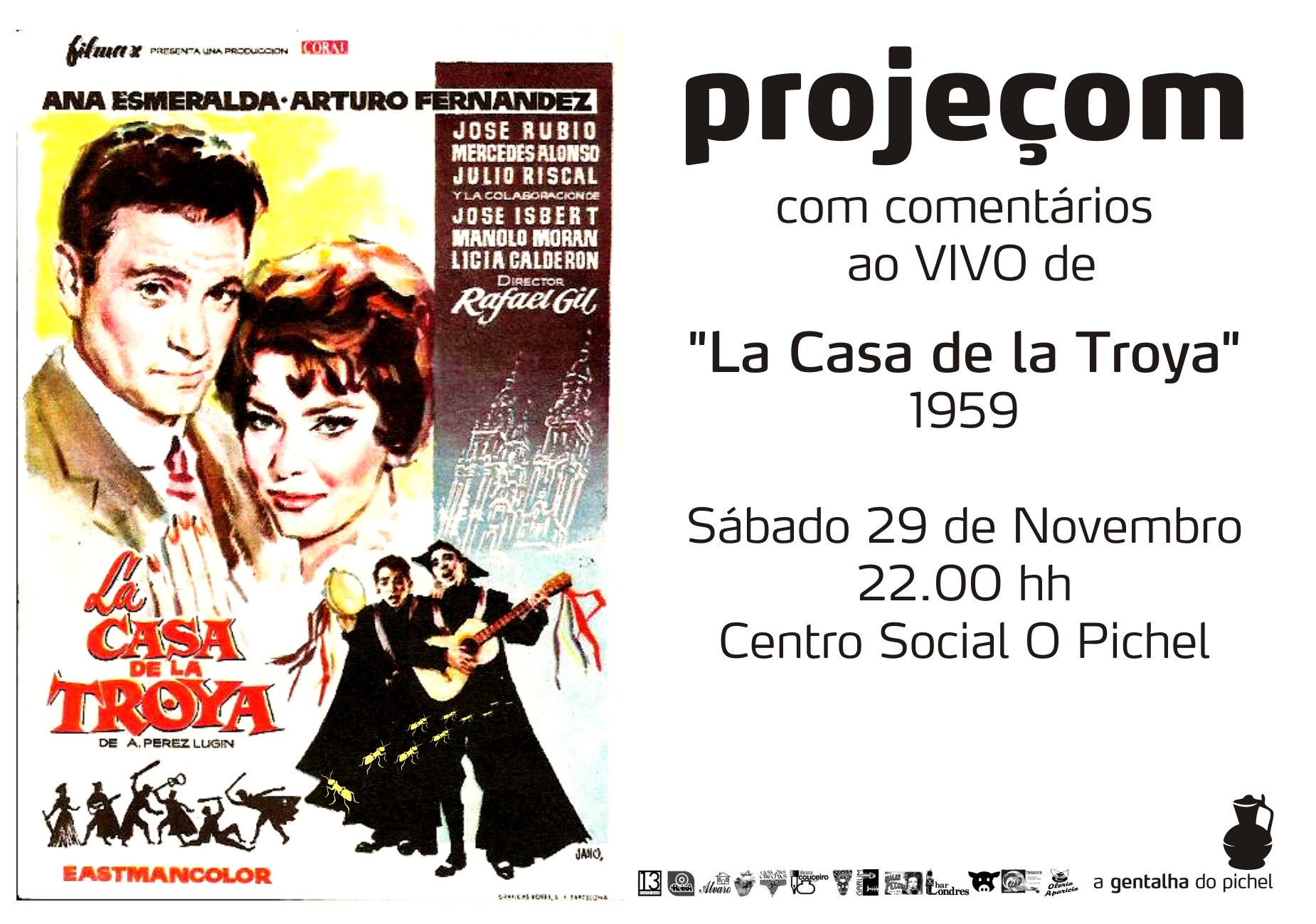
Este sábado 29, às 22h00, teremos uma nova projeçom de cinema expandido organizada pola nossa Comissom de História. O filme escolhido desta volta é a adaptaçom cinematográfica do conhecido romance ‘La Casa de la Troya’, de Alejandro Pérez Lugín, na sua versom de 1959, protagonizada por Ana Esmeralda e Arturo Fernández, entre outros.
No cinema da Gentalha do Pichel som bem-vindas todas as participaçons, disfarces de tuno e piadas (em voz alta melhor).
Chévere foi galardoada co Premio Nacional de Teatro 2014. O xurado valorou a implicación social e a transgresión de xéneros nas obras da compañía, como Citizen ou Eurozone. Falamos con Patricia de Lorenzo
Jukebox Mambo: Rumba and Afro-Latin Accented Rhythm & Blues 1949-1960 was compiled by DJ Liam Large. This is the cat who dug crates to assemble Jazzman's previous Jukebox Jam set of vintage jumpers, swing, and blues. This comp explores a very particular kind of jukebox recording that existed primarily in the middle part of the 20th century and showcased music that has simply vanished -- in this form anyway -- on North American shores. The period began the same year Tito Puente nailed his first hit single ("Pa' los Rumberos") and brought the mambo to the mainstream, but given these recordings, it was clearly flourishing even on the margins before that; an underground era that made direct connections between Afro-Cuban and Latin music, American R&B and jazz.
While many jazz fans are aware of historic recordings like Afro-Cubop by Machito, which featured Howard McGhee on trumpet, or his recordings with Dizzy Gillespie and Charlie Parker during the height of the bop era, these sides are more obscure, and focus more deeply on employing the "Latin tinge" in dance music. Since these records were made for jukeboxes and, by association, for dancers, they were dismissed -- at best -- or completely ignored by jazz purists. (They have issues anyway and always have.)
Check out set-opener "Ojai" by Joe Lutcher, which marries hard-swinging big band to Latin percussion, skittering, low-end beats and rich harmonies. Danny Cobb's "My Isabella" may have a killer R&B vocal, but dig how the bongos and timbales ride atop even the horn section. Gerald Wilson's "Mambo Mexicana" gets right inside the contrasting time signatures between a sprinting mambo groove, and bebop's furious tempi, all the while arraying the horns with a rich, timbral palette that walks the line between Mexican folk and North American swing melodies. Another highlight is Dave Bartholomew's "Shrimp & Gumbo," with its cowbell, claves, and wailing New Orleans' R&B vocal. The tune's rhythms walk a tightrope between Cuban mambo and Caribbean calypso infused with the blues. All of these tunes are deep groovers. DJ Liam Large dug deep, got his hands dirty, and came out with a jewel; it's one of the finest archival collections of 2012. [Thom Jurek]
STUNNING! collection of Exotic Afro-Cuban, Latin and Caribbean style 50's R&B dancers
En galego non existen nin fastidio nin fastidiar(se). As formas propias para este substantivo e verbo serían fastío e enfastiar(se).
Fastidio é unha palabra comodín en castelán. O verbo fastidiar de feito úsase como forma eufemística para joder. Mentres que tradicionalmente viña significar aburrimento (igual que a forma patrimonial castelá hastío), hoxe en día úsase en calquera contexto no que sexa preciso substituír un verbo que se considera vulgar: hay que fastidiarse, pues te fastidias, fastídiate…
En galego non podemos calcar este modelo xa que na nosa lingua existen outras formas substitutivas de foder, por exemplo amolar. Non é que enfastiar ou fastío non poidan utilizarse nestes contextos senón que é conveniente non abusar para non convertermos estas formas nun simple comodín. “Me fastidió el lunes aquella llamada”. “Amoloume o luns aquela chamada”.
Fastío é, en orixe, un substantivo relativo ao aburrimento ou ao cansazo. “Oír aquel profesor non sei se é un fastío ou un suplicio”.
Tamén podemos usalo para definir a repugnancia por unha comida. “É superior a min, danme fastío todos os mollos verdes”.
O verbo enfastiar debémolo utilizar neses contextos concretos. “Os nenos enfastíanme. Só os dou aturado uns poucos minutos”. “Como non ía enfastiarme a comida ver como recollía do chan o bisté e o seguía comendo tan tranquilo no prato?”.
Como traducirmos esas frases feitas do castelán? O idóneo é respectar a forma foder e lembrar que moitas son traducións do castelán. A famosa: hai que foderse é en realidade unha forma que substituíu o tradicional “Fódase!”.
Para “no te fastidia” debemos centrar o significado: é unha enfatización para facer notar a nosa desgana ou desagrado por algunha cousa. Amais do “non te amola”, existen outros xeitos no galego: non me fodas, érache boa, home vai… Seguro que na vosa casa ou na vosa comarca sentistes falar moitas veces de frases feitas perfectas nestes contextos.
Lo que podría parecer una broma, se está convirtiendo en una lucha sin cuartel entre el club de fútbol español, el Valencia C.F. y el gigante editorial estadounidense, DC Comics. Como ya os anunciábamos recientemente, DC Comics había denunciado al club valenciano por la similitud entre el nuevo logo del equipo y el de Batman. Sin embargo, el club ha enviado hoy mismo un comunicado en el que comenta que no existe ninguna demanda interpuesta.
Lo que sí es verdad es que en el año 2012, DC Comics se opuso a que el Valencia C.F. registrara este logo del murciélago con las alas hacia arriba ante la Oficina de Armonización del Mercado Interior (OAMI). No obstante, insisten en que no existe proceso ni demanda alguna al respecto, tal como podemos ver en los tres puntos que consta el comunicado del club ché.
El Valencia Club de Fútbol desea aclarar los siguientes puntos:
1.- En 2012 el Valencia CF solicitó ante la Oficina de Marca Comunitaria OAMI (Oficina de Armonización del Mercado Interior) una marca comunitaria representada por una nueva versión de un murciélago diseñado para identificar una línea de ropa casual. Durante el procedimiento de registro de la nueva marca, DC Comics presentó oposición a la citada solicitud. No existe ningún proceso, ni demanda, de parte de DC Comics contra el VCF.
2. Sin perjuicio de lo anterior, el citado logotipo no es utilizado en la actualidad y no tiene previsto ser utilizado en el futuro por el Club.
3.- A modo aclaratorio, el Valencia Club de Fútbol informa de que el murciélago que utiliza en la actualidad fue incorporado a su escudo oficial en el año 1922. Tanto el escudo como el murciélago se encuentran protegidos mediante marcas comunitarias internacionales, sin que nunca se haya cuestionado su uso a través de ninguna demanda.
Pero lo que realmente resulta interesante es que el Valencia C.F. no se ha limitado a recular y retirar el logo sin más, sino que ha contraatacado actuando del mismo modo que actuó DC Comics en 2012. Y es que según indica COPE Valencia, el pasado 27 de agosto, la editorial de cómics norteamericana intentó registrar la marca de Batman con las alas hacia abajo, con una posición muy parecida a la que tiene el murciélago del escudo del club desde 1922, por lo que el Valencia C.F. realizó un escrito la pasada semana ante la OAMI en oposición al registro de esta marca. Ahora solo queda ver en qué queda esta batalla de murciélagos, editoriales y cómics de fútbol y si las negociaciones llegan a buen puerto antes de que la OAMI llegue a una resolución.
Adnan. El tiempo en Baltimore durante el invierno de 1999. Cabinas de teléfonos en el parking de un Best Buy. Leakin Park. Hae. La llamada de las 2:36. The Innocence Project. El instituto Woodlawn. Jay.
Especialmente, Jay.
Si no conoces Serial, el podcast más escuchado de todos los tiempos (cinco millones de descargas en iTunes hace dos semanas, sólo-Dios-sabe-cuántas ahora mismo), todos estos nombres propios y conceptos no significan absolutamente nada para ti. Parecen los balbuceos de un loco. No obstante, si escuchas Serial, llevan tanto tiempo dando vueltas dentro de tu cabeza que ya forman parte del mobiliario. Uno no escucha simplemente un episodio del programa presentado por Sarah Koenig, sino que entra en esa madriguera de conejos y le dice adiós a buena parte de su tiempo libre. Porque, si tiene suerte, lo va a pasar escuchando Serial... y nada más. Pero el escenario más probable es que no pare ahí y acabe escuchando también los numerosos metapodcasts que ha espoleado (episodios dedicados íntegramente a comentar episodios), buceando en la cantidad de material gráfico que se puede encontrar con una simple búsqueda en Internet o, glups, sumiéndose sin remedio en las aguas turbulentas de Reddit, donde cientos de detectives amateur intentan adelantarse al propio programa y encontrar el maldito Santo Grial. Es decir, intentan resolver el caso. Que es lo mismo que no haber entendido nada.
Un paso atrás. Serial es el primer spinoff oficial de This American Life, la casa que Ira Glass construyó, el pináculo de la radio pública norteamericana y una de las instituciones insoslayables del periodismo contemporáneo. La idea original de las productoras Koenig y Julie Snyder era (y sigue siendo, aunque el éxito lo ha relativizado todo) mirar hacia atrás para seguir progresando hacia adelante. La narración serializada ha sido uno de los procesos culturales más populares de todos los tiempos: Dickens, Dostoyevski, Galdós, Víctor Hugo, Balzac, Tolstói, Dumas, Stevenson, Flaubert y decenas de autores de folletín ya olvidados provocaban auténticas estampidas en las calles cada vez que el nuevo capítulo de sus ficciones aparecía publicado. El género saltó al cine de la mano de genios como Louis Feuillade, se adaptó a los rigores de la producción en cadena al mismo tiempo que empezaba a explotar en el medio radiofónico, fue recibido con los brazos abiertos por la incipiente industria del cómic norteamericano y, finalmente, encontró su lugar bajo el sol en la televisión. Hay algo en la naturaleza humana que nos hace ansiar las historias por entregas, las dosis de ficción engarzadas a través de cliffhangers y continuarás. La llamada nueva edad de oro de la televisión ha forzado al cine a abandonar su historia de amor con las secuelas puras, haciendo que vuelva a interesarse por sus orígenes como serial. Franquicias como Harry Potter, Los Juegos del Hambre o el Universo Cinematográfico Marvel son excelentes ejemplos de seriales multimedia, una tendencia que sólo crecerá exponencialmente durante los próximos años. Serial ha observado atentamente estos procesos culturales, amén de los nuevos hábitos en los consumidores de podcasts, y ha dado con una fórmula secreta: temporadas autoconclusivas que cuenten una única historia a través de varios episodios. Volvemos, en suma, a los tiempos dorados de la radionovela, pero con una diferencia crucial: esta vez, es real.
Serial ha sido comparada hasta la saciedad con True Detective, más o menos como todo lo que huela vagamente a relato noir y se haya estrenado después de la serie de HBO. Pero, en este caso concreto, creo que los paralelismos son válidos y evidentes: tanto Koenig como Nic Pizzolatto han tenido una idea similar (temporadas autoconclusivas bajo un mismo paraguas temático) que se ha visto superada por el éxito masivo de sus primeros episodios. Serial llegó al número 1 de iTunes antes incluso de lanzarse: el simple anuncio en This American Life, más un resumen general de las líneas maestras de su temporada inaugural, ya fue suficiente para capturar la imaginación del público. Mientras True Detective puede afrontar su segunda temporada sabiendo que va a mantener unas condiciones básicas de cara a su audiencia (aunque trate de otros personajes, seguirá siendo una serie de detectives), Sarah Koenig se encuentra actualmente recaudando donaciones para una posible segunda historia sobre la que nadie sabe aún nada. La pregunta es: ¿Serial se ha convertido en un fenómeno de masas por las (alucinantes) dotes como narradora de su creadora y presentadora? ¿O el secreto es la fascinante historia real que ha desenterrado? Una vez lleguemos a una conclusión o a lo más parecido que vayamos a obtener: los responsables de Serial han asegurado en varias ocasiones que ni siquiera ellos saben cómo va a terminar todo, ¿los oyentes seguirán respaldando una propuesta que, por lo que sabemos, podría dedicarse a contar una historia cotidiana (y sin misterio o gancho de ningún tipo) a lo largo de doce episodios? ¿Nos gusta McConaughey o nos gusta True Detective? ¿Nos gusta Serial o nos gusta Adnan?
Para los no conversos, Adnan Musud Syed es el prisionero en el centro del laberinto narrativo de la primera temporada del podcast. Lleva encarcelado desde el año 2000, cuando fue condenado a cadena perpetua por el asesinato de Hae Min Lee, su ex novia del instituto. El estado de Baltimore pareció no tomarse al pie de la letra eso de "más allá de toda duda razonable" y, por contra, decidió creer a pies juntillas el testimonio de Jay, un colega ocasional de Adnan, que declaró bajo juramento haberle ayudado a enterrar el cadáver. Pero su historia está de llena de inconsistencias y contradicciones. De hecho, todo el caso es un enigma contradictorio atrapado en ámbar: ocurrió en el pasado cercano, pero todos los escenarios y actores principales siguen vivos. La verdad está ahí, en algún lado. El punto de partida de Koenig no puede ser más cautivador: Adnan es incapaz de recordar qué estaba haciendo exactamente a la hora aproximada del asesinato. Su defensa, su coartada, fue la ausencia completa de coartada. Él asegura que fue una tarde más, y por eso no puede presentar ninguna prueba que avale su versión de los hechos. Y por eso lleva casi quince años cumpliendo condena. ¿Fascinante? Bien
This is the heavy heavy monster sound, the nuttiest sound around so if you've come in off the street and you're beginning to feel the heat, well listen buster you better start to move your feet to the rockinest, rock-steady beat of Madness... One Step Beyond!
A wise man once wrote, “the times they are a changing.” Years later, a group of men wrote, “life’s a piece of shit, when you look at it.” The latter, written by the legendary comedy group Monty Python, has overtaken a host of classics as the most popular song played at funerals.
In a survey of more than 30,000 funeral services, “Always Look On The Bright Side Of Life” bested songs from Celine Dion, Robbie Williams, and of course the long-standing top place holder, Frank Sinatra’s rendition of “My Way.” Speaking directly to this seemingly odd shift in taste, a spokesmen for the surveying body said of the takeover, “It’s not mainstream, but in the past it would have been totally frowned on.”
As one of the finest songs ever written about the overall absurdity of life, it’s no surprise that the track has become so popular at funerals, as the generation that grew up with the song are beginning to reach their later years. First released in the 1979 film “Life Of Brian,” the track was already the thirteenth most popular funeral song in 2011, so it’s little surprise that it’s risen to the top spot.
Along with Monty Python, the studio suggested that Queen’s “Don’t Stop Me Now” and “Who Wants To Live Forever” were among nine tracks from the band that were in the top overall picks. Yet while Sinatra found himself unseated, Elvis Presley still reigns supreme in terms of solo artists played at funerals.
In terms of oddities, the study stated that more than a few funeral directors reported “Star Wars”-themed services, and as a spokesmen said, people are “looking for more fitting ways to say goodbye.” Many of these seem to go directly in the face of the traditional, somber affair, and this is perhaps a sign that society is beginning to see the end of life in a different light.
This obviously opens the door to wild speculation on how long it will take for songs from the likes of Weird Al to find their way into funeral homes, and yet it is perhaps best stated in the final verse of the current top spot holder: “Life’s a laugh and death’s a joke, it’s true/you’ll see it’s all show/keep ‘em laughing as you go/just remember that the last laugh is on you.”
Smile and sing along:
Joel Freimark hosts a daily music-related webseries HERE and you can follow his daily music musings and suggestions HERE as well.
Turkeys are native to North America, so it's something of an etymological puzzle that they've come to have the same name as a Eurasian nation. Indeed, it appears that the use of the term "turkey" for poultry was the result, mainly, of European explorers' confusing it with another bird:
This is a guinea fowl. It's in the same taxonomic family as turkeys and chickens (Galliformes) but it's native to sub-Saharan Africa. As Stanford linguist Dan Jurafsky explains, they were reintroduced to Europe in the 15th century: "Collecting exotic animals was a hobby of Renaissance princes and the wealthy, and guinea fowl appeared in their royal parks and private menageries."
The Mamluk Sultanate, which controlled Egypt and modern-day Israel and Lebanon at this point, served as a supplier. The Mamluks were ethnically Turkish (most were from the Caucasus), and the birds became known as "galinias turcicas" or "Turkish chickens." They also were sometimes known as "Indian chickens," as guinea fowl often were imported from near modern-day Ethiopia, which at the time Europeans often confused with India. Then, as trans-Atlantic trade developed in the 16th century, North American turkeys were confused with guinea fowl.
Consequently, "the English word 'turkey cock' or 'cocks of Inde,' and the French word 'poules d'Inde,'" Jurafsky writes, "were used sometimes for turkeys, sometimes for guinea fowl, for the next hundred years." For example, a character in Shakespeare's Henry IV: Part I refers to a "turkey," which historically must have been a guinea fowl (Englishmen did not know about the North American bird during Henry IV's reign). But over time "turkey" came to be exclusively associated with the American bird.
Sources other than Jurafsky tell a slightly different version of the story. Columbia Romance Languages professor Mario Pei told NPR's Robert Krulwich that the association with Turks comes from guinea fowl being traded through Constantinople, and does not mention the Mamluks at all. Gretchen McCulloch at Slate came to a similar conclusion.
The fact that Constantinople wasn't under Turkish control until the mid-15th century might make this version less plausible than the Mamluk origin story. But the broad parameters — Turkish or Turkish-in-origin traders sold guinea fowl to Europeans who then got confused and started calling North American birds turkey — are consistent in both the Mamluk and Constantinople versions.
Turkey, for its part, does not use the term "turkey" at all. Instead the birds are equally perplexingly known as "hindi." McCulloch unravels that mystery here.
Look, breast implants are expensive. A decent pair of silicone will run you between $5,000 and $10,000, and not every flat-chested girl's got that kind of money. I've heard of women injecting everything from olive oil to Vaseline into their tatas as a sort of "DIY boob job." For what it's worth, those methods are not recommended. The woman who injected Vaseline into her boobs eventually died from it.
But this video, of a woman injecting her dog's pee into her rack, has really got me stumped. (Disclaimer: This video actually shows a woman injecting urine into her breasts, so click at your own risk. It's probably the closest thing to "breaking the internet" that I've ever seen.)
If this video is real, then I'm entirely at a loss as to what would compel a person to inject dog urine into her body. The leading theory on Reddit is that the woman in question was hoping for a "P cup"—not that it seems to be working. The poor woman's breasts don't look any bigger by the end of video, and she appears to be in a great deal of pain. She also wrote in the description of the video that her "right boob were very swollen and i had a hard time breathing and feels like my airway were blocked.. and its still swollen after 8 hours or now that the video has been uploaded."
But back to the question. Why would anyone do this? Some theories:
This is some form of urine therapy
There's a belief—a disputed one, but a belief nonetheless—that urine has some kind of medicinal power to heal the human body. It's been alleged to relieve allergies, soothe stings and bites, and even treat cancer. Of course, most evidence to support urine therapy involves human urine, so it's unclear where the dog fits into the equation.
She's a camgirl
People will do some fucked-up shit on camera when it's for money. This would explain why she's filming this highly disturbing procedure, as well as why she's injecting herself in the first place.
She has an injecting-dog-urine-into-her-breasts fetish
There's something for everyone, right?
She's can't afford breast implants
As noted earlier, that shit's expensive. And the woman in this video is wearing a pink Abercrombie polo shirt, which is a good indication that she isn't rolling in dough. There's also a lot of scar tissue surrounding her breasts, so maybe she's injected dog piss many times before, or maybe she's injected other things into her breasts in order to make them appear bigger.
She's attempting hormone therapy
There's some speculation online that the woman in the video may be transgender. If that's the case, she could be (a) trying to make her breasts bigger, or (b) trying to use urine as a type of hormone therapy. The urine of pregnant mares has been used as a somewhat controversial hormone therapy, since it's so high in estrogen. The thing is, she's using pee from a dog, and that dog appears to be male. It also doesn't explain why she drank the pee afterward.
It's some sort of elaborate prank
...which wouldn't explain why someone would want to make other people think she had injected dog urine into her breast. Maybe she was trying to get more Instagram followers?
There simply is no explanation
The only thing worse than watching the entire length of this video is doing so and not knowing why.
Why! Why! But there are some questions for which there just aren't answers: Is there life on other planets? Who is John Galt? What happened to Amelia Earhart? Why is this woman injecting dog pee into her breasts? We'll never know, and that's probably OK.
“Honey, you are beautiful even when you have curlers in your hair,” my husband says to me. My brain wants to say, “No way,” but my whole body softens to this compliment and I feel good all over.
Compliments have been in short supply for me in my early life. My husband was micro-managed by his mom and resented it. I make sure he decides where we go and what we do at least half the time. He likes it, and grows more assertive. I like it, too. One of the wonderful things about my relationship with the love of my life is how the way we are with each other has allowed us to fill in or heal the parts of us that felt hurt or neglected by relationships earlier in our lives.
1. A Healthy Love Changes Your “Love Brain”
Discoveries about how the brain first develops loving responses can help to understand what you can do about creating positive change in your own and your partner’s “love brain.” When you were an infant (birth to 18 months) important things happened in your brain. You learned to “read” faces and voices to know whether your caretakers were dependable and loving or distant and distracted. You may have been “securely attached” and able to move away from Mom and then be glad to see her when she came back. If you did not experience her as dependable you may have pretended she was there all along and not seemed to notice her reappearance, or her reappearance may have even been met with anger. Researchers observed babies and their moms together and followed them as they grew up to learn about how these experiences between baby and mom impacted their later lives.
2. Daily Positive Interactions Will Heal Your Pain
So what does that have to do with adults in love? What if you didn’t have the perfect childhood? Few of us do. These early patterns of reaction grow up with us. But they are capable of change throughout our lives depending on the quality of relationships we experience. The hundreds of interactions that take place daily in an intimate partnership are the best source of healing we have. Relationships give us the chance to “re-parent” one another—a wonderful opportunity.
The challenge is to know yourself and partner well. You can also trigger fear or rejection in one another. That may happen often. Or you can make a choice to respond to your partner in a soothing way. That way you can heal the part that is expecting rejection or disconnection. We talk of “pushing each other’s buttons” in a negative way. Instead, we can create healing moments.
3. You Can (And Will) Learn How To Accept Love
This requires learning to accept positive moves as well as giving them. It’s not as easy as it sounds! My first reaction to my partner’s compliment was to push it away. I had to learn that his compliment was his and what I needed to do was open up to it and accept it. My husband’s first reaction to me asking him his opinion about what he wanted to do was, “What would you like to do?” He had to learn that I really wanted him to decide this time.
What an opportunity we have as partners! As one man put it, “My wife knows what bothers me and how to soothe me. She does this for me, and I do it for her.”
When I am tired and crabby my husband responds with a comforting touch and sympathetic “How can I help?” rather than matching my bad mood. His gentle touch and empathy allows the unhappy little girl in me to grow up a little, and I can act like the loving adult I want to be. Then I love him even more.
When he is upset he often gets quiet and distant. I can feel it in the air. I go to him and say, “Honey, you seem far away. Is something bothering you? Can we talk about it?” After a moment he responds, especially if I touch him affectionately. If he is not ready to talk he says, “I want to but not now. How about in an hour?” That’s okay because I know we will talk, and it will be fine when we do. We know each other well enough to give what heals and keeps our romance alive and thriving.
Inician unha petición en Change.org para que Ney, un golden retriever, sexa recoñecido cunha escultura nunha praza coruñesa. Outro can, Rufo, ten esa honra nunha praza de Oviedo.
The story of the first Thanksgiving, as told to American children, goes something like this: When the Pilgrims first made it to Plymouth Rock, they suffered through a desperate winter and had great difficulty surviving. But eventually, and with the help of Squanto the friendly Indian, they learned how to grow food. Finally, despite mistrust on both sides, the Pilgrims and Indians ended up making peace and eventually sharing a feast together, which we commemorate today on Thanksgiving.
This story isn't exactly inaccurate. But it omits several key details that are crucial to understanding why this truce between the Plymouth colonists and the Wampanoag confederation was reached — details of both dreadful tragedy and political scheming.
In his fascinating book 1491: New Revelations of the Americas Before Columbus, journalist Charles Mann reviewed much scientific and historical research that cumulatively upended several long-held American beliefs of what the "New World" was like before Europeans arrived. Here are several key details drawn from his section on the Plymouth Colony and the Wampanoag — details that make clear the first Thanksgiving was no mere triumph of friendship and kindness, but instead a coldly considered political alliance born out of necessity.
1) It wasn't just the Pilgrims who were weak — the Wampanoag had recently been decimated by disease
A 1754 depiction of Massasoit, sachem of the Wampanoag confederation, visiting the Plymouth Colony. (MPI/Getty Images)
The Pilgrim-centric narrative of the first Thanksgiving focuses a great deal on the colonists' weakness and troubled arrival in North America. And in fact, they were quite weak — they arrived on the Mayflower only shortly before the winter of 1620 began, and half of them died in the ensuing months. The help from the Wampanoag, and the peace with them, was crucial to the colonists' survival.
While that's all true, the picture changes quite a bit when one realizes that the Wampanoag had very recently become incredibly weakened themselves. Just five years earlier, there had been 20,000 or so Wampanoag subjects — but after an unimaginably rapid and horrific spread of infectious disease (inadvertently brought by Europeans), all but a thousand or so had died by 1621:
MANN: "Based on accounts of the symptoms, the epidemic was probably of viral hepatitis, according to a study by Arthur E. Speiss, of the Maine Historic Preservation Commission, and Bruce D. Spiess, of the Medical College of Virginia... Beginning in 1616, the pestilence took at least three years to exhaust itself and killed as much as 90 percent of the people in coastal New England.
In just a few years, whole villages near the coasts were depopulated, and Wampanoag power was decimated. So when Massasoit and his group of about 90 Wampanoag came to feast with the Plymouth Bay colonists, they were actually bringing a fair portion of their remaining strength. They still outnumbered the Plymouth colonists, about 50 of whom had survived that first winter. But far from being in a position of security and power, the Wampanoag were instead reeling from a recent dreadful catastrophe.
2) The Wampanoag were out to make an alliance against a rival tribal group
A statue of Massasoit overlooks Plymouth Harbor in 2013. (Melanie Stetson Freeman/The Christian Science Monitor / Getty)
Again and again in his book, Mann makes the point that the strategies Native Americans first pursued when encountering European colonists often had much more to do with counterbalancing their own longtime rivals, who were known and consistent threats, than the Europeans themselves.
Such was the case in the area we now call New England, where, according to Mann, "the massive death toll created a political crisis" for the Wampanoag — because while many of them had been wiped out, a powerful rival people to the west, the Narragansett, has been basically untouched. "Because the hostility between the Wampanoag and the neighboring Narragansett had restricted contact between them, the disease had not spread to the latter. Massasoit's people were not only beset by loss, they were in danger of subjugation," Mann writes.
This provides the context for the alliance between Massasoit and the Plymouth colonists. From the Wampanoag perspective, the Narragansett had been known and dangerous fixtures of the international scene for years, while the Europeans arriving had only small numbers. So Massasoit agreed to ally with the Plymouth colonists explicitly in hopes of using them against the Narragansett. The alliance was agreed to in March 1621, and the "first Thanksgiving" — actually three days of feasting to celebrate a successful harvest season — occurred that fall.
3) Squanto was much more than a mere "friendly Indian"
A 1911 depiction of Squanto teaching the Plymouth colonists how to plant corn with fish. (Public domain / Aaron Walden)
Though we actually aren't completely sure he attended the feast, the one Wampanoag name likely most familiar to Americans is Squanto (though his true name was actually Tisquantum). The stories accurately tell that he taught the Pilgrims better techniques for growing maize, and helped them survive.
But Tisquantum's motives — and his true history — are far more tangled and tragic, and his story is one of the most fascinating parts of Mann's book. A member of the Patuxet tribe of the Wampanoag confederation, Tisquantum encountered some Europeans about seven years before that first Thanksgiving — and was kidnapped. His kidnapper was Thomas Hunt, a former lieutenant of John Smith — yes, the one from the Pocahontas story. Hunt brought Tisquantum and 26 other captives to Spain, where he intended to sell them. But they were freed by the Catholic Church, which was known for advocating against mistreatment of Native Americans.
Tisquantum then made it to London, where he both learned English and managed to finagle passage back to North America on a fishing boat headed for Newfoundland. After a tangled series of events, he finally made it back to Massachusetts in 1619 — and discovered that his entire tribe had been wiped out by disease. "Patuxet had been hit with special force," Mann writes. "Not a single person remained. Tisquantum's entire social world had vanished."
Tisquantum was now a man without a tribe — especially because his long association with the Europeans now made him distrusted by the remaining Wampanoag, and he soon ended up their captive. Yet his knowledge of English made him extremely useful as a translator, and he used his firsthand accounts of European cities to argue to Massasoit that getting the English on his side would be a good idea.
So Tisquantum did indeed help teach the colonists how to grow food, serve as a translator for them, and help build the political alliance with the Wampanoag. But that's not all he wanted — he was actually plotting to rebuild his decimated Patuxet tribe, with himself as the leader:
MANN: "Recognizing that the Pilgrims would be unlikely to keep him around forever, Tisquantum decided to gather together the few survivors of Patuxet and reconstitute the old community at a site near Plymouth. More ambitious still, he hoped to use his influence on the English to make this new Patuxet the center of the Wampanoag confederation, thereby stripping the sachemship from Massasoit, who had held him captive. To accomplish these goals, he intended to play the Indians and English against each other."
Indeed, in the spring of 1622 — just months after the first Thanksgiving — Tisquantum attempted to trick the colonists into believing Massasoit was going to attack them, so they would strike against him first.
The plan didn't end up working, and Tisquantum's trickery was exposed. But afterward, tensions between the two sides ended up heightening anyway — because Massasoit demanded Tisquantum's execution for this treachery and the Pilgrims refused to give him up. Trade between the two sides soon halted.
However, later that year, Tisquantum got sick and died suddenly. The peace agreement between the Wampanoag and the Plymouth colonists stood for 50 years — to the eventual great benefit of the Europeans and the detriment of the Wampanoag. When war finally did break out, the Europeans triumphed — in part because the Wampanoag numbers had been so dreadfully reduced by disease. "Their societies were destroyed," Mann writes, "by weapons their opponents could not control and did not even know they had." Check out his book 1491 for much, much more.
For many people, Thanksgiving is the most ambitious cooking project of the year — the one meal where you're making a lot of food for a lot of people.
Some people are organized and already have their cranberry jelly chilling and their sweet potatoes roasted. Some people still don't know where to start. Thankfully, there are guides on guides on guides out there on the Internet to help you. There are entire cookbooks dedicated to Thanksgiving. And when our resources ran out, we turned to advice from a pro: Nate Waugaman, head chef of America Eats Tavern in Washington, D.C.
Don't let Thanksgiving intimidate you!
1. What can I do right now?
(Shutterstock)
Thanksgiving dinner is a mere two days away. So if you bought a frozen turkey, it should already be thawing. A 16- to 20-pound turkey will take up to five days to thaw in the refrigerator. But if you're just reading this now, don't panic. You can still thaw it in a sink filled with cold water on Thanksgiving day, when it will take up to 10 hours to fully thaw.
And don't stop there: many Thanksgiving dishes can be made, or at least started, in advance. Cranberry sauce will keep for days, and pastry dough often has to rest. Roasting sweet potatoes in advance makes them easier to peel. You can even turn mashed potatoes into a reheatable casserole if you add sour cream or cream cheese. And pumpkin pie (or pumpkin cheesecake) is generally just fine made a day or more in advance, or the morning of Thanksgiving. You can even make gravy in advance.
You'll still be shuffling things in and out of the oven the day of the meal, but it cuts down on the more hectic parts of Thanksgiving day. The Associated Press has a guide to what you should and shouldn't make ahead. And here are some more recipes for a make-ahead Thanksgiving from Martha Stewart and Buzzfeed.
2. I haven't planned at all and I don't know what side dishes to make!
Good news, says Waugaman, of America Eats: Thanksgiving is a great time to use seasonal vegetables. Thanksgiving side dishes are a good chance to use vegetables that are in season while still tasting traditional. This is a good time of year for root vegetables — carrots, beats, parsnips, and so on. Brussels sprouts are also in season, and so is a wide variety of squash. Chop as much as you can the day before, so all you have to do on Thanksgiving Day is put it in the oven.
3. I am completely intimidated by the idea of cooking an entire turkey. Isn't there another option?
(Shutterstock)
Consider separating the breasts from the legs and cooking them separately. "If you roast the turkey whole, either the breast isn’t as juicy as you want, or the legs aren’t as tender or falling apart as you want," Waugaman says.
Once you've broken down the bird — which you can do yourself if you're feeling ambitious, or you can just buy turkey parts separately at the store if you're a normal person — there are new possibilities for what to do with it. You can roast the breast and braise the thighs and legs. Or you can confit the thighs and legs in fat (which can be done a few days in advance). You can even turn the turkey breast into a porchetta.
4. I have a tiny kitchen and I have no idea how to make everything come out at the same time!
The experts are unanimous here: make as much as you can in advance, and when you can use something other than your oven, do it. The Kitchn has a compilation of recipes you can make in your slow cooker. Serious Eats suggests warming up roasted vegetables in a toaster oven. Roasting your turkey in parts will also be faster, meaning that the oven will be free for other dishes.
If you make or assemble your casseroles in advance, you can heat it all up together at 350° F (or in the microwave, if you must), along with the stuffing, while your turkey is resting once you take it out of the oven.
5. I don't know how to carve a turkey.
YouTube is here to help.
6. What do I do if my turkey is too dry to eat?
All is not lost! If it's not too dry, you might just be able to slosh on a lot of gravy. If the situation is really dire, Waugaman recommends this chef's trick. First, carve the turkey. Then thin out your gravy with some additional chicken stock, and slowly warm up the turkey meat in the gravy. It'll moisten it more than simply adding gravy at the table.
7. How do I win all of my family's Thanksgiving arguments?
 In a recent article by The Atlantic, there is a growing desire for people to fill the need for good ol’ face-to-face socialization


/cdn0.vox-cdn.com/uploads/chorus_asset/file/2493458/shutterstock_114347566.0.jpg)
/cdn0.vox-cdn.com/uploads/chorus_asset/file/2493460/shutterstock_205163389.0.jpg)
/cdn0.vox-cdn.com/uploads/chorus_asset/file/2493464/shutterstock_173816219.0.jpg)
/cdn0.vox-cdn.com/uploads/chorus_asset/file/2493468/shutterstock_138728945.0.jpg)





El Valencia Club de Fútbol desea aclarar los siguientes puntos:


/cdn0.vox-cdn.com/uploads/chorus_asset/file/2492288/Guineafowl_2_-_sb616.0.JPG)





/cdn0.vox-cdn.com/uploads/chorus_asset/file/2491036/shutterstock_160435373.0.jpg)
/cdn0.vox-cdn.com/uploads/chorus_asset/file/2491088/shutterstock_163616381.0.jpg)