Shared posts

30 Nov 19:23

El Sótano - Reel Rock Party!! - 28/11/14

Por fin se va a editar en vinilo el último disco que grabó Nick Curran antes de su muerte. “Reform School Girl” fue nuestro álbum favorito de 2010 y es motivo suficiente para montar una buena y variada fiesta en esta sesión de viernes. Playlist; Nick Curran (Reel rock party), JD McPherson (Wolf teeth), The Del Moroccos (Action packed), Deke Dickerson (Itchin’ for my baby), Crazy Joe and his Mad River Outlaws (Smack dab in the middle), The Outta Sites (Shake shout and go), Fortune and Maltese and the Phabulous Pallbearers (If push comes to shove), Saturn V featuring Orbit (Monkey see monkey do), Fuad and the Feztones (Beeramid), Sam the Sham and the Pharaohs (Little Egypt), The Coasters (My babe), Little Walter (Tell me mama), Barrence Whitfield and the Savages (My baby didn’t come last night), Randy and the Radiants (You can’t judge a book by its cover), Ray Collins Hot Club (Funky bug), The Fabulous Wailers (Wailer house party), Little Caesar and the Conspirators (New Orleans), Little Richard (Jenny Jenny) y The Sonics (Good golly miss Molly).


30 Nov 19:19

Does the term, "angry sex" mean anything to you?

by karmazon


30 Nov 19:03

5 Conventional Ideas That Are Completely Shattered In Your 20s

by Liz Kaydanovsky
Moyan Brenn
Moyan Brenn

1. Popularity

If you wore x, drove y, and smoked z, you nailed “cool.” It’s like some set equation we’ve all tried to follow at one point. Fast-forward to our 20s and there’s a new set of rules: none. No definition or formula. But one thing’s clear: The “popular” ones are the trailblazers that naturally attract people along their path. Popularity is a just a nice side effect now, no longer the goal. So just be you, because the rest will follow.

2. Perfection

Perfection is an illusion, a destination that eludes us every time it appears close. We create scenarios in our minds: the perfect job, relationship, body, and life; and yet, they never materialize. That’s because they are nonexistent. In our 20s, we realize perfection is not the ideal — balance is. So find a job that’s not painful waking up for every morning, even if it just pays the rent. Be with someone who chooses all of you, not the perfect you. Love your body because if you won’t, who will? And create your own story, not just follow someone else’s.

3. Invincibility

When we’re young, we’re all superheroes: indestructible. We believe that tragedies only happen in movies. In my 20s, I learned a hard lesson over and over again: modern-day evils we call sickness, disease, and death are merciless. I have seen cancer turn the perfectly strong into frail shadows of themselves. Sadly, death claims lives without any prejudice about age. We are not immortal; our bodies and lives are both precious and temporary. So live in the moment for yourself and those no longer able to. Make an impact every day because we may not be forever, but our legacy is.

4. Talent

Talent is a wonderful thing and there is no doubt that we are all naturally gifted. Some are born geniuses, athletes, or leaders. Although raw talent provides a springboard, it is not a guarantee for success. In our 20s, competition catches up and talent alone just doesn’t cut it. Any goal worth accomplishing takes hard work, invested time, but mostly just hard work. Talent is a muscle and staying ahead requires constant exercise. So do not just rely on your abilities because your abilities are, in fact, relying on you.

5. Judgment

Judgment is a reflex for any feeling of discomfort. It could be that we are threatened, perplexed or uninformed. We’re always so quick to criticize “differences” in the way people talk, act or look. In our 20s, we know better. By this point, we’ve all navigated, gracefully or not, through numerous piles of crap. Our life experience may be light, but we’re experts at empathy and compassion. Judgment is just a weak shield for the ignorant, fearful and naïve to hide behind. So become open; be both the student and teacher for one another because wisdom is more powerful shared. TC mark


30 Nov 17:45

Friday, November 28 @ 4:56:56 pm

by tfbrown69

30 Nov 16:32

Protesta en Santiago en honor al ganadero sancionado por la bosta de sus vacas

by La Voz
Cien personas se han concentrado en el Obradoiro con disfraces en una protesta impulsada por la Federación Rural Galega
30 Nov 16:31

El alcalde defiende el proyecto para peatonalizar Carreira do Conde, ya en fase de licitación

by r.m. santiago / la voz
Está abierto al diálogo sobre posibles medidas en las que el aumento del espacio para caminar pueda beneficiar al comercio

30 Nov 16:10

LO MEJOR DEL CHAVO DEL 8 - ¡ESO, ESO, ESO...!

by Gb Bonita

01 - La Vecindad Del Chavo
02 - Eso, Eso, Eso
03 - El Chapulín Colorado
04 - Hermano Francisco
05 - Payasos
06 - Óyelo Escúchalo
07 - La Juguetería
08 - Un Rinconcito Especial
09 - Torpe
10 - Quisiera Haber Sido Un Pastor
11 - El Percance
12 - La Ciruela Pasa
13 - El Silencio
14 - Bailando
15 - Un Año Más
16 - Campeón
17 - La Gallinita

DESCARGAR AQUI

GB
29 Nov 22:09

Vinyl sales highest in nearly two decades

by Joel Freimark
Vinyl sales highest in nearly two decades

While the music industry continues to deal with its worst sales numbers in decades, only one album achieving platinum status, and a host of other problems, sales of vinyl records quietly made their way to the best numbers in nearly twenty years. Moving more than one million units of vinyl since 1998 already, it’s clear that records have become the only real alternative to digital downloads.

According to The Official Charts Company (the UK equivalent of Billboard), Arctic Monkeys AM album was the top seller for a second year in a row, with Jack White’s Lazaretto following close behind. 2014 also saw the seventeen year old record for most records sold in a single week smashed by none other than Pink Floyd and their new album, The Endless River.

Speaking to The BBC, The Official Chart Company’s managing director, Martin Talbot noted that vinyl sales is finally starting to show real financial incentive to the industry as a whole, stating that, “Only five years ago this business was worth around £3m a year. This year it’s going to be worth £20m.”

Yet while none will question whether or not vinyl has somehow managed to survive long enough to make a comeback, it’s far from a solution to the seemingly endless financial worse the music industry faces. From the wide range of royalty payments from streaming services to the fact that just not as much music is being purchased, vinyl sales aren’t going to save the industry, as even with their fivefold increase in the past six years, they still represent less than 2% of overall sales.

However, for smaller bands and labels, its clear that vinyl can absolutely be a path to sustainability, as the niche nature of the format tends to bring a certain level of buyer loyalty, and the profit margins can be controlled enough through limited runs that loss of money can be kept to a minimum.

Stepping outside of the financial realities of the vinyl boom, it’s refreshing to see music fans take a collective step towards higher quality playback systems, and perhaps this is the real beginning of a stand against the inferior sound offered by mp3’s and substandard headphones.

Then again, the fact that most albums are recorded in digital studios, before being pressed to the analog formal that is vinyl, continues to make many vinyl releases nothing more than a novelty.

Joel Freimark hosts a daily music-related webseries HERE and you can follow his daily music musings and suggestions HERE as well.

Image

Follow @thedailyguru

29 Nov 21:29

To his adult son...

by noreply@blogger.com (MRTIM)

28 Nov 12:43

Teñirse el pelo de la axila, ¿la última tendencia de belleza?

by S Moda EL PAÍS
Una simple búsqueda en Instagram confirma que al menos el tema dará mucho que hablar.
28 Nov 12:05

Photo


28 Nov 11:51

America Is Finally Kicking Its Dirtiest Habit

by msaccaro@mic.com (Matt Saccaro)

The news: Americans are putting out their cigarettes for good.

A new survey from the Centers for Disease Control and Prevention shows that in 2013 just 17.8% of the country's adults, or 42.1 million people, smoked cigarettes. This marks a major decrease from previous years — in 2005, 20.9% of adults smoked cigarettes — and it's the smallest percentage of adult smokers since the CDC started recording the number in 1965.

This steady decline is a move in the right direction as the Department of Health and Human Services tries to meet its 2020 goal of reducing cigarette smoking to 12% of the population.

Furthermore, the adults who are still smoking reported they are smoking fewer cigarettes. Read More
28 Nov 11:49

Here Be Dragons: Are You an Introvert, an Extrovert, or Just a Rude Prick?

by Martin Robbins
Snob

Once you've decided that you're an introvert, it's easy to fall into the trap of living your life according to that label. There's no need to change your behaviour or evaluate the way your deal with other people. You have a diagnosis, a card to play. The rest of the world is at fault, and you have an army of bloggers to back you up. How likely are you to challenge your limits, when 30 seconds of googling is enough to find a million willing enablers?

[body_image width='640' height='427' path='images/content-images/2014/11/27/' crop='images/content-images-crops/2014/11/27/' filename='are-you-an-introvert-or-just-a-bit-rude-328-body-image-1417111273.jpg' id='7356']

Pictured: an introvert (Photo by Jake Lewis)

This article was originally published at VICE UK

In 2012, Susan Cain published Quiet, a book that's become a kind of manifesto for introverts everywhere. She argued that Western civilisation is dominated by loud-mouthed extroverts; that introverts are undervalued by society; and that humanity is underachieving as a result. There's no real science there, but it's pretty hard to disagree because, well, look around you.

Since the book came out, a sort of fledgling internet culture of vocal introverts has emerged. Part self-help group, part activist community, the New Introverts have generated streams of ​articles, ​memes and commentary ​explaining what Introverts are, ​why they behave the way they do, and ​how they should be treated.

Superficially, it's all quite appealing. There are endless sets of questions online that you can use to ​diagnose yourself, and most of the ones I've tried put me firmly in the introvert category. I enjoy my own company, long walks in the wilderness, I'm not keen on parties, I screen calls habitually, I like to hog my own bench on the train, I'm a writer, I hate networking, I don't enjoy small talk much. It's quite tempting to believe that I'm a special and precious flower, one of many, and you should all be a lot nicer to us.

Except a whole bunch of people who know me are now furiously raising their eyebrows. Long-suffering colleagues and bosses who know I rarely hold my tongue in meetings; people who've seen me on stage debating politicians or giving talks in front of hundreds of people; friends used to me loudly venting my opinions in the pub like the big boring twat that I am. If I'm really an introvert, I'm a pretty shit one.

The issue with this kind of multiple-choice self-diagnosis is that the answers change depending on the situation. Take this test in ​the Guardian, for example. "I enjoy Solitude" – well, it depends what mood I'm in and whom you're asking me to spend time with. "I prefer one-on-one conversations to group activities" – well, again, it depends. Is the group activity karting with some mates, or a dance with Maidenhead's local branch of the Conservative Bankers Association? You can't give binary answers to these kinds of questions because most of us are different in different situations.

To get around this problem, some psychologists have started talking about "ambiverts" – chameleon type personalities in the middle of the spectrum who can ​swing either way for a period of time. It's very convenient. Too convenient in fact, because once you get into the question of how to classify people in an objective way, things start to fall apart.

The basic problem is there's no such thing as "an introvert" or "an extrovert" in science. That isn't to say that there aren't introverted people, or that the word isn't sometimes useful; but there's no such diagnosis as "introvert", and no clear-cut widely-accepted test that you could use to scientifically determine that person A is an introvert, an extrovert, or somewhere in between. At best, you can ask people a bunch of questions, put their answers on a scale, and make some kind of judgment call on where "normal" is upon that scale.

[youtube src='//www.youtube.com/embed/c0KYU2j0TM4' width='640' height='360']

To make things worse, a lot of these tests rely on self-reporting. The vast majority of people who call themselves an introvert or an extrovert have never been properly evaluated. They're making a judgment call about themselves, and people are notoriously shit at being honest about their character traits. Even when psychologists are involved, we're back to dubious multiple-choice personality tests like Eysenck's Personality Inventory (EPI), a 50-year old psychology tool regarded by some modern researchers as " ​​logically incoherent​", or the laughable ​Myers-Brigg Personality Test.

Once you realise that, it's pretty obvious a lot of research on introverts and extroverts is on pretty shaky ground. ​This study on the ability of introverts to respond to non-verbal communication is a great example – it's based on a dubious old personality test (EPI), and the subjects are a pretty small group of local students, so not exactly representative.

There's an argument that maybe the science doesn't matter much. Susan Cain's book was never really intended as a scientific thesis, but a manifesto for a particular kind of person – the quiet types, the people who don't always speak up and as such habitually see their wishes trampled on by a loud minority. Taken at face value, it's hard to criticise people calling for a more intelligent and considered approach to life.

There is a problem though, and it's labels. Labels are incredibly powerful things when it comes to mental health, as I wrote when ​reviewing Jon Ronson's The Psychopath Test. "At times labels can seem convenient or comforting to hold on to, but get too attached and you may find that you're no longer holding the label – the label is holding you."

You can get a sense of this when you see some of the advice available online for dealing with introverts. One heavily circulated cartoon ​from last year contains lines like: "Say hello be polite and relaxed, show that you recognise and approve of their presence. It is important for introverts to feel welcome – they won't spend their precious energy on someone who doesn't want them around. If you have interesting/important news to mention, mention it. Don't press for gossip."

Readers are encouraged to deal with the introvert as a stunted and vulnerable emotional cripple, incapable of communicating their needs in even the most basic fashion. The introverts reading are encouraged to fill that role themselves. To be fair to the author, I'm sure they didn't intend for the cartoon to be a substitute for mental health advice, but it's typical of the advice out there, and I'm not sure how healthy it really is.

Once you've decided that you're an introvert, it's easy to fall into the trap of living your life according to that label. There's no need to change your behaviour or evaluate the way your deal with other people. You have a diagnosis, a card to play. The rest of the world is at fault, and you have an army of bloggers to back you up. How likely are you to challenge your limits, when 30 seconds of googling is enough to find a million willing enablers? Are you really an "introvert" or are you just being a bit rude? Who knows. But in the absence of any real definition, I'm not in any rush to label myself.

​@mjrobbins

More from this column:

​The UK's New Government Healthcare Website Is Potentially Classist

​College Kids Behead People Too

​So, Are You a Pervert?

28 Nov 11:45

Map: what we're thankful for, according to our Facebook posts

by Sarah Kliff

We don't just tell our family what we're thankful for at the Thanksgiving table anymore. We post our thanks on Facebook, too — and that gives the data analysts at Facebook a trove of data to analyze about what, exactly, we're grateful for.

Facebook scraped user updates for status updates containing the words "grateful" and "thankful" this past summer, when a few challenges circulated asking users to post about the things they cherished in their lives. And they found, perhaps unsurprisingly, that Facebook users are most thankful for their friends and families.

facebook

(Facebook)

More interestingly, Facebook also looked at the most unique thanks given in each state. This isn't the most frequent subject of grateful status updates, but rather the ones that turn up at a disproportionately high rate. Here's what they found:

facebook2

(Facebook)

Playing true to stereotypes, Oregonians are the state that is most thankful for yoga while bible belt states tend to show more gratitude for "god's forgiveness" and "god's word."

Gratitudes reflect external factors, too. States that have experienced drought this year — places like Texas, New Mexico, and Arizona — tend to be more thankful for rain. As to Michigan's strong love of electricity, Facebook analysts say it could reflect the "heavy summer storms knocked out power to hundreds of thousands of houses right around the challenge." Kansas' apparent fervor for Google maybe has to do with the company wiring Kansas City with Google Fiber?

You can see more of the Facebook analysts' data here and continue to puzzle over what, exactly, it is Alaskans and Ohians love so much about children's laughter — and what New Hampshire residents are doing on Pintrest all day.

(Hat tip to Forbes' Dan Diamond, who shared this map on Facebook — for which we are quite grateful)

28 Nov 11:42

Thanksgiving and Black Friday not just American anymore!

by Kitteh
28 Nov 11:41

Ten Of The Best Thanksgiving Themed Episodes From Animated Shows

by Zeon Santos

(Image Link)

It’s a Thanksgiving tradition for kids of all ages to sit down in front of a screen and watch an animated tale of turkeys, families and craziness unfold before their eyes.

TV fans can’t wait to see their favorite animated friends go on a Thanksgiving themed adventure each year, making viewers feel like they're along for the ride with their extended animated family.

Here's a review of ten great Thanksgiving themed animated TV episodes:

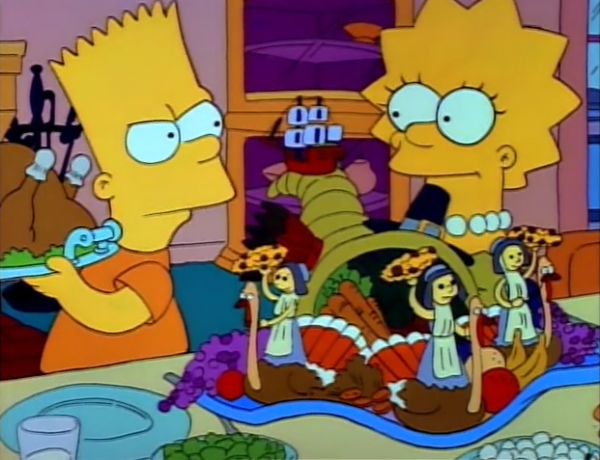
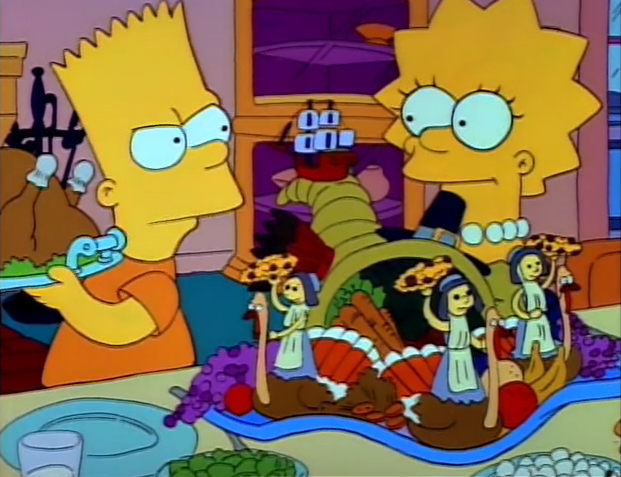
1. The Simpsons- Bart Vs. Thanksgiving-

(Image Link)

Bart runs away from home and finds himself on the wrong side of the tracks, making him consider how much he has to be thankful for, even his Neanderthal father Homer.

The Simpsons have always approached holiday themed episodes with a fresh perspective, and this episode from season 2 manages to both poke fun at and show the true meaning of the holiday.

(YouTube Link)

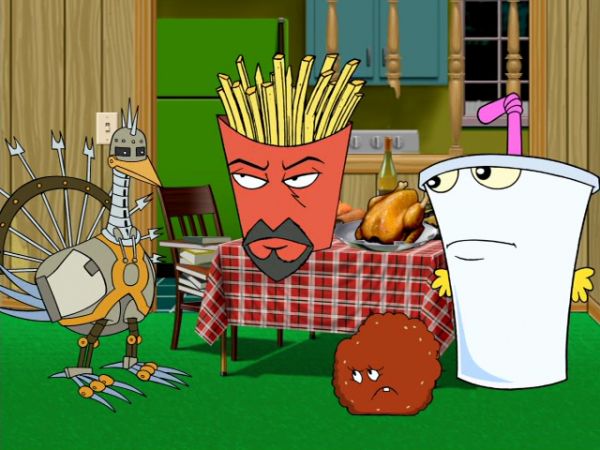
2. Aqua Teen Hunger Force- The Dressing-

(Image Link)

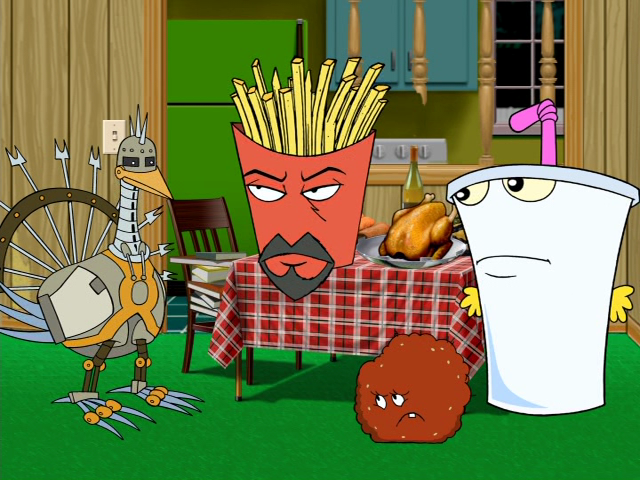
The food monsters next door celebrate Thanksgiving a week later than everyone else, when suddenly a robotic turkey called Turkitron shows up and spins a yarn about traveling back in time to save the great, great grandfather of Goblox, the leader of the turkey rebellion.

(YouTube Link)

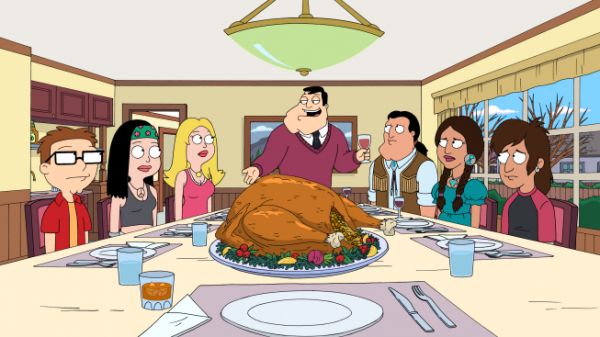
3. American Dad- There Will Be Bad Blood-

(Image Link)

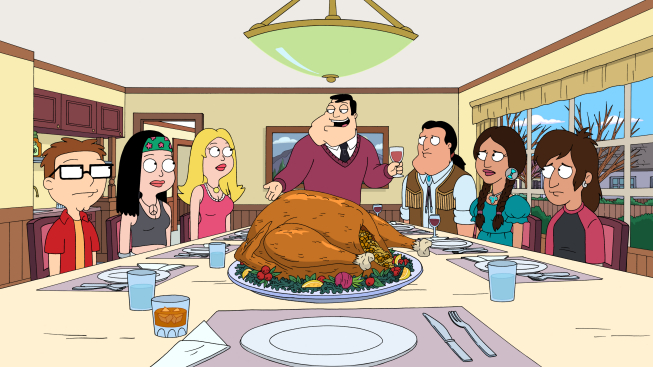
The Smiths aren't your typical American family, but that doesn't mean they don't deal with the usual problems.

Take Stan's half-brother Rusty for instance- he's more American than Stan because he's Native American, and he's got more money than Stan and his family will ever make in their lives. So how does Stan deal with a family problem like Rusty? With a little lifestyle switcheroo, of course!

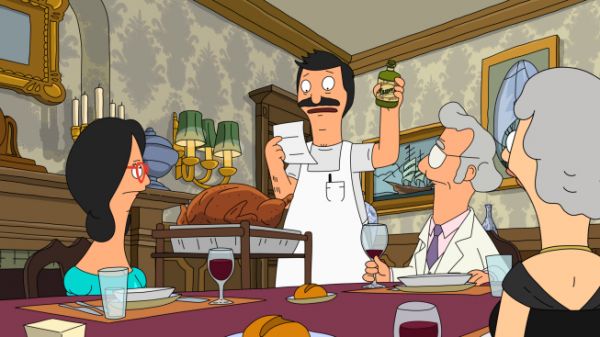
4. Bob's Burgers- An Indecent Thanksgiving Proposal-

(Image Link)

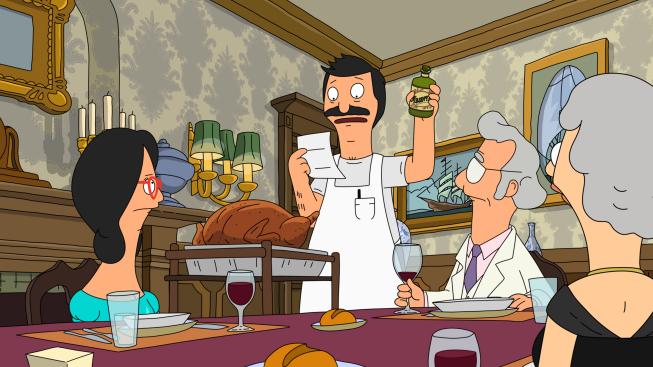
Bob puts down the spatula and picks up a baster in this Thanksgiving themed episode full of deception, dirty little secrets and dinner theater.

Bob is hired by his landlord to cook a Thanksgiving meal, but this catering job comes with a price- Bob must let Linda and the kids pretend to be Mr. Fischoeder's family. Can Bob keep it together long enough to pull off this turkey day trick, or will he crack up before dinner is served?

(YouTube Link)

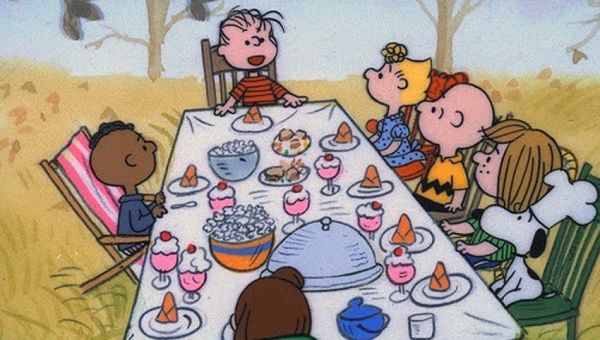
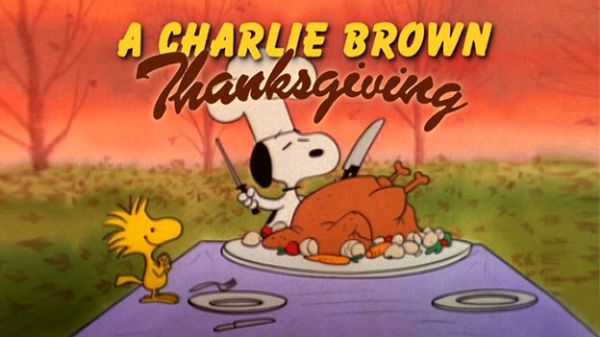
5. A Charlie Brown Thanksgiving-

(Image Link)

Arguably the most beloved Thanksgiving themed animated television episode ever made, A Charlie Brown Thanksgiving is full of all the things you've come to expect from the Peanuts- fun moments in childhood alienation, existential introspection, life lessons, and one beagle who brings it all together.

(YouTube Link)

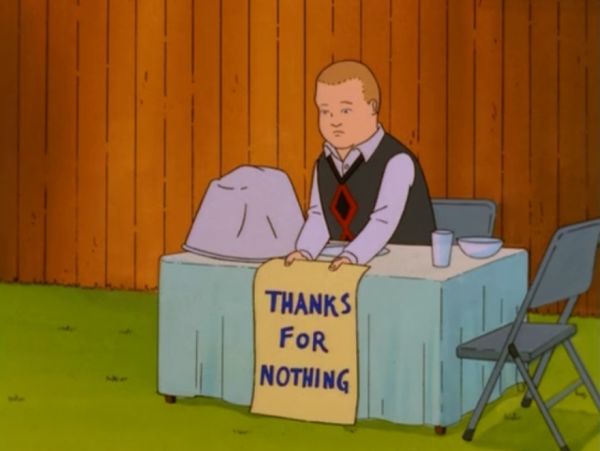
6. King Of The Hill- Spin The Choice-

(Image Link)

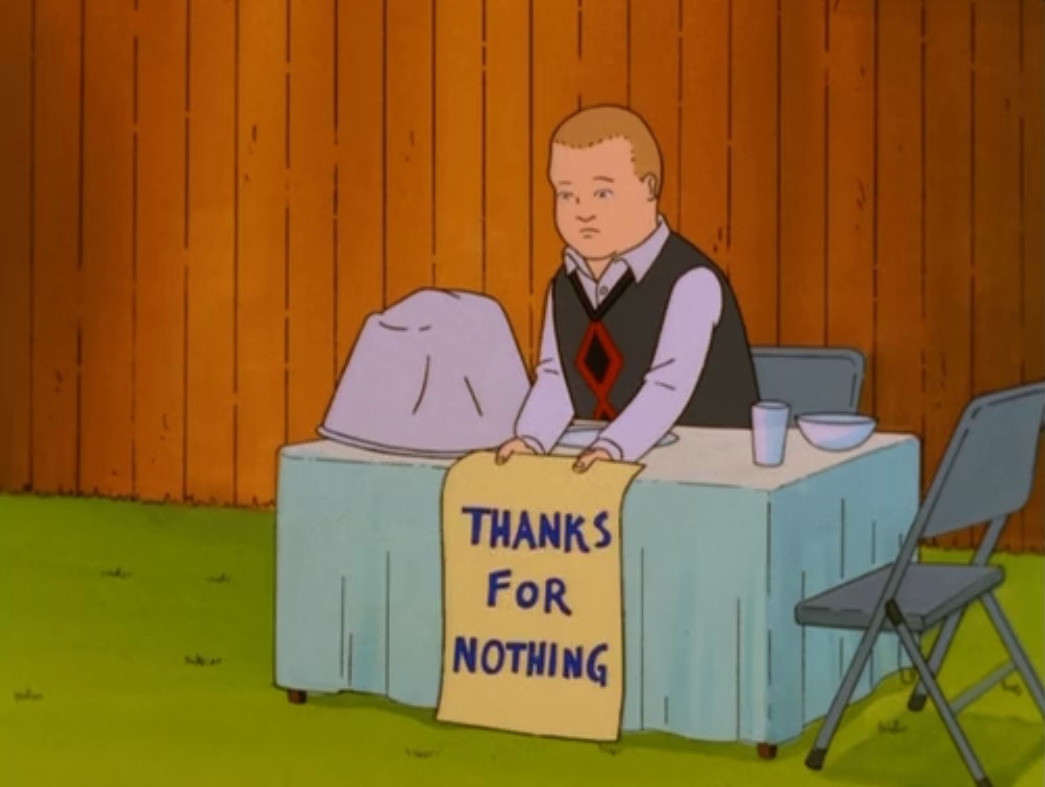
It's finally Bobby Hill's turn to carve the turkey but his discovery about how the white man treated the indians during the original Thanksgiving makes Bobby decide to protest the entire holiday instead.

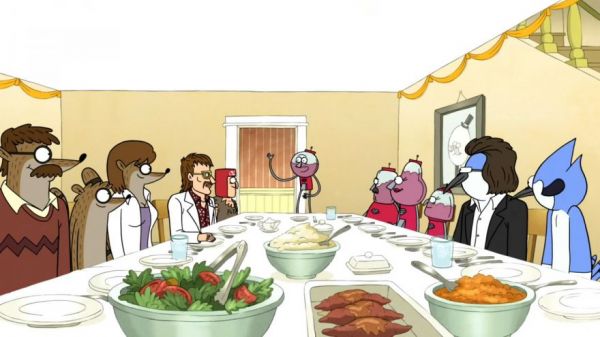
7. Regular Show- The Thanksgiving Special- 

(Image Link)

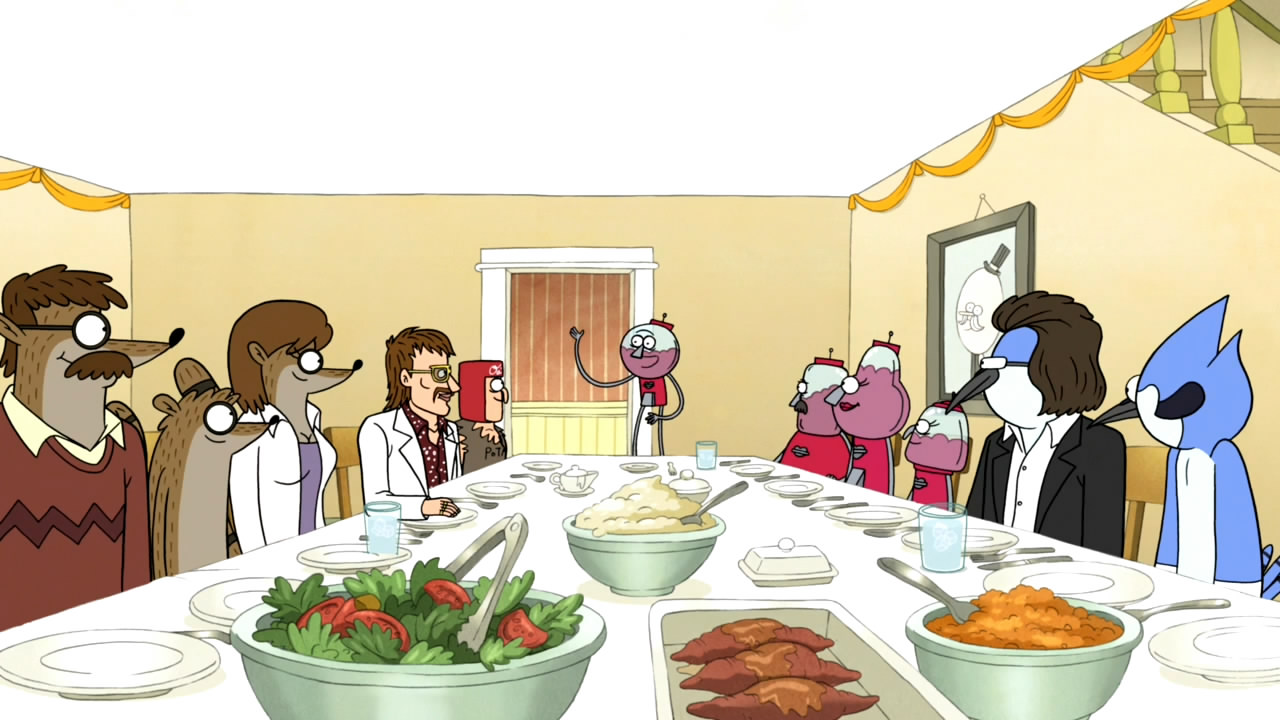
Mordecai and Rigby are just starting to make their own way in the world on Regular Show, so they have yet to discover all the good and bad moments associated with adulthood. One quick way to learn- try to put together a Thanksgiving meal for every park employee and their family!

(YouTube Link)

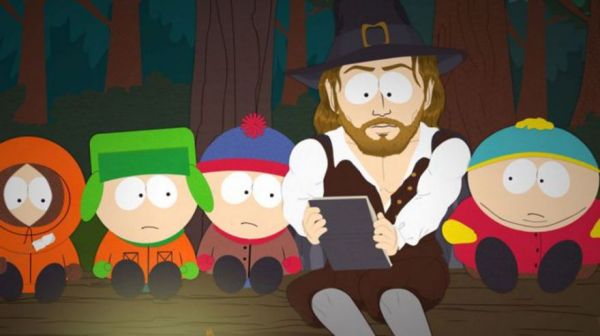
8. South Park- A History Channel Thanksgiving-

(Image Link)

The truth about Thanksgiving is really out there when those four kids from South Park write a history paper based on History Channel's extraterrestrial take on Thanksgiving, and come a little too close to the truth. Alien pilgrims, History Channel conspiracies and Natalie Portman make this one mixed up holiday episode!

(YouTube Link)

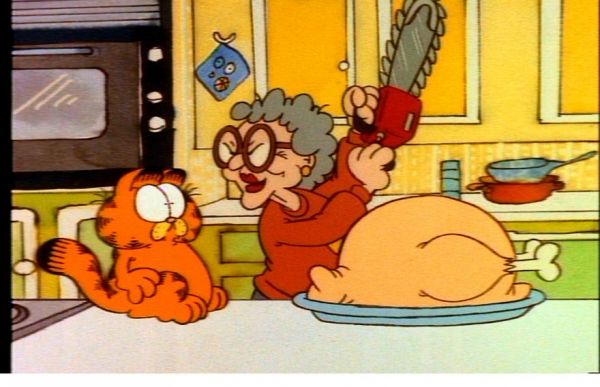
9. Garfield's Thanksgiving-

(Image Link)

Garfield loves one thing about the holidays- the food, so it only makes sense that Thanksgiving would be one of his favorite holidays of the year. In this adorable episode Garfield is put on a diet, Jon completely fails to cook the meal and almost ruins his date with Liz the vet, and Grandma is called in to save the day with her signature flair.

(YouTube Link)

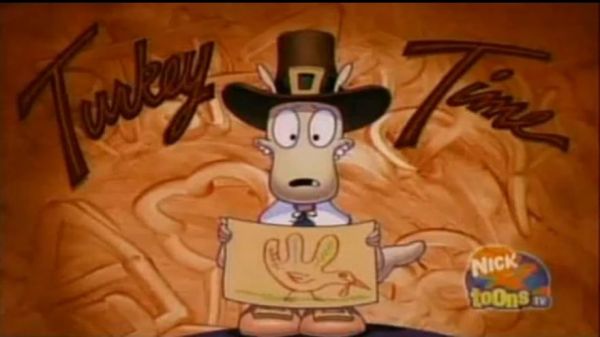
10. Rocko's Modern Life- Turkey Time/Floundering Fathers-

(Image Link)

Rocko's Modern Life is one of those shows you rewatch as an adult and notice all the humor, and insight and infrequent raunchy bits you missed as a kid.

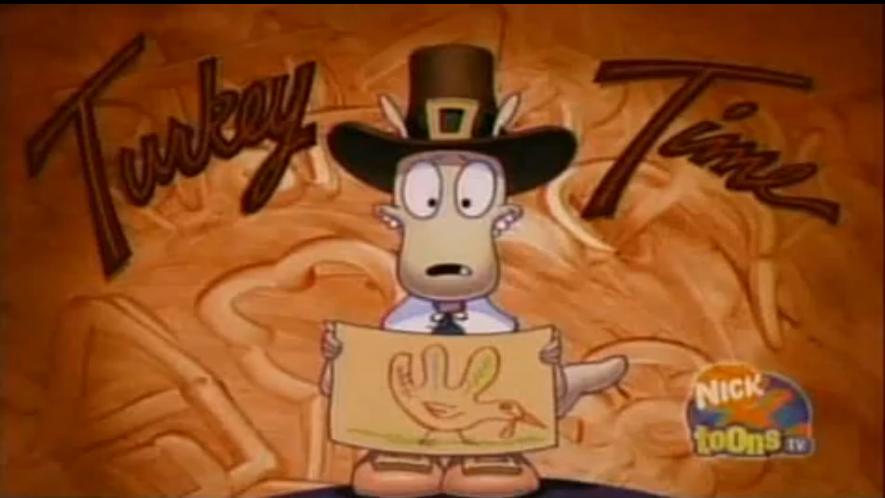
This Thanksgiving themed episode finds Rocko conflicted about the idea of eating those poor turkeys, so he saves their little gobblin' lives by serving up a jumbo veggie bird instead, which displeases his uninvited guests immensely...

(YouTube Link)

Here's hoping you have a fun, and filling, Thanksgiving day!

28 Nov 11:41

3 unexpected facts about turkeys

by Susannah Locke

Americans eat, produce, and export more turkeys than anyone else on Earth. These birds share their name with a foreign nation for some obscure and interesting reasons. Our president pardons them in a fancy ceremony. And they are, obviously, delicious (although maybe not as delicious as Momofuku pork shoulder).

So what else is there to say about turkeys that must be said? These three things:

1) Female turkeys can basically clone themselves
Turkeys in a barn

Turkeys in a barn in the UK. (Tim Graham/Getty Images)

This seems impossible, but it's not. Occasionally, the eggs of female turkeys will — without any sperm involved — spontaneously develop into embryos and then into baby turkeys (which are always males). This process is called parthenogenesis and has also been recorded in many other types of animals, including bees, lizards, and sharks.

Very few of the embryos produced from this process survive long enough to become baby turkeys. MW Olson, a USDA researcher who studied parthenogenesis in a particular breed of turkey in the mid-20th century, found that about 1 percent of them survived until chick-hood.

But Olson also said that he was able to selectively breed these turkeys to increase that rate to about 8 percent. (This was presumably of interest to the USDA because you'd want to maximize the amount of turkey eggs becoming actual turkeys that you can then sell for people to eat.)

2) Domesticated turkeys are nothing like wild turkeys
Wild turkeys

Wild turkeys in Texas. (Wolfgang Kaehler/LightRocket via Getty Images)

Domesticated turkeys were likely first separated from wild turkeys in the pre-Columbian era in Mexico. They were brought to Europe around 1519, where they acquired their name. And then Europeans took the domestic turkey back to America in the 1500s or 1600s. So wild and domestic birds have been apart for a long time, and that's led to some differences.

In the 20th century, turkey producers began seriously breeding commercial turkeys to become more efficient at converting feed into breast meat. And today, the most popular turkey breed, the broad breasted white, grows super fast and can easily get to more than 45 pounds. By contrast, wild turkeys tend to top out at around 20 pounds or so.

Commercial turkeys are so big that they generally can't get off the ground. But wild turkeys can fly at up to 55 miles per hour.

3) Turkeys make shy, but sometimes affectionate pets
Feeding a turkey

A turkey named Opal at Poplar Springs Animal Sanctuary in Maryland in 2009. (Carol Guzy/The Washington Post via Getty Images)

A delightful AP story by Sue Manning from 2012 looked at people who keep turkeys around for love and companionship — rather than for food.

The animal-rescue organization Farm Sanctuary, in addition to keeping turkeys at its shelters, gives away about 50 birds a year for adoption. Most have initially been on factory farms: "Many arrive as victims of neglect, cruelty or hoarding," writes Manning. "They fall off farm trucks; or they mysteriously show up in boxes on doorsteps."

Pet owners said that the birds can have different personalities and are often nervous animals, but can also become protective of their owners. On the downside, because the turkeys are bred for butchering and not a long life of luxury, they can be prone to some health problems, including poor balance because of their large breast muscles. What's more, turkeys have to be kept outdoors because they're not exactly the holding-it-in-until-you-take-me-for-a-walk type.

Farm Sanctuary's current guide to having a pet turkey offers some interesting tidbits. It says that the commercial-breed turkeys live for about two to five years, are prone to heat exhaustion, and should not be kept in co-ed housing:

The males of this breed are so excessively large that, when a male mounts a female, he may tear her skin down to the muscle ... Mounting can also damage the ligaments, neck, spine, and legs of the females, due both to the size of the males and commercial turkeys' predisposition to joint and leg problems.

This is part of the reason why most commercial turkeys are the product of artificial insemination.

28 Nov 11:39

5 countries besides America where people celebrate Thanksgiving

by Zack Beauchamp
Note that this photo is almost certainly supposed to represent American Thanksgiving, because no one else is this weird.

Canada celebrates Thanksgiving, sure — but so does Grenada and one town in the Netherlands.

Americans typically of Thanksgiving as a quintessentially American holiday. And it is! But the United States isn't the only country in the world where people celebrate Thanksgiving. Here are five others — and the surprising ways that their celebrations relate back to the American tradition.

Canada

Canadian Thanksgiving is held on a different date, partly because it commemorates a different event. American Thanksgiving celebrates the so-called "feast" (the menu was probably a little weird) shared by Pilgrims and Wampanoags in 1621. Canadian Thanksgiving, by contrast, is about the 1578 voyage of Arthur Frobisher, a British explorer who organized a meal for his crew when they (barely) made it to Canadian shores alive.

And that's about it in terms of differences. Canadian Thanksgiving dinner, like its American equivalent, is a celebration of gluttony with most of the same classic dishes. Canadians also laze around and watch sports. It's pretty good.

One other important thing. Canadian Thanksgiving is held on the second Monday of October, the same day the United States celebrates Columbus Day. For some Americans, then, enjoying Canadian Thanksgiving is an alternative to celebrating one of history's most notorious genocidaires that's better in basically every conceivable way.

Liberia

liberia thanksgiving UN Photo/Staton Winter
Liberian women attend a 2012 Thanksgiving event honoring President Ellen Johnson Sirleaf.

The West African nation has its origins in the United States: It became an independent country in 1847 after a group of Americans spent decades turning it into a home for former American slaves.

So it makes sense that Liberia is, according to PRI's The World, the only other country in the world to celebrate American Thanksgiving as a national holiday. Though a relatively small number of Liberians are actually descended from former slaves, the American immigrants imported the tradition to their new home. It's celebrated on the first Thursday of November; standard food includes mashed cassava, chicken, and green bean casserole (some things aren't that different).

"They use the day as an occasion for going to their places of worship, Christian churches primarily, where the fresh fruits of the harvest, those things are brought to the church and auctioned following the service," Liberian national orator Elwood Dunn told PRI. "Following that, people go their homes and, I think, do a little bit of what you do in America, feast and so forth and so on, but not — clearly not on the scale that you do it in the United States."

One town in the Netherlands

Thanksgiving isn't a national holiday for the Dutch. But in the city of Leiden, there's an annual Thanksgiving celebration on the same day as the American holiday.

According to Smithsonian's Colin Schultz, it has to do with the American Pilgrims' travel route. Before heading to the New World, the Pilgrims took shelter from English religious persecution in Leiden. From 1609 to 1620 they called the city home, and today's Thanksgiving celebration is held in their honor.

The celebration is a nondenominational service at Pieterskerk Church. The service is America-themed: One year, the assembled sang "God Bless America" and the US ambassador read the president's Thanksgiving Day Proclamation. Afterward, according to a sheet on the US Consulate in Amsterdam's website, "people gather briefly for coffee and cookies before they go home and cook."

Grenada

grenada invasion Boris Spremo/Toronto Star/Getty Images
Pictured: what Grenadian Thanksgiving celebrates.

This is kind of a weird one. On October 16, 1983, Grenada's deputy prime minister seized power and executed the prime minister. On October 25, the United States and allied forces from nearby Caribbean nations invaded, overthrowing the deputy prime minister in a matter of weeks.

Today, Grenadians celebrate October 25 as Thanksgiving — as in, giving thanks for the American-led invasion.

The holiday, though, is not considered a big deal. According to Noga Shemer, whose UC San Diego PhD dissertation closely examined Grenadian holidays, "it seems that many Grenadians have only a vague sense of the original purpose of this official commemorative day."

Shemer attended a Grenadian Thanksgiving celebration in 2007, held near a memorial to the Americans who died in the Grenada conflict. After speeches by American and Grenadian officials, as well as a performance of "The Star-Spangled Banner," there was "an elegant reception" and also "a concert held at an outdoor park near Grand Anse beach, featuring two country-western singers and gospel acts."

The Australian territory of Norfolk Island

Norfolk Island is, technically speaking, not a country. It's a tiny Australian territory in the Pacific Ocean, between Australia proper and New Zealand.

According to NPR's Ari Shapiro, the Norfolk Island tradition of celebrating Thanksgiving comes from American whalers. The island was a major point of call for the whalers, who introduced locals to foods like cornbread and pumpkin pie.

One American named Isaac Robinson tried to Americanize the island, introducing a full-fledged Thanksgiving. Shapiro interviewed Norfolk Island resident Tom Lloyd about how this all went down, and it's absolutely worth listening to.

Norfolk Islanders celebrate Thanksgiving on the last Wednesday of November, when they eat a ridiculous array of banana dishes: mashed bananas, banana pilaf, bananas baked into bread, green bananas in cream, and dried bananas. There's roast pork, chicken, and other local specialties on the menu as well.

It's hard not to be envious of this tradition. How nice would it be to be sitting around in the South Pacific, eating every banana product in sight?

28 Nov 11:37

Kitty Queer

by MartinWisse
What I did not know is that Claremont included this sort of girl-on-girl sensuality in all of his comics, hiding it from the CCA as heterosexual female friendship. It wasn't until 1992 and Davis's fairly blatant art that I got the hint; actual straight women maybe don't feel this way about their friends. It was entirely possible, I realized slowly, that finger sucking and licking was not a strictly heterosexual activity among friends.
Chris Claremont, the X-Men, Kitty Pryde, hiding in hindsight pretty blatant lesbian flirting from the Comics Code Authority and telling Rogue you think you might be gay by Sigrid Ellis, editor of Apex Magazine, the Queers Dig Timelords and Chicks Dig Comics anthologies as well as Image Comics' Pretty Deadly.
28 Nov 11:35

A War Nerd Thanksgiving: All you drunks, be thankful you’re not in Kuwait

by Gary Brecher

barney_drunk

KUWAIT CITY—Alcohol is illegal in Kuwait.

That doesn’t mean there’s no alcohol here. The place is swimming in it. It’s just illegal. And that’s where the grim fun called Prohibition gets down to business.

My favorite thing about the booze ban is watching you drunks stumble around embarrassing yourselves worse than any druggie trying to score in an unfamiliar neighborhood. Shame, humiliation—that’s one thing about Prohibition that most people don’t get. It’s just so goddamn embarrassing. And back in the world, you boozers never have to worry about that. You don’t need the brain of a rain frog to score your drug of dumb-ass choice; you just go into the nearest 7-11 or Safeway and come out with a clean, industrially-produced, contaminant-free supply. And you get it for less than the price of organic veggies. I tell ya, you want to see some spoiled druggies, don’t even bother going to a Malibu party, just stop outside any corner store in Christendom and watch the middle-class addicts loading up their sedans.

Then they come here, lured by tax-free ESL-teaching wages, and find that booze is a crime here. It’s fun, watching their faces when they get that news. You might not believe it, but the notion that booze can be banned doesn’t even occur to some of them. I had to break the news—nah, let’s be honest, I enjoyed every second—but anyway, I had to tell a newcomer the bad news on the bus to work last week. He was having a hard enough time adjusting to the traffic, the close calls every few seconds. Didn’t even appreciate how lucky he was, getting here in November when it’s cool. I tried to tell him that, while the bus nosed into a roundabout, provoking the usual test of wills with every other driver circling that roundabout like tuna in a 360-degree tank. He said in a whiny London accent,

“But where d’ya, you know, get a drink here? I can’t find anything.”

My soul, such as it is, lit up with a quiet, warm glow. Oh, he’s one of the dummies who didn’t even bother to google his destination, huh? Well, we’re teachers, right? I shall instruct him! For free, even! So I said with simulated quiet regret,

“A drink? Booze? You can’t. No alcohol.”

He was too busy watching a huge SUV try to slant from the inside lane of the roundabout to the far outside lane, through heavy traffic. Takes a while to learn the special rule about those SUVs: If you encounter a huge SUV in Kuwait, it will be driven by an actual Kuwaiti, the dishdash/kaffiyeh wearing locals who make up only a third of the population but have exemption from all traffic rules. All. Period. Or as the Brits say, full stop, which is what your vehicle has to do if one of them wants to pass.

Our bus did a sudden stop as the driver realized he owed the right of way to the SUV, which bluffed its way across two more lanes of tiny sedans driven by mere expat workers to the exit. Then he got back to his own priority:

“What, do you need one of those special licenses? Fucking Hell, if I have to go stand in a queue again like Oman…”

My inward smile warmed to pure contempt. Oman! We sneer at Oman, that squeamish moderate! Oman allows foreigners to buy booze if they can prove they are mere infidels, and thus not worthy to be subjected to Sharia. The theory seems to be that if you’re going to Hell anyway, we can let you drown your sorrows here in the waiting room.

But even Oman, the shining city of toleration, is now considering a ban on alcohol. It can’t resist the pull to the right forever.

Kuwait, which never had Oman’s rep for tolerance, has been moving to the right for decades, just like most of the Sunni Arab world. And, not coincidentally, the United States.

People don’t realize how recent all this Islamist right-wing stuff really is. If you look at photos from any city in the Muslim world from the 1950s and 1960s, you don’t see a lot of women in head scarves.

You see bottles with suspiciously wine-like curves on the table at celebrations. You see musicians onstage, not hiding their instruments. And if you could talk to the people in those photos, you’d hear them take it for granted that the future involved more of the same, nonstop tilting toward the left.

At that time, if you wanted a drink in Kuwait, you could go buy one—the same clean, industrially-produced booze that any Westerner can pick up at the corner. You would have faced social disapproval, and there might have been a good deal of yelling from the relatives—but you could, at least, have that clean, safe drink without doing time for it.

But there was a sullen majority—often misspelled “silent” majority—offstage. You don’t see them in the old photos of celebrations from the 1960s—they’re not photogenic. They watched the orgies—booze openly drunk in Kuwait, acid openly gobbled in San Francisco; women in knee-high dresses in Lahore and naked hippies in Golden Gate Park—and waited, and hated. All over the US and the Muslim world (because those two worlds are oddly in sync), they watched and waited and hated. They were an inert mass until some clever people found a way to mobilize them. And then it started to change, to tilt “so far to the right you won’t recognize it,” as Nixon’s top advisor John Mitchell promised.

All at once. Very quickly. In America, and all over the Muslim world, in the same key year, 1979. That was the year Wahhabism blew up in Saudi, as a Wahhabi wannabe Mahdi captured the Holy Mosques and had to be dug out by some very expensive foreign mercenaries. It was the year that Zia ul-Haq “Islamized” Pakistan, with the glorious results we see in the news every day, and the year that Khomeini returned in glory to judge the living and the soon-to-be dead in Iran. And once Khomeini was in power, our next president, Ronald Reagan, arranged with Khomeini not to release the American diplomats held hostage in Tehran until Reagan had won. One of history’s little ironies, that was: Reagan doing a deal with Khomeini in order to get elected as a hard-bitten conservative who’d kick some Iranian ass, unlike that softie crypto-Quaker Jimmy Carter. I still remember the kickball backboard at my old school where somebody with a knife had carved “FUCK IRAN” in the wood.

It was good for Reagan, and it was good for Khomeini, and for Zia and the House of Saud—but it was bad luck for the rest of us, especially those weak souls who depend on a drink or ten to get through the Kuwaitit teaching day. Kuwait, always a little slower than its Saudi patrons, got around to a total ban on alcohol in 1983 (which may explain why there’s a big nostalgia restaurant on the beach here called ‘The Seventies’)

But clearly, this Londoner on the bus hadn’t done his homework. He seriously thought he’d just have to sign a form, like he did in Oman. I didn’t say outright, “Oman is for wimps,” but I tried to suggest it in my response:

“Oh no no no! No form! You can’t, there’s none. No booze.”

“What, not even beer?”

“What, nothing? Ever?”

“Nope. Never.”

We seemed to be slipping into Gilbert and Sullivan territory, and besides, we’d bumped onto the freeway by then and the wind noise made talk difficult, so we both slumped into our depressive monads, as ESL-teacher etiquette requires. At that moment, each morning, as the bus slides onto the freeway and candy wrappers start flying around in the wind, you can actually see shoulders ahead of you start to slump, and heads tilt sadly, as each of us, Western driftwood washed up on the Persian Gulf, goes over the old question: “What went wrong?” It’s a very absorbing one, for the person affected, though profoundly boring to every other person in the world, and it takes the rest of the trip. So conversation tends to lag.

Next day, the Londoner sat next to someone else, having decided I was no fun, not a good potential connection. His new friend was a grizzled two-pack-a-day veteran from the North. The Londoner leaned in to him, looking desperate, amazingly like junkies in the movies, in that strung-out scene actors love for its innate hammery: “C’mon man, you gotta help me, I’m hurtin!”

The Londoner wasn’t on the bus the next day. Or the day after that. Finally the news got out: He was in the hospital. He’d gotten some info on how to score some booze. Somebody, some street-smart genius, told him to go down to the beach at Mangaf and wander around looking thirsty, and somebody’d fix him up.

They fixed him up, all right. The story, as I got it, was that he’d met an Iraqi who had some liquid to sell. The Londoner paid $100 for it — Prohibition does wonders for liquor markup — and probably sprinted back to his apartment. Ah, that wonderful first sip, or rather gulp in his case.

Except it wasn’t so wonderful. He told a colleague who went to visit him in the hospital, “It tasted funny and then I started to bleed from the nose.”

Now me—I’m not a medical doctor—but the nosebleed? Me, personally, that’s where I would have stopped. Not this guy. He wiped the blood away and took another gulp. And, I’m sure, a couple more, to see if they could fix the increasingly death’s-door feeling he was beginning to experience.

He had the sense to call an ambulance before passing out, which is why he lived to have his stomach pumped and be scolded by doctors when the coma passed. They didn’t tell him what he’d paid his $100 for, but it could’ve been any one of a number of household substances that are sold as liquor in Sharia countries:

“…cleaning fluids, nail polish remover and automobile screen wash, as well as methanol and isopropanol which are used in antifreeze and some fuels. These other types of alcohol can produce similar effects to ethanol in terms of making you feel tipsy. But they are also potentially very dangerous.”

The Londoner was lucky. He lived, and kept his eyesight. A lot of other people in this part of the world die or go blind from stuff sold as booze. Blindness is a common side-effect of drinking methanol, the alcohol in fake booze made from antifreeze, instead of ethanol, the stuff you wusses in the West buy legally. These horror stories about what happens when you drink methanol are especially common in Iran, a much poorer country than Kuwait. There are two ways to die from booze in Iran: At the hands of the state, since you can be sentenced to death for booze recidivism; or by methanol poisoning, which happens all the time.

Kuwait is a softer country than Iran, or its other neighbor Saudi Arabia. Saudi is just as fond of beheading people for violating Sharia as Iran; in fact, they’re in a kind of beheading competition Imperial-Japanese style at the moment to see which can be more Sharia-faithful. This is bad news for anyone attempting to smuggle booze into Saudi Arabia. In fact, you don’t even have to try to smuggle actual booze in through Riyadh airport to get into trouble. I knew a man in Riyadh who spent a good long week in a Saudi prison—actually, more “long” than “good,” from the way he told it—for trying to be a smart-ass. His idea, and I should explain he’d been a chef in his native Austria, because that kinda sums up his half-bright plan—his idea was to get something called “Vodka flavoring” and bring it in. No alcohol, see? Just that yummy vodka flavoring! Don’t ask me, I ain’t no Austrian chef. I thought the whole idea of vodka was that it doesn’t have any flavor.

Anyway, the Saudi customs people weren’t interested in his cunning plan. They put him in prison, deported him, and then let him back in a few months later, for reasons no one could understand. And the Saudi correctional system corrected him, to the point that he didn’t even bring deodorant in his luggage for fear it might have traces of alcohol in it.

Of course, alcohol is all over the Gulf. Not just in relatively soft countries like Kuwait but even in the most Wahhabist ‘hoods of Riyadh or Tehran. Prohibition is such an intrinsically corrupt and lucrative system that you can always get stuff if you’re willing to pay. That’s really the biggest impact of the booze ban on Kuwait: prices. Just like “drugs” in the west, you just have to pay a lot more.

A bottle of “Jack Daniels Old No. 7,” which I take to be a standard bottle of whisky, costs about $33 in the US. In Kuwait, that bottle will cost you 100 Kuwaiti Dinar, which may not sound like much til you know that one dinar equals $3.43—so that bottle will cost you $343.00 here, if you’re lucky enough to have the social connections to get it. For the unconnected, it’s down to the beach to get poisoned like the Londoner. Yep, one of the big features of Prohibition that people don’t get is that it creates a King Rat scenario, where shy folk suffer and sleazy fixers think they’ve gone to heaven.

And the happiest of all are the cops, especially the drug cops. They’re making a fortune. One of my friends, a police captain, boasted that he started the day with a good belt of whisky. I asked if that ran into money: “No, no, I take it from criminals!” He was honest, at least, which puts him way ahead of any American drug-cop sleaze I ever met.

Kuwaitis—real Kuwaitis, citizens, not just people who live here—can bring anything through the airport without interference. One of my colleagues was standing behind a Kuwaiti in full regalia, waiting for the metal detector. The Kuwaiti’s big duffel bag clinked when the Filipino airport worker picked it up. He looked queasily at the Kuwaiti, and—figuring this was a little too blatant to ignore, and he had to go through the motions—picked it up and started to open it. The Kuwaiti said, “There is nothing there for you,” and the Filipino zippered that thing right back up. The Kuwaiti walked out of there, clinking like a wino shuffling into a recycling center, and nobody bothered him.

Of course there’s one last resort for the unlucky alkie with the wrong citizenship and no fixer skills: Make your own. But from what we hear, that doesn’t tend to work out very well. There was an explosion upstairs last week, an explosion that had a distinct Merlot stench. Somebody I won’t name had tried to use the good ol’ “grape juice plus yeast” recipe, and something had gone wrong. Even when these DIY wino kits work, they taste like spiked vinegar because brewer’s yeast is, of course, illegal, so you can only use baker’s yeast. This does not give you the kind of stuff that Depardieu and Putin share a joke over. This Breaking-Bad stuff isn’t nearly as easy as the TV makes it look. My cop friend tells me some locals, who don’t even want to bother with weak homemade wine, try to distil their own hard stuff, which accounts, he says, for a good number of the raw facial scars you see around here. It seems there’s nothing like flaming moonshine to alter your face for the worse.

The larger point, and I suppose my little Thanksgiving theme means I gotta supply one—well, it’s pretty damn obvious: What y’all call “the horrors of drugs” aren’t drug horrors at all. They’re the horrors of Prohibition. So, when you make booze illegal like the Gulf countries are doing, you get every single atrocity that gullible news consumers in the West associate with “drugs” happening with good ol’ alcohol, the stuff you’ll be gulping to help you deal with your horrible kin this Thanksgiving. Every single one: people rotting in prison, even getting capital punishment, for a preference with no moral implications at all; people poisoning themselves in the hope of a few hours’ high; sleazy dealers selling lethal stuff because it’s cheap to get; cops who are straight-up alcoholics themselves, confiscating the stuff from “criminals” to pass around to their friends; other cops getting rich by selling it back to “criminals” with more savvy; locals sucking down all the booze they can hold because they have a double-dealt immunity from the laws imposed on us nobodies; wanna-be Walter Whites maiming themselves and not even being able to report it for fear of the cops…I could go on and on, but it’s pretty obvious.

So this Thursday, when you’re on your third Chardonnay (and still having trouble not throwing a drumstick at your Libertarian uncle) remember: that glass would be a felony over here, because there’s no logic, no justice, no sense at all to the crap we blather about “drugs.”

And then, folks, when you’re done havin’ a good deep think about all these serious-type issues, how ‘bout you GET ME THE HELL OUT OF HERE!

Gary Brecher

8320ad7218821615d8a87d53f23fae11
Gary Brecher is the War Nerd.
28 Nov 11:19

El comercio cree que peatonalizar Carreira do Conde sepultará al sector

by marga mosteiro
Santiago Centro critica que el Concello presente el proyecto cerrado sin dar opción a cambios

28 Nov 01:09

Selección oficial de Angoulême 2015

by El tio berni

Ya se ha desvelado la selección de títulos que optan a los premios de Angoulême en su próxima edición, en enero de 2014.

SELECCIÓN OFICIAL

oficial

SELECCIÓN JUVENIL

juvenil

SELECCIÓN PATRIMONIO

patri

SELECCIÓN NEGRA

negra
28 Nov 01:05

Ás voltas coas “pernoctacións” de amigos de Feijóo en Monte Pío

Rueda tacha de “rancio e carca” que o PSdeG pregunte pola "vida privada" de Feijóo. Os socialistas ven pertinente preguntar por unha persoa que durme na súa casa e que sae nun sumario como conseguidor dunha trama.
28 Nov 01:02

Beiras: "Ou a cidadanía varre esta chusma a votos ou a cantazos ou deberá asumir ser escrava"

by Mario Pais Beiro

ENTREVISTA O líder de AGE e Anova explica que non recuncará como candidato á Xunta e anima a Podemos a "apoiar as mareas e alternativas cidadás" e teña en conta que non lle abonda con "ocupar o espazo do PSOE". "En Anova fundamos unha escola e sempre pode haber quen non acaba de entender", sinala.

28 Nov 00:57

Feijóo alega que hai prazas libres "nos albergues" ante a alerta de Cáritas a prol da vivenda digna

by David Lombao

Cáritas reclama novas políticas de vivenda e medidas como "aluguer social ou ocupación de vivendas baleiras" para darlles respostas ás 3.600 persoas que dormen cada noite nas rúas galegas. O presidente da Xunta chama a "traballar" para "saber por que, se hai albergues que non se utilizan, hai xente que dorme na rúa". Audio no interior

28 Nov 00:56

Realmente imos deixar que se nos caia a cachos o rural?

by magago
O noso rural vense abaixo porque os propietarios das vivendas en ruínas a penas teñen responsabilidades sobre elas

O proceso, por suposto, leva anos acontecendo, pero nos últimos dá auténtica pena. A miña percepción -subxectiva- é que o abandono do rural se intensificou e moitas casas vellas están a caer. Hai aldeas en estado autenticamente lamentable. Das vinte casas, dezasete están en situación ruinosa, e os pobres vellos que viven nas tres que quedan camiñan como ánimas en pena con medo a que se lles veña todo encima. Chegar á vellez para andar mortos de medo por mor das ruínas nas aldeas e os cacos dos que fala Galicia Noticias da TVG! Madia leva!

Os telexornais minten cando dan información sobre as vivendas de segunda man: sempre ensinan pisos en cidades. O gran problema de Galicia é o stock de vivendas sen usar que temos por todo o país. O outro día referíanme o caso dunha muller de Carnota que, entre a morte duns e doutros, ten nestes momentos a propiedade de sete casas. Sete casas! Quen as mantén? Todas estas casas ruinosas de aldeas atópanse en estado crítico: con independencia de en cantos herdeiros estean repartidas, a situación de todo este patrimonio inmobiliario é grave por un sinxelo motivo: non custa mantelas. A contribución deses solares é mínima e a administración non esixe mantemento se un veciño non denuncia a situación de ruína.

Ultimamente, por motivos persoais, coñezo ben o caso. O mercado inmobiliario do rural está enquistado e dá pena. Unha boa parte das casas de turismo rural e pazos restaurados con diñeiro público para hostelería están en anuncios de inmobiliarias. E as inmobiliarias -en gran medida porque os clientes non dan o brazo a torcer- manteñen prezos totalmente sobredimensionados por pendellos ruinosos que non teñen saída no mercado. Determinados lobbies espolean aos medios para contar trolas enormes, como xa temos falado, sobre os árabes, ingleses, alemáns e calquera outro estranxeiro dun país que pareza rico, que están mercando aldeas enteiras. É mentira. REPITO. É mentira. Se queren ver o que é a neocolonización do rural, poden ir dar un paseo por Toscana ou Gascuña, e verán o que é estar colonizados por xubilados ingleses ou alemáns. Como todas esas casas non costa mantelas, os propietarios téñennas esperando a que chegue unha mina de ouro que non vai chegar. O outro día contáronme un caso que, de tan reiterado, non deixa de sorprender. Uns coñecidos foron mirar unha casiña que se vendía no Incio por 12.000 euros. Como foron dúas veces a vela, de súpeto o dono subiuna a 36.000 euros. E fin de negocio, por suposto, máis que nada por non aceptar a lamentable calidade moral do propietario.

Hai moitas políticas e moitas cousas que facer para revitalizar o campo. Pero unha delas debera ser activar o mercado de segundas residencias para clase media. A moitísima xente das cidades galegas encantaríalles ter unha casiña no campo a un prezo razoable, e para iso o prezo debe ser regulado. O único xeito de que o prezo se regule é a través do Estado, nestes casos: a Administración debe facer que os propietarios sexan conscientes de que dispor de máis dunha casa é unha responsabilidade para con ela: hai que mantela arreglada, limpa ou senón, tirar con ela, e hai que pagar os impostos correspondentes. Así é a lexislación francesa, país ben coñecido polo seu comunismo de Estado.

Cunha medida tan sinxela como activar e revisar as taxas de segundas residencias, estou convencido de que dinamizariamos moitísimo o mercado inmobiliario rural. Que veñan dos países que queiran, por suposto, pero deberamos ser os galegos os primeiros responsables e beneficiarios do noso propio rural.

Facebook
Twitter
Google+
Pinterest
27 Nov 16:06

«Black Friday»: El «viernes negro» promete cambiar las compras navideñas en España

by sara carreira
Hasta el pequeño comercio se suma a la práctica estadounidense de ofrecer grandes descuentos concentrados en un único fin de semana antes de las fiestas

27 Nov 00:36

El Sótano - Novedades Carminha; por sus discos los conoceréis - 26/11/14

Carlangas y Jarri de Novedades Carminha, el trío gallego más irreverente del punk-garage-rocknroll, se baja al Sótano con un puñado de discos favoritos para que les conozcamos un poco mejor. Playlist; Novedades Carminha (Tú antes molabas, Échame gel, Jódete y baila, Quiero verte bailar), Subsonics (Too damaged), Modern Lovers (Icecream man), Davila 666 (Eso que me haces), Jay Reatard (I’m watchin' you), Sen Senra (Permanent vacation), Jacuzzy Boys (Smells dead), Rockin’ Ramrods (Bright lit blue sky), Foxy Gen (Shuggie), The Growlers (Sea lion got blues), Stay Pretty (Revolution) y Novedades Carminha (Antigua pero moderna).


27 Nov 00:31

True love

by Jarret_Noir


27 Nov 00:14

Woman arrested after Monopoly game with boyfriend gets violent

by Brian Abrams
Woman arrested after Monopoly game with boyfriend gets violent

In Hooksett, New Hampshire, a 21-year-old was arrested on Sunday after a game of Monopoly didn’t go her way.

CBS News in Boston obtained the police report that stated an Alyssa Ferraro (see mugshot) was pissy after a bum trade during the Parker Brothers board game.

“She got into an argument with her boyfriend over a game of Monopoly,” according to the report, “and open hand slapped him in the face.”

The boyfriend did not sustain major injuries. Ferraro is currently out on bail and is scheduled for a court appearance on December 31. She did not collect $200.

h/t Arbroath