Shared posts

11 Dec 21:45

Ian Svenonius: Estrategias sobrenaturales para montar un grupo de rock

by Francesc Bon
Idioma original: inglés
Título original: Supernatural Strategies for making a Rock'n'Roll band
Año de publicación: 2012
Traducción: Carles Andreu
Valoración: recomendable/muy recomendable para interesados

A pesar de que suelo dármelas de entendido en música, no recuerdo haber oído ningún disco de las bandas de las que ha formado o forma parte Ian Svenonius. Más: su aspecto entre un Nick Cave con algún año de menos, Rick Ocasek haciendo dos comidas diarias (en vez de una) y algún miembro masculino de Blondie que haya hecho un pacto con el diablo y otro con el Grecian 2000, sería suficientemente disuasorio. Con ese título, puede que nos expongamos a otro de esos encantadores de serpientes que planea engatusarnos su experiencia triunfante al primer pretexto.

Pero no hay que ser tan rudimentariamente prejuicioso: el tipo piensa y el tipo habla (y escribe) con bastante sentido, al menos no es de esos pesados que dicen que su música habla por ellos. Voy a perdonarle esa pinta tan neoyorquina, la del músico con traje negro, corbata estrecha anudada premeditadamente floja y mirada que desvela ciertos excesos. Y se lo voy a perdonar porque con Estrategias... da en la diana. No una, sino varias veces. Cierto es que hay que superar un principio algo dubitativo, esa especie de sesión de espiritismo donde se invoca y se da voz a muchos de los cadáveres ilustres del rock, y uno puede pensar que ese tono algo estereotipado igual no sea aconsejable mantenerlo por más de 200 páginas. Entonces, el libro se detiene, y pasa a ceñirse exactamente a lo descrito en su título, que es hablar de toda la parafernalia que rodea al fenómeno musical que ahora ya es solamente un tinglado comercial.

Sí, vamos a contrariarnos un poco antes de reconocer la evidencia. Lo que debía ser una revolución social de alcance ha sido domesticado de tal forma que ahora es solamente una etiqueta que se pega a las cosas que se quieren vender a un segmento determinado de personas. Y los factores que han intervenido en ese proceso de banalización van apareciendo uno tras uno: productores, sellos, industria, drogas, entorno social, conflictos entre músicos, egos, etc. Conocerlo desde dentro ayuda, claro, pero hace falta cierta gracia para explicarlo, y Svenonius la tiene. Directo, ameno, agudo en un análisis que no deja demasiado resquicio a la esperanza. O ninguno: acabar diciendo que, dentro de la parafernalia de la industria del rock, la música no es lo primordial, es cruel, quizás es exagerado, pero no está tan alejado de la realidad. Véase giras rozando lo circense de los grandes dinosaurios. Tildar el mundo del rock de reducto inexplicable del machismo también hace pupa. Véase número de bandas de gran repercusión de todos los tiempos con presencias femeninas que cubran cuotas de igualdad ¿Cuantas mujeres en los Stones, Beatles, U2, Coldplay, Radiohead, Pink Floyd, Doors? ¿Hace falta que siga? Así que, con el obvio énfasis hacia aquellos muy interesados, la lectura de Estrategias... sirve también para cualquier lector, para comprobar el efecto neutralizador del capitalismo incluso sobre los movimientos que parecen diseñados para socavarlo. Como era el rock. Svenonius solamente lo certifica brillantemente, acompañándolo por algo que puede pasar por sarcasmo o por ironía, pero que acaba tiñéndose de desolación y escepticismo.
09 Dec 18:56

Italia se saca las tetas por el bien de la ciencia

by Pinjed
Italia se saca las tetas por el bien de la ciencia

El blog italiano Tette per la Scienza está llevando a cabo otra de esas campañas virales que estimulan el exhibicionismo y que a nosotros nos...

  
02 Dec 22:08

Tuesday, December 2 @ 4:28:08 am

by Delay
02 Dec 22:07

Música con carne, pescado y culos

by Fogardo
Música con carne, pescado y culos

Señoritas semidesnudas se acercan el micro al culo y las tetas y empiezan a componer música golpeándose las partes magras con trozos de carne,...

  
02 Dec 22:00

Los Cagones, el nuevo juego “Print & Play” de Darbel

by Iván Martín

Los Cagones, el nuevo juego “Print & Play” de Darbel

La época navideña ya está aquí, sólo hay que acercarse a un centro comercial para darse cuenta a base de villancicos y decoración. Y, para poder pasar unas fiestas divertidas nunca está de más un juego de mesa, como por ejemplo Los Cagones que acaba de anunciar la editorial Darbel (los mismos de Tortilla de […]

La entrada Los Cagones, el nuevo juego “Print & Play” de Darbel aparece primero en LudoNoticias, todo sobre juegos de mesa y simulación.

02 Dec 14:17

Tjipetir mystery

by Long Way To Go
Why are rubber-like blocks washing up on beaches? For the past few years, 100-year-old rubber-like blocks from Indonesia have been mysteriously washing up on beaches in the UK and northern Europe. The Titanic has been suggested as one of the possible sources - but now a beachcomber says she may have solved the puzzle of the Tjipetir blocks.
01 Dec 23:28

Smudge.

by Ryan
01 Dec 23:23

Spoiler alert: U2 is number one

by Clustercuss
Rolling Stone has announced its 50 best albums of 2014.
01 Dec 23:13

No. 42.4 Tongue

by Quincer47


01 Dec 23:12

Gotta hand it to ya

by garciuh
01 Dec 23:05

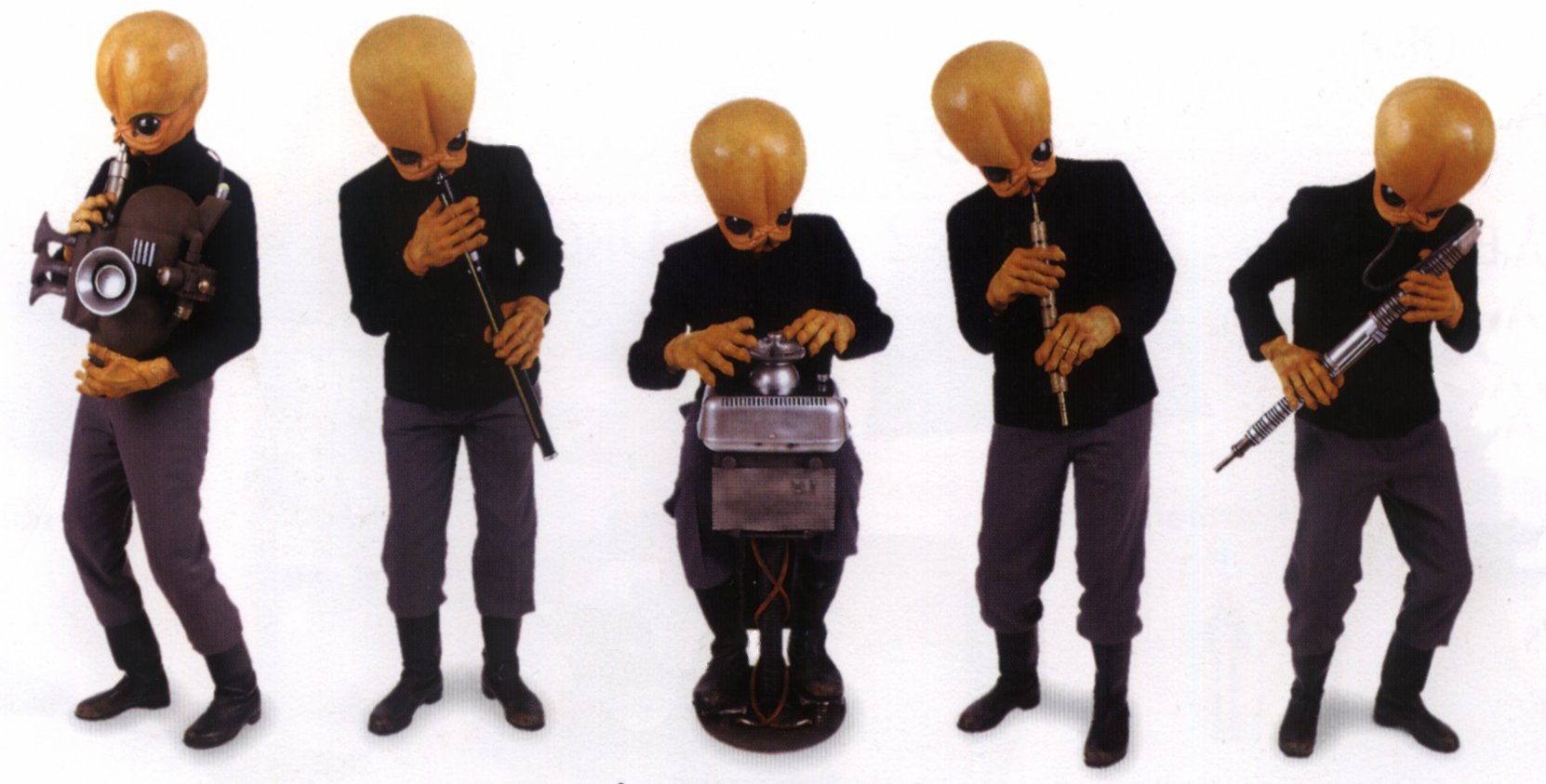
A Brief History Of Star Wars And "Jizz"

Warm and explosive, jizz is an important part of Star Wars culture. Episode VII had better be full of it.

Via oocities.org

For thousands of fans, the most heartwarming moments of the Thanksgiving holiday weren't those spent with family and friends, but watching the 90-second first trailer for Star Wars VII - The Force Awakens. 9 out of 10 geeks agree that it hit all the right notes; it felt modern, but still, as my colleague Steve Kandell put it, stirred the hearts of an impatient legion:

the teaser is a dog whistle in more subtle ways: the orange of the desert, the dirt and rust on an X-wing, and more crucially, the howl of the TIE fighters and the swelling of the John Williams score, which apparently can raise goose bumps by merely typing a reference to it. The final moment of the trailer is not an image, but the distinctive hum of a lightsaber.

Though the familiar sounds no-doubt stirred something inside us all, one particular aural pleasure was missing from the otherwise impressive preview. I'm talking about an indispensible part of the Star Wars culture, with which every person who has seen the movies is familiar. I'm talking about something explosive, something full of life, something that really sticks with you.

I'm talking about jizz.

You know, jizz! What's jizz, you ask? Well, the answer is that even if you don't know what jizz is, you're probably well-acquainted with it and almost certainly already love it.

So what is jizz? According to Wookiepedia, the Star Wars wiki, "Jizz was an upbeat, swinging genre of music, most notably performed by Figrin D'an and the Modal Nodes and the Max Rebo Band." It's the music played in the famous cantina scene in Episode IV, and in Jabba's court in Episode VI.

This is jizz:

This is also jizz:


View Entire List ›

01 Dec 21:41

Watch This Little Pug Enjoy The Crap Out Of His Bath

by Devon Hartman

His name is Barry and he’s going to be bathed in front of a camera for you. Barry is a pug living in Australia. This video was filmed during a heatwave, so this bath was a respite from the extraordinary temperatures. Keep yourself cool, Barry! TC mark


01 Dec 20:57

This Sad Generation Doesn't Know When the Party Stops

by Clive Martin

[body_image width='1280' height='846' path='images/content-images/2014/11/19/' crop='images/content-images-crops/2014/11/19/' filename='when-does-the-party-stop-body-image-1416416244.jpeg' id='5133']

Photo by Anis Ali

This article first appeared on VICE UK

The idea of "living for the weekend​" is nothing new. The history of what we call "youth culture" is really just a history of young people being unable to reconcile their day-to-day lives with their social lives, finding solace in the tribal rites of a Saturday night and workless mornings rather than careers, kids, whatever. A search for a brief few years of drug-taking, shame-walking, clan-fighting, shit-talking "otherness" before we finally become our own parents, whether we fucking like it or not.

Do you spend the first four days of your week scrolling through the Sport Bible Facebook page or waiting for Twitter to kick off about the latest moral catastrophe, nursing obscure chest pains, desperately awaiting that moment where the clock turns 5 or 6 or 6:30 so you can hit the nearest bar and throw a load of shit you wouldn't de-ice your car windows with down your scarred, collapsing airways? Your sense of disillusion is not unique. The only thing that's different about it is the Facebook part. Boundless indulgence is a decades-old problem, an inescapable part of the late-capitalist condition, a symptom of the endless, warless, nothingness of modern life.

You'll find similar feelings expressed in cultural artifacts as revered and ubiquitous as Saturday Night Fever, Quadrophenia, and Bright Lights, Big City. You and your friends might feel like Young Soul Rebels, finding a higher truth through your boundless hedonism, but in actuality you're just shadowboxing your way through an increasingly unambitious cliche. You don't have to be the Christiane F. of your school year group to be a wreckhead now. Even the kids who read Redwall books in the library at lunch get it. These days, it's more transgressive to abstain than to overindulge.

[body_image width='1000' height='664' path='images/content-images/2014/11/25/' crop='images/content-images-crops/2014/11/25/' filename='when-does-the-party-stop-body-image-1416931579.jpg' id='6665']

Photo by Jake Lewis

The concept of the teenager is now in its sixties and it's starting to look dated. Where once giving in to those idiot urges that arrive on Friday night was recognized as an essential, natural phase that young people just went through—a kind of existential pubescence that would be rinsed out of their systems once their hangovers started to last days rather than hours—it feels like people today are forgetting to do the moving on part.

It's no longer just teenagers and students who seem to be running away from real life. It's people in their twenties and thirties, too—people who should really know better but don't seem to know how to do much else. Fully grown, semi-functioning adults who are unwilling to surrender those endless nights spent staring at their own harrowed reflections in club-toilet cisterns and can't find much reason to give them up, either. People like me.

This is my generation, the generation with no real incentive to grow up. No kids to feel guilty about, just jobs that let them ​scrape the money they need to feed, house, and wash themselves. Only the screams of their bosses and worried phone calls from their families goad them on. They're an army of First World wasters trapped in an Escher maze of immaturity.

A friend of mine told me recently that he'd read it would be impossible to make Big now, because 30-year-olds still do the kind of things teenagers do. It wouldn't be funny or shocking anymore to see a grown man buying a pinball table or wearing jeans to the office. It probably wouldn't work even if he were 40 in it.

[body_image width='960' height='716' path='images/content-images/2014/11/25/' crop='images/content-images-crops/2014/11/25/' filename='when-does-the-party-stop-body-image-1416932095.jpg' id='6675']

The author and friends, being wankers

I'm not 30, but I'm not that far off it either, and when I look at my life I find very little to differentiate it from when I was 17. As I look back at my summer, I can see it in my mind's eye as a slow strobe of wandering the streets of London with tens of blokes, wolfing down tinnies, singing football songs, trying to gatecrash parties, texting girls to find out what they're up to and getting ignored, posting stupid Vines in our secret Facebook group, quartering grams, ​listening to​ Underworld, and wearing tracksuit bottoms. I'm in a badly cast remake of Goodbye Charlie Bright and I don't know how to get out of it. 

While such behavior is undeniably cathartic and entertaining, it's not really the kind of thing I thought I'd be doing at my age. As a teenager I assumed I'd be like a character from Manhattan by now, with a flourishing yet refined social life enlivened by the occasional high-society Beaujolais piss-up and BFI Bergman retrospective. I didn't think I'd be married with kids, but I didn't think I'd still be getting turned away from the Upper Street B@1 for wearing shorts. 

Now, you may cry "crisis of masculinity." You may cry "fear of commitment," or "quarter-life crisis," or just "stupid cunt"—but I think in doing so you'd be ignoring something that is basically true. You can claim that this malaise is purely a London thing, and that the Peter Pans who fill this city moved here for the express purpose of prolonging their adolescences for as long as possible. But even if you're the same age and are way more responsible, this pattern is something you'll see in every town and city in the country. In my mind there is little doubt that this massive, generational detachment from maturity is a nationwide problem, and probably the narrative that will come to define us when they begin to write our stories. It'll be told as the story of how the traditional routes out of our youth—babies, houses, a job worth breaking your back for—were all but sealed off, trapping us into what can only be described as a state of perpetual teenhood.

[body_image width='960' height='720' path='images/content-images/2014/11/25/' crop='images/content-images-crops/2014/11/25/' filename='when-does-the-party-stop-body-image-1416932269.jpg' id='6676']

The author's parents in their early 20s

Like a lot of people I know, I'm already older than my parents are when they had me. It was different back then; being in your mid 20s was the time when responsibility started knocking, when you had to put your youth in the rearview in order to birth screaming, flakey-headed avatars of yourself, only returning to the life you'd put on ice years later on a Union Jack Vespa or an Audi TT, with a toy boy or Thai Bride and some divorce papers in tow.

But now my generation has arrived about a third of the way into the average life expectancy, and most of us are finding out that our 20s are just another stage of an extended boozy montage we've no reason, and no cause, to escape from. ​

In my parents' day, it was easier to grow up. It was borderline impossible not to; society dragged you up whether you wanted it or not. But on the plus side a life structure beyond FIFA and getting mashed was up for grabs. It was a time when even working-class people, even people in London, even people who didn't go to university, could find jobs that paid well, eventually buy a house, get married, and have children, indulging in all the tropes that make British suburbia both the best and worst place in the world. Sure, they did it later than their own parents and probably had a lot more fun in the process, but not only was the pressure to conform to a traditional lifestyle much greater—it was so attainable that people often did it by mistake, birthing the generation of accidental firstborns that so many of us are.

[body_image width='1000' height='667' path='images/content-images/2014/11/25/' crop='images/content-images-crops/2014/11/25/' filename='when-does-the-party-stop-body-image-1416937260.jpg' id='6717']

Photo by Nicholas Pomeroy 

But very few people make that mistake now. Just this year, the  Economist published a piece titled "​The End of the Ba​by Boom?", noting the sudden, massive birth-rate decline in the UK. This was the first drop in the birth rate since 2001, and the biggest since the 1970s.

The reports following the survey honed in on a few possible factors, but two are held up as being the most likely causes: the insane housing market and the faltering economy, which in recent years have become totally integral to each other, like a miserable free-market Sonny and Cher. The simple facts are that unemployment is high, benefits are low, and houses are ludicrously expensive. Another cheerful recent report suggested that to buy a house in London, you'd need to be clearing ​100 gran​d a year. Granted, that's London, but then again, London is the capital city ​where more than one ​in ten of British people live now, and the place where by far the highest wages are on offer. Yes, other places are cheaper, but the picture is repeated nationwide. Wages have stagnated to the point where earning £40,000 ($63,000) a year puts you in the ​top 10 ​p​ercent of the population's earners. Essentially, it's all looking a bit shit out there. 

Sure, perhaps basing this on children and housing ownership does play into a very traditional view of what maturity is, but in an economy that is almost entirely based on house prices, investing in property is probably your best chance of doing anything with your money other than endlessly blowing it on uncontrolled rent and misery repellents. And children must be one of the few remaining catalysts in this world that'll convince you that the party needs to stop. 

[body_image width='750' height='501' path='images/content-images/2014/11/25/' crop='images/content-images-crops/2014/11/25/' filename='when-does-the-party-stop-body-image-1416938760.jpg' id='6729']

Photo by Natalie Meziani

These tenets of adulthood aren't for everyone, but this problem we have of people not being able to grow out of their party years has far more impact than a couple of drunk idiots crawling back into the creches of teenage nostalgia. 

All around us is the evidence of what happens when you deny a generation its ability to grow up. You see it in the armies of young men and women being carried out of clubs with puke on their shirts and rage in their hearts, in the broken teeth nestled in-between the cobbles of our pedestrianized shopping precincts, in the ​3.3 million young pe​ople still living with their parents, in the​ astonis​hingly high suicide rates of young men, in the ​cocaine-hea​vy water supply, in Dapper Laughs, in 90s R&B nights in supposedly hip and forward-thinking places vomiting out tired, incapacitated tertiary workers, in ​the boy who became ad​dicted to selfies, in ​Mr. O​iOi and basically everything else that has come to define this generation that just can't get its shit together.

Instead of moving on with our lives, we've stuck to what we know, because finding anything else is just too hard. We spend most of our money renting flats we don't like; we eat supermarket pizzas; we mildly enjoy a few episodes of a new American comedy series before lying face down on a pillow trying to think of new ways not to go to work. On the weekends we get as fucked up as we've been doing for the last ten years despite the fact that it throws us into wild, vertiginous depressions, because it's the only thing we have left to believe in. We are the new aging Italian bachelors in our own mundane versions of ​The ​Great Beauty—the new-British professional wreckheads, the generation that doesn't know what to do with itself now that it's been forced to choose reality over the grand, overarching myths that steered our parents the way of relative peace and respectability. When you have no myth to guide you, what do you lock in on when the hangovers and comedowns demand some normalcy to return to? 

[body_image width='640' height='427' path='images/content-images/2014/11/25/' crop='images/content-images-crops/2014/11/25/' filename='when-does-the-party-stop-body-image-1416939981.jpg' id='6744']

Photo by Nicholas Pomeroy

If we're to expand our options beyond the dichotomy that is "emigrate or retreat," we need to find new ways to adapt to the world we have no choice but to live in. Times are hard, things are shit, but maybe it's time to try another plan other than partying ourselves into early, middle-aged oblivion. We may well be chiefly remembered for mephedrone, shufflers, and furious responses to Vine comedians, but maybe it'd pay to stop caring about what we'll be remembered for and just get on with finding our own routes out of this pissed-up purgatory.

You don't have to learn poi and move to an eco-farm to find ​alternative ways of liv​ing. Moving outside of London shouldn't mean you're ​giving up you​r life. We need to start taking steps beyond the "rent a flat in E9 and just try to survive" lifestyle that's being sold to us—otherwise we'll all just continue to throw money into ​Lynton Crosby's scumbag utopia.

We claim to hate the system that's made us like this, yet we're all so desperate to be a part of it. Maybe it's better to be young in a new world than old in a one we know all too well. We're staring down the barrel of the first batch of acid house grandchildren, FFS. Maybe it's time we found a new way to grow up.

Follow Clive Martin on  ​Twitter.

01 Dec 20:53

How Italy became a country, in one animated map

by Zack Beauchamp

From the year 568 AD all the way until the late 19th century, Italy was divided. Measured on this time scale, the movement to unify Italy — dating from about 1815 to 1870 — happened at light speed. The story, told in this really neat animated map, is fascinating. It also gives an interesting perspective on today's debates about nationhood in places like Iraq.

But first, the map. The swell in support for Italian unification really began in 1815, after the Congress of Vienna divided up post-Napoleon Italy. The map starts in 1829, after the central Italian Duchy of Modena and Reggio began expanding. It then goes forward all the way through the country's final unification under the banner of the Kingdom of Sardinia in 1870. Pay close attention to 1848-49 (the first Italian war of Independence) and 1859-1861 (the second war of independence and its aftermath):

italian unification gif

(Artemka)

Italian unification was by no means a simple process. On the pro-unification side, the Sardinian monarchy eventually fought in an at-times uncomfortable alliance with more radical nationalists like Giuseppe Garibaldi. They were opposed principally by Austria and the papacy, and fought (at various times) both with and against France. It's impossible to do this history justice in a short article, but Derek Beales and Eugenio Biagini's The Risorgimento and the Unification of Italy is a classic, widely respected introduction to the relevant history.

The fact that Italian unity ended up sticking — that Italy is still a unified country today — is instructive. In 1815, Austrian statesman Klemens von Metternich dismissed the idea of Italy as "a geographical expression" — basically calling Italy a place riven by regional divides and Italian identity a lie. Metternich's comment strikingly similar to the way some people talk about new, deeply divided countries today, such as Iraq or Syria. It took Italians decades to unify after the Congress of Vienna; by comparison, Iraq has had almost no time to put itself together since the fall of Saddam Hussein and the American withdrawal.

Of course, 21st century Iraq and 19th century Italy are very, very different places. Perhaps most importantly, Iraq's borders were colonially imposed, whereas Italy was built out of a long-running of Italian identity. But the point is that it's easy to assume that what's true now — Iraq is divided, and faith in the national project is weak  — will be true forever. Metternich thought Italy would be ever divided, and look how that turned out.

01 Dec 20:51

How to Cook With…Lava (Our First Lava Recipe Ever!)

by Michael Y. Park

Earlier this year, Londoner Sam Bompas made news around the world when he enlisted two upstate New York professors to help him cook a couple of rib-eyes—over a hot stream of manmade lava in a Syracuse parking lot.

“That was the best steak I ever had,” Bompas says. “And I’m a chef and I’ve written five cookbooks. My dream is to one day own a chain of lava-based restaurants.”


Bompas got his scientific expertise—and his hot lava—from Syracuse University professor of geology Jeffrey Alan Karson and professor of sculpture Robert Wysocki, who’ve been creating artificial lava for the last five years to both examine the nuances of lava flows and to explore new forms of landscape-based sculpture. They heat hundreds of pounds of degassed Wisconsin basalt to 2,100 degrees Fahrenheit in a silicon-carbide crucible, then pour the red-hot, bubbling liquid out onto a safe slope behind the arts building (it takes hours for the stuff to cool down). All the while, whoever’s tending (or cooking over) the lava has to wear the kind of specialized clothing that protects foundry workers—and, even then, the reflective heat shields on their visors still begin to melt after six or seven minutes by the lava furnace.

“My tip for home lava cooks: Be well-insulated. It gets really hot!” Karson says.

lava cooking
Syracuse University students try roasting coffee beans over a cooler part of the lava flow.

Until Bompas came along, the lava experts’ cooking experiments tended toward the predictable camp-cooking fare everyone tries in Scouts (s’mores, hot dogs), though one student recently made a valiant effort at a butter cake. (She jimmied up a makeshift cake dome to try to cook the top more evenly. It was a mixed success.)

But Bompas made a proper meal of it with steaks and corn on the cob, and he says the pure heat of the hot lava, unsullied by the gaseous byproducts of charcoal, gas, or wood, made for a “pure meat” flavor. Now he’s planning on catering lava-cooking parties for thousands with a portable furnace and hundreds of pounds of volcanic rock—expect the price tag to start at about $160 per head, with a minimum of 500 guests. (He’s been fielding inquiries from the Middle East and Russia.)

At Bon Appétit‘s request, Bompas has devised history’s first recipe for cooking over manmade lava, and we’re printing it here. We’d tell you not to try this at home, but, frankly, if you’re the kind of person who has an industrial furnace and a couple hundred pounds of basalt lying around, no one gets to tell you not to do anything.

SU Lava1
The lava comes out red-hot from the furnace. It’s generally too hot to cook this close to the source of the flow.

Molten Lava-Charred Rib-eye With Corn-Tomatillo Salsa
4 servings

STEAKS
1.1 billion-year-old basaltic rock
Full-body heatproof safety gear
4 rib-eye steaks, 1.5” – 2” thick
Salt and pepper to taste

SALSA
3 ears of corn, unshucked
2 tomatillos
1 avocado
1 jalapeño, seeded
½ red onion
¼ cup olive oil
¼ cup fresh lime juice
Handful chopped cilantro
Salt and pepper to taste

Preheat car-sized furnace to 3,000 degrees F. Melt rock for 60-70 hours. Build a primary heatproof receptacle with a secondary ice channel flowing out of it. Set up a grill 10″ above it.

Finely dice the jalapeño, red onion, and avocado. Chop cilantro. Once the corn and tomatillos are cool enough to handle, cut corn kernels off cob and large-dice the tomatillos.

Season steak with salt and pepper to taste. As lava flows, place rib-eyes on the grill for 48 seconds on each side until there is a blackened char. Remove the steaks from the heat onto another grated surface to rest for 10-12 minutes.

Scorch the unshucked corn and tomatillos for about 180 seconds, turning fairly often so as not to burn. Remove from the grill to cool.

In a large bowl, combine all ingredients for the salsa. Season to taste.

Once lava has cooled to a mere 900 degrees F and turned black, return steaks to grill to warm up. Serve molten lava-charred rib-eyes with salsa on top.

The post How to Cook With…Lava (Our First Lava Recipe Ever!) appeared first on Bon Appétit.

01 Dec 20:33

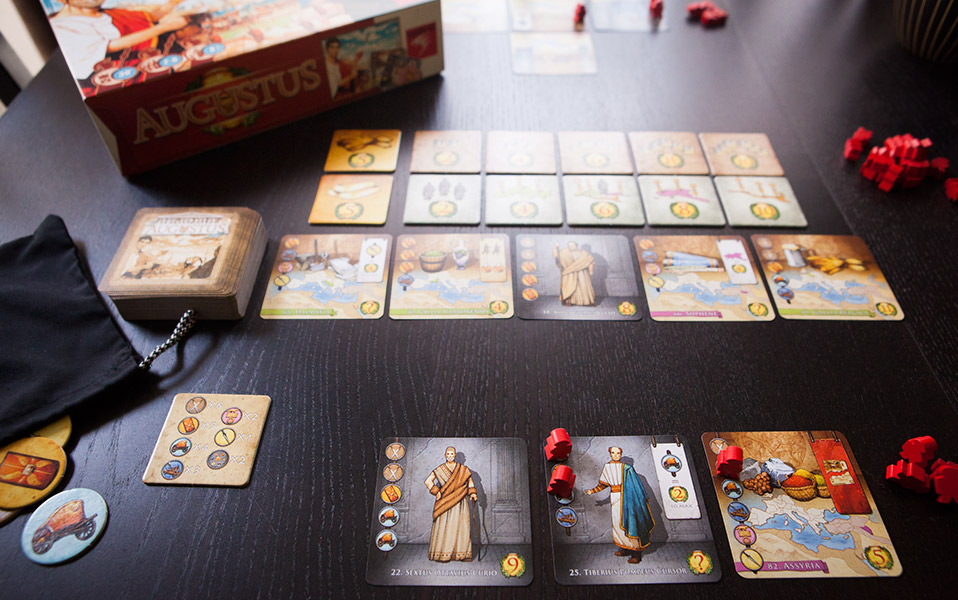
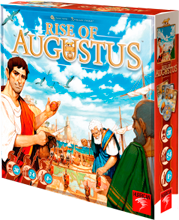
¡Ave César! Los que van a jugar te saludan. Reseña de Augustus

by Miguel Michán

Augustus

Tras el asesinato de Julio César, el 15 de marzo del año 44 a. C., su hijo adoptivo Cayo Octavio decide regresar a Roma. En seguida manifiesta una gran ambición y un deseo de control político, y el 31 a. C. ya gobierna solo. Tres años después, el Senado le concede el título de Princeps senatus, el primer miembro del Senado en hablar sobre un tema, antes que el resto de la asamblea. El 27 a. C. recibe el título de Augustus, aquél cuyas palabras tienen el poder de la predicción.

Para quienes disfrutamos con estas cosas, Octavio, Octaviano, Augusto (la historia del primer emperador del Imperio romano es la historia de sus nombres), es uno de los personajes más interesantes de la Antigüedad clásica. Hablando en términos actuales, fue todo un figura, así que os preguntaréis… ¿qué juego es Augustus? ¿Un intrincado eurogame sobre la política romana? ¿un wargame sobre la batalla de Accio y la derrota de Marco Antonio y Cleopatra? Pues no, es un bingo.

Habéis leido bien, un bingo. Un bingo hipervitaminado, pero un bingo a fin de cuentas. En Augustus somos legati Augusti, representantes de Augusto compitiendo por el control de las provincias del Imperio y el apoyo de los senadores más influyentes para cumplir nuestra ambición de hacernos con el título de cónsul.

Los senadores y las provincias son los cartones, objetivos con símbolos como espadas, escudos o cuadrigas en lugar de números, que vamos marcando con meeples que representan nuestras legiones. Las bolas son fichas de movilización, 23 de ellas incluyendo dos comodines, que se introducen en una bolsa de tela que hace las veces de bombo. En cada turno se saca una ficha de movilización de la bolsa y los jugadores colocan una legión en el mismo símbolo de uno de sus tres cartas de objetivo. Cuando se completa una carta el jugador grita ¡Ave César! ¹.

Un bingo, ¿no os lo he dicho? Pero uno bastante más divertido que el que jugábamos con la abuela.

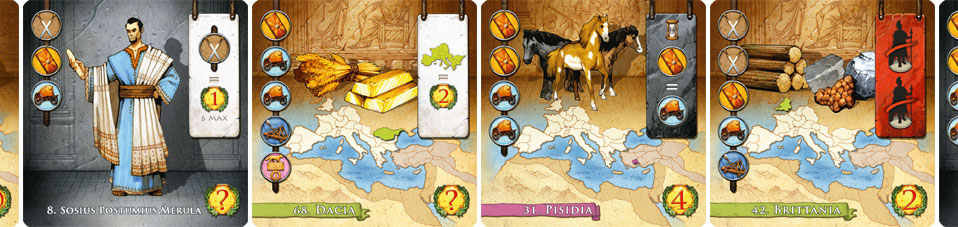
Cartas de objetivo de Augustus

En primer lugar, las cartas de objetivo son de diferentes tipos y nos otorgan distintos beneficios cuando las completamos. Las hay ofensivas, que destruyen objetivos de otro jugador o retiran alguna o todas las legiones de una carta en proceso. Otras ponen en nuestras manos más legiones (empezamos con siete) para que podamos cubrir más símbolos antes de vernos forzados a mover legiones de una carta a otra. Y también las hay para crear nuestra propia suerte con equivalencias entre dos símbolos que nos permiten mover una legión a cualquiera de los dos cuando sale uno de ellos de la bolsa. No son los únicos, pero seguro que ya os hacéis una idea.

Paolo Mori le ha dado una vuelta de tuerca al Bingo para controlar la suerte y hacerlo más divertido

Empezamos el juego con tres objetivos (elegidos de entre seis) y cuando completamos uno, elegimos otro de una fila de cinco disponibles formada al azar a partir del mazo. Los objetivos también dan puntos de victoria, algunos de forma directa y otros, los más suculentos, por completar objetivos de algún tipo (tantos puntos por senador, o cuantos por provincia de tal color). Y además están los premios, 12 concretamente, que se reclaman de tres formas distintas:

  • Mayoría de trigo y oro. ¿Habéis luchado alguna vez en Colonos de Catán por el camino más largo o la mayoría de caballeros? Pues esto es igual. El primer jugador en completar una provincia productoras de oro y/o trigo consigue un premio de 5 puntos. Si alguien le supera en algún momento, se lo arrebata.
  • Tipo. El primer jugador en completar tres objetivos de senador, tres provincias verdes, una provincia de cada color y un senador, tres provincias violetas o tres provincias naranjas se lleva un premio de 2, 4, 6, 8 y 10 puntos respectivamente.
  • Número. Cuando completamos nuestro segundo, tercer, cuarto, quinto y sexto objetivo tenemos la opción de reclamar un premio de 2, 4, 6, 8 y 10 puntos respectivamente. Pero ojo, solo uno de ellos. Si cogemos el de 2 puntos ya no podremos optar a por ninguno más, y si pasamos de coger el de 8 con la idea de ir a por el de 10 y alguien se nos adelanta completando su sexto objetivo nos quedamos sin premio alguno. Es una especie de minijuego de avaricia y forzar tu suerte.

Augustus

Estos premios, unidos a los objetivos con puntos variables, le conceden a Augustus un mayor peso (aunque sin pasarse) convirtiendo la elección de las cartas de objetivo en los momentos de mayor importancia y táctica del juego. En esto influyen también otras dos variables: no todos los objetivos necesitan del mismo número de símbolos para ser completados (van de 2 a 6), y no todos los símbolos están presentes en el mismo número dentro de la bolsa (algunos son más improbables que otros). Dos ingredientes que nos obligarán a sopesar la dificultad de cada carta frente al beneficio que nos proporcionará.

La partida termina en la ronda en la que alguien completa su séptimo objetivo, normalmente entre maldiciones, improperios y alguna que otra carcajada.

Maximus

maximus

Aunque no viene incluida en el juego, esta carta promocional del mismísimo emperador Augustus puede reemplazarse fácilmente por cualquier cosa que queráis, desde el mando del televisor (¿?) a una corona de laurel 100% artesanal (mucho mejor). Lo importante es que añade una pequeña regla opcional que puede ser interesante especialmente cuando jugamos con peques.

El jugador más joven recibe la carta/corona/pañuelo rojo… ¡lo que sea! de Máximo Augusto. Durante la partida, cuando se saque una ficha de movilización de la bolsa que no le permita colocar una legión en ninguna carta de objetivo, este podrá colocar o mover una legión a cualquier símbolo de su elección. Entonces, pasará la carta a otro jugador que será el nuevo Augusto hasta que haga uso de ella repitiendo el ciclo.

Dentro de la caja

¹ Potenciando el espíritu ludicofestivo de un buen bingo familiar os sugiero que probéis con gritos alternativos al oficial de “Ave Cesar” como “Ensalada Cesar” o “Ave [nombre del jugador que ha sacado la ficha de la bolsa]” ;)

Augustus

Augustus (2013)

  • Autor: Paolo Mori
  • Ilustración: Vincent Dutrait
  • Edad: 8+
  • Duración: 30 minutos
  • Jugadores: 2-6
  • Precio: 29 euros

    Lo bueno

  • Es el Bingo versión 2.0 edición jugones. Divertido y ligero pero con cierta chicha.
  • Lo puedes sacar a mesa con cualquiera y en cualquier situación. Y como admite hasta 6 jugadores, es más versátil que la mayoría de títulos.
  • El tema y la mecánica están, para mi sorpresa, bastante bien enlazados. Y las ilustraciones de Dutrait molan!

    Lo malo

  • Una caja enorme para lo que luego viene dentro.
  • Si tu grupo es un muermo, no esperes que Augustus obre ningún milagro.

Sitio oficial Augustus

01 Dec 00:47

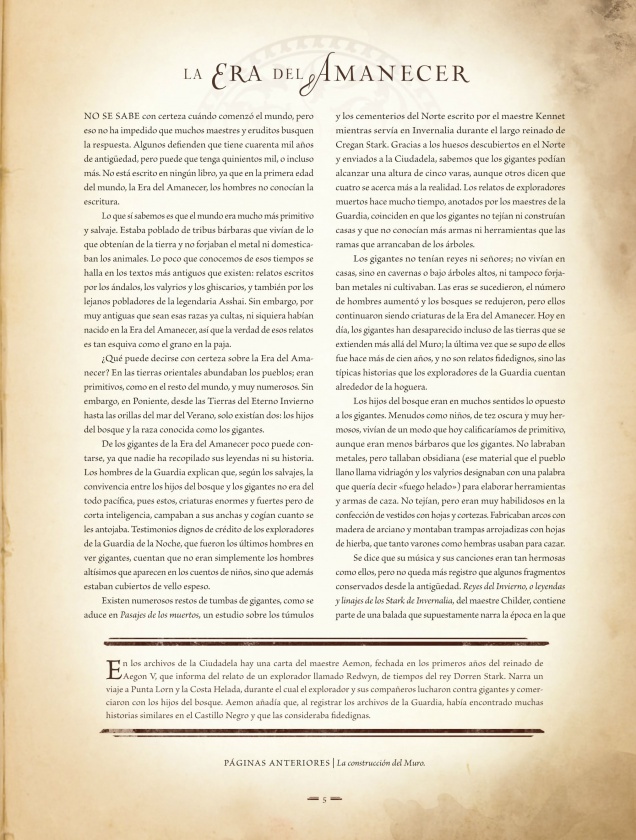
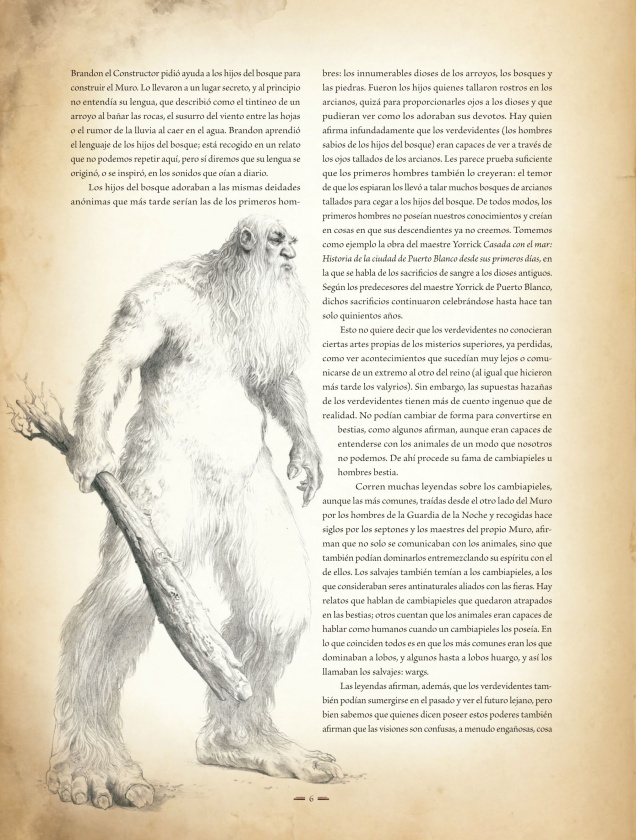
Primer vistazo a la enciclopedia ‘El Mundo de Hielo y Fuego’

by Jon A. Sedano

Jon A. Sedano

Primer vistazo a la enciclopedia 'El Mundo de Hielo y Fuego'

La editorial Gigamesh se encuentra perfilando los últimos detalles de su próxima obra centrada en la saga ‘Canción de Hielo y Fuego’ de George R.R. Martin, de nombre ‘El Mundo de Hielo y Fuego’. A diferencia de los anteriores, en esta ocasión no es un nuevo libro al uso, sino una enciclopedia con multitud de ilustraciones y datos que nos contarán innumerables detalles sobre la saga. De esta forma podemos expandir aún más nuestro interés por este universo literario, leyendo los comienzos de la vida bajo el primer capítulo que lleva por título ‘La Era del Amanecer’ o la rebelión de Robert Baratheon entre otras historias.

El libro promete así poner fin a las preguntas que muchos lectores se hacían, permitiéndonos conocer de manera detallada los entresijos o lugares que en los libros apenas apenas aparecen mencionados.

 Primer vistazo a la enciclopedia 'El Mundo de Hielo y Fuego' Primer vistazo a la enciclopedia 'El Mundo de Hielo y Fuego' Primer vistazo a la enciclopedia 'El Mundo de Hielo y Fuego'

Pero por si esto no fuera suficiente, la editorial también se va a encargar de publicar ‘Un caballero de los Siete Reinos’ (‘A Knight of the Seven Kingdoms’), un libro en el que se incluyen las aventuras de Dunk y Egg. Este libro recopilará tres historias que Martin escribió en forma de novelas cortas: ‘El caballero errante’, ‘La espada leal’ y ‘El caballero misterioso’.

Fuente: Los Siete Reinos

La entrada Primer vistazo a la enciclopedia ‘El Mundo de Hielo y Fuego’ pertenece a La Casa de EL - Artículos y noticias sobre cómics, cine, series y videojuegos.

01 Dec 00:41

Paco Reyes será el candidato del PSOE al Concello de Santiago

by La Voz
El actual portavoz del PSOE ha logrado 301 votos frente a las 235 de Mercedes Rosón
01 Dec 00:39

Show your tits, plz

by Jarret_Noir


01 Dec 00:31

NATO is a military alliance, not a social club.

by adamvasco
Summit of Failure: How the EU Lost Russia over Ukraine which led to Four Thousand Deaths and an Eastern Ukraine Gripped By War.
The US and Europe are at odds over NATO expansion. Hate To Say We Told You So: NATO Expansion Edition.
The Ukraine Crisis Is the West's – Not Putin's – Fault and Reminds Americans Why NATO Should Not Expand: Not To Ukraine, Georgia, Or Anyone Else.
30 Nov 19:26

SideChef, una app para aprender a cocinar paso a paso

by Mary Soco

Sidechef Habemos quienes, por naturaleza, herencia, o a fuerza de hacerlo, la cocina se nos da fácilmente, pero hay quienes por el contrario tienen verdaderas dificultades al intentar preparar algo. Tanto para Android como para iOS existen muchas aplicaciones de recetas de cocina, pero un amigo me recomendó recientemente darle una mirada a SideChef.

Se trata de una aplicación para iOS, es decir, que es compatible con iPhone y con iPad, que recientemente ha llegado también a Android, y se caracteriza por que es muy clara en su contenido y además se actualiza constantemente. Para utilizarla, tendremos que crearnos una cuenta con Facebook o con nuestro correo electrónico, pues SideChef no es solo una aplicación móvil, sino que además es una comunidad cuyo gusto común es la comida. Sidechef 1

Su catálogo de recetas es bastante impresionante, pues actualmente ya cuenta con más de 1000 recetas, y el número sigue creciendo, pues los mismos integrantes de la comunidad pueden ir enriqueciéndola. En cuanto a la organización, como la gran mayoría está dividida por categorías y tiene un buscador bastante completo.

Si bien, en cuanto a la presentación de las recetas es similar a otras aplicaciones, SideChef lleva escondida una característica que nos hará más fácil seguir una receta, y esa es que nos puede guiar por medio de voz a través de cada uno de los pasos de la preparación. Cada paso además está bien ilustrado con fotografías, y por si fuera poco, para avanzar o retroceder podemos hacer uso de comandos de voz, de modo que nuestros dispositivos móviles no corren riesgo alguno de mancharse con la comida.

Los desarrolladores de esta app, han pensado en todo y han incluido también un temporizador junto con otras funcionalidades que nos permiten tomar fotos de lo que estamos haciendo, crear nuestro propio libro de recetas con aquellas que ya hemos preparado y desde luego, subir las propias para que otros usuarios puedan seguirlas.

En AppStore | SideChef

En Google Play | SideChef

Más información | SideChef

-
La noticia SideChef, una app para aprender a cocinar paso a paso fue publicada originalmente en Directo al Paladar México por Mary Soco .


30 Nov 19:12

Oh, hello there…

by Jonco

Hello there2

Thanks sg


The post Oh, hello there… appeared first on Bits and Pieces.

30 Nov 19:11

Told dad he wanted to look older…

by Jonco

Looks older

Looks older2

Troll dad

Thanks sg


The post Told dad he wanted to look older… appeared first on Bits and Pieces.

30 Nov 16:29

El 40 % entiende que Hernández ha devuelto la normalidad al Concello

by r. m. santiago / la voz
Snob

La Voz te educa.

Casi el 48 % de los ciudadanos observan sin embargo que no ha sido así

30 Nov 15:40

¿Le conviene a Pablo Iglesias seguir jaleando a los Chikos del Maíz?

by Víctor Lenore

Alberto Garzón. Pablo Iglesias. Iñigo Errejón. Tania Sánchez. Los nombres más pujantes de la izquierda española aportan textos al libreto de La estanquera de Saigón, segundo álbum del grupo de hip-hop valenciano Los Chikos del Maíz. Hablamos de un colectivo de rap politizado, procedente de la clase obrera, cuyas rimas hablan de contracultura, represión policial y momentos clave de la Guerra Fría tratados como metáfora pop. El título del álbum, por ejemplo, es un cruce entre películas bélicas de Vietnam y el cine "quinqui" ibérico de Eloy de la Iglesia. Su anterior disco, Pasión de talibanes (2011), les hizo destacar en la  escena del rap más combativo.

Una de las dos voces principales del grupo es Nega, que el año pasado publicó ¡Abajo el régimen! (Icaria), un libro de bolsillo donde charla extensamente con Pablo Iglesias y que ya ha alcanzado la cuarta edición. Los grandes medios y festivales cool ignoran sus rimas, pero han sabido llegar al público con un discurso crudo y directo, que exhibe orgullo de clase. Nega fue soldador durante seis años y más tarde estudió Comunicación Audiovisual. Nega y Toni el sucio, el otro rapero del grupo, analizan en esta entrevista las claves de su carrera.

P. ¿Cuáles creen que son los límites políticos del hip-hop?

Nega: Bueno, en este país se puede llegar hasta donde te deje la Audiencia Nacional (risas).

Toni el sucio: Si existiera libertad de expresión, tendríamos el límite que se marcara cada uno, supongo.

Nega: El hip-hop, como cualquier expresión cultural, no es nunca una herramienta definitiva. Los músicos no podemos convertirnos en modelos a la hora de tomar decisiones políticas. Somos gente normal, de la calle, no la vanguardia del proletariado. Si dos de cada diez oyentes del disco se plantean militar en un sindicato o en una asociación de vecinos ya estamos muy contentos. Como diría Adorno a los funcionalistas: el impacto de la cultura no se puede cuantificar. 

Video embebido

P. ¿Cuál es la canción que más problemas os ha acarreado en vuestra trayectoria?

Toni el sucio: Seguramente las antiguas. De las que más problemas trajo fue Spain is different. Tenía frases como: "No me emocionó el vuelo de Pedro Duque/sino el de Carrero Blanco" y otra que decía: "Ortega Lara no era ningún pacifista/solo cambió de carcelero a contorsionista". En el fondo, lo que hacíamos era humor… Las primeras maquetas tenían cosas más duras. Tampoco es que Carrero Blanco fuese la persona más demócrata de España. Ortega Lara nos escribió una carta. El terrorismo es un asunto que le encanta a la derecha, porque le han sacado mucho rédito. Hace dos días salía ETA en portada de ABC y tú te preguntas por qué aún siguen con eso.

Sumario

Nega: En otros países es muy distinto. La reina de Inglaterra le ha dado la mano a Martin McGuinness, un líder del Sinn Fein que había sido comandante del IRA. En los países civilizados los conflictos se resuelven negociando. El problema es que la derecha española ha sacado tanto partido a ETA que es un discurso que no quieren soltar.

P. ¿Os arrepentís de alguna canción antigua?

Nega: Diría que de las rimas machistas. Eran cosas vinculadas a mi estilo de vida de entonces: si un sábado triunfaba y una chica me la chupaba en el lavabo luego lo contaba en una letra. No me planteaba que pudiera ser ofensivo para las mujeres. Ahora todo está más meditado. No es lo mismo tener veintitantos que treinta y tantos años, tampoco es igual tener doscientos seguidores en Twitter que 74.000, como tenemos nosotros. El grupo es un altavoz muy potente. Hay miles de chicos escuchando y tenemos que pensar bien lo que decimos. Es la famosa frase de Spiderman: "A todo gran poder corresponde una gran responsabilidad".  

P. Antes de empezar la entrevista, Nega comentaba que creía que la canción ‘Putas y maricones’ no tenía precedentes en el hip-hop español por la defensa que se hace de los colectivos LGTB (lesbianas, gays , transexuales y bisexuales). ¿Es algo que os habíais impuesto?

Nega: Son asuntos que se tratan en el hip-hop de aquí, pero no desde una perspectiva feminista, sino más bien al contrario. 

Toni el sucio: Bueno, quizá lo han hecho grupos de minoritarios de raperas. Recuerdo a unas chicas de Madrid que se llamaban BKC cuyas canciones trataban estas cosas. Seguramente nuestra aportación es que somos varones blancos heterosexuales y queremos apoyar ese discurso. Sentimos la lucha como propia. Es una forma de romper un tabú. 

Nega: Tampoco venimos a liberar a nadie. Creo que la sociedad avanza y tenemos que avanzar con ella. A mí hace años nunca se me habría ocurrido hacer un tema así. 

SumarioToni el sucio: Llevamos tiempo arrastrando la etiqueta de machistas y es algo que hemos ido corrigiendo. Diría que este es el primer disco donde no tenemos ninguna frase que se pueda considerar sexista. Pero nos está costando mucho quitarnos de encima el sambenito. 

Nega: Para mí existe el feminismo de base y el feminismo de tuiter, que no nos va a quitar nunca esa etiqueta por mucho que evolucionemos. Para algunos tuiteros llamarnos machistas es una forma de autoafirmación. Pero da igual: lo importante para nosotros es que esos mensajes feministas lleguen a los chavales que nos escuchan. 

P. La izquierda está un momento muy inclusivo. Vosotros, en cambio, seguís apostando por un discurso muy duro, diciendo por ejemplo que Berlín estaba mejor con la Stasi que con Angela Merkel. ¿Os pilla esta coyuntura con el pie cambiado?

SumarioNega: Lo que yo digo en una letra nunca lo diría en una charla o en un acto político. Esa rimas son licencias artísticas, mayores que las que se puede permitir la izquierda política. Nosotros solo somos artistas y se nos deja soltar esas frases y también emborracharnos y cantar La Internacional sin encontrar detrás a un periodista de El Mundo deseando grabarlo. 

Toni el sucio: En el anterior álbum había una  frase que decía "este disco lo financia el gobierno de Corea del Norte". Obviamente, es mentira, aunque haya gente que se lo creyera. Son recursos artísticos, que se usan con frecuencia en el tipo de hip-hop que nosotros hacemos.

Nega: Ken Loach también rodó El viento que agita la cebada (2006), donde explica cosas del IRA que lo mismo no eran las más convenientes para ese momento histórico, pero es un artista y decidió tirar por ese camino. 

Video embebido

P. Es inusual que un grupo de hip-hop esté tan bien relacionado con figuras políticas de mucho peso. En el libreto de vuestro disco escriben Alberto Garzón, Iñigo Errejón y Tania Sánchez. Pablo Iglesias os citó en su entrevista de Salvados. ¿Cómo empezó la conexión con ellos?

SumarioToni el sucio: Hace tres años eran nuestros colegas de Tele K, una emisora de Vallecas que veían cuatro gatos. Ahora Pablo es candidato a presidente del Gobierno. Cuando le conocimos era un don nadie, sin ánimo de ofender. Alberto Garzón es oyente del grupo y hemos coincido en alguna charla política. 

Nega: Nosotros conocemos a Pablo desde antes de publicar nuestro primer disco. Solo teníamos maquetas. Colaboramos en La Tuerka, su programa de televisión, empezamos todos juntos. Además somos gente de la misma generación. Ahora no sé si les convenimos mucho, pero siguen siendo amigos por su cuenta y riesgo. 

SumarioToni el sucio: El ascenso que han tenido no lo esperábamos, pero creo que tampoco lo esperaban ellos. Es muy bueno que la izquierda se haya cambiado el chip de "resistir" por el de "llegar al gobierno". A ver cómo culmina este proceso. 

Nega: Incluso si gana Podemos va a ser una batalla porque las élites no van a soltar la teta así como así.  

P. En el disco también arremetéis contra los hipsters. Un amigo valenciano me contaba que los ultraderechistas de España 2000 solían ir al barrio de Ruzafa a pedir la expulsión de los extranjeros pobres. Por supuesto, nunca consiguieron su propósito, pero los migrantes acabaron marchándose a la fuerza cuando subieron los alquileres por la gentrificación del barrio, convertido ahora en zona artística y cool. 

Nega: Es asqueroso. Ruzafa era un barrio muy popular. Mi madre nació allí. Ahora solo hay diseñadores, galerías de arte, restaurante-librería, ya te lo imaginas. Todo es comida de diseño, platos cuadrados y camareros con tatuajes. 

Toni el sucio: Los alquileres subieron y los migrantes se tuvieron que ir. Mi trabajo de fin carrera lo quería hacer sobre Ruzafa multicultural y cuando me puse tuve que cambiar de asunto porque no quedaba apenas diversidad.   

Nega: En el barrio de El Carmen se da también ese proceso, pero menos, todavía queda gente mayor y punkis con perros en los bares de carajillos.  

Video embebido

P. Otra de vuestras nuevas canciones se titula ‘No somos indies con flequillo (pero tenemos derecho a sonar en Radio 3)’. ¿Estáis hablando de censura en la emisora?

Toni el sucio: Nosotros hemos sonado, pero en programas marginales, lo mismo a las tres de la mañana. Lo que ponen en horario de máxima audiencia es esa especie de hilo musical donde solo programan los típicos grupos indie, de esos que han salido a patadas. Muchas veces piensas si lo que está sonando realmente lo conoce alguien. 

SumarioNega: El monopolio que tienen es brutal. Radio 3 es pública, pero solo pone un tipo de música alternativa, que son los indies. No programan lo que se conoce como rock calimochero, digamos Boikot o Reincidentes, ni tampoco a nosotros. Los espacios culturales en este país los ocupan los inocuos y los inofensivos. Programas presuntamente punteros como Siglo 21 son un escándalo. Y no solo es Radio 3. También pasa en los Premios de la Música Independiente, donde los sellos tipo Subterfuge tienen un monopolio increíble. Al hip-hop se le relega a una categoría aparte, como a los latinos en los Grammy. Nunca verás a un rapero ganar mejor disco o mejor canción del año.

Me tocó la moral porque a nosotros nos invitaron cuando estaba pasando el 15M, la manifestación de los mineros, la Marea Verde…Aluciné porque ningún grupo mencionaba estos conflictos al recoger el premio. Nosotros soltamos todo lo que pudimos, aprovechando estar en un teatro en el centro de Madrid con la segunda cadena de Televisión Española grabando todo. Lo más gracioso es que al final se me acercaron los Vetusta Morla a darme las gracias "por decir lo que todos estábamos pensando, pero no nos hemos atrevido a decir". Luego, claro, pasaron el metraje de la gala por La 2 y sacaron a todos los ganadores menos a nosotros (risas). Igual nos pasamos. Íbamos muy preparados: sabíamos que íbamos a ganar el premio porque era por votación popular. Luego no aguantamos mucho en la fiesta. A los diez minutos nos fuimos a Vallecas a beber calimocho

Video embebido

P. Lo mismo Vetusta Morla tuvieron mala conciencia desde aquella noche porque su último disco es más social y político. La canción ‘Golpe Maestro’ trata del saqueo financiero y ha sido usada por Podemos en un anuncio electoral de las europeas.

Nega: Creo que Vetusta tuvieron que salir a confirmar que esa canción era política. Escuchando la letra no estaba del todo claro. Amaral también hicieron ese vídeo donde en realidad las imágenes son bastantes más duras que la letra. A mí no me parece mal que esta gente se sume. Ojalá todos los grupos se mojaran un poquito porque no andamos sobrados. 

Toni el sucio: Tampoco creo que estos artistas tengan un nivel de vida tan elevado como para que todo lo que está pasando no salpique a su entorno. Supongo que no viven en mansiones y que tendrán amigos y familiares pasándolo mal. No van a hacer un disco entero de golpe, pero ya empiezan a meter canciones sueltas y a ponerse alguna vez camisetas de Stop Desahucios en los conciertos 

Nega: Estopa son gente que viene de la Seat, del rollo sindical, pero que han llegado al gran público, por eso  cuando salen con una camiseta del Che o dicen algo contra los desahucios tiene un impacto muy grande. Que un grupo indie se politice tiene más impacto que cien grupos de punk-rock combativo.

P. ¿Alguna vez Pablo Iglesias, Iñigo Errejón o alguien de ese entorno os ha hecho algún comentario sobre lo brutas que son vuestras rimas?

SumarioNega: En el disco digo que somos incómodos para Podemos. No sería buena idea llamarnos para cerrar uno de sus actos. No tengo claro si está bien la idea de recuperar a Lluís Llach y a los dinosaurios de la Transición. Ya se lo comentaré a Pablo cuando le vea. En todo caso, nuestros discos funcionan más allá del ámbito de la extrema izquierda, ya no cantamos para los cuatro convencidos. El disco nuevo está entre los más vendidos de Amazon. 

Toni el sucio: Es normal que la cúpula de Podemos ya no pueda retuitear nuestros videoclips en las redes, porque decimos cosas como que la oposición de Venezuela es fascista y que hay que sacar los tanques a la calle. Eso no es algo que esté en el discurso de Podemos. 

Nega: No hay mucha gente que sepa esto, pero Pablo Iglesias dirigió uno de nuestros videoclips. 

P. En el disco hay varias versos contra fetichizar la "izquierda verdadera" y contra la tentación de repartir carnés de autenticidad. En todo caso, creo que lo acabáis haciendo en alguna ocasión, por ejemplo al decir que Tania Sánchez es feminismo de verdad, mientras que Filósofa Frívola (estrella de Twitter) no lo es.  

SumarioNega: Sí. La verdad es que el rollo identitario siempre sale. Por muy transversal que quieras ser siempre acabas sacando "lo tuyo". Pero nuestro objetivo es llegar al máximo número de gente porque la izquierda viene de una derrota brutal y tenemos que avanzar de alguna manera. Eso nos pasaba también en el 15-M: la gente que llevábamos toda la vida militando teníamos esa actitud de decir "es que yo llevo indignado muchos años". Pero es cierto que los militantes veteranos nunca logramos sacar un millón de personas a la calle. Ahora intentamos exponer las cosas de manera más inteligente. Hemos descubierto que en los discos se pueden decir las mismas barbaridades sin ser tan bestias (risas).
30 Nov 15:29

A Spanish Stop Motion Horror Film You Can Stream Online

by Zeon Santos

Streaming media has totally changed the world of filmmaking, allowing anyone who makes a movie to share their creation with the world…and actually have people watch it.

Spending 10+ dollars on an unknown movie in theaters is a gamble most people aren’t willing to take, but with streaming media you can spend as little as zero bucks to watch an independent film that didn’t make it into theaters but is still worthy of a watching.

(YouTube Link)

The Apostle is a stop motion horror film by Fernando Cortizo truly worth the two dollars it costs to rent on the film's official website.

 The film is full of eye candy for stop motion fans, as the puppets and sets are truly spectacular, and the film is a good example of how important streaming media is to independent filmmakers like Fernando.

-Via Cartoon Brew

29 Nov 22:02

Baby Bat Burritos at the Australian Bat Clinic

by Rion Nakaya

This is just some of what the Australian Bat Clinic does to care for orphaned baby bats: feeding, grooming, attending to their medical needs, and making them feel warm and safe by wrapping them like a ridiculously cute baby bat burrito. From Wakaleo:

When a bat mother dies, often their young are still attached and will not survive without the right care. Bat carers play a vital role in not only retrieving suffering bats, but rehabilitating them until they can be released back into the wild. When baby bats first enter rehabilitation it can be traumatising for them as they have just been separated from their mothers to which they have formed strong bonds. Bat carers have to ensure that the baby bats not only are well fed, but that they are nurtured and feel safe in their temporary new home. Providing affection the bats is a necessity.

The teats represent their mother’s nipple, and this makes them feel more comfortable, as does the security of the blankets which they are often snuggly wrapped in.

When the bats grow old enough, they’re returned to nature so that they can contribute to Australia’s embattled flying fox habitats. In this 2013 video, we can see how these babies flourish as they reach maturity, soon to be transitioned into soft release exhibits before returning to the wild:

If you find a bat, contact a local bat rescuer. For their safety and yours, bats should not be handled by anyone other than a trained bat caregiver.

Related watching: more bat videos, including how volunteers hand-raised an orphaned short-tailed fruit bat.

via Buzzfeed.

29 Nov 21:55

5 Little-Known Reasons Why Modern Pop Culture Sucks

By Winston Rowntree  Published: November 29th, 2014 
29 Nov 21:45

Craigslist Ad: Man Will Pretend to Be Your Horrible Boyfriend in Order to Torment Your Family

by John Farrier

I missed this wonderful news story from a few days ago and some ladies missed a great opportunity. Nick Schimdt of Nashville, Tennessee placed an ad on Craigslist, offering to be some woman's Thanksgiving dinner date. Schmidt, a convicted felon and high school dropout, was prepared to pretend to be someone's boyfriend during Thanksgiving dinner:

I am a 28 year old felon with no high school degree, and a dirty old van one year younger than me painted like Eddie Van Halen's guitar. I can play anywhere between the ages of 20 and 29 depending on if i shave. I'm a line cook and work late nights at a bar. If you'd like to have me as your stictly platonic date for Thanksgiving, but have me pretend to be in a very long or serious relationship with you, to torment your family, I'm game.

In exchange for a free dinner, he would also:

  • talk about politics and religion
  • openly hit on other female guests
  • pretend to get really drunk
  • start a fistfight with a member of your family on the front lawn in full view of the neighbors

Prior to Thanksgiving, he told a reporter that he had secured a date. Schmidt promised to live-tweet the date, but the results of that date are unclear in his Twitter timeline.

We're a happy family. pic.twitter.com/Cwm5mBToua

— Nicky (@Nickyistaken) November 27, 2014

It's now too late to have Thanksgiving dinner with Schmidt, but you can make use of his other services.

If anyone needs an officiate for their wedding, I also happen to be an ordained minister.

— Nicky (@Nickyistaken) November 29, 2014

-via Tastefully Offensive

29 Nov 21:21

Photo