

.jpg)






America is a weed nation. Love it or hate it, you or someone you know inevitably has a deep tie to the ubiquitous herb. And with four states now declaring recreational pot legal and 19 more supporting medical marijuana, weed's set to become not just an unavoidable illicit experience, but an integral and nonchalant part of our culture. Given its prevalence in modern life, it's only natural that we assume pot's been a part of our culture for ages, just now coming into the light. Sure, it's not an indigenous American crop (weed originated somewhere in Central Asia, then spread across the Old World over thousands of years), but it's easy to think that it must have come to America in days of yore and taken root from there.
Yet, the truth is that most histories of weed's origins in America are spotty at best. We know that in the 1930s, weed became the primary target of the nascent post-Prohibition drug wars. We know that our names for it, like marijuana, reefer, and dope, have their roots in Spanish and African American and Caribbean slang. Yet what weed's place was before the 1930s and what these two groups had to do with its American history are pretty murky.
If you go a-googling, chances are you'll see a host of stories about the origins of weed in the Americas. Some folks boldly claim that cannabis came over with Columbus in 1492 and just set up shop. Some say that it first emerged in the 16th century in Brazil and Chile and spread out from there. Possibly the most common account holds that weed came to America in the form of hemp plantations that proliferated in 17th century American colonies. Many seem to directly link this hemp to the smokeable marijuana of today, implying that somehow we began toking on what started out early on as a crop.
All we really know for sure about the emergence of weed-the-narcotic in America is that accounts of its recreational and medicinal use start popping up along the east coast in the 19th century. It became exceptionally prevalent in the South in the early 20th century. And this explosion of usage made it a target for the embryonic Drug Enforcement Agency.
A bit frustrated by all of these possible points of entry and the lack of any firm narrative of weed's emergence and entrenchment in American culture, I called up Barney Warf. A professor at the University of Kansas, Warf is an authority on the global spread of smokeable pot—last year he published a paper entitled " High Points: An Historical Geography of Cannabis." He was more than glad to tell me why proof of hemp in the early colonies cannot be described as the origins of narcotic weed, how smokeable pot really came to America, and how its origin and modes of transmission were key to its opposition in early 20th century politics.
[youtube src='//www.youtube.com/embed/3_l6II51pFM' width='100%' height='360']
VICE: There's a lot of
vague, disjointed information out there about how the smokeable narcotic we
know today came to America. So let's get down into the historical
weeds here.
Warf: [Laughs]
Alright.
A lot of people point to
the hemp plantations of 17th century America, like the ones at the
colony of Jamestown, as the origins of cannabis in America. But hemp's not the
cannabis you smoke. So is there any real connection between weed as we know it
and the colonies?
It's important, first of all, to differentiate between the
different types of cannabis. There are four species within the genus. One is
cannabis sativa L, and that's what we call hemp. That's what was grown in both
the British colonies on the East Coast and by the French in Quebec. But hemp is
less than one percent THC, so you really can't get stoned off of hemp. It was
used for bales and ropes and sometimes paper and clothing and things like that
[and that's all].
The other species of cannabis are cannabis sativa (without the L), which is much higher in THC and has become much more potent over the years. [Then there's] cannabis indica and ... cannabis ruderalis , the last of which was discovered by a Russian scientist in 1923. But that one's almost invisible.
So yes, there was hemp grown in the colonies. But as far as I know, no smokeable weed.
When and where did weed
as a narcotic enter the New World?
It [was] brought to the Americas by the Portuguese, who took it
to Brazil, and again by the British, who took it to Jamaica. In both cases, it
was used to pacify slaves.
How did people there go
from seeing weed as a tool of slavery to seeing it as a fun drug?
Well, it doesn't take a big leap of logic. You had cannabis
being grown by the British East India company. [They] grew it in Bengal and
India and exported it to Guyana, South Africa, and Jamaica. [They] taxed it
heavily and encouraged its plantation well after slavery ended there.
It was sold in company stores in Jamaica [for instance] well up into the 20 th century. Slave-like conditions persisted in the sugar cane fields [there] well into the 20 th century, when there was this widespread mechanization of sugar cane production. Until the production of sugar cane ended, I think people were smoking cannabis for much the same reasons. It just became part of Jamaican culture [and in other places it was grown and smoked from the slave-era on].
There were [also] large Indian populations in the Caribbean. Indentured Indian workers who worked alongside blacks were probably another vehicle by which [smokeable, recreational marijuana] was brought into [the Caribbean, for example] at the time.
It [was] brought to the Americas by the Portuguese, who took it to Brazil, and again by the British, who took it to Jamaica. In both cases,It was used to pacify slaves.
Getting back to the
United States proper, how did weed-the-narcotic make its jump from South
America and the Caribbean into America, and when?
The introduction of smokeable cannabis to the US largely begins
after the Mexican Revolution of 1910 to 1911. There were a number of refugees
crossing the border from the violence of the revolution at the time, and they
brought smokeable cannabis with them. There had been a long tradition of
smokeable cannabis in Latin America [after its introduction to the region via
plantations] and networks of
marihuaneros
[pot growers] in Spanish-speaking countries.
The immigrants fleeing the violence in Mexico brought cannabis into the southwestern US, particularly Texas. It was there that the first backlash against cannabis began. El Paso became the first city to have an ordinance against it in 1914.
What impact did that have on the way we look at pot today?
These Mexican roots of American smokeable cannabis are
important because it was known as a colored-people's drug well into the 1960s
when the baby boom discovered it and white college kids began to smoke it and
it lost its racial connotations.
There was also cannabis being brought into places like New Orleans by sailors and sometimes by immigrants from the Caribbean [around the same time]. The black community also began to pick up on cannabis, so that reinforced this racial stereotype that brown and black people smoke cannabis and white people did not.
Because it was used by black Americans and Mexican Americans, it helped to feed into the racist fears and stereotypes that were used to make it illegal in the 1930s.
How did that happen?
When Harry Anslinger, who was leading a federal agency that
would later become the Drug Enforcement Agency, was confronted with the end of
prohibition in 1933, he panicked because he and his man were charged with
enforcing prohibition... He was worried that he didn't have a mission in
life, that he and his men would be out of a job. That's when he began to lead
the crusade against marijuana. They very deliberately, systematically chose
marijuana as their new whipping boy.
When Anslinger was participating in federal hearings that would eventually culminate in the passage of the Marijuana Stamp Act in 1937, which essentially made marijuana illegal, the arguments against marijuana use were not at all grounded in scientific evidence. They were grounded in hearsay and stereotypes: That this was a drug black men used to seduce white women. That it was a drug that led Mexicans to murder their white neighbors.
[body_image width='1000' height='1314' path='images/content-images/2015/03/30/' crop='images/content-images-crops/2015/03/30/' filename='weed-origins-body-image-1427755629.jpg' id='41288']
But there were accounts
of cannabis use of some kind in America before the Mexican Revolution. In the
19th century, there was that book,
The Hasheesh Eater, about hash use in the Northeast, for instance. Where does that fit
into this story of weed's American roots?
Hash had been used in Europe widely going back to the 16th and 17th centuries.
[In the 19th century] French soldiers who'd returned from Napoleon's invasion of Egypt brought hash with them. In Paris, there was a group called the club des hashischins that included many of France's most famous writers like [Charles] Baudelaire, [Gustave] Flaubert, [and Honoré de] Balzac.
New York had extensive linkages to continental Europe. There were circuits of writers and scholars and musicians who went back and forth. It doesn't surprise me that some of that hash would find its way into New York through those transatlantic circuits.
But it never
proliferated, I'm guessing, because it was more like a luxury import or
something you did abroad? So it'd be like well-heeled Americans going on
vacation now and trying
ayahuasca vines and maybe bringing back a bit at
great expense?
That's an interesting analogy. It does kind of make some sense.
Hash was also much more expensive than cannabis because it's purified resin. Not many people could afford it.
[Side note:] Cannabis actually never really caught on in the Amazonian part of Brazil because it couldn't compete with the indigenous drugs that the native population there had [like ayahuasca].
OK, so you said the
Mexicans coming into America were the main way that weed spread north. But you
also mentioned Caribbean sailors. Who came first and who was more important to
the establishment of weed in America?
Honestly, I can't give you a good answer. I'm not sure anybody
knows. This part of the history of cannabis is very sketchy. We know that it
got entwined with jazz very early on, much of which came out of New Orleans
[and used that to spread north]. But whether the Caribbean or Mexican route
came first, I can't give you an honest answer. I suspect that it may have been
simultaneous. But I think that the Mexican influence was much bigger and more
important.
Why? Because they were
the less insular communities?
Right.
In some respects, the [widespread] use of marijuana may have been an ironic and unintentional outcome of Prohibition.
So we have these
Caribbean and Mexican communities smoking weed in the 1910s in America. How
does weed become so widespread and popular?
[At first] it may have been largely confined to the Mexican and
Mexican-American communities in Texas and confined largely to the black
community in New Orleans ... but it had to have grown in popularity or Anslinger
wouldn't have chosen it as his demon of choice.
Does that mean it just
spread through gradual contact with immigrant communities?
Right—as far as I can tell. I wish we had a much more detailed
account of this.
In Texas, the boundaries between the immigrant community and American Latinos was a very porous one. There was a great deal of intercourse between them, so it's not a surprise that [marijuana] became widespread among the Hispanic community of the southwest.
The Caribbean connection actually surprises me much more [because they were insular].
Was there anything else
that helped marijuana to get so popular within two decades?
It was especially popular as an alternative to alcohol, which
was illegal [in the 1920s]. In some respects, the [widespread] use of marijuana
may have been an ironic and unintentional outcome of Prohibition. I don't have
firm evidence to justify that claim. But it does make sense.
Follow Mark on Twitter.
A dirección do diario de PRISA comunícalle ao persoal a intención de reducir á mínima expresión as súas delegacións en Galicia, Euskadi, Andalucía e Comunitat Valenciana, xa minguadas co ERE de 2012. Catalunya ficaría á marxe do recorte.


Simon Hanselmann (Launceston, 1981) firma sus cómics como los dibuja. Le regala un trocito de alma a cada lector. No se conforma con pintar a sus personajes y poner un «para Víctor». Se arranca un mechón rojo de la peluca y lo pega con celo en la página; se pinta los labios y deja un beso rosa marcado en el papel. Con sus historietas ocurre lo mismo: cada página tiene algo de su experiencia con la depresión, con las drogas, con el alcohol, con la desidia adolescente, con la fiesta fuerte, con el amor, con el trabajo o con la familia. Un cóctel de humor porrero y drama autobiográfico, exhibicionista, terapéutico y suicida.
 En su último libro publicado en España, Bahía de San Búho (Fulgencio Pimentel, 2015), Hanselmann dedica varias páginas a mostrar cómo eran sus personajes en el instituto. La bruja Megg, el gato Mogg, Búho o el licántropo Werewolf Jones siguen atrapados en la secundaria. Son adolescentes con problemas de adultos. «Ese soy yo, no he cambiado», admite el dibujante. «En el colegio dibujaba cómics, veía la tele y me colocaba. Ahora tengo 33 años y dibujo cómics, veo la tele y me coloco. No he crecido ni un poquito».
En realidad, hay un personaje que sí cambia. Se llama Moco. El autor y el libro lo definen de forma vaga. Moco dice que es drag en una ocasión, pero Hanselmann habla de él como un personaje «que se traviste, trans, o como quieras llamarlo». En el flashback, Moco aparece con ropa de hombre, pero lleva ropa de mujer en las historias que suceden después. Moco ha aceptado su condición, al igual que el propio Hanselmann.
«Me gustan las mujeres. Soy hetero o lo que sea», explica, «pero me gusta lo femenino desde que tenía cinco años. Me he sentido como una mierda por la sociedad, mi familia y mis novias, pero me da igual. Acéptame como soy o que te follen». Para Hanselmann vestirse de mujer es una necesidad. Se crió en una ciudad pequeña de Tasmania donde la homofobia le complicó que aceptara su condición. «Es peligroso, llamas la atención», cuenta; «me han gritado, me han amenazado… No sé, puede ser estresante. Prefiero hacerlo en casa o en eventos, pero cada vez llevo mejor lo de hacerlo en la calle. Llevo mejor las risas y las miradas, ya sabes».
 Hanselmann cree que muchos hombres se sienten como él y lo guardan en secreto. «La gente necesita hablar de ello para que desaparezca el estigma», sentencia el dibujante. El perfil más público que tiene últimamente y sus apariciones en eventos internacionales le han ayudado mucho. Se siente aceptado en la comunidad del cómic y su actual pareja le apoya: «Ya no lo escondo. Soy así. Si no te gusta, que te jodan. Estoy muy feliz».
Para Simon Hanselmann los tebeos son medicina. Dice que si no fuera por los cómics, estaría muerto. «Mi madre era drogadicta, mi abuela estaba enferma, he tenido depresión, relaciones extrañas», explica. «Escribir sobre las cosas te ayuda a mirarlas desde fuera, lo hace menos real». Cuando lo está pasando mal, cuando descubre que su madre vuelve a drogarse, cuando algo se tuerce, él dibuja. «Me alegra haber tenido una vida tan chunga porque tengo algo de lo que escribir», afirma. «Hay muchos cómics, películas y novelas aburridas de niños ricos que no hacen nada. No quiero otra familia. Adoro a mi familia jodida y mis amigos jodidos».
Sus personajes comparten con él vivencias e inquietudes. La bruja Megg y el gato Mogg son una pareja que vive de prestaciones sociales y del dinero que les pasan sus padres. Los dos echan el día viendo la televisión, fumando hierba y bebiendo. La depresión de Megg es una presencia constante. Hanselmann retrata esa depresión desde la experiencia y la muestra como la enfermedad difícil que es. Megg tiene días buenos y días en los que no puede salir de la cama. Puede pasar de todo o llorar por un sándwich. Hay días en los que folla con Mogg porque no logra decir que no.

Y luego está Búho. Hanselmann trabajó de comercial telefónico durante un tiempo y lo dejó porque no lo soportaba. Búho tiene ese mismo trabajo y lo aguanta. Es el único que mira al futuro. Le encanta asumir responsabilidades y sentirse más adulto que el resto. Búho representa lo que la sociedad espera de un ciudadano y todo lo que Hanselmann no ha querido ser. Quizá por eso se ensaña con él. Es el saco de boxeo del resto de la pandilla: se ríen de él, lo maltratan, le empujan a drogarse y boicotean sus relaciones amorosas y sus empleos. Incluso le ‘regalan’ una violación por su cumpleaños.
 Werewolf Jones es la antítesis de Búho. Es ruidoso, violento y capaz de cualquier cosa para ser el centro de la fiesta. Hanselmann ha dicho en alguna ocasión que odia al 90% de los hombres. «Crecí rodeado de machos gilipollas», explica. «Mi madre tuvo novios horribles que la trataban como a una mierda y que iban por ahí atacando a los gais. También hay muchas mujeres estúpidas, claro». Muchos de esos ‘machos’ están representados por Werewolf Jones.
A pesar de todo, lo defiende: «Es un personaje bastante jodido, pero no es mal tío». Hanselmann adora a sus personajes. «La gente dice que son horribles, pero yo creo que tienen sus encantos», explica. Está cómodo con Megg y compañía, son muy humanos y siente que puede hacer cualquier cosa con ellos. «Son animales divertidos. Puedes empatizar más que con los humanos porque puedes proyectarte en ellos».
Simon Hanselmann sabe que es bueno dibujando y que tiene mucho talento, pero también trabaja duro. Tiene suerte: sus personajes son lo bastante flexibles para aguantar el ritmo al que dibuja. Es muy prolífico. Se ve con fuerzas para publicar más libros de Megg, Mogg y Búho. «Bebo Red Bull todo el día y pido pizzas para no salir de casa y seguir trabajando», cuenta; «podría quemarme, pero no creo que suceda». Lleva dibujando y publicando cómics desde los siete años. Vendía sus historietas en el colegio. «Mi vida son los cómics», dice, «mi habitación es como la de un asesino en serie, pero en la pared tengo cómics en lugar de víctimas».
 Los tebeos formaron parte de su educación. De algún modo, le criaron. Hanselmann dejó el colegio a los 15 años y aprendió por su cuenta. Su madre lo dejaba en el colegio y él se iba a dar vueltas por la ciudad. Pensaba en sus cosas, leía y dibujaba. «Mi madre vendía droga, teníamos mucho dinero y tele por cable», explica. «Veía la tele, leía cómics y dibujaba todo el rato. Si te concentras en algo, acabas aprendiendo». Dice que ha aprendido mucho de series como Seinfield, Los Simpson, Las chicas Gilmore o Sabrina, cosas de brujas. «Es comedia muy concentrada, se puede aprender mucho», explica. «Para mí, Megg, Mogg y Búho son como un programa de televisión en papel».
La televisión sigue siendo una de sus obsesiones. La gusta la idea de hacer programas de televisión sobre Megg, Mogg y Búho: «Podría pasar, pero me da igual si no sucede porque estoy viviendo un buen momento con los cómics». Fantasea con la idea de pasar seis meses en Los Angeles trabajando en horario de oficina con otras cinco personas, pero tiene claro que escribir guiones seguiría siendo su terapia. ¿Y después? «Seguramente cancelarían el puto programa y volvería arrastrándome a los cómics».
—
Podemos disfrutar leyendo a Simon Hanselmann en castellano gracias a la editorial Fulgencio Pimentel. Ayer anunciaron a través de su web que han robado en sus oficinas y les han dejado en una situación muy complicada. Si quieres ayudarles, puedes sólo tienes que comprar libros bonitos como las ediciones especiales de Hechizo Total y Bahía de San Búho.
Esta entrevista se publicó en el número de marzo de Yorokobu.
Este post El método Hanselmann: humor bruto contra la depresión, escrito por Víctor Navarro, se publicó originalmente en Yorokobu.
“Van a por todas con las televisiones. Con todos los medios, pero con las teles más. Están convencidos de que sin las teles pierden seguro”. Los que van a por todas son, como seguro que usted ya sabe, los del Partido Popular. Y el que me lo cuenta es un buen amigo periodista que sigue de cerca a los populares. Solo unos minutos después de la conversación era destituido Jesús Cintora, presentador de “Las mañanas de Cuatro” (Cuatro). “Hay gente que está hasta el gorro porque usted se encarga de que estén hasta el gorro porque está diciendo que este es un país corrupto, de gente miserable”, le había advertido días antes, con un tono ciertamente mafioso, el portavoz del PP en el Congreso Rafael Hernando. “Se encarga usted todas las mañanas de incentivar esa línea, de decir que todos los políticos son corruptos, que son unos sinvergüenzas”, siguió diciendo. “Esto es su línea de comunicación y yo me alegro. Usted sabe lo que hace, usted es responsable. Usted le llama… No sé cómo le llama a lo que hace…”.
Cintora no es santo de mi devoción. No le cojo el punto. Me parece excesivamente agresivo, y bastante tendencioso. En “Las mañanas…” resultaba claramente más incisivo con la derecha que con la supuesta izquierda, para que usted me entienda. Pero no es un descerebrado, ni un extremista peligroso. Es un periodista que tiene sus opiniones y que trata de hacer su trabajo. ¿Su delito? Ser crítico con el partido en el Gobierno.
Como son un peligro, por una u otra razón, los corresponsales incómodos. Un ejemplo: Hace solo unos días se ha producido la destitución de Yolanda Álvarez como corresponsal en Jerusalén por parte de TVE. Agustín Conde Bajés, diputado nacional del PP por Toledo y portavoz adjunto del PP en el Congreso de los Diputados, ha mostrado su opinión en Twitter: “Por fin TVE cesa a su corresponsal en Jerusalén, que parecía una activista de Hamas en contra de Israel”.
Esto es lo que nos espera de aquí en adelante. Un Gobierno a la deriva y un PP contra las cuerdas que teme perder las elecciones, el poder, y se suelta la melena. Desesperados, van a por todas. Es decir, van a por los medios. A por los públicos por derecho, puesto que piensan que son de su propiedad. A por los privados mediante amenazas, o chantajes, o presiones económicas. Me temo que Jesús Cintora y Yolanda Álvarez no van a ser las últimas víctimas de esta democracia de medio pelo que nos toca vivir.

This is Cook Like a Pro, in which experts share tips, tricks, and techniques that elevate a good dish to an unforgettable one.

The hardest things to master are often the simplest. Take the martini. Put gin and vermouth in a glass and you’re good to go, right? Not quite. With only two ingredients—three if you count the twist (and we do)—there’s no room for error. Ingredients matter, tools matter, techniques matter. So I met up with Saunders, one of the forces behind America’s cocktail revolution. After an afternoon of cracking, mixing, and twisting, I knew what she meant when she told me: “A martini is all about confidence.” —Dawn Perry
4 oz. Beefeater gin
¾oz. Noilly Prat dry
vermouth
1 lemon

More icy surface area means faster chilling and less dilution, so we crack the cubes instead of using them whole.
1. Nice Ice, Baby
Hold a large ice cube in the center of your palm. Use the back of a bar spoon (really, any spoon will work) to crack it into smaller jagged pieces. Transfer ice to a mixing glass and repeat until you’ve got enough cracked ice to fill glass.

2. A Smooth Mix
Add gin and vermouth (it doesn’t matter what order). Just like in cooking, you should taste your ingredients separately and try to pair them thoughtfully (see the chart above for other Saunders pairings).

Your hand transfers heat. That’s why pros never grab the glass while stirring; they just rest a thumb on the rim to steady it.
3. It’s All in the Wrist
Bond was wrong. Shaking breaks up the ice, which leads to overdiluted martinis. Some dilution is good; it softens the spirits so you can taste the botanicals, not just the heat of the alcohol. Rapidly stir 50 times—count to 50, for real!—in a circular motion; the outside of the glass will be very cold and frosty.

4. No Strain, No Gain
Using a Hawthorne strainer, which fits snugly over the top of a mixing glass, or a slotted spoon (in a pinch), strain martini into a chilled Nick and Nora glass. Strain any remaining martini into a “sidecar” (use a mini-carafe—on ice, of course), possibly the greatest drinking add-on ever invented. Makes 1

A lemon twist is the classic way to incorporate citrus notes into a martini. Here’s how to do it:
1. Use a small knife to remove a 1″ piece of peel, including some of the white pith.
2. From a distance of 4 or 5 inches, squeeze peel over drink to express oils. The heavier, more bitter oils will fall to the counter, while the lighter, sweeter oils will hit the drink.
3. Rub the outside of the peel around the rim of the glass, then gently float it on top of the cocktail, yellow side up.
Watch the video!
Get the recipe: Classic Martini
The post Make a Martini Like a Pro With Audrey Saunders appeared first on Bon Appétit.

[body_image width='847' height='471' path='images/content-images/2015/03/30/' crop='images/content-images-crops/2015/03/30/' filename='continua-la-guerra-abierta-contra-la-disidencia-politica-del-gobierno-del-pp-654-body-image-1427727652.png' id='41111']
Imagen vía
Este lunes, la Policía Nacional ha ejecutado registros en 17 locales de las ciudades de Madrid, Barcelona, Palencia y Granada que se ha saldado con 28 arrestos. Entre los espacios registrados se cuentan seis centros sociales ocupados, incluyendo el centro 13-14 de Vallecas y el CSROA (Centro Social Ocupado Autogestionado) La Quimera del barrio de Lavapiés.
La operación se ha iniciado a las 6:00h de la mañana a instancias del Juzgado de Instrucción número 6 de la Audiencia Nacional. Según el comunicado del Ministerio del Interior, 12 de los detenidos formarían parte de los denominados Grupos Anarquistas Coordinados (GAC) y se les acusa de "pertenencia a banda armada con fines terroristas". Asimismo, se les achacan actos de "sabotaje y colocación de artefactos explosivos e incendiarios". A los otros 14 arrestados se les imputan cargos de resistencia a la autoridad.
Los GAC se presentaron en junio de 2012 con un comunicado en el que aseguraban que sus dos objetivos eran la construcción de "un movimiento anarquista fuerte y cohesionado" y la creación de "una herramienta que potencie la fuerza y las luchas llevadas a cabo en cada lugar". Para ello, siempre según el propio GAC, sus finalidades serían el fortalecimiento del movimiento anarquista, la desestabilización del sistema, la revuelta del orden establecido y la construcción de la anarquía.
Por su parte, el CSROA La Quimera ha emitido esta mañana un comunicado en el que condena la operación y asegura que la policía "se ha negado a mostrar ningún tipo de orden o dar alguna explicación de lo que estaba sucediendo". El comunicado también considera que la operación no es más que "otro ataque" al movimiento anarquista con la intención de "criminalizarlo y represaliarlo". La operación ha tenido eco en Twitter, donde el 'hashtag' #AtaqueALosCSOAS ha sido 'trending topic' en España.
El CSROA La Quimera nació en mayo del 2013 en un edificio de viviendas abandonado. Tras varios meses de clausura, el centro reabrió sus puertas la pasada semana. Según recoge el Periódico Diagonal, los responsables de La Quimera aseguran que en sus instalaciones se llevaban a cabo "proyectos de índole política" y actividades sociales como talleres y actuaciones teatrales.
Según la propia Policía, la operación continúa abierta en este momento. Los grupos anarquistas temen que los cuerpos de seguridad del Estado procedan también al desalojo de otros centros ocupados, como el simbólico Patio Maravillas de Madrid, cuya orden de desahucio cautelar se emitió el pasado 19 de febrero. Desde entonces, el centro podría ser desalojado en cualquier momento de forma forzosa por parte de la Policía.
La actuación de este lunes llega tres meses después de que la Audiencia Nacional ordenara la llamada 'Operación Pandora' contra el movimiento libertario en Barcelona. Dicho operativo concluyó con 11 detenciones y el registro de la Kasa de la Muntanya por parte de los Mossos d'Esquadra. Todos los arrestados en la operación fueron puestos en libertad posteriormente.
"La operación contra los centros sociales de este lunes se enmarca en la guerra abierta contra la disidencia política que está librando el gobierno del PP", ha explicado el abogado Andrés García Berrio a VICE News. "La actuación de hoy, la 'Operación Pandora' y la Ley de Seguridad Ciudadana conocida como 'Ley Mordaza' pretenden construir un enemigo interno que justifique la aplicación de un estado de excepción y la construcción de un derecho penal preventivo", concluye el letrado.
[tweet text="Así ha dejado la policía la 13-14 en Vallekas después del registro. Fotos vía @ReadyToRokk pic.twitter.com/OLtfQAVALb" byline="— Danips (@Danips)" user_id="Danips" tweet_id="582469985802588162" tweet_visual_time="March 30, 2015"]
[tweet text="Sin notificación nos desalojan y saquean, si puedes ayudanos a salvar el producto de dos años de trabajo en común" byline="— CS(r)OA La Quimera (@CSrOALaQuimera)" user_id="CSrOALaQuimera" tweet_id="582414943225532416" tweet_visual_time="March 30, 2015"]
[tweet text="No nos enseñan orden, no nos dejan sacar cosas ¡Hola dictadura! Un desalojo, otra ocupación. pic.twitter.com/t8hUSoiyP2" byline="— CS(r)OA La Quimera (@CSrOALaQuimera)" user_id="CSrOALaQuimera" tweet_id="582417470851555328" tweet_visual_time="March 30, 2015"]

Submun-dos (Kaz). Autsaider Cómics, 2015. Cartoné. 16 x 21 cm. 288 págs. B/N. 25 €
El cómic tiene un lenguaje secreto que va más allá de la secuencia o de lo que pasa entre las viñetas, y que tiene que ver la propia naturaleza del dibujo, que no es imitar a la realidad o plasmar referentes reales. En el dibujo no hay más física ni lógica que la que sus autores decidan asumir. Históricamente se han asumido reglas cercanas a la realidad y el dibujo dejó poco a poco de ser consciente de serlo para convertirse en un lenguaje transparente para contar historias. Sin embargo, siempre pervivió una corriente subterránea, una logia de iniciados que sabía que el poder del dibujo es otro. Y está en muchos de los pioneros del cómic de prensa, está en los dibujos animados clásicos de la Warner, y renace en algunas de las corrientes de vanguardia.
Esa tradición del slapstick y del garabato que arranca en el mismo Töpffer, transformada y enloquecida por el filtro underground, es la que explota Kaz en sus páginas. Submun-dos es el segundo libro que edita Autsaider Cómics, y es de nuevo un regalo maravilloso. Cada página es en su engañosa sencillez —porque late por debajo toda esta tradición que mencionaba— es un preciso reloj. El mecanismo del gag, la elección de los momentos y de las elipsis y el tono que requiere cada chiste son elementos esenciales y que se apoyan entre sí: si falla uno la página se va al traste. Pero Kaz los maneja a su antojo y se mueve en una variedad de registros sorprendente: puede pasar del humor negro más chungo a lo naif, e incluso jugar con lo meramente absurdo sin perder lucidez y gracia.
El dibujo es cartoon en origen, aunque una de sus cualidades que más me gustan es que cada personaje parece provenir de un universo diferente, no hay una sola regla para su diseño. Hay animales antropomórficos, como Creep la rata, un bruto humanoide, Snuff, que casi parece un primo lejanode Cowboy Henk, duentes, personas normales… Todo está integrado con la misma fluidez que los diferentes tonos. Leer estas páginas como una sola obra, del tirón, genera una sensación extraña y maravillosa, porque cada pequeña pieza parte de cero: no hay continuidad ni consecuencias en las acciones de los personajes, que ni evolucionan ni tienen personalidad. Son mecanismos que disparan el gag o la situación más o menos cómica. Sí hay algunas series, pero la cabecera que elige Kaz para cada página de cuatro viñetas no delimita ni el tono ni el tipo de humor, solamente los personajes que aparecen, y ni siquiera es así siempre.
Resulta muy interesante cómo pueden mezclarse el sexo más sórdido y las drogas con ideas absurdas —la redada de pollas, por ejemplo— y el tono reflexivo de algunas de las páginas —ese Mr. Panty Fog que cree que ha tenido una pesadilla lleno de horrores, hasta que se da cuenta de que no ha llegado a dormirse aún— e incluso algunos encantadores, que casi pasarían por humor blanco en otro contexto.

Aunque los diálogos son muy importantes en la mayoría de las historias, en algunas de mis favoritas son mínimos, y dejan buena parte de la gracia en el ritmo y en el propio dibujo —volvemos a ese lenguaje secreto con el que iniciaba la crítica…—: por ejemplo las páginas del tipo que vive tumbado en la calle y, sobre todo, las de «Chico tímido», simplemente perfectas.
Kaz mira al pasado y se integra en la tradición explícitamente con citas a Krazy Kat o Little Lulu, pero al mismo tiempo sabe capturar la angustia y los problemas de comunicación de su tiempo. Las complejas relaciones humanas, el papel del amor y la amistad en un mundo que nos aboca a la permanente insatisfacción, y, en las tiras más oscuras, la fugacidad de la felicidad. Kaz es tanto poeta como filósofo, pero sobre todo es un tipo con un sentido del humor punzante y una habilidad para dibujar sus ideas sobrehumana.
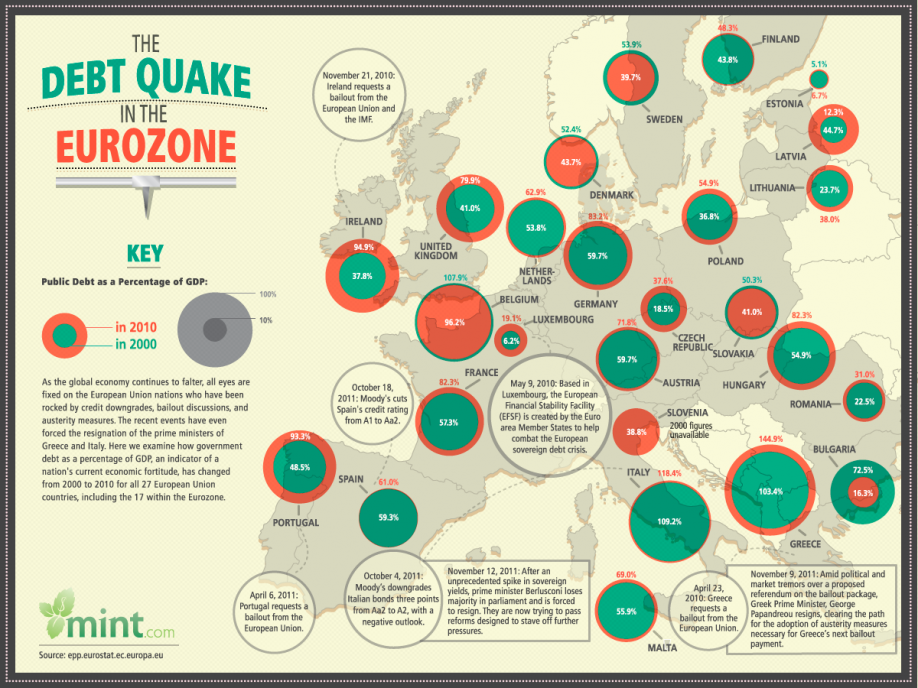
As the global economy continues to falter, all eyes are fixed on the European Union nations who have been rocked by credit downgrades, bailout discussions, and austerity measures since the Eurocrisis.
ColumnFiveMedia created this infographic with Mint to examine how government debt as a percentage of GDP has changed from 2000 to 2010 for European Union countries, including the 17 within the Eurozone.


[body_image width='1158' height='922' path='images/content-images/2015/03/30/' crop='images/content-images-crops/2015/03/30/' filename='entramos-en-el-mausoleo-gitano-del-mercedes-blanco-de-ferrol-186-body-image-1427723277.png' id='41061']
Apareció un día Juan Conchado en la notaría para abonar en metálico los 10 millones de pesetas que valía la finca que hoy ocupa su clan en Serantes, Ferrol. El dinero de los lucrativos 80 le había permitido adquirir aquella parcela de terreno, devaluada por ser vecina de otra igualmente habitada por gitanos. Me cuenta la familia vendedora que nunca habían visto tantos billetes de mil pesetas juntos sobre la mesa del notario.
Juan Conchado, a quien conocían por el poco original si bien incontestable mote de Juan el Gitano, falleció en el año 2004 de un infarto, dejando huérfanos tanto los corazones de su familia como los juzgados de Ferrol. Donde sí se pudo llenar ese hueco fue en la estructura jerárquica que a partir de entonces pasaría a encabezar su hija Amparo, alias La China.
Los problemas con la Justicia no han abandonado la vida del clan desde que el patriarcado se convirtiera en una suerte de matriarcado. Es en esas situaciones comprometidas donde las enseñanzas de Juan resultan más valiosas, tomando como ejemplo las argucias que la familia ha utilizado siempre para evitar la cárcel. Todo lo que se pueda pagar para estar a bien con las autoridades es dinero bien invertido, ya sea bajo cuerda, mediante cuestionables arreglos, o por lo legal, como cuando en 2014, ante pruebas tan irrefutables como una libreta en cuya portada ponía "Pufos de morosos", se llegó a un pacto con la fiscalía.
[body_image width='1164' height='186' path='images/content-images/2015/03/30/' crop='images/content-images-crops/2015/03/30/' filename='entramos-en-el-mausoleo-gitano-del-mercedes-blanco-de-ferrol-186-body-image-1427723303.png' id='41063']
Llego a la finca de los Corrales bajando por la curva que deja atrás el Mesón Escudo. Las indicaciones del camarero de la asociación de vecinos han resultado ser muy exactas. "No tiene pérdida y además el sitio es inconfundible". Nadie podría discutir esa afirmación dado que nadie podría confundir aquella improvisada rotonda de chatarra con otra vivienda que no fuera la de los célebres Conchado.
Desde luego, no es el lugar más idóneo para hallar un contrapunto redentor a los tópicos que a menudo sobrevuelan a su etnia. Tiene todo lo que uno espera de estos lugares, desde guardianas custodiando el fuerte embutidas en sus vestidos negros hasta niños que juegan entre neumáticos, pasando por una previsible gama de coches tuneados a la entrada de la finca.
—Buenas, soy periodista.
Anuncio mi llegada ante un trío de mujeres que me escrutan, indecisas. Son una venerable anciana, su (deduzco) hija y una paya. Han interrumpido su conversación al escuchar mis pasos y mantienen un deje torvo en sus semblantes.
—Periodista ¿de qué? —pregunta una de ellas, la única que no es gitana.
El campo semántico de la traducción española de VICE provoca un momento de heladura entre nosotros. Los Conchado no quieren saber nada de artículos que hagan mención al negocio familiar. Yo intento descargar todo mi charme sobre la más joven de ellas, a la que le calculo un peso de tres cifras de las que parece poco consciente, pero me veo obligado a contenerme ante la aparición, desde la casa, de un familiar al que le calculo otro peso de tres cifras, solo que esta vez perfectamente autoconscientes.
El temible individuo me observa lejanamente mientras explico que mi intención es hablar con la familia sobre el monumento fúnebre que tienen instalado en su jardín: un Mercedes 600 encapsulado en una urna como homenaje a Juan, el fallecido patriarca que lo conducía en vida. Los Conchado miman su recuerdo con esta obra de arte posmoderno que bien podría competir en emoción y delirio con cualquier pieza de ARCO. Quisiera uno encontrar reminiscencias faulknerianas en esta aventura. Si los Bundren honraban a la madre conduciendo su cadáver hasta Jefferson, los Conchado honran al padre convirtiendo su automóvil en una pieza de museo plantada en medio del jardín, como núcleo insular del culto a la muerte y la familia.
—Vuelve mañana por la mañana, que es cuando está la hija —me dice la paya, refiriéndose a Amparo—. Ella es quien trata con la prensa y dice si sí o si no.
—¿Sobre las 10 o las 11? —tanteo.
—PERO QUÉ DICE —la anciana se alarma. Parece muy excitada.
—¡Tan temprano no! —me aclara la paya—. A las doce o a la una.
Al día siguiente, llamo a la puerta de Conchado Regis y mientras espero a que salga alguien, doy unas escudriñantes vueltas alrededor de la fachada. Aunque la acumulación de neumáticos, chatarra y tuning me ha preparado para todo, no soy capaz de reprimir un escalofrío cuando mi mirada tropieza con un espantoso gnomo de cerámica sobre el muro de la entrada. Todavía estoy reponiéndome del impacto cuando aterriza un coche a gran velocidad tras dar la correspondiente vuelta a la rotonda de basura. De él sale un enclenque chandalero que, como yo, busca en vano las atenciones de la familia, que a la una menos cuarto de la mañana permanece dormida.
—Es lógico —me dice—, trabajan mucho por la noche.
El chandalero y yo nos hacemos muy amigos durante la agónica y definitivamente infructuosa espera, hasta que nos despedimos, cada uno por su lado, las manos en los bolsillos y los pies golpeando piedras en el camino. Aprovecho para preguntar por la zona cómo se lleva la convivencia con tan insignes vecinos. "Son buena gente, nunca dan problemas. Ellos no roban ni nada: se dedican a su trabajo". Yo subrayo en la libreta estas dos palabras: "su" y "trabajo".
Vuelvo una vez más a la tarde siguiente. Esta vez me recibe un niño, muy feliz por las atenciones mediáticas, aunque el entusiasmo no parece compartido por los adultos.
—Llévalo donde la China —le indica un anciano que sale de su siesta. Y luego musita—: Periodistas...
Esto último podría haberlo dicho entre dientes si no fuera porque carecía de ellos. El tono empleado da la medida exacta del recelo que los Conchado sienten hacia los medios.
—Ven por aquí —me dice el niño.
Entramos en la finca donde reposa el Mercedes de Juan. Allí hay una casita apartada de la vivienda familiar y custodiada por un perro cuya furia solo es contenida por la cadena que lleva al cuello. El niño se acerca para calmarlo, con relativo éxito. Es de justicia decir que los Conchado son amigos del reino animal. La antaño dependienta de la tienda de mascotas de Alcampo, en Narón, recuerda cómo Amparo la China tuvo que comprar una iguana de reemplazo para su hijo Macuto, que en esos momentos estaba de vacaciones en un campamento. "Quedó frita del todo", se lamentaba Amparo, cuya intención era cambiar de iguana sin que se enterara el pequeño.
—Éste es un periodista —me anuncia el niño.
Ya estamos en el interior de la casita. En la misma tienda de mascotas, Amparo solía presumir de haberla construido ella con sus propias manos, aunque la impresión que me da al verla no es, precisamente, la de una mujer albañil.
Todo este trayecto de voces que me anunciaban a La China como primera y última responsable del clan culmina con un encuentro entre las sombras, a lo coronel Kurtz, donde ella descansa tendida en la cama. En ningún momento se levanta para atenderme, si bien el tono de su voz es dulce como la chocolatina que el niño empieza a devorar, cumplida ya la misión de llevarme ante su Líder. La oscuridad envuelve el lugar pese a la luz que filtran las cortinas. Escucho unas toses que provienen del fondo: allí distingo la sombra de la anciana que me había recibido junto a otras dos mujeres en mi primera visita.
Amparo me cuenta que no quiere fotos, pues está disgustada con el tratamiento que los periodistas han dado a su familia en las últimas semanas. El monumento que interpreta como homenaje inmortal a un gran hombre, ha sido aprovechado por "la gente mala"para "criticar y hacer daño". Tampoco entiende por qué tantas atenciones, si lleva once años instalado en el jardín.
—¿Cómo era tu padre? —le pregunto.
—Tan bueno que ni se me ocurren las palabras, pobrecito, que en paz descanse.
Hace un esfuerzo por persignarse, finalmente abortado quizá por la pereza. No se encuentra en la posición más cómoda para hablar. La cama es pequeña y éste último es un adjetivo tan apropiado para la cama como poco apropiado para ella, si es que se entiende lo que quiero decir. Pese a todo, me cuenta que el culto de su familia a la figura de Juan no se limita al Mercedes. Con frecuencia visitan la réplica a tamaño real que hay de su padre en el cementerio de Catabois.
—Llevamos flores, un poco de comida, besamos la estatua... Bueno, pasamos allí el día.
—De picnic, vamos.
—...
—De merienda.
—Algo así.
La anciana ríe, el niño también. La casita emite un calor húmedo algo agobiante. Siento que estoy en una cueva afgana entrevistando al líder de una célula de resistencia, o pidiendo ampliar el plazo de una deuda a Jabba The Hutt en su guarida de Tatooine.
—Pero ¿esto es para una revista?
—De Internet.
Mueca de disgusto. En Internet hay "mucho insulto y mucha ruina". Me pide que la disculpe.
—Tengo más hambre que Dios talento —dice.
Le ha entrado el apetito al hablar de meriendas. Lógico. Me marcho de allí escoltado por el mismo obediente niño que me había guiado antes. A la salida me encuentro con el chandalero del otro día, que permanece hipnotizado por el gnomo del muro.
—No lo mires —le recomiendo—, o no saldrá de tu cabeza.
Tarda un poquito, pero al final me reconoce. Nos saludamos como dos veteranos de guerra que se reencuentran. Luego él va al encuentro de la China y yo inicio mi camino a casa dejando que los ladridos del perro se deshagan en mis oídos.
There’s one dish on the menu at NYC’s newly reopened Dirt Candy that recently caught the attention of several Bon Appétit staffers: the Korean fried broccoli. The deep-fried broccoli bites are coated in an addictive spicy sauce that gets its deep, piquant flavor from gochujang, the Korean fermented chile paste.
“I wanted this snack to be a great, big, savory flavor bomb,” chef Amanda Cohen told BA. “That’s gochujang all over because it’s got such a huge garlicky, spicy, fermented taste that holds its own with fried broccoli.”

The Korean-fried broccoli with gochujang at Dirt Candy. Photo: Evan Sung
What Is Gochujang, Exactly?
Gochujang is a thick, crimson paste made from chile peppers, glutinous rice (also known as sticky rice), fermented soybeans, and salt. The chile peppers provide a healthy amount of lingering heat that’s not burn-your-mouth spicy; the sticky rice brings a touch of sweetness that’s sometimes enhanced by added sugar; and the fermented soybeans act as the miso-like ingredient that anchors gochujang’s “umami” flavor. But “umami bomb sells it way short,” says Matt Rodbard, the author of Koreatown: A Cookbook, which will be published by Clarkson Potter next February. Rodbard describes gochujang’s flavor as having “funkiness, spice (sometimes a CRAZY amount of spice), and sweetness on the backend.”
Gochujang isn’t meant to be used as a finishing sauce like sriracha or Tabasco—it’s too aggressive. And although it goes into many traditional Korean dishes, it’s hardly ever used plain for the same reason. “It must be cut with something (sesame oil, crushed garlic, sugar, soy sauce), which is where the problem starts with novice chefs cooking with it,” Rodbard says. Gochujang’s sweet-hot-salty flavor truly shines when it’s used by the spoonful to add depth to stews and marinades for meat dishes like spicy bulgogi. The Korean meat-and-veg rice bowls known as bibimbap always come with a side of gochujang-based sauce for mixing into the bowl. And Korean barbecue joints will often serve a sauce called ssam jang that includes gochujang and doenjang, another essential Korean fermented soybean paste.

Gochujang is most commonly sold in short, square-shaped tubs, like this one made by CJ Haechandle. Photo: Amazon
Gochujang Rising
Chefs are increasingly finding that gochujang’s earthy spice pairs well with foods that are already popular in America—think grilled steak, tacos, and burgers.
“You don’t see a lot of Korean restaurants opening up all over the country,” says chef Edward Lee, the Korean-born chef and owner of Louisville’s 610 Magnolia and MilkWood. “They’re very difficult to set up and are just not very economical as a business. So what you’re seeing instead is an explosion of traditional Korean ingredients through chefs and foodies who are using them in really nonconventional ways.”
At his restaurants, Lee uses gochujang to riff on familiar foods in the American (and particularly Southern) diet. Lee swears by his gochujang butter—blended with honey, fish sauce, and soy sauce—over a simple grilled steak. And at MilkWood, he serves a popular collard greens dish cooked with gochujang and kimchi.
One reason for gochujang’s burgeoning popularity is that it can easily piggy-back on already-popular, recognized flavors like barbecue sauce.
“You can take a very approachable product like ribs and give them a Korean twist and a certain level of authenticity,” says Dean Small, the president and founder of Synergy Restaurant Consultants in California. “Same goes for pizza. If you can put barbecue chicken on it, could you not use a gochujang barbecue sauce?”
Small, who works with national chains and independent restaurants, says he’s noticed an uptick in clients who have expressed interest in incorporating gochujang into their menus in the past three years.
The Future Is Bright (and Spicy)
Even Umami Burger, the California-based fast-casual burger chain with locations in New York, Las Vegas, and Chicago, is getting in on the gochujang craze. When the chain opened its newest location in Brooklyn’s Williamsburg neighborhood two weeks ago, it also debuted a new burger inspired by the flavors of Korean barbecue. The K-BBQ burger is glazed with a reduction of gochujang and Sierra Mist, then topped with both caramelized and fresh kimchi, as well as a homemade gochujang ketchup.

Umami Burger’s new K-BBQ burger features a gochujang glaze and a Korean ketchup. Photo: Umami Burger
“When you have gochujang on a burger, it brings about a smoky intenseness you can only get from that Korean funk,” says Umami Burger’s executive chef Ted Hopson.
Small thinks gochujang has a long life ahead of it within the American food landscape, and he predicts we’ll begin seeing it on more menus across the country in the coming years—and not just at of-the-moment restaurants like Dirt Candy. Small says gochujang, like its spicy predecessors—chipotle, ghost peppers, and sriracha—is likely headed for the chicken wings at your local Applebee’s or Buffalo Wild Wings, although it might not show up on the menu as “gochujang-glazed chicken wings.”
We’re already seeing Western-friendly naming conventions for dishes like Umami’s “K-BBQ” burger and Dirt Candy’s “Korean” fried broccoli. “I didn’t want to have another word on my menu that customers won’t understand so I don’t list it,” Cohen says.
“If people can’t pronounce it, they oftentimes will not order it because they don’t want to feel ignorant or embarrassed,” Small says. “So mainstream operators [like Applebee's] may just find themselves calling it something else, like ‘Spicy Korean Wings.’”
Bringing Gochujang Home
You can find gochujang paste at any Korean market, where it’s commonly sold in small, red square tubs. (Commercial brands come in varying heat levels, so check the package before purchasing.) Add a teaspoonful at a time to add complexity and a little heat to your favorite soups and marinades, or stir it into dressings like the one in our Steakhouse Salad with Red Chile Dressing and Peanuts recipe.

Chung Jung One’s gochujang paste and Momofuku’s gochujang-based sauce are both geared toward American home cooks. Photos: Chung Jung One and Momofuku.
Edward Lee has seen diners react so positively to gochujang’s unique flavor that last year he agreed to consult on a new gochujang paste from the popular Korean food brand Chung Jung One that’s specifically marketed to Americans and comes in a convenient squeeze bottle. The idea is to get gochujang into the pantries of Western home cooks who might not have tried or cooked with it before, versus cooks who already prepare Korean food, who have to use it. (And if Momofuku’s new bottled, gochujang-based sauce is any indication, David Chang is thinking the same thing.)
“There was a time when Asian food was considered ‘foreign’ or ‘other’ and now you see people saying, ‘I want to put this on my Totino’s stuffed pizza rolls,’” Lee says.
Feeling inspired? Our favorite gochujang recipes give your food some sweet, sweet heat
The post What ‘Chu Know About Gochujang? It’s the Hottest Hot Sauce on the Market appeared first on Bon Appétit.

The tanuki is a kind of canid native to Japan. Over the years it has gotten quite a reputation... or rather, its testicles have.























 The garage rock revival is pretty ubiquitous. That nostalgia well runs deep. Seemingly every week another young band comes out of nowhere to release a solid album of fiery, fun riffage and lyrical content of questionable strength. Without knowing any of the back story, one listen to This Is the Sonics would suggest that it falls right into line with that movement. Nothing on the album indicates that these are in fact guys eligible for AARP releasing their first album of new music since 1967. That The Sonics sound as vibrant as they do is a remarkable feat, especially considering how similar this album sounds to your average garage rock record released by musicians 40 or 50 years younger.
The Tacoma quintet is often cited as one of the earliest punk forebears, and has been noted as…
320 kbps | 78 MB UL | HF | MC ** FLAC
…a major influence by acts like the White Stripes and Eagles of Death Metal. But though they’ve reformed in various states of being since 2007, the fact that they haven’t put out new music in nearly 50 years has relegated them to the role of “your favorite band’s favorite band” for many.
Though the title announces some sort of definitive state, This Is the Sonics features only three of five members of the band’s classic lineup: vocalist/organist Gerry Roslie, guitarist Larry Parypa, and saxophonist Rob Lind. For a band dating back to the ’60s, that’s not a bad ratio. Their age isn’t evident in the songs, either; there’d be an easy joke to be made at the expense of a song called “I Don’t Need No Doctor” if the quintet didn’t so thoroughly roar through it. Later, “Save the Planet” insists that we need to save Earth because it’s the only planet that serves beer, and the rhythm pulses with a spacy bar room rumble to match.
They keep up with the kids so convincingly, though, that The Sonics fall into the exact same traps. While the lyrics largely aim for cheeky goofballery, they occasionally flounder in eyeroll territory. From “Be a Woman”: “You make me feel like a man/ I gets as much as I can/ I do not break in your hand.” Later, on “You Can’t Judge a Book by the Cover”, Roslie grins, “You can’t judge sugar by looking at the cane/ You can’t judge a woman by looking at her man.” The song is a Bo Diddley cover, but it’s indicative of Roslie’s simple, sing-songy rhyme choices and winking delivery.
While this isn’t a genre designed for poetry, there are some distracting clunkers amidst the fun. But thankfully, that “Be a Woman” dud is followed by a stone-cold guitar solo. If nothing else, This Is the Sonics shows fans of King Khan, the Black Lips, and the like that the Sonics were laying the groundwork decades ago and that garage rock remains just as much fun to play and listen to decades later.
Less than 24 hours after Frankie Baker pulled that trigger, a ballad telling her story was already being sold on the city's street corners. Allen wasn't even dead yet - he didn't finally succumb to his wounds until October 19 - but already the balladeers had him six feet under. The song's been in constant circulation ever since.This ballad was based on an older folk tune's music and probably incorporated some standard lyrical elements like the "taking him to the graveyard" lyrics. There's also a theory that the story of Frankie Silver is the basis of the song, but the historical record is stronger for Baker. The strongest part of the Frankie Silver argument is that her fate is generally the same as the musical Frankie's: sentenced to death.
 DILI, EAST TIMOR — I ought to be familiar with the Houthi, the Shia militia that’s now conquering most of what’s worth taking in Yemen. After all, the Houthis started in Saada Province, just a few miles due south of Najran, Saudi Arabia, where I was living a few years ago.
But the truth is Yemen was totally closed off to everyone in Najran, and no one except a few networks of smugglers and spies who, from what I heard, had a very high attrition rate, dared to cross that border. None of us expat goofs even knew the name of the Yemeni Province across from us. Yemen was that country from whose bournes no traveler returns, unless he’s hoping to get rich from an SUV full of weed—and what with the, you know, beheadings for drug dealing and all, we were pretty much a straight-edge crew in our time there, figuring to make up for lost time when we got home. We knew nothing about what was over the border except that every day there seemed to be a new convoy of car-carriers loaded with brand-new Land Cruisers with the logo of the Saudi Border Patrol rolling into town. The Saudi authorities were clearly nervous about that border, even back in 2011.
There was no road connecting Najran to Yemen. Instead there was a sheer, mile-high mountain wall that marked the Yemen border. The only Yemenis you met were beggars in the streets. One of them rolled up to me while I was waiting for the school van, said in English, as if we’d been chatting for ages, “My friend, eight years I Yemen…and so, you give ten riyals.” I gave him 20. In his spiel, “Yemen” summed it up, verb and noun, sufficient reason for his demand.
The only place I ever saw Yemenis who weren’t begging was the Najran Dam, the world’s most ridiculous tourist attraction. That Dam kind of sums up relations between Yemen and Saudi in a very cinematic way. You approach the dam up a canyon, through a checkpoint. They’re looking for Yemenis at the checkpoint; they wave you through, and after being stopped a few more times by nervous paramilitaries in Land Cruisers, who also check for Yemeni faces and wave, you reach the top of this huge, magnificent dam.
You walk across the little road over the top, expecting to look out on something like Lake Powell in Vegas, and see…nothing. Desert. Yemen. There’s no water except a tiny creek. There are boats marooned halfway up the rocky hillsides, but there’s no water, nobody can remember when there ever was water, and nobody expects there ever will be any water.
It’s still a tourist attraction, though, and one of the reasons is that you can see into Yemen. On one memorable occasion, we actually saw something much rarer: Yemenis, visiting Saudi with permission.
We didn’t notice them at first. We did our usual stroll across the top of the dam to the little picnic ground, where in theory you could sit, though you wouldn’t want to—and there was a huge family there. Not Saudis, but not South Asian or Western either. They didn’t look like anyone we’d seen. They were in a defensive circle, sitting on the grass. The men were on the outside of the circle, protecting the women. The women were in black, but not a Saudi-abaya black. They were thinner, shorter than Saudis, more alert—much more alert. And every single one of them was looking at us with an intensity you’d never see on a Saudi face.
We had no idea why they were staring at us like that, as if we were great white sharks instead of a gaggle of miserable TESOL mercenaries. Our van driver nodded towards them, said, “Yemen.”
There was never anything about Yemen in the Saudi press. Lots about “infiltrators” and “smugglers,” who were understood to be Yemeni, but nothing about what was actually going on on the other side of that mountain wall. Yemen equals trouble; that was the Saudi view, and all you ever got.
From this report in Al Akbar, it sounds like not much has changed since we left Najran. The Saudi authorities are still spreading hate against the Shia of the Southwest, and no one actually knows much about what’s going on south of the border:
“stories…tell of criminal activity by foreigners sneaking through the Yemeni borders, harassing and attacking homes along the Assir mountain range.
“The people of the south know very little about Yemeni politics and do not really understand the Saudi political approach toward Yemen. All they know is that a threat has emerged in Yemen.”
The Houthi are being bombed now by the Saudi AF, which is in a way the sincerest form of Saudi flattery. The Saudis are afraid of these Shia Yemeni. One of the reasons that “…people of the [Saudi] South know very little about Yemeni politics” is that the Saudi rulers make sure they don’t get any information. The last thing the Saudi authorities want is for the Shia of SW Saudi Arabia to remember that they were once part of a huge, powerful Shia kingdom that stretched south to the Indian Ocean. Najran was once part of that kingdom. It’s only been Saudi territory since 1934, when the Saud family leased the province from Yemen on a 20-year term. They kept it when the term expired, because by that time Saudi Arabia was rich and closely allied with the US and Britain, while Yemen was weak and poor.
The Saudis, with sleazy friends in Langley and unlimited cash to throw around, have incredible control over world media. They do such a good job of suppressing news about their long war with the Shia of Yemen that, until I lived there and got the story first hand, I didn’t even know that the Shia of Najran had actually risen up in armed rebellion in 2000. And it was an incredible story of a glorious, though doomed, rebellion.
In 2000, the Shia of Najran got sick of being told by their Saudi Provincial Governor (a Saudi princeling, naturally) that they were rafidii (“nay-sayers”) and takfiri (“apostates”). The Najrani grabbed their guns, scared off the Saudi national police and drove Prince Mishaal into hiding in the Najran Holiday Inn. You can still see the Holiday Inn; it’s as good as a Gettysburg monument to the locals, though the bullet holes have, unfortunately, been covered over.
That unknown rebellion ended with massive Saudi secret-police reprisals—more holes in the desert than a Joe Pesci golf tour. Once they’d killed off the ringleaders, the Saudi authorities went back to slower, less bloody methods. As I explained in 2012, they planned to neutralize the Shia threat in the southwest by buying the region a new demographic profile:
“Twelve years [After the Najran revolt of 2000], the Sauds are winning in a slower, smarter way. The locals have no friends, no money; their religion is slowly being Wahhabized, just like Islam in Indonesia and all the other places the Sauds are doing their best to make a little meaner and more rule-crazy in their own image. They’re doing it with demographics now, importing Sunni settlers from Yemen to tip the balance. There are rumors of a huge new city going up in the desert near the town I worked in, supposedly a ‘campus’ for the local university, but it’s twenty times bigger than that would ever need to be. It’ll be a Sunni city, a Wahhabi city.
“Meanwhile the local Ismaili Shi’ites try to stay alive and maybe even get a tiny piece of the tsunami of money that’s flowing over the rest of the country. They get very, very little of it, and most of what comes to the province goes for mosques—Wahhabi mosques, naturally. But they fought back when their beliefs were directly insulted, and to them, that still means a lot. In the meantime, they do what people in their position always do: they grovel when they have to, fight when there’s no choice, and have a lot of kids.”
Yeah, but that was in 2012, when the Saudis thought they had a lid on this thing. It’s all changed now, thanks to the Houthi victory in Yemen.
And it all began just a few miles south of that dam—in Saada Province, home of Hussein al Houthi, founder and martyr of the “eponymous” movement. (When did it become socially acceptable to use the word “eponymous”? I feel dirty.)
Houthi was of the Fiver Shia sect called Zaydi, theologically moderate but fierce when committed to war. The Southwestern wedge of the Arabian Peninsula has always been largely Shia. The east, which spreads northeast toward Oman like a sun-baked brick, is almost uninhabited inland toward the Saudi border, but what population there is is Sunni, and chronically in conflict with the Shia wedge to the west.
Al Qaeda in the Arabian Peninsula (AQAP) is powerful there, helped and betrayed by turns by the Saudi security police, trying to hide from the American drones that occasionally drop a Hellfire missile on any AQAP pickup truck they can identify on the road.
The Shia have always been stronger and more numerous than the Sunni Yemenis in the east, but the last century wasn’t a good one for them. The Saudis, who were once “the ignorant Arabs,” got the oil, and Yemen got smaller and poorer.
Saudi Shia are barely tolerated, and consistently ignored by the Saudi media. The only way I found out that Najran was a Shia city was that none of my students showed up one day. Empty classrooms. I asked a colleague who looked around very carefully, then whispered, “Ashura.” Ashura is not mentioned in Saudi Arabia. They’re religious fascists and not shy about it.
And that’s what led to the forgotten rebellion in Najran, which was part of the long, slow struggle between the Shia of Yemen (Greater Yemen, which used to include Najran and everything up to Abha) and the other power in the Peninsula, the Wahhabi of the Najd.
The Saudis’ strength comes from three provinces , Al Qassim, Ha’il, and Riyadh—that make up the Najd, the uplands, the turtle-back of the Arabian Peninsula. What’s happening now, as Saudi planes bomb Houthi bases, is the latest of a long, chronic war between the Najd and Yemen.
Oil made the Najd strong in the 20th century, but even before it was discovered, Yemen was weakened by invasions, first the Ottomans and then the British. The Sunni of the Najd were lucky enough to be ignored—what did they have that was worth taking, before the oil was found?—whereas the Yemeni had two very valuable, stealable assets: coffee, and ports along the Red Sea and Indian Ocean.
There was a time when Yemen was the world’s only coffee exporter (Mocha is a town in Yemen, on the Red Sea) and though coffee was banned as a dangerous drug by Murad IV, he couldn’t make that Prohibition work, because the Turks were addicts from their first sip. They needed that caffeine buzz to help them look over maps and think about new provinces to conquer. And when they looked at Yemen, they saw a 2,000 km long coastline that could be dotted with Ottoman naval outposts, and they drooled—probably drooled coffee grounds all over the map. They wanted the coast. That was them all over; show them a landscape painting and they were calculating how many Janissaries it’d take to conquer it, how many new taxes they could squeeze out of their kaffir subjects to raise a new army and seize whatever your hotel-room artwork showed.
And they didn’t mind casualties. You can rank armies by their aversion to KIA; the IDF clearly goes at the top (it’s their great, fatal har-har weakness), and the Soviets and Ottoman rank near the bottom for sensitivity to body bags coming home. The Pashas started ordering their unlucky Egyptian lieutenants to make grabs for Yemen in the early 1500s. They made the classic mistake in judging the odds of going into Yemen, thinking that because it was localized and anarchic that it must be weak. Early in the 16th century a half-smart Ottoman pasha made this “cakewalk” prediction:
“Yemen is a land with no lord, an empty province. It would be not only possible but easy to capture, and should it be captured, it would be master of the lands of India and send every year a great amount of gold and jewels to Constantinople.”
Wrong on all counts. In the first half of the 16th century, the Empire sent 80,000 troops to Yemen. Only 7,000 of them ever came home.
The Ottomans had their own 16th-century version of the US Army’s “lessons learned” ritual after a failure, and their review of this debacle was brutal:
“We have seen no foundry like Yemen for our soldiers. Each time we have sent an expeditionary force there, it has melted away like salt dissolved in water.”
Army prose was a little more literary back then.
The Ottomans kept trying, sending one doomed army out from Egypt after another. They always were a land-hungry, over-extended empire, jerking off to maps rather than consolidating what really mattered.
Yemen wasn’t nearly as easy to take as it must’ve looked to the Ottoman policy-pasha wonks looking over a map of the Peninsula in Constantinople.
By 1634, the last Ottoman forces were permitted—“permitted,” you’ll note—to leave Mocha, the Yemeni coffee-packing port they’d coveted for almost a century. The Shia of Yemen, who seemed so leaderless and weak, had defeated them completely, though the endless wars with the Turks had also weakened the Yemenis.
What the Turks never got was that the Shia highlands of Yemen weren’t a “land with no lord,” but a land with a hereditary Imamate, a theocratic military leader like Hassan Nasrullah of Hezbollah. Nasrullah is a perfect modern Imam, a sectarian icon, which may be why he looks like Gerry Adams after six months on an all-donut diet. Moqtada al Sadr in Iraq has a similar role.
An Imam isn’t supposed to interfere too much in clan business in normal times. His most important job is to unite the sect when it’s under threat. The Imam is a mobilizer above all, which the US found out the hard way when they messed with Moqtada in Baghdad.
When the Shia of northern Yemen mobilize, like they have now, they always move outward from their stronghold in Saaba Province in the same directions: either North toward Najran and Abha, or West to the Red Sea (Jizan), or South to Aden.
As long as they stick together under a strong Imam, they’re hard to beat. But after the Turks left in the mid-17th century, the Yemenis faced a much smarter empire: the British. Very few countries held off that Empire for long. Between the Americans’ victory in 1783 and Irish independence in 1922, not one country was able to eject the Empire. Tens of millions died trying — brave, brilliant empires like the Sikhs and the Zulus; no one succeeded. We forget that now, because . . . well, you know that amnesia flash device from Men in Black? It was actually the British Empire that invented that thing, and asked the world to smile and say cheese when it decided to dissolve itself around 1960. And like Tommy Lee Jones in that movie, their last act was to use the flash on themselves, so they could say in all truth, “Empire? What Empire?”
But in 1840, at their peak, the British were beautiful to watch. They were masters at handling a complicated, clannish country like Yemen. They never made the mistake of rolling in and claiming the whole place as the Turks had. That only united the locals. Instead, they did what they were good at: using proxies, fomenting divisions, creating distractions—the original force multipliers. And even when they lost battles or campaigns, they left their enemies weakened, often for good.
In 1840, they realized they could use Aden as a coaling port for the fleets that kept their Indian operation, the big money-maker, in business. And that was that; they needed Yemen, and they were going to get it. They landed at Mocha almost exactly two centuries after the Turks evacuated it.
The British used another Imperial strategy now forgotten: forced immigration by subject peoples. Aden, the focus of their ambitions in Yemen, became a “world town” in the 19th century, with about a thousand Arabs swamped by South Asian, SE Asian, and African immigrants. Those were the perfect inhabitants, with no links to the locals and entirely dependent on the Empire’s protection to avoid being killed by the angry Yemenis.
Aden stayed fairly quiet, in Yemeni terms, until the 1960s, when Britain, Egypt, and Saudi Arabia fought a dirty, complicated Yemeni war. Aden blew up, with grenade attacks on British officials, who had a witty riposte in the form of torture centers that pioneered many of the techniques you’ll remember from Abu Ghraib, with emphasis on sexual degradation and nakedness.
The British got called on these torture centers—they were a little sloppy, not in form, during the 1960s—and left in 1967. The real action moved up north to Houthi territory, where Nasser, hope of the Arab world in the 1960s, decided that a modern, Arab-nationalist regime in Yemen would be a big move for him, Egypt, and the Arabs.
Arabs were getting very “modern” at that time. It’s important to remember that. You know why they stopped getting modern, and started getting interested in reactionary, Islamist repression?
Because the modernizing Arabs were all killed by the US, Britain, Israel, and the Saudis.
That was what happened in the North Yemen Civil War, from 1962-1967. After a coup, Nasser backed modernist Yemeni officers against the new Shia ruler. The Saudis might not have liked Shia, but they hated secularist, modernizing nationalists much more. At least the Northern Shia kings ruled by divine right and invoked Allah after their heretical fashion. That was much better, to the Saudi view, than a secular Yemen.
And the west agreed. To the Americans of that time, “secular” sounded a little bit commie. To the British, it sounded anti-colonial and unprofitable. To the Israelis, it raised the horrible specter of an Arab world ruled by effective 20th-century executives. States like that might become dangerous enemies, while an Arab world stuck in religious wars, dynastic feuds, and poverty sounded wonderful.
Why do you think the IDF has not attacked Islamic State or Jabhat Al Nusra even once?
So all the factions we call “The West” jumped in to destroy these Yemeni officers: British commandos and pilots, Israeli military advisors, CIA bagmen, NSA geeks, and mercenaries from all over the world.
That was the all-star lineup fighting “for Allah and the Emir,” as the idiots at Time Magazine enthused in a 1963 article.
And of course that lineup won easily, against a clique of officers and a half-trained Egyptian expeditionary force. Egypt lost something like 25,000 soldiers in Yemen; you don’t fight a British/Saudi/American/Israeli/Islamist/Royalist coalition like the one they were facing without losing big. After the Six-Day War in 1967, when it lost the Sinai, Egypt had no interest in bothering about Yemen and called its surviving troops home.
If you look at a control map of Northern Yemen in 1967, when the war ended with Egypt’s total defeat, you see that the Egyptian forces and their Yemeni allies still controlled some of the southern areas around Taiz (which was just taken by the Houthi last week), while the Royalists, the conservatives, controlled all of Saada Province and the north, the areas across from Najran.
So the Houthi, whose core strength perfectly maps the Royalists’ areas of control in 1967, draw their strength from these same conservative areas. As for the modernist, secular Yemenis, they’re just gone. Emigrated, or died, or saw their children seduced by the madrassi.
That scenario was repeated all over the Middle East during the Cold War, and it has a lot to do with how messed up the place is now. “For Allah and the Emir”; when Time ran that headline in 1963, that slogan sounded quaint and kind of touching. . . . It sounded like a nice alternative to Nasser, nationalism (and its much more dangerous corollary, nationalization) or, worse yet, Communism.
So the West put its weapons and its money in on the side of “Allah and the Emir” over and over again, against every single faction trying to make a modern, secular Arab world, whether on the Nasserite, Ba’athist, Socialist, Communist, or other model.
It worked very well . . . or badly, if you prefer. It left Yemen festering, like most of the Arab world, with a weak royalist regime in the north and an even weaker socialist state in Aden. In 1990, after the collapse of the USSR, that southern Yemen state dissolved, taking the last of its fading “socialist” posters and slogans with it. Yemen was reunited, in theory; a poor, sectarian, anti-modern nightmare state.
By that time, “For Allah and the Emir” was pretty much the only slogan anywhere in the Arab countries. It had gone from quaint and quirky to universal. The only option left was to choose which version of Allah, and which corresponding emir, you were going to back.
The Houthi are as conservative and devout as the Saudis who are using every plane they’ve got to bomb them at the moment.
In fact, their favorite poster is a devoutly blood-thirsty souvenir of Tehran in the Khomeini years:
God is great.
Death to America.
Death to Israel.
A curse upon the Jews.
Victory to Islam.
Of course, the Houthi, as Shia, worship the wrong version of Allah, from the Saudi perspective. But that didn’t bother the Saudis, or the Americans, or the British, or the Israelis, back in the 1960s when they all joined hands (in a very non-peace-and-love way) to wipe out the modernizing Yemeni.
Arabs are reduced to choosing which Allah and which Emir to support because a half-century alliance between the worst oligarchies in the West and the most reactionary elements in their countries wiped out the alternative. That’s why it’s so grotesque to hear right-wingers blaming the Arabs for the lack of commitment to democracy and even more ridiculous that Leftists demand respect for fascist thugs like Islamic State, as if they were the voice of the Muslim people.
These sectarian wars are what’s left when you’ve killed everybody else who was attempting to provide Arabs with an effective, secular, modern existence.


 Hot on the heels of the 2014 release of the film Northern Soul and its soundtrack, Demon Music Group’s Harmless Records imprint is celebrating the R&B subgenre with what’s likely its most exhaustive chronicle ever: the 8-CD box set The Odyssey: A Northern Soul Time Capsule. This massive set has been co-compiled by Harmless’ chief and 1970s Northern Soul DJ Ian Dewhirst, and features diverse tracks from artists including The Spinners, Chuck Jackson, Gladys Knight and the Pips, Frankie Valli and the Four Seasons, Bunny Sigler, Paul Anka, The Pointer Sisters, Timi Yuro, Joanie Sommers, The Drifters, and Daryl Hall (with The Temptones).
What is northern soul? The late journalist Dave Godin is credited with coining the phrase, which he used to describe music in the mid-1960s soul vein preferred by enthusiasts in the northern part of England. Godin told Mojo in 2002 that he had first devised the term in 1968, to help employees at his Soul City record shop differentiate the rapidly-proliferating funk style of RandB from the smoother, Motown-influenced soul of just a few years earlier. (In The Soul Stylists, renowned DJ Ady Croasdell described the prototypical Northern Soul song as The Four Tops’ “I Can’t Help Myself…
320 kbps | 1.40 GB UL | HF ** FLAC
…(Sugar Pie, Honey Bunch)” although the song was too mainstream to achieve much popularity in the Northern Soul scene.) The movement championed lesser-known tracks over big hits, and it soon spread, with clubs popping up throughout the north and midlands of England. More than 45 years after Godin first coined the term, the movement has experienced a spike in popularity thanks to the success of the Northern Soul film and soundtrack.
The contributors to The Odyssey include co-compiler Tim Brown of Anglo-American, Manifesto publisher Mike Ritson, and journalist-broadcaster Simon White, who oversaw the numerous interviews included on the set’s DVDs. Richard Searling interviews John Anderson, described as “the world’s longest-standing and most enigmatic record dealer,” and also pays a visit to Philadelphia International Records co-founder Kenny Gamble, who is filmed perusing Searling’s record collection and discovering many of his own U.K. releases for the first time! (Gamble is heard on the set with his 1966 single “The Joke’s on You.”)
A 150-page book designed by Glen Gunton accompanies the set; the overall package has been designed by the single-named Jaffa. Per Harmless, “the music follows the evolvement of Northern Soul, from its early beginnings at Manchester’s Twisted Wheel club in 1968, through to The Golden Torch, Blackpool Mecca, Wigan Casino and Cleethorpes Pier in the 1970s, Stafford Top Of The World and The 100 Club in the 1980s and the huge dearth of Soul weekenders and the 100 Club again from the 1990s to the present day.” This story is told via 222 tracks, all of which have been licensed from current rights holder and newly remastered.
CD 1: The Twisted Wheel
1. Open the Door to Your Heart – Darrell Banks
2. Walking Up a One Way Street – Willie Tee
3. I Dig Your Act – The O’Jays
4. I Feel So Bad – Jackie Edwards
5. 60 Minutes of Your Love – Homer Banks
6. I Spy (for the FBI) – Jamo Thomas and His Party Brothers Orchestra
7. Barefootin’ – Robert Parker
8. She Blew a Good Thing – The Poets
9. First I Look at the Purse – The Contours
10. I’m Gonna Run Away from You – Tami Lynn
11. (At the) Discotheque – Chubby Checker
12. I’ll Always Love You – The Spinners
13. Looking for You – Garnet Mimms
14. The Boogaloo Party – The Flamingos
15. I’m Gonna Miss You – The Artistics
16. There’s Nothing Else to Say – The Incredibles
17. Baby Do the Philly Dog – The Olympics
18. That Beatin’ Rhythm – Richard Temple
19. Love Love Love – Bobby Hebb
20. You’ve Been Cheatin’ – The Impressions
21. Investigate – Major Lance
22. Just Walk in My Shoes – Gladys Knight & The Pips
23. Ain’t No Soul (In These Old Shoes) – Major Lance
24. A ‘Lil Lovin’ Sometimes – Alexander Patton
25. The Right Track – Billy Butler
26. Baby Reconsider – Leon Haywood
27. Cigarette Ashes – Jimmy Conwell
28. Wear It On Our Face – The Dells
29. Seven Days Too Long – Chuck Wood
30. These Chains of Love (Are Breaking Me Down) – Chuck Jackson
31. Long After Tonight Is All Over – Jimmy Radcliffe
CD 2: The Twisted Wheel to the Golden Torch
1. Here I Go Again – Archie Bell & The Drells
2. You’re Gonna Make Me Love You – Sandi Sheldon
3. The Same Old Thing – The Olympics
4. Hit & Run – Rose Batiste
5. Quick Change Artist – The Soul Twins
6. You Just Don’t Know – Chubby Checker
7. You Get Your Kicks – Mitch Ryder & The Detroit Wheels
8. Sliced Tomatoes – The Just Brothers
9. Keep On Keeping On – N.F. Porter
10. Exus Trek – The Luther Ingram Orchestra
11. Psychedelic Soul Pt 1 – Saxie Russell
12. ‘Cause You’re Mine – The Vibrations
13. Honest To Goodness – Herb Ward
14. My Dear Heart – Shawn Robinson
15. Festival Time – The San Remo Golden Strings
16. Groovin’ At The Go-Go – The Four Larks
17. Cracking Up Over You – Roy Hamilton
18. Love On A Mountain Top – Robert Knight
19. I’m Satisfied With You – The Furys
20. I Can’t Get Away – Bobby Garrett
21. Head and Shoulders (Above The Rest) – Patti Young
22. Somebody (Somewhere) Needs You – Darrell Banks
23. You Don’t Want Me No More – Major Lance
24. What Would I Do – The Tymes
25. Shing-A-Ling – The Cooperettes
26. This Beautiful Day – Levi Jackson
27. Everything’s Gonna Be Alright – P.P. Arnold
28. Baby Boy – Fred Hughes
29. Purple Haze – Johnny Jones & The King Casuals
30. Thumb A Ride – Earl Wright & His Orchestra
CD 3: The Golden Torch to Blackpool Mecca
1. If You Ask Me (Because I Love You) – Jerry Williams
2. Skiing In The Snow – The Invitations
3. The Girl Across The Street – Moses Smith
4. Blowing My Mind To Pieces – Bob Relf
5. Our Love Is In The Pocket – J.J. Barnes
6. I Got To Find Me Somebody – The Vel-Vets
7. I Hurt On The Other Side – Jerry Cook
8. I’m Gonna Love You – Edward Hamilton
9. Let Her Go – Otis Smith
10. She’s Puttin’ You On – United Four
11. Psychedelic Soul Pt 2 – Saxie Russell
12. Breakaway Pt 2 – The Steve Karmen Big Band
13. Get It Baby – Stanley Mitchell
14. Please Operator – Tony & Tyrone
15. I Really Love You – The Tomangoes
16. Crazy Baby – The Coasters
17. Stick By Me Baby – The Salvadors
18. You Hit Me (Right Where It Hurt Me) – Alice Clark
19. Baby Don’t You Weep – Edward Hamilton & The Arabians
20. I Can’t Hold On – Lorraine Chandler
21. Satisfied – Ben Aitken
22. There’s A Ghost In My House – R. Dean Taylor
23. They’ll Never Know Why – Freddie Chavez
24. I Just Can’t Live My Life (Without You Babe) – Linda Jones
25. Can’t Help Loving That Man Of Mine – Ila Vann
26. Seven Day Lover – James Fountain
27. She’ll Come Running Back – Mel Britt
28. It Really Hurts Me Girl – The Carstairs
29. California Montage – Young Holt Unlimited
CD 4: Blackpool Mecca to Wigan Casino
1. Breakaway Pt 1 – The Steve Karmen Big Band ft Jimmy Radcliffe
2. You Don’t Know Where Your Interest Lies – Dana Valery
3. Night Owl – Bobby Paris
4. Help Me – Al Wilson
5. Afternoon Of The Rhino – The Mike Post Coalition
6. Tainted Love – Gloria Jones
7. I’ll Always Need You – Dean Courtney
8. Serving A Sentence Of Life – Carl Douglas
9. Dance Dance Dance – The Casualeers
10. The Night – Frankie Valli And The Four Seasons
11. You’ve Got Your Mind On Other Things – Beverly Ann
12. Interplay – Derek & Ray
13. Born A Loser – Don Ray
14. When We Get There – Paul Anka
15. As Long As You Love Me (I’ll Stay) – Ronnie & Robin
16. Bari Track – Doni Burdick
17. (It’s Against) The Laws Of Love – The Volcanoes
18. Heartaches Away My Boy – Christine Cooper
19. Don’t Take It Out On This World – Adam’s Apples
20. All Of My Life – Detroit Soul
21. You Didn’t Say A Word – Yvonne Baker
22. Baby Hit And Run – The Contours
23. Do I Love You (Indeed I Do) – Frank Wilson
24. Double Cookin’ – The Checkerboard Squares
25. Country Girl – Vickie Baines
26. Girl, Don’t Make Me Wait – Bunny Sigler
27. You Don’t Love Me Anymore – Johnny Caswell
28. I’m On My Way – Dean Parrish
CD 5: More Wigan Casino
1. Turning My Heartbeat Up – The MVP’s
2. You Don’t Love Me – Epitome Of Sound
3. Burning Sensation – Robby Lawson
4. Baby Without You – Danny Monday
5. I Was Born To Love You – Herbert Hunter
6. I Lost A True Love -Danny Wagner & The Kindred Soul
7. I Wanna Know – John E Paul
8. Tear Stained Face – Don Varner
9. She’s Wanted (In Three States) – Larry Clinton
10. Where I’m Not Wanted – Eddie Holman
11. This Gets To Me – Pookie Hudson
12. I Don’t Like To Lose – The Group featuring Cecil Washington
13. It’s Better To Cry – The Appreciations
14. Please Stay – The Ivorys
15. Happiness Is Here – Tobi Lark
16. Love Slipped Through My Fingers – Sam Williams
17. Cool Off – Detroit Executives
18. Love Factory – Eloise Laws
19. Sad Girl -Carol Anderson
20. Strange Change – Herb Ward
21. I Am Nothing – Al Williams
22. The Jokes On You – Kenny Gamble
23. I Really Love You – Jimmy Burns
24. That’s No Way To Treat A Girl – Marie Knight
25. A Changed Man – The Rotations
26. This Won’t Change – Lester Tipton
27. Gone With The Wind Is My Love – Rita & The Tiaras
CD 6: Wigan Casino to Cleethorpes Pier
1. Elijah Rockin’ With Soul – Hank Jacobs
2. I Can’t Change – Lorraine Chandler
3. They’re Talking About Me – Johnny Bragg
4. My Heart Cries For You – Porgy & The Monarchs
5. You’re Never Too Young (To Fall In Love) – The Modern Redcaps
6. Send Him Back – The Pointer Sisters
7. Do The Pearl Girl Pt 2 – The Matta Baby
8. All The Way Home – Dee Edwards
9. Look At Me Now – Terry Callier
10. So is The Sun – World Column
11. The Gig – Raw Soul
12. Wrong Crowd – Prince George
13. Hung Up On Your Love – The Montclairs
14. Ton Of Dynamite – Frankie ‘Loveman’ Crocker
15. Lady Lady Lady (Are You Crazy For Me) – Boogie Man Orchestra
16. I Don’t Know What Foot To Dance On – Kim Tolliver
17. I Wanna Be (Your Everything) – The Pretenders
18. Cuz It’s You Girl – James Walsh Gypsy Band
19. You Sexy Sugar Plum (But I Like It) – Rodger Collins
20. Cut Your Motor Off – Black Nasty feat Herbie Thompson
21. I Got The Vibes – Joshie Jo Armstead
22. Have Love Will Travel – Rosey Jones
23. Do What You Feel Pt 1 – The Rimshots
24. Wash And Wear Love – Lynn Varnado
25. Elusive – Babe Ruth
26. Are You Ready For This – The Brothers
27. I’ve Got The Need – The Moments
CD 7: The 100 Club and Top of the World, Stafford Eras
1. Please Don’t Go – Willie Tee
2. Since I Found My Baby -The Metros
3. I Need My Baby – Jackey Beavers
4. I Still Love You – The Seven Souls
5. Suspicion – The Originals
6. Let’s Talk It Over – Spencer Wiggins
7. I’ll Never Stop Loving You – Carla Thomas
8. Talkin’ Woman – Lowell Fulson
9. You Just Cheat And Lie – Z Z Hill
10. Oh How I Love You – Little Johnny Hamilton & The Creators
11. Too Much For You – Bobby Angelle
12. Naughty Boy – Jackie Day
13. Losing Control – Mary Saxton
14. You Really Made It Good To Me – Ty Karim
15. Girl I Love You – The Temptones
16. Wrapped Tied & Tangled – Lavern Baker
17. Try Me For Your New Love – Junior McCants
18. The Magic Touch – Melba Moore
19. Dearly Beloved – Jack Montgomery
20. Packing Up – Damon Fox
21. Because Of My Heart – Frankie Beverly
22. You Shook Me Up – Roy Hamilton
23. My Love Gets Stronger – Tommy Ridgley
24. I’m Steppin’ Out Of The Picture – Johnny Maestro & The Crests
25. Rat Race – Gino Washington
26. I Don’t Do This (To Every Girl I Meet) – Sidney Joe Qualls
27. I’m Having So Much Fun – Willie Tee
28. Deep Dark Secret – Dee Dee Sharp
29. What Should I Do – Little Ann
30. Such Misery – The Precisions
CD 8: The Weekenders Era
1. If I Could Only Be Sure – Nolan Porter
2. Home Is Where the Heart Is – Bobby Womack
3. Something New to Do – Bobby Sheen
4. Too Late – Mandrill
5. The Game Is Over (What’s The Matter With You) – Brown Sugar
6. Because of You – Jackie Wilson
7. Pour Your Little Heart Out – The Drifters
8. Think It Over (And Be Sure) – Liz Verdi
9. What’s That On Your Finger – Kenny Carter
10. Baby-A-Go-Go – Barbara McNair
11. I Can’t Break The News to Myself – Ben E King
12. The Stars – Barbara Lewis
13. Something’s Wrong – Chris Clark
14. Don’t Pity Me – Joanie Sommers
15. Here Are the Pieces of My Broken Heart – Gladys Knight & The Pips
16. In Love – Tony Galla
17. Tune Up – Jnr Walker & The All-Stars
18. Beggin’ – Timebox
19. Stolen Hours – Patrice Holloway
20. Call On Me – The Dynells
21. How – The Masqueraders
22. Talkin’ ‘Bout My Baby – Dottie & Millie
23. (Just A Little) Faith And Understanding – The Magicians
24. Dynamite Exploded – Honey & The Bees
25. I’m Slowly Moulding – Cody Black
26. What’s With This Loneliness – Chuck Jackson
27. If This Is Love (I’d Rather Be Lonely) – The Precisions
28. It’ll Never Be Over For Me – Timi Yuro


We all know that Japanese artists and designers create some of the strangest stuff on the planet, and that their creative efforts make the world a much more colorful place to live. Their whimsical and eyecatching designs seem to shine brightest when they're brought to life in toy form, and then we not only get to look at their wacky designs- we get to play with them!
Here are ten weird and wonderful toys created in the Land of the Rising Sun-
1. Pachi Pachi Clappy-
One handed clapping is now ridiculously easy thanks to the Pachi Pachi Clappy toy, the toy that does all the clapping for you!
Pachi Pachi Clappy has two "big soft squishy hands" on top and a funny lil' face in front, so you can carry your own private cheering section around with you wherever you go!

2. Jaws-Kun Puppet for Toothpaste Guidance-

Teaching kids how to properly brush their teeth is hard since we don’t have flip top heads, and that set of plastic choppers sitting on your dentist’s desk is downright creepy, so a puppet with a full set of teeth makes sense.
But did the final product have to be so creep-tastically adorable? I don't know if I want to brush its teeth or burn it with fire!
[ image could not be processed - please retry - src was http://www.neatorama.com/plugin/ajaximgupload/previewimg/visimgupload-1/1427546540?u=80580.70 ]/>
Heres more info from the company's website, courtesy of Google translate-
I am very active in leadership with the impact in the big mouth of width 24cm. I can learn Shine difficulty of back teeth with vertical guidance and Shine "cheek".
3. Fat Cute Soldiers-
Remember those little green soldiers who patrolled the toybox when you were a kid? Well, I think these Fat Cute Soldiers ate those little green troopers and still had room for dessert! Part social commentary, part throwback toy, the Fat Cute Soldiers are 8 kinds of awesome!

Kobitos are strange little dwarf creatures created by Japanese artist Toshitaka Nabata, and together they make up the Kobito Dukan, or dwarf encyclopedia.
They're kinda like the Pikmin, but their kimokawaii (ugly cute) looks and their strange personalities make them way more interesting, and more toy friendly!
Everything from vinyl and plush toys to cell phone cases and clothing have been made bearing their unique likenesses, so you can surround yourself with Kobitos and be happy forever!

5. Utamin Theramin Toy-

The Utamin Music Toy may look simple on the outside, but inside it's got all kinds of electronic guts and an infrared sensor that makes it operate like a simplified theremin.
Watch this video and see how Utamin can kill the quiet in your quiet life!

6. Doraemon Ultimate Combining SF Robot-

Doraemon isn't the most action packed anime star who ever scrambled across the small screen, but a Robo Doraemon would probably be a cat of action, an explosive force for goodness!
And when he combines with his robo-friends their round headed little bodies join to form Voltron Chogokin Ultimate Combining SF Robot Fujiko!

7. Fruits Zombie-

The zombie craze has finally reached the produce section thanks to the Fruits Zombie collection, creepy and tasty vinyl toys available in 6 different flavors, all ready to stand around and stare at you!
8. Tuttuki Bako Finger Game-
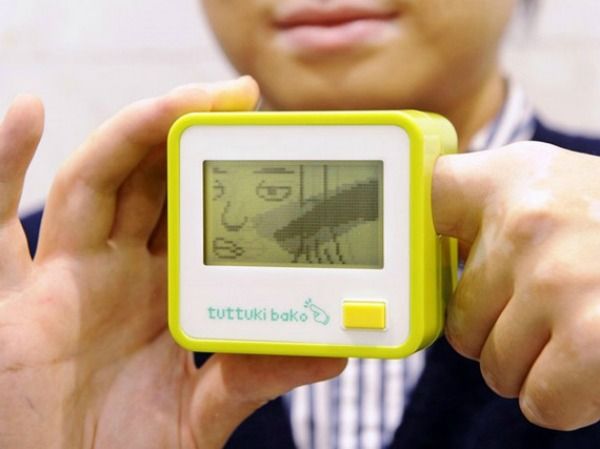
You can't have a list about Japanese toys without including something digital you can interact with, so here's the Tuttuki Bako Finger Game.
A small box with a screen begs you to stick your finger in its hole and see what happens, and although that would normally be a terrible idea the Tuttuki Bako makes poking around fun again!

9. Chat Tororin Bathing Toy-

Do you find yourself wishing you had someone to talk to while you bathe? Now your bath time can be blather time with the Chat Tororin Bathing Toy, a talking buddy for your tub. From the website:
Consist of 17 types of chatter and 3 types of humming that you will surely enjoy. Bathing will never be boring while having this chatter with you.
Well said!

10. Statue Of Liberty Is Too Free figures-
Let's end this list with a Japanese toy line that may cause controversy in the U.S., a toy line featuring our beloved Statue Of Liberty feeling all kinds of free, just like a real life lady!
She lounges around looking at her tablet, bends over backwards in some sort of Yoga position and generally defies the stereotype that she's a big stiff. Freedom ain't free, so shut up and take my money, Japan!

I hope you've enjoyed this trip down the apanese toy aisle, and if you've suddenly realized you must own one of these strange toys guess what- you totally can!
The internet is a wondrous place full of stores from around the world willing and able to sell you strange toys! Now, if you'll excuse me, I need to go find out which one of my credit cards isn't maxed out...

Pinball may seem today like one of the most innocent of pastimes, but in 1942, the game was banned in New York City. Why? And what happened to all those machines? This short comic by Julia Wertz has the answer.