Shared posts

01 Jun 15:12

Are Hench Guys Really Inherently Tory? An Investigation

by Hannah Ewens

Hench guys are both a relic of a time when bigger meant better, and a very modern phenomenon. Whether it's the 1980s strongmen of Muscle Beach or Dwayne "The Rock" Johnson in this year's most prodigious piece of filmmaking, The Fate of the Furious, swole bros represent a small cohort of men who demonstrate willpower beyond the average imagination. Somehow, the most serious disciples abstain from modern pleasures such as cans and fun, turning instead to more eggs and protein powder than any one person's colon should have to process. And after a brief dissipation of relevance in popular culture, they are once again heroes.

But now, on the eve of the British election, comes troubling news. New research from Brunel University says that physically strong men who go to the gym regularly are more likely to support social and economic inequality than weaker men. In other words: your hench pals are massive Tories.

A team led by Dr Michael Price assessed 171 men aged 18 to 40, collecting data on their height, weight, waist size, hand grip, muscularity and arm and chest strength using a 3D body scanner. They also analysed their political and social views, asking if they supported the redistribution of wealth or if they believe some social groups should have dominance over others. To ensure they were thorough, the men were also categorised according to their facial attractiveness, perceived masculinity and dominance by a group of independent assessors.


WATCH: The Giants of Iceland


The new findings build on previous research, Price told Broadly, that suggests muscular men are more likely to support militarism and war. Pleasingly, it seems women are exempt from this general rule. "Women's physical attractiveness or formidability isn't related to their egalitarianism," Price confirms.

I find this all unusual and unsettling. Surely big guys are so into the sweaty, abstinent, head-down muscle-flexing that they don't have the time or energy to be political? To get to the bottom of this, it was time to talk politics with some of them. To do that, I wandered around the gyms of London to investigate a rarely asked but never more pressing question: Are hench guys inherently Tory?

I started at a gym with a modest (for London) membership cost.
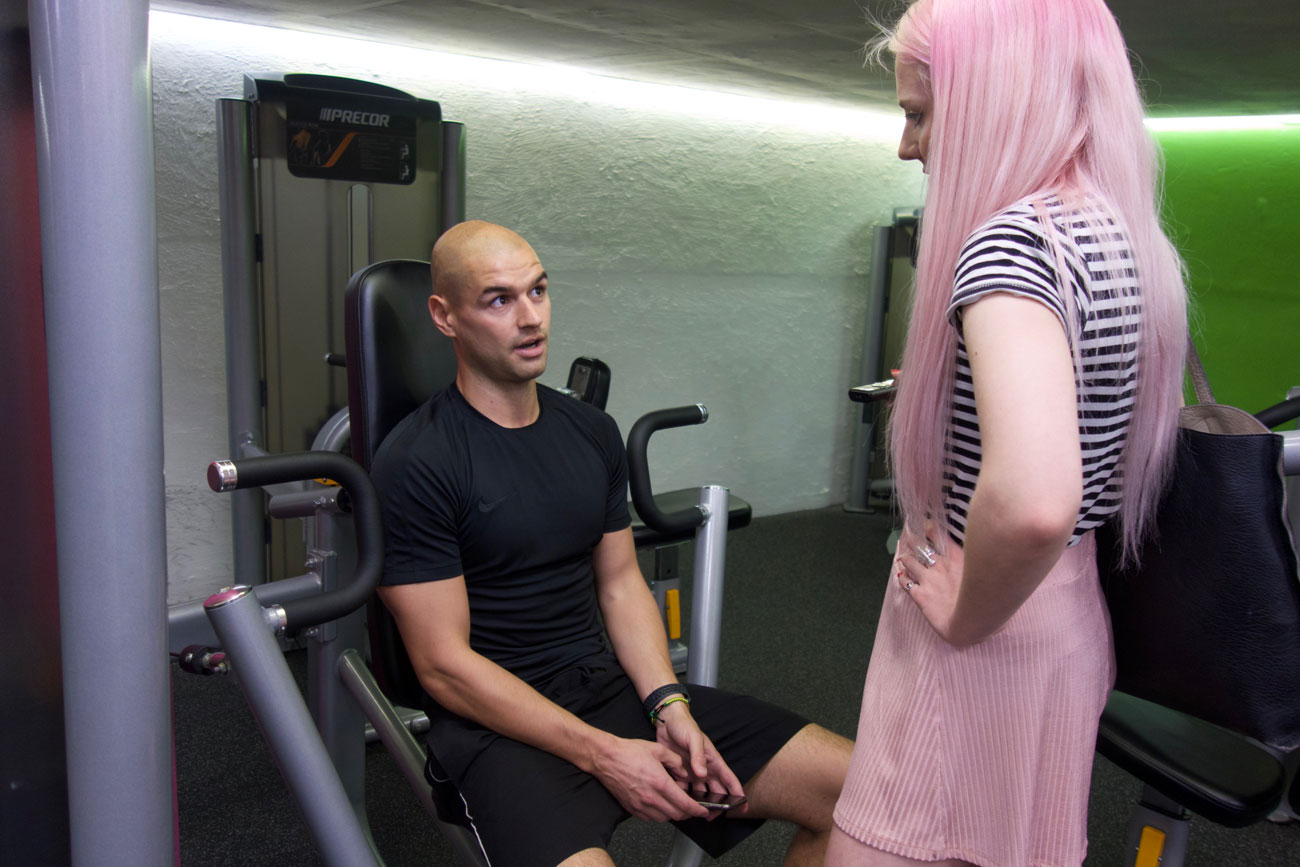
Rich

Rich

VICE: Tell me a bit about your politics.
Rich, 29: I used to be very liberal, but the reality is we don't live in a perfect society, so we have to take measures to look after our own population at this precise moment in time. So I would say I'm contradictory. I'm very left-wing, but I'm also at the point where I understand that we need to be prudent in our measures for immigration, for example.

Do you mind saying who you'll be voting for?
Well, this is an interesting one because, again, after everything I just said to you there, I voted to leave the European Union. I'm not sure how I'll vote because I'm not sure whether or not Theresa May's strategy is going to be right or wrong long-term. I like Jeremy Corbyn's policies but I also agree that Theresa May's right. With all things considered, I will probably be swayed to Theresa May. I'm undecided, though… I don't see why politics has to be so polarised these days.
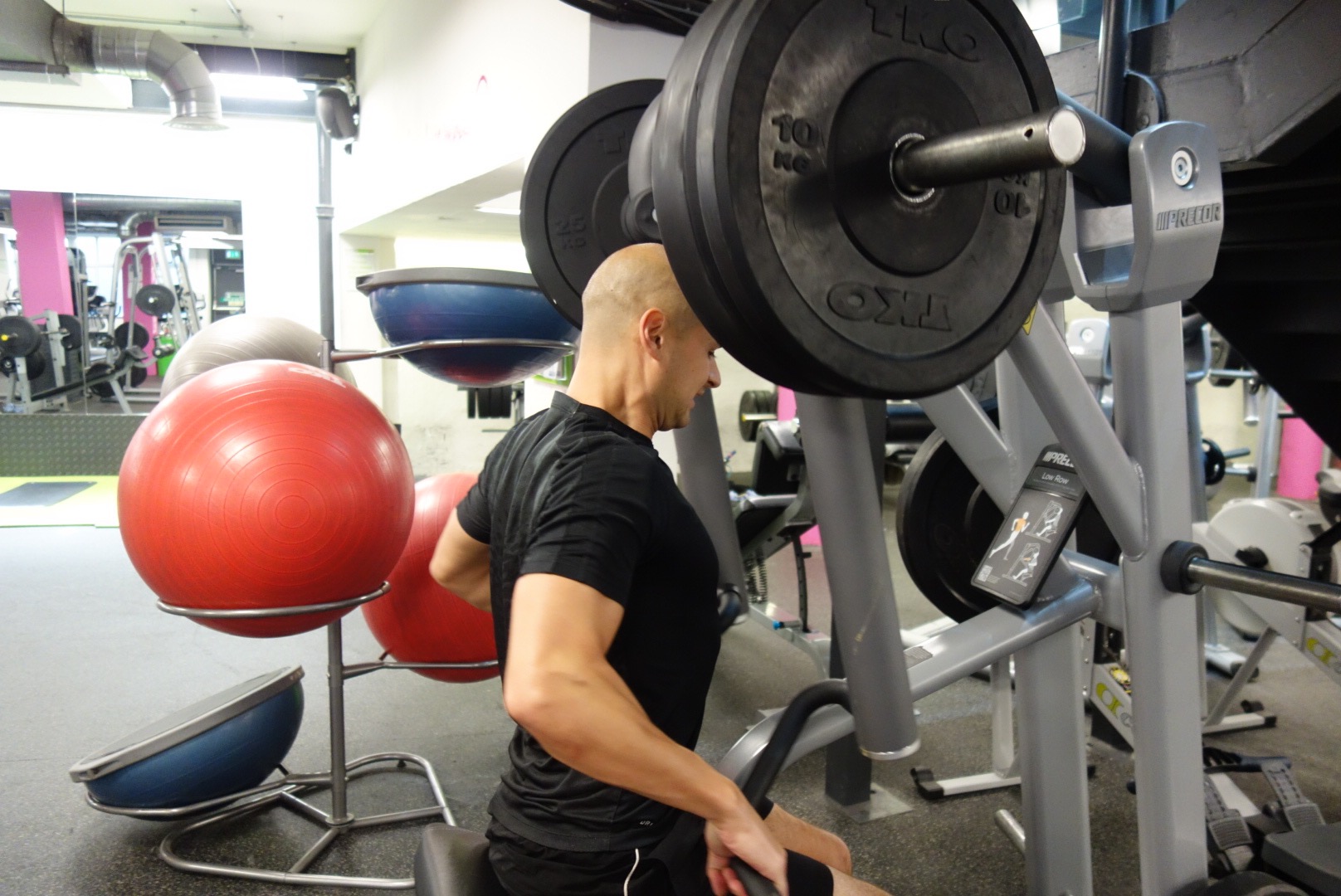
Dunno what this machine does but it looks mega

Dunno what this machine does but it looks mega

Do you know you're going to vote Tory but you feel like you can't say?
No! I don't feel like I can't say that at all. I voted Liberal Democrats once, then they got shafted and destroyed their credibility. So yeah, I probably will vote, er, Conservatives.

How often do you go to the gym?
I go to the gym at least five times a week.

Unsurprisingly, everyone else at the gym was too busy getting sweaty to talk to an annoying journalist, so I headed to a very expensive gym instead, in the hope I might have some more luck.
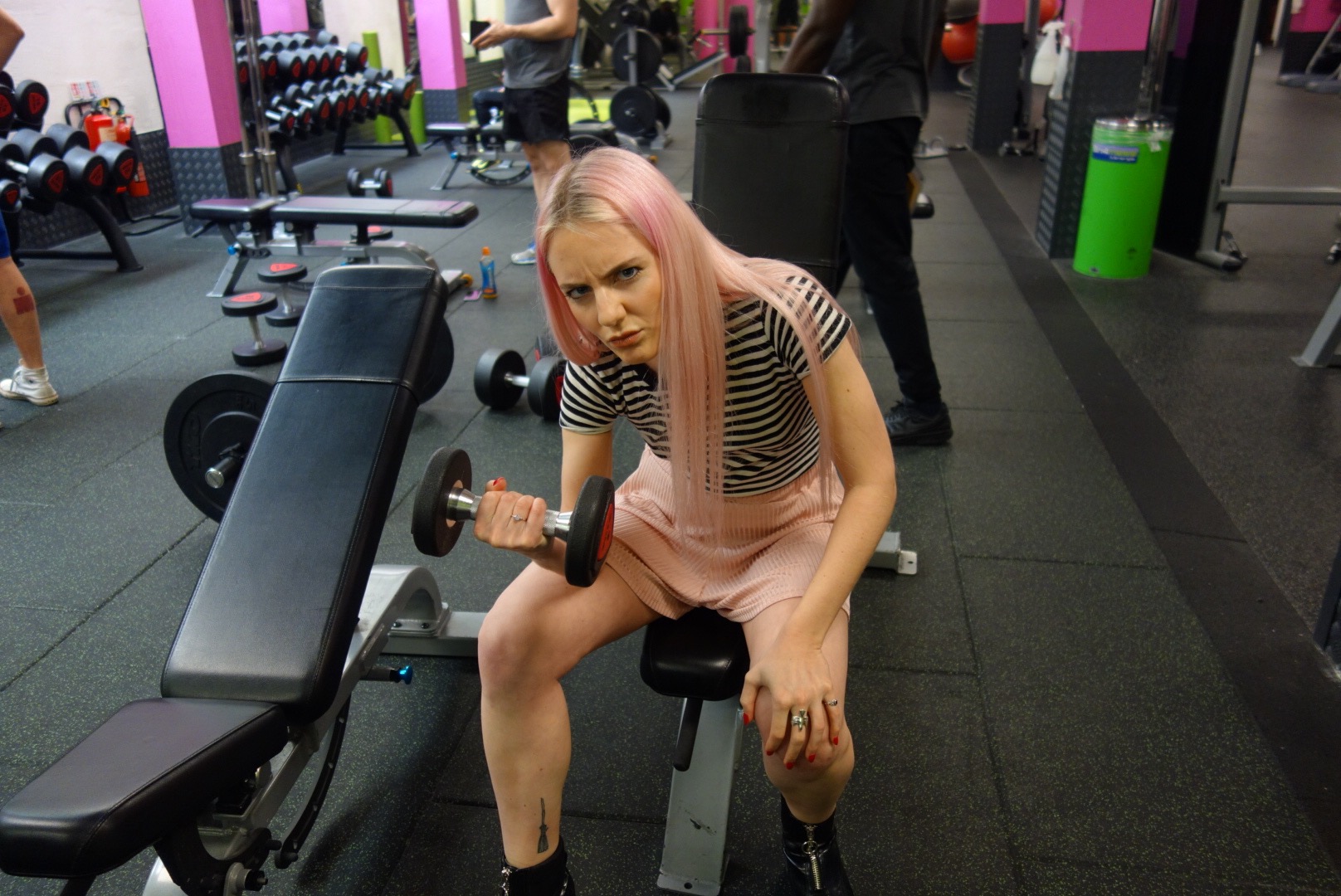
This new gym had the neon ambiance of a Chelsea club and the distinct smell of Shoreditch House, so I assumed I'd find a few shy-Tory professionals. Instead, I found much more nuance.
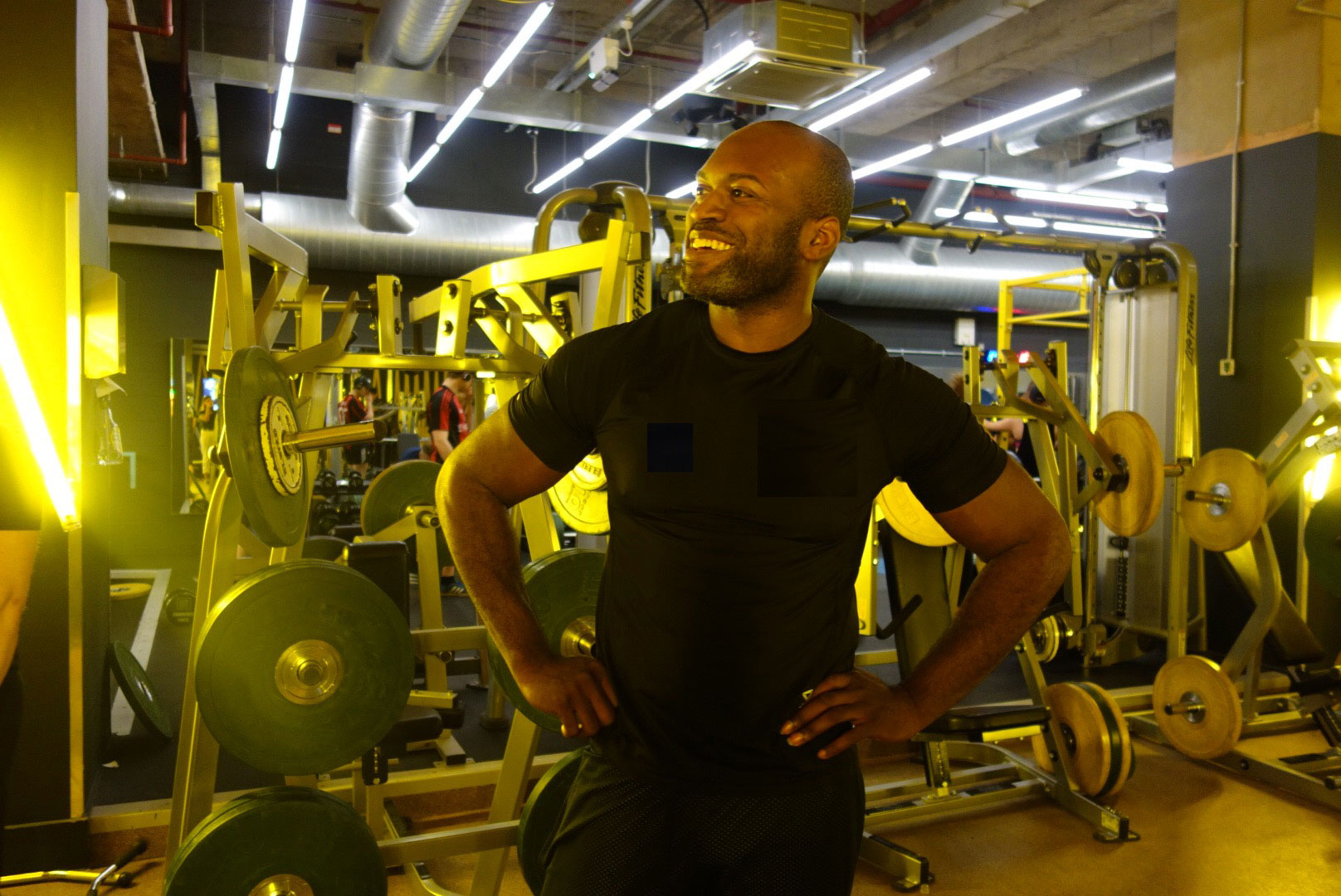
VICE: Do you have a theory about lads going to the gym being more likely to be Tories?
Sebastian, 32: Yes. Down south, in order to maintain a gym membership over a long period of time, you need to have a certain level of income – that is to say, be a Tory. Also, if you come from a private school you're more likely to be fit and you'll have a fitness background. It's the complete reverse up north, though. There, the cheaper gyms have better facilities and are fully available to everyone. People up north tend to dress up more to go out – guys tend to work out a little bit more because it's all about the aesthetic; it's not about the money you have, necessarily.

Do you think there's something inherently Tory about being hench?
It's not about being hench; it's what they do to get that aesthetic. Bodybuilding is a free-for-all because you can learn stuff off the internet and YouTube – not Tory. What is inherently Tory at the moment is Olympic lifting. That's a skill-set you need to learn from a young period – the kind of thing that you get taught through the private school systems. Bodybuilding is about being as big as possible, whereas Olympic lifting is about being physically strong and showing that you're physically stronger than other people, and that's what's inherently Tory.

Wow, so there's like a Tory silhouette basically?
Yes, there is. Look out for crossfitters – that comes from Olympic lifting but it's been changed into a sport and a fitness regime. People use it to increase their fitness, and that aesthetic is inherently Tory, because a) it's the mentality that you have to have to keep on going, and that's a learnt behaviour from the private school system; and b) it's about always competing, always being the best, whatever you do it has to be competition. And that is Tory.

Thanks, Sebastian.
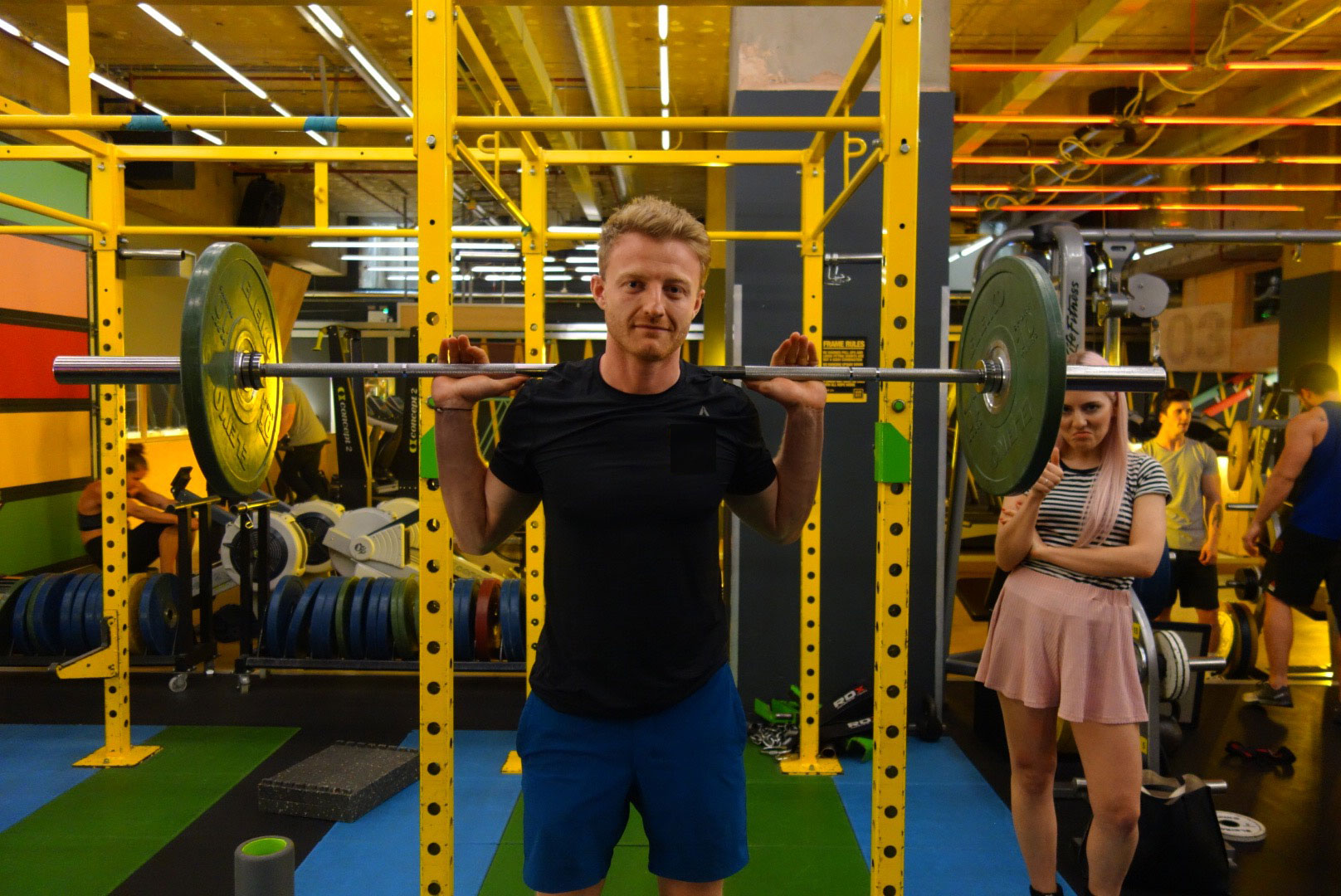
Alex

Alex


VICE: Are hench dudes who are physically stronger more likely to be Tories?

Alex, 29: I don't believe that. There's nothing political about gymming.

What are your political leanings?
I don't like to read the news. I don't enjoy media and I don't have a lot of time for politics. I'm probably from a more Conservative background, but I think my fitness has got to be completely separate from my politics. I think it's mental they're trying to make that comparison.

So it's totally non-political?
Yeah.

I thought it best to head over to a different type of gym completely – an establishment specifically dedicated to bodybuilding. Here, it was so hot the walls were sweating and I could taste the testosterone in the air.
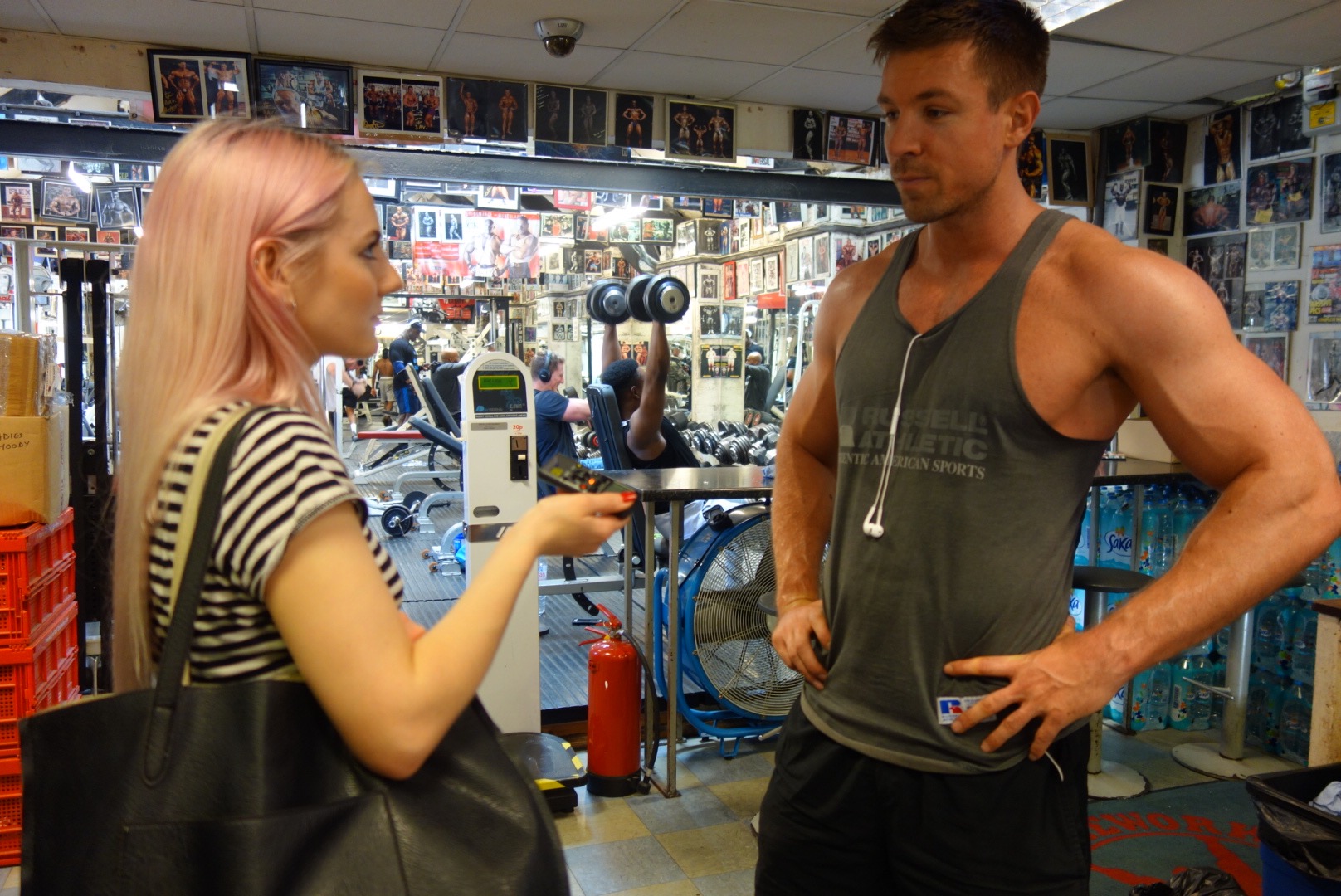
VICE: The more hench guys are, the more likely they are to be Tories.
Ross, 34: Where did this come information from?

A university study.

That's why – you've been around those places!

So you don't think it's true?
Look, I'm not actually voting this year. I have no faith in any of them. I grew up as a Tory, once voted Labour when it was Tony Blair whenever that was – 96, 97. I've been a Tory the rest of my life; this year I'm not bothering. I'm a London cab driver; the Conservative Party let me down big time with Uber, but that's another story. I can't go there and vote Tory just because my mum and dad do – I have to feel it strongly, and I don't like them.

Do you think guys who work out are generally politically minded, or is it very much up to the individual?
There's a lot of guys in here with university degrees; there are guys in here who are labourers that aren't very intelligent; there's a real mix of people in here, so to say that everyone in here with big chests and big arms are all Tories is a bit unfair.

I had to agree with Ross.

Maryn and a gym bud

VICE: The more hench guys are and the more hours they spend in the gym, the more likely they are to be right-wing. What do you think of that?
Maryn, 36: There aren't many black Conservatives, and the biggest guys in this gym aren't white. But then maybe if you were left-wing you'd be working for human rights or animal rights and too busy with that than in the gym. Usually left-wing men are a bit…

Skinny?
Yeah, it's unusual for them to be big or athletic – of course, there are exceptions, especially in 2017. But then again, on the surface this gym does seem rough and aggressive, but the biggest guys in here are the nicest ones. It's the opposite of what you expect.

Thankfully, the big dog of this particular gym was there to stamp out this theory once and for all.
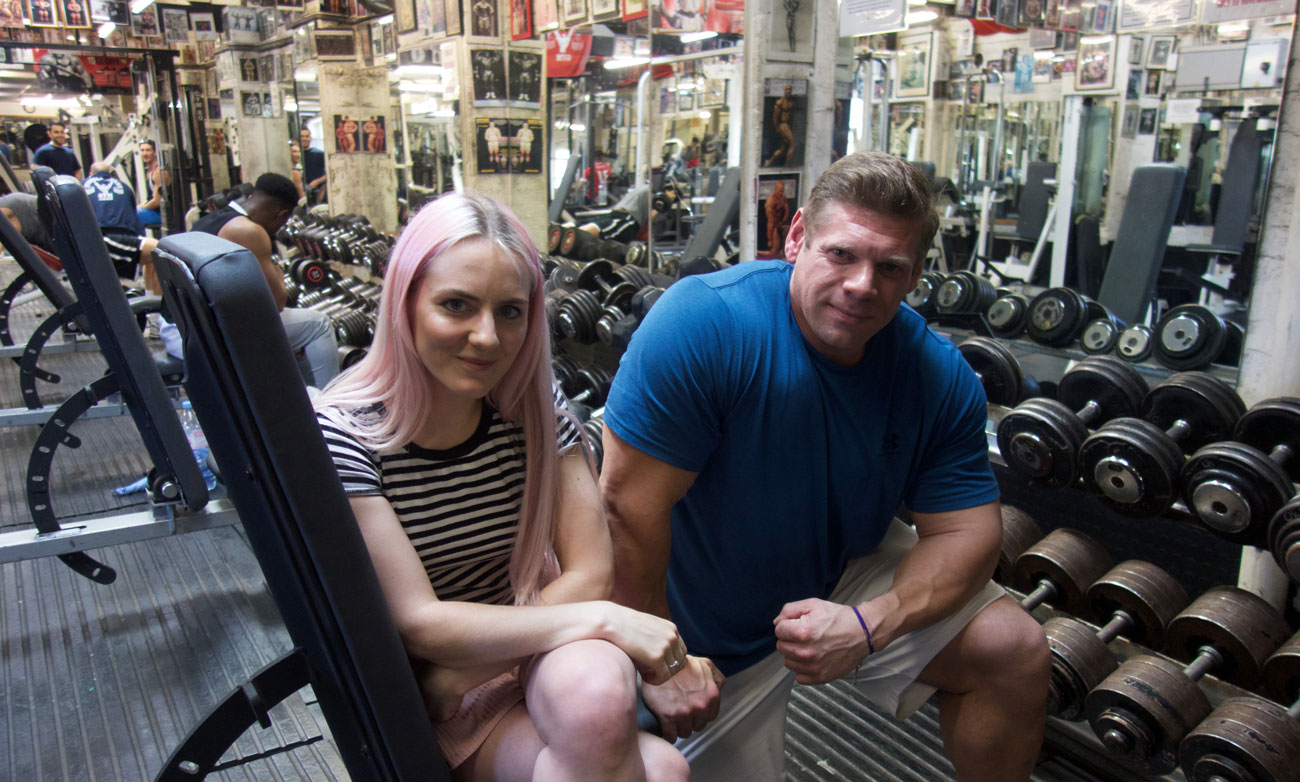
Craig, Daddy of Muscleworks Gym

So Craig, are you right-wing?
Craig, 41: I'll be brutally honest, I've never once voted. I'm 41 years of age, and you know what? Each party is corrupt as the next. I think politicians are a group of little boys who got bullied in the schoolyard who decided to get their own back on us. That's what I think!

What if you had to vote?
What if I'm the guy that votes for the party that kicks off World War Three and annihilates us all? Everything now is algorithms anyway. You don't think humans make decisions now, do you? It's all computers. The people at the top – the Rothschilds and all these super billionaire families – they're getting more and more and more and more and more. They stand on the little guys, supported by their algorithms. Why would I vote? I'm just enslaving myself. No thanks! I'd rather focus on myself and the people that I love, and pursuing the things that make me happy and bring me success. Whoever gets in they'll screw us over one way or another.
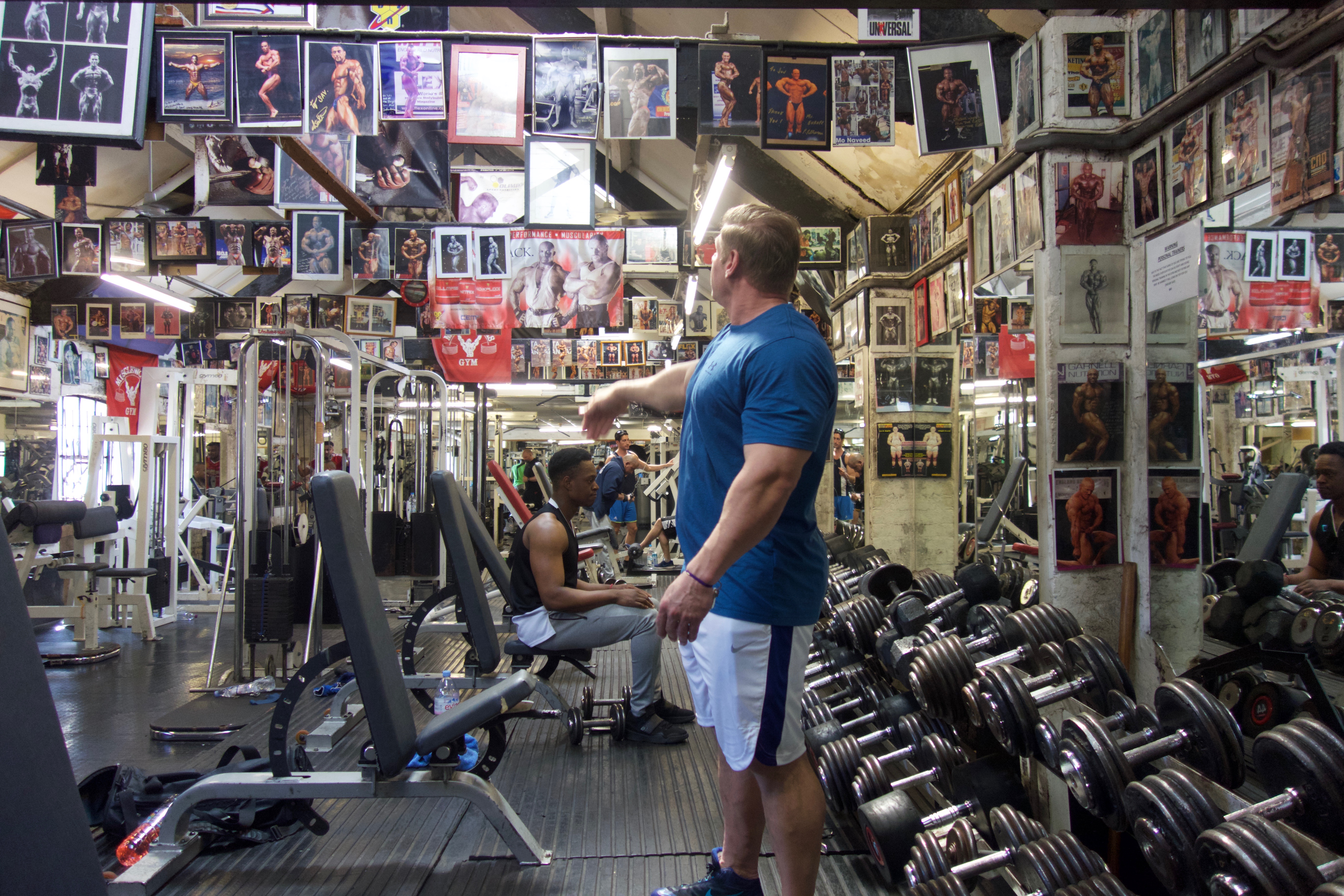
Craig showing me the ropes

Craig showing me the ropes

Too right.
One of the only places where segregation doesn't happen is here in this gym. It's one group of lads under this roof, all friends, all diversity. I've often said if the rest of society thought like the men in this gym there would be no more poverty, no more disease. The mindset of bodybuilding is 24/7, now until the end of time. It's almost a religion, it's a science, it's an artform and it's a sport. To get back to your question, if I'm brutally honest, the last thing big guys are thinking about is politics.

How many times a week are you here working out?
I work here, so every single day. It's a personal endeavour. All these younger lads get caught up in Instagram – "Oh, look how good he looks, look at this guy." I say, "Take your shirt off and look in the mirror. That guy looks great. Forget those other guys!"

After this, Craig showed me a video of himself performing a sort of sensual-masculine, oiled-up dance onstage at a competition. Respect overcomes the rules. I kept turning his mantra over in my mind. Here was a safe space from politics. A place where everyone – regardless of weight – is on their own physical journey. As long as you're good to the people around you, you'll be treated in the same way. Ironically, there is no "little guy".

Are stacked guys Tories? I think: no. There are hench Tories to be found, yes, and I now knew to look out for the private school men who do crossfit. But mostly, as I suspected, politics with a capital P was far from their minds. They're just tired like the rest of us. Tired of having no one to believe in, fatigued by a broken political system that doesn't represent the hench everyman. They're us – just bigger.

@hannahrosewens

More Tory Week:

Would You Fuck a Fuck a Tory, Though?

Why the Tories Always Win

I Lived As a Tory For a Week Day One: Mansion Viewing

01 Jun 15:03

What It's Like To Date A Giant Nerd

by Zeon Santos

Relationship-oriented comics weren't my cup of tea before I discovered the joy of reading a Sarah Andersen comic, and since then many more great relationship comics have been created.

The comics Fishball creates are all about two nerds in love, so on the surface they're just like many of the other comics out there, but Fishball incorporates cartoony gags into her strips and her art style is easy on the eyes.

Fishball and her really tall boyfriend are keeping it real as far as relationships go, which means they're willing to admit when their love is starting to stink.

See more from What It's Like To Date A Giant Nerd here

01 Jun 14:57

La nave de Villaverde en la calle Gómez Ulla será un centro gastronómico

by Marga mosteiro
La iniciativa sigue el modelo de negocio del mercado madrileño de San Miguel

01 Jun 02:28

Intervenido un ‘manual etarra’ para saber actuar en caso de detenciones

by Alexandra Cordero. Santiago
01 Jun 02:23

Asmodee Digital has lost their minds, Onirim is still free

by David Neumann

iOS Universal, Android •

Being of an unstable mind myself, I usually try to not diagnose the mental health of others on the internet. Regardless of how off-the-rails their comment or post might be, you’re only getting a small sliver of the person behind the keyboard. That said, I think we might need to send help to Asmodee Digital and make sure they’re okay. Over the weekend, they put their hit card game, Onirim, on sale and, for some reason, it’s still on sale. Oh, and when I say “on sale” I mean free.

Onirim is a fantastic solitaire card game (Kelsey’s review) that only got better last week with the release of a free expansion, The Glyphs. Over the weekend, someone at Asmodee accidentally (I have to assume) hit the “free” switch for Onirim, making it gratis for the entire holiday weekend. That’s fine. I can see how someone would make that error, then everyone leaves for the weekend only to find, in horror, what happened Tuesday morning and quickly reversing course. Turns out, however, that maybe it wasn’t an accident?

If you haven’t played Onirim yet, I urge you to go and download it now for free. It’s a fantastic solo time waster in the vein of games like Threes! or Card Crawl and it deserves to be on everyone’s phone. Getting it for free is like stealing.

31 May 22:55

The United States Of Sadness: Each State's Most Frequently Googled 'How To Spell' Word

united-states-of-misspellings.jpg Note: Larger version HERE. In honor of the Scripps National Spelling Bee, this is a map created by Google Trends highlighting the most commonly searched 'How To Spell XXXXX Word' for each state. Honestly, I can't spell any of those without spell-check. Especially not diarrhea and I've probably tried typing it at least a thousand times. Sometimes I spell it so awfully that spell-check doesn't even give me any suggestions and I just let it go and now my doctor thinks I have something he's never even heard of before. Thanks to Alpha Centurion, who I'm pretty sure is either a star or superhero.
31 May 20:58

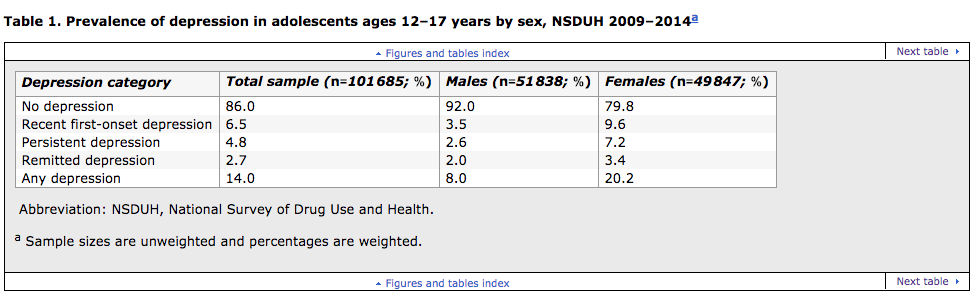
Teen Girls Are Three Times More Likely than Boys to Be Depressed

by Leila Ettachfini

A new study published in the journal Translational Psychiatry has found that almost three times as many adolescent girls will experience early onset depression than adolescent boys. That is, over a third of teenage girls have had or currently have depression, compared to 13.6 percent of teenage boys. The landmark research looked at the data of over 100,000 adolescents between the ages of 12 and 17.

Dr. Joshua Breslau, Senior Researcher in the Health Division of the global policy think tank RAND Corporation and one of the leading researchers in the study, tells Broadly that his research has two new and major findings: One, that the proportion of all adolescents who experience depression is higher than previously thought, and two, that the higher risk for depression among girls begins in childhood, earlier than previously thought.

Read More: No One Believes You Have ADHD, Especially If You're a Girl

Researchers used data that was collected by the National Survey of Drug Use and Health (NSDUH), which uses a representative sample of the US population. Interview questions were asked both in person and through computer-assisted methods. The study, titled "Sex Differences in Recent First-Onset Depression in an Epidemiological Sample of Adolescents," looked at survey questions regarding depression, suicide, academic functioning, depression-related impairment (in regards to chores, school work, familial relationships, etc…), and conduct problems (such as stealing, fighting, and carrying a handgun).

To look at the results more specifically, young girls are 2.8 times more likely to develop depression than boys at the age of 12 and between 3.1 and 4.0 times as likely as teen boys to develop depression at the ages 13 through 16.

Translational Psychiatry

Researchers also found that adolescent girls persistently "have significantly higher levels of impairment for all domains and higher rates of suicide attempts." Though the study did not look at the causes of depression in adolescents nor teen girls specifically, it did focus on the differences in behavior between adolescents with persistent depression and those with first-onset cases. The study found that the prevalence of suicide attempts for both boys and girls with first-onset depression was over 15 percent. In accordance with that data, it concludes that "evidence clearly does not support taking a 'wait and see' approach to recent first-onset cases of depression in clinical settings."

For More Stories Like This, Sign Up For Our Newsletter

"Right now it is important to emphasize that all adolescents with depression should seek treatment," Dr. Breslau says. "However, future studies could help us focus clinical efforts on a smaller group of individuals. We would like to be able to identify which adolescents who become depressed are most likely to benefit from treatment and which are most likely to get better on their own."

31 May 20:47

4 Little Genius Tricks to Make All Your Shrimp Dinners Better

by Kristen Miglore

I've been on a quest to make my shrimp dinners fall more consistently under the juicy, perky, mega-delicious banner instead of the sometimes dry or curiously mushy one. Shrimp are precious, and not cheap—they should be great every dang time.

J. Kenji López-Alt’s Grilled Shrimp Scampi-ish With Garlic and Lemon
J. Kenji López-Alt’s Grilled Shrimp Scampi-ish With Garlic and Lemon by Genius Recipes

All roads led back, as they often do, to J. Kenji López-Alt of the Food Lab column at Serious Eats and multi-award-winning book. As always, Kenji's work armed me with techniques that I will now remember and use every time—just as I flip my steaks obsessively every 30 seconds, and smash the dickens out of every burger, thanks to him.

After conducting several nights of side-by-side-by-side tastings in various kitchens with my bewildered husband, my favorite shrimp bites came from the 4 simple tricks nested within Kenji's recipe, which add very little more time or effort and outsized success.

Feel free to mix and match the 4 techniques below depending on your mood, time, and available supplies—they will all pamper your shrimp to some degree—or try them all at once in Kenji’s recipe for Grilled Shrimp Scampi-ish(1) with Lemon and Garlic.

1. Dry them really, really well.

Don't just pat them with a paper towel, but let them air-dry for a good hour or more in the fridge. Chef Dan Kluger leaves his for two hours. Kenji explains the drying-for-juiciness concept well: The surface of the shrimp won’t brown until it’s dry, and the longer it takes for the surface moisture to steam off, the more the middle heats up, too—so by the time you have a dry, searable surface, your poor shrimp are precipitously close to overcooked and tough.

This general principal is true of all things you sear, from pork chops to cauliflower steaks, but the window of cooked-to-overcooked for shrimp is much narrower, so it's extra important to give them a head start. The shrimp are bouncier, juicier, and very much not curiously mushy as a result.

2. Salt them a little bit ahead (a.k.a. dry brine).

In my testing, this was one of the most noticeable differences in making shrimp taste more delicious and more like themselves, and it should surprise no one. The same chemistry that helps turkeys and chickens to stay moist while seasoning them all the way through helps shrimp, on a much … shrimpier (and therefore quicker) scale. Use about 1 teaspoon of kosher salt per pound of shrimp.

3. Add baking soda to the brine

Curveball! Baking soda is alkaline, bumping up the pH, which makes browning and the good flavors that come with it happen faster (we’ve also seen this in Ideas in Food’s genius crispy oven chicken wings). And it’s in such a teeny amount (about 1/4 teaspoon of baking soda for every pound of shrimp) that you won’t taste any suspicious soapiness, especially if you’re adding any other flavors to the mix—like the garlic, parsley, and lemon here.

4. Pack them onto the skewers

When the shrimp are snuggled close on skewers, head to tail, their inner bits are more protected while you singe their outers—I’ve used this technique for both grilling and searing in cast iron (and I’m guessing it would work great under the broiler, too). The skewers are also handy for suspending them in the fridge for dry time (refer to point #1). They will make you laugh every time you open the fridge.

4a36f4fd 4a13 42dd 99cd dd490295fc03  2017 0516 genius best grilled shrimp mark weinberg 402

J. Kenji López-Alt’s Grilled Shrimp Scampi-ish With Garlic and Lemon

By Genius Recipes

  • 2 1/2 pounds large (16–20 per pound) shrimp, peeled and deveined (frozen and thawed are okay)
  • 1/2 teaspoon baking soda
  • 1 tablespoon kosher salt, plus more to taste
  • 1 teaspoon sugar (optional)
  • 4 medium cloves garlic, minced, divided
  • 1/4 cup extra-virgin olive oil, divided
  • 1 teaspoon zest and 4 teaspoons juice from 1 lemon
  • 2 tablespoons finely chopped fresh parsley leaves
  • Freshly ground black pepper

View Full Recipe

(1) As Kenji points out in The Food Lab, the phrase Shrimp Scampi is redundant and therefore a little absurd (the Italian translates to shrimp shrimp), but regardless, this reminds me a grilled version of scampi, with its lemon, garlic, and parsley, so I added the Scampi. With an -ish.

Photos by Mark Weinberg

Got a genius recipe to share—from a classic cookbook, an online source, or anywhere, really? Perhaps a genius dessert? Please send it my way (and tell me what's so smart about it) at kristen@food52.com. Thank you to our Special Projects Editor/Stylist/Crustacean Fan Sarah Jampel for sending me down this rabbit/shrimp hole.

31 May 20:36

La ‘pelea karateka’ de Mijas de la que ningún organismo oficial sabe nada

by Pablo Cantó

Poses de artes marciales, patadas giratorias... El vídeo de una supuesta pelea en una rotonda de Mijas, en Málaga, que publicó el tuitero @JorgeAguilar_5 el 30 de mayo, ha superado los 20.000 retuits en menos de un día. En los comentarios, muchos usuarios dudan de su veracidad, y tienen motivos: a pesar de lo aparatoso de la situación, con dos hombres golpeándose y el tráfico completamente detenido, ni la Policía Local de la ciudad ni Guardia Civil han recibido denuncias sobre el suceso, por lo que no pueden confirmar que sea auténtico.

En el vídeo puede verse cómo dos hombres comienzan a pelear en medio de la carretera, sin motivo conocido, mientras la pasajera de otro vehículo parado detrás graba. Los implicados en la trifulca intercambian golpes y posturas de película de kung-fu, y la mujer que filma no da crédito: "Venga ya, hombre, en medio de la carretera", se la escucha protestar. El vídeo concluye cuando la mujer baja a intervenir.

La pelea ha aparecido en muchos medios y televisiones nacionales, muchos de ellos dando como autor del vídeo al tuitero @JorgeAguilar_5. Este, sin embargo, asegura a Verne que no grabó el vídeo ni conoce a ninguno de sus implicados. "Lo recibí por grupos de WhatsApp, no conozco a la chica que graba ni nada por el estilo", cuenta por mensaje. Tras hablar con Verne, ha publicado un hilo de tuits aclaratorio:

En las respuestas a su tuit, muchos usuarios se preguntan si la pelea es real. Guardia Civil de Málaga y Policía Local de Mijas han negado a esta mañana Verne que se haya recibido ningún tipo de denuncia o parte por estos hechos. "No tenemos constancia de nada oficial", explican desde Guardia Civil. "Tras ver el vídeo, consultamos si se había recibido algún parte o información relacionada, y no hemos recibido nada al respecto".

Medios provinciales como La Opinión de Málaga confirman que el vídeo está filmado en una rotonda de Mijas, pero se desconoce cuándo pudo grabarse. Muchos han insinuado que podría tratarse de una campaña viral para promocionar la salida del videojuego de lucha Tekken 7. PlayStation, consola para la que saldrá el videojuego, y Bandai-Namco –su desarrolladora– han comentado el vídeo en Twitter:

Desde el departamento de prensa de PlayStation España han explicado a Verne que no tienen ningún vínculo con vídeo. Verne también se ha puesto en contacto con Bandai-Namco, pero no ha recibido respuesta. [Actualización: este jueves, Bandai-Namco ha asegurado a Verne que tampoco tiene relación con la pelea].

Mientras que muchos tuiteros siguen debatiendo sobre si la pelea es real o no, algunos criticaban la popularidad que ha adquirido un vídeo de violencia gratuita como este, con dos adultos golpeándose sin motivo conocido. Otros se han dedicado a versionarlo según su videojuego de lucha favorito.

Inspirados en Tekken

En Street Fighter

En Mortal Kombat

En Dragon Ball

También en el cine: Karate Kid

31 May 19:41

Seven ways to be miserable, and how to avoid them

by Mark Frauenfelder

People often do things that make them miserable. CPG Grey presents seven of the most effective misery makers:

  1. Stay still - don't go outside, don't exercise.
  2. Screw with your sleep - vary your bedtime and sleep in a day or two a week. Never sleep or wake up at the same time.
  3. Maximize your screentime - let the screen keep you awake. Let a screen be the first thing you look at when you wake up.
  4. Use your screen to stoke your negative emotions - feed your anxiety and anger about things over which you have no control.
  5. Set v.a.p.i.d. goals - vague, amorphous, pie-in-the-sky, irrelevant, delayed. Do not set s.m.a.r.t. goals, which are specific, measurable, actionable, (goals for which you are) responsible, time-bounded.
  6. Pursue happiness directly - Expect that unending bliss is possible.
  7. Follow your instincts - do what makes you immediately happy even when you know it will make you sadder in the long run.

The video is based on Randy Paterson's book, How to Be Miserable: 40 Strategies You Already Use.

31 May 13:49

ACT NOW! In 9 days, the European Parliament could pass a truly terrible copyright expansion

by Cory Doctorow

When MEP Julia Reda conducted a wide-ranging and open consultation on updating EU copyright, she came up with some great, sensible reforms: making it legal to take pictures of buildings, making it legal to link to newspapers, creating a Europe-wide set of fair dealing exceptions to copyright, capping copyright terms at life-plus-50 years, and making sure that the rights you get to analog media (like the right to give your books and music to your kids when you die) carries over to digital media. (more…)

31 May 11:30

Incautan un manual a los okupas con normas ante detenciones similar al entorno etarra

by Madrid/Santiago EFE
31 May 11:20

What Goth Culture Looks Like Around The World

by Zeon Santos

The goth subculture may have began in the US and UK but nowadays there are goth kids in practically every corner of the world, with each group adding their own cultural spin on the standard goth styles.

In Brazil the goth subculture is thriving in night clubs, and the attire is understandably cooler and less formal.

Canadian goths are big on Steampunk, which makes sense since their climate is suited to heavy fabrics and layering.

Cuba has a small but slowly growing goth scene, and some Cuban goths seem to be going all out with their looks.

Many of the goths in France sport a romantic Victorian Vampire look, which makes sense considering Paris is home to one of the oldest goth scenes in Europe.

Meanwhile, Kenya is home to one of the youngest goth scenes, and in Kenya goths smolder in their studded leather.

See What Goth Culture Looks Like Around The World here

31 May 10:06

The Limboos, el sabor de lo bueno

The Limboos se han marcado uno de los discos del año. “Limbootica” es ecléctico, singular y de gran calidad, como manifiesta cada una de las once canciones que le dan forma. Si aún no has tenido la oportunidad de escucharlo no pierdas tiempo, es posiblemente uno de los discos que optarán a estar entre lo mejor de 2017, además que si pasan por tu ciudad ...(ver más)
31 May 09:50

VA – Magnificent: 62 Classics from the Cramps’ Insane Collection (2016)

by exy

Magnificent 62A second collection of weirdo rockabilly, R&B, blues, and rock & roll purportedly from the Cramps’ personal collection, Magnificent: 62 Classics from the Cramps’ Insane Collection is a gas by any measure. The key to the success of Magnificent is that it never pushes its gonzo nature too hard.
Sure, there are novelties here — many arriving in the beginning, including the Five Blobs’ “The Blob” and Sheb Wooley’s “The Purple People Eater,” two records that couldn’t be called obscure — but it settles into a comfortable groove where silliness and strangeness synthesize, sometimes seeming somewhat scary. It’s all about context, of course: the songs play off of each other, seeming odder when echoing off their predecessors, and that’s the joy of the whole shebang. It plays like an alternate…

333 MB  320 ** FLAC

…history of the postwar 20th century, assembled entirely from detritus and nothing substantive — and, of course, that’s why it lasts.

1. Jimmy Haskell & His Orchestra – Blast Off! [01:54]
2. Bob & Jerry – Ghost Satellite [01:50]
3. The Five Blobs – The Blob [02:34]
4. Sheb Wooley – The Purple People Eater [02:09]
5. The Electro-Tones – Ghost Train [02:13]
6. Jimmy McConville – Scorpion [02:19]
7. Larry Collins – T-Bone [02:02]
8. The Duals – Wait Up Baby [02:08]
9. Jimmy Lloyd – You’re Gone Baby [01:58]
10. Wanda Jackson – Riot in Cell Block #9 [02:25]
11. Charlie Feathers – Wild Wild Party [02:51]
12. Dicky Doo & the Don’ts – Wild Party [02:09]
13. John & Jackie – Little Girl [02:05]
14. Ric Cartey – Oo Eee [02:13]
15. Buddy Starr & the Starliners – Hold It! [01:33]
16. Terry Corin & Her Boyfriends – Sick! Sick! Sick! [02:14]
17. The Champs – Train to Nowhere [02:03]
18. Rudy Thacker & the Strinbusters – Black Train [01:46]
19. The Frantics – Fog Cutter [01:53]
20. Bo Diddley – Bo Diddley Is a Lover [02:06]
21. Mad Mike & the Maniacs – The Hunch [01:34]
22. Dicky Doo & the Don’ts – Flip Top Box [02:03]
23. Lee Ross – The Mummy’s Bracelet [02:09]
24. The Revels – Dead Man’s Stroll [02:27]
25. The Social Outcasts – Mad [01:39]
26. The Tides – Midnight Limbo [02:24]
27. The Mogambos – Bi-Aza-Ku-Sasa [02:02]
28. The Tokens – Bwanina (Pretty Girl) [02:13]
29. Albert Elias – King Kong [02:21]
30. The Wildmen – King of the Jungle [02:06]
31. Lee Chandler & the Blue Rhythms – Tree Top [01:48]
32. Roger & the Tempests – Bad Bad Way [02:27]
33. Ronnie Dawson – Rockin’ Bones [01:51]
34. Ivan – Real Wild Child [02:14]
35. Betty Smith & the Rhythm Masters – Yeah Baby [01:39]
36. The Dynamos – Woh! Woh! Yea! Yea! [02:16]
37. The Camelots – The Chase Part 2 [02:10]
38. The Sparkles – The U.T. [02:24]
39. Buddy Miller – Teen Twist [02:17]
40. Ronnie Self – Date Bait [02:11]
41. Dicky Doo & the Don’ts – Nee Nee Na Na Na Na [02:04]
42. The Lifeguards – Everybody Out’ta the Pool [02:13]
43. The Royal Teens – Leotards [02:29]
44. The Versatones – Bila [02:08]
45. Robert Mitchum – Ballad of Thunder Road [02:24]
46. The Clovers – Your Cash Ain’t Nothin’ But Trash [02:51]
47. Andre Williams & the Don Juans – Pulling Time [02:48]
48. Billy Ward & the Dominoes – The Bells [03:11]
49. Chuck Ranado & the Electronaires – My Baby’s Gone [02:02]
50. Johnnie Honeycutt – Blue Song of Love [01:51]
51. Lonnie Johnson – Tomorrow Night [02:59]
52. Kay Martin – The Heel [02:56]
53. Ken Nordine – Fliberty Jib [04:33]
54. Bob Lee – Wanted for Questioning [02:15]
55. Wortham Watts – Cotton Picker [02:04]
56. Johnny Burnette & His Trio – Honey Hush [01:58]
57. The Gamblers – LSD-25 [02:08]
58. Duane Eddy – Ramrod [01:37]
59. The Chiefs – Apache [02:21]
60. Paul Peek – Olds-Mo-William [02:14]
61. Tony Burrello – There’s a New Sound [02:20]
62. Spike Jones & His City Slickers – Chloe [03:10]

31 May 09:47

VA – The Girls Want the Boys! Sweden’s Beat Girls 1964-1970 (2016)

by exy

Sweden's Beat GirlsStrange as it might seem, there was a time in the early ’60s when Sweden was not yet a force in pop music. True, there was jazz – Alice Babs, famously, sang with Duke Ellington, and Monica Zetterlund with Bill Evans – and the Spotnicks, an instrumental group who topped the Australian charts and enjoyed minor hits in the UK. And there was Siw Malmkvist! Between 1960 and 1969 she notched up 20 hits in Germany, one of them, ‘Liebeskummer Lohnt Sich Nicht’, sitting at the top of the charts for 12 weeks in 1964. Also that year, in tandem with Umberto Marcato, and singing in Italian, she became the first Swedish vocalist to chart in the US, when ‘Sole, Sole, Sole’ reached the Hot 100.
As ‘Sole, Sole, Sole’ and the German connection indicate, pop music in Sweden, at least before…

134 MB  320 ** FLAC

…the advent of rock’n’roll and Beatlemania, drew largely on the schlager tradition, sprinkled with a canzone or two via the Italian San Remo festival. (Benny Andersson, when awarded an honorary doctorate in 2008, cited Caterina Valente, Mantovani and schlagers as his biggest influences; no doubt, he could have spoken for many Swedes.)

The Girls Want the Boys! opens with early solo tracks by the lead singers of the country’s greatest pop music export: Agnetha Fältskog with ‘Ge Dej Till Tåls’, a peppy number first recorded by Gloria Hunniford; and Anni-Frid Lyngstad’s recording of the Euro-chic ‘Så Synd Du Måste Gå’, a song popularised by Françoise Hardy as ‘Comment Te Dire Adieu’. Other well-known names include national treasure Lill-Babs with her version of Dusty Springfield’s ‘Little By Little’ and chart star Mona Wessman’s cover of bachelor pad classic ‘Music To Watch Girls By’, both performed in Swedish.

But it wasn’t all cover versions in 1960s Sweden. Dig, for example, ‘Don’t’ by cult favourite Doris, who also appears as lead singer and bass guitarist of the group Plums; Eleanor Bodel’s terrific title track; au pair duo Bella & Me’s groovy ‘Help Me Break This Habit’; Britt Bergström’s Ivy League-penned ‘You Really Have Started Something’; and multi-lingual Suzie’s fan favourite ‘Det Får Ej Hända Igen’, a number she recorded in five languages. Cherry-picked sides by the guitar-toting Plommons, Angeliques, Sunnygirls and cover stars MAK Les Soeurs illustrate the country also produced its share of all-girl groups.

There have been a number of explanations as to why Sweden is so good at making pop music – among them bad weather, good language skills, an openness to foreign cultures, and supportive public policies. Homogenous, and for a long time at some remove from the action – although with an eye (and an ear) to the world –Sweden in the 60s was a markedly different place from the multicultural society it is today. With new blood continuously being added to its already heady mix of writers and performers, there’s every chance the country’s influence on pop music will continue. This compilation, from the point of view of 1960s beat girls, shows us where it all began. — acerecords.co.uk

31 May 09:05

VA – Gibble Gobble & Sadaba: Exotic Blues & Rhythm vol. 5 & 6 (2017)

by exy

Gibble Gobble & Sadaba
Volumes 5 +6 in Exotic Blues & Rhythm series were released on limited edition 10” vinyl and sold out in next to no time! First time on CD.
Ultra-hip work from the end of the 50s and start of the 60s – the kind of weird, wild, and unusual singles you’d be likely to find way down on the list of singles available on a jukebox – often with hand-written title cards, because the music was so obscure! The tunes here are all at a midtempo groove – the kind of vamping, bad-stepping work that’s been rediscovered by the funk collecting underground in recent years – tunes that were originally issued on 45s and 78s, mostly on small labels – in modes that are heavy on R&B, soul, and blues elements. — dustygroove.com

142 MB  320 ** FLAC

01. The Clare Sisters – Cool Cool Cool 2:22
02. Earl Hooker – Apache War Dance 2:16
03. Chuck Daniels – Tiny Tim 2:08
04. Otis Blackwell & His Band – My Josephine 2:15
05. Lance Roberts – Gonna Have Myself a Ball 2:04
06. Willie Wright – Gibble, Gobble 3:01
07. Bob Calloway and the Chicks – Native 1:56
08. Sonny Day – Beyond the Shadow of a Doubt 2:17
09. Howlin’ Wolf – Wang Dang Doodle 2:22
10. Toussaint Mccall – Summertime 2:09
11. Titus Turner – Coralee 2:36
12. The Voodoos – Voodoo Walk 2:53
13. The Rhythm Kings – Exotic 2:18
14. Kenny and Moe – I Want to Love You 2:19
15. Titus Turner – Big John 2:39
16. Young Jessie – Big Chief (King of Love) 2:29
17. Bracey Everett – Lover’s Curse 2:10
18. Johnny and the Hurricanes – Sheba 2:12
19. Johnny Williams – Sadaba 2:18
20. Little Jimmy Ray – You Need to Fall In Love 2:28
21. The Mark Five – Cleo 2:24
22. Cosmo – I’m a Little Mixed Up 2:48
23. Steve Karmen – River in My Blood 2:30
24. Otis Blackwell – Let the Daddy Hold You 2:25

31 May 08:10

Los vecinos del área de Santiago residentes en otro país crecieron un 21 % desde el 2010

by Montse garcía
Hay 8.500 más, lo que equivale a la población de Padrón
31 May 07:54

Jaipur Review: Doing Board Games Right

by Rob Rich

When I started up Jaipur, I was a little confused. For some reason I was thinking of Splendor, which is a completely different board game that’s about gem trading. That’s okay though, because Jaipur is also a really fun game (and an actually good digital port!)

Jaipur is all about collecting commodities and selling them. There’s a central pool where several cards are on offer, multiple stacks of points tokens off to one side, and camels — camels are everywhere. All you have to do is manipulate the market (i.e. take, swap, and discard cards) in order to earn more points than your opponent. It’s simple, but also fun and can be surprisingly intense when you don’t know who’s in the lead.

A few modes are available from the outset. There’s the obvious player-versus-AI option, with a few different difficulties to try out. Then there’s pass-and-play, which is something of a most for mobile board games, really. After that comes online play. Finally there’s the campaign mode, which is kind of a shoehorned attempt at making something that’s not supposed to feel like a rehash of the vs. AI mode, but totally does. I mean there’s some progression, sort of, in that you can select different areas of the map to try and expand to and victories earn you resources that allow you to access new regions — but it’s still just a series of one-on-one matches. The main difference here is that each region is a little different. Some can be conquered in a single round, some have steadier prices for goods, etc.

There are a couple of ways to gather and trade goods that all have their own brand of usefulness. You can grab one good from the offer at the time (per turn), which is slow but sometimes necessary. You can grab multiples of the same type of goods by exchanging them with an equal number of goods from your own hand. You can switch multiples of a certain good with camels, if you have them. There are plenty of options for any given turn, is what I’m getting at.

Once you’re satisfied with the number of matched goods in your hand, you can sell the whole stack and take an equal number of point tokens (2 cards = 2 tokens, 3 cards = 3 tokens, etc). On top of that, sets of three, four, or five also earn bonus point tokens that can pad your score out even further. It’s a straightforward set of mechanics, but they all work really well together.

Upon first glance, Jaipur does seem to suffer from “digital port syndrome,” which is to say the menus are kind of uninspired and are a bit clunky to use — especially the needless wait for the “pages” to pop-up whenever you make a selection.

But Jaipur does digital board game conversions right in every other way. For one thing, the tutorial actually teaches you how to play and gets the core gameplay concepts across quickly and concisely. I also love how the game automatically knows to select all matching goods in a set when you’re selling — or when you’re corralling camels — so you only have to tap and drag once instead of selecting multiple cards every time. It’s a simple thing, but you’d be surprised how often so many digital board game conversions fail to account for the platforms they’re being played on.

The menus may not look like much, but Jaipur is a great port of a fun game. The tutorial isn’t useless, the game itself is enjoyable, there are several different options when it comes to how you want to play. I can’t stress enough just how nice it is to play a board game conversion that actually understands how sometimes a basic 1:1 port just doesn’t cut it. This is good stuff, and you should play it if you like board games – digital or otherwise.

The post Jaipur Review: Doing Board Games Right appeared first on Gamezebo.

31 May 07:48

How board games conquered Kickstarter

by Etrigan
The numbers behind gaming's growth on the site are striking. In total, fans have pledged over $580 million (£465m) to in excess of 20,000 successful campaigns – more than 20% of all funds raised on the platform. Tabletop games have done particularly well; in 2016, a six-month study found that board, card and roleplaying games had attracted six times as much funding as their digital counterparts.
How board games conquered Kickstarter: Five years on from the tabletop crowdfunding revolution
31 May 07:43

How to learn a Cockney British accent in under two minutes

by Mark Frauenfelder

I fink Dick Van Dyle would have benefited from watching Matt Pocock's 2-minute Cockney British accent tutorial, had Pocock been alive in 1964.

31 May 07:33

Let White People Appropriate Mexican Food—Mexicans Do It to Ourselves

by koavf
My thoughts on cultural appropriation of food changed forever in the research for my 2012 book, Taco USA: How Mexican Food Conquered America. One of my personal highlights was discovering the restaurant that Glenn Bell of Taco Bell infamy had cited in his autobiography as being the source of "inspiration" for him deciding to get into the taco business. How did he get inspired? He'd eat tacos the restaurant every night, then go across the street to his hot dog stand to try and recreate them.

(Following from two white, Anglo-American women from Oregon who visited Mexico, came back home, and opened up a taco truck for a few weeks and started a stir.)
31 May 07:25

Una lista de los 30 menores de 30 años más decepcionantes de España

by Pol Rodellar

Seamos sinceros, la mayoría de la gente no ha hecho nada relevante antes de los 30 años. Puede que Carlos haya tenido un hijo, que Gisela se haya sacado un par de carreras y que Marc haya descubierto que el papel de váter se rompe menos si se dobla, pero todas estas hazañas no dejan de ser profundamente habituales y, en tanto que esto, lamentables. El tema es que existen unas listas que enumeran a "30 menores de 30" (esto hace referencia a 30 personas de menos de 30 años) de varios países que han llegado a hacer cosas excepcionales durante su corta vida, todos ellos jóvenes emprendedores apasionados que, por ejemplo, han encontrado una solución para la calvicie que además también puede solucionar los problemas de hambre en la República Centroafricana. Gente que, supuestamente, ha gestionado su tiempo de vida mucho mejor que todos nosotros, generando mejoras sustanciales en el devenir de la humanidad. Son, en definitiva, un artefacto diseñado para que el resto de los mortales nos sintamos como una mierda.

Pero pese a la perfección de su existencia, estas personas no retratan la realidad. Es como si estos "30 menores de 30" vivieran en una especie de sociedad superior instalada en pequeñas cúpulas bajo el mar, totalmente apartados de nuestro plano existencial. ¿Quién puede sentirse identificado con estas biografías perfectas? ¿Dónde está ese chico que a sus 28 años vomita en su propia cama después de una noche de borrachera y entra en estado de shock y terror absoluto porque sigue viviendo con su madre y le aterra ser descubierto en el baño limpiando el vómito estampado en sus sábanas? ¿O esa tipa que se gastó 500 euros en un seminario de ayurveda que resultó ser un timo y ahora no puede ni comprarse pan para comer? Es por esto que en VICE hemos decidido hacer una lista ficticia pero más creíble de "30 menores de 30" totalmente lamentables y decepcionantes, en fin, una especie de espejo en el que seguramente sí que nos encontraremos reflejados.

Esther, 25 años. Empezó a mirar tutoriales en internet sobre los ejercicios Kegel y más tarde se compró una pieza rara que debía introducirse dentro de la vagina. Nunca se la introdujo y nunca realizó los ejercicios Kegel y su novio aún sigue pensando que ambos se corren a la vez.

Enrique, 29 años. Si sigue comiendo cada día arroz hervido morirá antes de los 30. Piensa en pillarse un curro pero lo único que hace es apuntarse a una oferta de Infojobs al mes y decir "es que no me sale nada".

Alicia, 25 años. Tiene que mandar su colaboración a un fanzine pero no ha hecho nada y el último día para entregar el asunto decide mandar un mail en el que comenta "Hola Agustina, te mando mi texto sobre las relación entre las Kardashians y Nicholas Ray", pero hace el truco de no adjuntar nada (como si fuera un error) y así ganar unos días más para escribir sobre un tema que ahora mismo detesta.

Marta, 23 años de edad. Se tatuó "15-M" en la espalda, justo al lado del duende. Tiene un libro sobre poliamor encima de la mesilla de noche, aún no lo ha empezado a leer. Su novio sí.

Alberto, 19 años. Tiene un Instagram en el que publica fotos de palomas muertas en la calle. Le siguen 37 personas y no ha causado esa "enorme repercusión en redes" que él esperaba.

Mireia, 22 años. En su mochila Fjällräven no caben todas las decepciones que se llevará en esta vida. Claro que tampoco cabe la ropa que necesita para ese viaje a Copenhague pero prefiere repetir de braguitas a cambiar de mochila. Esa es su decepción número 329.

Carlos, 25. Su anterior cuenta de correo electrónico era the_mad_joker92@gmail.com, activada a los 20 años. Ahora utiliza carlos.fuentes@gmail.com para mandar sus "ideas para editoriales de moda" y creerse un tipo respetable pese a seguir llevando esa extraña perilla.

Adrián, 23 años. A los 19 años se cagó en un sofá durante una fiesta. Ahora su cita de Tinder le está diciendo que su cara le suena de algo, quizás de una fiesta de hace tiempo en la que un palurdo se cagó en un sofá. "¿Estabas ahí?", le pregunta.

Teresa, 29 años. Nunca consigue introducir el pendrive antes del tercer intento. Siempre le pasa lo mismo y se cree profundamente estúpida. No sabe que a todos nos pasa lo mismo.

Hablando de tecnología, Miriam, de 24 años, siempre tiene el smarthpone con la pantalla completamente destrozada, lleva años así. Esto a mucha gente le jodería pero esa pantalla es el menor de los problemas de Miriam, sobre todo ahora que está intentando reunir un poco de dinero con su "novio" para abortar porque no pensó que necesitaría la píldora del día después.

Alicia, 27 años. Cada vez que llega el fin de semana siente una enorme desesperación ya que le molesta que sus compañeros de trabajo hagan "su vida" y no la llamen para hacer planes. Le ofende que la gente tenga un grupo de amigos fuera del curro, se pone histérica y desea la llegada del lunes con todas sus fuerzas.

Guille, 26 años. El preservativo que lleva desde hace años en su cartera no solamente está caducado sino que el envoltorio y el propio preservativo están tan rasgados que si en algún momento decidiera utilizarlo dejaría preñado incluso a un hombre.

Marcel, 20 años. El tipo lee cada día un blog de esos en el que se recomiendan sitios de tapas "auténticos" y bodegas "de toda la vida". Está pensando en empezar él mismo un blog con recomendaciones en el que, básicamente, copiará todo lo que diga la otra web. Sus amigos se ríen de él y le llaman "el tapas".

Andrea, 26 años. Entre serie y serie de Netflix echa una mirada a esa enorme montaña de ropa que ocupa todo el suelo de su habitación y entonces, como una iluminación, entiende el motivo por el que lleva tres o cuatro años sin follar.

David, 30 años. A veces baja a la calle a pasear con un cuchillo en el bolsillo para saber "qué siente un asesino antes de perpetrar el crimen fatal".

Mario, de 28 años, dijo a todos sus amigos que se tomaría un año sabático y que viajaría por todo el mundo para comprender "el siglo XXI". Al final se quedó en Madrid porque le daba miedo perder su curro de teleoperador y no poder adquirir alimentos y, joder, que me aspen si no terminó comprendiendo el jodido siglo XXI.

Irene, de 25 años, acaba de dormirse en el metro y le acaban de robar el móvil. Ese momento en el que se da cuenta de que tenía varias fotos en pelotas en la galería. Un abismo se abre ante ella.

Juanmi, 23 años de edad. Cree que toda la gente que no haya adquirido bitcoins está cometiendo un grave error. Es un usuario muy activo en el grupo de WhatsApp llamado "The Bitles" —un ingenioso juego de palabras con "The Beatles"—.

Roberta, 22 años. Una vez borracha dijo "me gustaría vivir en internet". Y realmente lo piensa.

Carlota, 27 años. Quiere hacer la primera novela escrita íntegramente en un smartphone pero antes tiene que terminar el proyecto de "un millón de negros", que consiste en colgar un millón de imágenes totalmente negras en Instagram.

Luís, 29 años. El otro día se miró al espejo y pensó "tienes el cuerpo de un padre".

Santi, 22 años. Adoptó un gato hace un par de años pero luego empezó a crecer y sus mierdas empezaron a apestar cada vez más y ahora preferiría que estuviera muerto.

Álvaro, 23 años. Tiene una gorra que le queda fatal pero nadie le dice nada.

José, 26 años. Cuando se despide de la gente después de una noche de fiesta siempre dice eso de "ahora a beber un poco de agua antes de dormir para no tener resaca mañana".

Marina, 28 años. Empieza a darse cuenta de que ese tatuaje que tiene en la espalda de un duende sentado sobre una seta no la define demasiado.

Aida, 23 años. No ha votado en su vida porque los domingos de elecciones siempre está de resaca.

Ramón, 25 años. Solo va a eventos donde dan cerveza gratis pero siempre llega cuando la cerveza gratis se ha terminado.

Lucas, 22 años. Su foto de perfil es un cuadro de Hockney.

Iván, 24 años. Tiene todos los libros editados por Blackie Books. Esto no es nada malo pero es que SOLO tiene todos los libros editados por Blackie Books.

Rocío, 25 años. Una vez metió en el horno una pizza Casa Tarradellas con la base de plástico. Se la comió de todos modos.

29 May 23:45

Los Románov (1613-1918) – Simon Sebag Montefiore

by Guillermo López García
Rusia en vena, como si los hackers de Putin te estuvieran metiendo propaganda a saco en tu ordenador para que no votes a Susanaza
29 May 23:44

Traditional capitalism needs "extra" people, but managerial capitalism has no use for them

by Cory Doctorow

The Nation's outstanding roundtable  What Will Kill Neoliberalism? has many admirable interventions (including a notable one from Paul "Postcapitalism" Mason), but the one that got me right between the eyes was William Darity, Jr's "A Revolution of Managers." (more…)

29 May 16:25

Dogs of all nations map

by Alex E
There are sketched here, according to correct type, 164 pure breeds of dogs, covering all the known pure breeds of dogs on the face of the Earth.

Each breed is numbered and the number corresponds with the country of origin as indicated by the number on the map.

The word for dog is given under the names of a number of the countries. "The sun never sets on any portion of the earth wher man's best friend is non found".

Dogs of all nations map

29 May 16:24

The MP3 isn’t “dying.” The MP3 is eternal.

by Aja Romano

In fact, the landmark audio file type just became easier to use than ever.

Reports of the MP3's death have been greatly exaggerated. Earlier this month, one of the patent holders for the audio file type, the German technology institute Fraunhofer, announced that in April it had allowed its patents to expire.

Fraunhofer releasing its patents doesn’t mean MP3s will cease to exist, though — it simply means the ubiquitous file type has been released into the wild, making it easier for developers who had previously been unable to support the file type to now go forth and use the file extension any way they want.

But many in the media saw it differently, churning out a sea of articles on the “death” of the MP3 file and declaring that Fraunhofer released the patents because the institute “didn’t want to keep it on life support.”

Was the tolling of the death knell premature? Though the MP3 file might have been eclipsed among audiophiles by other file compression technology that arguably delivers better sound quality, it has yet to be replaced in the public eye; after all, we still refer to audio devices as “MP3 players,” not, for example, “AAC players.”

Then again, with so much music consumption happening through streaming media and phone apps, MP3 players themselves seem like analog technology — and major music technology players like Apple jettisoned the MP3 years ago for greener pastures in the form of these “better” file types.

So which is it — are MP3s DOA, or finally free?

The answer is kind of complicated. Sure, the MP3 isn’t what it used to be — an inescapable, ubiquitous part of the digital musical landscape — but it’s also not going anywhere.

Be free, MP3, be free

The expiration of Fraunhofer’s patents means that as of April, the MP3 is no longer tethered to the host of encoding licenses that hindered its development since the first patent was filed in 1987. In practical terms, that means that anyone making a piece of audio software can now support encoding and compression for MP3 files without having to pay a licensing fee.

This open access to the file type is a good thing, both for developers who need to make their software support the greatest range of file formats possible, and for laypeople who may be familiar with “.mp3” as a file extension but not much else.

For most of us, the news might not change much, because MP3s come pre-licensed on most of our phones and computers. But for app developers, open source software nerds, and especially Linux users, the news is significant. For example, before the Fraunhofer announcement, several pieces of software that run on Linux, like Fedora, Tumbleweed, and Vivaldi, had to use third-party hacks in order to work around MP3 licensing requirements. After the licenses expired, developers began to immediately enable support.

So why has there been so much haste to declare the format dead?

For starters, the Fraunhofer Institute owns patents on another file format that is generally considered to be better — the AAC file, or Advanced Audio Codec. YouTube has plenty of videos attempting to audibly illustrate the difference between the sound quality of an MP3 file and an AAC, but the gist is that AAC files are generally thought to sound better at lower compression rates, or bitrates. Compared with a standard MP3 file, an AAC file sounds sharper and takes up less space on your computer.

This quality difference is partly why Bernhard Grill, director of Fraunhofer’s audio encoding initiatives, told NPR that the AAC file should be considered “the de facto standard for music download and videos on mobile phones.”

However, there’s a huge catch: Fraunhofer also controls the licensing for the AAC file format, and makes money off the licensing fees. So of course Fraunhofer’s director wants it to be considered the “de facto standard” file format we should be using.

In actuality, there are already several other file formats, notably FLAC, Ogg Vorbis, and Opus, that don’t come with the same licensing restrictions but do offer the same amount of quality as an AAC. So if developers were prioritizing musical quality, optimized storage space, and accessibility for all, the new “de facto standard” could easily be one of these other free, open source file formats.

But there are also plenty of other reasons why it’s a bit silly to declare the MP3 in its current state to be dead, and they all boil down to two facts: The MP3 is everywhere — and as digital audio formats go, it’s still pretty great.

Like other classic file formats before them, MP3s are here to stay

Marco Arment, developer of the Overcast podcast app, mounts a nice defense of the MP3 in a blog post about the inaccuracy of the media’s spin on the file. He notes that in terms of sound quality and file size, the difference between a standard-bitrate AAC and a standard-bitrate MP3 is pretty negligible for the average listener — though it’s arguable that what kind of music you’re listening to matters here as well. For most people, however, if you’re not doing a lot of deep sound editing and aren’t a hardcore audiophile, an MP3 is just fine.

This is especially relevant for the culture of podcasting, where the DIY nature of recording and uploading means most podcasts will gravitate toward the universal audio standard we all still use. Arment reports that, statistically, MP3 is the file extension of choice for podcasters, pointing out that “among the 50 million podcast episodes in Overcast’s database, 92 percent are MP3, and within the most popular 500 podcasts, 99 percent are MP3.”

Arment also compares the MP3 to another classic file extension that’s shaped the way we think about the internet — the JPEG:

MP3 is very old, but it’s the same age as JPEG, which has also long since been surpassed in quality by newer formats. JPEG is still ubiquitous ... because it’s good enough and supported everywhere, making it the most pragmatic choice most of the time.

In other words, most of us are going to keep using the MP3 for the same reason we still save images as JPEGs: The quality is fine for our purposes, it’s supported on all the software we use, and we’re used to it. Why wouldn’t we keep using it?

Expanding this comparison, one tech writer, Mac Observer’s Jeff Gamet, specifically compared the de-licensing of the MP3 to the GIF, which completely exploded across the internet and transformed internet culture as we know it — all after its patents expired in 2003. It’s hard to see how a file format as ubiquitous as the MP3 could become even more integral to the internet, but the beauty of unrestricted, open access to data is that you never know where that access is going to lead.

So don’t lower the flags for the MP3 just yet, or hold a funeral for your Zune. On the internet, things live and die not by license expiration dates, but by the public’s willingness to keep uploading and downloading them.

And by that standard, the MP3 is almost certainly here to stay.

29 May 16:19

This Short, Terrifying Book Explains How the West Could Collapse

by Harry Cheadle

If you are feeling a little too good about the world, the journalist Edward Luce's The Retreat of Western Liberalism will jolt you back to pessimism in a hurry. In just 200 pages, he surveys economics, history, electoral politics, and international relations to paint a vision of the planet that's as worrying as it is realistic.

To hear him tell it, globalization and mechanization has lifted up millions of people in the developing world out of poverty, but it's also harmed the fortunes of the Western middle class, or what used to be the middle class. Even as major cities prospered, towns and rural areas suffered from declining wages and lost jobs. Social cohesion began breaking down, drug addiction rates rose, and anger at the elites who were seemingly letting this happen grew and hardened. Center-left parties largely abandoned populist economic policies in favor of identity politics, which only helped sour the working classes toward them. That's how, according to Luce, America got Donald Trump, the UK got Brexit, and so many far-right figures have come to prominence in Europe.

Among the many dangers posed by these leaders is that they'll damage traditional alliances like NATO and the European Union—on Thursday, Trump worried the America's European allies by not making a firm enough commitment to a mutual defense pact. That strain on the Western liberal democratic order comes just as geopolitics is getting complicated thanks to a rising China, a restive Russia, and an ongoing refugee crisis. Add all that up and the status quo that nearly everyone in the West takes for granted suddenly looks very, very shaky.

"Western liberal democracy is not yet dead, but it is far closer to collapse than we may wish to believe," Luce writes. "It is facing its gravest challenge since the Second World War. This time, however, we have conjured up the enemy from within."

Well, shit.

I gave Luce a call in advance of his book, which comes out in the US next month, and asked him if things really were that bad, and what elites like him or me could do about it.

VICE: How much of the current crisis was inevitable thanks to economic forces that have hurt the Western middle classes, making more people willing to embrace extreme politics?
Edward Luce: I think that a lot of it has been. We think of this as a crisis where in 2016 suddenly a volcano has erupted. But actually it's been spewing and spattering out bits of lava for quite a long time. Look at what's been happening [in the US] since Newt Gingrich became Speaker of the House in 1994, or the rise of the National Front in France—it went from roughly a million votes in the presidential elections in the 90s to 5 million in 2002 to almost 11 million this year. You look at those trend lines and 2016 is not a thunderbolt from the sky. It's actually quite predictable, even if the various forms it takes, like Trump being president, are completely unpredictable.

A majority or large minority in society feels that they are not benefiting from government programs, that they keep getting promises that are never delivered, that politics is broken—that's been a feeling that's been building up. It's entirely consistent with, and I think caused by, globalization and the impact of technology on work. This shouldn't surprise us.


Watch: How the Islamic State claims an attack


Do you think there were moments when the elites could have avoided this situation?
Yes. What ideally we should be seeing in America and Britain and other Western democracies is a massive focus on investing in education and skills, as well as updating the New Deal to fit the gig economy. That would be the right policy response of any liberal democracy that was operating in a vaguely sane, rational way. But what we have in American and Britain is a politics that is taking us further away from that.

You've had a very successful career as a journalist and this book has been blurbed by people like former Treasury Secretary Lawrence Summers; I'm talking to you from a newsroom in New York City. Given the harsh words you had for elites and elites in cities particularly, what can people like us do about any of this?
What we're all doing individually is making this worse. We're quite naturally and understandably getting the best opportunities possible for our children by living in the best areas where the best public schools are, by getting them the best internships, by paying for their tutors on weekends, by structuring their lives, by being two-parent families. We are as elites generally doing the right thing by our children but collectively the impact of that is what's recently been dubbed "opportunity hoarding."

"Elites have to understand that we're retreating, in a way, to a modern-day Versailles, and that road leads to ruin."

It used to be that financial capital was expensive and scarce and human capital was plentiful. Now we're living in the opposite world—interest rates are pretty much zero, capital is everywhere, but the return to human skills has gone right up. And parents who are able to have adjusted quite dramatically by investing more and more in their children's skills and development. This is pricing the rest of the children out of realistic prospects of joining the elites.

We have to change politically, because no one is going to stop doing the right thing by their children. Elites have to understand that we're retreating, in a way, to a modern-day Versailles, and that road leads to ruin.

One of the more contentious parts of your book is a section where you criticized center-left parties like the Democrats for focusing too much on identity politics. Are you talking about optics, or do you think they need to offer new policies too?
It's a bit of both—let me start with the optics. I was in Philadelphia for the Democratic National Convention last July and it was remarkable the degree to which every minority box was checked [in terms of speakers on stage]. All of them meritoriously, in their own right—don't get me wrong. I believe strongly in gay rights and Black Lives Matter. But it seemed the Clinton campaign was going out of its way to say, "We do not need white working class votes." And I think that's a dangerous game to play—all the other people on stage have a great deal in common with the white working class. They're finding it hard to make ends meet, job security isn't what it was, job retraining isn't easily available. They have a massive, overarching economic interest in common.

Center-left parties have drifted away from that, not just the Hillary Clinton campaign and not just the Democrats in America, but New Labour in Britain. Getting back to basic economic security and growth—broad-based growth—is fundamentally, to my mind, not just the right thing to do but a winning strategy as well.

Why did parties like the Democrats go away from left-wing economics? Is it just hard to advocate for higher taxes?
Yes that's part of it. It's become a word everyone's allergic to—taxes. But I think there was an element of minority triumphalism, just a simple game of mathematics: Hispanics aren't going to vote Republican again, neither will sexual minorities, women are increasingly turned off, etc. Add these up and we're going to keep winning a little more each time.

It enables, I think, for somebody like Trump to come in and say: "Look at these elitists. They've got all the millions they want, and they don't want to share it with you. They just want to use your identity as your primary and only political characteristic and ignore the economic side of who you are and what you have in common." And there is some legitimacy to that critique.

"It's horribly ironic that we are living in a moment of triumph for the Western model—but outside the West."

Where are the left-wing populists who could make similar arguments? Why are these movements coming from the right?
The center-left, in the 1990s, basically embraced the Third Way, which stems from the view that everyone was getting richer, that we had found the elixir of every-rising tides. The left switched from class politics to the politics of personal liberation and aspiration, and it began to downgrade the left-behind. In 2008, [when the economic crisis hit] we realized the middle class was leveraged up to their eyeballs, that they were keeping up by borrowing, not by earning. The left was part of the establishment, and the establishment was looked to as the people to blame, in many cases deservedly.

The right was, by some extraordinary feat, able to remake itself as anti-establishment. Not just Trump but the Brexit people were able to present themselves as on the side of the pitchforks. It's preposterous if you think about it, breathtakingly audacious, but effective in the short term. The left wasn't in the position to do that—we saw the left as the establishment. I think that's the principle reason populism is being channeled in right-wing directions, but I think that's evolving.

Do you have any good news for people in my generation who will be presiding over the decline of America and the West?
Overall, we have never lived in a more positive time in terms of reduction of poverty worldwide. It's quite extraordinary the degree to which people in Africa, South Asia, East Asia, and Latin America are dropping out of poverty, becoming literate, and acquiring the ability to be individual citizens in potential liberal democracies. It's horribly ironic that we are living in a moment of triumph for the Western model—but outside the West.

But what about inside the West?
We do have the room to sort this out ourselves—this is our problem, but it is within our means to address.

I'm most encouraged by the millennial generation. There seems to be a more realistic grasp of the situation than older generations might have. There's a larger purpose that people are feeling that they didn't feel a year or two ago, which is very galvanizing, it's not a passive feeling at all. It's a feeling that we have everything to fight for.

This conversation has been condensed and edited for clarity and length.

Buy The Retreat of Western Liberalism here.

Follow Harry Cheadle on Twitter.

29 May 15:33

To Torrent or To Stream? That is The Big Piracy Question

by Andy

As recently as perhaps six years ago, there was no question over where the majority of Internet video pirates would be getting their online fix. Just as they had done for at least as many years before, BitTorrent was the go-to protocol.

While still massively popular today to the tune of scores of millions of daily users, torrent consumption has been tempered in recent years by the rise of streaming platforms. These sites, with their glossy indexes and YouTube-like interfaces, grant easy access to a wide range of movies and TV shows, almost as quickly as their torrent counterparts.

So why, when these streaming services are so easy to use, would anyone bother with relatively cumbersome torrent downloads? The answer isn’t immediately obvious but for those with intimate experience of both, it’s a pretty serious question.

First of all, we have the important question of content ‘ownership’.

While people have easy access to the latest movies on streamingmovies123 or whatever .com, users never ‘own’ those streams. They are absolutely transient and once the stop button is pressed, that movie or TV show instance is gone forever. The user downloads the file of course, but it is almost immediately dumped into the ether.

For the same download bandwidth expenditure, the user can visit a torrent site and obtain exactly the same content. This time, however, there are two key differences. One, they help to distribute that content among other downloaders and two, they get to keep that content for as long as they choose.

Storing content locally is important to many pirates. Not only can that content be played on any device of the users’ choosing, it can also be played offline. Sure, it takes up some drive space, but it doesn’t require streamingmovies123 to stay online to be enjoyed. It can be played again, potentially forever, and certainly long after the streaming site has disappeared, which they often do.

But while maintaining control of content rarely has a downside for the consumer, the issue of whether distribution (uploading) via BitTorrent is ‘good’ depends on perspective.

Users of streaming sites will correctly argue that with no uploading, they are much safer than their torrenting counterparts. Torrent users, on the other hand, note that their participation in uploading helps to provide content to others. Torrent users are effectively a plus to the piracy ecosystem, while streamers (if we refer to them in torrent terms) are merely leechers.

There’s a whole generation of streaming consumers coming through today who literally have no idea about the concept of sharing. They do not understand where the content comes from, nor do they care. This lack of ‘pirate education’ could eventually present a negative for content availability.

While we’re on that topic, there’s the important question of how and why pirated content travels through the online ecosystem.

There are long-established routes for content from so-called ‘top sites’ to be shifted quickly to torrent sites. Furthermore, torrent sites provide platforms for non-scene P2P releasers to distribute their offerings to the public. In this respect, torrent sites contribute much more to the overall piracy ecosystem than most streaming sites.

Also, there’s the not inconsiderable issue of where streaming sites obtain their content. Of course, many people involved in that area of piracy will have either direct or indirect top-site access, but many simply choose to grab their content from either public or private torrents like the average user might. It’s not hard to see who relies on who here.

This brings us to how each kind of piracy is perceived by Hollywood interests. It doesn’t take Einstein to reveal that both torrents and streaming are the enemy, but since streaming platforms are closest to legitimate offerings such as Netflix and Amazon, the threat they pose is often portrayed as being the greatest.

Indeed, the rise of modified Kodi setups (and the aggressive response to them) seems to support that, with piracy shifting from the relatively geeky torrent environment to the point-and-click living room domain, occupied by the general public.

So the question of what is best – torrents or streaming – is largely down to consumer preference. However, for those with an interest in the piracy ecosystem, it’s a question of whether streaming can improve or even survive without torrents, and whether exclusively supporting the former is a potential road to nowhere.

Source: TF, for the latest info on copyright, file-sharing, torrent sites and ANONYMOUS VPN services.

29 May 12:51

Como é posíbel que Telmo Martín volte a ser alcalde?

É unha cuestión recorrente a que percorre Sanxenxo nos últimos días. Como é posíbel que Telmo Martín (PP) volte ser o alcalde do seu concello? Dous anos despois das eleccións...