El rey emérito no participó en el acto del Congreso en el que sí estuvieron presentes la mayoría de los protagonistas de la Transición.
El rey emérito no participó en el acto del Congreso en el que sí estuvieron presentes la mayoría de los protagonistas de la Transición.
Se acerca el verano, esa época del año en que las personas se descubren como seres desagradables que solamente saben sudar y quejarse de que sus genitales parecen arenques marinados del Ikea. Bendita estación, en serio, es aquí donde lo humano se desnuda y se muestra tal y como es: como un trozo de carne que ocupa demasiado espacio para lo que vale.
De todas formas, la gente intenta huir de esta realidad mediante las ficciones y las mentiras —al fin y al cabo así es como todos hemos salvado nuestros matrimonios— y dedica un tiempo totalmente excesivo e inmoral en publicitar su propio verano en las redes sociales, en mostrarlo como un compendio casi infinito de momentos inolvidables.
Para lograr este objetivo, la herramienta por excelencia es la fotografía, y para lograr distribuir estas fotografías, el canal ideal es internet. Sumando los dos conceptos llegamos hasta Instagram. Esta aplicación ya lo conocéis, ¿verdad?
Joder, os pasáis las tardes de verano mirando esta mierda y pensando cosas raras sobre vuestros supuestos amigos. Cosas como "si, ya sé que aunque estés en Cadaqués bebiendo horchata eres una persona triste; aún recuerdo cuando te emborrachaste y me dijiste que no querías seguir con tu novio y que odiabas tu trabajo y que realmente querías dedicarte a la decoración de interiores pese a que, mirando tu casa horrible, es evidente que no tienes ningún tipo de habilidad para esto, pero ahí sigues con tu novio tomando una horchata durante los diez días libres que la empresa de telemarketing donde trabajas te deja de descanso durante el verano".
En fin, hagamos un repaso a todas estas fotos que inundarán tu móvil durante este verano y que incrementarán tu odio hacia las personas vivas y sobre las personas muertas.

UNA FOTO DE UN BILLETE DE AVIÓN QUE LLEVA A JAPÓN CON ALGUNAS PARTES CENSURADAS PARA QUE NADIE LE ROBE AL VIAJERO ESTE BILLETE DE AVIÓN QUE LLEVA A JAPÓN Y QUE LE PERMITIRÁ AL INDIVIDUO HACER FOTOS DE JAPÓN Y COLGARLAS EN INSTAGRAM CON LOS HASHTAGS #JAPAN, #LOVINGJAPAN, #JAPANFOOD, #SHIBUYA, #GUDETAMATEQUIERO Y MIERDAS SIMILARES
Pese a que la moda de ir a Japón hace ya tiempo que terminó (básicamente en el siglo XVI, antes de Cristo), hay gente que sigue yendo ahí en manada para seguir una ruta ya trazada por miles de anteriores viajantes. ¿Sabéis cuando las hormigas encuentran un melocotón podrido tirado en un parque y generan una línea recta perfecta que siguen todas las hormigas sin pasarse ni un milímetro y que va desde su maldito nido hasta la fruta? Pues esta gente es más o menos esto. De hecho se podría decir lo mismo de cualquier otra ciudad o país. De hecho, el turismo es, básicamente, esto: hormigas y melocotones.
GENTE IMITANDO EL ESTILO DE VIDA DE LOS ANUNCIOS DE ESTRELLA DAMM PENSANDO QUE ES LA HOSTIA CUANDO REALMENTE ES PROFUNDAMENTE LAMENTABLE, ES MÁS, INCLUSO DIRÍA QUE ES UNA DE LAS POCAS COSAS QUE PUEDEN HACERME LLORAR DE TRISTEZA
Gorros de paja; gafas de sol que hacen que todas las caras de las personas sean iguales; brindis con cerveza; una terracita; abarcas; viejos de cuarenta años comportándose como chavales de veinte y poco; camisas con estampados de patos; una fideuá; un vermut; un vinilo tirado por ahí SIN NINGÚN TIPO DE SENTIDO; una bolsa de patatas y un póster de Metropolis por ahí colgado (¿en una terraza?). Todos ellos elementos indispensables para ser una persona auténticamente mediocre.

UNA PANORÁMICA EN UN ENTORNO NATURAL CON UNA PERSONA CON LOS BRAZOS ABIERTOS
Esto se lleva haciendo desde que existían los daguerrotipos, así que tampoco vamos a criticar mucho el asunto. Si quieres hazlo pero cuando la gente lo vea emitirá un ruido dentro de su cabeza parecido a esto: "prrrfsfsfsf".
PLANO DETALLE DE UNAS MARCAS EN LA PIEL COMO RESULTADO DE HABER ESTADO APOYADO EN UNAS ROCAS EN LA COSTA BRAVA DURANTE HORAS
De repente te interesa fotografiar "texturas", pero no cualquier "textura" sino las "texturas" que se pueden vincular con la buena vida. Púdrete en el infierno.
ALGUIEN TUMBADO EN LA HABITACIÓN DE UN HOTEL
Al convertir un acto tan trivial y común en el motivo principal de una fotografía, lo único que estás haciendo es hacer creer a la gente de que esto —estar en un hotel— es algo realmente increíble para ti. La gente pensará que estás pretendiendo demostrar que por una vez en la vida tienes dinero y que puedes permitirte pernoctar en un hotel, que ya está bien de hacer eso que siempre has hecho de irte de vacaciones y tener que dormir en cajeros o en sofás de gente que se hace llamar "Javi Úlcera" y que acabas de conocer en un bar; hoy te mereces un buen hotel. Y por Dios que todo el mundo se enterará de esto.
ESE LIBRO DE PAUL AUSTER POSADO GRÁCILMENTE SOBRE LA ARENA
"Es que lo mejor del verano es coger tu libro favorito y volvértelo a leer entero de una sola tacada en la playa". Lo peor es que por mucho que me haya inventado esta frase, hay alguien ahí fuera que pensará exactamente esto.
UNA FOTO DE ALGUIEN CON CECILIO G
Puesa nada, eso que te encuentras con Ceeeegeeee y te haces una foto cruzando algunos dedos de tu mano. No sabrías ni decir de memoria una estrofa de uno de sus temas pero da igual, quieres que la gente piense que estás metido en todo esto del trap.

EDIFICIOS FOTOGRAFIADOS CON ÁNGULOS RAROS
Esto nunca falla y, sea invierno o verano, siempre viene bien fotografiar una esquinita de un balcón de un edificio desde un tiro de cámara contrapicado. Tú eres la arquitectura. Vives por ella. Conoces a muchos arquitectos, te encanta Mies van der Rohe y … Conoces a Mies van der Rohe.
UN INSTAGRAM STORIES DE UN CIELO AZUL CON LO QUE PARECE SER UN ALA DE UN AVIÓN HECHO DESDE DENTRO DE UN AVIÓN
Por encima del vídeo aparece ese emoji de una cara con una mano dudosa puesta en la barbilla acompañado del texto "¿Dónde estaré yendo?". A nadie le importa. La historia sigue y hay vídeos de esta persona aterrizando, cogiendo la maleta, en el tren hacia una ciudad desconocida, en un hotel. ¡Pero di ya dónde estás! No ves que estás jodiendo el poder de la expectación.
En fin, es esa sensación de estar viendo a una persona que cree que está haciendo algo que interesa a los demás pero que sabes perfectamente que a nadie le importa una mierda pero aun así sigues mirando esos vídeos para regodearte en la vergüenza ajena que te producen y para ver cómo se hunde en la miseria.
UN TÍO TRABAJANDO EN EL CURRO DELANTE DE SU ORDENADOR HACIENDO UN COMENTARIO JOCOSO DEL ESTILO "AQUÍ, DISFRUTANDO DEL VERANITO"
Aquí tenemos el uso de la ironía en su máximo nivel, se trata del príncipe de la finura y la sutileza. El tipo nos quiere hacer sentir mal por estar de vacaciones y él tener que estar ahí trabajando, dándolo todo, "levantando España". Pues no. Aunque, pensándolo bien, si estando de vacaciones no tenemos nada mejor que hacer que mirar el Instagram, es que tenemos un problema bastante inmenso. Claro que, ¿qué tiene de malo estar de vacaciones y consultar Instagram? No nos pongamos tan exigentes, que tampoco tenemos una vida tan interesante como para dejar de mirar el teléfono durante media hora.

UNA MANO CON UNA PULSERA DE UN FESTIVAL DE MÚSICA EN LA MUÑECA
Esto es un clásico del verano, pero me atrevería a decir más. Es mucho mejor leer la gente indignada comentando la foto. Esas personas que van diciendo que hacer este tipo de fotos es lamentable. Vaya puñado de gente mediocre. Un momento, pero esto es lo que estoy haciendo yo ahora, ¿no?
UNOS PIES DELANTE DE UNA TELE CON EL LOGO DE NETFLIX, UN VENTILADOR, UNA "CERVECITA" Y LA FRASE "¡NI PLAYITA NI HOSTIAS!"
No sé, escribir la palabra "playita" ya es suficiente crimen como para ponerse a analizar el resto de la propuesta en busca de más cosas horribles. Ya hemos llegado al límite de lo aceptable. A esta gente habría que meterla en la cárcel directamente, sin juicio ni nada.
UN FACE SWAP CON UN PERRETE
Una broma de 2010 en 2017.
ESA PAREJA QUE ACABA DE TENER UN BEBÉ Y UNO DE ELLOS SE LO ATA CON UNO DE ESOS TRAPOS LARGOS DE COLOR NARANJA O VERDE
"Lo más importante es que el niño sienta el cuerpo de sus progenitores, que note esa proximidad y esa confianza para que pueda crecer seguro y se sienta siempre querido". Claro, claro, cuéntamelo cuando dentro de 16 años este chaval lo único que quiera en su vida sea largarse de casa porque estará harto de veros todo el santo día en pelotas por casa y tener que percibir ese maldito olor a incienso.
UN HOMBRE MIRANDO AL MAR Y LLORANDO
Es falso, esto no lo verás nunca en Instagram. Sería precioso pero los hombres no lloran. Los hombres no miran al mar. Los hombres no existen.

Maybe they will come back.
Maybe the friend you lost or the person you were romantically involved with will come back to you.
Maybe one day they will lay awake in bed realizing that they let go of a person who truly loved and cherished them. Maybe they’ll realize they won’t ever find someone like you and will crave to reconnect again.
Maybe it’ll happen tomorrow. Maybe in a few days or weeks. Maybe in even a year or so.
But maybe they won’t.
And that’s okay. Even though it feels like it isn’t right now, it really is.
Everyone has lost someone at one point in their lives. Whether it be a friend, family member, or boyfriend/girlfriend. But we all overcome even the biggest loses.
That’s not to say we won’t remember and care about the person anymore, but we move on. We mourn and then we carry on with our lives even if we occasionally remember and hurt about our loses, we still live. We find new connections or rekindle old ones.
The person you may have been crying over a year or so ago may not even phase you anymore. The boy I would cry over in high school certainly doesn’t have a hold on me anymore. Neither do the friends I have lost, no matter how close we once were.
I still do wish them all well, but my heart healed from those loses.
Their absence no longer has an effect on my present. I once struggled to breathe knowing that they may never come back and imagining a life without them seemed impossible, but I learned to not need their assistance.
I don’t need them to be my oxygen tank and I certainly don’t need them leaving to question my capability of surviving without them — enjoying life without them.
No one should have that much power over me. It’s okay to learn how to breathe on your own, in fact, you should know to breathe on your own.
Whether they come back or not is a decision on their part, whether you allow them to is a decision for you to make.
Either way, you have to learn to be okay no matter what the result is. You may not care about them coming back when they decide they want to. You may stop caring very soon about them returning.
But you will heal, you always do.
Our hearts survive and our days do get better. The person you thought you once couldn’t imagine life without starts to disappear from your list of needs.
Your survival shouldn’t be dependent on others. It shouldn’t be dependent on whether or not an individual will see all your worth and come back.
You are worth so much more than that and I promise, that there will be at least one person in this world who will see that too.
In the meantime, however, keep in mind that you survived other loses. Other precious loses that don’t have such a power that consumes you anymore. You survived that, you can survive this too.
You are worth more than that and you’re capable of being your own oxygen. 

Cats versus dogs, which are better? It's one of the most enduring and divisive (if petty) debates of modern American life. After years of soft studies purporting to settle the debate, brutal spats between American luminaries, and subtle propaganda campaigns, we're no closer to reaching an answer. Dogs have more territory, but cats have numbers on their side. Each of their purported merits or demerits seems subjective, dependent on a potential human companion's personality. It seems like canine and feline partisans will always be at loggerheads. But there may be at least one field of battle upon which we can declare a clear winner: health. For decades, scientists have been studying the effects that pet ownership has on our wellbeing, and they suggest that there may be a definite imbalance in the unique risks and benefits posed by America's two iconic pets.
Before diving into the comparative benefits of each camp, it's worth acknowledging that any kind of pet ownership can offer substantial health gains. According to Marcia Darling, co-author of a recent comprehensive review of the animal health impacts on humans, cats and dogs both help to decrease stress and anxiety, which can help with cardiovascular wellness, anxiety, and a host of other issues. "There isn't a definitive study about how this works," Darling says, "but the best theory out there is that because of owners' attachment to the pets, assuming there's a good relationship, even something like the [pet] looking at them can elevate their oxytocin levels," in turn driving down stress factors in the blood. Pet ownership in general can also significantly reduce the risk of children developing allergies, noted Darling, although we're not sure how.
Beyond their raw physiological influence, pets can all help to stave off loneliness, which can have a significant impact on overall wellbeing. They can also push people to to cut down on unhealthy habits and increase health habits. "One of the things that helps people try to stop smoking is understanding the harm it causes to a pet," Darling says. Folks also want to make sure that they're capable of taking care of an animal they're bonded to throughout their lives.
Pets can also put strains on a human's health. Caring for them, or suffering through their deaths, can increase stress in some people, while others may wind up isolated from friends or partners who don't share their love of a given animal. Plus there's always the risk of tripping on an animal, getting bitten, or suffering some other bizarre injury. But those risks are relatively minor and, said Darling, easy enough to mitigate—especially when compared to pets' potential benefits.
Darling, who's loathe to pick sides between or even directly compare cats and dogs, has to admit that the studies she's aware of indicate cats are more effective at lowering blood pressure than dogs. There's also a bizarre provisional theory floating amongst some researchers that the frequency of kitty purrs can help people's bones and muscles heal faster after injuries. Dogs just don't vibrate like that.
However, cats are also vectors for a ton of animal-borne diseases. Although the threat of toxoplasmosis gondii, a bogeyman for pregnant women and babies in the media, is definitively overblown (you're more likely to get it from undercooked meat than from a cat), they are the prime vector for the most common "zoonotic" disease seen in doctor's offices: ringworm. A healthy cat and a minimally sanitary owner can avoid these diseases easily, said Darling. But cats are also, according to some reports, more likely to attack their owners in fits of feline rage.
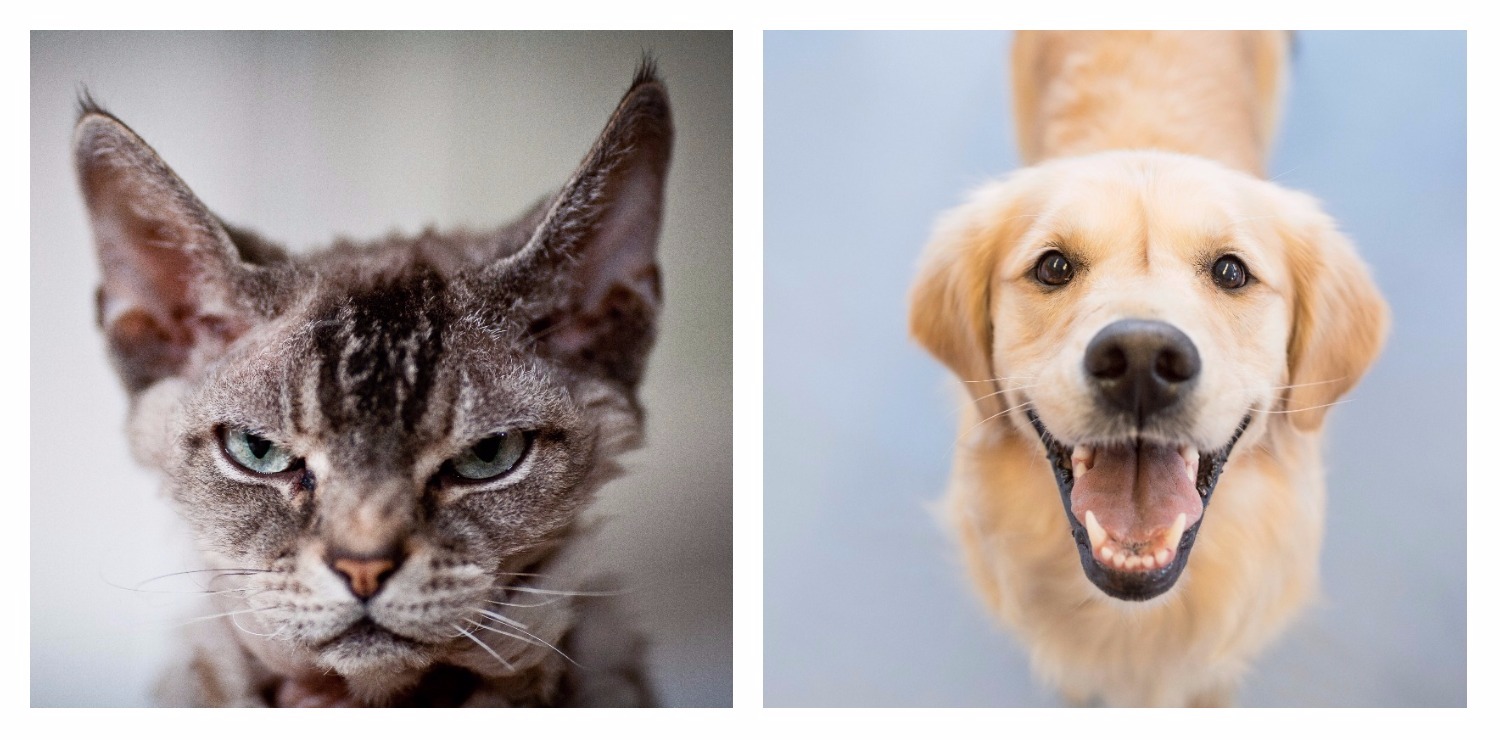
Dogs (it pains the writer, a diehard cat man, to say) seem to have a much more favorable ratio of unique benefits to risks. They may not be as great at lowering stress inherently, but they do a better job of motivating their owners to exercise. People benefit from the motivation of a workout buddy, explains Darling, but we're great at talking each other out of going to the gym. A dog, though "will always want to go for a walk, and they do have that enthusiasm." (Darling notes that some people do walk their cats, but they're a far less common motivation for activity.)
Dogs also seem to have a stronger effect than cats when it comes to reducing allergies in children who grow up with them. They can apparently be trained to sniff out cancer, sense when a diabetic owner is low on blood sugar, or warn epileptics of upcoming seizures, too, although their reliability on these fronts is questionable. But dogs' attunement to human emotions generally makes them strong social support companions of all stripes, especially compared with the cold distance of a cat. Their only consistent risk factor is that they seem to account for more falls amongst the frail.
This is hardly a definitive health and wellness comparison. As Darling notes, although there've long been calls to consider pets in more studies of human health and to author more dedicated studies, there's just not a ton of money available for that kind of work. As such, some studies suggesting one sort of benefit or another only look at cats or dogs, making it difficult to make a straight comparison. Many are too small and provisional to put any credence into at this point. Even some of the best-attested benefits of pet ownership overall, like its effects on stress and anxiety, are still contested. But taking those grains of salt into account, given what we know today, dogs offer more health benefits than cats, and more diverse ones at that. And less ringworm.
That doesn't mean cat types like me should ditch our little murder beasts for dopey dogs. According to Darling, most of the health benefits associated with any given pet are dependent on a human feeling a connection with that animal. "You can't say to somebody, if they're not exercising enough, 'go and get a dog,'" she says, "if they're terrified of dogs." So a cat person may still get a lot more out of a fierce little kitty than he or she would out of a puzzling puppy. And a non-pet-person might wind up more stressed and worse off overall with either. Once again, we fall into the subjective experience trap of the cat-dog debate.
Still, in raw medical data, you've got to give it to dogs. Even if their unconditional love is creepy.
Read This Next: What Dogs With OCD Taught Me About My Own Diagnosis

Matt Furie is crowdfunding a peace-loving Pepe the Frog zine in an effort to rebrand the co-opted character.
The latest episode in the ongoing saga of the alt-right symbol Pepe the Frog finds its original creator, Matt Furie — who recently attempted to kill off Pepe — attempting to resurrect his character from the grave, in order to refashion him in a kinder, gentler image.
Furie has launched a Kickstarter for a comic zine called Save Pepe, which aims to recreate Pepe as “a universal symbol for peace, love, and acceptance.”
If it’s successful, the zine could finally give Pepe’s creator some peace of mind — or at least some financial return — after a “nightmare” year in which he’s seen his creation become a universally recognized symbol of white supremacy.
But it’s far more likely that the attempt will be yet another failed effort to reclaim for the general public a meme that seems to have been completely appropriated by the alt-right.
Furie has spent most of the past year trying to disentangle his now-infamous character, who first appeared in the comic Boy’s Club in 2005, from the white nationalism and racism with which it has become associated.
The alt-right members of 4chan, where Pepe had long been the source of numerous popular memes, chose the frog as their unofficial mascot sometime around 2014, when the alt-right began to grow in visibility online. Sparked by the tensions of the 2016 presidential campaign, Pepe’s image began to spread beyond 4chan and its outlying forums into social media and other more mainstream, accessible sectors of the internet, often accompanying sprees of harassment and targeted hate speech.
Pepe’s image became so linked with white supremacy that in September the Anti-Defamation League dubbed the frog a hate symbol, and Hillary Clinton warned the public about his image. Ever since, Furie has been trying and, many would argue, failing to reclaim his tarnished creation.
Furie first launched his "Save Pepe" campaign with the ADL shortly after Pepe was designated a hate symbol, encouraging the public to reengage with Pepe and “use the frog’s likeness as a force for good.” But as he was trying to “save” Pepe, Furie also clearly wrestled with the impact of his comic’s transformation; he drew a sad comic in the Nib in which Pepe transforms into Donald Trump, then awakens from the nightmare only to blink into nothingness. It’s a blunt statement on the creator’s existential crisis, which seemed to reach its apex when Furie seemed to give up and write off the cause as hopeless, killing off Pepe completely. In May, he published a Free Comic Book Day strip in which Pepe’s friends gave him a proper burial.
Now, however, Furie is attempting to revive Pepe — or rather “re-rebrand” the character, according to his accompanying Kickstarter video — eager to return Pepe’s public image to that of the chilled-out stoner Furie originally envisioned him as.
“He began his life as a blissfully stoned frog in my comic book Boy’s Club where he enjoyed a simple life of snacks, soda and pulling his pants all the way down to go pee,” Furie wrote on the Kickstarter campaign page. “I’d like to ask your help in funding a new zine celebrating a resurrected Pepe, one that shall shine a light in all this darkness and feel good again.”
The problem with all of this, of course, is that by now the Pepe meme, with all its horrible associations, is embedded in the cultural consciousness. Throughout Furie’s efforts to re-rebrand him, onlookers have been skeptical that the promotional effort would do anything but create “more nazi pepes,” while members of the alt-right have continued to proliferate the internet with their interpretation of Pepe. Furie’s comic killing off the frog also prompted mocking by the alt-right and remixes that brought him back to life as a zombie — a way of reminding Furie and viewers that you can’t kill a meme.
There’s also the possibility that Furie’s comic just isn’t as popular with people outside of the alt-right base as he’d like it to be; as of this writing, the Kickstarter has gained just over 100 backers. Cynics within the alt-right have so far seemed to mostly shrug off the idea, with some wondering why Furie didn’t just sell meme-friendly Pepe merchandise for profit and donate the proceeds to leftist causes.
It’s clear, however, that Furie wants the comic to mean something different within the current, divisive cultural landscape — and that he’s not done fighting for the cause.
“Before he got wrapped up in politics, Pepe was an inside-joke and a symbol for feeling sad or feeling good and many things in between,” Furie wrote last year. “I understand that it’s out of my control, but in the end, Pepe is whatever you say he is, and I, the creator, say that Pepe is love.”
We all know that our phones are turning us into mindless zombies, heads down, blithely texting while we wander into traffic. But a new study suggests it's even worse than that: If your phone is within reach, even it's turned off, it's draining your brainpower.
The study, conducted by researchers at the McCombs School of Business at The University of Texas at Austin, involved nearly 800 people. Researchers wanted to evaluate how the mere presence of our phones might affect participants, who were asked to complete a number of computer tasks that required their full concentration. They were randomly instructed to put their phones face-down on the desk, in their pocket or bag, or—horrors!—in a different room. All the phones were turned to silent.
Those lucky enough to have temporarily banished their phones to another room scored significantly better than those with their phones on their desks. There was less of a difference between those with phones in their pockets versus on the desk, but even just having their smartphones out of sight was associated with better scores.
More From Tonic:
"We see a linear trend that suggests that as the smartphone becomes more noticeable, participants' available cognitive capacity decreases," Adrian Ward, the study's lead author, said in a statement. (Cognitive capacity is the amount of mental work your mind can be doing at any one time.) "Your conscious mind isn't thinking about your smartphone, but that process—the process of requiring yourself to not think about something—uses up some of your limited cognitive resources. It's a brain drain." That's something to consider next time you're on a dinner date and have your phone sitting on the table.
Of course, reading those results, you're likely thinking either "that's not me" or "that's totally me," depending on how phone-addicted you are. So the researchers decided to investigate that variable, too. Participants first described how much they felt like they needed their phones to get through the day. Then they were asked to complete the same computer-based tasks. Their phones were face-up on the desk, in a pocket or bag, or in another room. Some were also asked to turn their phones off.
The results were probably what you'd expect. Those who considered themselves most phone-dependent scored worse than the less-dependent—but only if their phones were nearby, on the desk or in a pocket or bag.
That suggests it wasn't some mental habit or cognitive difference that affected the scores. It was the presence of the phone. And researchers found that it didn't matter whether a nearby phone it was face up or face down, turned on or off. Just having it within sight (or easy reach) added a extra cognitive burden to the brain, something like constantly thinking don't pick up the phone, don't pick up the phone, don't pick up the phone. That reduced the participants' ability to focus, leading to lower scores.
"It's not that participants were distracted because they were getting notifications on their phones," Ward said. "The mere presence of their phone was enough to reduce their cognitive capacity." In other words, our phones aren't just a gateway to wonderful distractions. They are the distraction.
Read This Next: How I Escaped the Black Hole of My Phone
We've all been there at our local wifi-equipped cafe, swiping left after left on guys named Chad. And even the guys who get a right swipe can fire off countless sexist and degrading comments, (and unasked for dick pics) leaving you questioning the possibility of finding non-trash anywhere within dating apps.
Bumble, often branded as the "feminist dating app," was supposed to change this with its second-wave feminism/Sadie Hawkins dance mentality. Still, cheesy lines asking to prove a dinosaur called a "tri-Sarah-topless" haven't quite gone extinct yet.
Is there really any difference between 2017's go-to mobile dating apps or is it just marketing? I asked a number of women to compare their experiences and give me the lowdown on how they give out their right swipes on each platform.
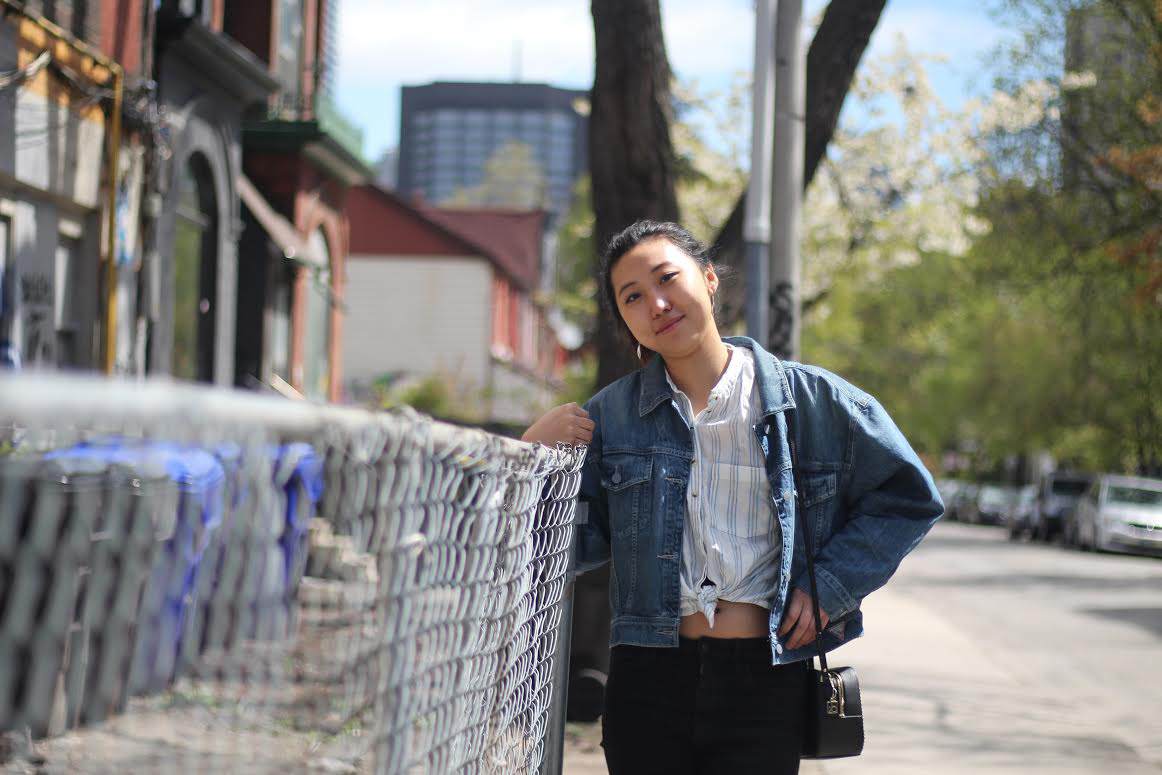
Do you use different pictures/bio on Bumble than on Tinder?
I use the same pictures, but I'm not using Tinder anymore so I put a really funny picture on Tinder of a character from a Chinese TV show, but you know what's funny, I get a lot of matches. They're really desperate. I put a funny and ugly picture and I still get matches. They look normal, I wouldn't say they're good-looking, they're decent, I was really surprised that I still got matches. Someone still asked me out even though. One said it hurts my eyes and asked what kind of drugs I use because he wants to get to my level. I don't believe in Tinder anymore. Honestly, I think guys and girls are more good-looking on Bumble than on Tinder.
Are you looking for something serious or casual? Which app is your go-to?
Casual. Mostly if I talk to someone on Bumble, I'll just exchange Instagram or something and that's it. So I wouldn't ask them out but they wouldn't bother to ask me out. I would kind of hope when I got matches in real life I would start to talk to them, but they never mention anything about asking me out.
What's your technique or strategy to strike up a conversation?
I don't really have a strategy, just, try to find some things we have in common. I tend to check people who go to our school so we have stuff to talk about, like events coming up, or someone we may know like, "do you know this guy from your department?"
How do you decide who to message?
Read their profile, look at pictures, social media. If there are a lot of selfies, it'll give me the impression that they're narcissists. Or pictures of them flexing, they're really dumb. I tend to message those people that give me the impression that they're fun, not narcissistic.
What tips would you give to a guy who wants someone to message them on Bumble?
Work on your profile. Don't put flexing pictures. And don't put group shots, I can't really tell which one is you, if there's a good-looking person and an ugly person. Just a normal picture, don't try too hard.
People call Bumble the feminist dating app. Thoughts?
Feminist? I don't think it works that way. Even if you take the initiative, it's still up to the guy if they're willing to chat with you or not. It's a two-way communication.
Are you the type of person who reaches out or takes the initiative to ask the person out?
Sometimes. It depends. With girls I reach out a lot, with guys, i just hope they come talk to me.
How do you feel about messaging first?
Because I'm from China, here I'm kind of socially awkward. I'm trying to find a subject to talk about. That's the main problem for me, it's a lot of anxiety. I have no trouble talking to people with the same background as me. Here, it's just a cultural thing. I run out of things to talk about.
Recount your best Bumble anecdote.
I've only talked to two people. [One] person was a guy, really good-looking, in a band. So I was trying to ask what's your favourite type of music? And we exchanged information, and I said I like this band, and he just ignored me. I was like, is this the band that you don't like? I met one guy from my school [on Tinder], we see each other everyday and then we matched. He's in visual arts, and he said 'Girl, are you a painting, because I want to draw something on you.'
Oh, ew.
I was like, no.
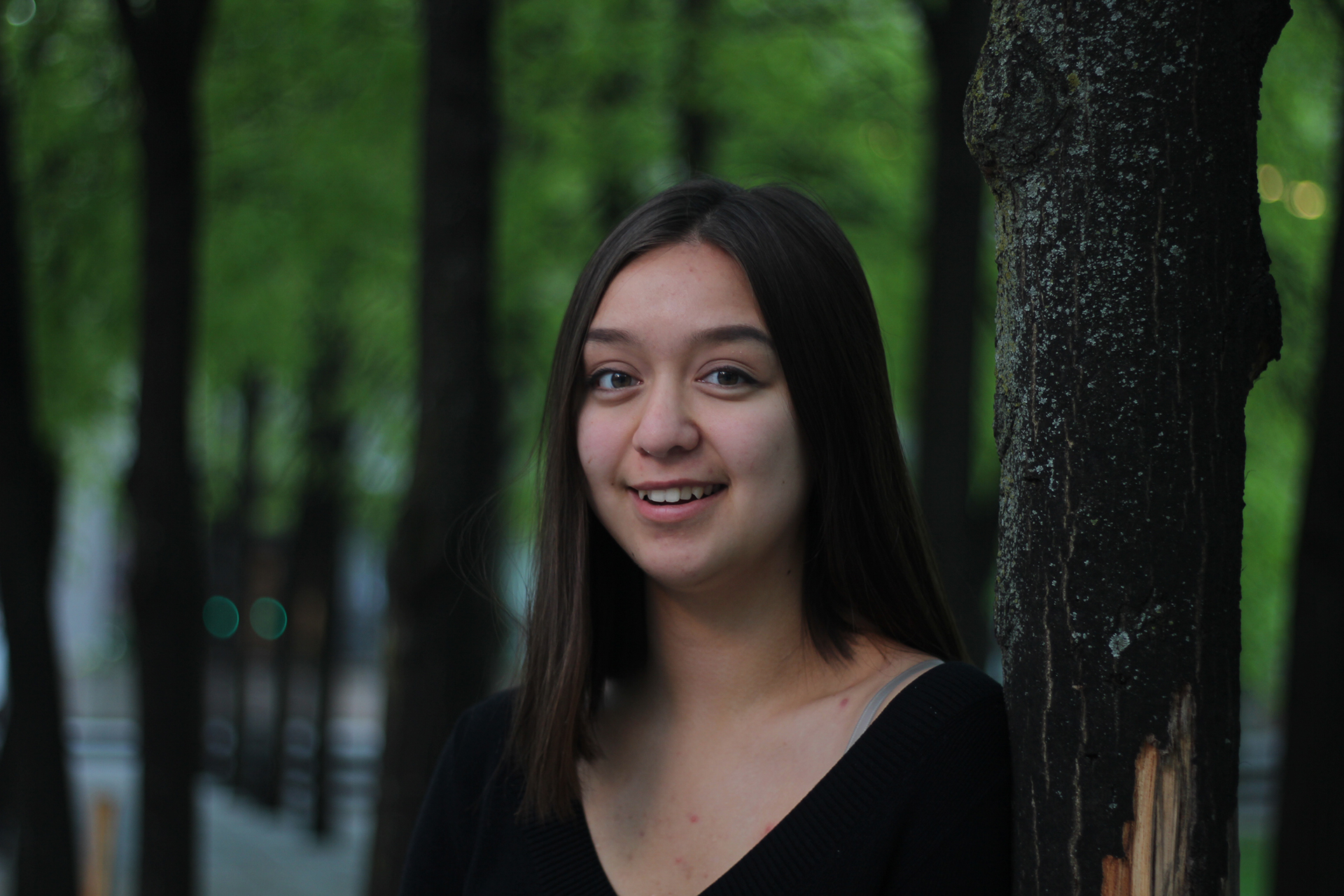
What do you do when you accidentally swipe right or super-like?
When I accidentally swipe right I give the person another chance by looking at their profile a second time. I use my personal filtering system… first, looks for initial chemistry. Second, a bio that really describes who they identify as a person, or gives me ANY sort of hint of intelligence. Third, age, I'm currently in the market for 21-27. Fourth, perspective. I really appreciate when pictures are taken with good perspective.
Do you use different pictures/bio on Bumble than on Tinder?
I used different pictures on Bumble than I did on Tinder. My Tinder only lasted one night, because I felt safer on Bumble. Tinder makes me feel like I'm swimming in a river without a raft.
Are you looking for something serious or casual? Which app is your go-to?
If I'm looking for a hookup or something serious, either way is through Bumble. I am most comfortable and familiar with Bumble's layout. I choose to use it for either a hook-up or something serious, because it's like my neighborhood grocery store. I can grab a snack, or get a full meal. I know where the app is, and what to do.
What was the weirdest bio you saw on Tinder and which was the weirdest on Bumble?
The weirdest bio I've ever seen on Bumble is the kind where the person pretends their bio is like the back of a DVD, and lists all of the awards they've pulled out of their ass. For example: "Person of the Year: my best friend. The Most Handsome Man—my mother."
How do you feel about having to message first?
I feel like I should message first if I need to. I do this because women or men are people, and should do what they feel is right. Men don't have to always start conversation, women can too. I think men who can't message first should remind themselves if they don't do anything, the women might not.
What's your technique or strategy to strike up a conversation?
If I meet someone in person I tell them about how they make me feel, and on apps I begin a conversation based on their bio.
How do you decide who to message? What tips do you have for the men who can't message first?
I message whoever I'd like to when I feel the timing is right, or when I'm feeling lonely.
Do you think Bumble is a heteronormative environment?
I'm not entirely straight, and I've looked at women and thought I'd like to date you and you. But I've also looked through apps like Her, and I think that Bumble and Tinder are used predominantly by straight people. I think there's a huge opportunity for more apps to be made for people within the LGBTQ community. But if you are LGBTQ, you can use Bumble and find results.
Which setting do you prefer?
When I'm single, I use the men and women option to find partners for relationships. I use, now because I'm not single, the BFF section for finding friends, but I find it hard sometimes. I can find friends who are looking for friends, under a certain age group, under a certain distance, I can see their profession, I can filter out things. But a lot of people don't know how to express themselves in their descriptions and they do themselves a disservice. We have to learn to write about ourselves and communicate about ourselves the same way we dress ourselves everyday.
What do you do when you accidentally swipe right or super-like?
Usually if I accidentally superlike or swipe right on someone I'll wait to see if it's a match. If it is I'll check out their profile and if I'm not interested in them I'll probably wait a day or two to unmatch them.
Do you use different pictures/bio on Bumble than on Tinder?
My photos on Bumble and Tinder are the same, but I have an extra photo of my dog on Tinder.
Are you looking for something serious or casual? Which app is your go-to?
I don't really look for hookups, but Bumble seems to be good if you're looking for a threesome. I'd have to say that Tinder is probably better for something serious, mainly just because no one seems to really start conversations on Bumble.
What was the weirdest bio you saw on Tinder and which was the weirdest on Bumble?
Not sure which bios have been the weirdest, there's quite a few. However, I did come across a profile on Tinder where the bio clearly stated it was a couple looking for a third, and it turned out to be the fiancée of a well established Toronto DJ.
How do you feel about messaging first?
Usually I wait, but if I'm bored I might send a message to someone if they haven't sent one to me yet. Or if I notice something in their profile like they like the same sort of music or something like that, I might send something first.
Do you have a go-to opening line?
No, I'm horrible at it. Just a simple 'hey,' and that's about it. I don't go in with any sort of a plan, not really any high expectations. A lot of the times the conversations just fizzle out. Might talk about music, might talk about photography. Typically I don't get an answer back after a while and I'm like, 'oh OK.'
What tips do you have for guys who want someone to message them?
First of all, don't do the whole group photos thing. It gets difficult to tell who you are. I like to say keep it simple. Don't write too much but write just enough so people get a the gist of who you are. Not too many photos, I think I have three on Bumble and that works fine. But more than one definitely, because are you a catfish? I don't know.

How are your bios different on Bumble and Tinder?
I do try to update cool pictures but it's not as often. Bio on Bumble I keep updating so I can find more like minded-people, which I do. I'm talking to amazingly nice guys on Bumble. Tinder I don't care because there's just too many people. Tinder is more diverse too I guess because it so famous which isn't the case with Bumble yet and that's a con.
What do you do when you accidentally super-like?
So if I like someone on the app accidentally I usually leave my phone on the bed and go to the balcony and cry and then I come back and unmatch. I cry a little more afterwards and then move on, I can't bullshit and I think it's fair for the other person too.
Are you looking for something serious or casual? Which app is your go-to?
Hook-ups is Tinder for sure. It's almost a synonym at this point. Bumble sounds kinda cute so I can think of it as a finding-love app. But again there's not a lot of people so I'd say it's more cleaner so far. Although, I know people who've had long term relationships through Tinder as well. Personally I still prefer the traditional "Bumping into each other" kinda meetings though.
How do you feel about having to message first?
I feel it gives me the power to start a conversation that I want to have, then let the person decide if he likes it or not. But I don't have to deal with bullshit.
How do you decide who to message?
I'd do right if he's good looking and some clever bio such as this: 'Lawyer from New York, new to Toronto. Let's argue about something and settle it over karaoke.'
What is your go-to move to talk to somebody?
I just look at a girl's bio and text her accordingly. With guys it would be just 'hey.' Because all you have to do is say 'hey' and they'll send you a dick pic.
People call Bumble the feminist dating app. Is that true?
Honestly, I don't understand the idea behind Bumble. Because the way they've put it is it's a feminist app. But I don't think so, as far as my experience. Because a person will still send you a dick pic after you text them, right? It's not stopping people from doing that. Also, when you look at human behavior, in fact it just makes it worse. Because then the man thinks 'Oh the girl wants to talk to me, she needs it, let's just Netflix and chill.' And the only reason it's clean so far is because there's not a lot of users. Like a lot of times in BFF, I always run out of people. What we can say is Bumble is just different, but there's nothing revolutionary or feminist about it. [The BFF setting] gives women a platform to connect with like-minded women who want to be friends with each other. There's plenty dating apps out there, Bumble BFF gives women a chance to embrace each other as friends and soul sisters, which is really important because only a woman can understand another woman. I say women, since there's only one percent guys on BFF.
What tips do you have for guys who want to be messaged?
It could be something intelligent [in the bio,] no grammatical errors please, and just be honest and say a nice line.
Are you looking for something serious or casual? Which app is your go-to?
If you're looking for something serious, OkCupid is definitely what I would recommend [over bumble or Tinder]. The personality questions and match percentage will let you know if you're compatible with someone. But if you're searching for something casual, hit up Tinder. It's got a reputation as a hookup app for a reason.
Do you use different pictures/bio on Bumble than on Tinder?
I'm not on Tinder so this doesn't apply to me! Since I'm only on BumbleBFF, my photos aren't anything special, just some clear shots that show what I look like. No need to appear super sexy or anything. Same thing applies to my bio—just a quick description of my interests.
What was the weirdest bio you saw on Tinder and which was the weirdest on Bumble?
This one Bumble girl's bio said that she loved asses. Like that was it. Aside from that, Bumble girls seem relatively average. Their bios are usually something about how much they love wine.
How do you feel about having to message first?
I'm pretty neutral about it. I think that there's a little bit of pressure because I never have a good opening sentence. I usually just say 'hey what's up' or something like that. I found that anytime I give a compliment as an opening message, the conversation just dies. I'll be like, "I love your hair," and she'll be like "Thanks," and the conversation will just die there. It can be really hit or miss. But I don't mind messaging first, a lot of people just make a big deal out of it when it isn't really a thing. If it doesn't go anywhere, it doesn't go anywhere.
What's your technique or strategy to strike up a conversation?
I'll try to pick something out of their profile, like if I see that a lot of girls are into yoga, so I'll be like, how did you first get into it? If there's nothing in their profile to go off of, I ask for a TV recommendation or something like that to go off of to at least get it going somewhere. If it doesn't go anywhere from that, I'm not on there for dating right, so I'm not going to chase after someone who doesn't really want to be friends. If after a few messages they still don't sound very interested, I'll just let the conversation die because I'd rather have someone be as invested in the conversation as I am.
How do you decide who to message? What tips do you have for the men who can't message first?
If someone is about to expire, I'll usually message them because I wouldn't want it to go to waste over something like "Oh crap, I forgot to message them." Aside from that, it's not really much of a priority, usually as soon as I make the match I'll send someone a message and respond to whatever comes up first. For me it's like, I'm on here to make friends, I'm not playing a relationship kind of game. Even with relationships, the whole hard-to-get thing, if I'm interested in someone I want someone to know that I'm interested so they can put in the same effort that I put in.
For getting messaged, make your profile really nice. I find that a lot of guys just don't know how to take photos. You don't have to be the most attractive person in the world because beauty is subjective and all. But guys put the most pixelated photos because it's a really small photo and the resolution blows it up, or they'll have it taken from a really low angle and suddenly they get like five double-chins. I also hate blank bios, because I don't know if I have anything in common with them, you know? To actually see if you'd be compatible in any way. Like any shows you're watching or if you like to go hiking, because at least it's something to go off of instead of a blank bio or a random pickup line.
When did you start using Bumble and why?
Literally like, four days ago. I was looking at my iMessage and I realized the only people that I've talked to in the past two weeks are my boyfriend, his family and my family. I was like 'Wow, I have no friends.' It's always hard making friends because you can't just go up to a random stranger on the bus or street and be like, 'Hey what are you doing?' I've had good luck with online dating in the past so I thought I might as well give it a shot and see if I can find a friend.
People call Bumble the feminist dating app. Thoughts?
I don't think it would be called feminist necessarily, but I do think it's really dope that women get to message first. I don't think it completely filters out creeps, but it gives women the power and also it kind of pushes them forward to be the one to message first. I know so many girls who just won't message first, I don't know if it's a pride thing, but they just won't do it. So this way you get yourself out of your comfort zone, and maybe you'll meet someone who's cool.
How do you feel about having to message first?
I'm pretty neutral about it. I think there's a little bit of pressure because I've never had a good opening sentence, I usually just say 'hey what's up' or something like that. I find that any time I give a compliment as an opening message, the conversation just dies. I've mostly been using the BFF setting, so she'll be like 'thanks' and the convo will just die. I feel like it's really hit or miss. But I don't mind messaging first. A lot of people just make a big deal out of it. If it doesn't go anywhere, it doesn't go anywhere.
These interviews have been edited for length and clarity purposes.
Follow Sarah Krichel on Twitter.

‘Sorry to Disturb, but can one of you hand me out that light gray topcoat? ‘
I suppose we’ll just have to say Philip Larkin’s poem was wrong. Sexual intercourse didn’t begin “in ninteen-sixty-three / Between the...

If you read media coverage of Mark Zuckerberg’s national tour, it’s easy to get the impression that the Facebook billionaire is running for president. Last week, Zuckerberg visited a truck stop in Iowa. He previously had dinner with an Ohio family and visited a Ford plant in Michigan.
Given the centrality of these three states to presidential politics, and the campaign-like nature of these activities, Zuckerberg’s trip has generated a lot of social media speculation about a possible presidential run. And some well-connected insiders say it’s completely plausible that Zuckerberg would seek the presidency.
“‘He wants to be emperor’ is a phrase that has become common among people who have known him over the years,” technology columnist Nick Bilton wrote in January.
“Most people who are running for president usually declare at this time of the campaign cycle that they’re not,” wrote Minnesota Public Radio’s Bob Collins after Zuckerberg made several stops in the Twin Cities. “And we dutifully report that they say they’re not, forcing you to choose between what they say and your lying eyes.”
But Zuckerberg says he’s not running for office. He says he simply wants to get to know Americans — most of whom are Facebook users — better.
And that’s entirely plausible. After all, the kind of outreach Zuckerberg would do in a presidential campaign isn’t that different from the kind of outreach he’d do if he were simply trying to understand Facebook users better and build public goodwill for his massive social media site.
Mark Zuckerberg’s visits to swing states and early primary states — Iowa, Ohio, Michigan, North and South Carolina — have gotten most of the media attention. But if you look at the full map of where Zuckerberg has gone, the picture looks different:
/cdn.vox-cdn.com/uploads/chorus_asset/file/8753875/Screen_Shot_2017_06_26_at_11.23.27_AM.png)
Zuckerberg has visited deep blue states like Washington, Illinois, and Rhode Island and deep red states like Nebraska, Indiana, and Mississippi — none of which vote early in the primary process.
On the other hand, many of the events on his tour had — as the Atlantic’s Adrienne LaFrance puts it — “a campaign-esque vibe.”
“Today we drove down to Waco and stopped in smaller towns along the way,” Zuckerberg wrote about his time in Texas in January. “I had lunch with community leaders in Waxahachie who shared their pride in their home and their feelings on a divided country. I met young moms in West who moved back to their town because they want their kids to be raised with the same values they grew up with. And I met with ministers in Waco who are helping their congregations find deeper meaning in a changing world.”
The Texas swing was one small part of Zuckerberg’s overall trip:
A lot of people think Zuckerberg is preparing for a possible presidential run. Zuck himself denies it, insisting that he’s just trying to get to know the country — and, importantly, American Facebook users — better.
So who’s right? It’s hard to tell because the goals of a presidential campaign and a corporate goodwill tour are actually quite similar. A presidential candidate wants to meet a lot of ordinary voters so he can learn more about their thoughts and concerns. He also wants to be seen as meeting with a lot of ordinary voters. When a presidential candidate meets with a truck driver, assembly line worker, or teacher, he seems a little more relatable to every other truck driver, assembly line worker, and teacher in the country.
As the CEO of one of the world’s most influential companies, Zuckerberg has a lot of the same concerns. Most Americans are Facebook users, so almost every meeting Zuckerberg has helps him understand Facebook users better. And if he can make himself well-liked by the public, that public goodwill will make it easier for Facebook to weather future controversies.
And that’s important because it’s practically guaranteed that a company of Facebook’s size and influence will eventually come under public scrutiny. Already, the company has faced criticism (from Vox and others) for the proliferation of fake news on its platform, and people have blasted Facebook for doing too little to scrub violent videos from the site.
There’s no way a company of Facebook’s size and influence can completely forestall this kind of controversy. But having a CEO with an earnest, folksy public persona can serve as a valuable insurance policy when the inevitable controversies come up. People are far more likely to cut a company slack if they believe its CEO is someone who cares about ordinary people and tries to do the right thing.
And that’s why it’s hard to say if Zuckerberg’s travels this year are an unannounced presidential campaign or merely a corporate goodwill tour. The two projects have such similar goals that we should expect them to look similar in execution.
And in a recent tweetstorm, former Ticketmaster CEO Nathan Hubbard suggests another reason Zuckerberg may have undertaken his national tour.
“Zuck woke up on Nov 9th acutely aware that FB had facilitated a new shift he didn't foresee or understand,” Hubbard tweeted. “That's terrifying to a founder.”
Hubbard argues that Zuckerberg woke up after Donald Trump’s election and realized that he didn’t understand American Facebook users as well as he thought he did. Critics charged that Facebook had facilitated the spread of fake news that may have contributed to Trump’s victory.
So, Hubbard says, Zuckerberg has “ventured out into the world beyond his bubble to do field research.” He’s trying to meet as many Facebook users as possible — from as many backgrounds as possible — to help shape his thinking as he considers how to improve Facebook in the next few years.
Near the end of my conversation with Jae Woong Wang, a researcher and spokesperson for South Korea's Sooam Biotech, he asks me to tell the world that they shouldn't stuff any recently deceased pets they hope to have cloned in freezers. It renders cell matter impossible to harvest, which isn't good news if you're in the business of cat and dog duplicates. It's hard to let a grieving family down easy, especially after they've made the day-long trip across the Pacific only to discover their newly dead companion won't be getting a genome-generated second chance.
"You have to preserve the body as long as possible without freezing," says Wang. "That's a mistake a lot of people make. When water freezes, it punctures all the cells, and the chances of cloning becomes extremely low. It's a frustration we're constantly dealing with."
Sooam Biotech's founder, Hwang Woo-suk, ran into significant controversy in 2004 when he fraudulently claimed to have cloned human embryos, but the company has stayed in the business for over ten years. Sooam has fulfilled contracts with the commercial farming industry—cloning livestock for breeding and bottom-line purposes—but their pet cloning division is a marketplace built on a more spiritual communion. It'll take $100,000 to reunite with a reincarnated version of an animal you loved.
Their cloning process is more straightforward than you might think. A Sooam clerk will meet you at the Seoul airport and retrieve a fingernail-length biopsy of your dead pet's flesh. A donor dog or cat is selected from the company's kennel. Their eggs are flushed out, gutted of their genetic information, and fused with DNA harvested from the biopsy. If the process works, the retrofitted egg is inserted into a surrogate mother. "Until the point where they actually meet the dog, [the customer] is in a very happy disbelief," says Wang. "But once we deliver the dog, they usually burst into tears."
The jury is still out on what a clone actually is. It's a conundrum that's raged ever since Dolly, the famous duplicated sheep, was brought into the world in 1996. Genetically, they'll be a mirror image of the source animal, an asexually-wrought son or daughter built in the flash of nuclear transfer. But will the clone share the same emotions or personality tics? That's difficult to say. Research on cloned cows and pigs has shown distinct differences in personality—and even looks—from the animal of origin to its clone.
As such, New York Magazine's Science of Us blog called pet cloning "a laughable, extravagant waste of money," when news broke last year that media tycoon Barry Diller and fashion mogul Diane von Furstenberg had their Jack Russell terrier cloned, even though the wealthy power couple seemed pleased with the two puppies they got as a result. And, in an interview with Scientific American, stem cell biologist Robin Lovell-Badge maintained that cloning a pet was, flatly, "stupid." "You're never gonna get Tibble back, or whatever," he added.
But companies like Sooam deal in love—or more specifically, the faint chance that you might love again. Because losing a dog or a cat is really goddamn rough. "A beloved pet is much like a family member," reads the pitch on ViaGen Pets, a Texas-based commercial cloning outlet that offers a pet-cloning service. "The unique life-enriching bond, the love and companionship—a truly special pet provides us a unique sense of comfort and life-enriching fulfillment which is nearly impossible to extend beyond your pet's natural lifespan. Until now."
It was a convincing enough argument for Doug and Michelle Shields, and their fluffy white Maltese, Guinevere. Gwen lived 16 and a half years before she died after a seizure. The Shields had mulled the idea of preserving her genes in the past, but it wasn't until the fresh aftermath of her death that they made the decision to start the cloning process. (Luckily, the veterinarian put Gwen's carcass in a refrigerator, not a freezer or a cremator.)
"We're what you'd deem to be animal people. We have a parrot and another dog we adopted," says Michelle. "But Gwen was just an amazing, amazing, amazing dog. Just unbelievable. She just had a personality. Everyone loved her. There was no replacing her. So if I could get her back, or her personality traits, I would do anything to do that."
The Shields reached out to PerPETuate, an animal genome preservation business run by Ron Gillespie, who used to work at the cattle genetics company ABS Global. Right now, he's partnering with ViaGen, and recently, their laboratory delivered four clones sourced from a genome Gillespie first harvested in 2000. He happily preserved Gwen's DNA, and the Shields family is currently deep in the cloning process, one Gillespie remains optimistic about.
"[Customers] see the whole procedure as a healing journey."
"Dog owners [throughout history] have said 'This is the best dog I've ever had,' and I'm going to breed them with another dog to get a puppy that's as closed to [the original] as possible," Gillespie says. "That's a very natural, common thing. Selective breeding has been going on for years. This is the ultimate breeding tool. You're not just getting half of the genes, you're getting 100 percent of them. It's an understandable step in the evolution of breeding."
Gillespie's currently working with a client with an autistic son that finds peace in the presence of an old family cat. The client is, of course, terrified of what might happen after the cat dies. He's tried other animals (and other cats), but nothing musters the same pacifying effect. So instead, he holds out hope that maybe he can give his son some peace with a long line of duplicates.
"This cat is of exceptional value to this boy and to this family," says Gillespie. "They tried the brother of this cat, and the boy totally rejected his brother. So they're going to clone him. And what's gonna happen? Is this cat gonna be able to substitute? If it is, think about the significance of that. People don't think in those terms. They just think it's just rich people with a lot of money."
Gillespie tells me that 2017 has been one of the busiest years for PerPETuate since he started the business in '98, and speculates eventually pet cloning will become more common as the prices get more affordable. He thinks ViaGen is a good first step, as they offer a cloning service domestically for $50,000—a bargain compared to Sooam's six figure entry fee. But obviously, that price will have to come down quite a bit more for cloning to truly hit the mainstream.
In a way, Gillespie has been banking on cloning become more accessible for the entirety of his career, since his business is basically built around preserving genomes for an era where it does become more economically viable for the average pet lover. Until then, it's not just the Diane von Furstenbergs of the world who are writing big checks to bring back their beloved pooches: as of the Fall of '15, Sooam Biotech estimated it had cloned some 600 dogs, not all of which had wealthy owners. Jae Woo Wang tells me some of their customers liquidate assets to afford the cloning process. Priorities tend to shift in the midst of grieving.
ViaGen's testimonial section illustrates that, no matter the cost, its customers believe it's money well spent—dozens of former clients there have drafted sonnets in tribute of the preserved genomes of their dead pets and the hopes for the possible clones they may one day produce. "They see the whole procedure as a healing journey," says Gillespie. "At first it's very difficult—your dog just passed away, you have to go to a vet to get a biopsy done and send it over, or sometimes travel here. You have to wait for us to give the confirmation that the cells are OK. All of that is very, very stressful. But once they actually have the puppy, that's when they unload."
Michelle and Doug Shields just want their dog back, and look at the price tag as a worthy luxury. Some more time with Gwen is a far more important splurge to them than a trip to Italy or a Country Club membership. Michelle says that most of her friends understand, because they all loved Gwen too. "We're just people who really love our dog," Michelle says.
Follow Luke Winkie on Twitter.

Anyone who’s experienced social anxiety has been told “calm down, it’ll be fine” thousands of times over, and has probably tried saying it twice that many times to themselves. Has it ever worked even once? No! Not one time. Never. However badly we might want to believe that anxiety can...More »

You'd think an Oscar-winning animated short starring Tom Waits would be well known in certain circles, especially when it's entitled "Tom Waits For No One".
But it appears this 1979 short by The Lyon Lamb Company was hiding out on the edge of the pop culture infosphere waiting to reappear and blow our minds.

Here's a little background on this obscure animated short:
“Tom Waits for No One” is the title of an absolutely amazing animated short that was made in 1979 by the Lyon Lamb company, the Oscar-winning technological innovators behind the Lyon Lamb Video Animation System which allowed animators to see immediate pencil tests of something without having to shoot it on film.
Through a series of lucky events (seeing Tom Waits in his memorable TV appearance on Fernwood 2Night, then a few weeks later noticing Waits’ name on the marquee of the Roxy nightclub after a screening of Close Encounters of the Third Kind was sold out), John Lamb came to direct Waits in a rotoscoped animation for his song “The One That Got Away” to demonstrate their new device for the film industry.
Over thirteen hours of video was shot and edited down to 5,500 frames, which were then individually re-drawn and hand-painted onto celluloid acetate. What today would take a comparatively trivial amount of time then took the best in the business about six months of hard work.
adly, the impressive short had few outlets for people to see it, preceding MTV as it did by just a few years. The film remained in obscurity until it was uploaded to YouTube a few years back, and Lamb—who kept nearly all of the film’s elements safely stored away—started a Kickstarter to fund a remastering in modern day video resolution. There’s also a book, Tom Waits for No One: The Illustrated Scrapbook, that was published in 2014.
Read 'Tom Waits For No Man': Obscure Oscar-Winning Animated Music Video From 1979 here
When we choose to intertwine our lives with a partner, we ask them to accept our shortcomings along with our positive traits. But, despite the affection, we might feel toward someone, some hurdles are simply too high to clear.
When it comes to irreconcilable differences, few things eat away at a relationship more than a significant other not getting your sense of humor, hating the objectively shitty music you love, or being ambivalent about the book that changed your life. We asked people to tell us about the movie, band, or other pop-culture artifact that ultimately sunk their relationship
My ex asked me who Ginuwine was. I said, "The reason we're breaking up."
-Haley, New York City
In college, I broke up with a girl because she thought Borat was annoying.
- Max, Pittsburgh
About a month into dating, we both ended up at a John Mayer show, in different sections because I got tickets from work and he bought them months prior. I am a huge Ben Folds fan and primarily went to the show to see his opening set. My boyfriend was getting there late, but we were texting and planning to meet between sets. It took him a long time to get there, and I was eager to leave because I had an early morning the next day. I decided to bail out on the John Mayer set and let my guy know that I was heading home.
He then called me in a panic. "You're leaving before John Mayer?!" I explained that I had a long drive the next day and had already seen John live once. "But, you haven't seen him headline. You can't leave before John Mayer!" I could tell he was super worked up, and I was really taken aback. I apologized and told him I'd see him when I got back into town.
Weeks passed, and he didn't text or call me. I tried to reach out and only got short responses or no response. I'd try to make plans, and he always had an excuse. I was pretty upset at first, but eventually cut my losses and moved on. A few years later, he reached out apologizing for falling off the planet. He never outwardly said it was because of John Mayer, but I contend to this day that he couldn't get past my lack of Mayer loyalty.
- Ashley, Los Angeles
She had a subscription to US Weekly.
- Fletcher, Washington, DC
A couple months ago, I was dating a woman from Dallas. For some dumbass reason, I saw the Mobb Deep vs. UGK debate on the TL and threw it to her. (Eschewing all biases as an NYC'er, I personally think UGK is deserving of much plaudits and respect, but Mobb Deep is better.) It turned out that she didn't KNOW who Mobb Deep was. Then to rile me up she said they were irrelevant. It wasn't just that she didn't like them, or didn't respect their impact; it was more that the debate was the epic conflict original New Yorkers have with transplants: If you don't like it so much, go back home. It's not like we need you. The debate took on other forms, like how it was weird that she liked St. Patrick's Day (no racist Irish cops in Dallas) or how I never ate grits (we don't eat that in the Caribbean). The way we broke up is another (unnecessarily) long story, but the Mobb Deep vs. UGK debate was the beginning of the end.
- Ben, Brooklyn
My ex and I were at a party with some of my friends, and we were talking about music. I mentioned I didn't really like the Beatles, and he said I was just saying that to be cool. We went back and forth for a while. Him insisting I liked them, and me insisting I didn't. It turned into me getting furious because he kept saying "agree to disagree" as if there were no way I could possibly dislike the Beatles and that I would realize I was wrong. The way he insisted I didn't know what I was talking about when it came to my own feelings on something annoyed me so much I started shutting him out and eventually broke up with him.
- Alex, Denver
I dumped someone because she refused to watch Back to the Future because it seemed "so long and old."
- Preston, Toronto
When I was a 24, I started dating a girl from Raleigh. She came from a relatively wealthy family in the South, and I came from a lower-middle-income family in Ohio.
We had been dating for a few months when my younger brother came to visit from Ohio. One night, we all watched Harmony Korine's Gummo, which at its core is about growing up poor in rural Ohio. Near the end of the movie, the main character and his friend are shooting a dead cat with BB guns in the middle of a field. My ex asked, "Why are they doing that?" In unison, my brother and I both said, "Because they are bored."
She then argued that there are plenty of things they could be doing instead, not realizing that every option she put forth cost money or required access to services that were simply not available to kids like me. Nothing she said was mean or meant to demean the poor, but it was hard to put myself in her shoes because to me, mindless destruction seemed like a perfectly normal thing to do as a bored 12-year-old.
Throughout the conversation, my brother kept looking over at me with these "what the fuck, Mike?" eyes. It was at this point that I realized that things were probably not gonna work out for me and this girl. We broke up a week or so later.
- Michael, Cambridge, Massachusetts
He thinks the Fray is a good band.
- Sara, New York City
I knew one of my exes was wrong for me when he described me as "quirky like Juno." I was seriously shook and told him that I don't think he understands who I am as a person. He didn't get why I was appalled (a.k.a he had no taste).
- Diana, Los Angeles
I dated this girl for a few months, and things were going fine until she referred to Radiohead as "that weird music" that was "too sad." I figured that since I also tend to generally be "weird" and "too sad" maybe this isn't gonna work.
- Nathan, Philadelphia
He was more into Starcraft than my vagina.
- Jennifer, San Diego
Interviews edited for length and clarity.
Follow Justin Caffier on Twitter.

Corría el año 1971 y en Madrid se imponía poco a poco el invierno. Era el mes de noviembre y en la galería Theo se exponían veintiséis grabados de Picasso correspondientes a la «Suite Vollard». El acontecimiento fue aireado por la prensa más reaccionaria como la penetración definitiva del «arte degenerado y el marxismo». Cada semana había atentados contra personajes vinculados a la izquierda o librerías, aunque el fenómeno del terrorismo negro, al estilo italiano, alcanzaría su cénit en dos o tres años, cuando decenas de librerías y galerías serían atacadas por grupos fascistas. El viernes 5, un grupo de asaltantes autodenominado «Comando de lucha antimarxista» irrumpió en la galería justo cuando se inauguró la exposición y destruyó veinticuatro de los grabados; dos se salvaron. Entraron seis hombres, todos ellos vestidos de azul, con boinas y gafas de sol al estilo «camisa azul». Amenazaron a la encargada con navajas e insultos de «cerda marxista», mientras el primer visitante de la exposición era apaleado. Luego arremetieron contra las obras del pintor, derramando pintura roja y un líquido corrosivo contra los cuadros, veintisiete en total.

Panfleto a favor de Galván repartido durante el encierro en el Museo del Prado
Picasso y su obra se habían convertido en un arma política, o al menos lo veía así el franquismo. El crítico de arte José María Moreno Galván fue condenado a dos años de prisión por dar una conferencia sobre Picasso con motivo de su 90 cumpleaños en la Facultad de Ciencias de la Universidad Complutense. Galván era muy conocido como crítico de arte en la revista Triunfo. Durante el acto, al parecer, alguien desplegó una bandera roja con la hoz y el martillo. Galván fue procesado y el Tribunal Supremo, en una vergonzante sentencia, confirmó la pena.

La noticia publicada en la revista Triunfo. Arriba, a la derecha, estado en el que quedaron algunos de sus cuadros
Horas después, ocho personas fueron detenidas sospechosas del asalto. La Vanguardia, dos días más tarde, dedicó al atentado toda una editorial:
MAL CAMINO
¿Qué curiosa y vetusta concepción de la lucha ideológica tendrán esos mal aconsejados jóvenes de un titulado «Comando de lucha antimarxista», que, en la tarde del 5 de noviembre, entraron con navajas en una galería de arte madrileña y, tras amenazar a la encargada, destrozaron veinticuatro grabados de Pablo Picasso y arrojaron sobre ellos pintura roja y ácido?
La misma, por supuesto, que pusieron de manifiesto en repetidas actuaciones anteriores contra varias librerías madrileñas. Sin duda juzgan eficaces los libros y los grabados —de otro modo no se esforzarían en destruirlos—, pero al parecer no han aprendido otro uso y manejo de esos poderosos instrumentos que el de despedazarlos, cubrirlos con pintura roja y corroer los fragmentos con ácido. Es una triste confesión de debilidad la que se esconde en el interior de tanta violencia.
Pero que haya personas que cometan o aconsejen tales desmanes no solo es de lamentar por el daño que ellas mismas se infligen y por el que producen directamente. Es de lamentar también el descrédito y la desmoralización que estos abusos, repelidos y reiterados, difunden. Mientras unos recuerdan las lejanas «partidas de la porra», otros se inquietan por la falta de reacción pública y por la tardanza en identificar a los autores y obtener de ellos, cuando menos, una explicación mínimamente razonable que permita averiguar de dónde han sacado tales criterios.
Por fortuna, la reacción ha sido esta vez inmediata. La Policía ha detenido ya a algunos miembros del grupo. Se espera que se haga luz sobre otros desmanes y excesos cometidos a lo largo de los últimos tiempos por este u otros «comandos» parecidos. Pero lo que importa es que todo el mundo comprenda que tales actitudes y tales métodos desdicen de un país civilizado y, cuando se prolongan y arraigan, a todos hacen daño. Y que el primer perjuicio es para aquello que los agresores pretender defender.

ABC y la noticia del asalto en su edición del 6 de noviembre de 1971
Los fascistas, sin embargo, no tuvieron muchas precauciones a la hora de realizar la acción, que se valoró en seis millones de las antiguas pesetas, una auténtica fortuna. La mayoría de ellos tenían posiciones de prestigio en la sociedad madrileña. Había de todo: un antiguo confidente de la policía política, hijos de acaudalados franquistas o dirigentes de sindicatos estudiantiles de extrema derecha.
Después del asalto solamente dos grabados quedaron indemnes: el «Minotauro ciego guiado en la noche por una niña» y el «Escultor y modelos agrupados junto a una cabeza esculpida». Fue casi la ruina para la galería. El seguro no pagó por tratarse de un atentado político.
Rápidamente, numerosos artistas, activistas e intelectuales convocaron un acto de rechazo en la librería Antonio Machado, donde se celebró un homenaje a Picasso y una exposición de un centenar de obras de miembros de la Asociación de los Plásticos de Madrid. La exposición duró apenas unas horas. Se inauguró por la mañana y al mediodía estaba ya clausurada por la policía. También la librería había sido objeto de atentados fascistas, lo mismo que otras como la conocida Visor. El «Comando de lucha antimarxista» tuvo una existencia efímera, aunque su testigo sería recogido por un sinfín de grupos ultraderechistas que no dudarían en usar la bomba o el cuchillo contra los disidentes, empezando por los «amigos» de Picasso. En 1998 la Suite Vollard se expuso en la Academia de San Fernando. Por entonces, en los periódicos se aseguraba que era la primera vez que venía a España. Grave error de la desmemoria.
Picasso siguió siendo blanco del terrorismo fascista. En Barcelona, el Taller Picasso, situado en la calle de la Plata, fue casi destruido al lanzarle varias bombas incendiarias y uno de los empleados recibir una puñalada en el cuello por parte de un fascista. En casi cualquier lugar en que se intentaba exponer a Picasso se producían altercados, bombas y amenazas.
¡Ah! ¿Qué sucedió con los dos cuadros desaparecidos? Más tarde se descubrió que habían ido a parar a las colecciones privadas de varios reconocidos falangistas, a los que al parecer no les importó su supuesto rojerío.
Datos conocidos sobre Carmen de Mairena: tiene 84 años, antes era un hombre y se llamaba Miguel Brau, pasó por la cárcel durante el franquismo por “maricón”, trabajó de cupletera, ejerció de prostituta, tiene una cantidad absurda de silicona en los labios, se hizo famosa por aparecer en ‘Crónicas Marcianas’ (en calidad de monstruo de feria), protagonizó una indescriptible película dirigida por Javier Cárdenas, rodó un filme porno con el aún más indescriptible Dinio, etc, etc, etc.
He aquí una vida tan exagerada que podría llegar a tapar algo que resulta fundamental para entenderla: Carmen de Mairena es pobre como una rata desde tiempos inmemoriales.
De todos estos asuntos se ocupa la dibujante Carlota Juncosa en ‘Carmen de Mairena. Una biografía’, publicada ahora por Blackie Books.
Juncosa pasó un año visitando regularmente al clan Mairena, formado por la cupletera y una serie de personajes -¿amigos?, ¿asesores?, ¿timadores?, ¿macarras?, ¿drogotas?, ¿sinvergüenzas?, probablemente un poco de todo- que pululan por las infraviviendas cochambrosas de la otra Barcelona, fuman grifa sin parar y no tienen donde caerse muertos. "Es un poco el hay que sobrevivir a toda costa porque la vida no vale nada", resume Juncosa a este periódico.
No se puede decir que Juncosa lograra rascar mucha información a Mairena, aunque tampoco se puede decir que fuera culpa suya: pedir a Mairena que dijera más de dos frases seguidas con sentido era mucho pedir. "Hubo momentos en los que pensé tirar la toalla. Quería hacer una biografía al uso y que tuviera sentido, y me encontré el caos y la confusión", aclara la autora.

Pero la información está en los detalles, y los detalles son bien sórdidos, como refleja la descripción del primer encuentro con la diva: “He venido con la idea de encontrarme a la Carmen de la tele y resulta que lo que me encuentro es un panorama bastante triste. La casa está sucia y llena de muebles y cosas apelotonadas, Carmen está arruinada y tiene el aspecto de una muñeca de trapo vieja y polvorienta… Su constante goteo de babas, el tío yoncarra fumando porros a medio metro y la mugre dejan de importar...”.

“Somos gente de la calle y no vamos de estrellas. La estrella es poder comer”, cuenta en el libro Alfonso, representante de Mairena, y da en el clavo: la de Carmen de Mairena es una historia de supervivencia; lo que para cualquier otra persona hubiera sido su momento más bajo -rodar una película en la que Javier Cárdenas se ríe de ella y de otros ‘freaks’- para ella es su momento más alto, tanto por ‘reconocimiento’ como desde el punto de vista económico, que al fin y al cabo es lo que importa cuando una no ya es que no llegue a fin de mes, sino siquiera a principios de semana.
"Hay que hacer un ejercicio de empatía y ponerse en su lugar: estaba acostumbrada a relaciones chungas del Barrio Chino, y de pronto se encuentra un chico guapo de la tele que le hace caso; Cardenas es su amor platónico", aclara la autora.
Juncosa trata de calcular cuánto dinero ingresa y gasta la cupletera en un mes. Recibe: pensión (300 euros), asistencia al programa de Toni Rovira (60 euros), actuación en Danzarama (180 euros). Paga: alquiler (45,50 euros), grifa (50 euros), agua, luz y gas (¿100 euros?), comida/asistencia social (0 euros). Y concluye que debería sobrarle dinero, pero que uno de sus amigos se lo sisa. Y sí: no están las cuentas de la Mairena como para que le anden birlando pasta…
Sodoma y EspañaMairena podrá ser todo lo transexual que uno quiera, y haber sufrido muchas penalidades durante el franquismo por homosexual, pero también es una señora muy mayor (y muy reprimida) que se revuelve al ver cómo son las cosas ahora: “No puede ver que dos tíos se estén morreando y agarrando por la calle. Lo entiende a puerta cerrada, pero en público no lo ve con buenos ojos”, dice su representante, que mantiene la siguiente conversación con Carmen -reproducida por Juncosa en forma de viñeta- mientras ven a dos tíos dándose el lote por la calle:
-¿Y esos dos maricones de mierda? ¿Qué hacen?
-¿Qué pasa? Pero si tú eres maricón.
-Si las maricones y putas han existido siempre. ¡Pero no por la calle como ahora!
Y así son un poco las cosas con Carmen de Mairena: entre el caos y la contradicción en términos. "Como Carmen es para algunos un emblema de la libertad, esperaba encontrarme a alguien abierto de mente, pero no, todo lo contrario. Su actitud tiene una explicación: siempre ha sido tratada de manera cruel. Cuando Carmen dice que 'ser maricón era contra Franco', hace suyo el discurso del agresor, como si mereciera el castigo y el maltrato por ser como era. Se acostumbró a hacerlo todo a escondidas porque las cosas que hacía eran 'indignas'. Y ahí se quedó, en el rol de persona indigna... a la que sus conocidos maltratan habitualmente", zanja Juncosa.
Sorpresa veraniega: 'Mala mujer' es la primera canción del trap español que puede considerarse un éxito. Su vistoso vídeoclip, grabado en México, supera los tres millones y medio de visitas en la versión oficial de Youtube (a los que habría que añadir muchos clics de versiones no oficiales). Tiene seis millones de reproducciones en Spotify y suena en Los 40 Principales, donde el presentador estrella Tony Aguilar invitó a Tangana a un programa que se emite para todo el mercado latino.
También le han entrevistado en la cadena SER, en realidad un tenso encuentro donde Antón Álvarez Alfaro -su nombre real- desplegó una evidente incomodidad y falta de cintura a la hora de relacionarse con la presentadora. Rechazó preguntas, contestó a otras con desgana y demostró desconocer el campo de minas que es opinar sobre relaciones de género en 2017. “No soy ni machista, ni tampoco feminista, soy transexual”, espetó a la periodista. Twitter le contestó con un aluvión de zascas, desprecios e insultos.
El problema de vender 'Mala mujer' como el primer gran éxito del trap español es que su autor no lo considera trap. Y tiene toda la razón: estamos el típico tema de pop latino, moderadamente pegadizo, que trata un asunto tan manido como la perversidad de las mujeres y su frialdad al tratar a sus parejas. ¿Por qué ha levantado tanto revuelo? Seguramente por la expectativa de saber si estamos ante una escena musical nueva, capaz de disparar las ventas del pop patrio. La mayoría de medios creen que el trap es el sonido del futuro, el de los milennials, la banda sonora de la próxima década. Quizá más.
No somos ninisEl trap español cuenta con el favor de las tribunas cool, como demuestra que haya sido incluido en las programaciones de festivales de éxito como Sónar, Primavera Sound y Benicàssim. También ha interesado a medios musicales hípster como Tentaciones, Radio 3 o Jenesasipop. Su sonido estadounidense, la alergia política y el toque fashion encaja perfectamente en el discurso dominante en la prensa de tendencias. Sin embargo, también ha despertado recelos clasistas, crudamente expuestos en un artículo de La Vanguardia titulado 'Trap: el rap de los ninis'. Ya saben, los jóvenes presuntamente pasotas y desmotivados que ‘ni estudian ni trabajan’. En el reportaje se atribuye a esta escena “el potencial para dar voz al vértigo posconsumista de las hordas de adolescentes y ninis, más o menos marginales pero permanentemente conectados”. Ya saben: los pobres y parados son “hordas”, “masas”, “turbas”, no personas. El desprecio a la maltratada juventud actual, consciente o inconsciente, no es exclusivo de popes de El País como Antonio Navalón.
Como era de esperar, C. Tangana objetó seriamente al texto de La Vanguardia, aportando en Instagram datos difíciles de rebatir. “Llevo trabajando desde los dieciséis años. Tengo una carrera universitaria y profesionalmente se puede decir que no tengo nada que envidiar a un redactor de suplementos culturales. (…) España tiene que dejar de vernos como los ninis de Youtube. Dejad de llorar cada vez que uno tiene éxito. Los medios usan tu imagen y tu actitud adolescente para generar contenido que al final es dinero”, lamentaba. Y es cierto: muchos periodistas musicales miran por encima del hombro a los traperos, pero no dejan de hablar de ellos. La carrera de Antón es Filosofía y está claro que no es el tonto que pintan los tuiteros más irritados.
Cocaína y cocodrilosPero vayamos a la música, que con tanta polémica es sencillo que lo importante pase a segundo plano. Tangana suena como una adaptación española de superventas estadounidenses tipo Frank Ocean y Drake, incluso ha grabado una mixtape sobre bases de este último. Su actitud, sobrada y chulesca, es típica de cualquier artista conectado con el hip-hop. Queda claro en vídeos como 'Alligators', una declaración de intenciones donde presume de estar muy por encima de la competencia, además de hacer publicidad gratuita a la marca pija Lacoste. En otro de sus temas, “Bolsas', habla de consumo de cocaína, sustancia que el personaje principal -seguramente él mismo- usa para paliar el dolor por un deseo no correspondido. En el vídeoclip, enlazado más arriba, Tangana aparece jugando con bolas de nieve.
Otra de sus canciones relevantes es 'Nada', donde ataca a Nega de Los Chikos del Maíz, acusándole de envidoso y políticamente incoherente. “Perfil de pensamiento izquierda/ que grita revolución en alto pero cobra entrada/ Eres la puta de Pablo Iglesias/ estás mordiendo la almohada al poder/ sé que te lo tragas”, recita en la letra. La respuesta de Los Chikos del Maíz, titulada 'Los pollos hermanos', redobló la hostilidad. “Rojos y blasfemos, vengo a quemar la tienda/‘Nega tiene un iPhone’, corre a chivarte a Marhuenda”, decía una de sus rimas. “¿Que cobro por entrada? Joder, qué locura/ lógico, estudiaste en un cole de curas/ el problema es que cobro más que tú y tu grupo juntos/ no mordemos la almohada al poder/ ya somos el poder y punto”, añadía. ¿El palo más duro a Tangana? “Pide curro en Ciudadanos, no lo descarto/ te van las bolsas y quedar el cuarto”, remataba Nega. En el fragor de la batalla, el propio Pablo Iglesias llego a menospreciar a Tangana en Twitter. Fue el equivalente rapero a la ultima moción de censura.
Nada que decirTampoco ayuda mucho la promoción de Sony. Produce extrañeza la forma en que venden la música de Antón. El pasado 22 junio enviaron un mail a toda la prensa titulado “C.Tangana: Pop machista y transexual”. Definir a un artista como machista, igual que hacerlo como racista o clasista, supone un delirio inédito en la industria discográfica española, sobre todo con la que está cayendo en cuestión de violencia de género. Parece que la desesperación por vender ha llegado a nuevas cimas. El Confidencial solicitó entrevista con Tangana reiteradamente, con la esperanza de aclarar estas cuestiones, pero Sony respondió que no era posible, sin dar plazo para retormarla. Quizá los recientes fiascos con la prensa les han animado a tomarse un descanso, una decisión que suena sensata.
Repasando las declaraciones del rapero, no parece que tenga gran cosa que decir. A Tangana, hay que reconocerlo, le honra su sinceridad. “Yo no tengo técnica musical. No sé tocar ningún instrumento del todo, no sé cantar bien del todo, no tengo estudios de sonido como para ser productor del todo… Pero me gustan todas las cosas”, afirmaba en la web Indiespot. Me recuerda mucho a los mustios años del indie, donde nadie tenía mucha idea de música y así salían los discos. El noventa y nueve por ciento de grabaciones de aquella época no las quieren recordar ni los propios autores, aunque hubo exitazos comparables a C. Tangana. Por ejemplo, Australian Blonde, hoy justamente olvidados. Esperemos que el trap no repita todos los errores de escenas anglófilas precedentes. Por lo menos, cantan en castellano. Lo que más une a trap e indie es la falta de algo que decir. Se limitan a exhibir actitud, gusto presuntamente exquisito y moderneo. ¿Hace falta un golpe de timón?
C. Tangana actúa gratis en la Puerta del Sol este miércoles a las 20:00 horas.
O plan forestal aínda vixente prevía chegar a 2032 cunhas 245.000 hectáreas de masas puras de eucalipto, pero os datos máis recentes indican que xa supera ás 300.000. Entre 2000 e 2013 o eucalipto foi a segunda especie máis afectada polos incendios todos os anos agás dous
The vintage shop smell. That thick, oppressive must. That ever-present reminder that the humans who once owned these clothes are now very old or dead.
But where exactly does the distinctive smell come from, and why is it the same in vintage clothing shops the world over? To find out, I got in touch with smell expert and founder of Aromaco – a company that creates fragrances for Italian cruise liners, Japanese car manufacturers and Colombian banks – to find out.
VICE: Hi Simon. How long have you been in the smell business?
Simon Harrop: I started the Aroma company in 1993 so getting on for 25 years. We've never been asked to recreate the smell of a vintage clothes shop, I have to say.
Is it possible to do that?
You can do a thing called gas liquid chromatography [GLC], where you take the air from a space and you put it through this chemical analyser and it will tell you the chemical compounds. You can mix exactly the same chemical compounds in a test tube to recreate the smell. It's possible that some of the chemicals present we aren't allowed to use by law for health and safety reasons
Like dead human?
We can't recreate everything, no, but we can have a pretty good go at most things.
WATCH: Hate Thy Neighbour – Britain's Everyday Extremism
So this machine would tell you more or less what was in the air?
Yes, but in truth most trained perfumers would probably be able to identify these notes without needing a GLC analysis, which can be time-consuming and expensive.
So if I went into a shop with a highly trained perfumer they could tell me what was in the air?
They'd have a pretty good go at it, yes. Logically, the only difference between new and old clothes is that they've been worn and not all of them have been completely cleaned and carry natural human odours.
So it's not the chemicals used to clean clothes that give these shops their smell?
When we're using dry cleaning, it uses these solvents, so some of the smell could be due to that. But my overall impression of vintage clothes shops is not of dry cleaning fluids or of fabric conditioner; it's much more of natural human body odours, really. That slightly musty sweating aroma.
Mainly excess human fluid then?
Yes, like the body odours of those that wore them, including insensible water loss. The average human loses about one litre of water per day through the skin and respiration. This is on top of any other water loss through sweat and urine. Much of this moisture will find its way onto our clothes.
Is there a reason why it's the same smell in every vintage shop?
I think there probably will be minute differences, but they're not discernible by the average human nose, and probably not even by the trained human nose either, because it's an amalgamation of so many different notes.
Okay. So why does it take so many washes to get the smell out?
I think, again, I would suggest some of the clothing, coats and jackets and things can't be anything more than dry cleaned, and dry cleaning is something you only do intermittently. That means those aromas will remain over a long period of time. I suspect it is those items which aren't regularly washed that give most of the odour to a vintage clothes shop.
Will I become ill if I constantly inhale old sweat?
I could honestly say no. These are just natural human odours. If it was a preponderance of dry cleaning chemicals, then some of those aren't considered particularly healthy. Perchloroethylene, which used to be used for this, has been gradually phased out in EU countries.
Phew. Thanks, Simon.

Una juez ha ordenado la exhumación del artista para confirmar o desmentir la paternidad que reclama Pilar Abel. La biología hablará, pero Dalí manifestó en vida sus pocas ganas de descendencia: "No me interesa que haya seres que lleven mi apellido; los hijos de los genios son idiotas".

‘Door-to-Door Maniac’ poster for sale at Westgate Gallery
The Man in Black’s acting debut came when he portrayed the deranged, practically foaming at the mouth cop killer “Johnny Cabot” in the 1961 film noir, Five Minutes to Live. Johnny, along with...
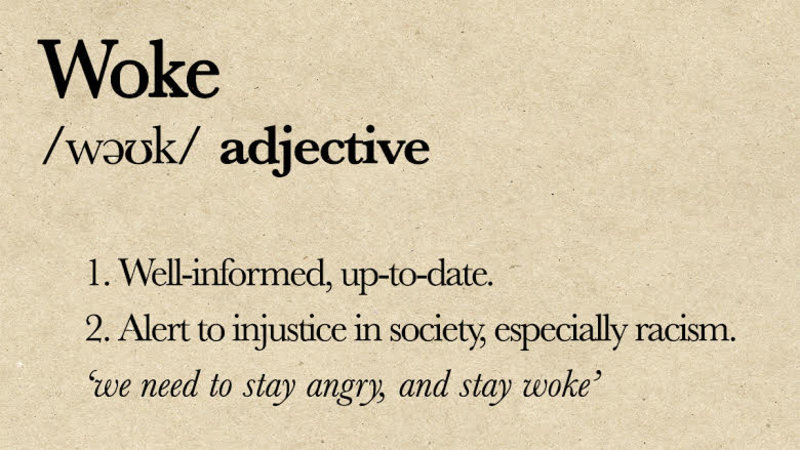
Oxford English Dictionary has added “woke” and “post-truth” to the lexicon. Additionally, a new sense of the word “thing” is now a thing.

It turns out a lot of the aesthetics of the 1980s can be traced back to an Italian design collective. As Vox explains in this new video created by Dion Lee:
[The] Memphis Design movement dominated the '80s with their crazy patterns and vibrant colors. Many designers and architects from all around the world contributed to the movement in order to escape from the strict rules of modernism. Although their designs didn't end up in people's homes, they inspired many designers working in different mediums. After their first show in Milan in 1981, everything from fashion to music videos became influenced by their visual vocabulary.
McMansion Hell (previously at BB) was a hilarious, incisive and explosively popular blog detailing and mocking America's dreadful suburban architecture. Zillow is a real estate site that exists to profit from it. Zillow used a grossly bogus legal threat to get McMansion Hell shut down, and everyone within sniffing distance of the law or media freedom is mad.
Zillow claims that McMansion Hell was 'violating the Computer Fraud and Abuse Act (CFAA) and state laws prohibiting "interference with Zillow's business expectations and interests"', a claim augmented by a curious theory of copyright whereby Zillow has "particular rights" to images it doesn't own.
...The cease and desist letter was not a response to the type of content or commentary that [Kate] Wagner was offering, she said. Heffter went on to explain that Zillow does not own the photos it posts on its site and is not legally allowed to let others use them.
Zillow's not even the copyright proprietor of the images it claims to "enforce", but even if it was, a "fair use" defense would surely prevail. McMansion Hell literally obscures the images with editorial commentary!
The threat appears to be retaliation following Wagner's featuring in a Washington Post story that turned a sharp eye on the trend back to cheaply-constructed houses slathered in subprime financing, counterposing her criticism against a battery of smarmily self-promotional quotes from Zillow spokespeople.
Legal experts are not impressed.
"Zillow's suggestion that it's a CFAA violation to take pictures from their public website is very weak," Orin Kerr, a law professor at George Washington University, said in an email. "That's probably why they made it only in passing."
Jeff Becker, an entertainment and intellectual property lawyer, said that fair use arguments rely on whether or not a piece of media is transformative or offers commentary on the original work — in this case real estate photos. He said the "satire-parody issue may be present" in the case of McMansion Hell, and that the blog "very well could fall within fair use."
Zillow's argument "would be a very hard case to win in court," Becker added.