Shared posts

19 Jul 08:54

The Sixth Season of 'Game of Thrones' Forgot What Made the Show Special

by Lindsey Romain

This article originally appeared in VICE US

Jon Snow died and came back to life. I'll forgive you if you've forgotten, because Game of Thrones certainly did.

Jon's resurrection, arguably the biggest moment in the show to date—not necessarily in audience impact, but in confirming a major book event that's yet to occur, as well as firmly situating Jon as Westero's de-facto Jesus Christ figure—should've had people talking. The plot twist legitimized Melissandre's sorcery, excused Jon from the Night's Watch, and added credence to the "prince that was promised" prophecy. It also set the sixth season's biggest set piece in motion: the Battle of the Bastards, an event that unites the northern houses just in time for an ice zombie apocalypse.

But no one mentions Jon's resurrection. Not the sister he is reunited with, the lords he tries to turn against Ramsay, or even Ramsay himself, a mustache-twirling psychopath who would surely question how the honorable son of Ned Stark wiggled out of his Night's Watch oath—which binds its swearer to a life of duty. Even Jon is barely changed by death: sure, he's moodier and sadder, but he was already moody and sad. He gets in a quick word about the absence of an afterlife, but it never comes up again to haunt him or those around him. It isn't even mentioned before a battle that might claim him once again. Did Jon Snow have to die at all?

Jon Snow's plotline is one of many ways that Game of Thrones' sixth season betrayed its characters in favor of spectacle and motion, paring down the story for bigger battles, better-looking dragons, and more scenes of Tyrion drinking (God forbid Peter Dinklage sit out a few episodes). I don't envy showrunners David Benioff and Dan Weiss's monumental task of adapting and making sense of George R. R. Martin's behemoth book series—the timeline of which, not coincidentally, they surpassed with season 6. A show of this scale, and with this budget—over $10 million per episode—has to end sometime, and it's a small miracle that it even exists at all.

But in the rush to arrive at each goal post, elements of character and rationality have been lost in the mud. Take Sansa Stark, who rallies Jon to the cause of taking back their family home. She's galvanized by her arranged marriage to Ramsay and the sexual abuse he put her through; she's one of the show's strongest characters, a girl made into a woman by means of circumstance and survival.

But she withholds a key piece of intel from Jon before he rides into battle—intel that might change his strategy and save the lives of many northern riders. Midway through the battle, Sansa's cohort Petyr Baelish arrives with a fleet that crushes the enemy and saves the day. Sansa knew they were coming and never told anyone, for no apparent reason. The moment as it unfolds is a cathartic fist-pumper, but it makes Sansa look like a fool—and after Jon tells her it's no big deal in the next episode, it becomes pretty clear that it didn't even matter. They had to win the battle, so Ramsay could die and Jon could sit in Winterfell for season seven. What could've been a rich moment of rivalry between siblings turns into essentially a moot point.

Jon and Sansa aren't the only characters that suffered from careless writing in the sixth season: Tyrion and Arya did a whole lot of nothing, and Arya especially suffered in a season that had no idea what to do with her. Her scenes with the acting troupe were fun but inconsequential, and even though she got to murder Walder Frey, the action arrives with no build-up to make it feel earned. (If it happened closer to the Red Wedding, it might've fit better within the show.)

None of this would matter if Game of Thrones had always been this kind of show—shiny and big and not much else. But the show's earlier seasons were exactly the opposite: Smaller in budget, but riper in context and dialogue. Recall the moment where Cersei discussed the death of her infant son with Catelyn, or when Tywin and a disguised Arya discussed her father, or when Brienne and the Hound battled cliffside. All of these non-book moments served to enrich the characters and told us new things about who they are and how they live in this world.

Ironically, Game of Thrones' sixth season was actually the most enjoyable season to sit through—certainly more so than the grueling fifth season. After a slog of death and loss, it was cathartic as hell to see all three of Dany's dragons fly, or Ramsay get ripped apart by dogs. But when the buzz fades, those moments don't sting or linger. There's nothing so intimately devastating as the Red Wedding or Ned Stark's execution, nothing so lovely as Arya laughing at bad news, nothing so engrossing as Brienne and Jaime in the bath. Without the books to transcribe, and with only an outline of where things go, Benioff and Weiss are giving into their worst impulses by letting the plot steer the way, not the people in the seat.

Follow Lindsey Romain on Twitter.

18 Jul 09:20

'SNL' and 'Westworld' Swept the Emmy Nominations This Year

by River Donaghey

Back in the day, there was, like, one reasonably good show on television, squeezed in between episodes of ElimiDate and Just Shoot Me. Now the folks picking Emmy nominations have a metric shit-ton of quality content to sift through in order to choose their top contenders. On Thursday, they did just that, announcing a wide-ranging list of premium shows and performances making up the 2017 Emmy nominees.

This year, your father's old favorite show, Saturday Night Live, got a whopping 22 nominations—including Kate McKinnon for Best Supporting Actress in a Comedy Series and Alec Baldwin for Best Supporting Actor in the same category. The sketch show broke its own record for nominations, snagging more this year than it ever has in its four-decade run.

That dour robot show Westworld, which everyone went crazy over and then promptly forgot about, is tied at the top with another 22 noms. Streaming favorites Stranger Things and Handmaid's Tale were also highly recognized, receiving 18 and 13 nominations, respectively.

Over in comedy, Donald Glover's Atlanta—which took home two Golden Globes last year—has been nominated for Best Comedy Series, along with Aziz Ansari's Master of None and last year's winner Veep.

In the Best Limited Series category, HBO's The Night Of grabbed a nomination, alongside Big Little Lies. The latter was also recognized in the Best Actress, Best Supporting Actress, and Best Supporting Actor categories, with Nicole Kidman, Reese Witherspoon, Laura Dern, Shailene Woodley, and Alexander Skarsgärd all getting nods for their performances.

The glaring omission this year is The Leftovers, whose brilliant final season should've made it a shoe-in for Best Drama. At least one of the show's stars, Carrie Coon, picked up a nom for her role in Fargo.

The 69th annual Emmy Awards will be hosted by Stephen Colbert on September 17 at 8 PM EST. Read through the top Emmy nominees below and check out the complete list on the Emmys site.

Best Drama Series

Better Call Saul (AMC)
The Crown (Netflix)
The Handmaid's Tale (Hulu)
House of Cards (Netflix)
Stranger Things (Netflix)
This Is Us (NBC)
Westworld (HBO)

Best Comedy Series

Atlanta (FX)
Black-ish (ABC)
Master of None (Netflix)
Modern Family (ABC)
Silicon Valley (HBO)
Unbreakable Kimmy Schmidt (Netflix)
Veep (HBO)

Best Limited Series

Big Little Lies (HBO)
Fargo (FX)
Feud: Bette and Joan (FX)
Genius (National Geographic)
The Night Of (HBO)

Best Lead Actress in a Drama Series

Viola Davis, How to Get Away with Murder (ABC)
Claire Foy, The Crown (Netflix)
Elisabeth Moss, The Handmaid's Tale (Hulu)
Keri Russell, The Americans (FX)
Evan Rachel Wood, Westworld (HBO)
Robin Wright, House of Cards (Netflix)

Best Lead Actor in a Drama Series

Sterling K. Brown, This Is Us (NBC)
Anthony Hopkins, Westworld (HBO)
Bob Odenkirk, Better Call Saul (AMC)
Matthew Rhys, The Americans (AMC)
Liev Schreiber, Ray Donovan (Showtime)
Kevin Spacey, House of Cards (Netflix)
Milo Ventimiglia, This Is Us (NBC)

Best Lead Actress in a Comedy Series

Pamela Adlon, Bad Things (FX)
Jane Fonda, Grace and Frankie (Netflix)
Allison Janney, Mom (CBS)
Ellie Kemper, Unbreakable Kimmy Schmidt (Netflix)
Julia Louis-Dreyfus, Veep (HBO)
Tracee Ellis Ross, Black-ish (ABC)
Lily Tomlin, Grace and Frankie (Netflix)

Best Lead Actor in a Comedy Series

Anthony Anderson, Black-ish (ABC)
Aziz Ansari, Master of None (Netflix)
Zach Galifianakis, Baskets (FX)
Donald Glover, Atlanta (FX)
William H. Macy, Shameless (Showtime)
Jeffrey Tambor, Transparent (Amazon)

Best Lead Actress in a Limited Series or Movie

Carrie Coon, Fargo (FX)
Felicity Huffman, American Crime (ABC)
Nicole Kidman, Big Little Lies (HBO)
Jessica Lange, Feud: Bette and Joan (FX)
Susan Sarandon, Feud: Bette and Joan (FX)
Reese Witherspoon, Big Little Lies (HBO)

Best Lead Actor in a Limited Series or Movie

Riz Ahmed, The Night Of (HBO)
Benedict Cumberbatch, Sherlock: The Lying Detective (PBS)
Robert De Niro, The Wizard of Lies (HBO)
Ewan McGregor, Fargo (FX)
Geoffrey Rush, Genius (National Geographic)
John Turturro, The Night Of (HBO)

Best Variety/Talk Series

Full Frontal with Samantha Bee (TBS)
Jimmy Kimmel Live! (ABC)
Last Week Tonight with John Oliver (HBO)
The Late Late Show with James Corden (CBS)
The Late Show with Stephen Colbert (CBS)
Real Time with Bill Maher (HBO)

Best Supporting Actress in a Drama Series

Uzo Aduba, Orange Is the New Black (Netflix)
Millie Bobby Brown, Stranger Things (Netflix)
Ann Dowd, The Handmaid's Tale (Hulu)
Chrissy Metz, This Is Us (NBC)
Thandie Newton, Westworld (HBO)
Samira Wiley, The Handmaid's Tale (Hulu)

Best Supporting Actor in a Drama Series

Jonathan Banks, Better Call Saul (AMC)
David Harbour, Stranger Things (Netflx)
Ron Cephas Jones, This Is Us (NBC)
Michael Kelley, House of Cards (Netflix)
John Lithgow, The Crown (Netflix)
Mandy Patinkin, Homeland (Showtime)
Jeffrey Wright, Westworld (HBO)

Best Supporting Actress in a Comedy Series

Vanessa Bayer, Saturday Night Live (NBC)
Anna Chlumsky, Veep (HBO)
Kathryn Hahn, Transparent (Amazon)
Leslie Jones, Saturday Night Live (NBC)
Judith Light, Transparent (Amazon)
Kate McKinnon, Saturday Night Live (NBC)

Best Supporting Actor in a Comedy Series

Louie Anderson, Baskets (FX)
Alec Baldwin, Saturday Night Live (NBC)
Tituss Burgess, Unbreakable Kimmy Schmidt (Netflix)
Ty Burrell, Modern Family (ABC)
Tony Hale, Veep (HBO)
Matt Walsh, Veep (HBO)

Best Supporting Actress in a Limited Series or a Movie

Judy Davis, Feud: Betty and Joan (FX)
Laura Dern, Big Little Lies (HBO)
Jackie Hoffman, Feud: Bette and Joan (FX)
Regina King, American Crime (ABC)
Michelle Pfeiffer, The Wizard of Lies (HBO)
Shailene Woodley, Big Little Lies (HBO)

Best Supporting Actor in a Limited Series or a Movie

Bill Camp, The Night Of (HBO)
Alfred Molina, Feud: Bette and Joan (FX)
Alexander Skarsgärd, Big Little Lies (HBO)
David Thewlis, Fargo (FX)
Stanley Tucci, Feud: Bette and Joan (FX)
Michael Kenneth Williams, The Night Of (HBO)

16 Jul 11:19

SoundCloud's in trouble

by Cash4Lead
SoundCloud lays off 40% of its staff, only has enough money to make it to the next quarter. The audio streaming service, while popular with amateur and semi-professional musicians and podcasters, has struggled to find a viable business model that would make it competitive with the likes of Spotify and Apple Music. If it shuts down, it would mean the loss of a huge repository of music not found elsewhere. Perhaps Chance the Rapper (one of the many rappers who have achieved fame via SoundCloud) will save it?
14 Jul 23:33

The Science of How Poverty Harms the Brain

by Caroline Beaton

We already know the poor are getting poorer. The proportion of American adults living in low income families increased from 25 percent in 1971 to 29 percent in 2011. And growing up poor ups the chances that you'll also be poor as an adult. But neuroscientists are beginning to see this trend on a new level as they study the impacts of low socioeconomic status on childhood brain development.

Scientists have long researched how income, wealth, prestige, and education—socioeconomic status, or SES—relate to other outcomes. They've consistently found higher SES individuals outperform lower SES individuals on intelligence tests and school achievement. One study discovered that the average IQ of a group of children from poor inner city mothers was just 80 (the average is 100 for every age). As parental income declines, so do their children's reading and memory abilities. One study found that those who spend their entire childhood in poverty score 20 percent lower on working memory tests than children who have never been poor. Language abilities also correlate with SES. One classic study demonstrated that three-year-olds from professional families had two-times larger vocabularies than children whose families were on welfare.

"So we shouldn't be surprised to see SES reflected in people's brains," says Martha Farah, a cognitive neuroscientist at the University of Pennsylvania. Indeed, recent MRI studies reveal widespread differences in children's brain structure depending on their socioeconomic status, including size differences of brain areas used for memory and learning, executive function, and others. Some of these differences, like cortex size, are observable as early as one month of age.

In one study, carried out by Kim Noble of Columbia University, children from families making $25,000 a year or less had six percent less cortical surface area—the outer layer of the brain associated with language, reading, and executive functions that continues to grow and develop into adolescence—than children from families earning more than $150,000. The effects of income on brain structure were especially pronounced in the poorest children.

Critically, socioeconomic status is at least partially the cause—rather than the effect—of these differences. The earlier in life you experience poverty, the lower your cognitive achievement is likely to be. The longer you spend in poverty, the worse your working memory gets. Perhaps most compellingly, research suggests that nearly half of IQ differences in adopted children are due to the SES of their adoptive family rather than, say, genetics. Even controlling for potentially confounding factors like ancestry and health, research shows clear brain differences between low and high SES children.

Such differences may ultimately perpetuate poverty. The stress of poverty can change the brain in ways that further disadvantage the poor in modern society.

For example, stressful environments can impair a child's developing executive function—the skills that help us think, learn, plan, focus, develop strong vocabularies, synthesize abstract concepts, and succeed in school. In fact, home environment during one's preschool years is a better predictor of first grade executive function than either child care or school classroom quality. Likewise, research suggests that stress alone explains the association between poverty and poor working memory.

One explanation for why stress so significantly affects brain function centers around how chronic stress impacts the hippocampus, a brain region that's central to forming memories, learning conceptual information, and regulating the stress response. When we're stressed, the stress hormone cortisol floods the hippocampus and other areas of the brain, like the prefrontal cortex.


More From VICE: Sisa: Cocaine for the Poor


With constant, excessive stress, the hippocampus becomes overloaded. Eventually, the structure itself gets damaged, which can then impair memory and learning. This stress-atrophy effect is most pronounced in people with PTSD, whose hippocampi tend to have smaller volumes and less activation during memory tasks. But it's also apparent in low SES people, who unsurprisingly have higher levels of cortisol.

It gets worse: Our brains' fight-or-flight response typically subdues after a threat is resolved. "Once you realize the threat isn't there or it's over, you want to quickly bring down the stress response, because sustained exposure to stress hormones is bad for you," Farah says. But some research has found that the amygdala, a region next to the hippocampus that's responsible for quickly perceiving threats and forming emotional memories, is more active in low SES people. Show a poor person—or even someone who was once poor—and a rich person pictures of threatening faces, and the poor person's amygdala will likely become more activated for longer. In other words, in response to the same stressor, people of low SES may get more stressed than people of high SES.

This makes sense: If you have lots of threats in your environment, like in a bad neighborhood, you'll learn to become hyper-vigilant. The problem is that, in turn, you may become more sensitive to the deleterious effects of stress. The consequence is a cycle of constant anxiety and altered brain function.

More acutely, the mental and emotional overload of poverty can impair self-control, which is critical to academic, professional, and life success. Through a neuroscience lens, it's understandable that higher SES in adults has been linked to resisting impulses and delaying gratification. Conversely, one study sums, the poor may be likelier than others "to behave in ways that can perpetuate a disadvantaged state."

So here's what all this means: Someone born into poverty already has the bad luck of being poor. Most likely, she's had bad access to healthcare, an inadequate education, unsafe places to play, a poor diet, high exposure to pollution and toxins, and parents who didn't have time to read to her at night. As if that's not bad enough, growing up in poverty then changes certain regions of her brain, which may place her at a further disadvantage in modern society.

"Yes, it is grim," Farah says, but her research makes her optimistic. By studying the effects of early socioeconomic deprivation on brain development, she and others hope to gain insight into how to prevent or reverse the effects of low SES. And though she admits that neuroscience hasn't yet produced concrete help for the poor, the science is young; the earliest studies on poverty in the brain are just a decade old. The more we learn, the better we can design interventions to outsmart poverty and protect our children's brains.

Read This Next: Being Broke Around Rich People Messes With Your Health

Correction: an earlier version of this piece had the headline "The Brains of Rich and Poor Kids Are Vastly Different"; it has subsequently been changed to more accurately reflect the findings herein. We regret the error.

14 Jul 01:12

El sexo escaso acorta la vida: 'hablan' los telómeros

Un estudio con 129 participantes encuentra una relación no causal entre la longitud de estas estructuras y una mayor actividad sexual. 

14 Jul 00:56

Intenté ligar con tíos usando sus métodos más agresivos

by Ana Iris Simón

"Ojalá fuera tu ginecólogo para después olerme la mano". No es una coletilla de Arévalo ni un chiste de Bertín en la intimidad. Es lo que un varón —blanco, heterosexual y que probablemente había consultado la guía de frases para ligar de Forocoches— consideró efectivo para ligar conmigo en 2015. También está el tipo que el año pasado me entró con un "voy a quitar todos los muebles de mi casa para que cuando vengas solo puedas sentarte encima de mí".

En el último festival al que planeo ir, a riesgo de ser acusada de misandría y consciente de estar cayendo en una generalización seguramente injusta, decido probar e intento ligar empleando las consignas más violentas que los tíos han usado para llevarme a la cama a lo largo de mi vida.

En la lista de cosas que hacer antes de poner rumbo al festival apunto, entre comprar Omeprazol y no olvidarme de la chaquetilla por si refresca en el mañaneo, empollarme el canal de YouTube de Álvaro Reyes, el gurú de la seducción más machista de internet (y eso que internet, de machismo, sabe un rato). Entre todas las premisas de Reyes, me quedo con una. "No esperes su permiso. Siéntete con derecho de hacer lo que quieras. Pedir permiso es síntoma de inseguridad". Claro que sí.

Mis prejuicios me hicieron equivocarme con ellos dos

Después de más de una cerveza (quiero pensar que los individuos que alguna vez me asustaron con sus artimañas de seducción también las necesitaron), me lanzo al ruedo con la primera de las consignas que tengo apuntadas para que no se me olviden.

Mi primera víctima es un chaval con pinta de jugar al rugby en un equipo de Pozuelo. "Que dice mi amiga que si quieres follar conmigo", le digo sin presentarme. "Bueno, la verdad es que tengo condones de sobra, para ti y para tu amiga", me responde mientras me rodea los hombros con el brazo. Por un momento llegué a creer que, por primera vez en toda mi vida de fémina de metro cincuenta, había intimidado a alguien. Pero solo por un momento. Álvaro Reyes 1- Ana Iris 0.

Le cuento al chaval que lo que acaba de pasar forma parte de un experimento que después escribiré en VICE y le pregunto si le ha parecido bien que le aborde de esa manera. Sigue rodeándome con el brazo mientras apela a la falta de iniciativa del género femenino y me habla de "las chicas con dos huevos" como de una especie que el Ministerio de Agricultura y Medio Ambiente debería declarar como protegida. Le explico que, a las mujeres, generalmente no nos apetece que nos entre de esa manera un desconocido. Hay veces que ni siquiera queremos que nos hable un desconocido.

A pesar del fracaso que, paradójicamente, ha supuesto mi éxito, voy un paso más allá: elijo esta vez a dos chicos que comparten un mini de calimocho. En estos momentos ya uso la técnica masculina de echar la red y "pez que caiga, bienvenido sea". "Ojalá fuera vuestro urólogo para después olerme la mano", les digo. No me oyen, quizá porque de fondo suenan Die Antwoord. Se lo repito más fuerte. Me siento muy ridícula. Uno de ellos se lleva la mano a la barbilla y me mira muy serio. "Pero, ¿qué dices, tía, por qué nos dices eso?". El otro se ríe y me suelta un "vaya ascazo". Creo que ni siquiera han entendido que estaba intentando flirtear por lo ridículo del método. Recupero la confianza en la especie humana en general y en el género masculino en particular. Pero por poco tiempo. Durante las dos noches que durará mi experimento, los chicos del calimocho serán los únicos que:

a) reciban mis proposiciones de mierda sintiéndose atacados.

b) no me deriven a alguno de sus amigos porque quieran serles fieles a sus novias ("que si no...", añade alguno).

"Hola, me llamo Ana Iris. Recuerda mi nombre porque, en tres horas aproximadamente, estarás gritándolo en mi cama". Así le meto ficha a la tercera de mis víctimas, que me responde que "él tiene tienda en el camping, que seguro que está mucho más cerca". "Pues la verdad que te follaría ahora mismo" , "me acabo de enamorar" o "tú has salido en mis sueños, en los que acababan con una paja mañanera" son algunas de las respuestas que me dan hasta que decido tirar la toalla. Probablemente la falta de costumbre les haga creer que estoy de broma. Me voy con la sensación de que no sienten que puedo llegar a ser una amenaza física para ellos.

A mi vuelta a Madrid pienso en la masculinidad mal entendida, en el daño que, también a ellos, les hace el machismo, en si alguno de ellos se hubiera sentido "poco hombre" declinando una proposición sexual, por muy zafia que fuera, por mucho asco que diera. Seguramente ninguno de ellos ha sentido miedo cuando le han piropeado al ir solo por una calle mal iluminada. Quizá ni les hayan piropeado por una calle mal iluminada. Escribo a Diana López Varela, autora de No es país para coños, para pedirle que me aclare un fenómeno que no soy capaz de entender del todo.

Sí. Uno de ellos accedió a ligar conmigo con mis tácticas violentas.

"Efectivamente, seguro que no les impusiste miedo ni terror. Y como es tan excepcional que una mujer le falte el respeto de esa manera a un hombre, es muy probable que pensaran que estabas bromeando antes de que les dijeras que se trataba de un experimento. Y desde luego no se vieron en la necesidad de huir, porque tú no les vas a coger después de decirles cuatro "babosadas" y les vas a agredir sexualmente. Físicamente, si no es imposible, es muy complicado que hagas eso".

Diana me habla, además, del poder simbólico del acoso verbal, del trasfondo de las frases con las que me intentaron ligar y me asustaron y que ahora yo he empleado sin conseguir el mismo resultado. "Decirle a una mujer ciertas cosas la empequeñece, le da a entender que el que manda es el hombre y que ella es un mero objeto del que puede disponer cuando quiera y al que puede humillar cuando quiera también". El problema de este experimento, el factor con el que no había contado era ese: sentirme pequeña, saberme expuesta a una agresión porque estoy acostumbrada a ello. Aunque por mi boca estuviera saliendo un "oye, tú, ¿follas o estorbas?".

14 Jul 00:50

Leopoldo María Panero y el Nobel de literatura: Mi encuentro con Panero

by Servando Rocha

Servando Rocha tuvo la oportunidad de pasar una tarde con el poeta Leopoldo María Panero. Allí, entre toneladas de pitillos y coca colas, se desarmó ante aquel «loco» muy cuerdo

Os lo juro, a lo lejos daba un aire un tanto fantasmal: una decena de pañuelos flotaban a su alrededor como movidos por un hilo invisible. Era él, no cabía duda. Habíamos llegado minutos antes de las cuatro de la tarde a la calle Triana, justo en el centro comercial de Las Palmas, y no pude evitar confesarle a mi acompañante que primero tenía que tomarme un café. Necesitaba un poco de aplomo y también cierto temple, al menos antes de encontrarme, nada más y nada menos, que con el poeta Leopoldo Panero, aquel que en alguna ocasión a todos nos ha conmovido y helado los huesos de una u otra forma, ya sea con la descarnada y brutal honestidad que reflejó en el monumental trabajo de Jaime Chávarri El Desencanto como en su numerosísima obra publicada e inédita (su cabeza es como una enorme biblioteca viva).

Así que allí estábamos, a punto de establecer contacto, pero ¿qué tipo de encuentro íbamos a tener? «Hay que llamarlo un día antes, porque con él de nada sirve hacer planes con antelación. Debéis llamar a primera hora del viernes y fijar la reunión para el día siguiente», nos había confesado nuestro contacto en Las Palmas, ciudad donde desde hace nueve años malvive recluido en un hospital mental, una «cárcel donde permanezco secuestrado y torturado –tal y como nos aseguraría al preguntarle qué tal se sentía–. Lo de Rasputín fue una noche y a puerta cerrada, pero esto es todavía peor». Sale a diario, desde primera hora de la mañana, y entonces pasea por el centro de la ciudad hasta que llegan las ocho de la tarde, momento en que debe regresar. Son numerosas las anécdotas que se cuentan acerca de aterrorizados camareros que huyen espantados por el descarado hooliganismo del que hace gala nuestro hombre, encuentros fortuitos con fans o aquel amigo al que se le acercó un señor (que resultó ser el propio Panero) y le dijo que le recitaría un poema a cambio de un pitillo.

Las instrucciones eran claras: cuatro de la tarde, calle Triana, justo frente al McDonalds (mensaje de móvil que recibí esa misma mañana: «¿Crees que Panero será de cheeseburger o de big mac). Y allí estaba... sentado en un banco, haciendo lo que parecían trucos de magia con una decena de pañuelos de papel.

Es cierto. Con Panero puede sucederte cualquier cosa y, cuando digo «cualquier cosa», me refiero a eso mismo: una apabullante lengua que es capaz de dejarte petrificado en la silla, un arrebato de ira, escupitajos, tocamientos, poemas declamados en mitad de la calle, esquinas que sirven para lo que un día fueron (orinar, palabras al oído, desaparecer de pronto) y, por supuesto, estar preparado para entrar en el ring de la literatura de combate. Hay que perder el miedo, porque en caso contrario se renuncia a jugar. Y con Panero hay que jugar, mucho y a cara descubierta, especialmente cuando conoces perfectamente que todo, absolutamente todo, lo que ha hecho y hace este hombre no es más que un gigantesco juego, una enorme bufonada contra el poder en todas sus formas.

«Ve a comprarme pañuelos, anda», es lo primero que me dice. Marcho obediente, pero aún es temprano y los comercios están cerrados. Nos levantamos y lentamente (le cuesta un poco caminar y permanece siempre con la cabeza un tanto agachada) nos dirigimos a una pequeña tienda donde, sospecho, ya lo conocen. «Deme un paquete de pañuelos, por favor», le digo a la dependienta. Lo tengo justo a mi espalda: «No, mejor que te dé dos... no, tres... bueno, cinco». Comienza una experiencia intensa, justo cuando no ves otra opción que desarmarte y armarte de atención, porque, como todos saben, Panero arrastra las palabras uniendo frases con nombres junto a toneladas de ideas o citas en francés. «Una vez leí que William Burroughs escribía mejor sin la adicción, justo a partir de la etapa en que comenzó a desengancharse. ¿Crees que un poeta escribe mejor sin que medien las drogas?», le pregunto de golpe mientras caminamos en dirección a un bar cercano. «Durante un tiempo yo amé la heroína, incluso escribí un poema dedicado a ella», me contesta, y comienza a recitarlo de memoria y a la velocidad de un rayo.

«Existe en todo momento una coherencia en aquello que dice y en el hilo de la conversación. Quiero decir que no hay nada fuera de su sitio»

Lo olvidaba. Para quien no lo sepa o nunca antes haya escuchado hablar a Panero, es conveniente saber que cuando se le pregunta acerca de cualquier asunto a veces contesta con una sinceridad brutal y descarnada; en otras ocasiones, te mira (unos ojos que te observan como de soslayo y, abajo, agarrado por los labios, el eterno pitillo consumido velozmente entre los escasos dientes que todavía conserva) pero no contesta, al menos de momento, porque luego, al par de minutos, termina por hacerlo. Sin embargo, existe en todo momento una coherencia en aquello que dice y en el hilo de la conversación. Quiero decir que no hay nada fuera de su sitio. Ni siquiera su hermosa y contagiosa risa, que de cuando en cuando estalla como un bello rugido y que torpemente parece justificarse con chistes francamente malos pero que, al salir de sus labios, te arrastra sin poder evitarlo. Y habla muchísimo. Pero hay que estar atento para cazar al vuelo las ideas. Si te despistas, estás fuera.

Nos sentamos en una terraza donde previamente ya lo hacían dos amigos suyos, Evelyn, que le comprende y asesora en su «enfermedad» y que, además, le ayuda a organizar su trabajo, y Luis, un esquizofrénico que en un momento dado me confiesa que para él yo soy «solamente una voz» (asegura oír voces desde pequeño, voces extrañas que consigue ahogar con la heroína como único alivio). Evelyn es una figura importantísima en la vida diaria de Panero, y se nota. Su amistad, desprendida y alegre, unida a la paciencia que hay que tener con él, hace que éste le recite de viva voz bellas poesías que brotan casi solas, imparables, y que nos brinda intermitentemente. Ella organiza titánicamente todo ese caos, pasando a limpio los poemas y preparando sus próximos libros.

«Pero su historia esconde un horror cotidiano, de carne y hueso, y que en un momento dado nos desvela: los electroshocks, las continuas prohibiciones para alguien que nunca aceptó ninguna, el ominoso secuestro de sus libros»
 

Se siente exiliado, espadachín de la palabra en una sociedad mentirosa. Cabreado, confiesa que el correo no le llega; sueña con retornar algún día a Mondragón, lugar en el que estaba antes de llegar a Canarias, o incluso poder alcanzar Italia, donde, asegura, tendría mucha más libertad. Le pregunto por su vida en el hospital psiquiátrico y, entre bocanadas compulsivas (dice fumarse la friolera de ocho paquetes diarios, aunque realmente lo que hace es consumir rápidamente la mitad del pitillo para luego tirarlo al suelo e inmediatamente encender otro), nos dice que comparte habitación con un «poeticucho que canta sobre la patria y demás boberías».

De vez en cuando viaja a la península, como en la última Feria del Libro de Madrid, a la que acudió invitado por la organización. Allí, entre poetas, putas o malditos se siente cómodo. Otras veces también la lía, tal y como una vez me dijo un amigo madrileño que me confesó que el paso del poeta por su casa le dejó el suelo cubierto de salivazos. Pero su historia esconde un horror cotidiano, de carne y hueso, y que en un momento dado nos desvela: los electroshocks, las continuas prohibiciones para alguien que nunca aceptó ninguna, el ominoso secuestro de sus libros.

Mallarmé, Blake, Yeats, Cioran o Bataille. En él se encuentra y también vive lo mejor de la literatura contemporánea; un amasijo de memorables citas que recita perfectas, aunque confiesa que no le interesan los poetas beat. Y, claro, hay que preguntarle por la actualidad. «Apoyo el 15-M, aunque hay que repensar el concepto de revolución», lo que nos sirve para hablar sobre Marcuse e incluso preguntarle por los situacionistas. Tratado del saber vivir para uso de las jóvenes generaciones de Raoul Vaneigem y La sociedad del espectáculo de Guy Debord, menciona, y sonríe, rememorando los estertores de los ‘60.

«En una sociedad que niega la aventura, la única aventura posible es negar esa sociedad», sentencia. Otro pitillo, otra Coca-Cola (olvidé mencionar que bebe coca colas light una tras otra), y el camarero que, entre el temor y la fascinación, coloca precavido junto a su lado una papelera que no tarda en desbordarse. «Para usted, señor marqués», dice con sorna. La mesa, entre desperdicios y alguna bebida volcada, es ya un campo de batalla y yo, que no fumo pero que me encuentro a su lado, tengo mis piernas cubiertas de pequeñas colillas como si fueran balas perdidas.

«Yo creo que Enrique [Bunbury] tiene un problema con el ano. Lo que sucede es que es maricón y no le gusta reconocerlo y por eso debería ir por la calle escondido tras un enorme abrigo y bufanda. A mí los que siempre me gustaron fueron Radio Futura».

Panero habla, pero también escucha, y cuando alguien está hablando, aunque sea en voz baja, uno tiene la certeza absoluta de que lo está oyendo y prepara su arsenal. Mi amigo le pregunta por Bunbury y su más o menos reciente colaboración: «No sé lo que le pasa conmigo. Creo que estos días anda por aquí –comienza a decir despacio– pero no viene a verme ni tampoco me dice nada. Yo creo que Enrique tiene un problema con el ano. Lo que sucede es que es maricón y no le gusta reconocerlo y por eso debería ir por la calle escondido tras un enorme abrigo y bufanda. A mí los que siempre me gustaron fueron Radio Futura».

Sus obsesiones son la escatología anal, ETA («Una vez intentaron asesinarme. No les gustaba que fuera tan heterodoxo», asegura), los derechos de autor («Alguien se está quedando con mi dinero», dice una y otra vez) o el anticristo («Cuando era joven estuve enamorado de Enrique Vila-Matas y una vez lo perseguí por la calle con un cartel que decía 666. Salió pitando», confiesa mientras ríe).

Lo sabes, sabes que todo lo que dice este hombre pertenece a un tipo de verdad brutal, algo tangible y en ocasiones terrible, un interminable retablo de la resistencia antifranquista, de tertulias e historias de dolor y olvidos compartidos, de chustas, gargajos y enfermedad, de tajos de memoria seccionados y arrancados para no tener que pensar en ellos. Es historia viva, pero ¿para qué está la historia sino para vivirla y amarla? Michi Panero, su hermano fallecido hace ahora siete años (tenía 51 años y padecía cirrosis), es uno de estos episodios oscuros.

Sonriendo le menciono que en Madrid, muy cerca de mi casa, apareció hace tiempo una pintada que decía «¡Viva Michi Panero!». Y su hermano, el vivo, me mira y al hacerlo me asegura que Michi realmente fue asesinado «por una puta botella de ginebra envenenada».

Han sido tres maravillosas horas de una tarde de verano en compañía del poeta Leopoldo Panero y Luis, el amigo esquizofrénico, regresa sonriendo tras pillar la papela que pronto estará consumiendo en la pensión donde vive, más o menos en el mismo instante en que nuestro poeta estará cruzando el umbral de esa otra cárcel.

Ahora el cielo comienza a encapotarse. Nos levantamos para despedirnos, pero antes le preguntó que para cuándo el Nobel de Literatura. «A ver si me lo dan este año, porque no sé qué tendrá Miguel Delibes que no tenga yo», me contesta mientras apura, hasta casi quemarse los dedos, un nuevo pitillo.

14 Jul 00:37

LA bakery heat-seals ice cream inside of glazed doughnuts

by Rusty Blazenhoff
My teeth hurt just looking at the Halo, the new ice cream-filled glazed doughnut by chef Barb Batiste of B Sweet Dessert Bar in Los Angeles. For $5, the bakery will put a scoop of ice cream --vanilla, mint chocolate chip, cookies and cream, rocky road, chocolate malted crunch, or ube-- inside a glazed donut and seal it together in a warm press.
The brain freeze-inducing treat is advertised as "Hot outside, cold inside, yummy all over!"

Batiste was inspired to combine ice cream and doughnuts by her father Angel, who passed away five years ago.

LAist explains:

He and Barb had a very special relationship; there's a chair marked for him in the restaurant, and Barb has fond memories of getting Thrifty's ice cream with him every other day as a child. His name was Angel, and after he died, Barb decided to honor him by combining his two favorite desserts: doughnuts and ice cream. The circle reminded Barb of a halo hanging above Angel's head after his passing; hence, the halo dessert was born.

If you're in L.A. and gotta have one, bring your sweet tooth and five bucks to 2005 Sawtelle Boulevard.

(Pee-wee Herman)

12 Jul 21:11

¿Nos dirigimos hacia una dictadura LGTB?

by INFOVATICANA

Prohibir manifestaciones en contra del matrimonio homosexual, controlar los medios, los colegios…esta es la dictadura LGTB que amenaza con instalarse en nuestro país.

La Contra TV explica en tan sólo un minuto la ley LGTB presentada por Podemos -redactada por la Federación estatal de lesbianas, gays, transexuales y bisexuales-, que se votará próximamente en Las Cortes. Se trata de una ley con tintes totalitarios que persigue y castiga a todo aquel que no comparta la doctrina de la ideología de género.

Prohibir manifestaciones en contra del matrimonio homosexual, el control en las redes sociales, la destrucción de libros que cuestionen la ideología de género, colegios que pierden el concierto y profesores inhabilitados, medios que incluyen la diversidad sexual y los diferentes tipos de familia…esta es la dictadura LGTB que amenaza con instalarse en nuestro país.

La entrada ¿Nos dirigimos hacia una dictadura LGTB? aparece primero en Infovaticana.

12 Jul 21:10

Facebook’s ‘On This Day’ Brings Bad Memories Back to Life

by Liz Lazzara

On May 25th, a picture of me with my ex at his graduation ceremony six years ago popped up on my Facebook feed and my breath became short. I was overcome with a fear I thought was long gone. If you don't live with it yourself, you may be unfamiliar with the symptoms of post-traumatic stress disorder. The most common are reliving the event through flashbacks or nightmares, avoiding anything that may remind you of your past trauma, and being constantly "on guard," along with a slew of other unpleasant emotional and physical manifestations.

Since Facebook is the most globally ubiquitous social media site, I wanted to determine which aspects of its design were most problematic for people like me, who suffer from the effects of trauma. I began with my reaction to Facebook's "On This Day" post, which randomly excavates an image from years ago that the algorithm wants to remind us of. The problem is, not everyone wants to see their smiling ex's face. I had an emotionally abusive relationship with my own ex, who lied and manipulated his way into sex with me a few months after I had been raped. The betrayal created layers of mistrust and fear that further complicated my rape trauma.

"Traumatic reminders, pictures on your timeline, 'On This Day' anniversaries," and other content that would appear by way of that feature would be difficult for a trauma survivor to endure, says Jon Elhai, a professor of psychology and psychiatry at the University of Toledo who studies trauma, PTSD, and cyber-psychology.

This isn't the only place on Facebook that could set you off. If you have mutual friends with someone who has traumatized you, photos of that person might pop up in your Facebook feed. Or worse—you or a friend could post something to Facebook to commemorate a night out, say, thereby potentially revealing your location to a past abuser. A photo of a restaurant or bar could be familiar-looking or someone could tag you or your location, and a perpetrator could show up, uninvited.

Elhai also mentions Facebook's "suggested friends" feature as a potential problem. He's heard many examples of his clients seeing past perpetrators on that list. They can pop up because of mutual friends, but sometimes if you attach your phone number to Facebook, it will use big data to find commonalities. If overlap exists, Facebook's nosy algorithm will suggest that person to you, whether or not they're someone you want as a friend.

The same can happen with someone you've seen in a therapist or psychiatrist's office, which is creepy as hell. If you both have your mental health provider's number in your phone and have connected your number to Facebook, an anonymous face in the waiting room can become a real person—picture and all—and you become one to them. If you've endured trauma, the idea of losing anonymity against your will can be upsetting at best and panic-inducing at worst. Elhai does point out that "there is actually a beneficial effect of being reminded of your trauma and then to think about it...one of the things we know in mental health is that when you avoid too much, it causes problems for you." Getting to that point, however, takes more time for some than others.

While Facebook doesn't intend to be a painful abyss of purposely discarded memories, its features could inadvertently make a career out of triggering you. For instance, I "divorced" my father when I was 18 because I learned he had been physically and sexually abusive to my mother, my best friend's mother, and probably many other women as well. After that, I never wanted him to be able to find me, but when I became a freelance writer, I struggled with increasing my reach and following while also trying to remain safely under his radar.

Generally the advice people give is "just block them," but since anyone can create a new account surreptitiously, it can become harder to avoid message requests from people you never want to see again. Facebook's Principles uses comforting language, saying that any two people can connect "as long as they both consent to the connection," and that "people should have the freedom to decide with whom they will share their information, and to set privacy controls to protect those choices." Yet sometimes privacy controls aren't enough to protect your information from being seen and shared.


More From Tonic:


Elhai notes that "a lot of people use variations on their real names" to protect themselves against being found, but Facebook's Terms of Service state that "You will not provide any false personal information on Facebook." So I'm running a risk here by stating that my Facebook profile does not reflect my legal name, but I've chosen to identify myself that way in order to protect myself. But even that violation didn't entirely solve the problem. My father also violated the Terms of Service by creating a second personal account—one I didn't know about and therefore hadn't blocked—and messaged me.

You can get around this type of trauma-trigger by making your account unsearchable, Elhai advises me. In that case all friend requests would have to be initiated by me. No one would be able to find me otherwise. He also says that I could put up a profile picture that isn't of myself to further mask my identity. But should I have to, simply to participate in the social media universe?

There aren't many solutions for dealing with these Facebook issues so much as there are bandages for particularly difficult wounds. If you choose to stay logged in, using the privacy features and turning your notifications off can at least reduce the effects of triggers.

Read This Next: There Are Easier Ways to Feel Better Than Quitting Social Media

12 Jul 21:08

‘Frankenchrist’: Cuando el punk se convirtió en porno

by condenadofanzine
Había valorado escribir en esta nueva entrega de #TheStoryBehind sobre el famoso pique existente entre Dead Kennedys y The Exploited, así como hablar de los temas que mutuamente se dedicaron: “Nazi Punks Fuck Off” y “Fuck the U.S.A.“. Sin embargo, como el tema es bastante conocido y están subiendo las temperaturas, he cambiado de opinión...
12 Jul 21:03

Chokers Aren't Cool Anymore

by Sirin Kale

As I sit here writing this a fine, black velvet choker wraps around my neck. It is just the right size to enclose my neck comfortably without being too tight. It is narrow enough to wear with most outfits without over-powering the look completely. In the last month, I have worn this choker to meet my boyfriend's family for the first time; as part of a Glastonbury Festival ensemble my colleague Zing affectionately calls my "shotta texts" look; and to an awards ceremony (I did not win.)

It is the most versatile of accessories. Unfortunately, it is also passé. But when did the choker trend die a strangled death? Was it when Lena Dunham tweeted about buying six chokers online? Was it when Forever 21, a retailer beloved of middle-schoolers and moms alike, retailed a choker so thick it looked like a neck brace? Was it when every reality TV contestant in the world, from America's The Bachelorette to Britain's Love Island, began wearing one? Probably all of the above. We've reached peak choker, readers—it's time to accessorize in pastures new. And Broadly is partly to blame.

In September 2016, we published an article called "Why Every Single Person You Know Is Wearing Chokers Now." In it, we linked the choker's recent comeback to the resurgence of 90s trends like high-waisted jeans; overalls; designers like Alexander Wang; and celebrities like Rihanna, Gigi Hadid, and Kendall Jenner. Around the time we ran this story, other media outlets published their own takes as well.

Read more: The Long, Strange History of Women Wearing Deadly Clothing

Chokers—once a lazy but effective way to communicate you have a shapely neck and are DTF—have become an accessory beloved of suburban soccer moms and Coachella babes alike. Almost everyone I know now thinks chokers are incredibly lame and uncool, apart from my boyfriend, who agrees that they're lame and uncool but still likes it when I wear them.

Amongst my co-workers and my friend group, the consensus is generally: Chokers are uncool, but we'll continue to wear them anyway. "I wouldn't be caught dead in many types of chokers now," Zing says. I point to a plain black choker that's been drying on my desk after I accidentally dropped it in my coffee. She looks pained. "That's plain enough to be a normal accessory," she clarifies, backtracking.


Watch: The Australian Model Calling Out Fashion's Size Hierarchy


"Lace chokers, for example," she goes on, "are the sort of thing Coachella girls would wear with fringed crochet tops, denim hot pants, and bindis." My colleague Claudia agrees—but like me, she won't be hanging up her choker any time soon. "I can pinpoint the moment I realized chokers were no longer cool: When I spotted them on every Pinot Grigio-sipping suburban mom during their nights out on the town. However, cool or not, I will continue wearing my perfect choker."

Many people I spoke with believe that much of the choker hate is because they're deceptive: an accessory for girls who like to pretend they fall out of sex clubs on the weekend, but are actually bottomless Prosecco brunching with their CrossFit friends.

"They're for girls who think they're edgy but don't have an edgy bone in their body," my colleague Mitchell writes. "They're the Hot Topic of accessories!"

"If you wouldn't wear a choker in the bedroom, you shouldn't be allowed to wear it at all," Zing, who frequently wears the shit out of a BDSM collar, goes on. "And chokers by their very definition look like they should be able to choke the crap out of someone. I don't have any time for these half-assed lacy string chokers. Go hard or go home."

Not everyone was so disapproving. "I have a leather braided choker with a silver dragon clasp," commented my colleague Diana, "and I wish I was wearing it right now." When I reached out to my colleagues at i-D, features editor Tish Weinstock replied to tell me that she "looks great in a choker," which I have no reason to doubt.

Within some communities, chokers remain a staple accessory—inasmuch as any accessory can ever be a staple.

In July 2016, queer fashion magazine Polyester published an editorial which featured a model wearing a BDSM collar spelling out the words, "NOT A SUB." It poked fun at how the BDSM aesthetic—like all other underground subcultures—had been appropriated by the mainstream, to the detriment of the community it once served.

"Chokers have traditionally, within a fashion context, subverted societal norms and been a nod to subculture," Polyester editor-in-chief Ione Gamble explains. "However with the co-option of chokers as a trend, the item itself has lost this previously important context, as well as its roots in fetish wear and the fetish community. It's almost as though they've become a parody of what wearing a choker once meant."

Because I bought a leather BDSM collar from Etsy in the very same month that Polyester issue came out, I can't make any pretense to be a scholar of the zeitgeist. So in order to understand why chokers are now uncool, I did what I do best: asking far cooler people than me to explain things I don't understand.

Photo by Jovana Rikalo via Stocksy

"Generally chokers have had their moment. Having been taken out of the BDSM scene, with a very specific and rather explicit use, the choker was adopted by mainstream influencers and in turn, by really quite young teens," comments Emily Gordon-Smith of trend forecasting agency Stylus. "What's interesting here is that this age group may not actually understand the original origins of the look, demonstrating just how trends can start in a rather niche space, and move down to the mass audience. In the fashion scene this is a good example of a short-term trend—and one that is likely to come around again in the future."

As with any trend, if you wait around long enough, it'll eventually be fashionable again. Aida Manduley (who uses they/them pronouns) first wore a choker in Puerto Rico in the 1990s, before rediscovering their love for the neckwear in the early 2000s. "Starting in about 2003 or so, I started wearing a black 'tattoo-like' choker and just...never stopped? I liked it then, and like it now," Manduley comments. "I feel strange without my choker since I take it off rarely. I've only taken it off a handful of times since 2003!"

Manduley tells me that, before chokers became fashionable again, they'd often get asked about wearing one by the middle-school class they taught. "It was a funny conversation piece and way to build rapport, and when eventually chokers got popular again, it was an adorable piece of connection with my students since some of them were wearing them as well," they remember. "The resurgence was a bit odd at first, since people assumed I was wearing it for a trend's sake, but in the end, does that perception even really matter? What matters is I have a piece of jewelry I like, sometimes other people want to wear it, and sometimes they don't."

For More Stories Like This, Sign-Up for Our Newsletter

Like Katy Perry, chokers can recover from their prolonged period of over-exposure and become cool again, but only if they urgently reassess their look. "I don't think the shape itself is completely going to disappear, but it will need a serious update," says fashion designer and trend forecaster Geraldine Wharry. "It needs to go more artful—maybe being cut off, or the shape needs to be messed and experimented with."

For now, we continue to wear chokers for much the same reason that people keep giving celebrity children book deals—because we've gotten used to it, and don't know what else to do. Me, I'll probably experiment with wearing a fine, gold choker necklace in lieu of a hefty black strap. But then, what do I know? The choker isn't going to go away anytime soon, even if it's a look deader than Rob Kardashian's sock company.

The choker is dead. Long live the choker.

12 Jul 20:59

Can You Tell Which of These Alt-Right Personalities Are Fake?

by Justin Caffier

In the months since Donald Trump was elected president, the alt-right has gone from being an amorphous group of incorrigible shitposters to an amorphous group of incorrigible shitposters with a growing audience, a prominent place in the media ecosystem, and a bunch of intra-group feuds.

All of a sudden, a 4chan obsession, a hazy relationship with the truth, and an utter lack of shame are all that's required to become internet famous, and lesser-known alt-righters have seized upon the movement's instability, jockeying for media attention and attaboys from their God Emperor. For many of these people, no attention-grabbing antic is over the line, and no publicity is bad publicity.

Below are the profiles of some of the rising "stars" of the alt-right, as well as some people who don't actually exist, to see if you can tell the difference. Which are real, and which are fake news? Answers at the bottom.
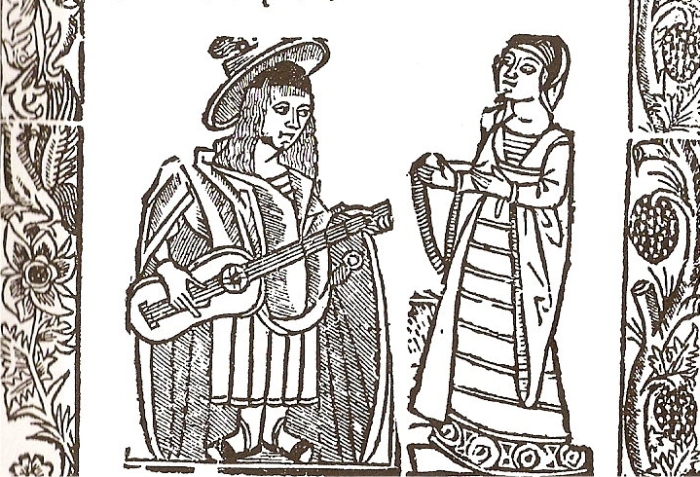
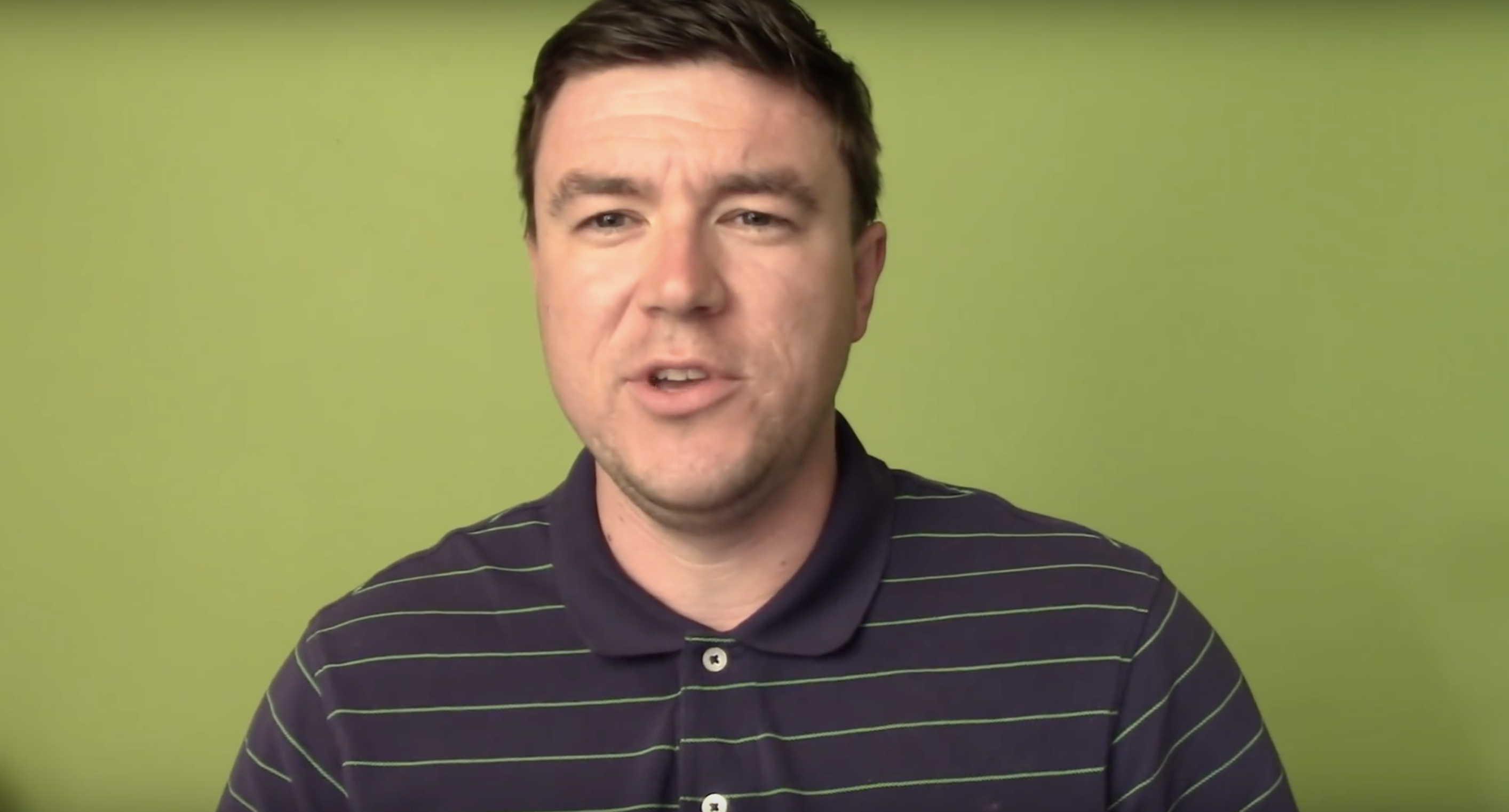
1. Jason Kessler

All images via fair use YouTube screen captures
All screencaps via YouTube
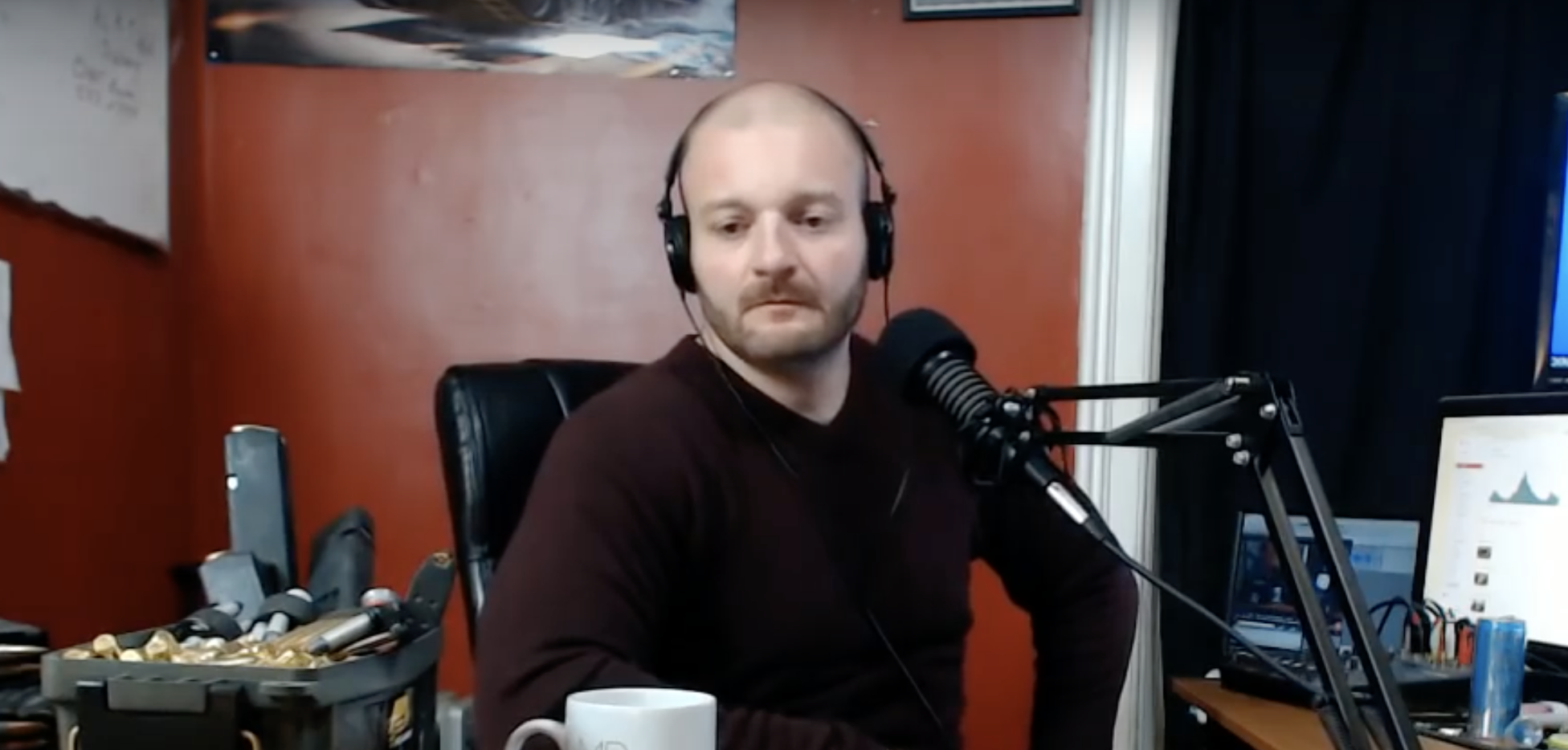
  • Loves Confederate statues so much that he punched a man while campaigning to keep them up. He claims it's about preserving history, not racism.
  • Was excited about new research indicating the first human ancestors may have evolved in Europe, not Africa.

2. Paul Joseph Watson

  • Once bragged that he was triggering people by drinking milk and eating sushi.
  • Denies that depression is a mental illness.

3. Nikolas Averin

  • Believes that businesses should be free to discriminate based on religion or ethnicity, even if that meant he couldn't go certain places as a Jew.
  • Became radicalized by David Duke's book while serving time for tax fraud.

4. Lucian Wintrich

  • Shot a "Twinks4Trump" calendar featuring photos of naked gay men wearing Make America Great Again hats.
  • Once referred to former White House LGBT liaison Raffi Freedman-Gurspan as an "unnatractive tranny."

5. Lauren Southern

  • Legally changed her gender to male to make a point about government forms being too easy to fill out.
  • Wrote a book denouncing Islam and baby boomers.

6. Kyle Chapman

  • Most famous for breaking a stick in two during a street brawl, earning him the moniker "Based Stick Man."
  • Currently trying to get a comic book made about a cool guy who hits people over the head with sticks.

7. George H. Hernandez

  • Gave ICE information that led to in a raid that caught five undocumented immigrants, one of whom was Hernandez's second cousin.
  • Has tattoo of Calvin peeing on the Clinton campaign logo.

8. Wesley Schall

  • Author of a Pizzagate-themed coloring book.
  • Was exposed for creating a series of "sockpuppet" Twitter accounts that purported to be run by gay black men who loved Trump.

9. Andrew Torba

  • Created Gab, an anti-censorship social media platform where everyone is free to call one another the N-word and wish for the eradication of Islam without fear of being banned.
  • Was once quoted as saying: "Take your morally superior, elitist, virtue signaling bullshit and shove it. I call it like I see it, and I helped meme a President into office, cucks."

10. Christopher Cantwell

  • Claims communists have taken over the Libertarian Party.
  • Has celebrated the deaths of cops.

11. Dr. Tim Abernathy

  • Gave a Ted X talk on how slave traders were the original "disruptors."
  • Created an "update" of the Confederate flag that incorporated minimalist, modern design.

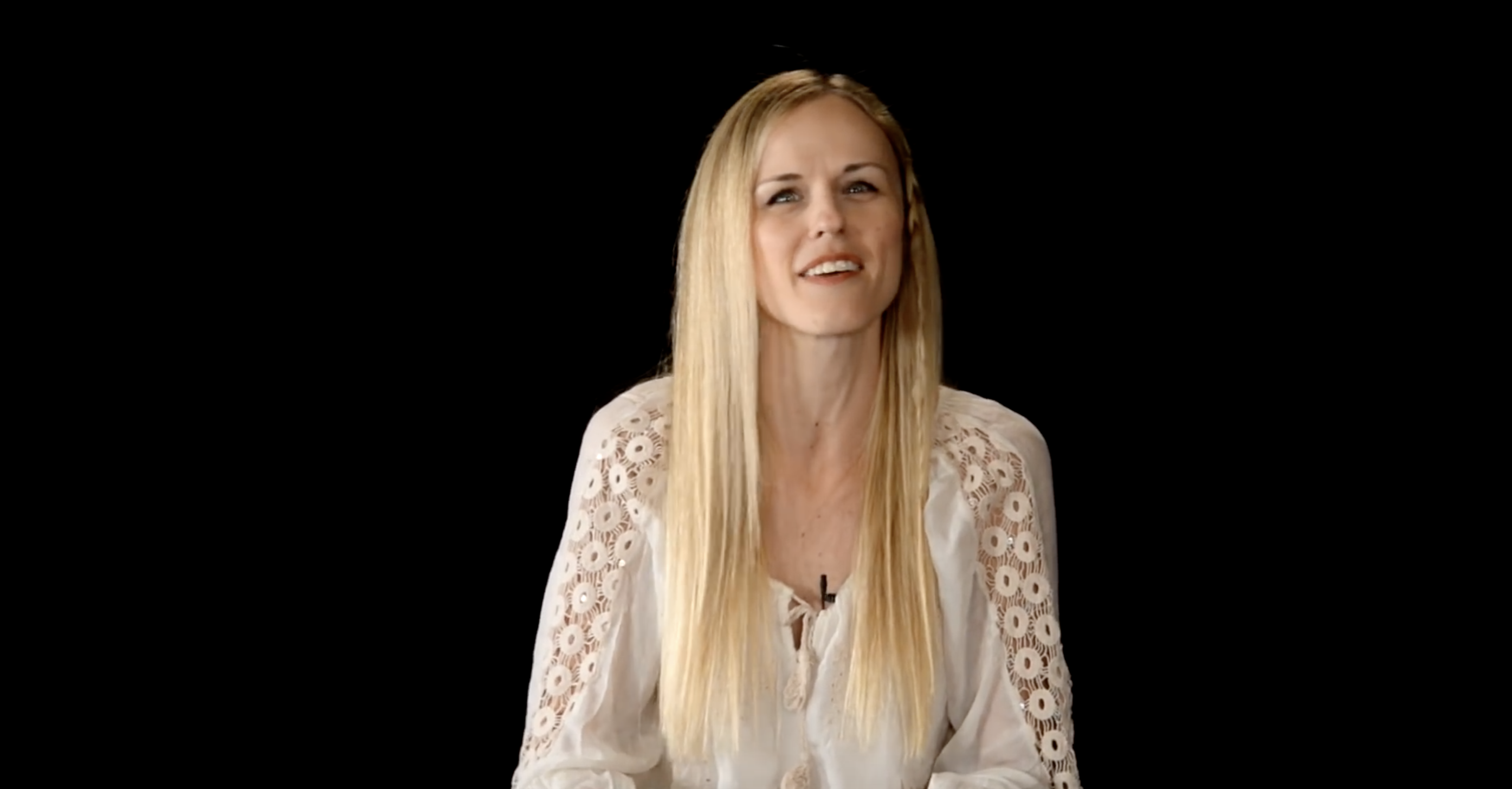
12. Lana Lokteff

  • Believes the Holocaust is exaggerated.
  • Thinks non-natural clothing materials cause disease and started her own all-organic fashion line called Lana's Llama.

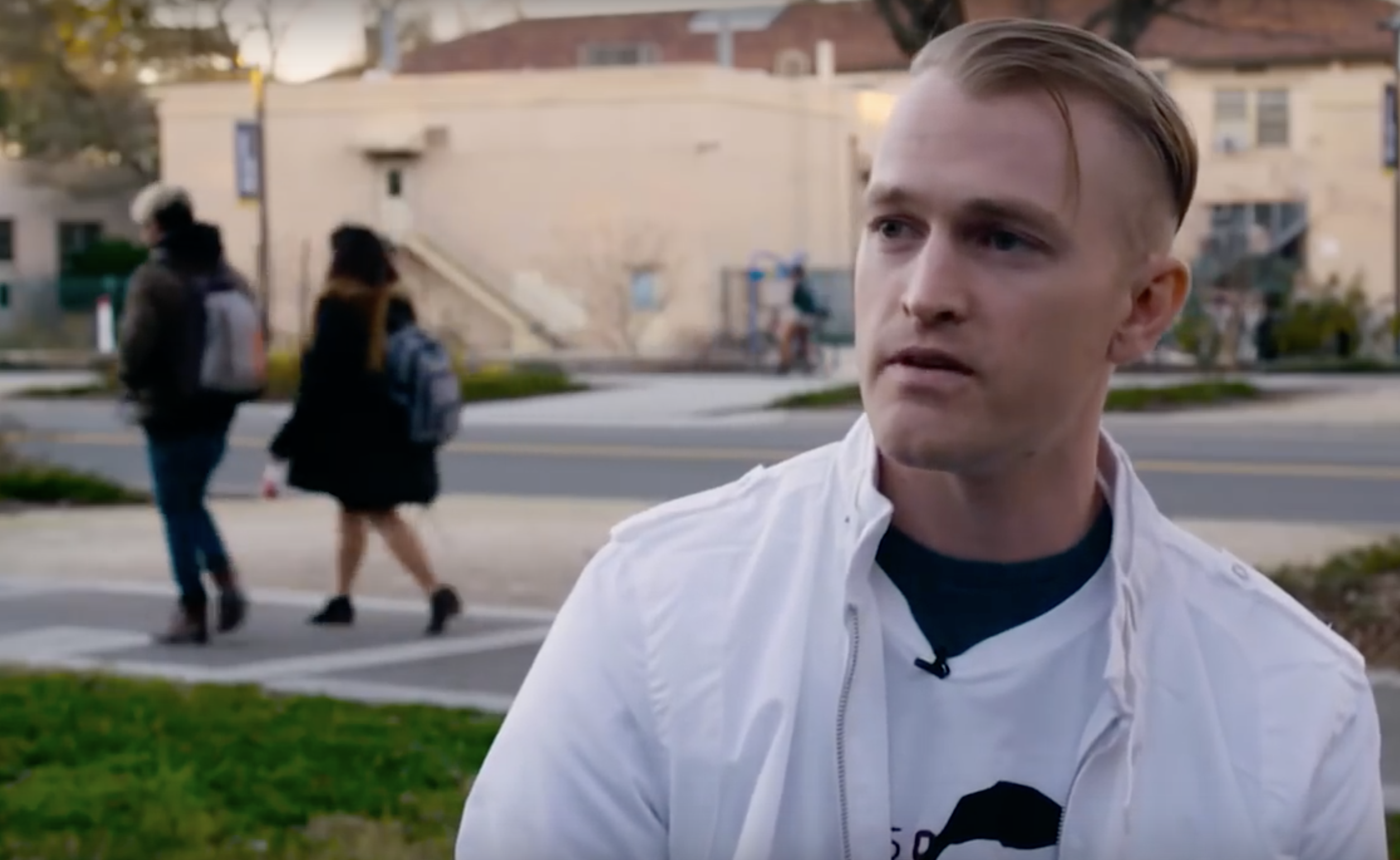
13. Nathan Damigo

  • Marine veteran who gained popularity after "falcon punching" a 95-pound woman in the face at a protest.
  • Robbed a cab driver he thought was Iraqi at gunpoint for $43.

ANSWERS
1. REAL
2. REAL
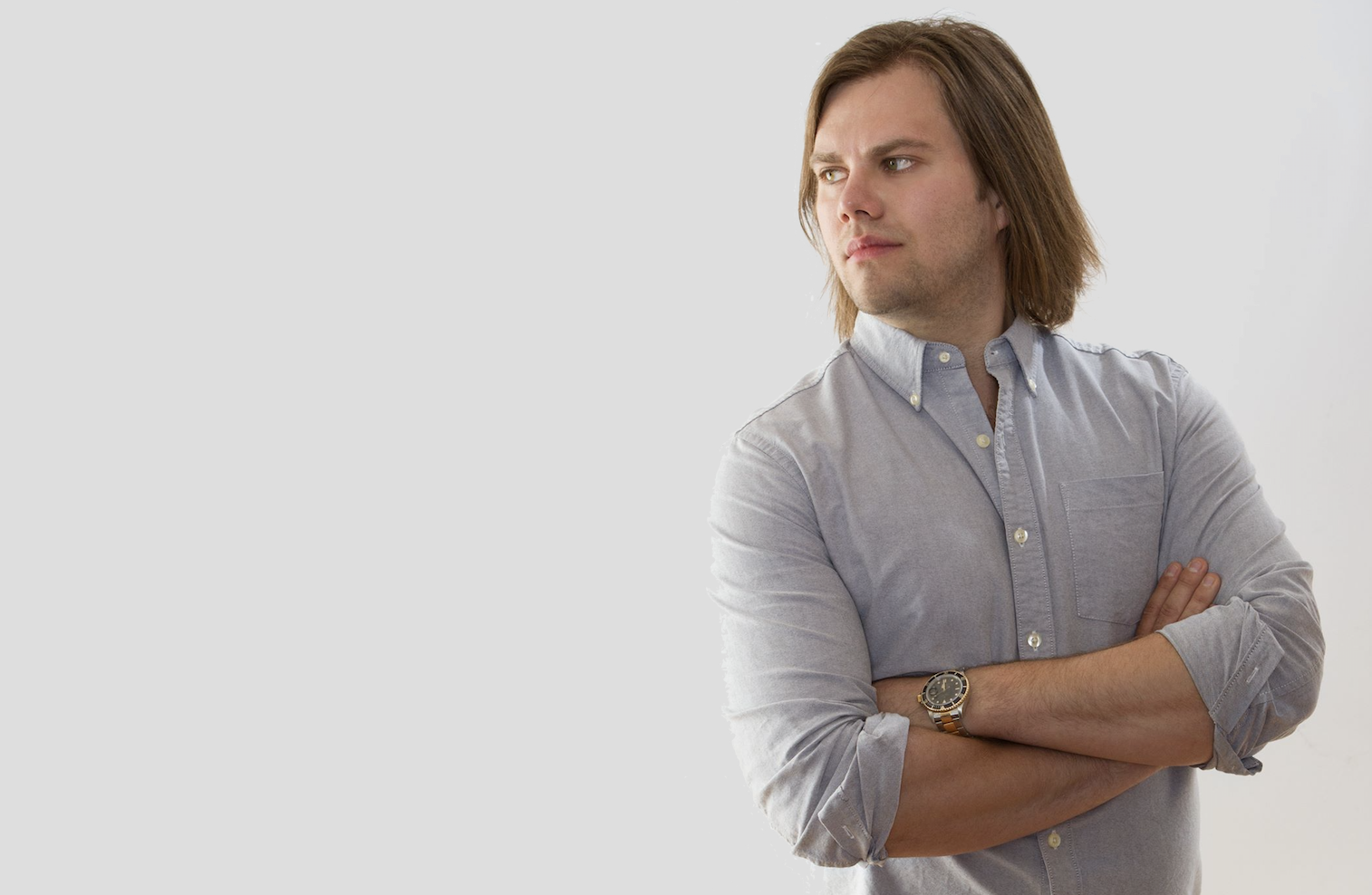
3. FAKE - Photo actually of my friend Gille, who is not alt-right.
4. REAL
5. REAL
6. REAL
7. FAKE - Photo actually of my friend Arun, who is not alt-right.
8. FAKE - Photo actually of me, the author, and I'm not alt-right.
9. REAL
10. REAL
11. FAKE - Photo actually of my friend Max, who is not alt-right.
12. REAL
13. REAL

12 Jul 20:57

Wires Don€™t Cut Heads Off: 5 Movie Deaths That Can't Happen

By Matt Farmer  Published: July 12th, 2017 
12 Jul 20:45

Marijuana taxes are giving Colorado a pot of money to rebuild its crumbling schools

by German Lopez

Cannabis taxes are raising tens of millions of dollars that are going straight to the state’s school-building fund.

The K-12 school in Deer Trail, Colorado, is in rot. The swimming pool is in such grave shape that students can’t use it anymore. People in wheelchairs have to be lifted up stairs. A sewage leak has closed the coach’s locker room. Even basic security is a problem, as the doors are so out of shape that they can be difficult to close and lock.

All of this, detailed in a report in the Denver Post, may soon come to an end. Thanks to an infusion of state cash, the small town is finally building a new school. And here’s the kicker: Some of the money funding the school is coming from Colorado’s excise tax for marijuana.

That’s right: Marijuana legalization is helping build new schools in Colorado.

It’s not just Deer Trail. As part of the state’s legalization plan, Colorado allocates $40 million in marijuana tax money into the state’s Building Excellent Schools Today (BEST) program every year. The money then goes to building new schools or improving them.

BEST is expected to fund nearly $300 million in school projects over the 2017-2018 fiscal year, of which about $40 million will come from the state’s marijuana excise tax.

The money has led even some people skeptical of legalization to accept some of its benefits. So far, not a single school district has rejected the funding.

“I don’t care where the money comes from. If we get a new school, I’m for it,” Hayley Whitehead, a Deer Trail graduate who works for the school district, told the Denver Post. “I see the invoices and see what we need for repairs, so I have a pretty good idea of the situation here.”

The $40 million for BEST is only part of what Colorado gets from marijuana each year. In 2016, the state raised an additional $117 million through the rest of its pot revenue, made up of marijuana license and application fees, sales taxes, and the excise tax. That other money was allocated to the Marijuana Tax Cash Fund, which is largely used for health care, education, drug treatment, drug prevention, and law enforcement programs; local governments; and a public school fund separate from BEST.

Marijuana legalization can’t solve every budget problem. In total, Colorado’s cannabis taxes and fees amount to less than 1 percent of the state’s budget. When it comes to schools in particular, the Denver Post reported that school projects alone will cost $18 billion through 2018 — far more than the entire BEST program provides.

But legalization still provides a lot of money — more than $150 million a year — that Colorado otherwise wouldn’t get. It won’t solve all of the state’s budget woes, but it does allow for extra spending on some projects that perhaps couldn’t be done before. For Colorado, that means a bit of help building newer, better schools.

For more on marijuana legalization, read Vox’s explainer.

12 Jul 20:42

How to build an amazing board game collection for $10!

by Quintin Smith

Quinns: Ladies, gentlemen, non-binary folks, and anyone else who’s left a comment over the last six years along the lines of “ARRRGH STOP MAKING ME SPEND MONEY.” Today, SU&SD amends for its capitalist crimes. We talk a lot on this site about how we want board games to be “for everyone”, but to an awful lot of people the games we recommend are prohibitively...

Source

12 Jul 20:41

'Framed 2' Has Gone on Sale for $0.99 Just One Month After Launch

by Rob Funnell

I've been involved with the wild ride that is the iOS gaming community for some time now, and I'd like to think that not much can really surprise me at this point. However, upon my customary morning glance of Appshopper to hunt down the hottest deals to share with our lovely readers, one price drop in particular did manage to leave me speechless. Framed 2's [$0.99] highly anticipated release only a few weeks ago has been one of the high points for mobile gaming so far in 2017, and in our review we adored Loveshack's sequel to its incredibly stylish puzzler, as it made huge strides to improve on the original title. However, just under a month since its launch to much aplomb, Framed 2 has today gone on sale for $0.99, which is a true App Store bargain if there ever was one.

When a game that is as high profile as Framed 2 goes on sale for a mere dollar, it seems somewhat unappreciative to question why such a heavy discount has occurred so soon. Despite the strong support from Apple around its release, Framed 2 was consistently below its predecessor in the App Store charts last week according to AppAnnie, so perhaps this sale is a way to help rekindle interest in the game. After all, even though it may have received greater critical acclaim than the original Framed [$3.99], it is more of an evolution than revolution, and the concept is not as fresh as it may have been in 2014. However, this is pure speculation, and there's no telling why or how long this sale may last for. I highly recommend that anyone who didn't pick up the title when it launched to take advantage of this sale before it inevitably reverts back to its still incredibly reasonable $4.99 price tag, and let us know your impressions of Framed 2 on our forum thread.

12 Jul 11:05

Feijóo insinúa que o Goberno de España non transfire a AP-9 a Galicia por culpa de Cataluña

by David Reinero

Leiceaga propón que un grupo de deputados galegos rebata ante o Congreso os argumentos de Fomento e Pontón repróchalle ao presidente que non faga xestións políticas para levantar o veto

12 Jul 11:03

‘Pan Queer de Neda’ gana el concurso de carteles de la Festa do Pan

by Rebeca

Cartel Festa do Pan de Neda

FERROL360 | Martes 11 julio 2017 | 11:45

La nedense Alba Permuy ha sido la ganadora del concurso del cartel anunciador de la XIX Festa do Pan de Neda con su obra ‘Pan Queer de Neda’. La autora explica que su trabajo está «inspirado na combinación de dúas ideas: a identidade, -persoal e local-, en mestura coa tradición e a transformación social».

La propuesta fue elegida entre 16 candidaturas por un jurado formado por Ana Rosa Pena, teniente de Alcalde, Cristina Bouza, concejala de Cultura, Leandro Lamas, artista y Manel Gómez Santos, diseñador gráfico.

Desde el Concello indican que el pan de Neda representa uno de los elementos identitarios más reconocidos de la villa y «o noso pan simboliza para o pobo patrimonio, tradición e cultura; e por iso se sitúa no centro da imaxe».

Alrededor del pan aparecen otros elementos que combinan la tradición y el folclore «en relación coas ideas defendidas polo movemento de transformación social feminista queer». Un movimiento que apuesta por la construcción de identidades personales, estéticas y afectivas ambiguas; identidades descontextualizadas de la socialización de géneros y de los encargos patriarcales.

El cartel se compone de una fotografía de Pablo Santiago acompañada de un lema con fuente tipográfica Gaspar diseño original de Carlos Alonso. Carlos Rodil, modelo de la imagen, «defende o dereito de cada persoa a configurar a súa propia identidade con liberdade, conxugando con total naturalidade tradición e modernidade», señalan en la web municipal.

Al tiempo se combinan elementos culturales más autóctonos y significativos de nuestro territorio, con una estética transformadora que reivindica «o dereito de todas e todos á diversidade e á autenticidade».

12 Jul 10:59

Coffee Drinkers Live Longer

by Daniel Oberhaus

It is said that the French author Honoré de Balzac drank up to 50 cups of coffee every day to fuel his grueling writing binges in the middle of the night. While today's coffee addicts can undoubtedly sympathize with Balzac's insane coffee consumption as a productivity booster, according to two new major studies, there may be another big benefit to binging on bean: a longer life.
The first study, led by USC associate professor of preventative medicine Wendy Setiawan, found that people who drink at least one cup of coffee per day are about 12 percent less likely to die than non-coffee drinkers. The finding is based on 16 years' worth of data collected from 185,000 Americans over the age of 45. For those who drank two or three cups a day, they were 18 percent less likely to die. As detailed in Annals of Internal Medicine, whether the coffee was caffeinated did not matter.

Although Setiawan's study wasn't the first to link coffee consumption with longevity, it is unique in the ethnic diversity of its data. Prior to the USC research, most studies looking at coffee and health focused specifically on white populations. In Setiawan's research, however, whites only accounted for 25 percent of the research cohort, while Japanese-Americans accounted for 29 percent, Latinos accounted for 22 percent and African-Americans accounted for 17 percent.


More From Tonic: The Effects of Putting Weed in Your Coffee


"Until now, there was very little data about coffee and non-Caucasians," Setiawan says. "But findings in Caucasians may not be really applicable to other groups. So with this study we had a multi-ethnic cohort and showed that coffee lowered the rates of death in non-Caucasian populations, too."

A second study released today in Annals of Internal Medicine from Imperial College London further boosts Setiawan's observations. This study, which included data from over 500,000 people over the age of 35 in ten European countries, also noted that increased coffee consumption was correlated with a lower risk of death from all causes, but particularly cardiovascular disease. According to the researchers, drinking three or more cups of coffee per day was correlated with the lowest risk of death in the cohort.

In addition, the Imperial London researchers also conducted a sub-study on 14,000 individuals that looked at metabolic biomarkers, or quantifiable biological parameters used to measure health. Overall, they found that coffee drinkers tend to have healthier livers and better glucose control than those who abstain from the bean.

While these results may come as a breath of fresh air for the coffee enthusiasts out there, it's important to recognize that these are observational studies, not clinical research. In other words, these research groups have seen statistically significant correlations between coffee consumption and longevity. In order to establish a causal mechanisms, researchers will need to do more clinical research to see how coffee affects certain areas of the body, such as the liver.

Still, these studies add some much needed statistical legitimacy to the study of coffee and health, which is plagued by contradictory research. For example, in 1991 the World Health Organization had labeled coffee as a "possible carcinogen" based on its apparent links with cancer in the urinary bladder. This label stood until 2016, when the WHO reversed its stance and acknowledged that coffee can actually reduce the likelihood of getting certain types of cancer based on new research.

"For people who studied coffee in the past, these studies may have been small or not properly analyzed, leading to conflicting results about the effect of coffee on health," Setiawan says. "I would love to see somebody doing clinical trials with randomized populations and controls that looked at the effect of coffee on something like liver function because in an observational study, we can't prove causation, just show there's an association."

Read More: A 16-Year-Old Died From Drinking Too Much Caffeine

12 Jul 10:57

La añorada Lost Sounds se transforma brillantemente en "Sweet Knives"

by Tremendo Garaje

Lost Sounds han sido por derecho propio uno de los grandes referentes del synth-punk y el post-punk sintético de la primera década de este milenio en Norteamérica, sonido oscuro y renegrido que después influenciado por el "favorable ambiente" rolaría hacia pautas mas punk-garajeras, y banda de la que nunca podremos obviar fue uno de los mas prolíficos de los muchos proyectos en los que estuvo implicado el mas grande, Jay Reatard, que además propició el encuentro con Alicja Trout (Alix Brown), la que posteriormente sería su pareja y con la que formaría el desquiciante dúo Angry Angles tras la disolución del grupo.


Pero aquella excelente banda no era solo Jay, ni mucho menos, allí había mucho talento con las ideas muy claras a pesar de lo oscuridad que creaban, empezando por la propia Alicja, que junto a Rich Crook su batera original y John Garland guitarra, incorporando a su viejo amigo Johnny Valiant, decidieron hace ya algún tiempo retomar las raíces de aquel renegrido y catastrofrista sonido no solo para volver a tocar aquellas canciones, sino para volver a crear nuevas composiciones en un nuevo grupo llamado "Sweet Knives",  que tomaría su nombre del corte que cerraba el "Future Touch" de la formación original, editado en 2004 por la In The Red, en el que la banda pretendía seguir con un trabajo que ellos consideraban inacabado, volviendo a tocar en directo aquellos temas que sus seguidores daban por perdidos para siempre y recuperando, en nuestra opinión con enorme buen gusto y brillante éxito, la primigenia esencia del siempre añorado cuarteto, algo que reconocen abiertamente, aunque como el mismo Crook contaba "Nunca volverá a ser caótico, porque Jay no estará en la ecuación nunca más", caos que por sus declaraciones sinceramente no creemos que la banda vaya a echar de menos.

El año pasado la "nueva" formación de Memphis dejaba las dos primeras muestras en plástico de su sonido, con dos 7" titulados "Sound on Sound" y "Burnt Sienna Blues"a través de la Red Lounge Records, y ahora la banda anuncia su primer álbum en la Big neck Records junto a una potente gira de presentación en Agosto, pero para que podáis ir comprobando que hay realmente excepciones que confirman la regla, y que esta "segunda parte" si que nos parece buena, aquí os dejamos 4 temas que nos han engolosinado y que nos dan a entender que esta banda aún tenía mucho que decir, a pesar de que la sombra de Jay, y con razón, siempre será muy alargada.


12 Jul 10:35

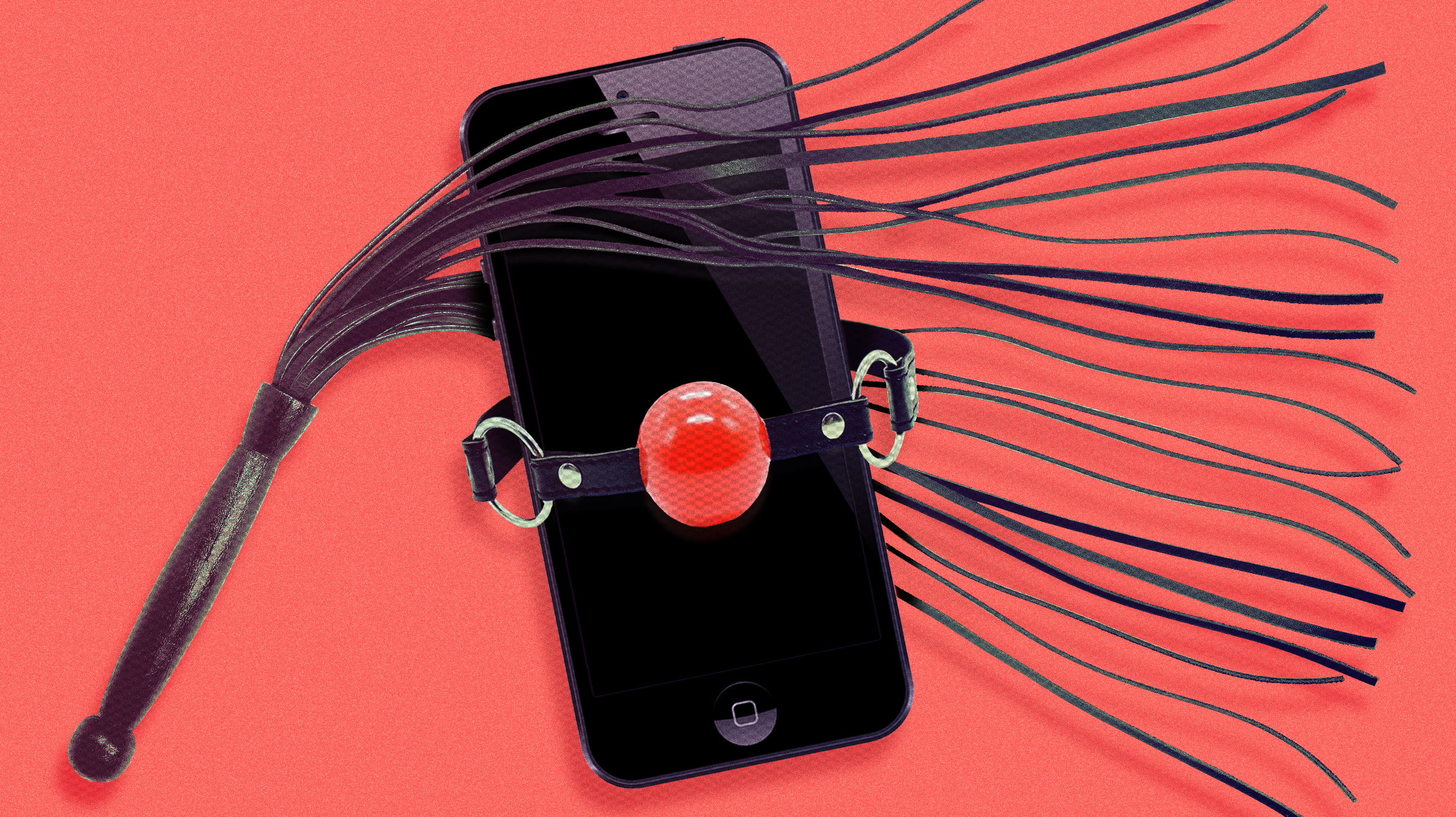
Kinky Sex Is Easier to Find Than Ever, and That May Not Be a Good Thing

by Mark Hay

KinkD is an app promising to help users "fulfill their golden shower fantasies." Essentially Tinder for kinky folk, the app's developers see their creation as an innovative platform for people looking to find niche sexual co-conspirators, or to easily explore their erotic desires. But KinkD isn't quite as novel as it might seem.

The last two years have seen the launch of a number of kinky Tinder parallels—like Kinkstr, KNKI, and Whiplr, which Gawker called "Tinder in leather chaps." Whiplr hit a million downloads earlier this year, but spokespeople from KNKI and KinkD tell me they have tens of thousands of regular users and are logging thousands more every month. Openly riding on kink's pop exposure in the post-Fifty Shades era, these apps all seem to believe they're doing something good for the kinky community—and humanity—by facilitating some casual S&M exploration.

"Everyone has the potential to be kinky, and most people have a reserved desire to be," said KinkD co-founder Jeffrey Cheung, who found domination via porn relatively recently and used it to rekindle his married sex life. "Dating apps will help the kink community expand quickly."

But to some in kink society, these apps aren't such a simple good. For many, kink is more than just a set of acts. It involves community and education, helping kinksters and the curious alike explore their boundaries, meet others, and learn and adopt the norms of safe and consensual best kinky practice. "Fundamentally, what makes [it] a subculture is that it is social," said Michal Daveed of The Eulenspiegel Society (TES), America's oldest fetish education and community group. "It's always been part of how we grow as individuals and a community, share skills, strengthen our values of communication, and care for one another. There's a degree of safety to this, as well as an established behavioral etiquette." Such social spaces are major venues for kinksters to meet one another, but also for newbies to learn vital ropes—sometimes literally.

These new apps paint kink as an identity or regular practice, similar to how people in the scene depict themselves, and they try to match people on anything from simple acts (like pegging) to fairly intense fetishes (like breath play). Yet while some apps nod to community and education, they cannot ensure it, or police norms, as effectively as old-school kink spaces. Still, no one's out to kill these apps. "It's great to have increased opportunities for kink practitioners, or the curious, to meet each other," said Daveed. But he and others believe apps ought to do a little more soul searching about how to encourage safe, sane, and consensual kink rather than just provide a new meat market on which anyone, even non-initiates, can wander blindly into any sort of kinkiness.

Traditional kink spaces take on diverse forms, ideally making them welcoming to any level of fetish knowledge or mode of social being. Sure, many people think of kink events or spaces in terms of sex dungeons or play parties, in which people enact or watch fetish tableaus. But there are also formal or informal educational events, and "munches," meetings in public spaces to socialize—an especially welcoming environment for newcomers. These venues aren't perfect; abusers can still infiltrate them, and novices can still wind up in some odd situations. However, they are welcoming and well-crafted spaces made to connect and educate all sorts of folks.

Kinky dating apps aren't looking to replace these spaces. Nor do they claim to be the only digital space for kinksters to find partners; Daveed and others in the scene attest to the fact that many just use OKCupid or Tinder and either find other kinksters in the lusty scrum or get involved with vanilla folks who they gradually introduce to their kinks. Instead, kinky apps claim they're responding to desires voiced by those in the community for a new kind of venue. Daveed acknowledges that apps can cut down on some of the frustration of going to munches or cruising general dating apps and taking ages to find someone with similar desires you can also connect to. They could be an entry point to kink communities for shy people, those who for legal or job reasons might not want to risk being seen at a kink space, or people in areas without a big scene.

But there are already digital spaces for these sorts of people, like CollarSpace and FetLife, which connect people to one another and to groups, spaces, and events near them, but can also be used as dating pools. FetLife, founded in 1996, has grown rapidly in recent years. It now boasts millions of members. But even with its strong sense of community and ties to physical events and spaces, FetLife has come under fire over the past for its digital anonymity, which seems to both allow outsiders and novices to dive deep and quickly without much norm-building or oversight, and also to abet its own infiltration by predators and abusers shirking kink norms.

Most apps have some ID verification tactic, unlike FetLife, which in theory allows for better abuse policing. However, that policing will almost inevitably still pale against what can be done within a dedicated space or a stable in-person community. And they explicitly market not to established scenesters who know how to navigate kink, or have access to community and resources to help with new encounters, but to novices—especially those drawn in by Fifty Shades of Grey, a notoriously poor depiction of kinky sex that actually glorifies abuse and outright rape.

Given how dangerously bad popular knowledge of consent and safety are, and the damage Fifty Shades has already done (see the spike in sex toy-related injuries, often tied to poorly executed kink, in its wake), and you've got a potentially nasty recipe brewing on these apps: Novices told apps are an easy entry into a new world seeking kinky trysts with other novices, or stepping into a hook-up with someone more experienced but unprepared to navigate the complexities of kink. It can't help that apps often flatten out kink's complexity and the idiosyncrasies negotiated in every kinky relationship or encounter by boiling kinks down into a few blocky search categories.

No one can expect an app to provide the same experience as a traditional, physical kink space, says Daveed. And their developers are right: some people, even novices, just aren't in a good place, socially, mentally, or physically, to access those spaces. Nor should kinky sex be limited to those willing to regularly engage in and define themselves as part of the kinkster community. But it'd be almost irresponsible not to make sure that these apps provide users with access to some sort of safety, knowledge base, and entry point to wider community, as traditional kink spaces developed to do, for the pleasure and wellbeing of all exploring kink in its pop bubble.

"Kink organizations would certainly benefit from partnering with these apps," said Daveed, "so that newbies using them can understand that having kinky interests doesn't mean you need to go for the option that means instant gratification and anonymity. It can be frustrating having kinky desires and not being able to act on them… But it's absolutely worth taking the time to explore exactly what it is you want and getting to know other kinksters as multifaceted human beings."

Most of the kinky app developers I've been in touch with accept this responsibility in theory. Kinkd, Kinkstr, and KNKI all describe themselves as communities and talk about tools for education or linking users to groups and events in-app. They note that they're consulting with people in the scene and trying to incorporate the lessons of old-school spaces and communities. However the efficacy of these efforts and the long-term effects of the apps on pop engagement and experiences with kink will probably take a few experimental years to reveal themselves.

"It's never going to be the ideal [format] for, say, education on how to engage in certain BDSM activities," said Daveed of the kinky app space. But these apps have a market. They're here to stay, a new space for kink exploration and connection. So the least they can do is make sure they do their utmost to integrate with and learn from existing kink space models, for their users' sake. Which is to say, they need to be kink apps, and not risqué Tinders for people trying to live a basic-ass Fifty Shades fantasy with a length of rope and no fucking idea what they're doing.

Follow Mark Hay on Twitter.

12 Jul 10:33

We Asked People to Sum Up Their Partner's Most Annoying Habits in Six Words

by Anna Goldfarb

Even when you love your partner, sometimes they do things that get under your skin. Some are horrible with money, some have weird hygiene quirks, and others can't seem to put their fucking phone down for one goddamn second. We asked our friends and co-workers to spill the beans about what their partner does that drives them batty. Here's what they said.

"Hasn't read a book in years." - Nicole, 37

"Gets off on popping my pimples." - Jane, 23

"Completely obsessed with MTV's Teen Moms." - Jessica, 25

"Blurts out indiscriminate rap lyrics constantly." - Jarri, 24

"Refuses to quit smoking. Hate it." - Cecily, 34

"Can't cook, can't drive, won't clean." - Zoe, 32

"Posts weepy status updates on Facebook." - Luke, 24

"Spends his money on dumb shit." - Mary, 31

"Hoarding hoarding hoarding hoarding hoarding hoarding." - Alex, 33

"Picks nose like there's gold there." - Kelly, 28

"Terrible breath. Always fights with sister." - Taylor, 32

"Throws dishes when she's feeling angry." - Zach, 28

"He never pays his parking tickets." - Liz, 34

"Works nights and weekends. I don't." - Dom, 32

"Always takes selfies at the gym." - Melissa, 38

"She is always on her phone." - Jon, 36

"Guilts me into continuously breaking plans." - MJ, 26

"Only cuts toenails twice a year." - Ria, 28

"Leaves toenail clippings on bedside dresser." - Tanya, 25

"Bites toenails. Bites toenails. BITES. TOENAILS." - Sarah, 28

"Won't pay back her student loans." - Dave, 39

"Leaves beard hairs all around sink." - Jen, 33

"We're married, refuses to use nicknames." - Liz, 28

"Drinks too much. Never has money." - LeAnne, 23

"Insists on putting Sriracha on everything." - Coleen, 35

Illustration by Brandon Celi.

"Says Creed is a good band." - Francesca, 33

"Cleans my ears with bobby pins." - Jared, 33

"She checks text messages while fucking." - Greg, 27

"He hates animals, children, and sweets." - Beth, 31

"He shaves his arms and legs." - Kate, 21

"She's friends with all her exes." - Keith, 33

"Sometimes she's stinky. Won't wear deodorant." - Justin, 29

"Always quotes 80s movies. It's annoying." - Juliet, 36

"Talks to her mom every day." - Omeed, 37

"Compares everything to episodes of Simpsons." - Jill, 22

"Watches Adam Sandler movies on Netflix." - Ariel, 29

"He never checks his voicemail messages." - Penelope, 31

"Stays out late with skateboarding buddies." - Sara, 28

"Allergic to doing his own laundry." - Corinne, 26

"Blows all his money on drugs." - Melissa, 22

"Insists on sleeping with TV on." - Ginny, 30

"Drinks Diet Coke with her breakfast." - Sonya, 24

"She's a very, very strict vegan." - Joseph, 26

"Bathes in hand sanitizer. Smells medicinal." - Laura, 21

Follow Anna Goldfarb on Twitter.

12 Jul 10:16

El PP de Santiago propone colgar una placa en memoria de Miguel Ángel Blanco y otras víctimas

by SANTIAGO. EP


12 Jul 10:10

Intenté disfrutar del sexo anal por primera vez

by Maria Yagoda

Tengo la sensación de que a todas las mujeres les encanta la estimulación anal. Quizá me viene porque a mí no (me encanta la estimulación anal) y en este tipo de narrativa me considero una perdedora. Naturalmente, las mujeres obsesionadas con el sexo anal que me imagino también están más buenas, son más relajadas y han experimentado más que yo.

Para ser sincera, no odio el sexo anal porque es imposible odiar algo que no has probado (excepto el crossfit). Sin embargo, en general no suelo creerme que las mujeres, hetero o no, disfruten con los juegos por detrás: conforme proliferan los artículos sobre sexo anal, sobre butt plugs o tapones anales y sobre culos en general, me sorprendo a mí misma preguntándome, ¿En serio?

Ocasionalmente pregunto a la gente si a las mujeres con las que se han enrollado les gusta y la respuesta a menudo es sí. No necesariamente tiene que haber una loca penetración anal, pero las mujeres con las que se han acostado disfrutan con un dedo o una lengua ahí. ¡La sexualidad es un vasto y diverso caleidoscopio de preferencias! Tengo confirmación de que las mujeres lo desean aunque yo nunca lo haya deseado ni haya pensado siquiera en profundidad sobre el tema aparte de cuando vi ese episodio de comida de culo en Girls, que me dejó absolutamente flipada.

"Yo no practico juegos anales, sobre todo porque vivo constantemente estreñida"

Aun así, para muchas de las mujeres con quienes hablé para este artículo, los culos son un duro tabú. Cuando pregunté a una mujer si alguna vez dejaba que su novio explorara su culo, me respondió, "¿Debería contestarte a este email mientras estoy en los juzgados esperando un juicio? Probablemente no, ¡pero allá voy!". Me dijo que nunca había querido tener nada dentro del culo, citando un montón de motivos personales: "(i) mi higiene, (ii) la higiene de la otra persona, (iii) la falta de recompensa física (entiendo que es diferente en el caso de los hombres, en cuyo nombre no puedo hablar ni hablaré), (iv) desviación del evento principal, en el que mi culo no tiene absolutamente nada que ver".

Otra mujer me dijo: "No me gusta el sexo anal y en realidad no sé si es porque me da la sensación de el hecho de que te guste es ceder ante el patriarcado o si es porque realmente no me gusta. Pero he odiado todas las cosas [relacionadas con el culo] que he probado". Y otra: "Varios hombres han intentado aventurarse ahí atrás en el pasado y yo literalmente no he obtenido nada de ello excepto incomodidad". Y otra más: "'Nada de sexo anal' es ahora mi precio de admisión si quieres tener sexo conmigo".

Mi versión favorita procedió de una amiga que constantemente está estreñida.

"Yo no practico juegos anales, sobre todo porque vivo constantemente estreñida y una vez, buscando en internet posibles curas, encontré una comunidad de personas que se insertaban el pulgar en el culo para estimular la defecación y después se volvieron dependientes de ello. Esa es la única manera que tienen ahora de hacer caca", me dijo. "Así que tengo la sensación de que podría provocar mis ganas de hacer popó, lo cual sería muy bueno viendo las cosas desde una perspectiva general, pero no en el momento ni el lugar adecuados, claramente. Me preocupa volverme dependiente de ello".

El tapón anal "Ditto"

Sin embargo, muchas mujeres con las que hablé disfrutan de la estimulación, ya sea durante el sexo anal o como complemento de la masturbación. "Cuando empecé a masturbarme en el instituto me metía un dedo en el culo", me contó una amiga. "Pero ahora con los vibradores te juro que soy demasiado vaga y tengo la sensación de que todas mis necesidades están cubiertas. Aunque he estado pensando en traer un tapón anal al dormitorio".

Yo, que nunca me quiero perder nada, deseaba darle una oportunidad. ¿Quizá podría entrar ocasionalmente por la puerta de atrás? Pedí un "Ditto", el tapón anal vibrador de la marca We-Vibe. Pero antes de introducírmelo, busqué el consejo de un sexólogo especializado en culos. El Dr. Ian Kerner estuvo más que feliz de charlar conmigo una bonita mañana de junio.

"La zona del ano está llena de terminaciones nerviosas que contribuyen al placer, de modo que no hay motivo por el que tu culo no debería formar parte de dicho placer", me dijo Kerner. "Los individuos y las parejas siempre están interesados en nuevas zonas de excitación y conexión, así que los juegos anales pueden suponer una poderosa adición para tu placer personal".

"No me gusta el sexo anal y en realidad no sé si es porque me da la sensación de el hecho de que te guste es ceder ante el patriarcado"

El hecho de que los juegos anales sean en cierto modo tabú añade un elemento psicológicamente estimulante, según él.

"Es una zona en la que la gente normalmente no está muy experimentada, así que ser capaz de explorarlo por ti sola, pero especialmente con una pareja, introduce áreas de excitación, vulnerabilidad e intimidad que incrementan enormemente tu sensación de conexión sexual", dijo. "Es bueno empezar con un juguete como un tapón anal. Incluso si lo usas para su inserción parcial o completa, te aconsejaría que primero lo pruebes sola. Utiliza lubricante, empieza a fantasear y a masturbarte, disfrutando de la estimulación clitoriana o vaginal que más te guste. Llévate a un estado agradable y cálido de excitación".

Había estado hablando con él usando el altavoz del móvil en un rincón apartado del patio trasero de una cafetería y, al final de nuestra conversación, una mujer ―que estaba en el otro lado del café y había salido afuera después de que empezara mi conversación telefónica― se me acercó sonriendo y me dijo, "Necesitas unos auriculares. Es demasiado temprano por la mañana para masturbación y sexo anal". Me estaba echando la bronca por mis desviaciones sexuales ¡y yo ni siquiera sabía si tenía una desviación sexual! (Además, ¿te puedes creer que alguien piense que algún momento del día es demasiado temprano para la masturbación?).

Aquella noche, me llevé a un "estado cálido de excitación", siguiendo los consejos del Dr. Kerner. De hecho, utilicé el tapón vibrador como usaría cualquier otro vibrador, estimulando mi clítoris al principio. Vaya, qué vida la mía, pensé cuando empezaba a untar el aparato con lubricante. Lo llevé hasta mi parte trasera y lentamente lo introduje. La sensación era agradable porque la vibración siempre es agradable, pero no sentí ninguna excitación adicional. Lo introduje un poco más, finalmente entero, pero todo lo que sentí fue un agradable masaje. Imagino que si los juegos anales hubieran sido algo con lo que yo fantaseara, me habría sentido increíblemente excitada, pero como no es el caso, eso no pasó.

Sin embargo, no sentí dolor, de modo que, ¿era agradable? Me sentí cómoda, lo cual es mucho más de lo que esperaba. Tras cinco minutos ―un intento bastante bueno― lo apagué y me recompensé por ser tan aventurera con un sándwich que llevaba tres tipos diferentes de embutido.

12 Jul 09:42

I want my MTV

by Artw
12 Jul 00:49

Adivina el título de la novela con un solo dibujo

by Anabel Bueno Ballesteros

Uno de los ejercicios con el que es casi imposible no picarse en los Cuadernos de vacaciones para adultos de Blackie Books es la de dibujos que representan una novela, una canción o un grupo musical. Algunas te pueden parecer fáciles, pero cuando una se te atasca...

Con motivo de la sexta entrega de estos pasatiempos veraniegos, te proponemos un test con uno de los ejercicios de la edición anterior y dos acertijos más extra del cuaderno de este año: adivina el libro por su portada literal. Además, esta tarde, a partir de las 14.00 (hora peninsular española), jugaremos con adivinanzas como estas en una nueva entrega de Vernícolas, nuestro programa semanal en directo en nuestra página Facebook. ¡Ponte a prueba con las propuestas del campeón de Saber y ganar Daniel López Valle y el ilustrador Cristóbal Fortúnez!

12 Jul 00:49

La pintada "Emosido engañado" ha desaparecido porque no podemos tener cosas bonitas

by Guillermo del Palacio

Emosido traicionado.

El 5 de julio del año pasado conocimos la que posiblemente sea la mejor pintada de la historia:

El 5 de julio del año pasado conocimos la que posiblemente sea la mejor pintada de la historia:

¿Qué Banksy ni qué Bankso?

Twitter: @misstrainwreck

Sin embargo, el 26 de abril alguien pintó de nuevo una fachada que, sinceramente, debería haber estado protegida por Patrimonio.

Sin embargo, el 26 de abril alguien pintó de nuevo una fachada que, sinceramente, debería haber estado protegida por Patrimonio.

Twitter: @misstrainwreck


View Entire List ›

12 Jul 00:48

Las mujeres congelan sus óvulos debido a un 'déficit' de hombres cultos

by Kimberly Lawson

Según un reciente estudio que todavía no se ha publicado, simplemente no hay suficientes hombres cultos ahí fuera para hacer bebés con mujeres intelectualmente comparables. Ese es el motivo por el que las mujeres de éxito están recurriendo a la congelación selectiva de óvulos, indicó una investigadora de Yale en su presentación durante la reciente conferencia de la Sociedad Europea de Reproducción y Embriología celebrada en Ginebra, Suiza.

Marcia Inhorn ―Profesora de Antropología y Asuntos Internacionales en la Universidad de Yale― y sus coautoras sintieron interés por explorar por qué cada vez más mujeres estaban optando por la criocongelación de ovocitos (o congelación de óvulos). Reclutando participantes en ocho clínicas de fertilización in vitro (FIV) de EE. UU. e Israel, las antropólogas encuestaron a 150 mujeres (114 norteamericanas y 36 israelíes) que ya hubieran completado un ciclo de congelación de óvulos entre junio de 214 y agosto de 2016.

Te puede interesar: El auge de la derecha europea está cavando la tumba de la salud reproductiva

Las investigadoras determinaron que la mayoría de mujeres no estaban "conservando" su fertilidad porque quisieran centrarse en sus carreras profesionales, que es una explicación muy extendida. "Quedó claro desde el principio, pero fue confirmado al final de este estudio, que la principal razón por la que este grupo de mujeres de gran cultura había congelado sus óvulos, normalmente a finales de la treintena y principios de la cuarentena, es que habían sido incapaces de encontrar un compañero comprometido, básicamente, a casarse y formar una familia con ellas", explica Inhorn a Broadly. "En casi todos los casos, las mujeres me dijeron que habían estado intentando a lo largo de su educación y su carrera profesional encontrar un compañero de vida, pero eso todavía no había sucedido".

El estudio indica que esto es un "reflejo de una creciente aunque poco comentada tendencia de género, según la cual las mujeres están superando en número cada vez más a los licenciados universitarios masculinos en ambos países". En otras palabras, según Inhorn, "es una cuestión demográfica".

Inhorn apunta a los datos del Censo de EE. UU. recopilados por el escritor Jon Birger en su libro Date-onomics: How Dating Became a Lopsided Numbers Game (Cita-nomía: cómo tener una cita se ha convertido en un juego desequilibrado de números), que encontró pruebas de una creciente disparidad educativa entre hombres y mujeres. Por ejemplo, indica el estudio, en ciudades como Washington, DC y Miami, la diferencia entre licenciados universitarios masculinos y femeninos era del 49 por ciento y el 86 por ciento respectivamente (tanto Miami como Washington, DC fueron ciudades elegidas para este estudio).

"A causa de esta sequía de hombres con titulación con los que casarse, las mujeres recurrieron a la congelación de óvulos como concesión tecnológica al 'déficit de hombres'"

"A causa de esta sequía de hombres con titulación con los que casarse, las mujeres recurrieron a la congelación de óvulos como concesión tecnológica al 'déficit de hombres'", indican las autoras del estudio. "Casi todas las mujeres que participaron en este estudio eran heterosexuales y querían casarse y ser madres. Las mujeres lamentaban la 'falta de hombres' en su vida y veían la congelación de óvulos como forma de ganar tiempo mientras continuaban su búsqueda (online) de un compañero comprometido".

Inhorn afirma que a menudo las mujeres tienen las sensación de que hay algo que no va bien en ellas cuando no son capaces de encontrar pareja con la que formar una familia. Estos hallazgos, sin embargo, sugieren que "no son las mujeres", indica. "Es que literalmente actualmente hay una pronunciada disparidad demográfica para las mujeres que desean compartir su vida con un hombre con estudios".

También indica que la posibilidad de congelar sus óvulos confirió a muchas de las participantes una sensación de empoderamiento. "Casi todas las mujeres con las que hablé estaban felices de haberlo hecho. Sentían que aquello les había otorgado cierto control, una especie de tranquilidad espiritual y de hecho eliminó el factor de desesperación de sus citas y la sensación de estar bajo la presión del reloj biológico".

"Las participantes dijeron que se sintieron empoderadas haciéndolo", continuó Inhorn, "pero el problema es de género y de nivel cultural y nadie lo está teniendo realmente en cuenta ni hablando sobre el hecho de que las mujeres están sobrepasando a los hombres. Es maravilloso que las mujeres triunfen a nivel educativo, pero eso también está desembocando en otros problemas que no se están explorando suficientemente bien".

12 Jul 00:47

¿Dónde vas, Alfonso XII? ¡Hemos venido a emborracharnos!

by Javier Bilbao

Detalle de la portada del Libro de los cincuenta romances, ca. 1525. (DP)

No hace falta estar en pleno viaje lisérgico para percibir que de una forma u otra todo en este mundo está conectado, simplemente la mayor parte de las veces no somos capaces de ver la relación entre hechos aparentemente independientes. Por eso es interesante coger un hilo cualquiera, ir tirando de él y ver hacia dónde nos lleva. Por ejemplo, ¿cuál es, de haberlo, el vínculo entre un trágico romance protagonizado por el rey de Portugal en el siglo XIV y los cánticos de la afición del Cádiz FC? Probablemente no es el tipo de pregunta que nos hacemos al mirarnos al espejo por las mañanas, jamás hubiéramos imaginado que sin el primero los segundos serían diferentes, pero si continúan leyendo descubrirán el hilo conductor… y de paso alguna cosa más.

Comencemos remontándonos a Inés de Castro, bisnieta del rey Sancho IV que nació en la comarca gallega de A Limia en torno al año 1320. Conoció al infante Pedro poco antes de que este contrajera matrimonio y parece ser que surgió un flechazo de inmediato entre ambos, una relación que fue estrechándose cuando se convirtió en la dama de compañía de su mujer Constanza Manuel. Cuando esta murió durante un parto, Inés y Pedro formalizaron su vínculo casándose en secreto y tuvieron cuatro hijos. Todo esto no era visto con buenos ojos por el padre de él, Alfonso IV, quien recelaba de la dinastía de la que provenía la chica. Así que, siguiendo la recomendación de sus consejeros, aprovechó una ausencia de Pedro para ordenar el degollamiento de Inés en Coimbra el 7 de enero de 1355. Furioso, Pedro se alzó contra su progenitor y dos años después se hizo con el trono de Portugal. Pero su venganza no acababa ahí. Mandó entonces ejecutar a aquellos consejeros haciendo que se les arrancase el corazón y ordenó exhumar el cadáver de su amada, a quien dedicó un funeral con todos los honores, la proclamó reina y a sus hijos, por tanto, legítimos herederos, e hizo descansar sus restos en un mausoleo real donde él más adelante sería también enterrado, no a su lado sino frente a frente, con la esperanza de que en el día de la resurrección al levantarse fuera a ella lo primero que viese.

Una historia de amor tan trágica necesariamente había de ser convertida en leyenda con el paso del tiempo, de forma que alcanzó una altura mítica comparable a la de Abelardo y Eloísa o Romeo y Julieta. Sus vidas fueron enriqueciéndose en las narraciones con elementos cada vez más fantásticos, como que el cadáver de Inés fue desenterrado para ser sentado en el trono, donde fue coronada y sus súbditos, postrados, besaron su esquelética mano, o que el espíritu de ella se le apareciera tras su muerte para aconsejarlo. Esto último es donde nos centraremos, ahí seguiremos tirando del hilo.

Detalle de Coronamiento de Inés de Castro en 1361, de Charles Compte, ca. 1849.

La historia fue escrita una y otra vez durante los siglos posteriores por autores españoles y portugueses, desde el Cancioneiro de García de Resende a comienzos del siglo XVI, hasta Reinar después de morir, de Luis Vélez de Guevara en pleno Siglo de Oro español. No obstante durante mucho tiempo se consideró que el Romance del palmero no se había inspirado en la historia de amor de Pedro e Inés, sino que fue reinterpretado y apropiado posteriormente por la tradición literaria. Eso es lo que se creía… hasta que  Patrizia Botta, de la Universidad de Roma, publicó este estudio en el que desgrana las razones por las que esta obra tuvo como origen a nuestros dos enamorados. Pero vayamos por partes, ¿qué es el Romance del palmero?

La poesía narrativa medieval era común a toda Europa y si los italianos la llaman canzone, los franceses chanson y los ingleses ballad, en nuestro país adquirió el formato conocido como «romance», es decir, poemas de versos octosílabos con rima asonante en los versos pares, mientras los impares quedan sueltos. La rima facilitaba su memorización, dado que se transmitían oralmente… Hasta la invención de la imprenta, cuando uno de los primeros en pasar a este formato fue el Romance del palmero (también conocido como Romance de la aparición), en una recopilación del finales del siglo XV llamada Cancionero de Londres. Este es:

Yo me partiera de Francia,
fuérame a Valladolid.
Encontré con un palmero,
romero atan gentil.
«Ay, dígasme tú, el palmero,
romero atan gentil,
nuevas de mi enamorada,
si me las sabrás dezir».
Respondiome con nobleza,
él me fabló y dixo así:
«¿Dónde vas, el escudero,
triste, cuitado de ti?
Muerta es tu enamorada,
muerta es que yo la vi.
Ataút lleva de oro
y las andas de un marfil.
La mortaja que llevava
es de un paño de París.
Las antorchas que le llevan,
triste, yo las encendí.
Yo estuve a la muerte della,
triste, cuitado de mí.
Y de ti lleva mayor pena
que de la muerte de sí».
De qu’esto oí yo, cuytato,
a cavallo iva y caí.
Una visión espantable
delante mis ojos vi.
Hablome por conortarme,
hablome y dixo así:
—«No temas, el escudero,
no ayas miedo de mí.
Yo soy la tu enamorada,
la que penava por ti.
Ojos con que te mirava,
vida, no los traigo aquí.
Braços con que te abraçaba
so la tierra los metí».
—«Muéstresme tu sepoltura
y enterrarme [é] yo con ti».
—«Biváis vos, el cavallero,
biváis vos, pues yo morí.
De los algos deste mundo
fagáis algund bien por mí.
Tomad luego otra amiga
y no me olvidedes a mí,
que no podés hazer vida,
señor, sin estar así».

Como podemos ver no se mencionan los nombres de los protagonistas, de ahí que durante mucho tiempo no se vinculasen con Pedro e Inés. Sin embargo hay indicios significativos, como que ella muriese joven, de forma violenta y en ausencia de él, y que este le respondiera «Muéstresme tu sepoltura  y enterrarme [é] yo con ti», ¿recuerdan lo que decíamos de que fueron enterrados uno frente al otro? Pero el dato fundamental lo muestra Patrizia Botta al señalar la versión que perduró en Marruecos del romance a través de los judíos expulsados en 1492, que incluye estos versos:

Ya murió la flor de mayo
ya murió la flor de abril
ya se murió la que fuera
reina después de morir

Ese último verso salta a la vista que alude a nuestra Inés. Lo más interesante es que el romance continuó transmitiéndose oralmente en nuestro país generación tras generación, así que cuando el hispanista Gerald Brenan llegó a Andalucía en la primera mitad del siglo XX pudo escucharla y la transcribió así:

«¿Dónde vas, buen caballero?
¿Dónde vas tú por ahí?»
«Voy en busca de mi esposa:
hace tiempo que no la vi».

«Tu esposa ya se ha muerto:
muerta está, que yo la vi,
y las señas que llevaba
yo te las puedo decir».

«Llevaba un vestido blanco
con estrellas de marfil
y el velo que la cubría
era un rico carmesí».

«Los zapatos que llevaba
eran de un rico charro,
regalados por Alfonso
la noche que se casó».

«Cuatro duques la llevaban
por las cortes de Madrid».
Al pasar por un barranco,
una sombra vi salir.

Contra más me quito de ella,
más se acerca para mí.
«No te asustes, caballero.
No te asustes tú de mí».

«Que soy tu querida esposa
que te salgo a recibir».
«Si eres mi querida esposa,
echa los brazos por mí».

«Los brazos que te abrazaban
a la tierra se los di.
Cásate, buen caballero,
cásate, no estés así».

«La primer hija que tengas
ponle Laura como a mí.
Esas dos hijas que tienes
sácalas a divertir».

En su obra Al sur de Granada también resalta su melodía, que describe como «insistente e inolvidable» ¿Cómo era? Basta con ir al Fondo de Música Tradicional del CSIC, pinchar  en el audio y podremos escucharla, seguro que les resulta familiar. Curiosamente unas décadas antes la muerte de María de las Mercedes, cuando apenas estaba recién casada con Alfonso XII, hizo que se cantase por Madrid: «¿Dónde vas, Alfonso XII, / dónde vas triste de ti? / Voy en busca de Mercedes / que ayer tarde no la vi». De nuevo un rey con el corazón roto tras quedarse viudo… Sin embargo si continuamos tirando del hilo llegamos a un lugar inesperado. Como el propio Brenan señalaba en la obra mencionada, la cancioncilla había saltado al otro lado del Atlántico mediante la inmigración que recaló en Hispanoamérica, de tal forma que «durante la fiebre del oro de 1849 en California, los mineros americanos e ingleses llegaron a estar tan cansados de oírla cantar a sus camaradas mexicanos un día tras otro que la parodiaron».

Esa parodia conservó la música pero alteró la letra, que ahora narraba algo diferente aunque no menos triste, pues describe a un minero desolado por la muerte de su hija. Su título era «My Darling Clementine».  El tema gustó a John Ford y dio título a una de sus películas —que en nuestro país se conoció como Pasión en los fuertes— cuyos títulos de crédito la utilizaban de la forma tan original que pueden ver a continuación:

Desde entonces conoció múltiples versiones, como esta que suena tan bien  de Connie Francis, o esta otra con un toque jazzístico de Bobby Darin. aunque por encima de todo se convirtió en Estados Unidos en una canción infantil enormemente popular, como podemos ver aquí o en la versión un tanto perturbadora de los Singamalings. En esto pudo haber quedado el romance, pero el hilo del que tiramos aún no ha terminado. En 1998 el grupo de música dance Dario G utilizó esa melodía para la canción oficial del Mundial de Francia, el tema se llamaba «Carnaval de París». No es de extrañar que se quedara en la mente de muchos aficionados al fútbol, concretamente en la de una hinchada conocida en toda España por su buen humor, la del Cádiz CF. Coreada antes de cada partido o en las mismas gradas con una letra ya muy alejada del original, se convirtió en un cántico muy popular en otros estadios y celebraciones populares (hasta por la propia Selección Nacional tras ganar el Mundial), tanto que grupos como Los Inhumanos la incluyeron en uno de sus discos. Así que ya saben, si este verano en alguna verbena oyen cantar: «Alcohol, alcohol, alcohol, hemos venido a emborracharnos, el resultado nos da igual», recuerden el desdichado amor de Pedro e Inés, porque con ellos empezó todo.

La entrada ¿Dónde vas, Alfonso XII? ¡Hemos venido a emborracharnos! aparece primero en Jot Down Cultural Magazine.