Vill först beklaga sorgen och hoppas att du ska börja må bra snart. Jag har en fundering: Om jag äter en kost med kolhydrater så får jag energi i form av glukos och äter jag ketogen kost får jag energi från ketoner? Har jag förstått rätt så långt? jag äter ketogen kost men jag väger inte min mat så jag vet inte om mina måltider är 80E%. Mest troligt inte, men jag äter mycket protein och steker broccoli och vitkål i fett. Min fundering är vad jag får energi ifrån om det inte är glukos eller ketoner? För man måste äta viss mängd fett för att de ska bildas ketoner va? Eller är de stressande för kroppen att äta som jag gör om man inte får i sig rätt mängd av allt?
Ser även att du börjat lägga till kolhydrater och äter bär för att börja må bättre och få dina hormoner i balans? Jag blir fundersam då, är inte strikt keto de bästa för kroppen då?
Du skrev också om lazy keto och att man kan då gå ner i vikt och påverka ens muskler. Jag styrketränar och vill inte att allt slit ska vara förgäves på grund av att jag inte gör rätt och inte har koll på vad som gäller
Svar: Alla former av lågkolhydratkost är fördelaktigt för metabol hälsa. Standardkost innehåller typ 300g kolhydrater per dag och kolhydratreducerat räknas från 100g. Bara att ta bort pasta, bröd, ris, fikabröd, saft, läsk och snacks ger en kraftigt kolhydratreducerad kost men oftast ersätter man dessa kolhydrater med andra, till exempel rotfrukter, frukt, nötter och bär. Det är dock svårt att komma upp till normalnivån på naturliga livsmedel.
Myter kring lågkolhydratkost
Av någon anledning cirkulerar det en del myter kring lågkolhydratkost, inte bara att det skulle vara superfarligt att äta kolhydratreducerat och vara i ketos utan att det dessutom är farligt att inte vara tillräckligt i ketos eller tillräckligt low carb high fat. Det stämmer inte.
Vad jämför vi med egentligen? Hur äter gemene man? Är det värre att rensa bort pasta, bröd och ris från sitt skafferi än att äta ballerinakakor och tacos varje vecka? Det är ett helt ologiskt resonemang för givetvis är bättre mat bättre. Bättre mat är mat som inte har någon innehållsförteckning! Jag får ofta frågor från människor som undrar om det är mer hälsosamt att bara strunta i lågkolhydratkost om de inte kan följa det hela tiden på grund av jobbet eller familjen. Om det på något vis är ännu värre att blanda low carb / keto med normiskost.
Nej!
Att äta mindre skräp en dag i veckan är bättre än noll dagar i veckan. Det är inte farligt att gå in och ur ketos heller för det är en helt normal metabol funktion som alla människor har inbyggt.
Var kommer energin ifrån?
Maten innehåller kalorier från protein, fett och kolhydrater. Dessa spjälkas och tas upp av tarmarna. Kolhydrater lagras in som glykogen och resten av nutrienterna används som byggstenar eller lagras in som fett. På en högfettkost blir det en mer omfattande fettförbränning som ger upphov till ketoner, som också är energi. Om du äter en lågkolhydratkost kommer du att vara i lätt ketos och blir det för lite fett för full fettdrift kommer du drivas på blodsocker och glykogen resten. Så kallad hybriddrift.
Bygga muskler i ketos
Muskelbygge styrs av cellsignalering och kan påverkas positivt av bland annat “time under tension”. Mer belastning ger mer muskler. Det är därför det är viktigt att träna tungt och ofta om man är seriös med sin styrketräning. Det gäller också att hålla sig anabol större delen av tiden. Träning är katabol (nedbrytande) och det behöver därför kompenseras för med bra sömn (anabolt) och bra mat (anabolt). Bästa byggarmaten är fett och protein. Före ägg och kolesterol fick dåligt rykte var det obligatoriskt med ett tjog ägg om dagen för alla som ville bli bodybuilders!
Nu när vi vet mer om hormoner så vet vi att mer kolesterol också ger mer könshormoner, och det var så den gamla tidens bodybuilders kunde manipulera sitt testo utan anabola steroider.
Näringsbrister i ketos
Det är väldigt svårt att veta vad människor menar när de säger “jag äter keto” för det kan betyda väldigt många olika saker. Min regel, som går som en röd tråd genom alla mina böcker är näringstät föda. Aldrig missunna kroppen näring! Ketogen kost för mig är inälvsmat, nöt, lamm, ostron, musslor, feta fiskar, korsblommiga växter, kål, bär, väl valda nötter (macademia och valnötter till exempel) och stabila fetter som kokos, talg, ister, vispgrädde och olivolja. Där fick jag nog med det mesta, och poängen är att det är den mest näringstäta maten som finns. Väldigt svårt att få näringsbrister med andra ord!
Sista frågan om varför jag har näringsbrister (jag har perniciös anemi) som för det första börjar bli ganska återställd även om jag räknar med att full återställning kommer ta ett år, men då räknar jag in alla parametrar som träning och muskler, emotionell hälsa, biologisk ålder (nytt test beställt förresten) och så vidare. Förra året var ett hårt år för mig och när jag mår dåligt så äter jag ingenting, och när jag väl äter är det oftast något litet eller halvseriöst. När jag säger ingenting, så menar jag inte en halv morot eller en köttbulle utan jag menar ingenting. Zero. För att återställa sig efter svält behövs regelbundna måltider och varierad näring från allsköns källor så jag har passat på att dricka råmjölk och äta oslungadhonung och experimentera med low carb snacks för att få upp aptiten och därigenom äta mer och oftare. Det går väldigt bra och har inte behövt tulla på ketosen hittills, min kolhydratgräns går vid 50g per dag och det rymmer en hel del variation inklusive bär och rotfrukter.
In today's news… ‘Dark Matter’ Showrunner Joseph Mallozzi To Adapt Fantasy Novel ‘Powder Mage’ As TV Series With No Equal Entertainment & Frantic Films https://t.co/R12udOb19W via @Deadline
Well there it is, the promised announcement of that fantasy series adaptation I’ve been cryptically referring to for months now. Very much looking forward to collaborating with author Brian McLellan, Frantic Films, and the amazing J.B. Sugar on this one. As I told Brian, it’s going to be a blast!
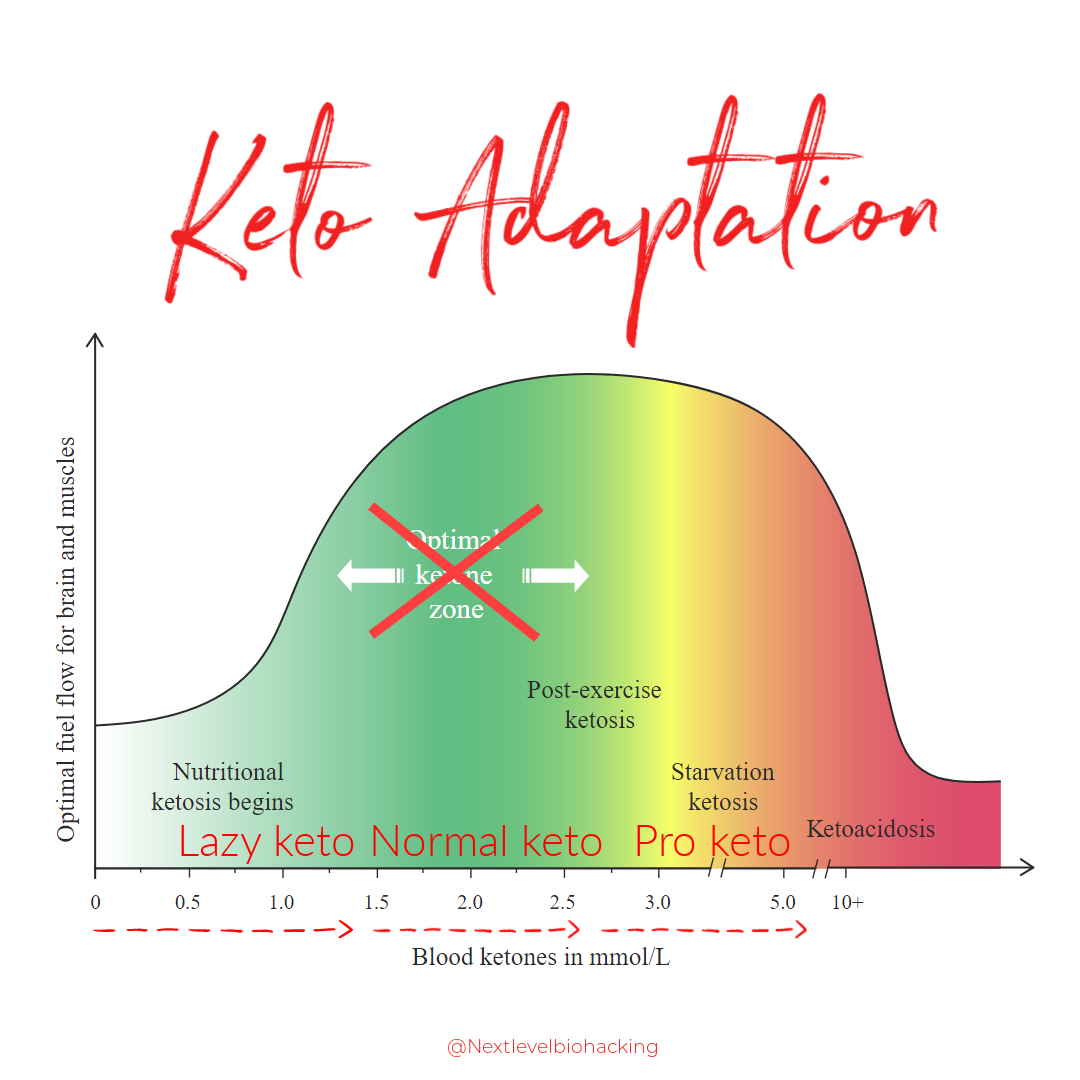
Känner du igen den här grafen?
Den har cirkulerat online sedan 2012. Jag publicerade och hänvisade till den här grafen många gånger när den kom (den är från The Art and Science of Low Carbohydrate Performance skriven av Jeff Volek och Stephen Phinney) men tyckte nu att det var dags för en uppdatering!
Olika nivåer av ketoadaptering
Jag håller en keto-kurs just nu där jag adapterar tillsammans med mina deltagare. Varför ska just jag adaptera kanske du tänker, jag som varit keto så länge? Det beror på att det finns (som jag ser det) tre nivåer av ketoadaptering: Lazy keto, Normal keto och Pro keto. För varje nivå krävs en ny adaptering men har du väl adapterat en gång kommer varje gång gå lättare tills du är fullkomligt adapterad. Går du ur ketos länge och lever carb life i flera år kommer du dock troligen behöva adaptera igen. Kroppen vänjer sig!
De senaste året (drygt) har jag kört på lazy keto och det gick utför före dess från att jag testade carnivore första gången 2018. Mitt första möte med carnivore (körde 4 veckor som ett test) funkade inte alls för mig. Jag kom ur ketos och upplevde ett kolhydratsug jag inte varit med om på flera år! Det gav en del insikter och hade sina lockelser, vilket gjorde att jag inte kom tillbaka till min vanliga diet på hur länge som helst, för jag fortsatte att gräva runt i carnivore-dieten och tro att den var för mig. Det var den inte. Istället för att gå tillbaka till min vanliga diet hamnade jag i något slags mellanläge av carnivore och fulketo, eller carnivore + jordnötssmör. Bekvämt, enkelt och fortfarande med en massa metabola fördelar.
Efter ett mer avancerat carnivore-experiment i somras (2020) insåg jag dock att den ultraketo-adapteringen jag hade skaffat mig inte var permanent utan som bortblåst. Jag försökte adaptera igen men orkade bara hänga i i tre veckor, sedan gled jag tillbaka in i lazy ketos bekvämlighet. Det är lätt att tro att lazy keto är “riktig keto” eftersom man har ketoner i blodet och blir väldigt bra på att fasta. Det är dock ganska stor skillnad!
Lazy keto
Blodketoner från 0.4 – 1 mmol/l
Blodsocker på 5-6.5 mmol/l
Inget hunger eller sug men det är tack vare lite ketoner plus en stabil glukoneogenes som pumpar ut blodsocker hela tiden. Om man inte äter ordentligt leder det till rejäl viktminskning på bekostnad av ens muskler.
Normal keto
Blodketoner från 1.2-2.5 mmol/l
Blodsocker på 4.0-5.5 mmol/l
Det som kallas för “optimal ketos” kallar jag för normal keto. Då har man lite mer ketoner och blodsockret har dippat lite. Det betyder att ketonerna får en lite större roll som bränsle. Detta är sweet spot för många keto entusiaster, även för mig. Här var jag i flera år non-stopp!
Pro keto
Blodketoner från 3-5.5 mmol/l
Blodsocker på 2.7-3.5 mmol/l
Det finns dock en nivå till och det är när man är helt och hållet ketondriven och blodsockret har den mindre rollen i sammanhanget. Då har man ett markant lägre blodsocker, lägre än vad som är normalt. Så lågt att sjukvården nog skulle reagera och kalla det för farligt och sjukligt. Det är ju så otroligt få individer som befinner sig här, så det finn inte mycket dokumenterat om hur kroppen fungerar på den här nivån. Dock kan man räkna ut, med hjälp av biokemiska och biologiska principer, att det är så många organ som faktiskt föredrar ketoner framför glukos, att glukoset kan vara väldigt lågt när det knappt används.
Komma in i ketos
Det finns många vägar in i ketos. För de flesta tar det några dagar att få ketoner i blodet, men att bli adapterad tar några veckor minst. Adapterad är man när blodsockret håller sig under 5 mmol/l och ketonerna är spårbara i blodet hela tiden, även fastande. För att uppnå det där tillståndet av att känna sig som en maskin, där orken aldrig tar slut, behöver man hänga i och det är vad de flesta inte klarar!
Nu är jag personligen väldigt motiverad av att just “hänga i”. 2020 blev ett år av svält och jordnötssmör som jag åt ikapp när jag hade svultit för länge. Så blir det när jag inte har någon aptit, vilken är den första som ryker för mig vid stress. Nu är stressen lägre och det känns som ett bra läge att lägga lite extra krut på en bra och stabil kost efter lång tid av försummelse
Gillar du vad du läser? Donera gärna en slant och stötta mitt arbete med bloggen!Jag finns även på PatreonSwish: 0730651281
TCL har introducerat en ovanlig tablet vilken är tänkt att fungera som en slags hybrid mellan surfplatta och läsplatta. Enheten har en 8,88-tums färgskärm med 1440 x 1080 pixlar.
Inget ovanligt än så länge – men panelen saknar bakbelysning. Tanken är att det ska vara behagligare för ögonen att läsa på skärmen och att plattan ska ge en upplevelse som liknar e-papper. Istället för bakbelysning har skärmen en reflekterande design som lyser upp skärmens innehåll genom naturligt ljus från omgivningen.
Eftersom skärmen inte har någon egen belysning flimrar inte skärmen och den har inget blåljus. Enligt TCL gör tekniken panelen 65 procent mer energieffektiv än traditionella alternativ, samtidigt som kontrasten är högre än för e-papper.
Övrig hårdvara inkluderar MediaTek Helio MT8768, 4GB RAM, 64GB lagring, Wi-Fi, minneskortsplats, USB-C, hörlursutgång, Bluetooth 5.0, en FM-radio och ett 5500mAh-batteri. Enheten har två kameror: 8MP på bakstycket och 5MP framtill. Kartongen inkluderar ett tillbehör för läslampa.
TCL Nxtpaper släpps i Europa i april för 349 euro med Android 10 som OS.
A few years ago, the horse community suffered a fairly strong shock. What had been viewed as a nuisance case in Connecticut was judged, not just once but again on appeal, against the horse owner and in favor of the plaintiff who wanted horses declared “inherently vicious.”
The facts of the case are complicated, and the ruling did not actually condemn all horses. The upshot of it all was that horses, if provoked, will bite (or kick or do other things that may damage a human), and held the horse owner responsible for what happens. There’s still strong feeling on both sides about this, and as a horse owner myself, I hope and pray that someone doesn’t wander into my horse turnout when I’m not there to stop them, and get kicked or stepped on (my lot are not biters as a rule).
Luckily I have sensible, horse-smart neighbors who know to stay outside the fence, and who check in with me before feeding anything. One good side effect of living in the American West, which has been horse country for a good long time.
It’s long been standard in horse facilities for owners to post signs along the lines of “Ride At Own Risk” and “Do Not Feed the Horses,” and to discourage strangers or passersby from wandering in and getting into the horses’ stalls and paddocks. The size and strength of the animal, the hardness of hooves and the tearing power of teeth, do add up to definite safety concerns when civilians, especially very young or inattentive ones, intersect with the equines.
But then again, what really is safe? Driving to work can get you crashed into and killed, taking the bus likewise; you can trip while walking and break your neck; you can choke on your breakfast scone and suffocate–life is dangerous. Right now, even going outside without a face mask can land you in the ICU (or the morgue) with a dangerous virus.
Anything can kill you. Just ask horror writers who devote whole careers to finding the deadliness in ordinary things. (Blenders, gas stoves, garbage disposals…)
In the end it’s about what a person considers to be an acceptable risk–whether of necessity or by choice. When it comes to horses, as with any other sport or avocation, the risks are a given, and the sensible horse person takes measures to minimize them as much as possible.
This means always being quietly alert, always paying attention to where the horse is and what signals they’re sending with their body language and attitude, and always having an escape route in case the horse abruptly goes splooie. And when that isn’t possible, knowing what to do and how to keep from getting killed. (Pro-tip: If you’re trapped in a corner and the horse wants to kick, don’t pull back—move in close and if possible in between the hindlegs, and let the horse kick past you. Then pray you can get out before they flatten you against the wall.)
Buy it Now
One morning not long after the judgment appeared on the news, I wasn’t as attentive as I should have been. I was half asleep, I was putting the Really Big Mare in a stall and the Evil Gelding was next door making evil faces and I didn’t watch for flying hooves and Ow. She got me in the thigh.
Nothing broke, because she pulled her punch at the last instant. But oh, the colors! And the sheer extent of them. I was in close, too, but when the hoof is a good six inches across…well. Ow. I still, all these years later, have a slight dent where she pureed the muscle.
But was this an inherently vicious animal? She was not. What she was, was an animal that, with its size and strength, can be dangerous without meaning to. She was making a statement to the snot next door, and forgot to consider the tiny human in middle.
From the horse perspective, it was a light tap. Too bad for me that I was off my game and not watching for the quite natural interaction between that particular combination of personalities. That’s not viciousness. That’s Stupid Human Tricks.
Not long after that, I was introducing a stallion to the mare we were hoping to get bred that spring. Unlike the previous episode, which was unplanned and I got what I deserved, this was calculated. I rode him first, to establish calm and focus and to reinforce his respect for my authority. I had backup just in case—no going it alone, no. Then we set up the space, mapped out the exit routes, and chose equipment to control the testosterone bomb.
I’m told it was impressive. I was busy keeping myself out of the way but keeping the stallion from getting too aggressive with the young and inexperienced mare. Yes, he was on his hindlegs at times, and striking with his forelegs, and generally doing what came naturally. But these were expected things, planned for, and the weaknesses in the plan that became evident (not quite enough space after all—we used a different paddock the next time) were not fatal or even damaging. Seconds after being told that was enough, we were done for the day, he was back on all fours, calm and attentive, and happy to go and eat his lunch.
That was worth the risk for the result. But it took planning and foresight. Calculation, in short. And not being fearful or timid or anxious, but definitely being aware.
Which is why random toddlers wandering in can get into trouble—just as they can with your sweet and gentle dog or your couch-potato cat or your lawn mower or your box of matches or, god help you, your swimming pool. It’s not that any of these things is inherently vicious or inevitably deadly, it’s that sometimes, in the right or wrong circumstances, things can go wrong.
After my encounter with the Very Big Mare, I was much more alert in the mornings. Also, much more careful of where I was in relation to the large and sometimes cranky animals who make me and others so happy so much of the time. I had a literal wake-up call—and it made me that much more conscious of safety when we worked with the stallion, and with any other horse thereafter, both on and off the farm.
Thank you in whatever Otherworld you inhabit now, Very Big Mare who lived to a very great age. I needed that. (Ow.)
Judith Tarr’s first novel, The Isle of Glass, appeared in 1985. Since then she’s written novels and shorter works of historical fiction and historical fantasy and epic fantasy and space opera and contemporary fantasy, many of which have been reborn as ebooks. She has even written a primer for writers: Writing Horses: The Fine Art of Getting It Right. She has won the Crawford Award, and been a finalist for the World Fantasy Award and the Locus Award. She lives in Arizona with an assortment of cats, a blue-eyed dog, and a herd of Lipizzan horses.
It’s true! And if we’re being honest about it, it wasn’t that difficult — sure, some bad days when the seditious urge really got going, but one a day-to-day basis it was manageable. It’s not that hard not to be seditious! And yet. Let’s just say there’s a fair number of people out there right now, from the White House on down, who have far fewer consecutive sedition-free days. Some of them, alas, are in the single digits even as we speak. This is, shall we say, a problem.
How many sedition-free days do you have? Here’s a site that might help you get started in figuring out the number. If you’re a Republican congressperson, however, it’s possible you can just use your fingers.
Yesterday, I marked the fifth anniversary of my decision to quit drinking alcohol. It was the most consequential choice I have ever made in my life, and I am able to stand before you today only because I made it.
I was slowly and steadily killing myself with booze. I was getting drunk every night, because I couldn’t face the incredible pain and PTSD I had from my childhood, at the hands of my abusive father and manipulative mother.
It was unsustainable, and I knew it was unsustainable, but when you’re an addict, knowing something is unhealthy and choosing to do something about it are two very different things.
On January 8, 2016, I was out in the game room, watching TV and getting drunk as usual. I was trying to numb and soothe the pain I felt, while also deliberately hurting myself because at a fundamental level, I believed the lies the man who was my father told me about myself: I was worthless. I was unworthy of love. I was stupid. The things I loved and cared about were stupid. It did not matter if I lived or died. Nobody cared about me, anyway.
I knocked a bottle into the trash, realized I had to pee, and — so I wouldn’t disturb Anne — did not go into the bathroom, but instead walked out into the middle of my backyard and peed on the grass. I turned around, and there was Anne. I will never forget the look on her face, this mixture of sadness and real fear.
“I am so worried about you,” was all she had to say. I’d been feeling it for a long time, and I faced a stark choice that I had known I was going to face sooner or later.
“So am I.”
Roughly 12 hours later, I woke up with the headache (hangover) I always had. For the first time in years, I accepted that I brought it on myself, instead of blaming it on allergies or the wind.
I picked up my phone, and I called Chris Hardwick, my best friend, who had been sober for over a decade at that point.
“I need help,” I said. “I don’t think going to AA is for me, but I absolutely have a problem with alcohol and I need to stop drinking.”
He told me a lot of things, and we stayed on the call for hours. I realized that that it was as simple and complicated as making a choice not to drink, one day or even one hour at a time. So I made the choice. HOLY SHIT was it hard. The first 45 days were a real struggle, but with the love and support of my wife and best friend, I got through it.
2016 … remember that year? Remember how bad things got? I was constantly making the joke about how I picked the wrong year to quit drinking, while I continued to make the choice to not drink.
Getting clean allowed (and forced) me to confront *why* I drank to excess so much. It turns out that being emotionally abused and neglected by both parents, then gaslit by my mother for my entire life had consequences for my emotional development and mental health.
I take responsibility for my choices. I made the choice to become a drunk. I own that.
But I know that, had the man who was my father loved me the way he loves my siblings, had my mother just once put my needs ahead of her own, the overwhelming pain and the black hole where paternal love should be would not have existed in my life.
I made a choice to fill that black hole with booze and self-destructive behavior. That sort of put a weak bandage over the psychic wound, but it never lasted more than a few hours or days before I was right back to believing all the lies that man planted in my head about myself, and feeling like I deserved all of it. If he wasn’t right, I thought, why didn’t my mother ever stand up for me? If he wasn’t right, how come nothing I ever did was good enough for him? I must be as worthless and contemptible as he made me believe I was. Anyone who says otherwise is just being fooled by me. I don’t really deserve any happiness, because I haven’t earned it. Anne’s just settling. She probably feels sorry for me.
All of that was just so much. It was so hard. It hurt, all the time. Because my mother made my success as an actor the most important thing in her life, I grew up believing that being the most successful actor in the world was the only way she’d be happy. And if that would make her happy, maybe it would prove to the man who was my father that I was worthy of his love. When I didn’t book jobs, I took it SO PERSONALLY. Didn’t those casting people know how important this was? This wasn’t just an acting role. This was the only chance I have to make my parents love me!
The thing is, I didn’t like it. I didn’t love acting and auditioning and attention like my mother did. It was never my dream. It was hers, and she sacrificed my childhood, and ultimately my relationship with her and her husband, in pursuit of it.
I didn’t jump straight to “get drunk all the time” as a coping mechanism. For *years* I tried to have conversations with my parents about how I felt, and every single time, I was dismissed for being ungrateful, overly dramatic, or just making things up. When the man who was my father didn’t blow me off, he got mad at me, mocked me, humiliated me, made me afraid of him. I began to hope that he’d just blow me off, because it wasn’t as bad as the alternative.
It was so painful, and so frustrating, I just gave up and dove into as many bottles as I could find.
But then in 2016 I quit, and as my body began to heal from how much I’d abused it, my spirit began to heal, too. I found a room in my heart, and in that room was a small child, terrified and abused and unloved, and I opened my arms to him. I held him the way he should have been held by our parents, and I loved him the way he deserved to be loved: unconditionally. I promised him that I would protect him from them. They could never hurt him again.
I realized I had walked up to that door countless times over the years, and I had always chosen to walk right past it and into a bar, instead.
But because I had made the choice to stop drinking, to stop hiding from my pain, to stop self-medicating, I could see that door clearly now. I could hear that little boy weeping in there, as quietly as possible, because he was so afraid that someone was going to come in and hurt him.
Sobriety let me see that my mother had been lying to me, and maybe to herself, about who that man was to me. I realized that the man who was my father had been a bully to me my whole life. I accepted and fucking OWNED that it wasn’t my fault. It was a choice he made, and while I will never know why, I knew what had happened to me. I knew my memories were real, and I hoped that, armed with this new certainty and confidence, I could have a heart-to-heart with my parents, and begin to heal these wounds. So I wrote to my parents, shared a lot of my feelings and fears, and finally told them, “I feel like my dad doesn’t love me.”
I know some of you are parents. What do you do when your child says that to you? What is your first instinct? Pick up the phone right away? Send a text right away? Somehow communicate to your child immediately that, no, they are wrong and they are not unloved, right? Well, if you’re my parents, you ignore me and go radio silent (for two months if you’re my mother, four months if you’re my father.) And then when you finally do acknowledge the email, you are incensed and offended. How dare I be so hateful and cruel and ungrateful! Nothing is more important than family! How could I say such hurtful things?! Why would I make all that up?
I had changed. They had not. They will not. Ever.
So, I want to be clear: I take responsibility for the choice I made to become a full-time drunk. But I also hold my parents accountable for the choices they made, including this one.
Their silence during those long weeks told me everything I needed to know, and my sobriety was severely tested for the first time. Everything I had always feared, everything I had been drinking to avoid, was right there, in my face. When they finally acknowledged me, and made it all about their feelings, I knew: this was never going to change. I mean, I’d known that for years, maybe for my whole life, but I still held out hope that, somehow, something would be different.
During those weeks, I spent a lot of time on the phone with Chris, spent a lot of time with Anne, and filled a bunch of journals. But I didn’t make the choice to pick up a drink. I’d committed to taking better care of myself, so I could be the husband and father my family deserved. So I could find the happiness that *I* deserve.
Once I was clean, I had clarity, and so much time to do activities! I was able to clearly and honestly assess who I was, and *why*. I was able to love myself and care for myself in ways that I hadn’t before, because I sincerely believed I didn’t deserve it.
I will never forget this epiphany I had one day, while walking through our kitchen: If I was the person the man who was my father made me believe I was, there is no way a woman as amazing and special as Anne would choose to spend her life with me. Why this never occurred to me up to that point can be found under a pile of bottles.
Not having parents sucks. It hurts all the time. But it hurts less than what I had with those people, so I continue to make the choice to keep them out of my life.
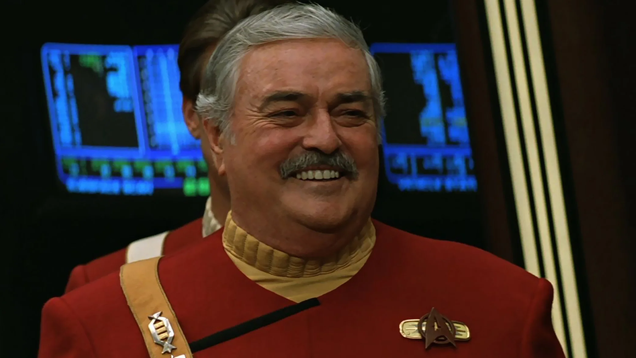
After five years, I don’t miss being drunk at all. It is not a coincidence that the last five years have been the best five years of my life, personally and professionally. In spite of everything 2020 took from us (and I know it’s taken far more from others than it took from me), I had the best year I’ve ever had in my career — and this is *my* career, being a host and a writer and audiobook narrator. This is what *I* want to do, and I still feel giddy when I take time to really own that I am finally following *MY* dream. It’s a shame I don’t have parents to share it with, but I have a pretty epic TNG family who celebrate everything I do with me.
I wondered how I would feel, crossing five years without a drink off the calendar. I thought I’d feel celebratory, but honestly the thing I feel the most is gratitude and resolve.
I am grateful that I have the love and support of my wife and children. I am grateful that I have so much privilege, this wasn’t as hard for me as it could have been. I am grateful that, every day, I can make a choice to not drink, and it’s entirely MY CHOICE.
Because I quit drinking, I had the clarity I needed to see WHY I was drinking, and I had the strength to confront it. It didn’t go the way I wanted or hoped, but instead of numbing that pain with booze, I have come to accept it, as painful as it is.
And even with that pain, my life is immeasurably better than it was, and for that I am immeasurably grateful.
Hi. I’m Wil, and it’s been five years and one day since my last drink. Happy birthday to me.
I have a theory about the Republican Party, and it is that around the time Newt Gingrich became the head of its brain trust, the GOP added a fourth functioning principle to its previous tripod of “Southern Strategy to corner the racist vote,” “Abortion to corner the Evangelical vote” and “Tax cuts to corner the capitalist vote (and money).” The fourth principle was not about kettling and controlling a voting bloc, but rather a principle to maximize its power and to motivate the voting blocs beyond whatever the GOP could offer them politically.
That fourth principle, to put it in its shortest and bluntest form, is:
“But what if we… didn’t?”
Somewhat more broadly, the Republicans recognized there was a suite of political conventions and traditions that were designed to make it easier for things to get done, and that this suite of conventions and traditions were exploitable by denial. While people in both parties (and the parties themselves) would occasionally use this exploit, it was not done systematically.
That is, until Gingrich saw that practice as a weakness to be attacked. Here’s an early version:
“Treat the members of the other political party as colleagues rather than bitter enemies? Okay, but what if we… didn’t?“
And it worked! Which is to say that it got attention, raised temperatures and was an effective political cudgel against those who didn’t understand (or didn’t want to believe) that the political ground was shifting underneath their feet. Gingrich was a political genius (until he wasn’t), and he set the pattern of Republican contravening of norms that advanced inexorably over the years.
Mitch McConnell, seen above, is a master of the “But what if we… didn’t?” school of politics. Allow a sitting president of the opposite party to name a Supreme Court justice? Okay, but what if we didn’t? Stick with the principle that you established with regard to Supreme Court justices being nominated in an election year? Okay, but what if we didn’t? Actually choose to have the Senate be a legislative body rather than just a rubber stamp for conservative judges of questionable competency? Okay, but what if we didn’t? And so on. McConnell understands the depth of his transgression against political norms, you can be sure — he’s been in Congress long enough to remember how it was before — but like Gingrich, he doesn’t particularly care. He doesn’t care, because it get results. The ends justifies the means.
In this, Trump was — and make no mistake, still is — the perfect GOP president. Trump has no loyalty to tradition and operating principles; indeed his entire appeal is transgression. He no interest in procedure, regulation or rule of law. To be sure, he was less “But what if we didn’t” than “I’m just not gonna,” but the effective difference between the two is subtle and in any event abetted the GOP’s “what if we didn’t” principle to a significant degree.
The 2020 election was a perfect storm of “but what if we didn’t?”
So: Joe Biden won the 2020 election and has to be acknowledged as the president.
Okay, but what if we didn’t? Let’s say the election was tainted by fraud!
The facts show that the election was not tainted by fraud and indeed it was one of the most secure elections in US history, and we have to acknowledge those facts.
Okay, but what we didn’t? Let’s take it to court!
More than 60 court cases, on both state and federal levels, rule that, yes, in fact, the election went for Biden without any significant fraud. His electoral count stands and is uncontroversial and should be acknowledged as such when Congress convenes to count the votes on January 6.
Okay, but… what if we didn’t?
Well, now we know what happens when they didn’t.
The Republicans want us to believe they are surprised an insurrection has happened, but why should we believe that? These are not (all) unintelligent people. They knew what they were doing, they knew how they were transgressing, and they knew, every step of the way, what the result of each transgression was meant to be, both in terms of the fabric of democracy in the United States, and on the expectations of the Republican voting base.
There was a Republican mob at the Capitol yesterday because the GOP put them there. Not just yesterday, or through the course of the election, or the four years of the Trump administration. The storming of the Capitol is the (current) culmination of a decades-long project by Republicans, a project of denial, in which they didn’t recognize the validity of power being shared, or the equality of the other party, or the supremacy or desirability of democracy, if democracy meant a diminishment of their power and goals.
Democracy? Okay, but, what if we didn’t?
The Republicans aren’t surprised that this is where we are, and make no mistake that if at any point in the 2020 post-election they could have gotten away with subverting the will of the voters they absolutely would have done so. Joe Biden won 306 electoral votes and 7 million more popular votes than Trump, an unambiguous and, realistically, unassailable number. The Republicans chose to assail it anyway — not just a few members of the party, but as a matter of policy from the top all the way down. What is the number of electoral votes a Democrat now must win to be acknowledged without contestation as the winner of a presidential election by the GOP? We don’t actually know, except to say it has to be more than 306.
Yesterday our nation’s capitol was invaded and looted, and our democracy was shamed, and even then a half dozen Republican senators and more than a hundred GOP representatives who a few hours before were stuffed into shelters for their safety decided to play the “But what if we didn’t?” card. Sedition was preferable to being put on record as acknowledging a loss of power and privilege. Don’t come to me in the light of day and tell me this wasn’t where the GOP understood we would one day end up. The only problem the Republicans have with where we are at the moment is that, for once, “but what if we didn’t?” didn’t do what it was supposed to.
The Republican Party is a traitor to the ideals and practice of democracy in the United States. It fomented, aided and abetted an insurrection. A regrettable number of its members in the national government have signed on for sedition over the peaceful transfer of power (“The peaceful transfer of power? Okay, but what if we… didn’t?”). These seditious members should be drummed out of Congress, right now, and some Republicans who are in power should be charged with crimes. The Republican Party got us as close as we have gotten since the Civil War to the collapse of our democracy, not by accident, but by design, and had the implementation of that design been only a little more competent, both now and over the last few years, it might have succeeded. The GOP is an enemy of the United States — not conservatism as a whole, but its party (although at the moment I have no great kind thoughts about conservatism, either) — and if it had any institutional capacity for shame and self-reflection, it would end itself.
To which I see the Republican Party saying, “Okay, but what if we… didn’t?” Because even now I can tell you that from the GOP point of view the problem isn’t the damage that party has wreaked upon the US and its people. The problem is its plan didn’t work.
The GOP always meant for us to be here. The thing is, there’s somewhere beyond here the GOP still wants us to go. We shouldn’t pretend that the GOP won’t get us back to here as soon as practically possible. And then past it, to the ruin of us all.
By zawitees
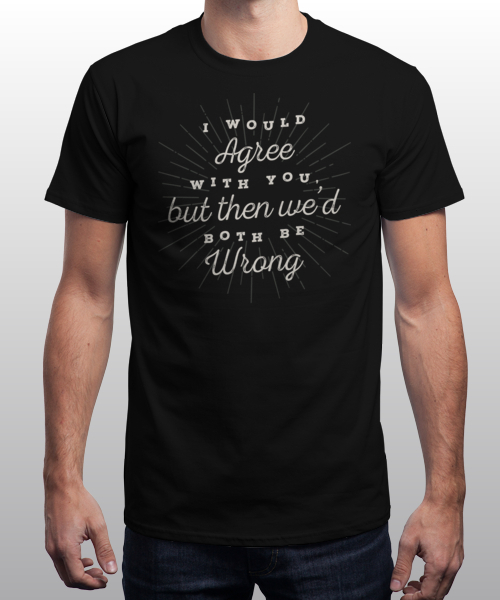
"I would agree with you, but then we’d both be wrong." The perfect shirt for the masters of sarcasm, irony and all the another type of clever languages.
by Andrew Liszewski on Gizmodo, shared by Jill Pantozzi to io9
In a time when you have to go out of your way to buy a new TV with less than 4K resolution, one Redditor has decided that their eyes don’t need such luxuries as 4K, 2K, HD, or even standard def videos, and have created a custom VCR that plays full-length movies on floppy disks with just 1.44 MB of storage.
Kan man få riktiga symptom om det “sitter i huvudet”?
Absolut!
Nästan alla fysiska symptom har en emotionell eller spirituell komponent, och majoriteten av alla fysiska problem har sin grund i någonting psykiskt. Misstaget många gör är att anta att bara för att någonting är psykiskt så är det inte “på riktigt” och även läkare gör ibland så, även fast det är otroligt omodernt. Att somatisera (förkroppsliga) psykiska eller emotionella problem betyder inte att man inbillar sig sina sjukdomar. Det betyder heller inte att det är mindre “på riktigt”. Tankar och känslor är inte alls så abstrakta som man kan tro, för varje tanke och känsla har en egen biosignatur. Det betyder att varje tanke och känsla frisätter vissa specifika signalsubstanser som influerar kroppen på olika sätt.
Att tänka sig till smärta
Går det att tänka sig till smärta? Ja, men mekanismen för det är inte så enkel som att man bara tänker att man har ont någonstans och så får man det. Nej, smärtan fungerar som en signal från kroppen, för de som stängt ned sina känslor och inte lyssnar på dem. Migrän och kroppsliga smärtor är ofta ett resultat av stress och oro och fibromyalgi har en koppling till serotoninsystemet. Serotonin är “må bra” hormonet som vid rätt nivåer ger en känsla av att känna sig kärleksfull och tillfreds. Nu generaliserar jag för enkelhetens skull, men typiska lågt-serotonin-tankar ger raka motsatsen, dvs förakt, oro och missnöje. Det ökar också smärtkänsligheten avsevärt.
Kroppens signalsystem
Vissa människor drabbas av depression, ångest eller oro medan andra har svårare för att uppfatta dessa känslor, och inte reagerar förrän något riktigt allvarligt händer. En del går med klinisk depression i åratal utan att notera det, dels för att det blir normalt att må dåligt och för att många förväxlar depression med att känna sig “deppig”. Depression handlar mer om att ge upp på sig själv och att känna att ingenting spelar någon roll. Vardagen funkar för att den går på rutin men det finns ingen entusiasm inför att göra saker.
Mänskliga behov går dock inte att förneka så uppfylls de inte på konstruktiva sätt så uppfylls de på destruktiva sätt till exempel att närhet och kärlek ersätts med porr, spänning ersätts med shopping och närhet och trygghet ersätts med mat. Detta leder till fysiska sjukdomar i kroppen, inte med en gång, men över tid.
Varför och hur då?
För att när man överger sig själv och ersätter sina behov med destruktiva utlopp är det många viktiga saker som uteblir: träning, socialt samspel, hälsosam mat, högkvalitativ sömn, återhämtande aktiviteter och att sträva efter inspirerande mål. Det gör att kroppen blir i lite sämre skick för varje år som går.
Hälsoångest och kroppsliga symptom
Det förekommer ibland att personer åker ambulans i ilfart till sjukhuset för att de är övertygade om att de fått en stroke eller en hjärtinfarkt. Efter idoga undersökningar hittas dock inga spår av detta och det visar sig att alltihopa var psykosomatiskt, till exempel konsekvenserna av en panikångestattack. Hur är det möjligt? Beroende på hur man reagerar på stark ångest kan man få alla möjliga symptom där bröstsmärtor och andningssvårigheter inte är helt ovanligt. Även hälsoångest (konstant oro för att vara sjuk) kan manifestera fysiska symptom. Stark oro drar upp nivåerna av noradrenalin, adrenalin och kortisol som påverkar signaleringen till hjärnans smärtcentrum. Det kan även påverka tarmrörelserna och ge kraftig IBS. Därför skrivs SSRI (antidepp) ofta ut vid IBS, och det fungerar!
Din personliga sanning
Det är viktigt att se sina känslor som ett uttryck för sin personliga sanning. Inte kväva dem eller tycka att de är fel eller för mycket. Det är trots allt bara en spegling av vad som händer på insidan. Jag märker att många är otroligt rädda för känslor, både sina egna och andras. Att ge efter för negativa känslor möts ofta med stor bekymran och en önskan om att dämpa; “sluta må dåligt nu, här är några alternativ så att du kan må bättre nu med en gång!” Ju mer jag mediterar och noterar alltings förgänglighet ju märkligare blir det synsättet. Känslorna är ju bara vågor på ytan!
Lyssna in. Vad säger dem? Vilka tankar behöver du tro på för att känna som du gör? Anteckna, vrid och vänd på dem. Är de sanna? Tänk på att inga känslor är farliga att känna, de kan inte skada dig även om de är obehagliga. Dessutom är obehagliga känslor ganska kortlivade, särskilt om man riktar sitt fokus mot dem. En intressant meditationsövning är att sitta med sina obehagliga känslor som fokus-ankare. Vad man upptäcker (spoiler-alert!) är hur föränderliga de är, och att ingenting negativt överlever i ljuset av ens medvetande.
Att lära sig navigera bland känslor
Meditation och dagboksskrivande är två väldigt bra redskap för att lära sig navigera bland sina känslor. Checka in hos dig själv en stund varje dag för att ta tempen på din emotionella status. En knep som egentligen är riktat till skönlitterära författare för att komma runt skrivkramp är att börja morgonen med “free flow journaling”. Det innebär att man öppnar ett skriv-dokument på datorn (eller tar fram papper och penna) och bara skriver allting som kommer ut oavsett hur konstigt eller osammanhängande det blir. Det är ett sätt att “tömma hjärnan” och komma i kontakt med sitt undermedvetna. Den här övningen är otroligt bra första steg för den som vill börja med självinventering!
Gillar du vad du läser? Donera gärna en slant och stötta mitt arbete med bloggen!Jag finns även på PatreonSwish: 0730651281
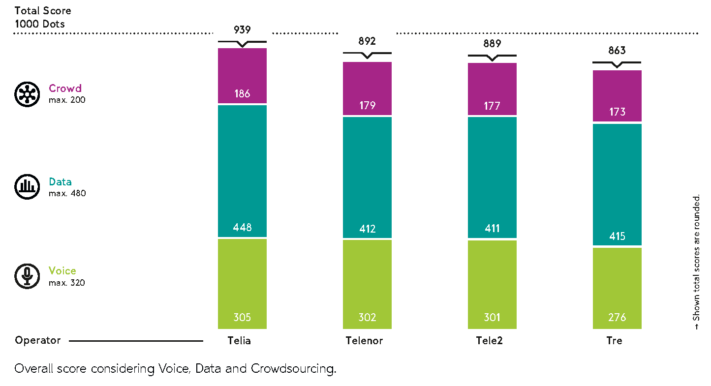
Analysföretaget Umlaut (tidigare P3) har på årlig basis sedan 2017 mätt och analyserat hur de svenska mobilnäten presterar. I årets rapport, som bland annat innefattar datahastigheter och samtalskvalitet, rankas Telia högst i samtliga kategorier. Bland totalpoängen hamnar Telenor på en andraplats, Tele2 på en tredjeplats och Tre sist.
Umlaut lutar sig dels mot mätningar företaget på egen hand utfört samt en crowdsource-analys som bygger på mätdata som samlas in via samarbeten med apputvecklare som integrerat bolagets mättjänst. Umlaut har låtit utföra de individuella mätningarna på Samsung Galaxy S10+ samt Galaxy S20+.
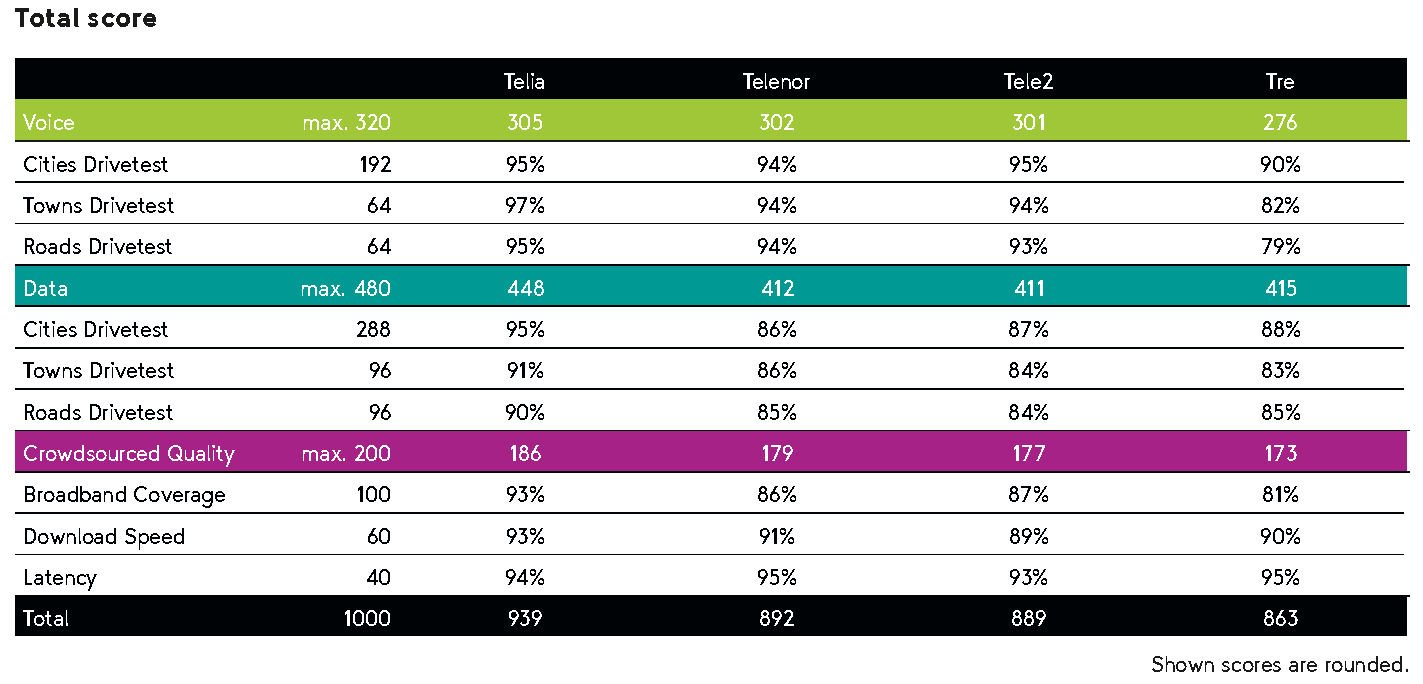
I kategorin ”samtal” – Telia (305 p), Telenor (302 p), Tele2 (301 p) och Tre (276 p) – står Tre ut med lägst poäng, medan resultatet är relativt likt mellan de övriga operatörerna. I momentet för ”stad, körtest” står dock Telia ut med ett 3% bättre resultat än Telenor och Tele 2.
För kategorin ”data” – Telia (448 p), Telenor (412 p), Tele2 (411 p) och Tre (415 p) – står Telia ut med ett resultat som är omkring 10% bättre överlag, medan skillnaden är mindre mellan de övriga operatörerna. Även i denna kategori utmärker sig särskilt ”stad, körtest” till fördel för Telia med en skillnad på ett resultat om 86-88 % mot 95 %.
I den crowdsourcade och sista kategorin – Telia (186 p), Telenor (179 p), Tele2 (177 p), Tre (173 p) – är skillnaden mer blygsam operatörerna emellan sett till totalpoängen. Telia sticker främst ut vad berör ”bredbandstäckning” med ett resultat om 93 % medan Telenor (86 %), Tele2 (87 %) och särskilt Tre (81%) halkar efter något.
Sett till summeringen av samtliga moment – Telia (939 p), Telenor (892 p), Tele2 (889 p) och Tre (863 p) – tar Telia hem segern med en marginal på 47 poäng mot Telenor, 50 poäng mot Tele 2 och slutligen 76 poäng mot Tre.
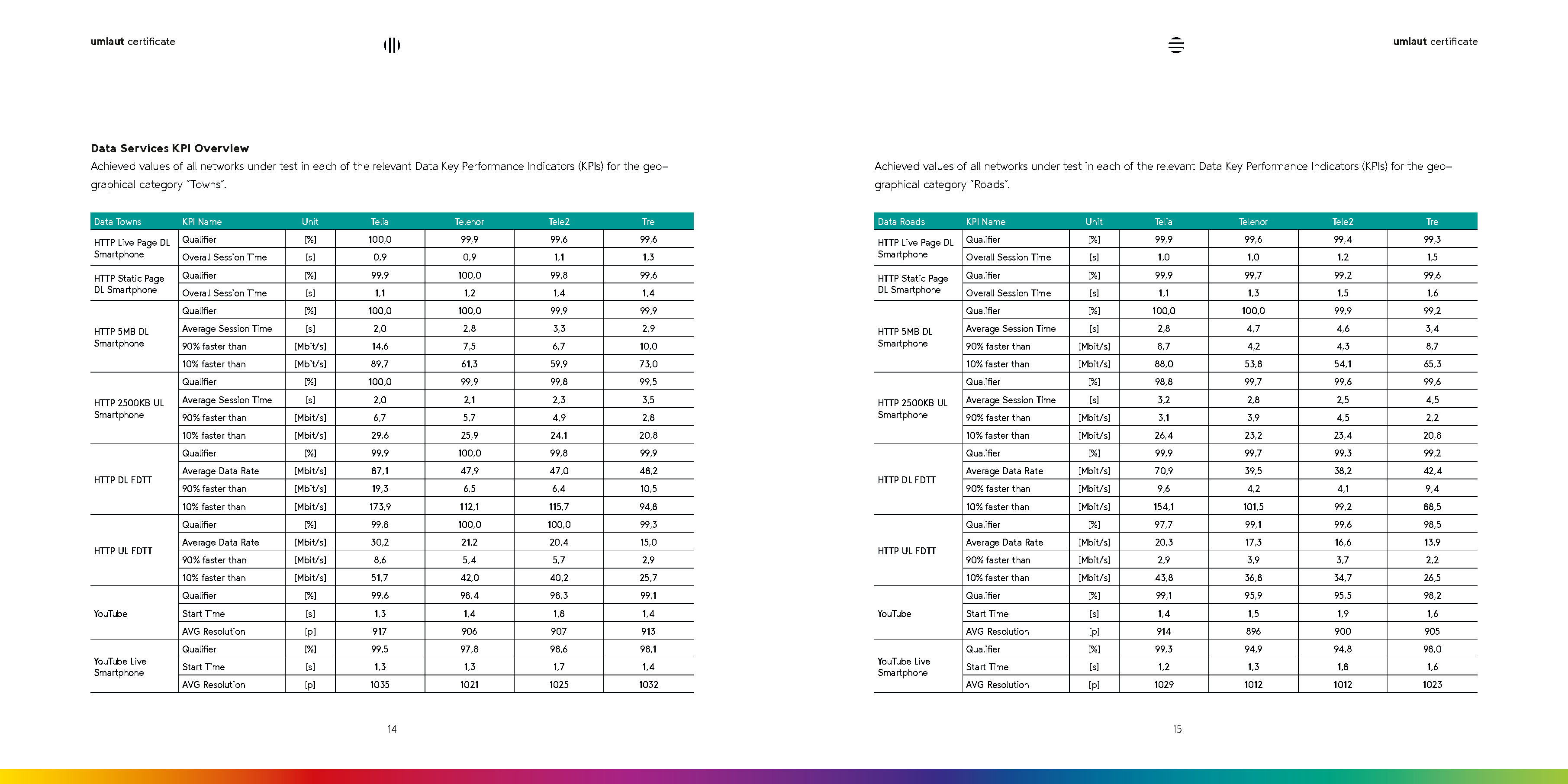
Bland de mätdata som Umlaut presenterar finner vi en särskilt stor skillnad mellan operatörerna i tabellen för ”Data Services KPI Overview” för både momenten ”städer” och ”vägar”. I raden för HTTP DL FDTT (fast data download tool) presterar Telia i genomsnitt en nedladdningshastighet om 87,1 Mbit/s (stad) respektive 70,9 Mbit/s (väg) mot testtvåan Tre med ett resultat om 48,2 Mbit/s (stad) samt 42,4 Mbit/s (väg).
Next year fans will choose the site of the 2023 Worldcon: Chengdu, China and Memphis, TN (USA) are currently in contention. Beyond that? An abundance of new Worldcon bids have responded to SMOFCon 37-1/4’s call for questionnaires — Israel, Los … Continue reading →


 jag äter ketogen kost men jag väger inte min mat så jag vet inte om mina måltider är 80E%. Mest troligt inte, men jag äter mycket protein och steker broccoli och vitkål i fett. Min fundering är vad jag får energi ifrån om det inte är glukos eller ketoner? För man måste äta viss mängd fett för att de ska bildas ketoner va? Eller är de stressande för kroppen att äta som jag gör om man inte får i sig rätt mängd av allt?
 Gillar du vad du läser? Donera gärna en slant och stötta mitt arbete med bloggen!Jag finns även på PatreonSwish: 0730651281



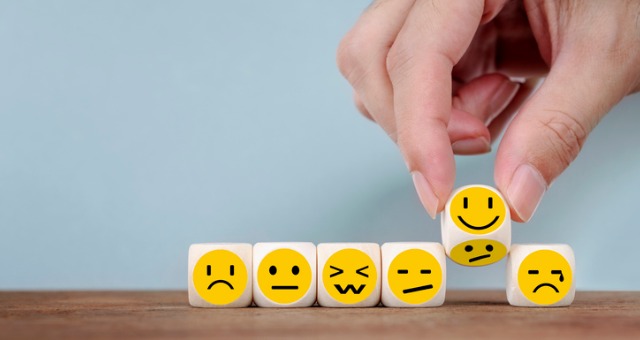 Vissa människor drabbas av depression, ångest eller oro medan andra har svårare för att uppfatta dessa känslor, och inte reagerar förrän något riktigt allvarligt händer. En del går med klinisk depression i åratal utan att notera det, dels för att det blir normalt att må dåligt och för att många förväxlar depression med att känna sig “deppig”. Depression handlar mer om att ge upp på sig själv och att känna att ingenting spelar någon roll. Vardagen funkar för att den går på rutin men det finns ingen entusiasm inför att göra saker.