Shared posts

26 Jun 06:39

Cleaning as Self-Care

by zenhabits

By Leo Babauta

The other day, I returned home from a short trip, and immediately unpacked and washed my clothes, putting everything away. It felt nice.

The next morning, I was feeling a bit unsettled. So I started cleaning. I cleaned in the kitchen, outside in the yard, swept the garage. I felt so good.

I’ve come to realize that cleaning, organizing, decluttering … for me, it’s a form of self-care. It helps me feel settled, makes me feel like I’m taking care of my life.

Yes, cleaning and organizing can be overwhelming, and is often avoided. But it doesn’t have to be. Take a small corner to tidy up, and let yourself just enjoy the cleaning. Get lost in it. Feel the niceness of making things nicer.

Yes, there’s always more to do. But that’s a disempowering way to think about it. Why does it matter that there will always be more to do? That just means there’s more self-care available, always. Just do a small portion right now, and enjoy it. A good analogy is that there will always be more tea to drink … but I only need to focus on this single cup of tea, and enjoy it fully.

As you clean, you might feel things getting cleaner. As you organize, you might feel the progression of settledness of things. As you declutter, you might feel the slight liberation with everything you toss out.

And of course, we can extend this self-care of cleaning and organization into every part of our lives — today I worked on organizing my finances. I’ve been fixing little things around the house. This morning I deleted a bunch of apps on my phone, and turned off a lot of notifications, to simplify my phone experience. I also unsubscribed from a bunch of newsletters and started clearing out my email inbox.

You can think of taking a task from your task list as a form of this self-care. One item at a time, taking care of your life.

It can be overwhelming and dreaded … or it can be nourishing and lovely. It’s a choice, and I choose to feel the care that I bring to every sweep of the broom or rake.

The post Cleaning as Self-Care appeared first on zen habits.

24 Jun 06:42

Secret Invasion's Samuel L. Jackson Won't Be Resurrected Via AI

by Rob Bricken

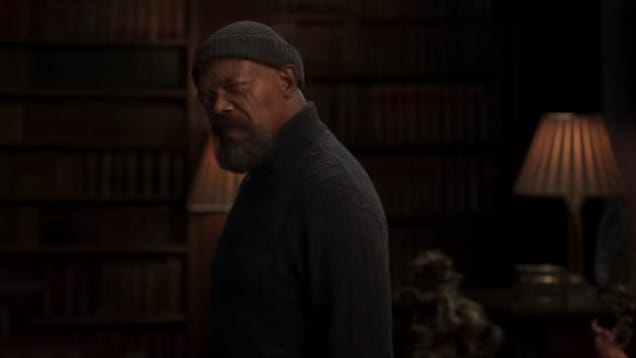
When Samuel L. Jackson appeared in Captain Marvel, the actor was digitally recreated to look like an age-appropriate version of himself for the 1990s-set film. But underneath that was the modern actor’s performance, not mere computer graphics. So Jackson is no hypocrite when he swears he won’t allow himself to be…

Read more...

24 Jun 06:39

Blinded by Fear — Star Trek: Strange New Worlds: “Ad Astra per Aspera”

by Keith R.A. DeCandido

I’m opening my review of the second episode of SNW season two with a comment about Deep Space Nine. First, let me say that DS9 is my favorite of all the Trek shows (though this show has been challenging it). But it did introduce two horrid concepts to Trek that left permanent scars on the franchise: the genetic engineering ban and Section 31.

One of the many great things about “Ad Astra per Aspera” is that it puts a great deal of salve on the first of those scars. (Let’s just hope the forthcoming Michelle Yeoh movie does the same for the latter…)

When Dr. Julian Bashir was revealed to be genetically enhanced in DS9’s “Doctor Bashir, I Presume?” it was further established that elective genetic modification was illegal in the Federation, explained as trying to avoid another Khan Noonien Singh, to prevent the Eugenics Wars from happening again.

At the time, it probably seemed sensible, especially since twenty-fourth-century humans were being played by humans on the cusp on the twenty-first century, and this provided cover for why we didn’t see the kind of human body modification (for both medical and elective reasons) that will surely happen as technology improves over the next four hundred years.

But it flies in the face, not only of common sense (seriously, how many major, life-changing laws are on the books now that are based on stuff that happened in the 1600s?), but of the very notion of the Federation. The idea that the Federation would discriminate against, well, anyone is antithetical to what Trek is supposed to be about.

Making the decision to make use of the backstory established by the late great D.C. Fontana for Number One in the 1989 novel Vulcan’s Glory as a genetically enhanced Illyrian meant that SNW intended to address this issue head-on. There wasn’t a need to—there was no need to use Fontana’s background as a blueprint for Una Chin-Riley, as evidenced by that very choice of nomenclature, which did not come from Vulcan’s Glory.

I’m really glad they did it, though, because it resulted in one of Trek’s best episodes.

Image: CBS / Paramount+

Most every Trek show has done at least one trial-type episode, whether it’s a full trial, a preliminary hearing, or some other kind of adversarial judicial process that takes up a major chunk of the episode. The original series had “Court Martial” and “The Menagerie,” TNG had “The Measure of a Man” and “The Drumhead,” DS9 had “Dax” and “Rules of Engagement,” Voyager had “Death Wish” and “Author, Author,” Enterprise had “Judgment,” Discovery had “Unification III,” Lower Decks had “Veritas.” (Picard never did one, and Prodigy hasn’t yet.)

Many—though not all—of the above are strong episodes, and indeed many would list “The Measure of a Man” as one of TNG’s best, if not one of Trek’s best. But right now, I gotta say that “Ad Astra per Aspera” blows them all out of the water.

It’s to the credit of the SNW production staff in general and to writer Dana Horgan in particular that nobody felt the need to graft a B-plot onto this. There’s more than enough story here for an hour, and even though it’s entirely people in a room talking to each other, it’s all incredibly compelling.

It also gives Rebecca Romijn a long-overdue spotlight. We get Number One’s full background, growing up on an Illyrian colony that was given provisional Federation membership as long as they stopped their genetic engineering. However, they didn’t. We see the hardships this forces upon them, as we open with a flashback to Chin-Riley’s youth, having broken her leg, and her parents unwilling to take her to a doctor lest they see her glowy healing ability (first seen in “Ghosts of Illyria”). Later, while testifying at her court martial, she explains that they had to seek out sympathetic doctors to treat them—a state of affairs that will ring with depressing familiarity to women seeking gynecological care before 1972 (and more recently in some states), and to LGBTQ+ folks seeking any kind of medical care during the worst of the AIDS epidemic in the 1980s and 1990s.

Romijn beautifully sells Number One’s anguish, because it’s subtle. She’s hidden who she really is for so long that, when the pain does come out, it’s quiet. It’s a seeping wound, not a gushing one. This nicely retcons the portrayal of the character in “The Cage,” to wit, Pike saying she doesn’t count as a woman on the bridge because she’s subsumed her femininity so much to be almost robot-like, so she can succeed in a man’s world. (Yay, 1964.) Now we have a reason for it that doesn’t come out of a sexist patriarchal norm: she’s spent twenty-five years hiding who and what she is.

More to the point, she’s hidden what she went through: the discrimination, the taunts from the non-Illyrian kids, being forced to hide, and then later to assimilate and pretend to be something she isn’t.

And then she found Starfleet, and this was my favorite moment in the episode. Chin-Riley describes the first time she saw a Starfleet crew, which visited her homeworld when she was five or six: “They were all so different from one another. So many crewmembers from so many planets—it was beautiful.” With those two sentences, Number One magnificently expressed what viewers in 1966 saw when the original series aired: in a time of unrest, of wars both hot and cold, viewers got to see a united Earth, of people of different cultures and skin tones and beliefs all working together without comment, without it even being considered unusual. Romijn delivers her colloquy on what Starfleet means to her with a subdued intensity that is incredibly compelling.

Image: CBS / Paramount+

As good as Romijn is, though, hers is the second-best performance in this episode, as truly the hour is utterly owned by Yetide Badaki as Neera Ketoul, the Illyrian civil-rights lawyer Pike went chasing after last week. Badaki—who was stellar as Bilquis in American Gods—completely takes over the episode. Which, frankly, is as it should be in a trial story. After all, the focus in this type of tale is on the ones making the case, as it were. Sometimes that’s a regular—Picard in “The Measure of a Man,” Burnham in “Unification III”—sometimes it’s a guest—Elisha Cook Jr.’s Sam Cogley in “Court Martial,” J.G. Hertzler and John Vickery’s Klingon lawyers in “Judgment”—but they’re central to the story.

Horgan’s script also gives Badaki some great material. It starts with Ketoul pointing out that, yes, genetic engineering is illegal. But once upon a time, slavery was legal, discrimination was legal, sexism was legal. (At this juncture, I feel the urge to point out that neither marital rape nor domestic violence were actually considered crimes in all fifty states until the mid-1990s.) Being legal doesn’t make something morally right.

Ketoul puts April on the stand. April sponsored Chin-Riley to Starfleet Academy, and she served under him on Enterprise. He speaks warmly of her, but when asked directly if he’d have still sponsored her knowing she was Illyrian, he says no, because it would violate regulations. Ketoul then pulls out three separate occasions when April, as Enterprise captain, violated the Prime Directive, in each case in order to save lives, because if nearly six decades of Star Trek have taught us nothing else, it’s that Starfleet captains will bend the rules to save lives. April awkwardly points out that captains have to make judgment calls. The tribunal, pointing out that April isn’t the one on trial, excuses him from the stand and strikes his testimony from the record.

This leads to an unpleasant conversation in Pike’s quarters, as April angrily tells Pike that Ketoul as defense attorney was his idea (well, his and Number One’s, but whatever), and April never got a chance to testify on the record about what a great officer Chin-Riley is.

Buy it Now

There are some nice bits where Spock, M’Benga, and La’an are called as character witnesses. Spock speaks to her leadership abilities, and how much he has learned from her. (He also mentions her penchant for Gilbert & Sullivan, a lovely callback to the Short Trek Q & A.”) M’Benga speaks to her compassion and how she looks out for her people. La’an tells everyone about how Chin-Riley is directly responsible for saving La’an’s life and indirectly responsible for all the lives La’an herself has saved as a member of Starfleet security.

Pike is not one of those who takes the stand. As Captain Batel points out, if he’s on the stand, he has to testify that he knew his first officer was Illyrian for months and didn’t report it. (Batel is the prosecuting attorney, which makes nothing like sense, as she’s not an officer of the Judge Advocate General, she’s a starship captain. But I guess they wanted the familiar face of Melanie Scrofano and her relationship with Pike rather than a stranger, though it does feel like a callback to the Kirk-Areel Shaw relationship in “Court Martial”…)

Unfortunately, it comes out anyhow, as Batel’s boss in the JAG office, Vice Admiral Pasalk (played with spectacular snottiness by Graeme Somerville), takes over the questioning of Chin-Riley to get that information on the record.

However, Ketoul has two more cards to play. Her questioning of Chin-Riley includes, not just the awful details of her childhood, growing up being discriminated against for being Illyrian, but also how Starfleet provided her with a safe haven, a place where she wouldn’t be tormented, a place where she could thrive.

And then we get the bombshell—which I actually saw coming—which is that Chin-Riley herself is the one who revealed her heritage. She turned herself in. This tracks with what we’ve seen before, from her offering to resign in “Ghost of Illyria,” and her calm acceptance of arrest in “A Quality of Mercy.” She doesn’t want to hide anymore, and she doesn’t want to get anyone else in trouble for her choice.

Then Ketoul brings it all together by having Batel read the requirements for Starfleet to grant asylum: the person is fleeing persecution, seeks safety within Starfleet, and asks for asylum. Starfleet captains must use their judgment in granting asylum, and the request must be ultimately confirmed by a tribunal or designated authority.

Image: CBS / Paramount+

Number One’s testimony made it clear that she fulfilled the three requirements, having asked for asylum by identifying herself to Pike in “Ghosts of Illyria,” with Pike using his discretion, just the same way April did in the examples she cited during the admiral’s testimony. All that’s left is for the tribunal to grant her that asylum.

It’s a legal split hair, a technicality, but I find myself reminded of a line from Star Trek Into Darkness spoken by Zachary Quinto’s iteration of Spock: “I am Vulcan, sir, we embrace technicality.”

And in the end, Chin-Riley is back to being Pike’s Number One, Ketoul is pleased that there’s at least one Starfleet crew who’s proud to be serving under an Illyrian, and everyone lives happily ever after. We don’t get the wholesale rescinding of the genetic engineering laws that we should have, because we know those laws are still on the books a century hence. Instead, we get nonsense justifications of the rationale behind the laws from the tribunal, and even from Ketoul herself. But it’s a step in the right direction, at least, and a legal precedent that could be used by, say, Discovery or some future Trek show to finally dump the law all together.

There are some other great moments in this episode. At one point, Spock and Pasalk are talking, and M’Benga and Ortegas are observing from across the room. Ortegas assumes from their outwardly calm demeanors that they’re “Vulcan bros,” but M’Benga assures her that the two of them can’t stand each other. When M’Benga was introduced in the original series’ “A Private Little War,” it was as someone who did his medical internship at a Vulcan hospital. He therefore is much better at reading Vulcan body language. Spock soon proves M’Benga right by apologizing for his “outburst,” and admitting that he finds Pasalk—a former colleague of his father’s—to be particularly annoying. Ortegas’ combination of shocked and amused is delightful.

And, to remind us who the star of the show is, Pike gets several very strong one-on-one conversations. It starts with his persistence in getting in to see Ketoul and convincing her to take Chin-Riley’s case. It continues with two different talks with Batel, one about Chin-Riley rejecting the plea deal Batel worked her ass off to get approved, and later with Batel explaining to Pike why he can’t take the stand. And then there’s the conversation with April, where the pissed-off admiral refuses the drink Pike offers and walks out on him. (Pike blithely pours April’s drink into his own and gulps it all down. It’s that kind of day…)

In a nice touch, we get some callbacks to the original series, including the same bell used by the tribunal, the dress uniforms that look similar to those from 57 years ago, and the glowy thing you put your hand on that will say if you’re lying or not.

Last time, I expressed annoyance that we had to wait yet another week for Number One’s trial, but having seen it, I approve of the decision. For all that it’s one of SNW’s best—indeed, I think it will go down as one of Trek’s best—it would’ve made for a bit too staid of a season premiere.

Finally, nice to see that SNW is continuing the Trek tradition of whipping out the Latin for episode titles. In this case, it’s also a nod to Enterprise, as “ad astra per aspera” was Earth Starfleet’s motto on that show, and Chin-Riley mentions learning that in history class. And next week, it’s that other Trek title standby, a Shakespeare quote, as it’s called “Tomorrow and Tomorrow and Tomorrow.” See y’all then…

Keith R.A. DeCandido will have a short story in the historic anthology Weird Tales: 100 Years of Weird, edited by Jonathan Maberry, celebrating a century of Weird Tales magazine, now available for preorder and being released in October from Blackstone Publishing. Keith’s story is called “Prezzo,” taking place on the Lower East Side of Manhattan in the 1930s, and about Italian immigrants, racial prejudice, and scary monsters. More info here.

24 Jun 06:14

Oscar Winner Olivia Colman's Been Trying to Join the Marvel Cinematic Universe for Years

by Cheryl Eddy

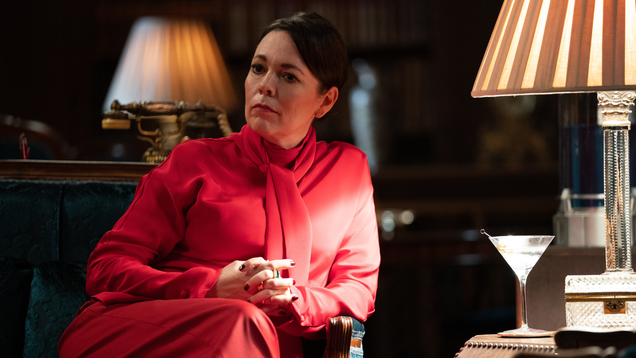
Sure, winning an Oscar is huge for an actor—but making your Marvel Cinematic Universe debut is also kind of a biggie. While we were thrilled when Olivia Colman was cast in Disney+ series Secret Invasion, we did sort of wonder why she wanted to sign on. Now we know: she’s a fan, too.

Read more...

24 Jun 06:12

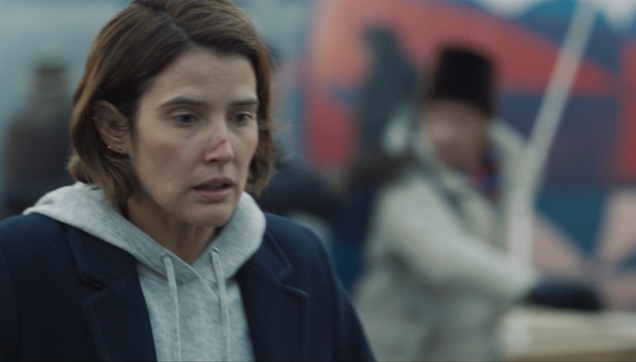
Cobie Smulders Has Thoughts About the Secret Invasion Premiere's Ending

by Rob Bricken

Although the first episode of Marvel’s Secret Invasion series only premiered Wednesday, people can’t stop talking about its, um, final moments. Maria Hill, who’s been played by Cobie Smulders since 2012's The Avengers, has weighed in on what she thinks happened. The news has already pervaded most of the nerdernet, but…

Read more...

22 Jun 04:32

Getting Off (With a Partner) Helps You Doze Off, Study Finds

by Ed Cara

A good night’s sleep might start with a happy ending, recent research suggests. The study found that people reported better sleep on nights when they had sex and experienced an orgasm.

Read more...

21 Jun 13:16

Elon Musk Declares ‘Cisgender’ a Slur on Free Speech Twitter

by Jody Serrano

Twitter owner Elon Musk is still making big decisions on the social media platform, even if he’s no longer CEO. Overnight, Musk decreed that the words “cis” and “cisgender,” denoting the alignment of a person’s birth sex and their gender identity, were now considered slurs on Twitter and that users who engaged in…

Read more...

19 Jun 04:35

Första bilderna på Fairphone 5

by Lars A
Första bilderna på Fairphone 5

Trovärdigt bildmaterial på Fairphone 5 har läckt ut på webben. Föregångaren Fairphone 4 släpptes för snart två år sedan och nya telefonen förväntas bli tillgänglig nu i sommar eller under början av hösten.

Designen har moderniserats ett snäpp genom lite tunnare ramar och en hålstanskamera istället för ett sensorjack. Färgvalen är enligt källan svart, en ljusblå nyans, samt en modell med ett transparent bakstycke.

Fairphone 5 erbjuder minneskortsplats och ett batteri som är enkelt att byta ut själv, vilket är i linje med de nya lagarna EU ser ut att implementera. Uppgifter om övriga hårdvaran saknas men det dyker säkert upp fler rykten innan offentliggörandet.

19 Jun 04:32

All of Netflix's Nerdy Announcements at Tudum 2023

by Justin Carter
Oakfairy

Struntar i själva innehållet, men Netflix kallar sitt annual event för Tudum!?? XD

Netflix had its annual Tudum event, which highlighted the streamer’s upcoming slate of media for the remainder of 2023 and well into 2024. During the livestreamed presentation in São Paulo, Brazil, Netflix gave first looks at upcoming series like its live-action adaptations of Avatar: The Last Airbender and One Piece

Read more...

16 Jun 10:50

EU ett steg närmare att kräva att smartphones har löstagbara batterier

by Lars A
EU ett steg närmare att kräva att smartphones har löstagbara batterier

EU är på väg att implementera nya regler för hållbarhet och miljö gällande batterier. Europaparlamentet har nu röstat fram unionens nya batterilagar vilka dock formellt behöver godkännas innan de träder i kraft.

Lagarna inkluderar bland annat striktare regler för avfallshantering och för hur stor andel av batterier som måste innehålla återvunnet material. Största förändringen för konsumentprodukter är att batterier i portabla enheter måste ha designats på ett vis som gör att vi enkelt kan ta bort och ersätta batterierna själva.

Three and a half years after the entry into force of the legislation, portable batteries in appliances must be designed so that consumers can easily remove and replace them themselves

Detta skulle innebära en drastisk förändring av hur mobiltillverkare designar telefoner, då nästan alla smartphones idag har tighta, låsta konstruktioner med fastlimmade bakstycken och batterier. Flera tillverkare använder därtill dubbla, tvådelade batterier för att kunna öka laddningshastigheten. Även om reglerna bara gäller EU är det kanske osannolikt att tillverkare skulle bemöda sig skapa helt separata konstruktioner bara för Europa. Reglerna kan därför få inverkan på fler regioner.

Förändringen är dramatisk men det vore samtidigt inte helt otänkbart att föreställa sig smartphones med löstagbara, eller i alla fall med hyfsat enkelt utbytbara, batterier. Tillverkare likt Samsung har visat att det går att skapa IP68-klassade smartphones fastän bakstycket är löstagbart och LG:s flaggskepp erbjöd löstagbart batteri så pass sent som 2016, om än i en idag förlegad konstruktion.

Om allt går igenom verkar de nya reglerna för batterier börja gälla 2027, även om smartphonetillverkare eventuellt skulle kunna begära uppskov.

Artikeln har uppdaterats

16 Jun 04:55

How I Learned to Stop Worrying and Embrace the TBR Pile

by Molly Templeton

I subscribed to Oliver Burkeman’s newsletter just in time.

It wasn’t that I wasn’t previously aware of Burkeman—I loved his Four Thousand Weeks: Time Management for Mortals, which I’ve written about in this column before—but in the way of the internet, I didn’t know he had a newsletter. (Who can keep track?) Upon discovering it, I signed up, and the first thing to land in my inbox contained this extremely-pertinent-to-my-life string of words:

“I think you should treat your ‘to-read’ pile not as something you have to get through, but as something you get to pick from.”

Did the same bells just ring in your brain?

I’m sure there are plenty of people who already have this mindset, and who look askance at those of us who are out here bemoaning the state of our TBRs, be they piles or shelves or entire bookcases or, heck, entire rooms. (I’m not that bad. Yet.) How can you complain about such bounty? I imagine them saying. What’s wrong with you?

What’s wrong with me is a long list, much of which I shan’t get into here. But this problem is hardly mine alone. You can’t venture into a bookish online space without encountering the problem of the TBR—which I have had to accept is, at least for me, a little bit of the problem of mortality, in general. I’m an anxious person. I’m anxious about time. I’m trying not to be.

But still, I exist on the internet, which is a slurry of enthusiasm, opinions, and curiosities that is hard to ignore, even if you want to. Every single day I hear about another book I want to read: My currently open tabs include pages for Manjula Martin’s The Last Fire Season: A Personal and Pyronatural History and Immediacy, or the Style of Too Late Capitalism by Anna Kornbluh, neither of which are out until January. (Will I keep those tabs open for seven months? Uh, I hope not.) My reading spreadsheet has a whole tab for books I want to read someday, some of which have been on there so long that I no longer remember why I added them in the first place. (Keeping notes about why you add a book to such a list is something I highly recommend.)

I don’t believe reading is or should be a competition, but at the same time, I look at my TBR and despair: Why haven’t I read How Long ’til Black Future Month yet? Why is Plain Bad Heroines still just sitting there? What about that book I bought in Australia in 2014, or the copy of Iain M. Banks’ The State of the Art that I ordered from the UK because I couldn’t find one here? Do you want to know how many books on this shelf were purchased when I worked at a bookstore, which I haven’t done since 2015? I sure don’t. But I remember every time I look at them.

What Burkeman means, if he will forgive me for the paraphrase, is that this is not a helpful way to look at it. It is not a to-do list. It is not a mountain with a summit that can be reached by human minds or bodies. The giant TBR pile is not a bug; it is a feature. (If you have moved semi-recently, as I have, you may have a harder time with this concept. I understand.) He calls it a problem of “Too Many Needles,” a phrase he borrows from Nicholas Carr, who wrote:

When we complain about information overload, what we’re usually complaining about is ambient overload. This is an altogether different beast. Ambient overload doesn’t involve needles in haystacks. It involves haystack-sized piles of needles.

A haystack-sized pile of needles. A bookcase-sized pile of options. A thing that can’t be optimized or productivity-hacked because (a) there’s truly never enough time and (b) it’s not a to-do list or a series of tasks and (c) we’re talking about experiencing art, not some kind of bookish hustle culture, god forbid, please forgive me for even putting those words in that order.

Burkeman’s answer is to treat your TBR mountain “like a river (a stream that flows past you, and from which you pluck a few choice items, here and there) instead of a bucket (which demands that you empty it).” Being a former hippie child from the Pacific Northwest, I especially like the imagery here: A bucket is something you use to catch leaks or bail out a boat, neither of which is a particularly enjoyable experience. A river is something you gaze at, float on, appreciate; it’s something natural and wild, not plastic and tamed.

And at the best of times—when I’m not overwhelmed by the bigger problems of the world, worrying about the smoke my friends are breathing or the viruses people are still transmitting or the rising sea levels or student loans or just the general destructive trend of the world of late, full stop—when I look at the books I have yet to read, I do see a river, one absolutely full of stories that are going to be their own magic, their own journey, when I get to them. I don’t have to read the next shiny bright popular thing immediately. Neither do you. I don’t have to keep up on series or predict the future or know everything about an author before I dive into their full backlist. I have to do what I always do: try to read widely, diversely, fervently; try to read the things that will fill the well from which I write. Or rather, to keep water in that well, which also can never be full, and never be finished.

The title of this piece is purposely optimistic. I have not yet learned to stop worrying. I am learning, though. Slowly, belatedly, but better late than never. All these books I have piled up before me are a bounty, not a task. All the books in the library, all the books I could read, will read, might read: the same.

The river doesn’t even notice how I look at it. It just keeps flowing. Or sitting and gathering dust, if we set aside the metaphor. But that’s okay, too. Touching the books is, after all, part of the process.

Molly Templeton lives and writes in Oregon, and spends as much time as possible in the woods. Sometimes she talks about books on Twitter.

05 Jun 13:59

sirfrogsworth: Never trust a Republican y-a...

sirfrogsworth:

Never trust a Republican y-axis…

Graph crimes.

16 May 04:39

Jared Padalecki Thinks Supernatural Could Have Lasted Even Longer

by Linda Codega

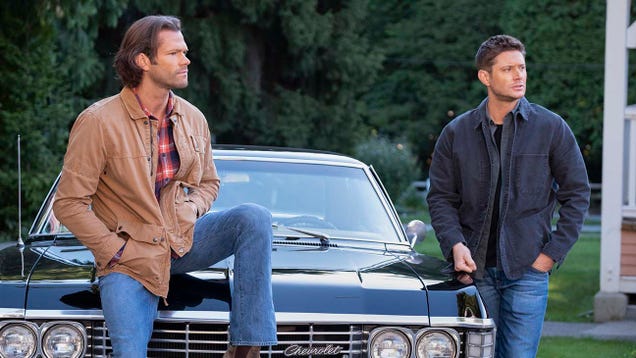
Jared Padalecki might be on the circuit for his newest show, Walker: Independence, but that doesn’t mean that he’s not giving Supernatual fans something to talk about. In an interview with TV Insider, Padalacki talked about what a show going for 13 episode seasons might have done for Supernatural.

Read more...

16 May 04:31

Telly lånar ut teve i utbyte mot reklam

by Lars A
Telly lånar ut teve i utbyte mot reklam

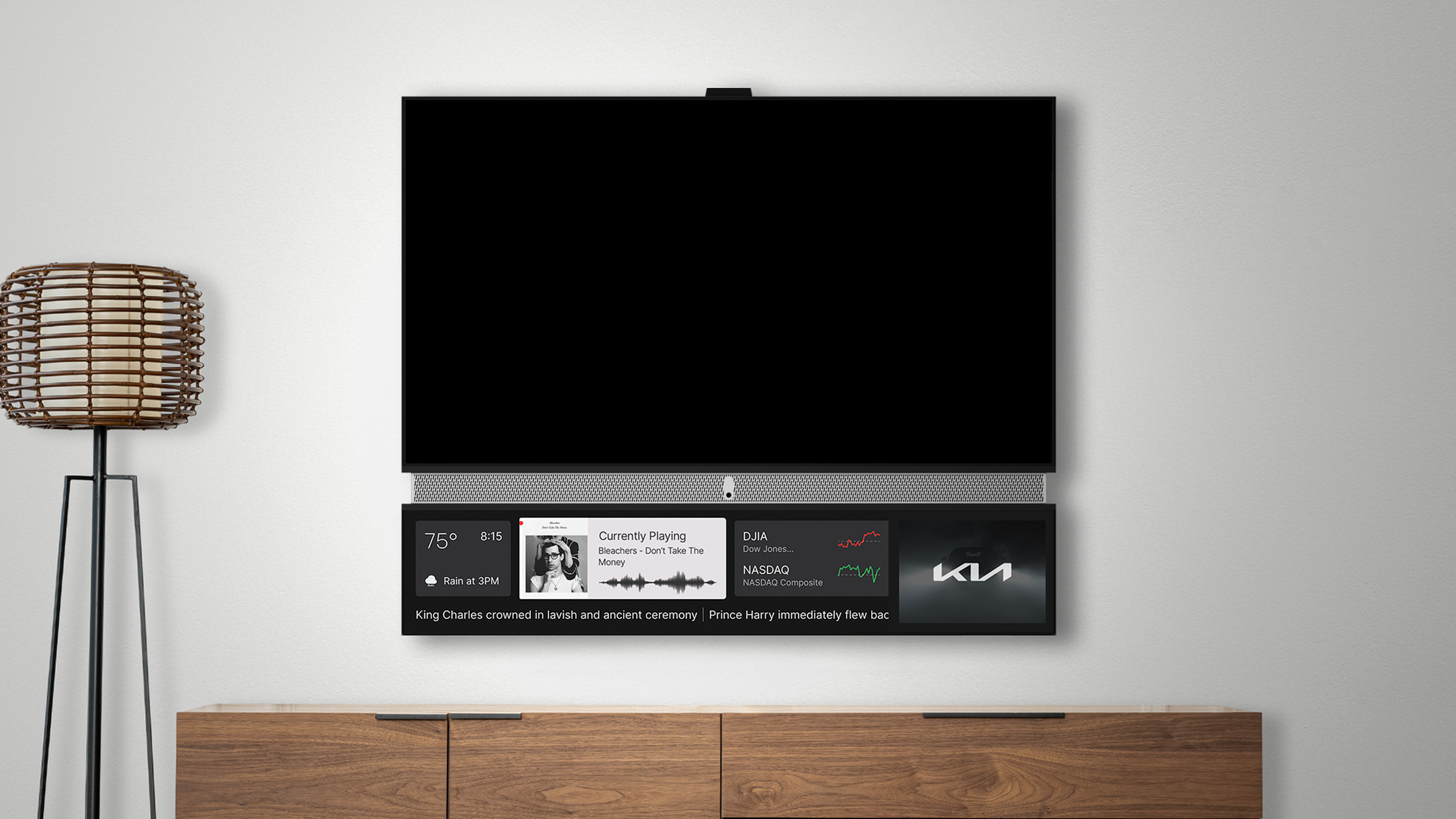
Under kategorin ”varför tyckte någon det här var en bra idé?” vill vi nämna en ny 55-tums tv-apparat med 4K och HDR som går att låna utan pengakostnad i utbyte mot att se reklam. Teven har en betydligt mindre sekundär panel som vilar likt en remsa under den ordinarie skärmen.

Den undre skärmen visar reklam. Företaget, som heter Telly och har bildats av en av gratiskanelen Plutos grundare, kallar den sekundära panelen för ”smart display”. Utöver reklam ska skärmen även kunna visa widgetar och olika typer av aviseringar, likt väder, nyheter och sportresultat. I det avseendet för extraskärmen tankarna till V-serien från LG.

Annonser visas till höger i den undre skärmen, vilket bilderna illustrerar. När teven inte aktivt används kan reklam visas på båda skärmarna. Eftersom tevens OS inte kan köra appar levereras Telly med en separat Android TV-sticka. Teven har en kamera som möjliggör rörelsespårning. Fitnessprogram ingår, samt videosamtal. Enheten har dessutom en mikrofon.

Haken utöver reklamen? Användare måste acceptera datainsamling (kom ihåg att teven har både kamera och mikrofon) och om de nekar avtalet behöver de antingen lämna tillbaka teven, eller så dras 500 dollar från kontokortet de behövde lämna ut för att få enheten.

Vad hindrar användare från att bara hänga en duk över den nedre panelen så de slipper se den? Kanske har teven sensorer (utöver kameran) som känner av ifall reklamskärmen har täckts, men det nämns i så fall inte.

Tv-apparater har blivit så pass billiga att vi undrar hur stort intresset kommer vara. I Sverige går det i dagsläget att skaffa en 55-tummare med 4K för under 4000 kronor. Telly hoppas ändå leverera en halv miljon tv-apparater nu i sommar.

13 May 19:49

My wife is being laid off from a school library that was closed so admin could have more office space. This was in an area where most of the families struggle to afford rent, so books are a luxury, and this was the only one most of the kids had access to. The library books were supposed to go into storage, especially the “controversial” books. My wife smuggled out all the queer novels, all the Vonneguts, and the entire Sandman series, and has been distributing them covertly over the last few weeks. The kids love your work, and are so excited that they can keep the books. She said Sandman was the first series she ran out of. I just thought you’d like to know your books are part of a literature-based high school smuggling ring.

Your wife is awesome.

06 May 06:13

Commemorative Plaque

[Below] On this site on May 12th, 2023, I finally learned how to use the masonry bit for my drill.
05 May 08:32

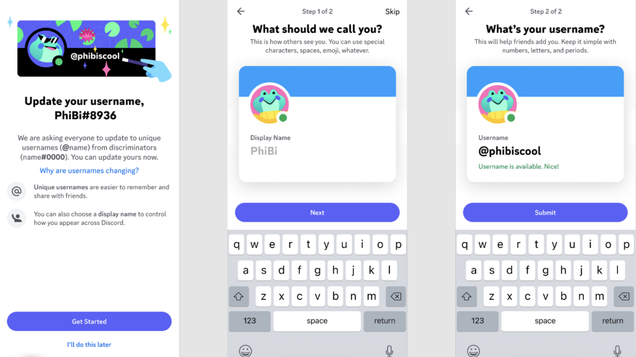
Discord Is Forcing Users to Pick New Usernames

by Nikki Main

Discord announced its users will be required to change their usernames in the coming weeks, allowing them to pick a new and unique name without the social network’s trademark discriminator. The discriminator, which consists of a hashtag and a series of four numbers added to all Discord usernames, will be replaced with…

Read more...

04 May 13:29

Electric Vehicles Could Become a Blackout Solution in California

by Gabriela Aoun Angueira, Grist

This story was originally published by Grist. Sign up for Grist’s weekly newsletter here.

Read more...

03 May 04:41

Why Did Star Trek: Picard’s Final Season Focus On the Wrong Family?

by Emmet Asher-Perrin

The final season of Picard was so touching. Wasn’t it great seeing all our friends back together again? Wasn’t it moving to learn how they’ve changed? Cathartic to let them all band together to save the galaxy one more time? Who wouldn’t want to be at that poker table, huh?

Now that I’ve gotten that out of the way—we need to talk about Beverly Crusher.

We waited an entire season to find out what the whole deal with Jack Crusher Jr. was all about. And I’m not talking about the Borg stuff, a reveal that was destined to be underwhelming in every direction because how many times can we rehash what the Borg did to Picard, we get it, the whole arc was very dramatic, thanks for that. What I’m referring to is the single (one!) conversation that Beverly Crusher has with Jean-Luc about the sudden appearance of progeny in his life, and how we’re all meant to go along with that one conversation in good faith because… it’s good that Picard has a kid now?

But moreover, we’re supposed to believe that this is what Beverly herself wanted in the first place.

Buy it Now

Look, I wanted to give this character arc the benefit of the doubt. I actually enjoyed that one conversation that they have in “Seventeen Seconds,” at least on a scripting level: It felt like such a perfect illustration of both characters’ foibles, their joint terrible stubbornness and ability to talk through literally everything… except each other. The argument was a deeper, more gruesome echo of fights we’d already watched them have, about Wesley, about ethics, about the places where duty and personal choice collide. But nowhere in that conversation does Beverly ever explain why she chose to have this kid.

There’s a cynical part of me that worries the answer is, subconsciously, “because all women always want to have children when given the chance.” There are certainly plenty of people who think so, and it’s not a difficult or even particularly surprising vantage point to accidentally (or not) slip into a narrative, even one as convinced of its own progressive bonafides as Star Trek.

But there had to have been a perspective from the actors on this arc, right? What did they all think of this?

It turns out that the final season was always going to feature a Picard child—and it has been said that it was Patrick Stewart’s suggestion that Beverly be the mother. The rationale on that isn’t wrong, of course, particularly not from a melodrama perspective; fans have been obsessed with the will-they-won’t-they nature of that relationship since TNG’s heyday, and if any couple was going to have a messy falling out, they were always the most likely candidates. But it’s still true that most of the female characters on Next Gen got the short shrift, first in seven years of television, then even moreso in the films. This was particularly true for Beverly, who always seemed like an afterthought to the movie writers. Her relationship with Picard was largely forgotten in those years out of a desire to allow for romances between the captain and Hollywood-level one-off costars, making her story particularly iffy to anyone who appreciated the character.

Season three of Picard introduces us to a Beverly who cut ties with Starfleet ages ago, and hasn’t spoken to her friends and colleagues in decades—and we soon find out the reason for this is Jack, a son that resulted from her final liaison with Jean-Luc. Their fight in “Seventeen Seconds” is about the choice to keep Picard’s son a secret from him, but also about Beverly’s fear ruling her actions; she tells Picard that her reason for keeping Jack’s existence from him was partly down to his own clarity at not wanting children (which he rightly calls out as a poor excuse), but also knowledge that having Jean-Luc Picard’s son was always going to be dangerous for the child. So my brain naturally pipes up with the fact that there was an easy way to avoid this conundrum: not having the child in the first place.

Obviously that was never an option because Jack was supposed to be in this story, but it’s also true that women’s decisions around pregnancy in fiction rarely contain even a passing mention of abortion unless the story means to make abortion the entire point of the plot. This is a mistake because there are plenty of women who have had abortions as a matter of course, without a huge amount of fear and shame attached to the choice—sometimes mistakes happen, and people need to be able to handle their lives as they see fit. This is particularly true in a future like Star Trek’s where this should no longer even remotely be a debate. So why, if she was so terrified for the future of this child, did Beverly Crusher chose to have him?

Image: CBS / Paramount+

According to actor Gates McFadden (in an interview with Variety), she believed that Crusher always had the desire to be a mother again, and moreover believed that her choice to hide Jack from Picard came from the telepathic connection the characters were forcibly given on the TNG episode “Attached”:

I feel that’s why they basically broke up, or it never really went anywhere. Because she didn’t want this on-and-off relationship she wanted a family. And he very clearly from the deepest instincts did not.
And this is where the whole thing breaks for me. Because while I understand that it’s part of our common vernacular, it is very important to remember: Children alone do not make a family.

This is absolutely not to say that a single parent raising a child doesn’t have a family, so lets preempt that right off the bat. But the problem here is that we often insist that children are what creates families. The phrase “starting our family” is universally understood in the English language to mean “having a baby.” And Gates McFadden believes that the relationship between Picard and Crusher couldn’t work out because she “wanted a family”—meaning she wanted more kids, and he did not.

And it is important to note that in order to have that child—that family—Beverly Crusher completely cut off the family that she already had.

Because cutting off Jean-Luc isn’t perhaps the best or kindest path Doctor Crusher could have taken, but it’s a choice that makes sense to a certain degree and a choice I don’t really begrudge her… until we come to the fact that staying distant from him meant that she had to leave a career that she adored and eschew contact with every single person she was close to. Because in Beverly Crusher’s mind, they were not family in the way that progeny could ever be.

I am not saying that there’s no version of this story that could ever work from a character perspective. (Let’s never forget that the choice to raise her son on Picard’s Enterprise is a large part of the reason why Wesley rarely comes home for family holidays.) What I am saying is that I’m going to need a little bit more than a single fight in a single episode where there is literally no mention of what this choice has cost Beverly Crusher as a person—only what it cost Jean-Luc. And what I am also saying is that a so-called utopian future where we still only equate offspring with family is a comparably garbage future.

And the depressing state of affairs created in wake of this decision doesn’t stop there! Because when Jack finally learns about the accidental Borg heritage he inherited from Picard and escapes to the Collective, prompting an Enterprise-D Reunion Rescue mission, Jean-Luc is the one who comes to get him, of course. Because in addition to children being the only way that you can have a family, having two (presumably) heterosexual parents is also the only way for family to truly work; Jack has been distraught throughout the entire season over the idea that Picard didn’t want to have a son, and Picard’s rescue is meant to be the moment when he assures Jack that isn’t true. In fact, he tells Jack that he’s spent his whole life having difficulty connecting with others, and that he now knows why and what was missing from his life—it was his son.

Let’s just skip right over the fact that the entire second season of Picard was a treatise on Picard’s difficulty with connection being due to unresolved family trauma. Like or dislike the choice and backstory, that was the whole prompt last year: a dying Q using his final actions to help Jean-Luc heal because he loved him so dearly.

Even ignoring that, there is nothing about this declaration that rings remotely true for Picard’s character. One of the greatest strengths of TNG was always the fact that nearly everyone on the ship had trouble connecting in one way or another, and that they learned how to navigate those difficulties together by all letting each other be their oddball selves. They don’t need fixing or magical nuclear families to be okay, just people whose weirdness jives with their own. That’s ninety percent of what makes Starfleet go in the first place, when you get right down to it. That’s… the point of the poker game, y’all. That’s the entire metaphor.

Image: CBS / Paramount+

What the show is now (unintentionally or not) retroactively suggesting, by insisting that Jack fills a void, is that all of these connections Picard already made were inherently less meaningful simply because they were difficult for him to achieve and maintain. That all the work he put in to understand his crew and guide them over their years together—these people who are willing to drop everything at a moment’s notice to help him achieve the impossible once again—left his life incomplete when compared to the instantaneous bond of genetics. Why? Because these bonds were imperfect and complex? Because they took effort to perpetuate? Because they did not smoothe every personal flaw that Jean-Luc felt he still possessed? Because I only have Admiral Picard to quote back at himself if that’s the issue: “That is not a weakness. That is life.”

It’s strange, too, because this isn’t the first time we’ve dealt with this exact same arc for a Trek captain, though to an ultimately more credible end: After all, James T. Kirk went through a very similar ordeal. We found out that he wasn’t involved in his son David’s life due to Carol Marcus’ insistence, though he clearly wished he could have been. But even though the death of his son is a horrifying point of personal pain for Kirk, it never outweighs the relationships that are present and meaningful to him, and he never suggests that his lack of time with David was some sort of gaping hollow in his life. And here we have Jean-Luc Picard, ultimately a more self-reflective and staid sort of man, claiming that Jack’s existence somehow completes his life in a way that nothing previously could.

But you know, let’s say we just shrug our shoulders and accept this arc anyway because this is the story the final season of Picard means to tell us, and we’ve got no say in it. Or let’s even say that we think this was a bit of emotional fakery on his part to stop Jack from destroying the galaxy, which is also possible. Are you telling me that we’re not supposed to be furious that Beverly Crusher gave up her entire life to raise this kid, and her decades of support and love apparently means absolutely nothing to him? He can only be saved by dad-love because only Jean-Luc can truly understand—not Beverly Crusher, humanist renegade doctor-at-large?

Sorry, it’s not working for me. None of this tracks.

And we all know it’s a flaw, because when you ask anyone what they loved about the final season of Picard, it is the TNG class reunion, full stop. But now we’ve got a Picard son with basically no personality—I took to calling him “self-aware Han Solo” because that’s genuinely all I can parse about his character, that he’s kind of a jerk or scoundrel, but he’s cognizant of it, and that somehow is meant to make him more interesting—staffing the next Enterprise with Captain Seven of Nine. And to be clear, I desperately want a show that is Seven and Raffi commanding a bunch of weirdos into the next-next generation. What I don’t need is Admiral Crusher and Picard’s kid on their bridge for no reason other than a humorless nepotism joke.

Honestly, if they were going to stick us with a Crusher-Picard nepo baby, they could have had the decency to at least give us a daughter squaring off against the Borg Queen.

But at least we got that poker game, yeah? And I suppose that’s what we’ll all focus on until we’re forced to deal with the specter of Jack Crusher II again. Because legacy in Star Trek shouldn’t be tied to a familiar last name, but that does seem to be the only way franchises know how to keep building these days. And we should all be at least a little concerned about that…

Emmet Asher-Perrin really doesn’t want to deal with Jack Crusher anymore, but assumes there’s nothing for that. You can bug them on Twitter, and read more of their work here and elsewhere.

03 May 04:27

Samsung förbjuder anställda att använda chattbottar

by Lars A
Samsung förbjuder anställda att använda chattbottar

Samsung är senaste i en lång rad av företag att förbjuda anställda från att använda chattbottar med generativ AI, likt ChatGPT, Microsoft Bing och Google Bard. Förbudet gäller inte privat utan på företagets nätverk och på enheter som ägs av Samsung.

När chattbottarna används som hjälpreda för programmering eller för att summera texter riskerar proprietär källkod, namn på framtida produkter, andra känsliga uppgifter eller företagshemligheter att läcka ut.

Särskilt ChatGPT anses utgöra en risk i det avseendet. OpenAI:s personal kan nämligen granska konversationerna användare har med chattbotten för att förbättra systemet och se till att chattbotten följer företagets policy och säkerhetskrav, även om utvecklaren nyligen introducerat ett inkognitoläge som inte sparar samtalen.

Förbudet har införts efter att Samsung-anställda redan blottat känslig källkod för ChatGPT.

27 Apr 04:44

Hi Neil; Hope this message finds you, well or not <3 My brother is a huge fan of yours who despises *his* birthday (he’s moderately fine with birthdays of others) and also hates being the center of attention (that’s why he hates his birthday). I wanted to see if you’d be able to wish him happy birthday. This is not his birthday but I think it’d be even better to make him live his worst nightmare when it normally never would with a birthday present he wouldn’t be able to keep himself from enjoying. Lots and lots of love from another fan of yours, truly grateful for your existence 🩷

That is evil and I will have no part of it.


Also please wish your brother happy birthday from me.

27 Apr 04:44

sometime i get you confused with morgan freeman and i have no idea what you do when i picture you i picture morgan freeman

It is a common mistake made by people who don’t know what I look like, who I am or what I do, but do know who Morgan Freeman is.

25 Apr 06:54

Comic: On Trans Depression

by Jim C. Hines

The post Comic: On Trans Depression first appeared on Jim C. Hines.
23 Apr 08:34

Cranberry Really Might Help Prevent UTIs for Many, Large Review Finds

by Ed Cara

Newly updated research suggests that cranberries really can help some people avoid urinary tract infections. The research, a review of existing clinical trial data, found enough evidence to support the use of cranberry-based products to prevent UTIs in women with recurrent infections, children, and people with a known…

Read more...

21 Apr 04:33

Escape Speed

Gotta go fast
15 Apr 09:31

April 14, 2023: Stargate!

by Joseph Mallozzi

Yes, Stargate news on Deadline today…

‘Robocop,’ ‘Stargate’, ‘Legally Blonde’ & ‘Barbershop’ Among Titles In Works For Film & TV As Amazon Looks To Supercharge MGM IP

To those asking, the creatives behind SG-1. Atlantis, and Universe are out of the loop on this so, alas, we have no information for you.

Speaking of classic Stargate, here are some behind the scenes photos from SGU’s “Water”…

The post April 14, 2023: Stargate! appeared first on Joseph Mallozzi's Weblog.

15 Apr 09:20

Stargate’s Future at Amazon May Include Movies and Series

by Molly Templeton

Stargate SG-1, season 8

When Amazon Studios bought the legendary movie studio MGM last year, they bought a huge catalog of movie and television properties. Obviously, they weren’t just going to sit on those new acquisitions—not when there are always remakes and reboots to create!

According to Deadline, executives have been combing through that catalog, deciding which bits of intellectual property are best suited to being further developed—and sorting out the rights to said projects.

A handful of projects have been chosen for movie or TV development—and Stargate is among them.

Other marked-for-future-development properties include Robocop, Legally Blonde, Fame, Barbershop, The Magnificent Seven, Pink Panther and The Thomas Crown AffairCreed has already been tapped to become a cinematic universe of its own.

The future potential of Stargate has been discussed for years and years, but the last related project to come to fruition was the brief web series Stargate Origins in 2018. Before Amazon bought MGM, there was talk of a Stargate revival featuring members of the Stargate SG-1 cast. Once upon a time, there were plans for a Stargate Extinction movie.

Deadline writes, “We hear A-list creative auspices have reached out to inquire about adapting MGM IP which they are fans of. Additionally, Amazon Studios also has been leaning on its own roster of talent for some projects.” But there are no details at all, yet, about who might be involved in any future Stargate projects. All Deadline says at this point is that “both film and TV installments are considered, with a movie likely going first.”

Keep your eyes on the stars for more details!

04 Apr 04:27

sirfrogsworth: I have on 12 layers of sparkl...

sirfrogsworth:

I have on 12 layers of sparkly outfit and I am going to strip now.

Nudity will commence in an hour or so.

Thank you for your patience.

Okay, I just have to undo 30 laces on this corset and peel off 3 pairs of spanx. And if I could have a volunteer to tug real hard on these stiletto boots because I forgot to powder my legs and things are getting real sticky.

02 Apr 13:56

You Cookie Dough Freaks Just Never Learn

by Lauren Leffer

Stop it. Seriously, just don’t do it. Step away from the mixing bowl with your hands up. Put the wooden spoon on the counter—no, do NOT lick it. If you’re considering snacking on unbaked cookie dough, the Centers for Disease Control and Prevention is once again—for the millionth time—asking you to reconsider.

Read more...

31 Mar 09:47

Hi Mr. Gaiman I wanted to propose a game if you agree, could you tell us 3 statements about GOS2, 2 false and one true, so we try to guess which one is true until it is released

Sure.


It’s seven episodes long.
David Tennant and Michael Sheen are both in it.

All people talk about during the seven episodes is the problem with finding a place in London to park your elephant.