“I’m not eating the dog food because the dog food tastes good. It’s dog food. It’s complete trash. I’m eating the dog food because the dog needs to learn her place.”
Yes, Smudge eats the dog food from time to time. Yes, the dog seems confused about this. But she also doesn’t get in his way. That said, Charlie will happily push Smudge out of the way if she thinks he’s about to get a treat that she’s not going to get. She gives as good as she gets, is what I’m saying.
“You wouldn’t steal a car. You wouldn’t steal a handbag,” said that infamous 2000s anti-piracy commercial from the Motion Picture Association. “Piracy is stealing.”
I mean, the little bugger’s basically invisible until like ten feet away…
I’ve seen coyotes do this in real life. Just like in predator, I was just watching some kind of weird shimmer going through the sagebrush. Even though I knew what it was I couldn’t make myself see the dog.
I went in for a physical the other day. Now, I was sick at that time — not real sick, not COVID, probably RSV since that was going around, and since also the transmission timeline tracks. I was in the middle of it and honestly, still have a really irritating cough (though, be advised, nothing serious, just annoying). I went in with a mask on.
Nobody at the doctor’s office was wearing a mask. Lady at the front desk: “Oh, you don’t have to wear that!” That said, while pointing at my mask. I say, I’ve got a cold, she lets it go. I then fill out the paperwork that talks about my current situation: what meds I’m taking, have I been in surgery, etc.
Then, the nurse lady comes and gets me. First thing she says, pointing at my mask: “You don’t need to wear that in here.” She says it like it’s a favor to me, like, oh, honey, we’re not going to be mean and make you wear that big ol’ horrible ugly mask around your beautiful breathing hole and your luxurious food-catcher of a beard, why don’t you just pop that thing off and suck in a lungful of America.
You don’t need to wear that in here?
Well, I fucking do, SANDRA, because as it turns out, the doctor’s office is where the sick people go. It’s like going to the pharmacy. You mask anywhere, do it in the pharmacy. Everybody in there is horking up lung beef. The respiratory illness is so thick in the air you can catch it on your tongue like snowflakes. I go there, or the doctor’s office, sick people are going to be present. That’s the deal, obviously, wtf. I don’t want what they have, and nobody present should want what I have, what the fuck.
I say, again, I’m sick. I’ll keep the mask on, thanks.
Then she measures me and all that shit, and says, somewhat aggressively, “You are not 5’8″.”
“What?”
“You have it down that you’re five feet eight inches.”
“Okay.”
“You’re only five feet seven and three-quarters.”
“…okay. S… sorry?”
It was such a weird ding, I still don’t know what to make of it? Like, “Hah, gotcha, you were pretending to be a NORMAL HUMAN with a NORMAL HUMAN HEIGHT, but I have discovered a GNOME AMONGST US.”
So then Nurse Sandra, not her name, asks what medications I’m taking and if I’ve had surgery and all those same health questions, making me think that I filled that shit out in the waiting room and then they immediately took the form and threw it in the trash. “Fuck this piece of paper,” they say, with vigor and spite. Fine. Whatever. Then we go throughs some new questions, the fun ones about, “So, who in your family is dead now, and what did they die from?” And that’s a fun little litany to recite.
Nurse takes my blood pressure. It’s high. Not like, blood is about to squirt out of my eyes high, but like mid-high, and that’s odd, because my blood pressure is never high. So, that’s noted.
She leaves. Doctor comes in.
Now, my doctor has the bedside manner of a lamp. Some may find this comforting but you can’t joke with him, you’ll learn nothing about him, he knows nothing about you — he is simply present, like if one of those grocery store robots were a doctor.
Oh, also, you also get like, one question. If you go in for WEIRD ELBOW, you talk to him about WEIRD ELBOW and you get the fuck out. Do not ask him about the ODD EAR GURGLE. He does not want to talk about that. You’re signed up for a WEIRD ELBOW session. You got EAR GURGLE, that’s a different appointment, and this train is a-rollin’, pal.
So, he sits down.
And he says
wait for it
wait for it
waaaaaaait for it
“You don’t have to wear that.”
That, meaning, presumably, my mask.
(Better that than, say, my pants. “You don’t have to wear those dungarees,” he says, a coy twinkle in his once-dead eyes.)
I sigh, and explain, well, there’s a lot of sickness going around, and also, I am presently sick.
When I say this, he visibly flinches and asks, with serious panic:
“Do you have COVID?”
And I need you to understand here that in that exact moment I proved undeniably that I have a superpower, and that superpower is unshakeable willpower. Because I really, really wanted to take my mask off and then answer, confidently, “Oh, yeah, it’s COVID.” Just before coughing.
I did not do this, thus confirming I am a good person.
But I mean, what the fuck, they don’t ask before I get there if I had COVID. They don’t supply tests. They just gleefully tell me to take off my mask. I absolutely could’ve had COVID. And given how glibly the entire office treated the situation, I’d think they actually don’t care very much about COVID — or any other illness! — at all.
(Which is why I mask there!)
So, he then asks, and once again, please wait for it, wait for it —
“What medications are you taking?” And then, you know, have I had surgery, who in my family is alive and how did the dead ones die.
At this point I’m fairly convinced that I’m being punked, like this is some kind of joke, right? They all tell me, ha ha, no masks, also, please give us the same information you just gave to the last three people. Is anybody writing this down? Two of the people seem to be tapping it into a fucking iPad, but at this point I’m pretty sure they’re just playing Wordle. There is literally no continuity of information. I sigh, and I tell him the information AGAIN.
So, he says, “You’re still on the lansoprazole.”
Meaning, my heartburn meds. Proton pump inhibitors.
OTC, yes, yep, I take it every day.
Last year, he asked me this question, and I said yes, and he said, “OTC? I’ll give you a prescription for the prescription dose,” which is twice as powerful, I guess, but I said I didn’t need it, and he gave me the prescription anyway. I asked him then, “Well, I hear there are some risks with the PPIs, so I dunno if I should get a bigger dose when arguably I should wean off this one maybe?” And he said those studies aren’t really great, don’t worry, get the prescription, you dolt. So me, the dolt, said fine. (I did get the prescription. I did not take any. I still have the bottle.)
This year, he says, “You should probably try to get off that.”
That, meaning, the thing he wanted me to be on last year at a higher dose.
He says to just take a lesser heartburn med, I say those work but not like the PPIs work, and we’ve had this conversation before, and he’s like, “Well maybe we oughta get you scoped to see what’s going on.” I also explain last year he didn’t seem that concerned and wanted me on a higher dose.
The doc shrugs that off. Like, so what.
Okayyyy. I’m not opposed to changed thinking. Changed thinking is good! But this isn’t presented as changed thinking, it’s just, wild spasms from one direction to the next.
Then: time to address blood pressure. It’s high. I don’t know why it’s high. It’s been low all my life, except when I’m sick. And, during this appointment (and even now, a little), I’m sick, so maybe that? Also… I had COVID over the summer. And COVID seems to be consistent with a risk of triggering a rise in blood pressure after the fact. Doctor waves this off. Says it’s because I’m basically a fat piece of shit. Not his words, precisely, but he said blah blah blah, high BMI, blah blah blah, I could stand to lose 50 (!) lbs. Which, I mean, feels like a big suggestion? “Hey, you should lose 22% of yourself.” I have not been that thin since *checks notes* high school.
“We need to whittle you down to your teenage weight” does not seem like a healthy, or even doable, suggestion.
And then he’s on about cholesterol. “Your cholesterol is high.” I haven’t even tested this year, but it was high last year, and it has been my entire life. Not one test has ever come back without it. It’s familiar. I dunno. We’re Eastern European. Pork fat is in our blood, literally. My grandmother had it, but okay, she cooked everything in lard. My mother had it, but she was thin as a bird and ate very little. Father, yep, sister, yep, cholesterol. We’re just made of the shit. We’re like animated wax figures, except, fatty blood goop. And to be clear, not one of these people ever had a cardiac event. Cancer was what killed them, not cholesterol. But he’s like, “Well, it’s bad and you need to be on a statin.” I tell him everybody I know who went on one did pretty poorly, from mood changes to muscle pains to headaches to diabetes to depression/fatigue — obviously, this is artisanal data (aka anecdotes), but if you Google statins and side effects, holy crap, it’s a lot. A lot of people with a lot of problems. And he’s like, nah that’s fine, it’s rare, you need to be on a statin. It’s familial, I need to be taking the pills. I don’t want to be taking the pills, but no other alternative is on the table, from his view. Okayyyyy.
“You need to get a colonoscopy,” he says.
I tell him, yeah, I know, I’m scheduled for one in a few weeks. “Because you have to get one at this age,” he insists, and here is another dose of irony, because at age 45, 46, and 47, I told him, “They changed the guidelines, I can get a colonoscopy now,” and he said, “no they didn’t, not until 50, sorry,” every fucking time. Now, now he’s like, “WELL YOU BETTER DO IT, WHAT HAVE YOU BEEN WAITING FOR.”
The appointment is over, then, and I say, with great reluctance, “I think you have to check my prostate.” Which means, y’know, the ol’ wiggly finger test. One of our least most dignified tests during a physical, for either of us. Last year he did it. This year he said, “You’re not at risk until 50.”
And I’m like, motherfucker, you JUST ASKED ME five minutes ago about all the deaths in my family, and I said, as I have said every time, my FATHER died from *does jazz hands* PROSTATE CANCER. Which is why I get the prostate checked. It’s not because I enjoy the experience! It isn’t a treat for me! There’s no romance! No Lindt truffle gently pressed into my mouth! It’s unpleasant for both of us. (Though I note, no joke, I had a doctor many years ago compliment me during the process saying, and I quote, my sphincter had “good snap.” As if it were a bratwurst he was biting into instead of a butthole his finger was plundering. I guess he meant my nether-ring returned to form easily, like a rubber-band? Better that than a blown-out pair of elastic underpants, one supposes.)
Well, no such compliment from this current doctor. I remind him that, hey, hello, my father died not from cholesterol but from eating a big ol’ bowl of Oops, All Prostate Cancer, and he says, crestfallen, “Oh.” Then he thinks about it and you can see the war on his face where he’s deciding if he’s going to glove-up and do the deed. The slot machine in his eyes stops spinning and it lands on, mmm, not today, Satan.
Instead he just says, “We’ll just have the blood test check your PSA numbers, no digital test necessary.”
And so endeth the appointment. Now, I get it, this is far from the worst anyone has experienced — and certainly women get a lot more handily dismissed than I do. (God only knows what trans people have to deal with at the average American doctor; I imagine it is, how you say, unideal.) When I had COVID this past go-round, they gave me Paxlovid fast. My wife got COVID and they told her to eat rocks. I had to call and kick over a bunch of bee-hives telling them they were being sexist by denying her the same medication I was getting, and they finally relented and gave her the drug, too. So, even there, a disparity from the same doctor.
I bring this up because, you know, I find when you have a lack of trust in one doctor, it kind of cascades outward — the doubt, the distrust, it reverberates. It means I’m less interested in going to him for problems, for care, because either I can only bring up the one thing that’s bothering me, or worse, he’s just gonna say “BMI cholesterol” loudly at my broken ankle or my pulsating neck tumor. When I get inconsistent, incomplete, or outright wrong information from a health provider, it dents and dings my overall feelings about healthcare in general — and my feelings about healthcare in general, as a capitalist endeavor driven by money as much as (if not more than) actual health, ain’t great as-is.
It’s not just that they’re wrong sometimes. Science is wrong often! Then we adapt, we course correct, we learn and grow. But healthcare providers seem extra resistant to that growth, to any new thinking, and are still just as happy throwing antibiotics at a clearly viral infection even though it… doesn’t do anything, like teachers who give an excess of homework just because parents demand it, not because it actually improves anything at all. And once you start to doubt the doctor, once you start to doubt why they want to just throw medication at a thing instead of trying to root out a cause or find deeper adjustments, that doubt swells and blooms.
And it becomes much easier to end up in the place where you’re questioning good advice, where you’re doubting settled science, because your doctor — your representative in this strange world! — isn’t someone you trust as easily as you’d like. It’s like holes in rotten wood — spores are going to get in there and grow, and those spores could be stuff like anti-vaxxer nonsense bullshit. Right? We have to be our own advocates in medical spaces, but being our own advocates means… trying to know ourselves but also trying to know more than our own doctors know. Which leads us to potentially harmful sources of information and, of course, as information fidelity online is getting worse and worse (search engine enshittification!), the fidelity of good medical information is worse, too. Made worse, by exploitative actors and by unregulated unfettered capitalism.
Not everyone is well-versed in critically-thinking every problem, and it’s easy to be like, “Well, yeah, my doctor was wrong here, so when they tell me to get vaccinated, I’m like, hey, maybe I should question that a little bit. And then I found one of the Kennedy’s saying that nature is good and vaccines are bad and I agree with the first part and my doctor is a dickhead soooo…”
What I’m suggesting here is that your doctor is your first line of defense against all the bullshit, and all too often, they’re a very, very weak defense. I know friends who had doctors tell them stuff like, “Whoa, don’t get that COVID vaccine, it changes your dang DNA.” Like, no it fucking does not. But there they are. Medical personnel. Saying it. Telling you that, or not to wear a mask, or take these antibiotics for a non-bacterial problem, or, or, or.
It just kinda sucks.
I have no solution here, I have no deeper thoughts, I just want to yell and sigh and grump a bit here. But also I wanted to point out that bad experiences with doctors has a knock-on ripple effect. (And no, I am not an anti-vaxxer, give me the shots, get a mask on my face when needed, and I try to take my health seriously, erm, maybe sometimes too seriously, given that I have hypochondriac obsessiveness at times.)
Again, tl;dr I don’t like my doctor, and I need to find a new one.
Which is a sucky journey, even suckier than like, buying a mattress. And buying a mattress is a journey into Hell.
INTO HELL.
Anyway.
Have a nice day.
Buy my books or I explode, like the bus from Speed.
Worldcon Intellectual Property (W.I.P.) is the California non-profit corporation that holds the service marks of the World Science Fiction Society (www.wsfs.org) including the mark “Hugo Award”. In the midst of social media discussions about the continued viability of these marks, … Continue reading →
We got old. And half of us got dead. And one of us hadn’t come up with the Hat Thing yet. And one of us still wore sunglasses indoors. Nearly 35 years ago…
I september förra året upptäcktes tecken på att Whatsapp börjat förbereda för interoperabilitet med andra meddelandetjänster för att rätta sig efter EU:s nya regelverk. Nu har Whatsapp-specifika bloggen Wabetainfo lyckats vaska fram ”tredjepartschattar” i senaste betaversionen för IOS.
Konversationerna med andra meddelandetjänster visas i en separat sektion av Whatsapp för att särskilja dem från de vanliga chattarna. I teorin kommer denna interoperabilitet göra att Whatsapp-användare kan skicka och ta emot meddelanden från exempelvis Signal, och så vidare.
Interoperabiliteten kommer vara valfri, så de som inte vill få meddelanden från andra tjänster kan välja att fortsätta använda Whatsapp som vanligt. Idén med att öppna upp de största meddelandetjänsterna är att minska deras dominans, ge mindre aktörer en chans och samtidigt förbättra kommunikationsmöjligheterna för användare (för att alla inte behöver använda samma app).
Apple verkar dock ha lyckats slippa undan med Imessage – men å andra sidan kommer Apple integrera RCS senare i år vilket ökar interoperabiliteten med Android.
Google verkar ha lyckats ställa till det med en uppdatering igen. Vi vet inte hur utbrett problemet var men i höstas råkade vissa Pixel-användare ut för en bugg som gjorde att systemet trodde lagringen var slut, på grund av en uppdatering.
Nu har det dykt upp flera rapporter på Reddit om att användare drabbats av ett liknande problem på grund av januari månads systemuppdatering via Google Play (inte de vanliga OTA-uppdateringarna). De som råkat ut för eländet kan inte nå lagringen, vilket i sin tur gör telefonen mer eller mindre obrukbar.
Lyckligtvis är det få som fått januaris systemuppdatering via Google Play, då de flesta ligger kvar på novemberuppdateringen. Vi vet inte om buggen endast drabbar Pixel-telefoner eller om den riskerar att även drabba enheter från andra tillverkare.
Google tycks känna till buggen och bör därmed ha slutat skicka ut uppdateringen, men fram till att vi fått bekräftelse på att problemet har åtgärdats är det bäst att undvika att installera systemuppdateringar via Google Play.
Dave McCarty’s Facebook page is where some are trying – without success – to get full explanations for the ineligibility rulings in the 2023 Hugo Nomination Report released on January 20. McCarty, a Chengdu Worldcon vice-chair and co-head of the … Continue reading →
There’s a new controversy with this last year’s Hugo Awards, involving, among other things, a number of potential nominees declared ineligible for not-at-all-clear reasons, including R.F. Kuang’s novel Babel, which was a presumed front runner before the finalist lists came out. Rather than try to explain the controversy myself (I have been away this weekend and am still catching up), I am going to point you to this piece by Cora Buhlert, which features links to other posts/articles exploring this recent uproar. I will note that at this point everything is at the “what the hell?!?” stage, and the rumors and speculation are just that, rumor and speculation. With that said, something sure seems hinky here, and no one is very happy about it.
What I know is limited to the article(s) I’ve just pointed you at, and nothing I am about to say should be taken as a definitive statement, not because I’m trying to cover my ass, but because I recognize there’s a lot here I don’t know, and I reserve the right to change my mind as more information is revealed. These caveats in place:
1. I honestly cannot think of any legitimate reason why Babel, which won the Locus and Nebula Awards last year, was a World Fantasy Award and Dragon Award finalist, and was on multiple end-of-the-year “best novel” lists, would have been ineligible for the 2023 Hugo Awards. It was published in 2022 and had no eligibility issues with any other award. Indeed, its momentum was such I fully expected it to be on the finalist list. Its absence was notable.
2. Absent any other compelling reason for its disqualification, there is speculation that its ineligibility (and the ineligibility of some other potential finalists) is a matter of governmental censorship on the part of China. This is, at this point, only speculation and should be regarded as such. If it were true, however — again, big if — I don’t know what the local Worldcon committee could have done to argue. People in the United States in particular take freedom of speech for granted and have a hard time wrapping our brains around the idea that it is not a universal ideal.
3. If it does turn out that potential finalists were disqualified due to state censorship, one remedy I could see this year’s Hugo Award committee (for the Worldcon that will take place in Glasgow, Scotland) considering is seeing whether the rules allow the affected works/nominees to have their eligibility extended into this year. It doesn’t address what would be the primary issue at hand — which would be state censorship — but at the very least it would offer works and people affected a second chance at something denied to them.
4. Likewise, depending on what we learn about these disqualifications, next year’s Worldcon Business meeting would be a fine time to offer proposals for disqualification transparency (i.e., there have to be reasons detailed other than “because”) and for dealing with state censorship regarding finalists and the award process.
5. Even the speculation of state censorship should give pause to site selection voters regarding future Worldcons. For example, there is a 2028 Worldcon proposal for Kampala, Uganda, and while the proposed Worldcon itself offers a laudable and comprehensive Code of Conduct page, Uganda is a country with some of the most severe laws in the world regarding LGBTQ+ people, including laws involving censorship. If the state leaned hard on the local Worldcon regarding what was acceptable on the Hugo ballot, would it be safe for the organizers to ignore this pressure? This is now an issue we will need to consider, among the many others, in where the Worldcon lands every year.
These are five points top of mind at the moment; I’m sure others have more and different points to bring up. I’m hoping we get more clarity about all of this soon. And if we don’t get additional clarity, then I hope rules are changed that require clarity in the future.
In the meantime: Check out Babel, if you have not yet done so. It’s a very very good book.
In case you missed it, some (generous-air-quotes here) “comedians,” Will Sasso and Chad Kultgen, buried George Carlin in the ol’ Pet Sematary, where Carlin arose from death as a Paper-Jam Dipper version of himself, and the aforementioned “comedians” Weekend-at-Bernies’d him into “performing” a “comedy special,” all of which is proof we live in Hell.
That story, and Kelly Carlin’s response, can be found here.
This sucks. Obviously, this sucks. It absolutely sucks in a lot of directions. It is bad, and I hate it, and if you’re a person who does not suck, then you think this sucks, too.
I really loved George Carlin growing up. Carlin cemented my love of standup comedy but not just that — he was so fucking clever, and so very profane, and righteously angry, and perhaps best of all, he really, really loved language. His books put this well on display, how much he loved tinkering with words and the rhythm of the spoken word and how our language was not just interesting because of its construction but because of how it changed and how it exposed the inadequacies and contradictions in society. He was exceptional at dissection. He could rip us down to the struts with one sentence, and make us cry laughing doing it.
He was singular.
So, it was itself a singular desecration to see a couple of Internet jamokes have his memory vacuumed up into the belly of Generative AI, where it then digested him and sprayed the mucky bilious chunks onto the internet in the form of a brand new, and again I must emphasize the sarcastic quotation marks here, “””comedy special.”””
This comedian, this genius, who loved the art of language and the incisiveness of it to both make people laugh and make people think, gets run through the shit-grinder, and the art barf robot barfs out something whose language is graceless, whose wit is as incisive as instant pudding.
Again, this sucks, I hate it, you hate it too, because you’re a good person.
But I also think, this is a very good example of why generative AI sucks. And not just in one way, oh no. In this way, the Carlin special is a fruitful field with considerable yield — it is a manifold example that offers, with almost alarming clarity, the answer to the question of why we should be deeply resentful and distrustful toward generative AI. It reminds us bold-facedly why we should sneer at it, and spit at those who made it, and make sour faces at anyone who tries to use it.
Let’s go through it why this nicely exemplifies how gen-AI is hot garbage:
a) First, the special is bad. I don’t mean this as a moral judgment (though it fails that test, too) — I mean the special is just fucking bad. It is not funny. It does not sound like Carlin in literal voice or metaphorical voice. It isn’t even mid. The best it can aspire to is “fits of pure mediocrity.”
You ever taste something, a soda or a candy or whatever, that’s supposed to taste like another thing (strawberry, let’s say), and you eat it and it’s terrible but somewhere in there you can vibe that someone once maybe thought of a strawberry while they were making this? Like, there’s the ghost of an abducted, murdered strawberry in there? But mostly it’s just gross? This is that. It’s a copy of a copy of a copy of a copy of the ghost of an idea of a dream of a old cursed VHS tape. And it’s bad.
I don’t know why we want this. Who is the market for this? “Remember that thing that was really good? Well, I took that good thing and then 3-D printed it with sewage, and now here it is again, just considerably shittier.” Who wants that? Who wants more of the same, just whittled down to splinters? Is that what we want from the human experience? “I really like David Bowie, but he’s dead, so now give me David Bowie again, just awful this time. By the way, my kink is ruining good things.”
It’s not just his poorly-replicated voice, or the shitty material. All the AI-generated imagery that serves as a backdrop, too: mediocre, weird, bad.
b) It can only steal. This exists only because George Carlin made comedy. It cannot exist without George Carlin. It stole his face. It stole his voice. It stole his material. Then ruined all three. The end.
c) To put a finer point on it, ChatGPT cost, what, $100 million to train? They’ve admitted that they could not have done that if they had to pay for rights from what they fed to the machine. If they had to pay for the rights to access and replicate Carlin’s material, that alone would have been a pretty penny. A hundred million is chump change — they would’ve paid billions in licensing fees to feed material to the machine. (And again, consider the active agency here: we speak of AI like it’s out there, roaming the countryside, wolfing down copyrighted works on its own. But there is an active human hand in this. There is human agency. Rich people want to get richer by stealing work. It’s cheap as free to them. They kidnapped all this material, then built the copy-paste button and hope you’ll push it.)
d) This one-hundred-percent confirms the fears that generative AI is not only stealing material, but will grave-rob your shit for eternity. Actually funny (and no-air-quotes-required) comedian Josh Gondelman points out in that article linked above: “There’s the idea of someone’s image being used in perpetuity, including after their death, without consent or appropriate compensation.”
e) The Uncanny Valley just gets deeper and deeper. Hearing this feels like you’re poking some atavistic impulse inside you, a deeply-buried ancestral memory of a time when we were hunted by The Things That Stole Faces. It’s like the men-in-black from Keel’s Mothman book — they show up with semi-human faces and smeared makeup and no eyelids and they’re like, YES HELLO FELLOW MEAT MAN WE ARE FLESH-BOUND HUMAN AGENTS DO NOT TELL PEOPLE OF THE UFOS OR WE WILL DIGEST YOU I MEAN ARREST YOU WHAT DO YOU MEAN I DON’T HAVE EYEBROWS. It’s fucking creepy. It makes me queasy to hear it. It’s like the bad guy from any Doctor Who episode, wearing our skin to steal more of our skin.
f) It’s also a good example of how the media might launder this stuff. Look at the headline here at USA Today when this first hit:
(My understanding is the lede here was added later, in the 1/11 update.)
This definitely vibes like, “Wow, hey, George Carlin has a new comedy special, and his digital ghost has some controversial takes, whoa, crazy!”
The media is very good at laundering negatives as if they’re positives — and it doesn’t help that our media landscape is being gutted left and right, newsrooms bereft of actual humans as waves of layoffs crush our access to news, and why? For what? Well, so AI can come in and just write the articles. It’s AI writing AI for AI from AI and we’re just watching artwork and information turn to muck and mush.
(It’s not a conspiracy if it’s out in the open.)
Listen, I didn’t want to give this oxygen. I still don’t. This is a stunt, and arguably a stunt’s job is to get attention, and I’m giving it attention. At the same time, it’s hard not to deny that this embodies a monstrous effort to… I dunno, reduce us to garbage-eaters and feed us garbage. “Look, we made the Content Recyclers to recycle content into your held-open mouths, so just be quiet and suckle at the Info-Tube. Then don’t forget to shit your entertainment slurry back into the Content Recycler! It’s sustainable content, after all. Like Taco Bell! From the sewer it comes. To the sewer, it returns.”
I think it’s important to talk about this. I think it’s good to point at it and say, “This is shit, I hate it, it’s a problem.” I think it’s good to lacquer all the output from generative AI with a slick sheen of foul-smelling mucus so that nobody wants to touch it. I want us to see that it’s a bad idea. I want corporations to see that it’s a bad idea. That we’re suspicious of it. That we don’t want it. That what we want is for artists and writers and musicians and comedians and creators to be free to create and to be paid for what they do and to not have that work stolen and fed to a machine so that some corporation can photocopy it poorly and sell it to you for money in their pocket.
Yelling about this stuff has some purpose. It ensures that when a company uses AI for a book cover or when a news outlet uses AI to write an article, there’s enough people pissed that they have to walk it back. I like it when companies have to apologize for having used AI. Put a little stink on it. Smear it up. It helps to say, “I won’t buy this if there’s AI involved.” I write books because I’m a person trying to talk to other people. I write stories because I want to grapple with all the goofy scary strange shit that is a part of the human condition. I don’t want an AI to emulate me, to steal my face and chase people down with its too-many-fingers. I don’t want people to want that of me. Why would you? Who really is the audience for this? Are we begging for it, or are corporations begging for us to be begging for it?
I also think there’s value specifically in writers saying that they don’t want to be a part of any of this, and don’t want any of it to be a part of our work. Paul Tremblay, who is an author you should always, always be reading, posted this on his Instagram —
And I think this is absolutely the right way forward. I think it’s good to make it clear that this shit won’t fly. (And in case I have not made it clear, I obviously co-sign what Paul is saying here.) It’s worth going to our agents and publishers and saying, “Yeah, keep all of this out of the AI’s mouth, please. I only want human intervention on my books.”
As an endcap to this, I note the following —
When I posted my last bit about AI (here), someone commented thusly:
And I post it here because it really is, like the Carlin special, an emblem of how bad ChatGPT and these language models are at doing what you want them to do. It is a mediocre answer that fails to understand both the source material and any potential answer to that material. It offers shallow non-answer responses, assumes I’m a visual artist (my “doodles”), insults without meaning or grace, and mostly just says “meh, fuck you, so what if AI sucks” in a variety of ways over and over again. The commenter called it priceless, and it is that, in the sense that it is worth no price, no penny at all.
Anyway. I hope this special earns the two dickheads who made it the very worst kind of attention.
And I hope that Kelly Carlin jams a lawsuit so far up their asses that they can feel American jurisprudence pressing against the backs of their teeth.
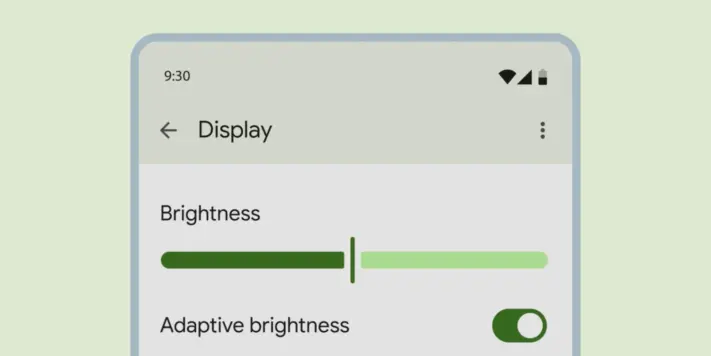
Android kommer få tjockare reglage i systemet och i appar, efter uppdateringar av riktlinjerna för designspråket Material You. Dagens reglage, eller sliders som de heter på engelska, är smala och har en liten rund prick som indikerar den aktuella nivån.
Utöver att vara tjockare har reglagen nu ett streck som visar nivån, medan en bubbla ovanför strecket kan visa nivån i form av siffror mellan 0–100 när användare drar i reglaget. Genom siffran blir det enklare att ange exakta nivåer, exempelvis 25 procent eller 50 procent.
De rekommenderade reglagen har fyra olika utformningar. Vi har inte sett till de nya reglagen än men de bör dyka upp i systemet och i appar framöver.
Glasgow 2024’s accommodation booking service will open to all members from Monday, January 22. Booking for hotel blocks will be through their accommodation partner, the Glasgow Convention Bureau. The con has 800 rooms reserved across 7 on-site hotels and a further … Continue reading →
So do people realize that we aren’t building new train tracks when we expand the amteak network, I have multiple times seen people say that we shouldn’t expand the network because it would destroy protected lands, which would be a fair criticism but Amtrak doesn’t build new tracks, we use existing tracks. We are not destroying protected lands, we are using land that has already been clear for a century
Also the alternative is more highways which destroy significantly more land for less capacity than railways. So the question is do you want to keep complaining about something that isn’t happening and let the environment get damaged as a result or do you want to actually learn how things work
So, wait… Were the tracks not in use at all? Or was it like *only* commercial transport on those tracks? Either way, its good that amtrak will be able to use them again, but one would be much more frustrating
Almost all rail tracks in the US are either abandoned or only used for freight rail at the moment
Jesus, we really have no excuse for having such a lackluster rail system, do we?
Sure we do! The US government hate both rail and you personally
It seems like we’ve all embraced the concept of comfort reads (and comfort shows/movies) lately, particularly over the last few tumultuous years. There are cozy mysteries, domestic fantasies, stories where nothing bad happens, books that focus above all on kindness and caring—the kind of tales we turn to and share whenever we need to feel better about the world. Well, I’d like to acknowledge another type of story that belongs in this category: Competence porn. I find that competence porn can be really, really comforting (and I’d welcome more of it, so if you have any recommendations, please mention them in the comments!).
If you know what I’m talking about, you probably don’t require much convincing. If you don’t, I’ll break it down for you: What the hell is competence porn?
The term was coined by John Rogers, creator of the TV show Leverage—one of our best examples of this particular type of storytelling. If you’re not familiar with Leverage, the show is about four professional thieves with distinctive skill sets who team up with a mastermind planner to get revenge on rich and powerful assholes who take advantage of people and ruin their lives for profit. (It’s extremely gratifying.)
Rogers wanted a shorthand way to talk about the very specific kind of satisfaction that we feel when watching folks competently handle complex situations using the kinds of specialized skills and expertise that we can all appreciate (even if we can’t personally replicate them), and he came up with “competence porn.” It’s about both the process and the outcome, and the comforting safety net of knowing that whatever challenge arises, the whole thing is in, well, extremely competent hands. Of course there are different permutations and varieties and genres involved, but we can lay out some basic ground rules—a formula for the type of story we’re talking about, for the sake of discussion.
First of all, we need experts: People who are so good at their craft that they can improvise and rise to any challenge, adapting to any obstacles or changes in the plan. We start with our mastermind, the genius who sees how all the pieces fit together, the big picture-seeing visionary with the top-down view, who keeps everyone calm even when the shit hits the fan. This mastermind is watching out for the team and also for us, the audience, providing the safety net we need. Knowing that this genius is around, thinking ten steps ahead, we feel safe enough to commit to enjoying the antics that will play out, as suspenseful as they may be, and we can allow ourselves to invest in and care about the characters, in spite of the massive risks they’re taking.
Next we need a team of specialists. Sure, you can absolute argue for something like the John Wick franchise being competence porn based around a single character (he certainly is competent!), but I tend to prefer stories built around the satisfaction that comes from seeing a team or group of extremely competent people synthesizing their skills and learning to work together. It’s thrilling in the same way as watching a big dance number with complex choreography, or really great improv comedy acts, with everyone hitting their mark at the exact right time—or if they didn’t, their team covered seamlessly, and the audience will never know. Thought that was a fatal blunder? Think again—either the misstep will be revealed to be intentional, or it will be used to the team’s advantage, so that everything turns out even better than expected. There’s just something incredibly satisfying about watching a group of people so perfectly attuned to one another that they can accomplish something none of them could alone.
Now, these team members need to be people who can solve problems within their area of expertise by thinking outside the box and coming up with just the right trick, hack, or workaround. They’ve seen every iteration of how things could go, and they have all that experience to call upon, as well as the ability to improvise and quickly shift to new variations rather than sticking rigidly to one original idea or plan.
Oh and speaking of the original idea? Well, actually, there tend to be dozens of “original” ideas: Plans A through Z have been careful considered and will often come up in comical discussion between characters. In the very first episode of Leverage, computer expert Hardison asks if it’s time to go to plan B, and mastermind Nate tells him, “Technically, that would be plan G.” When Hardison asks how many plans there are, “Is there like, a plan M?” Nate assures him that yes, he has thought that far ahead, but unfortunately, “Hardison dies in plan M.” This kind of banter is de rigueur between team members, particularly when they’re under pressure—this light repartee graces the conversation of recent competent teams like the Crows in Shadow and Bone, or Lockwood and his associates in Lockwood & Co.
When it comes one-upsmanship with one another over who’s the MVP of a particular caper or which variation of the plan is best, it’s generally best to have a good dose of smartassery all around. There may be some examples of competence porn that don’t draw on this type of humor, but for me, there’s nothing drearier than a story that takes the action so seriously that nobody can ever crack a joke—no matter how high the stakes are, there should always be room for a little fun or a quick quip.
So, who do we need on our team? Well, it depends on what you’re trying to accomplish. Leverage begins with a mastermind who brings together a hacker/tech expert, a hitter (the muscle), a master thief proficient in everything from cat burglary to safe-cracking to picking pockets, and a brilliant con artist (aka: the grifter). As is often the case in these stories, the team members start out as loners who don’t play well with others, but as they learn to cooperate professionally, they eventually find themselves growing into friends, and even family. The plots are often, but not always, capers (think The Italian Job, or Ocean’s Eleven). Depending on your goals, your ideal team might include a driver, a demolitions expert, a magician, a forger, or a really good librarian. Whatever the situation calls for, they’ll be the best in their field, and probably have a bone to pick with powerful (often corrupt) individuals and institutions.
Because “competence porn” isn’t quite a genre and examples that tick most of the boxes above aren’t marketed as such, it’s always a delight to recognize one of these types of stories—and perhaps it would be best to call it a team dynamic instead of a genre (depends on how strict you are about labels). I’ve seen examples spring up all over the place in newer science fiction and fantasy stories, and I couldn’t be happier. Hyper-competent Murderbot learns to work with others (multiple times) and everything comes together when they learn to trust each other in Martha Wells’ Murderbot series. Galadriel “El” Higgins, from Naomi Novik’s Scholomance trilogy, works her team of wizards hard because it’s the only way to stay alive—but together, they thrive. Even the day-to-day grind of working in local government that we see on Parks and Recreation is incredibly fun to watch because Leslie Knope and her team (regardless of their attitudes toward their jobs—looking at you, Ron Swanson…) are actually all fantastic at what they do.
There’s something so very gratifying about watching people live up to their full potential—getting to see all the hard work they put in pay off, not just in their private satisfaction but as part of a group of similarly talented, driven people who have dedicated themselves to their craft, and a shared goal. It’s not unusual to dream about being outstandingly good at something, and in the end there’s a level of pure enjoyment that comes from seeing someone doing something they love, perform flawlessly, and win the day.
As I mentioned up at the top, I’m always searching for new books, shows, movies (or anything else) that fits into the category of “competence porn,” so I’d love to hear your thoughts, suggestions, and favorite examples of hyper-capable teams of rogues, professionals, and/or unlikely heroes—please share in the comments.
Originally published July 2023
Rachel Ayers lives in Alaska, where she writes cabaret shows, daydreams, and looks at mountains a lot. She has a degree in Library and Information Science which comes in handy at odd hours, and she shares speculative poetry and flash fiction (and cat pictures) at patreon.com/richlayers.
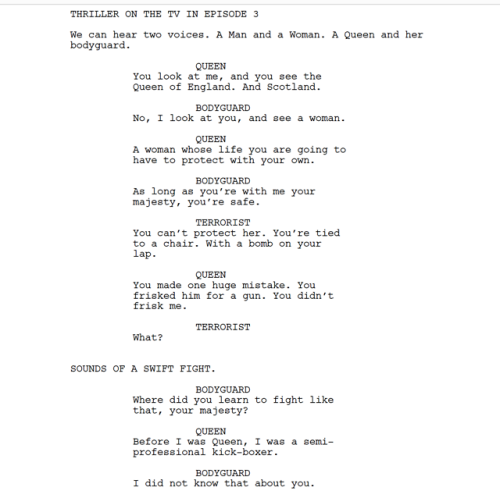
On the list of things ABSOLUTELY NOBODY HAS EVER ASKED ME FOR. Here’s the dialogue from the TV show that the Young family are watching in Episode 3, before Adam heads off for an early night.
From 2019. I just ran across this on the hard drive looking for something else, and wondered if it had ever been posted anywhere…
We’re still discovering new ways covid-19 can harm us, some four years after the emergence of this complicated viral disease. In a recent report, doctors in Massachusetts describe a teen girl whose vocal cords became paralyzed soon after a bout of covid-19. The girl required a tracheostomy in place for more than a…
It’s baffling that someone really tried to legitimize fan fiction when the estate of of The Lord of the Rings author is still actively pushing out adaptations of J.R.R. Tolkien’s seminal work.
The future is uncertain for Avengers: The Kang Dynasty. Marvel’s planned crossover film, set for release May 1, 2026, will likely feature a new face taking over the role of Kang the Conqueror as Jonathan Majors has been ousted as the MCU’s reigning big bad.
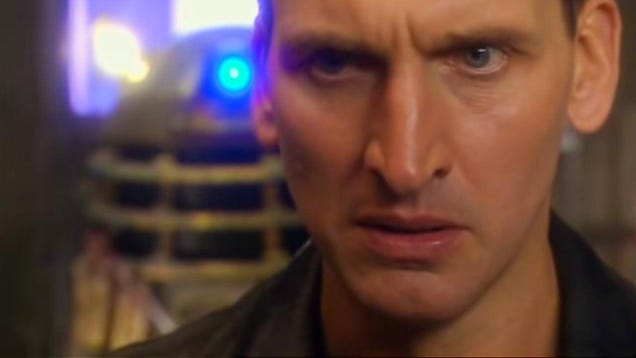
Christopher Eccleston has had a long road of private and publicly processing his time on Doctor Who—for many years, the actor simply refused to talk about why, having helped turn the series into a sensation when it returned in 2005, he left and never looked back. But, while still largely reserved, Eccleston is now…
1. You are responsible for your own media experience.
2. There is such a thing as a healthy level of avoidance towards topics that make you feel unwell or even (in a real-life clinical definition of the term) trigger you - but you are the one to actively take care of what you view.
3. Avoiding does not mean policing others.
4. You have no right to tell artists to censor themselves - you may criticize what others do, you may dislike it, that’s fine - but actively asking for censorship when you could easily unfollow or block a person just makes you look incompetent in your use of the internet.
5. Do not give people on tumblr or /any/ website the responsibility for your emotional well-being. Because these people do not even know you so no, you have no right to ask them to take care of you.
6. Content creators are not your parents and owe you nothing, not even a breakdown on why their content isn’t problematic. You don’t get to demand a dissertation denouncing any and everything unhealthy in a piece you don’t like. Move on.
7. Tagging is a nicety but not an obligation. You can message people, politely, and ask them to tag things, and many people will, but understand that it’s their blog and they aren’t obliged to say yes. Unfollow and block when you need to. Circling back to number 1, you are responsible for curating your own experience.
8. Don’t be a jerk. Remember at the end of the day, there are actual living, breathing people behind each screen name. Don’t say anything you wouldn’t say to someone’s face in real life.
I cannot stress enough how important it is to remember this.
Are you enjoying that new Deck smell a little too much? Valve’s support staff are now telling users that they shouldn’t be huffing the exhaust from the Steam Deck’s grills for their health and safety, though there’s no recorded issue with folks taking a hit off their electronics’ cooling vents.












 ALT
ALT