Shared posts

14 Sep 18:34

Nokia was testing Android on Lumias before Microsoft sale

by Dante D'Orazio

Before Nokia bet its smartphone ambitions on Windows Phone, the idea of an Android-powered Nokia device was not so hard to believe. Now, according to a new report from The New York Times, it turns out Nokia engineers did develop Lumia phones that ran Google's Android operating system. The report, which cites people familiar with the matter, says that Android was running on Nokia smartphones internally "well before" discussions that led to Microsoft's purchase of the company's handset division, which suggests that such efforts may have taken place in 2012 or early 2013. Additionally, it's said that while Microsoft knew about the project — and confirmed its existence to the Times —it "wasn’t a part of Microsoft’s discussions" prior to the acquisition. Still, the threat of Nokia abandoning Windows Phone (a move that it was free to make at the end of 2014) for Android would have been devastating for Microsoft's struggling mobile operating system, as Nokia makes the vast majority of devices that run the OS.

Critics have long questioned Nokia's 2011 decision to partner with Microsoft and become primarily a manufacturer of Windows Phone devices. Former CEO Steven Elop has said as early as this past summer that he was "very happy with the decision we made," explaining that the company decided to avoid Google's operating system because there was a "very high risk that one hardware manufacturer could come to dominate Android." Samsung is now the dominant leader in Android sales. It's unclear how many resources Nokia invested in its Android project, or how seriously it considered switching its entire business to the operating system, but it was certainly a thought in executives' minds.

12 Sep 14:47

Asus' transforming T100 tablet promises 11 hours of Windows 8 for just $349

by Sean Hollister
Yousef Alnafjan

According to hands-on reports: it's solidly built, looks nice, has a great keyboard and trackpad, and works very smoothly with Windows 8.1.

Only compromise is the low-res screen. Impressive.

At the 2013 Intel Developer Conference (IDF), Intel is primarily promising two things. One, cheaper tablets, and two, silicon fast and power efficient enough to give both those tablets and a new class of "2-in-1" hybrids a fighting chance in our Apple-obsessed world. If those are the trends, then the new Asus Transformer Book T100 is the poster child: it's a 10.1-inch transforming tablet that runs the full Windows 8 operating system for just $349.

The T100 puts Intel's new quad-core Bay Trail Atom processor into Asus' trademark detachable form factor, giving you what appears to be an undersized laptop at first, but once you press a button you can detach the screen and walk away with a fully-fledged tablet computer. Since this particular model's trying to hit a lower price point, you only get a low-res 1366 x 768 IPS display and 32GB of storage for your money (a 64GB model costs $399) but the tablet portion only weighs 1.2 pounds, around the same as the company's Android-based slates. That's pretty impressive for a device that runs full Windows. Asus says it should ship on October 18th.

We should be back soon with hands-on pictures and impressions of the device.

11 Sep 09:22

Generation gap ⊟ It sometimes takes my nephews a few seconds to...

by ericisawesome


Generation gap ⊟

It sometimes takes my nephews a few seconds to realize that not all games have a touch interface, too. Credit to Hiltusori and Miki800 for the pic.

PREORDER Pokemon X and Y, official strategy guide, upcoming games
07 Sep 17:00

Banned ‘Throw Your Phone’ Game Knows if You’re Cheating

by Ryan Rigney
Banned ‘Throw Your Phone’ Game Knows if You’re Cheating
A new app encourages players to throw their phones as high as possible, then records the peak height reached. Here's how it works.
06 Sep 23:14

Lenovo announces Yoga 2 Pro with 3,200 x 1,800 screen, slimmer design (hands-on)

by Dana Wollman
Yousef Alnafjan

Amazing. A 3200x1800 @ "13.3 touchscreen ultrabook with a 360-degrees flexible hinge for $1099. Beat that.

Lenovo announces Yoga 2 Pro with 3,200 x 1,800 screen, slimmer design (hands-on)

We think we can all agree the Lenovo Yoga has been long due for an upgrade: while every other flagship Ultrabook got refreshed with Haswell, the Yoga 13 stuck around with Ivy Bridge and a relatively low-res 1,600 x 900 display. It was getting so long in the tooth, in fact, that we almost didn't recommend it in our most recent laptop buyer's guide. Well, Lenovo's finally giving us the upgrade we've been asking for, and if specs are any indication, it might have actually been worth the wait.

The new Yoga 2 takes a big step up to a 13-inch, 350-nit, 3,200 x 1,800 touchscreen, putting it well ahead of its peers, most of which max out at 1,920 x 1,080 resolution. As you'd expect, this new model runs on fourth-gen Intel Core processors (all the way up to i7), with the battery life now rated at up to nine hours. The Yoga also adds Intel Wireless Display, in accordance with the current Ultrabook spec. Equally important: the new model measures 15.5mm thick (versus 17.1mm on the original) and sheds about half a pound so that it now weighs a little over 3 pounds (3.06, to be exact, or 1.39kg). And believe us when we say that half-pound makes a difference: chalk it up to muscle memory, but we could instantly feel the difference when we picked it up for the first time. We don't remember the original ever being this thin or light. %Gallery-slideshow73818%%Gallery-slideshow76615%

Filed under: Laptops, Lenovo

Comments

06 Sep 14:35

Finally, a reasoned, unbiased reply to 2DS critics ⊟ After...

by ericisawesome


Finally, a reasoned, unbiased reply to 2DS critics ⊟

After seeing high-profile tech bloggers like MG Siegler and John Gruber tear apart Nintendo and the 2DS in the last week, I was tempted to respond with my own piece pointing out their misconceptions, but it looks like I don’t need to. SammyClassicSonicFan puts them in their place with a thorough point-by-point rebuttal to 2DS pessimists in this passionate 16-minute video. Seriously, what the frick.

BUY Nintendo 2DS and 3DS/XL consoles, upcoming releases
05 Sep 14:06

LG says its 4K TVs will scare people like Armageddon

by Aaron Souppouris

What makes a video go "viral?" After an elevator prank video from LG UK garnered over 19 million views on YouTube, LG Chile has used the same format for a new video. "Ultra Reality: What would you do in this situation?" presents itself as a hidden camera, much like a Candid Camera or Punk'd setup. Unsuspecting candidates are led into a room for an interview. The room is full of hidden cameras, and, in place of a window, one of LG's enormous 84-inch UHDTVs showing an image of a city. As the interview progresses, an imaginary meteor begins to make its way across LG's TV, headed for direct impact with the city. Right on cue, the interviewees cower, scream, and hide from the CGI terror.


Just like the aforementioned elevator prank, and so many attempts at viral videos, it seems pretty clear that this is a fake. There's a reason people haven't been mistaking TVs for windows, and it isn't pixels. Our brains are perfectly capable of distinguishing between 2D and 3D images, and, perhaps more importantly, windows don't often glow like a television. Would someone really be fooled by the awful CGI explosion? And why does the entire room light up as the "meteor" approaches?

New technology, same disingenuous advertising

Fake it may be, but perhaps the most interesting part of the video is what it's advertising. The general setup seems perfect to showcase the previous darling of TV manufacturers: 3D. It wasn't so long ago that every commercial for 3D contenthad actors ducking to avoid 3D objects flying out of the screen. Instead, LG now uses the same "reality" setup to showcase its ultra-dense 4K displays. New technology, same disingenuous advertising methods. With over a million views in just three days, though, LG Chile can already consider its stunt a success.

05 Sep 04:08

Irrepressible Ronaldinho with two goals from two great free kicks against Fluminense

by Brooks Peck

With new teeth and a desire to keep proving that he's not finished, Ronaldinho just keeps banging in free kicks (among other things). During Atletico-MG's match against Fluminense, he equalized not once but twice with free kicks to earn a 2-2 draw for his side.

Ronaldinho's first goal, which came just before halftime, was perhaps the best of the two. It went off the underside of the crossbar and in, leaving the keeper frozen with its perfection. Ronaldinho then celebrated with a patented Ronaldinho smile.

Not content with only winning the unofficial crossbar challenge, Ronaldinho had another opportunity to pull even in the 82nd minute. And once again, the keeper could only stand motionless as Ronaldinho had his way with him.

Keep in mind that this performance came after Ronaldinho missed the previous match with a thigh injury.

04 Sep 10:35

HDMI 2.0 officially announced: 18Gbps bandwidth, 60fps 4K, 32 channel audio

by Richard Lawler

Only just after it leaked out, the folks at HDMI Licensing are announcing HDMI 2.0 officially. Arriving just in time for the wide rollout of a new generation of Ultra HDTVs, it adds a few key capabilities to the connection standard. With a bandwidth capacity of up to 18Gbps, it has enough room to carry 3,840 x 2,160 resolution video at up to 60fps. It also has support for up to 32 audio channels, "dynamic auto lipsync" and additional CEC extensions. The connector itself is unchanged, which is good for backwards compatibility but may disappoint anyone hoping for something sturdier to support all of those suddenly-popular dongles. The cables won't change either, as the group claims current high-speed Category 2 wires can handle the increased bandwidth. Some companies have suggested upgrade paths for their UHDTVs already on the market -- hopefully we'll find out more about those plans this week at IFA 2013.

Filed under: Displays, Home Entertainment, HD

Comments

Source: HDMI.org

03 Sep 10:59

There will never be another Nokia smartphone

by Nilay Patel

The Nokia brand name, one of the most storied marks in mobile, will never grace another smartphone.

Under the terms of Microsoft's $7.2 billion acquisition of Nokia's devices and services division, the "Asha" and "Lumia" trademarks will transfer to Redmond, but the "Nokia" mark will remain property of the Finnish company, and may only be used on featurephones under a 10-year license agreement. That means any future Windows Phones built by the newest division of Microsoft will be Microsoft-branded — and that Nokia has said its goodbyes to a smartphone market it once helped to create.

'Lumia' and 'Asha' belong to Microsoft now

That's a quiet exit for what was once a powerhouse of smartphone innovation. Let's take a moment by gazing at the N93, one of the wildest smartphone designs of all time.

Ph_pic
03 Sep 10:30

Ballmer confirms what we all knew: Elop candidate for Microsoft CEO job

by Brian Heater

File this one in the "Well, yeah," department. Stephen Elop may have stepped down from his CEO gig at Nokia, but Microsoft's former head of its Business Division may still harbor C-level dreams. In an interview with The Seattle Times, Redmond's soon-to-be-former CEO Steve Ballmer confirmed that Elop is in the running for his gig, stating, "Stephen will go from external [candidate] to internal." So the personable mobile exec will be keeping his name badge either way -- time will tell, of course, which washroom he ultimately gets the key for.

Filed under: Cellphones, Mobile, Microsoft, Nokia

Comments

Via: Windows Phone Central

Source: Seattle Times

03 Sep 10:30

Microsoft buys Nokia's phone business: the story so far

by Vlad Savov

With its long-tenured CEO retiring and an ongoing transition to becoming a "devices and services" company, Microsoft has taken another major step in acquiring Nokia's mobile unit for $7.2 billion.

As part of the agreement, set to close in the first quarter of 2014, Nokia's current CEO Stephen Elop is returning to Microsoft to lead its Devices team. Speculation has immediately swirled around him as a primary candidate to take over from Steve Ballmer as Microsoft CEO, however all parties remain tight-lipped on the matter. As to the future roadmap, Microsoft wants the deal announced today to help it triple Windows Phone's mobile marketshare by 2018, though it still remains committed to its other hardware partners for the platform. Stay on top of all developments in this expanding narrative by following this stream.

One of the most enticing "what-ifs" of recent years has come true: Microsoft has purchased Nokia's Devices and Services unit, bringing the Lumia lineup under the Redmond roof. The move unites Windows Phone 8 with its biggest hardware supporter, giving the company the integrated mobile offering it's been looking for with Surface and other devices. When the deal closes in the first quarter of 2014, Microsoft will pay 3.79 billion Euros for Nokia's business, plus another 1.65 billion Euros for its portfolio of patents. (The 5.44-billion Euro total is considerably less than Microsoft paid for Skype in 2011.) 32,000 people are expected to transfer from Nokia to Microsoft, including 18,300 that are "directly involved in manufacturing."

The purchase comes on the heels of what appeared to be a failed acquisition in June, at which point it seemed conversations had broken off entirely. Now the two come together, in what outgoing Microsoft CEO Steve Ballmer called "a bold step into the future." In an email, Ballmer cited the Lumia 1020 as an example of what the companies could do together, but said the phone hadn't caused the marketshare bump it deserved. "Now is the time to build on this momentum and accelerate our share and profits in phones," he wrote.

Asha will be an on-ramp to Windows Phone

A driving force behind the sale seems to be Nokia's low-end Asha brand, which Microsoft has acquired outright. Asha gives Microsoft a far larger footprint for Windows Phone, and access to millions of customers in developing countries that it plans to use as an "on-ramp to Windows Phone." The emphasis also lends some credibility to the notion that Nokia's high-end strategy isn't working — analysts predicted a horrific Q3 for the company, and its struggles to find a foothold are well-documented. In fact, Microsoft's licensing deal for the Nokia brand doesn't include future Lumias — Nokia as a smartphone brand is effectively dead, as Microsoft takes the lineup in-house.

Nokia's days as a smartphone brand are over

Though Nokia was by leaps and bounds Microsoft's best hardware partner for Windows Phone 8, EVP of Operating Systems Terry Myerson was careful to note that Microsoft's purchase doesn't come with nepotism. As Google has with Motorola, Myerson promised every partner would be treated the same, even quoting a song by The Killers to make his point. And from Huawei to HTC, there are still other partners — Nokia's coming in-house, but Windows Phone 8 isn't being walled off.

Its device business now gone, Nokia's plan is to focus on three core technologies: NSN (its network infrastructure) HERE (its maps and location-based services); and Advanced Technologies (a licensing and development arm). Microsoft will pay Nokia for a four-year license of the HERE services, bringing the new company more revenue and stability than it had previously. But it also makes Nokia a much smaller company.

Stephen Elop is going back to Microsoft

As part of the agreement, Nokia CEO Stephen Elop is stepping aside; he's now leading Microsoft's Devices team. That puts him in an odd position with Julie Larson-Green, who Ballmer said will be joining his team, but will also be responsible for other hardware like Surface and the Xbox One. The exact scope of Elop's role isn't exactly clear, and with a soon-to-be-vacant CEO seat we expect plenty of rumors to fly as the acquisition closes. Risto Siilasmaa was named Nokia's Interim CEO — he was previously chairman of the company's Board of Directors.

For $7.2 billion, Microsoft bought its way into the category of "devices and services company." It gives Microsoft the kind of end-to-end control in mobile that only Apple and BlackBerry have enjoyed (to varying success), and a critical measure of quality control. But can Microsoft succeed where Nokia failed? Was Nokia holding Windows Phone back, or was Windows Phone the problem? The big questions aren't going away, but maybe now we'll get answers.

Read Next: Will Stephen Elop be the next Microsoft CEO? Steve Ballmer won't say

Read Next: Why Nokia Chose Windows Phone

Read Next: Nokia's building a Windows RT tablet

Read Next: Nokia's earnings report from last quarter

03 Sep 10:30

Microsoft buys Nokia's devices unit in a $7.2 billion bid for its mobile future

by David Pierce

One of the most enticing "what-ifs" of recent years has come true: Microsoft has purchased Nokia's Devices and Services unit, bringing the Lumia lineup under the Redmond roof. The move unites Windows Phone 8 with its biggest hardware supporter, giving the company the integrated mobile offering it's been looking for with Surface and other devices. When the deal closes in the first quarter of 2014, Microsoft will pay 3.79 billion Euros for Nokia's business, plus another 1.65 billion Euros for its portfolio of patents. (The 5.44-billion Euro total is considerably less than Microsoft paid for Skype in 2011.) 32,000 people are expected to transfer from Nokia to Microsoft, including 18,300 that are "directly involved in manufacturing."

The purchase comes on the heels of what appeared to be a failed acquisition in June, at which point it seemed conversations had broken off entirely. Now the two come together, in what outgoing Microsoft CEO Steve Ballmer called "a bold step into the future." In an email, Ballmer cited the Lumia 1020 as an example of what the companies could do together, but said the phone hadn't caused the marketshare bump it deserved. "Now is the time to build on this momentum and accelerate our share and profits in phones," he wrote.

Asha will be an on-ramp to Windows Phone

A driving force behind the sale seems to be Nokia's low-end Asha brand, which Microsoft has acquired outright. Asha gives Microsoft a far larger footprint for Windows Phone, and access to millions of customers in developing countries that it plans to use as an "on-ramp to Windows Phone." The emphasis also lends some credibility to the notion that Nokia's high-end strategy isn't working — analysts predicted a horrific Q3 for the company, and its struggles to find a foothold are well-documented. In fact, Microsoft's licensing deal for the Nokia brand doesn't include future Lumias — Nokia as a smartphone brand is effectively dead, as Microsoft takes the lineup in-house.

Nokia's days as a smartphone brand are over

Though Nokia was by leaps and bounds Microsoft's best hardware partner for Windows Phone 8, EVP of Operating Systems Terry Myerson was careful to note that Microsoft's purchase doesn't come with nepotism. As Google has with Motorola, Myerson promised every partner would be treated the same, even quoting a song by The Killers to make his point. And from Huawei to HTC, there are still other partners — Nokia's coming in-house, but Windows Phone 8 isn't being walled off.

Its device business now gone, Nokia's plan is to focus on three core technologies: NSN (its network infrastructure) HERE (its maps and location-based services); and Advanced Technologies (a licensing and development arm). Microsoft will pay Nokia for a four-year license of the HERE services, bringing the new company more revenue and stability than it had previously. But it also makes Nokia a much smaller company.

Stephen Elop is going back to Microsoft

As part of the agreement, Nokia CEO Stephen Elop is stepping aside; he's now leading Microsoft's Devices team. That puts him in an odd position with Julie Larson-Green, who Ballmer said will be joining his team, but will also be responsible for other hardware like Surface and the Xbox One. The exact scope of Elop's role isn't exactly clear, and with a soon-to-be-vacant CEO seat we expect plenty of rumors to fly as the acquisition closes. Risto Siilasmaa was named Nokia's Interim CEO — he was previously chairman of the company's Board of Directors.

For $7.2 billion, Microsoft bought its way into the category of "devices and services company." It gives Microsoft the kind of end-to-end control in mobile that only Apple and BlackBerry have enjoyed (to varying success), and a critical measure of quality control. But can Microsoft succeed where Nokia failed? Was Nokia holding Windows Phone back, or was Windows Phone the problem? The big questions aren't going away, but maybe now we'll get answers.

Read Next: Why Nokia Chose Windows Phone

Read Next: Nokia's building a Windows RT tablet

Read Next: Nokia's earnings report from last quarter

28 Aug 04:37

Barcelona’s Carles Puyol heads a flower pot in brilliant new Qatar Airways commercial

by Ryan Bailey

This week, Barcelona announced a €100m extension to their lucrative shirt sponsorship deal with Qatar Airways, which will see the Arabic flag carrier advertised outside the Nou Camp, on the seats and within the club museum.

To coincide with the announcement, the airline released a new commercial that features a plane landing in "The Land of FC Barcelona." Once there, Gerard Pique plays a grumpy customs officer, Neymar needlessly kicks someone else's luggage instead of picking it up, Andres Iniesta paints a wall with a ball, Gary Lineker drives a cab and Leo Messi leads a dance class exclusively for attractive young people.

The highlight of the clip, however, is when Carles Puyol heads a falling flower pot and smashes it into a thousand pieces, saving a couple of ladies and a dog from serious injury (but presumably showering them in dirt and pieces of terracotta).

Most players would insist on CGI for a scene like that, but we can only assume Puyol did it for real. It's the reason he's banned from most garden centers in Catalunya.

26 Aug 19:09

Siri just started a beef with Google Glass

by Dan Seifert

Apple's virtual personal assistant Siri has been known to have a quirky personality for a long time, offering off the cuff responses to a variety of unconventional requests. Now it appears that Siri is eager to take some jabs at Google Glass, as it responds with subtle and not-so-subtle putdowns on the product when you use the "Okay Glass" command. Siri's snark is worn on its sleeve when it fires back with quips such as "I think that Glass is half empty," or asks you to stop strapping your iPhone to your forehead because it "simply won't work." Responses are seen in iOS 6, though apparently the beta of iOS 7 offers even more Glass-related comebacks. You can see a few of Siri's reactions in the gallery below.


25 Aug 12:09

Former Batmen take to Twitter in Ben Affleck's defense

by Bryan Bishop

There's no way to avoid saying it: the public reaction to Ben Affleck being cast as the new Batman hasn't been pretty. Fan outrage has spread across Twitter, even leading to a slew of Change.org petitions asking Warner Bros. to change its mind — one of which has already amassed more than 44,000 signatures. But as The Hollywood Reporter points out, a number of actors and filmmakers are asking fans to wait and take a deep breath — and some are speaking from personal experience.


Give Ben a chance!

— Val Kilmer (@ValEKilmer) August 23, 2013

Val Kilmer, who donned the cape and cowl in 1995's Batman Forevertold audiences to "Give Ben a chance!" on Twitter, while the original television Batman — Adam West himself — provided some tips for dealing with the suit ("Remember Ben, with the cape and cowl comes great responsibility (and lots of heat)," he wrote. "Bring deodorant."). While there's been no public word from George Clooney as of yet, he did produce Affleck's Oscar-winning Argo, so he can certainly serve as a resource if Affleck needs one.

Remember Ben, with the cape and cowl comes great responsibility (and lots of heat). Bring deodorant. #batman @BenAffleck

— Adam West (@therealadamwest) August 23, 2013

Of course, neither Kilmer nor West are remembered fondly by fans of Christopher Nolan's darker trilogy, so it's likely the words of Joss Whedon that will do the best job of generating goodwill. "Affleck'll crush it," Whedon wrote on Twitter. "He's got the chops, he's got the chin — just needs the material. Affleck & Cavill toe to toe — I'm in."

Affleck'll crush it. He's got the chops, he's got the chin -- just needs the material. Affleck & Cavill toe to toe -- I'm in.

— Joss Whedon (@josswhedon) August 24, 2013

25 Aug 07:59

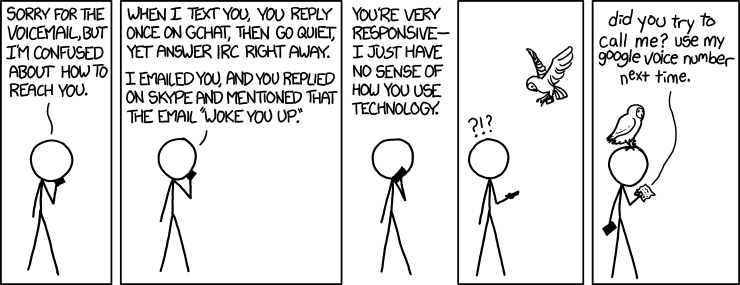
Preferred Chat System

If you call my regular number, it just goes to my pager.
25 Aug 05:07

Comic #115- Slumber Aid

by Tyler Rhodes

22 Aug 12:12

مراجعة فيديو لجهاز Nvidia Shield

by ftw@ftweekly.net (FTWeekly.net)
مراجعة فيديو لجهاز Nvidia Shield

بعد أن تحدث عنه يوسف في الحلقة 131 من Tech FTW،  أبدى العديد منكم اهتمامهم بعمل مراجعة فيديو لجهاز الألعاب الجديد بنظام أندرويد من شركة انفيديا، Shield. قام يوسف بعمل المراجعة ونشرها على قناة FTWeekly في يوتوب. شاهدوا المراجعة ثم أخبرونا برأيكم فيها!

14 Aug 08:11

A Map of the Countries That Censor the Internet

by Casey Chan

A Map of the Countries That Censor the Internet

Green shows the countries you want to live in because they have little to no Internet censorship. Yellow reveals countries that you might not want to stay in too long because they might increase censorship in the future. And if you love the Internet, you should probably avoid every other color because they all have different degrees of censorship, with pink being the most pervasive (gray is not classified).

Read more...

13 Aug 09:47

Nvidia Shield sales are 'great,' production ramping up soon

by Thomas Schulenberg
Nvidia Shield sales are 'great,' production to ramp up soon
Sales of Nvidia's Android-powered gaming handheld, the Nvidia Shield, have inspired confidence in the platform's future from Nvidia's leaders, GamesIndustry international reports.

Senior Director of Investor Relations Chris Evenden describes sales as "great" and says "everything that we shipped so far has sold out ... we're just starting to ramp production."

Despite Nvidia's optimism for the Shield, the company's Q2 reports show a 6.4 percent drop in revenue and a 19 percent decline in net income year-over-year. Nvidia CEO Jen-Hsun Huang says the company expects a "strong second half" of the year due to the Shield launching outside of the U.S. and the introduction of more Tegra 4-powered devices to the market.

JoystiqNvidia Shield sales are 'great,' production ramping up soon originally appeared on Joystiq on Sun, 11 Aug 2013 12:00:00 EST. Please see our terms for use of feeds.

Permalink | Email this | Comments
12 Aug 10:17

HTC debuts 'Change' ad campaign with Robert Downey Jr. as frontman

by Ellis Hamburger

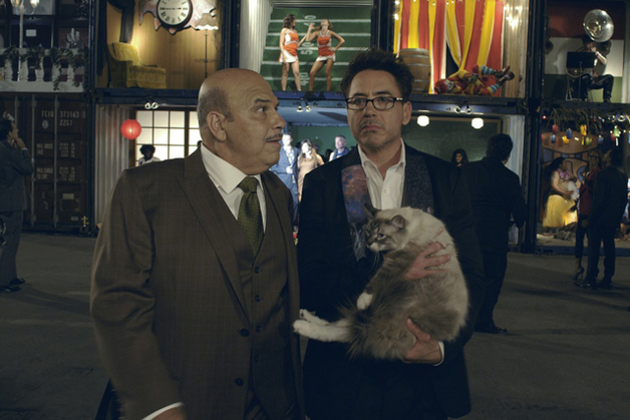
After years of struggling to find the right voice for its consumer electronics products, HTC is today announcing the launch of its latest ad campaign. The new campaign called "Change" features Robert Downey Jr, who has signed a two-year contact to be HTC's "Instigator of Change." New ads will debut first on YouTube on August 15th and will also appear on television and in pre-movie spots.

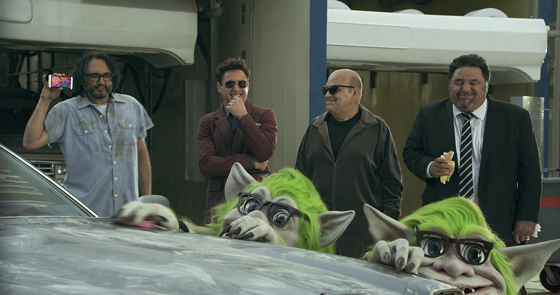
The initial focus will not be on HTC's One nor on software features like BlinkFeed, Video Highlights, and BoomSound. Instead, Downey, (who blessedly hasn't been named a "Creative Director") will vamp around various sets as different jokes about what the acronym HTC could stand for are played out: get ready for "hipster troll carwash," "hold this cat," and plenty more. Later spots, HTC tells us, will finally come around to featuring its products more explicitly.

Htc_monsters

Despite the success of its excellent One smartphone, HTC has for some time appeared to be in a state of disarray. The company retired its "Quietly Brilliant" tagline back in March as a first effort to refresh its brand, and "Change" is the first of its latest efforts toward doing so. This is no small operation for HTC, either. The company says the social media campaign it's crafted is the largest it has ever staged. Can Robert Downey Jr., who HTC says worked closely with its advertising team to develop the new ads, actually sell some phones? We're about to find out.

06 Aug 14:40

The Old Reader's Big Move

image

As Ben mentioned in our previous post, our top priority right now is improving the stability of The Old Reader.  To start, we’re going to get The Old Reader a much needed hardware upgrade.  This week, we’ll be relocating the application to a top tier host located in the United States, tripling database capacity and adding over 10 times the network capacity.

The move is going to entail exporting all of the posts from about 6 million subscriptions, moving that data approximately 5000 miles and then importing it into the new database servers. This is a big move, and unfortunately it’s going to require about 48 hours of downtime.   

The new environment will be ready to roll on Tuesday at which point we will begin the transfer and maintenance window.  We’re shooting to begin that maintenance window at approximately 12AM GMT Wednesday.  During this time, we’ll be frequently updating Twitter, Facebook and Status page to make sure you know as soon as it is back up and running.

We really do apologize that we’ll be down for so long. We’re avid users ourselves, and a couple days without The Old Reader is pretty tough for everyone. However, on the other side of this migration lies the stability and capacity that our favorite reader truly needs. Thank you for using The Old Reader and for your incredible patience.

06 Aug 09:36

HTC's 5.9-inch One Max pictured before purported September launch

by Aaron Souppouris
Hichong_3_102_b38e29d8a67cb97ee9d7344aa618d088_large

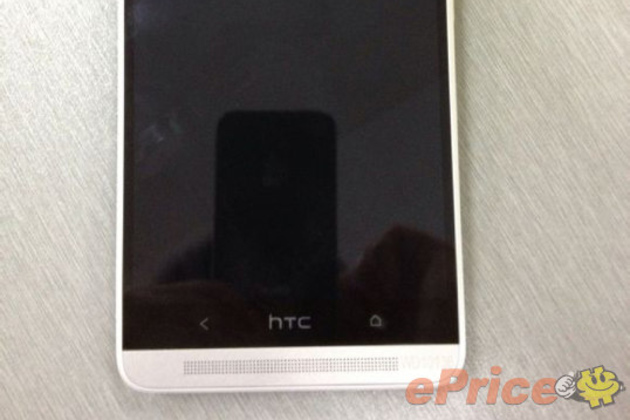
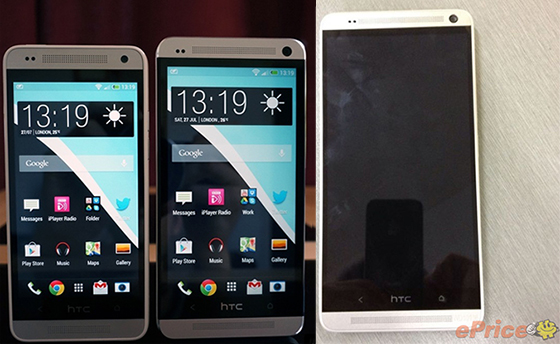
HTC's rumored 5.9-inch One variant appears to have been leaked by Taiwanese site ePrice. Rather than an upscaled One, the One Max looks more like HTC's One mini, which eschews the original's all-aluminum shell for a mix of plastic and aluminum casing. If ePrice's information is correct, the One Max will have the same resolution as the One, but stretched over a 5.9-inch display. It'll have a far larger battery to power that screen — 3,300 mAh versus the One's 2,300 mAh — and a more-powerful 2.3GHz Snapdragon 800 processor paired with 2GB of RAM.


According to the site, a dual-SIM variant of the device is currently being tested in China with a detachable rear cover to facilitate access to the SIM trays and a microSD card slot, but there's no telling if the single-SIM version will offer the same. The device photographed has 16GB of storage, but we've previously heard that HTC will offer up to 64GB of internal storage.

OnemaxcomparisonThe HTC One Max alongside our image of the HTC One and HTC One mini. Its plastic and aluminum body has more in common with the mini than the One.

HTC's current lineup has been notably lacking a large-screen smartphone / tablet hybrid. A relatively new category, supermassive smartphones have become extremely popular. Samsung's Galaxy Note and Galaxy Note II are both among the top ten most-used Android devices in the world, and the Korean company is widely expected to launch the third iteration of its giant smartphone at the Berlin trade show IFA this September. HTC will reportedly announce its One Max at the very same show.

05 Aug 11:35

BBC names Peter Capaldi as new 'Doctor Who' lead actor

by Vlad Savov
Peter-capaldi_large

The BBC has just announced Peter Capaldi as the new Doctor Who lead actor. A special retrospective programme on BBC One staged Capaldi's hotly anticipated announcement and interviewed him briefly about his high-profile new role. While many actors may claim to be fans of the long-running series they're joining, Capaldi actually has credible evidence of that — the BBC dug up a letter he wrote when he was aged 15 urging for more Doctor Who series to be produced.


The twelfth Doctor has arrived!

Peter Capaldi is best known for playing the foulmouthed Malcolm Tucker in the satirical series The Thick of It, so this new role in youth-friendly sci-fi marks a significant departure for the Glaswegian actor. His two most recent predecessors in the Doctor's shoes, Matt Smith and David Tennant, both enjoyed great success and popularity in rebuilding the Time Lord's following among a younger generation. The twelfth Doctor is significantly older than both, at age 55, but his loyal fandom of the now 50-year-old show will surely stand him in good stead for all the adventures that are to come.

Update: A number of readers correctly point out that Peter Capaldi has already acted in Doctor Who, opposite David Tennant in 'The Fires of Pompeii,' broadcast in 2008. For a flavor of his performance then and what we might expect down the line, check out the video below.

04 Aug 07:44

Ouya CEO offering store credit to unsatisfied Kickstarters

by Thomas Schulenberg
Ouya offering store credit to unsatisfied Kickstarters
Unsatisfied contributors to Ouya's Kickstarter campaign may request a $13.37 credit for the console's Discover store, Ouya CEO Julie Uhrman revealed in an email to backers this week.

Uhrman's email acknowledged late shipments, missing controllers and delayed responses from customer support as missteps during the console's launch. Uhrman offered the credit in an effort to "do more than tell you how much we appreciate you."

Kickstarter backers should check their inbox for the message and click the email's included link to request the credit. The full email is available after the jump.

[Thanks, Scott!]

Continue reading Ouya CEO offering store credit to unsatisfied Kickstarters

JoystiqOuya CEO offering store credit to unsatisfied Kickstarters originally appeared on Joystiq on Sat, 03 Aug 2013 15:00:00 EST. Please see our terms for use of feeds.

Permalink | Email this | Comments
04 Aug 06:21

A month after Google killed its beloved Reader, the market for paid RSS tools is booming

by Ben Popper
Yousef Alnafjan

"The replacement that fared worst was the Old Reader, the scrappy upstart of the bunch"

Happy-retirement-gr_large

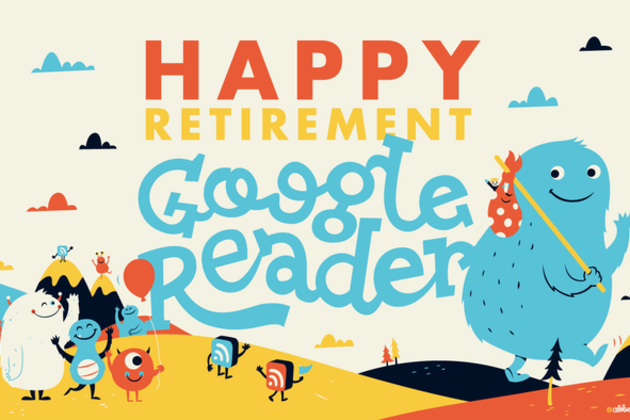
It's been a month since Google Reader shut down, breaking users' hearts and bringing an end to a nearly eight-year run of RSS dominance. As soon as word came of Reader's impending doom, third parties like Digg, Feedly, and others sprung into action, eager to replace the old guard. At the time, they looked like a rescue team, gallantly swooping in to save us from regular old web browsing. But after a month, the squad of reader replacements has turned into a set of regular products trying to keep up with user demands. So how well have these replacements done in Google Reader’s absence?

It turns out it's hard to make an RSS reader. Feedly switched over to its own servers with just a few weeks to spare and Digg launched mere days before Reader's lights-out. Newsblur had been running since 2009, but faced a flood of traffic after Google announced the reader shutdown, and founder Samuel Clay describes pulling 14-hour days for months just to keep the site loading in under 100 milliseconds.

fourteen-hour days for months just to keep the site loading

The replacement that fared worst was the Old Reader, the scrappy upstart of the bunch. The staff was worn ragged by the task of getting online. They announced the service was closing down this Monday only to possibly reopen later in the week; they described their lives as "hell in every possible aspect we could imagine." Competing with three or four midsize rivals isn't that much easier than competing with one behemoth.

The services that managed to stay up and running still face an uphill battle mimicking Google's features without its servers and data to lean on. Right now, none of the major offerings have a workable search function and the ones that are rolling it out, like Feedly and Digg, are saving it for premium (i.e. paying) members. It was an easy trick for Google, which could borrow one of the most sophisticated search engines on earth, but for smaller players, it's an expensive feature to add. Even simple tricks like OPML export are still recent additions, while mobile apps and device syncing are farther out on the horizon. Having rushed to get the readers online before Google's deadline, companies left a lot of features only partially finished.

Of course, there are rewards for the ones that make it through. Some Reader partisans may have given up on RSS after the shutdown, but the majority seem to have migrated to other platforms. In the weeks following the announcement, Feedly saw 3 million Google Reader refugees sign up and Newsblur says it now has 25 times the paid subscriptions it did in March.

25 times the paid subscriptions it did in March.

For Google, Reader was essentially an afterthought, a way to drive traffic to Google+ and not even worth keeping alive. For Newsblur, RSS is everything, the company's single purpose and sole product — and it's necessarily a paid one. "All of my biggest competitors either have pay accounts or are planning them," Clay told The Verge. "The market growth just isn't there, so charging users is the only way to stay alive."

For Digg, RSS is even more than that. Its reader fits into both Digg.com and Betaworks’ larger strategy for building itself into the content business. General manager Jake Levine describes Digg Reader as a "critical piece of the future for our company." Crawling the internet is hard, but it gives you valuable insight into what people are actually reading. Levine envisions the reader as "the foundation for a suite of personalized news products that adapt to a wide variety of readers." If you're trying to surface interesting content, a dedicated content crawler lets you know what users are reading and what they’re clicking on, which can be extremely valuable data.

Seen that way, the flock of post-Google RSS readers seem less like replacements than evolutions. Reader was great, but Google let it stagnate. It was only ever going to be a side project, something to keep engineers busy while the company expanded its stranglehold on search and tried to force its way into social. Cut loose from the corporate demands of Google, RSS can be more than that. It’s already been a crucial open web standard, and now it can be a paid professional tool along the lines of Photoshop, or an AOL-style portal for experiencing the internet at large. It can be something we haven't even thought of yet. The companies involved are still catching up to Google's feature set, but there's no reason to think they'll stop there. It may be time to stop being sad for the reader that was, and get excited for the reader that's coming.

04 Aug 05:36

The New Old Reader

image

We’re pleased to announce that The Old Reader will officially remain open to the public! The application now has a bigger team, significantly more resources, and a new corporate entity in the United States. We’re incredibly excited to be a part of this great web application and would like to share some details about its future as well as thank you for remaining loyal users. We’re big fans and users of The Old Reader and look forward to helping it grow and improve for years to come.

First off we want to say that it’s rare to have an application that inspires as much passion as The Old Reader has as of late. We think that’s a sign of greatness and all credit for that goes to the wonderful team that has been running the show including Dmitry and Elena. We’ve gotten to know them pretty well this past week and they are smart, honest, and passionate people. We’re happy to announce that they are still a part of the team and we hope they will be for a long time to come.  The new team will be managing the project and adding to the engineering, communications, and system administration functions.

So now for the future. The Old Reader is going to retain all of its functionality and remain open to the public. Not only that, we’re going to do everything in our power to grow the user base which will only accentuate the things that make this application special. To facilitate these improvements, we’re going to be transitioning The Old Reader to a top tier hosting facility in the United States this coming week. It’s going to require some downtime and for that we sincerely apologize, but it’s also going to mean A LOT more servers, 10x faster networks, and long-term stability. We realize that doesn’t make the downtime easy but rest assured that things are looking up.

Over the coming weeks we’ll talk more about the new team of The Old Reader. We’re looking forward to introducing ourselves and making significant improvements to this incredible application. Thanks for reading and thanks for using The Old Reader!

01 Aug 13:22

Google extends Windows Phone calendar and contacts syncing until December 31st

by Tom Warren
Googlesyncwp81_640_large

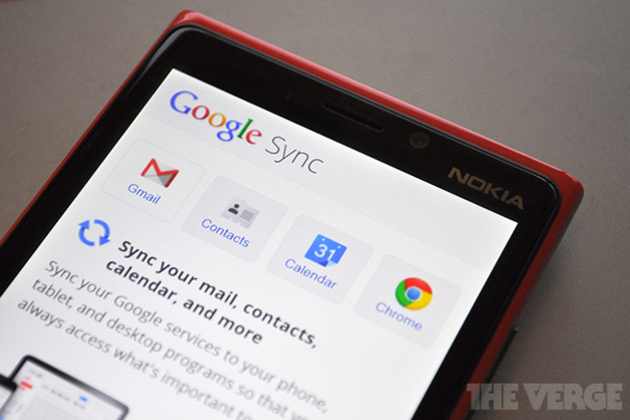
Google has granted new Windows Phone users another extension to access its Sync service until December 31st. The company had originally planned to drop support for the Exchange ActiveSync protocol on January 30th, but it extended the cut off date until July 31st to allow Microsoft to build CardDAV and CalDAV support into Windows Phone 8. “We’ve reached an agreement with Google to extend support for new Windows Phone connections to the Google Sync service through December 31, 2013," says a Microsoft spokesperson in a statement to The Verge.

Microsoft has enabled CalDAV and CardDAV support in its latest Windows Phone 8 update that started rolling out to devices recently, but not all handsets have the update yet. Another five months of Google Sync support will allow Microsoft to ensure the majority of handsets are capable of supporting the protocols required to sync Google calendar and contacts.

An ongoing ecosystems war between two giants

The extension ends part of an ongoing ecosystems war between Google and Microsoft. Google had originally left Microsoft scrambling for a solution when it provided the company just 45 days to implement the necessary CalDAV and CardDAV support in Windows Phone 8. Microsoft and Google also settled a similar dispute over an unofficial YouTube Windows Phone app that Microsoft created. Google demanded that Microsoft remove its application, and the company complied. The pair are now working together on a new YouTube Windows Phone app.

01 Aug 13:20

RSSurrection: The Old Reader to rise again with dedicated development team

by Matt Brian
Reader_post_mar_14_large

If you've been lamenting the closure of RSS reading app The Old Reader, its founders have some surprising news for you. After cutting new user registrations and announcing it would cease development of the web app just three days ago, The Old Reader team updated users with news that they have "received a number of proposals" to resurrect the service, later adding they were confident that it would reopen, but with "a proper team running it."


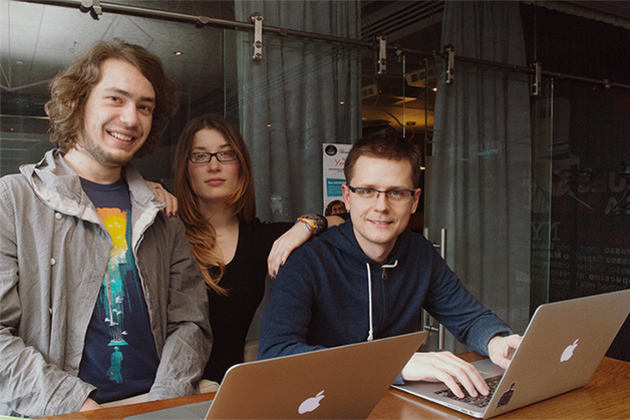
The team's updates suggest the company has been able to find funding or will end up handing over development to another party. Both Digg and Feedly moved fast to develop and overhaul their own RSS readers in the wake of Google Reader's termination on July 1st, leaving Anton Tolchanov, Elena Bulygina, and Dmitry Krasnoukhov exhausted. The team described their life as "hell in every possible aspect we could imagine" as they tried to keep pace with rival services. However, It appears this may no longer be an issue and the team say they will provide another update later this week, signing off their blog post with a grovelling apology: "Sorry about Monday. Again."