Shared posts

17 May 18:26

More games released on Steam in 2014 already than during all of 2013

by Emanuel Maiberg

More games have been released on Steam just 20 weeks into 2014 than have been during all of 2013.

According to an Analysis from Gamasutra, the influx of new releases is thanks in part to Steam Greenlight, which has been adding as much as 75 games to Steam at a time recently.

Since Valve’s co-founder and managing director Gabe Newell previously said that the company’s goal is to “make Greenlight go away” and make Steam more of a self-publishing platform, it’s likely that we’ll only see the number of releases increase in the future.

It’s nice to have a huge selection of games to choose from, of course, but it also makes it hard for games from smaller developers to get noticed, and discovering the games you’re particularly interested in.

We can already see Valve trying to mitigate this problem with several crowdsourcing tools like user reviews, the ability to tag games, as well as report them for offensive content. Steam’s front page now also defaults to the “Top Sellers” tab instead of the “New Releases” tab, which turns over very quickly these days.

Do you think Steam has a problem of offering too many games? Let us know in the comments below.

Emanuel Maiberg is a freelance writer. You can follow him on Twitter @emanuelmaiberg and Google+.

Got a news tip or want to contact us directly? Email news@gamespot.com

17 May 18:12

The entrance to the Parkour Gym in Malmö, Sweden.

17 May 08:33

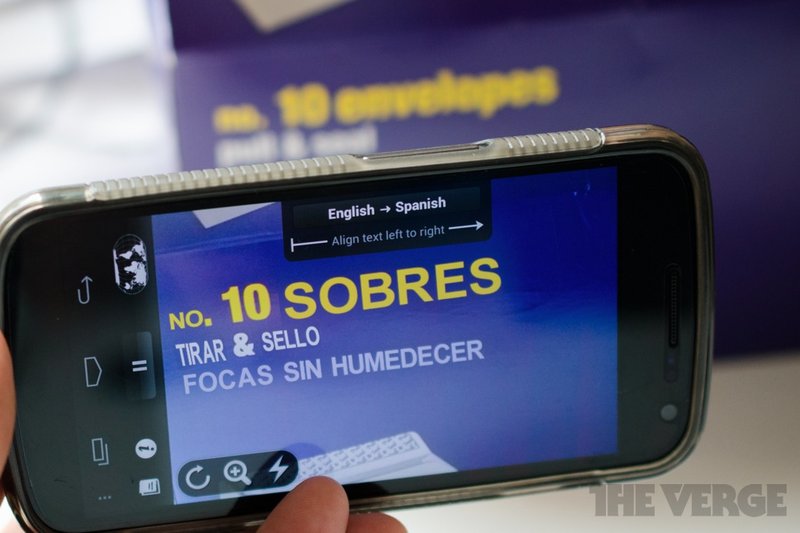
Google buys Word Lens, the app that translates languages with your phone's camera

by Chris Welch

Google has acquired Word Lens, the mobile app that can translate text in real time using your smartphone's camera, along with its development team at Quest Visual. The impressive technology will now make its way into Google Translate. Word Lens and its various language packs have been made free on both iOS and Android "as a thank you" to supporters, but don't expect to see much in the way of updates moving forward. Quest Visual makes it very clear that the plan is to transition to Google as quickly as possible.

It seems like a perfect fit for both sides, though the acquisition may sting Apple a bit. The company just showcased Word Lens in its latest iPhone 5S commercial and is still actively promoting it. But the app has been available on Android for nearly two years already, so it's not as if Google suddenly snatched up an App Store exclusive. (There's even a Google Glass version.) And the free giveaway suggests that Word Lens will remain available on iOS for a bit longer — at least until a more powerful version eventually arrives on Android.

16 May 16:49

Mario Kart 8 Reviews Round-up

by noreply@blogger.com (Endless)


IGN 9/10 - GameSpot 8/10 - Polygon 9/10 - Edge 9/10 - Eurogamer 10/10 - Videogamer 9/10

Game Informer 9.25/10 - Kotaku Yes - Destructoid 9/10 - USGamer 4.5/5 - CVG 9/10 - Nintendo Life 9/10

Joystiq 4.5/5 - Nintendo World Report 7.5/10 - ONM 96/100 - Gamreactor 9/10 - Gamesradar 4/5 - GamesBeat 85/100

Shacknews 8/10 - GameTrailers 8.6/10 - Now Gamer 8.5/10 - The Escapist 4.5/5 - The Verge No Score - LazyGamer 8/10

Nintendo Insider 10/10 - Wired No Score - Wii U Daily 9/10 - Pure Nintendo 9/10 - Digital Trends 4/5 - God is a Geek 9/10

Cubed3 9/10 - Screw Attack 7/10 - TechnoBuffalo 9/10 - GameRevolution 5/5 - Gaming Nexus 9.8/10 - Nintendo Feed 10/10

Digital Spy 4/5 - Mashable No Score - FanSided 8/10 - The Telegraph 4.5/5 - ITF Gaming 9.3/10 - Invisible Gamer A+/A+

G3AR 9.5/10 - Metro 9/10 - El33tonline 5/5 - Paste Magazine 8.8/10 - DualShockers 9.5/10- Ars Technica No Score
16 May 16:32

The scary reason Saudi farmers are kissing camels

by Adam Taylor
MERS is very scary. This week, while avoiding the term global health emergency, the World Health Organization announced that the deadly viral infection was both serious and urgent. So far, there have been 571 confirmed cases of MERS; 171 of those people died from the disease. There's one place, however, where the mood about MERS […]
16 May 14:44

What is the MERS virus, and is it going to kill us all?

by Susannah Locke
Yousef Alnafjan

One important fact not in this article: almost all MERS fatalities were with the elderly or people who suffer from kidney failure or heart disease.

A mysterious illness known as MERS might turn into the next global pandemic. Or it may fizzle out. For now, public health experts are keeping a close eye on the situation — but they haven't declared an emergency yet.

MERS has already killed 173 people across nineteen countries

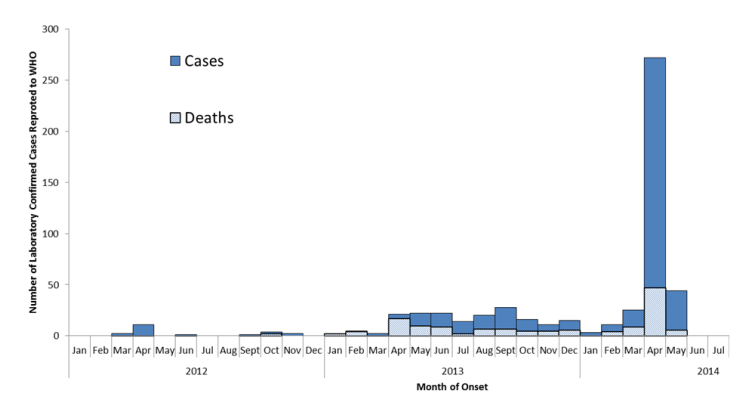
Middle East respiratory syndrome, or MERS, was first discovered in 2012 and has a surprisingly high death rate. There have already been 572 confirmed cases and 173 deaths across 19 countries. The majority of the illness has been concentrated in Saudi Arabia.

This week, a second case of the viral disease was identified in the United States, shortly after the first was found earlier this month. (Both were health-care workers who had recently been in Saudi Arabia.) The discovery came after a sudden jump in cases in Saudi Arabia this spring.

The origins and characteristics of MERS are still quite enigmatic. The virus might fade away into oblivion or mutate into a monster. Here's a rundown of what we know so far:

What is MERS?

First off, MERS is not MRSA — the antibiotic-resistant bacteria that's somewhat common in US hospitals.

MERS — or Middle East respiratory syndrome — was first identified in Saudi Arabia in 2012. It's caused by a virus called MERS-CoV. Patients with MERS end up with symptoms like coughing, fever, and shortness of breath.

Although MERS doesn't appear to be exceptionally contagious, public-health experts have been tracking it closely because the disease has such a high death rate. So far, about one-third of the people with confirmed cases have died. The majority of MERS has been in Saudi Arabia, although it's spread to 18 other countries, including two recent cases in the US.
Screen_shot_2014-05-15_at_6.57.08_pm

There was a sudden spike in MERS cases this spring. WHO

How bad is the situation?

The World Health Organization (WHO) is watching the disease closely and has convened an emergency committee on the threat, which has met five times since July, 2013.

But, so far, the WHO has yet to declare a global health emergency (Public Health Emergency of International Concern) — the way it did for swine flu and polio in recent years. (Declaring such an emergency would allow the organization to make recommendations such as travel or trade restrictions or that people feeling ill delay any international trips.)

So what does it mean? It means that MERS could conceivably get really, really bad. But it's not really, really bad yet.

Where is MERS?

More than a dozen countries have confirmed cases so far, including the US. However, most of those people originally caught the virus in Saudi Arabia. (Also, many of those countries don't have anyone who's sick anymore. Oftentimes it's an isolated event. That person then gets better and never infected anyone else.) This map shows where people have been picking up the illness:
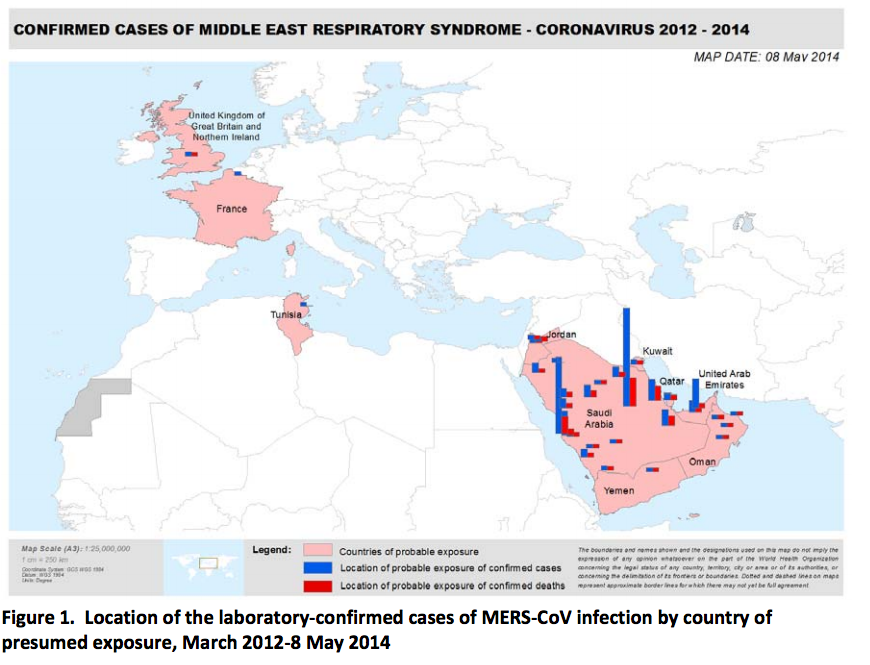
Screen_shot_2014-05-15_at_6.54.53_pm

The majority of people with MERS caught it in Saudi Arabia. WHO

Where did MERS come from?

157889984

Dromedary camel. UIG via Getty Images.

No one is quite sure. So far, evidence of the MERS-CoV virus has been found in bats and dromedary camels (the one-hump kind). It's unclear if the virus actually makes these animals sick, although they could still transmit it either way.

There are millions of camels in the Middle East, where they're used for meat, milk, and racing. It's possible that MERS has been jumping from camels to livestock workers or to people who have eaten raw camel milk or meat. But even that's unclear. Although some MERS cases have appeared in people who work with camels, many others haven't.

Am I going to get MERS?

Right now, the risk is pretty low. But that could conceivably change if the virus mutates.

MERS currently seems to have a pretty low transmission rate — lower than both the flu and SARS. Casual contact — like being on the same plane flight — doesn't seem to be enough to spread the disease. Most documented cases are of people who have been living with or caring for someone with MERS — and those are the only people that the Centers for Disease Control and Prevention says are at risk. (Many cases in Saudi Arabia are spreading within hospitals.)

MERS currently has a fairly low transmission rate

Here's a picture of how hard it is to spread: after the first confirmed case of MERS in the United States, public-health officials tracked down and tested more than 500 people whom that patient had come in contact with. None of them have turned up positive.

That's why the CDC says that the two cases of MERS in the United States currently "represent a very low risk to the general public in this country." The agency doesn't even recommend that anyone change their travel plans — even if they're going to Saudi Arabia. However, it does recommend that travelers to the Arabian Peninsula take general precautions like washing your hands and avoiding people who are sick.

There is one catch, however: viruses can — and do — mutate. The MERS virus is mutating much less slowly than, say, the flu virus, but you never know what a random mutation might bring.

If I get MERS, will I die?

Nih-imagebank-1450-300__1_

MERS coronavirus. National Institute of Allergy and Infectious Diseases (NIAID)

Calculating an actual death rate for MERS is currently impossible because there isn't enough surveillance to know exactly how many people have been infected with MERS.

The World Health Organization reports at least 572 confirmed cases of MERS, about a third of which have been fatal. (The official death rate for SARS was about 10 percent, which gives you an idea of why experts are concerned about MERS.)

However, there could be many people with MERS and mild symptoms who never appear at a hospital, never get screened, and never get diagnosed. As surveillance increases and more doctors know to test for MERS, the apparent death rate might go down. (In fact, this may already be happening.)

To sum up: these numbers don't mean that an individual person's actual chance of dying is one in three. No one knows what that actual number is.

What happened to the people with MERS in the US? Did they die?

As of May 15, one has been released from the hospital and is fully recovered. The other is in the hospital and doing well.

What's the treatment for MERS?

There's currently no treatment specifically for MERS and no vaccine for it, either. If people do create a vaccine, there's a good chance they will give it to camels (just like they currently vaccinate poultry for bird flu).

Why are there all of these terrible viruses lately?

Experts point to several possible reasons that could all be contributing to the rise. As the human population grows, we've been physically expanding into other animals' territories. This proximity could be increasing viruses jumping from animals to people.

What's more, once a virus is around people, increased air travel gives it a better chance to spread across the globe.

Also, public health officials have been making a bigger effort to track these kinds of viruses lately (especially after the SARS outbreak in 2002–2003) — so part of the increase may be that they're discovering more about what is out there.

Further Reading:

For a view of MERS at the front lines in Saudi Arabia, check out this recent Q&A with virologist Christian Drosten.

From Laurie Garret writing in Foreign Policy, a different perspective inside Saudi Arabia.

For the patenting of the MERS virus, try this news review in ScienceInsider and this piece by law professor David Fidler in Foreign Affairs.

For how to wrangle a feisty, ornery camel to test it for MERS, scroll down to the bottom of this New York Times story.

16 May 11:14

'Flappy Bird' creator teases new game on Twitter

by Nathan Ingraham

Flappy Bird creator Dong Nguyen is moving beyond the feathered friend that brought him massive recognition — he just announced on Twitter that he's building a new game and attached a screenshot to go along with it. There's no other detail on the game yet aside from a small helmeted human being jumping through a small opening into what appears to be a building — it's not all that dissimilar to what you need to do in Flappy Bird, in fact. Polygon notes that Nguyen described the game as "some guy jumping from building to building" in an interview on CNBC.


I am making a new game. So people can forget about Flappy Bird for a while. pic.twitter.com/JcUsd7FJvg

— Dong Nguyen (@dongatory) May 15, 2014

The timing of this reveal is rather surprising — just yesterday, Nguyen said that Flappy Bird would be back in August, but in today's tweet, he said that he wanted people to "forget about Flappy Bird for a while." When we'll see this new project remains to be seen, but we're guessing from Nguyen's tweet that it'll be ready to go before Flappy Bird returns.

16 May 07:36

Xiaomi Announces Affordable Android-Powered 49" 4K Smart TV, The Mi TV 2

by Bertel King, Jr.

MiTV2-ThumbXiaomi announced the Tegra K1-powered Mi Pad tablet today, but that wasn't the only impressive piece of tech the company had to show off. The Chinese manufacturer is back with its second smart TV, and this one's packing a 49" 4K display. To make things even better, the Mi TV 2 will go for CN¥3,999, a little over $600.

MiTV2

The Mi TV 2 has a MStar quad-core 1.45GHz processor, a Mali450-MP4 GPU, 2GB of RAM, and 8GB of internal memory that's expandable with a microSD card.

Done With This Post? You Might Also Like These:

Xiaomi Announces Affordable Android-Powered 49" 4K Smart TV, The Mi TV 2 was written by the awesome team at Android Police.


15 May 09:00

Why Can’t Nintendo Stop Ruining Mario Kart?

by Chris Kohler
Nintendo has come up with a new way to ruin Mario Kart's once-amazing Battle Mode.


15 May 08:57

The best 'Mario Kart' ever

by Andrew Webster

Being ahead of the pack in Mario Kart makes me uneasy. Even when I'm winning, I'm never really comfortable. I know that a blue shell — that unstoppably powerful missile that seeks out the first-place racer — is likely only moments away, and there's nothing I can do to stop it.

Mario Kart 8 for the Wii U finally provides some hope. If I get lucky and grab the new super-horn, a box that emits a stunning pulse strong enough to knock back other racers and negate the explosive impact of the blue...

Continue reading…

14 May 18:20

Should we cover all our roads with solar panels?

by Brad Plumer

Depending on how you look at it, the "Solar Roadways" proposal is either a brilliant solution to America's energy woes — or totally insane.

The idea is simple enough: The United States would replace the asphalt and concrete in its roads, sidewalks, and parking lots with a type of industrial-strength glass that contain solar panels. Like so:

Solar_roadways

Artists' rendition of the Solar Roadways concept. Solar Roadways

The result? The United States would have plenty of space for solar panels generating clean, carbon-free electricity. Those glass roads might also be able to do neat things like provide their own lighting or LED signs for drivers.

This isn't entirely fantastical: For the past decade, Julie and Scott Brusaw's Idaho-based startup Solar Roadways has been developing a type of glass that can withstand the stress from cars and heavy trucks driving over them.

The company has already received a grant from the US government

The company has already received a grant from the U.S. Department of Transportation to build a crude prototype of this glass. It was selected as one of Google's "Moonshots" in May 2013.

Currently, as Rob Wile reports at Business Insider, the company is trying to raise $1 million in funding to move the technology from the prototype phase to production. (They've raised $145,000 so far.)

It's a fun idea, and worth a shot. But there are still reasons to be skeptical. Yes, solar power — particularly rooftop solar power — has been making some impressive gains in the United States in recent years. But solar roads are likely still a longer ways off.

Why solar roads are so enticing

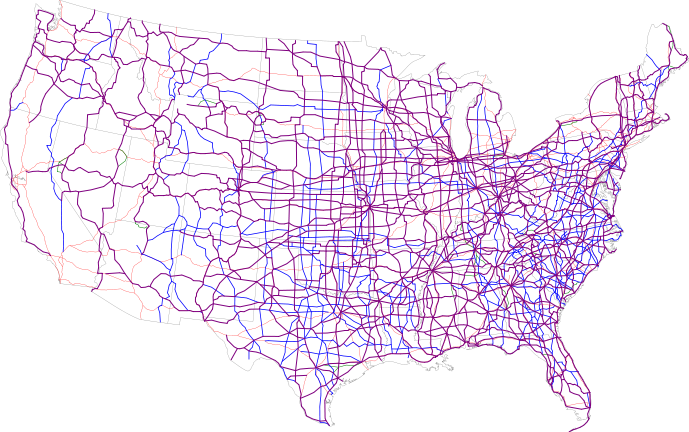
689px-map_of_current_us_routes.svg

Wikipedia

At a very abstract level, it's easy to see why solar roads might be attractive. On their website, the Brusaws offer a detailed FAQ and some rough numbers on this score.

In theory, solar roads could generate three times as much electricity as the US uses

They note that there are about 30,000 square miles of roads, parking lots, driveways, playgrounds, bike paths, and sidewalks in the contiguous United States.

Assuming we could replace that pavement with glass-covered solar panels that have an 18.5 percent efficiency rate, we could generate up to 14 billion kilowatt-hours of electricity per year — more than three times what the United States uses.

Now, in practice, we almost certainly wouldn't be able to harvest that much power. For the time being, there still aren't many practical ways to store solar-generated electricity for hours when the sun isn't shining. What's more, electricity generated on remote roads would have to be transported to where it was needed. That would all require a lot of infrastructure.

Still, the concept might be useful on a local scale — say, starting with parking lots and driveways inside cities and towns. Or perhaps one day it could be combined with wireless technology to charge electric vehicles as they move along the roads.

But that still leaves harder questions about cost…

The case for skepticism

Parking_lot_east

Jill and Scott Brusaw with a prototype of their solar panels. Solar Roadways.

Right now, the Brusaws say they're working on updated estimates of how much these solar roads would actually cost to install and maintain. Yet earlier back-of-the-envelope calculations offered plenty of reasons for skepticism.

Covering the entire country with these panels would cost trillions

Back in 2010, the company assumed that a 12' by 12' glass panel would cost around $10,000. At this rate, covering all of our roads would cost $56 trillion — nearly 20 times the annual federal budget. Even on a smaller scale, these panels are at least 50 percent more expensive than regular roads, and possibly more.

Back then, the Brusaws argued that an investment in solar roads could pay for itself within 22 years. After all, the solar panels would cut down on electricity bills. And, of course, most of the pavement in the nation's roads needs to be replaced over time anyway — so we wouldn't need to pay for asphalt. (What's more, if solar panels continue to get cheaper and more efficient, the price could come down further.)

But as Aaron Saenz pointed out at the time, many of those estimates seemed awfully questionable. For one, asphalt wasn't nearly as expensive as the company assumed. And the maintenance costs for these solar roads is still wildly uncertain.

Solar Roadways is currently trying to rework its calculations to take into account a new hexagon design for their glass. It's also possible the roadways could find other ways to pay for themselves, like offering advertising. But, right now, the cost estimates are pretty fuzzy.

Meanwhile, there are other questions that haven't been answered satisfactorily yet. How will the roads stay clean? (The company's answer here — tinkering with self-cleaning glass or maybe employing street sweepers — is a bit vague.)

Right now, the Department of Transportation is asking for smaller demonstrations in, say, store parking lots. If that actually works, perhaps the idea could scale up slowly over time. But we're still a long way off from covering all our roads in solar panels.

Further reading: While we're dreaming about solar roads, it's worth checking out the gains that actual rooftop solar has been making over the past year. It's still a small part of the US energy supply, but prices have been tumbling fast — and there's now enough installed capacity to power more than a million homes.

14 May 15:49

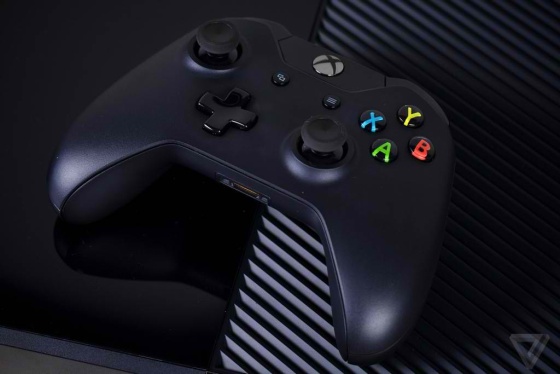
The Xbox was the future — now it's just a game console

by Sean Hollister

Years ago, Microsoft had a bold vision for the future of computing. It would be a tapestry composed of tiny squares. Each square would represent an app, a game, an experience of some sort, and you’d be able to just reach out and touch it. Or, if you already knew what you wanted, you’d be able to simply speak a name, and have the object of your desire materialize out of thin air — regardless of whether you were using a smartphone or lazing in front of a TV set.

That’s the vision Microsoft was building with Windows 8, with Windows Phone, and most intriguingly, with Xbox.

That vision is dead.


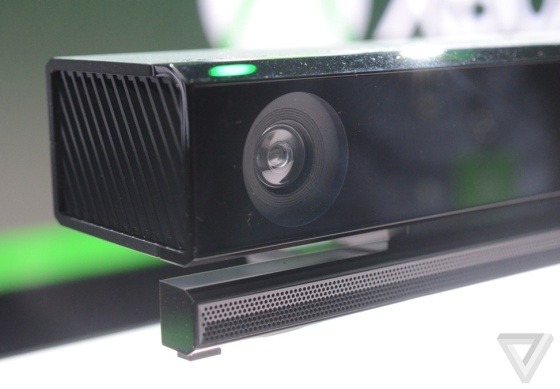
Today, the input device that made it all possible on a television screen — the Kinect — will no longer be bundled with every new Microsoft game console. For now, the $499 Xbox One bundle still exists, but consumers will soon be able to save $100 by sacrificing the cameras and microphones that let the system respond to your gestures and voice commands.

"Xbox One is Kinect. They are not separate systems," said Microsoft VP Phil Harrison last August. So much for that.

Xbone-kinect-560

Kinect hasn't earned its keep

In the short-term, possibly even over the long-term, it’s a keen business decision to sell the Xbox without a Kinect packed in. The Xbox One hasn’t been selling as well as the PlayStation 4 despite critically acclaimed exclusive games like Titanfall and Forza Motorsport 5, which suggests that price might have been a factor. Now, the two consoles are on even footing. The new Kinect has also failed to justify the Xbox One’s $100 price premium over the PS4. There’s a dearth of games that actually support the sensor in any meaningful way, and dreadful results from the few games that have. The Kinect also hasn’t been foolproof for navigating the Xbox’s own UI, often failing to recognize commands, and apps haven’t taken enough advantage. Navigating the Netflix interface with voice is a tremendous chore. It’s far faster to pick up a controller.

Right now, when the Kinect doesn’t matter, chopping it off makes a lot of sense. If Microsoft can convince more people to buy an Xbox now with a cheaper price, it can guarantee itself a solid footing against the PS4, and sell more games and Xbox Live subscriptions to go with those units. At $399, Microsoft might even make more money on each console, if it’s true that the new Kinect costs quite a bit to manufacture.

X360-hdd-ifixit
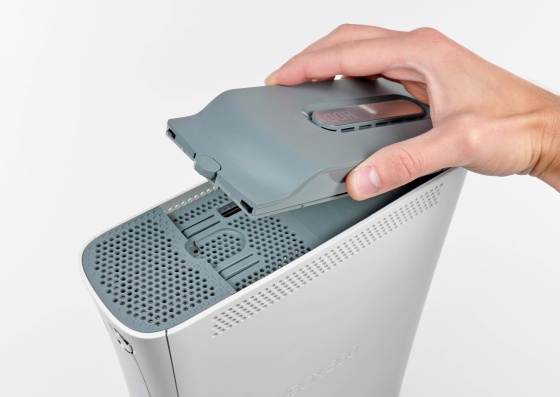
The Xbox 360 with optional hard drive. (iFixit)

Plus, if the Kinect ever becomes important to the Xbox again, consumers can simply add one to their existing console. We’ve seen this strategy before: the original Xbox 360 shipped with and without a hard drive, but as digital downloads picked up, the drive became an increasingly valuable add-on. For that matter, the original Kinect was a hugely successful standalone product, even though it shipped late in the Xbox 360’s life. It won a Guinness World Record for the fastest-selling gaming peripheral.

But there’s a gigantic difference between an optional peripheral and a guaranteed pack-in with every game console. Microsoft promised early adopters and developers alike that every Xbox One would come with a Kinect, and defended that promise time and again. "As we've said from the very beginning, we believe Kinect is an absolutely integral part of the Xbox One experience," UK marketing chief Harvey Eagle reminded us in February.

Well then. We WERE interested in doing a Kinect game.

— Phil Tibitoski (@PTibz) May 13, 2014

Those promises sent a clear message that the Kinect would not be chicken and egg. Developers could count on having a guaranteed market for Kinect games and apps, and Xbox One buyers could count on developers building innovative experiences.

Now that Microsoft is breaking those promises, that guarantee is gone, and the market for Kinect software will never be the same. The company has suggested that Kinect voice recognition could get better over time by learning from users, but now there will be fewer reasons to keep it plugged in, and a smaller eventual install base.

And now that Microsoft has backtracked to such an extreme degree on its original vision, it’s hard to believe any of the company’s other promises about the system’s potential. What chance is there that Microsoft might release a version of the Xbox One that doesn’t include TV functionality? The Kinect served as a heavy-duty IR blaster for controlling your home-entertainment system, so that vision may be in jeopardy as well.

How long until the $299 Xbox One without HDMI passthrough appears?

— nilay patel (@reckless) May 13, 2014

And with Microsoft also no longer requiring Xbox Live Gold subscriptions to use apps like Netflix, Hulu, and Skype — don’t get me wrong, it’s a very welcome move — can we still count on the company helping to foot the bill for games to harness additional horsepower from Microsoft's compute cloud, another promised differentiator?

Microsoft's about-face doesn't bode well for apps

The biggest casualty, though, might be the as-yet-unrealized potential for the Xbox to be a computer. Time and again, Microsoft hasn’t had a good answer when and how the Xbox One might open up to app developers, even though they were happy to proclaim that it runs Windows underneath. As the company distances itself from anything that isn’t key to the core game-console experience, though, it seems less likely that app developers would want to jump in. When the original Kinect first hit shelves for $129, it was incredible to see the ways the maker community hacked and harnessed the technology for its own ends, and it was exciting to think how apps might evolve on a system where the paradigm was guaranteed.

Xbox_one_560

But now, spurred by the success of the PlayStation 4, Microsoft is sacrificing that future to focus on the present, just as it has already done with the confusing Windows 8. Now that Microsoft is no longer steering consumers towards touch and voice and gesture control, the Metro user interface is mostly just window dressing. But don’t be surprised if you see these ideas again: Microsoft was early to tablets and early to smartphones, after all.

There will be colorful tiny squares in your future, and I wouldn’t lay odds that you’ll control them with a joystick. Not after what we’ve seen the Kinect do.

14 May 15:45

'Superhot' seeks $100,000 to become the next great first-person shooter

by Vlad Savov

Debuting in September of last year in prototype form, Superhot was an immediate sensation because of its delightfully tricky gameplay mechanics. In-game time moves only when the player does, making for an entirely fresh approach to first-person shooters. Now rewritten "from the ground up to make it more expandable [and] dynamic," Superhot has arrived on Kickstarter in search of $100,000 in funding.

Along with covering the operational costs of completing the game, the development team is also looking for feedback and ideas from its supporters. Any funds received beyond the $100,000 threshold will be used for promoting the game. In among the stated goals for Superhot, the most exciting might be support for the Oculus Rift. The virtual reality headset that has rekindled our fascination with disembodied experiences isn't yet suited to quick and reflexive shoot-em-ups, but would be an ideal complement to a more thoughtful puzzler such as Superhot.

The Kickstarter campaign will last for 30 days, though the game's on pace to surpass its funding goal much sooner than that. It has gained nearly $10,000 of pledges in the first couple of hours of being online. To get a better sense of the Superhot promise, check out the September 2013 prototype of the game, which is playable in the browser.


14 May 11:11

A bounce house flew away with three children inside

by Joseph Stromberg

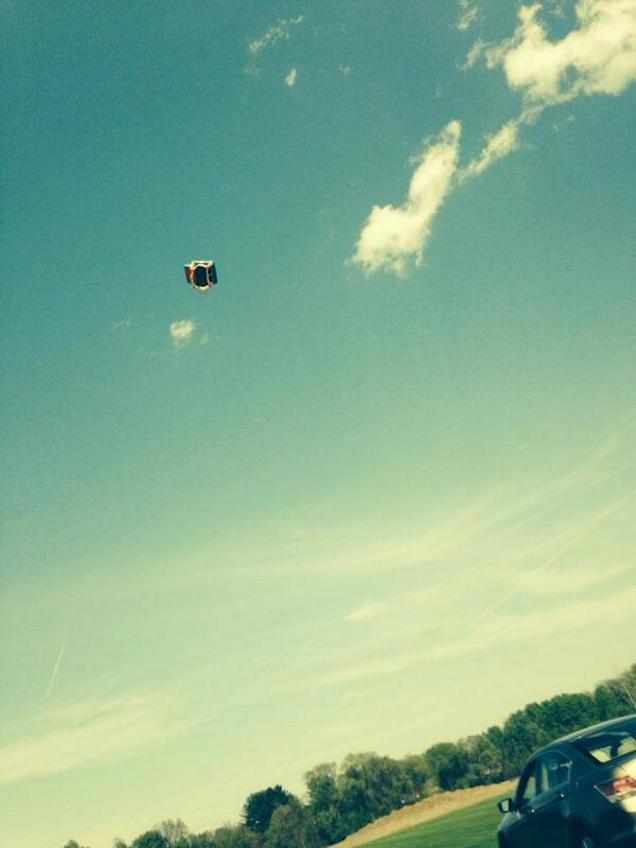
On Monday afternoon, a bounce house in South Glens Falls, New York was lifted 50 feet into the air by a sudden gust of wind.

A gust of wind ripped the stakes out of the ground

There were three children inside, and when the house was about 15 feet up, they fell out of it. Two boys — one who landed on a parked car, and another who landed directly on the street — were seriously injured and are currently hospitalized, while a girl suffered only scrapes and bruises.

The bounce house was reportedly staked down to the ground when it was set up, but a gust of wind apparently ripped the stakes out — one was tossed across a parking lot when the bounce house flew away.

Here's a photo of the house, taken by a witness and featured in the Glens Falls Post-Star:

Wglix3anizobjgyyidd1

Post-Star

Observers called it a "freak accident" — but this is actually the latest in a series of flying bounce house accidents across the US in recent years.

Why bounce houses keep flying away

They're certainly rare, but there have been dozens of similar incidents, including ones in Arizona in 2012 and New York State in 2011. These have led to a number of serious injuries, but no deaths thus far.

There's some thought that safety regulation is the problem. Unlike carnival rides, most states don't require trained operators for inflatables.

An inflatable is essentially a sail: a big piece of fabric that weighs very little

They all come with instructions for being properly staked down and warnings to be taken down during inclement weather, but the sheer physics of bounce houses can make it hard for someone who doesn't operate them on a daily basis to understand how easily then can be blown away — and how securely they need to be staked.

A inflatable is essentially a sail: a big piece of fabric that weighs very little, compared to its size, and can easily catch the wind.

The bounce house that was blown away yesterday weighs about 38 pounds. Its bottom has an area of about 85 square feet. If a strong gust of wind were to catch this flat surface, it's easy to imagine how it could rip out few stakes driven shallowly into the dirt and propel the house through the air.

In this case, the owner had set it up several times over the years, but didn't remember whether it had originally come with staking instructions — and the kids' parents later said they had no idea the houses could fly away on windy days.

14 May 10:56

'Game of Thrones' author George R.R. Martin explains why he writes on a DOS machine

by Cassandra Khaw

The fact that George R.R. Martin writes the mammoth Game of Thrones novels on a DOS machine is no secret but it is still delightful to hear him explain why. The beloved fantasy author said on Conan that he enjoys the simplicity of WordStar 4.0 and dislikes modern autocorrect and spellcheckers. "If I wanted a capital, I would have typed a capital. I know how to work the shift key," he exclaims to the laughter of a sympathetic audience. Martin's no-nonsense setup might sound archaic but it is complemented by a second computer that he uses for email and web browsing. He's also not the first to attempt to keep it simple. Many have tried to make $1,000 computers perform similarly with minimalist text editors. However, few have expressed their reasoning as eloquently as Martin has.


14 May 09:36

Microsoft Had No Choice but to Yank Kinect From Xbox One

by Chris Kohler
Microsoft said this morning that on June 9, it will begin selling a $400 version of its Xbox One console that does not include the Kinect camera peripheral. This was its only logical move.


12 May 16:56

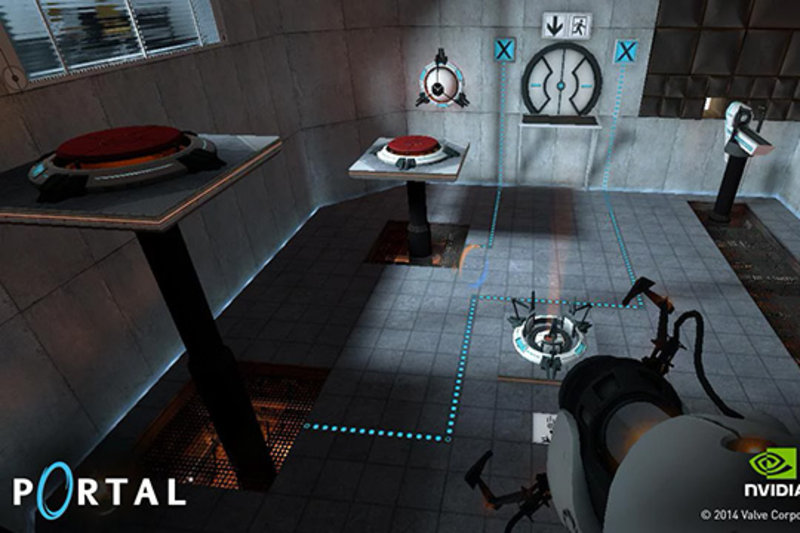
'Half-Life 2' and 'Portal' arrive on Android, but only for the Shield

by Vlad Savov

Two of Valve's undisputed classics are making their Android debut today, courtesy of Nvidia's Shield console: Portal and Half-Life 2. Costing $10 each, the two games were ported by Nvidia, which explains why they're only playable on the Shield. Still, the job has been done with Valve's unreserved blessing and a promise by Doug Lombardi that you "can expect the same gameplay" as on the original PC versions. Even if the recreations aren't perfect, having two of the PC's greatest titles available on the Shield brings it a lot closer to its promise of being a true mobile console. With a price cut to $199 and a growing library of games and features, Nvidia's efforts at recreating PC-class gaming on an Android portable are looking increasingly compelling.


12 May 16:46

Kenny G has become China's goodbye music and no one knows why

by Kwame Opam

In what can only be described as a marvelous (if somewhat sinister) example of social engineering, Kenny G's 1989 adult contemporary classic Going Home has served as China's de facto end-of-day song/meme for more than a decade. As The New York Times reports, Going Home can be heard on loop on loudspeakers throughout Beijing at day's end, signaling for shopkeepers, students, and everyday folk that it's time to, well, go home. So embedded is the song in China's cultural fabric that, even though people have developed habits around when the song is played, no one is sure anymore why Kenny G became so popular there in the first place. Ask one shop manager in the Panjiayuan market asked (echoing Barthes in the process), "Isn’t it just played everywhere?" Read the entire piece here.

12 May 10:51

Get Access to the Landmark Beta

by jwycoff
Equip your pick-axe and get ready to build in this next generation, massively multiplayer sandbox from Sony Online Entertainment. Beta keys are limited, so claim yours now and play today.
Get Access to the Landmark Beta
11 May 06:58

How a middle school teacher started rapping about classic video games

by Dante D'Orazio

Chiptune and hip hop make unlikely bedfellows, but for middle-school-teacher-turned-rapper Mega Ran, the pair were a perfect match. Mega Ran (aka Random) samples theme songs from video game classics like Mega Man, Castlevania, and Final Fantasy 7 and writes his own verses inspired by the characters and stories in them. Like old school MCs, Mega Ran says he sticks to real experiences: "Normally I don’t do songs unless I’ve played the game. I try to keep things authentic as possible." The results are eclectic but smooth, and if you can pick up the lyrics, some of the verses are worth a chuckle. Mega Ran has gone pro since his early days of illicitly sampling game soundtracks, and Vice's music blog, Noisey, has the full story on what he's been up to.


10 May 21:43

Here are some of the best reaction GIFs according to Reddit

by Nicole Lee

Sometimes there's no better way to respond to a story or a comment than with an animated GIF. Specifically, a reaction GIF, which should be no stranger to anyone who's ever spent a significant amount of time in online chat rooms and internet message boards. And out of the millions of GIFs out there, a few have risen to the top. Which ones? Well, the Museum of the Moving Image has asked the Reddit community to come up with what it deems as the 37 most frequently deployed GIFs on the internet for an exhibit. After looking through the submissions, we have to admit there are definitely some familiar GIFs on here (We've seen the Homer Simpson fading into the bushes animation one too many times for example).

If you want to check out the whole list, either head over to the source link or visit the museum in-person before the exhibit closes on May 15th. Meanwhile, we've decided to pair up some of our latest stories with a few from the list for a bit of fun. Check 'em out after the break.

Oh no, so sad

FCC's new net neutrality rules opposed by 100+ internet companies

Well, hooray for you

What does hip-hop's 'first billionaire' have that Apple wants?

Alright, that's pretty cool

3D printers find a home fighting disease in Syrian refugee camps

Seriously, you guys?

The Minecraft version of Denmark is being attacked, hilariously

Oh shit.

A Westerner's guide to Japanese toilets

[Image credits: Museum of the Moving Image]

Comments

Source: Museum of the Moving Image

09 May 15:47

Yahoo News Digest arrives on Android and launches an international edition

by Casey Newton
Yousef Alnafjan

You should download this app right now.

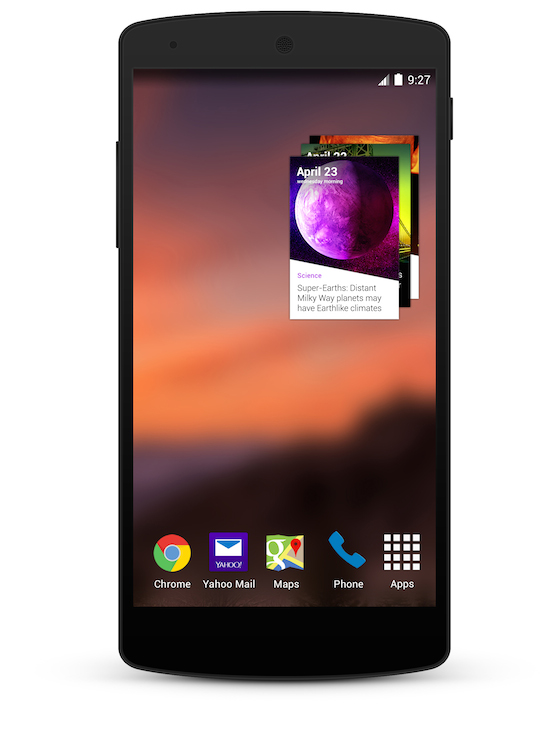
Four months after bringing its unconventional news app to iOS, Yahoo News Digest arrives on Android today along with international editions that bring a global perspective to currents. Yahoo News Digest for Android includes both the regular app, which provides twice-daily summaries of the day's top stories, along with a news widget you can place on your home screen. Previously available only in the US App Store, Yahoo is now making the digest available in English globally, adding a Canada edition and a more general international edition to the app.


News Digest differs sharply from other apps that notify you of current events by eschewing an endless stream in favor of a finite set of stories. Each day at 8 a.m. and 6 p.m., the app sends you a push notification inviting you to read your digest. Inside, you typically see eight to 12 stories that have been summarized by Yahoo algorithms and curated by editors who work for the company. It's based on Summly, which creator Nick D'Aloisio built and sold to Yahoo for $30 million when he was 17.

Inlineyahoo

Yahoo won't say how many people have downloaded the app, but says 40 percent of everyone who downloaded it is still returning to it every day. The average person spends two and a half minutes inside the app every time, and Yahoo doesn't want them to spend any more time than that — the goal is to get in and get out quickly, says Maria Zhang, a senior director of engineering at the company. The updated app is scheduled to roll out this morning on iOS and Android.

09 May 14:00

Beats sale to Apple seemingly confirmed by 'first billionaire in hip hop' Dr. Dre

by Vlad Savov

Last night was highlighted by reports from multiple sources that Apple is nearing a $3.2 billion deal to acquire Beats Electronics, the company co-founded by hip hop producer Dr. Dre. While all that commotion was going on, Dre was apparently in his studio celebrating, as evidenced by a video briefly posted on actor Tyrese Gibson's Facebook page. Gibson reiterates the $3.2 billion figure in his blurb for the clip and urges Forbes to revise its list of the world's richest people because Dr. Dre has now joined the "billionaire boys club." In the video, Dr. Dre describes himself as "the first billionaire in hip hop" and echoes Gibson's excitement. Though the hip hop mogul doesn't explicitly confirm the Apple acquisition, the implication that the deal has already been completed is there. You can watch the full video below, though be forewarned that it's rich on expletives right from the start.

Update May 9th, 7:57AM: Tyrese's Facebook post has since been pulled. His original caption read as follows:

"How did I end up in the studio with Dr Dre ON THE night his deal went public that he did with Apple 3.2 BILLION!!!!! The BEATS HEADPHONES JUST CHANGED HIP HOP!!!!!!"

09 May 14:00

How the WonderSwan became an ugly duckling

by Cassandra Khaw

Bandai released the WonderSwan in 1999, a portable gaming console that was in many ways superior to the Game Boy. However, it still failed at ousting Nintendo from its place as the market leader. "WonderSwan always found itself playing catch-up to Game Boy, first in terms of market share and color features, and later in terms of sheer power," writes USgamer's Jeremy Parish. In his article, Parish explores the WonderSwan's origins, its merits, and the circumstances that prevented it from becoming more than just a "highly localized blip in the history of handheld games."

09 May 13:42

Valve's beloved Portal comes to Nvidia Shield next week

by Eddie Makuch

Valve's beloved puzzle game Portal will launch for the Nvidia Shield on May 12, Android Authority reported this week, later confirmed by a Nvidia representative for Polygon.

Android Authority reports that the Nvidia Shield version will be available for purchase for $10 through Google Play, but only for the Nvidia Shield, not other Android-based devices.

Nvidia originally announced that Portal was coming to the Nvidia Shield in March during its GPU Technology Conference, which also saw the unveiling of a high-end $3000 graphics card.

The Nvidia Shield is available today for $200. If you have a compatible GeForce GTX GPU, you can even stream games like Borderlands 2 and Batman: Arkham Origins from your PC to the Shield through Nvidia's GameStream technology.

Eddie Makuch is a news editor at GameSpot, and you can follow him on Twitter @EddieMakuch
Got a news tip or want to contact us directly? Email news@gamespot.com
09 May 07:38

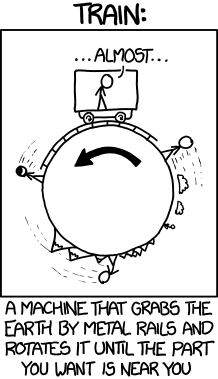
Train

Trains rotate the Earth around various axes while elevators shift its position in space.
08 May 16:27

How to make a thin hamster

by Chauncey Plantains
Yousef Alnafjan

The goofy translation is great

08 May 16:09

Nintendo making Skylanders-style figure series for Wii U and...

by 20xx


Nintendo making Skylanders-style figure series for Wii U and 3DS ⊟

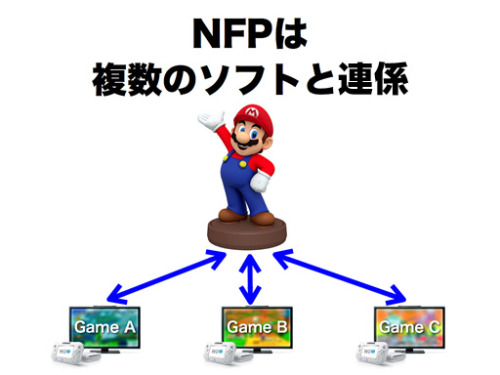
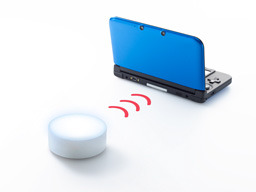
Called “NFP” (NFC Featured Platform/Nintendo Figure Platform) the characters will allow users to carry save data between games, building a customized character on the figure. They’ll work with the Wii U GamePad’s NFC, and Nintendo will also sell a thingy for 3DS.

Nintendo will show more software and details of this program at E3. Other news out of the latest investor presentation: a Mario Kart 8 “TV” smartphone app, allowing sharing of in-game videos and ranking data. Oh, and a Wii U update that speeds up startup by 20 seconds, coming in June. Okay, there’s some news, good night!

SUPPORT TINY CARTRIDGE Join Club Tiny!
08 May 02:43

Spotify removes silent album that earned indie band $20,000

by Chris Welch
Yousef Alnafjan

Clever!

Spotify has spent years battling the perception that it skimps on royalties; on average, the company pays out $0.007 each time an artist's song is streamed by its millions of users. In March, one Michigan-based band set out to defy the odds and bring in enough money to fund an upcoming tour. And they took a brilliant approach in getting there. Vulfpeck’s latest album Sleepify is a completely silent recording composed of tracks that are each a half-minute in length. (Users must listen to a song for at least 30 seconds before Spotify counts it as a proper "play.")

Upon its release last month, the band asked fans to stream Sleepify continuously at night as they slept, hoping the coordinated effort could morph Spotify's less-than-a-cent royalty rate into something lucrative. And it actually worked: according to ViceVulfpeck earned around $20,000 in royalties from the album. Those profits will be used to fund the band's next tour, which will be free to attend and mapped around areas that streamed Sleepify the most. But now the clever stunt has been cut short.


Spotify says the 'clever' and 'funny' stunt violates its content terms

Spotify has asked Vulfpeck to remove the album, complaining that it violates the company's terms of content. Headlines claiming that Vulfpeck has been banned from the service altogether appear to be unfounded; the band still has other music on Spotify. And that includes a just-uploaded three-track "album" titled Official Statement with a spoken track from keyboardist Jack Stratton that confirms Spotify's request. Reviewing an email he received from the company, Stratton says, "The gist of it was while they enjoyed Sleepify and thought it was funny and clever, it violated their terms of content."

"They probably know that I'm doing this, they probably know that I'm putting this on Spotify," he says in a track called "#Hurt." "So I don't know what's going to happen with it. It's very uncertain at the moment." And "in light of that certainty," the second track of Official Statement is meant to help fans reflect on the situation with — you guessed it — 31 seconds of total silence. Vulfpeck's original pitch for Sleepify is embedded below.

07 May 11:31

Artist helps Arabic speakers to code without learning English

by Daniel Cooper
Yousef Alnafjan

مرحبا يا عالم

If you want to build software, it's almost mandatory that you'll need to know the English language since all of the tools rely upon that tongue. Unfortunately, that puts non-English speakers at a huge disadvantage when it comes to computer literacy and programming. Artist and coder Ramsey Nasser decided to remedy the problem by constructing a programming language written not in English, but in Arabic. Nasser had more than a few problems getting "Alb" to work, since Latin-based text editors couldn't handle the script, and even GitHub struggled to accommodate the data. In the end, Nasser had to use Lisp, a language from 1958, because it doesn't rely upon non-Arabic punctuation like semicolons and commas. "Alb" actually works, and if you fancy giving it a go, then you can test your Arabic programming skills down at the source.

Filed under: Misc, Internet

Comments

Via: Animal

Source: Alb, Ramsey Nasser