Does your vote matter? Aaron Bycoffe and David Wasserman for FiveThirtyEight provide an interactive that shows what states might switch sides if you changed turnout rate and party preference for various demographic groups.
There's a dragger on the bottom for each group, where the vertical axis is the turnout rate and the horizontal is party preference. As you click and drag, states move back and forth accordingly.
The transition of states from one side to the other works well in this case, and as a whole, the interactive provides clarity to what I think might seem like a confusing statistical model.
Chicago’s new task force on police accountability, announced by Mayor Rahm Emanuel on December 1, will look at creating an early-warning system to identify potentially abusive cops before they go rogue. Someone in the press-conference audience noted that the Chicago police department already has an early warning system.
The early-warning system the Chicago police department currently has, explains Futterman, is to identify stressed cops who might require professional counseling. It does not, however, identify police who’ve had multiple complaints lodged against them for verbal and physical abusive. When Futterman’s legal research team compared a list of the Chicago police officers with the most misconduct complaints with a list of those enrolled in the current early-warning program, they found that less than six percent of those officers had ever been enrolled.
But cops who are repeatedly reported for abuse don’t need counseling, says Futterman, they need to be investigated. And that’s the problem: Police have been repeat offenders in the eyes of many Chicagoans, but they rarely are disciplined. The city’s new police accountability task force must address a “fundamental issue here, which is [that] you have groups of officers abusing the most vulnerable among us with near impunity,” says Futterman.
Cops who are repeatedly reported for abuse don’t need counseling, they need to be investigated.
From the limited data he’s been able to wrangle from the city on police misconduct, Futterman has shown that it’s not difficult to spot who the problem officers are. Officer Van Dyke had 18 complaints filed against him and was involved in two shootings before he killed McDonald.
“So when Officer Van Dyke got complaint number 11, as a matter of practice and policy [the Chicago police department] won’t look at his other complaints or investigations, but instead look at [that complaint] as an island unto itself,” says Futterman
The Chicago police union has filed a motion to allow the department to erase any complaint record of police misconduct that’s older than four years. The union is asking for this right just as the Chicago Tribune and Chicago Sun-Times have filed in court for the right to data on police misconduct complaints going back to 1967 —which the city already agreed to fork over in an earlier consent decree. It will be interesting to see how the city can forge a new early-warning system if it can’t actually track early warnings from years back.
Futterman and Jamie Kalven, the journalist who filed the FOIA request that brought the Laquan McDonald video out to the public, head to court on December 3 to make their case for preserving the misconduct complaints dating back to 1967. Kalven’s FOIA work is the primary reason why the public has access to any police misconduct data at all. But they’ve had to fight for years to get it from people in city hall, and from a police union that is perhaps afraid of what these records could reveal.
“I think that’s part of the reason why the city hasn’t wanted to expose them,” says Futterman. He sets up a hypothetical example of four police officers who made 200 arrests in the past year that led to felony convictions, who are then revealed to have numerous abuse complaints against them. “That could undermine maybe 200 felony convictions. That means 200 potential lawsuits. It raises political questions about who’s been minding the store. And if we say it's easy to identify bad officers like those four, then we’ve been letting them go on for five or six years doing this kind of stuff.”
Mayor Emanuel said that the primary function of the new police accountability task force, and the new police chief, is to restore the public’s trust and confidence in the police. Futterman believes this is possible.
“If you want to build trust, it starts with honesty,” says Futterman. “Incidents will still happen. Even in the best police departments there will be incidents where police abuse their power. The trusted departments start with being honest. It’s not circle the wagons, it’s not denial and secrecy, it’s keeping people informed.”
It’s not evident, however, that this is possible in the current “Blue Wall” code-of-silence police culture. Especially considering recent tragedies and the Black Lives Matter zeitgeist, which is fixing the public gaze on police killings of African Americans in Ferguson, Baltimore, Cleveland and beyond.
“’Restore’ may not be the right word,” says Futterman, “particularly when talking about large segments of the black community. ‘Restore’ means there was confidence there to begin with.”
Many media reports on (as well as at least one response to) the FTC complaint we submitted yesterday about Google’s violation of the Student Privacy Pledge have focused heavily on one issue—Google’s use of Chrome Sync data for non-educational purposes. This is an important part of our complaint, but we want to clarify that Google has other practices which we are just as concerned about, if not more so.
In particular, the primary thrust of our complaint focuses on how Google tracks and builds behavioral profiles on students when they navigate to Google-operated sites outside of Google Apps for Education. We’ve tried to explain this issue in both our complaint and our FAQ, but given its significance we think it’s worth explaining again.
Google has promised not to build profiles on students or serve them ads only within Google Apps for Education services. When a student goes to a different Google service, however, and they’re still logged in under their educational account, Google associates their activity on that service with their educational account, and then serves them ads on at least some of those non-GAFE services based on that activity.
In other words, when a student logs into their educational account, and then uses Google News to create a report on current events, or researches history using Google Books, or has a geography lesson using Google Maps, or watches a science video on YouTube, Google tracks that activity and feeds it into an ad profile attached to the student’s educational account—even though Google knows that the person using that account is a student, and the account was created for educational purposes.
This is our biggest complaint about Google’s practices—that despite having promised not to track students, Google is abusing its position of power as a provider of some educational services to profit off of students’ data when they use other Google services—services that Google has arbitrarily decided don’t deserve any protection.
Of course, that’s not to say that Google’s use of Chrome Sync data for non-educational purposes isn’t a problem. While we agree that Chrome Sync is an incredibly useful service, we don’t think students should be guinea pigs in Google’s efforts to improve its products without explicit parental opt-in—even if their data is anonymized and aggregated. The Student Privacy Pledge website clearly says that service providers will “use data for authorized education purposes only”—and anonymized or not, using Chrome Sync data for anything other than the Chrome Sync service itself does not constitute an educational purpose.
While our FTC complaint is focused on Google, rest assured that we’re not limiting our campaign to one company. In the coming weeks and months we intend to continue investigating the practices of other cloud-based education services. And if you’re a parent or teacher with first-hand knowledge of other cloud-based education services, you can help us out by filling out our survey so we can gather more information to decide where to focus next!
You might not expect fossil fuel companies to pay for a conference designed to shrink their industry. But in Paris, that's precisely what's happening.
This week and next, roughly 40,000 diplomats, activists, policy experts, and journalists are gathering in the French capital for a round of high-stakes negotiations aimed at slowing climate change. They're packed into a regional airport that, as described by our Climate Desk partners at the New Republic, has been converted to resemble a cross between the United Nations headquarters building, Disney World's Epcot Center, and a natural history museum.
For two weeks, all these people need to be fed, housed, transported, entertained, and equipped with space to work. Unsurprisingly, it's an expensive undertaking—budgeted by the French government at nearly $200 million, according to EurActiv France. About one-fifth of that tab is being picked up by private corporations.
Big international conferences frequently have corporate sponsors, but given the basic aim of the Paris talks—to dramatically reduce man-made greenhouse gas emissions—some of the event's sponsors are drawing criticism for their close ties to the fossil fuel industry. In other words, some of the companies paying to keep the lights on and the coffee flowing at the vital climate summit may have a vested interest in limiting the scope of the international agreement.
The event (known as COP21, short for 21st Conference of the Parties to the UN Framework Convention on Climate Change) has more than 50 corporate sponsors. They include the likes of Google, 3M, Puma, and IKEA. In exchange for providing the conference organizers an undisclosed sum of money, corporate sponsors get their logo splashed across high-profile surfaces—from billboards to banners to handouts—and priority access to spaces to hold branded events. Corporate participants can also get direct access to top-tier diplomats. At last year's COP in Peru, for example, a lobbying group representing a handful of fossil fuel companies—including Shell and Chevron—hosted more than a dozen events, including one featuring UN climate chief Christiana Figueres.
“Those corporations are able to say they're part of the solution just because they write a check.”
According to a new report from the advocacy group Corporate Accountability International, several of the Paris COP's corporate sponsors have direct ties to the fossil fuel industry, and, the group argues, a conflict of interest when it comes to the purported goals of the summit.
"It's greenwashing," CAI spokesperson Jesse Bragg said. "Those corporations are able to say they're part of the solution just because they write a check."
In particular, CAI's report calls out three COP21 sponsors: Engie, a European electric utility company that is the continent's largest importer of natural gas; EDF, a French electric utility that operates several major coal-fired power plants; and BNP Paribas, a multinational bank with billions of dollars invested in coal mines and coal-fired power plants. All three have massive greenhouse gas footprints, according to the report. CAI also points out that the utility companies have participated in lobbying organizations that promote the use of fossil fuels. Meanwhile, another activist group has taken aim at corporate greenwashing with a slate of billboard ads across Paris mocking energy and transportation companies that purport to be progressive, while continuing to pollute:
(Courtesy of Barnbrook)
Beyond greenwashing, Bragg said it's unlikely that these companies will be able to have a direct impact on the policy outcome of this COP, given how many of the nuts and bolts were worked out by diplomats in advance. But he cautioned that the creeping influence of corporations over the last two decades of climate negotiations has made diplomats overly sensitive to business-friendly solutions.
"We need to make sure these policies are created with the environment as the primary concern," he said. "With corporations involved, you move further and further from that target."
Spokespeople for EDF and Engie dismissed Bragg's assertions. EDF said that its electricity portfolio contains more renewable energy than any other European utility and that it plows hundreds of millions of euros each year into clean energy R&D. Axelle Lima, a spokesperson for Engie, pointed out that the company has recently committed to stop any new investments in coal and has publicly campaigned for a price on carbon emissions.
"We have to think of solutions with governments to replace coal with another kind of energy," Lima said. "And together we want to find a climate solution."
Lima said it was "natural" for Engie to be a partner at the COP, given its role in the energy sector that is being reformed. She declined to specify how much money Engie had donated. BNP Paribas did not return a request for comment.
Erik Conway, a science historian who co-authored a recent book on the fossil fuel industry's climate science subterfuge with Naomi Oreskes, said that corporate infiltration of climate summits is less important than the lobbying that goes on behind the scenes back home.
"Of course [corporate sponsorship] is a conflict of interest, just as it is a conflict of interest to have fossil fuel producing nations participating in the COP," he said. But "I don't think the presence of fossil-fuel producing corporations at COP meetings has had much to do with their failure to achieve meaningful agreements. It's their economic sway with individual governments that's the actual problem."
To that end, Bragg thinks the UN's climate organization could take a cue from the World Health Organization's efforts to block tobacco lobbyists from influencing regulation of that industry. The WHO, in its international agreement on tobacco control, adopted specific protocols that require signatory countries to insulate their public health laws from tobacco industry "interference." The climate agreement currently being hammered out in Paris could include similar language, Bragg suggested.
"The first step is the [official] recognition, in text, of this conflict of interest," he said. "Then we figure out how we can mitigate that."
A Case Study of a California Father Fighting His Daughter’s School District Over Digital Privacy
Katherine W. was seven years old, in the third grade, when her teacher first issued Google Chromebooks to the class.
Katherine’s father, Jeff, was concerned. It wasn’t because he had a problem with technology. In fact, Jeff and his family are technology enthusiasts. “We bought a house in this area primarily because of the school district. And one of the things that excited us about the school was the use of technology,” Jeff explained during a recent interview with EFF.
That enthusiasm waned when the school retired its former laptops and brought in Chromebooks for the students instead, also assigning each third grader a profile in Google Apps for Education, Google’s cloud-based education suite. Chromebooks may have been cheaper, but Jeff feared they might come at the cost of his daughter’s privacy.
Roseville City School District, near Sacramento, is one of the many districts now issuing mobile digital devices to students. In fact, one study estimates that nearly a third of middle and high school students in the United States are using mobile devices like laptops and tablets issued by their schools.
When Jeff learned about the Chromebooks being offered to third graders, he acted quickly and was able to negotiate with his daughter’s teacher so she could use a different computer and not have to use a Google account. But as third grade came to a close, Roseville City School District made clear that there would be no exception made the next year.
The Family Educational Rights and Privacy Act (FERPA) is a federal law that protects students’ “educational records,” including personally identifiable information. The data that students often use to log into a Chromebook or Google Apps for Education—like name, student number, and birthday—is covered by FERPA. Under FERPA, this data generally can’t be shared with third parties—including Google—without written parental consent.
But Roseville City School District never sought written consent from Jeff or his wife. The district provided no details about the types of devices students would be required to use or the data that would be collected on students. Rather than allowing Jeff to sign his daughter up for the Chromebook program, the district consented on his behalf, making the device mandatory for Katherine—with no ability to opt out.
Many people—including Jeff—assumed that the law would prevent Google from collecting data on his daughter for advertising purposes. But the truth is more complicated. While Google is legally forbidden from creating a profile on Katherine when she’s using the school-sanctioned Google Apps for Education tools (which include email and document sharing), it can collect data as soon as she uses other Google services that aren’t part of the student-specific suite—including YouTube.
This means that Katherine is required by the school to use Google with a personalized Google Account, and Google can create a profile of her and use it for advertising purposes the moment she clicks away from the Google Apps for Education suite.
But it’s even worse. When schools issue Chromebooks, Google’s browser Chrome comes with Chrome Sync turned on by default. So instead of storing sensitive data—like browsing history—locally on the device, Chrome syncs that data to the cloud and allows Google to collect and indefinitely store sensitive data about students’ use of Chrome to browse the Web.
With EFF’s guidance, Jeff started a dialogue with the Roseville City School District over the summer to try to resolve the issue before his daughter started fourth grade. He emailed the district superintendent, the principal, and the technology director, outlining his concerns. Jeff even offered to buy a different laptop for his daughter, but the school refused. Finally, after several emails and a tense meeting later, the district agreed to provide Jeff’s daughter with a non-Google option for fourth grade—but once again declared that such an accommodation would not be possible for fifth grade.
That’s when EFF reached out to the district. Our legal team drafted a letter to the Roseville City School District to outline the privacy concerns associated with school-issued Chromebooks. The letter urged the district to permit “all students – if their parents so decide – to use alternative devices, software and websites, for the upcoming school year and every year.” The district refused to meet with us to discuss the issue.
For Jeff, the biggest concern isn’t just the data Google collects on students. It’s the long-term ramifications for children who are taught to hand over data to Google without question. It’s normalizing the next generation to a digital world that’s less private by default, and built on proprietary software.
As Jeff explained it, “In the end, Google is an advertising company. They sell ads, they track information on folks. And we’re not comfortable with our daughter getting forced into that at such an early age, when she doesn’t know any better.”
Frank Lloyd Wright once said that Chicago would eventually be “the most beautiful great city left in the world.” Never lacking in self-regard, Wright was surely influenced by the pleasure of seeing so many of his own buildings all over the Windy City. But for a man who, quite publicly, looked forward to the collapse of other high-density, industrial centers, this still counts as high praise.
So what if Wright were asked to design a Chicago subway map that could help millions of people without cars get to their favorite Wright projects? British cartographer Max Roberts recently posed himself that challenge.
Embracing Wright’s love of Arts and Crafts typography and “Tree of Life” stained-glass windows, Roberts has done his best to reimagine the CTA’s ‘L’ diagram true to the architect’s style.
(Max Roberts)
“Of all the cities in America with major rail transit systems, Chicago probably has the strictest grid structure, and the ‘L’ lines reflect that,” says Roberts. “In a way,” he adds, “it reminds me of Frank Lloyd Wright's work, organized and yet never perfectly regular.”
A fan of Wright’s Prairie Houses, Roberts uses eight different Tree of Life patterns, each one with a different color, to represent the CTA’s color-coded diagram. Square sections of the window patterns vary along each line for subtle variety and a more attractive Loop diagram.
(Max Roberts)
It took Roberts many attempts before finding a design he’s happy with. “I reached ‘Plan H’ before I could see it was beginning to work,” the map enthusiast tells CityLab.
Roberts, who is always looking for ways to reimagine a subway map, has become intrigued by the idea of taking famous artists and applying their style to a city they’re most associated with. Earlier this year, he made a Glasgow subway map in the style of Charles Rennie Mackintosh.
If a shooting star were to fall to Earth and somehow become wedged in a building, it might look something like Jun Hao Ong’s transcendental installation in Butterworth, Malaysia.
Made from taut cables and white LEDs, “The Star” improbably penetrates four floors of an unfinished, concrete structure. The artist built it for the Urban Xchange festival, a celebration of public art meant to inject pizzazz into less-than-beautiful neighborhoods. He explained to the Malay Mail Online:
For me, The Star is also a symbol. Could it be a new beginning for Butterworth so that Penang is not just a UNESCO world heritage place? It is more than that. And using light as a medium to showcase the industrial part of Penang. Penang produces components for LED strips and that is kind of the components that I’m using for The Star too. I wanted to think of a form that people can relate to, it’s abstract but not so abstract that people can’t identify with it.
At night, the immense sculpture shines in the fog like a ghostly beacon for lost sailors. Here are a few views; find more on the artist’s Instagram.
For the past month, Google.org has funded 750+ projects through the education crowdfunding site DonorsChoose.org to help teachers of students with special needs, as part of our Google Impact Challenge: Disabilities. Today we’re hearing from one teacher whose project was funded—Mr. Javier Payano, a music teacher at Lane Tech in Chicago. -Ed.
In two years of teaching students with special needs, I’ve learned how music can give students the opportunity to discover themselves. In our music inclusion choir, band and orchestra classes, students with disabilities make music with general education students, each at their own level of ability. I’ve seen music help even the most shy and reticent students socialize, smile and come out of their shells.
Unfortunately, we don’t always have the right kinds of musical instruments to meet the diverse needs of every kid in my class. For classrooms like mine in Chicago, specialized equipment can truly open up the learning environment. From floor keyboards to rhythm instrument sets, I’m able to ensure that every student, no matter their mobility style, has a meaningful experience in my class.
Me and my students performing at a school assembly on November 10, 2015
That’s why I was so thrilled to learn that Google.org was funding my request on DonorsChoose.org to bring my music inclusion project to more students. For the past month, Google.org has hosted schoolwide celebrations to honor teachers of students with special needs, and funded hundreds of DonorsChoose.org special needs projects like mine. Starting today for #GivingTuesday, Google is making it easier for everyone to support teachers by matching up to a million dollars in donations to increase inclusion, equity and opportunity for students with diverse learning styles. In addition, last week Android Pay committed to donating up to another $1 million to special needs projects on DonorsChoose.org.
There are currently 6.4 million students with special needs in the U.S.—13 percent of the total student population. Yet, a $17 billion federal deficit in special education funding leaves far too many gaps across classrooms. In fact, on average, all teachers spend $485 of their own money each year on their classrooms.
Teachers like me are working to make sure all students can have an equal and inclusive education. And you can help provide some of the materials they need most—take a look! Together, we can help make education more inclusive #ForEveryKid.
Posted by Javier Payano
http://1.bp.blogspot.com/-0Dc6bEwIfn4/Vl0CSME9qMI/AAAAAAAAReE/pTFCdttqVR0/s1600/DSC_4951.JPG Javier Payano Music Teacher
Massachusetts recently proposed a law that would prohibit cyclists from wearing headphones while riding. The bill is currently locked in committee, but it wouldn’t be a big surprise for it to see the light of day at some point. As Jenni Bergal at Pew’s Stateline blog writes, a number of U.S. states are dealing with distracted cycling indirectly—banning headsets or earplugs rather than cellphone use:
Most state laws don’t directly deal with cyclists using cellphones or texting. But at least seven states—California, Delaware, Florida, Maryland, New York, Rhode Island and Virginia—specifically include bicyclists in their laws restricting or banning the use of headsets or earplugs. An eighth state, Pennsylvania, prohibits people driving vehicles from using headsets, a prohibition that likely applies to bicycles, which are defined as vehicles in that state, AAA says.
Delaware bars cyclists from wearing earplugs or headsets covering both ears. Maryland does the same, except when cyclists are riding on bike paths. In Rhode Island, bikers or drivers who wear earphones, headsets or other listening devices are subject to an $85 fine for a first offense, $95 for a second and $140 for a third or subsequent offense. The state does allow the use of cellphone headsets that provide sound through just one ear.
There’s sufficient evidence that distracted cycling, like distracted anything, has a negative impact on a person’s behavior. Controlled studies out of the Netherlands, where bike safety is a national mandate, have found that riders using a smartphone veer and swerve more than those who don’t, and also detect fewer road signs. More recent work has found that riders are texting more than they used to, the result being that they tend to make fewer head movements at intersections—and thus are presumably less aware of their traffic surroundings.
The research on wearing headphones while cycling, in particular, is much weaker. Another study group based out of the Netherlands recently surveyed the relevant literature and found very little to speak of. Here’s the long and short of what they did dig up:
Worse auditory perception. One study found that cyclists who were either wearing headphones or using a smartphone were less likely to hear ambient traffic sounds, such as other bicycle bells, than riders who weren’t on their phones. Not exactly a huge shock. Still, the researchers wonder if music will have an even greater negative impact once quieter electric cars become more prevalent.
Mixed riding performance. Observations found that cyclists listening to music disobeyed traffic rules more often than than riders using a phone. But field experiments found no negative impact of headphones on a rider’s “visual detection.”
Mixed safety reports. Teenagers and young adults who used an electronic device—including but not limited to a music player—reported a higher crash rate than freewheeling counterparts. But there was no increased risk for middle-aged or older cyclists, and no hard objective evidence for any age group one way or the other.
All of which suggests the obvious: wearing headphones probably makes it a little bit tougher for riders to focus on the road, but not much. That makes it very reasonable for public officials to increase awareness about the safety risks of musical cycling. But the jump from there to banning the practice is a very long one, especially when you consider the modest benefits of such laws against the many drawbacks.
First off, unlike drivers who can more or less hide their phone use, cyclists are out in the open. That’s an invitation for targeting, especially in cities where police tend to have a windshield view of bike riders. No-headphone laws, much like mandatory helmet laws, could also discourage some people from riding. Since it’s well-established that cyclists experience safety in numbers, such rules could arguably hurt public health as much as they help it. Then there’s the cost of implementing bike-music enforcement programs—arguably a poorer use of limited public funding than, say, a protected bike lane that not only enhances safety but encourages more people to ride.
The issue here really isn’t about creating parity with distracted driving laws. People who ride a bike wearing headphones are primarily putting their own safety on the line, not someone else’s. Nor is it about pedestrian protections; there are already rules in place to keep negligent cyclists from slamming into people on sidewalks or in crosswalks. It’s about finding ways to make city streets not only safe for everyone but particularly attractive to people who choose not to drive.
In that sense, the type of laws proposed in Massachusetts and adopted elsewhere may work against the efforts most cities have made to promote more cycling and balanced mobility networks. They’re not wrong, per se. They’re just what you might call a bit of a distraction.
B.T. was a woman in Germany who had been blinded in an accident when she was 20. At 33, she began seeing a therapist for her dissociative identity disorder, a controversial diagnosis that used to be called multiple personality disorder. Four years into their sessions, a strange thing happened:...More »
When last we checked in with Martin Shkreli -- founder of Turing Pharmaceuticals and the personification of everything that's wrong with the pharmaceutical industry and mankind -- he was feebly defending his company's decision to jack up the price of a 60-year-old medication some 5000%. Shkreli became America's least liked human being after his company increased the price per pill of Daraprim (used by both AIDS and cancer patients) from $13.50 per pill to $750 per pill. After relentless criticism, Shkreli appeared to backpedal, claiming last September the company would lower prices:
"We’ve agreed to lower the price on Daraprim to a point that is more affordable and is able to allow the company to make a profit, but a very small profit,” he told ABC News. “We think these changes will be welcomed."
Yeah, or not.
Hoping to bury any criticism ahead of the Thanksgiving holiday, Turing released a dodgy press release on Wednesday implying the company had finally seen the error of its ways and would be reducing the cost of Daraprim. Except it's not actually doing anything of the sort. While the company will offer hospitals a 50% discount (now only a 2500% mark up) and is engaging in a few superficial efforts most companies already offer via their patient assistance programs, the press release buries the lede in that the core price of Daraprim isn't going anywhere.
And, just to add insult to injury, a company spokesman insists that's a good thing because (I kid you not) lower drug prices don't benefit patients:
"Drug pricing is one of the most complex parts of the healthcare industry. A drug's list price is not the primary factor in determining patient affordability and access. A reduction in Daraprim's list price would not translate into a benefit for patients."
There's nothing complex about being a raging asshole. There's also nothing complex about a former hedge fund manager jacking up the price of an essential drug 5000% (as is happening with many previously-inexpensive generics), pretending he'd seen the error of his ways, then feebly trying to hide his total lack of integrity ahead of a long holiday weekend.
Yanweizhou Park in Jinhua, eastern China, is the type of green-infrastructure project the Chinese government prioritizes. (Turenscape)
Could sponge cities be the answer to China’s floods?
Three years ago, when flooding in Beijing killed 79 people, the Chinese government was quick to blame the size of the storm, not the city’s failing drainage system. But the excuse didn’t persuade the public. News reports of fatal floods come as regularly to city dwellers as the annual monsoon season.
No longer just a problem for farmers living on flood-prone plains, water has become the nemesis of China’s 680 million urbanites, whose concrete landscape was not built adequately to withstand the forces of nature.
Despite presiding over a vast hydro-engineering industry—there are more than 87,000 dams in China, most of which have been built since 1978—Beijing’s politicians have yet to prove they can keep their cities safe from flood and drought.
Since 2008, the number of Chinese cities affected by floods has more than doubled. Severe and extreme droughts, too, have become more serious since the late 1990s. Chronic water shortages in northern China have led to the construction of a $81 billion canal to transfer water south to north.
“The rate of flooding is a national scandal,” says Kongjian Yu, the dean of Peking University’s College of Architecture and Landscape Architecture. “We have poured more than enough concrete. It’s time to invest in a new type of green infrastructure.”
For the first time, Yu feels he may be preaching to the converted.
In September, the government rubber-stamped the development of 16 model “sponge cities”—an ecologically friendly alternative to the gray urban expanses of modern China. These will require infrastructure retrofits of existing cities all over China, ranging from Xixian New Area in the north, with about 500,000 people, to Chongqing in the south, with a population of 10 million.
Each city will receive 400 million RMB ($63 million) per year for three years to implement projects.
An aerial view of Yanweizhou Park, which opened in 2014 and won the World Landscape of the Year prize for 2015. (Turenscape)
“A sponge city is one that can hold, clean, and drain water in a natural way using an ecological approach,” says Yu, who is helping to coordinate the national project.
Traditionally, Chinese cities handled water well, Yu notes. “But in modern China, we have destroyed those natural systems of ponds, rivers, and wetlands, and replaced them with dams, levees, and tunnels, and now we are suffering from floods.”
China began experimenting with sponge-related urban design ideas more than a decade ago. In 2000, one of the first large studies involving low-impact development (LID)—a method of natural stormwater management—was used in the design of a housing block called Tianxu Garden in Beijing. During the flood of 2012, the apartments easily survived the disaster.
Yet it was only after the Chinese president Xi Jinping suggested cities “should be like sponges” that the term became trendy among urban planners and designers.
Qunli Stormwater Park in Harbin, northeast China (Turenscape)
Tat Lam is CEO of Shanzhai City, a social development incubator. At the end of 2013, he was involved in commissioning designs for a new town. “I was judging many submissions, and suddenly discovered there was a huge trend for people using the term ‘sponge city,’” he remembers. “Every submission included it.”
“It was clear from the proposals that from a practical perspective, no one knew exactly what it meant,” Lam acknowledges. “But the ideological concept had taken hold.”
It’s for this very reason that sponge cities could run aground.
China’s rapid urbanization has been an exercise in laying concrete. As Bill Gates (now famously) tweeted, between 2011 and 2013, China used more cement than the United States did over the entire 20th century. And concrete is not permeable.
Stormwater systems that send runoff into sewers are largely inadequate at the scale of major cities. “Until recently, many of the decision-makers and experts in the drainage industry supported a larger, gray-infrastructure, civil engineering approach to water management,” notes Andrew Buck, an urban planner at the Beijing-based design firm Turenscape (which is led by Yu). “But most of these systems are overloaded, and urban floods happen even in moderate sustained rains.”
At the same time as the model cities are being funded and rolled out, local officials are attempting to learn how they work in practice.
Central government wants to change the model from gray to green. Still, not many people know how to design a sponge city. At the same time as the model cities are being funded and rolled out, local officials are attempting to learn how they work in practice.
“I sit on the National Sponge City Technology Committee,” Yu says. “Businesses want to sell us their technology, but technology is not really what we need. Even if you have permeable pavement, it’s not really the central idea.”
Reverse-engineering a city to make it more spongey requires a mental rather than physical shift, he argues. “It’s a whole new philosophy of dealing with water. It is about how we plan and design our cities in an ecological way. Not about piecemeal, manmade engineering projects. So we need to avoid this kind of trap.”
Sponge-city design could also run up against China’s centralized planning system.
“Some aspects of sponge city will not work in northwest China, but will work in southeast China, depending on the localized climate,” says Buck. (For instance, Wuhan deals with regular flooding, while in Xixian, the problem is drought.) “But China’s not used to doing that. Beijing chooses one model and stamps it out to every part of the country.”
Finally, there is the delicate question of financing. While the government has promised to fund 16 sponge cities in the short term, it is looking for public-private partnerships to make a long-term social investment. Still, it’s not clear how sponge cities will make money for investors.
Infrastructure projects are usually lucrative for local governments in China. Thousands of acres of cheap, state-owned land (often reclaimed wetlands) are sold off to developers, while the projects themselves drive economic growth and create thousands of jobs.
But sponge cities are different. They don’t need to consume vast amounts of resources: quite the opposite.
It’s not clear how sponge cities will make money for investors.
“The question is how to build the relationship between the business interest and the common interest,” says Yu. “The government is trying to find public-private partnership models that can be applied to green sponge construction projects.”
One idea could be for a city to buy ecological services from a private company. “But how you measure such ecological services is a big challenge,” Yu admits.
So far, the central government has been successful in communicating its desire for change. But it’s not clear whether provincial officials have the tools to live up to the rhetoric.
Local administrators need criteria to guide them when commissioning sponge-city services, Lam points out. “In China, there is no existing system for measuring a project’s long-term benefit for society, only tools to measure short-term gains. So how will money be distributed by local government?” he says.
Sponge cities might well turn out to be ecologically sustainable. But from a practical perspective, their future looks far less certain.
Scott Adams has a history of over-sharing his inflammatory theories on gender, and the American Matriarchy (yes, ladies, did you know we’re living in a matriarchy?) isn’t going to stop a free thinker like him anytime soon. I mean, this is the creator of Dilbert we’re talking about here.
In his blog post entitled “The Global Gender War,” published last Tuesday, Adams writes:.
When I go to dinner, I expect the server to take my date’s order first. I expect the server to deliver her meal first. I expect to pay the check. I expect to be the designated driver, or at least manage the transportation for the evening. And on the way out, I will hold the door for her, then open the door to the car.
When we get home, access to sex is strictly controlled by the woman. If the woman has additional preferences in terms of temperature, beverages, and whatnot, the man generally complies. If I fall in love and want to propose, I am expected to do so on my knees, to set the tone for the rest of the marriage.
Obviously it’s absurd and terrifying that a man who is somewhat of a public figure can advertise on the Internet, without fear of repercussion, that he thinks consent is a bummer, and that posting screeds like this one has probably earned Adams some loyal fans. He’s not alone in his terrible and dangerous opinions. But I’m also frankly confused by the scenario Adams describes here. He hates considering women’s temperature and beverage preferences (in addition, of course, to the total hassle of making sure she definitely wants to have sex)? For someone who I’m sure hates the term “man baby,” he definitely seems overwhelmed by the minimum of social sacrifices that accompany adulthood.
In addition to being a DATING EXPERT, Adams also has insider info about gender roles in the professional world:
I won’t reopen the discussion of gender pay imbalance in this post. I’ll just summarize by saying that well-informed feminists don’t see much gender discrimination in the data. So if you think women in the United States are paid less for the same work, please take it up with well-informed feminists. I’m just reporting what they say.
So hush up about the gender wage gap, ladies! This is Scott Adams, the creator of Dilbert talking, and he knows a thing or two about offices. Also, women are too chatty:
Women have made an issue of the fact that men talk over women in meetings. In my experience, that’s true. But for full context, I interrupt anyone who talks too long without adding enough value. If most of my victims turn out to be women, I am still assumed to be the problem in this situation, not the talkers. The alternative interpretation of the situation – that women are more verbal than men – is never discussed as a contributing factor to interruptions. Can you imagine a situation where – on average – the people who talk the most do NOT get interrupted the most? I don’t know if the amount of talking each person does is related to the amount of interrupting they experience, or if there is a gender difference to it, but it seems like a reasonable hypothesis. My point is that men are assumed guilty in this country. We don’t even explore their alibis. (And watch the reaction to even bringing up the topic.)
“If most of my victims turn out to be women, I am still assumed to be the problem in this situation, not the talkers.” Cool choice of words all around, buddy. Cool cool cool. AND THEN IT GETS WORSE:
Lonely boys tend to be suicidal when the odds of future female companionship are low.
So if you are wondering how men become cold-blooded killers, it isn’t religion that is doing it. If you put me in that situation, I can say with confidence I would sign up for suicide bomb duty. And I’m not even a believer. Men like hugging better than they like killing. But if you take away my access to hugging, I will probably start killing, just to feel something. I’m designed that way. I’m a normal boy. And I make no apology for it.
[…] Now consider the controversy over the Syrian immigrants. The photos show mostly men of fighting age. No one cares about adult men, so a 1% chance of a hidden terrorist in the group – who might someday kill women and children – is unacceptable. I have twice blogged on the idea of siphoning out the women and small kids from the Caliphate and leaving millions of innocent adult men to suffer and die. I don’t recall anyone complaining about leaving millions of innocent adult males to horrible suffering. In this country, any solution to a problem that involves killing millions of adult men is automatically on the table.
I think it’s important that people–especially influential people (which I guess the creator of Dilbert still is, at least for AARP members and MRAs)–get called out when they’re so incredibly wrong about everything. But ideally, that criticism happens in a way which lessens the offender’s relevancy, rather than increasing it. In Adams’ case, that seems particularly vital; in recent years he’s received more publicity for his misogyny than for his observations on the American workplace.
I would love if newspapers pulled Dilbert out of syndication as a response to Adams’ increasingly inexcusable politics, but in reality, it’s hard to imagine many American publications taking Islamophobia and sexism that seriously. Sigh. In the meantime, enjoy this cathartic Achewood strip, I guess. At least someone is putting Adams in his place.
When Tyler Bushnell was a kid, he remembers biking 6 miles on the weekends to blow all his money on that hot release, “Street Fighter II.”
Years later those “Hadoukens!” must still echo in his head, because Bushnell—who just so happens to be the son of Atari founder Nolan Bushnell—is building a wall-mounted console that plays potentially thousands of classic video games. The Polycade cabinet features a 28-inch screen and joysticks for two players to face off, something Bushnell feels is missing from the contemporary gaming experience. He writes on his Kickstarter campaign, which beat its $20,000 goal in two days:
Modern video game interfaces primarily favor solitary gaming, and many suggest long periods of playtime. We have largely lost the real-life, social, low commitment experience provided by the interface that founded video gaming: The Arcade.
The Polycade seeks to evolve the traditional arcade. The old machines are giant, heavy, difficult to fix, and only play a single game. Slim, light, easy to fix, and capable of housing thousands of games, this modern and affordable arcade cabinet brings back this well loved and long missed gaming format!
The machine ships with 90 retro titles like “Pac-Man,” “Galaga,” and “Bionic Commando,” but its open-source emulator technology allows it to handle tons more from potentially every system in history. (He’s personally tested it on 11 systems including Nintendo, Atari, Sega Genesis, and Playstation 1.) Here’s a small sample of the games it can recreate:
Bushnell is in the production stage and hopes to ship the first cabinets by March 2016. Toss in a $50 pledge and you’ll receive an Atari cartridge signed by Bushnell’s dad. Plus, in the son’s words, you’ll help prevent these games from being “swallowed by the sands of time.”
Polycade, $1,950 retail (cheaper pre-order options available on Kickstarter)
Cyclists ride their bicycles during "No Car Day" in Bogota, February 5, 2015. (Jose Gomez / Reuters)
We’ve known for years that cycling, for all its health benefits, has a dark side: Bikers inhale more black carbon than pedestrians do. Some studies have suggested that cyclists can reduce their exposure to air pollution by taking alternative routes. But a recent study of commuting in Fort Collins complicates that recommendation.
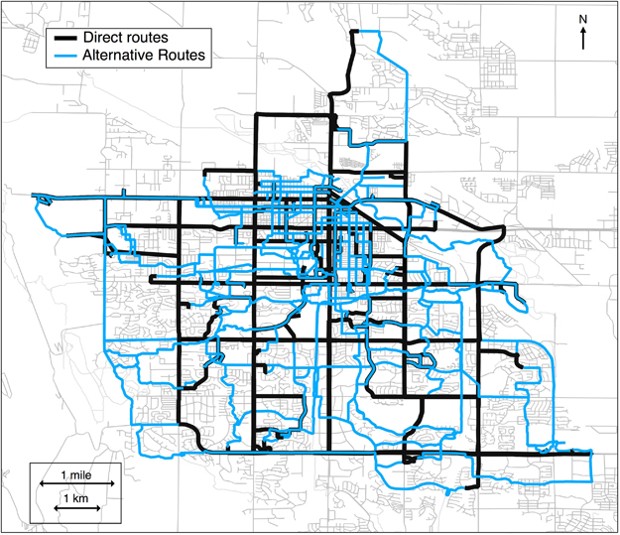
Researchers at Colorado State University followed 45 bicycle and car commuters in Fort Collins and measured their exposure to multiple hazardous air pollutants: black carbon, carbon monoxide, and particulate matter. Compared to drivers, cyclists tended to have higher mean exposure to particulate matter but lower mean exposure to carbon monoxide. They were also able to reduce their mean exposure to black carbon and carbon monoxide by using alternate routes (pictured in the figure below).
However, an important distinction emerged between mean exposure and cumulative exposure, which takes the duration of the commute into account:
Longer commute times, regardless of route type, tend to increase cumulative exposures; this difference was especially evident for cycling. Even though cyclists’ mean particulate exposures were reduced on alternative routes, the longer duration of these routes increased cyclist’s cumulative exposures relative to driving.
In other words, simply avoiding routes with high vehicle traffic wasn’t enough to eliminate cyclists’ exposure to air pollution. Since these alternate routes took longer to bike, the increase in cumulative exposure offset some of the reduction in mean exposure. Bikers also breathe heavier and faster than other commuters, which “probably results in at least a doubling of their estimated inhaled exposure relative to driving,” according to the authors.
Even so, you shouldn’t ditch the bike. “The benefit of increased exercise is likely to outweigh the risks because of increased air pollution intake,” the authors write. But their findings do reveal an “important uncertainty” in the net health impacts of cycling versus driving—one that planners should consider at the infrastructural level.
Although Fort Collins is an exceedingly bike-friendly city, its cycling infrastructure consists mostly of on-road bike lanes—meaning cyclists are still exposed to a lot of car traffic even when they take alternative routes instead of main roads. The researchers suggest that cities could achieve larger reductions in pollution exposure by building greater separation between cyclists and drivers—for example, with off-road, multi-use bike paths. Far from negating the benefits of cycling, the Fort Collins study argues that more—and smarter—cycling infrastructure is needed.
The first memory I have of watching a movie is with my dad. I was around four years old, and one afternoon he fired up our bulky, '80s-style front-projection TV and the Betamax, and popped in Star Wars. Of course, it was *amazing*, and I've watched the original trilogy a dozen times since.
It probably isn't a surprise that there are tons of Star Wars fans like me here at Google. You can regularly spot Darth Vaders, dogs dressed like Yoda, and even the occasional stormtrooper, roaming the halls of our data centers (probably still looking for those droids). So when we first heard about Episode VII, we started thinking about what a Google tribute to these epic stories might look like: “Wouldn't it be cool if there was some sort of Star Wars thingy in Search? The Millennium Falcon in Cardboard would be sweet! What if Google Translate could decipher galactic languages?"... and on, and on, and on. As this list of ideas grew, so too did the band of passionate engineers and product folks who wanted to build them.
We reached out to our friends at Lucasfilm and Disney, and since then we’ve been working together on building google.com/starwars. It's a place for fans, by fans, and starting today you can choose the light or the dark side, and then watch your favorite Google apps like Gmail, Google Maps, YouTube, Chrome and many more transform to reflect your path. And that's just the beginning. We've got more coming between now and opening night—the Millennium Falcon in all its (virtual reality) glory included, so stay tuned. And we've hidden a few easter eggs, too. So awaken the Force within, and be on the lookout for things from a long time ago in a galaxy far, far away…
See you in line at the theater in December. I'll be there with my dad.
At this point, we all know that the DMCA is a tool that is widely abused for censorship purposes. We have written post upon post upon post upon post upon post upon post upon post upon post upon post upon post upon post upon post upon post upon post upon post upon post detailing this (and those were just from the first page of my search results).
Most people, once aware of this, would recognize that perhaps there's a problem with the DMCA and that it should be fixed. However, some people seem to look at that and say "hey, that's an awesome censorship tool, perhaps we should expand it to other content I don't like." That's why we see people talk about expanding it to cover revenge porn or mean people online.
Or, apparently, terrorism. Yes, terrorism. Paul Rosenzweig, who (believe it or not) really once was a high ranking official in the Department of Homeland Security thinks one way to fight ISIS is to seize their copyrights and then use the DMCA to censor them. He's not joking. Or, at least I think he's not. There's a small chance that it's really a parody, but Rosenzweig has a history of truly nutty ideas behind him, so I'm pretty sure he's serious.
That model might, with a small legislative change, be adapted to the removal of ISIS terrorist speech. All that would be required was a modification of the law to assign the copyright in all terrorist speech to a non-terrorist organization with an interest in monitoring and removing terrorist content. Here are the essential components of such a plan:
Identification of terrorist organizations to whom the law would apply;
A definition of unprotected content associated with that terrorist organization;
An extinguishing of copyright in such unprotected content; and
Transfer of that copyright to a third party.
I love that "all that would be required" because what he's really saying is that "all that would be required" is we upend basically all concepts regarding free speech and copyright just to silence some people I really don't like. No biggie.
At this point, you should probably already be banging your head on a nearby hard surface, but it gets worse. He actually then worries about how much work it would be for the government to take all these copyrights and issue all those darn takedowns, so instead he suggests handing the copyrights to a third party, which he suggests could be set up similarly to the Red Cross (?!?) and saddling them with the task of issuing takedowns. Perhaps we can name them the Silencing Cross or something along those lines.
He insists that the First Amendment isn't really a problem here because terrorist speech can be seen as "material support" of terrorism and the Supreme Court has already wiped that away.
The most salient case on point is Holder v. Humanitarian Law Project, 561 U.S. 1 (2010), a Supreme Court case that construed the USA PATRIOT Act's prohibition on providing “material support” to foreign terrorist organizations (18 U.S.C. § 2339B). The case is one of the very rare instances of First Amendment jurisprudence in which a restriction on political speech has been approved, and the only one of recent vintage.
The Humanitarian Law Project (“HLP”) had sought to provide assistance to the Kurdistan Workers’ Party in Turkey and Sri Lanka's Liberation Tigers of Tamil Eelam. According to HLP, their goal was to teach these two violent organizations how to peacefully resolve conflicts. Congress had, previously, prohibited all material aid to designated organizations that involved “training”, “expert advice or assistance,” “service,” and “personnel.” HLP argued that its assistance was protected political speech. The government countered with the argument that a categorical prohibition on speech in the form of assistance was required because even non-terrorist assistance would "legitimate" the terrorist organization, and free up its resources for terrorist activities. The Court approved the limitation on speech because it was narrowly drawn to cover only “speech to, under the direction of, or in coordination with foreign groups that the speaker knows to be terrorist organizations” and served a national interest of the highest order – combatting terrorism.
It would follow, in the wake of Humanitarian Law Project, that just as speech “to” or “under the direction of” or “in coordination” with a foreign terrorist organization may be limited, so too may the content actually published “by” the terrorist organization.
I'm not so sure that First Amendment scholars would agree with him that the shift from speech "to" to speech "by" is that simple, but that's really besides the point.
Let's go back to basics here. Congress only has limited power over creating copyright law. Here it is:
To promote the Progress of Science and useful Arts, by securing for limited Times to Authors and Inventors the exclusive Right to their respective Writings and Discoveries.
I've read that a few times now and I really am struggling to find the part that says "and to censor terrorists."
I mean, I guess the single redeeming idea in Rosenzweig's proposal here is that it's a pretty blatant admission that copyright law is about censorship much of the time. The ISIS-insanity-freakout among political types is really kinda crazy to watch in action. First they wanted to use net neutrality to censor ISIS and now they want to use copyright law? What will they think of next? Defamation law is always popular. Perhaps we can amend Section 230 to silence terrorists. Or, I know, why don't we use the ITC. Or trade agreements. Oh wait, that's basically the MPAA's playbook to censor speech... and now surveillance state apologists can make use of it too!
Meanwhile, hey, maybe instead of trying to censor the folks at ISIS, you watch what they're saying and use that for surveillance purposes. I know, I know, crazy thought. But at the very same time we're having this debate, these very same people are arguing that we need less encryption so law enforcement and the intelligence community can see what ISIS is saying. Yet here's a way to see what they're saying and the focus is on "how do we silence such speech and make it harder to track!"
But, really, Paul, congrats -- we thought we'd heard the dumbest idea in a long time with Joe Barton's "use net neutrality to censor ISIS," but you've topped it. This is the dumbest idea we've heard in a long, long time.
Denmark loves bike lanes so much, they’re building one on top of a skyscraper.
Copenhagen Gate is a spectacular plan to link disparate parts of the Danish capital’s regenerating harbor, using a suspension bridge designed especially for cyclists and pedestrians. It’s the bridge’s supports that make it groundbreaking. The span will hang between a pair of mixed residential and office towers located on opposite piers at the harbor mouth.
Designed along with the towers by American architect Steven Holl, the bridge will cross between the towers not at water level, but at a height of 65 meters (213 feet). This elevation will provide spectacular views of the city and create a new visual gateway to Copenhagen for passengers arriving at the city’s cruise ship terminal. After winning a competition 2008, Holl’s twin towers and bridge are finally due to start construction in 2016.
When finished, Copenhagen Gate should easily be the most spectacular piece of cycling infrastructure in the world. But could it also be the silliest?
To use the bridge, cyclists will need to pack their bikes into elevators on either side. That’s surely going to be a time-consuming, unwieldy process that, after the initial wow factor is over, might encourage riders just to pedal round the harbor at ground level. And even when the harbor is fully rebuilt, this peripheral site in its northern section will never be one of the most vital links in the city.
There is nonetheless a practical underpinning to the bridge plan. Copenhagen laws require new housing to be within 500 meters of a transit stop. The pier where the southern tower is located lies beyond this limit. Spanning the harbor basin will bring residents of the new tower closer to bus stops and to the upcoming new Nordhavn metro station. The plan thus frees up the area for residential development.
As for the unusual height, a standard bridge at water level wouldn’t work, because this port is still an active one for cruise ships. The sky lane plan connects the harbor’s two fingers of quayside without blocking the port’s mouth to tall liners.
These arguments make sense, but they also sidestep an obvious question: If the city wants the quayside to be accessible to public transit, would it not be far simpler to just put in a bus line? Creating a new route, or diverting an existing one, would be infinitely cheaper, and the city would no doubt do so eagerly if it freed up extra space for badly needed housing.
Seen this light, the bridge looks less like a valuable infrastructure addition and more like a tourist attraction and visual branding exercise dolled up in infrastructural drag. With their pragmatic emphasis, the Danes normally steer clear of this sort of thing; the charm of the city’s Cycle Snake is that it’s both spectacular and very useful. That said, there’s no denying the impressiveness of the design. When Copenhagen Gate is finished, cycling up in the sky looking across roofs and endless open water—as far as Sweden on clear days—is surely going to be quite a ride.
Anyone who has ever looked for a job knows that sometimes connections can trump qualifications. That’s why networking—despite its awkwardness— has become such a highly touted skill. Knowing someone who knows someone could mean finding out about a job before it’s publicly posted, or better yet, finding someone who can put in a good word or review an application himself. Many people hate this, because it is perceived to be unfair. But do these personal and subjective assessments ultimately result in better hiring?
A new paper from the National Bureau of Economic Research says quite the opposite: Relying on a “feel” for a candidate—as opposed to objective qualifications—makes managers’ hiring decisions worse.
The paper’s authors, Mitchell Hoffman of the University of Toronto, Lisa B. Kahn of Yale, and Danielle Li of Harvard, say that, at least in theory, there are two ways that managerial discretion could go. It could be better: These decision-makers are privy to better, more comprehensive information about job candidates than tests and resumes can provide, thus they wind up hiring people who stick around longer and perform at a higher level. Or, it could be worse, with managers instead injecting their own biases or irrational preference into the decision making processes, thus making worse decisions for their firms.
In order to figure out which scenario is more likely, the researchers introduced job testing to 15 firms who recruit for low-skilled service jobs, things like call-center and data-entry workers. The tests included not only questions about technical and cognitive skills, but also questions to assess personality and overall fit for the firm. The companies hired HR managers and gave them the test results (coded as green for best scores, yellow for moderate, and red for lowest) but also gave them the ability to factor in other qualities that they thought might make for good hires—essentially giving them the go ahead to pick candidates with lower scores if they thought that they’d in fact be good candidates. That’s when things went off the rails.
According to the study, when managers used their discretion to override the hiring order implied by the test results (by hiring an applicant who perhaps had a score in the yellow range, when one in the green range was available) the outcomes, of both tenure and productivity, were worse.
Relying on a “feel” for a candidate makes managers’ hiring decisions worse.
So does this research mean that hiring should be relegated to algorithms?
Implementing job tests resulted in new hires who stuck around 15 percent longer than those who weren’t tested, suggesting that tests help managers find candidates who are a better fit. But hiring at many levels is much more complicated than that, especially when considering the various ways to measure the success or worth of workers and firms.
Humans can certainly exert bias and illogical preferences, which can color hiring practices when managers use personal discretion to sift through applicants. A preference, or conversely, aversion to a particular school, gender, sexual orientation, race, or ethnicity—whether conscious or not—can become a huge problem. And there have been plenty of studies that show such biases can impact the way hiring decisions are made.
But on the other hand, relegating people—and the firms they work for—to data points focuses only on the success of firms in terms of productivity and tenure, and that might be a shallow way of interpreting what makes a company successful. Firms that are populated only by high-achieving test takers could run the risk of becoming full of people who are all the same—from similar schools, or with the same types of education, similar personality traits, or the same views. And that could potentially stall some of the hard work being done in the effort to introduce more diversity of every kind into companies all over the country. And that type of diversity, too, has been proven to be an increasingly important factor in overall firm performance.
For their part, the researchers realize that their findings shouldn’t result in all hires being solely based on test performance. Instead they suggest that if hiring managers are given only limited control over how frequently they choose to override test results in favor of other applicant characteristics, algorithms can help prevent bias. The real challenge, it seems, will be finding the right balance.
Each of his expansive land art pieces takes the English artist Simon Beck about 10 hours. “It started as a bit of fun, then it became a way of exercising,” Beck says of the works he carefully pounds into snow with the power of his snowshoes. “[T]hen people started giving me gear, then offering money, so it gradually ‘snowballed.’”
(Simon Beck)
Beck’s Oxford training as an engineer has prepared him well for a career in creating mathematically meticulous art out of snow. The artist generally draws his intended designs on paper beforehand, “if only to make sure they end up in the middle of the space and don't go off the edge of the good part of the site.”
A party of cross-country skiers travel past one of Beck’s pieces. (Simon Beck)
“[Creating] straight lines and nice curves is a technique that has to be practiced,” he says.
(Simon Beck)
Beck travels about 25 miles on his snowshoes to complete a piece, circling again and again around his art site.
(Simon Beck)
Want to see one of Beck’s creations in the (very cold) flesh? Head to the French Alps, where he does most of his work. But there is good news for stateside readers: The artist sometimes labors in more western climes. The video below, by the photographer Leah Hennel, shows Beck at work at Banff National Park in Alberta, Canada.
Presidential candidate Hillary Clinton gave a speech yesterday all about the fight against ISIS in the wake of the Paris attacks. While most of the attention (quite reasonably so) on the speech was about her plan to deal with ISIS, as well as her comments on the ridiculous political hot potato of how to deal with Syrian refugees, she still used the opportunity to align herself with the idiotic side of the encryption debate, suggesting that Silicon Valley has to somehow "fix" the issue of law enforcement wanting to see everything. Here's what she said:
Another challenge is how to strike the right balance of protecting privacy and security. Encryption of mobile communications presents a particularly tough problem. We should take the concerns of law enforcement and counterterrorism professionals seriously. They have warned that impenetrable encryption may prevent them from accessing terrorist communications and preventing a future attack. On the other hand, we know there are legitimate concerns about government intrusion, network security, and creating new vulnerabilities that bad actors can and would exploit. So we need Silicon Valley not to view government as its adversary. We need to challenge our best minds in the private sector to work with our best minds in the public sector to develop solutions that will both keep us safe and protect our privacy.
Now is the time to solve this problem, not after the next attack.
It does not. Weakening encryption undermines both security and privacy. There's no "balance" to be had here. You want to maximize both security and privacy and the way you do that is with strong encryption.
Also, the bit about "Silicon Valley" has to "not view government as its adversary" is another bullshit line that has been favored by James Comey and others, who keep insisting that when technologists explain to him that backdooring encryption in a manner that only "the good guys" can use it is impossible that they really mean they haven't tried hard enough. Once again, that's not it. What pretty much the entire tech community has been saying is that it's impossible to create such a thing without undermining the whole thing and making everyone less safe. Hell, here's security expert Steve Bellovin explaining this pretty clearly. He goes step by step through why it won't work, why it makes things more dangerous, why it will be abused, and why it will put us all at risk.
And the reason that Silicon Valley views the government as adversaries is because speeches like Clinton's sets them up that way. Her speech, like Comeys' past speeches are directly setting up the government as an adversary to good computer security, asking technologists to undermine their own creations and make everyone less safe for some unclear amorphous belief that it might make a few people more safe at some point in the future. So, the answer isn't scolding Silicon Valley as Hillary has chosen to do, but rather understanding reality, and recognizing that what she is directly advocating for is to harm the safety of Americans and others around the globe.
This raise serious questions about who is advising Clinton on tech policy. When she was at the State Department, it actually did a lot of really good things on encryption and protecting communications of people around the globe. It's pretty ridiculous for Clinton to undermine her own efforts with such a dumb statement in this speech.
The TV is on in the background, and you’re replying to a quick email on your phone nearby. You don’t know it, but the devices are communicating. During a commercial, the TV emits an inaudible tone and your phone, which was listening for it, picks it up. Somewhere far away, a server makes a note: Both devices probably belong to you.
This information about which devices belong to whom is immensely valuable to advertisers hoping to target ads specifically to you. In a simpler time, targeted marketing was easy. Most people had a computer at work and maybe another at home. If you sent an email about your new cat, ads for cat food started cropping up. If you searched for Thanksgiving recipes, Safeway coupons for turkeys appeared in your Facebook newsfeed.
Those were good days for advertisers tracking Internet users. It wasn’t so hard to find what people were up to online, because most routinely used just one or two connected devices.
But now, between laptops, phones, tablets, wearables, and Internet-enabled cars and TVs, advertisers have access to more information than ever before for ad targeting. They just need to figure out which devices live under the same roof.
That’s harder than it sounds. Unless you’re logged into a service on all your devices—for example, by using Google’s various services everywhere—advertisers need to get creative to stitch together a portrait of you.
Verizon’s “supercookies”—a snippet of code injected into mobile users’ web requests—silently identify and track its customers, sharing the information with AOL’s wide-reaching ad network. Vizio Smart TVs tie customers’ viewing habits to a home Internet address and sell the information to advertisers. And both programs require customers, who are often unaware of the programs, to opt out of them if they don’t wish to be tracked.
Advertisers need to get creative to stitch together a portrait of you.
But a newer method of cross-device tracking wanders into the realm of science fiction. According to a filing from the Center from Democracy and Technology, a digital human rights and privacy advocacy organization, companies have figured out how to use inaudible sounds to establish links between devices.
Here’s how software from SilverPush, a leading provider of “audio beacons,” works: When you visit a website that uses SilverPush tracking technology, the site causes your device to emit an inaudible ultrasonic sound. If any other devices you’ve got lying around—a laptop, a phone, a tablet—has an app installed that includes SilverPush code, it’s listening for that sound. If it hears it, SilverPush knows that the two devices are close to one another and, presumably, belong to the same person.
More recently, SilverPush expanded into television advertising: Certain TV commercials include an ultrasonic audio beacon. Any nearby devices running SilverPush software will be listening for the beacon—if a device hears it, it records the match, allowing the company to figure out what ads users watch and for how long, and add that information to the user’s profile.
SilverPush product manager Piyush Bhatt says the audio tracking only operates in India, but the company, which is based near New Delhi, has established offices in San Francisco and the Philippines as well.
The creativity displayed by SilverPush and its peers has raised privacy concerns. The company’s audio-based tracking method is far more accurate than most ways advertising software quietly follow Internet users, because it takes the guesswork out of the device-matching process, says Joseph Lorenzo Hall, the chief technologist at the Center for Democracy and Technology.
The methods marketing companies use to discover links between users’ devices—whether it’s audio beacons or examining Internet traffic for markers that distinguish a certain user’s computer and browser—are often silent and secret by design.
The methods companies use to discover links between users’ devices are often silent and secret by design.
(Bhatt said that the smartphone apps that listen for SilverPush audio beacons present the user with a screen asking for detailed permission before using the device’s microphone for the first time.)
When it comes to audio beacons, Hall says he’s not just worried about marketing companies tracking average consumers—he thinks their techniques could be used by governments for surveillance. For example, if a group of dissidents in a country like China were to meet in secret, their phones might pick up a government-planted ultrasonic audio signal from a nearby TV. If hidden code on their phones relayed to the government that they all heard the tone, agents could easily tell that the dissidents were associated with one another, and meeting surreptitiously.
To address these privacy questions, SilverPush is in contact with the Center for Democracy and Technology, and Bhatt says his company is “actively engaging with all the stakeholders.”
“We are concerned about privacy and would not do something that intrudes ethical data practices,” Bhatt said.
Cross-device tracking has caught the eye of the Federal Trade Commission, which recently convened a workshop to discuss the technologies and associated risks. Hall said he hopes the FTC will issue guidelines for building transparency and control into cross-device tracking technologies. Next-generation tracking technologies like SilverPush, he says, should be required to meet a “higher bar” of warning users they’re being followed.
As new tracking technologies take hold, so too will technologies to block them. Experts are already hard at work searching for audio beacons and trying to identify their characteristics, laying the groundwork for ways to limit the reach of the ultrasonic signals that may one day populate our airwaves.
A concept for a climate label for gas-station pumps. (Our Horizon)
In the near future, motorists filling their tanks in North Vancouver might ask themselves not only “What is this costing me?” but also “What is this costing the planet?”
That’s because the Canadian city just passed a bylaw requiring stations to put climate-change “warning labels” on pumps, informing consumers about the hazards fossil fuels pose to world stability. CBC Newsreports:
North Vancouver, B.C. is believed to be the first city in the world to make climate change warning labels mandatory on gas pumps.
The city council passed the bylaw unanimously in a vote on Monday night….
North Vancouver Mayor Darrell Mussatto said the city hopes to implement the stickers by early next year and will make it mandatory for pumps to have them as part of a business licence.
“The message is that burning fossil fuels causes climate change and... to add a positive spin, here are some tips when using your automobile on how to make it more fuel efficient,” he said.
It’s unclear what the labels will look like. The city council is considering designs that “deliver key messages or ‘prompts’ as reminders of positive, can-do actions people can take to reduce GHG emissions.” These might be suggestions like buying an electric vehicle, trading in an old car for a $1,360 transit pass, and saving fuel by keeping tires properly inflated. There might also be facts about greenhouse gases, such as “Burning fossil fuel contributes to climate change” or “49% of GHG emissions in the City of North Vancouver are from transportation.”
The latter approach is closer to the vision of Robert Shirkey, whose environmental group Our Horizon pushed hard for the labels. Concepts drawn up by Our Horizon are a bit more in-your-face about drivers’ personal responsibility, proposing images like a sad, presumably unhealthy child:
Our Horizon
And imperiled northern animals:
Our Horizon
In a CityLab interview earlier this year, Shirkey explained he wanted these images to “prime” motorists into associating fuel with danger, in the same way a photo of diseased lungs on cigarette packs might make a smokers think twice about their habits:
“Research from the tobacco realm shows that labels with images have more of an impact than text-only labels,” says Robert Shirkey….
“The priming aspect is also useful in that it can help to shape how the product is perceived after the labels are implemented,” he says. “If fossil fuels are thought of in similar ways as we think of cigarettes, you’re creating a social environment that gives government much more space to address the issue.”
North Vancouver’s council—which voted unanimously for the bylaw—will now review designs for the first batch of labels, which are expected to cost around $2,260 (in U.S. dollars). The implementation of the program will no doubt be watched keenly by the gas industry as well as U.S. environmentalists, who have been pushing for a similar mandatory labels in San Francisco and Berkeley.


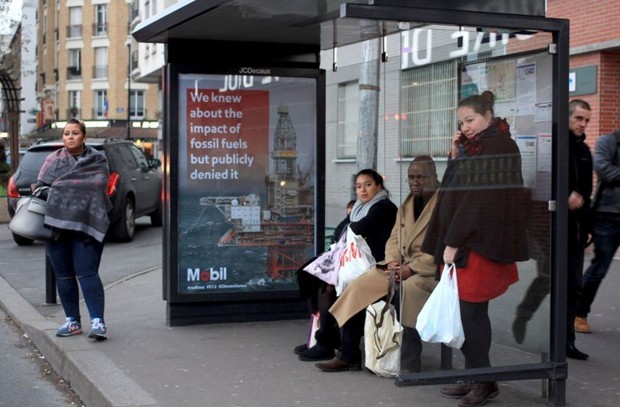
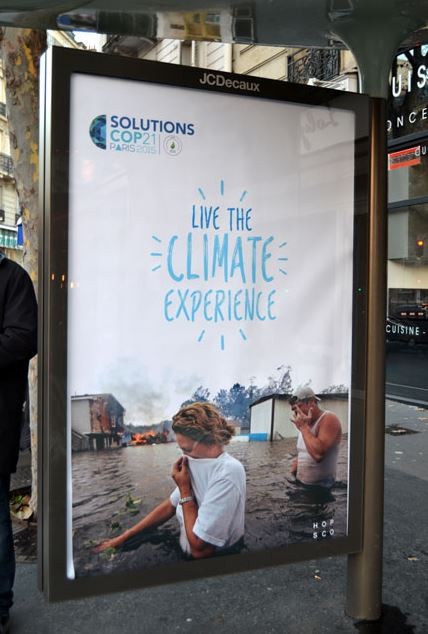


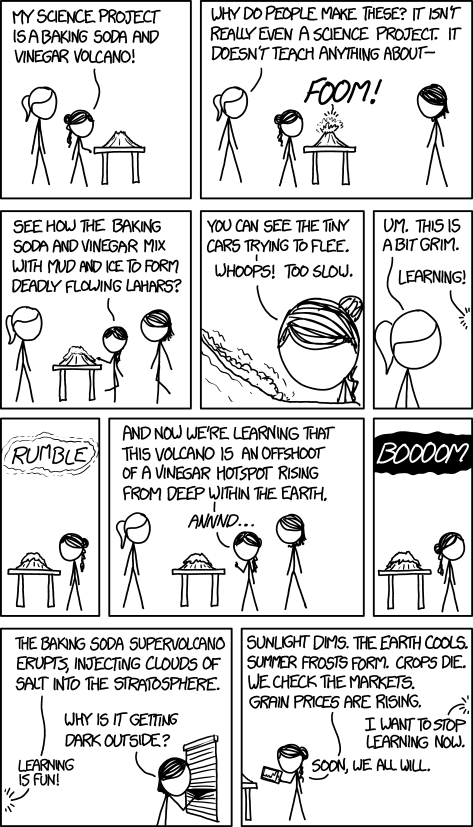






 Me and my students performing at a school assembly on November 10, 2015






![[brief pic description]](http://static02.mediaite.com/themarysue/uploads/2015/11/the-10-best-pointy-haired-boss-moments-from-dilbert.jpg)