Shared posts

02 Mar 12:44

New Vaccine Developed By Massachusetts’ Doctor to Prevent Lyme Disease In Humans

by Tom Keer
Clinical trials on a new Lyme Disease prevention vaccine have begun.
Clinical trials on a new Lyme Disease prevention vaccine have begun. (Nicoooografie/)

A Massachusetts doctor may have discovered a shot that will prevent Lyme disease in humans. The drug received federal approval from the Food and Drug Administration to be tested on people at the end of 2020. The Phase 1 clinical trial on 66 human subjects began last week. If effective, the shot will be available in the Spring of 2023.

Read Next: New Shot Prevents Lyme Disease In Mice

Dr. Mark Klempner of Massachusetts Biologics at the UMASS Medical School has been working on a cure for Lyme disease for a decade. With tick-related illnesses increasing in the eastern half of the country and on the rise in the Midwest, the state of Massachusetts invested $1 million in Klempner’s research. The doctor created a ‘pre-exposure prophylaxis’ (PrEP) that delivers anti-Lyme antibodies directly to a patient. PrEPs are unlike vaccines, which trigger the patient’s immune system to produce antibodies. Instead, PrEPs supply antibodies directly. The shot would kill the bacteria from a tick bite before a person would be infected. Patients would need to be inoculated every year as the shot’s effectiveness would last for nine months.

Lincoln, Nebraska, was selected as the test site. Lyme disease is relatively uncommon in that state, which means that scientists can more easily prove that the Lyme bacteria was introduced in the lab as opposed to being contracted by a previous infection. The initial testing likely will extend through an entire tick season, or through the end of the year.

Read Next: Lyme Disease Facts

The withdrawal of a Lyme vaccine that once was publicly available fast-tracked the study. Klempner says “Since we understood the mechanism of protection there, we were able to go right after the molecule that we thought would be productive. The clinical trial is finally here, we started it, and it’s a novel way to approach prevention of Lyme Disease, and we’re highly hopeful it will be safe and effective.”

The Center for Disease Control estimates that Lyme disease may infect nearly a half-million Americans each year.

01 Mar 23:29

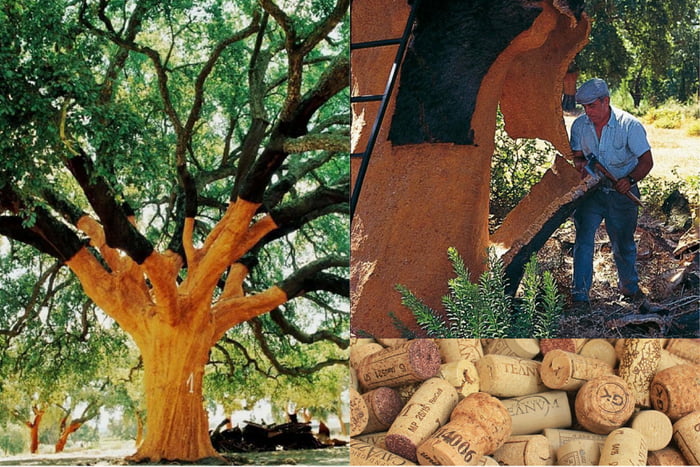
This 230 year old Cork Oak tree is Portugal’s most prized tree and the most productive one on record. Ever since 1820, it’s harvested every 9 years for wine cork bottles. Stripping the bark doesn’t damage the tree as it regenerates naturally, sequestering more CO2 in the process.


Tags: Tree

675 points, 35 comments.

01 Mar 23:26

Inside the Gently Competitive World of Giant Vegetable Growing

by Luke Fater

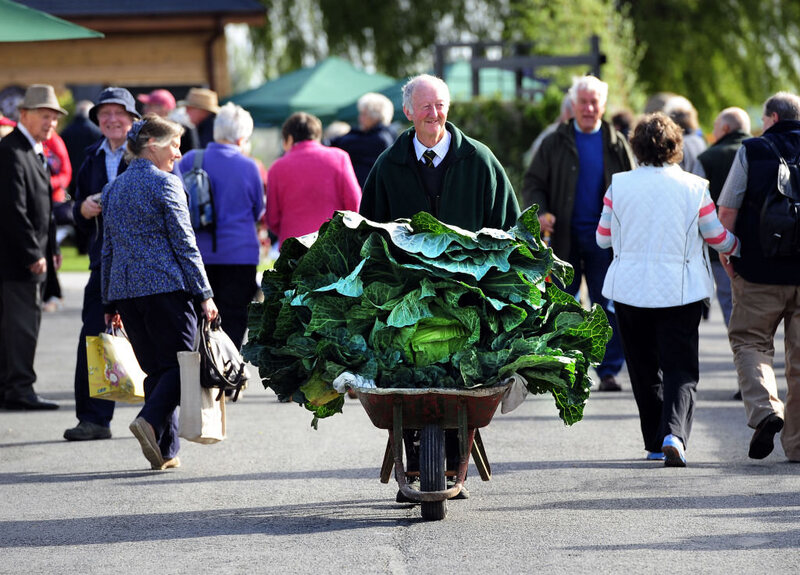
For Peter Glazebrook, there was one bright spot to 2020. A leek he entered into last year’s Mansfield Grow Show, which judges declared to be a monstrous four feet long, won him a new world record. “That makes 16 world records I’ve held over the years,” Glazebrook wrote to me recently, via email. “However, it’s a competitive hobby, so I currently only hold three.” Today, he is the proud grower of the world’s heaviest cauliflower (60 pounds), potato (10 pounds), and, as of 2020, the longest leek.

Glazebrook, a lithe, 76-year-old former building surveyor from Nottinghamshire, England, is one of the most decorated competitors in the world when it comes to the uniquely British sport of growing giant vegetables. For years, he has dominated a competition that’s grown from a Welsh bar bet into a massive online community of giant vegetable enthusiasts with participants on every continent. “It’s expanded beyond all recognition,” says Kevin Fortey, the unofficial spokesperson for the ‘giant veg’ community. But if 30-foot-long beets, 10-pound tomatoes, or one-ton pumpkins sound like a waste of food and time, government researchers around the world are now taking a serious look at leviathan produce.

Both a friend and rival of Glazebrook’s, Fortey is the unofficial spokesperson of the giant veg movement. In fact, the 42-year-old programmer from Cwmbran was there when modern competitive vegetable growing was launched in a south Wales pub in 1980—by his own father. “It was just a bit of banter over a pint, really,” says Fortey, “over who could grow the biggest pumpkin.” His father, Mike Fortey, helped turn the informal challenge among local pub-goers into an annual event.

article-image

Yet both the event and the vegetables quickly outgrew the venue. “By the mid-80’s, the pumpkins grew so big they couldn’t get them through the pub doors,” Fortey says. Soon, the competitors were no longer just pub regulars, either. “People were coming from all over Wales, then all over England for this contest,” says Fortey. At about the same time, Peter Glazebrook began dabbling in giant vegetables.

The son of commercial farmers, Glazebrook says growing vegetables is in his blood. As the contests spread across the United Kingdom, his cousin noticed that the vegetables Glazebrook was growing at home were nearly competition-sized already. “He said I should try and beat the local show winner,” says Glazebrook. He won the local cup that year and the two years following, before moving onto larger shows. “My vegetables always grew larger than most,” he notes. As for how he's accomplished so much in the giant vegetable realm, "I do not keep any secrets," Glazebrook states. He's always given hopefuls the standard gardening advice: choose the right seeds, give the plants a long growing season, log their progress, and look after them.

His retirement in 2006 means the 76-year old only has more time—and experience—to focus on his giants. However, a broadening field of growers means he’s facing some fierce competition.

If Fortey is the unofficial spokesperson for the UK’s giant veg community, he’s also a deft recruiter for the UK Giant Vegetable Championship. “I’ve basically grown the show from like five exhibitors to over 100 within the space of five years,” he says. He also created the Facebook group Giant Vegetable Community to get more people involved in growing vegetables by answering questions and exchanging growing tips. “Not everyone can get on in the world, but it’s a happy environment we’ve created,” he says.

article-image

Of course, the expanding community of informed growers does make record-holding a tougher game for Fortey and Glazebrook alike. “The competition has become greater with more competitors,” writes Glazebrook. “Giant veg growers used to be more middle-aged and would only meet up at shows or seminars, but Facebook has encouraged a younger age group, which is good.” To level the playing field further, the landscape of seed distribution has changed dramatically in recent years as well, according to Fortey. “Everybody now has pretty much the same seed,” he says.

Glazebrook has even made a habit of sharing seeds among close friends and competitors. “I’ve taken the view that if anyone can put in more time, knowledge, and effort than me, they deserve to win.” Of course, this generosity has sometimes backfired. “I lost my onion record to my own seed,” he writes, explaining that his former record for the world’s largest onion was broken by another gardener using seeds Glazebrook had bred. But, as Fortey points out, “records are there to be broken.” It softens the blow a bit that the cash prizes at national competitions rarely top £50 anyway. Ultimately, Glazebrook is either too sage or too seasoned to lose sleep over the loss of a world record or two. “You need a good challenge to start again each year,” he says.

The greatest issue in the country’s giant vegetable-growing community is simply getting monster produce to the competitions in one piece. “Carrots, parsnips, runner beans, they’re all quite delicate,” says Fortey. Lest they over-ripen, softer produce such as tomatoes, melons, and cucumbers are refrigerated in their final days before showing. “A light rain can split a [zucchini], so you’re really battling with the elements,” says Fortey.

Once in show, victory can be determined by a matter of ounces. “I once won heaviest onion at [a show] by one ounce,” writes Glazebrook. “I’ve also lost competitions by a similar amount.” Fortey has won a zucchini contest by only several ounces once as well. At another competition, he arrived late while the press was interviewing the presumed winner of the prize for heaviest chili. “Then we came in with a chili that was only 90 grams more,” says Fortey. “He wasn’t very happy.”

article-image

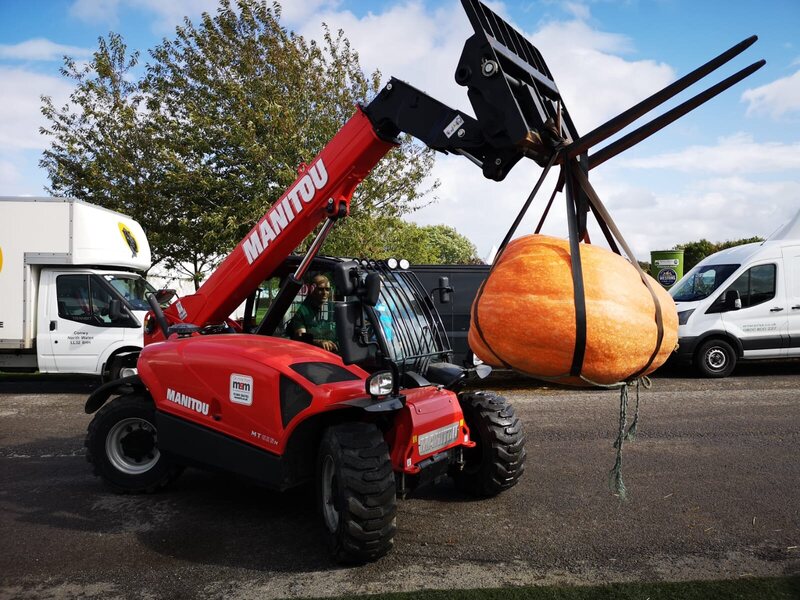
But after achieving vegetable victory, what can a gardener do with a person-sized zucchini or a pumpkin that weighs as much as a 2015 MINI Cooper? One common misperception is that, since they’re grown for size and not consumption, giants are virtually inedible, good for little more than cow-feed or compost. While Fortey admits some big veggies can get a bit woody, he’s determined to disprove the notion that giants can’t also taste great. One Christmas, he and his sons turned giant competition beetroots into a beet and chili sauce, and a giant zucchini into a thousand jars of chutney, which they distributed throughout the community. Glazebrook often eats his own massive produce, especially enjoying outsized beans and tomatoes in the summer.

The unexpected edibility of these outrageously large vegetables is perhaps what’s caught the eye of government entities, far outside the orbit of the competitive growing world. Some of Fortey’s seeds were requested by the Australian Antarctic Division, who are currently planting giant cucumber seeds in a shipping container in the Antarctic. “No real feedback yet,” says Fortey. He’s also consulting with a university in Spain, regarding a research project funded by the Basque government on giant beets. “I can’t release what it is in specific detail,” says Fortey, “but it’s around gastronomy and will end the myth about woody vegetables.” While not a government entity, Snoop Dogg also once approached Fortey for advice. “I do vegetation myself,” Snoop told the BBC.

As for Glazebrook, the giant among giants is getting to spend more time than usual with his vegetables, due to the pandemic. At the moment, he’s tinkering with the timing of his repotting system. “Every year you learn new ways of growing,” he states. With in-person exhibitions on hold, Glazebrook hopes to soon reclaim the world records for heaviest onion and carrot once competition resumes. “Winning at the top level,” he writes, “gives me immense satisfaction.”

01 Mar 15:18

The All-American Arms Dealer

by Mark Hemingway
culture1-march-2021

There are more than a few antique shops in historic Old Town Alexandria, Virginia, a short walk from my suburban neighborhood. Antiquing is normally of interest only if my mother-in-law is visiting, but some years back a friend messaged me to let me know one of the shops had something I should see. On the back wall, shunted behind a variety of well-preserved 19th century furniture, were two large Soviet propaganda paintings.

The first was a portrait of three strapping Russian sailors, wearing bandoleers across their chests, in front of the Aurora—the infamous ship that fired the first shot on the Winter Palace in St. Petersburg, launching the Russian Revolution. The second painting, of soldiers smoking in a field in Afghanistan, was less dramatic but a better and more impressionistic piece of art. Both paintings were done by well-known graduates of the Kharkov Art Institute and were fine examples of Soviet socialist realism—insofar as one can take any art movement that began under Stalin seriously. I inquired about the paintings, and all the clerk was able to tell me was that they originally came from the estate of a man named Samuel Cummings.

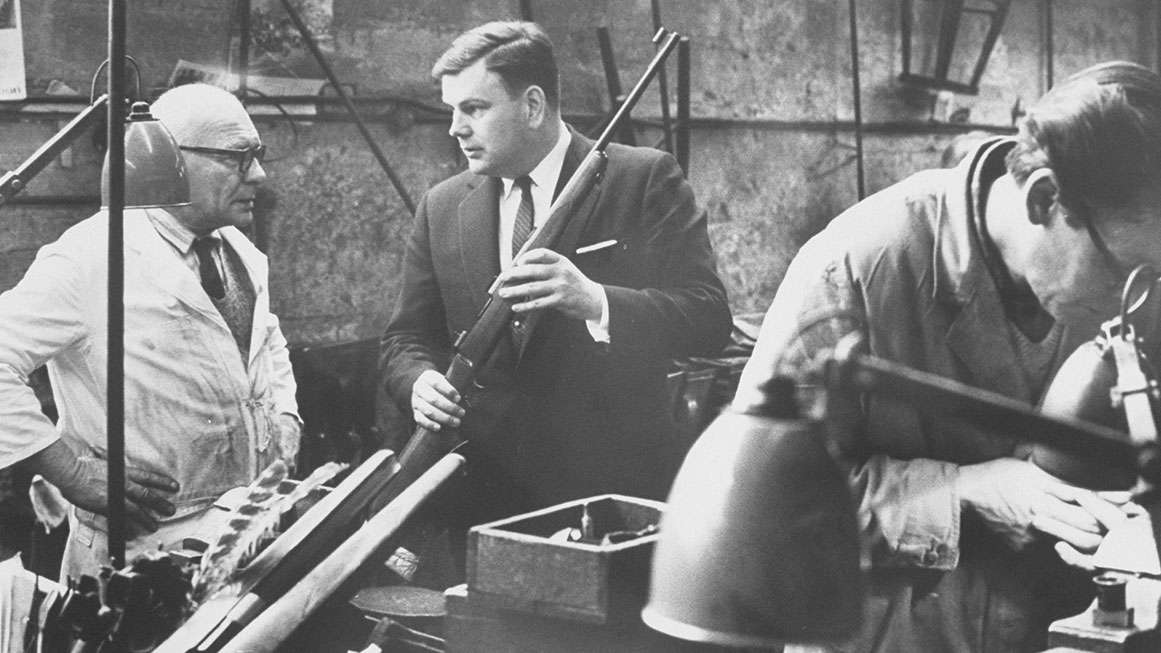
If you know anything about Samuel Cummings, you may suspect the two Soviet paintings were some of his more prosaic possessions. When the billionaire died in 1998, he owned, among many other things, the sword Napoleon carried at Waterloo. For years, he tried to open a museum in Alexandria to exhibit his collection of exotic and historic weaponry, though that never came to fruition.

As interesting as that sounds, Cummings' collection is in some respects less interesting than the manner in which he acquired it. For nearly 50 years, he was the largest arms dealer in the world.

In recent years, the waterfront in Old Town Alexandria along the Potomac River has been redeveloped. Some of the land was seized by eminent domain, the area turned into parks and boardwalks and otherwise made an inviting spot for tourists looking to schlep around the same streets once haunted by George Washington. But when I moved to the area a decade ago, there was also a small wooden building on the water where you could still make out a sign that said Interarms—the name of Cummings' company. The building is now gone, and it's hard to imagine that, through the 1980s, the same waterfront now littered with restaurants and boutiques was an industrial port where Cummings owned a series of converted tobacco warehouses stacked to the rafters with guns.

"At one point, we had 700,000 rifles, machine guns, pistols and submachine guns stored in our warehouses in Alexandria," Cummings told The Washington Post in 1986. "We could have instantly overwhelmed the American armed forces. We could have armed 700,000 mercenaries that could have goose-stepped right over the [Arlington] Memorial Bridge….We also had 150 pieces of artillery, ranging from 25 mm to 150 mm….So, if I didn't like a particular piece of legislation in the Congress, I could have phoned up the speaker and I could have said, 'My armies will be rolling over to the Capitol, if you don't do something about that.'"

Fortunately, Cummings was clearly joking. Well aware that such quotes were catnip to reporters, he was famously candid with the press, a remarkable trait for an arms dealer.

By the 1980s, the intrigue surrounding the Cold War's many proxy conflicts had made arms dealers figures of notable interest even in popular culture: The 1983 Chevy Chase comedy Deal of the Century was a satirical take on the arms trade, and the band Queen even wrote a song, "Khashoggi's Ship," about partying on the yacht of notorious Saudi Arabian arms dealer Adnan Khashoggi. (Washington Post columnist Jamal Khashoggi, notoriously dismembered in a Saudi consulate in Turkey in 2018, was Adnan's nephew.)

But among arms dealers, no one was more intriguing than the straight-talking former CIA employee Cummings, who was born in Philadelphia and raised in D.C. but died a British citizen living in Monte Carlo.
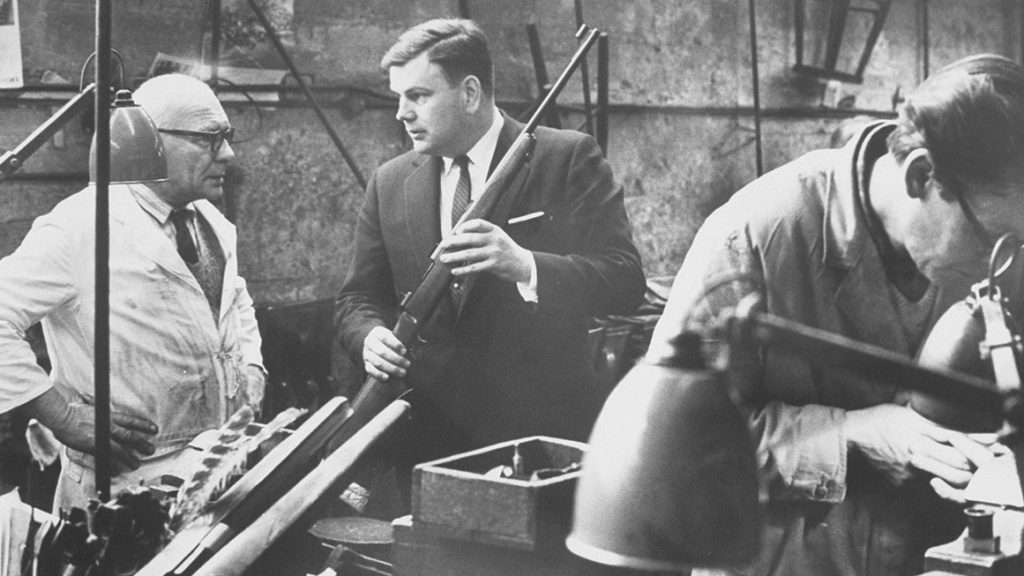
An Education in Arms

Cummings was born in Philadelphia in 1927 to parents so wealthy they had never worked. Soon thereafter they lost everything in the Great Depression. His father died when Cummings was 8 from the stress of having to do actual labor for the first time in his life.

When Cummings was 5, he found a World War I German machine gun abandoned outside an American Legion post. An adult helped him carry the 40-pound weapon back to his house, where the boy learned to take it apart and reassemble it, sparking a lifelong fascination with guns.

After Cummings' father died, his enterprising mother found a way to make one of her primary skills as a rich woman—good taste—profitable. She convinced a local bank to let her move into a repossessed house and renovate it in exchange for a share of the sale profits. Cummings' mother proved quite adept at flipping houses this way. It eventually brought the family to D.C., where the housing market during the Depression was stronger. This unusual occupation necessitated moving the family every six months or so into a new home, but Cummings' mother was thrifty enough to put her children through some of D.C.'s better private schools.

Cummings enlisted immediately after high school, just as World War II was ending. As a teenager, he headed off to Fort Lee for basic training with his burgeoning collection of 50 guns packed into the trunk of his car. Cummings excelled in his cadet program in high school, and when he got to the Army he was so familiar with weapons and drills he was immediately made an acting corporal. He spent his hitch instructing other recruits on close-order drills and weapons handling. His 18-month service was uneventful—he never left Virginia—and in 1947 he enrolled in George Washington University on the GI Bill, earning a degree in political science and economics in just two years. While in school, Cummings pursued his hobby and supplemented his income by buying and selling guns. He even made a tidy profit after uncovering a cache of German World War II helmets in a Virginia scrapyard.

It was his time out of school during this period that proved to be the most fateful, however. Cummings headed off to Oxford for a term abroad during summer 1948. While in England, he and two friends pooled their money to buy the cheapest car they could find and toured the continent. For a young man obsessed with the military, the trip was a revelation.

Even though it had been over for years, the scale of World War II was so enormous that everywhere they went, the young men were surrounded by abandoned military equipment and fortifications. Cummings and his friends slept in bunkers, poked into arms caches, and drove around with a machine gun strapped to the roof of their car for fun. Anyone with a can of gasoline and a new battery could have driven away in one of the many vehicles abandoned on the side of the road. In the Falaise Pocket in France, six divisions of German soldiers had abandoned all of their supplies and equipment near the end of the war, never to return. European governments had resorted to gathering up mass quantities of leftover materiel and dumping it in the sea to get rid of it.

In Deadly Business: Sam Cummings, Interarms, and the Arms Trade, a 1983 biography by journalists Patrick Brogan and Albert Zarca that's long been out of print, Cummings recounts that the trip made an indelible impression. "The roads of rural England were lined with open-ended containers filled with ammunition," he said. "I couldn't get over it because they were standard-caliber small arms as well as artillery, and typical of law-abiding England, no one ever bothered with the stuff. To me it was astonishing."

After getting his undergraduate degree, Cummings' interest in guns was so consuming that he applied for jobs at the FBI, CIA, and National Rifle Association (NRA), thinking one of them might have use for a small arms expert. They all turned him down, at least initially. Cummings was working his way through law school when the CIA came calling. By then the Korean War was underway, and the agency was looking for people who could help identify the provenance of more exotic weapons that were turning up in the conflict. Cummings' old résumé was pulled out of the pile.

Unsurprisingly, Cummings proved particularly good at the work. He spent much of his time utilizing the CIA archives to enhance his already prodigious knowledge of weaponry.

Then one day a CIA report came across his desk, prepared in collaboration with U.S. military attachés in Europe, inquiring as to whether large quantities of German weapons still remained on the continent. The report concluded there was nothing noteworthy left. Cummings possessed considerable firsthand knowledge that the report was flat wrong, and he dashed off a memo saying so.

What Cummings didn't know was that the CIA had a specific reason for inquiring about surplus German arms. The agency was contemplating arming Chiang Kai-shek in Taiwan to launch a new invasion of mainland China, in the hopes that such an invasion would distract the Chinese military and alleviate some of the pressure in the Korean conflict. In order for the plan to work, however, the CIA needed a supply of arms that couldn't be readily traced back to the U.S.

Cummings soon found himself summoned to a personal meeting with the then–deputy director of the CIA, Allen Dulles. The legendary spymaster quickly sized up the young Cummings as being more capable than many of his more experienced superiors, and soon Cummings was off on a clandestine mission for the ages: Dulles sent him to Europe with an unlimited budget to buy as many surplus World War II arms as he could obtain. Along for the ride was another man, Leo Lippe, a director of photography from Hollywood. Their cover story was that they were buying props for the steady stream of war films that American studios were pumping out. The two men spent months traveling to Europe's most exotic locales, doing deals with heads of state and top military leaders.

Though the plan to arm Chiang Kai-shek was never put in motion, the trip was a smashing success, with Lippe and Cummings uncovering and obtaining massive stashes of arms from Scandinavia to Italy, some of which were completely unused.

Cummings returned to the U.S. in 1952, and the agency soon dispatched him on another mission. Costa Rica was disposing of 10,000 guns and in excess of a million rounds of ammunition. Given the volatile politics of Central America, the agency didn't want the weapons to fall into the wrong hands. Cummings arranged for the munitions to be sold to Western Arms, a California-based company.

The CIA offered Cummings a permanent position. He declined. His two missions weren't just successful for the CIA—they proved to be excellent on-the-job training in dealing arms.

The Founding of Interarms

In February 1953, when he was just 26 years old, Cummings founded the International Armament Corporation. Interarms, as it later came to be known, started with no tangible assets. Cummings worked out of his modest house in Georgetown, and the company address was a P.O. box. He did, however, have a valuable list of contacts. Cummings composed a letter announcing he was interested in purchasing arms and fired it off to dozens of heads of state and military officials.

The first few months were disconcertingly quiet, until a letter from a colonel in the national guard of Panama arrived. The country had a relatively small weapons surplus it was looking to get rid of. Cummings flew down to inspect the lot—a mix of small arms, machine guns, and mortars—and offered $25,000 on the spot, provided Panama wouldn't expect payment until the arms arrived in the United States. Cummings quickly brokered a deal with Western Arms, whom he'd worked with in Costa Rica, to purchase the Panamanian shipment from him. He made $20,000 on the deal even after the considerable shipping costs.

That provided enough seed capital to cover travel expenses, and Cummings was off to the races. Like a lot of wildly successful ventures, the growth of Interarms was about 50 percent luck and 50 percent grit. Cummings traveled so much for the rest of the decade that he calculated he'd spent six months' worth of hours on planes. His constant absence cost him his first marriage. But his hard work, confident salesmanship, and unusual combination of discretion and blunt honesty ensured that deals started falling into his lap. Soon he had full warehouses of arms in Brooklyn and Alexandria. Many of his most notable successes involved profiting off the chaos created by energetic U.S. efforts to destabilize unfriendly governments in Latin America. Cummings soon became a Cold War Zelig—but where other historical figures got caught in the crossfire, Cummings was the crossfire.

The Panamanians referred Cummings back to Costa Rica, where he did more arms deals. The Costa Ricans, in turn, referred him to neighboring Nicaragua. In 1955, Nicaragua's U.S.-backed, right-wing Somoza government invaded Costa Rica. Cummings had armed both sides of the conflict.

Cummings' success was also a result of his brazen willingness to put profits over taking sides. When Cuban President Fulgencio Batista fled the country in late 1958, a shipment of AR-10 rifles the leader had ordered from Cummings was already en route to the island. Rather than chalk up a loss, Cummings dashed down to Cuba to demonstrate the rifles in person for Fidel Castro, the newly installed head of state, and his right-hand man Che Guevara. Castro gladly paid for the guns meant for Batista. This deal went sideways six months later, in 1959, when Cummings was again in the Caribbean visiting with one of his biggest customers, Dominican dictator Rafael Trujillo. Castro chose that moment to launch his first of many foreign escapades by sending a ragtag group of soldiers to invade the beaches of Hispaniola in an effort, presumably, to foment socialist revolution.

The assault was abruptly stymied, but Trujillo's men picked up AR-10 rifles from the Cuban expeditionary force that were identical to weapons Cummings had sold Trujillo. The dictator was furious. Cummings calmed him down by pointing out that the Cuban invasion was stopped by strafing the beaches with a handful of Swedish Vampire jets Cummings had sold Trujillo. (It was the only time Cummings, who mostly dealt in small arms, was involved in the sale of airplanes.)

Despite the hazards of dealing with such unstable leaders, Cummings famously told George Thayer, author of the seminal 1969 book on the modern arms trade, The War Business, that he liked working with dictators because "they have a sense of order and pay their bills promptly."

At the same time, Cummings rigorously observed any arms embargo imposed by the U.S. or British governments. He quickly stopped dealing with Cuba after that first sale to Castro and shut down an office in Pretoria in the early '60s when arms embargoes were imposed in South Africa.

Then there were the questions of his ongoing ties to the CIA. Arms used in the 1961 Bay of Pigs invasion came from Cummings. That same year, a massive quantity of Soviet ammunition—22 boxcars' worth—was unloaded off trains in Brownsville, Texas, triggering a Senate investigation into the shell companies behind the shipment. It led back to Cummings. The ammo may have been meant to support CIA operations in Indochina, where the conflicts were just heating up.

Regarding the CIA's ill-advised actions abroad during the Cold War, Cummings would dryly tell Brogan and Zarca that an agency starting wars without Congress' involvement wasn't exactly what he'd learned was in the Constitution during law school.

The American Market

Cummings didn't make a massive fortune just by shuffling arms from one conflict zone to another. His real innovation was discovering there was a massive market among Americans for military surplus guns.

In the 1960s, American manufacturers such as Winchester and Remington made fine rifles—but at $100–$150 new, they were comparatively expensive. Interarms started a mail-order catalog, Hunters Lodge, that sold some military surplus rifles for as little as $9.95 (about $80 today, adjusting for inflation). They were literally marketed as "throwaway guns" a hunter could abandon in the woods after bagging his deer. It was the domestic demand for guns that caused his warehouses in Alexandria to reach peak capacity.

Also of interest is how his guns arrived in Alexandria in the first place. When Cummings started buying up warehouses in the only non-union port on the East Coast, there was just one other major company using the port: The Washington Post. Cummings struck a deal with the same Finnish shipping line that brought the paper its newsprint to also pick up his arms shipments. For years, the Post subsidized an unholy percentage of the world's small arms traffic.

Interarms' commercial peak ended in 1968, when Congress, prodded by domestic gun manufacturers upset over their lost market share, passed a law prohibiting the import of military surplus guns. (It didn't help that Lee Harvey Oswald had assassinated JFK with a cheap mail-order Italian rifle.)

Fortunately for Cummings, by then he also had a firm grip on the international arms trade. He was eagerly sought out for his ability to seemingly conjure weapons out of thin air. When the Sudanese ceremonial camel corps needed new lances, he just happened to have some World War I–era German lances made of blue steel in an Alexandria warehouse.

Governments the world over owed Cummings favors, big and small. Oddly, he was trusted by nearly everyone. When the Falklands War broke out, Argentina, as one of Cummings' biggest customers, approached him for weapons. Cummings—by then a British citizen—flatly refused to do business with the country, even as he cheerfully advised its leaders on where they might obtain what they needed. After the brief conflict ended, the British Ministry of Defense held a symposium on the war and wanted to get the Argentine military to participate as well. The diplomatic niceties could not be resolved in time for the event, so Cummings represented the Argentine position, to the satisfaction of everyone involved.

Aside from his regular dealings with the press—he received major coverage in The New York Times and was the subject of an Esquire profile in the magazine's '70s heyday—Cummings made his political influence felt in surprising ways. He had surrendered his U.S. citizenship not for any business or legal reason but for his family. By the early 1970s, he was remarried with two daughters and living full-time in Monte Carlo and Geneva. In 1971, the Supreme Court ruled that children born to Americans abroad could not become U.S. citizens unless they lived in the United States for three consecutive years before they turned 18. Both Monaco and Switzerland had restrictive citizenship laws, so his children were destined to be stateless. Cummings applied for and received British citizenship, surrendering his status as an American so his children could get a passport.

Still, surrendering his birthright chafed him quite a bit. Instead of making good on sending soldiers from Alexandria over the Memorial Bridge to threaten Congress, Cummings hired a lobbyist to change the law like everyone else. In 1980, thanks in part to his efforts, Congress passed legislation invalidating the Supreme Court ruling and allowing his daughters to claim U.S. citizenship.

The final noteworthy episode of Cummings' life was a tragedy—but an ironic one, considering how much he both doted on his children and courted press attention. In 1997, his daughter Susan shot and killed her unfaithful Argentine polo player husband on the lavish estate in Virginia's horse country that her father had given her. She claimed the husband was abusive and had threatened her with a knife. She was convicted of voluntary manslaughter and spent 57 days in jail.

The episode was irresistible to the gossip rags. Cummings died of a series of strokes in April 1998, the same month a lurid Vanity Fair story about his daughter's crime was on newsstands. He was 71.

At the time of Cummings' death, the industrial Alexandria waterfront was already largely redeveloped. He would be unsurprised to see tourists eating ice cream where his lethal empire once stood. But while Interarms' warehouses may be gone, the news that Americans bought 5 million new guns this year would certainly bring a smile to Cummings' face.

01 Mar 14:20

Best Beer Clubs for 2025

by Chowhound Staff
In 2025, getting great beer delivered straight to your front door isn't a pipe dream. Try these top beer subscription boxes for the best experience.
01 Mar 13:21

11 Things You Don’t Know About Duct Tape

by Bill Heavey
A five-pack of heavy-duty, silver duct tape.
A five-pack of heavy-duty, silver duct tape. (Amazon/)

Of course you already know that duct tape repairs car windows and holds on side-view mirrors. You’re probably aware that it also protects blisters and makes a fantastic firestarter and is easily twisted into rope for use in bow drills and clothes lines. Depending on your background or whether you are reading this from prison, you may know that criminals are said to prefer it to rope for tying people up. It can add traction to shoes, too.

But did you know that with enough duct tape, you can make a dandy canoe? Or that you can wrap a stuck jar lid with the stuff so that it has a tag end, which gives you the leverage to get the lid spinning. Or that in the right hands, duct tape can be fashioned into a fetching prom dress? No? Well, then here are 10 other things you probably didn’t know about this quintessentially American product.

1. Before there was duct tape there was duck tape.

The Oxford English Dictionary’s earliest mention of “duck tape,” dated 1899, refers not to the stuff we know but to a decorative trim on a garment. That’s because “tape,” historically at least, refers simply to a strip of cloth. In 1902, during the construction of the Williamsburg Bridge, 100,000 yards of cotton duck tape was used to wrap the wire cables of the bridge, according to the Brooklyn Daily Eagle.

2. Duct tape was originally made to seal ammunition boxes.

A vintage ammo box.
A vintage ammo box. (Amazon/)

Like aviator’s sunglasses, microwave ovens, and synthetic rubber tires, duct tape arose to fill a military need. During World War II a factory worker named Vesta Stout—which is totally the name I would invent if I were making this up but happens to be her real name—was making ammunition boxes when she had the idea of replacing the cumbersome wax sealant used on them with a strong, cloth-based, waterproof tape that could be removed quickly. She wrote a letter to President Franklin Roosevelt. Two weeks later, Johnson & Johnson set about making the tape, which was originally issued in army green. Soldiers began calling the stuff “duck” tape because of its water- resistance. Or possibly because the cotton cloth in the tape was originally referred to as “duck” cotton. Nobody really knows. Anyway, soldiers quickly discovered the tape could fix Jeep seats, tents, and equipment. It was even used as bandages. After the war, returning soldiers introduced the tape to the public, and it quickly became popular across the U.S.

3. Is it “duct” tape or “duck” tape? Yes!

A roll of Duck Brand Duck Tape.
A roll of Duck Brand Duck Tape. (Duck Brand/)

Duct tape historians have debated this for so long that the two names are interchangeable. Ask for either at the hardware store and they’ll give you the same stuff. And as if to prove the point, The Original Duck Tape, sold by Duck Brands, is described on the packaging as an “all-purpose duct tape.”

4. You can wear duct tape to the prom.

The winning tux and dress from Duck Brand's 2020 Stuck at Prom scholarship contest.
The winning tux and dress from Duck Brand's 2020 Stuck at Prom scholarship contest. (Duck Brand /)

Duck Brands organizes a Duck Tape Festival annually in Avon, OH, where it awards a $10,000 scholarship for the high school student who makes the best duct-tape prom dress and tux. I even went one year. And yes, the entries are amazing. Last year’s contest was conducted remotely because of COVID, which only inspired the applicants to add masks to their winning outfits.

5. Duct Tape works on everything—except ducts.

One of the few things that modern duct tape is not good for is wrapping ducts, even though it was used for that purpose for decades and is why most duct tape is grey rather than army green. What’s more, taping ducts with duct tape is illegal in virtually all commercial applications. “Of all the things we tested, only duct tape failed,” says Max Sherman, one of the researchers at Lawrence Berkeley National Laboratory, which tested various adhesive tapes on ductwork. “It failed reliably and often quite catastrophically.” This is apparently because ductwork can get hot and break down the rubber-based adhesive in duct tape.

6. Mythbusters Went to “Duct Tape Island”

In 2012, the TV show Mythbusters sent hosts Adam and Jamie to a desert island with nothing more than an entire pallet of duct tape for an episode named “Duct Tape Island.” They used the stuff to make clothing, shelter, a drinking vessel, hammocks, and a boat on which they escaped the island, only to navigate for six hours until they found land, which turned out to be the island they were already on. Mythbusters has repeatedly tested duct tape, successfully using it to build a suspension bridge across a 50-foot-deep chasm, hold together a completely disassembled car which was then driven through an obstacle course at 60 mph, and build a functioning blackpowder cannon.

7. Duct tape could stretch to the moon and back.

The amount of duct tape sold annually could stretch to the moon and back. Mythbusters hasn’t tried to verify this yet. Then again, they haven’t verified that the moon actually exists, either.

8. Stubborn duct tape can be removed by WD-40.

Duct tape sticks; WD-40 unsticks.
Duct tape sticks; WD-40 unsticks. (WD-40 /)

Okay, I’m including this fact mainly to get you to click on and read my WD-40 story. But also because it seems more than a little remarkable that the first two products that Americans reach for to fix just about everything should have a sort of symbiotic relationship. If something needs to be stuck, you use duct tape; if something needs to be unstuck, you use WD-40—including on duct tape.

9. Duct tape adhesive comes from rubber trees.

Duct tape is a three-layered deal, which is what makes it strong. The top is a thin layer of polyethylene plastic to make it water resistant. The middle layer of duct tape is a web of cotton fabric, or scrim. It makes the tape durable. The bottom is a rubber-based adhesive. The tape’s rubber adhesive comes from rubber trees, arriving at the factory as large bales. A machine mixes the raw rubber with several sticky resins until it reaches the consistency of pizza dough. Then it’s heated to a bit over 200 degrees Fahrenheit. After that, it’s placed between the scrim and the shiny gray polyethylene surface layer. The tape comes out in one jumbo roll that weighs over a ton. Each giant roll can produce over 30,000 small rolls. To get it to a smaller size, the roll is sliced into strips. Then, the smaller tape strips are put into cores and rerolled. Finally, the tapes are placed in their final packaging, sent down the conveyor belt, and boxed for shipment.

10. Duct tape saved the Apollo 13 mission.

The Apollo 13 landing module, after touching down safely.
The Apollo 13 landing module, after touching down safely. (WikiImages from Pixabay/)

The ultimate duct tape hack was the Apollo 13 mission back in 1970. An explosion in one of the service module’s oxygen tanks caused damage to the spacecraft. The mission to get to the moon instead became a mission to return to Earth safely. The three astronauts had to pile into the Lunar Module to conserve power in the Command Module. But the Lunar Module was only designed to accommodate two, and carbon monoxide from the astronauts’ breath was reaching dangerous levels. The lithium hydroxide filters in the Lunar Module simply couldn’t handle the job. There were more filters in the Command Module, but they weren’t interchangeable. Meanwhile, back on the ground, mission control got busy trying to find a way to adapt the Command Module’s filters for use on the Lunar Module. The solution they came up with involved a plastic bag, paper, a spacesuit hose, and duct tape. The astronauts were able to replicate these results into something they called “the mailbox” and return to Earth safely.

11. Then it saved the Apollo 17 mission two years later.

The final mission to the moon was launched on December 7, 1972, but hit a major snag when astronaut Gene Cernan outside the ship on the lunar rover groaned, “Oh, there goes a fender. Oh shoot.” This was more of a hazard than it might sound like because lunar dust—more abrasive than Earth dust because the sand grains are not worn down and because the moon’s gravity is just ⅙ that of Earth’s there’s just a lot more dust. The loss of a fender caused massive rooster tails of dust that would coat the rover’s delicate instruments and the astronauts’ space suits. If the dark dust were allowed to stay on the instruments, the heat of the sun could cause them to get too hot and fail. While the astronauts slept, engineers back on Earth came up with a solution. They instructed the astronauts to attach four of their 28 lunar maps with what Cernan would later call, “good old-fashioned American gray tape,” carried on board. The maps and tape were configured in a way to resemble the fender extension and affixed to the fender with two clamps from the optical alignment telescope. The mission was back on track, saved, once again, by duct tape.

01 Mar 13:19

The Best Off-Grid Survival Gear for Staying at Home in an Emergency

by Matthew Every

If there’s anything the past few months have taught us, it’s to be prepared. Whether it be for a lockdown or a grid-down situation, the possibility of having to stay home for a week or more has touched all of us—everywhere from rural farmhouses to apartment complexes.

Because there’s no rhyme or reason to where disasters or pandemics occur, we wanted to bring a few pieces of gear together that would work just about anyplace. Hopefully, this stuff can get you through a few days without power, clean water, or access to the grocery store.

Jackery Explorer 1000 Portable Power Station

The Jackery Explorer 1000 Portable Power Station.
The Jackery Explorer 1000 Portable Power Station. (Jackery/)

Battery power stations are one of the best things to hit the off-grid/preparedness market in a while. What I like about this one, in particular, is how easy it is to use. Jackery includes straightforward setup and maintenance instructions and a carrying case to keep extra cables and accessories on hand. This might sound trivial, but when you’re in the dark wondering if you have this attachment or that, you’ll be happy to have everything in one place. It also has a built-in flashlight which comes in handy when the power goes out.

Battery power stations are great because they don’t require gas to operate like a generator. And they can be used inside, which makes them perfect for apartments. The 1000w that I’ve been using has enough power to run my refrigerator or a small freezer. It will keep a few lights on, can charge a phone up to 100 times, or run a CPAP machine for 17 hours. Jackery also sells 100w solar panels to keep the power station itself charged, or you can recharge it via a wall outlet when the power is back on, or with the 12v DC outlet in your car. For those who need less power or want a more portable setup, Jackery makes three smaller sizes at various prices. $999; jackery.com

LifeSaver Jerry Can

The LifeSaver Jerry Can starter pack.
The LifeSaver Jerry Can starter pack. (LifeSaver/)

In 2019 The LifeSaver Jerry Can passed a rigorous U.S. Military test in which multiple jerry cans had to stand up to 5000 liters of sustained use, two strains of viruses, and being pushed to the point of clogging. Depending on the model, it will clean up to 20,000 liters (5,282 gallons) of water, 18.5 liters at a time. That’s enough to provide drinking, cooking, and cleaning water for a family or small group for weeks at a time. The can comes with a pressurizing pump and hose for showers, hand washing, or just doing the dishes. I brought it along on an off-grid camping trip recently and it performs exactly as it should. And because it’s shaped like a jerry can, it’s portable so you can take it with you if you have to evacuate your house or use it to transport clean water to someone in need. $299; iconlifesaver.com

Camp Chef Stryker 200 Multi-Fuel

The Camp Chef Stryker.
The Camp Chef Stryker. (Camp Chef/)

It’s always good to have at least two ways to purify water. And next to a good filter, the ability to boil water will keep you from getting sick. What I like about the striker is that takes up little room and will run on either isobutane canisters or green propane bottles via an adapter. This lets you make use of what’s left on the shelves in the event of a run on either type of fuel. It will boil about a quart of water quickly and efficiently. You can also use a Stryker to heat up cans of soup or make things like pasta or rice. All of the attachments for the stove fold up into the main cooking pot making the Stryker east to stash away in your house or a vehicle. $130; campchef.com

Good To-Go Freeze-Dried Meals

Good To Go Chicken Gumbo.
Good To Go Chicken Gumbo. (Good To Go/)

Freeze-dried meals are pricey, there’s no question about that. But they take little effort and fuel to cook, and they taste pretty damn good compared to a can of Spaghettios. In the taste department, Good To-Go really delivers. They make their meals by hand without preservatives and for a variety of dietary needs, which really sets them apart from other freeze-dried food companies.

Good To-Go meals also keep forever, so you can buy a few at a time and build up a stockpile. And because they’re made for backpacking, they’re extremely lightweight. So if you have to evacuate your home, you don’t need to lug around a backpack full of tin cans and dried beans. Good To-Go makes a one-person, five-day emergency food kit for 100 bucks which includes five breakfasts and ten entrees. You can also buy meals one at a time for around $7.00 to $15.00 each. goodto-go.com

5.11 Tactical Rapid 1AA Headlamp

The 5.11 Tactical Rapid 1AA Headlamp.
The 5.11 Tactical Rapid 1AA Headlamp. (5.11 Tactical/)

Headlamps beat flashlights just about every time because you can strap them to your head. There are a lot of headlamps out there, but I like this one because it’s simple—just two buttons, one for a floodlight and one for a spot beam. It also runs on one AA battery, and if you couple that with a few rechargeable batteries and your Jackery generator, you can keep your headlamp going for a long time. The coolest thing about this light though is that the lamp portion can be detached from the headband and clipped onto a shirt pocket or put on a table to light up a whole room. $49.99; 511tactical.com

UCO Stormproof Match Kit

The UCO Stormproof Match Kit with Waterproof Case.
The UCO Stormproof Match Kit with Waterproof Case. (UCO/)

When you need a fire (instead of just wanting one to roast hot dogs and marshmallows), you don’t want to mess around. And these matches definitely don’t mess around. They come in a waterproof case, can be fired up in a rainstorm, burn underwater, and will stay lit for 15 seconds. Once you strike one of these things, there’s really no turning back, they just want to be on fire. $8.49; ucogear.com

Midland X-Talker T71VP3

Midland X-Talker T71VP3 Two-Way Radio kit.
Midland X-Talker T71VP3 Two-Way Radio kit. (Midland/)

I had two of these radios on a hunting trip in Colorado, and while a lot of the time I wasn’t using them to communicate with anyone, I was happy to have them because of two features: the NOAA Weather Alert and Weather Scan. In some canyons without cell service, these radios were the only thing I had to tell me if I was going to be snowed in until spring or be able to go home. Knowing the weather will let you make smart decisions and give you peace of mind. These radios also have a 15-hour battery life, and they’ll let you talk to somebody 38 miles away. $79.99; midlandusa.com

Gerber Center-Drive Plus Multi-Tool

The Gerber Center-Drive Plus Multitool.
The Gerber Center-Drive Plus Multitool. (Gerber Knives/)

Need to pull out a splinter, cut open a can of beans, or adjust a cabinet door hinge out of sheer boredom? A multi-tool like the Center Drive can help. Its screwdriver (which is the best I’ve ever seen on a multi-tool), knife blade, and spring-loaded pliers can all be opened with one thumb. All in, it has 14 tools including a file, a can opener, and spring-loaded scissors. It’s made in the USA and has a lifetime warranty. Really, there aren’t a lot of reasons not to buy this thing. $125; gerbergear.com

Goat Boxco Hub 70 Cooler System

Goat Boxco Hub 70 Cooler System.
Goat Boxco Hub 70 Cooler System. (Goat Boxco /)

The Goat Cooler was made for trouble. Sure, you can fill it with beer and ice just like any other cooler, but it really shines in an emergency. First, it keeps things cold for a long time, so if you’ve stocked up on extra food, or can’t run your fridge, you’ll be able to keep groceries for a few extra days.

The main cooler box is sandwiched between four waterproof storage pods. You can fill each pod with things like a first aid kit, dry food, or extra tools. Goat Boxco also offers curated kits where they fill the pods for you with premium gear like Havalon Knives, Katadyn Water Filters, and Sea-to-Summit Dry Bags. And because the pods always live with the cooler, it makes your gear easy to find when the chips are down. Prices start at $499 and vary for coolers with extras included. goatboxco.com

UCO Original Candle Lantern

UCO Original Candle Lantern Kit with three extra candles.
UCO Original Candle Lantern Kit with three extra candles. (UCO/)

It’s always good to have a few candles kicking around in case the power goes out or your flashlight breaks or dies. Candles also give off heat. But open flames can be dangerous. A much safer option is a UCO Original Candle Lantern. UCO has been making these lanterns since the 1970s. They can be used on a table, or hung with a chain to keep them out of harm’s way. UCO also makes a mini, that runs on tea candles, and a jumbo Candalier which can burn three 9-hour candles at once and gives off 5000 BTUs of heat. Whichever model you choose, candle lanterns are easy to use and do exactly what you’d expect them to—which is exactly what you want when the world is upside down. $21.99; ucogear.com

01 Mar 13:00

Church of MO: Be Careful What You Wish For The 1996 Elephant Ride

by John Burns

Sounds like the Elephant Ride is an ongoing annual thing, held on the second Sunday of February in Colorado. What? Dang, we just missed it. Sounds like a lot of fun, 25 years ago. As for 2021, maybe there’s a couch viewable YouTube version? Remind us again on the third Monday of February, 2022.


The weather gods smiled, and Elephant riders celebrate

By Dave Tharp, Virtual Museum Curator Apr. 23, 1996

Unfortunately, the weather in Colorado was fine. Daytime highs were in the 70s, and the roads were clear and dry all along the Front Range. The Eighth Annual Elephant Ride — arguably the kookiest motorcycle event in North America — was in danger of being boring. Then the weather gods smiled.The origins of the Elephant Ride are lost in obscurity. Some say it began as an inebriated challenge issued by some BMW riders to a group of Harley riders in a dive bar in Denver. The pachydermic name commemorates Hannibal’s crossing of the Alps with war elephants during the Second Punic War (218 B.C.). More likely it was patterned after the “Elefanten Treffen,” a wintertime motorcycle/sidecar meet held every winter in Austria, originally a rally for Zundapp enthusiasts who affectionately nicknamed their steeds “Gruene Elefanten” (Green Elephants).

By Dave Tharp, Virtual Museum Curator.

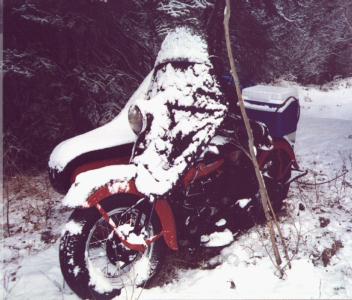
Greg Ray's 1947 KnuckleheadGreg Ray’s 1947 Knucklehead

That Morning ...That Morning …

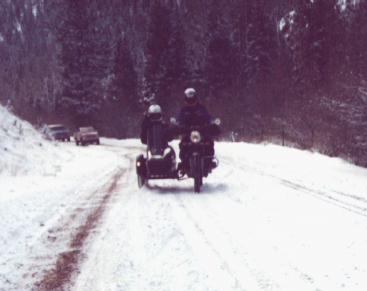
I think I can get through hereI think I can get through here

This ain't so hardThis ain’t so hard

The Elephant Ride is a Saturday night sub-freezing camp-out and shenanigans at Grant, Colorado, in the mountains 65 miles southwest of Denver, followed next morning by an attempt to ride 27 miles to Georgetown, over the top of Guanella Pass (11,669′).The previous year’s event featured 18 inches of powder snow and a temperature of minus eight degrees Fahrenheit, but the dirt road over the 11,669 foot Guanella Pass was dry this year, and people had been driving over it in Geo Metros.

But February weather in the Central Rockies is notoriously wild. The die-hard fans and participants (who return year after year to challenge the elements) were hoping for the worst.

And an odd group of participants it certainly is. They arrive in little clumps, a few from the Norton club, a handful of BMW enthusiasts, a gaggle of roadracers, some denizens of the Internet, or a group of enduro riders. This is not a mainstream event. These people are looney-tunes. The only uniting theme seems to be the uncontrollable desire to do something silly with motorcycles.

When we arrived at 3 PM at Grant, the roadracer group (mounted on dirtbikes of all descriptions) had already set up an oval course on the campsite’s pond, and were holding impromptu outlaw ice races. They merrily roosted plumes of slush on each other, crashed into the snow berms, and took a terrible toll of clutch levers. Hundreds of sheet-metal screws driven into the knobbies provided amazingly good traction, and enough speed for some spectacular wipe-outs.

But there wasn’t any snow. “The weather report said there was a chance for 1 to 3 inches of snow in the central Rockies on Sunday,” said one weather-watcher in an attempt to raise spirits, but the everyone thought the ride would be dry, dusty and dull.

Opinion varies widely on what sort of equipment to use on the Elephant Ride. Bikes included BMW GS’s, an excellent Norton Atlas, a scruffy BSA 441 Victor, and dirtbikes ranging from a DT-1 Yamaha to an XR600 Honda. Sidecar rigs, highly favored by those who don’t like to fall down so much, were well represented, with a couple of BMW’s, a two-wheel-drive Neval (British export version of the Russian Ural), and a pristine ’47 Harley Knucklehead rig.

Paul Uhmacht, a perennial Elephant Rider, had ridden his Honda Transalp in from San Franciso, and “Dr. Moto” Gregory Frazier had trailered up a knobby-tired ’36 Indian Sport Scout for the event. The red-menace Neval rig had been brought on a trailer by Jack Wells from New Jersey, for its second attempt on Guanella, after toasting its clutch in deep snow the previous year.

After dark, the campout conformed to motorcycle norms all over the world, with bench racing, story telling, and beer. Campsite owner Al Gross offered his large metal garage for a gathering place, complete with the luxury of electricity, and a small propane burner.

After considerable consumption of beer, one of the Indian riders performed a snow dance, and although he only managed a few steps before losing his equilibrium, we hoped it would work.

And, starting at about 3:00 AM, it did. A few flakes began to fall.

The temperature was mild in the morning, but we awoke to three inches of snow and the sound of engine starts.

At the 11am start, although the sun had come out, and melted the road in the staging area, snow pack was encountered after only a few hundred feet.

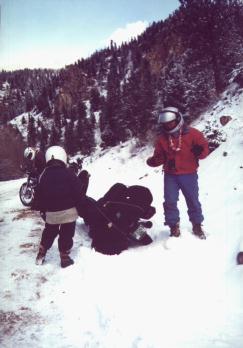
Starting out in the rear of the pack, with a handy sidecar to keep us upright, we were treated to a scene of double, triple, and quadruple getÐoffs, with bikes in every conceivable orientation except upright. This is a normal occurrence at the Elephant Ride, and riders who have not yet fallen, eagerly stop and help, knowing that they’ll need reciprocity within the next few minutes.

The snow began to get deeper as we motored our way along, periodically losing traction and swinging the tail of the rig around in a series of arcs. We began to have to push snow with the sidecar, and its smaller-diameter wheel began to bog down. After about five miles, we partially solved the problem by moving the passenger from the chair to the rear position on the motorcycle, which unloaded the sidecar tire, and provided additional ballast for traction. As we continued, the snow became deeper, the slopes became steeper, and we constantly rode on the edge of bogging down.

Finally, we had to push. With the back tire spinning, one of us pushed at the handlebars, while the other pushed on the back of the sidecar. We made the next crest.

Oops!Oops!

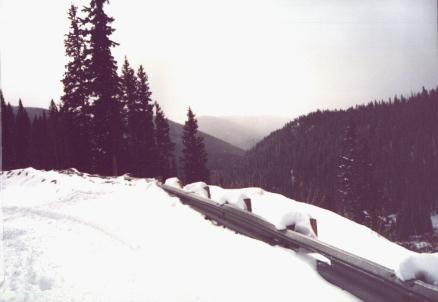
Half riding, half pushing, we climbed to the last switchback before the long, steep final climb to the top of the pass, at about the 10,000 foot level. We could go no further. The snow was too deep, and we were exhausted.Dr. Moto pushed, pulled and dragged his ’36 Scout up the same hill we had just made. He collapsed for a few minutes at our switchback, then got out a box of screws and a nutdriver, and started replacing the screws in his rear knobby. “These things aren’t worth a damn,” he stated. “They just get thrown off after a mile or so.” I didn’t have the heart to tell him that everybody else was using 7/16″ long screws, not 3/16″ screws. He then kicked the old Indian to life, and up he went.

By now, many dirtbike types had made the top, and were on their way back, so they stopped and told us what it was like. “MAN! The snow’s about two feet deep, and the wind is blowing 40 miles an hour! We barely made it!”

About then, the another Indian, a ’46 Chief bob-job, ridden by Justin Hill, slid into our switchback, closely followed by the two-wheel drive Neval rig, by now with chains on both driving tires. The Neval churned around the corner and disappeared up the road, without a sign of slippage or loss of traction. Justin hung out for a few minutes of rest, then started up the slope, roosting a nice fan of snow, and fishtailing like a shark in a feeding frenzy.

And we could go no furtherAnd we could go no further
The ride back to Grant was uneventful for the sidecar-equipped, although the sun had come out at lower elevations, and turned the road into a muddy morass. A little mud never hurt anybody. We hung around the base camp for a while after the ride, and chatted with the participants.A very few (including Paul Uhmacht on his Transalp) had made it all the way across, and all the way down to Georgetown.

Twenty or so had made it to the top, mostly on screw-equipped dirtbikes. The Neval rig made it, both Indians made it, and an ancient 750 Honda made it. Unfortunately, Greg Ray’s Knucklehead rig had shed a few gearteeth from the transmission, repeatedly losing and regaining traction.

But smiles were evident on every participant’s face, vows to “be here next year” were exchanged, and good-natured insults were hurled. Nobody complained of the cold, snow, exhaustion, pain, bad luck, or mud. They LIKED it.

The post Church of MO: “Be Careful What You Wish For …” The 1996 Elephant Ride appeared first on Motorcycle.com.

28 Feb 23:59

1958 Aston Martin DB4 Coupe

Paris, 1958. On the eve of the 1958 Paris Auto Show, Marcel Blondeau is having a party for clients of the Garage Mirabeau and has scheduled a guest that will...

Visit Uncrate for the full post.
28 Feb 23:58

The Secret Ingredient In A Black-Owned Sweet Potato Distillery: Faith.

by Elizabeth MacBride, Senior Contributor
86 proof – and it tastes somehow richer than your average vodka, rich like the soil of the Delta that grew the potatoes.
28 Feb 23:55

Ferrari to build Le Mans Hypercar, race for top honors in 2023 - Roadshow

by Sean Szymkowski
Count Ferrari in for the top spec at Le Mans for the first time in 50 years.
28 Feb 23:46

2022 Land Rover Defender gets a V8 and a new top Carpathian Edition trim - Roadshow

by Kyle Hyatt
There are other changes too, including infotainment upgrades and even more trim levels.
28 Feb 12:47

In Los Angeles, It’s Muscle Car Vs Tesla, Creating An Ideological Divide

by Brooke Crothers, Contributor
In Los Angeles, a daily battle rages between the old and new, loud and quiet.
28 Feb 12:37

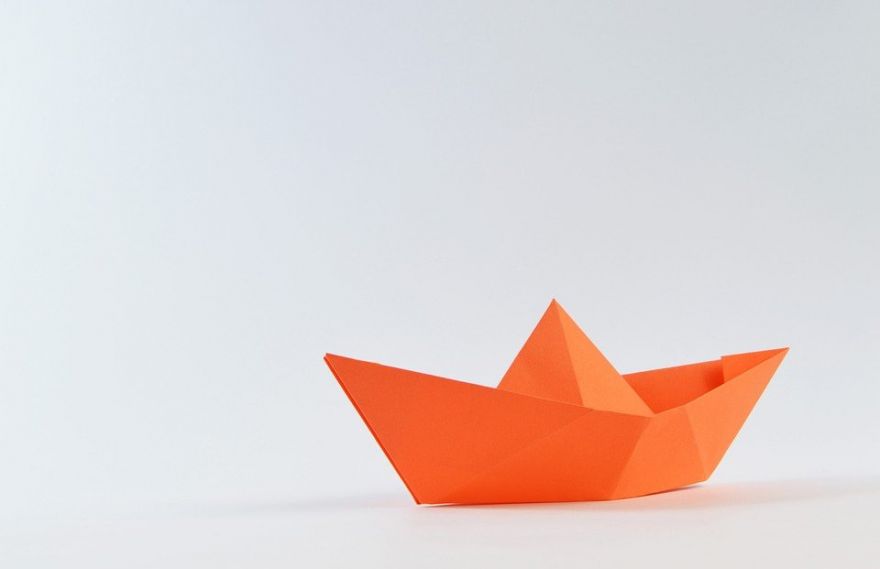
Origami And Where You Can Learn It On The Internet

by Franzified

It may already be hundreds of years old, but the Japanese art of paper folding, origami, still thrives to this day, and it remains as a fun activity for anyone, may it be a kid or an adult. Origami can be a hobby, but it can also be a discipline to dedicate your life to.

Many contemporary origami artists are pushing the boundaries of paper folding—including a samurai figure that took three months to plan and execute…

Interested in learning origami? My Modern Met provides some tips for the starter, such as the best type of paper that you can use to develop your paper folding skills. The site also provides a list of recommended YouTube videos to watch as you learn the art. Check them out over at the site.

(Image Credit: padrinan/ Pixabay)

28 Feb 12:37

It’s A Solar Light That Purifies Water

by Franzified

Despite having the South Pacific Ocean in front of them, the people of Chile, specifically those who live in shantytowns, still have a problem with the supply of clean water, as they don’t have the means to desalinate the water. Also, while their place has abundant solar energy that could be harnessed, many families only have unreliable electricity. 

… power comes unreliably through an electrified wasp’s nest of jerry-rigged powerlines, and windows are often boarded up to increase privacy and security, removing almost all natural light.

To put it simply, Chile has “abundant, if unusable” resources, but Henry Glogau is determined to put these into use with his solar light that also acts as a desalination still.

“I wanted to achieve a design which was sustainable, passive, and created a striking feature inside the dark settlement home,” writes Goglau, who graduated from the Royal Danish Academy with a master’s in specialized architecture for extreme conditions.
“In my development process it became apparent that I could address the lack of indoor lighting and water access by creating a hybrid skylight and solar desalination device.”
Truly killing several birds with one stone, Goglau’s salination still can purify 440 milliliters of water a day, with leftover brine being sifted into batteries made of zinc and copper where they power an LED strip for use during the night.

More details about this over at Good News Network.

Now this is epic!

(Image Credit: Solar Desalination Skylight/ Good News Network)

28 Feb 12:36

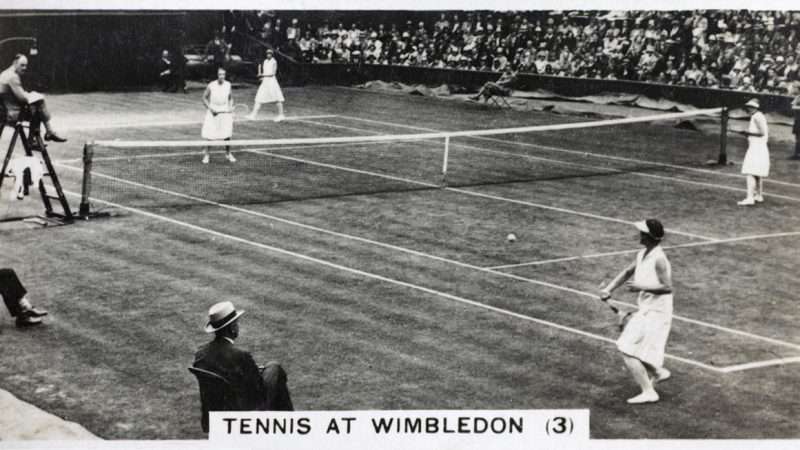
A Radical History of Tennis?

by Clayton Trutor
book2a-march-2021

When historians speak of "the people," I cringe. Do they mean the industrial working classes? Do they mean historically disadvantaged groups in a broader sense? Do they mean the kind of checklist diversity one sees in contemporary advertising? Or do they actually mean everyone? I never know what to think.

Regardless of what David Berry intended people to mean in the title of A People's History of Tennis, I was excited to read the book. I am an avid reader of the history of tennis and have long had a scholarly interest in labor history. I held out hope that this book was less Howard Zinn and more Roy Rosenzweig, whose Eight Hours for What We Will (1985) was a serious study of working-class recreation and workers' efforts to assert autonomy from corporate paternalism in their free time. A number of other fantastic culturally oriented studies followed in Rosenzweig's footsteps, including Kathy Peiss' Cheap Amusements (1986), Robin D.G. Kelley's Race Rebels (1996), and Jackson Lears' Something for Nothing: Luck in America (2004). Unfortunately, A People's History of Tennis has a few more helpings of Zinn's leftist dualism than it does Rosenzweig's celebration of laborers who built a life of their own choosing outside of their daily work.

This is, to be clear, an interesting book. Berry catalogs some of the sport's most idiosyncratic figures, both well-known and forgotten, from both the recent and the distant past. He makes a strong case that tennis has a history beyond the pomp and privilege with which it is often associated. Berry's history of the game is filled with figures who worked cracks into the game's aristocratic foundations, opening the sport up to men and women of different races, socioeconomic backgrounds, and sexual orientations.

Major Walter Clopton Wingfield, the delightful crank who helped popularize lawn tennis in the 1870s, exemplifies the interesting characters who populate Berry's book. Wingfield promoted tennis as a civil and healthful game of skill for both sexes rather than as a Darwinian contest of brawn, helping establish tennis' appeal and social acceptability for both men and women. Other noteworthy gadflies in the book include the early tennis champion Lottie Dod, who argued successfully against changing the rules of the game for women to make it safer; George Elvin, the tennis star, trade unionist, and Labour Party activist who organized a "Worker's Wimbledon" in the 1930s; and Leif Rovsing, the Danish tennis star who was banned from the sport for his "presumed homosexuality" in 1917.

But Berry's book strays too far from these colorful characters too often. He has a tendency to reduce the past to predictably Manichean morality plays. The forces of "the powerful" roam around like the shark in Jaws, forever seeking to wreak havoc on the sterling designs of "the people," who themselves are presented as a fairly uniform whole—like a collective of scrappy Gavroches singing a chorus of "Little People" from Les Miserables. The likes of Major Wingfield and Lottie Dod are interesting enough in themselves. Berry's decision to steep his story in the tropes of socialist realism makes this otherwise excellent book weaker.

Moreover, Berry's assessment of who counts as part of the establishment is a bit strange. To be a part of the powers that be, one need not be wealthy or -particularly powerful. One need only hold cultural views that are anything less than the most progressive at the time to be considered a part of the establishment.

Berry also has a puritanical streak, which comes to the fore when he discusses the sport's sexuality. Berry is interested in people of different sexual orientations breaking barriers, but he is not very interested in people expressing their sexuality as either participants in or spectators of the game. He lauds the milestones crossed by LGBT players while avoiding all but the most cursory mentions of their actual sexuality. Berry's most pronounced discussion of sex in the book is an admonishment of male spectators for their "gaze" at provocatively dressed female tennis players. And this is supposed to be a book of "the people"!

Some elements of the game's cultural impact aren't discussed nearly enough. Fashion, for example.

Tennis' tent has proven the largest when the sport has gone beyond the courts, out into the streets, and become couture. For more than a century, kids of all social classes on both sides of the Atlantic have adopted the fashion styles popularized by the game's icons: Bill Tilden's V-neck sweaters, Suzanne Lenglen's revealing tennis skirts, Maureen Connolly's cardigans and pleats, the preppy-chic "polo" shirts of René Lacoste and Fred Perry, the sleek Adidas shoes known as Rod Lavers and Stan Smiths, the Nike athletic wear of the Williams sisters, the terry cloth headbands that have held back many a flowing lock, most memorably Bjorn Borg's.

In the U.K., the sport's iconography has played a particularly profound role in shaping youth culture. Fred Perry, Fila, Lacoste, and Adidas are standard issue for an array of subcultures in the British Isles. From casuals to chavs to mods, British kids have appropriated the styles of the court to express an identity apart from the humdrum of the everyday.

David Berry shows some interest in this aspect of tennis history. One of his book's most inspired sections profiles Lenglen's 1919 Wimbledon debut, where the English press dubbed her the "French Hussy" for her risqué attire—her mid-calf Jean Patou skirt, brightly colored cardigans, and silk chiffon headband. He also touches on the British fashion designer Teddy Tinling and the alluring outfits he created for the statuesque Gertrude Moran for her Wimbledon appearances in 1949. But his interest in fashion is scattershot, depriving his readers of a genuine sense of the practice of everyday life.

A People's History of Tennis is less a people's history of the game than an odds-and-sods history of groundbreaking individuals and formal political activism. It falls into the same trap as the work it pays homage to in its title, Howard Zinn's essential but hamfisted A People's History of the United States. To count as one of "the people" in either people's history, one has to be an obvious trailblazer for some disadvantaged demographic or part of an organized left-wing political movement.

Actual people, rendered in any sort of complexity, bear little resemblance to "the people" as invoked in these books' titles. However noble the authors' intentions, this approach turns the past into a floor plan for a coffee-shop manifesto.

A People's History of Tennis, by David Berry, Pluto Press, 256 pages, $19.95.

28 Feb 12:27

Nissan’s Office Pod Concept is a Productivity Paradise on Wheels

by Kristina Panos

All this working from home is pretty great, but we have to admit that we miss packing up the Hackaday office and heading for the local coffeehouse once in a while to spend a few hours writing against the buzzing background. One thing we don’t miss about the experience is that you’re never guaranteed a place to sit and spread out. And unless you trust a friendly stranger to keep an eye on your stuff while you’re in the bathroom, you have to take it with you at the risk of losing your table.

If only we could afford one of Nissan’s mobile office pod concept vehicles. We’ve always wanted to pretend we’re doing surveillance and would probably have the thing wrapped with graphics for a fake flower shop or something. That would certainly make it easier to park somewhere and borrow someone’s open Wi-Fi network  — maybe even from the coffeehouse parking lot after we hit the drive-thru.

As you’ll see in the extended tour video below, Nissan seem to have thought of everything except restroom facilities. The cab-over-engine design and all-terrain tires would make it easier to drive out into nature and really get away from it all. Once you’ve found the perfect spot, you can open the lift gate for some fresh air, or get some sun while you work by pulling out the motorized unibody-constructed cubicle which includes a built-in Herman Miller Cosm chair. (Evidently the Aeron is old and busted now; we disagree). For some reason, the cubicle is edge-lit, and not in a way that would help you work at the desk. According to the video, it’s based on the Caravan NV350, which looks far more comfortable but not as cool when outfitted as an alternate mobility concept.

The office pod has some nice amenities like a DC-AC converter so you can run your Keurig or Nespresso, and there’s even a UV-disinfecting lamp in the glove box. The larger windows behind the cab can be electronically shaded so you don’t bake in the sun. Here’s where things get a bit ridiculous: the floor is made of clear polycarbonate in case you want to park lengthwise over a small stream and watch the surviving fish go by underneath your feet. And if you really want to take a break, climb up to the roof deck and stretch out in the chaise lounge beneath the deck umbrella.

If we lived anywhere but America, we might forego the flower shop graphics wrap and dress it up to look like a TV detector van instead.

27 Feb 20:48

5 Posing Tips for Portraits of People with ‘Challenging’ Facial Features

by Michael Zhang

Want to get better at posing your subjects when shooting portraits? Here’s a 12-minute video tutorial in which well-known wedding and portrait photographer Jerry Ghionis shares 5 corrective posing tips, explaining how to pose your clients so they always look good.

When shooting portraits, your subjects may often have facial features they’re insecure about and ask you to address, and as a photographer, there are ways to help clients with these kinds of requests and expectations.

“I’m going to give you 5 tips on corrective posing that will help you bring out the best in someone with challenging features,” Ghionis says. “I’ll demonstrate what you need to do when you photograph normal people just like you and me with real problems and physical insecurities, specifically facial features.”

Here’s a quick rundown of the 5 things discussed in the video:

Tip #1: How to Minimize a Large Head or Forehead

To deemphasize a prominent head or forehead, Ghionis suggests cropping, pointing those features away from the camera and light, and angling.

Tip #2: How to Shorten a Long Nose or Deemphasize a Crooked Nose

Using posing/camera angles can alter the appearance of a long or crooked nose, and it can help to position the main light based on the subject’s nose.

Tip #3: How to Minimize Pronounced Ears

Your choice of lens can make a big difference in how features like ears look in resulting portraits. You can also turn your subject’s head until the ear balance is most pleasing. Finally, make sure the lighting isn’t drawing attention to the ear.

Tip #4: How to Minimize One Eye Being Larger Than the Other

Put a smaller eye closer to the camera to balance it out a little bit.

Tip #5: How to Add Mystique in the Eyes

To overcome blank stares, ask your client to give you a hint of a squint to add instant mystique and take a deep, full breath.

Watch the video above to hear Ghionis explain each of the tips in-depth as well as show some example portraits of what to (and not to) do.

You can find more of Ghionis’ work on his website and Instagram.

(via B&H Photo Video via Reddit)

26 Feb 18:58

Great Shop Tips from Colin Knecht

by Kevin Kelly

Great Shop Tips from Colin Knecht

Get a grip!

Get a grip!

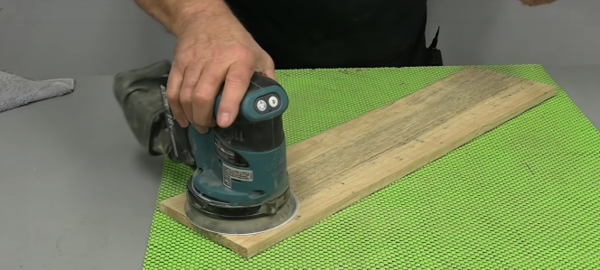
YouTube woodworker, Colin Knecht, has a fantastic series of videos where he shares his top shop tips and tricks. While these are obviously directed at woodworkers, many of the tips are useful to makers of many stripes. His most recent video in the series is a prime example. There is one tip here about cleaning saw blades, but the cover things, like easily finding the center of a workpiece, trimming “acid brushes” to make them more efficient to use with PVA glue, and using non-skid shelf pads on your bench to hold items you’re working on for sanding and such – these are applicable to many situations.

Which Home Furnace Filter is the Best?

Filter finder.

Filter finder.

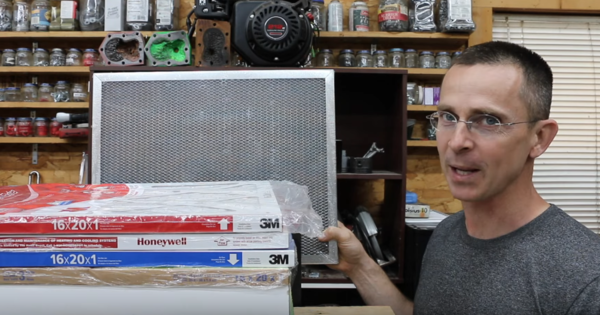
On the amazing Project FarmTodd wonders what the real performance characteristics and differences are between cheap furnace filters and the expensive ones. As always, he creates testing rigs and puts a whole pile of filters, from $1 to $50, to the test.

Tl;Dr: So which one won? It’s complicated. The thicker filters (2″ and 4″) performed better than the common 1″ filter size, but your furnace may not accommodate a larger size. The permanent, washable filter did not perform well. Nor did the cheap ones. Looks like you want to get the thickest filter your furnace will accommodate and one with the most pleats in the outer filter. Overall, 3M brand filters did really well, like the 6001085, and the 1900. (Obviously, you need to get the filter that is the correct dimensions for your furnace.)

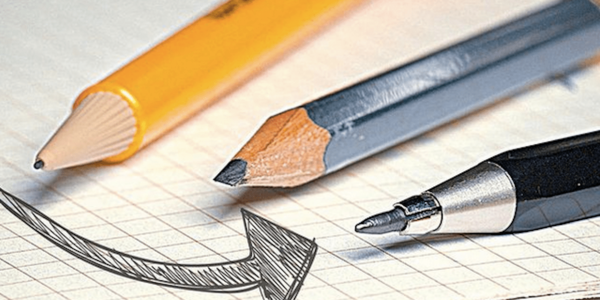
Nerding Out Over Pencils

In search of the perfect pencil.

In search of the perfect pencil.

I got a big kick out of this Make Something video. In it, Dave Picciuto spends 13 minutes talking about some of his favorite pencils while constantly apologizing for spending so much time talking about his favorite pencils. Dave’s favorites (to date) are the Koh-i-Nor Mechanical Clutch Pencil (to keep in his pocket with his Field Notes notebook) and the Paper Mate SharpWriter Mechanical Pencil for having many pencils around the shop.

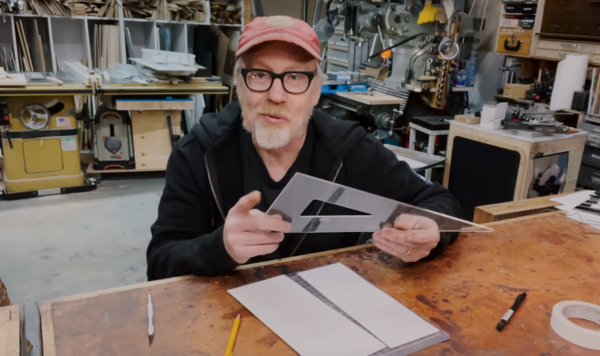
The C-Thru Triangle

"Memories...misty watercolored memories..."

“Memories…misty watercolored memories…”

This video from Adam Savage tweaked my nostalgia circuits. Like him, I started my adult worklife as a graphic designer and some of the first tools I fell in love with where the rulers, triangles, mechanical pencils, and pens of that trade. Here, he celebrates a favorite of mine, too, the C-Thru brand (Westcott) gridded triangle. The grid on this thing is perfect for alignment and it has a metal edge so your razor knife doesn’t cut into the plastic. I think I still have mine around here somewhere.

[Gareth’s Tips, Tools, and Shop Tales is published by Cool Tools Lab. To receive the newsletter a week early, sign up here.]

26 Feb 18:57

Jordan Calhoun, Deputy Editor at Lifehacker

by claudia

Our guest this week is Jordan Calhoun. Jordan is the deputy editor of Lifehacker and author of the upcoming book Piccolo Is Black: A Memoir of Race, Religion, and Pop Culture. You can find Jordan on Twitter and Instagram @JordanMCalhoun.

Subscribe to the Cool Tools Show on iTunes | RSS | Transcript | See all the Cool Tools Show posts on a single page

Show notes:

justwatch
JustWatch
You know how they say that you only use 10% of your brain? I don’t know how true that is, but I feel that I only use about 10% of JustWatch and that there’s a whole world that you can get from it. JustWatch, as a site, is something that you can use to search for TV and movies across streaming platforms. One thing that was missing before JustWatch was being able to know if there’s a certain movie that I’m looking for where I can find it. You can obviously Google it, just sort of one-off, and sometimes you’ll find lists that are outdated because those things change all of the time. You’ll see something that’s going to be on Netflix or Hulu one day, will not be there the next month, so since it’s always transient, it’s really annoying to not have a centralized place to be able to find this stuff. JustWatch is a centralized place. If I wanted to find out where to watch Face/Off, one of the greatest action movies of the ’90s, I would be able to just plug that into JustWatch and it’ll tell me where exactly it’s available, where it’s streaming, where I can buy it, all of that type of thing. You can tell JustWatch the type of mood that you’re in or the types of things that you really enjoy, and if you give it enough preferences, then it’ll spit out things that are related to those. It’ll tell you things that are comparable and it will give you some context on why they feel it’s comparable. It’s a really good discovery tool that’s absolutely great if you find yourself spending a lot of time with sort of the paralysis that comes with how much choice we have and what it is we can watch.

libsyn
Libsyn Podcast Hosting
For people who are interested in starting podcasts or already have a podcast. There’s a few ways that you could go about it if you want to start a podcast. The way that most people begin when they’re first getting their feet wet is when, I’m speaking specifically for distribution, you can go through the process with Apple Podcast and with Spotify and with Stitcher and for NPR One and for all of the different places that people listen to podcasts. If you want to do it a whole lot faster and have a concentrated sort of streamlined place to do that for you, then I found Libsyn or any sort of podcast hosting-type site is going to be worth the amount of money that you’ll spend on it. If you end up having one of these distributors for podcasts, you can upload it once. You’ll set it up everything sort of the first time that you set up your podcast on the site and you’ll choose which podcast apps you want your podcast to automatically go out to. It takes a one-time setup, and then from then on whenever you upload a new episode, it will automatically push out to all of the different places that you would want your podcast to be published. It’ll automatically push out to Apple Podcast, Stitcher, Spotify, wherever else, without you having to manually go to Google Play and then manually going to Apple Podcast and then manually go to Stitcher and manually go to Spotify. Then, there’s obviously going to be metrics and things that you can track, but it’s a way to just have a streamlined process for distributing your podcast and making sure that you’re capturing a wide net. There’s so many different apps out there and so many different sites and places where people sort of have their preference for where they like to listen to podcasts. To be able to capture that wide net, you’re either going to spend a lot of time creating an account with each one of them, or you can just have someone do it for you. The someone that I have used in the past has been Libsyn and that has been an excellent resource and it’s a whole lot faster than doing it the long way.

twitchtv
Twitch TV
This one is very much related to the pandemic for me, something that has happened in my life since I live in New York. I live in a small apartment. Since the pandemic started, I haven’t traveled much and I haven’t seen my friends and my family physically as much, but there has been something that’s made me feel as if I’ve seen them really often, and that has been interacting with them and playing video games together and being able to see them on Twitch while we do it. Anyone’s children at this point will be more familiar with Twitch than most parents. Most of your kids, you’ve seen them watching other people playing video games, and there’s two primary places that you’ve probably seen them watch video games, one of them being YouTube and the other one being Twitch. They’re basically competitors at this point. There’s YouTube Live where people will stream, and then there’s Twitch, where people will stream their video games.The thing with Twitch is that it’s evolved from being something that’s only basically used for streaming video games to now being a site that’s for a lot more things, including if someone’s recording a podcast and they want to stream that podcast live, what they might do is do the livestream interview on Twitch and then later have that audio and make it into a podcast. There’s also game nights that people then play together if you’re playing an online game and it’s something that strangers can jump in and participate in or be a part of the audience. We see each other and we get the type of interaction and experience as close as possible to what we might have if it weren’t the pandemic and if we were just hanging out together and playing video games and having a conversation. It’s been a really good way to stay in touch with people over a shared experience aside from just looking at each other and having a conversation over a Zoom call.

goodreads
Goodreads
If I read 30 books this year and want to look back to see what I thought about them, that’s what Goodreads would be used for. Since then, Goodreads was bought by Amazon, and with that Amazon money, it became a whole lot of things. At its core, it’s still an online bookshelf, but there is a whole lot more that comes with Goodreads now that it’s part of Amazon. There’s book giveaways that happen, people use it as a discovery tool to find things to read, to get recommendations. People write a lot of reviews there. It’s powerful and important enough that the success of a book is probably more affected by its rating on Goodreads than it would be on Amazon. I would say a positive review or a positive page on Goodreads probably pales in comparison to being listed on The New York Times Bestseller List, but Goodreads is definitely a place that people go to log their books and to find out what their friends are reading and what their friends thought about books. Early on, and this is something that I continue to use Goodreads for, is they’ve always had this feature where I list the books that I read, you guys can list the books that you read, and if I wanted to, I could click on your profile, I could find the feature that says, “Compare Books.” Then, I could see, “These are the books that Mark read that I also read, and this is what Mark thinks about those books versus what I think about those books.” If there’s any overlap in our Venn diagram of reading habits, I could say, “Oh, Mark loved this book and I hated it.” Or, “Mark hated this book and I loved it,” and it’ll give you a percentage of how similar your reading tastes are. I could know whether I want to accept a recommendation from Mark based on our reading tastes being so similar. “Oh, we read so many of the same books and we thought the same things about them. He’s recommending me this book, it’s a fair bet that he’s right, that it’s something that I’m going to enjoy.”On the other hand, if I’m looking and comparing myself to Kevin and his books, we only have two books in common because we clearly don’t read the same things and we rated them vastly different, then it’s like, “Oh, okay, I have an idea of his reading tastes, I have an idea of my reading tastes.” It’s a good way to interact with literature and reading while also interacting with your friend and seeing what they think about what it is that you’re reading.

A little about the upcoming book: Piccolo Is Black: A Memoir of Race, Religion, and Pop Culture
I’m finishing a book due this year, which is a memoir about race, religion, and pop culture. A lot of my writing is based on pop culture analysis, and writing the book has been the major focus of my past year. The book is about my time growing up and forming an identity in a particular context. That context is one of a deeply religious family and also one where I loved pop culture as a kid. I loved cartoons. I loved anime. I loved comic books. I still love those things, but it was growing up in a time where those things did not have very diverse representation. The book is about forming an identity in the context of pop culture where you’re learning a lot about yourself through characters and you’re learning a lot about race. You’re doing certain mental gymnastics to try to make sense of the world through the stuff that entertains you as a kid, which is cartoons and entertainment.


We have hired professional editors to help create our weekly podcasts and video reviews. So far, Cool Tools listeners have pledged $390 a month. Please consider supporting us on Patreon. We have great rewards for people who contribute! If you would like to make a one-time donation, you can do so using this link: https://paypal.me/cooltools.– MF

26 Feb 14:29

Build-To-Rent (BTR): Detached Housing And The Future Of Multifamily

by Matthew Avital, Forbes Councils Member
Broadly speaking, renting is on the rise. Workers are increasingly transient and don’t want the commitment that comes with homeownership.
26 Feb 14:26

Napa Before The Grape Vines: Three Snapshots Of The Napa Valley From The 1960s

by Cathy Huyghe, Contributor
"What was Napa like before there were grape vines?" Mary Ann McGuire, aged 81, offers some perspective from the 1960s, including descriptions of political and environmental activism.
26 Feb 14:18

Best storytelling ever

1113 points, 41 comments.

26 Feb 14:00

Marketing for Photography Businesses Made Easy

Marketing for Photography Businesses Made Easy

 photo by Leonardo Patrizi via iStock

Marketing for photography businesses takes up a ton of time. Unlike some less creative industries, when you’re in the photography industry, most of your marketing is going to be in-person and via word of mouth. It’s definitely one of those industries where you need to ruthlessly harass friends and family in order to properly get started.

For this reason, some photographers don’t have a ton of experience with digital marketing for photography businesses. In turn, this means that some photographers have pretty terrible photography marketing skills. 

If this is you, you don’t need to worry because you can follow these simple photography marketing tips to bring in a ton of businesses in 2021.

Focus on One Social Media Channel

marketing for photography businesses

 photo by alexsl via iStock

Since a lot of marketing for photography businesses happens via word of mouth, social media is an excellent way to reach out to potential clients. The problem with using social media as a tool for marketing for photography businesses is that it takes up more time than anyone actually has.

That’s why you should strictly focus on one social media channel at a time until your business is big enough to hire a social media manager.  

I personally focused on Facebook when I was starting my marketing campaign because it was the most popular social media channel at the time, though I could feasibly see it as a good move to begin with Instagram now. 

The point is that you should pick one social media channel and focus all of your social media hours there in order to really make it work for you before thinking about expanding. 

If you already have more clients coming in through LinkedIn than you do on Instagram, then that may be a good place to start. Although, you should get the same results regardless of the channel you choose to focus on so long as you put some serious thought into your posts there. 

Stay Focused on the Task at Hand

remarkable digital notebook

Speaking of staying focused, something that helps me focus on the task at hand and stay organized is using my reMarkable 2 tablet.

I've had this tablet for a while now, and it has proven to be one of the best tools I have for staying productive.

There's something to be said for sitting down and organizing my thoughts about how to market my business while using a tablet that has the feel of writing on paper. It simply feels more genuine and authentic to write out my ideas than to sit at my computer and type them.

remarkable 2 features

In addition to a great user experience, the reMarkable 2 helps limit distractions because there aren't any apps and you can't connect to the internet.

So while my iPad enables me to get way off-task with movies, games, and so forth, my reMarkable keeps me laser-focused on getting my thoughts down about business and marketing. It really is a fantastic tool for improving productivity.

remarkable 2 tablet

And improving productivity is what 2021 is all about for me - and it should be for you as well.

We had a rough 2020, and 2021 is an opportunity to make up for all that lost time. When time is so precious, I don't need to be distracted by outside influences. What I need to do is make the most of my time and get things for my business done. reMarkable 2 helps me do just that!

I can use pre-loaded templates, convert my handwriting into text, and set up folders to organize my notes. I really is gold from a note-taking standpoint. It's thin, light, and user-friendly, easy on the eyes (literally and figuratively), and is super responsive with great battery life as well.

No matter if you're jotting down notes about your next marketing strategy or you're taking notes about your new client or something in between, this gadget will make it a much more productive and enjoyable experience. Try it yourself and see

Focus on Your Most Important Marketing Content

photography marketing

 photo by wundervisuals via iStock

If you’re really looking for photography marketing made easy, then you need to be willing to narrow your focus. This means that you should put far more effort into one piece of key marketing content and then repurpose that piece throughout your marketing campaign.

For instance, if you have decided that you are learning everything you can about social media marketing for photography businesses, then you can take that knowledge and use it across all of your platforms. 

Let’s say you just finished crafting the perfect Instagram campaign. It is going to last for the whole month of December and you created 31 posts, one for each day. Well, that obviously took a lot of time and you can repurpose those posts elsewhere. 

For example, you could take some of the content of those posts and create some emails for your email campaign. You could take some of the content from other posts and add them to your FAQ page. You could take some of the content from more posts and create longer blog articles on your website. 

Marketing for photography businesses should be cohesive and focusing on key marketing content is one way to make it so. 

Learn More:

Focus on One Event at a Time

simple photography marketing tips

 photo by SDI Productions via iStock

Just like you need to focus on one social media channel at a time, you should also only focus on one event at a time.

Let’s say you’re a wedding photographer and there are seven different wedding conferences every year in your area. It is tempting to try and make sure that you can be at all of them. But, not only is this costly for your business, but it’s going to take up so much of your time. There’s no way a single person business can feasibly be at all of them.

So, focus on one event at a time. Think about it. Just the leads from one wedding conference could fill up a half a year for you, so long as you were really present at that one conference.

Focus On In-Person Marketing

photography marketing made easy

 photo by SDI Productions via iStock

No matter how important people say digital marketing is, I still find that my in-person marketing is far more valuable to my photography business and I really don’t see that changing anytime soon.  

While there are hundreds of beginner marketing tips for photographers that all focus on in-person events, I think my favorite is to simply display your photography in small businesses around town. 

This is a great way to get more involved in your community. While you are going around talking to business owners about your photography, you’re also pulling off some excellent networking. 

Of course, if you’re going to hang your photography in small businesses around your town, then you need to make sure that your photography looks the best it can. For this, you need to use CanvasHQ. 

CanvasHQ is a small canvas printing company that is as focused on the quality of their products as you are with yours. Every canvas that CanvasHQ creates is handcrafted. Their canvas frames are hand-built and their canvas is hand-stretched. 

CanvasHQ canvases are also made with the highest quality ink available, which means that you can expect your canvas to last well over a century.  

Plus, the quality of CanvasHQ’s canvases doesn’t mean a high price tag because you can get a canvas printed for as little as $20. 

When it comes to putting your best foot forward and marketing your business effectively, there’s nothing better than a high-quality canvas print!

Learn More:


We Recommend


25 Feb 01:21

The Only Watch Cooler Than the Rolex Submariner Is the Military-Issued 'MilSub'

Now rare and sought-after, these dive watches were once soldiers' basic equipment.

25 Feb 01:18

Triumph Just Gave the Bonneville Lineup a Stunning Update

The British motorcycle legends have updated their modern classic, the Bonneville. Here's what you need to know.

25 Feb 00:49

What Automaker Owns Your Favorite Car Brand?

The brands you know, and the corporate umbrellas you might not.

25 Feb 00:43

The 19 Best Bourbon Whiskeys You Can Buy in 2021

Everything you ever wanted to know about America’s favorite brown spirit, including, of course, the best bottles you can actually buy.

25 Feb 00:41

Man fakes his kidnapping to get out of work, police say

COOLIDGE, Ariz. (KNXV) - An Arizona man was arrested for reporting false information after police say he faked his own kidnapping earlier this month. The elaborate scheme included a dramatic back-story about loads of cash hidden in the desert, but the ...
25 Feb 00:30

Sheep Named ‘Baarack’ With Over 75 Pounds Of Fleece Finally Gets A Haircut

by Lauryn Overhultz
'All goes to show what incredibly resilient and brave animals sheep really are'