KWBaker
Shared posts
Best floor jacks for 2022 - Roadshow
The Minimal Hut Collection

Visit Uncrate for the full post.
Alaska Way Off The Beaten Path With ROAM Adventures

Everyday Carry: Burner

Visit Uncrate for the full post.
Father and Son Catch 1,000-Pound Tuna off North Carolina

While fishing off the North Carolina coast, a Virginia angler and his 9-year-old son landed an enormous, “grander” bluefin tuna. According to Southeastern Marine, the tuna was 114.5 inches long and weighed close to 1,000 pounds. The fish’s weight was uncertified as the scales at the Oregon Inlet Fishing Center were broken.
On February 24, 2021, Captain Josiah Van Fleet, of the Happy Fleet, and his son, Zeke, went on a father-son fishing trip. They climbed aboard their 22-foot Grady-White, left the dock at 4 a.m., and ran 45 miles offshore. They trolled for an hour, and by 8:15 were hooked up.
Read Next: 15 of the Biggest Fish Ever Caught
Van Fleet knew they were into a big fish, but he had no idea how big. “When we were reeling the fish in, about three-quarters of the way through, our reel actually broke, and it would no longer turn,” Van Fleet told WAVY.com. “And so we had this 1,000-pound fish on the line. And we actually had to take another reel, tear off a ton of line real quick, and re-crimp both those lines together—all while the fish was on there. It was insane.”
Van Fleet said they never thought about giving up during the struggle. “No, not once,” he said. “No, we were gonna fight that thing until the end. Even if it took us into the nighttime. I mean, there’s no way.” The fight lasted two and a half hours, but it took another two hours to get the fish in the boat. “I think we are still in shock about this whole story,” Van Fleet wrote on Facebook. “I honestly think it was just a divine moment at just the right time. I definitely believe in prayer. And just when you least expect it this happens.”
Based on the tuna’s near 10-foot length, members of the United States Coast Guard estimated the tuna’s weight at around 1,000 pounds. If weighed on a certified scale, the Van Fleet’s tuna would have broken the state record set in North Carolina in 2017 at 877 pounds. When asked what he did with the fish, Van Fleet replied: “Split it up, and blessed Virginia.”
Today in Gear: The Longest-Lasting Cars You Can Buy, iPhone 13 Rumors & More
The best way to catch up on the day's most important product releases and stories.

Street Candy Launches MTN100 35mm B&W ‘Motion Picture’ Film
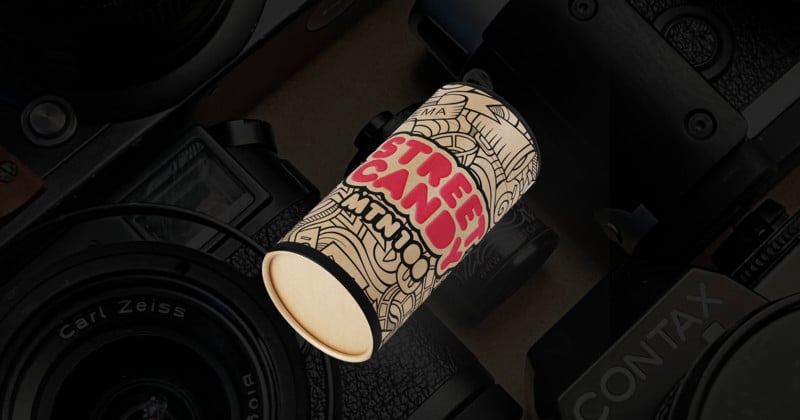
Street Candy has announced the new 35mm MTN400 film that is produced by the same manufacturer who was a major player in black and white motion picture film production. Street Candy says it added this film to its catalog due to its “gorgeous cinematic look.”
MTN100 is a panchromatic film for both outdoor and indoor photography and can be processed as a normal black and white film negative or, because it is a motion picture film, with a reversal kit to produce direct positives. Street Candy states that photographers can expect beautiful contrast, fine grain, and rich details in the 36-exposure roll of ISO 100 film.
Coming from a German manufacturer with a century long tradition in motion picture film, MTN100 will bring a unique character and elegance to your still black and white images.
Below are a few examples of images captured using the MTN100 film provided by Vincent Moschetti, Street Candy Film’s founder:


Street Candy originally launched with its first film called ATM400. Moschetti tells PetaPixel that it was a security surveillance film used in ATMs and other surveillance cameras in the past and has since been repurposed to 35mm film cameras.
“Our goal is to support the film manufacturers still running production lines and keep a maximum of emulsions alive,” Mochetti says. “We also care deeply for the environment and have moved away from single-use plastic canisters and since 2020 we pack all our film in recycled cardboard boxes.”

Street Candy’s MTN100 film can be pre-ordered directly from the company’s website in as small as a two-pack for 20.98 Euro (~$25.30) or as many as a 10 roll bundle for 104.90 Euro (~$126.55). The company says that it has less than 250 rolls remaining from its first batch due to “incredible support” from a pre-launch campaign and therefore supplies are limited for this run.
Eventually, the MTN100 film will be available at Nations Photo in France and Analogue Wonderland in the United Kingdom and should ship by the end of March. The company says that if it does sell out of this run (which is fully expected), it is already working on producing the next batch.
1965 Porsche 356 911 Restomod Coupe

Visit Uncrate for the full post.
Ilford Sprite 35-II Camera

Visit Uncrate for the full post.
Bivvi Cabins

Visit Uncrate for the full post.
Sony FX3 Cinema Camera

Visit Uncrate for the full post.
Archipelago House

Visit Uncrate for the full post.
Flowcamper Casper Camper Van

Visit Uncrate for the full post.
Hytte Hotel

Visit Uncrate for the full post.
A List of 132 Radical, Mind-Expanding Books from Rage Against the Machine
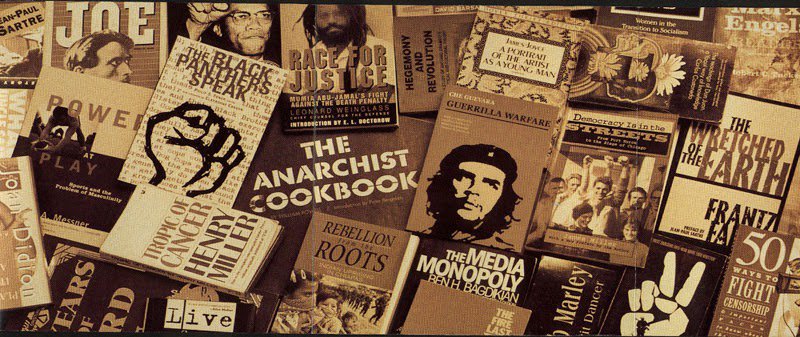
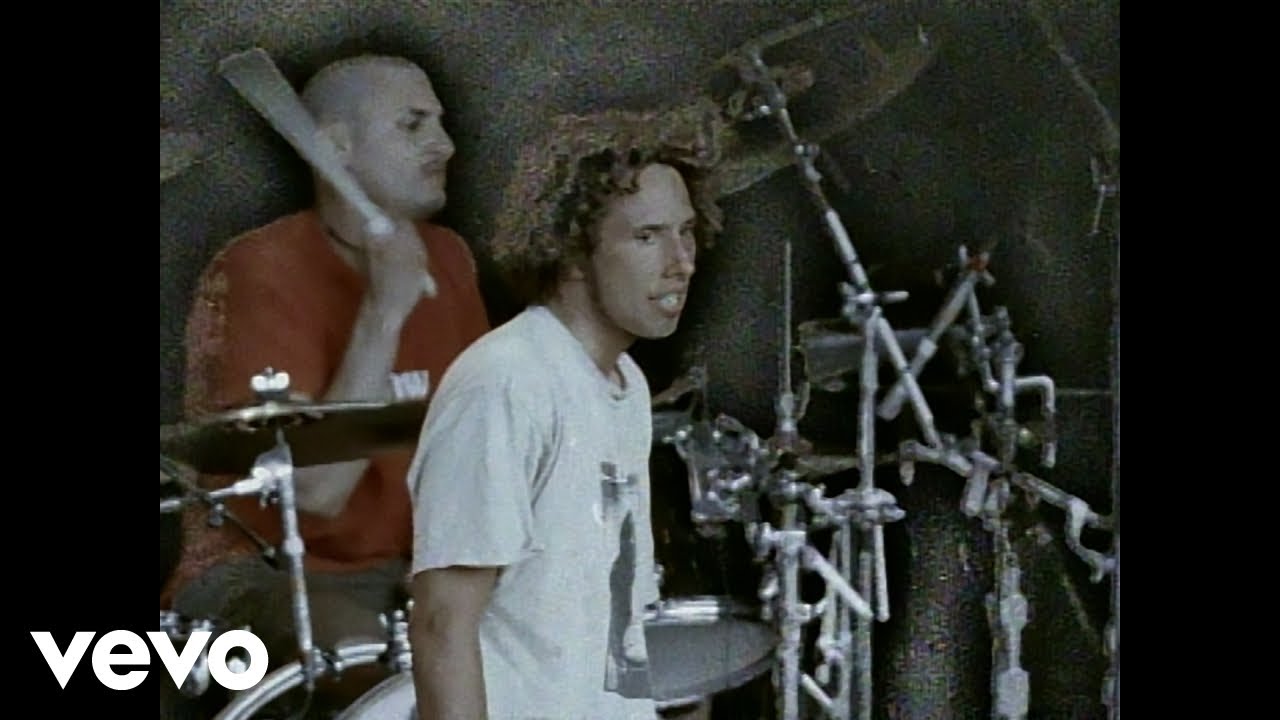
If you like Rage Against the Machine, but don’t like their “political bs,” you haven’t actually listened to Rage Against the Machine, whose entire raison d’être is contained within the name. What is “the Machine”? Let’s hear it from the band themselves. Singer Zack de la Rocha pointed out that the title of their second album, 1996’s Evil Empire, came from “Ronald Reagan’s slander of the Soviet Union in the eighties, which the band feels could just as easily apply to the United States.”
The Machine is capitalism and militarism, what Dwight D. Eisenhower once famously called the “military-industrial complex” but which has folded in other oppressive mechanisms since the coining of that phrase, including the prison-industrial complex and immigration-industrial complex. The Machine is a mega-complex with a lot of moving parts, and the members of RATM have done the work to critically examine them, informing their music and activism with reading and study.
Evil Empire, for example, featured in its liner notes a photo of “a pile of radical books,” “and the group posted a lengthy reading list to complement it on their site,” declares the site Radical Reads. Debates often rage on social media over whether activists should read theory. One answer to the question might be the commitment of RATM, who have steadfastly lived out their convictions over the decades while also, ostensibly, reading Marx, Marcuse, and Fanon.
There are more accessible theorists on the list: fierce essayists like former death row inmate and Black Panther Mumia Abu-Jamal and Henry David Thoreau, whose Walden and “Civil Disobedience” both appear. The Anarchist Cookbook shows up, but so too does Dr. Suess’ The Lorax, biographies of Miles Davis and Bob Marley, Taschen’s Dali: The Paintings, James Joyce’s A Portrait of the Artist of a Young Man, and Henry Miller’s Tropic of Cancer. This is not a list of strictly “political” books so much as a list of books that open us up to other ways of seeing.
These are also, in many cases, books we do not encounter unless we seek them out. “I certainly didn’t find any of those books at my University High School library,” de la Rocha told MTV in 1996, “Many of those books may give people new insight into some of the fear and some of the pain they might be experiencing as a result of some of the very ugly policies the government is imposing upon us right now.” Doubtless, he would still endorse the sentiment. The workings of the Machine, after all, don’t seem to change much for the people on the bottom when it gets new management at the top.
Read the full list of Evil Empire book recommendations on Good Reads. And as a bonus, hear a Spotify playlist of radical music just above, compiled by RATM guitarist Tom Morello. The 241 song list runs
via Radical Reads
Related Content:
Josh Jones is a writer and musician based in Durham, NC. Follow him at @jdmagness
A List of 132 Radical, Mind-Expanding Books from Rage Against the Machine is a post from: Open Culture. Follow us on Facebook, Twitter, and Google Plus, or get our Daily Email. And don't miss our big collections of Free Online Courses, Free Online Movies, Free eBooks, Free Audio Books, Free Foreign Language Lessons, and MOOCs.
The Last Interview Book Series Features the Final Words of Cultural Icons: Borges to Bowie, Philip K. Dick to Frida Kahlo
Where were you when you heard that Hunter S. Thompson had died? The uniquely addled, uniquely incisive taker of the strange trip that was 20th-century America checked out sixteen years ago last month, a span of time in which we’ve also lost a great many other influential figures cultural and countercultural. The departed include many of Thompson’s colleagues in letters: societal diagnosticians like David Foster Wallace and Christopher Hitchens; conjurers of the fantastical and the familiar like Ursula K. Le Guin and Gabriel García Márquez; and specialists in other fields — Oliver Sacks from neurology, Anthony Bourdain from the kitchen, Nora Ephron from Hollywood — who on the page entertained us as they shared their expertise.
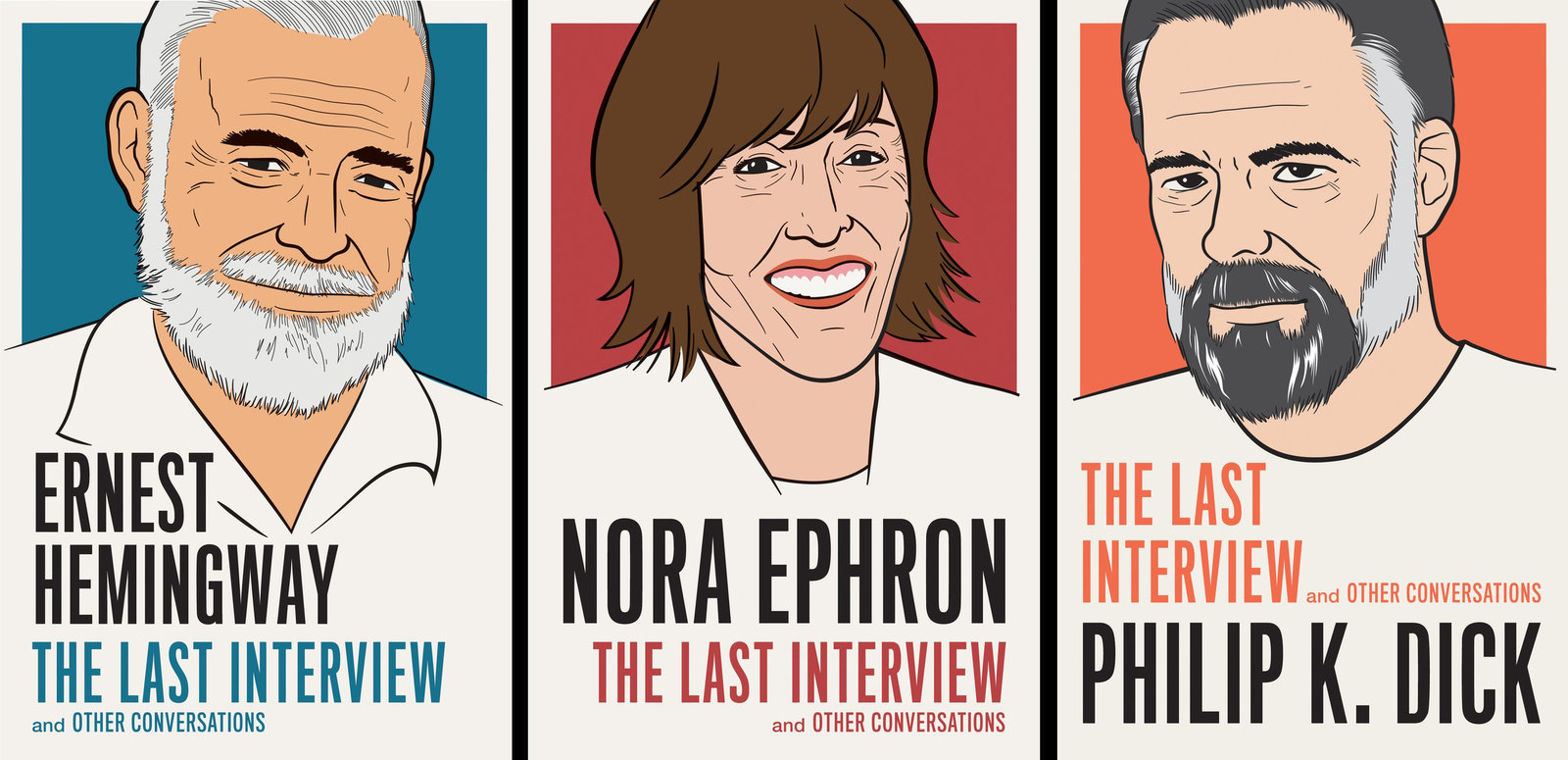
All of these writers have passed into esteemed company: not just that of luminaries from bygone eras, but of volumes in Melville House’s Last Interview series. “Can you think of three writers who, on the face of it, would have had less to say to each other at a dinner party?” asks NPR’s Maureen Corrigan, reviewing Last Interview volumes on Ephron, Ernest Hemingway, and Philip K. Dick.
“Hemingway would have knocked back the booze and gone all moody and silent; the notoriously paranoid Dick would have been under the table checking for bugging devices and Ephron would’ve channeled what she called ‘the truly life-saving technique’ taught to her by her Hollywood screenwriter parents to get through a rough time: the mantra, ‘Someday this will be a story!'”
With a range of deceased icons, including Marilyn Monroe and Martin Luther King, Jr., Julia Child and Jorge Luis Borges, Fred Rogers and Frida Kahlo, the Last Interview books cast a wide net for such an aesthetically and intellectually unified project. “Each volume offers, besides useful insights into its particular author’s work, what an old friend would call ‘civilized entertainment,'” writes Michael Dirda in The Washington Post. “Nearly all the titles actually contain several interviews, and some add introductions. For instance, the Roberto Bolaño opens with a 40-page critical essay.” In some cases the interviewers are as notable as the interviewees: “Two of Lou Reed’s questioners — the multi-talented novelists Neil Gaiman and Paul Auster — are now probably as well known as the legendary co-founder of the Velvet Underground.”
From the world of music the series includes not just Reed but David Bowie and Prince, two other one-man cultural forces who left us in the past decade, as well as their equally irreplaceable predecessors Johnny Cash and Billie Holiday. At the moment you can buy the entire Last Interview collection on Amazon (in Kindle format) for USD $344, which comes out to about $10 per book with 34 volumes in total. You may find this an economical solution, a way to explore the final thoughts of figures featured more than once here on Open Culture.
Related Content:
Orson Welles’ Last Interview and Final Moments Captured on Film
Hear Leonard Cohen’s Final Interview: Recorded by David Remnick of The New Yorker
Maurice Sendak’s Emotional Last Interview with NPR’s Terry Gross, Animated by Christoph Niemann
Carl Sagan Issues a Chilling Warning to America in His Final Interview (1996)
Janis Joplin’s Last TV Performance & Interview: The Dick Cavett Show (1970)
Based in Seoul, Colin Marshall writes and broadcasts on cities, language, and culture. His projects include the Substack newsletter Books on Cities, the book The Stateless City: a Walk through 21st-Century Los Angeles and the video series The City in Cinema. Follow him on Twitter at @colinmarshall or on Facebook.
The Last Interview Book Series Features the Final Words of Cultural Icons: Borges to Bowie, Philip K. Dick to Frida Kahlo is a post from: Open Culture. Follow us on Facebook, Twitter, and Google Plus, or get our Daily Email. And don't miss our big collections of Free Online Courses, Free Online Movies, Free eBooks, Free Audio Books, Free Foreign Language Lessons, and MOOCs.
18 Travel Pros Share Their Best Tips for Saving Money on Vacation
 |
submitted by /u/Raz0rRamon [link] [comments] |
Terms and ingredients used in labels instead of “sugar” to confuse costumers
 |
submitted by /u/Fit_Faithlessness398 [link] [comments] |
How Much Beer People Drink Around the World
 |
submitted by /u/giuliomagnifico [link] [comments] |
The Black Leopard: One Man’s Quest to Capture the Ultimate Wildlife Photo
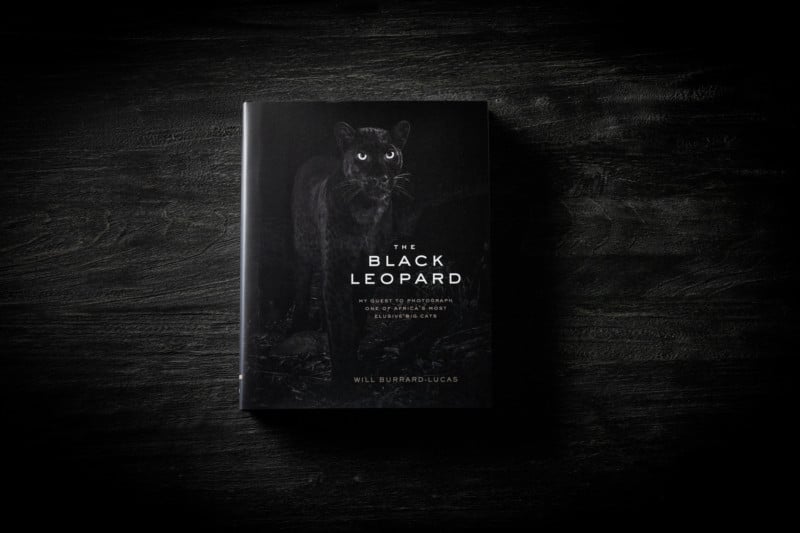
Behind every once-in-a-lifetime photograph is a story. Sometimes these are stories of luck—of being in the right place, at the right time, with the right lens attached to your camera—but more often than not triumph is preceded by years of trial and error. An outlandish “bucket shot” achieved by the sheer force of the photographer’s will and persistence. The Black Leopard by wildlife photographer Will Burrard-Lucas falls into the second category.
The Black Leopard: My Quest to Photograph One of Africa’s Most Elusive Cats is a difficult book to categorize. What Lucas has created here is part memoir, part photo story, and part inspirational how-to book for any aspiring wildlife photographer who wants to know what it really takes to carve out a name for yourself in a crowded and noisy industry.
It’s described as one photographer’s “quest to photograph one of Africa’s most elusive cats,” but it could just as easily be described as “the making of a world-renowned wildlife photographer.” It just happens to end with a series of photos that were essentially unprecedented.

Lucas can trace his love of leopards to a year that he spent in Tanzania as a child. In fact, his entire career as a wildlife photographer could probably be traced back to that first experience of Africa, but it was a sole leopard sighting that most captivated 5-year-old Will, sparking a fascination that remains with him to this day.
The origins of his dream to photograph a black leopard in particular are harder to pin down. Perhaps it’s simply a matter of mystery and myth: in Africa, these cats are so rare as to be the stuff of legend. You could spend your entire life as a professional safari guide and never so much as glimpse one, and prior to 2019, the last scientifically documented sighting of a wild black leopard in Africa was recorded in 1909. Any wildlife photographer would dream of photographing this particular animal.
But you could just as easily assert—as The Black Leopard seems to do—that Lucas’ entire life shaped him into the right photographer, perhaps the only photographer, for this particular assignment. From that first sighting of a spotty leopard in Tanzania to his fascination with ever-more-complex remote cameras, to the creation of his company Camtraptions, every pivotal moment and entrepreneurial turn in Lucas’ career helped him to perfect the skills, knowledge, and techniques required to capture studio-quality photos of this impossibly rare animal in the wild.
A little more than half of the book is dedicated to narrating this coming-of-age story, and at first, this narrative conceit feels almost like a bait-and-switch. You think you’ve picked up a book about photographing the black leopard and here is this photographer telling you his life story starting at age 5. But by the end of the book, the value of this context is undeniable.
Speaking with me over email, Lucas explained how this realization occurred to him in much the same way it eventually occurs to the reader.
I always intended to publish the photographs in a book—but a book focusing solely on the leopards of Laikipia. However, as the project progressed, it became clear that there was so much more to the story. It seemed that the many strands of my life had come together perfectly to culminate in this project and I was inspired to tell my full story for the first time.

In the book, the various threads of Lucas’ life story all coalesce into one fateful phone call in August of 2018. While trying to work around a frustrating issue with a photo safari in Madagascar, a fellow guide mentioned that a black leopard had been spotted multiple times at Laikipia Wilderness Camp in Kenya.
“My jaw drops. A chance of seeing a black leopard in Africa? I am speechless. The rest of the call passes in a blur,” writes Lucas, recalling that day. “As I drive back to camp in the gathering dusk, dik-dik antelope and scrub hares skip away from the glare of my headlights and my mind is filled with visions of black panthers.”
The stars had finally aligned, and in January of 2019 Lucas chased these visions all the way to Laikipia, toting six high-quality DSLR camera traps and ten low-quality trail cameras for reconnaissance.
He would spend about a year traveling back and forth to Laikipia for this project, but even with all this gear and a lifetime of preparation, he couldn’t have imagined just how fruitful that year would turn out to be. By working closely with conservationists, researchers, guides, landowners, and members of the local community, Lucas was able to capture not one, not two, but (by his count) over 25 high-quality photos of this black leopard by the time the book went to print.
“During that year I saw [the black leopard] 5 times with my own eyes and only one of those times was during the day,” says Lucas. “If I had been relying on traditional techniques (i.e. photographing him by hand) I might have captured one or two OK images with the long lens. It was only by deploying multiple camera traps for such a long time—and by really coming to understand the areas he liked to frequent—that I was able to build up the body of work.”
A body of work that will take your breath away with every turn of the page.


When you consider the fact that an incredibly lucky photographer might have one or two photos of a black panther in their portfolio, what Lucas achieved here begins to come into focus. But even if you aren’t impressed by the rarity of his subject or the quality of his compositions, there’s a passion and enthusiasm to Lucas telling of the story that pulls you into the process and leaves you with a greater appreciation for the craft of photography.
The Black Leopard was far more book than I expected when I picked it up. I thought I was getting an extended photo story—a longer version of the blog posts you sometimes see right here on PetaPixel. Instead, I was treated to a life story. I got an honest look at the reality of struggling to find your voice as a wildlife photographer. I earned a little more respect for the natural world. And I gained a renewed appreciation for photographers who dedicate their lives to capturing our world in unique and unprecedented ways.
As a photo story, it’s fantastic by default: one man’s quest to photograph one of the most elusive animals on Earth… what more do you want? But as a true blue book—a photo book cum memoir—The Black Leopard is able to touch on far more than a few photographic highlights or nifty behind-the-scenes details. I have never and probably will never go out and photograph African wildlife, to say nothing of an animal as iconic and elusive as the black leopard. And yet, thanks to Lucas’ vivid storytelling and the stunning body of work that makes up this photo book, I feel that I’ve experienced an inkling of this journey for myself.
Suffice it to say that the reviewer’s copy has taken up a permanent spot at the center of my coffee table. My apologies to the publisher… I don’t intend to send it back.
Image credits: All photos by Will Burrard-Lucas and shared with permission.
Podcast #689: Email Is Making Us Miserable — Here’s What to Do About It
Each day you begin work with high hopes for productivity and creativity. But each day you instead find yourself bogged down in checking and answering emails and responding to messages on Slack. As frustrating as this is, it just seems like the inevitable, unalterable dynamic of modern jobs.
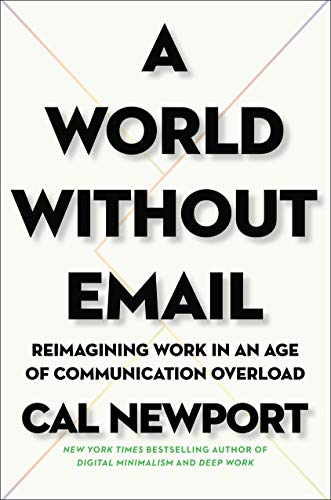
But my guest today says that another way of working is possible, and it could unleash a tidal way of new productivity. His name is Cal Newport, and he’s a professor of computer science and the author of several books, including his latest, A World Without Email: Reimagining Work in an Age of Information Overload. Cal describes how email and chat channels have created what he calls “the hyperactive hive mind,” and the costs to productivity, well-being, and focus that this hive mind incurs. He then explains why we feel the need to quickly respond to messages, even if rationally we know they’re not urgent. Cal then lays out practical ways to replace the hive mind with a more effective way of working, and why it involves concentrating on processes over messaging, increasing intellectual specialization, a return to hiring support staff, and, counterintuitively, more friction and less convenience. Cal also offers advice on how to make these changes at your office, even if you’re not in a position of authority.
If reading this in an email, click the title of the post to listen to the show.
Show Highlights
- What is the hyperactive hivemind?
- How did email become so unproductive?
- Why email and Slack make us so miserable
- How did we end up in this state of things?
- Embracing short-term discomfort for the sake of long-term gains
- How to think of attention as capital
- How are companies actually working to implement these big ideas about communication?
- Why increasing complication reduces complexity
- Forging better meetings
- Why knowledge works are often responsible for too many tasks
- How can an employee do this from the bottom up?
Resources/Articles/People Mentioned in Podcast
- Becoming a Digital Minimalist
- The Value of Deep Work in the Age of Distraction
- The Myth of Following Your Passion
- 7 Books to Help You Think About and Manage Your Digital Life
- 6 Tips for Writing Shorter Emails
- How to Achieve Hyperfocus
- The Rise and Fall of Getting Things Done
- How to Make Time for What Really Matters Every Day
- Kanban methodology
- Trello
Connect With Cal
Listen to the Podcast! (And don’t forget to leave us a review!)





Listen to the episode on a separate page.
Subscribe to the podcast in the media player of your choice.
Listen ad-free on Stitcher Premium; get a free month when you use code “manliness” at checkout.
Podcast Sponsors
Click here to see a full list of our podcast sponsors.
Read the Transcript
Coming soon!
The post Podcast #689: Email Is Making Us Miserable — Here’s What to Do About It appeared first on The Art of Manliness.
TSA Spring Break 2021 Tips: How To Legally Pack Your Gun

Grandpa’s Feeders Automatic Chicken Feeder
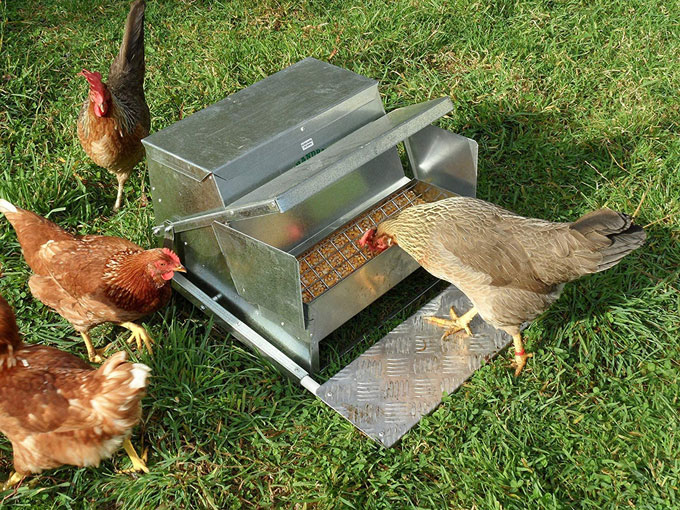
If you have chickens, keeping other animals out of their food can be a constant battle.
I moved several months ago and inherited a dozen chickens from the previous owner. I didn’t really know how much a dozen chickens would eat, but their food was disappearing at an alarming rate. While I haven’t seen any, I know our area has rat problems and I was suspicious. I visited a local chicken supply store, where I bought a treadle feeder. For it to work, a chicken has to stand on a little platform, and a mechanism opens a door to allow access to the food. Rats aren’t heavy enough to trigger the mechanism.
It took my chickens a few weeks to get the hang of it, but now a bag of food that previously lasted 10 days is lasting nearly three weeks.
As a bonus, the feeder holds about 25 pounds of food, so I don’t have to worry about refilling very often.
-- Abbie Stillie
Available from Amazon
Food Without Genetic Modifications?
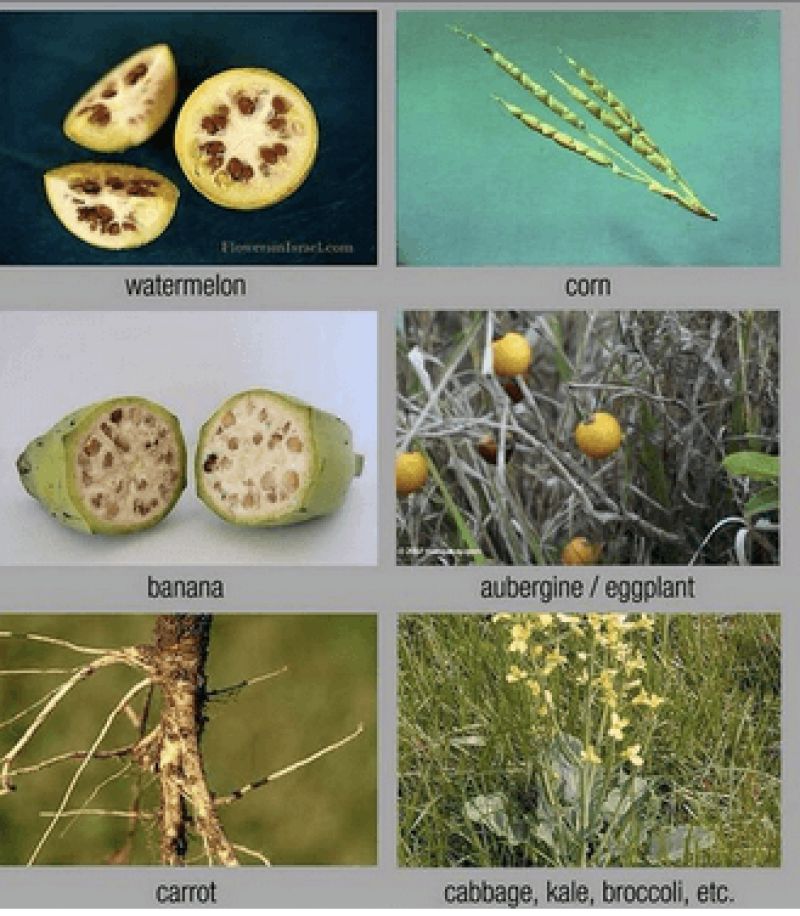
The other night, my grandfather left a comment on how scientists are smart but also greedy, thinking that they're intentionally modifying the genetic makeup of plants and crops in order for them to gain money. You know, the myth that they're creating problems so they'll earn by providing solutions.
That conversation made me curious about the pre-GMO state of the food we take for granted. I heard about them in my biology class before, but for some reason, it's more interesting to learn about them now. So here is a photo of watermelon mentioned in an article I found online.
Image Credit: Genetic Literacy Project

This 17th-century painting by Giovanni Stanchi depicts a watermelon that looks strikingly different from modern melons, as Vox points out. A cross-section of the one in the painting, which was made between 1645 and 1672, appears to have swirly shapes embedded in six triangular pie-shaped pieces.
Image Credit: Alvaro/Wikimedia Commons
How Much Does Beer Cost Around The World?
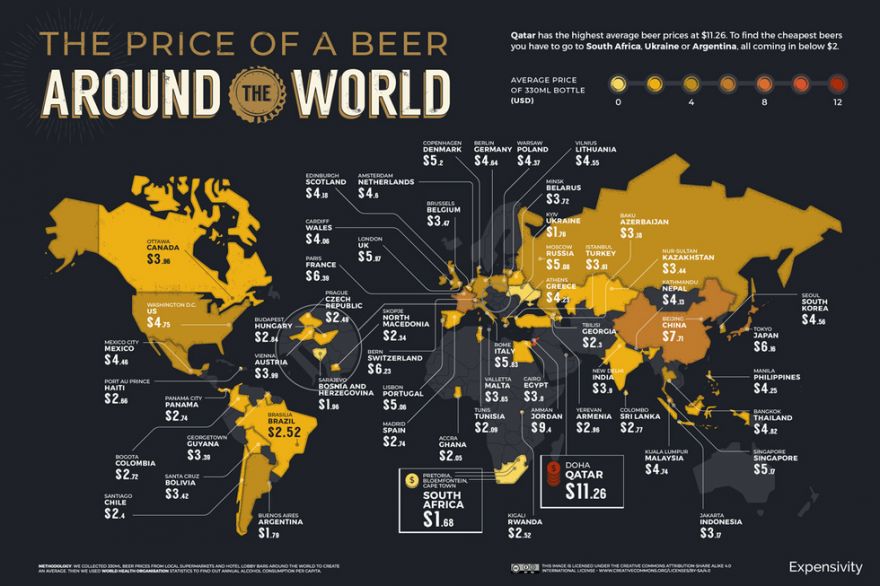
Hopefully by the time we’re all allowed to travel around the world, the cost stays the same. What better way to check alcohol prices than using an infographic? Personal finance site Expensivity tracked the cost of beer in some countries around the world. Researchers (for the website) considered grocery store prices, online menus from bars and hotels, and statistics on alcohol consumption:
The resulting World Beer Index 2021 shows the most expensive and cheapest places for brews, with Qatar at the pricey end ($11.26 per beer) and South Africa the most affordable ($1.68).
Beer prices also appear on a handy map, which is pictured at the top of this post and can be viewed in full size at Expensivity's website. Prices have been converted to U.S. dollars—and, by the way, the average price of a beer in the U.S. is $4.75, according to the map.
When it comes to consuming suds, the Czech Republic tops the list; drinkers there put away 468 beers per person each year. At the other end, Haitians consume just 4 beers per person annually—a relative drop in the keg.
Luther's native Germany, meanwhile, spends the most on beer annually: About $1,900 per person goes to filling steins.
Image via Frommers
A Brief History of Ketchup and Mustard

If you are American and have nothing else in the refrigerator, you probably have mustard and ketchup. Even if you don't use them often, it's nice to have them available. But how did they originate? Mustard began as mustard seed, used as a medicine and a spice.
The paste-like form of mustard showed up roughly 2500 years ago. The Greeks and Romans blended ground-up mustard seeds with unfermented grape juice, or must, to make a smooth mixture. The first version of this concoction wasn’t necessarily food—it may have been used more for its medicinal properties, and not completely without reason: Mustard seeds are rich in compounds called glucosinolates, and when these particles get broken down, they produce isothiocyanates, powerful antioxidants that fight inflammation and give mustard its nose-tingling kick.
The Greeks and Romans applied mustard’s medicinal properties to almost every ailment imaginable—Hippocrates even praised its ability to soothe aches and pains. Many of mustard’s historical uses don’t hold up to modern science—for instance, it’s not a cure for epilepsy, as the Romans once believed—but it’s still used as a holistic treatment for arthritis, back pain, and even sore throats.
The whole idea of mustard as medicine reminds one of "mustard plaster," a term that confused me in childhood because that use had already died out by then. Read how both mustard and ketchup were developed and turned into modern condiments at Mental Floss. A video is included if you'd rather watch than read. -via Strange Company
(Image credit: Anita Hart)


![[link]](https://i.imgur.com/MLMf6sq.png)
![[link]](https://i.redd.it/nwe66cu7ojj61.jpg)
![[link]](https://i.imgur.com/Cga4T6i.jpg)
.jpg)