KWBaker
Shared posts
Best Portable Projector for Movies and Gaming Anywhere in 2026

25 Years Later: 1996 Ducati 900 Supersport SP Meets 2021 Ducati SuperSport 950
I wangled a ride down the California coast from San Francisco a couple months ago on a brand-new 2021 Ducati SuperSport 950 S. Happily, my old friend Jimbo lives halfway home toward my digs 425 miles southward – 212.5 miles being the ideal amount per day on a sporty Ducati SS. Not only has he become a tri-tip gourmand who cooks by feel and needs no meat thermometer, Jimbo’s excellent partner, Cristina, set me up in the lavishly appointed octagonal Jefferson Suite.
My excuse for the layover was that Jim also owns a 1996 Ducati Supersport. In fact, who can remember 25 years ago – but that motorcycle may have been the genesis of our friendship. While I was slaving away in stately Petersen towers in LA for Motorcyclist magazine, Jimmy was being an artsy person as the now famous Petersen Automotive Museum was opening a block east on Wilshire Boulevard. Maybe he came to me wanting to know if he should buy a new 900SS? If he had, I probably would’ve advised against it.
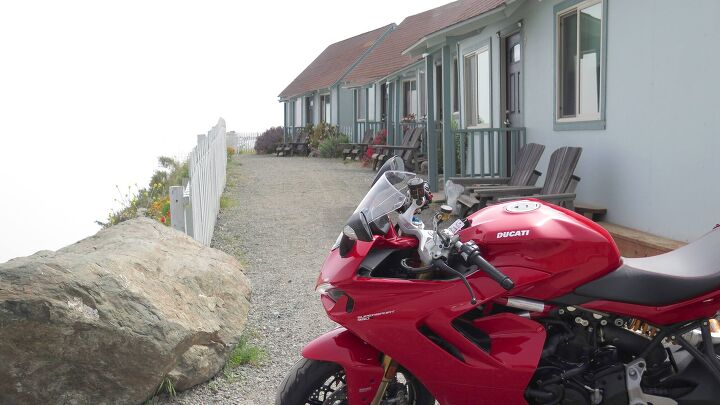
Nurse Ratched wasn’t around when I stopped in a fogged-in Lucia on my way down Highway 1.
It’s interesting now that there are quite a few well-preserved Ducati 900 Supersports out there, but you never see a like-new Honda CBR600F3 or ZX-9R Kawasaki – which probably would’ve been my choices in 1996. Maybe that’s when Jim first learned to use me as a barometer of how not to proceed?
Town and country
It’s all horses for courses anyway. When Jimmy decamped Los Angeles, he went north to Santa Barbara, and he’s been retreating northward ever since, one step ahead of civilization but now surrounded by wineries. All that time, his garages have never been more than a few minutes from a tasty California backroad or three. Commuting is not a thing he does. I don’t commute anymore either, but I do wind up hacking through plenty of urban jungle anyway since I live in the epicenter of Orange County. Someday I shall be free, but for now I require a certain amount of comfortable utility in a motorcycle.
JB: Jim, why did you buy that 900 SS anyway? You coulda had a 916 in 1996?
Jim: Interesting question. I was in love with the 916 and thought it was beautiful, but I couldn’t justify the price at the time because they were really expensive and had a waiting list. When I went to see Earl at Pro-Italia in Glendale, and saw the SP with all the special carbon bits and number plaque, I was hooked. I had always had a soft spot for the Superlight and older air-cooled Ducatis, so that helped soften the blow on not leaving with a 916. I’d say my bike has aged well as a great example of a bygone era. It is chock full of upgrades and parts that I tried to do correctly, like the rare Termignoni spaghetti full exhaust system, Ohlins shock and ultra rare Karbacher rear tail.

JB: Looking back on it, everybody was crazy in love with the 916. But it was a pretty dedicated sportbike and not really the right motorcycle for major metropolitan areas – even though it was a spectacular high-speed freeway lane-splitter. There wasn’t any steering lock, it put out quite a bit of heat from the underseat pipes in slow going, and you really did have to assume the position. Also, my 916s, 996s, and 998s were all on loan from Ducati, so maintenance was never a thing I had to concern myself with.
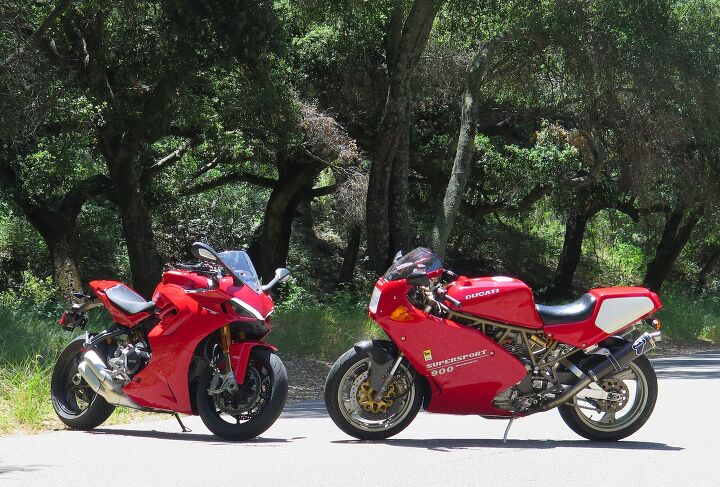
Tepusquet Canyon is right around the corner.
All to say, the 900SS made a lot more sense for most people who actually bought Ducatis. Even though “Superbikes” hadn’t reached the ridiculous horsepower levels they have today, the 916 was almost overkill for everyday use, or so it seemed. The torquey old air-cooled 900SS motor made better power for street use 90% of the time, except maybe on really fast roads like Angeles Crest. And you wouldn’t mistake it for a touring bike, but the SS ergos are quite a bit kinder than 916 ones.
Jim: While not the fastest bike, I have never wanted more motor. It is still big fun every time I get on it. I had my Angeles Crest era, too, going up every weekend with burned crumply tire edges, glad I made it.
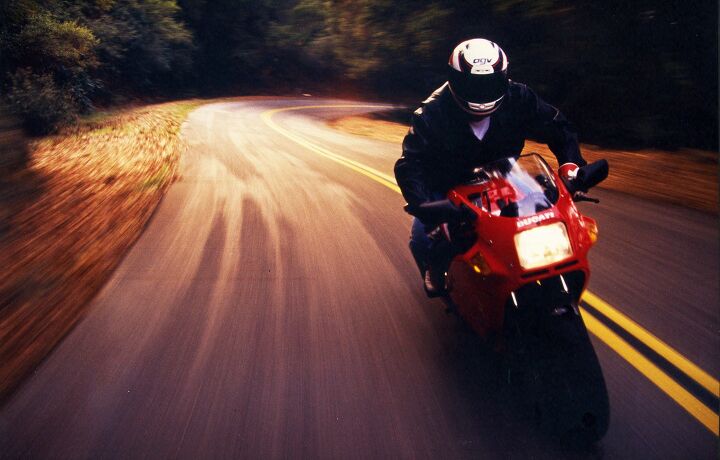
Blake Nimmons photo, circa 1997
Not that long ago
JB: 1996 seems like a long time ago, I guess because it was. A fourth of a century. So, you were still living in LA. How’d you keep it from getting stolen? I bet you kept it in your living room am I right?
Jim: I kept it in the vault of the Petersen Museum parked next to one of the first MV Agusta F4s ever made, and drove my truck to work most days. I used to park it in the lobby but I got yelled at for messing up the newly waxed floor.
JB: Has water touched it yet?
Jim: Once I left it outside during one of the terrible Santa Barbara fires and it was covered in ash. I had no choice but to hose it down then.
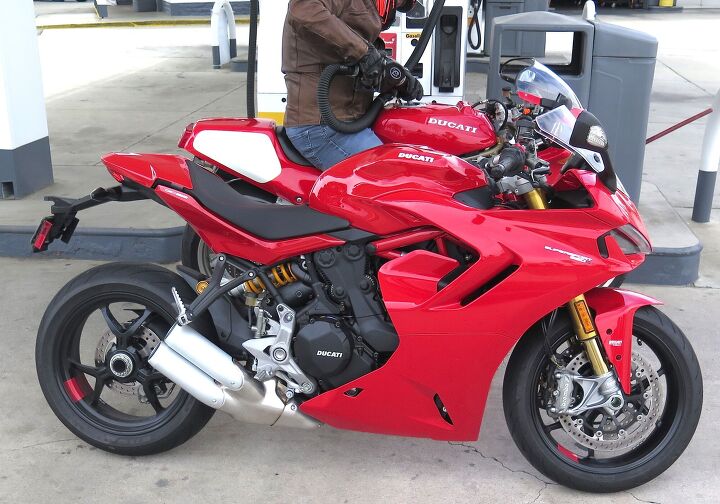
JB: How do you like my new SuperSport 950 with 937 Testastretta motor? Compare and contrast. Are you dying to ride it?

Jim: The new bike is interesting but seems fussy for the sake of progress. I really do like the nose, it’s so aggressive and compact. Not sure how it will age or will be looked back on as fitting into a certain era of styling. We all get to a certain age where aspects of culture leave us behind. We may be approaching that in life. I think my bike is near perfection in function, simplicity and styling from many angles except of course for the crazy parts-bin headlight. One minute you are in your 20s buying a new exciting Ducati and the next you are talking about an antique. Also, when I shared the photos of the two bikes, not a single person said to me they would take the newer bike, I wonder why? Maybe they are just being nice.
JB: Probably because they haven’t ridden them back to back. Like we’ve figured out, engineers have to engineer, that’s how they get paid. Once they learned to bend plastic into all those compound curves, how were they not gonna do it? I appreciate the simple slab sides of your old fairing, but the 2021 is pretty swoopy in its own way, and it really does conform much better to the human form.
And the headlights and all, with the DRLs, whether you like the look or not, tell you we have reached a level of technical ability way beyond plucking a headlight from whatever Fiat shelf yours came from. It makes you wonder which came first at the Duc factory, the headlight or the hole?
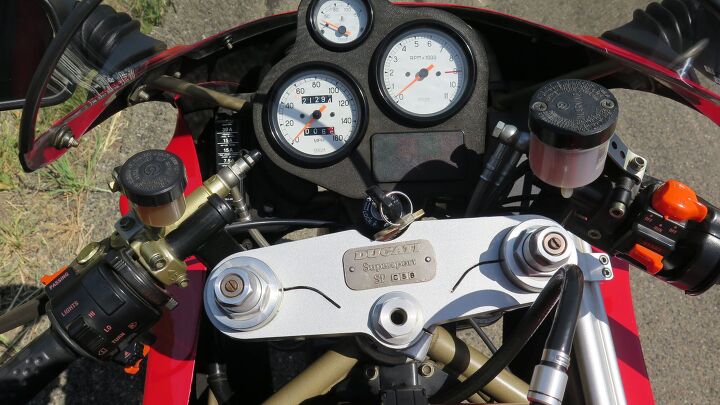
Then again I love the Veglia instruments, like inheriting a fine old watch from your granddad.
Jim: You’ll note the SP came with a temp gauge too, even though we have no coolant.
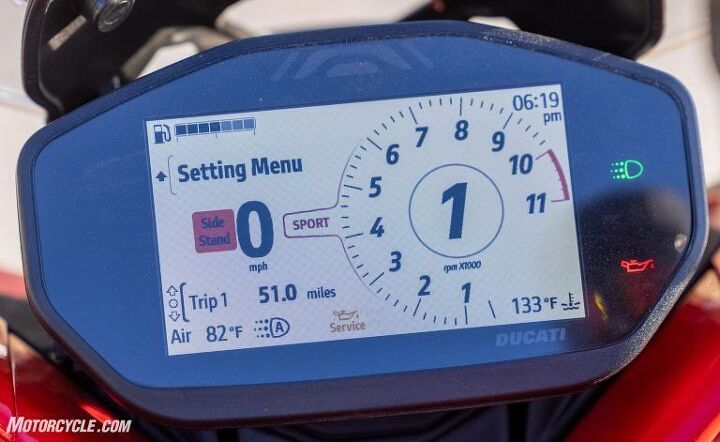
But you can’t control your ride modes and lean-sensitive ABS and TC with an old watch.
JB: Well I’ll be. I have almost no old magazines, but I did manage to hang onto a binder of all the 1996 Motorcyclist issues. We tested your very 900 SS against a Moto Guzzi Sport 1100 that September. Yours is the SP version, with carbon-fiber fenders, floating discs, and one-inch wider rear wheel on an aluminum swingarm – $10,440!

The ’90s…
And in that same issue, the cover story is “World’s Best Sportbike!” Wasn’t I going on earlier about ZX-9Rs and CBR600s? The Suzuki GSX-R750 won, it was $8,999. And my pick in that contest, the Ducati 916 (3rd place), was $15,700 (2nd: Honda CBR900RR, $9,799, 4th: Kawasaki ZX-9R, $9,999, 5th: ZX-6R, $7,899, 6th: Honda CBR600 F3, $7,699).
Where’d you get that kind of money in ’96?
Jim: The 1990s were pretty good to us weren’t they? Everybody was feeling pretty confident about the future in that pre-911, pre-internet era. I was just out of college and tasked with helping design the Petersen Museum from scratch. I had a giant budget, a wall-of-glass office facing Wilshire Blvd. Life was good so why not call up the credit union? It seemed like simpler times – and then I got my first computer. I wondered if I could draw on it? 25 years later, I am still here attached to the Mac…
JB: I too had the sweet 14th floor office, in which I was about 1/4 as productive as I am today on the home patio. I bought a condo, a new Ranger truck, and had a child. I’m still driving it and him.
Jim: Yes, you’re keeping it up nicely (sarcasm). My first new car was also a Ranger 4×4. It’s nice your boy is doing so much more with his life than you did with yours. It’s been great watching Ryan grow up from a shy little kid afraid of rocks on his mini-bike to an impressive adult kicking butt on all fronts.
JB: Yes, I am proud of the kid, but I don’t think it’s right he makes more money than I do. Then again, my $800k hovel was probably $100k when I was 27. Is there any kind of reverse inheritance financial product?
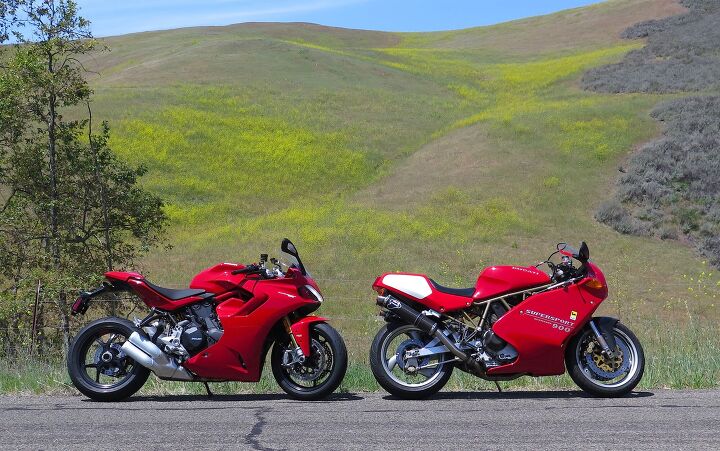
Anyway, according to that old Motorcyclist, your old SS made 72.8 horses at 7000 rpm; my new SS makes 102.4 at 9200, and 65.2 lb-ft torque at 7700 rpm to your old bikes 57.2 at 5200 rpm – all rear-wheel Dynojet numbers. But your old bike weighs 25 pounds less than the new one, too – 445 wet to 469.
Jim: My bike came really plugged up and geared to the moon. After the mondo jet kit, Termi system and airbox mods it ran like a different bike and still does. Not sure how much HP that added but a few, and a couple more teeth on the rear sprocket really woke things up too. Forks by the famous Stig Petersen and a few adjustable ride height clicks on the rear Ohlins really dialed in the handling. Getting those kinds of gains out of your 2021 bike, I don’t even know where you’d begin – and all of it would probably upset your onboard computers and make you a felon.
JB: It’s more the torquey midrange of course. Your two-valve motor is probably right there with the new one at 5 or 6000 rpm, where we ride most of the time. Beyond, there, the new bike’s four-valve heads let it keep building big power for another 2000 rpm and 30 horsepower past where yours is all done.

Everybody including the great Peter Egan loved your SS when it was new (actually in 1992), and it’s still a lot of fun to ride in a way I somehow think a 916 wouldn’t be if I got on one today. But I have to say the new 2021 SuperSport, riding down Highway 1 along the ocean, was just about the perfect vehicle for that road, so smooth and well-behaved yet with that same V-twin rhythm and midrange power as your SS. I didn’t realize they’d given me the “S” until it occurred to me after a while how sweet it rode over what looked like pretty big bumps where California is attempting to erode into the Pacific.
We couldn’t go on this way
The thing the engineers had no choice but to change was the engine. The biggest thing I noticed immediately when we set off together was the smell of internal combustion, which is a thing I never noticed at all 25 years ago. When I fire up my 2000 carbureted Yamaha R1, it’s the same deal with the exhaust fumes. I bet I could fumigate my house with it. Are you thinking of stepping up to the odorless new Euro 5 SuperSport, or will you wait for the electric Ducati?
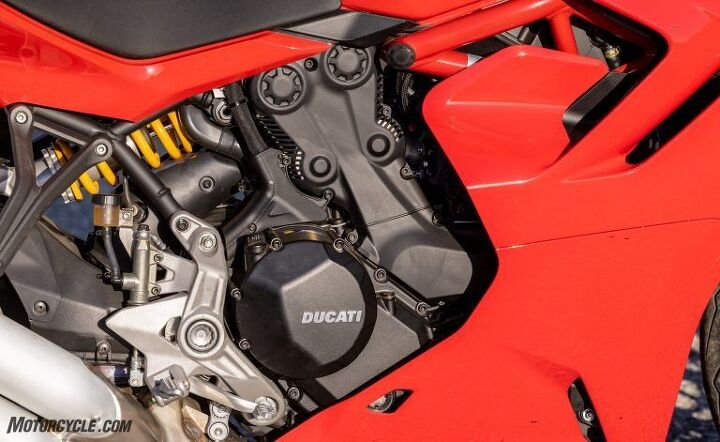
Jim: I will not grace that ridiculous question with a response. My bike does stink and it is hard to keep the carbs clean in this ethanol era; that is the biggest challenge owning this bike. The float drains are hard to reach so you have to ride it as much as possible. I recently rebuilt the carbs and it was just a mess in there, replete with green mold. My next new bike will be an adventure bike and after that, there’s no plan.
JB: Will you retire it at some point and just ride your VFR and KTM? Most guys your age park their vintage Ducati in the den. I can’t find the picture of the one I saw converted into an excellent bar with a big piece of custom Lexan on top of it. Now it’s got 21,000 miles on it and all that metal fatigue from hauling you around for 25 years, what do you figure will fail spectacularly first, and how will you deal with it?
Cagiva owned Ducati from 1985 to 1996.
Jim: This is what I get for helping you? I see. Ducati had a frame recall that was performed years ago, so it’s all good. I still ship the old girl to Pro Italia for maintenance and all is in order. I was recently down there and everyone came out to look at it. It’s older than some of the kids working there. I will ride it as long as humanly possible. All these years later it’s still a thrill. There is a lot happening to ride it quickly, a beast underneath you. With a bike this old you do wonder if it will start and then if it does, will it shoot oil out of any orifices? If not, then good to go.
JB: Sometimes I watch the dream cars of my youth hammer off at the Mecum Auctions for a few hundred thou, and I wonder if, after the Boomers with all the money are gone, will anybody even want those cars anymore? I mean, their heirs will have the money, but will they want LS6 Chevelles? Will the outsized carbon footprint be the social equivalent of the mink stole? I can appreciate Crockers and Vincent Black Shadows, but I’m really not dying to own or ride one. Maybe those vehicles all become like art now, a static store of wealth?
Jim: I have been watching the values on these Supersports, and after many years of being stagnant they are starting to pick up a bit. They deserve to be collected. I don’t think the really valuable gas vehicles will ever be abandoned. More like, old Corvette club Bob behind the poor farmer still in his `82 Toyota pickup going to work in a gasoline dystopia. The rich and the poor in the petroleum lane, everybody else in their shiny Volvo EV…
A 916 for the modern world
JB: What was really interesting was when I flipped back in that old Motorcyclist to the “World’s Best Sportbike” cover story. That original 916 made exactly 1 hp more than this new Testastretta SS, 2.6 fewer lb-ft of torque, and weighed 1 pound more than the new SS. What we’re looking at here, then, is a modern, comfortable 916 for $95 more than the original 916 sold for, that’s also Euro 5 clean and comes with a quickshifter, Ohlins suspension and an IMU to keep you from hurting yourself. A pretty good quarter-century of progress, really. And the base, non-S model is only $13,495.
The other kids wouldn’t share the new V4 Streetfighter or Panigale, but if they’re like the first-year Panigale I rode around Laguna Seca a session or two, upon which I was exhausted after about two laps, I just don’t think I’d enjoy an all-day ride on the street as much as I do cruising on the SuperSport. An 11,500-rpm torque peak seems too much like work, and I don’t need 208 horsepower very often.
But it’s nice to know Ducati offers them as an option: 25 years ago, the 916 was as fast as Italian bikes got, and your Supersport wasn’t too far off the pace. Now, the new SS’s 916-level performance seems relatively sedate. Have my skills really gotten that much better in these last 25 years? I feel like I should ask my doctor if it’s safe for me to ride the new Ducati Streetfighter? You?
Jim: I got to ride a 1099 a while back and I am not sure I need a Superbike for the type of riding I do. My street skills are not progressing as much as my dirt skills. My future is more dirt adventure-oriented when I’m not headed up the coast on my other old jewel – my VFR800, with the lady on the back.
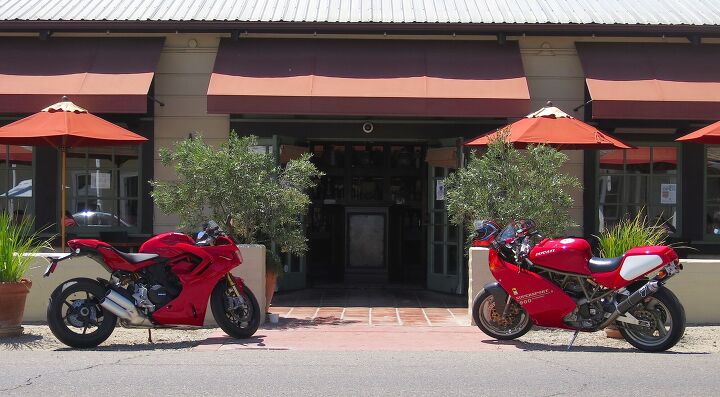
Taco time in Santa Ynez
JB: You’re a prime Multistrada candidate, really. At the end of the day, it’s nice that you still have the old SS. We both appeared as innocent babes in the woods in California, we’ve both been through a lot of upheaval over the last 25 years, and it doesn’t appear to be easing up anytime soon. Well, actually life has stabilized a bit lately – but now that things are looking up, the whole state’s about to dry up and burn to the ground around us. Typical. But I’m glad you still have your Ducati. And here’s to hoping we’re still around 25 more years from now to see what makes the Panigale V4 look as archaic as your Ducati does now.
Jim: Ahem, let me top up your Zinfandel.
| `96 Ducati 900 SS SP | `96 Ducati 916 | `21 Duc SuperSport 950 S | |
| $$$ | $10,440 | $15,700 | $15,795 |
| Engine | 904cc air/oil-cooled Desmo SOHC 90-deg V-twin, 2v/cylinder | 916cc liquid-cooled Desmo DOHC 90-deg V-twin, 4v/cylinder | 937cc liquid-cooled Desmo DOHC 90-deg V-twin, 4v/cylinder |
| Bore x stroke | 92.0 x 68.0mm | 94.0 x 66.0mm | 94.0 x 67.5mm |
| Compression ratio | 9.2:1 | 11.0:1 | 12.6:1 |
| Carburetion | 2 38mm Mikuni CV carburetors | Weber EFI, one injector per 2 50mm throttle bodies | EFI, ride-by-wire, 2 53mm throttle bodies |
| Horsepower, rear-wheel measured | 72.8 @ 7000 rpm | 103.4 @ 8900 rpm | 102.4 @9200 rpm |
| Torque, rear-wheel measured | 57.2 lb-ft @ 5200 rpm | 62.6 lb-ft@ 6800 rpm | 65.2 @ 7700 rpm |
| Transmission | 6-speed, dry clutch | 6-speed, dry clutch | 6-speed, slip/assist clutch w/quickshifter |
| Front suspension | 41mm inverted Showa, fully adjustable | 43mm inverted Showa, fully adjustable | 48mm inverted Ohlins w TiN treatment, fully adjustable |
| Rear suspension | Showa shock, fully adjustable | Ohlins shock, fully adjustable | Ohlins shock, fully adjustable |
| Front brake | 2 320mm floating discs, 4-piston calipers | 2 320mm discs, 4-piston calipers | 2 320mm discs, 4-piston calipers, Bosch cornering ABS |
| Rear brake | 245mm disc, 2-piston caliper | 220mm disc, 2-piston caliper | 245 mm disc, 2-piston caliper, Bosch cornering ABS |
| Front tire | 120/70 – 17 | 120/70 – 17 | 120/70 – 17 |
| Rear tire | 170/60 – 17 | 190/50 – 17 | 180/55 – 17 |
| Rake/trail | 25 deg/ 4.1 in (103mm) | 24 deg/ 3.7 in (94mm) | 24 deg/ 3.6 in (91mm) |
| Wheelbase | 55.5 in (1410mm) | 55.5 in
(1410mm) |
58.3 in (1481mm) |
| Weight, measured | 445 lbs w 4.6 gallons fuel | 470 lbs w 4.5 gallons fuel | 469 lbs w 4.2 gallons fuel |
Still drawing and riding motos after all these years, check out Jim’s work here.

The post 25 Years Later: 1996 Ducati 900 Supersport SP Meets 2021 Ducati SuperSport 950 appeared first on Motorcycle.com.

A Beginner's Guide to Acrylic Prints

photo by FollowTheFlow via iStock
There are many options for physical prints in digital photography. Besides paper prints and canvas prints, we have available printing on metal and acrylic prints. As a guide to acrylic prints, let’s take a closer look at them.
You might also want to check out our Metal Print Shootout and our other articles about making physical prints from our digital files.
What Is an Acrylic Print?
As discussed in the video above, acrylic prints are regular photographic prints covered in a clear acrylic resin. This acrylic is completely clear and has an interesting effect on viewers, it makes the colors and detail in the image seem deeper.
So much so that some subjects may even seem to be 3D. As a disclaimer, acrylic prints are not 3D printing, but they may appear to be partially that way depending on the subject of your image. The mounting system for hanging on a wall may also add to this apparent effect.
I’ve been using a professional printer for most of my physical prints. Though I have a fantastic large format printer of my own, using a printing service allows me to have a wide variety of print sizes and print types available without requiring me to stock all sorts of different printing materials.
A professional printing service can also ship directly to your clients, saving some time and effort. I still like to have clients come back to me (or I go see them) for a lot of my physical print delivery, but some clients actually prefer direct shipping.
Artbeat Studios

As a guide to acrylic prints for anyone wanting large, durable, gorgeous prints from their image files, I like to recommend Artbeat Studios as a professional printing service.
Before listing the types of acrylic prints and discussing how acrylic prints are made, let me tell you why I like using Artbeat Studios as a professional printing service.
First and foremost, the quality is superb. In addition to the high quality materials used, Artbeat Studios also has an excellent level of craftsmanship in all of their products. They also have great customer service including rapid turnaround time. Finally, their acrylic print prices are reasonable considering all that I listed above.
Learn More:
How Are Acrylic Prints Made?
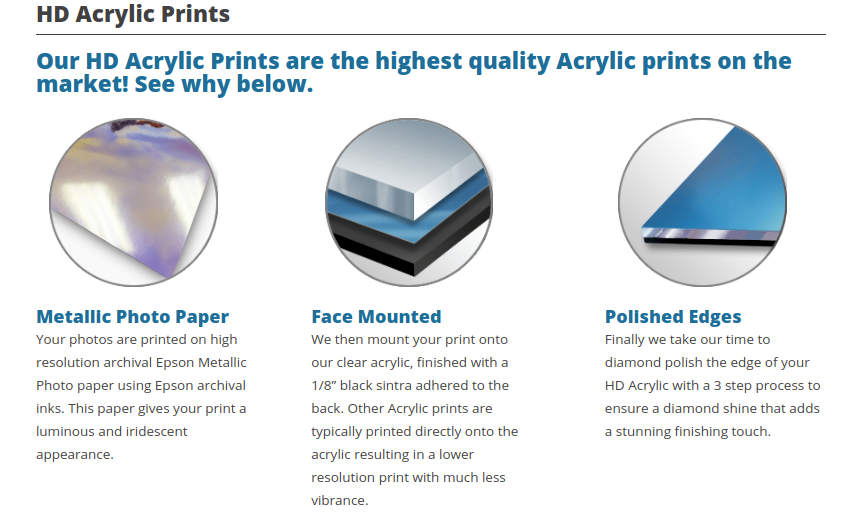
The making of high quality acrylic prints begins with the paper. Artbeat Studios uses Moab Slick Rock metallic photo paper and archival quality Epson inks. If you were wondering are acrylic prints durable, starting with this type of paper and ink provides a large part of the positive answer.
After printing, the paper is mounted to a board made of 1/8th inch black Sintra, a type of expanded foam polyvinyl chloride plastic that is lightweight and rigid. Other types of acrylic are printed directly on the acrylic. Artbeat Studios are made using metallic photo paper and mounting that to the Sintra provides better sharpness and color.
The print is reverse mounted to a ¼ inch thick piece of clear acrylic that the metallic paper is viewed through, making the entire depth or thickness of the finished print 3/8ths of an inch. After mounting, the edges are diamond polished to a smooth finish in a 3 step process.
Print Sizes

You can order custom sizes since they cut all of their acrylic on site, just check with Artbeat Studios online or via the phone for custom size options and pricing.
Regular print sizes start at 8x10 inches and include all the standard sizes plus the sizes such as 9x12, 16x24, and 18x24 inches used for full image area printing of files from Full Frame, APS-C, MFT, and Medium Format digital files.
In the regular size menu, you can find printing options for up to 48x96 inches which is 4x8 feet. That’s the size of a sheet of drywall or plywood for building homes!
Floating Wall Mounts

These pieces of art have several acrylic print mounting options as the finishing touch.
A recessed ¾ inch wall mount is attached to the back of the Sintra, which can then be hung on the wall by means of either a wire hanger or a cleat hanger. The mount can be made of natural wood or black wood, also of black aluminum or silver aluminum.
So the print appears to be floating a bit from the wall. Adding together the 3/8th inch depth of the acrylic print itself with the ¾ inch mount, the print seems to float about an inch from the wall, adding to that semi 3D effect I mentioned earlier.
Depending on your original image file, your final print might be one of the most outstanding pieces of photo art your friends or customers have ever seen. Hopefully this guide to acrylic prints has answered your questions about this interesting display option.
Learn More:
- Understanding the Differences Between Metal and Acrylic Prints
- The Trick to Making Your Photos Fine Art
We Recommend
Are Cameras Actually More Expensive Now Than Ever Before?
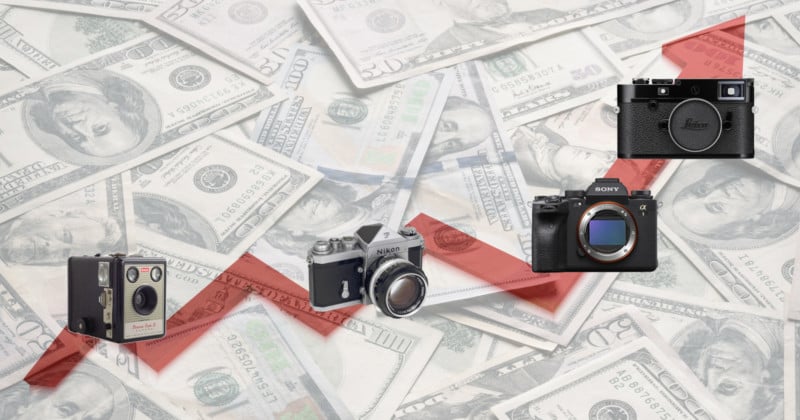
There is a purveying sentiment that cameras have only gotten more expensive over time. While there is certainly some validity in certain sectors of the market, the truth about camera prices over time is a bit more nuanced and complex than the average person makes it out to be. So, let’s take a look.
Please note that all prices are adjusted for 2021 inflation unless otherwise stated.
A Century of Film
While the first practical photographic process, the Daguerreotype, was invented nearly two centuries ago, for our purposes we are going to focus on commercially available cameras — cameras that were accessible and pragmatic for the average person to own. The first camera that falls into this category would be the original Kodak Brownie, released to the public by Eastman Kodak in 1900. Not much more than a cardboard box with a simple meniscus lens, the Brownie was heavily marketed to children, primarily as a method to sell rolls of Kodak film (117 film, originally). Its original price of $1 (equivalent to $32 today) made it both commercially and financially successful.
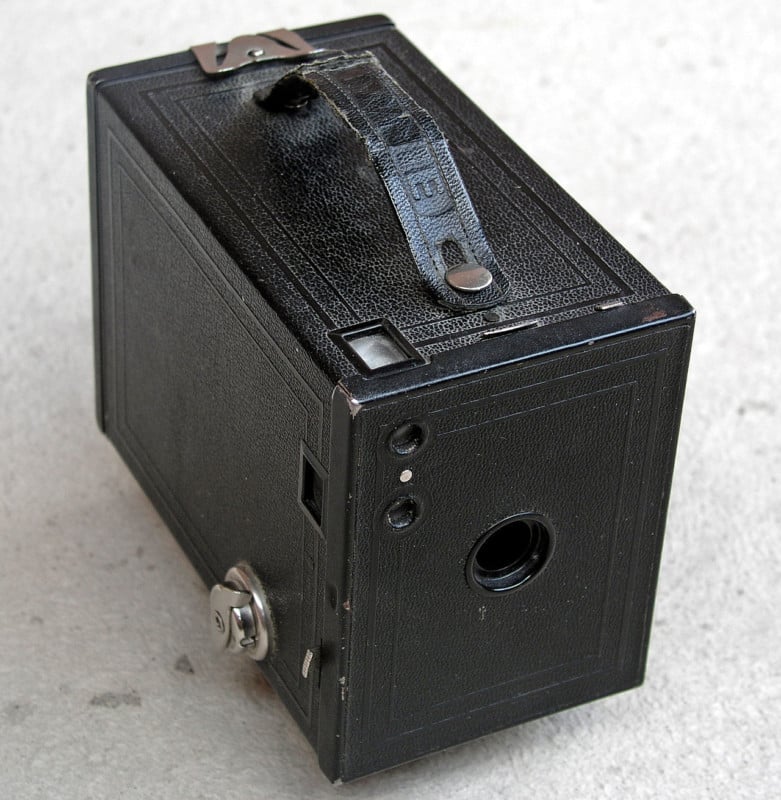
The following year, Kodak launched the Brownie No.2 — the first camera to use 120 film — which remains the medium-format standard to this day. Its price of $2, equivalent to about $63 in 2021, and appeal to both children and adults, might make it the vintage equivalent to today’s Fujifilm Instax cameras.
The introduction of 35mm film to the masses occurred in the 1930s and quickly took off as an incredibly popular, affordable, and portable alternative to the medium and large format cameras of the era. The Argus C3, released in 1939, became one of the most popular cameras of all time, selling over two million units — it was also widely used by American World War II photographers such as Robert Capa. Retailing for the 2021 equivalent of $675, the Argus C3 might be seen as an early, analog version of current cameras like the Olympus E-M10 Mark IV or Canon M50 Mark II.
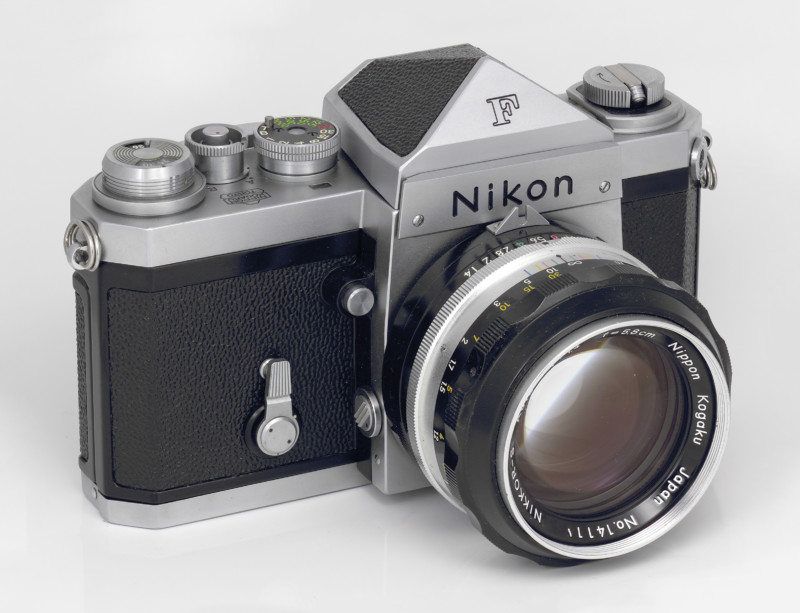
Between 1930 and 1960, we saw a rise from one billion photos taken per year to three billion — a 200% increase. The following decade, from 1960 to 1970, saw a 233% increase to ten billion photos per year — the largest percent increase of the 20th century. This sharp increase came on the heels of the SLR revolution and a massive increase in the number of manufacturers which produced everything from entry-level cameras to professional-level ones. The Nikon F in 1959 was arguably the most notable spark of this fire, which retailed for an adjusted price of $3,350. Cheaper cameras of the same year — the Minolta SR-2 and Canon Canonflex — sold for an adjusted $2,300 and $2,775 respectively.
We would see prices drop a bit from the 1970s onward, at least for many camera bodies. In 1975, Canon’s flagship F1 sold for an adjusted price of $1,550 while the lower-end FTb was $850. The same year, a Pentax K2 would run $2,500 and the medium-format Pentax 6×7 with a 105mm lens would drain $5,475 from your pocket.
By the late 1980s and early 1990s, things had shifted somewhat — at least for certain segments of the marketplace. The autofocus-enabled, flagship Nikon F4 sported an adjusted price of $5,700 — significantly closer to modern Canon or Nikon DSLR flagships. By this point, however, compact cameras were exceedingly cheap — $150 for a Canon Sure Shot Max and $102.98 for a Minolta Freedom 50.
Unlike today, the vast majority of sales were at the low end — compacts and entry-level SLRs.
The Digital Revolution
While the first DSLR came to market in 1991, it wasn’t until about the year 2000 that digital cameras finally became semi-affordable and realistic alternatives to film. The Nikon D1 is generally considered the landmark camera that turned the tide from expensive Kodak DCS digital cameras to sub $6,000 offerings — the Fujifilm S1 Pro was also released in 2000 and was even more affordable.
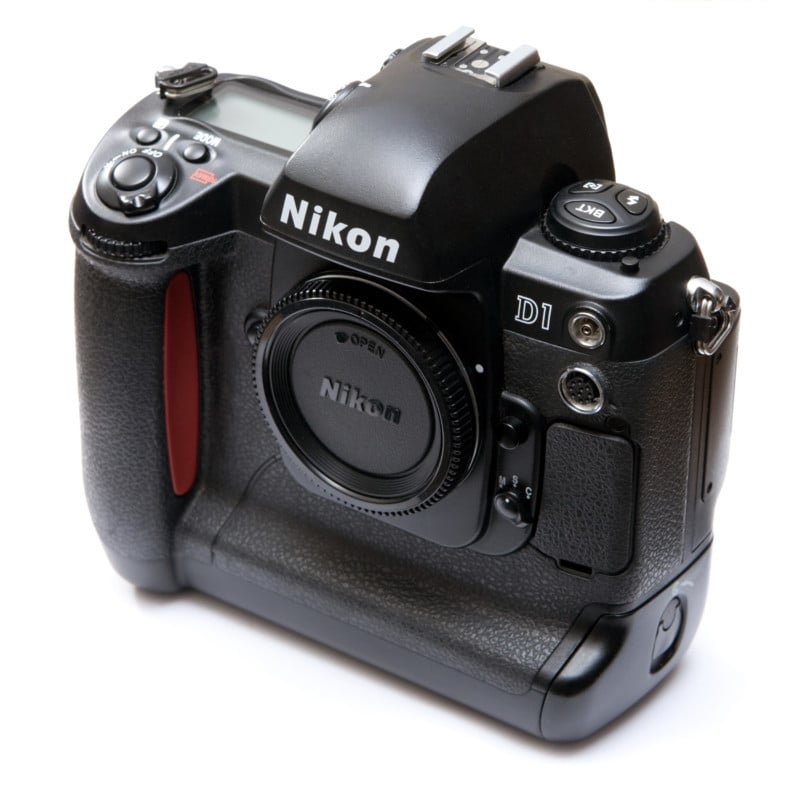
The Nikon D1 debuted with a $5,999 price ($9,400 once adjusted for inflation) followed by the D1X and D1H in 2001 — the latter of which featured a $1,500 price drop for a total adjusted price of $6,800. The following year, Canon released its first full-frame camera, the Canon 1Ds, at a price of $7,999 ($11,969 adjusted). The 1Ds Mark II (2004) and 1Ds Mark III (2008) all premiered at the same $7,999 price, though of course, their inflation-adjusted prices diminished comparatively over those years.
Nikon’s flagship line saw a similar trend across the years: D1 ($9,400), D2X ($7,125), D3 ($6,500), D4 ($7,000), D5 ($7,300), and finally the D6 in 2020 at an adjusted $6,750. Canon’s competitor 1DX line saw an almost identical trend, concluding in 2020 at the exact same adjusted $6,750 price with the 1DX Mark III. If you consider these figures, the $6,498 price of the Sony Alpha 1 does not seem excessive at all — and we can probably assume the forthcoming Nikon Z9 to be in a similar ballpark (and perhaps also the Canon EOS R3).
While the prices for high-end Nikon and Canon models have either dropped or stayed quite steady, we have seen significant changes in other areas. Most notably, the highest end of the market — which historically has been medium format — has undergone significant downward shifts in the past decade.
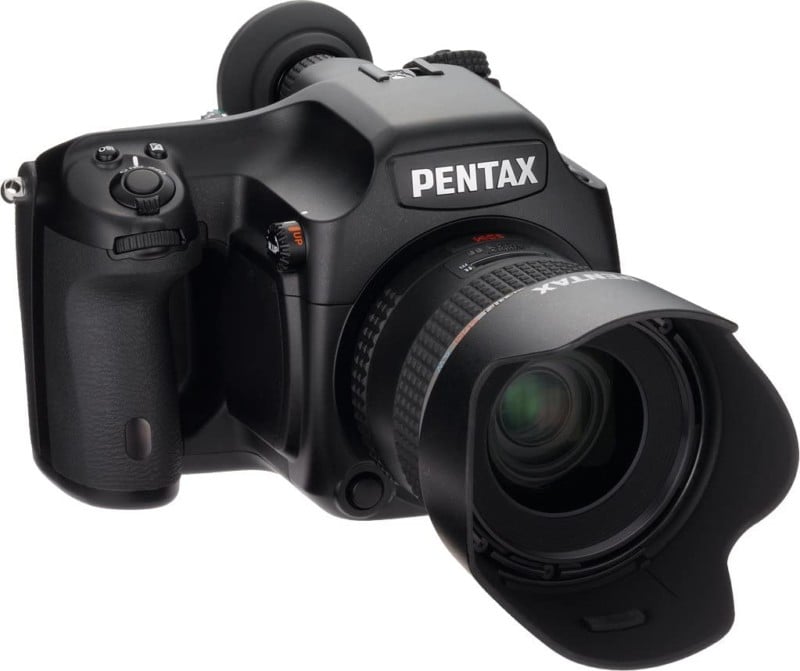
Contrast 2002’s Hasselblad H1D at an adjusted $26,900 to the Pentax 645D eight years later — the first medium format camera to dip below the $10,000 (unadjusted) threshold. In 2014, the successor Pentax 645Z premiered at $8,500 and within just two years we saw the release of the Fujifilm GFX 50S at $6,500 and the Hasselblad X1D 50C at $8,999. Yet another two years later, the GFX 50R marked the first medium format digital camera to be released with an MSRP under $5,000 and the following year Hasselblad’s X1D 50C II debuted at $5,750 — $3,250 cheaper than its predecessor. And, most recently, we have seen the release of a 100-megapixel mirrorless medium format camera featuring IBIS and phase detection autofocus for less than the cost of the Sony Alpha 1 or flagship Nikon or Canon.
Full-frame digital saw the same phenomenon in the past decade — 2013’s Sony Alpha 7 was the first full-frame camera to be released under $2,000. Subsequently, 2019 saw the Canon EOS Rp dip below $1,500 followed by the Nikon Z5 in 2020. These figures are unadjusted for inflation, making the idea that cameras are more expensive now even more of an odd proposition.
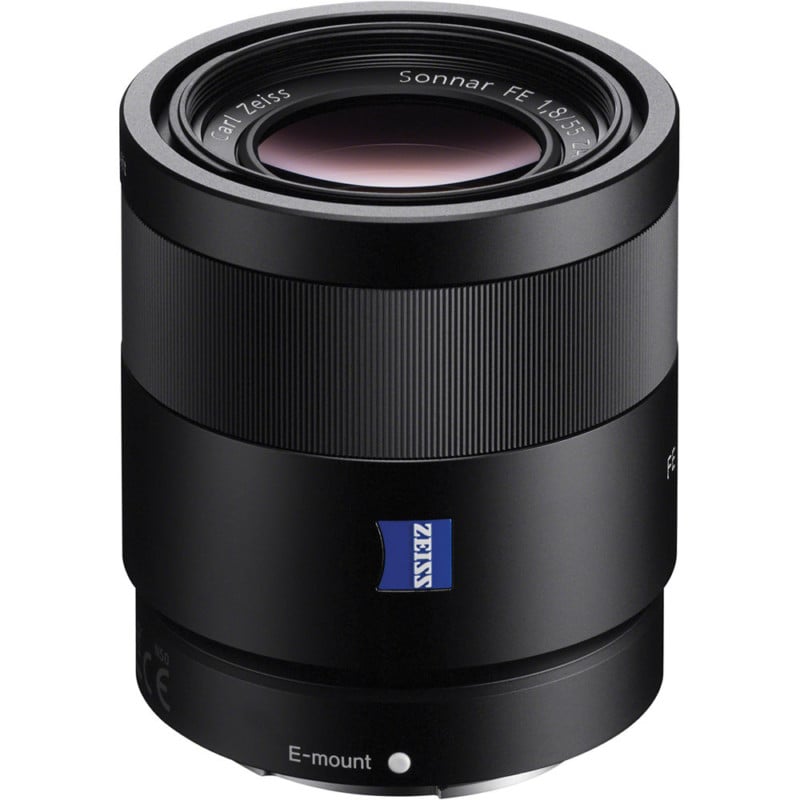
What is true, however, is that we have seen a rise in more expensive lenses, like the Nikon Z 50 f/1.8 — or, even earlier, the Sony Zeiss 55 f/1.8 which was released alongside the Sony Alpha 7 and Alpha 7R.
I believe the same factor driving the prices of high-end cameras downward is also responsible for the absence of cheap, name-brand glass. After all, we do still have incredibly affordable (and excellent quality) lenses from companies that not too long ago were seen as significantly worse than first-party optics — Tamron, Sigma, Tokina, Rokinon/Samyang. Even lenses from companies like Yongnuo or Viltrox have recently become well-known for image quality and the ability to punch far above their price class.
As the maturation of the smartphone camera has decimated the bottom end of the camera market, manufacturers have been forced to pivot and focus resources on serious photographers, whether amateur or professional. And as technology has pressed forward, those photographers have sought more and more and more — more dynamic range, more resolution, more frames per second, and so on. Whether or not most people even need these improvements is irrelevant — it is what people want.
And along with that naturally comes the demand for lenses that can live up to the ever-increasing demands of modern sensors, even at ultra-fast f/1.2 apertures. To complicate matters, the mirrorless revolution has driven the desire for smaller and more compact glass. Gone is the time where massive f/1.4 prime lenses like the Sigma Art DSLR line are accepted with open arms. All of this necessitates significantly improved lens designs, superior glass and coatings, precision manufacturing, and increased quality control.
The upshot is, while a lens like the Nikon Z 50 f/1.8 is more expensive than its F-mount counterpart, it is also one of the sharpest, most finely corrected 50mm lenses ever made. This Nikon lens is only one example — the same remains true of Canon’s new RF lenses, Sony’s phenomenal G Master line, Fujifilm’s APS-C offerings, and others. We are consistently seeing mirrorless lenses that outperform their DSLR ancestors, often quite significantly.
What About Leica?
You have probably noticed that I have not mentioned Leica at all. That is because Leica seems to be the only company to buck the trend exhibited by everyone else — not only are its digital cameras significantly more expensive than its cameras of the past, but its lenses are also selling for quite the premium.

In 1986, a Leica M6 sold for $1,695, equivalent to about $4,150 today. A Leica R4 cost an adjusted $2,150 and a Noctilux (50mm f/1.0 at that time) was a mere $2,775 adjusted for inflation.
Contrast that to the Leica M10 in 2017 ($7,250 adjusted) and the current price of a new Noctilux at a whopping $12,795. In fact, a brand new Noctilux 50mm f/1.0 purchased in 1986 would actually have significantly appreciated in value, even including inflation.
The reason for the disparity between Leica and virtually everyone else comes down to the difference between prestige pricing (Leica) and parity pricing (everyone else). The concept of parity pricing is one of competition — you price a product at or less than that of a rival to remain competitive. We have consistently seen manufacturers undercutting each other’s prices — a clear example of this was seen in the medium format arena once Fujifilm entered.
Premium (or prestige) pricing is built on an entirely different model — there are no competitors, so prices can be pushed as far desired, at least until diminished sales begin to outweigh the additional revenue.
So Why Do People Think Cameras Are More Expensive Now?
There are a few factors at work, I believe, that cause consumers to assume or believe that cameras are more expensive than they were five, ten, twenty, or fifty years ago.
Firstly, it is extremely difficult to account for inflation without actually looking at real figures. Most people do not realize that $2,000 from just five years ago is worth $2,250 today. The same figure ten years ago is equivalent to nearly $2,400. We do not generally consider the effects of inflation over such short-term periods, but it does put things in perspective.
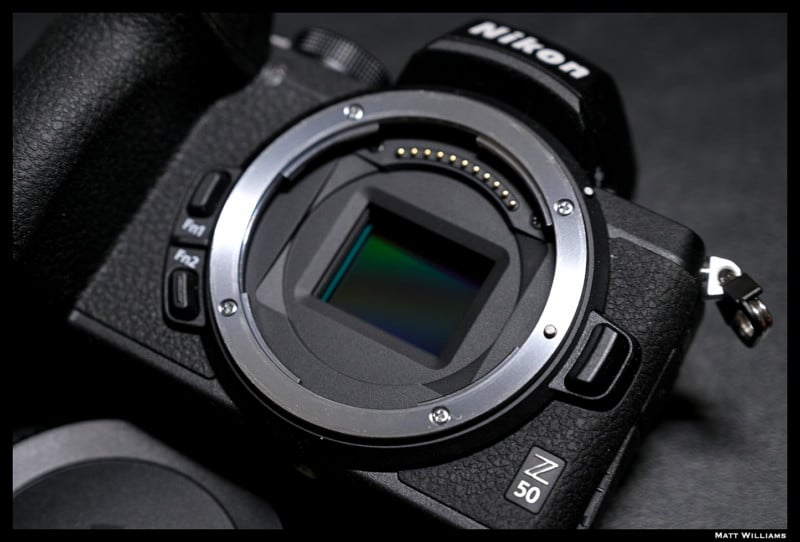
Secondly, we have seen a contraction inward of prices — the highest end (medium format) has dropped significantly, while the lowest end has largely disappeared (and therefore appeared to move upward). While we once considered something like a Nikon D5600 to be an amateur level entry point, we now see cameras like the Nikon Z50 or Fujifilm X-S10 in the same way — both significantly more expensive, though also offering newer, more advanced technology.
Finally, with the rise of mirrorless technology and the significant decline of DSLR sales, many of the cameras and lenses we see on the market are quite new. Whereas previously you could have purchased a 24-70mm f/2.8 DSLR lens that may have been on the market for five or more years — and thus almost certainly cheaper than its launch price — most of the options now are comparatively very new. A good number of older Sony FE lenses are marked down from their original price, but we do not see that much with Nikon Z or Canon RF lenses, and even those mirrorless lenses that are five or more years old are not as desirable, either due to image quality or factors like inferior autofocus motors. The relative “newness” of everything, especially the most desirable products, alters consumer perception.
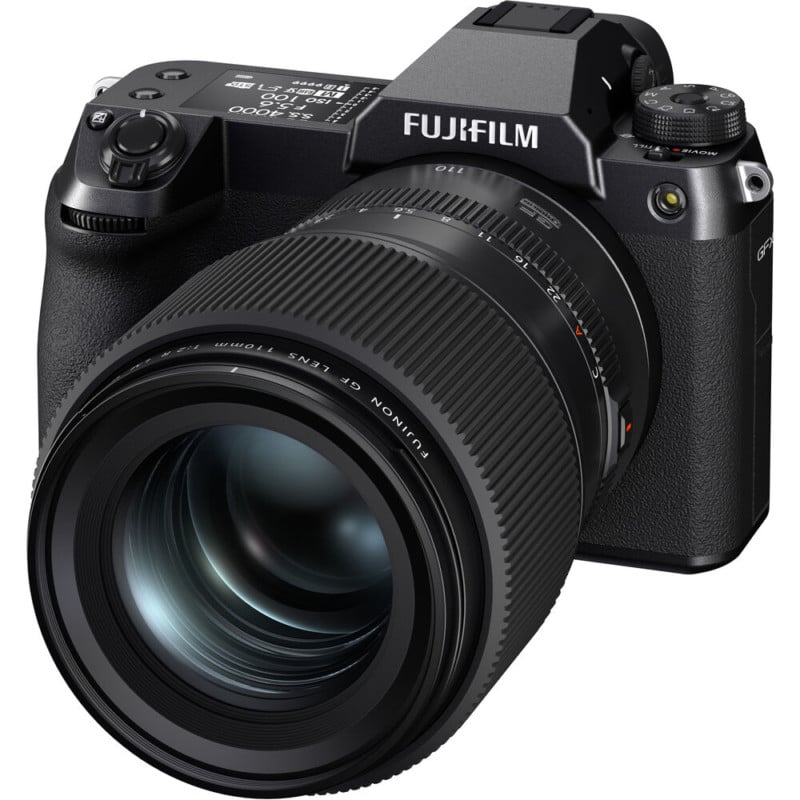
There is one thing that is impossible to deny: the value-based pricing of modern cameras. Camera technology has never been more capable or feature-packed than it is today. Perhaps there is no clearer example of this than the Fujifilm GFX 100S which launched with a price that was $500 less than the GFX 50S — yet it has twice the spatial resolution, includes in-body image stabilization, phase detection autofocus, and so on.
Photography has never been more accessible or more capable, and this year will see 1.44 trillion photos taken across the globe. In the year 2000, 86 billion were taken, making for an increase of 1,574% in the last 21 years. Whether it’s the phone in your pocket, a $500 Micro Four Thirds with a kit lens, or a $6,000 medium format camera, the potential has never been greater or more affordable.
Image credits: Aspects of header photo licensed via Depositphotos.
This Week in Security: Print Nightmare Continues, Ransomware Goes Bigger, And ATM Jackpots!

For the second time, Microsoft has attempted and failed to patch the PrintNightmare vulnerability. Tracked initially as CVE-2021-1675, and the second RCE as CVE-2021-34527. We warned you about this last week, but a few more details are available now. The original reporter, [Yunhai Zhang] confirms our suspicions, stating on Twitter that “it seems that they just test with the test case in my report”.
CVE-2021-1675 is meant to fix PrintNightmare, but it seems that they just test with the test case in my report, which is more elegant and also more restricted. So, the patch is incomplete. : (
— Yunhai Zhang (@_f0rgetting_) July 1, 2021
Microsoft has now shipped an out-of-band patch to address the problem, with the caveat that it’s known not to be a perfect fix, but should eliminate the RCE element of the vulnerability. Except … if the server in question has the point and print feature installed, it’s probably still vulnerable. And to make it even more interesting, Microsoft says they have already seen this vulnerability getting exploited in the wild.
Ransomware, The Big One
Kaseya makes remote management, security, and network monitoring products for IT departments and companies. Their VSA product specifically does remote monitoring and management, and had an optional on-premises component. Put simpler, you put their server on your network, and then installed their client on every computer you manage. The clients report back to the server, and you can install updates or fix problems remotely. It sounds great, actually. The only problem is that there was a pair of vulnerabilities in those servers.
The Dutch Institute for Vulnerability Disclosure had been doing research work on Kaseya systems, and had disclosed a number of flaws, which were working through the normal process of patching. CVE-2021-30116 seems to be the primary vulnerability used, and Kaseya was painfully close to rolling out a fix. The timing weakly suggests inside knowledge of Kaseya’s vulnerability and patching process, but that is by no means certain. Either way, the attack was launched over the 4th of July weekend in the US, and many Kaseya VSA machines were targeted. Once these management endpoints were compromised, a REvil malware binary was pushed out to all connected clients as an update to install. REvil has boasted that they scored over a million infections as a result, and have offered a universal decryptor for a cool $70,000,000.
We’ve discussed here how ransomware groups have put some effort into not making too big of a splash, as getting too much publicity can lead to seized servers, bitcoins mysteriously recovered by the FBI, and actual arrests, depending on what country the group operates out of. It will be interesting to see if an event of this magnitude results in further action.
NFC ATM Jackpot
Near Field Communications (NFC) is the technology that powers non-contact smart cards. You may use one of these for access control to get into your workplace. You probably have NFC tech built into your credit cards, and maybe your passport, too. Most cell phones can do NFC communications, and here’s the important bit, they can mimic a smart card. What do you suppose a security researcher would do with such an ability? Naturally, use this ability to send malformed smart card data to a reader and see what happens.
That’s just what [Josep Rodriguez] did, to a bunch of ATM machines. He is part of IOActive, a security research company, and they have a consulting contract with one of the ATM vendors. It seems that his work on the one device inspired security testing of multiple brands. Quite a few can be crashed via unexpected NFC input, and if we know anything from the last few years of security research, that often means that things are vulnerable to full exploit. And, as expected, on the machine he could legally attempt a full exploit against, [Rodriguez] hit the jackpot. Literally.
Jackpotting an ATM is when an attacker can convince it to dispense all its cash at once. There have been a few ways to do this in the past, from stealing manufacturer’s tools, to attacking the machine physically. This is the first time such an attack has been found over NFC, or at least that has been publicly talked about. More information about the attacks are coming. It seems this initial story is intended to be a warning shot to vendors, that it’s time to get serious about patching their equipment.
Vulnerable Training App
Interested in Android App security? There’s a training tool you might be interested in, the Damn Vulnerable Bank. It’s an Android app that looks and works just like a real app might, but without the legal problems that go with hacking into a real bank’s infrastructure. And there’s a getting-started guide that walks you through the process of getting the app running in an emulator, including defeating the built-in protections against such research.
Password Stealing Gets Tricky
Android apps that try to harvest data from users is nothing new, right? I almost passed this story by, until I noticed that these apps were doing something clever. The set of apps found by analysts at Doctor Web are working apps, and show ads just as we’ve come to expect. These apps have a unique option to get rid of the ads showing, just log into your Facebook account. Hit that button, and the Facebook login page shows up right in the app, making for an easy experience.
Does that trigger your security spider sense? It should. That app has complete control over what happens in its own browser implementation. In this case, it loads the real Facebook page, and then loads some additional JavaScript to steal the password as it’s typed in. Thanks to this research, Google has kicked the apps off the play store, but not before they racked up a combined 5.8 million installs.
All Your Database Are Belong To Us
One of the ways private data leaks out to the world is through an unsecured database. There are quite a few of the non-traditional databases that either complete lack built-in security, or default to an insecure installation. That isn’t a problem, so long as the people using the database take the appropriate steps to keep the data secure. How many such databases do you think are exposed to the internet right now?
Researchers at RedHunt Labs wanted to know, so they started scanning the IPv4 space for unsecured databases. They picked eight databases, and started looking, and found a total of 95,321 insecure or totally unsecured databases exposed to the internet. It’s hard to know how many of those have proprietary data, but there’s also the possibility that each of those represents a foothold into a network. Keep your databases off the internet!
How Broken Can You Make A Password Manager
And finally, in the facepalm category, Kaspersky’s Password Manager was generating extremely insecure passwords. There were several odd issues at play, but by far the worst was that the only source of randomness the generator used was the current time … in seconds. To quote the article, “every instance of Kaspersky Password Manager in the world will generate the exact same password at a given second.” To put it another way, if you know the day a password was generated by this system, you can immediately narrow it down to a list of 86,400 passwords. That’s just a little bit more than 16 bits, or the equivalent of a three-character password. Oof.
Giant's Causeway Pillar in Charleston, South Carolina

Roughly 40,000 basalt columns formed naturally from volcanic activity rise along the coast of County Antrim in Northern Ireland. Minus, that is, the one found outside of Charleston's historic Hibernian Hall. The pillar section arrived in 1851, roughly a decade after Irish immigrants began arriving in the Palmetto State escaping the Great Famine. It was also exactly 11 years after Thomas Ustick Walter completed the Greek Revival style building where the column now stands.
According to Gaelic mythology the Giant's Causeway, as the name implies, was constructed by giant/hero Fionn mac Cumhaill (aka Finn MacCool). In one version of the tale, he builds the bridge to fight the Scottish giant Benandonner. In an alternate version, rather than battle his opponent, Fionn's wife disguises him as a baby. Upon seeing such a massive child, whom Benandonner assumes is the offspring of his rival, he believes that Fionn must be a giant even by giant standards and promptly returns to Scotland, destroying the causeway in the process.
Given the frequent and massive labor needed to rebuild Charleston following fires, floods, hurricanes, and earthquakes, it seems somehow a fitting place for the fabled remnants of an Irish hero's ruined bridge.
Bake Victory Cake, the Simple, Inspiring Treat of Wartime America
The six-year-long conflict that was World War II colored most aspects of American life. Far from the front lines, its impact reached the kitchen, where a series of mandatory rations left American homes with limited sugar, flour, and animal fat.
Recipes for sweet, scrappy cakes abounded in newspapers and baking pamphlets. The cooking guides did double duty of instructing American women on how to make the most of their leaner pantries while also boosting morale. A widely published bedtime tale from 1918, “Uncle Wiggly and the Victory Cake,” which was syndicated in The St. Louis Star and Times, The El Paso Herald, and The Buffalo Enquirer, offered home bakers advice. “We must all help win the war,” part of the story reads. “And one way is to save sugar for the soldier boys. Make your cakes without so much sugar in them. Make them victory cakes. Put in cocoanuts or peanuts or something like that.”

Americans had been preparing for such lifestyle changes during the difficult decades between 1914 and 1939. Rationing had occurred during the first World War, too, but it was voluntary. As many Americans opted to send shelf-stable items like sugar and white flour abroad to feed the troops, women made “war cakes,” often sweetened with boiled raisins, a cheap, readily available dried fruit that made a capable substitute for sugar. As the hard times continued with the onset of the Great Depression, home cooks baked “wacky cakes.” The wackiness here may have been a nod to the ingenious use of vinegar, which not only brightened and leavened limited ingredients, but allowed bakers to use less flour.
With World War II, a more inspiring terminology took hold. The war cake—like its cousin, the war garden—was rebranded by newspapers and baking companies as the victory cake. “After World War I, there’s so much negative reaction to the war, and the brutality of the war, that calling things ‘war whatever’ takes on a very negative connotation,” says food historian Sarah Wassberg Johnson.
Recipes for victory cakes were directed toward female homemakers. The Low Sugar Victory Lemon Cake, for instance, published in The Morning Call in 1942, billed itself as “the housewife’s answer to the sugar shortage.” The cake substitutes “glassed sugar” (corn syrup) to bolster the cake’s sweetness. The Crisco Victory White Cake, published in The Kansas City Times in the same year, called on women to bake for their families. “Lady—your family will say you’re a magician when you serve this new mouth-melting, sugar-saving Victory Cake!” the recipe header promises.

These recipes harnessed the national mood. By 1942, the United States had enacted rations on meat and coffee, as well as on sugar and flour. By 1943, the country would suffer a butter shortage. Sugar was by far the biggest pantry commodity of the time; it was rationed from the early 1940s until 1947. And Americans were already working with a depleted stock, as access to Southeast Asian sources had dried up. “With the attack on Pearl Harbor in 1941, things change,” says Dr. Cynthia R. Greenlee, a historian, journalist, and senior editor at The Counter. “The currents of trade have to change, because you can no longer assume that the Pacific Coast—you know, the gateway to Asia—is going to be open for trade.”
"Lady—your family will say you’re a magician when you serve this new mouth-melting, sugar-saving Victory Cake!"
Wartime cake baking relied on items that were more plentiful. Recipes from the time frequently summon cocoa, corn syrup, and shortening. Cocoa, according to Wassberg Johnson, was not in short supply, although Greenlee points out that chocolate was often reserved for soldiers. In fact, a 1940s-era Nestlé ad from The Saturday Evening Post encouraged Americans to stop buying the product, announcing, “Chocolate is a fighting food!” Corn syrup, says Wassberg Johnson, was produced from a domestically grown product and stored in a glass bottle that was too heavy to ship abroad. And shortening, vegetable-based, was used to replace hard-to-come-by butter. It was a shelf-stable, mass-produced, inexpensive item that near everyone could get a hold of.
Sometimes, victory cakes of the era contained eggs; other times they did not. Sometimes, the cakes contained milk; sometimes they did not. Sometimes they were more akin to spice cakes, with a raisinated base; other times, they relied on chocolate. That variability in recipes, Greenlee says, was the result of an unreliable supply chain.

What ultimately bound victory cakes of different eras together was their “make do” attitude. A cake is no luxury, these recipes say. A cake is a food anyone can enjoy, even in lean times. “It’s something that makes you happy in a very unhappy time,” Wassberg Johnson says. In times like war and the Great Depression, when “food wasn’t necessarily abundant for everybody,” dishes with sugar and starch were “incredibly craveable, and that gave comfort to people.”
The below adapted recipe for victory cake is a pantry cake, made from items that largely have no real expiration date, including coffee, which enhances the cocoa. Although coffee was rationed during World War II, it lasted only a single year, ending in 1943. This was likely due to the fact that domestic roasting also took off during the '40s and '50s, Greenlee says, meaning that coffee was a product that nearly every American could easily access.

I have also included oranges, a domestic American crop that, Wassberg Johnson says, certainly would have been available during World War II. Orange extract, which is used in both the cake and its frosting, could have been produced at home, using orange peel and grain alcohol. Vanilla extract, for its part, was commercially available in the United States beginning in the late 1800s. Candied orange peels, used in the batter and as a garnish, are a reminder of the waste-not philosophy that pulsed through wartime.
Most victory cakes lacked frosting, though icing was somewhat common. In 1942, Crisco sponsored a recipe in the Fort Worth Star-Telegram for Victory Layer Cake with Chocolate-Peppermint Icing, for instance, the primary ingredient for which is sweetened condensed milk. Frosting, in this version of a victory cake, is non-traditional, though it adds a layer of indulgence to a dessert that was, on its face, about indulging, regardless of the world’s troubles. The addition of orange is also non-traditional, though there are several interpretations of victory cakes from the time that use lemons and lemon extract. Still, this marriage of old and new is a reminder of one prevailing concept. A victory cake, made today, or tomorrow, or 80 years ago, is a cake that forces us to see beyond today. It says: We can survive all this. It says: there will always be cake.

Victory Cake
Recipe adapted from AllRecipes’ Victory Chocolate Cake
For the Candied Orange Peel:
2 large oranges, 1/4 inch of top and bottom cut off
3 cups sugar, divided
3 cups water
1. Heat a medium-sized pot of water to boiling. Cut the peel from each orange into 4 vertical parts, removing the segments and pith. Cut the peel again, into ¼-inch strips. Add the peel to the boiling water and boil for 15 minutes. Drain and rinse the peels.
2. Bring 2 cups of sugar and 2 cups of water to boil over medium heat, stirring to dissolve the sugar. Add the boiled peels and bring to a boil again. Reduce the heat and simmer the mixture until the peel is soft, roughly 30 minutes. Remove and drain. Reserve liquid and refrigerate for future use as an orange simple syrup.
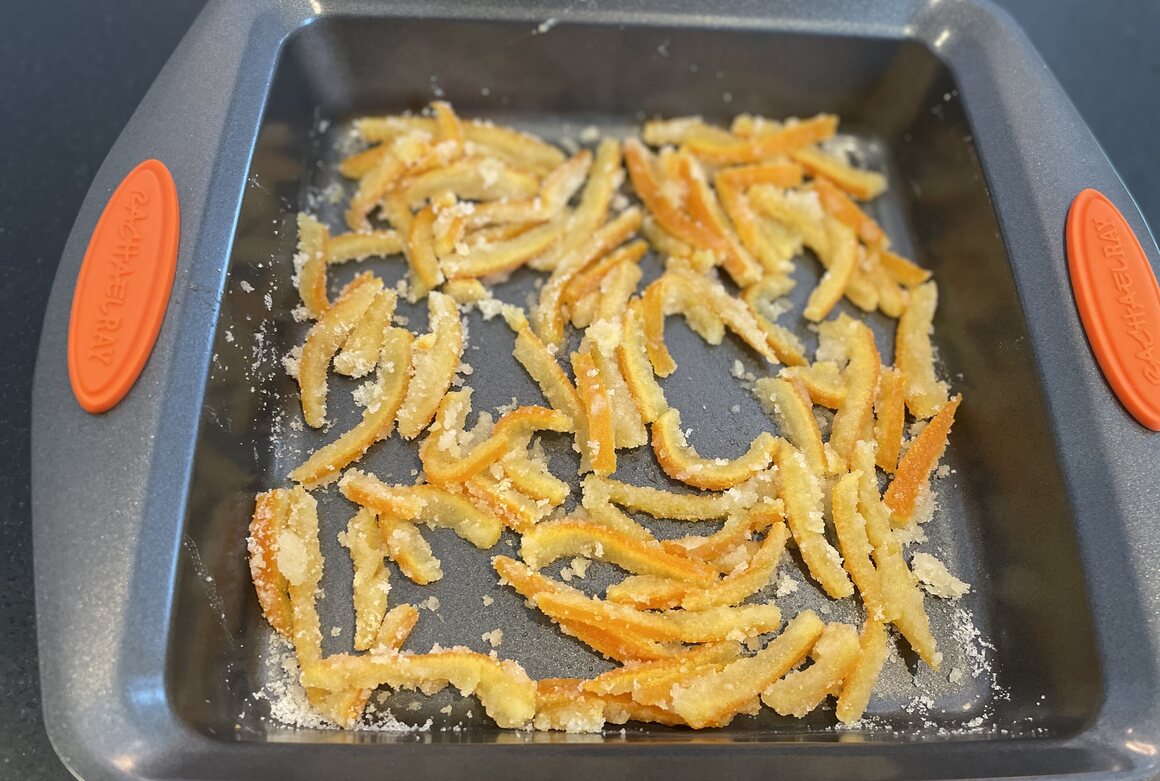
3. Toss the peels with the remaining sugar on a rimmed baking sheet, pulling them apart so that they are separated into individual strands. Transfer the coated peels to a piece of aluminum foil and allow them to stand until dry, 1 to 2 days. These candied peels can be made in advance, and can hold in the freezer for up to 2 months.
For the Cake:
2 cups sifted all-purpose flour
2 ¼ teaspoons baking soda
¾ cup shortening
1 ½ cups dark corn syrup
1 teaspoon vanilla extract
1 ½ teaspoon orange extract
½ cup unsweetened cocoa powder
¾ teaspoon salt
⅓ cup white sugar
3 eggs
1 cup cold, brewed coffee
1 1/2 cup candied orange peels, cut into bite-sized pieces (see recipe)
1. Grease a 9” cake pan and preheat oven to 350 degrees. In a mixing bowl, sift together flour, baking soda, cocoa, and salt and set aside. Separate the eggs and beat egg whites in a large bowl until stiff peaks form. Set aside.
2. Cream together the shortening and sugar with an electric mixer until a light and fluffy mixture is formed. Add the corn syrup, egg yolks, vanilla, and orange extract. With the mixer running on medium speed, add the dry ingredients in batches, alternating with the cooled coffee. Scrape down the bowls of the mixture and make sure everything is combined.
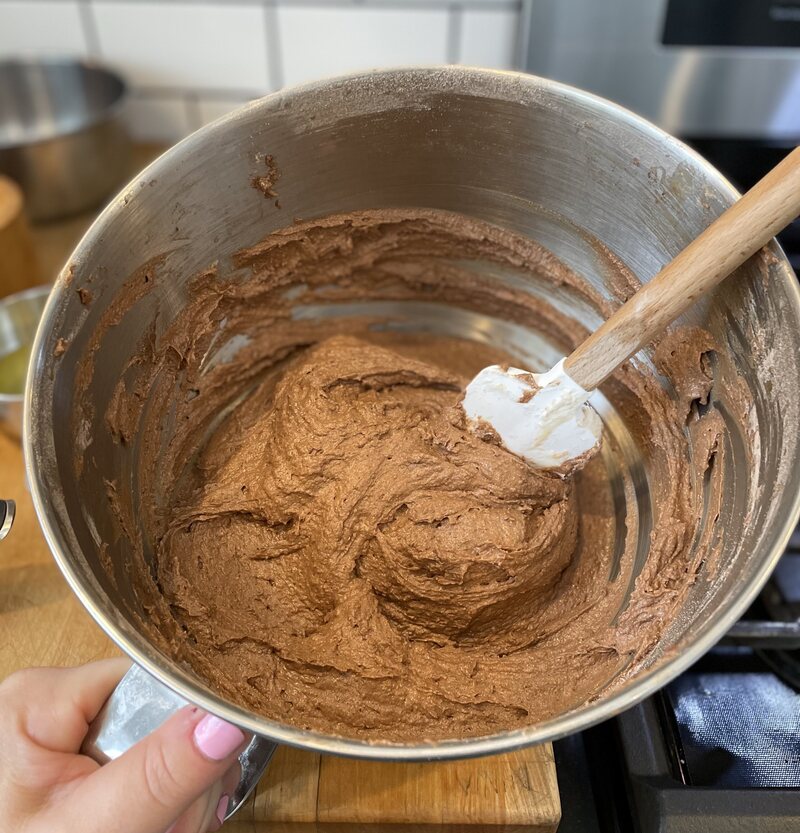
3. Fold in the orange slices until completely incorporated. Gently fold in the beaten egg whites until just combined and pour the batter into the greased pan. Bake the cake for 40 minutes, or until a cake tester inserted into the middle comes out clean. Cool in the pan for 10 minutes and then slice around the edges with a knife and transfer to a cooling rack.
4. Once the cake has cooled completely, frost with the orange frosting, if desired. Garnish with remaining orange peel.
For the Frosting:
2/3 cup shortening
1/4 teaspoon vanilla extract
¾ teaspoon orange extract
1/4 teaspoon salt
2 cups powdered sugar
5 to 6 tablespoons fresh orange juice
2 tablespoons milk
1 tablespoon grated orange zest
1. Combine shortening, vanilla, orange extract, and salt in a mixing bowl and beat together with an electric mixer until blended.
2. Add the powdered sugar and beat on low speed, adding the orange juice and milk until well integrated.
3. Add in the orange zest and beat on high until smooth. Leave at room temperature for at least 10 minutes before using.
Cape Eleuthera Resort Ruins in South Eleuthera, Bahamas

Welcome to paradise lost. Located at the southern terminus of Queen’s Highway, on the quiet shoestring-shaped island of Eleuthera, lie the ruins of a decadent era. Opened in 1972, the Cape Eleuthera Resort hosted well-heeled jet-setters during the island’s tourism heyday.
Built in conjunction with former Pan Am founder Juan Trippe, who set up a small, now derelict airport nearby, the former resort was an excuse to day-trip from Florida for a round of golf and business luncheons. Described in an advertisement as a “world of beauty on the island of Eleuthera,” the short-lived opulence of the resort ended in 1983 with bankruptcy, followed by a fire and repeated pummeling by hurricanes that pushed the property to disrepair allowing nature to begin reclamation.
Included at this site of prime exploration are the ruins of old villas and the former clubhouse, with its palm tree-lined circular driveway and valet parking. Long gone are the tennis courts, manicured beaches, tiled pool, and 18-hole golf course. All of which have been swallowed up by the hungry Bahamian flora.
The once manicured network of golf cart roads still exists, albeit pockmarked with potholes and overgrown with vines and invasive Casuarina pines. This jungled landscape is prime for exploration, made up of concentric paths known as the “Outer Loop” and the “Inner Loop,” which houses a ghostly and colossal banyan tree.
Today the site lies adjacent to a quaint modern marina with a handful of pastel houses, a milder glimpse into the lavish extravagance of tropical holidays past. Those adventuring to the verdant site can navigate to the predominantly intact “4th Hole,” a fairway that lies adjacent to a secluded beach kissed by azure waves, just one of many natural nooks that make this area prime for fishing, running, and snorkeling.
How a Canadian Beekeeper Breeds New Queens
Anicet Desrochers slips the small, crowbar-like tool underneath the lid of the beehive and cracks the propolis seal, a glue that bees make from resin. He puffs a smoker over the box as he pulls and examines the honeycomb frames with bare hands. The smoke, he says, disrupts the bees’ alarm pheromones, making them groggy, while also causing them to gorge on honey and nectar, a possible response to believing there is a fire. When they’re full, they’re less likely to sting.
His team of half a dozen beekeepers tackle the rest of the bee yard, pulling down the honey-heavy boxes, each six-foot stack containing 200 pounds of honey. As the harvest progresses, the bees fill the air with their electric buzz and speckle the sky black. There’s the occasional curse of “tabernac” each time a beekeeper is stung. Desrochers insists on no gloves—they have to remain sensitive to the bees. Sometimes he even does tai chi with his team to set the right energy. He approaches his work with bees more as a collaboration than subjugation.

As the team finishes loading the trucks with several thousand pounds of honey, Desrochers takes a moment to admire the chaos of hundreds of thousands of bees droning around him. “You cannot do beekeeping if it’s only for money,” says the 42-year-old beekeeper. “It’s so demanding, you need to really be in love with the bee.”
While Desrochers’s parents kept bees, they used the honey to produce mead. When he took over and launched his business, Miels d’Anicet, in 2000, he wanted to focus on the honey’s quality. But first he had to reckon with the bees he’d inherited. At that time, all Quebec’s beekeepers used yellow Italian bees, which don’t do well in his home of Ferme-Neuve in the High Laurentian mountains. In order to have a bee that could thrive in the short summers and cold winters, he studied the art and science of queen-bee breeding, which he describes as the most complex realm of beekeeping.
For us, bees are both workers—they pollinate a third of our food—and livestock: They produce about 1.9 million tons of honey globally each year. So there’s a lot at stake in what kinds of bees we use. But they’re more challenging to breed than a cow or pig. Bees are short-lived, they’re never truly domesticated, and you can’t just put two in a box and hope they mate. “The bees are still wild because if they don’t want to do what you want them to do, they take off,” says Desrochers. Yet over the past two decades, he has succeeded in refining his breeding technique and his personal bee strain, becoming the largest queen-bee producer in Canada and one of the leading practitioners of this wondrously specific skill.
Desrochers hadn’t planned to become a beekeeper like his parents. He wanted to escape his remote town to study anthropology and to travel. But soon after graduation he was in Réunion, studying their medicinal plants, and met a family of beekeepers. There he realized this ancient practice of beekeeping could connect him to others across the world, not just keep him trapped in Ferme-Neuve, and that bees knitted together his disparate passions. “Beekeeping touches everything,” he says, “botany, biology, ethnology, anthropology, gastronomy.”

After learning from breeders in British Columbia and California, he went in search of bees from around the world that had characteristics suited to his environment. The majority of honey bees belong to the apis mellifera species, believed to have originated in Africa, which spread across the world and evolved into unique sub-species due to regional environments. From Russia, Desrochers acquired the Primorsky bee, known for their cold hardiness and resistance to mites. He went to Slovenia for the Carniolan bee, which is good at foraging on cold days and surviving long winters—his wife, Anne-Virginie Schmidt, actually smuggled them home. “They were in my bag,” she says, “but when I went to customs I knew I would wear a dress and put the cages underneath.” They began to buzz against her because of her warmth. He brought apis mellifera monticola back from Kenya, a gentle bee that lives above 6,500 feet on the slopes of Mount Kenya and Kilimanjaro. Then he added Caucasian bees from the Caspian region that a friend in Vancouver gave him.
While there is evidence of beekeeping dating back to ancient Egypt, breeding began with the bee’s modern domestication, probably around the mid 1800s with the creation of the Langstroth hive. The Reverend Lorenzo Langstroth built an easy-to-use hive of removable frames on the basis of “bee space,” a roughly one-centimeter gap that allows bees to move freely. Any less and the bees fill the space with propolis; any more and they construct honeycomb.
To breed his bees, Desrochers narrows down the top 100 colonies each spring from his 1,200 hives, then chooses the top 10 to use, and sends some to a university breeding program. The characteristics that make a bee suitable to his climate also help his clients across the continent who buy his queens. “My main focus, and it's still the same right now, is to find a bee that will resist and tolerate pressures like climate change, diseases, parasites, and of course being productive.” Though he can accomplish a lot through observation and intuition, he lacks the time and resources to select based on detailed scientific data.
For this, he has collaborated for nearly 20 years with Pierre Giovenazzo, a professor at the University of Laval who employs genetics, statistics, Big Data, and artificial intelligence in his bee-breeding program. “We have developed a statistical model,” says Giovenazzo, “so we don't just select based on observations, we select based on measurements.” His lab’s focus on both genetic and environmental factors makes it a scientific leader within North America and internationally.

Using techniques developed in the pork and dairy industries, he and his team document each bee’s lineage in what is called the “studbook,” which gives each bee a “breeding value” based on the history of the line’s performance over the past decade. He measures criteria that are important to beekeepers in northern climates such as how well they survive the winter; how quickly the colony can grow in the spring, an important quality in such a short season; disease resistance; aggressiveness; and honey production.
Giovenazzo populated the breeding program with a variety of local and imported bees, including some of Desrochers’s hybrid bees. When Giovenazzo selects the best bees, he sends them back to the beekeepers who multiply them, observe them, and send back the best ones in a cyclical exchange that progressively leads to a better bee. There are similar programs throughout the world, each working towards a bee suited to the local climate and needs. In Europe, there is a strong focus on preserving the local lines of indigenous bees, which have been shown to outperform imported bees.
One of the challenges of bee breeding is being able to see what is happening inside the dark hive. So this year Giovenazzo is installing Nectar sensors in Desrochers’s hives, a novel technology being rolled out across the world, which constantly measures temperature, humidity, vibration, and movement, beaming back the information in real time to then be processed by algorithms. “What the sensors will give me as a researcher is the information we need to do precise performance evaluations in situ at the beekeeper site,” he says. He also has plans next year to follow the queens down the chain to some of Desrochers’s buyers so he can study how the genetics evolve through subsequent generations.
Tracking and breeding cows through successive generations is relatively easy. For bees, not so much. Moving down generations from the originally bred queen, it’s easy to quickly lose these selected genetics. A queen mates in one flight with 15 to 20 drones and stores that sperm for her entire life to lay eggs. So the first generation that she lays will carry the desired characteristics, but when the next queen mates, it will be with random drones, which dilutes the genetics.

While Desrochers’s partnership with Giovenazzo exemplifies the challenges of breeding bees, he is unique in his focus on quality over quantity, which addresses this challenge. By constantly selecting both his queens and drones, and keeping the mating yard separate from the general population, he can slowly nudge his bees to be more resilient and adaptable. What allows him to do this is his isolation in northern Quebec: There is no other beekeeper for 150 miles, meaning his bees don’t mix with others and aren’t exposed to pesticides, which impacts the drone’s fertility and leads to fewer viable sperm in the queen. “What Anicet does is exceptional in Canada. He is a visionary and keen queen breeder,” says Giovenazzo. “I would put it like this: Of all bee breeders in Canada, there is Anicet and there are the others.”
The queen-breeding hives, small styrofoam boxes painted in various colors so the queens can recognize their home, wind a trail through a field of goldenrod. Each spring Desrochers and his team shake 800 pounds of bees from the regular colonies to populate these hives. Taking frames of honeycomb from his best breeder hives, he harvests 2,000 larvae one by one using a precise scapular tool, placing them in a thimble-sized container with a dab of sugar paste. These are inserted into the queen-less hives. When a colony is without a queen, they go about making a new one out of this serendipitous larva.
Any larva can become a worker, drone, or queen depending on what food the colony feeds it. A queen receives only royal jelly, a protein-rich secretion that nurse bees feed to a queen 10,000 times during development. Once the queen emerges and mates, then the beekeepers spend a day opening each hive, pinching her gently between their fingers—on average she’ll be there 75 percent of the time—and packaging her in a small cage with three worker bees and some sugar paste for the journey. This is then shipped to beekeepers across Canada and the United States. Desrochers produces 15,000 queens each season, the largest producer in Canada, but he is small compared to breeders in California and Hawaii, some of which can ship a thousand queens per day to meet the need of pollinating, for example, the massive almond orchards of California.

Jean-Marc Le Dorze, Desrochers’s largest buyer, runs Golden Ears Apiaries in Mission, British Columbia. He uses his 5,500 hives to pollinate blueberry and canola fields. Transporting his bees to Alberta on tractor trailers over the Rocky Mountains, as well as the demands of industrially scaled pollination, are tough on the bees, but Le Dorze says Desrochers’s bees are pretty hardy. The quality of Desrochers’s bees leads to efficiencies in his business: Whereas queens from California would fly off the truck, these ones stay, remaining calm and less aggressive; those imported from the South don’t even live for a year, while Desrochers’s bees last two years under these rough conditions. They also require half the amount of sugar syrup that Le Dorze uses to overwinter them when they hibernate.
Breeders such Desrochers can help the wider industry become more productive with bees that are better adapted to a changing climate and diseases. But he can’t breed bees that will produce tastier honey. At least not directly. Instead, these hardy, well-bred bees can give beekeepers the chance to make more interesting, higher-quality honeys based on the location of the hives and how one manages the harvest.
In Desrochers’s case, the honey that he collects in his far-north location—something he can do thanks to his breeding program—is renowned for its diversity and complexity of flavors due, he says, to it being “wild,” not “agricultural.” While a lot of honey is produced by pollinating large fields of monocultures, he doesn’t put his bees into such environments; they’re left to do as they will throughout the river valley and surrounding forest and small pastures. Pollen analysis of their honey shows that 90 to 95 percent of what they collect is wild. “They can find 50 different kinds of pollen,” says Schmidt, “and they always say we have some pollen that can’t be found anymore in Quebec, like the old typical native flowers that have disappeared because the agriculture was too invasive.”

Healthy, productive bees that overwinter well and get strong quickly in the spring can take advantage of the different bloom cycles of the entire season. Desrochers then separates the honey by these cycles, and sometimes specific flowers and place, to highlight the terroir of time and location. In spring, if he’s lucky, the bees will forage from wild cherry and maple trees, as well as dandelions. Summer is a mix of linden, white clover, raspberry; fall has goldenrod and buckwheat. He harvests linden and buckwheat honeys individually when there are crops.
Each year he also tries to make a vintage honey, selecting and bottling a single bee yard, like a winemaker. Last year’s vintage was a result of both breeding and colony management working together to make a unique honey. It was cold until the end of May, so all the blooms were late, especially the maple and willow trees. A bee yard of 40 hives, located close to these trees, survived the winter with good enough numbers to sufficiently harvest from these two unusual food sources for a small bottling of “funky honey.”
“A special location, good bees at that point and then magic,” he says. “This year we don't have it because it bloomed earlier. But this is why it’s so special. You never do the same thing. I’ve been working with bees for 20 years, I have some mentors that have been working bees 50, 60 years, old guys, every year we discover new things.”
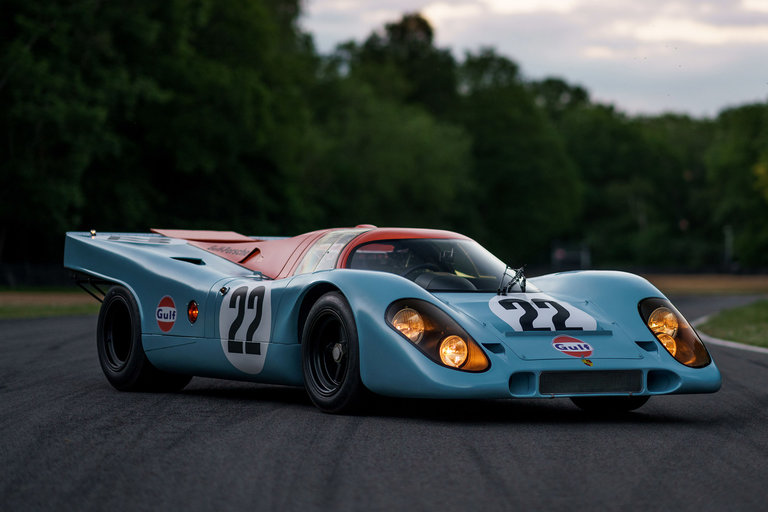
1970 Le Mans Porsche 917 K Race Car
Visit Uncrate for the full post.
2022 Porsche 911 GTS

Visit Uncrate for the full post.
Aston Martin A3 Vantage Roadster

Visit Uncrate for the full post.
2022 Ferrari 296 GTB

Visit Uncrate for the full post.
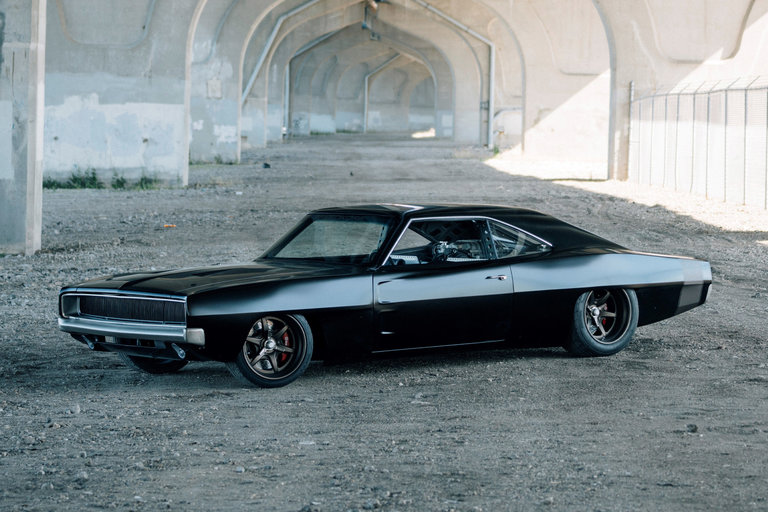
SpeedKore Hellacious F9 1968 Dodge Charger
Visit Uncrate for the full post.
Neil Peart Silver Surfer Car Collection

Visit Uncrate for the full post.
Petersen Automotive Museum ADV:Overland Exhibition

Visit Uncrate for the full post.
Hodson Motors Custom Trucks

Visit Uncrate for the full post.
2022 Suzuki Hayabusa First Ride
When considering the Hayabusa, two features immediately come to mind. First, is the iconic look of the slippery fairing inspired, according to Suzuki, by the peregrine falcon, which the manufacturer has long boasted of having “one of the lowest drag coefficients achieved on a production bike.” The nose of the fairing swoops back over the windshield, carrying the arc of the bike’s lines over the back of the tucked-in rider before curving down over the tail section’s prominent hump – a look that has only been enhanced in the 2022 version. The second prominent feature of the Hayabusa is almost completely hidden from view but is almost as iconic as the motorcycle’s profile (Just ask drag racers). A 1340cc inline-Four is responsible for the thrust that propels the Hayabusa to a speed-limited 185 mph.
Naturally, when considering a new generation of an existing motorcycle, inquiring minds want to know if it is a whole-cloth, ground-up update. In the case of the 2021 Hayabusa, the answer would be no. However, the changes are by no means minor. While the essential structure of the engine and the chassis remain the same, they have both been “refined” and “thoroughly updated,” respectively (according to Suzuki’s press materials), with the sum of the new or revised parts reaching a lofty 550 in total. Anyone who has seen the Hayabusa’s 1340cc engine naked would recognize it immediately because the changes are on the inside. The same could likely be said of the chassis, from the swoopy bodywork to the twin-spar aluminum frame to the identical 58.3-inch wheelbase. So, why don’t we start with the engine?
Read the full review here: https://www.motorcycle.com/manufacturer/suzuki/2022-suzuki-hayabusa-review-first-ride.html
Subscribe!
http://www.youtube.com/subscription_center?add_user=Motorcycle
YouTube - http://www.youtube.com/Motorcycle
Facebook - http://facebook.com/MotorcycleCom
Twitter - http://twitter.com/MotorcycleCom
Web - http://www.Motorcycle.com
Established in 1994, Motorcycle.com is the premier online resource for motorcycle and scooter enthusiasts. With hundreds of high quality, detailed video reviews on bikes from Harley-Davidson, Honda, Yamaha, Suzuki, Kawasaki and just about everybody else, it's the best place to go to learn about the latest and greatest two-wheeled creations. There's simply no better resource if you're planning on buying or if you just want to check out some awesome machines.
Tech Hidden in Plain Sight: Cruise Control

The advent of the microcontroller changed just about everything. Modern gadgets often have a screen-based interface that may hide dozens or hundreds of functions that would have been impractical and confusing to do with separate buttons and controls. It also colors our thinking of what is possible. Imagine if cars didn’t have cruise control and someone asked you if it were possible. Of course. Monitor the speed and control the gas using a PID algorithm. Piece of cake, right? Except cruise control has been around since at least 1948. So how did pre-microcontroller cruise control work? Sure, in your modern car it might work just like you think. But how have we had seventy-plus years of driving automation?
A Little History
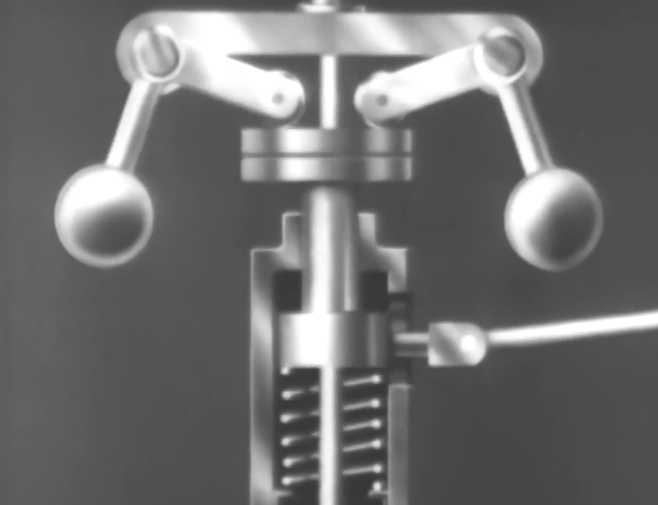
Controlling the speed of an engine is actually not a very new idea. In the early 1900s, flyball governors originally designed for steam engines could maintain a set speed. The idea was that faster rotation caused the balls would spread out, closing the fuel or air valve while slower speeds would let the balls get closer together and send more fuel or air into the engine.
The inventor of the modern cruise control was Ralph Teetor, a prolific inventor who lost his sight as a child. Legend has it that he was a passenger in a car with his lawyer driving and grew annoyed that the car would slow down when the driver was talking and speed up when he was listening. That was invented in 1948 and improved upon over the next few years.

That was the year power door locks came out, too, and as you can tell, the public liked both of these inventions since we still have them today. In fact, the original design by Teetor didn’t actually lock the speed in, but just gave resistance to the gas pedal. Carmakers and consumers demanded the locking feature and Teetor finally consented.
From Flyball to Vacuum
A classic cruise control-equipped car will often have two cables running to the throttle body. One cable goes to your gas pedal and you intuitively know how that works. The other cable does the same thing but instead of a pedal, it is attached to a valve that uses a spring-loaded diaphragm or piston to control the cable — the cruise control servo. A valve draws vacuum or admits air into the chamber causing the diaphragm or piston to move the control cable. Since the cables are attached to each other, when the cruise control engages you can feel it in the gas pedal.
Of course, the actuator doesn’t have to use vacuum. You could as well use an RC servo, but in practice, it is nearly always a diaphragm or piston that has a vacuum on one side. The controller manages the vacuum via a valve that connects to the intake manifold or a dedicated pump along with a valve that bleeds air into the chamber. You can see a typical controller in the video below.
There are variations, of course. Some cars only have a single cable to the throttle body and combine input from the cruise control and gas pedal into that one cable. On newer cars, the throttle is likely operated by an electric motor anyway and a microprocessor determines the throttle position. In an older car, the vacuum setting would be in proportion to the difference between the set speed and the desired speed.
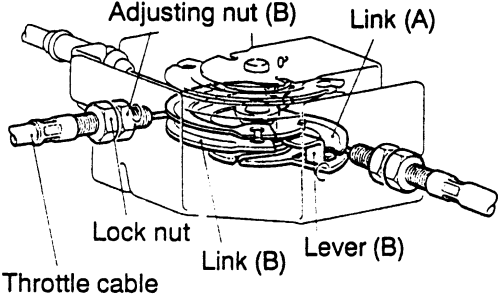
One common scheme was to have a single wheel that controls the cable to the throttle body. Above and below the wheel are two other wheels. The top wheel connects to the gas pedal and the bottom wheel connects to a motor. The bottom wheel is operated by the controller. In systems like this, a solenoid will lock the position of the wheel, and error signals from the controller will adjust the wheel position slightly to minimize the error using proportional control. For example, a pulse train from a magnetic sensor might be smoothed to a DC voltage and subtracted from a setpoint voltage to generate the error signal.
Integrated Circuitry
 The Motorola MC14460 was an “automotive speed control processor” that was common in pre-microprocessor cars. We don’t know for sure what was on the inside, but given the chip-making capabilities of the day and the classification of the chip, we doubt it was a microcontroller internally.
The chip was marvelously economical on external circuits. It would drive two coils that control the throttle body. You can tell the output is made to drive a vacuum actuator as the outputs have names of VAC and VENT; one to open the vacuum valve and the other to admit air. The device also accepted a pulse stream input where 8000 pulses equated to one mile of travel. Another input detected the brake light signal.
Beyond that, there were three switches every modern driver knows: one to speed up, one to slow down, and one to resume speed. This IC made cruise control cheap to include on modern cars even though the computerization of cars eventually pushed it out of favor.
Today and Beyond
Very modern cars do more than just maintaining speed. Using radar above 70 GHz allows your car to see cars and obstacles ahead of you. The car can then adjust the speed to keep a safe following distance or even brake before you have a collision. In addition, some systems will notify you when the car ahead of you drives away, a nice feature if you have the bad habit of getting absorbed in your phone at stoplights.
We assume cars will eventually integrate with your phone. You’ll plug it in and set your speed from there. Or maybe it will all be brainwave-activated. Who knows?
Want to build your own cruise control? Peter and Jakub did and you can read about it in their scholarly paper. We feel bad we don’t use vacuum physics in our projects. Gas pumps also depend on suction.

Get A Traffic Ticket? Here’s How Much More You’ll Pay For Car Insurance

Dusty Roadrunner Photo Wins the 2021 Audubon Photography Awards

The National Audubon Society has announced the winning photographs and videos of its 2021 Audubon Photography Awards which showcase the beauty of birds and brings attention to species that are threatened by extinction.
National Audubon Society is a nonprofit conservation organization established in 1905 which works to protect birds and their habitat through various programs and in collaboration with other partners, such as nature centers, and more.
The competition — which is one of the leading North American bird photography competitions — featured eight prizes across five divisions and, for the first time, it awarded the Female Bird Prize and Video Prize.
The former was introduced to draw attention to female birds, which are often overlooked and underappreciated in both bird photography and conservation, the organization says. The second new addition, the Video Prize, was introduced to “illuminate unique and fascinating ways birds behave and interact with their environment.”
The prizes were awarded as follows: $5,000 for Grand Prize, $2,500 for Professional Prize, $2,500 for Amateur Prize, $2,500 for Plants for Birds Prize, $2,500 for Video Prize, $1,000 for Female Bird Prize, $1,000 for Fisher Prize, and six days at Audubon’s Hog Island Audobon Camp during the 2022 season for the Youth Prize.
Below is a list of all awarded winners and honorable mentions at the competition:
Grand Prize

Carolina Fraser was awarded the Grand Prize for her photograph of a greater roadrunner, shot at Los Novios Ranch in South Texas. The winning image was taken on a blazing hot summer day just before sunset, and the photographer managed to capture the bird in golden sunlight as it took a dust bath.
This bird species have adapted to live on the ground in the dry country and can run considerable distances at 20 miles per hour. It derives the moisture it needs from lizards, rodents, and other prey unless water is available.
One of my favorite places to take photographs is among the oil pumps and open space at Los Novios Ranch in South Texas, where wildlife weaves through cacti and birds perch on fence posts. On a blazing hot summer day just before sunset, I found myself lying facedown at an uncomfortable angle, my elbows digging into a gravel path as I photographed this roadrunner. I manually adjusted the white balance until I captured the bird bathed in golden sunlight as it took a dust bath. —Carolina Fraser
Professional Award Winner

On a bitterly cold winter day I went searching for eagles and Snowy Owls in rural Michigan. Cruising side roads, I noticed a Rough-legged Hawk perched atop a pine tree, but all I captured was its tail as it flew away. It was then that I spotted a male Northern Cardinal flying from plant to plant, feeding on the seeds, his red feathers reflected in the bright white snow flecked with ice crystals. I took the first shot when he took flight. By the second frame, the striking songbird was gone. —Steve Jessmore
Amateur Award Winner

For three years I’ve watched a pair of Sandhill Cranes that nest near my house, observing and photographing them from my kayak. On a blustery day this spring, I took my camera and paddled out to check on them. Two colts had finally hatched. The wind, though, made for a challenging photo shoot. There was no solid land to anchor to, and I bounced up and down, sometimes missing the birds completely. So I increased my shutter speed and ISO to compensate. Capturing this scene under those conditions felt like a once-in-a-lifetime moment. —Robin Ulery
Youth Award Winner

I was searching for eiders, scoters, and other diving ducks along the Atlantic coast on a cold February day. Suddenly a Purple Sandpiper flock landed right next to me. The birds fed, chatted, chirped, and chased each other, occasionally fluttering up when the waves washed over the shore. As the weather turned gustier, the sandpipers preened and settled down amid the rocks. I lay down flat, close to the water’s edge. I positioned my camera, resting it on a rock, and focused on one of the Arctic visitors, the purple in its feathers highlighted by the morning sun. —Arav Karighattam
Plants for Birds Awards Winner

On an early July morning, I peeled the camouflage tarp off my canoe hidden in the marsh grasses along the edge of a small lake and stepped in, careful not to tip over. Paddling out amid the water lilies, I saw male Red-winged Blackbirds pluck dragonflies from the air to feed their nestlings. Females took a different tack: They hopped from lily pad to lily pad, plucking out insects inside the yellow and white flowers. I steadied my camera by setting it on my equipment bag, which was sitting on the floor, and shot away. —Shirley Donald
Video Award Winner
Bill Bryant | 2021 Video Award Winner
Over several days I watched a pair of Red-tails taking advantage of the strong early summer winds streaming down from the Rockies, hovering in midair while scanning the foothills for mice and ground squirrels. This one floated almost level with my lens. His head stayed still while his body moved, his wings and tail steadying him and his dangling feet acting as ballast. —Bill Bryant
Female Bird Prize

I was waiting for Fernando the Chilean Flamingo to wake up from his afternoon nap. People have reported seeing the lone flamingo in the park since 2010, so I went out to photograph him. A commotion from the nearby water, where a Great Blue Heron stalked prey and a few gulls rested, attracted my attention. A Northern Harrier had come out of nowhere to hunt. I quickly adjusted my camera settings so I could get her owl-like face. This kind of unexpected encounter is why I always carry my camera when I venture into nature. —Elizabeth Yicheng Shen
Fisher Prize

For me, photographing feeding hummingbirds is a near-perfect combination of challenge and reward. In the spring, Anna’s, Allen’s, Rufous, Costa’s, and Calliope Hummingbirds—many of them adult males with glittering gorgets—sip nectar from purple pride of Madeira flowers in this preserve. When I looked through the photographs that I shot one spring day, this image of a relatively unassuming female, a juvenile Anna’s Hummingbird, immediately grabbed my attention. Though most of the bird is obscured by blooms, I caught that momentary flicker of eye contact through the petals. —Patrick Coughlin
Professional Honorable Mention

I was hiking on a snowy, dark winter afternoon with a new camera and lens combination when a friend spotted a female Red-tailed Hawk. She flew out of sight, but we found her nearby jumping and grabbing leaves, trying to get her missed prey to reappear. When an eastern chipmunk ran from beneath the debris a few minutes later, the hawk quickly caught it and carried it to a tree. It was incredible to see that connection between predator and prey—one that I don’t usually get to share in a wildlife photo. —Steve Jessmore
Amateur Honorable Mention

I had heard that a pair of Peregrine Falcons had built a nest near a cliffside hiking trail in La Jolla, so on a spring day I set off with the hopes of photographing them. As I walked, the raptors made screea calls and circled above. I stopped along the trail and watched a bird that had snatched an Acorn Woodpecker, commonly found in the palm trees nearby. The raptor landed on a ledge littered with feathers from past kills and began plucking the woodpecker, the feathers fluttering over the cliff’s edge as it prepared its meal. —Tom Ingram
Youth Honorable Mention

I was photographing Green-winged Teal when one extremely territorial Canada Goose charged another goose that attempted to land in the area. I positioned myself at the edge of the water and watched for signs of its next onslaught, taking a short sequence of pictures as the goose launched itself from the water to fend off the intruder. I was happy that some Green-winged Teal swam into the scene, their quiet feeding a marked contrast to the goose’s dramatic behavior. I guess the goose was determined to keep its corner of the wetlands all to itself. —Josiah Launstein
Plants for Birds Honorable Mention

Here in western Washington, Anna’s Hummingbirds are year-round residents. In spring females collect nesting material. Because I have some mobility issues, I do a great deal of my photography right outside my door. Getting the right lighting is always a bit tricky, and timing the hummingbirds’ visits to my patio is always a guess, so I’ve become very patient and observant. One of my favorite subjects is the Anna’s as they collect cattail fluff. I find this hummingbird shows a certain elegance as she gently tugs the seed fibers from the cattail. —Karen Boyer
Video Honorable Mention
Brent Cizek | Great Gray Owl, 2021 Video Honorable Mention
I spent a morning on northern Minnesota’s backroads searching for an elusive Great Gray Owl. A heavy band of snowfall was in the forecast, and I wanted to get footage of an owl hunting in the winter weather. After a few passes in my truck, I spied one sitting in a tree near the road. While the snow came down like crazy, I filmed the owl before it retreated to the woods to roost. —Brent Cizek
The competition was judged by an expert panel of bird photographers, videographers, and other experts, such as Sabine Meyer, photography director, National Audubon Society, Kathy Moran, deputy director of photography for National Geographic Partners, Allen Murabayashi, co-founder of PhotoShelter, and others. A full list of judges can be found here.
Each entry was judged on its technical quality, originality, artistic merit, and whether the photographer followed Audubon’s Guide to Ethical Bird Photography list, which was a must. The competition received entries from 2,416 photographers across 50 states, Washington D.C., and 10 Canadian provinces and territories.
The full list of winners and detailed information about each entry can be found on the Audubon website.
Image credits: All photos individually credited and provided courtesy of the National Audubon Society.
That “Sell By” date has nothing to do with food safety

Greetings, fellow rule-followers. Do you ditch your durian as soon as it gets a tiny bit mushy? Do you shudder at the idea of keeping a can of green beans past that ever-confusing “Best By” date? I get it: I’m the same way. I cleave to food expiration dates with the desperation of someone who’s lost touch with their…
Dicky Maegle Dies at 86; Football Star Remembered for a Bizarre Tackle

What to Know About Mattress Types

Even with a deluge of new offerings from startups and old-school mattress companies, all touting game-changing tech and the promise of a perfect night’s sleep, most mattresses fall into three simple categories: spring (aka innerspring), foam, and hybrid. We go into more depth about what to look for in our mattress buying guide, but if you’re shopping for a new mattress, you should try out at least a couple of each—you might be surprised by what you find comfortable.
The Best Hair Clippers

For roughly the cost of a professional haircut, you can buy a long-lasting tool to create and maintain your own short, buzzed, or shaved hairstyles at home.
After dozens of real-world tests of 15 highly rated hair clippers—involving professional barbers and stylists, plus a panel of DIY-haircutting volunteers—we’ve determined that the Wahl Elite Pro High Performance Hair Clipper Kit is the best clipper for most at-home haircuts. Its sharp steel blades easily slice through fine, thick, smooth, and coarse hair without slowing down or clogging. And this clipper isn’t annoyingly loud. The Wahl Elite’s 10 included guide combs—the snap-on teeth that control how closely the clipper cuts, letting you trim hair to a desired length or get creative with styling—are the best of those we’ve tried over nearly a decade of testing.
We also have picks for both novices and those more experienced in cutting hair. And we recommend a smaller model that’s ideal for cutting your own or a kid’s hair.
How a Burner Identity Protects Your Inbox, Phone, and Credit Cards

Between vaccine appointment notifications, store pickups, online food ordering, and a general increase in online ordering, I feel like I’ve created three times as many online accounts in the past 18 months than I did in all previous years combined.
Handing out any sort of personal information, whether it’s an email address or a phone number, can lead to spam, data breaches, or harassment. More abstractly, it can also enable tracking by data brokers—companies that take identifiable bits of data, including phone numbers, email addresses, and device-specific identifiers (such as a browser fingerprint or device ID that’s linked to a phone or computer) and then aggregate that data into a marketing profile. One way to protect your personal details from both individuals and corporations is to use alternate details, which you can generate through a number of tools. These “burner” identity tools create disposable email addresses, credit card numbers, and phone numbers, all of which can help protect your main accounts while you do just about anything online.
Lamborghini Aventador LP 780-4 Ultimae is the last truly old-school bull - Roadshow

Lead-Acid Batteries Still Have It
Your motorcycle’s battery is one important piece of equipment. Without a healthy battery, you’ll be stranded.
Today one battery still reigns: the lead-acid battery. We’ll highlight how lead-acid batteries perform from the coldest to high heat environments. The durability, survivablty and sustainability of the modern lead-acid battery is superior. Even the weight-obsessed super/hyper cars on the road today still use lead acid batteries—and so should you.
If It Ain’t Broke…
Standard lead-acid batteries have been around since the mid-1800’s and they’ve stayed relatively unchanged in that time. Lead-acid batteries have a basic construction: a plastic casing with six cells. In each cell, there are plates that are immersed in a solution made of sulfuric acid and water to form what’s called an electrolyte.
There are two main types of lead-acid batteries – Wet cell (also known as flooded or vented) and sealed. Wet cell batteries have a liquid electrolyte solution inside the battery that mixes with the active material to create a chemical reaction. During the chemical reaction (charging), some hydrogen and oxygen escapes, hence why every motorcyclist knows to keep distilled water on hand for that reason. Sealed batteries are a little different in that the electrolyte solution is permanently suspended within the batteries. For example AGM (absorbent glass mat) batteries include fiberglass separators that act like a sponge to keep the plates in constant contact with the solution.
 Advantages of Lead-Acid Batteries
Lead-acid batteries are great because they’re relatively inexpensive to manufacture, can be recycled easily, and they benefit from a long history of reliable service and well-understood technology.
Another advantage of lead-acid batteries is its ability to start in both cold and hot temperatures. Lithium ion batteries don’t start as quickly when in cold temperatures, especially if they’ve been cold-soaked for a few days. They’ll need to be woken up before cranking. Also in some high heat enviornements, lithium ion batteries will just simply shut down, similar to cell phone batteries.

How to Keep Your Battery Happy and Healthy
Motorcycle batteries, especially when well-manufactured and engineered, should last at least two years. That period of battery life can likely double when cared for correctly.
Initialization
Initializing your battery is key to keeping your battery healthy for a longer period of time. The initialization and activation process includes surveying and testing the status of your battery to make sure its functioning properly. Key to this process is using the correct charger. You’ll need a charger that is capable of initializing to a minimum of 12.8 volts.
Storage
We cannot stress enough how important storage is to the life and performance of your motorcycle battery. It really makes all of the difference.
Every battery has a shelf life set by the manufacturer that guarantees battery operation up to that date. That’s not the say you can’t get more out of your battery past that date. One of the best things you can do for your battery is to learn how to properly store it.
Temperature plays an important role in storage, charging, and starting. Batteries don’t turn off, they’re always in a state of either discharge or charge. When not in use, batteries will self-discharge and that discharge rate is faster when in hotter temperatures.
Store your battery ideally at a temperature between 60° F and 80°F when not in use. Be sure it’s not stored at near or below freezing temperatures– keep in mind the water in your battery could freeze which could cause the casing to crack. 
Another way to get the most out of your battery’s life is to use a battery maintainer when not in use for long periods of time. Battery maintainers have many benefits including algorithmic charging, auto charging, active desulfation, and battery health detention meters. It’s a must-have for any cycle-head.
As with any piece of equipment you own, the better the brand, the better the results.
Refer to this helpful winter storage guide from Yuasa Battery.
The Trend Towards Lithium Ion Batteries
Why mess with 150+ years of a good thing?
A recent newcomer in the battery scene, lithium ion batteries have emerged as a contender to the tried and true lead-acid battery standard. Generally speaking, they’re lighter, they don’t contain lead, and they don’t discharge as quickly as lead-acid batteries.
That’s not to say that lithium ion batteries don’t come with their own set of challenges.
While lithium ion batteries have a higher energy density than lead-acid batteries, they’re not for every motorcycle. Particularly in bikes built prior to 1980, the charging systems cannot handle the new lithium ion technology. Your charging system needs to be in top-notch condition.
Lithium ion batteries are also more expensive. They can be anywhere from 50 to 200 times more expensive than a sealed lead-acid battery.
The Bottom Line
Regardless of their flaws, there’s no denying that lithium ion batteries have not only changed the motorcycle battery scene but have changed electronics as a whole. With each passing year, new improvements continue to be made with lithium ion technology and there are no signs of stopping.
You might be wondering how a 150+ year old battery can compete in this modern climate. The answer is that it sure can! With proper storage, care, and recycling methods, lead-acid batteries will continue to be a leading choice for motorcyclists for many more years to come.
While lithium ion batteries may be light and nimble, you know you’ve got a good thing going when your bike rolls off the assembly line fitted with a lead-acid battery. You can’t argue with reliability.
Simply put, we know the tech and we know it works.
For more information about lead-acid batteries, check out Yuasa Battery to find the perfect battery for your ride. https://www.yuasabatteries.com/
The post Lead-Acid Batteries Still Have It appeared first on Motorcycle.com.

Fujifilm Forced to Discontinue Velvia 100 Film in the U.S. by the EPA
Fujifilm has announced that due to regulations put in place by the Environmental Protection Agency (EPA), it will no longer be able to sell Fujichome Velvia 100 in the United States.
In a note on its website spotted by Yahoo Finance, Fujifilm says that under the Toxic Substances Control Act (TSCA), it is no longer able to sell the film in the United States due to the existence of a banned chemical: phenol, isopropylated phosphate (3:1).
On March 8, 2021, the Environmental Protection Agency (EPA) finalized a rule regarding the chemical phenol, isopropylated phosphate (3:1) (PIP (3:1)) (CASRN 68937-41-7) under the Toxic Substances Control Act (TSCA), which prohibited the processing and distribution in commerce, including sales, of the chemical and products containing the chemical. EPA also issued an enforcement policy on the same day stating that it will not enforce the ban on processing and distribution until September 5, 2021.
A minuscule amount (less than 0.0003%) of PIP (3:1) is present within the layers of FUJICHROME Velvia 100 Professional films. Fujifilm believes that the trace amount of PIP (3:1) in the FUJICHROME Velvia 100 Professional films pose no risk to the environment.
As a global leader in imaging, Fujifilm is committed to acting sustainably, and complying with all country regulations. As such, Fujifilm will discontinue FUJICHROME Velvia 100 Professional film in the U.S. effective immediately (July 6, 2021).
Fujifilm says that any photographer who has purchased its Fujichrome Velvia 100 Professional films should read this Safety Data Sheet carefully.
According to the EPA, phenol, isopropylated phosphate (3:1) is widely used for both its flame-retardant and lubricating properties and has been used in the manufacture of rubber, foam, cotton, and cutting oils as well as electronic equipment such as video display units cables, casting resins, glues, and engineering thermoplastics.
While the EPA does not intend to enforce its ban on materials that are made using phenol, isopropylated phosphate (3:1) until September 5, Fujifilm has stated that it takes environmental safety and sustainability extremely seriously and as such will discontinue Velvia 100 Professional film in the U.S. effective immediately (July 6, 2021).

Fujifilm has marketed the Velvia 100 film as having “vivid color” and “intense saturation” as well as super-fine grain and a strong ability to hold up to pushing and pulling.
While Velvia 50 is still currently listed as being produced and does not appear to be subject to the ban — it apparently doesn’t contain phenol, isopropylated phosphate (3:1) — it is currently on backorder.