My first serious shotgun was a Winchester Model 12 in 16-gauge with a full choke barrel. I know this because…Read More >
The post Shotgun Chokes — So Many Choices! appeared first on The Shooter's Log.
My first serious shotgun was a Winchester Model 12 in 16-gauge with a full choke barrel. I know this because…Read More >
The post Shotgun Chokes — So Many Choices! appeared first on The Shooter's Log.
Building a cabin, or a yurt. Making a basket, and a knife. Making your own shoes — or your own casket? If you are intrigued by any of these ideas, North House Folk School can help. The staff and instructors there can help you learn about quite few other things as well, both in person and online. You can learn how to do the work of a blacksmith, and then make your own tools to carry on what...


Deep in the wilderness of Sewanee, Tennesse is a natural sandstone bridge created with the help of a natural spring, mother nature's fierce wind, and its location along the edge of an old giant sinkhole.
Spanning 5o feet wide and 25 feet tall, the natural bridge is sturdy enough to walk across. There is also a wet weather spring located in a cave behind the natural wonder.
Though it's only a less than a mile walk to the bridge from the parking area, there are many small trails and caves around to explore, as well as chattering squirrels and fluttering dragonflies to watch.
 |
submitted by /u/giuliomagnifico [link] [comments] |
 |
submitted by /u/wrestlebuffet [link] [comments] |
 |
submitted by /u/Berniesbarehands [link] [comments] |
![[OC] Median Home Value By County](https://a.thumbs.redditmedia.com/CLpByQgjnohBr1LvaZQ5-cktO3EniRGxuwYt_7BJBW8.jpg "[OC] Median Home Value By County") |
submitted by /u/Dremarious [link] [comments] |
British cuisine has received a lot of criticism and outright mockery over the years. Of course, it doesn’t help that some of the traditional dishes have absurd names like “Toad in the Hole” and “Spotted Dick.” “One cannot trust people whose cuisine is so bad,” French President Jacques Chirac was overheard snarkily commenting to Vladimir […]
The post 10 Weird Menu Items from the British Isles appeared first on Listverse.
Quite simply, some people don’t know how to handle money, and having a lot of money can be a recipe for disaster. While the money management blues could be because of ineptitude or bad luck, the common denominator is that these wealthy people would have been better off with less. Here are 10 people who […]
The post 10 People Who Couldn’t Handle Becoming Rich appeared first on Listverse.
The great millennial work migration is under way. Here are some of the best places to work for expats traveling abroad.
The post Here are the best places for expats to live and work abroad appeared first on The Manual.
By Gio Gennero | Sports Writer
If you’re a fan of the athletic world, Waco is an underrated sports hub with lots of things to explore. Here is a quick guide to help you delve into all of it.
Texas Sports Hall of Fame | 1108 S University Parks Drive | Open from 9 a.m. to 5 p.m. Monday through Saturday | $8 for adults, $6 for college students, free for children under 5 and people in the military | There are a number of museums and exhibits to experience, with plenty of sports memorabilia and genuinely cool things to see. One section of the museum includes highlights of each of the schools in the Southwestern Conference.
McLane Stadium | 1001 S Martin Luther King Blvd. | Open every day | Public tours start at $10.52 | Home of the 2021 Sugar Bowl champions, the stadium offers both public and private tours, giving an inside look at the field and unique spots like the Baylor Club.
McLane Student Life Center | 209 Speight Ave. | Summer hours to be announced May 16 | $10 Day Pass offered to guests, full summer passes available | The SLC is many students’ favorite place to go in Waco. There are four basketball courts that hold pick-up games often. There is also a 53-foot free-standing rock climbing wall, a 13-foot bouldering section, a workout facility, a swimming pool with a lazy river, indoor volleyball courts, sand volleyball courts, squash and ping pong tables.
There are many other sports venues that are free to visit — such as the Ferrell Center, the Baylor Ballpark and the Clyde Hart Track and Field Stadium — but they have limited public access.
Throughout Waco, there are also chains to have some fun at, such as Top Golf (high-tech golf), Putters (mini golf) and Main Event (bowling; laser tag; basketball-, baseball- and football-themed arcade games). Another student favorite is Urban Air, which is a trampoline park with basketball and dodgeball.
If you’re a sports fan in Waco who is hoping to see great sights and break a sweat, each of these spots offers the opportunity to make some great memories.
Last week, Apple unveiled updates to its CarPlay software — available on 98% of new cars — that expand its reach to the furthest ends of a car’s instrument panel.
Amazon and Buick are streaming commercials showing a dad confusing his family’s car for an Alexa (which is built in). The YouTube comments are… harsh.
Google, too, is working on software — the Android Automotive operating system (AAOS) — which research firm Gartner predicts will power 70% of cars by 2028.
What’s the deal with these tech companies jumping in?
Consider this: The first time you’re driven by an autonomous car — something that could become normal in 20-30 years — you’re bewildered. The 10th time? Old news.
And, after the novelty wears off, you’ll check your phone and, who knows, eat a sandwich? Have sex in your automated car? Studies seem to think you will.
Mostly, of course, we’ll likely engage in the dynamic duo of human activity: work and TV! Unlocking this time will lead to enormous economic potential for tech companies and will most directly impact:
Are cars the next battleground for data?
Where Big Tech sees huge potential in being deeply embedded in the automotive experience, others see alarms going off.
Big Tech’s already conquered the home and office. It’s clear the car is likely next.
Consider the 21st century’s most ubiquitous piece of financial advice: “Can’t afford a house? Just stop buying lattes.”
Every millennial has heard some kind of variation of this myth. It’s peppered all over Twitter, dispensed on personal finance blogs, and uttered from the mouths of pundits on national television. Sometimes, “latte” is exchanged for a different millennial trope, like avocado toast.
The idea that fewer lattes could solve millennials’ financial woes has been around for more than 20 years and can be traced to one man: a financial adviser and author named David Bach.
“Are you latte-ing away your future?” Bach asked in a 1999 book. “Everyone makes enough money to become rich. What keeps us living paycheck to paycheck is that we spend more than we make on stuff we don’t need.”
In the 23 years since then, we’ve witnessed a dot-com crash, a Great Recession, a global pandemic, a housing shortage, 40-year-high inflation, and the massive growth of student debt.
Yet the latte is still a flashpoint for arguments about personal finance — a stand-in for any small luxury that could be given up to boost wealth, and a recurring subject in Bach’s 12 bestselling books.
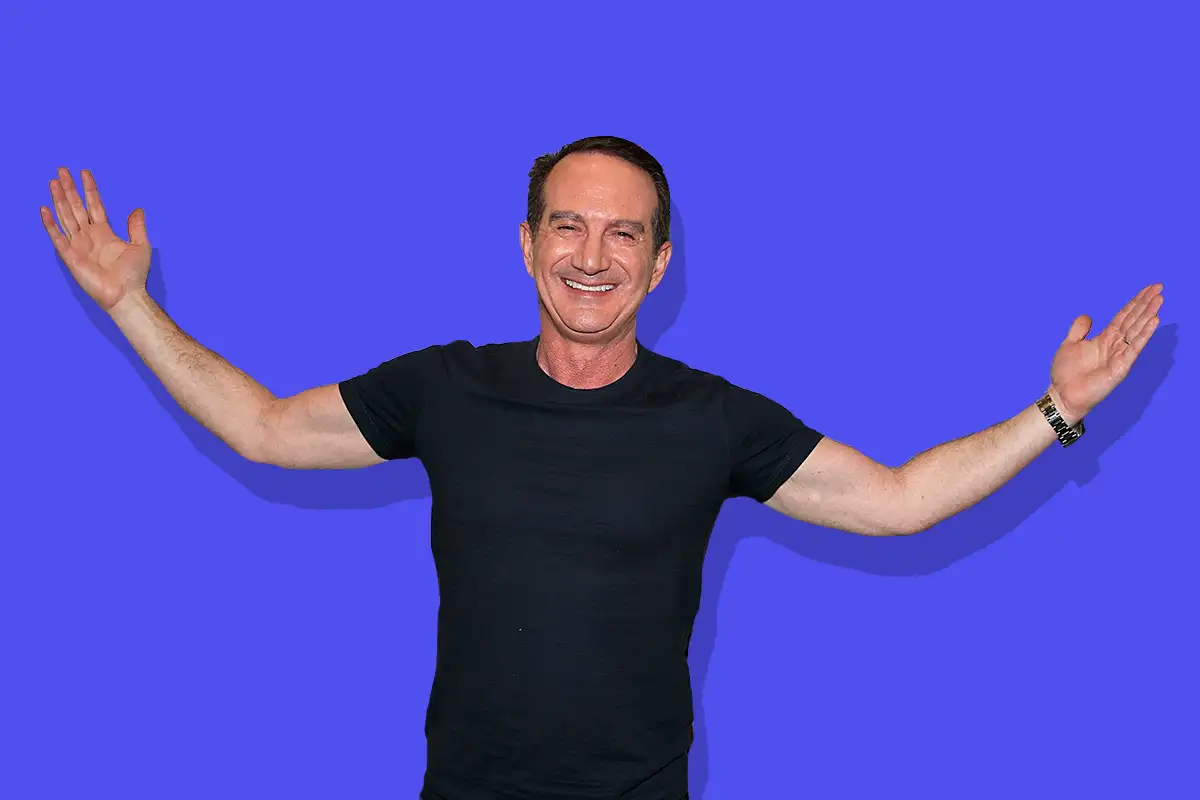
David Bach wants you to stop buying lattes (Photo by Dominik Bindl/Getty Images; illustration by The Hustle)
“There’s this enormous attraction as a culture to it, and I don’t think any of us are above it,” Helaine Olen, a Washington Post opinion writer and author of Pound Foolish, a critique of the personal finance industry, told The Hustle. “I think we all believe it on some level.”
Perhaps it’s surprising that latte advice has proliferated when sweeping economic forces have put retirement and home ownership further out of reach for young workers.
But the latte advice exists because of these issues, springing into existence just as the idea of retirement seismically shifted, wages stagnated, and the price of a ticket to the middle class increased substantially.
David Bach grew up in the financial advice industry. His father ran his own planning practice, The Bach Group, as part of Dean Witter (now Morgan Stanley). In the early ’90s, when Bach was in his 20s, he joined his father’s practice.
The industry was thriving. In 1995, America had ~30k designated financial planners, a number that had increased 50% in the previous 5 years.
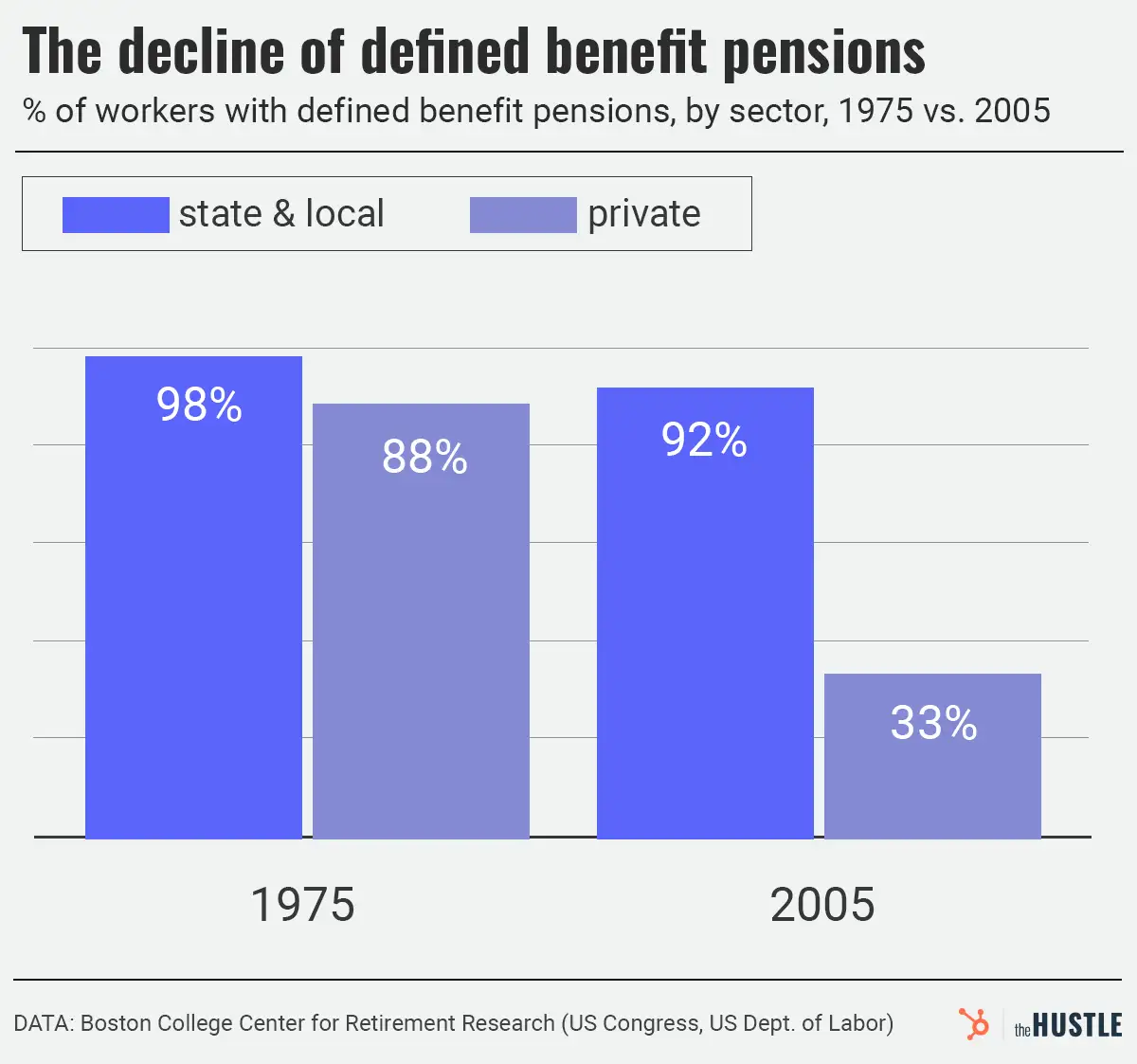
Before the personal finance boom, most people received “defined benefit” pensions. These plans required employers to guarantee and fund set payments to their workers after they retired, placing the burden of saving and investing on the employer.
Estimates vary on the amount of workers once covered by pensions. But according to data from Boston College’s Center for Retirement Research, ~88% of Americans employed in the private sector had defined benefit retirement pensions in 1975.
“Americans both needed [financial] advice less and had less reason to invest because it was assumed for most people that there would be a pension,” Olen said.
But changes were afoot:
Zachary Crockett / The Hustle
The concept of retirement saving was rapidly transformed. Over time, the burden shifted from employers to employees, who had to make more savings and investment decisions on their own.
In the aftermath, financial planners and money managers became a hot commodity — as did self-help advice presented in books and on TV.
But because telling people it was important to invest earnings while not overspending could be summed up in half a sentence, catchy strategies were a requisite for making waves in the financial advice self-help sector.
Enter the latte.
Like the 401(k), the American specialty coffee scene was on the rise in the ’80s and ’90s. Local shops and massive chains like Starbucks exploded. By the mid-’90s, the specialty coffee market was estimated at $1.5B.
Specialty coffee was also instantly associated with financial decision-making — just not the way we’ve become accustomed to thinking.
Although lattes were richer in taste and price than a cup of Folgers, the beverages were seen as an alternative to excess.
Analysts hypothesized that espresso drinkers consumed lattes because they wanted to avoid nightclubs or couldn’t afford an expensive pair of jeans from Nordstrom, describing specialty coffee as “an affordable luxury in a society of downsizing incomes and expectations.”
“People are watching their money in the ’90s,” a Washington, DC coffee shop manager told the Baltimore Sun in 1994, “so coffee shops are becoming meeting places.”
The Hustle
To people who enjoyed lattes — largely urban young people and women — coffee culture was linked with fiscal responsibility.
But for older generations and suburban residents who had yet to get the first Starbucks store in their neighborhood, lattes were a mark of frivolous luxury, made famous in 1997 by opinion columnist David Brooks’s use of the phrase “latte town” to describe America’s elite bubbles.
The cultural connotations and generational divide, said Meghaan Lurtz, a professor of practice at Kansas State University who has researched the psychology of money, made the latte “an easy thing to point to.”
And plenty of people were ready to point.
“The Latte Factor” was first used by Bach in 1995, according to a trademark he later filed for the phrase.
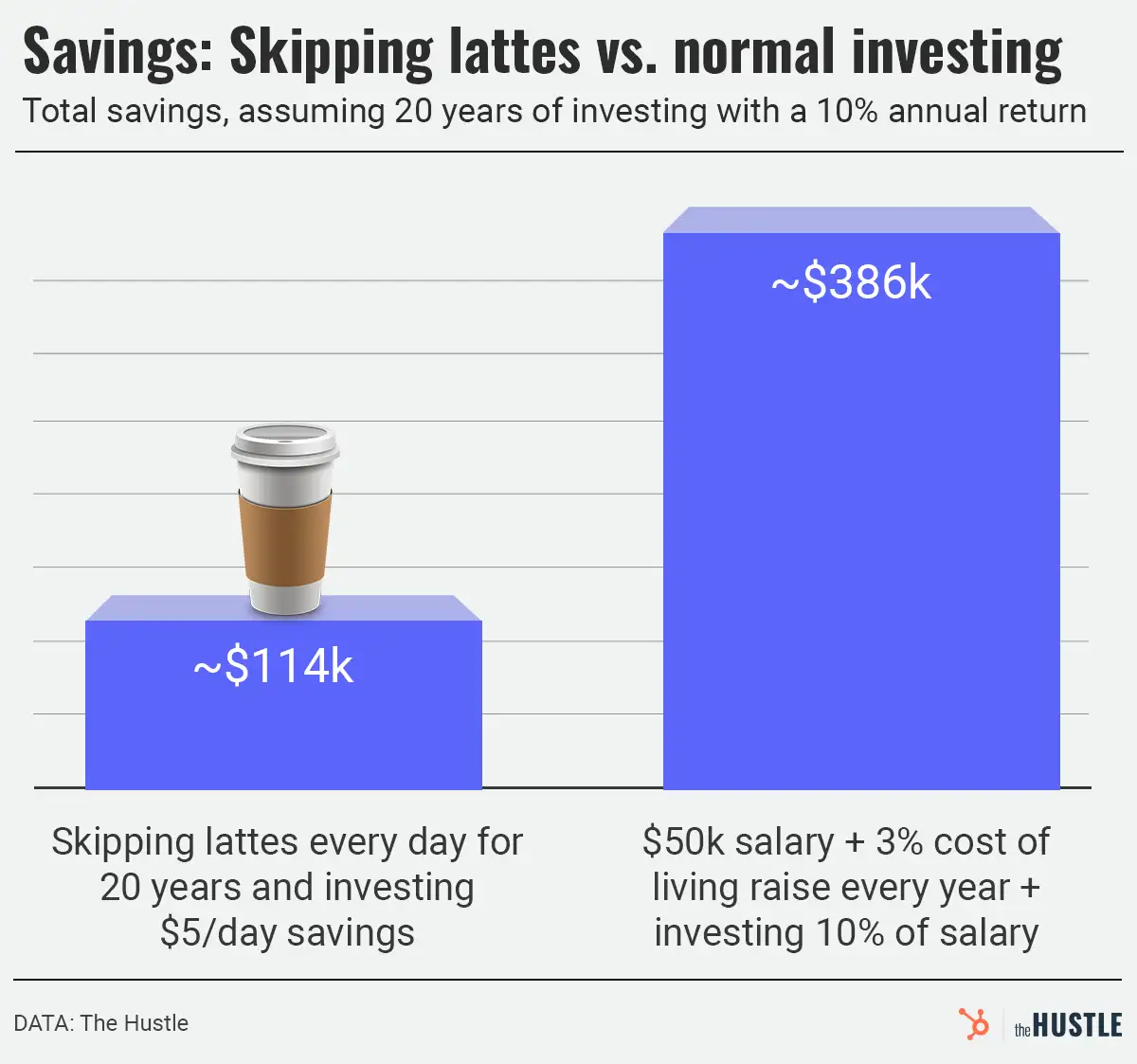
He claims he came up with it after hearing how a 23-year-old woman in one of his investment classes bought a latte every day and never had enough money to invest. He featured the advice prominently in his 1999 book Smart Women Finish Rich, calculating how this woman could one day be a multimillionaire if only she’d curb her latte habit.
Zachary Crockett / The Hustle
Bach’s formula featured some questionable math. (The annualized returns on the Dow Jones, for instance, were ~9.7% between 1949 and 1999 — not 11% — and even assuming the latter rate, Bach’s own “Latte Factor Calculator” shows that saving $5/day for 40 years wouldn’t produce anything close to $2m.)
Nonetheless, his latte advice took off.
Smart Women Finish Rich became a New York Times bestseller and Bach soon landed on The View and Oprah, emphasizing that cutting back on lattes or similar small luxuries were the key to saving enough for a good life.
He eventually created something he called the “double latte factor,” telling people to reduce spending on other items he deemed to be expensive luxuries — cellphones, gym memberships, and cable TV.
The schtick has attracted its share of critics.
“I don’t love that narrative,” Cliff Robb, faculty director of the consumer finance and personal financial planning programs at the University of Wisconsin–Madison, told The Hustle, “where we’re basically saying, ‘OK, we’ve made social safety nets weaker, we’ve taken away a lot of employee benefits that people used to get, and more stuff is on you. And you should feel bad about what you’re doing.’”
Preston Cherry, founder and president of Concurrent Financial Planning, describes the latte advice as a smart entry point to helping anyone understand how to better assess financial health.
But it works, he said, if evaluated as part of a big picture encouraging people to strive for greater abundance so they won’t have to worry about cutting back on every little thing. Without getting into the bigger picture, he said people won’t even want “to engage with [their] financial goals.”
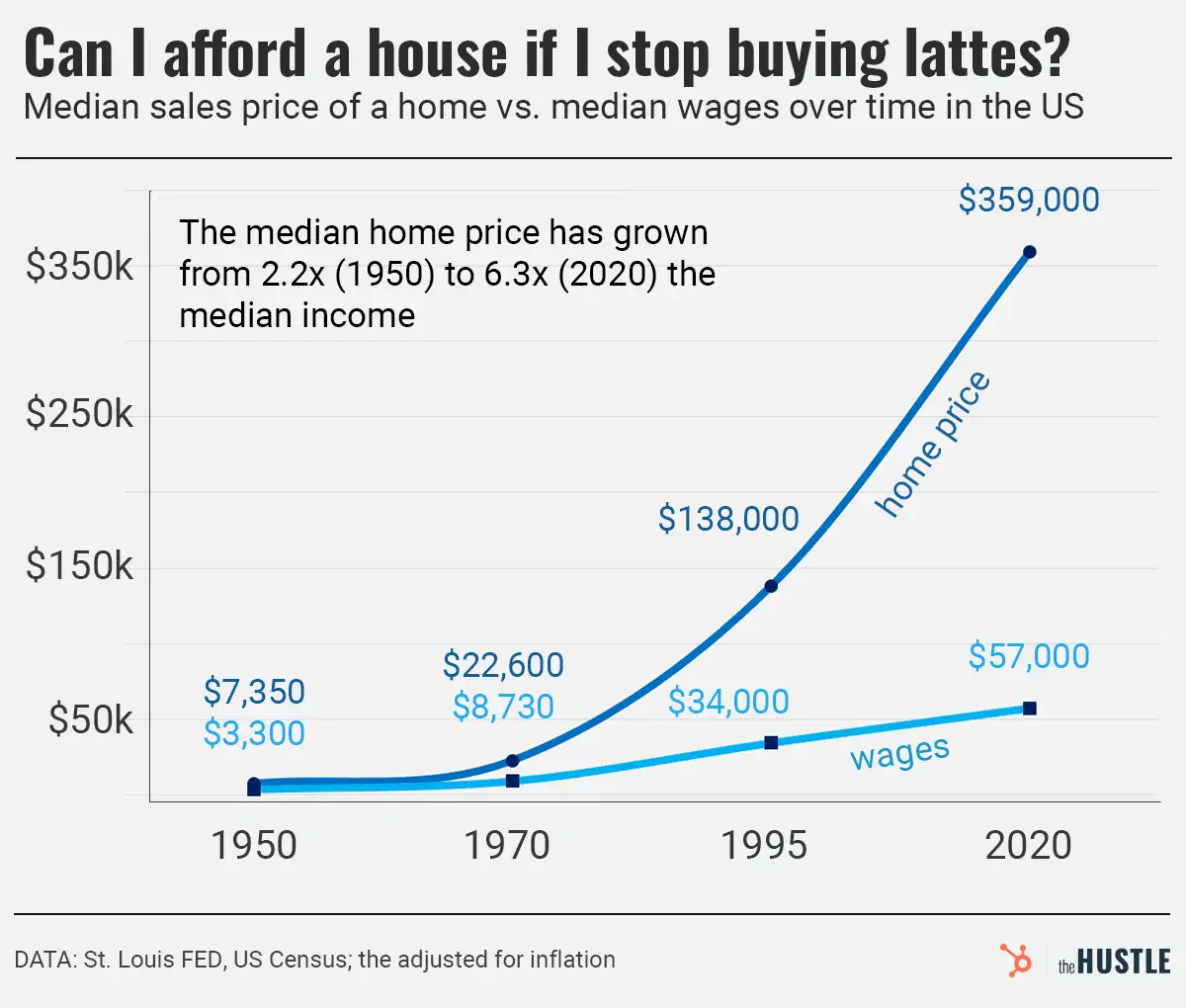
Zachary Crockett / The Hustle
Plenty of newer personal finance experts would agree. Several business books released this year have been marketed as being “not about the latte.”
But Bach, who did not respond to multiple interview requests, has remained resolute in targeting the elimination of small expenses as a “secret” for achieving wealth even in the context of America’s economic downturns.
“Who stole the American Dream?” he asked in the 2016 edition of his book The Automatic Millionaire, noting that old approaches to saving for retirement were unsatisfactory.
Prime among his handful of solutions for attaining the dream was his most steadfast approach: “The Latte Factor®.”
The real root causes behind average people gaining or losing wealth are, of course, a bit more complex than lattes.
Going back to the time of Thorstein Veblen and “conspicuous consumption,” the answer has often been stated as being contingent on how much money you spend.
Veblen’s thoughts were updated by people like Bach, Suze Orman, and Juliet Schor, who wrote in the 1990s that “millions of us have become participants in a national culture of upscale spending.”
In 2012, Jeffrey Lundy published a dissertation questioning this long-held rhetoric, finding scant research had been conducted on what drives wealth loss and accumulation. Lundy studied patterns of spending from the US Consumer Expenditure Surveys and compared them with household wealth loss from the prior several years.
His answer? Above average discretionary spending usually didn’t lead to major changes in net wealth — but larger forces did, like divorce, job loss, high interest loans, expensive health emergencies, and being widowed.
“Americans are hard on ourselves,” Lundy told The Hustle in a message, “but it seems less of it is about frivolous spending and more about unexpected negative life circumstances.”
Another thing Lundy found was that Americans had spent a declining or steady amount of their total incomes on things like entertainment and recreation in the prior three decades. That was also the case with food and beverages outside the home.
We may be eating out a lot and drinking more lattes (~67m in 2017) than in the 1990s, but the share of after-tax income Americans spend on food and drink outside the home has hovered at ~4%-5% every year since 1980.
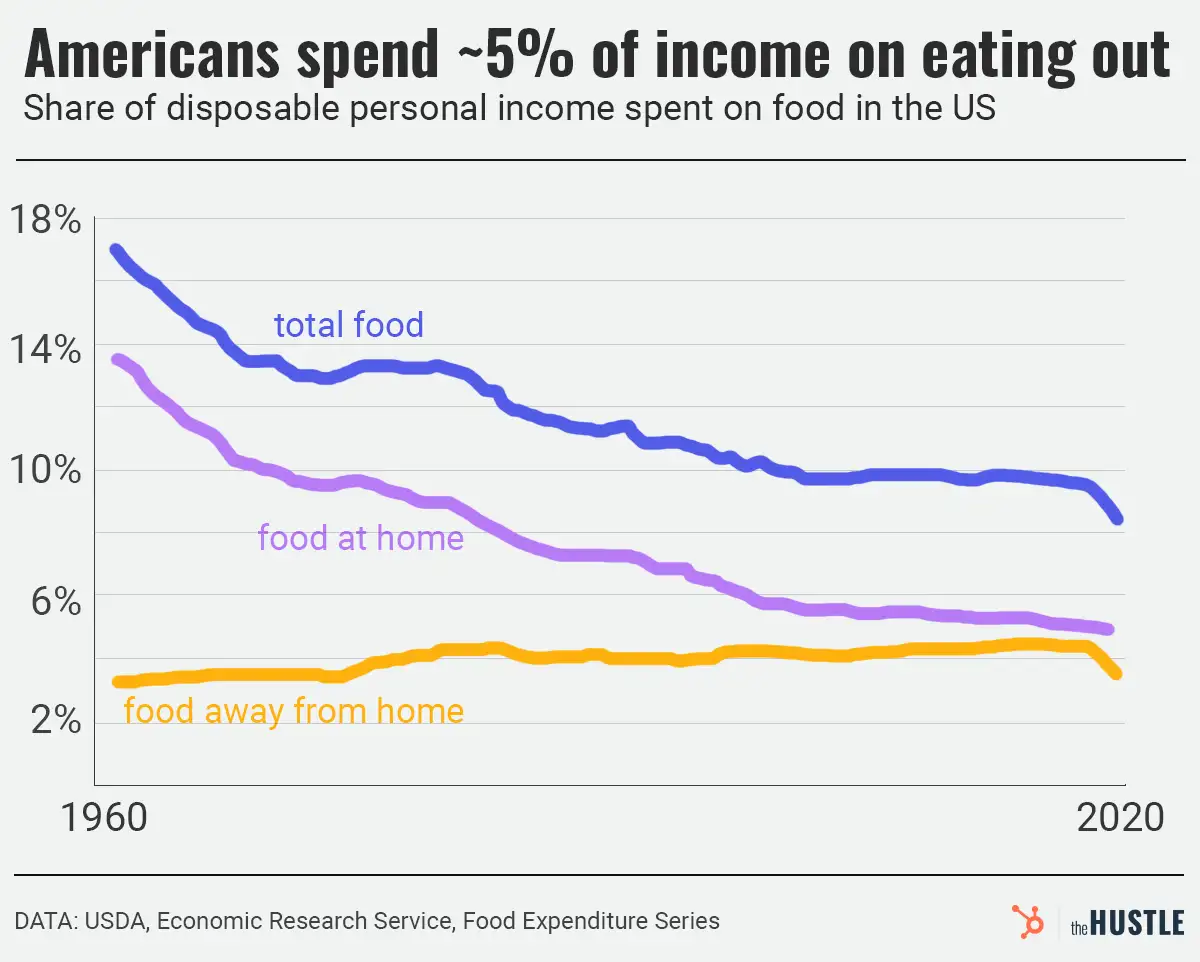
Zachary Crockett / The Hustle
Yet despite being similarly conservative with their discretionary expenditures as generations ago, Americans, aside from a change at the height of the pandemic, are not saving as much as they did in the ’80s.
To Olen, there’s a clear explanation: “People very well know how to save money. They [just] have a hard time doing it.”
In other words, the problem is a bit harder to swallow than a latte.

When is it okay to tell a drinker to order a bottle of wine? According to a woman who took to British parenting site Mumsnet to complain about her bartender, never. Newsweek reports that this woman was drinking several glasses of wine and then a “judgmental” server told her to just buy a bottle, saying, “do you know…

I’m not much of a home bartender. I’ll happily hit the town and enjoy a gin fizz, but I’d rather crack open a beer or a canned cocktail when I’m chilling solo. Unless, of course, I’m making what I call a Fridge Clean-Out Cocktail. To qualify as a Fridge Clean-Out Cocktail, a drink must meet the following criteria: It…

A two-part TikTok sensation is grabbing attention by showing us what we love the most: a McDonald’s housed in a building that doesn’t look like your average McDonald’s.

Honey is a nearly perfect substance without any input from humans whatsoever, but somehow we’ve still managed to fancy it up, complicate it, and create confusion as to what exactly we’re drizzling into our tea. The bees are not to blame, of course; it’s the fault of the people who stand to profit from honey…

There are two things I’ve learned from having a picky eater in my household. One, the preference (or dislike) for certain types of foods must have originated from someone, and two, every meal poses the challenge of devising potential solutions to the problem.

Shrimp and grits is listed on seemingly every menu in New Orleans and, these days, way beyond. It’s a perennially popular brunch and dinner dish, and every chef puts their own twist on it. But I recently tried crawfish and grits at the Garden District home of Jason Goodenough, the former owner of Carrollton Market,…
Discover how the Original Gorilla Bow is making us rethink our yearly gym membership.
Buying products from Japan is notoriously difficult, especially for US shoppers, but a few sites make it easier — and an all-time low exchange rate makes it enticing.
From dive watches to dress watches, the Omega Seamaster collection is complex and fascinating.
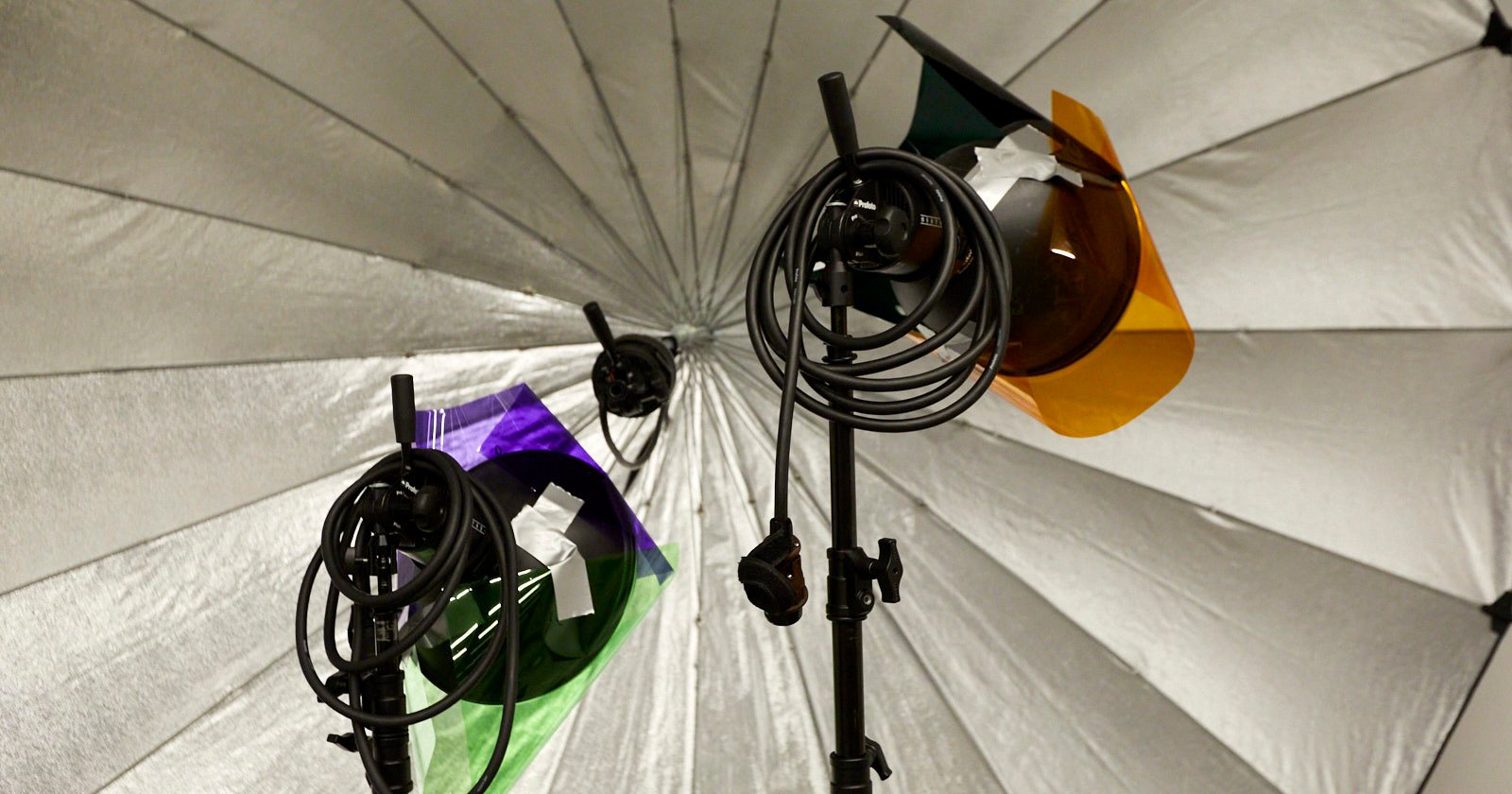
The use of strong and complementary colors is an ever-growing trend in photography. Many modern advertising campaigns feature bold and contrasting colors in order to draw your focus to the product or message they are trying to sell. One way to create such vibrant color in your own images is by using colored gels (also known as color filters, filter gels, lighting gels, or simply gels).

Who gets the treasure?



![[link]](https://i.imgur.com/VHDGaPJ.jpg)
![[link]](https://i.imgur.com/mgRoTcz.png)
![[link]](https://i.imgur.com/c0xTxBO.jpg)