WHEN YOUR BUDDY(FRANK FALCINELLI-WHO JUST HAPPENS TO BE A GREAT CHEF AND OWNS TWO OF MY FAVORITE RESTAURANTS IN THE WHOLE WORLD-FRANKIES SPUTINO & PRIME MEATS WITH FRANK CASTRONOVO) INVITES YOU OVER FOR SUNDAY AFTERNOON PAELLA IN REDHOOK- YOU GRAB A BOTTLE AND GO!!!
In March of 2013, we discovered Great State Strap Company, makers of leather camera straps. Now, nearly a year later, Gary Tyler McLeod's modest operation has rebranded as Great State Camerawear, with new designs and updates on all originals. Still......
Continue Reading...
'Tis that season, when a large number of friends, but really, mostly blood relatives, expect an update on what you've been up to the last year—or two, or three, depending on when you last sent out a holiday card. One option to ease this unfortunate......
Continue Reading...
It seems that the solar power plant underestimated the number of sunny days and has only been able to produce 25% of the energy it said it would be able to produce. Now, this giant mirror farm was built in the California desert on the way to Las Vegas. There aren’t many rainy days in that neck of the tumbleweeds. But the boondoggle is missing its production numbers by 75% because of too many clouds? Isn’t California in the midst of a horrible drought? Sorry but I’m not buying it.
How incredible is it that the police all across the country often seize cars, money, boats, from people who haven’t even been convicted of crimes. Heck, often people aren’t under reasonable suspicion and lose their stuff. Got a wad of cash? Must be a drug dealer. And that car? Well, we’d like that too. It’s as if all across this country the Sheriff of Nottingham is pulling people over and jacking their stuff. From sea to shining sea this is going on and cops are going to weekend seminars to learn how to do it.
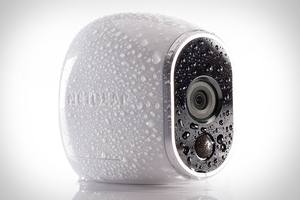
There are plenty of connected camera options out there. But there's only one that's totally wire-free. The Arlo Smart Security Camera is a 100% wireless security camera solution, offering 720p...
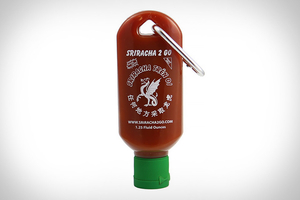
So you love sriracha. Who doesn't? But unfortunately, not every establishment keeps this famed rooster sauce on hand for the chili enthusiast. Sriracha2Go solves this problem by making it easy...
Creating a smart home might sound like a huge undertaking, and it can be difficult to know where to start. But it’s not as hard as you might think! There are a lot of projects that you can do in just a few minutes or over the course of an afternoon to get started. These four will introduce you to some of the principles of creating a connected home and add a bit of cool factor to your house. Install a Nest Thermostat The Nest thermostat kicked off a huge amount of interest in smart home technology, and paved the way for...
You can’t venture far online before seeing a photo of some description. There are whole websites dedicated to hosting your photos, and smartphone apps allowing you to share them with the wider world. With so many options available, we want to know how you personally share your photos online. Welcome to this week’s MakeUseOf Poll. Spotify Got It By A Country Mile To answer this week’s question please scroll down the page until you see the poll staring back at you. But first, we need to look at the results from last week, when we asked, “What Is The Best...
Ever feel like you would have more use for Excel if you had a better way to present your data? Excel can be a very powerful program in the right hands, but sometimes a simple spreadsheet format isn’t engaging enough to make your data accessible to a reader. One way around this is producing a Dashboard; an environment that takes all the most important information from your document and presents it in an easy-to-digest format. What Can I Use An Excel Dashboard For? The main function of an Excel Dashboard is to transform a great deal of information into one manageable screen. What...
"Remembering the Victims of Communism," produced by Meredith
Bragg and Michael C. Moynihan. About 4 minutes. Original release
date was November 9, 2009 and original writeup is below.
Twenty years ago today, the Berlin Wall was breached and
Soviet communism, at long last, entered its death
spiral.
After claiming approximately 100 million victims in the 20th
century, communism was dismissed to the ash heap of history. But
those who suffered under its boot heel have largely been confined
to the history books when not forgotten altogether.
Author and historian Lee Edwards set out to correct this
oversight with the creation of the Victims of Communism memorial
and online museum, dedicated to those who perished because of
Communist regimes between 1917 and
1989.
Reason.tv spoke to Edwards about the importance of historical
memory, plans for a forthcoming bricks-and-mortar museum in
Washington, DC, and the paintings of Ukrainian gulag survivor
Nikolai Gettman, currently on display at the Heritage Foundation,
where Edwards is a "Distinguished Fellow in Conservative
Thought."
Produced by Meredith Bragg and Michael C. Moynihan.
Interview by Moynihan. Shot and edited by Bragg.
Approximately 4 minutes.
So President Obama has announced that the Internet should be
regulated as a public utility. He's asking the Federal
Communications Commission (FCC) to reclassify internet service
providers (ISPs) from "information services" under Title I as
telecommunications providers under Title II regulatory guidelines.
(See
here for background on the distinction.)
This is all being done in the name of "Net Neutrality," keeping
the Internet free and open, prohibiting "fast lanes" for certain
services and sites, making sure no legal content is blocked, and
all other horribles that...have failed to materialize in the
absence of increased federal regulation.
Reason contributor and Clemson University economic historian
Thomas W. Hazlett defines Net Neutrality as "a
set of rules…regulating the business model of your local ISP."
The definition gets to the heart of the matter. There are specific
interests who are doing well by the current system—Netflix, for
instance—and they want to maintain the status quo. That's
understandable but the idea that the government will do a good job
of regulating the Internet (whether by blanket decrees or on a
case-by-case basis) is unconvincing, to say the least. The most
likely outcome is that regulators will freeze in place today's
business models, thereby slowing innovation and change.
Obama is old enough to remember Ma Bell,
which was even worse to customers than today's cable and Internet
providers. And he is smart enough to recognize the Orwellian
contradiction in introducing onerous new regulatory regimes in the
name of keeping anything "free." The FCC has never been
particularly adept at acting in the "public interest." The less
control it has over the Internet (and TV and anything else), the
better off we will all be.
Instapundit's Glenn Reynolds has
suggested six bills a Republican-controlled Congress should
send to President Obama's desk. He's likely to veto many of them,
but one bill that would stand a strong chance of survival would be
a repeal of the National Minimum Drinking Age Act.
It's not an issue that generates a lot of attention, and neither
Obama nor Republican Congressional leaders have talked about it.
That's a mistake. The current policy is an unqualified failure that
has contributed to reckless, binge-drinking culture on college
campuses, Reynolds writes:
The limit was dreamed up in the 1980s as a bit of political
posturing by then-secretary of Transportation Elizabeth Dole. It
has been a disaster. College drinking hasn't been reduced; it has
just moved out of bars and into dorm rooms, fraternities/sororities
and house parties. The result has been a boom in alcohol problems
on campus.
I include the sexual assault crisis on college campuses among
those problems and have argued that lowering the drinking age is
one way—perhaps
the best way—to actually reduce rape. Instead of forcing
colleges to expel incapacitated students for
failing to properly interrogate each other during each and
every moment of sexual interaction, lets abolish the policy that
puts students in danger in the first place.
Certain legislating moralizers will likely complain that
repealing the drinking age is akin to giving teens permission to
drink. To them I would point out the obvious: Teens are
already drinking (in unimaginable excess), and because the
police can arrest them for it, they do their drinking as far away
from public scrutiny as possible—in the very places where they are
most likely to be in danger (i.e. stranger's basements). Other
students who are willing and able to break the law and avoid the
cops become the gatekeepers to teen drinking, rather than the local
bartender. Which sounds preferable?
See the Instapundit's full list of suggestions
here.
Alienated from congressional
Democrats, President Obama is
looking to achieve results through deals with Republicans and
through executive orders—which just might be mutually incompatible
tactics.
Welcome to the next presidential campaign cycle. Republican and
Democratic front-runners
Rand Paul and
Hillary Clinton are both hitting the trail in search of rubber
chicken. And support.
Sen. Rand Paul (R-Ky.) also points out that the war against
ISIS lacks congressional authorization and is
illegal
Convicted cop-killer Mumia Abu-Jamal is suing
on First Amendment grounds to overturn a Pennsylvania law
specifically targeted at muzzling him. Way to make the guy a
martyr, geniuses.
On Monday, President Obama announced that he would be pushing the Federal Communications Commission to begin enforcing “net neutrality” – a policy by which internet service providers would be forced to load all web sites at the same speed. While the internet works just fine as is, President Obama believes we’re mere moments away from the system breaking down barring massive government intervention:
We cannot allow Internet service providers (ISPs) to restrict the best access or to pick winners and losers in the online marketplace for services and ideas. I believe the FCC should create a new set of rules protecting net neutrality and ensuring that neither the cable company nor the phone company will be able to act as a gatekeeper, restricting what you can do or see online.
If this sounds suspiciously like the language President Obama used with regard to health insurance in his pitch for Obamacare – unlimited access and zero scarcity, as dictated by the government – that’s because it is. Free market economics generally create higher supply, lower price, and better service. But President Obama believes that markets inevitably fail.
Here are the top seven reasons government-enforced net neutrality is an awful idea:
We Already Have Net Neutrality. As a result of competition between internet service providers in the marketplace, ISPs generally do not discriminate against highly-trafficked websites. If they did – holding a figurative gun to the head of those websites by throttling back speed to those websites – consumers would dump those ISPs in favor of others. Competition ensures that companies do not have the leverage to discriminate against particular websites.
Some Companies Take Up More Bandwidth Than Others. Netflix consumes a huge amount of peak traffic bandwidth. That costs ISPs money. Pornography sites consume a huge amount of bandwidth. That costs ISPs money. Were an ISP to push YouPorn to pay fees for its higher bandwidth, consumers of the ISP who did not use YouPorn would be the beneficiaries – they wouldn’t be subsidizing YouPorn. As Alexandra Petri of Washington Post writes, “To use one of those dreaded analogies, if you are constantly driving huge trucks, full of big deliveries of pornography, along a road, why shouldn’t you have to pay more for the road’s upkeep?”
Meanwhile, other ISPs could calculate that they want to absorb the costs of YouPorn in order to carry YouPorn, since YouPorn could refuse to pay the fees to the first ISP. That would be an advantage for the second ISP. In other words, market choices take place, and those can provide options to consumers. Net neutrality would ban such deals.
The Government Still Allows Discrimination In Traffic. ISPs inherently have to prioritize traffic. It’s what they do. The government has decided to exempt “reasonable network management” to allow differentiation of traffic – but then defines it ambiguously, leaving it up to the government to determine when an ISP is in compliance. This is a recipe for regulatory disaster, complete with bureaucratic arbitrariness.
Barriers to Entry Are Created. There is a reason that Google backs net neutrality. As I wrote in April:
Google was in favor of net neutrality; that’s because, as Robert E. Litan and Hal J. Singer wrote in the Harvard Business Review, “Absent net neutrality restrictions, entrepreneurs in their garages would devote significant energies trying to topple Google with the next killer application.”
Of course, Google became an opponent of net neutrality when it came to GoogleFiber, which the government conveniently neglected to make subject to net neutrality.
Technological Stagnation. Comcast and AT&T and the like are using ancient wires to transmit internet. That’s why internet access is so slow in large swaths of the United States. They have no incentive to upgrade their wiring because they have monopolies on that wiring, thanks to the government. According to Andy Kessler of The Weekly Standard, “the United States is 16th in the world in broadband use (behind Liechtenstein!) with East Timor catching up fast. The French may burn Citroëns, but they get 10 megabits for 10 euros--50 times your ‘fast’ Internet access for half the price. That's just not right.” The solution: open competition and far less local and state regulation, not more federal regulation. Net neutrality does nothing about the real problem with the internet: lack of speed.
Internet Taxes Could Happen. Harold Furchtgott-Roth of Forbes writes that by making the internet subject to the strictures of the interstate telecommunications industry, the FCC could impose fees on internet service:
By classifying broadband access services as “interstate telecommunications services,” those services would suddenly become required to pay FCC fees. At the current 16.1% fee structure, it would be perhaps the largest, one-time tax increase on the Internet.
Content Restrictions From The Government. The government promises that it will use the power of net neutrality for good, not evil. But just like the government’s once-infamous Fairness Doctrine, the notion of the government determining what equal access to the internet looks like is deeply problematic. Kessler writes:
You can already smell the mandates and the loopholes once Congress gets involved. Think special, high-speed priority for campaign commercials or educational videos about global warming. Or roadblocks--like requiring emergency 911 service--to try to kill off free Internet telephone services such as Skype.
The government is never the solution, especially when there’s no real market failure. As usual, government’s cure is worse than the disease.
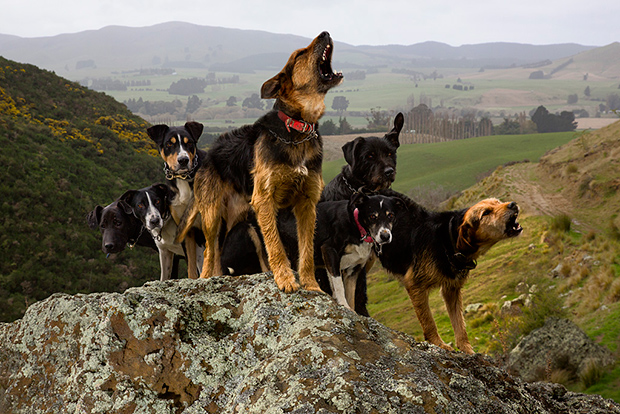
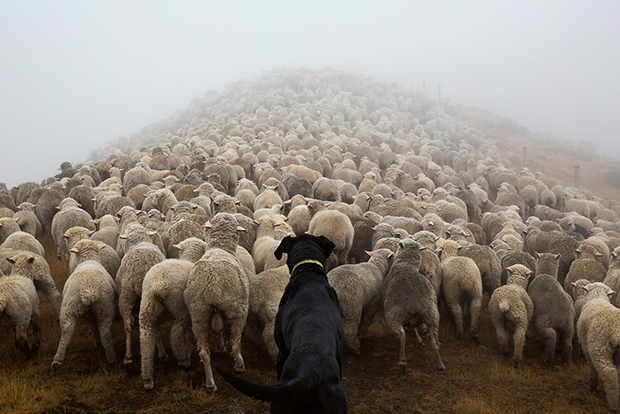
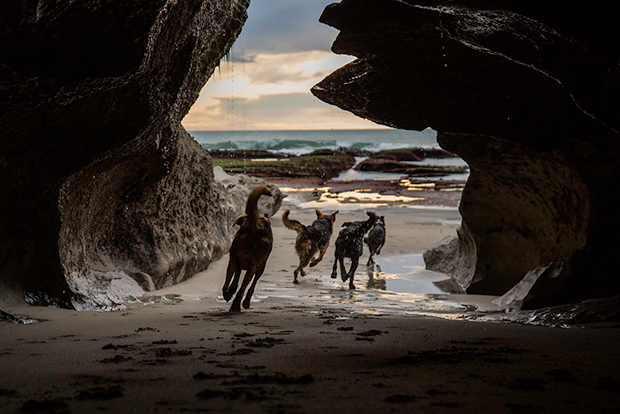
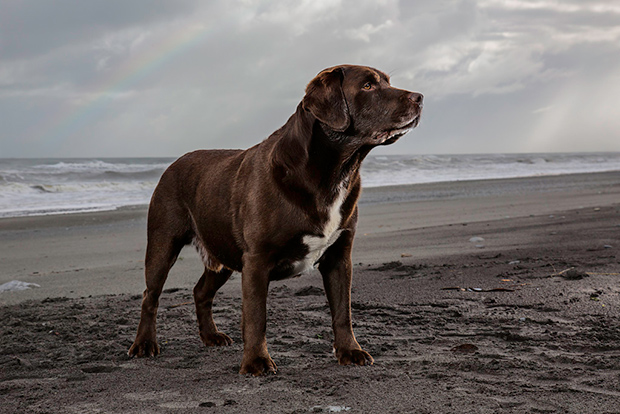
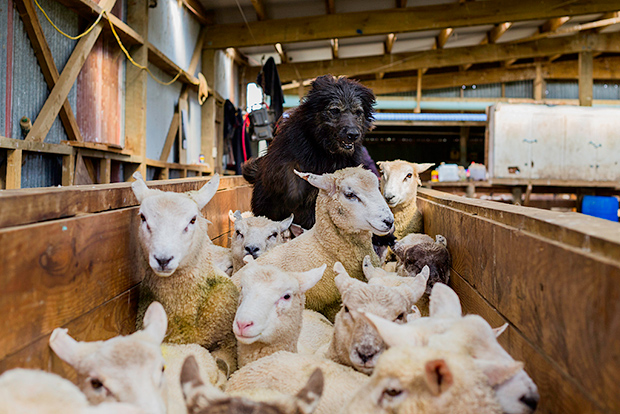
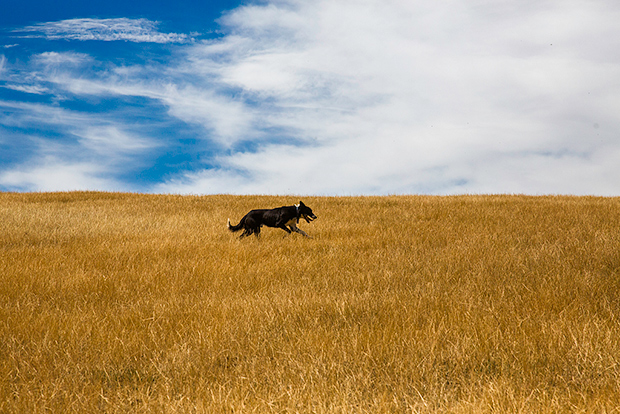
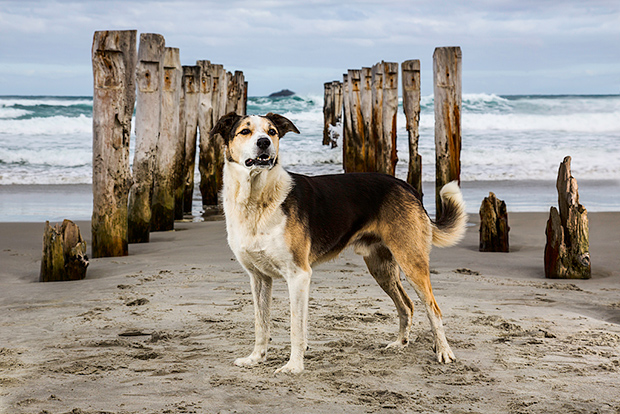
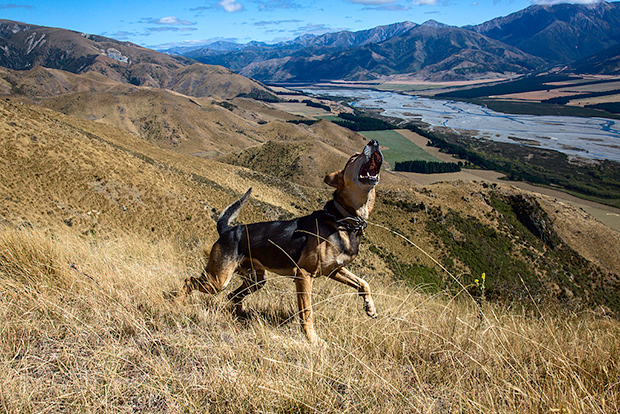
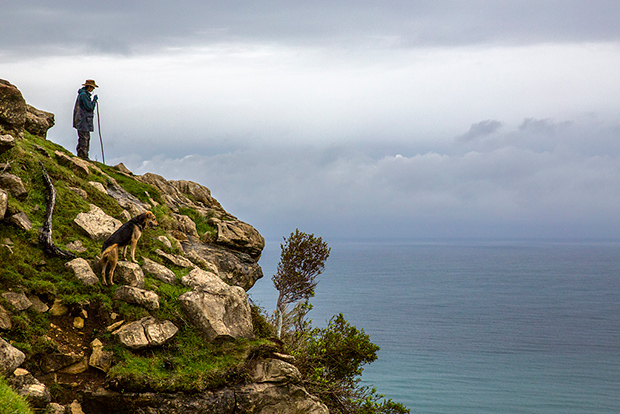
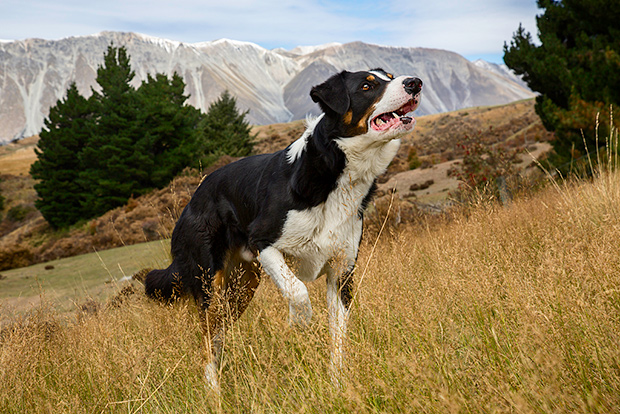
For The Shepherd’s Realm: Volume III, photographer Andrew Fladeboe captures New Zealand’s courageous working dogs, tracing the historical threads that connect them to the verdant farms and steep hills of the country’s South Island.
Fladeboe has dedicated the last few years of his career to chronicling the millennia-long bond fostered between man and dog. Canines, he explains, have been by our side for more than 30,000 years, ensuring not only our prosperity but also our survival. In New Zealand in particular, herding dogs have been a crucial part of the cultural landscape since border collies emigrated from Scotland during the 19th century, and until fifty years ago, the sheep industry was New Zealand’s leading enterprise.
Most of the South Island farmers, Fladeboe explains, feared he might get in the way of workflow and were not immediately receptive, but once he started to help out with much of the labor, many hosted him for anywhere between a few days to a few weeks. The working dog normally works from sunrise to sunset, traversing vast distances and harsh climates. At night, they sleep in small huts outside of the family home, often in cold and hot weather. Sadly, because their lives are so demanding, the dogs do not often live very long, and the farmers try not to get too attached.
The artist explains that although working dogs are rarely petted or allowed inside, they do share a close friendship with the farmers who have trained them. Herding dogs are most often border collies of huntaways, a breed native to New Zealand, and they are bred and raised to be deeply in tune with the farmers. They can comprehend seven whistled commands and often can anticipate the wishes of the shepherd with whom they work side-by-side.
Also captured in Fladeboe’s portraits of working dogs are New Zealand’s search and rescue dogs, many of whom have saved lives. These dogs are often trained from a young age to sniff out those in need. Some specialize airborne scents and others possess the ability to detect older smells. These dogs, like their herding brethren, work for hours at a time on rugged terrain and in all varieties of weather.
Under Fladeboe’s lens, the dogs of New Zealand emerge as the protectors, helpmates, and the eternal friends. From puppyhood until their chins turn gray, they remain loyal and alerted to our every need. Says the artist of the farmers he met throughout his journey, “Even though they may not admit it, they love their dogs.”
The contentious mid-term elections might be over, but American households are grappling with another controversy: Should this year’s Thanksgiving turkey be brined, injected, both, or none of the above?
Like skillful politicians, let’s start by trying to find common ground.
I think we can all agree that a lot of turkey comes to the table dry. So dry that it takes a generous, what-the-hell pour from the gravy boat to make it palatable.
The reason is anatomical: the modern turkey is a large, irregularly shaped composite of white and dark meat (the ratio is about 70 percent to 30 percent). Ideally, the breast would be cooked to a food safe internal temperature of 165 degrees, while the legs and thighs, which have more connective tissue and fat, achieve maximum tenderness at 180 degrees. But cooking and serving the parts separately just can’t match the eye-popping appeal of serving that smoke-burnished, handsomely browned holiday bird whole.
Many workarounds have been championed over the years. The two I find most effective (especially when subjecting a bird to the dry heat of the grill) are brining and injecting.
BRINING TURKEY
Without getting too scientific, soaking certain animal proteins in saltwater prior to cooking helps keep them moist. Not only do they absorb some of the liquid—their weight can increase by as much as 8 percent—but the salt denatures the protein strands within the muscles, discouraging shrinkage. With its high proportion of white meat, which has inherently less fat than dark, turkey is an excellent candidate for brining. (Read more about brining, and get a terrific Bourbon- and Maple-Brined Turkey recipe.)
Advantages of brining turkey:
• Brining not only hydrates the meat, but uniformly seasons it.
• Brined meat will be noticeably more tender.
• White meat will stay moister while the dark meat finishes cooking.
• Flavorful ingredients like sugar (which helps with caramelization), chopped onion, garlic, citrus peel, whole spices, etc. can be added to the brine to customize it.
Disadvantages of brining turkey:
• Because it, too, has absorbed the brine, the skin will not brown and crisp as readily as skin that hasn’t been brined. To overcome this problem, pat the turkey dry with paper towels after brining and let the turkey sit on a rack inside a rimmed baking sheet, uncovered, in the refrigerator for several hours before cooking.
• Drippings will be salty. Keep this in mind if you intend to make gravy.
• A significant amount of refrigerator space, always at a premium around Thanksgiving, must be reserved for the turkey and its brine. Alternatively, put the turkey and brine into a clean insulated cooler and weight with leak-proof bags of ice. Change the ice as needed.
• Brining takes time—up to 24 hours for a whole turkey.
• Brining is not recommended for many brands of mass-produced turkeys which have already been injected with solutions, or in the case of kosher turkeys, already dry-brined.
INJECTING TURKEY
With this method you get to play doctor, using an oversize hypodermic-like syringe called an injector to deliver a thin, flavorful liquid deep into muscle tissue. For turkey and other poultry, the injection mixture usually contains broth and melted butter with optional wine, bourbon, fruit juice, maple syrup, and/or other water-soluble ingredients for additional flavor. Avoid coarsely ground spices, which will clog the needle.
To load your injector, depress the plunger, dip the needle in the injector sauce, then pull the plunger back to draw in the sauce. Insert the needle into the deepest part of the thighs, drumsticks, and breast, pushing the plunger to disperse the liquid throughout the meat. (Try my recipe for Cajun Injector Sauce.)
Advantages of injecting turkey:
• Injecting works faster than brining. You can inject the bird immediately before cooking.
• Fats like melted butter, duck fat, or olive oil can be delivered deep into the breast meat, increasing its succulence.
• Because the liquid is delivered under the skin, the skin tends to come out darker and crisper than that of a brined bird.
• You can vary the taste of the turkey by adding cognac, maple syrup, lemon juice or other flavorings to the injector sauce.
• The injection process looks a lot more theatrical than brining, and can be done with great dramatic effect in front of guests. You can even let them participate.
Disadvantages of injecting turkey:
• Only water- or oil-soluble ingredients can be used in injector sauces. Solid ingredients, including coarsely ground spices, will clog the needle.
• Distribution of the liquid is not as uniform as it is for brining. In other words, some parts of the bird might be saturated while others are dry.
• The needle will leave track marks in the turkey. (For the record, this doesn’t bother me.)
• If an injection site is saturated, liquid will squirt from the holes, potentially hitting walls, counters, cabinets, etc. Some pit masters wrap their turkeys in plastic wrap before injecting, then remove it before cooking. I don’t bother.
I have used both methods with great success. But this year, with the rich-flavored but lean heritage turkeys we’re smoking, I’m going to brine.
Of course, there are people—you know who you are—who both brine and inject their turkeys before exposing them to the fire. Hey, sometimes more is more.
Brine, inject, or both? Post your vote—along with photos and any other turkey talk—on the Barbecue Board. And may the best bird win.
In the world's fastest motorsport, pilots fly at 230 mph and pull upwards of 10 g's through the track. GP sat down with Nigel Lamb, Breitling's Master Class pilot, ahead of the Red Bull Air Race at the Las Vegas Motor Speedway.
On November 9--the 25th anniversary of the destruction of the Berlin Wall--Mail Online reported on newly uncovered FBI files showing that two-time British Prime Minister Winston Churchill tried to persuade the US into launching a preemptive nuclear strike against the Soviet Union in 1947.
This was two years after the US ended World War II by dropping atomic bombs Little Boy and Fat Man on Hiroshima and Nagasaki, Japan. At the time of Churchill's entreaties, the Soviet Union possessed no nuclear weapons, so a counter strike of equal force was not even possible.
According to Mail Online, Churchill "urged right-wing Republican Senator Styles Bridges to persuade President Harry Truman to launch a nuclear attack" against the Soviets. He said that "if an atomic bomb could be dropped on the Kremlin, wiping it out, it would be a very easy problem to handle the balance of Russia, which would be without direction."
In 1946, just one year after WWII had ended, Churchill warned that Josef Stalin was "[consolidating] his grip on the eastern half of the continent" and that such consolidation portended an "iron curtain" if nothing were done. Churchill saw the threat as so grave that the loss of "hundreds of thousands of Soviet civilians in a nuclear strike" was an acceptable price to pay in exchange for future piece.
Churchill wholeheartedly believed the Soviets were trying to develop nuclear weapons so they could attack the US, so his pleas for a strike were framed with a warning that the Soviets would be able to strike the US in "two or three years."
History.com shows that Churchill was correct as far as his timeline for Soviet development of nuclear weapons was concerned--the Soviets detonated their first atomic bomb on August 29, 1949. However, they did not attack the US directly. Rather, the nuclear era ushered in decades of M.A.D. ("Mutually Assured Destruction") and a Cold War in which the US used diplomacy and traditional warfare to fight the encroachment of communism around the world.
A symbol of this war, the Berlin Wall, was constructed in 1961 and torn down November 9, 1989.
Follow AWR Hawkins on Twitter @AWRHawkins Reach him directly at awrhawkins@breitbart.com.
When is it wrong for a child to be taught discipline, responsibility and a love and understanding of the traditional ways of British country life?
When that lesson involves guns and game fowl, apparently.
Hence the story in today's Daily Mail in which we are invited to be shocked by the fact that author and TV presenter Susannah Constantine has put up photographs on Instagram of her ten-year old daughter Cece beaming proudly, her face smeared in the blood of the first mallard duck she has shot and is pictured holding round its neck.
"Depressing", "irresponsible" and "dangerous" claim the various animal rights campaign groups quoted in the article.
But for me - and, I would hope, the vast majority of Breitbart readers - the messages sent out by that charming photograph are the exact opposite of the ones that the animal rights fascists would like to impose on it.
How uplifting to see a ten-year old enjoying the outdoors rather than being hunched, as most of her contemporaries are so much of the time, over a computer!
How very responsible of this lucky girl's wonderful parents to teach her such skills as fieldcraft, camouflage and markmanship, as well as imbuing her with an understanding of issues like conservation and the intimate relationship between meat and killing, and enabling her to operate on equal terms in a world traditionally dominated by men.
And how very safety-conscious to train her up from such a young age as to how to handle a deadly weapon responsibly.
"Never, never let your gun/Pointed be at anyone," says the rhyme that all British children are taught when they learn to shoot. It's drummed into them like times tables used to be - I'm sure it was the same with Cece - and what it means is that when you finally go out shooting game for the first time, you don't make fatal mistakes in the heat and excitement of the moment.
When climbing over a fence, for example, you "break" your shotgun so that your neighbours can see it's safe and so that you don't trip and accidentally shoot yourself. When shooting driven game, you never endanger your fellow shooters by "following across the line." As the rhyme sagely notes: "All the pheasants ever bred/Won't repay for one man dead."
In earlier times, when childhood was considered something to be got over with as quickly as possible, such lessons would have seemed eminently practical and sensible. Today, however, in a culture which seeks to keep children as infantilised as long as possible, it seems almost dangerously radical. Teaching a child to act like a grown-up: imagine!
This, I've noticed, since moving to the country, is one of the key differences between children reared in the sticks and ones who are raised in the big city. The city kids are superficially much more sophisticated - often savvy with sex and drugs much earlier, and also much more streetwise in vital skills like how to avoid being mugged - but what's missing from their lives is a dimension that only country sports like hunting, shooting, stalking and fishing can really provide.
And a key part of this dimension is exposure to danger. With fishing, you can lose an eye or drown in your waders. When you ride to hounds you can very easily break your neck. With guns, obviously, you can blow your head off. Being a cute child is no defence against any of these threats. If you don't learn to think like an adult then there's a very real possibility that you will never live to see adulthood.
So yes, country sports are a risky thing for children to pursue but that's the point. If the danger weren't real, there would be no need to take such precautions. It's like the difference in the military between live firing exercises and ones involving blanks: real bullets concentrate your mind and encourage you to keep you head down in a way that blank ammunition just doesn't.
That's why I can't wait to "blood" my own children - just like Cece has been in that delightful photograph - with the blood of their first salmon, their first fox, their first grouse (yeah right: we can really afford that...) or whatever.
For me, there is nothing barbaric about such rites of passage. They're a sign of approaching adulthood and a mark of civilisation.
This article was updated in April 2024 with contributions from Anne McKinnell and Jaymes Dempsey.
“Why are my pictures blurry?” It’s a common question, especially for folks exploring photography for the first time. Unfortunately, it doesn’t have an easy answer.
The truth is that blurry photos are caused by many factors, so if your pictures are blurry, it’s often difficult to pinpoint the exact problem. Are you using improper handholding techniques? Do you have a defective lens? Did you choose a bad shutter speed? The list goes on. As a result, getting to a point where your files are consistently tack-sharp is, for most photographers, a goal that remains out of reach.
But while a blurry-photo problem doesn’t come with a one-size-fits-all solution, there are a handful of common reasons why your images might be blurry, each with its own simple fix.
And that’s why I wrote this article. Below, I list the 10 main reasons you might be capturing blurry photos, and while you might be familiar with some, others might come as a surprise.
So if you’re struggling to take sharp photos, here’s my recommendation:
Go through the list carefully. Don’t skip any of the sections, and make sure that you’re avoiding the common mistakes and pitfalls that I discuss. As soon as you come across an item that might be causing you problems, do whatever you can to erase it from your workflow – whether that means writing yourself a note that you keep in your camera bag, changing the default settings in your camera menu, or investing in new gear.
We all hate the feeling of viewing one of our images, only to realize that it’s blurry. But if you use this list, and you make the necessary changes, I guarantee that your photos will turn out sharper than ever.
1. Your shutter speed is too slow
For anyone who handholds their camera, a too-slow shutter speed is the number one culprit of blurry photos.
The slower your shutter speed, the more likely it is that vibrations in your camera – generally caused by tiny movements in your hands and arms – will create blur. This is an issue that I see all the time, and you often don’t realize that it’s plaguing your workflow until it’s pointed out to you.
You might think you can hold your camera perfectly still for half a second, but I assure you: there are very few people in the world who can do this. Most folks can only handhold a camera down to the 1/160s to 1/80s range, so if you’re using a shutter speed below 1/80s, then blur is a real possibility.
In fact, even if your shutter speed is faster than 1/80s, and even if you’re using a good handholding technique (see below!), blur due to camera shake can still creep in. That’s because the slowest shutter speed at which you can effectively handhold your camera varies depending on the lens’s focal length, the lens’s size, and the level of magnification.
So how can you be sure that your shutter speed is fast enough to prevent blur?
Your shutter speed should be the reciprocal of your lens’s focal length.
So if you’re using a 60mm lens, your shutter speed should be 1/60s or faster. With a 200mm lens, use at least 1/200s. With a 400mm lens, use at least 1/400s.
(The longer your lens length, the more camera shake is magnified, so telephoto lenses require much faster shutter speeds.)
I took this photo with a 400mm lens. Therefore, according to the reciprocal rule I shared above, I would need a shutter speed of at least 1/400s to capture a sharp shot. And honestly, when shooting with a heavy 400mm lens, it’s often safer to use a shutter speed that’s even faster.
Now, while the reciprocal rule is a useful starting point, you should modify it in a few specific scenarios.
First, if you’re photographing at high magnifications, you’ll want to boost the shutter speed a few notches beyond what the reciprocal rule recommends. So if you’re photographing flower petals with a 100mm macro lens, you should ideally use a shutter speed of 1/160s to keep your images sharp. And if you push your macro lens to its absolute maximum magnification, you’ll want to raise that shutter speed further still. When I photograph flowers at 1:1 magnifications, I’ve found that I generally need around 1/200s to keep my images from blurring (and when possible, I’ll shoot at 1/250s or even 1/320s to be safe).
Second, if you’re photographing action, such as a person running across a field, your shutter speed will need to be far faster than the reciprocal rule suggests. Fast-moving subjects require shutter speeds of 1/500s, 1/1000s, or – when dealing with ultra-fast subjects, such as birds in flight – 1/2000s and above.
Third, some lenses and cameras have image stabilization technology built into them. Image stabilization usually allows you to slow your minimum shutter speed by around 3-5 stops, so if your equipment includes this technology, and you know that its image-stabilization features are active, you can often handhold a few stops slower than the reciprocal rule suggests. But you should always be cautious, and if you haven’t tested your equipment’s capabilities, I recommend taking a few extra shots just to be sure you end up with a usable image.
What is your minimum shutter speed?
In addition to the reciprocal rule, it’s important to know your own personal minimum shutter speed.
You see, we all shake a little, but some of us shake more than others. So it’s good to know at what point camera shake becomes an issue for you.
Try this exercise (and for the best results, try it with each lens you own!):
Put your camera in Shutter Priority mode and take a photo at 1/500s. Then lower your shutter speed and take another image. Keep this going until you head all the way down to 1s or so, then pull up the images on your computer. Ask yourself: When does the blur become a problem? I rarely go below 1/125s if I’m handholding my camera, even if I’m using a shorter lens. I’ve found that I can’t consistently keep my images sharp at slower shutter speeds, and I just don’t want to risk a blurry shot.
2. You’re not using a tripod
To be clear, you don’t always need a tripod to capture sharp photos. If you follow the guidelines I set out above, you can avoid blur due to camera shake, and your handheld photos will look crisp.
However, there are times when using a sufficiently fast shutter speed isn’t desirable – either because you don’t have enough light, or because you’re deliberately trying to blur something in the frame.
In these scenarios, the reciprocal rule becomes worthless. But instead of handholding your camera and hoping for the best, you need to prevent blur due to camera shake by keeping your camera steady another way.
The best option, and the one that I highly recommend, is using a tripod. It’ll keep your camera completely steady even as you dial in a shutter speed of one second or more. As long as your tripod is sturdy, you can capture photos using shutter speeds that last minutes or even hours (though if you do shoot for hours, you’ll need to watch out for other problems, such as wind and file noise).
If a tripod is too inconvenient, consider a monopod, which is a more compact, flexible option (though it won’t offer anywhere near the same level of support, so you’ll need to be careful if you drop the shutter speed below 1/20s or so).
Also, when you use a tripod, image stabilization is not necessary and may even be counterproductive, so it’s a good idea to get in the habit of turning any IS off when you put your camera on a tripod.
3. You’re using bad camera-holding technique
If you’re handholding your camera, and you feel confident that you’re using a sufficiently fast shutter speed but your files are still turning out blurry, then it’s time to consider your handholding technique. Bad technique can cause extra camera shake, which can in turn cause blur.
For the best stability, practice the official photographer position:
Stand with your feet slightly apart, one staggered forward, and firmly planted to stabilize your body right to left and back to front. Support the camera with your left hand by holding the lens from underneath, and use your right hand to grab the grip and gently press the shutter button. Tuck your elbows tight to your chest and use the viewfinder rather than the Live View screen (holding the camera to your face will help keep it steady).
Some photographers even go so far as to listen to their breathing and heartbeat, taking care to fire the shot between breaths and beats for maximum stability.
When you’re handholding your camera, you should always practice good technique, as demonstrated in this image! Note the tucked-in elbows and the staggered feet.
4. Your aperture is too wide
The size of the aperture determines the depth of field, which is how much of the image is in focus. And this has a direct effect on the sharpness of your photo.
When a lens finds focus, it locks onto a specific distance known as the plane of focus. So if you focus at, say, 15 feet, everything 15 feet away from the camera will have maximum sharpness, and anything in front of or behind that plane will start to blur. The strength of this blur effect – that is, the speed at which sharpness falls off – depends on the aperture.
If you use a wide aperture such as f/2.8, the depth of field will be very shallow. This effect is magnified by longer focal lengths, and it’s also magnified when you shoot close-up subjects. So if you use a telephoto lens, you set the aperture to f/2.8, and you get up close, the resulting image will only have a razor-thin sliver in sharp focus. But if you use a small aperture such as f/11 or f/18, the depth of field will be larger, and more of the image will be sharp.
Using an aperture of f/20, I managed to keep everything in focus from foreground to background. But if I had used an f/2.8 aperture, only a sliver of the shot would have been in focus, and the rest would have turned out blurry.
Choosing the right aperture depends on the type of image you want to create. But if you are trying to get everything in the frame as sharp as possible, try using a small aperture (produced by a larger f-number such as f/11).
Note that a small aperture will let in less light, so you will need to use a slower shutter speed to compensate. See the first and second items on this list!
Also bear in mind that ultra-narrow apertures, such as f/22, will introduce blur due to diffraction – so narrowing your aperture beyond f/16 or so is often best avoided.
5. You’re not using autofocus
These days, cameras are sophisticated. So let them do what they are good at! Cameras do a fantastic job of nailing focus, both with still subjects and subjects in motion.
Is autofocus perfect? No, and later in this article, I’ll discuss a few times when manual focus is actually helpful. But generally speaking, autofocus is the way to go.
Basically, if your camera is set to manual focus, and you don’t have a solid reason to be shooting that way, I’d encourage you to switch it to autofocus. I use my camera’s AF settings most of the time, and so should you!
That said, even once you’ve set up your camera’s autofocus, you can still end up with blurry photos if you don’t use the right approach, as I explain below.
6. You’re not focusing in the correct place
Even if you’re using the perfect handholding technique or a rock-solid tripod, if you focus in the wrong place, you’ll still end up with blurry pictures.
Focusing carefully is especially crucial when using a wide aperture (because you’ll have a razor-thin depth of field!). A slight miscalculation in the focus can throw the subject completely out of the focal plane, or give you a subject with perfectly sharp earlobes and blurry eyes.
Photographers often leave their cameras set to an auto AF-area mode – one that tells the camera to decide automatically what part of the picture should be in focus. Most of the time, modern cameras are pretty good at this, particularly if the subject is prominent in the frame. However, with more complex compositions, or with subjects that are very close to the lens, the camera can get confused and try to focus on the wrong thing.
If you’re photographing in a scenario where your camera might be struggling to choose the right focus point, then you’ll want to specify the focus point manually. To do this, switch to a single-point AF-area mode.
When you look through your viewfinder, you should see an array of little dots or squares laid over the display, like this:
These are your focus points, and they show you where in the frame the camera can lock focus. In single-point AF-area modes, you can use the camera’s direction pad to select one of these dots, and the camera will always focus on that point (and that point alone).
Note that, to tell the camera to focus, you would normally depress the shutter button halfway before pressing it the rest of the way to take the shot. This works pretty well, but cameras can be overly sensitive – if you press too lightly, the button may come unpressed and try to re-focus after you’ve already found your point of focus. If you press too hard, you might capture the shot before the focus is ready. And if you take multiple pictures in succession, your camera may try to focus again before each shot. For these reasons, you might want to give back-button focusing a try; it’s not for everyone, but it can definitely make a big difference.
One final note:
In recent years, mirrorless cameras have added some outstanding subject-specific AF-area modes. In the right scenario, these can be far more effective than the single-point AF setting I mentioned above. For instance, if you’re photographing people and your camera offers a high-quality Eye AF setting, you should definitely try it out!
So check your camera menu to see what AF options you have available, and don’t be afraid to diverge from my recommended settings – provided that you test the modes out in advance, of course!
7. You’re using the incorrect autofocus mode
There are three main autofocus modes offered by most cameras. You should be switching between these modes every time you’re faced with a new shooting situation; otherwise, you’re bound to miss shots you normally could’ve nailed.
(Note that these AF modes are not the same as the AF-area modes I discussed above. AF-area modes specify where the camera should focus, while AF modes specify how the camera should focus. It’s confusing, I know – but as long as you keep this distinction in mind, you’ll be okay.)
Here are the three AF modes and when you should use them:
Single-shot autofocus, called AF-S or One-Shot AF, tells your camera to lock focus when you half-press the shutter button, and it maintains that point of focus until the shutter button is released. Therefore, this mode should be used with still subjects. I often use my camera’s single-shot AF when photographing stationary scenes, such as landscapes, cityscapes, architectural interiors, and still-life arrangements.
Continuous autofocus, called AF-C or AI Servo AF, is designed to track movement through the frame; when you half-press the shutter button, your camera will acquire focus, but it will constantly re-acquire focus as long as the shutter button remains partially depressed. It works best when your subject is in motion, and it’s the mode I use when photographing birds in flight, wildlife running, and sports players in action.
Finally, there’s an automatic autofocus mode, called AF-A or AI Focus AF. This is likely the default setting on your camera. It reads the scene and determines which of the first two modes it should use – but while automatic AF might sound convenient, it’s pretty unpredictable, and it’s not a mode that I ever use. Feel free to try it out and see what you think, but manually switching between single-shot AF and continuous AF is my approach, and it’s what I generally recommend to anyone struggling with autofocusing issues.
Dealing with a stationary subject? Your camera’s single-shot AF mode is the better choice, since it’ll lock focus on your subject and won’t jump around.
8. You’re not using manual focus
While I’m a big advocate of autofocus, there is one particular time when manual focus comes in handy:
When your camera is on a tripod, and you’re using a wide aperture to achieve a very shallow depth of field.
If you want to make sure the most important thing in your frame is sharp, switch to manual focus. Then use the LCD zoom function to magnify the display by 5x or 10x. And make tiny adjustments to the focus until you get it just right.
You can also try manual focusing when shooting close-up subjects (e.g., a flower petal) or when photographing landscapes in the darkness.
9. There’s junk on or in front of your lens
A big smear on your lens is going to affect the clarity of your image.
And if you put a cheap plastic filter in front of your lens, that’ll degrade image quality, too.
So make sure your lens is clean. And make sure that all your filters are high quality. If you always shoot with a UV filter and you keep getting blurry pictures, try taking a few shots without the filter to see if the quality of the glass is negatively affecting your images.
10. You need a different lens
Beginners love to blame their blurry pictures on their optics, though a bad lens is rarely the problem.
That said, lens quality can make a difference, and you’ll occasionally find lenses that are genuinely soft. And some lenses may be sharp in the center but get blurry around the corners and edges of the image, or sharp at certain apertures but slightly fuzzy at others. Every lens has a unique character that may or may not be useful to the type of work you’re doing.
It’s also worth noting that each lens has a “sweet spot” – a certain aperture at which it performs best. This is usually in the middle of its aperture range, around f/8 or f/11.
Fixed focal length lenses are usually sharpest, though it’s not always convenient to carry around two or three lenses rather than a single, all-purpose zoom.
Anyway, if you make all the adjustments I’ve discussed above and your images are still consistently blurry, you might want to think about trying a different lens. If you’re not sure whether this could be the issue, one option is to rent a lens for a weekend and see if it makes a difference. (Alternatively, if you have a camera shop nearby, you might be able to go in and try out one of their new lenses.)
Mistakes that cause blurry pictures: final words
Well, that’s it:
The 10 most common reasons your pictures are blurry.
If you’ve been struggling with blurry photos, you hopefully now know (or can at least guess) the culprit! And you can make adjustments to get things looking sharp.
Now over to you:
Are your photos blurry? Did you figure out why? Which of these mistakes have you been making? Share your thoughts in the comments below!
The first airplane ever flown, the Wright Flyer, used "wing-warping," in which pulleys twisted the trailing edge of the airfoil for roll control. Ironically, NASA is now revisiting that tech in a way by flight-testing the FlexFoil, a system that...
At the end of 2008, the U.S. Federal Reserve embarked upon a monetary policy so extreme and so reckless that it had to invent a (new) euphemism for what it was doing, since if it simply used the old euphemism, even the puppet-politicians of the U.S. government would have rebelled at this monetary insanity.
At that time, the Federal Reserve began “monetizing debt” (the old euphemism). What that economic jargon actually means is that the Fed (on behalf of the U.S. government) simply began conjuring its currency out of thin air – without any pretense of backing or value – as the only means of being able to continue to pay the interest on the exploding U.S. national debt. It was (is) the last refuge of a bankrupt government: the choice to hyperinflate its currency rather than officially declare bankruptcy.
Obviously neither the bankers nor the Corporate media were prepared to admit what they were really doing, so they invented a new euphemism for this old insanity: “quantitative easing”. But conjuring “money” out of thin air (by the $trillions) to pay the interest on U.S. debt was only the beginning. After that, the Fed “expanded” this monetary insanity – and began openly buying-up $trillions in U.S. Treasuries, as well as the “bad debt” (i.e. fraud) hidden on Wall Street balance sheets.
We were explicitly told by the bankers, media, and U.S. government that it was engaging in this “QE” to pump-up the U.S. Treasuries market (and thus manipulate interest rates lower), and to pump-up U.S. equities markets, to supposedly “stimulate the economy”. This was, of course, total nonsense.
Only the bankers still hold U.S. Treasuries, and only the wealthy still hold U.S. stocks (roughly 85% of all stock), and those two demographics were already wealthier than at any time in history before the beginning of “QE”. But while the supposed “stimulus” was never anything but a lie, the bubbles which were created by all this reckless money-printing are very, very real.
As a matter of basic arithmetic/economics, all bubbles implode/deflate without a steady stream of new money to keep the bubble inflated. Because (by definition) all bubbles represent unsustainable price levels, no bubble can ever be stable. It is with this context in mind that we can view this recent headline in the NY Times:
Quantitative Easing is Ending
It is a headline which no thinking adult could possibly take seriously. The Federal Reserve deliberately/explicitly/openly inflated the U.S. Treasuries bubble and the U.S. equities bubbles with its “quantitative easing”. The Federal Reserve claims to be withdrawing the fuel/support for those bubbles, and so those bubbles must implode.
Except the bubbles have not imploded.
This is not even theoretically possible, and so, ipso facto, “quantitative easing” continues – in some form. But the difference is that while the Federal Reserve is still conjuring new $trillions (to keep the bubbles pumped-up), it no longer admits to all this newly conjured funny-money. There is a very well-known legal/financial term for this practice: counterfeiting.
This isn’t speculation, since it is supported by more, obvious empirical evidence. In the spring of 2013, B.S. Bernanke first began talking about beginning to reduce his “QE”, and by the tiniest of amounts: a paltry/trivial $5 billion per month.
Even just talking about beginning to ease the newly conjured funny-money caused the interest rate on U.S. ten-year Treasuries to double over a six month period. Merely talking about “tapering” was costing the U.S. government $100’s of billions in additional interest payments (alone), further crippling this dying economy. And so in September of last year, Bernanke got in front of the microphones to admit that the U.S. government could not even begin to “taper” the money-printing.
Yet today we are told that “quantitative easing is ending”, but the U.S. bond-bubble has not even wavered. What changed?
The second time that the Federal Reserve pretended to begin to “taper” its money-printing, the economic terrorists of Wall Street first attacked the economies of all the world’s other nations – by sabotaging their currencies. With all the economies of the Rest of the World economically crippled, and thus the U.S. economy appearing “healthy” in comparison, the bond-bubble didn’t waver the second time the Fed pretended to begin “tapering”.
Again, this isn’t “conspiracy theory”, it is conspiracy fact. As noted in a recent commentary, this endemic currency-rigging has finally come out of the shadows. After two years of (informally) “investigating” individual FX-traders employed by these Big Banks, we now see formal, criminal investigations of these Big Banks/bankers for serially rigging the world’s currency markets (and currencies).
First, some context. In the lawless United States, its criminal Big Banks are never criminally charged for the laws they break. When they openly/deliberately falsified tens of millions of U.S. mortgages, turning the entire U.S. land-title registry into a cesspool of fraud, no bank was charged.
When they scammed investors around the world for $trillions in countless, serial acts of open/sleazy securities fraud, no bank was charged. When they are caught (on a daily, ongoing basis) laundering $trillions for known drug cartels, and known terrorist groups, no bank is ever charged.
However, the currency-rigging of these same, criminal Big Banks has been so blatant, so egregious, and so massive in scale that two of these Big Banks have now publically acknowledged that they are already under criminal investigation – JPMorgan and Citigroup. Meanwhile, the Corporate media has already warned us that “the Justice Department may seek guilty pleas from several firms” (i.e. tentacles of the One Bank).
The previous (unpunished) financial crimes of these Big Banks were already a hundred times larger than any financial crimes ever perpetrated in financial history, yet (by the actions of the U.S. government, and the words of the Corporate media) we see that their currency-rigging has been even worse. And all this was done so that merely talking about “tapering QE” would not burst the U.S. Treasuries bubble, all by itself.
When we scrape away all of the fraud, all of the crime, all of the lies, and (now) all the criminal investigations, we are left with a simple truth. As the Federal Reserve (publicly) takes its “quantitative easing” to zero, what it is actually doing is taking its counterfeiting of U.S. currency toward 100%.
There is no other, possible explanation for the fact that U.S. bond and equities bubbles have survived…for the moment. To prove this, we merely need to look at what the Corporate media claims to be an “explanation” for this economic impossibility – i.e. the best lie which they could fabricate.
…But quantitative easing is the gift that keeps on giving. Even after the purchases end, its effects will persist. How could that be? The Fed will still own all those bonds it bought, and according to the agency itself, it’s the level of holding that affects the bond market, not the rate of addition to those holdings. [emphasis mine]
Very simply, the Liars claim that the U.S. Treasuries market is the first-and-only stable bubble in the history of human markets – a bubble which can (permanently) remain inflated without a steady stream of new capital injections. It is a lie just as preposterous as the preceding, impossible lie: that “QE is ending”.
Understand that if it were possible for bubbles to remain stable then we would have seen numerous, previous examples of other “stable bubbles”: markets with prices permanently floating high above sustainability (and sanity). It has never happened before in human history, because it cannot happen.
The Treasuries-bubble remains, with current “prices” for Treasuries much, much higher than any other time in U.S. history. It is not merely a “bond bubble”, it is the largest bond-bubble in the 228-year history of the United States. Thus we know that the Federal Reserve has replaced every dollar of (old) “QE” with new counterfeiting.
It’s not “conspiracy theory”. It’s simply more conspiracy-fact.
Today Amazon announced the the device, a 360-degree speaker that plays music and podcasts at the command of your voice. The Echo also functions as an all-in-one A.I. servant, answering banal questions about pounds to ounces or how to spell alligator. You know, like Siri.
In fact, "Siri but crappier" seems to be the hot take floating around the tech sphere, a new niche pool I've found myself wading through, where men tell you why shit sucks until it's popular, and then they tell you why it's the future even though it's a thing of the past.
"Siri but crappier" seems to be the hot take floating around the tech sphere
Echo isn't that. For normal people, tech objects are their bluntest...
As photographers, we’re already intimately familiar with the importance of lighting and posture, but just how much of a difference can the proper pose and lighting make? This video by BuzzFeedBlue, titled “How to Fake a Before and After Photo,” answers that question by showing the shift in real-time.
Keep in mind that this isn’t about Photoshop at all. The before and after photos haven’t been retouched. The only difference is the lighting and posture/pose used.
The opinion of one of the participants at the beginning of the video probably tracks with many people’s thoughts, “I know weight loss photos are fake, but there has to be SOMETHING to them,” he says. “They can’t be ALL fake.”
As you can see from some of this sample, however, that’s not the case. They certainly can be ALL fake if that’s what people are going for:
The photographer who helped BuzzFeed put this together is Ben Cope, and he calls it a ‘lighting gag.’
Before photos were shot with flat light, so that any contours or definition that the person might have disappear into a shadow-less blob. After photos, on the other hand, used a more dramatic lighting, different poses, and probably a happier expression.
And, as you probably already realized watching the video, this is doing the bare minimum. One could get much more involved with the lighting, and then pull it into Lightroom for some post-processing help with the dodge and burn tools… after all, you’re still not using the P-word…
An indigenous woman of Paraguay was reportedly set on fire and shot with several arrows as a means of punishment after locals determined that she was likely a witch, according to a local prosecutor speaking to the Associated Press.
The prosecutor said that the victim, 45-year-old Adolfina Ocampos, was tied to a wooden pole before members of the Mbya Guarani ethnic group decided to shoot her with arrows and burn her alive. The prosecutor has charged nine village men with murder, and they have already admitted their guilt, according to the report.
The Mbya Guarani people are considered to be indigenous to South American countries Paraguay, Argentina, Brazil, and Bolivia.
Locals said that witchcraft accusations are not something commonly associated with the tribe.
A local anthropologist told the AP, "I've been working in Paraguay for 40 years and I can't remember a similar episode of an execution for alleged sorcery. The tragic death of this woman is isolated and out of the ordinary within the coexistence of Paraguay's 20 ethnic indigenous groups. In general, the Indians are very peaceful and tolerant."
A report by the UN, titled "Witches in the 21st Century," has suggested that tens of thousands are still being accused of practices such as witchcraft and sorcery. The report stated, “It is known that every year, thousands of people, mostly older women and children are accused as witches, often abused, cast out of their families and communities and in many cases murdered.”
Should you stay or should you go? Status quo bias is our tendency to, when presented with a choice, prefer the current scenario as opposed to making a change. You can account for this natural bias by reversing the situation and the direction of change.
I’ve been hunting some lovely woods not six miles from my house. I’m talking about beautiful, mature hickory and oaks mixed with thick patches of mountain laurel. Gorgeous place. Some of the oaks are still dropping acorns now, in November. But there’s almost no deer sign. Hardly a rub or scrape anywhere. And my friend Fidge and I aren’t seeing many deer. The few that we do see are moving purposefully, as if on their way to or from somewhere else. These woods, which took the better part of a century to establish, ought to attract and hold deer in good numbers. Instead, they’re the hunting equivalent of flyover country.
The guys one ridge over are baiting big time. They set out piles of corn. They have at least one automated corn feeder, probably more, which they refill diligently. They’re pulling the deer that-away.
It makes me want to gnash my teeth. I want to hurl thunderbolts, call down plagues. It doesn’t have to be this way. It’s just that we collectively—the hunters of Maryland, and about half of the other 50 states, maybe yours included—have decided this is what we want. We want the Corn Race, in one form or another. And now, by God, we’ve got it.
When you realize that the guys around are setting out deer corn by the ton, you have a choice. You can refuse to follow suit—and plan on not seeing, or killing, many deer. Or you can step onto the merry-go-round and start baiting, too. But be warned: Once you start, it’s just about impossible to stop. Stopping would mean you’d spent all that hard-earned money for naught. What’s the answer? Spend more. You have to put out at least as much corn out as the other guy to keep up. And more if you want to win. So which is it? Did you come here to win or not? Oh what the hell? It’s in the name of hunting, which you love. So if the other guy ups the ante, you see his bet and raise him another ton. And now you’re the baiter drawing the deer off some other non-baiter’s land. So that guy starts in—and round and round we go.
I suppose I can’t blame anyone for getting on the ride. But still. It makes me want to gnash my teeth.




 Instapundit's Glenn Reynolds has
  Alienated from congressional
Democrats, President Obama is
Alienated from congressional
Democrats, President Obama is 







 The first airplane ever flown, the Wright Flyer, used "wing-warping," in which pulleys twisted the trailing edge of the airfoil for roll control. Ironically, NASA is now revisiting that tech in a way by flight-testing the FlexFoil, a system that...


