Shared posts

05 Dec 15:27

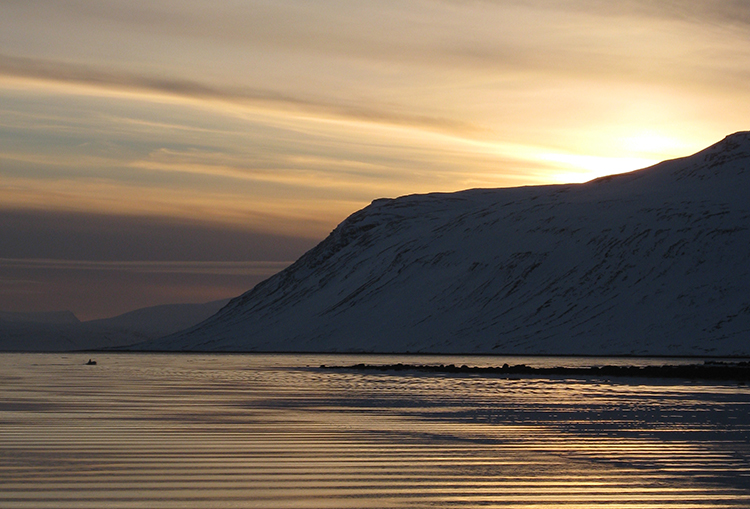
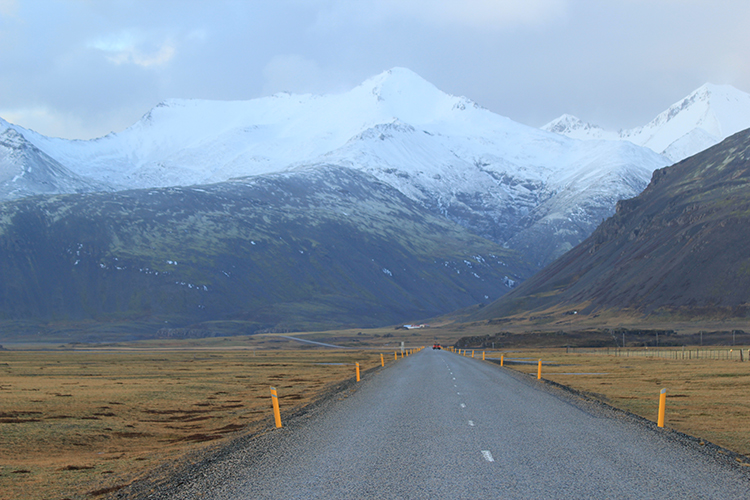
Iceland in the Winter Off-Season

by Mollie Busby

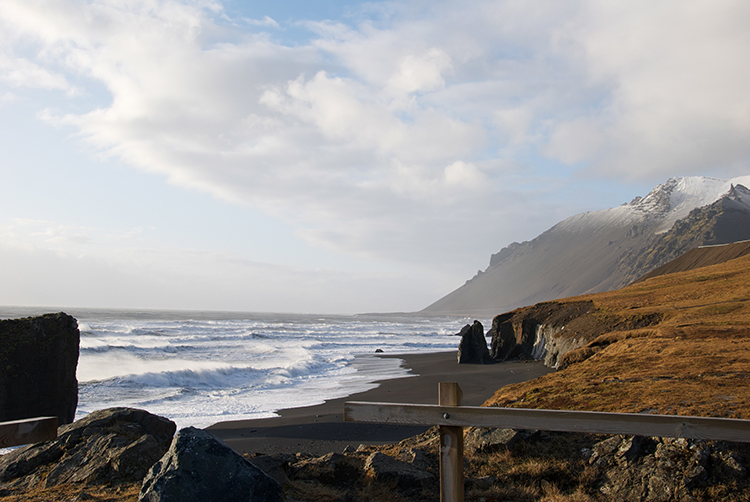
celand is defined by contrast. Aptly named the "land of fire and ice,” the country’s landscape is draped with waterfalls that cascade from rocky outcrops, dotted with hot springs and billowing steam plumes, and surrounded by wild ocean waves licking the dark, deserted beaches. Icelandic people are friendly — albeit sometimes stand-offish at first — and offer occasional warm smiles that immediately soften their weathered, tough exteriors. 

Known for welcoming droves of tourists during the lush summertime, Iceland can also be experienced in the winter for a fraction of the price. So if you’re a light spender and a winter lover, and are up for an adventure, grab some absurdly cheap flights to Iceland this season and venture off the beaten path in this visually spectacular, unpredictable locale. Here are a few tips to making the most of your Scandinavian winter adventure, while saving some coin in the process. 


TOP 10 TIPS FOR YOUR TRIP TO ICELAND IN THE OFF-SEASON

10. Drive Iceland at your own pace. Skip the bus tours packed with tourists and rent a car instead. The roads are easy to drive and it’s difficult to get lost with one main road around the entire country. Renting 2WD with studded tires in the winter is do-able, but if you’re not confident with winter driving, consider splurging for a 4WD to navigate internal roads and northern routes. In the winter, studded tires are a must.

9. B&Bs make wandering easy. Consider booking your trip through Icelandic Farm Holidays. There are locals around the country that participate in this Icelandic version of Air B&B, and their easy-to-use online map allows you to find locations with amenities to suit your needs. The “Free as a Bird” voucher system (only available September to May) allows for extremely flexible travel plans. Breakfast is typically included in each stay. 

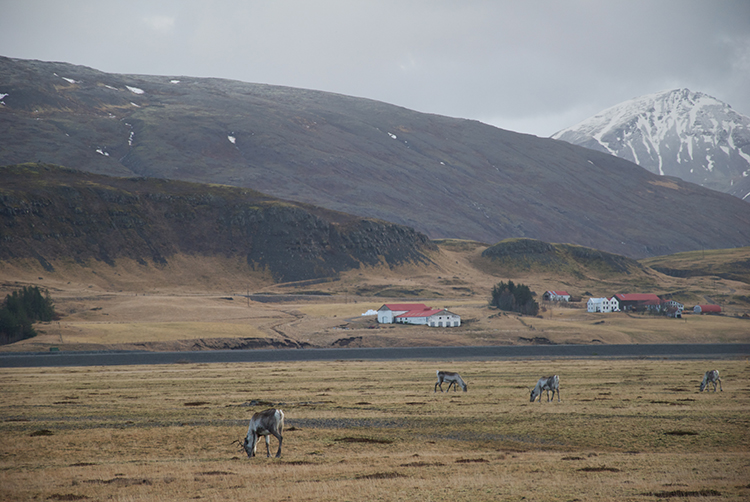
8. Pack layers and a sturdy pair of boots. The weather in Iceland is as varying as the scenery—and not for the faint of heart. One minute, the wind is howling and the next, the sun is casting a golden glow on the fjords as wild reindeer gallop into the distance. (Yes. It actually gets that cliche.) Pack smart and light — and plan to layer. Warm gloves would be smart. Said sturdy boots should be able to get wet and tromp through snow while keeping your feet dry and warm at all times.

7. The Blue Lagoon is worth it. Although it may seem like the epic tourist trap, especially considering it’s only a short drive from the international airport, the Blue Lagoon is the ideal first stop upon arrival. Your jet lag will melt away as you soak in a steamy, cerulean bath and acclimate to the chilly, arctic air.

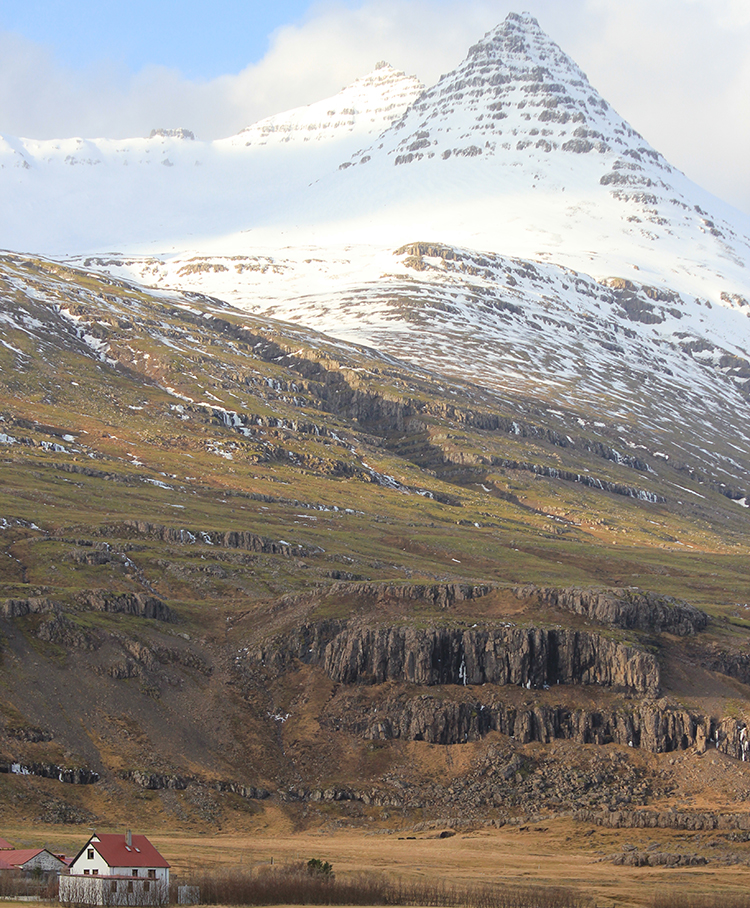
6. Have your camera ready at every opportunity. One the best parts about Iceland is the feeling that you’re experiencing true wilderness. Each part of its landmass looks different — my crew and I captured Reykjavik on a dreary day, the southeast during the golden hour, the north during a freezing cold spell and the northwest during a blizzard. I’m confident each region could be experienced in a different way on a different day, and that’s the fun of it. The scenery changes from fjord to fjord, from corner to corner. Photo ops abound — don’t miss them!

5. Soup and Salad—the key to eating cheap. My husband and I aren't exactly “foodies” when we travel… we’d rather spend money on experiences. So if you’re like us, looking for a hearty, cheap meal, look no further than a soup & salad buffet. The buffets are often large and diverse, and especially on those extra cold days, soup is just the ticket to warm your soul.

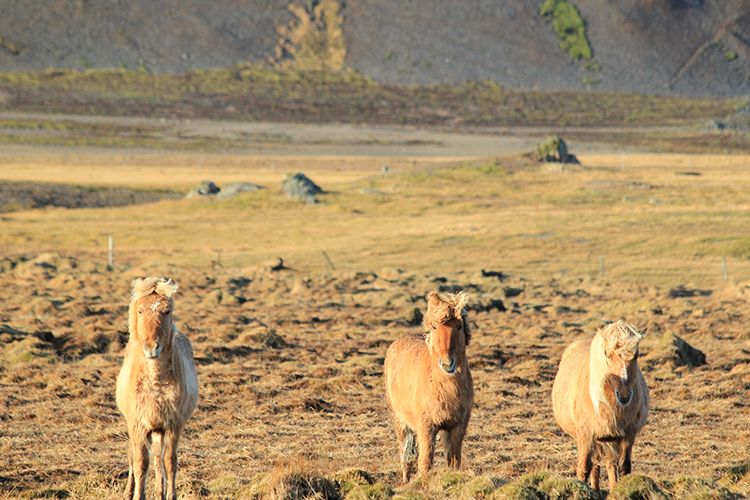
4. Check out the horses. One of the most amazing things to see while driving around Iceland is horses. They’ve got a different look and feel to them, and rightly so — they’re the same breed that’s inhabited Iceland from seemingly the beginning of time. No other breeds of horses are found in Iceland except these. 

3. Try the shark. Any Iceland guide book will explain an Icelandic “delicacy” called Hákarl—it’s essentially rotten shark. It didn’t seem like that big of a deal to the locals we met, but it was certainly an experience to try. We found a restaurant in Reykjavik that served it, and I tried a bite, which tasted a bit like rubbing alcohol shooting through your nostrils. “Not for the faint of heart” takes on a whole new meaning.

2. Have a hot dog. Or three. There’s something special about Scandinavian people and their penchant for hot dogs—and I agree. They are oddly satisfying at nearly any time of day. If you’re in need of a quick snack on the road, chances are the nearest gas station has hot dogs. Bonus if they have good toppings like fried onions. If you’ve got some time in Reykjavik, stop by Baejarins Beztu Pylsur to experience the best of the best.

1. Interested in backcountry skiing? Look no further than Aurora Arktika for your expedition. Imagine skiing up and down fjords using a sailboat as your base camp, fresh fish stew to warm your bones in the evenings, and northern lights on clear nights in the harbors. There’s nothing quite like it — just as there’s nothing quite like Iceland in the wintertime.


Mollie Busby is a skier girl married to a splitboarding beardsman, who lives in a remote yurt in Whitefish, Montana. She gets stoked on powder turns, international travel, & yoga.
Follow her adventures on Instagram and find more of her stories on TwoSticksAndABoard.com.

29 Nov 20:52

Endurance Athletes May Soon Be Electrocuting Their Brains

by Jon Gugala on Fittish, shared by Kevin Draper to Deadspin

Endurance Athletes May Soon Be Electrocuting Their Brains

What if, prior to Thursday's Turkey Trot, a few minutes hooked up to a 9-volt battery could have lowered your heart rate, increased your power, and made every mile feel easier? This is the promise of ongoing research on transcranial direct current stimulation, or tDCS. And while the early test results are far from conclusive and the understanding of what exactly happens is dim, the data is promising.

Read more...


29 Nov 20:51

The 24 Hours Of LeMons Was A Wet, Miserable Time And I Loved It

by Stef Schrader on Black Flag, shared by Kevin Draper to Deadspin

The 24 Hours Of LeMons Was A Wet, Miserable Time And I Loved It

What do you do when you have a family emergency the week before a 24 Hours of LeMons race, and your folks tell you to do the race anyway? You race the car, that's what.

Read more...


29 Nov 01:25

Danes Collect Welfare While Fighting For ISIS

On November 27, the Danish Security and Intelligence Service (PET) indicated 28 Danes have collected unemployment benefits while fighting with ISIS in Syria. 

According to AFP, PET said 15 of the welfare recipients have "been ordered to pay the money back, eight people [are] still being investigated, and five cases [have] been dropped due to insufficient evidence."

Denmark has two different unemployment systems, one of which is the dagpenge--a system which pays $134 "per day for up two years." It appears some of the jihadists were on this system and some were on "a more modest...unemployment benefit."

In June PET said "more than 100" Danes had gone to Syria to fight alongside ISIS. However, Naser Khader--"a Danish commentator on Middle Eastern affairs"--believes that number needs to be "revised upward." It is believed Denmark has "the second largest number of foreign fighters in Syria relative to its size among Western nations." 

Breitbart News previously reported that Austrian police raided various homes and mosques on November 28, arresting 13 jihadist recruiters and seizing propaganda and funds being used for the benefit of ISIS. This followed a September OE24 report claiming Austria has become a "terror hotspot" and that "hundreds of [ISIS] supporters were...in Austria."

Follow AWR Hawkins on Twitter @AWRHawkins  Reach him directly at awrhawkins@breitbart.com.


29 Nov 01:13

Feds Take Record $341,591,000,000.00 in Tax Revenue...


Feds Take Record $341,591,000,000.00 in Tax Revenue...


(First column, 8th story, link)
Related stories:
28 Nov 17:46

Crackpot Climate Change Claim of the Week: Global Warming Means Airplanes Won't Take Off

Airplanes of the future will have to carry lighter loads more often thanks to global warming, according to two scientists at Columbia University, New York. They reached their conclusion by creating models which predicted that by 2060 there will be more warm days but no commensurate technological advances in the aviation industry.

The two scientists, Coffel and Horton, looked at a phenomenon known amongst pilots as ‘density altitude’, which affects a plane’s ability to take off. Essentially, on hotter days the air is less dense, making it harder to get a plane airborne. It is a particular problem at airports with short runways, as the planes will take longer to lift off.

Commercial aviation overcomes the problem by issuing weight restrictions at the airport on particularly hot days. Coffel and Horton sought to predict how many more weight restricted days there will be by 2050-2070, and decided, through use of models, that the "number of weight restriction days between May and September will increase by 50-200 percent at four major airports in the United States by 2050-2070," and that "these performance reductions may have a negative economic effect on the airline industry."

Their solution is for the aviation industry to start "planning for changes in extreme heat events" to "help the aviation industry to reduce its vulnerability to this aspect of climate change."

But as Anthony Watts of the blog Watt's Up With That points out: "Of course they are assuming that [their] models produce an accurate output, and that airplanes of the 2050-2070 era have the same airfoil efficiency and take-off power of today." Neither of which are by any means certain. 


28 Nov 17:30

Bomb Plot Failed After Maxed Out EBT Card...

28 Nov 14:07

Obama Thanksgiving: Six Kinds of Pie

The White House released the menu of President Obama’s Thanksgiving menu as he dined with his family at the White House.

The dessert menu included six kinds of pie: banana cream pie, coconut cream pie, pumpkin pie, apple pie, pecan pie, and cherry pie.

Obama’s love of pie is well documented, including this 2008 speech on the campaign trail where he used the word “pie” 13 times in 86 seconds.

"Some of you like cake. I like pie,” he said.

The dinner menu is below:

Thyme Roasted Turkey
Honey-Baked Ham
Cornbread Stuffing
Oyster Stuffing
Braised Winter Greens
Macaroni and Cheese
Sweet Potato Gratin
Mashed Potatoes
Green Bean Casserole
Dinner Rolls


28 Nov 13:53

Harold Burrage: You Eat Too Much

by Karen Day
Harold Burrage: You Eat Too Much
'Tis the season in the USA, when it's time to gather around, give thanks and load up our plates. Holiday tunes of the Thanksgiving variety are in short order, but thanks to the Chicago blues and soul singer Harold Burrage, we have a track to toast......
Continue Reading...
28 Nov 13:28

I have been in school for 11 years, and I am now studying Math...how is it possible I have never seen this until today?

28 Nov 13:26

37 Relaxing Cool Tone Images To Chill Out With

by Darlene Hildebrandt

This week’s image set is all about relaxing and getting to your zen place. Often cool tones relay that message really well as they feel less stressed and calming than warmer colors. Cool tones include blue, purple and even green. See how you feel after viewing these images:

Relaxing cool tone images

The post 37 Relaxing Cool Tone Images To Chill Out With by Darlene Hildebrandt appeared first on Digital Photography School.

27 Nov 02:09

PAPER: TERRORISTS FUNDED BY UK WELFARE BENEFITS...


PAPER: TERRORISTS FUNDED BY UK WELFARE BENEFITS...


(First column, 14th story, link)
Related stories:
27 Nov 02:09

1 in 5 Households Will Celebrate on Food Stamps...

27 Nov 02:05

Holiday Shoppers Are Being Targeted For Obamacare Sign-ups By HHS…

by Jarred Stone
This is exactly what people want as they’re shopping for the holidays… Via Washington Examiner: Shoppers this holiday season will encounter a lot more Obamacare. The Department of Health and Human Services is set to announce a new partnership Wednesday with retail stores, pharmacies and popular websites that will allow them to better spread the word […]
27 Nov 02:04

´The most expensive regulation ever´: EPA hammers industry with ozone'reducing rule that could cost $270 BILLION per year '' and CHINESE pollution could*

Daily Mail [UK], by David Martosko & Associated Press Posted By: Attercliffe- Thu, 27 33 2014 01:33:15 GMT The Obama administration took steps Wednesday to cut levels of smog'forming pollution linked to asthma, lung damage and other health problems, bringing jeers from business leaders who warn of trillions in compliance costs and millions of lost jobs. And evidence shows that a shifting regulatory environment could drive hundreds of U.S. counties over the new limit''for no reason other than their proximity to China´s out'of'control smokestack society. Energy and industry trade groups painted the government´s move as a roadblock that threatens to jeopardize manufacturing´s comeback in the U.S. And Oklahoma Republican Sen. James Inhofe, who will take over the Senate Environment and
25 Nov 20:40

Birdwell Flies High.

by Michael Williams

Air Bird

If by chance you have flown to Orange County recently you may have noticed an American surf icon staring at you as you float down towards John Wayne Airport. Seeing “Birdie” Birdwell on a factory roof should come as a surprise if you know anything about this sleepy SoCal surf brand.

Just as surprising as it must have been to scroll through Instagram and discover Birdie adorned to a mobile surf shop in Southern California this summer. Also, wait, Birdwell is on Instagram? The question you should be asking yourself is: What is happening at Birdwell? For any other brand this wouldn’t really mean much at all, but for Birdwell this is tantamount to a revolution.

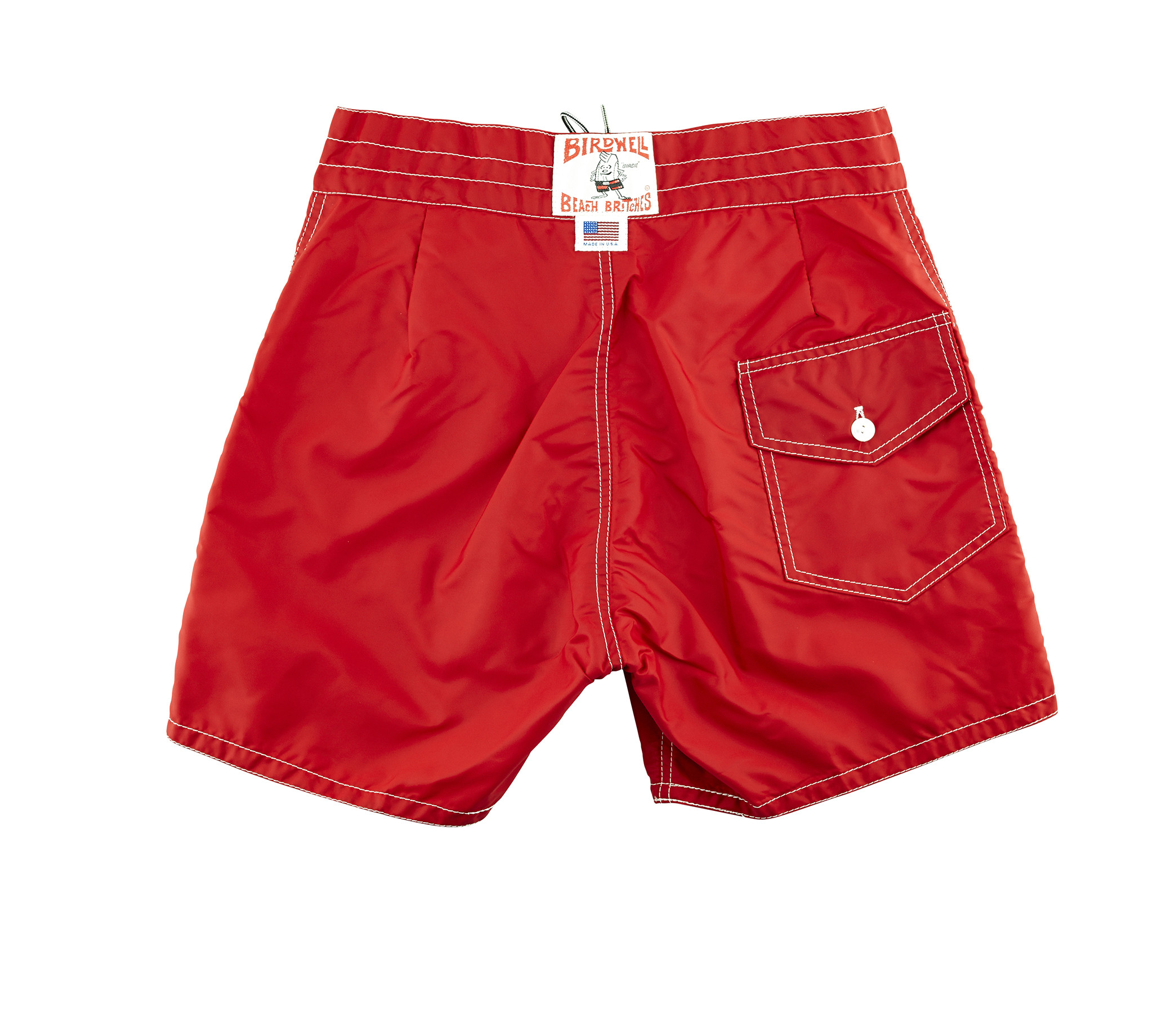
Birdwell Beach Britches is one of the most storied and iconic California surf brands that has ever been. It’s authentic, still entirely manufactured in the U.S. (largely to the original specs) and it possesses a certain charm that can’t seem be replicated in modern brands. It took decades of being family owned and utterly resistant to change for the Birdwell quirkiness to resonate, ultimately giving the brand a cult following. Over the years surfers, lifeguards, beachgoers and the like fell in love with Birdwell and came to swear by the product for the quality and durability. Others, like me connected with Birdwell because it is so distinctly American and a time capsule of a brand.

301_Red_B

The company was founded in Santa Ana and it has been making basically the same storied boardshorts and competition jackets there since 1961. Many of the loyal employees in the factory have been making Birdwell clothing literally for decades. The brand has worked hard to maintain the quality and integrity of its product almost as much as it has fought to resist change in general. A big part of the charm of Birdwell is the fact that it really hasn’t changed in the past 50 years. As far as crusty old curmudgeon-y brands go, Birdwell takes the cake. They make J.Press seem like Apple Computer. Birdwell’s website was famously excruciating to use. It had all of the personality of a government database from the early 1990s. You had more luck just calling the factory direct and hoping someone would actually answer. At a certain point the old website and lack of access became more of an annoyance than fun and quirky.

Many began to worry about what would come of their beloved brand as the family owners grew older. People were wondering who would take it over and what would that mean for the boardshorts and more importantly the factory and the people who work there? Then this summer Birdwell starts acting strangely with its new-found interest in social media, the mobile shop “The Bird” and then a new website. It turns out that earlier this year a group of local Southern California surfers including skate legend Natas Kaupas bought the company and everything along with it including the factory. The new owners loved Birdwell and wanted more than anything to simply continue what the Birdwell family had created in 1961 at the dawn of the California surf era.

There have been some small changes (as noted above) all seemingly done in the name of allowing people more access to the brand. But the iconic product has not changed and everything continues to be made in Santa Ana. It’s a feel good brand with a new lease on life. That must be why Birdie looks so happy from high above. [BIRDWELL]

Birdwell

The old Birdwell site was designed to prevent as many people from buying as possible. The new site (above) which launched in the past month is a vast improvement.

310

310-Medium-Orange-F

310-Medium-Orange-B

The new 310 style is velcro-less and a trimmer fit. Still made in Santa Ana.


The Bird

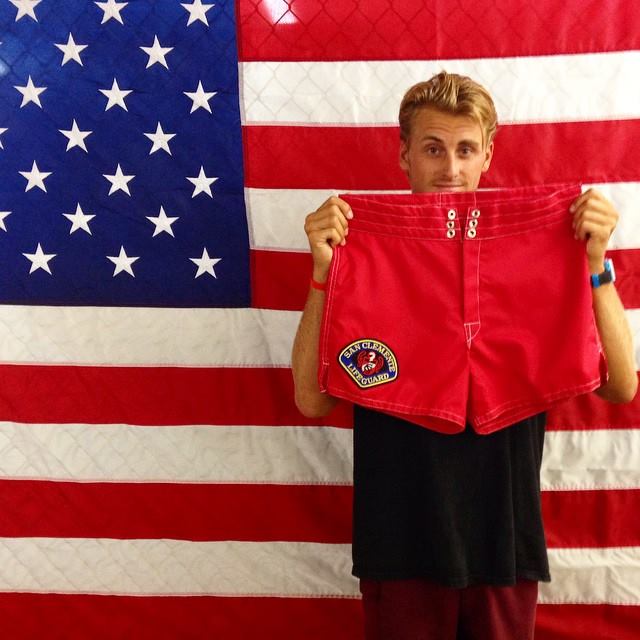
Life

Still loved by lifeguards after all of these years.

25 Nov 20:16

Treehouse built from salvaged materials near Squamish, British...


Treehouse built from salvaged materials near Squamish, British Columbia.

Submitted by Jonathan von Ofenheim.

25 Nov 19:15

Muslim Somali-American Pens 'Average Mohamed' Cartoon to Lure Youth Away from ISIS

A Muslim Somali man who lives in Minnesota has decided to combat the lure of ISIS in a very creative way. Mohammed Ahmed has created vivid and clear-sighted cartoons at AverageMohamed.com, aimed at children between the ages of 8-16. 

Using verses from the Koran, speaking English, Ahmed explains that the Islamic State terrorist group will not lead them to Paradise—but to Hell; that ISIS engages in genocide; that saving one life is equivalent to saving the world; and that taking one life is therefore equivalent to destroying the entire world.


We now know that ISIS and other barbarian Islamic groups use the internet as a recruitment vehicle in order to terrorize their enemies as well as glamorize and normalize their atrocities. While many have decried this fact, Ahmed has decided to do something about it. He wants to create a “counter narrative…which is meant to question, challenge, and agitate minds into not accepting what has been told in the propaganda videos.”


Not only is he posting his counter-narrative videos—he plans to travel with them to mosques, community youth centers, and even to families where a family member is planning to join a radical Islamist group. Below, he explains his mission:


The hottest war of the 21st century is that between civilization and barbarism. The lure of radical Islam is the lure of an idea that many young Muslims in the West been indoctrinated into believing: that their birthright of supremacy has been stolen from them; that Westerners are anti-Arab, racist, “Islamophobes;” and that instead of assimilating into Western modern culture with its European Enlightenment and Judeo-Christian values, they must retreat from it and attack it, both from within and by joining genocidal groups in Iraq and Syria.


Many of us increasingly fear that the majority of Muslims either support radical Islam or are simply too terrorized to oppose it. I have personally been frustrated by the choice of Muslim “experts” whom Western governments choose to rely upon, such as the leadership of the Council on American-Islamic Relations (CAIR), a group affiliated with the Muslim Brotherhood which the UAE has just designated as a terrorist group. There are dissident and apostate Muslims with whom to consult. Some are secular and moderate, others are religious and moderate. Some are strongly pro-West and pro-Israel. Some believe that Islam is the problem; others want the opportunity to wrest their religion away from the fundamentalists and wrestle it into modernity and into a religion which genuinely supports peace, human rights, and women’s rights.


Zeyno Baran has edited an excellent book called The Other Muslims: Moderate and Secular which features very important pieces by Muslim anti-Islamist dissidents and feminists such as Samia Labidi, Bassam Tibi, and M. Zuhdi Jasser, as well as an Introduction and Overview by the editor. I hope that President Obama and his entire inner circle make it a point to read this book and start inviting these natural American allies to the White House.


25 Nov 13:44

Cheaper Oil Is Squeezing Iran

The recent drop in oil prices is making American consumers happy as they enter the holiday season. As fuel prices go down, consumer confidence and spending go up, and the economy strengthens. The opposite is true in Iran, where both the state and private sector are heavily dependent on high oil prices. Indeed, while President Barack Obama resists calls to restore some sanctions on Iran, the low oil price operates as a sanction by default.

As Yossi Melman notes in the Jerusalem Post

The Iranian budget for 2014/15 is based on a $140 per barrel price--whereas the current price is $80 per barrel. This means a huge deficit in the Iranian budget. Iran can cover it by austerity measures--cutting subsidies of food, fuel and housing – but its leaders fear that such steps will bring upon them the wrath of the masses, which already suffer from the recession. Iran’s government prefers to print money and raise inflation.

The drop in oil prices is partially aided by expanding production in the United States, where--despite Obama's best efforts, and the protests from the left--hydraulic fracturing, or "fracking," has revived a moribund domestic industry. Oil production also has to expand to match the competition from natural gas, which is also booming and lowering energy costs across the American economy.

Traditionally, the OPEC nations respond to falling prices by reducing production. But OPEC's market power has been vastly weakened over the years--and some of the leading OPEC nations, including Saudi Arabia, now see Iran as an existential threat. They may be prepared to tolerate some temporary economic losses to put greater economic and political pressure on the regime--especially while Obama's weak diplomatic posture persists.

Senior Editor-at-Large Joel B. Pollak edits Breitbart California and is the author of the new ebook, Wacko Birds: The Fall (and Rise) of the Tea Party, available for Amazon Kindle.

Follow Joel on Twitter: @joelpollak


25 Nov 01:31

Presenting North America's Most Frustrating Airports

by Tyler Durden

As the busiest travel week of the year gathers pace (amid fears of a winter storm cluserf##k on the East Coast), we thought Bloomberg Businessweek's rankings of the most (and least) frustrating airports in North America might help travelers looking to skip town...

The most frustrating airport in North America is.... Laguardia...based on the time it takes to get there; how easy it is to clear security; the quality of terminals and restrooms; amenities; and how often flights take off on schedule.


But JFK has the worst 'commute'...


And O'Hare the worst track record for on-time departures...


Source: Bloomberg Businessweek


24 Nov 20:11

Is There a Wrong Way to Drink Bourbon?

kentucky-bourbon-gear-patrol-feature

Is there a proper way to drink Bourbon? We asked experts in the industry to weigh in.

...

Read More »
24 Nov 19:47

Amnesty, Chumponomics, and the rule of law

by John Hayward

The first time I wrote about Chumponomics, a rural homeowner in Tennessee lost his house in a fire after refusing to pay the modest fee for fire protection from a nearby city fire department.  The idea behind this system was that maintaining a regular fire department through the usual means of local tax assessment was impractical for the sparsely populated area, so the residents of the area paid city firefighters to cover their needs.  The fee wasn’t a tax extracted by force; it was a voluntary fee, and if you didn’t pay it, you weren’t entitled to call that city fire department for help.  Most people paid it, but a few decided to challenge the system and refuse to pony up, on the theory that the firemen weren’t going to sit idly by and watch their homes burn down if there was an emergency.

As it turns out, that’s exactly what happened, and a huge controversy erupted.  Many observers thought it was totally unreasonable to allow a cheapskate’s house to burn down, but tolerating such free riders made fools of those who did the right thing and paid the fee.  The entire system was predicated on the assumption that a large number of chumps would pay into the system, while others abused it without serious consequence.  A common “middle ground” suggestion was to answer the call if a freeloader fell victim to a fire, but then charge hefty penalties.  Besides the difficulty of actually collecting those penalties, the problem with such an approach is that many people would conclude it made more sense to skip paying the fee, rolling the dice and hoping they wouldn’t have a fire, with the odds stacked heavily in their favor.  The entire system would collapse if too many people decided to take their chances, defeating the original goal of charging a very reasonable amount to provide everyone with fire protection.

Unsurprisingly, people across the political spectrum use incidents like these to argue the merits of mandatory taxes for government benefits, versus more libertarian plans that charge voluntary fees in exchange for competitive services.  I was struck by how many other examples of Chumponomics I began seeing all around us, including systems based on compulsory taxation, since so many people are exempt from paying those taxes, or pay them at a far lower rate.  The key feature of a Chumponomic system is the assumption that dupes will voluntarily shoulder most of the cost, while freeloaders collect benefits.

Prior to ObamaCare, it was argued that America’s medical system preyed on chumps, because people without insurance could traipse into hospitals and enjoy free health care services.  Solving this “free rider” problem was one of the major objectives of ObamaCare – hence the individual mandate requiring that everyone purchase health insurance.  As things worked out, the free-rider issue was never as serious as ObamaCare boosters claimed – it was a problem, but not on a scale that would justify the incredible expense of ObamaCare to resolve, and things didn’t actually get better once the Affordable Care Act went fully into effect.  One must always be wary of politicians who promise to resolve chump situations with socialist redistribution, because all that does is conceal the unfairness, and make it culturally unacceptable for the people getting shafted to complain about it.

Amnesty, on the other hand, is a fantastic example of Chumponomics writ large.  Many critics of Obama’s amnesty power grab, and all previous efforts to waive immigration offenses for border violators, have wondered how legal immigrants must feel.  They not only get to see cheaters bumped to the head of the line, they get to watch the cheaters celebrated as “dreamers,” the very backbone of the American Dream… exalted above legal immigrants and native-born citizens by political necessity, because it is vital for the public to perceive illegal immigrants as ineffably wise and noble people who richly deserve the free citizenship they are about to receive.  In order to swallow the wanton celebration of lawbreaking, it is necessary for the public to be convinced that the law being discarded was immoral and unjust.

Which makes fools of the people who actually bothered to obey those laws, doesn’t it?  It’s even worse than the sour grapes many of us imagine.  The problem isn’t just people who worked hard for citizenship grinding their teeth as Emperor Obama decrees that it should be given away for free to his preferred constituents.  The problem is that a large number of people are stuck grinding their way through the legal immigration process right now.

It takes years to complete the process of legal immigration, and the financial burden is considerable.  The nominal application fee of $465 is just a drop in the bucket compared to the expenses incurred while the process is completed – a point often raised in the past by illegal-alien activists who claim the financial burden of immigrating correctly  was unreasonable.  For example, the following comes from a January 2014 UK Guardian article about Obama’s previous amnesty order, the DACA program:

Cost has been one of the top reasons why people eligible for DACA delay their application, says Sarah Hooker, policy analyst at Migration Policy Institute. The $465 application fee, while minuscule to most middle-class Americans, has played a large role in preventing young undocumented immigrants from applying for work permits. According to a recent MPI report, 35% of those eligible for DACA live in families with incomes below 100% of the federal poverty level. That means a family of five lives on annual income of $27,570 or less.

“For many of the undocumented youths, paying for [college] is already a struggle, let alone a burdensome fee that can be used to pay for their rent, food and books,” says Ivy Teng Lei, an activist who came to the US from China when she was seven-years-old and used her savings to cover the cost of her DACA application. “The $465 fee is an application fee, but a lot of the documents required in the application also lead to an accrual of additional fees – such as school transcripts, records from officials, photos, mailing. These definitely add up.”

The DACA fee means undocumented families with more than one eligible child are unlikely to be able to apply for all their children together. Most families prioritize paying for a child old enough to work, says Hooker.

“For a lot of people, $465 is unattainable in itself. If you were to eliminate the cost barrier to DACA, the application numbers would increase,” says Krsna Avila, legal services manager at Educators for Fair Consideration, who has previously worked with Maldonado on her DACA application. While for some families the decision comes down to choosing between children, for others it comes down to their financial priorities. “They are asking themselves, ‘Am I going to spend it on that or on rent?’” he says.

There have been many interviews over the years with legal immigrants who complained about the time and expense of completing the process.  Here’s a 2011 USA Today profile of an eminently qualified aspiring immigrant who was still plugging away after 11 years in queue:

Pablo Pilco has met Pope John Paul II and Mother Theresa of Calcutta.

He studied philosophy, psychology and mass communications in Peru, his native land. And when the Catholic TV network EWTN, based in Irondale, Ala., asked him to produce their Spanish-language programming, he felt called to do so.

“It’s just part of my life,” he said. “That is the reason they called me. They knew my work as a religious producer in Latin America.”

To do that work, Pilco started the legal immigration process in 2000. After a visa renewal, a change of status, one rejection for permanent status and an application his lawyers says is an inch-and-a-half thick, Pilco received permanent legal status Oct. 17 — 11 years after receiving his first, temporary work visa.

The processing time was surprising in part because he falls under skilled worker classifications that the immigration system typically favors

“I am very well-educated. I speak four languages, and I am very skilled in my work,” Pilco said. “In Peru, I was in a very good position. It is not like I came into this country (on my own). They called me into this country for my expertise.”

The article goes on to explain that Mr. Pilco might not have reached the halfway point of his quest for legal U.S. citizenship:

Take a man from the Philippines with brother who holds U.S. citizenship. If he wants to immigrate but has no advanced degrees or special skills, the man could have his brother file a petition for an F4 visa, capped at 65,000 a year. The family will have to wait for a number to be assigned to the case before the visa application can be processed.

That wait is currently 23 years. According to the monthly Visa Bulletin published by theU.S. State Department, F4 visa applications filed in the Philippines before Aug. 22, 1988, are now being processed. If the family is from Mexico, the wait time is 15 years; wait times in China and India are now at 11 years.

“You can wait six years, 15 years or 20 years to come on a family visa,” said President Tamar Jacoby of ImmigrationWorks USA, a coalition of pro-immigration business groups. “For a young, able-bodied man to look for work, he’d apply when he’s 18 and come when he’s 40.”

To Barack Obama, these people are fools.  All they had to do was skip out on their temporary visas, or walk across the border, and wait for him to bestow amnesty upon them.  What could he say to someone who’s still struggling through a decade of paperwork today, after giving away what they’ve worked so hard to achieve?  It’s even worse than that, because a sizable number of people begin the legal immigration process every day.  There are people who began that process the day after they watched Obama hold an amnesty festival in Las Vegas.

“Immigration reform” has always been a very broad term.  Some reform advocates wanted to streamline the lengthy process and make it more affordable, perhaps combined with an increase on the annual immigration caps.  Those are reforms most Americans could get behind.  Many native-born citizens don’t realize how complex the process has become.  But the same concept of “immigration reform” is also deployed as cover to reward lawbreaking, by people with ideological opposition to the legal protection of citizenship.  Every reasonable-sounding proposal to reform legal immigration seems to include some poison pill for discarding immigration law completely, at least for certain groups.  We ended up getting the poison pill stuffed down our throats by the despotic executive, in a move that makes the more reasonable sort of immigration reform harder to achieve.

There are currently about a million legal immigrants to the United States every year, a number most people seem to greatly underestimate.  That’s a lot of chumps.  Should they all disregard our immigration laws and insist on the same deal as Obama’s preferred imported constituency – instant legal residence and work permits, at negligible cost?  Shouldn’t people who recently completed the legal immigration process, and those currently making their way through it, demand a refund of all the money they spent on what Obama has decreed others should be given for free?  If that happens, our system would collapse completely, so the rules of Chumponomics must remain in effect: suckers play by the rules, and get fleeced for the money and obedience necessary to keep things running.

Never underestimate the value of obedience as a commodity.  Few governments have enough law-enforcement resources available to maintain the rule of law in the face of near-universal contempt.  This is, ironically, one of the arguments advanced by Obama and other amnesty proponents: they claim we must stop trying to enforce immigration law, because it’s impossible to deport 11 million lawbreakers.  I notice the difficulty of achieving near-perfect enforcement, and the incredible cost of making the attempt, doesn’t stop the Left from writing and enforcing countless other regulations.  Obama explicitly made that argument when asked over the weekend if a future President could use his dictatorial powers to reform tax law by fiat.

When it’s a law liberals like, no amount of iron-fisted control is too much, no level of inconvenience to Americans of good will is too great, and no enforcement expense is too high.  When it’s a law they don’t like, why, we shouldn’t even try to enforce it… not even when those who bear the burden of enforcement aren’t even citizens of the United States.  Obama’s corrupt vision of government is Chumponomics all the way down.  The whole mess only works because some people foolishly cooperate with an overbearing system and cover its expenses, while others are endlessly indulged.

The post Amnesty, Chumponomics, and the rule of law appeared first on RedState.

24 Nov 19:39

Report: $150 Per Barrel Oil Without U.S. Fracking Boom

by Daily Surge

The price of fell from about $100 per barrel to $80 per barrel in a matter of months, bringing with it lower gasoline prices for drivers and a modest boost to the economy ahead of the holiday season.

This is all thanks to the advent of hydraulic fracturing, or fracking, and horizontal drilling in the U.S., without which gasoline prices would be nearly one dollar higher and oil would cost as much as $150 a barrel, according to a recent report.

Energy experts at ICF International estimate that “that international Brent crude oil prices would have averaged $122 to $150 per barrel in 2013” without the massive increases in oil production from fracking. Instead oil prices have fallen to around $80 per barrel and are projected to fall even further — maybe even to $60 per barrel.

“Given the international nature of U.S. petroleum product movements, ICF also estimates that 2013 U.S. petroleum product prices were between $0.29 and $0.94 per gallon lower than they would have otherwise been without” fracking, ICF reports.

“This reduction in petroleum product prices have saved U.S. consumers an estimated $63 to $248 billion in 2013 and estimated cumulative savings of between $165 and $624 billion from 2008 to 2013,” ICF notes in its report that was prepared for the American Petroleum Institute — the country’s main oil and gas lobbying group.

Fracking is a well-stimulation process in which water, sand and some chemicals are injected into shale formations deep underground to extract oil and natural gas. This practice, combined with horizontal drilling has revolutionized the U.S. oil and gas industry and put the country on the path to be the world’s largest oil and gas producer.

Oil production from shale formations have shot up from a mere 750,000 barrels per day in 2008 to a whopping 4.78 million barrels per day in 2013. In November 2014, oil production from the seven major U.S. shale plays reached 5.13 million barrels per day, according to government data.

The shale revolution has not only been a boon for drivers and oil companies, it’s also revitalized local economies and small businesses where drilling is taking place. A Manhattan Institute study found that between “2007 and 2011, per-capita income rose by 19 percent in Pennsylvania counties with more than 200 wells, by 14 percent in counties with between 20 and 200 wells, and by 12 percent in counties with fewer than 20 wells,” according to U.S. News & World Report.

A Duke University study found that “most county and municipal governments have experienced  net financial benefits.” But the Duke study noted that “some in western North Dakota and eastern Montana appear to have experienced net negative fiscal impacts” and other “municipalities in rural Colorado and Wyoming also struggled to manage fiscal impacts during recent oil and gas booms, though these challenges faded as drilling activity slowed.”

Fracking has been heavily criticized by environmentalists who say it harms water quality and contributes to global warming. Eco-activists have been pushing local fracking bans as a way to halt drilling in some states as efforts to get statewide bans on the practice have largely failed.

Voters in Denton, Texas recently approved a measure to ban fracking within its local borders. The town, which sits atop the Eagle Ford shale formation, approved the ban with 59 percent of the vote.

“The democratic process is alive and well in Denton,” Denton Mayor Chris Watts said after the vote. “Hydraulic fracturing, as determined by our citizens, will be prohibited in the Denton city limits. The City Council is committed to defending the ordinance.”

The oil and gas industry has vowed to challenge the legality of the ban in court, arguing the local ban violates state laws meant to facilitate oil and gas production.

“There’s a lot of fears that are not justified or not based in science and fact” about fracking, Texas Oil and Gas Association attorney Bill Kroger told the Los Angeles Times. He said the battle over the ban “is really about who should make decisions about how we not only protect mineral rights, but the public.”

Follow Michael on Twitter and Facebook

Content created by The Daily Caller News Foundation is available without charge to any eligible news publisher that can provide a large audience. For licensing opportunities of our original content, please contact licensing@dailycallernewsfoundation.org.

Powered by WPeMatico

The post Report: $150 Per Barrel Oil Without U.S. Fracking Boom appeared first on Daily Surge.

24 Nov 19:38

Fracking Hurts Russian Finances More Than Obama Admin. Sanctions

by Daily Surge

Russia’s finances are expected to take a big hit from Western sanctions for its aggression in Ukraine, according to media reports. But Russia is set to take an even bigger hit from booming U.S. oil production thanks to hydraulic fracturing.

Low oil prices and financial sanctions from the U.S. and its allies are set to cost Russia between $130 and $140 billion a year, or 7 percent of the country’s economy, according to Finance Minister Anton Siluanov.

“We’re losing around $40 billion a year because of geopolitical sanctions, and about $90 billion to $100 billion from oil prices falling by 30 percent,” Siluanov told reporters, according to Reuters. “The main issue that affects the budget and economy and financial system, this is the price of oil and the fall in monetary flows from the sale of energy resources.”

Brent crude oil prices have slid from about $115 to $80 per barrel in a matter of months, a huge decline that has hit Russia and OPEC members hard. Prices could slide all the way to $60 per barrel if OPEC does not intervene in the oil market by scaling back production.

U.S. oil companies have been leading the price plunge, thanks to the widespread use of hydraulic fracturing, or fracking, and horizontal drilling which enables drillers to unlock vast oil reserves trapped in underground shale formations.

“Oil’s rout gained momentum in October and extended into November, with Brent at a four-year low below $80/bbl,” a recent International Energy Agency oil report stated. “A strong US dollar and rising US light tight oil output outweighed the impact of a Libyan supply disruption.”

Oil and gas comprise two-thirds of Russia’s exports, reports Reuters. Siluanov estimates that every $1 drop in the price of oil translates into a $3 billion hit in Russian export earnings.

But Siluanev does not take into account the sliding value of the ruble, Russia’s currency. Since June, the ruble has lost 25 percent of its value against the dollar, translating to an economic cost of $40 billion.

Lower oil prices, combined with economic sanctions are creating a problematic situation for Russian President Vladimir Putin, who has used Russia’s might to annex the Crimean peninsula and launch a short invasion of Ukraine. All while supporting rebels throughout the eastern part of Ukraine.

Natalia Orlova, chief economist at Alfa Bank, said the $90-100 billion estimate did not take into account the effect of the weakness of the ruble, partly caused by the fall in the oil price, which would help to compensate the loss by boosting exports and curtailing imports.

While U.S. sanctions on Russia have not had as big an impact as low oil prices, they have made a dent in Russia finances. Sanctions could also be ratcheted up by the Obama administration and its allies to put more pressure on Russia over Ukraine.

U.S. and European sanctions have targeted key individuals and companies in Putin’s inner circle. This has included monied oligarchs as well as national energy companies like Gazprom and Rosneft.

Low oil prices are dependent on market conditions. If OPEC decides to cut back production to raise oil prices, Russia would see its finances recover depending on what cutbacks were agreed to. Fund managers have already suggested Saudi Arabia, OPEC’s biggest producer, will cut back oil production to save face and stave off more price drops.

“The market would question the credibility of OPEC and its influence on global oil markets if there was no cut,” Daniel Bathe of the Lupus Alpha Commodity Invest Fund told Reuters. “Herding behaviour and a shift to net negative speculative positions should accelerate the price plunge.”

Follow Michael on Twitter and Facebook

Content created by The Daily Caller News Foundation is available without charge to any eligible news publisher that can provide a large audience. For licensing opportunities of our original content, please contact licensing@dailycallernewsfoundation.org.

Powered by WPeMatico

The post Fracking Hurts Russian Finances More Than Obama Admin. Sanctions appeared first on Daily Surge.

24 Nov 19:38

The Last Waltz -Reflections and Alternate Footage

by Baron Lane

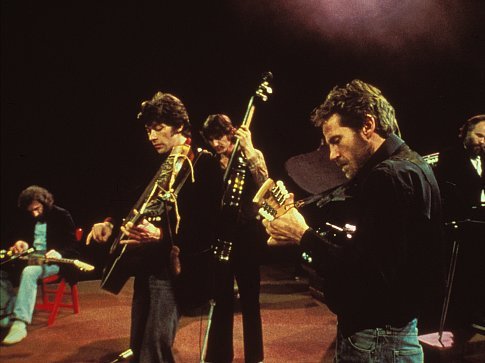
The Band in THE LAST WALTZ

On November 25th, 1976, Thanksgiving Day, San Francisco’s Winterland Ballroom was the setting for the end of an era. One that had started seventeen years earlier when Rick Danko, Levon Helm, Garth Hudson, Richard Manuel and Robbie Robertson aligned as The Hawks, a backing band for rockabilly pioneer Ronnie Hawkins.

The concert most famously known as ‘The Last Waltz,’ from the Martin Scorsese documentary and resulting best-selling soundtrack, was part fan’s, friend’s and peer’s celebration of a legendary band and a grand and final statement mandated by Robertson, who unilaterally wanted to end The Band as a touring entity.

Through Scorsese’s studied gaze, and his love of music, the film delivers an intimate and exuberant slice of music history But off-screen business maneuvering, lawyers and a fair amount of paranoia and hubris tainted the celebration and drove a wedge between Levon Helm and Robbie Robertson that time, and lawyers, never remedied.

As Helm recalled in his book ‘This Wheel’s on Fire’ Robertson “… was saying he was sick of it all. He wanted to keep on recording with us, but not go on the road. ‘We’re not learning anything, man. It’s not doing anything for us, and in fact it feels dangerous to me. Look what’s happening, Levon. I’m getting superstitious. Look at Dayton Stratton (a friend and associate of The Band who had died in an air crash). Every time I get on the plane I’m thinking about this stuff. The whole thing just isn’t healthy any more.’

Set designer Boris Leven lent a deft hand in creating a cozy yet grand stage aesthetic. Using stored props from Opera Company of San Francisco’s production of Verdi’s opera ‘La Traviata’ – columns, chandeliers, crimson wall hangings – Leven grandly melded lavish pomp with living room comfort to set a fitting au revoir.

Contrast this with the ‘Cocteau Room.’ A backstage space painted white walls to ceiling, with white carpeting. Also furnished was a glass table strown with razor blades for the express purpose of cocaine use for the gathered guests. Helm remembers Scorsese being so wired that “he talked so fast I barely understood a word he said.”

Though there’s no denying the talent and magic of some of the performances , I’m left wondering if this was a bit of thunder stealing. After a spirited full set by The Band, complete with horns arranged by Allen Toussaint, the latter portion of the bill relinquished The Band to back-up positions. Not only of their former front men Ronnie Hawkins and Bob Dylan, but also for Eric Clapton, Joni Mitchell , Neil Young, Muddy Waters, Van Morrison and others who performed their own songs.

Though this no doubt broadened the marketing potential for the movie and soundtrack I personally believe it was taking the spotlight from it’s proper focus, The Band and their musical legacy. Wouldn’t it have been more fitting, and appropriate if these artists were brought on to support the group in their own songs and them maybe then given one of their own? I believe so.

But it’s all history now, and the music remains. This was event more poignant to me after I happened across this great raw footage of the event. Footage that shows the performances like the crowd that night experienced it.

Let us give thanks that The Band was with us, no matter how briefly, and left a rich musical trail-blazing legacy still followed, and celebrated, today.

24 Nov 19:24

STUDY: Antarctic ice thicker than previously thought...


STUDY: Antarctic ice thicker than previously thought...


(Third column, 17th story, link)
Related stories:
24 Nov 19:23

ON STRaTeGY...

by williambanzai7

.


You see, this is what a Junior Varsity strategy apparently looks like…


.

And BTW, John McCain's good Libyan pals, the Libyan Islamic Fighting Group  are now openly flying the ISIS banner in Libya...


j.

.

Read this: McCain's Pals in Libya

Of course, as we all know, they are not just: McCain's Pals...


.


.
.


.
.


What we have is not a Junior Varsity strategy, it's an All American Clusterfuck!


.
.


.

.
.


.

.


And of course, it's all Chuck Hagel's fault. He just doesn't get the strategy...


24 Nov 19:17

Sweet Corn Farmer Dives Into the Shark Tank

by Laurie Woolever

Sheldrake’s family has grown sweet corn and other vegetables since 1960 at Early Bird Farm in Ithaca, New York. In the summertime, like many small farmers, they sell corn, picked by hand each day, at a roadside stand. Consumers pay a premium for the freshest sweet corn, and at the end of the day, unsold ears, whose delicate sugars are all the while turning to starch, are discarded. At one time, Early Bird might have sent its excess sweet corn to be frozen or canned at a local Seneca Foods plant, but the company closed the nearby facility about 10 years ago.

Sheldrake, seeking to close the sweet corn efficiency gap, began to experiment with making tortilla chips that included fresh sweet corn kernels in addition to the grain corn masa that makes up other chips. He wrote a business plan that won him a $20,000 grant from Babson College, from which he graduated in 2012, and raised another $15,000 on Kickstarter, to begin his business, Off The Cob Sweet Corn Tortilla chips. He began selling the chips online, and at retail stores, running the business while continuing to work on the family farm. Seeking a $100,000 investment of to help grow the business while streamlining production, Sheldrake made an appeal on Friday the to the panel of high-profile investor “sharks,” including Dallas Mavericks owner Mark Cuban and inventor and QVC personality Lori Greiner, on the television show “Shark Tank.”

“My business is really important to me, because we’re helping to sustain my family farm,” said Sheldrake in his introductory segment, which also featured a clip of him feeding sweet corn to the family dog. “I had to find something to do with this corn, so I made a plan to change it from wasteful to tasteful.” (The earnest and articulate Sheldrake may have been coached in TV-speak by “Shark Tank” producers.)

“My business is really important to me, because we’re helping to sustain my family farm.”

While the sharks seemed to enjoy the chips they sampled on camera, none were ultimately willing to put their own money behind the product, citing concerns about the scale of the business, and fears of a delayed return on investment. Kevin O’Leary, known as the harshest of the sharks, also balked at the relatively high price of the chips, which retail for about $3 for a 4-ounce bag. Sheldrake explained that he pays over $5 per pound for the sweet corn that goes into his chips (it’s not yet efficient for him to use his own farm’s corn), versus 30 cents per pound for commodity grain corn masa.

Despite the sharks’ unanimous rejection, Off The Cob seemed to benefit immediately from the TV exposure, to the point that a flood of orders crashed its website and cleaned Amazon.com out of its existing stock. Whether the exposure will shake loose a willing investor remains to be seen, but Sheldrake is undeterred.

“I’m just going to keep growing my chip company, and figure out the best ways to do it,” he says. “Hopefully we can bring production back home [to Ithaca], but if not, at least we can support sweet corn growers on a large scale.”

The post Sweet Corn Farmer Dives Into the Shark Tank appeared first on Modern Farmer.

24 Nov 19:04

How Government Red Tape Increases Health Care Costs and Strangles Free Enterprise

by A. Barton Hinkle

Ask Virginia’s Republican lawmakers about Obamacare, and you can see the veins in their foreheads start to throb. The law’s an excrescence, they will tell you. It’s the big hand of government smashing a framing hammer down on the invisible hand of Adam Smith. It’s socialist social policy married to misguided industrial policy.

Republican Party officials—including Barbara Comstock, newly elected to Congress—led “Hands Off My Health Care” demonstrations against the law when it was being debated. They’ve fulminated against it ever since. “Obamacare has proven that government-run health-care programs don’t work well, if they work at all,” wrote House Speaker Bill Howell in early January. Del. Steve Landes used that same line in a speech a few days later.

So why hasn’t the GOP led an assault on the state’s certificate of public need law?

The COPN law is supply-side Obamacare: top-down, command-and-control restrictions on which providers can offer which services. A certificate of public need is, essentially, a government permission slip. Without one, a Virginia doctor can’t put an MRI machine in his clinic. A hospital can’t build a new wing. A hospital company can’t add a satellite campus. And so on.

Getting such permission slips is a long and costly process. The owner of a Northern Virginia radiology practice, for example, spent five years and $175,000 asking permission to buy a new MRI machine. The state said no.

One reason the process takes so long is that competitors often fight such requests. When Bon Secours proposed the St. Francis Medical Center in Chesterfield, rival chain HCA fought it vigorously, arguing there was insufficient demand. The hospital was approved and enjoys a robust business. You’d think state regulators would laugh off competitors’ arguments, but sometimes they’re actually taken seriously. When a Richmond radiology practice wanted to move—not add, but move—a radiation device to its Hanover offices, the state said no in part because Virginia Commonwealth University’s Massey Cancer Center worried the project “could take some of their business.”

In any other industry, the proper response to that would be: So what? If Kroger sets up across the street from Food Lion, we consider that good for consumers: They have more choice. And if they migrate from Food Lion to Kroger, that’s not a bad thing. It means they’re getting more utility for their grocery dollar.

Studies of the COPN system around the country have confirmed what seems intuitively obvious. A joint examination by the Justice Department and the Federal Trade Commission found that COPN regulations hurt competition, fail to contain costs, and “can actually lead to price increases.” Restricting supply raises prices? Imagine that.

A reader recently offered some information that illustrates the point. One of his daughters, in Virginia, needed an MRI. “There was no discussion of cost, either by her doctor or the hospital when registering,” he emailed. “Nor was she ever informed whether she had a choice of facility. The non-negotiated charge was $5,166.70.” The reader’s other daughter, who lives in Oregon, also needed an MRI around roughly the same time. Oregon has a COPN law too, but unlike Virginia’s it does not restrict MRIs. The second daughter’s doctor suggested she comparison shop. Her insurance company actually phoned her “and offered to call area facilities and obtain quotes for her, which ranged from $800 to $3,000. . . . She went with the $800.”

COPN started not because of alleged market failures, but because of actual government ones. Medicare and Medicaid used to reimburse providers on a cost-plus basis. That created a structural incentive for doctors and hospitals to do as much as possible: The more services they provided, the more profits they would reap. Rather than fix the reimbursement flaw, Congress forced the states to adopt COPN regulations, on the harebrained theory that restricting supply would help hold down costs.

When that didn’t work, Congress eventually changed federal reimbursement formulas and freed states to lift their COPN restrictions. Some did—but not Virginia.

A couple of years ago, two doctors denied practice opportunities by Virginia’s COPN law filed suit to overturn it. They argue that it denies them equal opportunity and that it interferes with interstate commerce. (One of them wanted to expand his practice into Virginia.) Federal District Judge Claude Hilton upheld the law, on the grounds that it passes the incredibly weak “rational basis” standard. Under that standard, a law is considered constitutional if anybody can think of any reason that conceivably might provide a rational basis for its existence.

The doctors appealed, and the Fourth Circuit sent the case back for further review. Late last month, Hilton affirmed his original ruling—and the COPN law. That means the only avenue left for deregulating health care in Virginia is the legislature, which Republicans control.

To paraphrase House Speaker Howell and his colleagues, COPN has proven that government-run health-care programs don’t work well, if they work at all. The question now is: What do they intend to do about it?

24 Nov 18:40

Heroic Dachshund Defends Family from Garage-Invading Black Bear

by Phil Bourjaily

A Florida woman and her son credit their dachshund, Daisy, for saving them from a black bear one week ago. Krystal Long had just returned from the grocery store and was unloading her car when a black bear walked into the garage. "I started throwing things at it to get it to go away, because usually when you do that, they take off," she told WFTV. "But this bear was different. It only enraged him and made him come closer." 

Hearing Long’s screams, her 6-year-old son, accompanied by Daisy, ran out to see what was wrong. The 15-pound dog immediately went for the bear, estimated at 200 pounds. The fight didn’t last long. "He had her pinned down with one paw and he was ripping into her," Long said. Daisy was able to get away from the bear and hide under the car. Long took her son inside and came back out with a gun to rescue Daisy, but the bear was gone. 

Daisy had several broken ribs and deep lacerations, but veterinarians say she’ll survive. A Gofundme account has been set up to help pay Daisy’s vet bills. So far, 193 people have donated more than $5,000. Apparently, people love an underdog.

The bear population continues to grow in Florida, and there are increasing conflicts within residential areas. In 2013, the state received 6,726 nuisance calls about bears.