KWBaker
Shared posts
Major Medical Breakthrough: Scientists discover first new antibiotic in 25 years
List: 36 Of Obama’s Taxpayer-Funded Green Energy Failures
Gygra

This is my last post for Burn Diary.The rock formation in this photo is called Gygra, in the forest area northwest of Oslo, Norway. The name is from Norse mythology. In old tales «gygra» was a kind of female giant – the male was called «jotne». I saw a photo of this place many years ago and was fascinated by the rocks. Last summer I was up here for the first time. Today it was easier to climb up the steep scree, because I knew where not to go.A geocache is hidden here, which makes it easier to find the place – if you have the coordinates for the cache.Thanks to all Burn Diary followers – hope you enjoyed my photos. And thank you @diegorlando and Burn for inviting me to post for the past week. It has been a challenging and fun week for me. I hope you all have a great 2015!@f2hammers for @burndiary
Keystone is Cleared for Takeoff … and Team Obama Can’t Explain Why They’re Stalling
All systems go for the Keystone Pipeline…or not. A Nebraska court has now cleared the path, yet the Obama administration is still stalling.
From the Grand Forks Herald:
The Nebraska Supreme Court on Friday approved the route for the controversial Keystone XL oil pipeline, reversing a lower court that had blocked the proposal and clearing the way for a U.S. State Department ruling on the plan.
The court said it was divided and could not reach a substantive decision, leaving in place legislation that favored TransCanada Corp and its claim to build a crude oil pipeline across the state.
“(B)ecause there are not five judges of this court voting on the constitutionality of (the legislation), the legislation must stand by default,” the court said in its ruling.
The court’s decision allows the U.S. State Department to decide whether the pipeline meant to carry Canadian oil sands fuel would be in the national interest, a necessary step for the cross-border energy project.
The key here is that it’s now in the State Department’s lap. Yet State Department spokeswoman Jen Psaki can’t seem to offer a singular substantive argument regarding the continued delay.
Watch Psaki spar with Matt Lee of The Associated Press in the clip above. “No Drama Obama” and his representatives seem to be creating a world of problems for themselves.
In related news, it’s 2015. Would you ever have predicted Jen Psaki would outlast so many other members of this administration?
The post Keystone is Cleared for Takeoff … and Team Obama Can’t Explain Why They’re Stalling appeared first on Daily Surge.
Fox News Airs ‘Stossel’ Special on HOLLYWOOD HYPOCRITES
Fox News kicked off 2015 by re-airing a hugely-popular special by John Stossel called “Hollywood Hypocrites.” The featured production, taken from Jason Mattera’s New York Times bestselling book Hollywood Hypocrites: The Devastating Truth About Obama’s Biggest Backers, highlighted a cast of characters in Tinseltown whose sanctimonious lectures bear little resemblance to the way they actually conduct themselves day-to-day.
Stossel had Mattera on to talk about three hypocrites in particular: Harrison Ford, Bruce Springsteen, and Jon Bon Jovi — their duplicities exposed on the pages of Hollywood Hypocrites. As Stossel pointed out, Han Solo got his chest waxed on camera to bring awareness to climate change and the environment. It was a stunt for a conservationist group, which is fine and all. Except for this inconvenient detail — Ford at the time owned seven aircraft, including a helicopter, and has stated on the record that he often flies up the coast just to grab a cheeseburger.
A cheeseburger!
On Springsteen and Bon Jovi, adamant supporters of Barack Obama and the liberal cause of progressive taxation, Stossel and Mattera discussed how both musicians classified themselves as “farmers” in the state of New Jersey in order to exploit an arcane tax law that allows them to write off a jaw-dropping 98 percent of their property taxes on land that they claim is farmed. (Bon Jovi raises “honeybees,” for instance.)
The duo are not down with high taxes on their sprawling estates, apparently.
But it’s okay for your taxes go to up, they say.
Mattera was joined on the Stossel special by Kevin Sorbo, who is famous for his role on the hit television show “Hercules” back in the ’90s. The Stossel segment, which aired on January 1, 2015, is above.
Mattera also takes aim at iconic celebrities in his latest bestseller, Crapitalism: Liberals Who Make Millions Swiping Your Tax Dollars, who have used their political access to score crony-fueled profit.
Enter Steven Spielberg. With a net worth over $3 billion, you’d think the legendary filmmaker could fund his own movies without any taxpayer support. Well, he could. But as it turns out, Spielberg fleeced the taxpayers of Virginia for millions of dollars to shoot his Oscar-nominated film Lincoln. Spielberg made it known that he wanted to film Lincoln in Virginia, but wouldn’t commit until after he was offered a subsidy. Then-Governor Bob McDonnell obliged and signed the state’s first ever movie tax credit into law.
“Spielberg combines his talent for business with a greed for taxpayer-funded government goodies,” writes Mattera. “He may wax patriotic about American heroes, but he gobbles up our tax dollars and other benefits like on of his animatronic sharks at a beach or dinosaurs at a Brontosaurus buffet.”
Virginia, however, is hardly alone in raiding public coffers to subsidize Hollywood productions. As CRAPITALISM details, a whopping 40 states offer some similar type of corporate welfare scheme to movie studios, costing taxpayers nearly $1.5 billion a year. And, as Mattera documents, those subsidies rarely live up to their economic hype.
In CRAPITALISM, Mattera also set his sights on Jeffrey Katzenberg, who is one of the Left’s biggest donors today. Katzenberg, the CEO of DreamWorks Animation, received a “return” on those campaign contributions when he got Vice President Joe Biden to orchestrate a backroom deal with Chinese officials to increase the number of foreign films allowed in China. But China’s reputation is so bad that the Securities and Exchange Commission opened up an investigation (ongoing, it appears) into whether Katzenberg and other movie moguls bribed Chinese officials to push the lucrative deal through.
And that’s only the beginning, says Mattera.
“I wrote CRAPITALISM to reveal the infuriating schemes the filthy rich employ to rig government in their favor and leave taxpayers holding the bill.”
The post Fox News Airs ‘Stossel’ Special on HOLLYWOOD HYPOCRITES appeared first on Daily Surge.
LIB LOGIC: Decrying “Torture,” Defending “Abortion”
The news cycle has left the Democrat Senate Intelligence Committee’s report on “torture” behind, but its impact will reverberate into the future. The United States’s ability to extract information from captured terrorists took a serious blow by ending enhanced interrogation.
Rather than protect Americans, the Left’s ongoing whining about “torture” (aka waterboarding) actually gave ammunition to Jihadists, as though these bloodthirsty radicals needed any more justification for their murderous ways.
In fact, Sharif Kouashi, one of the Paris killers, was inspired, he claimed, by “everything I saw on the television, the torture at Abu Ghraib prison, all that, which motivated me.”
The world watches Feinstein and her colleagues vilify America’s national security apparatus and it doesn’t make us safer. But Democrats think their antics are worth it if it benefits their political fortune, even if only for a moment. They want more chaos going on in the country and around the world now that Republicans control the Senate. The real threat to America isn’t Islamic radicals, they say. The true evil is ‘right-wing’ extremism, particularly American conservatives who are opposed to abortion.
The day of the terrorist attack in Paris, for instance, CNN pundit Sally Kohn erroneously tweeted, “Since 9/11, right-wing extremists (incl anti-abortion, anti-gov) have killed more Americans than Islamic extremists.” Kohn’s statement, unfortunately, is echoed by many of her ilk.
Roughing-up terrorists to gain valuable intelligence information to prevent a Paris-like massacre here in America sends the Left flying off the handle, yet the nearly one million abortions that are performed yearly in this country don’t faze them one bit. Libs aren’t affected by violence, as long as it comes in the form of embryonic stem cell research, euthanasia, and abortion.
Even partial-birth abortion barely elicits a shoulder shrug.
These are the misguided moral crusaders who argue for the inalienable right of mass-murdering terrorists to be free from CIA operatives’ causing them discomfort, yet rationalize the suffering of the unborn as another person’s “right”.
And that, my friends, is what you call lib logic.
“Torturing” Islamic killers is bad, but aborting innocent babies is a perfectly acceptable, even promotable practice.
Check out the video above to see the brazen hypocrisy in action.
The post LIB LOGIC: Decrying “Torture,” Defending “Abortion” appeared first on Daily Surge.
Land Rover Defender Celebration Series

Visit Uncrate for the full post.
How focal length affects the relative scale of objects in a photograph

Scientists developing universal snake bite anti-venom

Scientists are working towards creating a universal anti-venom for all the deadly snakes in sub-Saharan Africa.

14 STATES COLDER THAN MARS...
14 STATES COLDER THAN MARS...
(Second column, 9th story, link)
Related stories:
Teams to Fight Frigid Air in Green Bay, New England NFL Playoffs...
Indian Science Conference: 'Fears of man-made 'global warming' were greatly exaggerated'...
WASH POST: Arctic blast helps burn fat...
150-car pileup closes MI interstate...
Video: Truck carrying fireworks explodes...
Afghanistan has cost taxpayers $1 trillion, 80% spent under Peace Prize winning president

I care about the 1 trillion dollars but I care about the human cost much more. What are we still doing in the West Virginia of Asia? (No offense to wild and wonderful West Virginia.) How many men and women are dead who didn’t need to die? How many children? Why is the opium/heroin crop bigger this year than ever before? Why are palaces being erected throughout Kabul with US taxpayer dollars? Why are bases being built by contractors only to be abandoned months later? Why did the US military allow Al-Qaeda linked groups to bid for, and get contracts?
Lots of “whys.”
The Cuba Deal: Coexisting And Profiting With Tyrants

I am very much for free trade and the exchange of goods and services between states. It helps to ensure peace between peoples and often brings higher quality and lower cost products to market, thereby raising the quality of life for the average person. But it’s hard to see what advantage opening things up with Cuba gives us right now. We certainly shouldn’t be legitimizing the regime. At the very least we should have waited until Castro died.
Also why are we saving Cuba’s lunch? Venezuela is dying thanks to the bottom falling out of oil prices. Venezuela finances much of the Cuban economy. Now would be a time where we should be dictating very strident terms to the island nation. Cuba is running out of money. And we are about to give these guys, and they are communists, a new infusion? It doesn’t make much sense to me.
Don’t get me wrong, though I am for free trade I am not for intervening in the affairs of other nations, which we did quite a lot in Cuba. But this regime should be hung out to dry, not rewarded.
The war on drugs began 100 years ago today: Let’s hope it doesn’t last another century

Woodrow Wilson was a flat out terrible president. Maybe the worst we ever had. The Federal Reserve Act. The Income Tax. World War 1. The Harrison Narcotics Tax Act. All were on his watch and all were radical reworks of American life. All were “progressive” dreams. (So was alcohol prohibition which would come 5 years later.)
Ron Swanson warned us: Stunning data on AVERAGE compensation for municipal employees in California

The other day we wrote about how government employees are a big part of the crony problem.
Of course the municipal union guys came out and explained that the government employee bit is not a scam, and that taxpayers – who pay their salaries – shouldn’t complain.
We should do a lot more than complain. We the taxpayers should insist that the salaries for government employees be indexed to the average pay in a municipality. Adjust this pay for experience, competency, and the high level of job security which government work always affords. (Notice I did not say education level should be a factor.)
Ron Paul: “The Federal Reserve is immoral, unconstitutional” – speech at the CATO Institute (Video)

In light of some of the questions asked recently on monetary policy I post this relatively short speech given by Ron Paul at the Cato Institute on the subject of the Fed.
What Is Free Banking, and Why Should I Care? (Video)

In some ways “free banking” is a radical idea. In other ways it is deeply conservative (in the best sense of the word). The attached 3 minute video explains the concept well, and why free banking is better than our current centrally planned system.
Old vs Young: The Story Of America's Two Labor Markets
When it comes to the US labor force, while the schism between full- and part-time workers has finally made the mainstream and will be even more acute in 2015 when the full impact of Obamacare forces most small and medium business to reallign their workforce, another even more important shift is taking place in the US: young (those workers in their prime age, under 54) versus older workers (those 55 and over). It is a shift which is critical as it confirms that the labor participation rate collapse is not due to demographics but due to secular economic reasons, as the chart below, which breaks down the sliding participation rate for workers 25-54 vs the steady participation rate for older workers, shows:

So how does total employment look when broken down by agegroup? Well as the chart below shows, a recurring one we show every month, workers 55 and under still have about 2 more million jobs to go before they recover all the jobs losses since the start of the great global depression, so far masked with $11 trillion in central bank liquidity.

Which of course is great news... for America's increasingly aging work force: the number of workers 55 and over just hit 32.9 million, up 1.3 million from a year ago, and an all time high.

For those who happen to be young and, inexplicably, also want a job, we have good news too:


Texas’s Last Last Meal: Why Death Row Inmates in Texas Don’t Get to Pick Their Last Meals
On June 7, 1998, a forty-nine-year-old African-American man from Texas, named James Byrd Jr., was brutally murdered by three men. While Byrd was still alive, the perpetrators tied his ankles to the back of a pickup truck and dragged him for three miles; Byrd was decapitated in the process. Byrd’s murder resulted in legislation, both on the state and federal level, that addresses criminal activities typically called “hate crimes.” Two of Byrd’s three assailants were sentenced to death, with the third sentenced to life in prison without possibility of parole. Of the two given the death penalty, one still sits on Death Row. The other, Lawrence Russell Brewer, was executed by the state of Texas on September 21, 2011.
Brewer’s ritual “last meal” was Texas’s last such “last meal.”
The origin of the traditional “last meal” of the condemned person’s choosing—a final rite of passage before the inmate’s final passing—has been lost to antiquity. But most U.S. states with the death penalty still allow those about to be executed a special meal beforehand (albeit not always as their true “last” meal). Texas, until Brewer, was no exception. Some requests were basic but high-end, with at least two men (Ronald Clark O’Bryan in 1984 and Dennis Bagwell in 2005) asking for, and receiving, feasts with steak and french fries. Other requests were just plain strange. In 2001, a murderer named Gerald Lee Mitchell requested that the state give him a bag of assorted Jolly Ranchers as a last meal; this request was granted. In 2000, a man named Odell Barnes asked for “justice, equality, and world peace.” In 1990, James Edward Smith requested a lump of dirt used for voodoo rituals, as a way of marking his body for the afterlife. His request was denied, and he was given a cup of yogurt instead.
Brewer’s request? Per the New York Times, he asked for: two chicken-fried steaks with gravy and sliced onions; a triple-patty bacon cheeseburger; a cheese omelet with ground beef, tomatoes, onions, bell peppers and jalapeños; a bowl of fried okra with ketchup; one pound of barbecued meat with half a loaf of white bread; three fajitas; a meat-lover’s pizza; one pint of Blue Bell Ice Cream; a slab of peanut-butter fudge with crushed peanuts; and three root beers.
The state provided him with this meal, costing hundreds of dollars and consisting of thousands of calories. Brewer, claiming he was not very hungry, ate exactly none of it.
The next day, state legislators asked the Department of Criminal Justice to end the tradition of “last meals.” One lawmaker stated, “It is extremely inappropriate to give a person sentenced to death such a privilege. It’s a privilege which the perpetrator did not provide to their victim.” The Department of Criminal Justice chairperson agreed, and the tradition ended. Since then, per the Houston Chronicle, “Last meals will consist of whatever is on the menu for all prisoners”— with no special adjustments for those about to be executed.
Bonus Fact
In 2007, Tennessee executed a man named Philip Workman. For his last meal, Workman requested that a vegetarian pizza be donated to a homeless person (no one specifically), but prison officials, per CNN, denied that request, telling the news agency that “they do not donate to charities.” Nevertheless, Workman’s last wishes were carried out many times over by others. According to the same CNN article, donors from around the country rose to the occasion, donating hundreds of pizzas to Nashville-area homeless shelters.
Excerpted from Now I Know More Copyright © 2014 by Dan Lewis and published by F+W Media, Inc. Used by permission of the publisher. All rights reserved.

Photographer Documents Mississippi’s Old School Blues Musicians

Leo Bud Welch, near Sabougla, MS
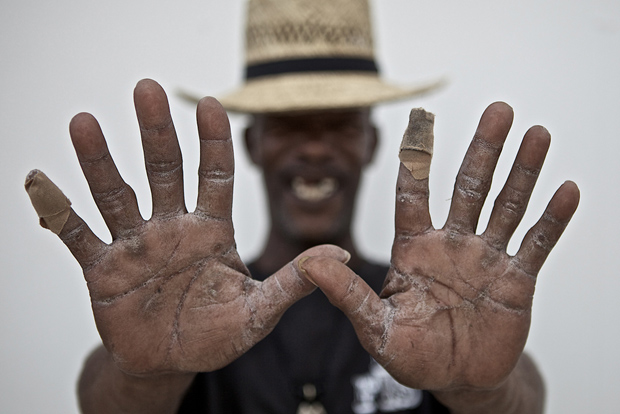
The hands of Pat Thomas, bluesman and son of bluesman James Son Thomas. Leland, MS
For his series Portraits of the Blues, photographer Lou Bopp captures the last remaining Mississippi delta Blues musicians of the previous era. Since 2008, he has made portraits of over 70 now elderly men who have made important contributions to this classic American genre of music.
Self proclaimed music and culture junkie, Bopp originally traveled the Blues Highway, US Route 61 South from Memphis, in an attempt to track down the last living musicians; artists who shaped an era of music. Blues music is an American treasure and Mississippi is one of its original sources. The music they created there played a critical role in the development of other genres and have been a major influence on many musicians worldwide. Documenting not only the artists, but the entire culture of ‘juke joints,’ roadhouses and neighborhood taverns that have supported the music; Bopp memorialized it all through photographs, before this culture is gone forever.
Paring down his photographic style, Bopp used only natural light, no assistants, just himself and his camera. He considers this experience a journey, getting to know his subjects on a personal level, even spending time with one man as he lay on his death bed.
In his artist statement Bopp reminisces of his time spent with these legendary, albeit relatively unknown, musicians. “As a photographer and part of my overall DNA, I wanted to go where most do not, could not, nor dare not venture. Their stories seem embedded in their skin, scent, hands, stares; they are draped in history.”

Bluesman Mr. Johnnie Billington outside his Blues Academy in Lambert, MS

Bluesman LC Ulmer at his home in Ellisville, MS

Bluesman Pat Thomas and son of bluesman James Son Thomas. Leland, MS

Bluesman TL Williams at his home in rural Mississippi, near Lexington

Harp musician Big George Brock at his home in St. Louis, MO
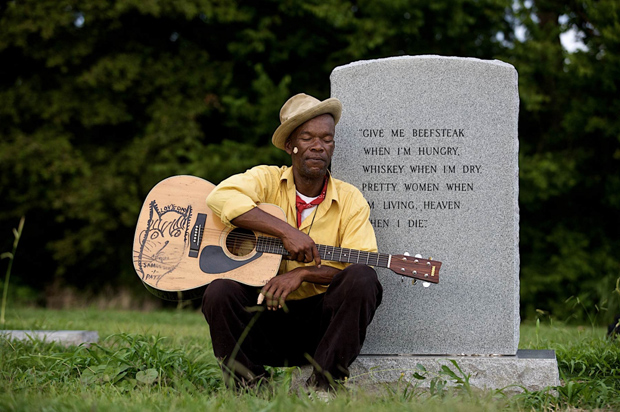
Bluesman Pat Thomas and son of bluesman James Son Thomas, at his Father’s grave. Leland, MS
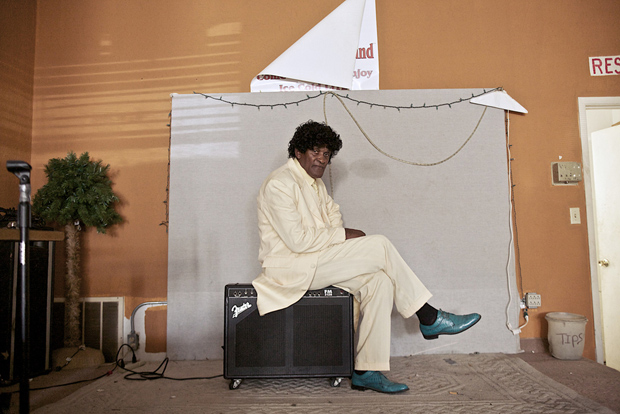
Bluesman Robert “Bilbo” Walker at the old Sarah’s Kitchen. Clarksdale, MS
All images © Lou Bopp
The post Photographer Documents Mississippi’s Old School Blues Musicians appeared first on Feature Shoot.
Photographer Christopher Payne Talks to Us About Industrial Ruins, Gothic Castles, and What Goes Into Building a Piano

Christopher Payne‘s Squarespace website

Buffalo State Hospital, Buffalo, New York
With a background in architecture, New York City-based photographer Christopher Payne is drawn to abandoned buildings, neglected structures that jointly disclose forgotten chapters of America’s storied past.
Payne’s fascination with the antiquated and disused began with his documentation of the city’s outmoded manual subway systems, to which he was afforded unlimited access. In recent years, he has chronicled spaces ranging from the pervasive and once densely populated asylums of the 1800s and early 1900s to the eroded landscape of North Brother Island, where in the latter part of the 1800s, citizens afflicted with infectious diseases were quarantined from the remainder of the city. In his shadowy, evocative frames, America’s past becomes a mythical place, one that is both acutely fantastical and undeniably real. Here, the photographer illuminates the mysterious and haunting remnants of our shared history, playing the dual part of the detective and the preservationist.
In his more recent projects, Payne has turned his gaze towards contemporary America by capturing the inner workings of Astoria’s historic Steinway piano factory as well as New England’s older textile mills as compared with North and South Carolina’s more state-of-the-art factories. We spoke with the artist about his interest in both deserted and sustained industries and why he chose Squarespace to build his site.
What motivated you to switch gears from architecture to photography?
“My first book, New York’s Forgotten Substations: The Power Behind the Subway, was originally envisioned as a book of drawings, based on detailed sketches I was making of the machines in the substations. I rarely had time to finish the sketches on site, so I took pictures to help me complete them later at home. Over time, these snapshots became more complex, requiring better lighting, equipment, and preparation, and I found myself focusing on the pictures more than the drawings. It was a gradual process, but this is how became a photographer.”
How does your history in architecture help to shape the way you think about photography?
“I still think like an architect and use photography to show how things are designed, constructed, and work, whether the subject is a machine, building, or community. My architectural training comes in handy because I can sketch ideas on paper (or in my head) before I commit them to film. In many ways, I feel like I’m grappling with the same questions and trying to tell the same story; I’ve just traded one medium for another.”
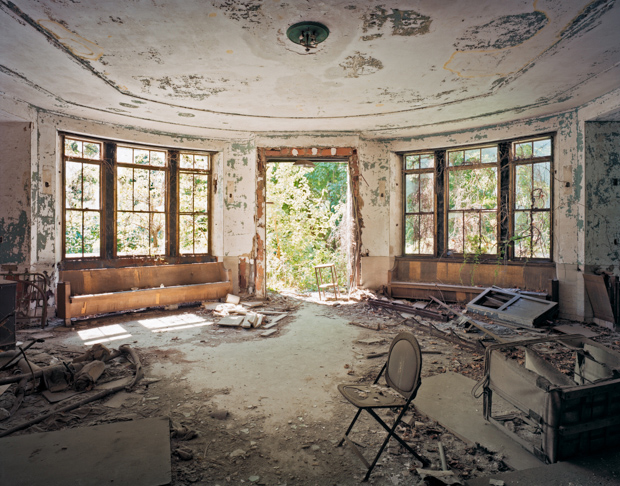
Lobby, Tuberculosis Pavilion, North Brother Island, New York, NY

Boilerplant Roof, North Brother Island, New York, NY
A few of your projects have dealt with decaying, abandoned places that have been overtaken by nature. What intrigues you about modern-day ruins?
“My interest in abandonment is a by-product of the subjects I am most drawn to: industrial infrastructure and processes and older buildings. Many of these places were designed for a specific purpose at a particular time. Over the years, they have become outdated and obsolete. For instance, the asylums were built at a time when it was perceived that their design and construction were inherent to the treatment and care of the mentally ill. As methods of treating mental illness improved and people no longer required long term institutionalization, the asylums outlived their usefulness and were gradually abandoned. Now they are (like the electrical substations in my first book) an obsolete typology. The same thing has happened with North Brother Island, which once housed a quarantine hospital for infectious diseases. The need for a self-contained island community, in the middle of New York City, simply doesn’t exist anymore.”
How do you convey the human history in these abandoned landscapes and structures, where no living people are to be found?
“Sometimes an empty space or personal artifact is more effective at telling the human story, because it engages the viewer’s imagination.”

Bathtub, Fairfield State Hospital, Newtown, Connecticut
Your most recent projects focus on the textile industry and the Steinway piano factory in Queens. Here, you feature active, working people. Why this shift from empty spaces to inhabited, lively ones? What connects these new works with your previous series?
“I think it’s essential to keep pushing yourself, and I was getting too comfortable with abandoned spaces. Shooting factories in operation, with people, is much more challenging. It’s also refreshing to celebrate the present instead of eulogizing the past. Although the shift might seem abrupt, it’s really just a natural progression of my interest in infrastructure and industrial processes. In my first two books, Substations and Asylum, it was necessary to create for the viewer a whole that could only be assembled from parts that survived here and there, across the country or across the city. My Steinway photographs are the opposite, a deconstruction of something we all know and love as a whole into its essential unseen parts.”

Key Balancing, Steinway & Sons Piano Factory, Astoria, NY
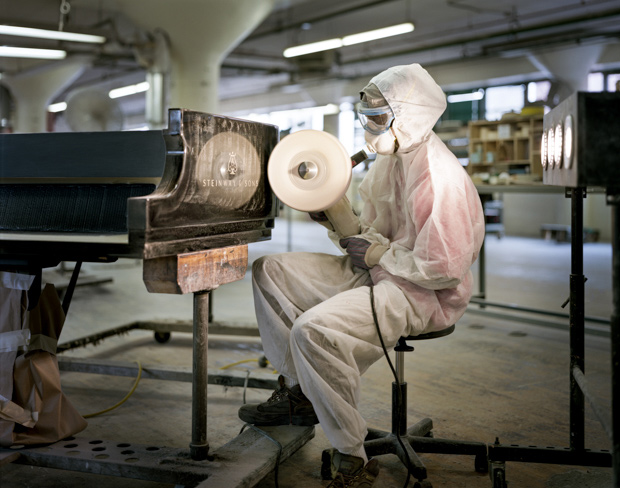
Polyester Polishing, Steinway Piano Factory, Astoria, NY

Piano Rims in Rim Conditioning Room, Steinway & Sons Piano Factory, Astoria, NY
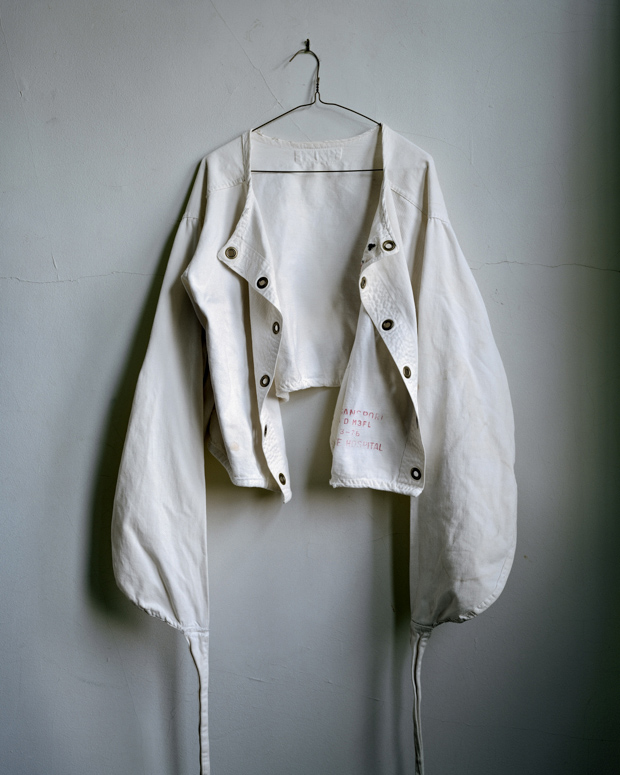
Straightjacket, Logansport State Hospital, Logansport, Indiana
What inspires you specifically about American architecture and landscapes, as opposed to areas around the globe?
“I have always loved American history and the great industrial architecture that was born out of the late 19th and early 20th centuries, when there existed an unbridled optimism and collective feeling that anything was possible. I’ve chosen to focus on what’s around me because so much of it is disappearing, if not already gone. So there’s a sense of urgency to the work I do. As I’ve said many times, I feel like I’m one step ahead of the wrecking ball. I would welcome the opportunity to shoot abroad, but ultimately, it all boils down to time and money, which always seem to be in short supply.”

Bloomsburg Carpet, Bloomsburg, Pennsylvania
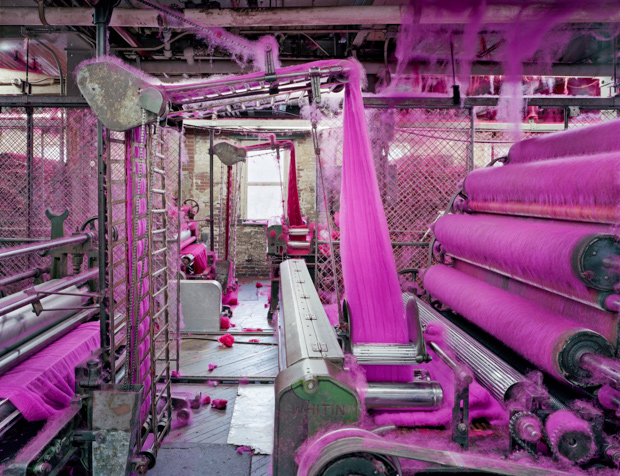
S&D Spinning Mill, Millbury, Massachusetts

Woolrich Woolen Mill, Woolrich, Pennsylvania

Danvers State Hospital, Danvers, Massachusetts, 2004
Why did you choose Squarespace to help you build your site?
“I was impressed by the design options and intuitive interface.”
Your Squarespace website is super easy and intuitive to navigate. What template did you use?
“For now, I’m using the Wells template because of its simplicity, and I like having the menus drop down on the left side.”
What’s your favorite feature on the site?
“I love the integrated news page because it saves me the trouble of having to manage a separate blog. And since it’s part of the template, it looks the same as the other pages.”

Boilerplant roof interior, North Brother Island, New York, NY
All images © Christopher Payne
Squarespace is a Feature Shoot sponsor.
The post Photographer Christopher Payne Talks to Us About Industrial Ruins, Gothic Castles, and What Goes Into Building a Piano appeared first on Feature Shoot.
Tennessee Mountain Cabin in Roosevelt National Forest,...


Tennessee Mountain Cabin in Roosevelt National Forest, Colorado.
Photography by Josh Deiss of Topo Design.
Bothy and composting toilet tower on the Isle of Skye,...

Bothy and composting toilet tower on the Isle of Skye, Scotland.
Both structures were built by architecture students during the summers of 2013 and 2014.
Contributed by Kenneth Lockhart of Rural Design.
Leaked Nikon Press Release Reveals New Program of Advanced DSLR Firmware Updates

Fuji has generated a great deal of customer loyalty and satisfaction with its “Kaizen” (“change good”) policy of frequent and significant firmware updates that beef up existing cameras with exciting new features. Nikon may soon follow suit.
An apparently leaked press release suggests that Nikon will soon be launching a new program that gives Nikon DSLR owners the ability to download “advanced firmware updates” that add “new functionality” to their cameras.
The Details of the Program
Nikon Rumors obtained and published the press release text, which was posted online by an anonymous tipster.
The press release is scheduled for January 19th, 2015, and discusses a new program called “I AM Advancing.” Photographers can register for free with the program through a new website (there currently isn’t anything there) to have access to advanced firmware updates for “up to 3 years.” There’s no word on what happens after this time period.
“The program aims to reinforce confidence”, Nikon says. The company wants to “inspire photographers to make the most of their cameras by connecting people to the latest Nikon software innovations.”
“Each camera has the potential to advance further as innovation goes forward,” says Nikon general manager Kazuyuki. As the company develops technologies, many of them “can be offered to [its] existing customers today.”
As part of the program, there will be new Update Manager software for Windows and Mac that consolidates the currently scattered firmware update system into one easy-to-use program for updating cameras. “The program is free to download, and features automatic camera detection, firmware download and management of camera updates,” the press release says.
Initial Cameras and Features

6 existing Nikon cameras will be supported in the beginning: the Nikon D750, D810, D800, D800E, D610 and D600. All cameras will receive a new White Balance update that improves color balance in any light using newer algorithms.
Each of the 6 cameras will also receive a “Metallic” Picture Control feature that captures eye-catching high-contrast photos.
For those of you who shoot RAW, there will also be a new RAW Histogram that displays full screen histograms for all 3 color channels at the same time using live data from the camera’s sensor.
The last updates mentioned are that all 6 cameras will have the “Flat” Picture Control feature currently found in the D810, allowing for more flexibility in post-processing your photos, and that the new D750 will receive Nikon’s Electronic First-Curtain Shutter that eliminates vibrations of the shutter.
You can read the full text of the press release for yourself here. If you have one of the 6 cameras mentioned above, get ready: it looks like things will get more exciting for your camera starting in a week and a half.
Image credits: Header graphic based on photo by Leon Brocard

Oil traders hoard crude at sea
The collapse of global oil prices has prompted commodity traders to start hiring supertankers again because they can make a profit from stockpiling crude oil at sea.

How Financial Aid Drives Up the Cost of College

Give anyone who can register a pulse a student loan and guess what? All that money will find its way into the system and will inflate the cost of “education.” It’s simple. It seems obvious. And yet so many people fail to understand that the reason college is unaffordable is because of all the efforts to “make college affordable.”
Poll: For first time ever voters say “the government” is the biggest problem in America

America is not Europe. We are a country founded by individualists, scoundrels, dreamers, and doers. We do not have the aristocratic legacy of the Old World with its stifling worldview and distinct class system within an ever present welfare state. We are a free people. This country was an escape from Europe. This country is a free land. This freedom is ingrained in our DNA. It is what makes an American an American, no matter that American’s ethnicity. We are bound by an idea not geography or ancestry. America is indeed exceptional in that regard.
22 Two-Letter Words To Boost Your 'Scrabble' Score
Among competitive 'Scrabble' players, two-letter words can be a crafty means of boosting your score.
The Time Paris Had a Baby Lottery
In late 1911, Parisians seeking to become parents could do things the regular way. Or they could take a more unusual option offered to them that year: A baby lottery.
According to an article published in the January 1912 issue of Popular Mechanics, a foundling hospital (not really a hospital but actually a children's home) had recently held "a raffle of live babies." The hospital's management (which, the article stresses, consulted the authorities before holding the event) sought not just to find homes for these adorable, abandoned babes, but also to raise money.
In that regard, the Loterie de Bebes appears to have been a resounding success: "The proceeds of the raffle were divided among several charitable institutions," Popular Mechanics reports. "An investigation of the winners was made, of course, to determine their desirability as foster parents."
By modern standards, this sort of thing feels bizarre and crazy, not to mention neglectful. But, as John F. Ptak points out in his blog post about the lottery, "in comparison with some bitter early histories of the want of tenderness in the care of children, and keeping in mind the great leap forward in the creation of the foundling hospitals and what they represented in the face of not having anywhere for unwanted and impossible babies to go, the idea of the lottery for cute babies in 1912 doesn't look so bad when placed in its historical context ... With the terrible history of infanticide and exposure not too dimly removed from this time, the lottery seems far less horrible than its antiquarian components."
Click the photo below to see all of the winning, and winnable, babies; there's no indication that another one of these events was ever held.
