A good pair of bookshelf speakers delivers exceptional quality, space efficiency, and wallet-friendliness. Last week we asked for your favorites , then looked at the five best bookshelf speakers . Now we’re back to highlight your favorite.
Now this is some military heroism worth cheering about!
from Blaze:
An SAS ground unit had moved into position just outside the village where the gruesome punishment was being meted out.
“Through binoculars, the soldiers could see that the crowd...
And here we go. Didn’t we say this was coming?
from Todd Starnes:
Chaplain David Wells was told he could either sign a state-mandated document promising to never tell inmates that homosexuality is “sinful” or else the Kentucky Department of...
They were warned but it’s kind of hard to reason with unreasonable people.
From the DC:
According to a report released Sunday by the American Enterprise Institute (AEI), the $15 minimum wage has caused Seattle restaurants to lose 1,000 jobs — the...
Not all “intellectuals” but a good number of them. Many who populate sociology, and political science departments that’s for sure. And English, and, OK, pretty much every department except business, and even then.
Camera gear can be expensive, but one way to work around this issue is to purchase equipment used from online auction websites such as eBay. But it can be tough trying to determine the exact condition of an item without getting your hands on it. We will be going over tips to help you purchase both digital and analog film cameras without throwing your money down the drain. Here are some practical pointers to staying smart and safe on eBay when buying your next bit of kit.
We are going to assume that you already know which camera you have your heart set on when you are reading this article. Here is how you make sure your purchase is truly in great condition…
Check The Listing For Information
While this first tip may seem obvious, many individuals fail to do so. Be sure to read the seller’s advertisement from top to bottom. The seller should clearly explain what condition the unit is in and what accessories are included. Asking sellers to reiterate what is already posted will only prolong the process.
Be sure to always double check the accessories that are included with the listing. Don’t just assume that a camera includes the power cable, lens cover, body cap, etc. If you are purchasing a camera overseas, it’s possible the unit will not include the correct power cable for your country/region. Lastly, note if the listing says ‘Body Only’ in the title; this means your purchase won’t include a lens.
Accessories to consider when buying a camera include a fully working battery, an A/C adapter for your region, a USB cord for syncing, the original manual, and a body cap. If you are also purchasing a lens, be sure that it includes both the front and rear caps. Also, don’t be afraid to ask if all parts are genuine from the manufacturer.
Understand Item Conditions
Sometimes you may find a seller listing a camera’s condition as ‘Very Good’ or ‘Great”. The problem with these choices of wording is that they are vague, there is no set standard. The only labels that actually apply to the condition are ‘New’, ‘Like New’, or ‘Mint’. A ‘New’ item is one that has never been used before, while a ‘Mint’ or ‘Like New’ item is one that is used but appears as though it was just taken out of its box.
Check the listing to see how a seller defines their grade. Some sellers will post a chart while others may only describe the condition of the camera within the text. If a seller just gives a vague description of the condition and no other details, it is time to ask for more information. Here are some common questions to ask in regards to cosmetic quality:
Does the device contain any scratches? How much scratching and how deep are the scratches?
Does the device contain any dents? How many dents and how deep is each dent?
Are there any scratches or marks on the lens (if one is included)?
Is there anything cosmetically wrong that would affect the working condition of the camera itself?
Examine Complete Photographs
Not all sellers will post complete photographs of the item. If possible, ask them if they could take pictures of the camera showcasing every angle of the unit. If they have noted that the item contains dents of scratches, ask them if they could take close-ups of that area.
Not every seller will be willing to take the time to photograph the item completely, but these cases are very rare. As a rule of thumb, if a seller cannot take the time to make a good sell, neither you nor your money can make time for the seller. Time to move on.
Don’t misunderstand me, though, the camera might be in great condition and the seller honestly doesn’t have time to photograph the unit. But in most cases, sellers understand that buyers want full disclosure on the items they’re bidding for.
Check The Shutter Count (Digital Only)
The shutter count is the number of times your camera fires its shutter. Every camera has a slightly different life expectancy – similar to how many miles a vehicle has on its engine. Sellers may sometimes post the unit’s shutter count, but otherwise you may have to ask for the number.
A few years ago, we published an article that linked to a database with shutter life expectancy for different units. Not every camera is listed, but you can use similar cameras to get a decent idea of how your camera may perform. In our instance, we found that the average number of actuations after which the shutter died on the D90 was around 55,000.
In general, and this is my personal opinion, I prefer to purchase cameras with a shutter count of fewer than 10,000 actuations. Typically this is a number that ensures a decent lifespan for the camera. There is nothing wrong with purchasing a camera with more actuations, just be sure to take into consideration how often you shoot and thus, how long your purchase may last.
Be Confident About The Viewfinder
Whether your camera is digital or analog, be sure the viewfinder is clear and viewable. When purchasing digital cameras with electronic viewfinders, this becomes less of an issue. However, if you are buying a DSLR or SLR with an optical viewfinder, ask the seller about the clarity of the viewfinder and mirrors. Typically the viewfinders on SLR units are in good condition, but it is not a bad idea to double check.
If you are purchasing a rangefinder, this question becomes a lot more important as many older camera viewfinders that tend to get cloudy over time. If you are seeking an older vintage rangefinder camera, be sure to ask about the viewfinder. At times, there can be a yellow haze or fungus that has grown – make sure these unwanted features don’t accompany your purchase.
Ensure Light Seals Are Intact (Analog Only)
Analog cameras typically include a sponge-like or rubber material to ensure that outside light does not reach the inside of the camera and affect the film. However, over time, these light seals can begin to break down and deteriorate. It is imperative to ask the seller whether the light seals are completely intact or if they are starting to fall apart.
Luckily, you can easily replace the light seals on a camera by heading to your local arts and crafts store to pick up some readily available felt or foam strips. Some MacGyver-type individuals have even taken to sealing up analog cameras with household items such as black wool and a bit of glue. Simply do a quick Google search on ‘replacing camera light seals’ and you will be flooded with how-to results.
Ask if The Camera Has Been Tested Recently
Whether you purchase a digital or an analog camera, make sure the unit has been thoroughly tested. Ask the seller when they last used the camera. You may me surprised at the number of sellers who say they checked the camera ’10 years ago’, so they assume that it must still work. For that matter, if a seller says they are unsure about the working condition of the unit or if the unit is ‘sold as is with no returns’ then avoid it at all costs.
The process is even more critical with older mechanical cameras that rely on springs and gauges that can rust or breakdown over the years. If the camera includes a fixed lens, verify with the seller if the camera has been tested at both its minimum and maximum aperture, and that the shutter fires as it should.
Check The Quality of Included Lenses
If your purchase includes a lens, be sure the seller lists the condition of the glass itself. Some sellers will describe the state of the body, but neglect to talk about the lens. Start by making sure the lens fully works across its entire aperture range. If possible, ask for photographs of the glass closeup. Many sellers expect this question, so photos may already be posted.
It is especially important to look at photographs and ask the seller whether or not the lens contains fungus, scratches, or dirt, which can easily be seen by shining a flashlight through the back. While you’re at it, see if the seller posts any sample photographs taken with the lens. If you intend on mounting filters, be sure the filter threads are not damaged in any way.
Determine If The Seller Is Trustworthy
Online websites such as eBay include rating systems that showcase a seller’s previous interactions. Avoid anyone with a seller rating below 95% or if it is their first time listing an item. Lower ratings and first-time listers aren’t necessarily bad, but you are taking a chance.
You may also want to look for reputable stores selling their items on eBay. Web sites like B&H, Adorama, and 6th Avenue Express have good reputations and you can be confident that they will take the time to make sure your equipment is properly working before you make the purchase.
If It All Goes Wrong
Sometimes, no matter how hard you try, things go wrong. If there is an issue with your equipment, be sure to reach out to the seller and know your eBay rights. Even if the seller says they do not accept returns, you are eligible for a complete refund if the product does not match the items description. Try sending a message to the seller first to work the problem out.
If the seller isn’t willing to work with you, file an eBay case within the site’s Resolution Center. Here, eBay can work with you and the buyer to get you a refund. eBay almost always tends to side with the buyer, so you are quite safe (although they claim otherwise). For more details on the eBay Buyer Protection policy, click here.
Don’t be afraid to leave feedback when you are done with your transaction. Many individuals are afraid that if they leave negative or neutral feedback for a seller they will also receive poor feedback as retaliation. Luckily, eBay restricts sellers to leaving only positive or no feedback at all. If you had a bad experience as the buyer, don’t be afraid to report it. Of course, if you had a great experience be nice to your seller and return the favor.
One thing to note is that sometimes sellers spend a lot of time trying to maintain their feedback. If your item happens to arrive broken but the seller is quick to respond and even give you a refund, be a good chap and take their actions into account.
David Brown Automotive and its retro-styled Speedback GT mark their North American debut at The Quail, A Motorsports Gathering during Monterey car week.
This is usually what happens when I write a piece for Open Culture: As I drink an overpriced coffee at my local coffee shop, I research a topic on the internet, write and edit an article on Microsoft Word and then copy and paste the whole thing into WordPress. My editor in Open Culture’s gleaming international headquarters up in Palo Alto gives it a look-over and then, with the push of a button, publishes the article on the site.
It’s sobering to think what I casually do over the course of a morning would require the effort of dozens of people 40 years ago.
Until the 1970s, with the rise in popularity of computer typesetting, newspapers were printed the same way for nearly a century. Linotype machines would cast one line at a time from molten lead. Though an improvement from handset type, where printers would assemble lines of type one character at a time, linotype still required numerous skilled printers to assemble each and every newspaper edition.
The New York Timestransitioned from that venerated production method to computer typesetting on Sunday, July 2, 1978. David Loeb Weiss, a proofreader at the Times, documented this final day in the documentary Farewell – Etaoin Shrdlu.
The title of the movie, by the way, comes from the first two lines of a printer’s keyboard, which are arranged according to a letter’s frequency of use. When a printer typed “etaoin shrdlu,” it meant that the line had a mistake in it and should be discarded.
Watching the movie, you get a sense of just how much work went into each page and how printers were skilled craftsmen. (You try spotting a typo on a page of upside down and backwards type.) The film also captures the furious energy and the cacophony of clinks and clanks of the composing room. You can see just how much physical work was involved. After all, each page was printed off of a 40-pound plate made of lead.
The tone of the movie is understandably melancholy. The workers are bidding farewell to a job that had existed for decades. “All the knowledge I’ve acquired over my 26 years is all locked up in a little box now called a computer,” notes one printer. “And I think most jobs are going to end up the same way.” Someone else wrote the following on the composing room’s chalkboard. “The end of an era. Good while it lasted. Crying won’t help.”
Jonathan Crow is a Los Angeles-based writer and filmmaker whose work has appeared in Yahoo!, The Hollywood Reporter, and other publications. You can follow him at @jonccrow. And check out his blog Veeptopus, featuring lots of pictures of vice presidents with octopuses on their heads. The Veeptopus store is here.
Ms. Lerner, who many believe targeted TEA Party groups for persecution while head of the IRS apparently didn’t (doesn’t) have much regard for a large part of the United States. In one email a colleague refers to Texas as “pathetic.”
That’s pretty interesting coming from a Northeasterner. Businesses and people are leaving the Northeast and moving to places like Texas and other parts of the South in droves. Without the job gains in Texas there would be no, as in 0, job gains post 2008 Crash in the USA.
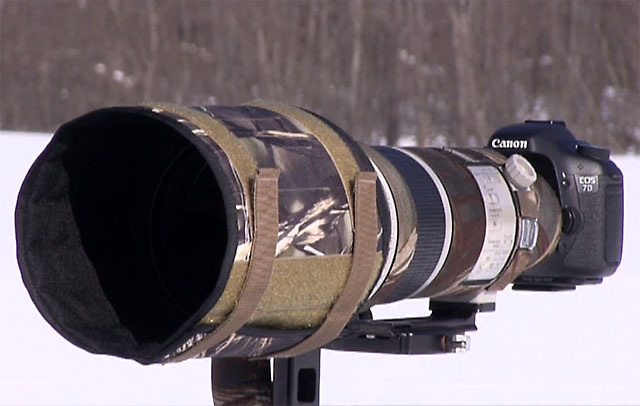
Use multiple telephoto lenses out in the field but don’t want to carry around multiple lens hoods? Earlier this year, LensCoat unveiled a new product that’s designed to solve that need. It’s called the TravelHood, and is a lightweight and flexible lens hood that can wrap around the end of any lens.
When not in use, the TravelHood can be folded nearly flat so that it doesn’t take up much space in your camera bag.
To use it on your lens, simply wrap it around the end and secure it in place with heavy duty Velcro. “No slip grip” material on the inside helps keep the hood stay snug and secure against your lens.
The TravelHood is made with water resistant material, so it helps protect your front elements against the elements in addition to killing glare and flare.
You can pick up a TravelHood in a variety of different designs and in two different sizes: large (for 400mm to 800mm lenses) and small (for 200mm to 500mm lenses). They cost $120 and $110, respectively, from the LensCoat website.
Comedians such as Jerry Seinfield and Chris Rock aren't the only people who feel college campuses have grown intolerant of free speech. Jim Doti, President of Chapman University, shares their concerns and says campuses are worse off now than they were ten or twenty years ago.
"People [increasingly] feel that they are victims of some kind of social stigmatization, and as a result you have to be very, very sensitive," says Doti, "and free speech is not about being sensitive."
Reason TV sat down with Doti at this year's Freedom Fest to discuss the decline of campus free speech, why he thinks "multi-cultural" centers at colleges are a bad thing, and the value of a liberal arts education.
About 7 minutes.
Edited by Amanda Winkler. Shot by Paul Detrick and Meredith Bragg.
By itself, a Mac is a great device. With apps, it can be the most useful thing you’ll ever own. But apps cost money. In some cases, they cost a lot of money. But don’t worry, because the deal we’re talking about today features tons of Mac apps for a price of your choosing. For any price you get two apps, and if you beat the average, which is less than $6 as of this writing, you get 10 apps. That’s right, 10 apps that perform all kinds of useful functions for what many spend on lunch. Without further ado, let’s take a look at...
According to the state of Georgia, if you want to know the law in its full context, you have to pay for it.
from Engadget:
You might think that legislation should be freely accessible as a matter of course, but the state of Georgia begs to differ....
It’s a new way of transferring money from bank accounts in different countries.
Here’s the short version of what TransferWise is: Transfer money between foreign bank acounts and avoid the ridiculous bank fees. Transferwise has bank accounts set up all around the world. You make a transfer first to their local account and then they send you money from another account into your foreign bank. Hence avoiding the international fee. Since the US doesn’t have the same banking procedures (bank to bank transfers are very common in Europe) the deal is a bit more obvious for people in other parts of the world. But it still a great deal.
Here’s the pricing: Most countries have a .5% (1/2%) fee! The fees for sending money from a US bank account are a bit higher. There’s a $15 USD fee and then 1% for anything over $1500. But even if you are sending from the US here are two advantages: the recipient of your transfer won’t be paying any fees and the exchange rate is very competitive.
Since money is involved I wanted to use this new service and investigate it thoroughly before recommending it. Here’s a longer version of why if find it useful and why I feel confident passing it along.
For four months now I have been sending money home to a US bank account. Here’s what usually happens when I do that. My Polish bank charges me a fee, my US bank charges me a fee, and I get a very poor exchange rate from złoty to US dollars. When things go slower than usual I call up the banks and both blame the other for the holdup.
I tried PayPal (5% fee), Western Union (upwards of 20% in fees and bad exchange rates), and other online banking options (which many times don’t accept incoming international transfers).
TransferWise is designed to avoid that whole scenario. It’s like Skype and Pay Pal had an international lovechild. The savings can quickly add up.
From bank to bank my transfers to the US typically took around a week and this new service is no faster. But here’s another thing I like, I sent an email to their support team about the expected delivery time and they quickly sent me a thoughtful email appreciative of my business and clarified how the delivery is estimated and calculated. (At the moment the website just says “Tuesday 4pm” but it is in UK time and doesn’t indicate the date. Which is confusing if you are initiating a transfer on a Sunday for example.)
They have some major financial backing because it looks like a viable business model. They addressed my questions about security and heartbleed with an up to date encryption. (From customer support on April 18 2014: “To get specific, we are using TLS 1.2 encrypted with 128 bit AES and DHE-RSA.”) And over 6,000 customers rate Transferwise a 9.7 out of 10 on this consumer information website from the UK. That is 2000 more reviews than they had 3 months ago.
This can also be used to receive money. You simply type in how much you want to receive and then transferwise sends a link to your client which arranges for a payment in their currency. Again, you don’t pay any fees, the full amount of your invoice appears in your bank. You can add a business profile to a personal account which allows you to send and receive payments with your business bank. There is even service for students to pay their schools when studying abroad.
I was looking for this exact thing and this company filled the gap. I’m a fan
Life in the Philippines isn't always the tropical paradise our tourism department would have the world believe. We are far enough from the equator to enjoy cool weather during parts of the year, but close enough to the Ring of Fire to be burned in its wake. We've been battered by heat waves, storms, floods, and earthquakes in our recent past, and the writing on the wall is that we're in for much worse. Today, July 30th, our country prepares for the inevitable Big One as we conduct a metro-wide earthquake drill. Six big storms have hit the country in the past seven months, and every day the weather is becoming increasingly unpredictable.
Even as a relatively safe city-dweller, the elements pose a serious threat to the people and property around me. In this very real and personal edition of Carry Smarter, I take a hard look at my everyday carry and determine the features and adjustments I've had to make to address both the increasingly harsh climate and ill-equipped infrastructure of my city. My hope is that you’ll discover what you need to know to better choose gear you can depend on, no matter the weather or situation.
The 3 Main Qualities of a Weatherproof Carry
I had to take a hard look at the quality of my carry both inside and out. For example, a watch may be made of rustproof and waterproof materials, but if not reliably sealed, it will be rendered useless caught out in the rain. Similarly, a knife may be made of the hardest and sharpest steels on the market, but rusted out it's neither safe nor useful. I considered the following features when thinking about how to adjust my kit to better brave the storms:
Water Resistance: To be truly secure against the weather, your equipment must be protected against its most abundant and pervasive resource — water. They should be sealed against moisture and liquid entry, resistant to its chemical reactions, and able to survive extended exposure against it (especially important given how much of it we get in typhoon season).
Enduring quality: As important build quality is to a product, even more crucial is how it retains that quality under and after duress. Will your flashlight still turn on after nosediving into the dirt, or will your phone stand up to dust kicked up by the wind? And if they do, can they continue that performance day in and day out?
Internal Protection: External durability doesn't mean much if it can't sufficiently protect a product's core function. Unprotected, unsealed, non-padded, and ineffective construction will render your tools to trinkets with even light use.
Below are ideas for EDC-worthy essentials that meet these criteria. These aren't necessarily for the hardcore survivalist, but they do possess reliable features to get you through constant bad weather. Also important is that they're both readily available to pick up as well as suitable for your daily carry, such as if you have to commute for hours in a downpour like I often do. Simply put, they're among the best weatherproof tools you can actually get your hands on without investing a fortune.
8 Essentials Built to Brave a Storm
Spyderco Salt I
The Salt I is based on Spyderco's venerated Delica design and features one of the most unique steels on the market. Japanese H-1 steel does not rust. That fact alone already makes the knife a strong contender for any outdoor activity, but in our rain-soaked metro in particular, that quality is priceless. Add in EDC-friendly specs, price, and build pedigree, and the Salt I is the easiest pick for this list.
Nitecore's newest flashlight may be overkill for this list, but it's a good example of the type of build quality to aim for. Designed for the most dangerous applications, it achieves explosion-proof tolerances with a body thickness of 3mm (thicker than most lights on the market) and a 10mm-thick epoxy resin optical lens to protect its emitter. It pushes out 830 lumens on either 1 x 18650 or 2 x CR123A cells, and uses an efficient single-action sliding switch for ease of use even while gloved. In the face of calamity, the EF1 is the light that lives to tell the tale.
Heavy jackets like parkas and windbreakers aren't de rigueur in a tropical country such as ours, but the ever-present chance of rain and floods means staying dry is still a priority. A light, waterproofed, breathable light jacket like the Columbia Watertight II is perfect for both the temperature and sufficient protection needed for daily commutes. The price and local availability are also attractive additions to the package.
Staying connected and having a means to communicate is vital in a bad weather emergency. Plenty of phone cases offer some protection, but in these conditions, not all are what they're cracked up to be. I've seen for myself the LifeProof in action, and do I believe its considerable defense to be worth its heftier price tag. It keeps the highest possible safety standard of protection without diminishing the phone's usability, putting it leagues ahead of your ordinary case or sleeve.
Wallets are already essential to our EDC, and in an emergency cash and identification are crucial to getting escalated assistance. The Bellroy Elements Pocket's all-weather, durable leather and water-resistant zipper accommodate and insulate up to 15 cards and bills, keeping them dry when you aren't.
One of the toughest notebooks in the business makes carrying even more convenient by teaming up with a rugged Cordura fabric cover and all-weather pen. This ensures that emergency numbers, locations, and messages get delivered when nothing else has stayed dry, legible, or powered on. We've talked before about why you should carry a pen and a notebook, so additional resilience on top of utility is more than welcome.
In Manila, our residential areas are so far removed from our business districts that we carry the tools of our livelihood (like laptops) along with us for multi-hour commutes. The Timbuk2 Rogue is a rugged city bag that would excel at such travels, defending against the elements with waterproof tarpaulin and an internal mesh sleeve that holds laptops up to 15". Its external flap with push-locks covers up and shields the main compartment, while an external pocket and internal organization leave enough room for supplies.
Military tough, packed with features, and inexpensive, there's a G-Shock for every person and profession. It's the watch you see most in public here in the metro. The toughness and weather resistance are a natural fit for the weather, and the variety of styles at affordable prices keeps things attainable and interesting. The GW6900's solar atomic features put our scorching months to good use, and its timeless construction guarantees performance the rest of the stormy year.
I hope that my circumstances and considerations in selecting a weatherproof carry have given you ideas on how to adapt and prepare a carry suitable for your own elemental challenges. Do you have a piece of kit that's survived its share of squalls? Tell us your story in the comments below.
A radical pro-abortion minority of the Senate just voted to continue forcing you to fund Planned Parenthood’s abortion and baby harvesting business.
You need to know who they are.
Despite a bipartisan majority of the U.S. Senate’s support for defunding the abortion giant (including Sen. Joe Manchin III (D-WV) 23% and Sen. Joe Donnelly (D-IN) 23%), these political pawns of Planned Parenthood filibustered to ensure the Culture of Death keeps getting its government handout.
Each of the Senators below voted to block legislation that would have stripped taxpayer funding for Planned Parenthood – an abortion business that takes $500 million tax dollars, murders nearly 330,000 babies, and sells them for parts to pad its bottom line each and every year:
Sen. Tammy Baldwin (D-WI) 6%
Sen. Michael Bennet (D-CO) 6%
Sen. Richard Blumenthal (D-CT) 12%
Sen. Cory Booker (D-NJ) 17%
Sen. Barbara Boxer (D-CA) 6%
Sen. Sherrod Brown (D-OH) 12%
Sen. Maria Cantwell (D-WA) 0%
Sen. Benjamin Cardin (D-MD) 12%
Sen. Thomas Carper (D-DE) 12%
Sen. Bob Casey (D-PA) 17%
Sen. Christopher Coons (D-DE) 0%
Sen. Richard Durbin (D-IL) 6%
Sen. Dianne Feinstein (D-CA) 0%
Sen. Al Franken (D-MN) 6%
Sen. Kirsten Gillibrand (D-NY) 12%
Sen. Martin Heinrich (D-NM) 17%
Sen. Heidi Heitkamp (D-ND) 12%
Sen. Mazie Hirono (D-HI) 12%
Sen. Tim Kaine (D-VA) 0%
Sen. Angus King (I-ME) 6%
Sen. Mark Kirk (R-IL) 17%
Sen. Amy Klobuchar (D-MN) 6%
Sen. Patrick Leahy (D-VT) 6%
Sen. Edward Markey (D-MA) 12%
Sen. Claire McCaskill (D-MO) 6%
Sen. Robert Menendez (D-NJ) 6%
Sen. Jeff Merkley (D-OR) 12%
Sen. Barbara Mikulski (D-MD) 12%
Sen. Christopher Murphy (D-CT) 17%
Sen. Patty Murray (D-WA) 0%
Sen. Bill Nelson (D-FL) 0%
Sen. Gary Peters (D-MI) 6%
Sen. Jack Reed (D-RI) 12%
Sen. Harry Reid (D-NV) 14%
Sen. Bernard Sanders (I-VT) 12%
Sen. Brian Schatz (D-HI) 6%
Sen. Charles Schumer (D-NY) 12%
Sen. Jeanne Shaheen (D-NH) 0%
Sen. Debbie Stabenow (D-MI) 6%
Sen. Jon Tester (D-MT) 17%
Sen. Tom Udall (D-NM) 12%
Sen. Mark Warner (D-VA) 12%
Sen. Elizabeth Warren (D-MA) 17%
Sen. Sheldon Whitehouse (D-RI) 6%
Sen. Ron Wyden (D-OR) 6%
They must be held responsible for their vote. Planned Parenthood’s evil must not be subsidized by you and me – the taxpayers.
We’re fighting to make sure big abortion is exposed.
The veneer is being ripped off of big abortion. Now is the time to redouble our efforts. Join us in defending life, demanding congressional investigations, and fighting to stop the sale of murdered babies’ body parts by signing our petition today.
Matthew Clark is Senior Counsel for Digital Advocacy with the ACLJ. A lifelong citizen of the Commonwealth of Virginia, he lives with his wife and four children in Northern Virginia. Follow Matthew Clark: @_MatthewClark.


 David Brown Automotive and its retro-styled Speedback GT mark their North American debut at The Quail, A Motorsports Gathering during Monterey car week.