Shared posts

03 Aug 19:46

What you need to know about Astrophotography Basics

32818979 ML

While everybody is looking for interesting subjects at ground level, the astrophotographer will always have a camera pointed at the skies because he knows how incredibly fascinating they can look. The Milky Way is an amazing subject that every photographer should try shooting at least once.

Before you get started, there are a few basic things you need to watch out for. First, the location is of great importance. You want a place with ideally no light pollution. That means you have to move away from urban areas. Try Googling "light pollution map" and identify the ideal places near your area. The second thing you need to be careful about is the moon phase. Ideally you should go shooting during new moon because that's when it's not visible and that's going to allow the stars to shine a lot brighter for your camera. As a guideline, the middle of the month, give or take a few days is when this moon phase occurs.

(Success Tip #1:Take portraits of people anywhere and turn them into profits)

Finding a spot where the sky looks good isn't hard, but finding a proper foreground might be. The balance between foreground and the sky in the background will make the difference between a good photo and a bad one.

10733157 ML

In terms of gear ad exposure, regardless of what camera you chose, don't even think about going anywhere without a tripod. The exposures are going to long, but unlike other long exposure situations, the aperture will be kept open, at values of around f/2.8-f/4.

You're also going to need a high ISO value, so a camera that can do useable ISO 3200 will come in handy. It's always a game of trial and error when photographing the night skies, so taking a series of test shots is absolutely necessary before you find the perfect exposure settings.

(Success Tip #2:Improve your photography with weekly challenges.)

Editing pictures of the skies is the second part of the process, one that's almost just as interesting. I'll leave you with photographer Serge Ramelli for an in-depth astrophotography tutorial.

See Full set of tips and teachings from Serge Ramelli HERE.

SergePro

Learn more about astrophotography from these recommended books:


Become a Wildly Successful Photographer! Gain the competitive edge by refining your skills with a PT Premium Membership.

What's in it for you:


  • Join an elite community of like-minded photographers. Build your network, get and give feedback and support, make new friends in the industry.

  • Improve your skills with our premium library of tutorials, eBooks, training programs and more!

  • Showcase your work with a customizable online portfolio. Unlimited uploads, attractive templates, and professional tools to promote your photography.
 
02 Aug 13:52

Police appeal to identify man found in Hammersmith Broadway bus station who says he does not know who he is

Police have launched an appeal to identify a man with apparent memory loss who was found in Hammersmith Broadway in west London.


29 Jul 23:01

The Cabin Book book in the wild.$21 in the US, £16 in the UK.

by zachklein


The Cabin Book book in the wild.

$21 in the US, £16 in the UK.

29 Jul 22:18

How to Avoid Getting Pickpocketed

by Brett and Kate McKay

Pickpocket Header 2

A couple centuries ago, pickpocketing was the scourge of cities around the world. From Dickens’ London to New York City’s famous Five Points, skilled thieves practiced their craft, filching the valuables of passersby without the victim noticing a thing. In fact, that’s how pockets in clothing got their start: Prior to the 17th century, men and women alike carried their valuables in purses outside the body; they then started tying pouches inside their clothes in an attempt to thwart would-be “cutpurses” and thieves. But pickpockets soon adapted and learned how to deftly extract the goods from trouser, waistcoat, and jacket pockets alike.

Around the turn of the 20th century, American prosecutors began cracking down hard on pickpockets, and mandatory schooling took young would-be thieves off the streets. Soon there were few “master” pickpockets left to pass on the trade, and fewer kids willing and able to learn a form of crime that took years to perfect. In more recent years, the decline of cash has made wallets a less desirable target.

While pickpocketing has been on the decline in the U.S for the past fifty years or so, it’s still a major problem in Europe. In fact, pickpocketing has gotten so bad in some countries that popular tourist attractions have had to close for days at a time.

Many police departments shrug off pickpocketing as common petty larceny. But to the victim, having their wallet stolen not only puts them out of the cash they were carrying, but creates a huge cost in time and worry. Credit cards must be canceled and credit agencies must be warned for possible identity fraud. If a passport was lifted, travel plans will likely be delayed and the victim will have to pay for an even more expensive trip home because they missed their original flight.

To avoid finding yourself in that kind of aggravating mess, you simply need to take a few precautions that’ll greatly reduce your vulnerability to pickpockets. And in today’s post we’ll provide expert-backed tips on how to do just that.

Maintain Situational Awareness

The first step in avoiding getting pickpocketed is to always maintain situational awareness when you’re out and about. For an in-depth look at how to develop the situational awareness of Jason Bourne, read this article.

Know Your Thief

It’s hard to pick a thief out of a crowd because pickpockets cross all demographic boundaries and stereotypes. While your grandma may have told you to “Be on the lookout for Gypsies!” pickpockets come in every race and color. While most are male, there are a large number of female pickpockets too. And while pickpocketing has often been called a “boys’ crime,” in Europe it’s common to find pickpocket gangs where the average member is in his 30s.

So don’t assume that you’ll be able to avoid getting pickpocketed by steering clear of certain “types” of people. With that said, keep in mind the following points when you’re out and about in an area known for pickpocketing:

Pickpockets often work in groups. One or two members of the pickpocketing team will act as distractions while an accomplice steals your stuff. So if you see a group of people acting in ways that seem designed to get your attention, be on the lookout for a hand trying to filch your valuables.

Pickpockets are often children. While many pickpockets are grown men, a large number of pickpockets are indeed young boys and girls. Children pickpockets take full advantage of their innocent, doe-eyed looks. Because a tourist doesn’t expect a child to be a criminal, the young pickpocket can get closer to their target without raising suspicion.

You’re likely to encounter more child pickpockets in Europe because in many countries, when a young thief is apprehended by authorities, they’re simply taken to a group home where they walk out the door the next day to do some more stealing.

So don’t be lulled into a false sense of security whenever a child suddenly comes into contact with you in an area known for pickpocketing. It’s possible they’re getting a heist started on you.

Pickpockets are typically well-dressed. When most people imagine a pickpocket, they likely picture a dirty street urchin. The reality is most pickpockets look like well-dressed middle-class folks. They want to blend in with their environment and appear as non-threatening as possible to get as close to you as they can without setting off alarms. So they’ll dress in a way that puts people at ease, which means wearing clean, well-pressed clothing featuring logos of brands that people associate with middle-class wealth (at least in Europe) — Nike, Gap, Adidas, etc.

Know Where Pickpockets Like to Work

While you can encounter pickpockets in any part of a city, some locations are a magnet for pickpockets:
Eiffel 1

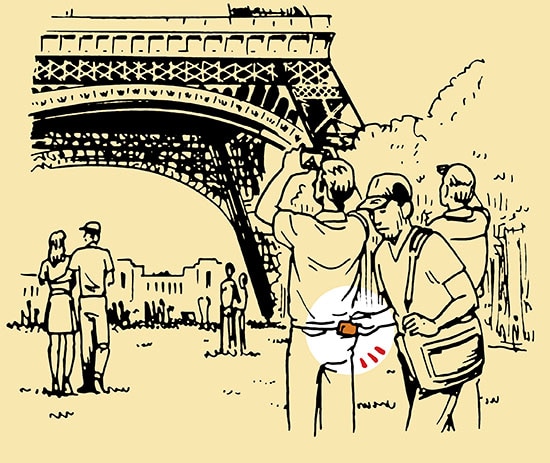
Tourist attractions. Tourist attractions are a pickpocket’s paradise. You’ve got 1) lots of clueless tourists often carrying lots of cash, 2) monuments and exhibits that distract people and take their gaze and attention off their possessions, and 3) high pedestrian traffic where people are bumping into each other and are less likely to notice the touch of a thief’s sticky fingers. Pickpocketing is in fact so rampant at tourist attractions that in recent years both the Eiffel Tower and the Louvre have had to close for several days because of it.

If a popular tourist attraction is on your list of must-sees while traveling, take extra precautions with your valuables when you visit.

Public transportation. Because public transportation forces people to stand right next to each other, it’s a fertile field for pickpocketing. With just a bump from an accomplice, a pickpocket can take your wallet and be off the train and on his way before you even realize it’s missing.

Restaurants and bars. Pickpockets often flock to restaurants and bars that are popular with tourists. Because patrons’ attention is focused on their meal and the people they’re eating with, they often don’t notice the hand that slides into their purse to snatch a wallet.

Hotel lobbies. Hotel lobbies offer a pickpocket a great opportunity to swipe a person’s goods. When tourists arrive at a hotel’s door, they’re often juggling and keeping track of several pieces of luggage. Pickpockets take advantage of the tourist’s diverted attention by stealing what they can from them.

Know the Tricks Pickpockets Use

It’s not just a steady and stealthy hand that makes a successful pickpocket.

Just as magicians use misdirection and distraction to make cards and coins seemingly vanish into thin air, pickpockets use similar techniques to make your wallet and smartphone disappear.

A good pickpocket has a keen understanding of human psychology and understands that people can only direct their attention to one or two things at a time. Consequently, they’ll either wait for or create a moment in which your attention is diverted towards something else to steal from you.

While it’s possible for a lone pickpocket to create the necessary distraction to successfully filch your valuables, it’s much easier when they have a partner in crime. Consequently, as previously mentioned, most pickpockets work in teams.

Below we highlight a few of the tricks that pickpockets commonly use to steal from their victims. Most of them are tactics used by groups, while a few are methods employed by lone thieves:
Lint 1

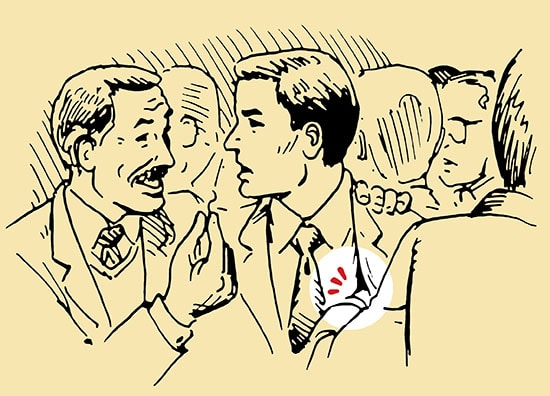
The helpful stranger. A friendly stranger approaches you to wipe off some lint from your jacket. A few minutes later when you go to retrieve your wallet to buy a drink, you find it missing. Sometimes the ruse is even more elaborate: one person “accidentally” spills something on you, another helps you wipe off the mess, while a third takes advantage of the hoopla by stealing your wallet. If someone acts a little too friendly and helpful towards you, be suspicious. They could be a pickpocket (or the distracter in a pickpocketing team).

Taking advantage of the Good Samaritan. A stranger approaches you asking for help — maybe they have a map and are asking for directions, or they could fall in front of you, dropping everything they have in their hands. The clumsy person is really the distracting half of a pick-pocketing team; while your attention shifts towards helping them, their partner swoops in and stealthily makes off with your wallet.
Subway 1

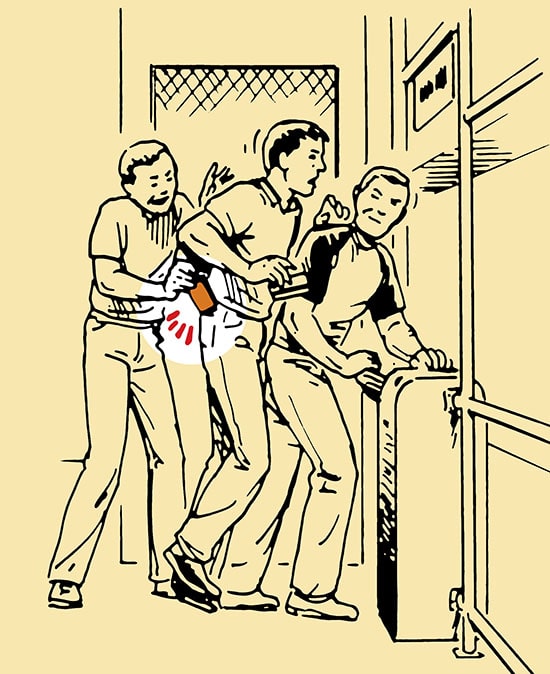
Creating delays at turnstiles. You’re walking through a crowded turnstile to get on the subway when suddenly the person in front of you stops, causing you to run right into them. Consequently, the person behind you bumps into you as well. The person at the front apologizes and says her ticket didn’t work. She tries again, this time with success. With another apology, she pushes through the turnstile and runs off to catch her train. When you get on your train and sit down, you notice that your wallet isn’t in your back pocket anymore.

The person who caused the delay at the turnstile was the distracter; the person who bumped into you from behind was the pickpocket who lifted your wallet. With all the commotion of bodies bumping into bodies, you never felt a hand slip into your back pocket.

The flash mob. You’re on the subway train when suddenly a huge mass of people surround you and start bumping you. At the next stop, they all get off, and your wallet is missing.

If you’re ever suddenly surrounded by lots of people, get out immediately. You’re about to get pickpocketed.

Charity workers with clipboards. A group of well-dressed, friendly girls approach you with a clipboard. They signal that they’re deaf and mute and point to the clipboard. While you’ve got the clipboard in your hand, reading over the petition/donation form, an accomplice is snatching your wallet or stuff out of your backpack. This is supposedly a popular pickpocket tactic in Paris.

The friendly salesman. While browsing through an outdoor marketplace, you encounter a salesman who’s just a little too friendly and pushy with his wares. He may not actually be interested in making the sale, but simply distracting you while an accomplice steals your wallet.

Fake fights. A group of men starts fighting. You, of course, watch because fights are cool. When the fight’s over, your wallet is gone.

That wasn’t a real fight and you’ve just been suckered.

Child beggars. A group of children suddenly gathers around you talking, shouting, and begging for money. They soon disperse, but you’re lighter in the pants. While many pickpockets look like mild-mannered middle-class folks, some do look like the stereotypical street urchin/beggar.

Bag slashing. Some thieves won’t even bother with all the distractions and stealth tactics, and will just cut open your backpack and take what they can get their hands on. While it’s not that common, it happens enough that you may want to take precautions to prevent it happening to you. We’ll offer some suggestions on how to do that below.

The quick grab before the subway door closes. Another brazen tactic that thieves use is to target individuals who are sitting or standing right next to a subway train’s doors. The thief will stand near the victim on the train or just outside the train’s doors. Right before the doors close, the thief will snatch the purse or backpack or take the wallet, and then bolt out of the train. The victim can’t do much except pound the doors as the train rolls away. Because the thief doesn’t have to worry about you following them, they can afford to be less stealthy with their heist. They’ll just grab whatever they want, not caring if you notice them or not.

Bump and lift. The most common solo pickpocket tactic is the bump and lift. The pickpocket simply bumps into the victim while simultaneously taking the victim’s wallet out of their back pocket.

Pickpocket-Proof Yourself (As Much as You Can)

While it’s impossible to make yourself 100% pickpocket proof, there are some things you can do to make yourself a far less likely victim:

Don’t look like a tourist. Pickpockets love hitting up tourists because 1) they often have lots of cash and valuables on them and 2) they’re typically not paying attention to what’s going on around them because they’re so focused on taking in the new sights.

So avoid looking like a tourist.

This doesn’t mean you have to dress exactly like the locals, but do the best you can to blend in. Don’t wear anything that will make you stand out and broadcast that you’re a tourist with a lot of money. Pickpocketing expert Bob Arno recommends not wearing clothing with high-end brand logos as well as not wearing expensive jewelry or watches. In other words, dress in a culturally appropriate, non-descript way.

Also, avoid gawking at maps and appearing like you don’t know where you are. Before leaving for any destination, have a good idea of how to get there and move like you know where you’re going.

Be alert and assertive. If you’re rushed and encircled by a group of children, there’s a chance they’re working together to steal whatever you have on you. Maintain a confident stance and yell “No!” — they’ll probably back away. If they don’t, don’t be afraid to push your way through even though they’re kids. Likewise, if a “helpful” stranger seems to be suspiciously friendly, don’t be afraid to move away and keep your distance. Thieves count on you being too “nice” to want to be rude or make a scene. You don’t want to come off as aloof and wary to genuinely friendly folks, but you do need to be alert and aware of what’s going on around you.

Keep the bare minimum in your wallet. The less you have in your wallet, the less of a hassle it will be if you do get pickpocketed. Just keep a single credit card, a single form of ID, and a small amount of cash. That’s it.

Keep a back up credit card stowed safely away in your hotel in the event that you do lose your wallet.
Front Pocket 1

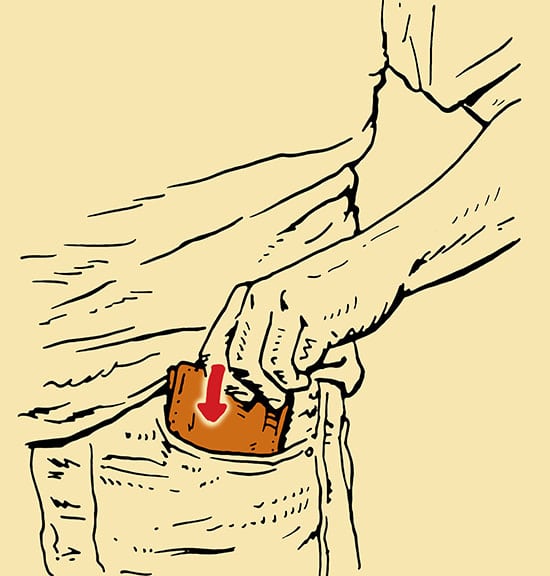
Secure your valuables in a front pocket. While a skilled pickpocket can swipe your stuff from your front pocket, it’s more difficult to do than when your stuff is in your back pocket. If you’re looking for a wallet that fits nicely in your front pocket, check out the Rogue Wallet. And don’t forget to put your smartphone in your front pocket as well.

Another more secure place to stash your goods besides your back pocket is the inside pocket of your jacket. For added security, make sure that it can button or zipper close.

Better yet, keep them in a money belt. For maximum security, take a tip from your forebearers and keep your valuables under your clothes, tucked inside a money belt. Keep in mind though that money belts aren’t entirely pick-proof.

Another option that’s even more secure than money belts is underwear with zipper pockets. The Clever Travel Companion is a great example of this type of garment. Even the deftest of pickpockets will have a hard time getting their hands down by your junk to retrieve a wallet without being noticed.
Sign 1

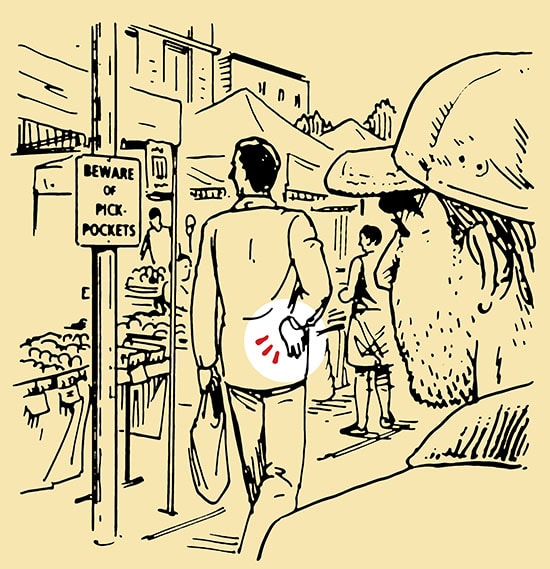
If you see a sign that says “Beware of Pickpockets,” don’t touch your wallet. In areas where petty thieves are prevalent, you’ll often find signs that say “Beware of Pickpockets.” Upon seeing this sign, most people will immediately pat their clothing where they keep their valuables to check that they’re still there. Meanwhile, the pickpockets are standing nearby observing where people are patting themselves so they can go in for the steal!

So if you see a “Beware of Pickpockets” sign, avoid the knee-jerk reaction to check your stuff. You’re just providing a homing beacon to thieves.

Secure your backpack. Backpacks and other bags are a pickpocket’s friend. Not only do they make you look like a tourist (especially the backpacking variety), but because the bags aren’t touching your body, you’re not going to feel it when a pickpocket places his hand inside to steal your possessions.

If you can, avoid carrying a backpack or shoulder bag while out and about. However, if you need to have it on you, take the following precautions to avoid getting pickpocketed:

  • Don’t keep anything valuable in your backpack. Your wallet and smartphone should be in your front pocket or money belt. Don’t keep these in your backpack. Ideally, you’re only going to keep things in your backpack that you wouldn’t mind losing.
  • Don’t put anything in the back pocket. The easiest target on your backpack is the back pocket on the outside. A pickpocket can easily unzip it and get stuff out without you feeling it.
  • Put locks on your zippers. If you do need to keep valuables in your backpack (for example, a camera), lock the zippers with small luggage locks.
  • Wear the hip belt when you’re walking. Besides making the bag more comfortable, the hip belt can also serve as an added security device. More brazen thieves will simply just take your backpack off your shoulders and run off with it. If you’ve got that hip belt secured, such a grab becomes a far more difficult, two-step process.
  • Keep bags in front of you when on public transit. When you’re on public transit, move your backpack from your back to your front. That way you have a better view of sneaky guys trying to get their hands into your stuff.
  • Keep bags between your feet while eating. Don’t place your bag by your chair, or hang it on a chair while you’re dining. Always keep your bags in physical contact with you.
  • Buy slash-proof bags. While not entirely knife-proof, slash resistant bags can make slash and grab jobs a bit more difficult for crooks. It might be worth it to consider the investment.

Never put your phone on the table when you’re eating. I’ve never understood why people put their smartphone on the table while eating; it’s rude and prevents you from being fully present with the folks you’re dining with. But if you’re one of those people who absolutely must keep their phone on the table while you’re at a restaurant, be aware that pickpockets are targeting you. A growing number of enterprising pickpockets are casing restaurants with outdoor eating areas and looking for phones sitting on tables. When they see one, they’ll swoop in as a team — one guy acting as the distraction (selling flowers, newspapers, candy, etc.), while his accomplice grabs the phone.

Lesson: Keep your smartphone tucked away on your person while you’re eating. The text messages can wait.

Also keep your phone locked and install software that allows you to remotely wipe clean its data. If your phone does get stolen, you don’t want the pickpocket to have access to your valuable information.

What to Do If You Do Get Pickpocketed

There’s no such thing as perfect security. Even if you follow the above guidelines, there’s a chance you’ll still get pickpocketed. So what do you if it happens to you?

Make a copy of your ID before you leave. Before you leave for your trip, make a copy of your passport and driver’s license. I’d recommend storing these in Dropbox or Google Drive. These will come in handy in the event you lose your passport and ID and need to get a new passport from the embassy so you can make your trip home.

Call your credit card company. In addition to the copies of your passport and IDs, have the last four digits of the credit card you’re carrying with you on your trip stored somewhere. Along with that, have the phone number of the company that issued your card. If your wallet goes missing or stolen, immediately call the issuing company and let them know. Any attempted transactions with your card will then be blocked from clearing.

Call a credit reporting agency. After you’ve called your credit card company, call one of the main credit reporting companies, like Equifax or Experian, to report your card as missing or stolen. The reporting company will place an initial fraud alert on your credit file for 90 days. This will put companies issuing credit (banks, credit card companies, etc.) on alert that you might be the victim of identity fraud, and it will make opening new accounts in your name more difficult.

File a report with the police. If you believe you’ve been the victim of theft, file a report with the local police. It might not do much to get your ID and credit cards back, but it won’t hurt.

_______________

Sources

Travel Advisory by Bambi Vincent and Bob Arno

“How to Avoid Becoming a Victim” from US embassy in Paris

Illustrations by Ted Slampyak


29 Jul 18:27

Log cabin in the White Mountains of New Hampshire.  Photographed...

by thomasjwilson


Log cabin in the White Mountains of New Hampshire

Photographed and submitted by Thomas Wilson.

26 Jul 13:24

The Lafayette Theater Shooting Is Why I Carry Everywhere I Go

by Doug Giles
I dont know about you, but I carry a gun everywhere I go. I know it sounds a wee bit paranoid, but when going to watch a movie during the dog days of summer potentially puts me at risk of getting shot by some Motel 6 drifter with a Paul Bunyan-sized ax to grind, then call me crazy but
26 Jul 07:33

Obama (taxpayer funded) gift: The taxpayer is now going to pay for the installation of GOOGLE FIBER in “poor” neighborhoods, Large corporations to benefit

by Nick Sorrentino

fiber cc

The Obamphone program, and it is the Obamaphone program, though it was started in the 80s so that people could call the fire department if they needed it, has expanded exponentially during the current administration. Now pretty much anyone can get a free (I mean you and I pay for them via our taxes) phone just for the asking as this recent video illustrates.

And now we will be subsidizing broadband Internet too via Mr. Obama’s “ConnectHome” crony boondoggle. Congratulations America, more stuff which is way beyond what government should be doing that you have to pay for. Oh, and which will fatten the bottom lines of large corporations in the process.

Tracfone, owned by Carlos Slim, the Mexican magnate and the richest man in the world has done very well under the “Lifeline” program. ($451 million of your tax dollars in 2011 alone.) Now it looks like all sorts of other companies will be getting in on the act as Google Fiber, a connection which I can almost guarantee is way way beyond the connection you have, you know the connection you PAY for, is installed in housing projects across America. (You’ll be paying for this connection too of course.)

This is couched as a program for the poor, which will help people find jobs etc. I certainly hope this is true, but my bet is that it has as much to do with rewarding complicit corporations as anything else.

It’s a jack dressed up in “doing good.”

Also it should be noted that with such connections the propaganda message is made more easily. This is also a big part of the effort.

Connecting people to super duper high speed Internet is not what government is supposed to be doing. Because it is doing it on YOUR DIME.

Read More

26 Jul 07:20

The establishment GOP and Democrats unload on Maine’s blunt governor, even in Washington DC

by Editor
You can see why some people hate this guy. On the other hand one can also see why people like him.

You can see why some people hate this guy. On the other hand one can also see why people like him.

The establishment can not believe that Mainers gave the governorship to Paul LePage, again. I mean this guy absolutely drives them nuts. As such an offensive against the governor has been mounted in Maine and even in the virtual pages of the establishment mouthpiece Politico.

We are not going to weigh in on Maine politics, but one has to think that if this guy is causing as many headaches for the good-old-boys in the state legislature as it appears he is the guy has got to be doing at least something right.

Consider also that LePage is doing his thing just a stone’s throw from Kennedy country.

Read More

22 Jul 17:58

Video: Catching Carp on Tenkara Rods

by Tim Romano

Yes, you read that headline right and no I don’t think this is a new fad bound to take off anytime soon. It is however a good diversion from your daily ritual and does what many fly fishing vids don’t do… It pokes fun at how seriously we all take the thing called fishing. I say good on ya guys. Our friends at Indigo Guide Service, and Scumliner Media take to the gin clear waters of Beaver Island, MI and get after big carp on the wiggle stick.

22 Jul 17:58

DIY Providing Water for Bees

by Gene Rene'

Did you know bees get just as thirsty and exhausted by heat as you?

If you keep bees or even if you just want to be a good neighbor or a thankful gardener, it's easy to give bees a source of water.

The post DIY Providing Water for Bees appeared first on Keeping Backyard Bees.

22 Jul 03:14

PROF: 'Wishful thinking not sound foreign policy'...

21 Jul 14:05

Tree Snake Houses

With an angular, diamond-shaped design that recalls the head of a serpent, these Tree Snake Houses by RA blend modern lines with natural looks. The sides and roof of these...

Visit Uncrate for the full post.
21 Jul 12:26

Stairs in the Palace of Knossos, the oldest palace in Europe, 4000 years old.

21 Jul 02:59

New saliva test may catch Alzheimer's...


New saliva test may catch Alzheimer's...


(Third column, 29th story, link)

21 Jul 02:59

Travel jacket with built-in gadgets

20 Jul 17:29

Next Generation Bicycle Helmet

19 Jul 11:48

Lake house in South Tirol, Italy.Contributed by Rob Gajland.


Lake house in South Tirol, Italy.

Contributed by Rob Gajland.

19 Jul 04:04

Thanks science!

17 Jul 15:40

We Asked 18 Photographers: Do You Always Get Permission From People That You Photograph?

by Alison Zavos

Ayesha_Malik

© Ayesha Malik

Ayesha Malik: It depends on the situation. If I am walking around with a small camera or my iPhone, I do not necessarily ask. I value the lightness of that process. Sometimes I will exchange a glance of acknowledgement if I sense a person would prefer that. In my more recent work exploring/documenting Saudi Arabia, I have chosen to actively ask my subjects to be photographed. I do not want them to be stolen moments. I want them to be given, to be honest, for a person to be seen as they wish to be seen. I started carrying around a laminated note in Arabic stating what my project was about and if I could take a photograph. I have no interest in telling people how to see Saudi Arabia. I believe Saudi Arabia has to be seen on its own terms. I hope that through this process, it will speak for itself, in all its variations. I find it is a country of private people, and I will always choose to respect that over anything else.

Ron Haviv: It is a situation by situation decision regarding permission. In the United States, if you and your subject are in public, there is no legal requirement for permission. If you are on or in someone’s personal property, permission is needed. In many cases, if I point a camera towards someone, and there is no negative reaction, I feel fine in taking the image. If they say no, verbally or otherwise, I respect their choice. If, however, there is a crime, violent act, or people are there for the purpose of being photographed, I will take the image.

Bieke Depoorter: Normally yes. I often feel uncomfortable with taking pictures in the streets, because it somehow feels like stealing… I feel better if I first ask for permission. When I enter in peoples home, it’s more easy, as I explain to them my ideas before they invite me into their home. I understand, though, if street photographers do not ask for permission first… the moment can be easily gone if you asked. It’s all about having respect for your subject. If you have that, not a lot of things can go wrong.

Corinna Kern: There are always people that will not allow you to photograph them because they either do not feel comfortable with having their image taken and sharing their stories or because they do not know you and your intentions. Often it is a matter of building a level of trust to get permission from people. When I pursue personal projects, which often deal with people on the fringes of society, I like to immerse myself in these. I often end up spending a lot of time with the individuals I photograph and relate to them in a non-judgmental way and on a friendship-level. That approach feels most natural to me and helps in getting permission to photograph as well as acquiring intimate shots.

Carolyn Drake: It depends on the circumstances. There is a pleasure in disappearing behind the camera on a crowded city street, and sometimes making the picture before the conversation makes for a more surprising picture. But if there’s someone I want to pose or spend time with, or who for some other reason it seems to make sense to ask, then I will. It’s a judgement call.

Laura Pannack: Yes, whether that’s verbal, through eye contact and gestures or written consent. It’s just my way of photographing. I didn’t used to because my work was less about engagement and more about observing. Now my work is slower and analyses the role of the image maker and subject.

Peter Dench: I rarely get permission from the people that I photograph. Most people I encounter don’t mind being photographed; it’s not the main concern or focus of their day. I generally shoot close to my subjects so if they, or I, want to have an exchange we do.

Maggie Steber: Not always, it depends on the situation. If I’m street shooting, general scenes, I just shoot; it’s the scene and people are part of it, but it’s more about the moment, composition, light, and something I’m trying to capture. If I want to photograph someone in particular on the street, I generally talk to them first, a real conversation, not just “may I take your picture,” but I try to find something out about the person…but again, it depends on the situation and where I am, what country, what culture, etc. If I’m doing a portrait of someone which is set up as an appointment, besides going with my own ideas, I like to collaborate with the subject, involve them in the idea of what the portrait can be about and get their input, as it usually works out better. I get in deeper by involving the subject and sometimes their ideas are better than mine…..two heads are better than one.

Jonathan May: If I am going to use the image on my website or for anything commercial, of course, but if it is just street photography and in public domain, then I wouldn’t bother as it will just appear on my instagram feed and get lost with the current 20 billion images that are online already, but in case you are wanting to find your photograph I took of you, then my handle is jonathanmay_.

J.M. Giordano: In instances of photojournalism and street photography, I don’t. But that’s changing country by country. If it’s for an ad/fashion editorial etc., of course. There’s a great app called Easy Release for model releases. Great interface. That being said, you should know the laws before you embark on a trip. For instance, you need peoples’ permission to photograph them in public spaces in France.

Wasma Mansour: Generally yes, particularly for my personal project because engaging the subject/participant is important for me and will affect the outcome of the photograph I take of them.

Cristina de Middel: I normally do. Especially since I stopped doing straight photojournalism. But I still take pictures with my phone in a more street photography style that I can share on social networks like everyone. For these, I do not normally ask for permission, but they are not part of my professional work.

Jenny Lewis: Yes, as my projects have all been set up portraits, where I have been invited into people’s homes or workspaces. They are fully aware of the project and the possibility of the series being part of an exhibition or book at a later date. I now gather model release forms as I go, as I end up shooting a lot of subjects for each series over a number of years, so it would be a lot of work to gather them later.

David Pace: I always get permission from the people that I photograph. I never get model releases, but when I am doing street portraits, I always interact with my subjects. Often the interaction is brief and sometimes non-verbal. I don’t take a picture until I have their consent.

I believe the most meaningful portraits result from a collaboration between subject and photographer. I want my subjects to be at ease in front of the camera, and I want to portray them as they want to be seen. For street scenes or pictures of people working or dancing, I also get permission. I used to think it was possible be “invisible” and surreptitiously capture moments of “reality.” I was afraid that if people knew I was taking pictures, it would alter the situation. But my experience photographing in West Africa over the past nine years has taught me that the most natural, realistic images come from having a deep relationship with my subjects. I have become so familiar, so much a part of the community, that I disappear. This secondary invisibility allows me to photograph “real life” with the full knowledge and consent of my subjects.

Molly Landreth: Absolutely. I have always thought of photography as a really powerful tool for change and empowerment, and I consider my subjects collaborators. I often times use a large format film camera, which is bulky, awkward and complicated to set up….there is no sneaking around when you’re using a camera like that. My subjects are often times standing directly in front of the camera and looking right into the lens – like they are saying “I’m right here and I’m staring right back at you!” So permission is critical.

Benjamin Lowy: No. Definitely not. Especially in the context of Street Photography or Photojournalism. But a lot depends on the approach or what I’m trying to accomplish.

Nancy Borowick: Whether I’m shooting or just observing, I like to have my camera slung over my shoulder. I feel like if people see the camera and don’t openly object, I feel like that is unspoken permission. Depending on who you are photographing for, sometimes you need permission, especially if you are photographing young children, but generally I shoot first and then ask second, if I ask at all. When I photographed my parents in the hospital, I always had my camera in plain view. I figured that if I acted like I had permission, no one would bother me about it, and that sort of worked.

Martin Usborne: It depends. If its a formal portrait, then you kind of have to. If it’s more documentary based, then no. Each situation is somewhat different.

The post We Asked 18 Photographers: Do You Always Get Permission From People That You Photograph? appeared first on Feature Shoot.

17 Jul 12:02

What Is Mid-Century Modern?

by Nicole Varviotses

Inspired by our exclusive Stephen Kenn sale on Huckberry, we thought we'd brush up on our design vernacular. This time up, we're examining the tenets of "mid-century modern" design — something from which Kenn draws inspiration for his most recent Inheritance Collection, which has been turning heads around the industry. To learn more, we asked one of our correspondents to break down some of this design terminology, and are sharing her notes with you. 


Everything on and around you has been designed. Your shirt, your toothbrush, your laptop charger, that parking structure, those ice cream cones — everything serves a purpose, either as a tool for utility or to add a touch of aesthetic beauty to your day.

Designers are alike in that they make a million little decisions in order to create a product or solve a problem; some of those decisions are aesthetic and others are structural. What separates these visionaries, though, is their worldview and how it dictates their style.

So how can you differentiate the work of a mid-century modern designer from another? Start by asking yourself a few simple questions.

If any of the above stand out in the design, chances are that it’s Victorian clutter. Intricate patterns, plump tassels, Fenton table lamps with their fine marble bases and quilted amber glass —these are all examples of the ornate extravagance that spurred the modern design movement.

Momentum for that counter culture began when German architect Walter Gropius founded the Bauhaus in 1919. His radical school taught students the importance of understated designs that were simultaneously functional and expressive; this celebrated a new relationship between art and industry. He exposed materials in their truest, most natural form — an approach that deeply influenced American designers, inventors, and artists in the years following World War II.

The war was over. Between 1945 and 1966, Arts and Architecture magazine commissioned lead architects to design and build inexpensive, efficient model homes using war-born techniques that best suited the expression of man’s new life in the modern world. Life was beginning anew, and the Case Study House Program provided an opportunity to reflect the shifting American spirit towards the idealized, stylized, and romanticized.

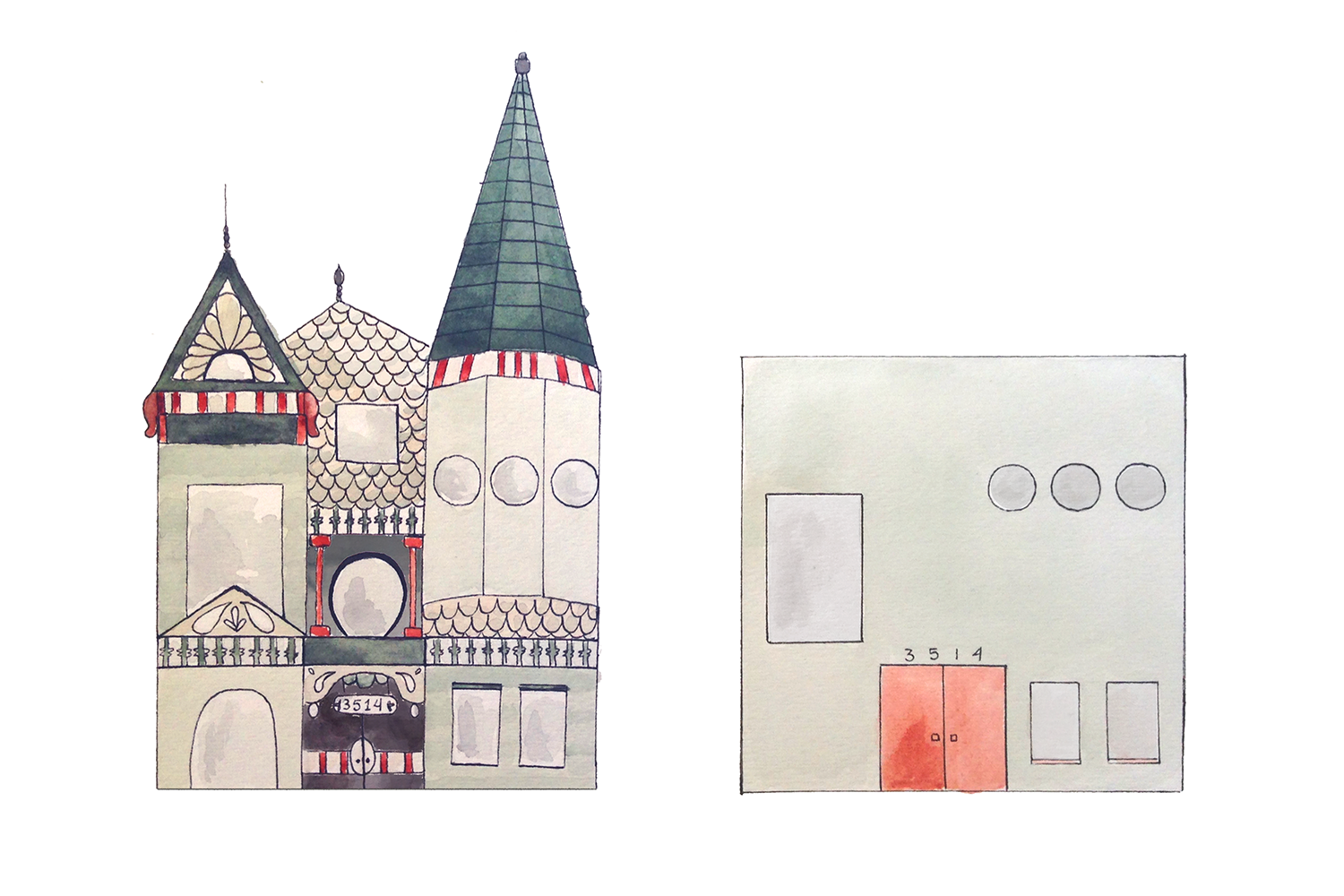
Of the 36 modern house designs that emerged, the Stahl House, Case Study House No. 22, is the most well known. For its occupants to better enjoy the 240-degree view of Los Angeles, architect Pierre Koenig created an L-shaped floor plan that emphasized the lot’s unique panorama. He called for expansive glass windows and walls, designed the rooms to face the swimming pool, and made it so the outside and inside spaces were uniformly livable — the hallmark of mid-century modern architecture philosophy.

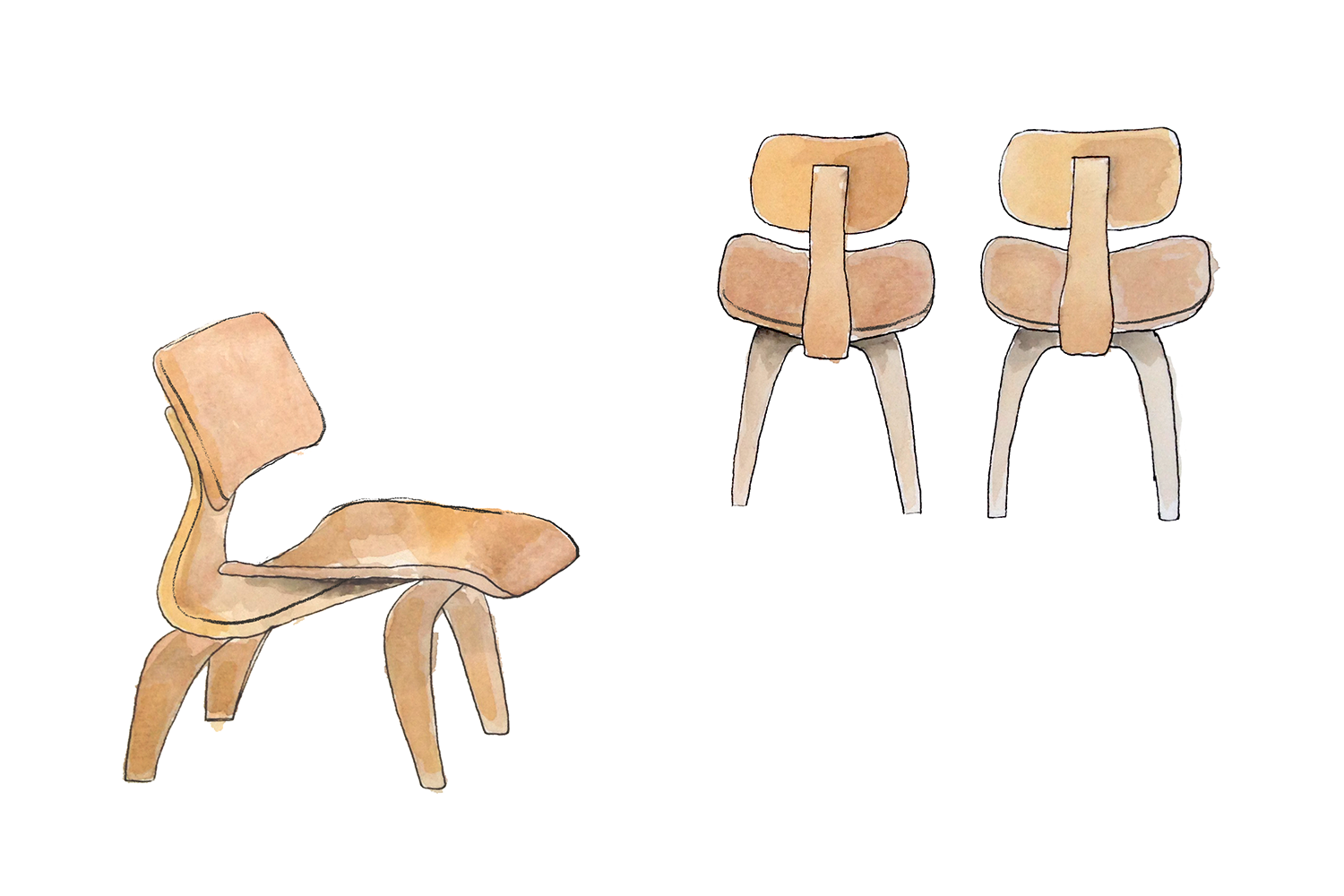
Charles and Ray Eames were legendary designers who pursued modern furniture design with a sense of adventure and imagination. During the 1950s, the husband and wife team created what would become the most iconic chair of the twentieth century: a molded plywood design that turned an ordinary, rigid material into something functional and elegant. This chair showed the world that a flowing form can be made out of a single material and process, without straying from the product’s spirit and purpose.

And the original chair was only the beginning. The couple continued to pair technology with artistry and produced the fiberglass, plastic resin, and wire mesh furniture that both influenced their peers and would inspire generations of designers to come.

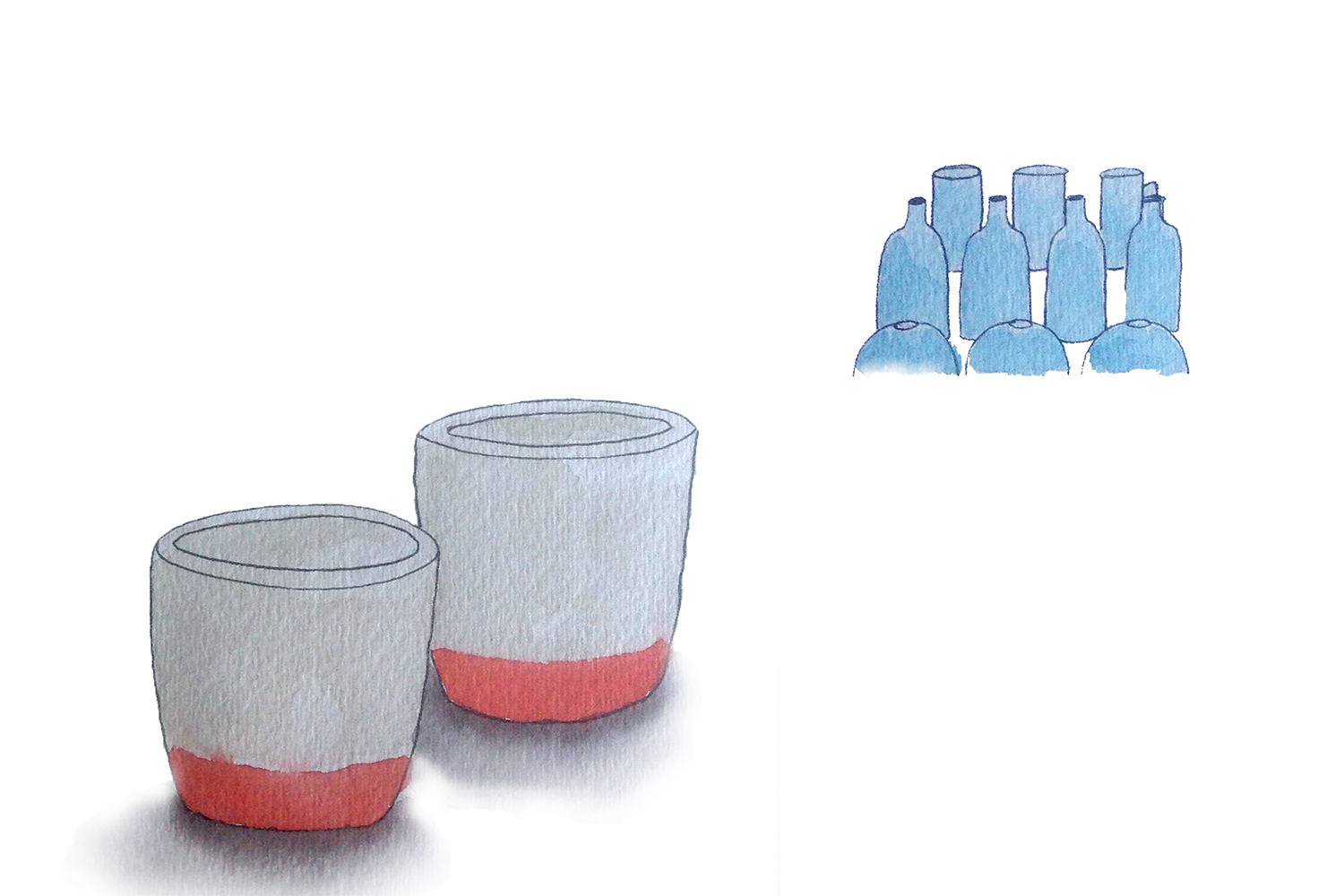
The Bauhaus mantra, less is more, spread beyond the architecture and furniture industries. Those three words guided Edith Heath throughout her career as a ceramist, and like the other modernist pioneers of her time, she had a great respect for artistry and material. Her stalwart approach to the craft brought advancements in clay and glaze developments, and she used single-kiln firing on her pieces, all of which tended towards simple, functional and thoughtful design. No ornamentation, no fluff; just smooth curves and soft, solid colors. That was her way, and nearly seventy years after opening a storefront in Sausalito, California, her minimalist, timeless designs endure.

Mid-century modern, as it turns out, is always in vogue. [H]
 

Have a new appreciation for mid-century modern design? Don't miss our USA-made Stephen Kenn furniture collection, on sale on Huckberry right now


Nicole Varvitsiotes is a traveling writer who catalogs joy. 
A contributor to Kinfolk Magazine, Darling Magazine, The Daily Muse, Forbes and Mashable, she lives in San Francisco, California. 
Follow her on Instagram here.
 

Images ©: 1, 2, 4, 6, 8; Courtesy of Stephen Kenn. 3, 7, 9; Nicole Varvitsiotes. 5; Rocco Ceselin

15 Jul 18:48

ADULT COLORING BOOKS SELLING LIKE CRAZY...


ADULT COLORING BOOKS SELLING LIKE CRAZY...


(Third column, 22nd story, link)

15 Jul 13:54

Off-grid fishing cabin near Chillicothe, Ohio.Contributed by B....


Off-grid fishing cabin near Chillicothe, Ohio.

Contributed by B. Turner.

15 Jul 12:32

Iran Deal Good for All the Economies?

by Ed Krayewski

While Iran hawks in the U.S. are freaking out—Iran may soon be able to buy and sell conventional arms as freely as almost every other country in the world and to develop a purportedly peaceful nuclear program as a number of countries have done before it—the Iran deal announced today could have powerful positive effects on the economy not just of Iran but the rest of the world too.

Russia, and China, were the primary negotiators pushing to lift the arms embargo—they were widely perceived to be doing so in order to sell arms to Iran themselves, something Gulf Arab countries have not been keen on. But the U.S. has been working on billions of dollars of defense contracts for allies in the Middle East, specifically in preparation for a potential Iran deal.

But it's not just arms merchants expected to see more business in the wake of Iran deal. There are theoil companies of course. And a number of European companies, ranging from aerospace companies to tobacco and food and beverage concerns, are expected to be potential winners when Iranian markets open up in the next six months—this is largely because those companies had presences in Iran before sanctions forced them to suspend their business operations.

American firms, on the other hand, have been mostly prohibited from doing business in Iran since the Islamic revolution in 1979. It doesn't mean American companies don't have market penetration in Iran—Iran's consumers are familiar with products from firms like Apple and Phillip Morris because of a thriving smuggling network, and even with brands like Starbucks thanks to knock-offs.

Central planners, naturally, are worried about the effect permitting Iran to sell its oil on a global market will have on prices. Iran has the fourth largest crude oil reserves in the week. They extract 2.8 million barrels of oil per day and say they can increase their capacity by a million barrels a day over the next year.

Entrepreneurs in Iran caution that the lifting of sanction won't be an economic cure-all for Iran. The CEO of an Amazon-like company in Iran, said the biggest benefits will be access to foreign investment and new e-commerce technology.  "This is not Russia in the 1990s," one banker told The Guardian. "Some people make it sound like a gold rush. There won't be one because there is already a free market and free trade here." For people who want to add value Iran is the place to be. It could be the best emerging market for years to come."

Those opposed to trade with Iran, of course, are free to choose not to trade with it. Lifting the sanctions means that political opposition won't place limits on the choices of others.

15 Jul 12:31

When the Irish Improvised a DIY Banking System

by Jesse Walker

Patrick Cockburn remembers how the Irish got by while a strike shut down the country's traditional banks for six and a half months in 1970:

Does that bottle of bourbon say "fractional reserve"?Undated cheques, often endorsed over to others but never cashed, became a form of currency. When the supply of cheques dried up, people wrote new ones on any available piece of paper, sometimes adding a postage stamp to give it an official appearance. There was talk of some cheques being written on beer mats and lavatory paper. It was a system that worked because it drew on local knowledge and trust. The people exchanging cheques and IOUs knew each other well, and if they did not, they could soon find the necessary information to assess each other's credit-worthiness. At that time there were 11,000 pubs in Ireland and 12,000 shops that became substitutes for the banks. Antoin E Murphy, who carried out a study on the strike's effects, found the public's ability to assess risk "was based on a vast pool of information available to transactors on the credit-worthiness of other transactors".

Indeed, their information was likely to be much better than a bank manager or his staff. The accuracy of their judgement was demonstrated when the strike came to an end with most pieces of paper turning out to be worth what was written on them. There were few insolvencies, the largest being a transport company called Palgrave Murphy, which was in trouble anyway. Overall, imports, which were expected to be badly hit, turned out largely unaffected.

Cockburn does note that "certain transactions, such as buying and selling property, became impossible or very complicated because essential documents proving ownership were locked in the vaults of strike-bound banks." His aim, he says, is to show that "the disaster that follows a bank shutdown is not total," not that "a home-grown people's banking system would grow up to replace commercial banks." But that home-grown people's banking system does sound rather more effective than you might expect.

Antoin Murphy's paper on the period can be read here. I enjoyed his brief account of how pubs came to take on some of the banks' old functions: "one does not after all serve drink to someone for years without discovering something of his liquid resources."

[Hat tip: Bryan Alexander.]

15 Jul 02:05

No breakthrough for Americans held in Tehran...

15 Jul 02:04

REPORT: Murder rates fall as concealed carry permits skyrocket...


REPORT: Murder rates fall as concealed carry permits skyrocket...


(Third column, 4th story, link)

14 Jul 13:52

The Invention of Jaywalking

by Emily Becker

We’ve all done it. You’re standing at an intersection waiting anxiously for the orange hand to change to a white person so you can cross the street. The stream of cars has thinned, so you look both ways, note that no vehicles are approaching, and simply walk across the street—and break a handful of laws in the process.

In the past four years, LA police have issued 17,000 jaywalking tickets (which carry a $197 fine) to pedestrians who violated the agreement that people may only exit the sidewalk and cross the roadway at designated points at designated times. However, in the not so distant past, it was the cars, not the people, who were fighting for their right to be in the street. 

In American cities before the 1920s, pedestrians always had the right-of-way [PDF]. The streets were filled with some street cars, fewer automobiles, and people crossing from one side to the other at their leisure. Mothers often sent their children to play in the street without fear that someone would come back injured.

But then the number of cars on the road began to increase. Henry Ford’s Model T was the first automobile that was affordable for the average American. And as the number of cars began to grow, so did the number of automobile-related accidents. In 1923, 17,000 to 18,000 people were killed in automobile accidents; three-quarters of those were pedestrians, and half of those killed in cities were children. When the public needed someone to blame for these deaths, they often turned to the cars themselves.

“Most—including many motorists—would have agreed that streets were not for fast driving, and that motorists who drove faster than pre-automotive vehicles were alone responsible for any harmful consequences,” writes Peter Norton, author of Fighting Traffic: The Dawn of the Motor Age in the American City [PDF].

Public opinion of automobiles took a turn for the worse. Cartoons depicting cars as child-eating monsters appeared in newspapers across the country. Mothers who lost children to automobile accidents were given white ribbons to wear to commemorate their sacrifice. City managers began to consider outlawing cars in cities all together. 

The auto industry—the manufacturers, dealers, and motor clubs who were making money off these children-killing monster machines—started to get nervous. It was feared that if cities passed laws restricting the use of cars, people would stop buying them. The automobile interest banded together, sometimes called “motordom,” and set to work on shifting the blame for automobile accidents to the recklessness of both the driver and the pedestrian—the people, not the machine.

Motordom started taking out editorials in newspapers to condemn the practice of “jaywalking.” The term referenced the derogatory term used at the time for a country bumpkin, a “jay.” A jaywalker, they argued, was someone who was so taken by the sights and sounds of the city that he or she becomes an obstruction to drivers and other pedestrians.

“The streets are made for vehicles to run upon,” Charles Hayes, president of the Chicago Motor Club, wrote in an editorial.

E.B. Lefferts, a member of the automobile club of southern California, was the brains behind the operation. According to Norton, Lefferts wanted to reach people through psychology. After an ordinance against jaywalking was passed in 1924, Lefferts urged police officers, instead of ticketing offenders, to publicly shame them by calling out their actions. “The ridicule of their fellow citizens is far more effective than any other means which might be adopted,” he wrote.

Whenever a police officer saw a pedestrian crossing against a light or in front of traffic, they would call out the individual. “Hey you! Don’t you know what you’re doing?” they would yell.  

And it worked. In 1925, strict regulations for pedestrians were written into the Los Angeles Traffic Code, and Lefferts used the city’s laws as an example of success for other locales. By the 1930s, cities across the country had effectively educated individuals and enacted laws against jaywalking. Urban planners developed cloverleaf intersections and built expressways to make it easier to drive in the city. The right to be in the street had effectively been turned over to vehicles, which has left pedestrians to be the ones waiting for the light.

14 Jul 13:16

Food Stamp Beneficiaries Have Exceeded 45 Million For 48 Straight Months...


Food Stamp Beneficiaries Have Exceeded 45 Million For 48 Straight Months...


(Third column, 22nd story, link)

14 Jul 13:15

127 Unaccompanied Alien Children Caught At Mexican Border Per Day In June...

14 Jul 13:15

SHERIFF JOE: 40% of Inmates Turned over to ICE End Up Back in My Jails...