Shared posts

17 Oct 00:09

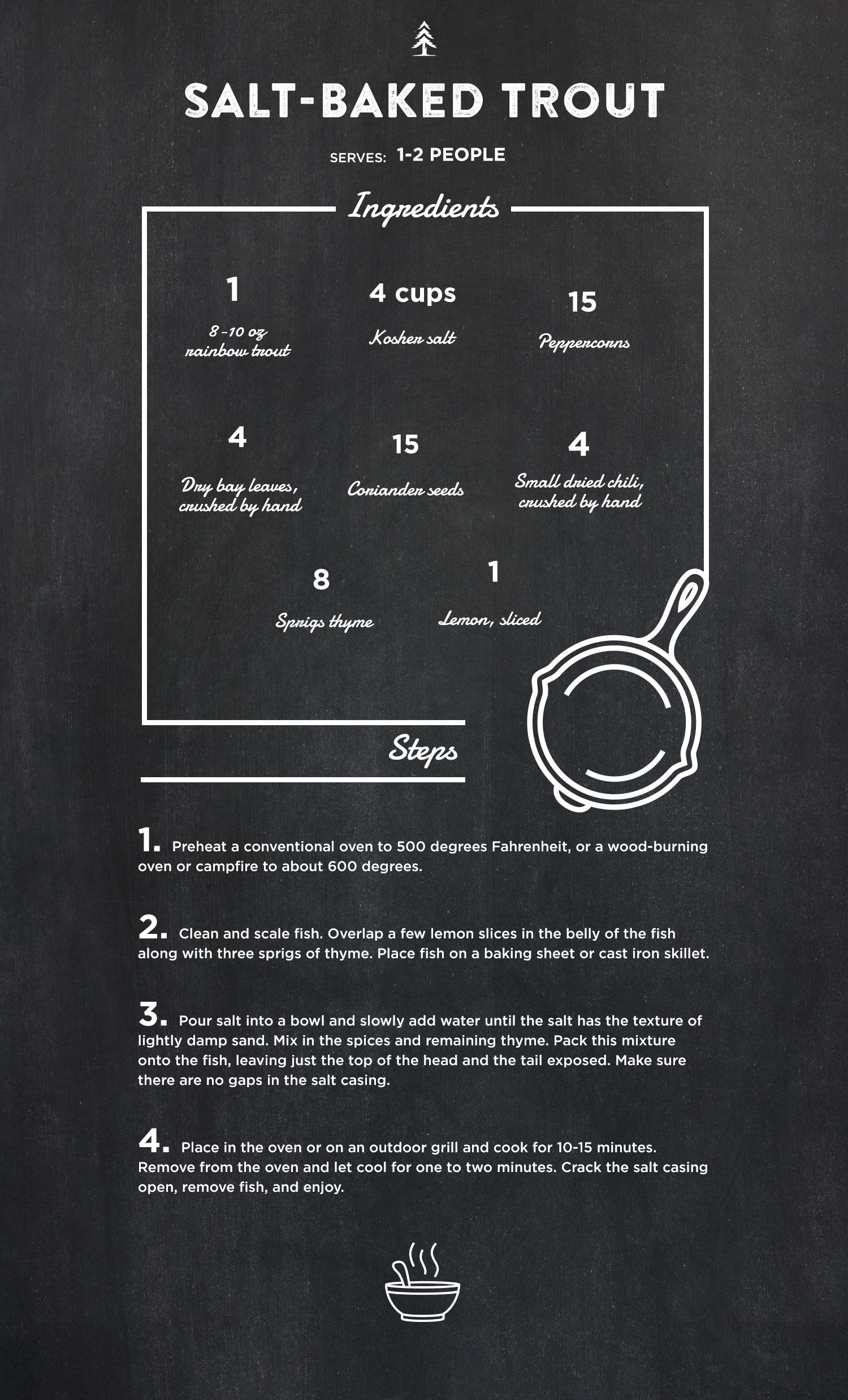
Provisions: Salt-Baked Trout

by Kelsey Boyte
Featured huckberry provisions salt baked trout kelsey boyte header

When I was asked to deep dive on the origins of salt baking fish, I signed on with a bit of naive pomposity – preparing the ingredients almost immediately, then casually procrastinating on the research, assuming the Internet held a wealth of knowledge to digest and regurgitate for you here. Wrong.

The history of salt baking, incidentally, requires a trip to the library and a fine tooth comb through annals of culinary history spanning the spice trade to the early origins of food preservation and the Persian Empire.

I narrowed things down to salt cooking itself, the practice of encasing and baking some sort of meat in a vault of salt, to a few anecdotes in the 17th century whereby the Spanish, French, Portuguese and the Italians all claim invention. 

Editors Note: In our experience, anywhere with an abundance of saltwater (and therefore salt) and fresh fish is a good spot for salt-baked trout. See: the San Juan Islands.


In an effort not to offend my neighbors, and because salt-baking is such a humble technique that it’s hardly worth fighting over who baked it first, let’s fast-forward to why it exists in the first place. The science is simple: burying and covering a fish (freshly caught Pacific Northwest trout, in this instance) in salt creates an intense moisture barrier whereby the fish basically steams in a salt cocoon and disallows moisture and flavor to evaporate.

You can apply the technique to any fish in a traditional indoor oven, outside on the grill, or even at your campsite over an open flame.

Wondering if the the fish tastes super salty? Surprisingly, no. The salt mixture turns itself into a brick wall, leaching and lending only the smallest amounts of sodium to the fish itself. You can apply the technique to any fish in a traditional indoor oven, outside on the grill, or even at your campsite over an open flame. 

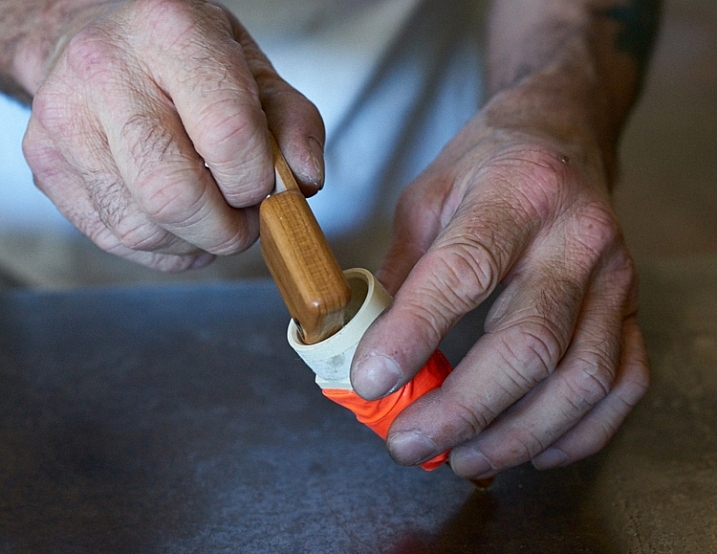
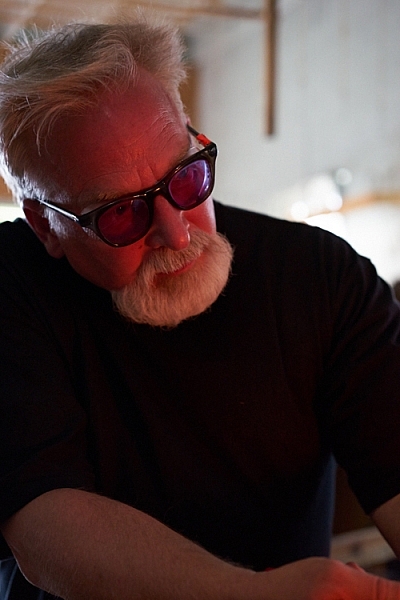
Salt baking has an air of culinary magic to it as well. The technique is surefire to draw oohs and ahhs from the peanut gallery as your crack open your salt pack and make the big reveal. Timmy Malloy (above left), executive sous chef of Tavolàta Capitol Hill in Seattle and creator of henceforth baked trout recipe, comes clean: “Breaking that crust open on the fish and revealing it all steamy and sexy is just kick ass.” This is one of those rare times when “kick ass” doesn’t have to be spendy: a three pound box of Morton’s Kosher Salt runs about $2, and if you're handy with a pole, the rest of the meal is on Mother Nature. [H]

Kelsey Boyte is a writer. She hitched her wagon to her (now) husband Shaun in 2005. Together they run Boyte Creative. Shop her Huckberry Ambassador favorites here.


19 Sep 14:41

Understanding and Working With Histograms in Adobe Lightroom

by Rob Nightingale
histograms-lightroom

If you’re using Adobe Lightroom to edit your photos, the histogram is a tool you need to get familiar with. Briefly put, a histogram is a graphical representation of the tonal values within an image. By learning how to interpret and work with histograms, you can quickly see if an image is made up of the right tonal values to create a well-exposed shot, and easily make corrections as necessary. If you already know how to interpret histograms, then you already understand the importance of editing your photos. You might want to skip to the Working with Histograms in Lightroom...

Read the full article: Understanding and Working With Histograms in Adobe Lightroom

15 Sep 17:21

New York City Is Getting a 150-Foot-Tall Climbable Staircase Sculpture

by Shaunacy Ferro

Hope you like climbing stairs that lead to nowhere.

15 Sep 15:37

10 Tips to Help You Create Unique Storytelling People Photos

by Vickie Lewis

storytelling with photos leadFor most of us, the joy of photography goes beyond taking a great image, to being able to share our pictures and experiences with our friends and family. To do storytelling with images.

How many times have you been traveling and come across someone interesting that you wanted to share with your family? Did asking for permission hold you back? Did you get a photo or series of photos that really tell the story? Were your photographs different and did each add a new perspective?

The following tips will walk you through a real-life example of how I shot a glassblower in his shop and created a series of unique photos to tell his story.

#1 – Get clear on your goals for the shoot

Something attracted you to this person or situation. What peaked your interest? Do you like the subject’s purple hair? Do you love photographing people having fun? Do you want to try to capture the beautiful light on someone’s face? Or perhaps you love dance and would like to capture a dancer in a beautiful portrait?

Here are my thoughts on the glassblower. What I wanted to photograph, what I wanted to do and why I wanted to do it.

Why I wanted to photograph the glassblower:

I have been a Canon user for a long time and Sony lent me one of their new cameras and two lenses (50mm and a 90mm) for a trial run. I had already spent some time playing with the camera by photographing squirrels and I was ready to try something with a little bit more potential.

storytelling with photographs

While on vacation in a small beach town, I noticed a small shop run by a local glass blower. He made beautiful glass as well as offered lessons to tourists. I liked the idea of photographing the glass blower for several reasons:

  • He makes beautiful art.
  • The workshop is interesting with a lot of picture possibilities.
  • I could shoot available light in his workshop.
  • He was there all day doing interesting things which means I had a lot of time to shoot.
  • He seemed very proud of his work.
  • He seemed to have an extroverted personality and a sense of showmanship.

What I wanted to do:

I wanted to be able to photograph him as he worked and interacted with others.

My most important goal was to have the opportunity to shoot something pretty simple as I learned to drive this new camera. I liked this situation because I could shoot available light and there was enough action and movement that I could test out the different autofocus settings as well as the creative features of the camera.

I also wanted to be able to shoot, leave to download my images, and come back to the same situation later to tweak my approach. I had found my subject, I just needed to get permission.

storytelling with photos

#2 – Be honest about what you want and don’t be afraid, just ask!

A lot of photographers are shy about asking friends, relatives, and strangers if they can take their photo. Asking is easy if you are honest, sincere, and you know why you want to photograph the person.

The truth is, some people hate to have their photo taken and so be prepared for a no. If someone shies away from the idea, perhaps they require more convincing. Some people actually enjoy being persuaded, so push gently after the first no. There could be a yes hiding behind a little bit of shyness.

And, if you get a no, remember that it’s never personal. Some people are just going to say no. Sometimes the person being asked has no idea why anyone would want to photograph them. They are afraid you are going to make them look dumb and they can’t imagine why anyone would want to take their photograph. That is why step #1 is important.
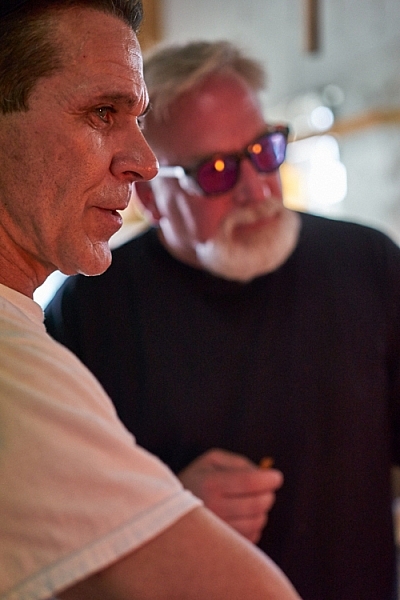
storytellings with photographs

Before you ask permission, get clear on what you want so you can explain it and overcome any objections. Yes, it’s partly sales, but if you are sincere and enthused and truly want to photograph them, most of the time they will feel flattered and say yes.

How I approached the glassblower

When I approached John to ask him if I could photograph him, I had my camera over my shoulder. I told him his work was beautiful and I’d love to take some photographs. He beamed. He loved the attention.

Note: I didn’t run into the shop taking pictures without permission. I intentionally had my camera, though, so he knew from the start that I was interested in taking photographs. Having your camera on your shoulder, hanging loosely is non-threatening. If he had an aversion to having his picture taken, he would have felt much more relaxed than if I had put a camera in his face. This isn’t paparazzi. It’s about connecting with someone you want to spend some time with.

I told him the truth. That I was in town visiting and I wanted to learn how to use this new camera. I smiled and told him I had already photographed every squirrel in town and was ready to shoot some people. He laughed.

telling stories with photographs

Being able to put people at ease is a great step toward getting a yes. I find it easier to connect with people as a student than a professional. When I approach people as a professional they put up more of a front. When I’m just trying to learn my camera, the pressure is off the subject to do or be anything.

If you are looking for great vacation photos and stories to share with your friends and family, say so. Imagine if a traveler approached you, said you looked amazing and would love to show people back home what people here looked like? You’d be flattered! Of course!

I also explained that I was testing the camera and I might shoot for awhile, go look at pictures, then come back again to shoot some more. Would that be okay? He got excited over the attention and immediately started to share photos another photographer had taken. He loved the idea of being photographed and I had a subject.

#3 – Be considerate

You are shooting in someone else’s home, yard, or business, so be courteous. If a customer comes in, the customer comes first. Always take the back seat. It’s a privilege when someone allows you to take their photo. Remember that and you will always be welcome.

telling stories with photos

#4 – Tell your subject to pretend you aren’t even there

First of all, you will get better pictures and expressions if your subject keeps busy doing what they love. You can watch how they do it and begin to anticipate their next move. Secondly, especially if you are working in a place of business, you don’t want to distract them from their livelihood. If you do, they will grow impatient and suggest the session is over.

I often get close to shoot and then back away for awhile. It relaxes the subject and keeps them off guard. It truly allows them to forget about me and get into their zone.

how to tell stories with photographs

#5 – Really work the situation

Create a variety of shots, with the goal that each shot adds a different element or idea to the story. Walk around, shoot high and low, and use a variety of lenses. Work on cleaning up the background and capturing great expressions. Look for opportunities and unique ways of showing it. Experiment. Have fun. Get creative.
telling stories with photographs

#6 – Shoot portraits

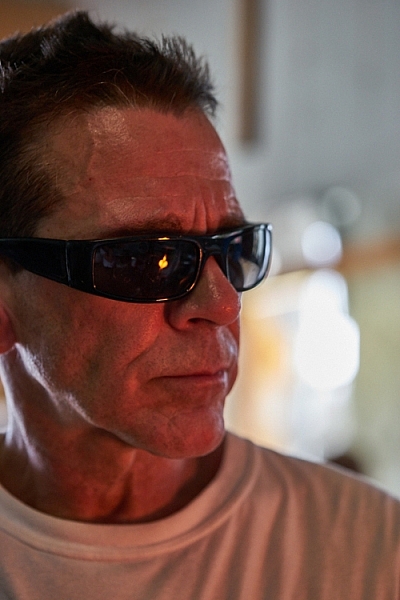
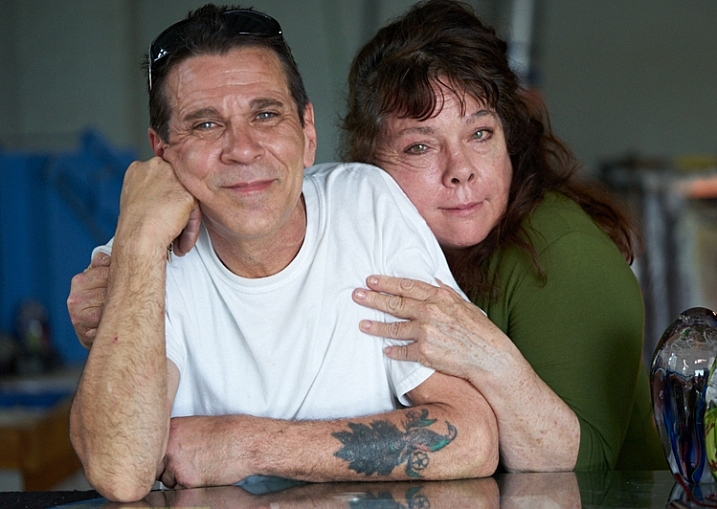
Look for different expressions, light, and angles. Shoot tight and shoot loose. Include the environment in some shots. Work on taking candids as well as photos with the subject looking at the camera. I loved the light on John’s face when he was looking at the fire and how it reflected in his glasses.

telling stories with photographs

Remember, variety is the key. Notice how many different expressions John has in the different photos in this article. Each expression helps to add an element to the story.
telling stories with photographs

#7 – Shoot action shots

Tell the story of what the person does. Try shooting the same activity in different ways.

telling stories with photos telling stories with photographs

#8 – Shoot close-ups and details

telling stories with photos telling stories with photographs

#9 – Shoot hands

telling stories with photographs

#10 – Photograph relationships

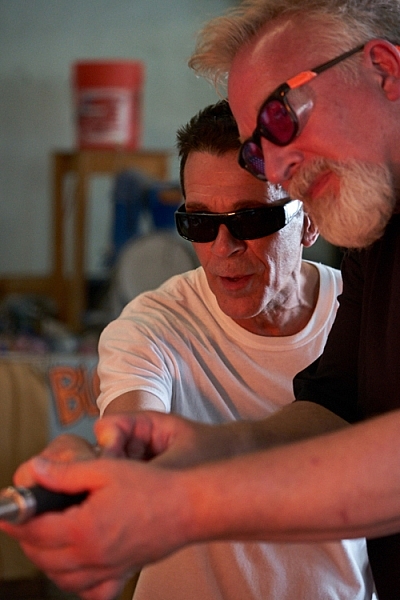
Try to capture the relationship your subject has with other people. In these photos, a tourist stopped by to blow his own piece of glass.

telling stories with photographs telling stories with photos

You now have the tools to approach strangers to ask them if you can spend time with them taking pictures. These rules apply to every situation, whether it’s a musician in the street, your child’s ballet class, or a homeless person. Remember to know your intention and be honest with the subject. Sincerity has opened many, many doors for me.

Once you are inside the door, really work your subject to tell the story. Try different angles and remember to shoot close as well as far away. Shoot portraits, close-up shots, focus on recording what the subject is doing, as well as their relationships.

What story would you love to shoot? Do you know a musician in your neighborhood or a craftsperson? Share your thoughts below, go out and shoot and then share your images in the comments below.

The post 10 Tips to Help You Create Unique Storytelling People Photos by Vickie Lewis appeared first on Digital Photography School.


14 Sep 15:10

The Wide, Delicious World of Pancakes, and How to Make Them Right

by Claire Lower on Skillet, shared by Andy Orin to Lifehacker

In terms of morning-time comfort, nothing approaches the pancake. It’s literally a food blanket that says “come here, my child, and let me wrap you in my warm, carby body. You are safe now.” Almost every culture seems to have its own version of the breakfast staple, and we’ve rounded up some of the most delicious ways to eat them, whether you call them “flapjacks,” “pancakes,” or “crepes.”

Read more...

14 Sep 15:03

Clip on “freedom” from one of the greatest movies ever made, Easy Rider (VIDEO)

by Editor

Easy Rider is fundamentally a libertarian movie.

George: You know, this used to be a helluva good country. I can’t understand what’s gone wrong with it.

Billy: Huh. Man, everybody got chicken, that’s what happened, man. Hey, we can’t even get into like, uh, second-rate hotel, I mean, a second-rate motel. You dig? They think we’re gonna cut their throat or something, man. They’re scared, man.

George: Oh, they’re not scared of you. They’re scared of what you represent to ’em.

Billy: Hey man. All we represent to them, man, is somebody needs a haircut.

George: Oh no. What you represent to them is freedom.

Billy: What the hell’s wrong with freedom, man? That’s what it’s all about.

George: Oh yeah, that’s right, that’s what it’s all about, all right. But talkin’ about it and bein’ it – that’s two different things. I mean, it’s real hard to be free when you are bought and sold in the marketplace. ‘Course, don’t ever tell anybody that they’re not free ’cause then they’re gonna get real busy killin’ and maimin’ to prove to you that they are. Oh yeah, they’re gonna talk to you, and talk to you, and talk to you about individual freedom, but they see a free individual, it’s gonna scare ’em.

Billy: Mmmm, well, that don’t make ’em runnin’ scared.

George: No, it makes ’em dangerous.

Yes it does.

13 Sep 15:37

Colin Chapman's 1979 Range Rover Classic

Delivered new to Lotus' founder, Colin Chapman's 1979 Range Rover Classic is an outstanding example of the original Range. Finished in Bahama Gold with a tan interior, this particular unit...

Visit Uncrate for the full post.
13 Sep 15:35

Airstream Basecamp Trailer

It began as a Nissan collab nearly a decade ago. Now the Airstream Basecamp Trailer is ready for the road. This mini-sized pull behind is big on features, with a...

Visit Uncrate for the full post.
13 Sep 15:28

Where do you fit?

13 Sep 14:58

My Town: Julian Van Winkle’s Louisville, Kentucky

by ehutchison

Today, Julian Van Winkle—the president of the Old Rip Van Winkle Distillery, like his father and grandfather before him—travels the world on behalf of his family’s fanatically popular bourbon brand. But Louisville has always been home. In some ways, the city is a lot like it was in his boyhood—bourbon and horse racing still reign. In others, though, it’s virtually unrecognizable. “The city sits on the Ohio River, but when I was a kid, it was all industrial down there with no access to the river,” he says. “Now the area is all park space.” The downtown is booming, too. And the restaurant scene is first class. In honor of national bourbon month, we asked Van Winkle to take us on a tour of his whiskey-soaked hometown. Here’s where you’ll find him:

700_GG0412_JulianVanWinkle_02_1.jpg
Photos by Joe Pugliese


9:00 a.m.
Smart Start: “We don’t eat out a lot because my wife Sissy is a really good cook. But there are some great breakfast spots near our neighborhood. There’s one called Toast, in the eastern part of the city—what people are now calling NuLu. For a while it was kind of a broken-down neighborhood, but in the last 10 years it has really come back. Wild Eggs is another easy place for us to get to in the mornings. And Noosh Nosh serves my daughters’ barrel-aged maple syrup.”

cityportrait-aug'13_WEB.jpg
Photo by Tec Petaja


11:00 a.m.
Get Outside: “After breakfast we might go on a bike ride or walk the dog. We have seven grandkids in the city, and they live fairly close by, so they often join us. Cherokee Park, which is one of the city’s Frederick Law Olmsted parks, is about ten to fifteen minutes from us. We have a mini dachshund named Chip. We used to have three dogs. One was a mutt named Scout. She was a beagle lab mix and looked like ‘Honey I Shrunk the Lab.’ She had actually been abandoned in Cherokee Park when we found her.”

OlmsteadParks.org_WEB.gif
Cherokee Park. Photo courtesy of OlmsteadParks.org

“If we don’t go to the park, I might take a bike ride. I’ve got a road bike and some of our neighborhoods are fairly hilly. It’s good exercise and a fun way to burn off some of the calories from breakfast. Also, in Louisville, there is a system called Parklands, which has created a bike path that goes around the whole city. It follows a creek where you can canoe or kayak. (Editor’s note: The final section of the Parklands’ Louisville Loop Trail opens this weekend.)”

theparklands.org_WEB.gif
On the Louisville Loop. Photo courtesy of theparklands.org


1:00 p.m.
Fill up: “Lunch depends on whether I’m with my wife or one of my kids. If I’m with my son or one of sons-in-law we go to the Frankfort Avenue Beer Depot. It used to be just a place you bought kegs, but now, it’s a really good barbecue place with tons of draft beer.”

FABD.comWEB.gif
Photo courtesy of FABD


3:00 p.m.
Play Explorer: “If I don’t have a golf game, I might take another walk—maybe hang with the kids and grandkids. Louisville is right on the Ohio River. The Falls of the Ohio is actually on the Indiana side, but there are lots of fossils to be found.”

“On my side of town, there is a historic house where George Rogers Clark lived called Locust Grove. My dad is one of the people who worked to have it preserved. It sits on several acres within the Indian Hills neighborhood. I’ve been on the board, my dad too, and my sister Sally is now. It’s a nearby easy place for us to go. Great for walking. Jefferson Forest is another favorite, but it’s a drive.”

learn-news--locustgrove.org_WEB.gif
Photo courtesy of Locust Grove


7:00 p.m.
Let’s Eat: “We travel a lot for the business, so we like to stay in the neighborhood when we’re home. Bistro 1860 is close by—right there in a popular area at the bottom of Brownsborough Road. Michael Crouch is the chef. They have a good cocktail bar, too. Another place we like is Anoosh Bistro, which is run by chef Anoosh Shariat. The spices and the flavors are so good. He’ll often fix us something not on the menu—just whatever is on his mind. The restaurant scene really is incredible. If my wife and I are going to go out for an occasion, Ed Lee’s 610 Magnolia is amazing. Lilly’s, too. And Anthony Lamas’ Seviche. All these chefs have been nominated for James Beard awards. And there’s a place called Rye that’s really more of a bar, but is a good restaurant as well.”

lilysbistro.com-drinks_web_0.gif
Photo courtesy of Lily's 

photo5-anooshbistro.com_WEB.gif
Photo courtesy of Anoosh Bistro


10:00 p.m.until
Nightcap: “Usually at the end of the day, I’ll have a sip of bourbon at home, but in summer, shamefully, I often switch to vodka tonic.”


13 Sep 14:16

The Irresistible Time-Warp Motels of Wildwood, New Jersey

by Alison Zavos

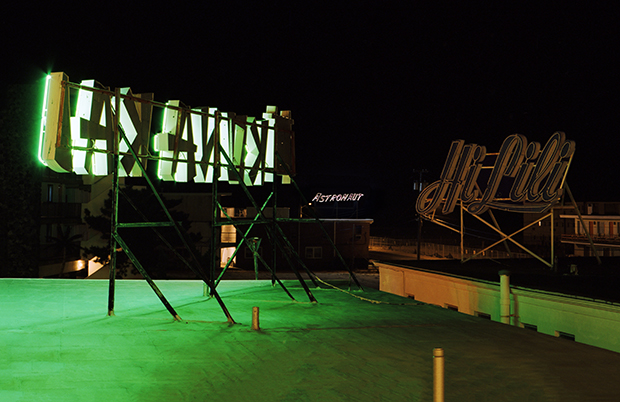
mark_havens_out_of_season_hi_res_24

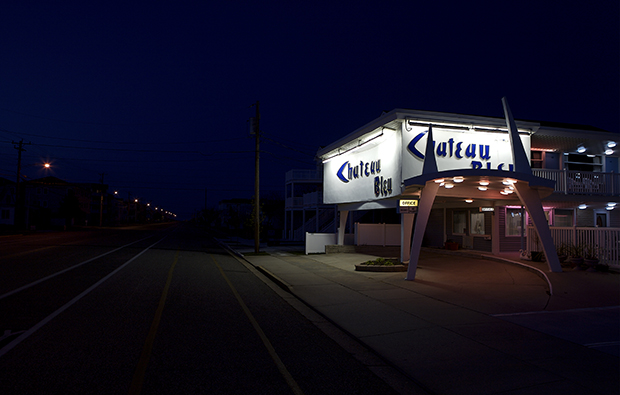
mark_havens_out_of_season_hi_res_7

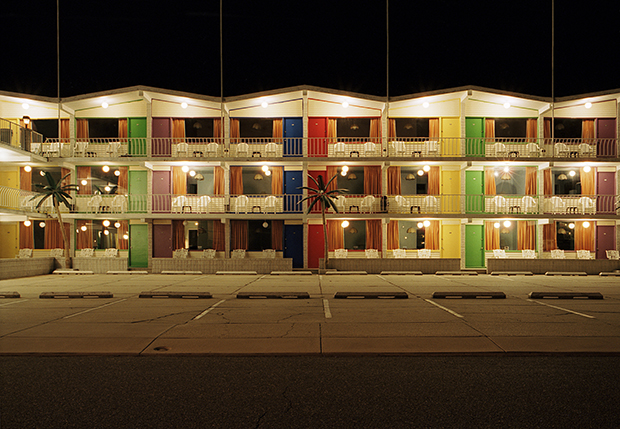
Mark Havens didn’t set out to be a photographer; he picked up a camera out of necessity. With the dawn of the 21st century, he saw the motels of Wildwood, New Jersey, where he had spent countless childhood summers, razed to the ground. His intention was to preserve his own memories before they disappeared, and he did so the only way he knew how: he hit the road and learned how to take pictures somewhere along the way.

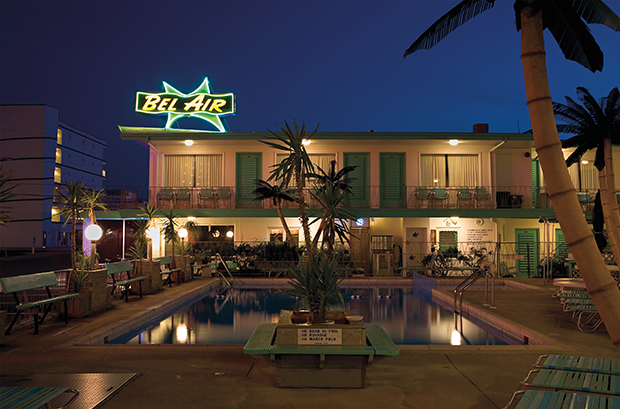
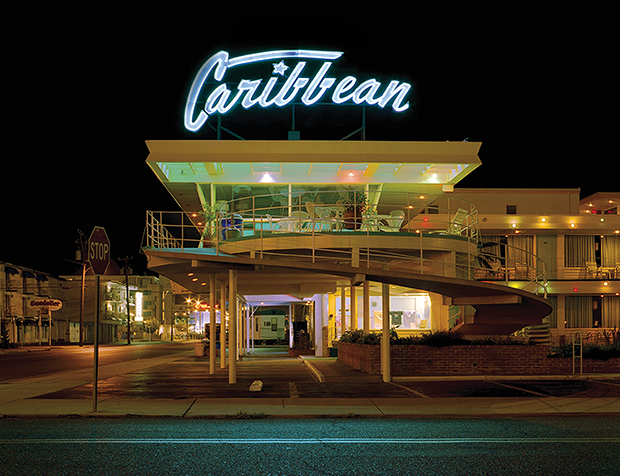
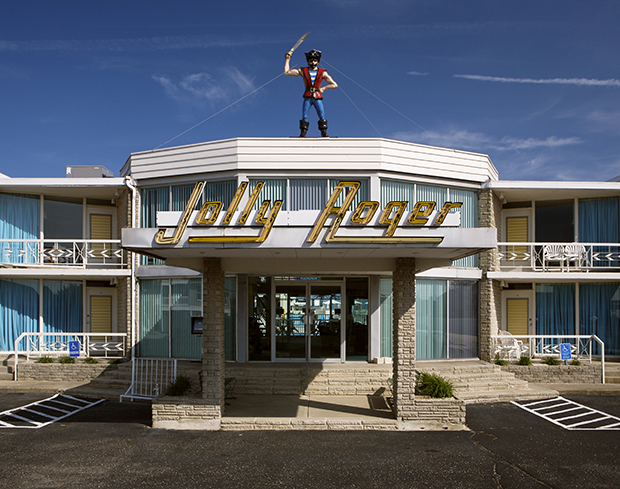
In the 1950s and 1960s, some 300 motels emerged along the beachfront of Wildwood. They all followed a specific and familiar formula; usually, a building in the shape of a U or an L with a pool smack-dab in the middle.

They were inexpensive but in their own special way, they were also indulgent. They had themes; one was modeled after an extravagant Caribbean vacation; another was a space-age daydream straight from the Jetsons. The shining lights could be seen glittering from the Garden State Parkway.

In the words of Jamer Hunt of the Parsons School of Design, who writes a beautiful essay for Havens’s book Out of Season, the Wildwood motels were “built on cotton-candy dreams, cinder blocks, and a few thin coats of paint.”

Havens shot in the fall after the families of June, July, and August had packed their bags and left the place behind. Havens chased down these motels sometimes on the tails of condo developers; sometimes the bulldozers and wrecking balls got there first. He photographed the motels over a decade.

It’s easy to feel sentimental about Wildwood, but Havens never slips into the maudlin. The wit and delight with which these motels were built rings through clearly in these images, taken so many decades later. To mourn them feels unfair.

Architecture critic Joseph Giovannini, in his essay for the book, calls Wildwood “intellectually innocent.” For that reason, Havens is the perfect person for the job of preserving them in pictures. Just as he wasn’t trained as a photographer, those who built these magic-infused buildings weren’t architectural scholars. They were people with the hope of making something fun, something affordable, something lively.

Find Out of Season: The Vanishing Architecture of the Wildwoods here.

mark_havens_out_of_season_hi_res_1

mark_havens_out_of_season_hi_res_3

mark_havens_out_of_season_hi_res_9

mark_havens_out_of_season_hi_res_12

mark_havens_out_of_season_hi_res_18

mark_havens_out_of_season_hi_res_22

mark_havens_out_of_season_hi_res_23

mark_havens_out_of_season_hi_res_25

All images © Mark Havens

The post The Irresistible Time-Warp Motels of Wildwood, New Jersey appeared first on Feature Shoot.

12 Sep 01:46

Rolex The Apple Killer

by Ewan Spence, Contributor
The Apple Watch strategy has been tweaked, and much of the evidence was on stage at the September 9th event. For all the talk of the Apple Watch being a fashionable status symbol, Tim Cook and his team had to be satisfied with second place after Rolex. Apple also changed strategies, no doubt from the lessons learned in the fight against the Swiss watch manufacturer.
09 Sep 12:11

A Dog Is Re-Elected Mayor for a Third Term, Proving Politicians Are Useless

by Editor
Ready to be sworn in.
Pickles in his congressional office.

William F. Buckley famously said that he’d rather the first 400 people in the Boston phone book run things than the Harvard faculty. But I’ll do one better. Let’s just elect dogs to Congress. They are generally friendly, cuter for the most part than the average congressperson, and less likely to pee on the rug than Teddy Kennedy. (Sorry Teddy, you’re dead but your legacy lives on.)

(From The Antimedia)

…one Minnesota town is doing politics right — they just re-elected a dog to his third term as mayor.

Duke, a nine-year-old Great Pyrenees, was first elected mayor of Cormorant, Minnesota in 2014. The first time he won, it was by accident. The small town of just over 1,000 people held an election in which residents could pay $1 to vote. Duke won the race with twelve write-in votes and was treated to an official inauguration.

Click here for the article.

07 Sep 16:17

This Self-Made Woman Turned A Wooden Wagon Into A Mobile Ice Cream Shop And Changed Her Life

by Denise Restauri, Women@Forbes
Robyn Sue Fisher is the founder of Smitten Ice Cream. She's re-thinking ice cream. Her story starts with a Stanford MBA, a 40-pound machine bungee corded to a wooden wagon that she hauled around the streets of San Francisco selling made-to-order ice cream, hoping to not get arrested.
07 Sep 12:25

Random Fact #5

07 Sep 12:20

What Makes Vertigo the Best Film of All Time? Four Video Essays (and Martin Scorsese) Explain

by Colin Marshall

Vertigo is the greatest motion picture of all time. Or so say the results of the latest round of respected film magazine Sight & Sound‘s long-running critics poll, in which Alfred Hitchcock’s James Stewart- and Kim Novak- (and San Francisco-) starring psychological thriller unseated Citizen Kane from the top spot. For half a century, Orson Welles’ directorial debut seemed like it would forever occupy the head of the cinematic table, its status disputed only by the unimpressed modern viewers who, having attended a revival screening or happened across it on television, complain that they don’t understand all the critical fuss. The new champion has given them a different question to ask: what makes Vertigo so great, anyway?

Like Citizen Kane in 1941, Vertigo flopped at the box office in 1958, but Hitchcock’s film drew more negative reviews, its critics sounding baffled, dismissive, or both. Even Welles reportedly disliked it, and Hitchcock kept it out of circulation himself between 1973 and his death in 1980, a period when cinephiles — and cinephile-filmmakers, such as a certain well-known Vertigo enthusiast called Martin Scorsese — regarded it as a sacred document. Only in 1984 did Vertigo re-emerge, by which point it badly needed an extensive audiovisual restoration. It received just that in 1996, speeding up its ascent to acclaim, in progress at least since it first appeared on the Sight & Sound poll, in eighth place, in 1982.

“Why, after watching Vertigo more than, say, 30 times, are we confident that there are things to discover in it — that some aspects remain ambiguous and uncertain, unfathomably complex, even if we scrutinize every look, every cut, every movement of the camera?” asks critic Miguel Marías in an essay on the film at Sight & Sound. He lists many reasons, and many more exist than that. But nobody can appreciate a work with so many purely cinematic strengths without actually watching it, which perhaps makes the video essay a better form for examining the power of what we have come to recognize as Hitchcock’s masterpiece.

“Only one film had been capable of portraying impossible memory — insane memory,” says the narrator of Chris Marker’s essay film Sans Soleil: “Alfred Hitchcock’s Vertigo.” B. Kite and Alexander Points-Zollo’s three-part “Vertigo Variations” at the Museum of the Moving Image uses Marker’s interpretation, as well as many others, to see from as many angles as possible Hitchcock’s “impossible object: a gimcrack plot studded with strange gaps that nonetheless rides a pulse of peculiar necessity, a field of association that simultaneously expands and contracts like its famous trick shot, a ghost story whose spirits linger even after having been apparently explained away, and a study of obsession that becomes an obsessive object in its own right.”

The popular explainer known as the Nerdwriter looks at how Hitchcock blocks a scene by breaking down the visit by Stewart’s traumatized, retired police detective protagonist to the office of a former college classmate turned shipbuilding magnate. The conversation they have sets the story in motion, and Hitchcock took the placement of his actors and his camera in each and every shot as seriously as he took every other aspect of the film. Color, for instance: another video essayist, working under the banner of Society of Geeks, identifies Hitchcock’s use of rich Technicolor as a mechanism to heighten the emotions, with, as critic Jim Emerson writes it, “red suggesting Scottie’s fear/caution/hesitancy when it comes to romance, and its opposite green, suggesting the Edenic bliss (and/or watery oblivion) of his infatuation.” Ava Burke isolates another of Hitchcock’s visual devices in use: the mirroring that fills the viewing experience with visual echoes both faint and loud.

When he got to work on Vertigo, Hitchcock had already made more than forty films in just over three decades as a filmmaker. Though often labeled a “master of suspense” during his lifetime, he instinctively learned and deeply internalized a vast range of filmmaking techniques that film scholars, as well as his successors in filmmaking, continue to take apart, scrutinize, and put back together again. This most re-watchable of his pictures (and one that, according to several of the critics and video essayists here, transforms utterly upon the second viewing) makes use of the full spectrum of Hitchcock’s mastery as well as the full spectrum of his fixations. Whether or not you consider it the greatest motion picture of all time, if you love the art of cinema, you by definition love Vertigo.

Related Content:

22 Free Hitchcock Movies Online

Alfred Hitchcock’s Seven-Minute Editing Master Class

The Eyes of Hitchcock: A Mesmerizing Video Essay on the Expressive Power of Eyes in Hitchcock’s Films

5 Hours of Free Alfred Hitchcock Interviews: Discover His Theories of Film Editing, Creating Suspense & More

Abandoned Alternate Titles for Two Great Films: Kubrick’s Dr. Strangelove and Hitchcock’s Vertigo

Watch 25 Alfred Hitchcock Trailers, Exciting Films in Their Own Right

Martin Scorsese Reveals His 12 Favorite Movies (and Writes a New Essay on Film Preservation)

The 10 Greatest Films of All Time According to 846 Film Critics

Based in Seoul, Colin Marshall writes and broadcasts on cities and culture. He’s at work on a book about Los Angeles, A Los Angeles Primer, the video series The City in Cinema, the crowdfunded journalism project Where Is the City of the Future?, and the Los Angeles Review of Books’ Korea Blog. Follow him on Twitter at @colinmarshall or on Facebook.

What Makes Vertigo the Best Film of All Time? Four Video Essays (and Martin Scorsese) Explain is a post from: Open Culture. Follow us on Facebook, Twitter, and Google Plus, or get our Daily Email. And don't miss our big collections of Free Online Courses, Free Online Movies, Free eBooksFree Audio Books, Free Foreign Language Lessons, and MOOCs.

07 Sep 12:12

Watch TED Curator Chris Anderson's Top Five TED Talks

by Mihir Patkar

TED talks are a great way to learn something new in an entertaining presentation. In a recent quora thread, TED curator Chris Anderson was asked to rate his favorite TED talks, and he’s seen a ton. Here were his top five.

Read more...

07 Sep 12:12

Millennials Go Minimal: The Decluttering Lifestyle Trend That Is Taking Over

by Deborah Weinswig, Contributor
Although it is not a new concept, the minimalist lifestyle is trending across the United States. The movement has inspired people to move into tiny homes, cut their wardrobes and donate their possessions. Many entrepreneurs have picked up on this and are figuring out how they can capitalize on the minimalism and decluttering trends.
04 Sep 17:10

Nobody is better than Chuck Norris

02 Sep 13:02

The Industries Where Drones Could Really Take Off [Infographic]

by Niall McCarthy, Contributor
In recent years, drone technology has attracted attention due toits use in countless conflicts around the world. Even though unmanned aerial vehicles (UAVs) have proven hugely successful in military service for decades, they alsohold enormous commercial potential. Companies arejust beginning to unlock the numerous benefitsof drones, experimenting with everything fromcrop-dusting [...]
31 Aug 14:46

BaseTrip Gives You Travel Information About Any Country You’re Visiting

by Kristin Wong

Especially when you’re visiting a new, unfamiliar country, you want to be prepared for your trip. BaseTrip tells you everything you should know about traveling to your destination, from tipping etiquette to vaccinations to average internet speeds.

Read more...

31 Aug 12:35

Map Shows Countries As Named In Their Own Languages

by Zeon Santos

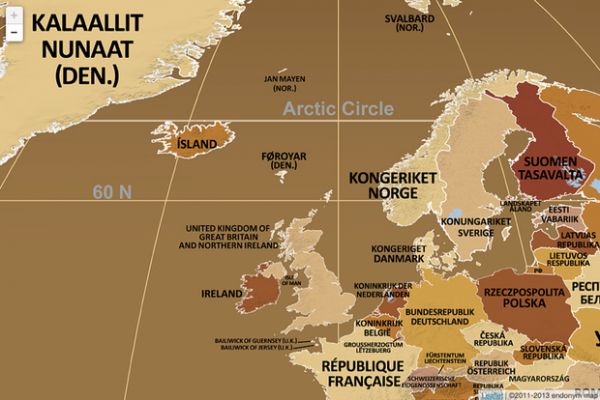
People tend to forget that Japan isn't called Japan in Japanese (it's called Nihon) or that Germany is actually the Budesrepublik Deutschland to the Germans, but these endonyms are an important part of a country's identity.

An endonym is the name for a place, site or location in the language of the people who live there. These names may be officially designated by the local government or they may simply be widely used.

And yet the average map doesn't include these endonyms, so people are left wondering what a suomen tasavalta or rzeczpospolita polska is when they see it written somewhere.

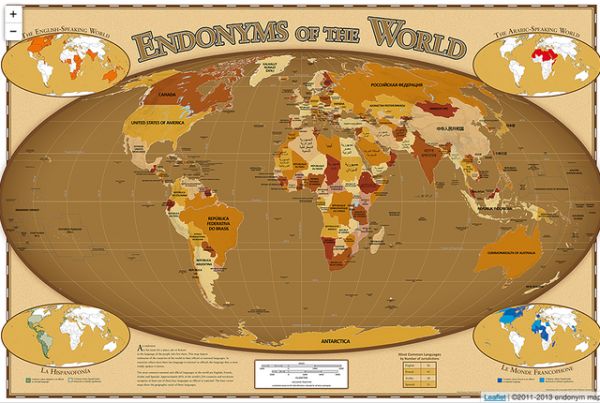
At Endonym Map you can see what all the countries of the world call themselves in their official or national language, on a large, nice looking map which the site is constantly striving to improve:

The vast majority of names come from the United Nations Group of Experts on Geographic Names and the U.N.'s database of country names. Other sources include the CIA World Fact Book, Wikipedia and various government websites.

One big change I am exploring is the inclusion of minority language endonyms in some fashion. I would love to put all three official languages for Belgium on the map, or both Ireland and Éire for that matter. But with the limited space on a fixed map, there's just not room to do it fairly for all countries. And it bugs me to no end that places like South Africa and India have a dozen or so recognized languages, but there's only room on the map for one. But I am working on it and hopefully will come to a solution soon.

In the meantime, please enjoy the map!

-Via mental_floss

29 Aug 16:25

Uncovering 60+ Years of Work by One Historic Photographer

by Ellyn Kail

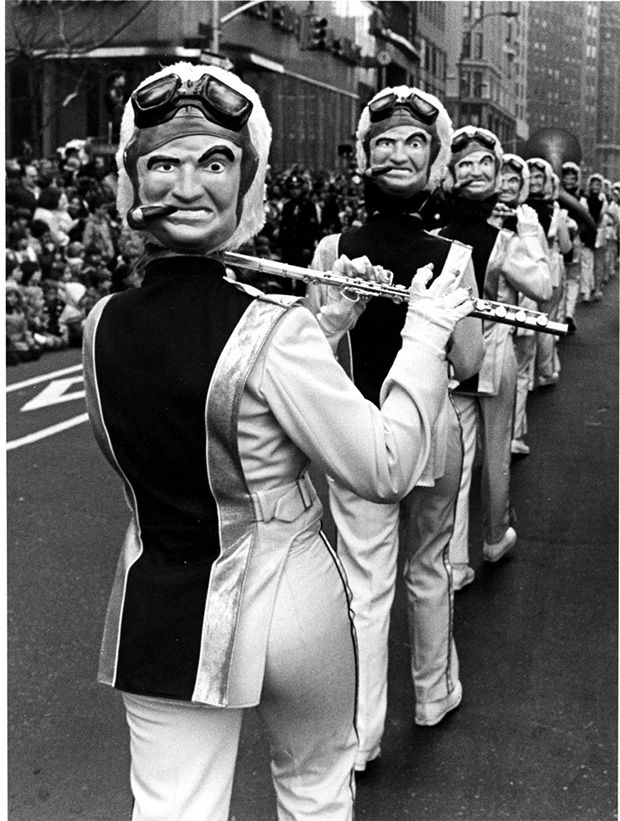
BelushiParade

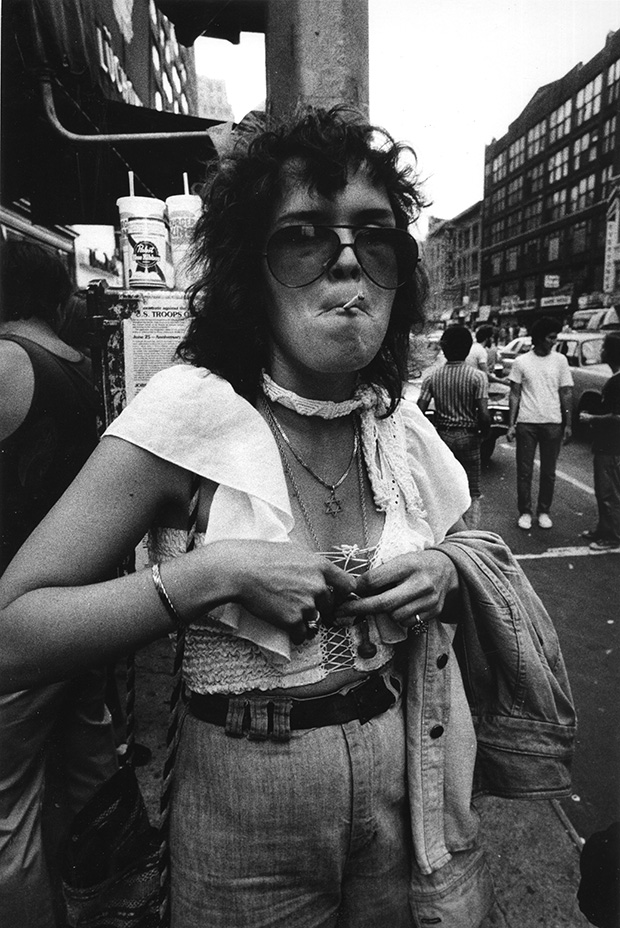
PotLadywithStarofDavid

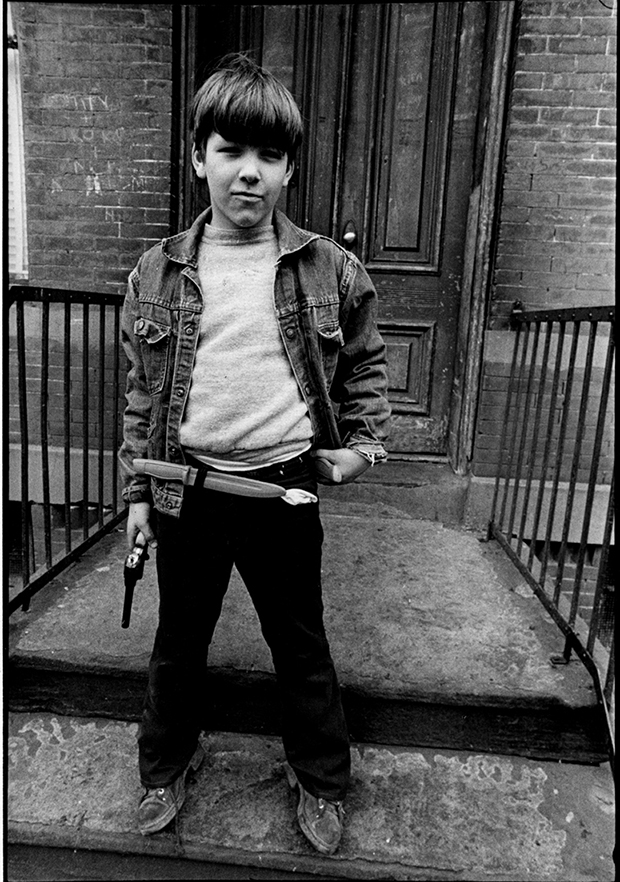
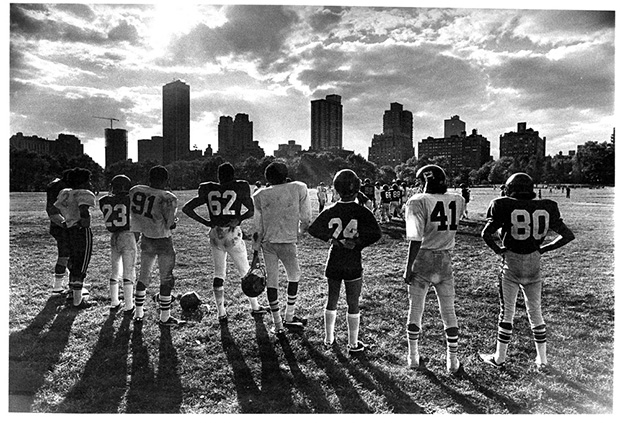
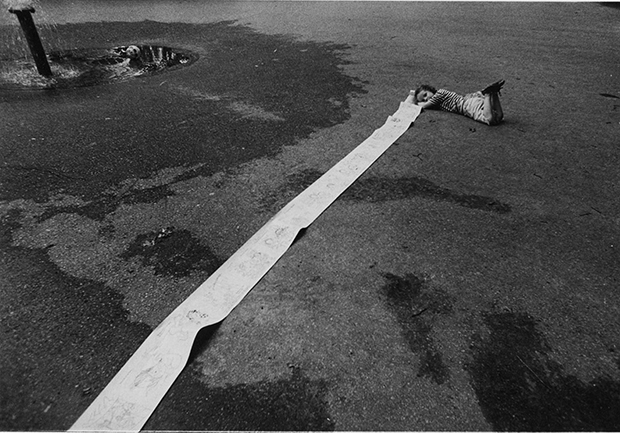
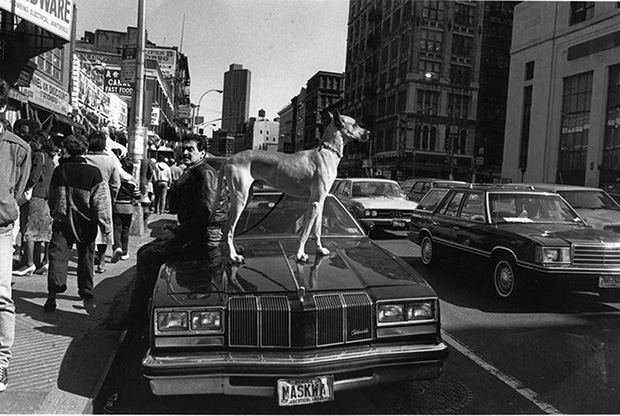
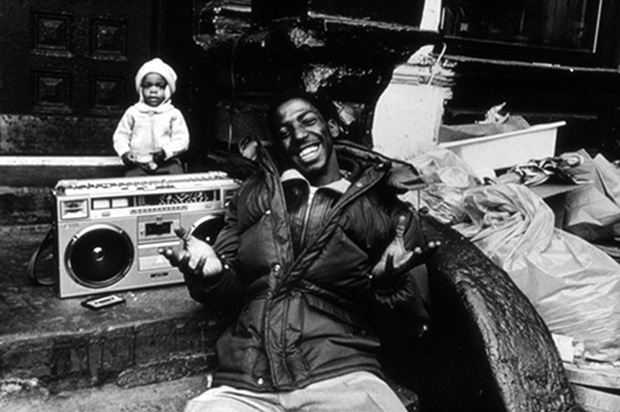
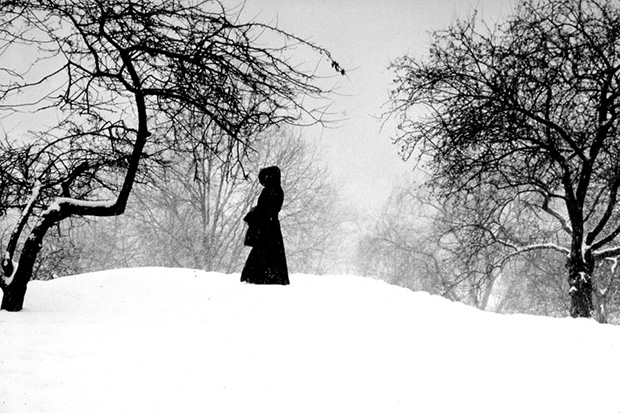
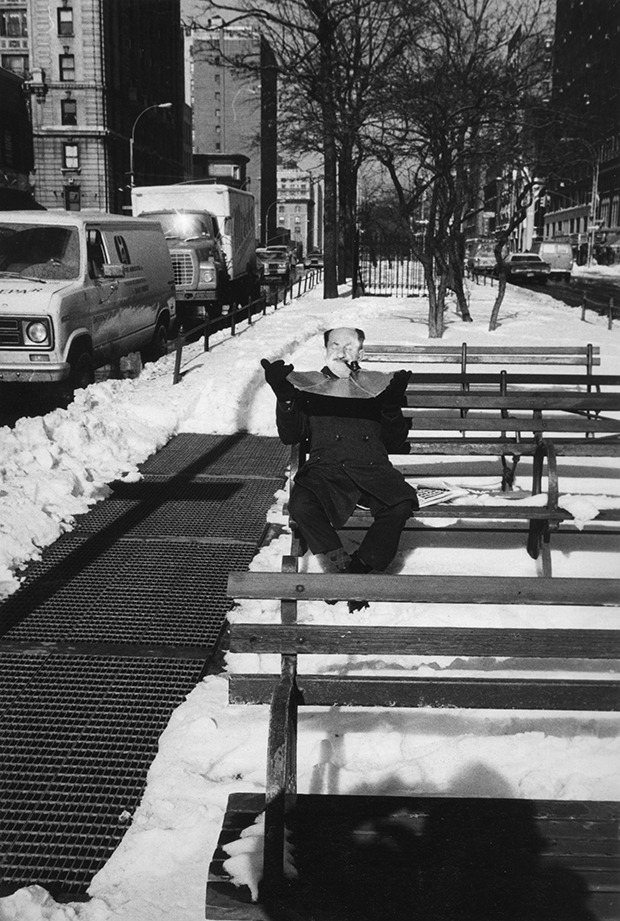
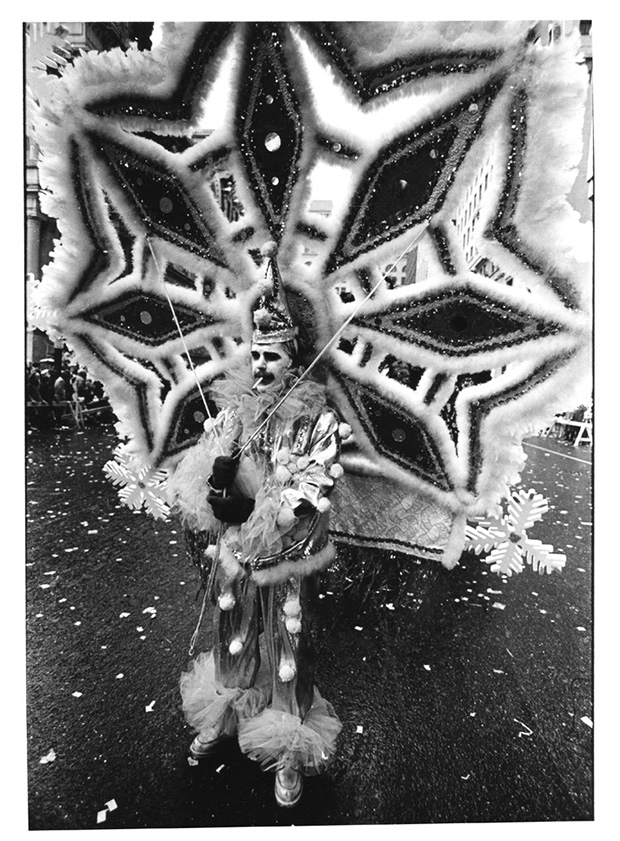
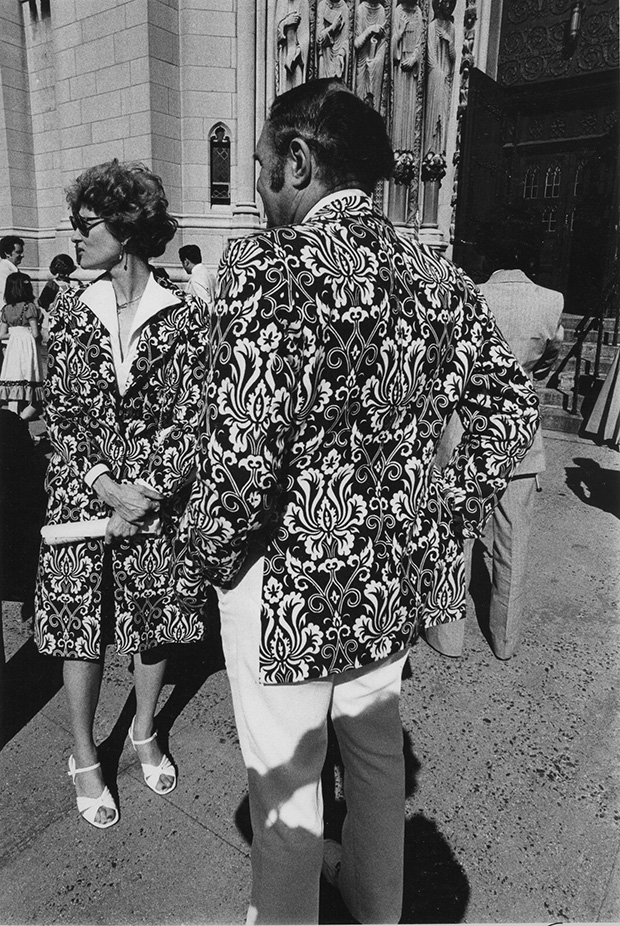
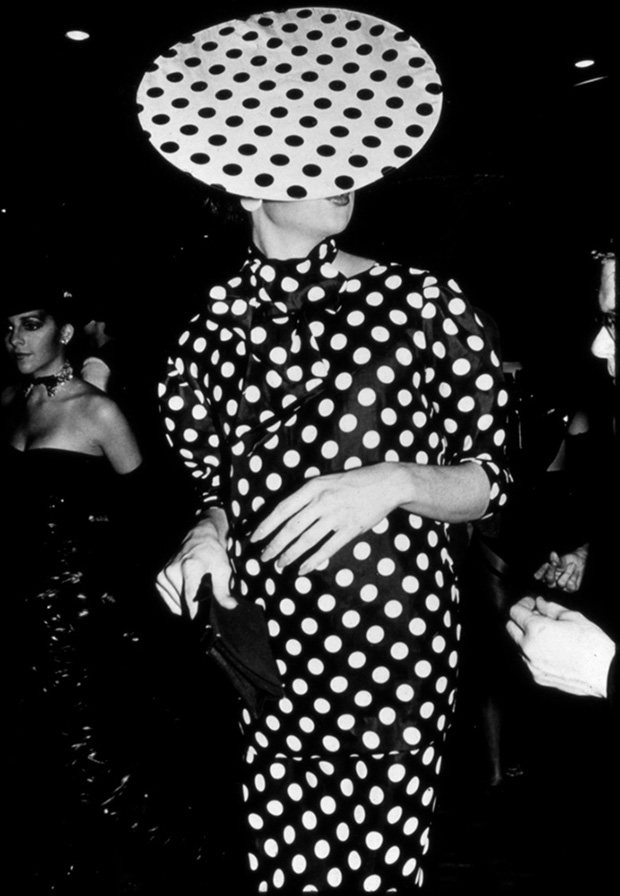
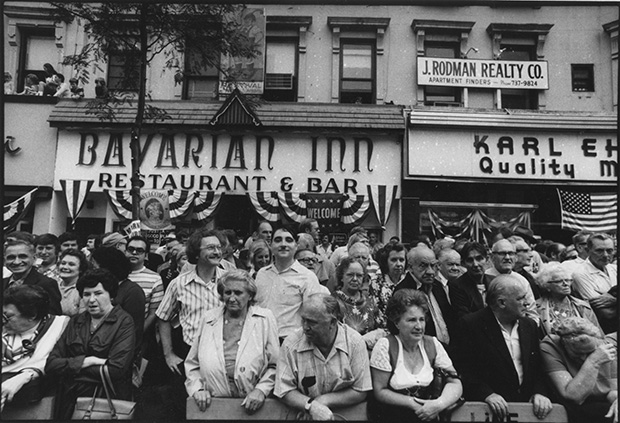
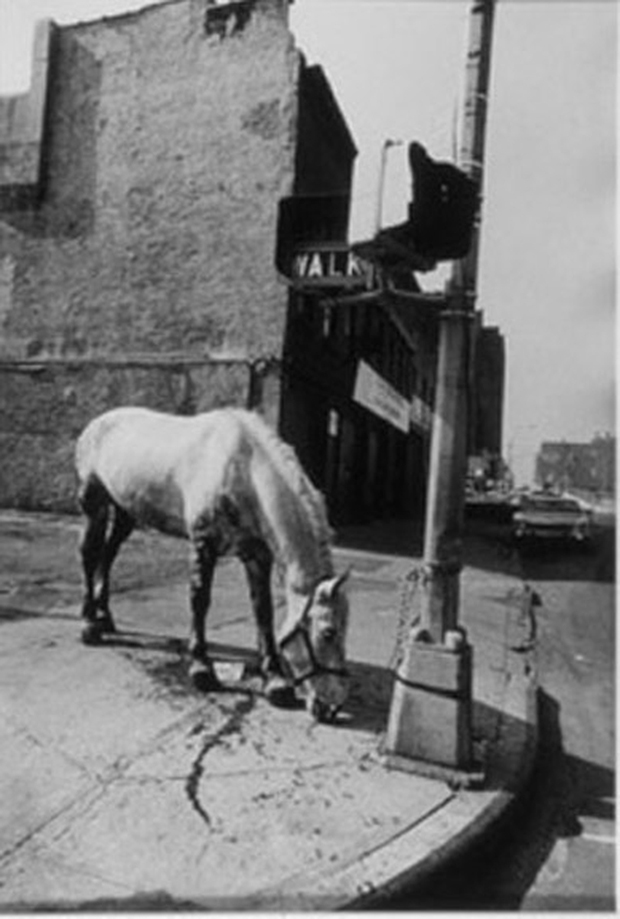
“One project lasted his whole lifetime,” gallerist Daniel Cooney says of Len Speier, the 88-year-old artist who has devoted decades to capturing life on the streets, in the clubs, at the parks of New York City, Europe, and Asia. His life and career was never broken into chapters or series; it’s a single long strand connecting who he was as a young man to who he his today.

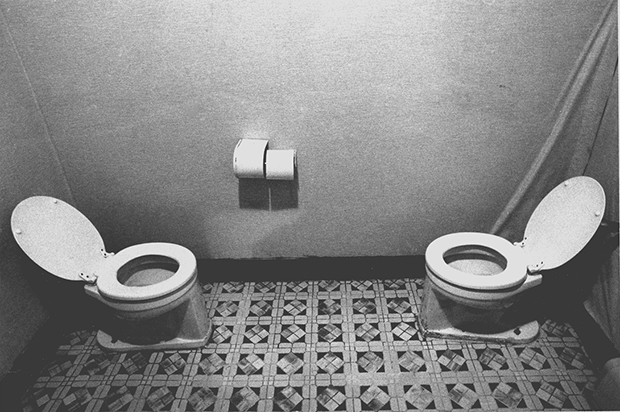
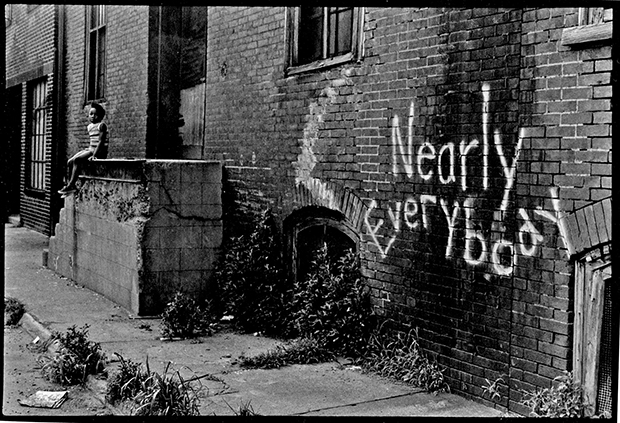
Nearly Everybody, Speier’s first ever solo show, opens at Daniel Cooney Fine Art in September. It’s the result of countless hours of shuffling through and sorting what must have been about a thousand images, made over the course of 60-some years. The photographer invited Cooney to accompany his son Jonathan in combing over the archives; the gallerist made an estimated twelve to fifteen visits to the artist’s barely air-conditioned apartment on 91st Street in Manhattan, where he’s lived for about 40 years. “He hadn’t thrown anything away,” admits Cooney with a laugh.

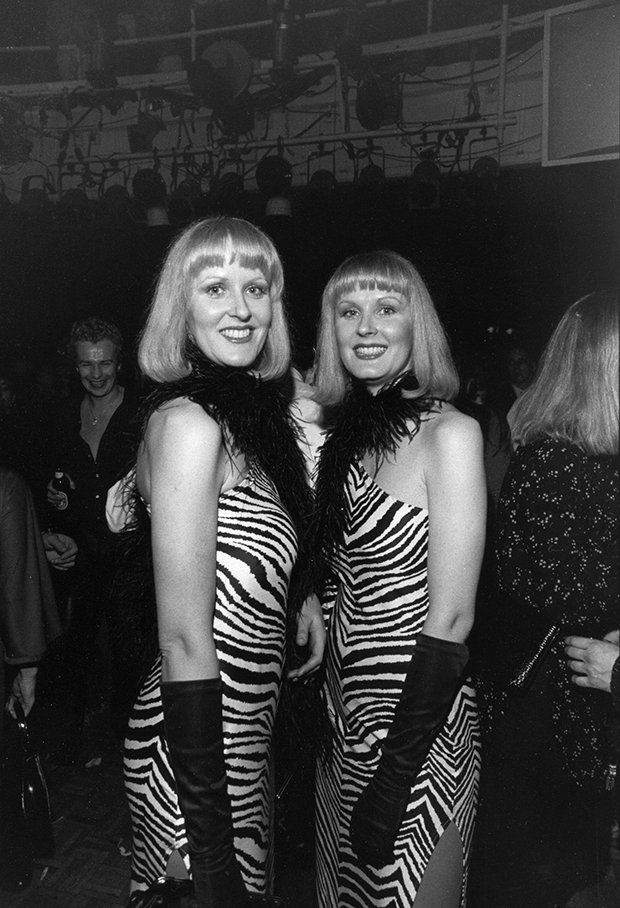
In many ways, Speier is the quintessential New York photographer. He’s run out during a blizzard in his underwear to catch the perfect shot; when he photographed at Studio 54, he came home to realize that two of his subjects lived in his building—he’d just never noticed them before. Each photograph Speier shot has in Cooney’s estimation about a 30-minute backstory. There’s one portrait of a girl in the 1960s smoking and wearing the Star of David on a necklace; Speier’s reaction to this photo is always, “Can you imagine what her mother would say?”

That visual wit and clear good will is part of what inspired Cooney to launch the historic show. “He’s a photographer,” the gallerist explains, “There’s nothing highfalutin. It’s about the pleasure of looking and seeing.” The magic of his photographs is that simple; he’s a man who dared to keep his eyes open, almost without blinking, for 60 years.

Nearly Everybody opens at Daniel Cooney Fine Art September 15th, 2016.

TwinsStudio54_RCBRR20160816-2

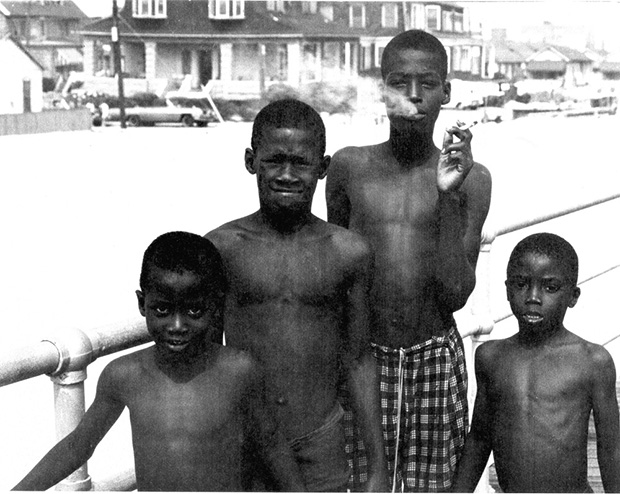
BoysRockaway

BoyWeapons

CentralPark1968

ChildPaperRoll

Dog on car, NYC

EastHarlem

FightRacism

HoodedFigureRiversidePark

ManSunningHimself

Mummers

PaisleyCouple70s

PolkaDot

SteubenDayParade

WestSideHorse

TwoToiletsBklyn

NearlyEverybody

All images © Len Speier

The post Uncovering 60+ Years of Work by One Historic Photographer appeared first on Feature Shoot.

29 Aug 11:45

Global Entry/Amador County/Library of America

by Claudia Lamar

Travel Tip:
A Global Entry pass is a true bargain if you do any international travel. You don’t need to wait in line for immigration at reentry to the US. But it also serves as validation for the TSA Pre-check short-cut for security screening at most major US airports. Much shorter lines. To get in the program requires an appointment to get fingerprinted and $100 every five years. Well worth it. — KK

Edible:
Before I take a flight, I toss a few Dark Chocolate Nuts & Sea Salt Kind bars into my travel bag. The crunchy bars are gluten free and have just 5g of sugar. The perfect snack for plane or hotel room. — MF

Destination:
If you’re in Northern California and have yet to visit Amador County, I could not recommend it more. The county is steeped in Gold Rush history and offers 40+ wineries, romantic B&Bs and historical small towns, all within a short drive of one another. Side note: I was once the Lifestyles Editor for the county newspaper, which might make me a bit biased, but I also have enjoyed enough time there to know it makes for a magical getaway. — CL

Readable:
The Library of America publishes high-quality hardbound books with multiple novels per volume. I’m reading Ross Macdonald: Three Novels of the Early 1960s, which contains three excellent novels about fictional Los Angeles detective Lew Archer. These tightly-written page-turners have kept me up way past my bedtime. — MF

Enjoyment:
I’m more audio book than podcast listener, but On Being with Krista Tippett is one of my favorite things ever. Her guests vary from artists, scientists and activists, and the conversation is always centered around the intangible aspects of life. It’s philosophical without being pushy, and I’m quickly working my way through the archives. — CL

Follow:
The best photographer blog and/or photo magazine for both pros and newbies, and for all photographers in between, is on the web as PetaPixel. Sure, they have the latest nerdy camera gossip, but they also have plenty of features about the million different ways people actually capture and use images. Every day I am amazed and informed. Add it to your RSS feed. — KK

Want to get our next Recomendo a week early in your inbox? Sign up for next Sunday newsletter here.

-- Kevin Kelly, Mark Frauenfelder, Claudia Lamar

22 Aug 19:32

United States Cedes Control of the Internet, Gawker Is Shutting Down… [Tech News Digest]

by Dave Parrack
loading-screen-wait

The U.S. Government cedes control of the internet, Gawker calls it a day, Twitter tries to get better, Amazon launches a Product Hunt section, and how to play Pac-Man with a dog. ICANN Takes Control of the Internet The U.S. Government is ceding control of the internet’s Domain Naming System (DNS), handing complete control over to the Internet Corporation for Assigned Names and Numbers (ICANN). For the past 20 years, ICANN has been under the control of the National Telecommunications and Information Administration (NTIA), but that’s all set to change on October 1st. ICANN, a non-profit organization which has been...

Read the full article: United States Cedes Control of the Internet, Gawker Is Shutting Down… [Tech News Digest]

16 Aug 18:26

Build A Mobile App With No Programming Knowledge With Codeless Apps

by Matthew Hughes
nocoding-create-apps

Plenty of people want to create their own smartphone apps, but don’t necessarily want to learn how to code. These two positions are not necessarily contradictory, and it’s totally possible to build a basic mobile app by using a number of drag-and-drop tools. So, what’s available? What can they do, and what are their limits? More importantly, what point should you give up with them, and start to learn Swift? The Codeless Apps Development Market When researching this post, I was surprised at the sheer number of companies offering codeless app development platforms. Just to rattle some names off the top of my...

Read the full article: Build A Mobile App With No Programming Knowledge With Codeless Apps

15 Aug 03:04

Seafood Sauces Made Easy

by Bill West


bowens-island-seafoodSeafood may not be barbecue but a good fish fry outdoors with friends comes pretty close.

Seafood and barbecue both share some room on the plate for hush puppies (grab our free Sauces and Sides book for a solid hush puppy recipe). Not sure how hush puppies ever got into the barbecue category but I think it has to do with Jamaican festival).

Also barbecue and seafood are almost always served with a few sauces.  Lately I’ve been feeling cheated at a few seafood houses for being stingy with the Tartar sauce so below (and in the video) are a few quick recipes fish1so you can make cocktail sauce and Tartar Sauce in the comfort of your own home. The video also features a visit to one of my two favorite seafood shacks of all time: Bowen’s Island.  The other is Tybee Island’s Crab Shack.  Neither has ever short changed me on Tartar sauce.

Cocktail Sauce:

  • Combine your favorite Ketchup with horseradish to taste.
  • Dash of worchestichire (optional)
  • Dash of hotsauce (optionall)

[amd-zlrecipe-recipe:28]

http://barbecuetricks.com/wp-content/uploads/2016/08/seafood-saucesmall.mp4

The post Seafood Sauces Made Easy appeared first on Barbecue Tricks.

12 Aug 16:06

Brunton Axis Pocket Transit

Unless you're a geologist, odds are you won't have a serious need for the Brunton Axis Pocket Transit — but that doesn't mean you won't want it. With a rare...

Visit Uncrate for the full post.
12 Aug 15:34

Learn About Your Local Elections Now So You Don't Fake It In the Voting Booth

by Justin Pot
Learn About Your Local Elections Now So You Don't Fake It In the Voting Booth

The presidential race is just one of dozens on the ballot this November. The House and Senate are up for grabs, and there are local elections for everything from school boards to judges. Your vote is likely to make a difference at these levels, and the results are more likely to affect your life directly. Don’t wait until election day to sort it all out.

While presidential news has a way of finding you whether you want it or not, local elections require some effort to stay on top of. Here are a few ways to find out what’s on your ballot, and figure out who to vote for.

Find Out What’s On Your Local Ballot

Learn About Your Local Elections Now So You Don't Fake It In the Voting Booth

It also means there isn’t really one central database you can check to find out who’s running for what. Happily, there are a few sites that can give you an overview.

  • Ballotpedia is a wiki with information about elections all over the country. A tool on the home page allows you to enter your address in order to see a “sample ballot” with all the races on your ballot. Click any candidate to see a variety of non-partisan information about them, with links to more resources.
  • Vote411 offers an online voter guide, which you can use by entering your address or sharing your current location. Rather than giving you a list of candidates, this tool lets you compare candidates and fill out a sample ballot, which you can then print for future reference, or to take with you to the polls.
  • The National Conference of State Legislatures (NCSL) offers a database of ballot measures for every state, letting you know what questions voters will be deciding directly. Which is good, because the above two services tend to miss ballot initiatives.

These services offer a great starting point, but there’s always a chance that there’ll be a few things on your ballot that aren’t on either site. The best place to check is in the paper voter’s guides your local voting authority sends out in the lead-up to the election, usually in October. These books are basically paper copies of the information offered by the sites above, but tend to be more complete and up-to-date.

http://lifehacker.com/how-to-registe…

Even then, there’s a chance something on your ballot won’t be in the guide. For this reason, it’s a great idea to register to vote early or absentee, so that you can see your entire ballot at home and research everything before deciding.

Learn More About Local Candidates

Learn About Your Local Elections Now So You Don't Fake It In the Voting Booth

Your ballot will feature all kinds of names that, depending on your media diet, you might not be familiar with. With a little research, you can get a feel for where these politicians stand on the issues that matter most to you. Here are a few places to start your research:

  • Official websites for local politicians almost always include a list of policy positions. Reading these is a great way to get a general feel for what a politician stands for, and what they will try to accomplish if elected.
  • Social media is another great way to see where candidates stand. Scroll through Facebook or Twitter timelines to get a sense for a candidate’s responses to recent news stories and events. You could even follow politicians to get regular updates from their point of view, but this isn’t necessary.
  • A quick Google News search for a local candidate is another way to learn what public statements a candidate has made.

These are all quick ways to get a general sense of where candidates stand on the issues. If you have more time, consider a few of these apps and web sites to help you do a little more digging.

http://lifehacker.com/5869256/how-to…

Keep Up With Your Local Races

Learn About Your Local Elections Now So You Don't Fake It In the Voting Booth

Of course, a lot can change between now and November, so you’re going to want to keep up with what’s happening in your local races, or newly approved ballot initiatives that show up late. National media outlets likely won’t cover local races outside of the occasional article that will likely relate them to the presidential race, so if you’re curious about controversies or any twists and turns the race may take, you’re on your own.

Find a few local media outlets and start checking their websites regularly. Newspapers are good first idea, but your local TV and radio stations might also offer relevant information.

If you can’t (or won’t) stomach local media sites regularly, consider finding a couple of journalists who cover local politics and following them on Twitter or Facebook. Tune in to your local news once or twice, and they’ll probably flash their Twitter handles on-screen, or you can visit the local news network’s web site and find them there. This way you’ll only get periodic updates about what’s happening in the campaigns, and occasional links to articles, and you won’t have to subject yourself to the nightly news.

It makes sense that the national media focuses on presidential politics: it’s important, and the one thing everyone in the country gets to vote on. But it’s easy to feel like those politicians are distant figures who have very little to do with your day-to-day life. Local elections are different. Take the time to inform yourself about the rest of your ballot, and you’ll feel better about politics — and possibly learn a lot about your community in the process.

Title illustration by Angelica Alzona. Photos by BarbaraNL, Mrs. Gemstone, Karolina Grabowska.

12 Aug 15:31

Free Collection of Custom Lightroom Presets from a Fuji Ambassador

by DL Cade

presets_feat

Fujifilm ambassador (and author of this rather controversial article) Samuel Zeller is lending a helping hand to all the Fuji users out there. In a bid to help fellow photographers get the most out of their photos, he’s giving away a whole collection of custom Lightroom presets for free!

The presets were created specifically for Fujifilm cameras, helping to draw the most out of the RAW files your X100T or X-T2 spit out when combined with Fuji’s special film simulation modes. However, Zeller is quick to point out that the presets “will perfectly work with other cameras.”

It’s also worth noting that you don’t have to sign up for his newsletter to download the actual presets. The only thing you’ll miss if you don’t want to give your email away is a Lightroom catalog and RAW files that Zeller will send you so you can see exactly how he edits his images using these presets.

Here are the presets themselves, complete with before and after photos:

Ice Blue

Before

before1

After

after1

Midsummer

Before

before2

After

after2

BW Soft

Before

before3

After

after3

Electro Red

Before

before4

After

after4

Industrial 01

Before

before5

After

after5

Urban (Berlin)

Before

before6

After

after6

BW Noir

Before

before7

After

after7

Electro Blue

Before

before8

After

after8

Urban (London)

Before

before9

After

after9

Urban (Portugal)

Before

before10

After

after10

If you like any of these presets and want to give them a shot on your photos, head over to Samuel’s site by clicking here. Heck, even if you’re unsure, you have nothing to lose… they’re free. And if you do download them and try them on a non-Fuji camera, let us know how they work in the comments.


Image credits: Photographs by Samuel Zeller and used with permission.