From calendar apps to to-do-list apps, project management apps to note-taking apps, these are our favorite productivity apps to help you start 2023 off right.
Are you a budding pinball wizard or are you an oldster like me who prefers the tactile feel of those machines over the bits and bytes of video games? Fortunately for you, there are still some great places to play pinball in the USA. Most of them are tagged as pinball museums, but they’re arcades where you can actually play with the exhibits. Pinball is not a dead form of entertainment: new...
"It feels cool. He is one of the richest people on Earth and I am annoying him," said Jack Sweeney of Elon Musk, who offered the college student $5K to delete his account.
On paper, the Ténéré and Tuareg look to be toe-to-toe competitors. What we found over 2,000 miles of pavement and dirt was that while they are indeed close, they serve up the experience in entirely different ways.
We also want to thank our sponsors, Cardo and EarPeace, for helping to make this video happen.
00:00 - Intro 2:48 - Day 1 - Buffalo Chip Sturgis, SD to Elk Mountain, WY 7:14 - Day 2 - Elk Mountain, WY to Centennial, WY 12:45 - Day 3 - Centennial, WY to Evanston, WY 16:25 - Day 4 - Evanston, WY to Kamas, UT 21:38 - Mid-trip discussion 27:24 - Day 5 - Kamas, UT to Cedar City, UT 30:28 - Day 6 - Cedar City, UT to Los Angeles, CA 30:58 - Picking the winner
Help support Motorcycle.com: If you liked any of the gear we used on this ride, you can follow the links below to learn more about it. If you decide to purchase any of it, we get a small commission – at no cost to you.
Established in 1994, Motorcycle.com is the premier online resource for motorcycle and scooter enthusiasts. With hundreds of high quality, detailed video reviews on bikes from Harley-Davidson, Honda, Yamaha, Suzuki, Kawasaki and just about everybody else, it's the best place to go to learn about the latest and greatest two-wheeled creations. There's simply no better resource if you're planning on buying or if you just want to check out some awesome machines.
Our survey of 20+ brewers, bar owners, beverage directors and other pros yielded wide-ranging results: a lager from Japan, a pilsner from Venezuela, big-name domestics and more memorable mass-produced suds.
You'll want to get a professional inspection every time, but first, there's a lot you can do yourself to assess a used car's condition – and hopefully score a deal.
Ask anyone who lives with me, and they’ll tell you that I’m extremely low maintenance when it comes to breakfast. Usually eggs or oatmeal with fruit will do. Sometimes I’ll spice it up with a bagel and cream cheese or pancakes. To me, sausages are usually reserved for a special breakfast outing. That might sound…
Susan Lee, 61, was walking on her property in rural Vermont when a mama bear charged and bit her, but the woman's Jack Russell terrier came to her rescue and distracted the bear with its barking.
Photographer Jessie Tarbox Beals would haul her 8x10 glass plate camera around the streets of New York where she captured the bohemian Greenwich Village in the 1920s.
Photographer Stephen Wilkes is perhaps best known for his "day-to-night" composite photos that show the passage of time in a single still image. His latest series is paired with National Geographic's story America the Beautiful, and took him to some incredible locations.
Commentary
Earlier this month, a guest column in San Jose Spotlight defended efforts by homeless nonprofits to end homelessness in Santa Clara County. The author, Ray Bramson, is the chief impact officer at the nonprofit “Destination Home,” a tax exempt organization that collected over $62 million in contributions and grants in 2020 (pdf). The CEO of this organization made a reported $335,404 in that year, and one of the directors made a whopping $754,871, of which a hefty $693,186 was “base compensation.”
Let’s suppose these salaries are justifiable, since it isn’t unusual for an organization with revenue of $62 million to have executives who make that much. The problem is that this organization is the product of perverse incentives. The management of public space has been taken over by what has now become a homeless industrial complex. Organizations like Destination Home will not flourish if homelessness is eliminated. Instead, like many other prosperous nonprofits and heavily funded government programs, the more they fail, the bigger they get....
Looking for a good phone plan on a budget this holiday season? Here are our top picks for the best cheap phone plans, not just those from the Big Three carriers.
Leaving the US and giving up your US citizenship is possible, but is complicated and costly. For some people it may be a better option that waiting around for another Trump administration, or the proposed tax on private wealth, but you should not do so without a great deal of planning.
Game of Thrones House of the Dragon maybe stealing the headlines on TV but for those riding the real roads Sizzling New 2023 Kawasaki Motorcycles have riders talking! New sport, retro sport, naked, cruiser, adventure [...]
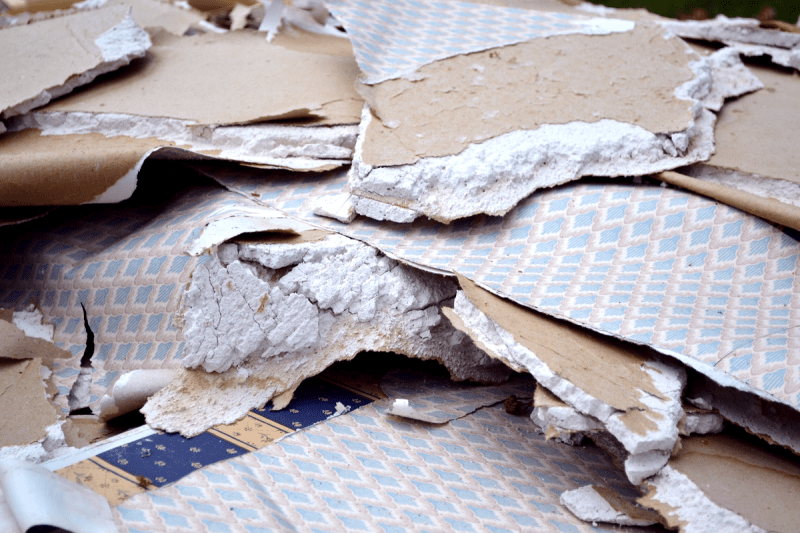
Drywall is common and ubiquitous in commercial and residential buildings today. Many of us barely think about it until we have to repair a hole smashed in it.
However, drywall has not been around forever, and actually took many years to establish itself as a popular building material. Today, we’ll look at how it came about, and why it went on to dominate the world of construction.
Before Drywall
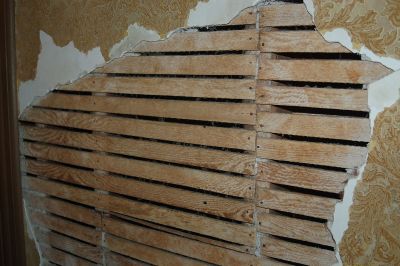
A lath and plaster wall, with wallpaper applied over the top. Significant skill is required to apply a smooth, consistent plaster finish. Credit: Lmcelhiney. CC-BY-SA-4.0
Before drywall existed, walls were constructed with a time-consuming process referred to as lath and plaster. This usually involved nailing up many thin strips of wood to the wooden structure of a house, to make up walls and ceilings. The wood strips, or lath, served as a substrate onto which skilled tradespeople would apply plaster.
The plaster was applied wet, and would take a significant amount of time to dry. Plastering walls was often impossible in cooler weather, and the job required significant skill to get quality results. Over the years, techniques and materials changed and improved, such as the introduction of metal mesh lath and quicker-drying plasters. However, the fundamental limitations of the process remained.
Quicker, With Less Mess
Various companies and individuals started experimenting with various methods of producing stiff, prefabricated boards of plaster in the late 19th century. The main root of modern drywall began when the Sackett Plaster Board company went on to develop SackettBoard around this time. It was made of alternating layers of plaster and wool felt paper, usually four layers thick.
Eventually, the Sackett operation was bought out by the United States Gypsum Corporation. The product was developed further, and was introduced to the market as “Sheetrock.” It featured a layer of compressed gypsum powder, in between a layer of paper on either side.
Some of these early products were used as lath, with small panels fixed to walls as a substrate for additional hand-plastering. However, the material was quickly developed into today’s large-scale drywall sheets.
Drywall after installation, prior to paint. Note the white vertical lines, where paper tape and jointing plaster has been applied to cover the joints between adjacent sheets. Credit: Amaxson, public domain
Drywall offered significant benefits over the traditional lath and plaster technique. The large boards could quickly be affixed to a wooden frame, covering huge areas of wall in a fraction of the time it would take to nail up lath and start applying plaster. The resulting walls offered good strength and fire resistance, too. No longer would construction have to stop for cold weather, or wait for weeks while the plaster dried. Construction could instead continue at a rapid pace as soon as the boards had been fixed down, a job which required only basic skills. The only hand-plastering required was to cover up the joints between boards, and techniques developed rapidly to make this as quick and easy as possible.
Despite the step-change improvement that drywall offered, it struggled to catch on. The building industry was set in its ways, and using drywall was seen as corner-cutting rather than smart business.
World War II changed all that, however, when the labor force was suddenly tapped out on the war effort and efficiency gains were badly sought across all industries. Drywall had found its moment, and by 1945, it was quickly becoming the dominant way to build in the USA. It slashed weeks off the time required to build a house, leaving little room for traditional building techniques to compete.
The Downsides
Drywall does have its own drawbacks, of course. It can be difficult to get a truly smooth finish on drywall, as the paper surface tends to make that difficult. It’s also quite easy to damage. If you’ve ever been casually tossing your hammers around a room, or had a punch-the-wall competition, you’ve found out how easy it is to knock a hole through drywall.
It can also be a haven for mold, thanks in part due to the paper layer acting as a food source. Its semi-porous nature means such occurances generally require complete replacement. Water damage is a drywall killer, as well, whether by flood or by plumbing leaks. It’s far less hardy in such conditions versus traditional cement-based plaster construction.
The Future
Technology rarely stands still, and there are many options these days for finishing walls. New drywall formulations focus on environmentally sustainable production, or cutting down on acoustic transmission for comfortable, quiet homes. The veneer plaster method uses special thin “blueboard” drywall, which is then given a coat of plaster over the top for a higher-quality, faster, yet more expensive finish. Other options like concrete, wood panelling, and brick interior walls are all viable, too. And, if you’ve got the money to spend, one can still hire a traditional lath-and-plaster tradesperson, which is a particularly popular option for old-school “country-style” builds and classic restorations.
As it stands, though, drywall’s dominance doesn’t look to be fading anytime soon. It’s still often the cheapest way to finish interior walls, and the industry is worth billions of dollars a year worldwide. Expect to see drywall dominating residential and commercial construction for some time to come.
A 1908 cookbook declared the ingredient “a rich filling for tarts and pies.” In 1909, the Boston Globe claimed that it was “fine in frozen pudding” or could be served with meat during the winter. And in 1916, a Delaware paper promised that “a cup of it … stirred into a steamed pudding or in a jam cake, gives a rare flavor.”
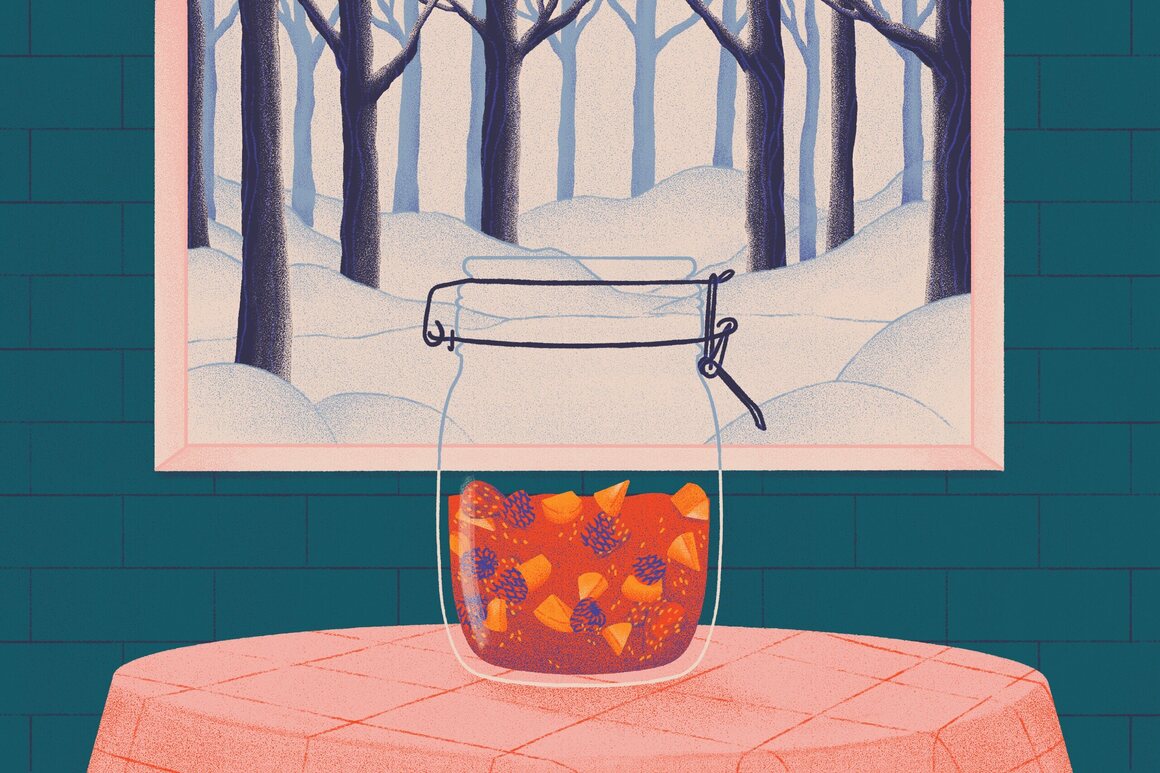
That magic ingredient that could punch up just about any dish? A shape-shifting, boozy compote known as tutti frutti. Beginning in the 1800s, the term tutti frutti (Italian for “all fruits”) was used in the United States to refer to anything with a mixed-fruit flavor, including candy, soda, gum, and ice cream. But the term also referred to a decadent brandied-fruit mixture that was popular in the U.S. from the 1880s up until the start of Prohibition.
Although tutti frutti relied on a simple formula—fruit, sugar, and brandy—variations abounded. Homemakers would begin to prepare their jars each May, when strawberries were coming into season, and add to them throughout the summer months as more fruits became available. The flavor varied depending on which fruits were used, how much of each, and how long the mixture had been stewing.
In addition to strawberries, recipes usually suggested using pineapples, various stone fruits, cherries, and raspberries, creating preserves of vibrant yellows, reds, and oranges. (Many recipes warned against using darker berries such as blueberries and blackberries that might spoil tutti frutti's usually bright, summery color.)
Tutti frutti recipes were popular at a time when preserving foods during the summer was necessary for a family to maintain a nutritious diet throughout the winter. “This is a way of using up every single bit of food that you have,” says food historian Joyce White. Vegetables were pickled, fish were smoked, meats were corned, milk was turned into butter and cheese, and fruits were preserved into rich, sugary jams, jellies, and conserves.
Amy Bentley, a food studies professor at New York University, adds that using diverse methods of preserving could also add flavor and excitement to an otherwise generally bland American diet during this era. “It’s a lot of bread. It’s a lot of meat. It’s a lot of root vegetables,” she says. “And so you want accent flavors to spice that up.”
By the mid-1800s, industrially preserved goods were available to wealthier Americans in big cities. But for many, especially in rural areas, it was necessary and often preferred to make your own. “You’re at this time period where you’ve got the ability if you have the money and the access to buy canned fruit. Yet you still have this proliferation of recipes for making it on your own,” says White, “so there’s definitely that push and pull between the old ways and the new ways.”
When it came to tutti frutti, the resulting compote was meant to last throughout the winter and was used to top ice cream, fill pies, flavor puddings and cakes, and act as a condiment for meats. Tutti frutti was a flexible recipe: Add fruits when you have them, take a little when you need it, and so on. Jars could last for years (some recipes even said indefinitely).
But by the mid-1910s, tutti frutti’s popularity appeared to be waning. A 1915 article calls it a “preserve of our grandmother’s day.” When Prohibition came along in 1920, the preserve became an illegal pursuit, and although it was possibly still made in secret, recipes for the boozy treat disappeared from the official record. A 1923 recipe for tutti frutti gives directions for cooking the fruit like a jam rather than stewing it in alcohol.
In the 1970s, brandied mixed-fruit jars saw a revival, but this time, there was a communal aspect to the recipe. The jars, which fermented on countertops across the country, were often referred to as “friendship fruit” or “friendship cups” because those making it would give small portions of the liquid from their brandied fruit jars to friends who would then use it as “starters” for their own jars. “At the end of five weeks, you should have two or three cupsful to give to friends so they can start theirs,” directs a 1971 recipe.
Tutti frutti jars are part of a long, rich history. “Storing fruits in alcohol goes back as far as people have been making alcohol,” says Danille Christensen, a professor at Virginia Tech who is writing a book on the American history of home canning and preserving. But part of the beauty of tutti frutti is that you can make it your own. You can add whatever fruits most appeal to you, or whatever you have on hand, at the proportions you desire.
While the recipe requires patience, the time commitment is an homage to the pleasures of seasonality, as fresh fruits are added one by one. “It is celebrating these shifts through time,” Christensen says. “And along the way you get a distinctive product that could really exist at no other time than its own.”
Tutti Frutti
This below recipe for tutti frutti is a modern-day take on the classic. Since a wide range of fruit is now available throughout the summer season, you can begin your tutti frutti jar at any time using a mixture of fruits instead of beginning with a single fruit and adding one at a time.
Starter ingredients: 2 cups summer fruits (should be ripe but not bruised, mushy, or going bad) 2 cups white sugar 1/2 cup good brandy
Equipment: Airtight glass jar (Mason jars work well) Wooden spoon
Instructions:
1. Sterilize your jar.
This can be done in a dishwasher with a heat setting of at least 150°F, or by submerging the jar in boiling water for at least 10 minutes.
2. Prepare the fruit.
Wash and thoroughly dry the fruit. Chop and slice the fruit so the pieces are all relatively the same size. Half inch pieces work well but you can adjust to slightly larger or smaller based on how chunky you want your tutti frutti. Make sure any stone fruits and cherries are pitted. Smaller berries should be left whole. Fruits with thick skins like peaches should be peeled.
3. Make the mixture.
Pour the sugar and brandy into the sterilized jar and stir until combined. With a clean wooden spoon, fold in the fruit until it’s thoroughly covered with the sugar and brandy mixture. Cover with an airtight lid and store in a cool, dry place.
4. Feed and care for the tutti frutti.
For the first two weeks, stir the mixture daily with a clean wooden spoon to disperse the sugar (which settles to the bottom) and after that, stir once a week. Add fruits as often as you like with an equal amount of sugar, making sure to stir well to incorporate. No more brandy is needed. The tutti frutti can be enjoyed after the first week of stewing and then as often as you like.





 Omaze is partnering with Miranda Lambert to give the ultimate roadtrip transportation package.





![[link]](https://i.redd.it/3y8b88yeeni91.jpg)

