What do you know about grilling/smoking specialties on Planet Barbecue? Test your knowledge of barbecue dishes from around the world with this short quiz.
A version of this post originally appeared on Tedium, a twice-weekly newsletter that hunts for the end of the long tail.
Plastic, barring all the environmental problems and health concerns that might come with it, is awesome as a moldable product. It shows up in all sorts of places, from laptop cases, to CDs, to bottles.
It's also used to hold lemon juice—in containers that, when you think about them, are a bit strange, since most of them are also actually shaped like lemons. These first started appearing decades ago in the post-World War II plastic boom, and haven't stopped showing up in stores or the back of your refrigerator since.
Last week, in the U.K., where many are sold under the brand name Jif, fans again celebrated what, there, has become the juice containers' unofficial holiday: Shrove Tuesday (here known as Fat Tuesday or Mardi Gras), when many Brits traditionally make pancakes flavored with a bit of lemon juice.
But back to the lemon-shaped containers: Where, in fact, did they come from? Other fruit juices don't get their own fruit-shaped containers, after all (except, sure, limes, though for our purposes here we'll count them in the same family as lemons).
It turns out that the lemon-shaped backstory involves some things you might expect, like a disputed claim of who exactly invented them, but also one thing you probably don't: a heated and precedent-setting legal battle in Great Britain.
The history of the lemon-shaped plastic container, in other words, is more complicated than you probably think.
“This same lemon juice, contained in glass bottles, has been selling in groceries for years,” Hughes wrote. “Now it has received fresh impetus because a year or two ago some smart container designer persuaded its manufacturers to sell it in lemon-like containers which help justify the claim to real lemon juice.”
In the years following World War II, Pugh was the chief plastics designer for a company named Cascelloid, which was the only company in the United Kingdom—and one of only two companies in the world at the time—that had a machine that was able to blow plastic bottles into a molded shape.
Pugh built the design at the behest of a British firm, Edward Hack, Ltd., in the 1950s, and a number of American companies quickly copied the idea. (A legal document suggests they originally came from Italy in the post-World War II era, but Pugh is responsible for the modern form.)
According to The Independent, Pugh created a mold out of a combination of wood and lemon peel, recreated that mold with plaster, played with the shape as much as possible, and eventually came up with the perfect form.
This was one of many molded plastic products that Pugh’s team designed in the roughly two decades he worked with Cascelloid. He was an artist of sorts, and his medium was molded plastic.
“He was patient and a perfectionist,” his obituary says. “In similar vein he made amusing plastic fruits, a gaudy tomato-shaped ketchup bottle for cafe tables, and a range of nasal sprays.”
In terms of combining form and function, though, the lemon hit all the bases—beyond its visual appeal, you also only usually need a little lemon juice at a time, meaning that lemon juice required a container that could safely store the juice for long periods of time.
Initially, the juice was sold in the containers under the Hax brand name, but, later, after the product was acquired by the British company Reckitt & Colman (now known as Reckitt Benckiser), and the product's name was changed to what it's now sold as: Jif. (Yes, like the peanut butter.)
And, over the years, Jif lemons became hugely popular in the U.K., specifically around Shrove Tuesday, which, according to a 2012 Marketing article, accounts for 71 percent of Jif’s sales for the entire year.
Reckitt & Colman had this market mostly to itself for decades, but by the mid-1980s, perhaps inevitably, competitors came calling, including one in particular, the American company Borden, that would set the stage for a huge legal battle.
The initial challenge came in 1985, when Borden, which was already doing pretty well selling lemon juice under the brand name ReaLemon, saw Jif's success in the U.K. and decided that it wanted in.
Both companies sold lemon-shaped juice containers, but Borden's entry into the British market meant that Jif owners Reckitt & Colman could challenge them on legal grounds on their home turf.
A subsequent lawsuit highlighted a problem for Reckitt & Colman: The design of its lemon made its product distinctive in plastic form, but effectively impossible to trademark.
“The purity of this idea, though, exposed the brand to imitation and costly litigation,” brand consultant Silas Amos said in a 2012 Marketing article. “Perhaps adding one ‘twist’ to the lemon design might have turned an obvious idea into a more distinctive (and protectable) brand?”
That, eventually, made Reckitt & Colman Ltd. v Borden Inc, decided by the House of Lords in 1990, an important part of British case law, as it created a test for proving whether a product deserved legal protection despite otherwise being generic—a concept known in British law as “passing off.”
The gist of the three-part test, as formulated by Lord Oliver of Aylmerton:
There must be an existing reputation that the public carries with the original product or design. (check)
The competing product creates confusion or misrepresentation in the market, whether intentional or not. (check)
There are signs that the confusion created by the competing product negatively impacts the bottom line of the original one. (double-check)
Reckitt & Colman easily hit all three parts of this test.
“[A]lthough the common law will protect goodwill against misrepresentation by recognising a monopoly in a particular get-up, it will not recognise a monopoly in the article itself,” Lord Oliver wrote in his legal opinion. “Thus A can compete with B by copying his goods provided that he does not do so in such a way as to suggest that his goods are those of B."
Borden, then, wasn’t barred from making a plastic lemon that looked like a real one, but they did have to ensure that its design and marketing were distinctive from Jif's and not simply intended to create market confusion.
Such cases on both sides of the Atlantic are notoriously difficult to win, but Reckitt & Colman had a generation of goodwill and history on its side, even if, in the end, it couldn't ensure that the lemon-shaped lemon juice container was theirs and theirs only.
You still can’t trademark nature, in other words, even if sometimes your particular squeeze on it is what sets you apart.
A version of this post originally appeared on Tedium, a twice-weekly newsletter that hunts for the end of the long tail.
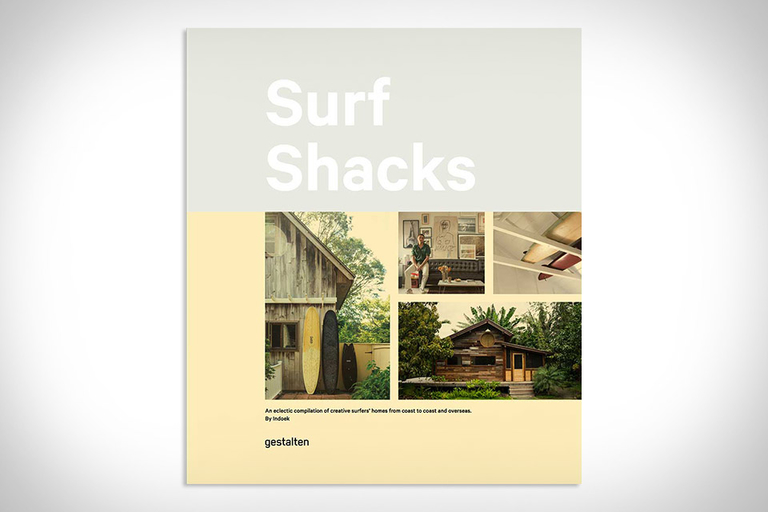
Despite the stereotypes, not all surfers live in huts down by the water. Surf Shacks: An Eclectic Compilation of Surfers' Homes from Coast to Coast takes you on a tour...
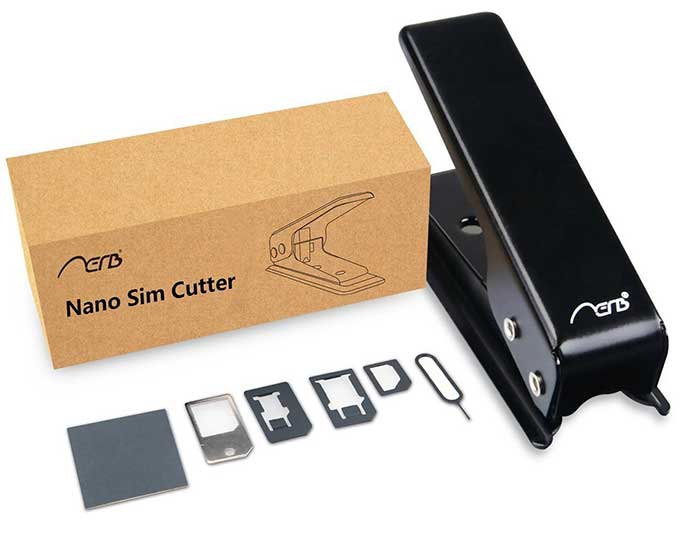
Did you know you can cut a regular size phone SIM card to a micro or nano size SIM card and it will still work? This tool will help you do it. Just stick a SIM card in it press it down like a stapler. It will punch out a perfectly shaped micro or nano SIM. I’ve used it many times when swapping SIMs from one phone to another.
This inexpensive kit also comes with adapters that convert a nano SIM into a micro SIM or a regular SIM, or a micro SIM into a regular SIM. In short, all your SIM needs are taken care of. It even comes with a tool to remove a SIM from your phone. (You could use a paperclip if you don’t have a tool like this, but this is stiffer and easier to use).
-- Mark Frauenfelder
Sim Card Cutter with Nano-Micro, Nano-Standard, Micro-Standard Sim Adapters ($8)
Adrian Fisher is the master of getting people lost. With over 700 maze designs across the world, Adrian has perfected the art of confusion, disorienting hundreds of thousands of people...
Seeing wildlife up close is one of the most thrilling parts of exploring the outdoors, and you may be tempted to feed the animals to tempt them to come closer. Here’s why you should never feed them, no matter how much you want to.
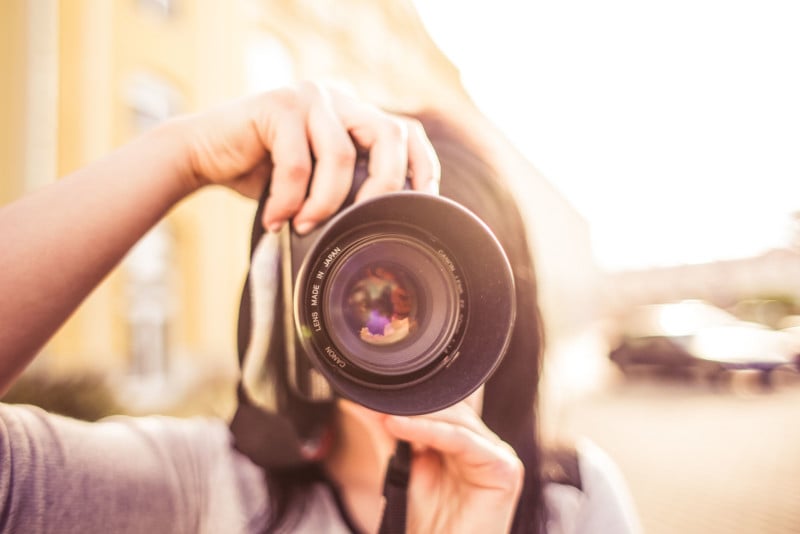
Being in the photography business successfully for 40 years has been an amazing journey and a great accomplishment for me. I believe that the people I meet are the best clients anyone could wish for.
For the most part, my clients book an appointment, look at the images and then make a purchase according to the price list I provide, and they go home a happy camper. Once in a while, though, a new client will express concerns about what they perceive to be the high cost of professional photography in general, and they wonder aloud if it is really worth it.
And that’s when I say to them, “Maybe I can help you to better understand why professional photography really is ‘worth it’.”
Now, I don’t launch into a list of expenses that pro photographers have to cover just to stay in business. I don’t mention things like rent, insurance, licensing fees, business taxes, equipment cost, software upgrades, photo lab costs, assistants, shipping fees, travel costs, equipment upgrades, editing and retouching fees, ongoing education, and advertising costs.
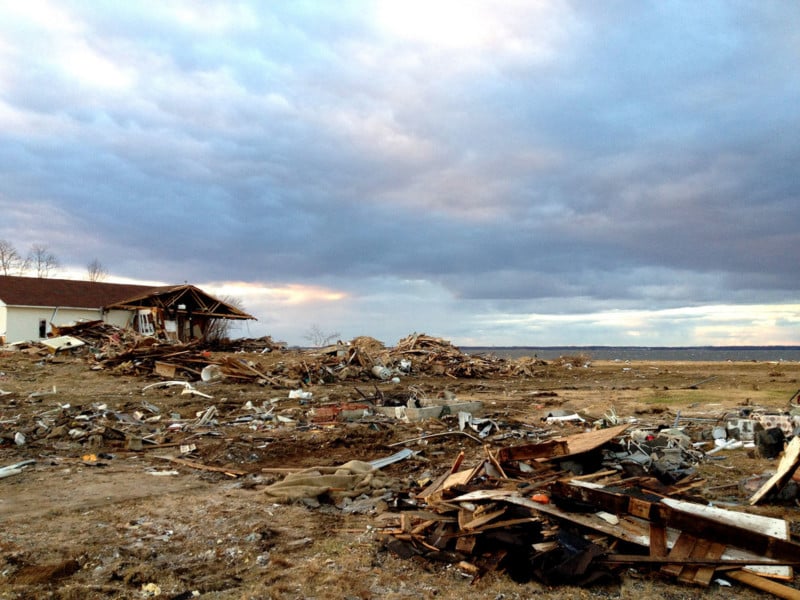
No, I don’t mention any of these things — I wouldn’t resort to that! But I do tell them about Sunday, October 28, 2012.
Yup, October 28, 2012, the day that President Obama issued a declaration of emergency for New York State. Schools, bridges, and airports were closed. Here in my hometown on Long Island, the orders were given to evacuate immediately! A “super” storm named Sandy was headed directly at our island as if guided by some hi-tech laser gun.
This was a weather event so severe that even calling it a mere hurricane wasn’t sufficient to describe it. To this day, it is still referred to as Superstorm Sandy. The power it beheld was beyond any hurricane we had ever seen here in the northeast. As the name Long Island implies, we are surrounded by water and we realized that nothing good could happen in the next 36 hours.
“Sandy” came to New York and Long Island the next day and even for those of us that didn’t totally lose our homes or businesses or vehicles, our lives were changed forever. But I’m getting ahead of myself.
A lot was going on the Sunday afternoon before the storm was due to make its grand entrance. We took the mandatory evacuation notice seriously. The neighborhood was alive and buzzing with commotion, yet I could sense a sort of calm panic. As if by coincidence (or something else), as I packed my vehicle, I looked around and noticed all my neighbors were doing the same thing at the same time. It was eerie, almost as if we had rehearsed this like the synchronized swimmers in the Olympics or the newest young and bold dance team on America’s Got Talent, but we hadn’t.
As I watched my neighbors bring their valuables out of their homes and into their vehicles, not knowing if there would still be a house standing when we were allowed back, I saw something I will never forget; we all brought the same things out of our homes! I didn’t see any Xbox console, or stereo system. I did not see any plasma screen 90-inch Super Hi Def TVs. I didn’t see any air conditioners, nor did I see any comfy sectional sofas or fancy bathroom sinks, I didn’t see any kid’s bunk beds. No desktop computers. No super-duper blenders or pretty Tiffany lamps.
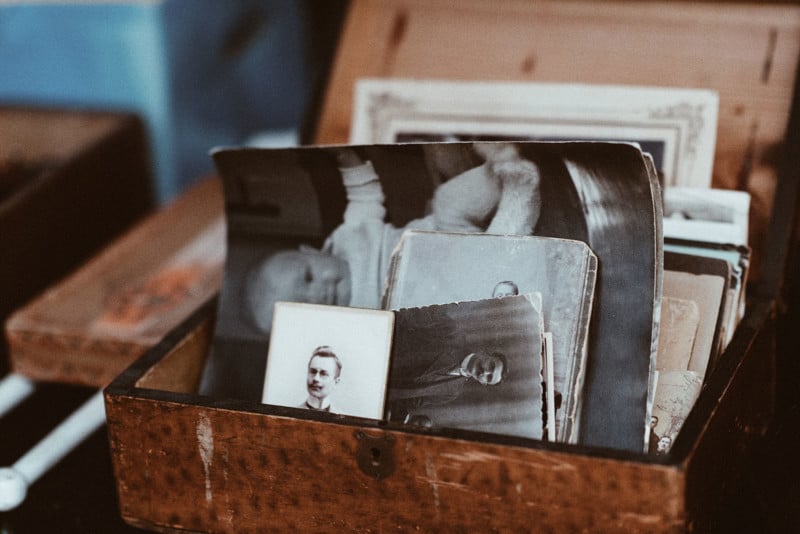
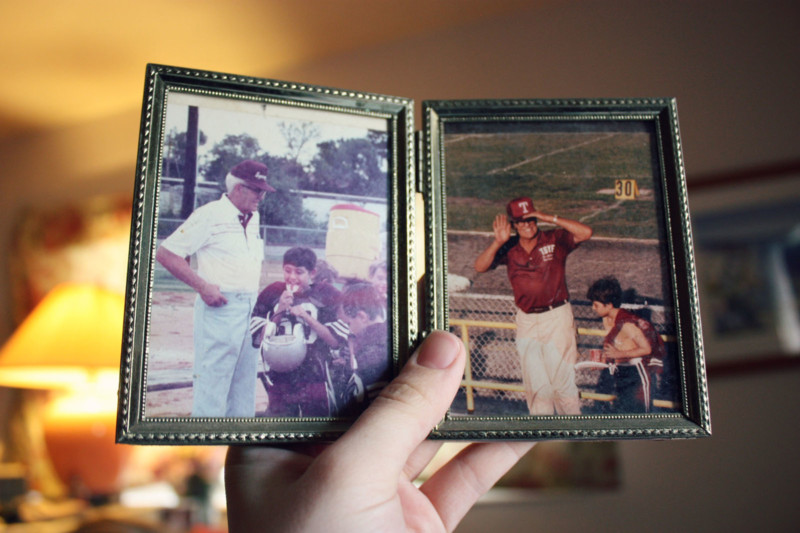
What I did see was that everyone was loading their cars and mini vans with the family photos that they took off the walls, frame and all. I walked down the street curious about what everyone’s plans were. Where they were going, what they were taking. And I took notice… they had their wedding albums and framed wall portraits ready to travel with them for safekeeping.
I walked over to my neighbor Shelly to see if I could help with anything. I said something about how we all seemed to be packing photos first. I noticed she had a couple photo albums on the hood of their car, waiting to be packed into a box and said something about it. Shelly picked one up. It was an album that was literally bursting at the seams. She opened it up carefully, delicately even, to show me it was filled with years of school pictures and kids in Halloween costumes, her kids taking their first steps and posing proudly on their first bicycle. And also on the hood there were shoe boxes full of photos from years of assorted family occasions. There was an old wooden frame with the last picture of Shelly’s Grandma before she passed.
These were the items she was packing first, and I understood. I understood. I really understood.
We know that at the end of the day, of all our “possessions,” it is our memories that we treasure most and place the highest value on. Pictures represent our memories. Pictures trigger our memories like nothing else on earth has the power to do. Our memories cannot be replaced with any amount of money or any material goods — it really is the most valuable thing we have!
I tell these “wondering” clients to keep in mind that when a photographer hands over custom prints with the images of their loved ones, these are now their “priceless” treasures forevermore. “These are now the most valuable things you own,” I say! And as they get misty eyed and give a quick sniffle thinking about what they would have done in my situation, or what they will do the next time nature unleashes its fury on us mere mortals, and all of a sudden, they get it.
They get it. They really get it.
About the author: Richie Schwartz is a photographer based in West Hempstead, New York. The owner of Pets Photography Studio, Schwartz has photographed over 75,000 pets during his 30+ year career, and he has been referred to as “America’s most experienced pet photographer.” The opinions expressed in this article are solely those of the author. You can find more of his work and connect with him on Facebook and Twitter.
Forget what you know about keychain lights. Streamlight's KeyMate USB disguises itself as another key on your keychain, but it's no secret how useful it can be. Bringing 35 lumens to bear, the KeyMate's features give it unique uses that make it ideal as a backup or emergency light. And with its size and spring-loaded attachment clip, it's a no-brainer light to add to your kit.
You won't find the usual LED and reflector on this light. Since the KeyMate keeps its strip-shaped LED on the underside of its “blade,” you can turn it on face down on a flat surface for unique area illumination thanks to the sweeping, floody beam it gives off. With three modes and plenty of runtime (up to 2 hours on low), it's enough light to let you work in a pinch or flash in case of an emergency. Its spring-loaded clip also makes it easy to take the KeyMate off your keychain and attach it to a zipper pull or lanyard, giving you hands-free task lighting or a better location for use as a signal beacon.
There's no bulky battery to replace; with built-in USB charging and an included cable, topping up the KeyMate is as easy as charging your phone. And without a larger battery it stays compact and lightweight at 2.9” and 0.5 ounces, making it an invisible yet useful backup light for your EDC.
You can pick up the Streamlight KeyMate USB from Amazon at the link below.
On LinkedIn, being found starts with including the words in your profile that will resonate with hiring managers or recruiters, and that will be used in their searches to fill positions. If the keywords are lacking relative to your competition, you won’t come up in search results.
Need to create a publicly accessible web page as quickly as possible? Publishthis.email turns the contents of an email into a publicly accessible site as quickly as you can write it.
by Kristin Wong on Two Cents, shared by Andy Orin to Lifehacker
You’ve tried to curb your spending problem. You’ve frozen your credit cards. You won’t travel within a mile radius of a Best Buy, Marshall’s, Sephora, or wherever else your spending weakness hits hardest. Yet, somehow, you’re still screwing up your budget every month. It’s time to get your impulsive spending under…
by Claire Lower on Skillet, shared by Andy Orin to Lifehacker
Being the seasoned and savvy home cook that you are, you probably know how to make a simple salad dressing without too much trouble. But there’s an even easier way to dress a pile of crunchy veggies, and all you really need is some salt.
Police in Conway, Arkansas, pulled over a car last Friday night because the brake light was out and it was going very slow. Inside was Blayk Puckett, who is a magician and a student at Central Arkansas University. He was driving home from the library, and said he was driving slow because he had a brake light out. Then the cops learned Puckett was a magician. And a juggler! After all, his license plates said "JUGGLER."
There are a number of factors that can make bullets move: Wind is the most obvious, but none of the shooting was farther than 100 yards, and I was firing 175-grain…
by Claire Lower on Skillet, shared by Andy Orin to Lifehacker
There are many ways to scramble an egg, but it can still be easy to find yourself in a scrambled egg rut. To help you mix it up and keep it interesting, Food52 has compiled a whole bunch of tasty scramble-centric combos inspired by breakfasts from around the world.
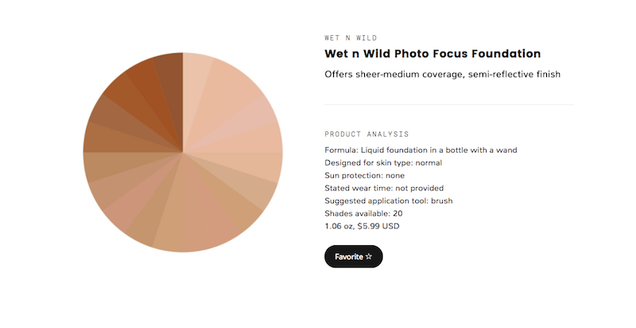
From BB creams to CC creams to powder, there are so many different types of foundationto choose from. If you don’t know where to start or you’re just looking for a new product, you might find Pigment File useful. It’s a searchable and filterable database of every foundation on the market.
Most dogs will happily chow down on human food, whether you give them a treat or they sneakily steal something off the counter. But some foods can be bad or even dangerous for your dog’s health. Here are common foods they can eat and ones you should be cautious letting about your dog ingest.
by Kristin Wong on Two Cents, shared by Andy Orin to Lifehacker
There are plenty of ways to get your credit score for free. Services like CreditKarma, for example, offer a free general overview of your score and the factors that might affect it. Some credit card issuers offer this, too. The Consumer Financial Protection Bureau (CFPB) reached out companies to see which ones offer…
There is only one place on the internet that is nice. There is only one place that does not add to my anxiety and actually alleviates the low level dread that comes with the ubiquitous awareness of being online all of the time. That place is Instagram.
Nature is as ugly as it is beautiful -and it's very, very dangerous. In this incredible video, you can see the horrifying mob violence that occurs when spider crabs get their claws on an octopus -and completely rip it open.
One thing's for sure -the video will make you think twice before messing with these spider crabs.
Street-fight tactics for taking down the heavyweights. Caught between a snook and a hard place, something’s gonna give. Hint: It’s not that concrete piling.
When you hook a big fish on a grassflat, you just let it run. When you hook a big fish under a dock or around pilings you can’t do that, unless you want to lose your expensive fly line as well as the fish.
It’s very sad when a fisherman loses a good fish to a dock and says, “There was nothing I could do!” Of course there was!
I’m a big fan of light tackle, but fishing around structure is not the place for it. Go sufficiently geared up rod-wise. Think of what you’d ordinarily use for the size fish you’re after and go up at least one rod size, or better yet, two.
The same holds true for your leader. Sharp-eyed snook require a tippet of no more than 20-pound-test fluorocarbon. But that’s plenty! Use a two-piece leader with a 30-pound butt and a 20-pound tippet, or even a straight piece of 20-pound right off the fly line.
Jeff Weakley, editor of this magazine, offers this interesting bit of advice: “My own take on this, having fished docks a lot for snook, is to use a hook light enough that it will straighten before the $120 flyline gets shredded over the pilings.”
Okay. You found a dock with fish. You presented your fly. A 15-pound behemoth takes it.
Most anglers are going to lift the rod and try to pull the fish out. After all, this is what we’ve been trained to do.
Sorry. Most of the time that won’t work here. Once that fish spreads its pectoral fins, water pressure is going to keep you from moving it.
What you need to do is to plunge the rodtip deep into the water and pull as hard as you dare. What you are trying to do is roll the fish over. If you can disorient the beast you might be able to pull it away from the structure before it recovers enough to get back in there.
Much better to open a light wire hook than to snap a $700 rod.
And the fish will recover and it will try to get back in there. Don’t let it. Lock up the line and dare that fish to make it back to the dock.
If the boat is not anchored, the boat man should help you by moving the boat away from the structure. Quickly.
Sometimes the fish will cut or break your leader or straighten the hook, or simply out-muscle you. Hey, you’re not going to win every time.
But, hopefully it’s obvious that if you let the fish do what it wants you’re going to lose almost every time.
It has happened to me with cobia on buoys that, after the hookup, we used gentle pressure to “walk” the fish away from the structure with the boat. Once we were far enough away that no surge would get the fish back there, then we came tight and started the battle. They were cooperative fish, though.
With tarpon around bridges you must follow it in and out of the pilings. You’re not going to out-muscle a green tarpon with any kind of tackle. Try to get it out into open water. Use these techniques and see if you don’t get more victories in your close quarters combat. FS
As a Neatorama reader, you probably already know a bit about the history of the Eiffel Tower, but there's still plenty you probably don't know as well. This Travel and Leisure article can help fill you in on a few of those secrets you might still find surprising.
For example, did you know that Gustave Eiffel didn't actually design the tower? Or that Hitler ordered the tower to be destroyed? And do you have any idea what's lurking below the tower's south pillar?
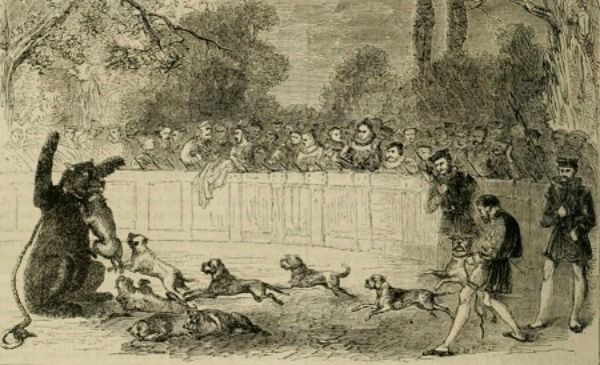
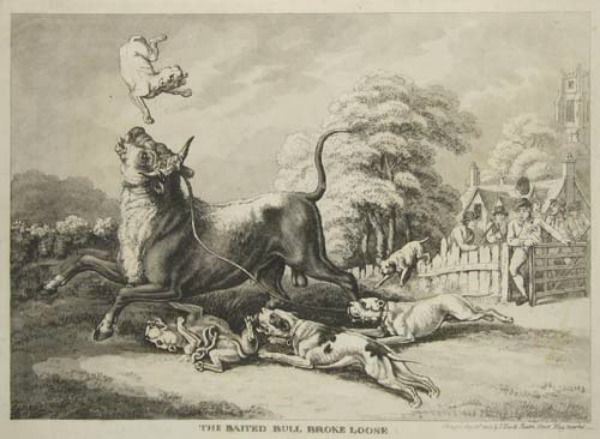
You know those crazy pit fights you see in the movies where a bear is forced to battle a pack of dogs in the arena for the amusement of a bloodthirsty crowd?
Those sick shows were extremely popular in England back in Shakespeare's day, and all manner of fearsome creatures were forced to fight in a spectacle that seems revoltingly barbaric to anyone who cares about animals.
They called it "baiting", and the gruesome blood sport most commonly involved bears and bulls battling other animals to the death in a theater setting, one of the most popular nicknamed "Bear Gardens".
Baiting was so popular in the 16th and 17th century that Queen Elizabeth I and other royals could be seen in the crowds, and even though it fell out of popularity by the 1700s baiting wasn't banned in England until 1835.
The chicken sandwich and fries at Keba.Photograph by Jennifer Zyman. Georgia-based chain KEBA (pronounced Kay-Bah) specializes in a spin-off of döner kebap, a type of Turkish sandwich you can find on nearly every street corner in Germany. Traditionally, it is made with shaved meats from a rotating spit and served on pita bread. KEBA’s sandwiches are a bit different: They feature a soft, white European-style roll that makes for a sturdier sandwich than split pita, which tends to fall apart under the weight of the meat and veggies. You can build a sandwich on this bread, a whole wheat wrap, or as a “K-bowl” (sandwich fillings without the bread). For protein, diners can choose from marinated pork, beef, and chicken roasted on a vertical spit, along…View Original Post
The Temple, designed in 1930 by Atlanta architect Philip Schutze, is among the sites featured this year.Photograph by Patrick Heagney When preservationists successfully rescued the Fox Theatre from demolition in the 1970s, it was a watershed victory in a city better known for bulldozing architectural relics than for upholding them as landmarks. In 2003, to honor that effort, the Atlanta Preservation Center hosted the first Phoenix Flies celebration. Fourteen years later Phoenix Flies (March 4-26) has grown into a citywide commemoration of Atlanta’s man-made historic sites, with free tours and lectures held in places both obvious (Oakland Cemetery) and not (neighborhood coffeehouses in old buildings). This year the organizers will pay homage to the role women have played in keeping Atlanta’s—and America’s—historic fabric intact. About…View Original Post
In the desert of New Mexico stand buildings that look like they might have come from the future — or another planet. The brainchild of architect Mike Reynolds, these earthships...
Since the early 1990s, a three-quarter mile stretch of Pennsylvania Highway 61 has been closed - blocked with berms of earth at both ends - because the ground beneath it is on fire.
Editor’s note: The following excerpt was taken from FM 21-76: Survival Evasion and Escape, an Army field manual published in 1968.
Guiding by Sun and Stars
1. Finding Direction by Day
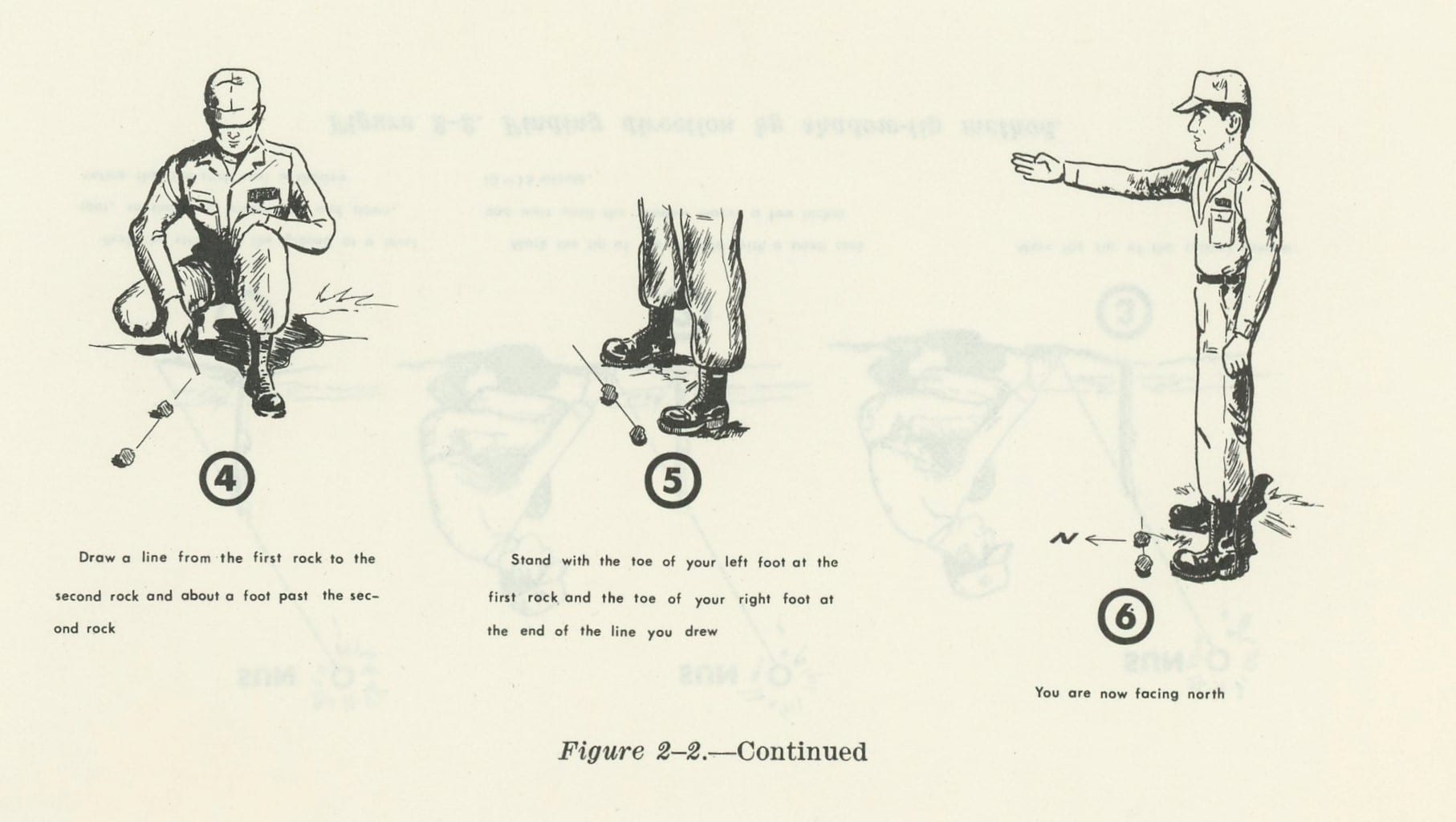
(1) If you do not have a compass, you can use the sun to find approximate true north (and from north, any other direction). The method explained below can be used any time the sun is bright enough for a stick placed in the ground to cast a shadow (fig. 2-2).
(a) Steps to follow. Find a fairly straight stick about 1 meter long and follow these steps:
Step 1: Push the stick into the ground at a fairly level, brush-free spot where a distinct shadow will be cast. The stick need not be vertical; inclining to obtain a more convenient shadow, in size or direction, does not impair the accuracy of the shadow-tip method.
Step 2: Mark the shadow tip with a small peg, stick, stone, twig, your finger, hole in the snow, or other means. Wait until the shadow tip moves a few inches — using a 1 meter stick, 10 to 15 minutes should be sufficient.
Step 3: Mark the new position of the shadow tip.
Step 4: Draw a straight line from the first rock to the second rock and extend it about a foot past the second rock.
Step 5: Stand with the toe of the left foot at the first rock and the toe of the right at the end of the line you drew.
(b) You are now facing north. Find other directions by recalling their relation to north. To mark directions on the ground (as for the purpose of orienting others), draw a line across the first line, forming a cross and mark the directions.
(c) Basic rule of direction. If you are ever uncertain of whether to place the left or the right foot on the first rock (see Step 5 above), remember this basic rule for telling East from West:
The sun rises in the east and sets in the west (but rarely due east and due west). The shadow tip moves just the opposite. Therefore, the first shadow tip mark is always in the west direction and the second mark in the east direction, EVERYWHERE on earth.
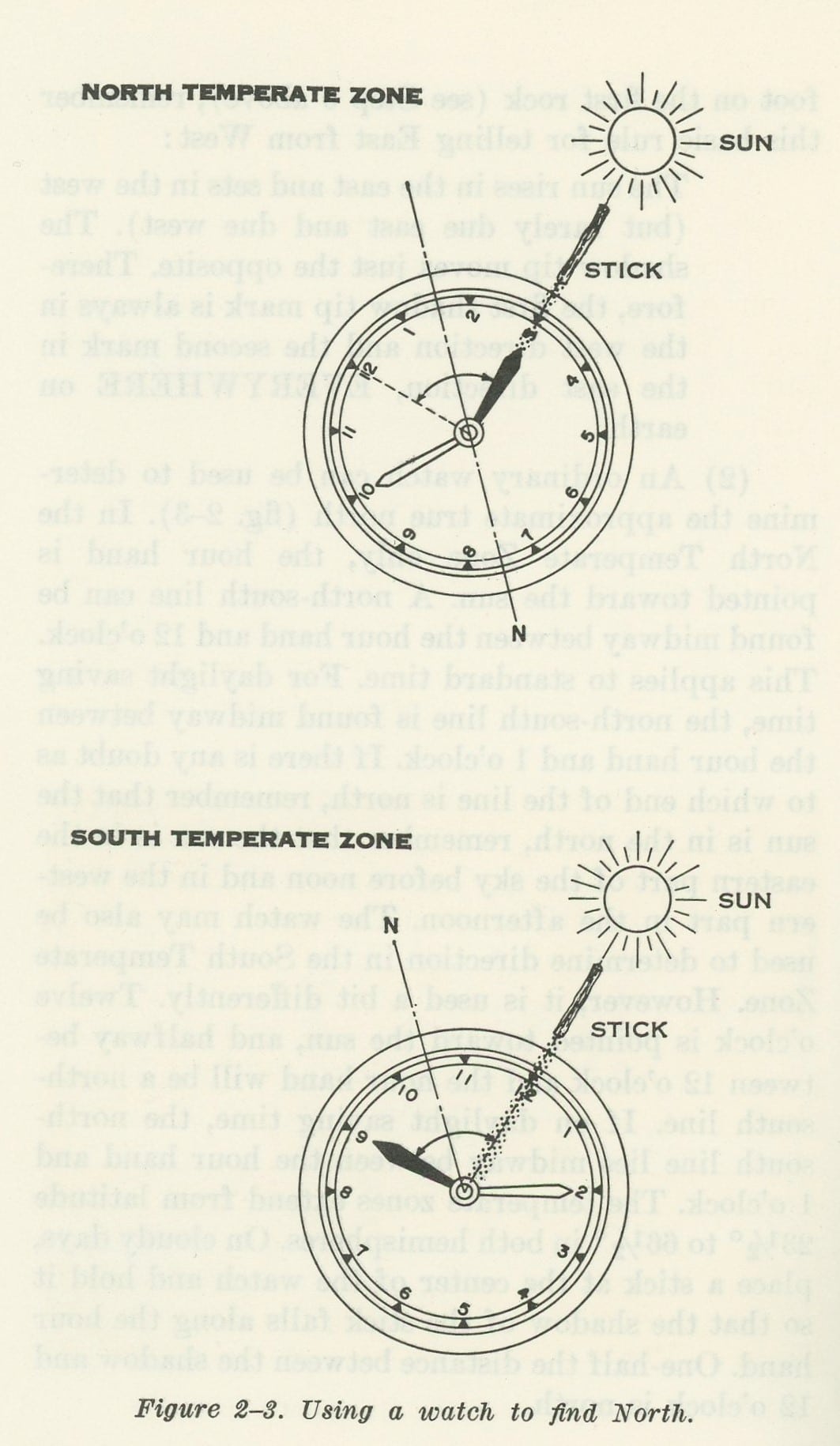
(2) An ordinary watch can be used to determine the approximate true north (fig. 2-3). In the North Temperate Zone only, the hour hand is pointed toward the sun. A north-south line can be found midway between the hour hand and 12 o’clock. This applies to standard time. For daylight saving time, the north-south line is found midway between the hour hand and 1 o’clock. If there is any doubt as to which end of the line is north, remember that the sun is in the north, remember that the sun is in the eastern part of the sky before noon and in the western part in the afternoon. The watch may also be used to determine direction in the South Temperate Zone. However, it is used a bit differently. Twelve o’clock is pointed toward the sun, and halfway between 12 o’clock and the hour hand will be a north-south line. If on daylight saving time, the north-south line lies midway between the hour hand and 1 o’clock. The temperate zones extend from latitude 23 1/2° to 66 1/2° in both hemispheres. On cloudy days, place a stick at the center of the watch and hold it so that the shadow of the stick falls along the hour hand. One-half the distance between the shadow and 12 o’clock is north.
2. Finding Direction at Night
Direction can be determined by means other than a compass:
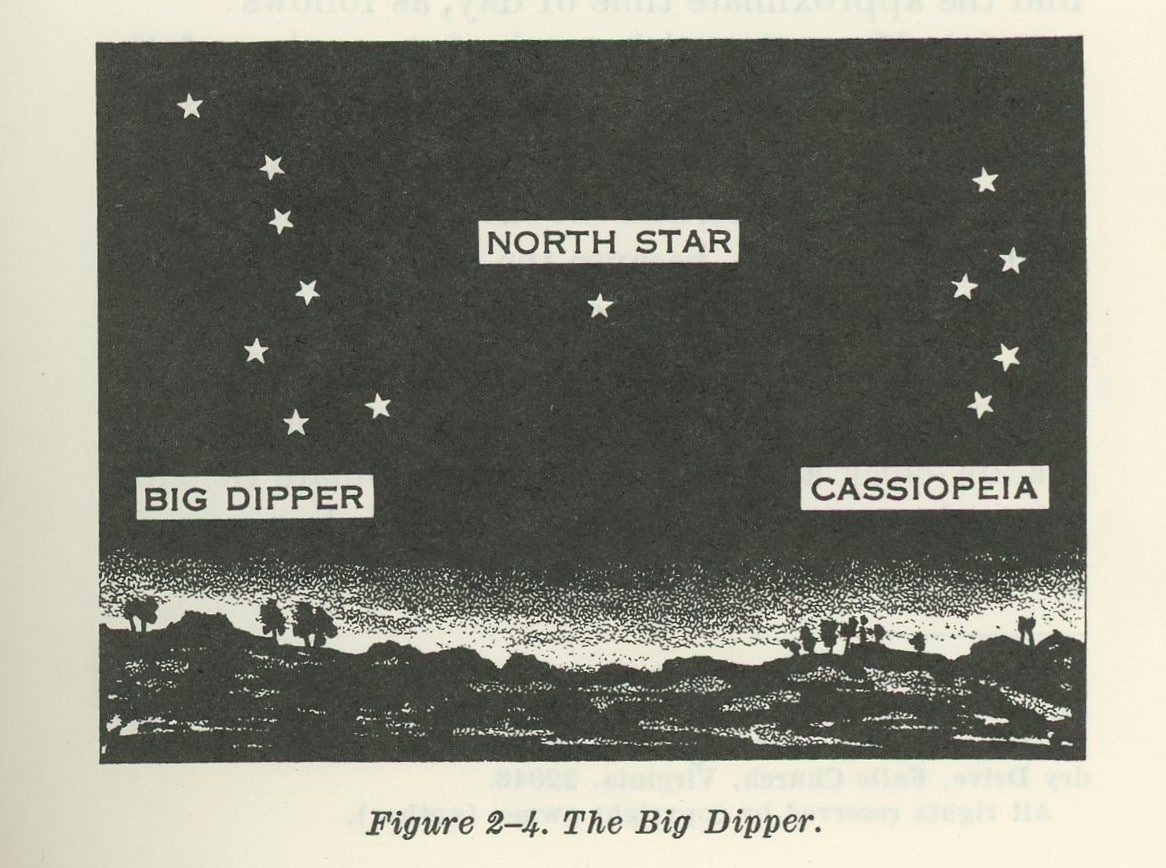
(1) To find the North Star, look for the Big Dipper. The two stars at the end of the bowl are called the “pointers.” In a straight line out from the “pointers” is the North Star (at about five times the points). The Big Dipper rotates slowly around the North Star and does not always appear in the same position (fig. 2-4). The constellation Cassiopeia can also be used. This group of five bright stars is shaped like a lopsided M (or W, when it is low in the sky). The North Star is straight out from the Big Dipper. Cassiopeia also rotates slowly around the North Star and is always almost directly opposite the Big Dipper. Its position, opposite the Big Dipper, makes it a valuable aid when the Big Dipper is low in the sky, possibly out of sight because of vegetation or high terrain features.
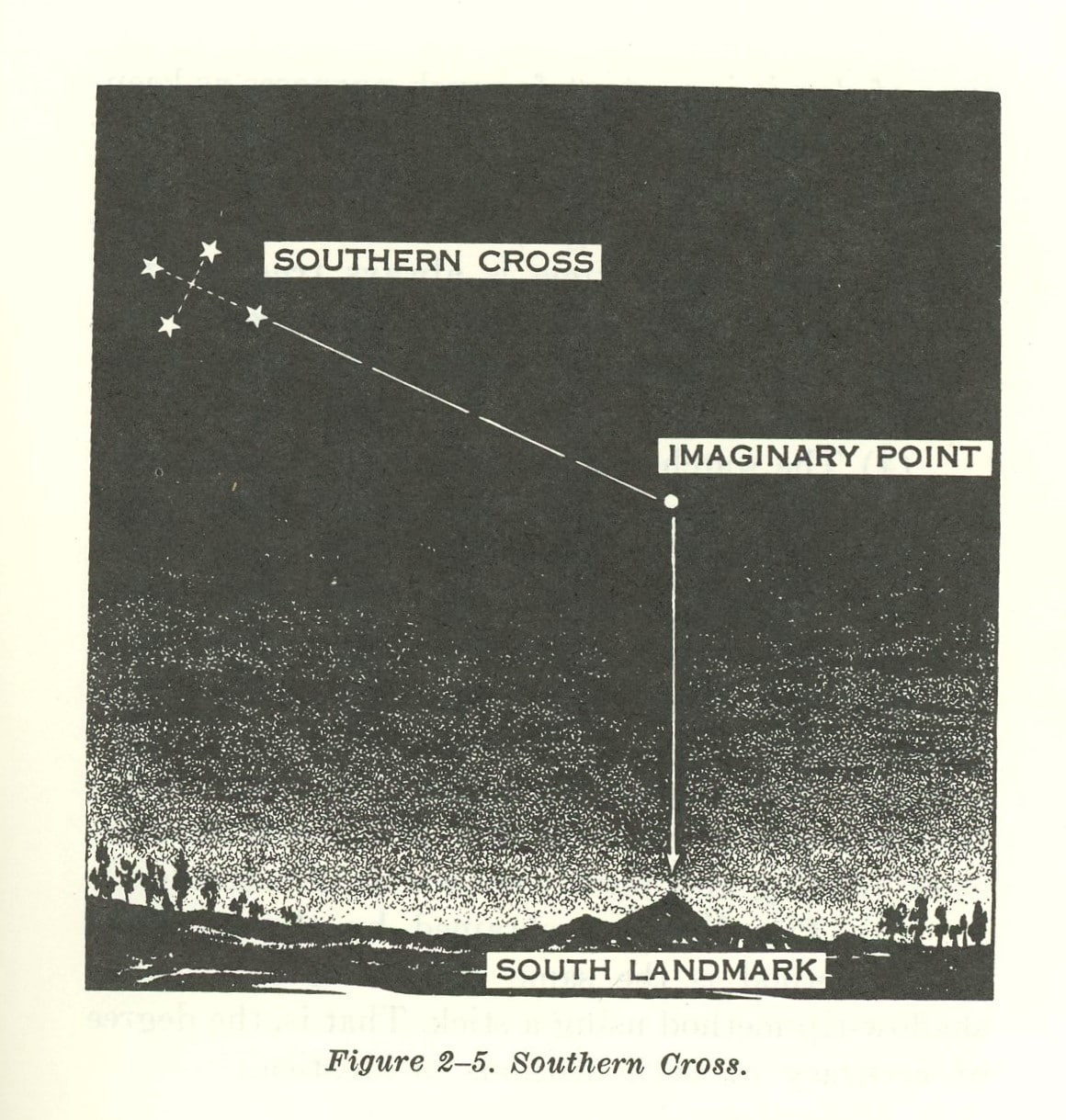
(2) South of the equator, the constellation Southern Cross will help you locate the general direction of south and, from this base, any other direction. This group of four bright stars is shaped like a cross that is tilted to one side. The two stars forming the long axis, or stem, of the cross are called the “pointers.” From the foot of the cross, extend the step five times its length to an imaginary point (fig. 2-5). This point is the general direction of south. From this point, look straight down to the horizon and select a landmark.
3. Determining Time
The Shadow-Tip Method previously described (fig. 2-2) can also be used to find the approximate time of day, as follows:
(1) Move the stick to the intersection of the east-west line and the north-south line, and set it vertically in the ground. The west part of the line indicates 0600 hours, and the east part is 1800, ANYWHERE on earth, because the basic rule, described in 1c in “Finding Direction by Day” above always applies.
(2) The north-south line now becomes the noon line. The shadow of the stick is an hour hand in the shadow-clock and with it you can estimate the time using the noon line and the 6 o’clock line as your guides (fig. 2-6). Depending on your location and the season, the shadow may move either clockwise or counterclockwise, but this does not alter your manner of reading the shadow-clock.
(3) The shadow-clock is not a timepiece in the ordinary sense. It makes every day 12 unequal “hours” long, and always reads 0600 at sunrise and 1800 at sunset. However, it does provide a satisfactory means of telling time in the absence of watches (which is the usual case with escaped prisoners of war) or properly set watches. Being able to establish time of day is important for such purposes as keeping a rendezvous, pre-arranged concerted action by separated persons or groups, estimating the remaining duration of daylight, and so forth. Twelve o’clock shadow-clock time is always true midday, but the spacing of the other hours, compared to conventional time, varies somewhat with the locality and the date.
(4) The watch method (fig. 2-3) very seriously can be in error, especially in the lower latitudes, and may cause “circling.” To avoid this, set your watch to shadow-clock time and then use the watch method. This eliminates the 10-minute wait required to complete a shadow-tip reading for direction and thereby permits you to take as many instantaneous readings as necessary to avoid “circling.” After traveling for an hour or so, take a check shadow-clock reading and reset your watch if necessary.
(5) The direction obtained by this modified watch method is the same as that of the regular shadow-tip method using a stick. That is, the degree of accuracy of both methods is identical.











 (
(







 The chicken sandwich and fries at Keba.Photograph by Jennifer Zyman. Georgia-based chain KEBA (pronounced Kay-Bah) specializes in a spin-off of döner kebap, a type of Turkish sandwich you can find on nearly every street corner in Germany. Traditionally, it is made with shaved meats from a rotating spit and served on pita bread. KEBA’s sandwiches are a bit different: They feature a soft, white European-style roll that makes for a sturdier sandwich than split pita, which tends to fall apart under the weight of the meat and veggies. You can build a sandwich on this bread, a whole wheat wrap, or as a “K-bowl” (sandwich fillings without the bread). For protein, diners can choose from marinated pork, beef, and chicken roasted on a vertical spit, along…
 The Temple, designed in 1930 by Atlanta architect Philip Schutze, is among the sites featured this year.Photograph by Patrick Heagney When preservationists successfully rescued the Fox Theatre from demolition in the 1970s, it was a watershed victory in a city better known for bulldozing architectural relics than for upholding them as landmarks. In 2003, to honor that effort, the Atlanta Preservation Center hosted the first Phoenix Flies celebration. Fourteen years later Phoenix Flies (March 4-26) has grown into a citywide commemoration of Atlanta’s man-made historic sites, with free tours and lectures held in places both obvious (Oakland Cemetery) and not (neighborhood coffeehouses in old buildings). This year the organizers will pay homage to the role women have played in keeping Atlanta’s—and America’s—historic fabric intact. About…