The following is an article from Uncle John's Endlessly Engrossing Bathroom Reader.
 (Image credit: Frode Inge Helland)
One measure of the desirability of a sports car is whether or not it has teenagers drooling over it before they’re even old enough to drive. Here’s the story of one of the most drool-worthy cars in auto history. (See how long it takes you to guess which car we’re talking about.)
THINKING SMALL
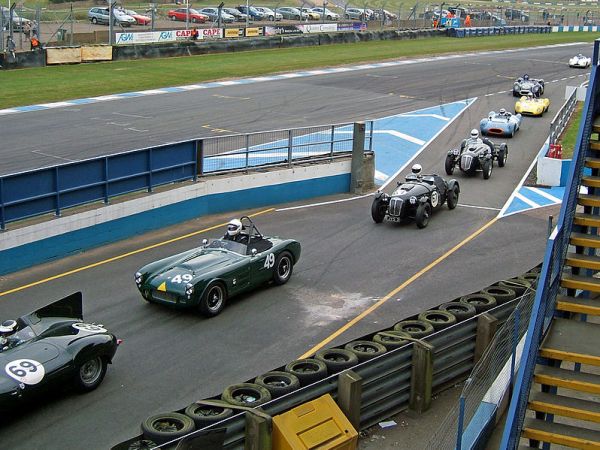
In the early 1950s, Harley Earl, the legendary head of General Motors’ Styling department, began to notice an uptick in interest in small, imported sports cars. The soldiers who fought in World War II had taken a liking to the Fiats, Triumphs, Jaguars, Morgans, and other convertible roadsters they had seen in Europe, and they’d been buying modest numbers of them from import auto dealers ever since. When Earl went to auto races, he was struck by the affection that drivers had for their little sports cars, and now even his own employees were beginning to drive them to work.
Earl had devoted his entire working life to making GM’s cars ever longer, wider, lower, more powerful, more streamlined, and more fanciful, as his automobile designs drew inspiration from everything from locomotives to bombers to rocket ships. He’d worked on plenty of cars that might be considered sporty, but he’d never really designed a sports car, at least not one that had found its way into dealer showrooms. Sports cars may have looked pretty and been fun to drive, but they didn’t sell very well. Of the more than 4.6 million vehicles sold in the U.S. in 1952, barely 11,000 of them were sports cars. That’s less than ¼ of one percent.
 (Image credit: John Chapman)
BUY AMERICAN
It had been years since any of the major American auto companies bothered to make any kind of a two-seater, let alone a sports car, and this was undoubtedly one of the things that crossed Earl’s mind. How can consumers be expected to buy many roadsters if there aren’t any on the market? Remember, the auto industry was a lot different in the 1950s: Together, GM’s five automobile divisions (Chevrolet, Pontiac, Oldsmobile, Buick, and Cadillac) manufactured roughly half of all the automobiles sold in the United States each year. Ford, Chrysler, and a handful of other small U.S. companies sold nearly all the rest. Few Americans had ever owned a foreign-made car or would have considered making such a purchase—the image and perceived superiority of the American automakers was that dominant in those days. But with no domestic sports cars available, customers who wanted to buy one had to get it from a foreign automaker or go without.
Earl didn’t know if sports cars would ever be a major segment of the U.S. auto industry, but he did understand that they had a great deal of appeal with young people. GM was a big company and made big profits year after year. Why not spend a tiny fraction of that money on an American sports car that would appeal to the kids who bought MGs and Triumphs? Once they were in the GM fold, Earl figured, when the time came for them to trade up to a four-seater, they’d be much more likely to buy it from GM.
TOP SECRET
Harley Earl’s innovative design work played a major role in GM’s postwar dominance, and the company’s other executives knew it. So when he hired a young engineer named Bob McLean, paired him with another young stylist named Duane Bohnstedt, and hid the two of them on the third floor of an obscure old GM building with instructions to work on something called “Project Opel,” few executives had the gall to ask what Project Opel was all about.
What it was all about, of course, was a two-seater convertible sports car. Working from Earl’s rough outline, McLean and Bohnstedt came up with a design for the car’s body that appears to have been inspired by an Italian roadster called the Cisitalia 202. In those days, most sports cars had long engine compartments that narrowed almost to a point at the front end of the car, with broad, flowing fenders that were a separate and quite distinct element of the car’s design. Not so with the new GM roadster: Like the Cisitalia 202, it was a low, flat, wide, almost square box with fenders that were integrated into the rest of the body. Today the integrated-fender look is standard—it’s so common that it’s difficult to even remember what cars looked like when their fenders were separate from the rest of the engine compartment. But to see that look on a roadster in the 1950s was not only novel, it was stunning.
THE ROADSTER FINDS A HOME…
When McLean and Bohnstedt were finished with their design, they made a full-size model out of clay, and then Earl invited executives from GM’s five different divisions to take a look at it and see if they wanted it for their division. Cadillac passed. So did Buick and Oldsmobile. Pontiac wasn’t interested, either.
The story might have ended right there, were it not for the fact that Chevrolet, GM’s high-volume, low-cost, no-frills division, was having a bad year. As recently as 1950, it had sold more cars than Ford, but its sales had slipped considerably since then. Tom Keating, Chevrolet’s general manager, and Ed Cole, its chief engineer, were looking for ways to freshen up the division’s dowdy image. A V-8 engine was in the works to replace Chevy’s lackluster six-cylinder motor, but it was still a couple of years off. Harley Earl’s secret roadster seemed like just the ticket to excite interest in Chevrolet right away. Even if the car didn’t sell in great numbers, its sporty image would give the entire division a lift. And who knows? Maybe people who came to Chevy dealers to gawk at the roadster might stick around to buy a car.
…AND A NAME
But what should the roadster be called? Chevrolet executives got together with the company’s advertising agency and mulled over a list of more than 300 names, none of which seemed to really fit the car. It wasn’t until after the meeting that an assistant advertising manager named Myron Scott—whose other claim to fame is founding the American Soap Box Derby—suggested naming it after a class of small, highly maneuverable warships that had been used on coastal patrols and to escort convoys of merchant ships across the North Atlantic during World War II.

In a sense, then, credit for giving the roadster its name can be indirectly attributed to British Prime Minister Winston Churchill. For when a British naval designer named William Reed drew up plans for this new class of small warships in the late 1930s, it was Churchill, then First Lord of the Admiralty, who suggested naming them after a type of small sailing ship that had served a similar purpose during the Age of Sail.
The name: Corvette.
THE PARTS BIN SPECIAL
The full-size clay model of the Corvette was, in terms of style, ahead of its time and a sight to behold. But it was still a two-seater sports car, and there was a limit to the amount of money GM was willing to spend on a class of vehicle that made up less than a quarter of one percent of all auto sales in the United States. Bob McLean had the unenviable task of building the Corvette using as many existing Chevrolet parts as possible—in other words, he had to build a sports car out of non-sports-car parts. Using preexisting parts did, however, offer one advantage: Chevy could bring the car to market much more quickly than if it had been engineered from scratch.
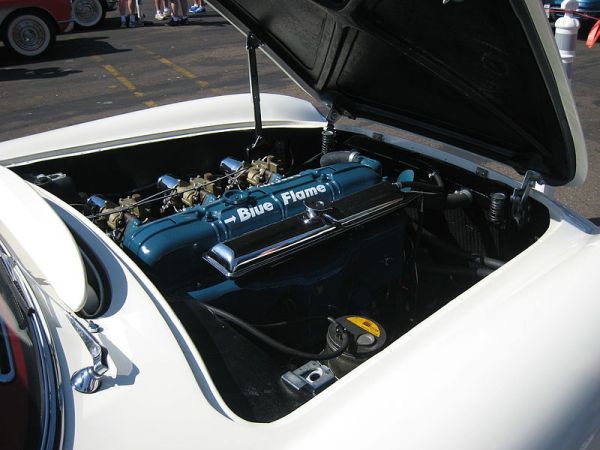
Harley Earl had a lot of muscle at GM, but even he couldn’t pry a V-8 out of Cadillac, Buick, or Oldsmobile, so jealously did the executives of those higher-end divisions guard their turf. The Corvette would have to settle for Chevrolet’s standard six-cylinder engine, the 150-horsepower Blue Flame, also known as the “Stovebolt Six.”
The Corvette was a very low car for its day, with the roofline a good foot lower than that of other cars. This made it too low to use Chevy’s three-speed manual transmission, so the two-speed Powerglide automatic transmission was used instead. They used standard Chevrolet drum brakes and suspension, and a chassis that had been modified from an ordinary sedan. Power steering was out—instead, the Corvette got a large, 17” steering wheel that was easy to turn at slow speeds.
BELLE OF THE BALL
 (YouTube link)
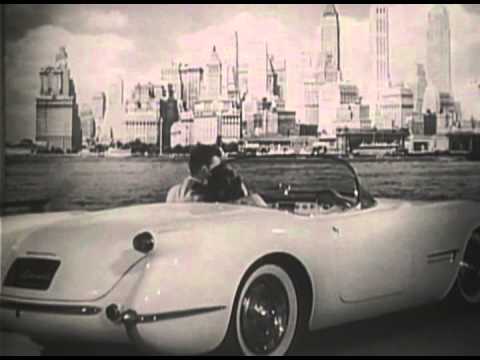
In those days, GM previewed its designs for new cars in a traveling car show called Motorama. Before a new model was put into production, a single concept car was built by hand and displayed at the show. Then, if the car was well received by the public, GM would gear up to manufacture it for sale. To save time and money, the body panels of the hand-built Corvette show car were made of fiberglass—literally plastic reinforced with glass fibers—instead of steel.
READY OR NOT
Chevrolet had a sense that the Corvette would be a hit when it made its debut at Motorama in January 1953, but the public reaction to the show car surpassed even their expectations. When was the last time you wrote a letter to an auto company? A complimentary letter? More than 7,000 people who saw the Corvette at Motorama wrote Chevrolet to tell the company that they would buy a Corvette if the company ever offered them for sale—and this was at a time when the entire U.S. market for sports cars was just over 11,000 cars a year. In fact, the response was so enthusiastic that Chevrolet rushed the Corvette into production to ensure that at least a few hundred of the cars would make it onto showroom floors before the year was out.
Initially the plan had been to manufacture the cars’ body panels out of steel, not fiberglass, just like every other car made by the big domestic automakers in the 1950s. But supply disruptions caused by the Korean War prompted GM to gamble on fiberglass and begin manufacturing what would become the first-ever high-volume, mass-produced car with an all-fiberglass body.
START YOUR ENGINES

Three hundred cars were manufactured for the 1953 model year. Because the fiberglass body panels proved to be so different from the steel the autoworkers were accustomed to, all 300 had to be assembled by hand, just like the Motorama show car. And like the Motorama car, they were beautiful—bright red interiors, bodies painted “Polo White,” stylish wraparound windshields, headlights covered with chromed metal mesh to protect against stones, wide oval grilles with 13 chrome “teeth,” and a convertible top hidden beneath a rear deck lid so that the exquisite, flowing lines of the car weren’t disrupted by the clutter of the folded top.
For publicity purposes, Chevrolet set aside all 300 of the 1953 Corvettes for celebrities and VIPs. Ordinary customers would have to wait for the 1954 Corvette, now just a few months away and virtually unchanged from 1953, except that in addition to Polo White, it would be available in Pennant Blue and Sportsman Red.
If you were lucky enough to buy one of those ’53 Corvettes (sticker price: $3,498, or about $32,000 today), and you managed to hold onto the car all these years, you must be very glad that you did. As the first of what would become the most successful line of sports cars in automotive history, those 1953 Corvettes have soared in value over the years. Today one in good condition can sell for more than $300,000 at auction—more than three times the price of a new Corvette. (The 1954s can fetch as much as $130,000.)
CORVETTE EMPTOR
Those 1953–54 Corvettes are still a joy to look at, and considering how much they’re worth, it’s hard to believe how disappointing they were to the thousands of fans who’d waited months to buy one. They were beautiful, to be sure—especially if you stood back far enough—but the cars had so many problems that almost everyone found something to hate about them, including the automotive press. “The amazing thing about the Corvette is that it comes so close to being a really interesting, worthwhile and genuine sports car, yet misses the mark almost entirely,” Road & Track magazine wrote.
 (Image credit: Kowloonese)
Sports car enthusiasts were turned off by the underpowered six-cylinder engine, and they despised the automatic transmission, which not only offered poor performance but also denied roadster drivers their God-given right to a stick shift. The suspension that had been borrowed from an ordinary sedan felt like it had been borrowed from an ordinary sedan, and so did the brakes.
NO LOCKOUTS
Ordinary drivers who might not have been bothered by poor performance still found plenty about the 1953–54 Corvettes to scare them away from showrooms. For one thing, the cars were surprisingly lacking in standard amenities. No power steering? People were used to that. But no roll-down windows? The Corvette had “side curtains”—clumsy plastic panels that had to be removed and stored in bags in the trunk when not in use.
The 1953–54 Corvettes didn’t even have exterior door handles—you had to reach into the car and open the door using the inside handle. That was fine when the top was down, but when the top was up and the side curtains were in place, such as, say, during a rain storm—when you had to get into the car right now—getting the door open was a hassle. It also meant that the car couldn’t be locked securely if it was parked outside.
(FIBER)GLASS HOUSES
But the biggest problem of all was the fiberglass body panels—62 in all—that Chevrolet had gambled on without knowing what it was getting into. Fiberglass was a relatively new material in the 1950s and had never been used on a mass-produced car before. And as Chevy learned (to its dismay), fiberglass still had plenty of bugs that had to be worked out.
Chevrolet and its subcontractors had yet to figure out a way to manufacture the panels to a standard, uniform thickness. As a result, the pieces fit together terribly. The doors, hood, trunk, and rear deck lid could be out of alignment by as much as half an inch, and when they stuck out that far they not only spoiled the car’s flowing lines, they created huge gaps that were impossible to seal against rain and water on the road.
Painting the fiberglass was another nightmare. There were air bubbles in the fiberglass panels and in the material used to bond them together. When the cars were painted and placed in giant ovens to dry, the bubbles expanded and popped, ruining the paint job. Each popped bubble had to be sanded down and repainted, with no guarantee that the problem wouldn’t happen again. Some cars that were painted multiple times never did get a decent, unblemished coat of paint. After several failed attempts, they were just shipped to Chevy dealers the way they were.
THANKS… BUT NO THANKS
Soon word of mouth surrounding the Corvette was so bad that the company couldn’t even find 300 VIPs willing to buy one. Then, when the 1954s became available, so many buyers complained about the poor quality of their Corvettes that some Chevy dealers stopped taking orders for the cars. More than a thousand unsold 1954s piled up on the Corvette factory grounds, prompting Chevrolet to delay production on the 1955 Corvette until all the 1954s were sold. Result: Only 700 Corvettes were manufactured for the 1955 model year.
THUNDERSTRUCK
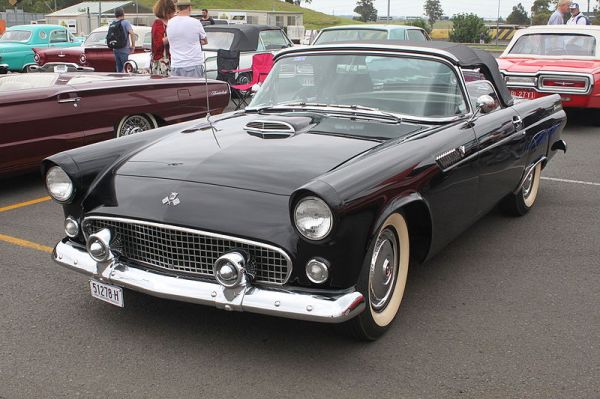
By now the Corvette was such a disaster that GM was seriously considering killing the whole program. So what saved it? The 1955 Thunderbird, Ford’s answer to the Corvette. Ford had been secretly working on its own two-seater convertible since 1952, when Franklin Q. Hershey, Ford’s head of styling, saw a picture of the Corvette show car at a dinner party and ordered his employees to come up with some kind of a response. Ford higher-ups killed the project in late 1952, but when the Corvette show car made its huge splash at Motorama in January 1953, the Thunderbird was revived—in other words, the car that saved the Corvette was itself saved by the Corvette.
 (Image credit: Jeremy)
Introduced to the public in September 1954, the 1955 T-Bird was everything the Corvette wasn’t: It was powerful, with a V-8 engine instead of an underpowered six-cylinder engine, and it offered buyers a choice of either a three-speed manual transmission or a three-speed automatic. It had roll-up windows, exterior door handles and locks, and it was made of steel, not fiberglass. It wasn’t really a sports car—Ford called it a “Personal Luxury Car”—but it was beautiful and a lot of fun to drive.
Ford set out to sell 10,000 T-Birds in 1955 and ended up selling more than 16,000. It probably would have sold a lot more than that, had the factory been able to build them fast enough.
CAN’T QUIT NOW
The Thunderbird proved that a two-seater convertible could be successful, if it was built correctly. Its strong sales were a big blow to Chevrolet’s pride. Now that the T-Bird was a success, dumping the Corvette was out of the question. Killing it would be an admission of defeat, an acknowledgement that Ford knew how to make a two-seater and GM, the world’s largest automaker, did not.
The Corvette was safe… for the time being.
SKIN DEEP
In January of 1953, a Belgian-born, Russian-Jewish immigrant named Zora Arkus-Duntov paid a visit to the General Motors Motorama auto show at the Waldorf-Astoria Hotel in New York City. There the first Chevrolet Corvette was unveiled to the public, and like so many other people who got their first look at the car, Duntov was struck by its beauty.
Unlike most of the spectators, Duntov was an automotive engineer who’d spent years working on and around race cars. As he studied the Corvette’s motor and other components, he realized that it would not be able to deliver on the promise of performance that its sporty good looks implied. “Mechanically, it stunk, with its six-cylinder engine and two-speed automatic transmission,” he remembered. “But visually, it was superb.”
DREAM JOB
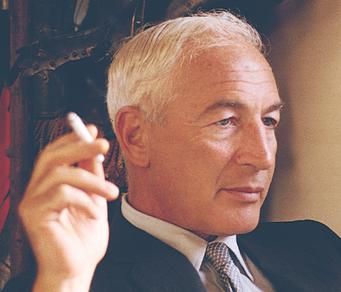 Duntov had been looking for a job with one of the major American automakers for several months. Before Motorama, he wasn’t too particular about which company he went to work for, but after seeing the Corvette, he knew he wanted a job at Chevrolet. This was a car he could work on—this was a car that needed his help. Luckily for Duntov (and for you, if you’re a Corvette fan), Ed Cole, Chevrolet’s chief engineer, was impressed with his credentials and gave him a job. In May 1953, Duntov started as an assistant staff engineer in Chevrolet’s Research & Development department.
If Duntov thought he was going to be assigned full-time to the Corvette, he was probably disappointed—the car was so new and sold at such low volumes that no employees were assigned to it full-time. People worked on the car on temporary assignment and only when their work on other, more important projects permitted.
A TOUGH FIT
Duntov had run his own businesses before, but he’d never worked for a big corporation, and he had a tough time adjusting to life at GM, then the world’s largest. Just a few weeks after landing his job at Chevrolet, he nearly lost it when he insisted on taking a leave of absence to honor a prior commitment and go to France to race at Le Mans, a grueling 24-hour road race. Result: When he (reluctantly) returned to Detroit, he was demoted and reassigned to work on GM trucks and schoolbuses. In December 1953, however, he worked his way back into the good graces of his superiors by drafting a memo titled, “Thoughts Pertaining to Youth, Hot-Rodders and Chevrolet.”
In his memo, Duntov observed that the hobby of fixing up cars and turning them into hot rods was a rapidly growing fad with young men. Currently Fords were the cars of choice for hot-rodders, and Duntov speculated that when these young men outgrew their street racers, they were likely to continue buying Fords. In the Corvette, Duntov saw an opportunity to win some of this business for Chevrolet. But the performance of the standard Corvette had to be improved considerably, and on top of that, Chevy had to begin offering a full line of optional high-performance parts for buyers who wanted their Corvettes to be able to take on all those souped-up Fords.
THE RIGHT MAN FOR THE JOB
The 1953 Corvette aside, Chevrolet had a reputation for selling low-priced, underpowered, and unexciting cars to buyers who didn’t have the money to buy the cars they really wanted—hardly the car of choice for hot-rodders. The division’s bargain-basement image had cost it a lot of business in recent years, and that was one of the reasons Cole had wanted the Corvette for Chevrolet. It was also one of the reasons he wanted Duntov for Chevrolet, even after he’d run off to Europe to play with race cars. Duntov may well have been the only engineer at GM who would have known how to play with race cars, and he was certainly one of the few with the insight to write his famous memo about Chevrolet and hot-rodders.
Remember that, though Chevrolet had been founded by a race car driver, Louis Chevrolet, in 1911, it had been decades since Chevy or any other GM division had built anything resembling a race car (or a sports car). And paradoxically, GM could be a tough place to work for people who were interested in cars. A typical career path for a GM engineer was to start out working on designs for one small part of the car—say, the latch mechanism for the hood—then eventually move on to another, such as engine mounts or trunk lid hinges. A job at GM was steady, high-paying work for people willing to endure years of tedium as they paid their dues, but serious “car guys” who were passionate about hot rods and racing stayed away. Duntov was one of the few who was willing to take a chance at GM. And that was why Cole only banished him to work on trucks and schoolbuses instead of firing him outright.
Duntov’s hot-rod memo laid out a strategy for Chevrolet to become a dominant force in auto racing, just the kind of thing the division needed to change its image. Cole agreed with many of Duntov’s observations and set to work implementing them. Soon, for example, a full line of high-performance parts became available from every Chevy dealer in the country.
ONE STEP AT A TIME
As soon as Cole felt that Duntov had been punished enough, he pulled him off of trucks and schoolbuses and assigned him to the team that was developing fuel injection for the 195-horsepower V-8 engine that would soon be replacing the Corvette’s six-cylinder Stovebolt Six. The V-8 was ready in time for the 1955 model year; all but 6 of the 700 Corvettes manufactured that year had them. (Fuel injection, which increased the engine’s power to as high as 283 hp, didn’t become available until 1957.)
Bit by bit, Duntov and the other engineers and stylists who worked on the Corvette chipped away at the long list of things that were so annoying about the early cars. A three-speed manual transmission was made available as an option in 1955; the following year, it became standard equipment.

1956 was also the year that the Corvette’s body received a bumper-to-bumper cosmetic restyling. In the process, many of the amenities that had been left out of the 1953–55 Corvettes—roll-up windows and exterior door handles and locks, to name three—were put in. By now GM had also solved many of the technical challenges associated with working with fiberglass body panels, so there was no talk of going back to steel. Corvettes kept their fiberglass bodies for more than 50 years, until they were finally replaced with a new composite material in 2005.
A RACY REPUTATION
As the Corvette made steady improvement from one year to the next, Duntov also worked to raise Chevrolet’s racing profile. In 1955 he entered a 1956 Chevy Bel-Air in the annual race to the top of Pike’s Peak in Colorado. He drove the car himself to a record-breaking first-place finish, shaving a full two minutes off the old record, which had been set by a Ford. Then in January 1956, Duntov took a modified 1957 Corvette to Daytona Beach, Florida, and set a 150-mph speed record there.
Chevrolet wouldn’t be directly involved in racing for very long. The sport’s image took a beating after a 1955 car crash at the Grand Prix race in Le Mans, France, killed 80 spectators. In mid-1957, GM, citing safety concerns, joined with the other big U.S. automakers and got out of auto racing altogether. Auto racers would continue to race American cars, of course, but the automakers no longer fielded their own teams or race cars. By then, however, Chevrolet’s reputation as a manufacturer of fast, exciting cars was secure.
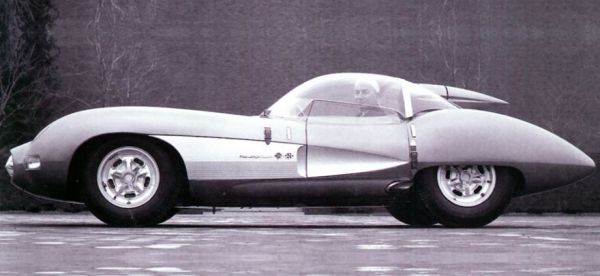 Duntov driving a prototype 1957 racing Corvette. (Image credit: Flickr user Matt Morgan)
1957 was also the year that Duntov was appointed to the newly created position of Chevrolet’s Director of High Performance. For the first time in his career, he had an official title to go with his growing public persona as the “Father of the Corvette.”
BORN AGAIN
For all the improvements that had been made in the Corvette over the years from 1953 to 1962, the car’s chassis and suspension hadn’t changed much from the 1953 model, which borrowed its components from ordinary Chevy sedans. A mechanical redesign was long overdue, and for the 1963 model year the Corvette got one, along with a styling makeover, both inside the car and out. So many changes were made to the 1963 model, in fact, that it is considered the beginning of the “second generation” of Corvettes, not just an improved version of the original car.
Duntov replaced the existing chassis with one that was much stiffer, to give it better handling. He also upgraded the front suspension and replaced the rear “solid-axle” suspension entirely, giving the 1963 Corvette its first independent rear suspension, which produced another huge improvement in handling.
HIGH WATERMARK
 Many purists consider the 1963 Corvette to be the best model in the car’s history of 50+ years, and much of this is due to Duntov’s work under the hood. But it’s also due to the Corvette’s change in body style, which was breathtaking. Dubbed the Sting Ray, the new Corvette had a look partially inspired by a Mako Shark that Bill Mitchell, Harley Earl’s successor as the head of GM’s styling department, had caught while deep-sea fishing off the island of Bimini.
The Sting Ray was available as a convertible or—for the first time—as a 2-door coupe. And what a coupe! The car’s most distinguishing features were its “fastback” roofline that tapered almost to a point at the rear of the car, and a split rear window (abandoned the following year) that made the 1963 coupe arguably the most collectible Corvette of all. That model was also the first to feature concealed pop-up headlights, which would remain a ’Vette trademark for the next 41 years.
HARLEY’S GHOST
The ’63 Corvette was the first one that could give European sports cars like Jaguars and even Ferraris a real run for their money, and it had a beautiful look that was all its own. Publicly, Duntov was proud of the new car. “For the first time, I now have a Corvette that I can be proud to drive in Europe,” he told reporters at the car’s debut. But privately, he was frustrated at having lost so many battles over the car’s design. The Sting Ray’s exciting new body style was the work of stylist Larry Shinoda, not Duntov.
 In a sense, Duntov wasn’t too concerned about what the cars he worked on looked like. He valued performance over everything else. If a styling feature improved a car’s operation or enhanced the driver’s ability to operate the vehicle, he was for it. If it didn’t, he was indifferent at best and vehemently opposed at worst. A sports car inspired by a shark? What for? The coupe’s split rear window in particular drove him to distraction. Dividing the window in two with a vertical bar may have looked cool, but it obstructed the driver’s ability to see behind the car, which was what the rear window was there for in the first place.
But the designers in the Styling department had the final say on the car’s appearance, and they were in the dreamboat business—they made cars that people lusted for, cars that people had to have right now. If splitting the rear window in two and adding fake scoops and air vents was what it took to get the kids drooling, Bill Mitchell had the power to make it happen, no matter how loudly Duntov objected.
MIDDLEMAN
If Duntov had ever risen high enough at Chevrolet to dictate the design of the Corvette, it would have eventually become a mid-engined car (with the motor behind the seats), because he believed that a mid-engine configuration was the next logical step in improving the Corvette’s performance. He proposed the idea in 1963 and again in 1968, and he even managed to get a few mid-engined concept cars built. But his political skills were never the match of his engineering skills, and he never did gain enough clout at GM to realize his dream.
When work began on the third-generation Corvette in the late 1960s, Duntov became increasingly upset by the direction this new car was taking. Mechanically it had little that was new or improved. And stylistically, thanks again to Larry Shinoda’s skill as a designer, it looked even more like a shark than before, complete with gill-shaped vents on the left and right front fenders. Duntov complained so frequently about the new car that he was “promoted” to a new role as a Corvette public relations figurehead (he was the Father of the Corvette, after all), which effectively cut him off from any further say in the design of the car.
FROM A LEMON, LEMONADE
The only thing that saved Duntov from permanent exile was the fact that the all-new 1968 Corvette was an even bigger disaster than the first Corvette had been in 1953. For one thing, the new body style interfered with the cooling system, causing the engine to overheat. And the roofline was so low that the seat backs had to be tilted back from 25° to an uncomfortable 33°, an angle akin to a living-room recliner, which caused the occupants to continually slide forward in their seats while the car was in motion.
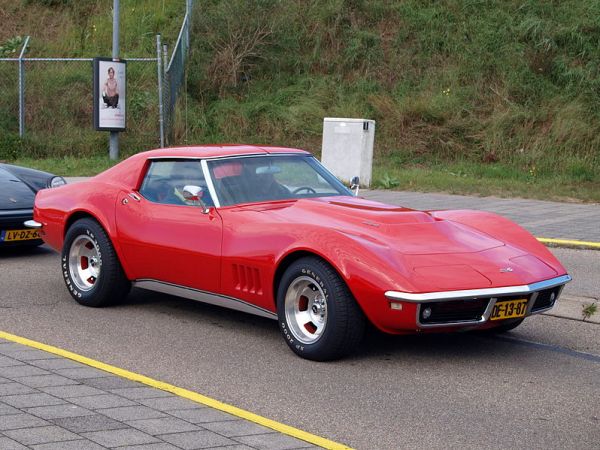
Quality control was another big problem. When Car & Driver received a Corvette to test-drive, it was in such bad shape that they refused to accept it. “The car was unfit for a road test,” the magazine complained. “No amount of envious gawking by the spectators could make up for the disappointment we felt at the car’s shocking lack of quality control. With less than 2,000 miles on it, the Corvette was falling apart.” The magazine’s scathing review not only got Duntov his old job back, it got him a new title to go with it: Chief Engineer of the Corvette.
SHARK ATTACK
As disappointing as the 1968 Corvette was to Duntov and the automotive press, the car’s exciting new look struck a chord with the buying public. They snapped up more than 28,000 that year—a new record. Car & Driver may not have liked it, but the magazine’s readers voted it the “Best All-Around Car in the World.” Sales of the new Corvette remained impressive for the rest of the decade, even as quality control continued to be a problem, and the phasing in of new federal emissions regulations caused the car to lose horsepower from one year to the next.
LOSING ITS STING
Duntov hit GM’s mandatory retirement age of 65 in December 1974. Professionally speaking, it wasn’t a bad time for him to go. GM was so busy grappling with the energy crisis and changing federal emissions and fuel economy standards that it didn’t have money to spare for developing the next generation of Corvette. The car’s horsepower sank to 165 hp in 1975, down from 270 in 1971, and remained low for the rest of the decade. That didn’t hurt the car’s popularity, though: Sales passed the 40,000 mark for the first time in 1978 and hit an all-time high of 53,807 cars the following year. For all its problems, the Sting Ray became the longest-running, bestselling series of Corvettes ever, lasting from 1968 through the 1982 model year.
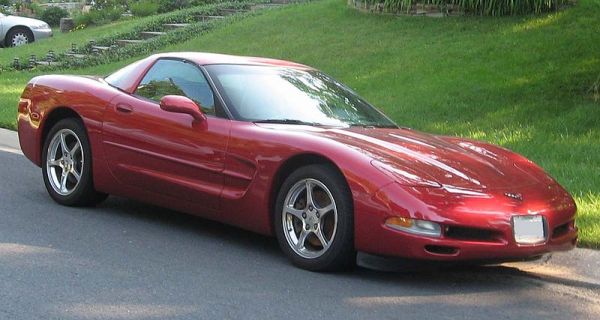
Duntov lived to see the Corvette regain much of the performance it had lost during the 1970s. Thanks to advances in automotive technology, the horsepower in the fourth-generation Corvette, introduced in 1983, began to climb again, reaching 230 hp by 1985 and 300 by 1992. And Duntov lived to see work completed on the fifth generation, 345-hp Corvettes, introduced in 1997, as well. He died in April 1996 at the age of 86, just months before the models began arriving on showroom floors. (The sixth-generation, 400-hp Corvette made its debut in 2005.)
DROP IN FOR A VISIT SOMETIME
At Duntov’s request, his ashes were interred at the National Corvette Museum in Bowling Green, Kentucky, which is also home to the auto plant where Corvettes have been manufactured since 1981. The ashes are part of an exhibit that commemorates Duntov’s life and work. Look for them near the display that showcases a copy of his memo, “Thoughts Pertaining to Youth, Hot-Rodders and Chevrolet.”
__________
 The article above is reprinted with permission from Uncle John's Endlessly Engrossing Bathroom Reader.
Since 1988, the Bathroom Reader Institute had published a series of popular books containing irresistible bits of trivia and obscure yet fascinating facts. If you like Neatorama, you'll love the Bathroom Reader Institute's books - go ahead and check 'em out!


















 (
(



.jpg)