Shared posts

10 Aug 16:12

Severn Bore in Gloucestershire, England

Surfers on the Severn bore

Walking by the banks of England's River Severn, you may be shocked to see a huge wave coming at you from downstream, running the opposite direction of the current. This phenomenon, called a tidal bore, is a familiar sight to locals and to tourists who come to experience it.

Despite looking like they defy the laws of physics, tidal bores are actually naturally occurring phenomena that can be easily explained. As rising tides in a wide bay or inlet are funneled into a narrower stream or river, they begin to form large waves or currents and flow upriver, against the current. Although the river continues to flow into the bay, some of the bay's water also begins to push backwards on this current, flowing upstream. This creates waves that, in some cases, travel miles upriver.

Since the conditions must be just right for them to occur, tidal bores are a rare sight worldwide. The Severn has one of the world's most well known bores, and on the days when it is strongest, surfers and tourists flock from around England to experience it. In fact, the River Severn is the birthplace of river surfing, a sport which wouldn't exist without tidal bores.

While the Severn bore may be observed anywhere in the lower part of the River Severn, it is most dramatically visible where the river narrows south of Gloucester. The Severn Bore Inn, in the town of Minsterworth, provides a perfect spot to see the bore in action.

10 Aug 16:10

Center for Lost Objects in Saint Paul, Minnesota

Items on display.

The Center for Lost Objects is an open art studio, curiosity shop, and gallery in Saint Paul, Minnesota. Items like jewelry, upcycled and antique furniture, and even a taxidermy squirrel carrying a pitchfork with a head speared on top fill its collection of unusual finds.

The center specializes in unique collectibles and oddball items. It’s a haven for makers and DIY enthusiasts. It holds classes on how to upcycle furniture and hosts pop-up shops that feature pieces from various artists, makers, and collectors.

The Center for Lost Objects also hosts monthly live figure drawing sessions, where the model poses in different tableaus made up of the pieces in the store, such as the furniture, candelabras, and bear skin rugs. One model even rode a full mount deer.

The large front window doubles as a stage for experimental performances and music. There's also studio space in its basement for musicians.

10 Aug 16:01

The ‘unwritten rules’ of society that everyone should have written down

10 Aug 15:58

Discover Personal LoansVoice: 5 Online Tools To Help You Manage Your Debt And Expenses

by Discover Personal Loans Contributor, Discover Personal Loans
In managing your expenses and debt, you can now benefit from a variety of free, easy-to-use digital tools: online calculators at a number of well-known sites.
10 Aug 15:45

Sick of congested roads, German man swims to work

MUNICH (Reuters) - Fed-up with the grind of taking a bus or bike to work every day on congested streets in Munich, Benjamin David started swimming there instead.
10 Aug 15:38

Fitzke Bootlegger Paddleboard

Inspired by Prohibition-era airplanes and boats, the Fitzke Bootlegger Paddleboard exudes retro charm. The exterior is made from high-quality marine-grade mahogany plywood, with a touring-style design that tracks straight and...

Visit Uncrate for the full post.
10 Aug 15:37

ATM Turns 50 -- The Peak Of Financial Innovation, According To Paul Volcker

by Tom Groenfeldt, Contributor
ATMs, now a routine part of banking services, were revolutionary when first introduced.
04 Aug 15:32

The Simple Sabotage Manual

by Brett & Kate McKay

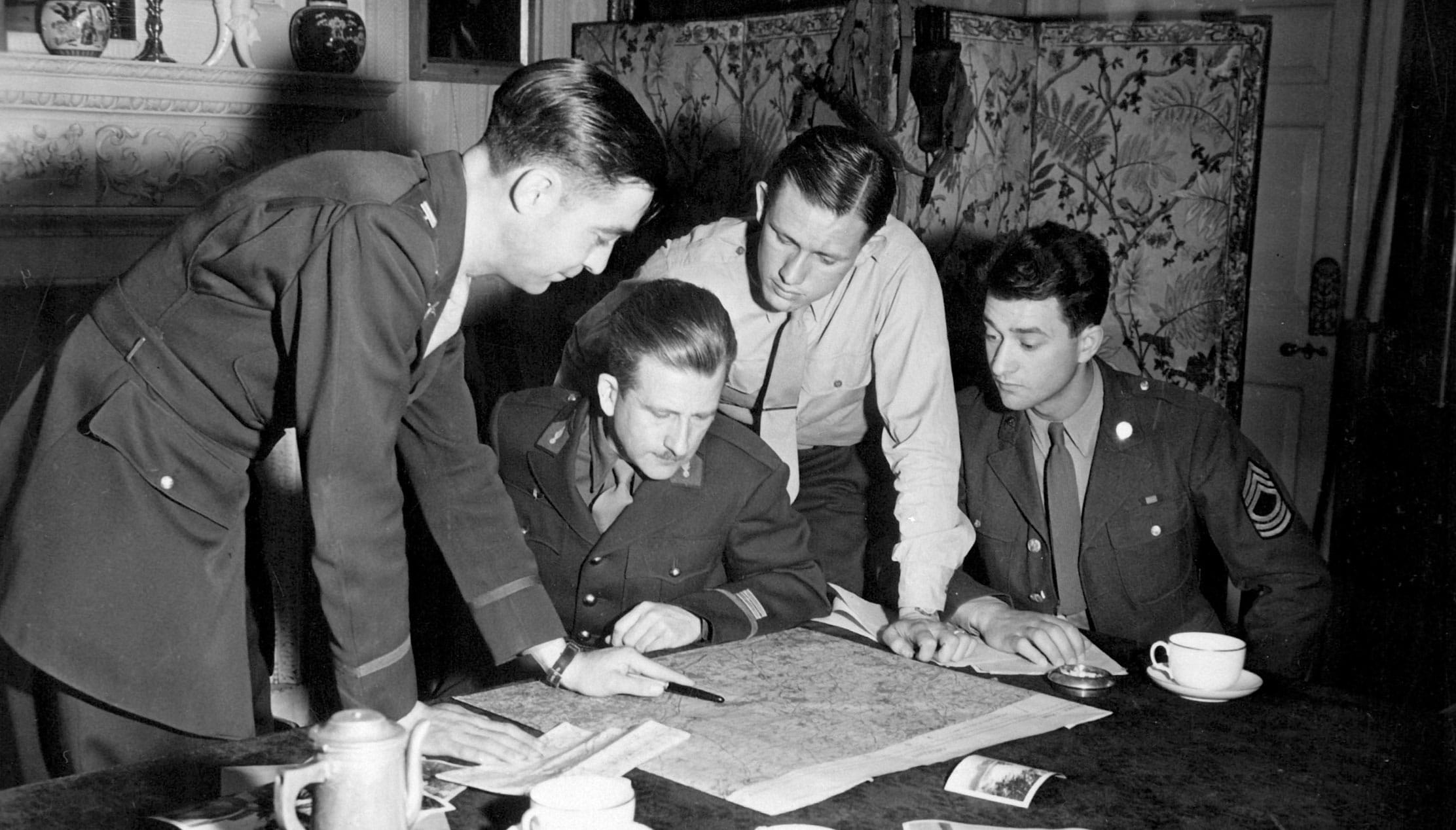
In 1944, the Allied troops were gaining ground on the battlefields of WWII, but still faced opposition from the Axis powers. The weaker that enemy targets could be made, the easier and faster the military’s job would be in wresting Europe back from its occupying forces. The U.S. government thus began a strategy to undermine Axis-aligned governments not only from without, but also from within.

The Office of Strategic Services (O.S.S.), a precursor to the modern C.I.A., created an initially classified booklet laying out the art of “simple sabotage” — which, “more than malicious mischief . . . should always consist of acts whose results will be detrimental to the materials and manpower of the enemy.”

The Simple Sabotage Field Manual taught O.S.S. agents not only how to recruit potential saboteurs from among those who were antagonistic towards their occupiers and sympathetic to the Allied cause, but listed specific tactics average citizens in various lines of work could employ to destabilize their government and help hasten its demise. The booklet was declassified by the director of the O.S.S., William J. Donovan, with the aim of surreptitiously distributing its information by way of leaflets, radio broadcasts, or the direct teaching of European citizens who U.S. agents had ascertained could be trusted.

Though the suggestions presented in the Simple Sabotage Field Manual were designed to soften the underbelly of the enemy by gumming up the works of factories, offices, and infrastructure, what’s hilariously surprising is how many of them, especially regarding white collar work, continue to be inadvertently (we think?) practiced today.

When you read tips to employees like “refer all matters to committees, for ‘further study and consideration,'” and “Contrive as many interruptions to your work as you can,” as well as instructions to managers to “Hold conferences when there is more critical work to be done,” one realizes the ways in which, in the present day, employees sabotage their companies, managers sabotage their teams, and workers sabotage their own success — not for any purposeful mission, but simply out of laziness, carelessness, and a lack of motivation and morale.

Further, the general injunction to “Act stupid,” uncomfortably invokes the fact that modern citizens may be sabotaging the strength of a country they actually support.

The Simple Sabotage Field Manual thus cannot only be used as a handbook on guerrilla resistance, should you find yourself living under a tyrannical occupying government, but also a guide on how to “reverse engineer” success in peacetime pursuits — how to recognize and address would-be saboteurs in the cubicle next door (or in the mirror).

Either way, it’s a fascinating read. Below we’ve re-published a condensed version of the booklet, collecting the tips that are the most interesting, and which still remain relevant today. (Numbering/formatting was changed in places by the necessity of the condensing process.) The entire booklet can be found here.

Fight the power, and don’t forget to leave home without a bag of moths.

INTRODUCTION

a. The purpose of this paper is to characterize simple sabotage, to outline its possible effects, and to present suggestions for inciting and executing it.

b. Sabotage varies from highly technical coup de main acts that require detailed planning and the use of specially trained operatives, to innumerable simple acts which the ordinary individual citizen-saboteur can perform. This paper is primarily concerned with the latter type. Simple sabotage does not require specially prepared tools or equipment; it is executed by an ordinary citizen who may or may not act individually and without the necessity for active connection with an organized group; and it is carried out in such a way as to involve a minimum danger of injury, detection, and reprisal.

c. Where destruction is involved, the weapons of the citizen-saboteur are salt, nails, candles, pebbles, thread, or any other materials he might normally be expected to possess as a householder or as a worker in his particular occupation. His arsenal is the kitchen shelf, the trash pile, his own usual kit of tools and supplies. The targets of his sabotage are usually objects to which he has normal and inconspicuous access in everyday life.

d. A second type of simple sabotage requires no destructive tools whatsoever and produces physical damage, if any, by highly indirect means. It is based on universal opportunities to make faulty decisions, to adopt a noncooperative attitude, and to induce others to follow suit. Making a faulty decision may be simply a matter of placing tools in one spot instead of another. A non-cooperative attitude may involve nothing more than creating an unpleasant situation among one’s fellow workers, engaging in bickerings, or displaying surliness and stupidity.

e. This type of activity, sometimes referred to as the “human element,” is frequently responsible for accidents, delays, and general obstruction even under normal conditions. The potential saboteur should discover what types of faulty decisions and non-cooperation are normally found in this kind of work and should then devise his sabotage so as to enlarge that “margin for error.”

POSSIBLE EFFECTS

a. Acts of simple sabotage are occurring throughout Europe. An effort should be made to add to their efficiency, lessen their detectability, and increase their number. Acts of simple sabotage, multiplied by thousands of citizen saboteurs, can be an effective weapon against the enemy. Slashing tires, draining fuel tanks, starting fires, starting arguments, acting stupidly, short-circuiting electric systems, abrading machine parts will waste materials, manpower, and time. Occurring on a wide scale, simple sabotage will be a constant and tangible drag on the war effort of the enemy.

b. Simple sabotage may also have secondary results of more or less value. Widespread practice of simple sabotage will harass and demoralize enemy administrators and police. Further, success may embolden the citizen-saboteur eventually to find colleagues who can assist him in sabotage of greater dimensions. Finally, the very practice of simple sabotage by natives in enemy or occupied territory may make these individuals identify themselves actively with the United Nations war effort, and encourage them to assist openly in periods of Allied invasion and occupation.

ENCOURAGING DESTRUCTIVENESS

a. It should be pointed out to the saboteur where the circumstances are suitable, that he is acting in self-defense against the enemy, or retaliating against the enemy for other acts of destruction. A reasonable amount of humor in the presentation of suggestions for simple sabotage will relax tensions of fear.

b. The saboteur may have to reverse his thinking, and he should be told this in so many words. Where he formerly thought of keeping his tools sharp, he should now let them grow dull; surfaces that formerly were lubricated now should be sanded; normally diligent, he should now be lazy and careless; and so on. Once he is encouraged to think backwards about himself and the objects of his everyday life, the saboteur will see many opportunities in his immediate environment which cannot possibly be seen from a distance. A state of mind should be encouraged that anything can be sabotaged.

SAFETY MEASURES

a. The amount of activity carried on by the saboteur will be governed not only by the number of opportunities he sees, but also by the amount of danger he feels. Bad news travels fast, and simple sabotage will be discouraged if too many simple saboteurs are arrested.

b. It should not be difficult to prepare leaflets and other media for the saboteur about the choice of weapons, time, and targets which will insure the saboteur against detection and retaliation. Among such suggestions might be the following:

(1) Use materials which appear to be innocent. A knife or a nail file can be carried normally on your person; either is a multi-purpose instrument for creating damage. Matches, pebbles, hair, salt, nails, and dozens of other destructive agents can be carried or kept in your living quarters without exciting any suspicion whatever. If you are a worker in a particular trade or industry you can easily carry and keep such things as wrenches, hammers, emery paper, and the like.

(2) Try to commit acts for which large numbers of people could be responsible. For instance, if you blow out the wiring in a factory at a central fire box, almost anyone could have done it. On-the-street sabotage after dark, such as you might be able to carry out against a military car or truck, is another example of an act for which it would be impossible to blame you.

(3) Do not be afraid to commit acts for which you might be blamed directly, so long as you do so rarely, and as long as you have a plausible excuse: you dropped your wrench across an electric circuit because an air raid had kept you up the night before and you were half-dozing at work. Always be profuse in your apologies. Frequently you can “get away” with such acts under the cover of pretending stupidity, ignorance, over-caution, fear of being suspected of sabotage, or weakness and dullness due to undernourishment.

(4) After you have committed an act of easy sabotage, resist any temptation to wait around and see what happens. Loiterers arouse suspicion. Of course, there are circumstances when it would be suspicious for you to leave. If you commit sabotage on your job, you should naturally stay at your work.

SPECIFIC SUGGESTIONS FOR SIMPLE SABOTAGE

a. It will not be possible to evaluate the desirability of simple sabotage in an area without having in mind rather specifically what individual acts and results are embraced by the definition of simple sabotage.

b. A listing of specific acts follows, classified according to types of target. This list is presented as a growing rather than a complete outline of the methods of simple sabotage. As new techniques are developed, or new fields explored, it will be elaborated and expanded.

(1) Buildings

Warehouses, barracks, offices, hotels, and factory buildings are outstanding targets for simple sabotage. They are extremely susceptible to damage, especially by fire; they offer opportunities to such untrained people as janitors, charwomen [office/house cleaner], and casual visitors; and, when damaged, they present a relatively large handicap to the enemy.

(a) Fires can be started wherever there is an accumulation of inflammable material. Warehouses are obviously the most promising targets but incendiary sabotage need not be confined to them alone.

(1) Whenever possible, arrange to have the fire start after you have gone away. Use a candle and paper combination, setting it as close as possible to the inflammable material you want to burn: From a sheet of paper, tear a strip three or four centimeters wide and wrap it around the base of the candle two or three times. Twist more sheets of paper into loose ropes and place them around the base of the candle. When the candle flame reaches the encircling strip, it will be ignited and in turn will ignite the surrounding paper. The size, heat, and duration of the resulting flame will depend on how much paper you use and how much of it you can cramp in a small space.

(2) With a flame of this kind, do not attempt to ignite any but rather inflammable materials, such as cotton sacking. To light more resistant materials, use a candle plus tightly rolled or twisted paper which has been soaked in gasoline. To create a briefer but even hotter flame, put celluloid such as you might find in an old comb, into a nest of plain or saturated paper which is to be fired by a candle.

(3) To make another type of simple fuse, soak one end of a piece of string in grease. Rub a generous pinch of gunpowder over the inch of string where greasy string meets clean string. Then ignite the clean end of the string. It will burn slowly without a flame (in much the same way that a cigarette burns) until it reaches the grease and gunpowder; it will then flare up suddenly. The grease-treated string will then burn with a flame. The same effect may be achieved by using matches instead of the grease and gunpowder. Run the string over the match heads, taking care that the string is not pressed or knotted. They too will produce a sudden flame. The advantage of this type of fuse is that string burns at a set speed. You can time your fire by the length and thickness of the string you chose.

(4) Use a fuse such as the ones suggested above to start a fire in an office after hours. The destruction of records and other types of documents would be a serious handicap to the enemy.

(5) In basements where waste is kept, janitors should accumulate oily and greasy waste. Such waste sometimes ignites spontaneously, but it can easily be lit with a cigarette or match. If you are a janitor on night duty, you can be the first to report the fire, but don’t report it too soon.

(6) A clean factory is not susceptible to fire, but a dirty one is. Workers should be careless with refuse and janitors should be inefficient in cleaning. If enough dirt and trash can be accumulated an otherwise fireproof building will become inflammable.

(b) Water and miscellaneous

(1) Ruin warehouse stock by setting the automatic sprinkler system to work. You can do this by tapping the sprinkler heads sharply with a hammer or by holding a match under them.

(2) Forget to provide paper in toilets; put tightly rolled paper, hair, and other obstructions in the W. C. [Water Closet] Saturate a sponge with a thick starch or sugar solution. Squeeze it tightly into a ball, wrap it with string, and dry. Remove the string when fully dried. The sponge will be in the form of a tight hard ball. Flush down a W. C. or otherwise introduce into a sewer line. The sponge will gradually expand to its normal size and plug the sewage system.

(3) Jam paper, bits of wood, hairpins, and anything else that will fit, into the locks of all unguarded entrances to public buildings.

(2) Industrial Production: Manufacturing

(a) Tools

(1) Let cutting tools grow dull. They will be inefficient, will slow down production, and may damage the materials and parts you use them on.

(2) Leave saws slightly twisted when you are not using them. After a while, they will break when used.

(3) Using a very rapid stroke will wear out a file before its time. So will dragging a file in slow strokes under heavy pressure. Exert pressure on the backward stroke as well as the forward stroke.

(4) Clean files by knocking them against the vise or the workpiece; they are easily broken this way.

(5) Bits and drills will snap under heavy pressure.

(6) You can put a press punch out of order by putting in it more material than it is adjusted for — two blanks instead of one, for example.

(7) Power-driven tools like pneumatic drills, riveters, and so on, are never efficient when dirty. Lubrication points and electric contacts can easily be fouled by normal accumulations of dirt or the insertion of foreign matter.

(b) Oil and lubrication systems are not only vulnerable to easy sabotage, but are critical in every machine with moving parts. Sabotage of oil and lubrication will slow production or stop work entirely at strategic points in industrial processes.

(1) Put metal dust or filings, fine sand, ground glass, emery dust (get it by pounding up an emery knife sharpener) and similar hard, gritty substances directly into lubrication systems. They will scour smooth surfaces, ruining pistons, cylinder walls, shafts, and bearings. They will overheat and stop motors which will need overhauling, new parts, and extensive repairs. Such materials, if they are used, should be introduced into lubrication systems past any filters which otherwise would strain them out.

(2) You can cause wear on any machine by uncovering a filter system, poking a pencil or any other sharp object through the filter mesh, then covering it up again. Or, if you can dispose of it quickly, simply remove the filter.

(3) If you cannot get at the lubrication system or filter directly, you may be able to lessen the effectiveness of oil by diluting it in storage. In this case, almost any liquid will do which will thin the oil. A small amount of sulphuric acid, varnish, water-glass, or linseed oil will be especially effective.

(4) Using a thin oil where a heavy oil is prescribed will break down a machine or heat up a moving shaft so that it will “freeze” and stop.

(5) Put any clogging substance into lubrication systems or, if it will float, into stored oil. Twisted combings of human hair, pieces of string, dead insects, and many other common objects will be effective in stopping or hindering the flow of oil through feed lines and filters.

(c) Gasoline and oil fuel. Tanks and fueling engines usually are accessible and easy to open. They afford a very vulnerable target for simple sabotage activities.

(1) Put several pinches of sawdust or hard grain, such as rice or wheat, into the fuel tank of a gasoline engine. The particles will choke a feed line so that the engine will stop. Some time will be required to discover the source of the trouble. Although they will be hard to get, crumbs of natural rubber, such as you might find in old rubber bands and pencil erasers, are also effective.

(2) If you can accumulate sugar, put it in the fuel tank of a gasoline engine. As it burns together with the gasoline, it will turn into a sticky mess which will completely mire the engine and necessitate extensive cleaning and repair. Honey and molasses are as good as sugar. Try to use about 75-100 grams for each 10 gallons of gasoline.

(3) Other impurities which you can introduce into gasoline will cause rapid engine wear and eventual breakdown. Fine particles of pumice, sand, ground glass, and metal dust can easily be introduced into a gasoline tank. Be sure that the particles are very fine, so that they will be able to pass through the carburetor jet.

(4) Water, urine, wine, or any other simple liquid you can get in reasonably large quantities Will dilute gasoline fuel to a point where no combustion will occur in the cylinder and the engine will not move. One pint to 20 gallons of gasoline is sufficient. If salt water is used, it will cause corrosion and permanent motor damage.

(5) In the case of diesel engines, put low flashpoint oil into the fuel tank; the engine will not move. If there already is proper oil in the tank when the wrong kind is added, the engine will only limp and sputter along.

(6) Fuel lines to gasoline and oil engines frequently pass over the exhaust pipe. When the machine is at rest, you can stab a small hole in the fuel line and plug the hole with wax. As the engine runs and the exhaust tube becomes hot, the wax will be melted; fuel will drip onto the exhaust and a blaze will start.

(3) Transportation: Railways

(a) Passengers

(1) Make train travel as inconvenient as possible for enemy personnel. Make mistakes in issuing train tickets, leaving portions of the journey uncovered by the ticket book; issue two tickets for the same seat in the train, so that an interesting argument will result. On station bulletin boards announcing train arrivals and departures, see that false and misleading information is given about trains bound for enemy destinations.

(2) In trains bound for enemy destinations, attendants should make life as uncomfortable as possible for passengers. See that the food is especially bad, take up tickets after midnight, call all station stops very loudly during the night, handle baggage as noisily as possible during the night, and so on.

(3) See that the luggage of enemy personnel is mislaid or unloaded at the wrong stations. Switch address labels on enemy baggage.

(4) Engineers should see that trains run slow or make unscheduled stops for plausible reasons.

(4) Transportation: Automotive

(a) Roads

(1) Change sign posts at intersections and forks; the enemy will go the wrong way and it may be miles before he discovers his mistakes. In areas where traffic is composed primarily of enemy autos, trucks, and motor convoys of various kinds, remove danger signals from curves and intersections.

(2) When the enemy asks for directions, give him wrong information. Especially when enemy convoys are in the neighborhood, truck drivers can spread rumors and give false information about bridges being out, ferries closed, and detours lying ahead.

(3) If you can start damage to a heavily traveled road, passing traffic and the elements will do the rest. Construction gangs can see that too much sand or water is put in concrete or that the road foundation has soft spots. Anyone can scoop ruts in asphalt and macadam roads which turn soft in hot weather; passing trucks will accentuate the ruts to a point where substantial repair will be needed. Dirt roads also can be scooped out. If you are a road laborer, it will be only a few minutes work to divert a small stream from a sluice so that it runs over and eats away the road.

(4) Distribute broken glass, nails, and sharp rocks on roads to puncture tires.

(b) Passengers

(1) Bus-driver can go past the stop where the enemy wants to get off. Taxi drivers can waste the enemy’s time and make extra money by driving the longest possible route to his destination.

(c) Battery

(1) Turn on the lights in parked cars so that the battery will run down.

(d) Tires

(1) Slash or puncture tires of unguarded vehicles. Put a nail inside a match box or other small box, and set it vertically in front of the back tire of a stationary car; when the car starts off, the nail will go neatly through the tire.

(2) In putting air into tires, see that they are kept below normal pressure, so that more than an ordinary amount of wear will result. In filling tires on double wheels, inflate the inner tire to a much higher pressure than the outer one; both will wear out more quickly this way.

(5) Communications

(a) Telephone

(1) At office, hotel and exchange switchboards delay putting enemy calls through, give them wrong numbers, cut them off “accidentally,” or forget to disconnect them so that the line cannot be used again.

(2) Hamper official and especially military business by making at least one telephone call a day to an enemy headquarters; when you get them, tell them you have the wrong number. Call military or police offices and make anonymous false reports of fires, air raids, bombs.

(b) Mail

(1) Post office employees can see to it that enemy mail is always delayed by one day or more, that it is put in wrong sacks, and so on.

(c) Motion Pictures

(1) Projector operators can ruin newsreels and other enemy propaganda films by bad focusing, speeding up or slowing down the film and by causing frequent breakage in the film.

(2) Audiences can ruin enemy propaganda films by applauding to drown the words of the speaker, by coughing loudly, and by talking.

(3) Anyone can break up a showing of an enemy propaganda film by putting two or three dozen large moths in a paper bag. Take the bag to the movies with you, put it on the floor in an empty section of the theater as you go in and leave it open. The moths will fly out and climb into the projector beam, so that the film will be obscured by fluttering shadows.

(6) General Interference with Organizations and Production

(a) Organizations and Conferences

(1) Insist on doing everything through “channels.” Never permit short-cuts to be taken in order to expedite decisions.

(2) Make “speeches.” Talk as frequently as possible and at great length. Illustrate your “points” by long anecdotes and accounts of personal experiences. Never hesitate to make a few appropriate “patriotic” comments.

(3) When possible, refer all matters to committees, for “further study and consideration.” Attempt to make the committees as large as possible — never less than five.

(4) Bring up irrelevant issues as frequently as possible.

(5) Haggle over precise wordings of communications, minutes, resolutions.

(6) Refer back to matters decided upon at the last meeting and attempt to re-open the question of the advisability of that decision.

(7) Advocate “caution.” Be “reasonable” and urge your fellow-conferees to be “reasonable” and avoid haste which might result in embarrassments or difficulties later on.

(8) Be worried about the propriety of any decision — raise the question of whether such action as is contemplated lies within the jurisdiction of the group or whether it might conflict with the policy of some higher echelon.

(b) Managers and Supervisors

(1) Demand written orders.

(2) “Misunderstand” orders. Ask endless questions or engage in long correspondence about such orders. Quibble over them when you can.

(3) Do everything possible to delay the delivery of orders. Even though parts of an order may be ready beforehand, don’t deliver it until it is completely ready.

(4) Don’t order new working materials until your current stocks have been virtually exhausted, so that the slightest delay in filling your order will mean a shutdown.

(5) Order high-quality materials which are hard to get. If you don’t get them argue about it. Warn that inferior materials will mean inferior work.

(6) In making work assignments, always sign out the unimportant jobs first. See that the important jobs are assigned to inefficient workers of poor machines.

(7) Insist on perfect work in relatively unimportant products; send back for refinishing those which have the least flaw. Approve other defective parts whose flaws are not visible to the naked eye.

(8) Make mistakes in routing so that parts and materials will be sent to the wrong place in the plant.

(9) When training new workers, give incomplete or misleading instructions.

(10) To lower morale and with it, production, be pleasant to inefficient workers; give them undeserved promotions. Discriminate against efficient workers; complain unjustly about their work.

(11) Hold conferences when there is more critical work to be done.

(12) Multiply paper work in plausible ways. Start duplicate files.

(13) Multiply the procedures and clearances involved in issuing instructions, pay checks, and so on. See that three people have to approve everything where one would do.

(14) Apply all regulations to the last letter.

(c) Office Workers

(1) Make mistakes in quantities of material when you are copying orders. Confuse similar names. Use wrong addresses.

(2) Prolong correspondence with government bureaus.

(3) Misfile essential documents.

(4) Tell important callers the boss is busy or talking on another telephone.

(5) Hold up mail until the next collection.

(6) Spread disturbing rumors that sound like inside dope.

(d) Employees

(1) Work slowly. Think out ways to increase the number of movements necessary on your job: use a light hammer instead of a heavy one, try to make a small wrench do when a big one is necessary, use little force where considerable force is needed, and so on.

(2) Contrive as many interruptions to your work as you can: when changing the material on which you are working, as you would on a lathe or punch, take needless time to do it. If you are cutting, shaping or doing other measured work, measure dimensions twice as often as you need to. When you go to the lavatory, spend a longer time there than is necessary. Forget tools so that you will have to go back after them.

(3) Even if you understand the language, pretend not to understand instructions in a foreign tongue.

(4) Pretend that instructions are hard to understand, and ask to have them repeated more than once. Or pretend that you are particularly anxious to do your work, and pester the foreman with unnecessary questions.

(5) Do your work poorly and blame it on bad tools, machinery, or equipment. Complain that these things are preventing you from doing your job right.

(6) Never pass on your skill and experience to a new or less skillful worker.

(7) Snarl up administration in every possible way. Fill out forms illegibly so that they will have to be done over; make mistakes or omit requested information in forms.

(8) If possible, join or help organize a group for presenting employee problems to the management. See that the procedures adopted are as inconvenient as possible for the management, involving the presence of a large number of employees at each presentation, entailing more than one meeting for each grievance, bringing up problems which are largely imaginary, and so on.

(7) General Devices for Lowering Morale and Creating Confusion

(a) Give lengthy and incomprehensible explanations when questioned.

(b) Report imaginary spies or danger to the Gestapo or police.

(c) Act stupid.

(d) Be as irritable and quarrelsome as possible without getting yourself into trouble.

(e) Misunderstand all sorts of regulations concerning such matters as rationing, transportation, traffic regulations.

(f) Complain against ersatz materials.

(g) In public treat axis nationals or quislings [a traitor who collaborates with an enemy force occupying their country] coldly.

(h) Stop all conversation when axis nationals or quislings enter a cafe.

(i) Cry and sob hysterically at every occasion, especially when confronted by government clerks.

(j) Boycott all movies, entertainments, concerts, newspapers which are in any way connected with the quisling authorities.

The post The Simple Sabotage Manual appeared first on The Art of Manliness.

04 Aug 15:18

Bear Smells Brownies Baking Inside Home, So He Tries To Break In And Get Him Some

by Zeon Santos

Everybody knows bears have insatiable appetites, and they put in hours of work every day just to keep their bellies full, but did you know they'll resort to breaking and entering just to score a free meal?

That's why people in bear country keep their doors locked tight and stay on alert for furry  home invaders, like the hungry guy in these photos who smelled brownies cooking and tried to invite himself in.

The Connecticut woman who was accosted by this uninvited ursine guest says he was a persistent little bastard, trying every which way to get in and get at those delicious brownies:

“He actually left the kitchen area and went to the second set of doors off the deck,” Belfiore told WFSB. “And tried those and then went to the third set of doors into the living room and attempted to get into those.”

-Via design you trust

04 Aug 15:18

Haruka Sakaguchi – Original New Yorkers

by burn magazine

Haruka Sakaguchi

Original New Yorkers

Author Tom Slater describes gentrification as a “spatial expression of economic inequality.” It is, in short, the process by which middle and upper class residents and investors take over a predominantly working and lower-middle-class neighborhood, displacing former residents and altering the social fabric of the community. Processes of gentrification have often been conflated with terms such as “urban renewal” and “revitalization” while invoking devastating consequences for working and lower-middle-class residents of major cities. Original New Yorkers is an ongoing portrait series of New York natives who have been affected by gentrification.

Subjects are shot in their homes or workplaces and asked to submit a handwritten note, either depicting the way gentrification has affected them personally or an “open letter” addressing newcomers to New York City.


Bio

Haruka Sakaguchi is a Japanese photographer based out of Brooklyn, New York. Her work focuses on cultural identity, otherness, and sense of place. Haruka was born in Osaka, Japan. Her family immigrated to the United States when she was three months old. In 2013, Haruka received a Bachelor’s degree in International Relations from the University of British Columbia. Since then, her work has taken her to various corners of the world where she has produced both personal and editorial work. Haruka uses photography to challenge monolithic interpretations of a culture or community. She has worked with a wide range of subjects, from the Muslim community in the tri-state area to residents of Jeffrey City, a former uranium mining town in central Wyoming. Haruka also returns to her home country regularly to work on an ongoing portrait series documenting hibakusha, or A-bomb survivors in Hiroshima and Nagasaki.


Related Links

Haruka Sakaguchi

01 Aug 16:27

What Makes John Bonham Such a Good Drummer? A New Video Essay Breaks Down His Inimitable Style

by Josh Jones

A tongue-in-cheek essay in McSweeney’s, Michael Fowler’s “How to Play a John Bonham Drum Solo,” contains some of the finest descriptions I've read of Bonham’s thunderous playing. It all begins with the triplet, the “thump-pe-da, thump-pe-da, thump-pe-da” rhythm the Led Zeppelin drummer plays on every piece of the kit. Should you learn to play drums like Bonham, you’ll be able to start this “up like a motor,” on any drum, “with either hand or foot, and perform all over the drums, without throwing a stick or becoming entangled in your own limbs, except to be funny.” After Bonham “made the important discovery that all drumming is just triplets, or should be,” he then proceeded to play them while “flying around the kit with blinding speed, hitting every drum and cymbal in those negligible spaces” between the triplets, “jamming like hell inside those brief spaces” then “plunging the whole kit into dead silence.”

Can you learn to do this? Maybe you'll want a less colorful, more programmatic guide. Bonham himself learned the technique from some of the most furious drummers in jazz, Gene Krupa and Buddy Rich, as the narrator explains in the video above, “What Makes John Bonham Such a Good Drummer?”

We begin with those trademark triplets, then learn of another Bonham signature. While more straightforward drummers like The Stones’ Charlie Watts played strict 4/4 beats with metronomic precision, Bonham was often so far behind the beat it was as if he played his drum parts in an echo chamber, with a syncopated swing he took from funk.

But the heart of Bonham’s distinctive drumming has to do with the unusual dynamic he had with Jimmy Page. Normally, a drummer will lock in with the bass player, providing a solid foundation for the guitars and vocals to stand on. But “the essence… of the whole Zeppelin thing,” says engineer Ron Nevison, “was John Bonham following the guitar. He would take the riff and he would make that his drum part.” We hear several driving examples of this, most notably “Immigrant Song,” above, where Page and Bonham follow each other, while John Paul Jones thunders below them. The result, and one crucial reason Bonham’s hands almost never stop flying around the kit, is that, like Page, he’s playing both rhythm and lead parts, sometimes both at once.

Bonham sets out the scaffolding for Page’s complex phrasing, sometimes creating a push-pull effect that heightens a song’s tension at its core. We hear this in “Kashmir,” where Bonham plays a standard 4/4 beat while Page and the string section play in 3/4 time. These asynchronous passages can prove daunting for accomplished drummers. Bonham frequently pulled them off with the same kind of looseness and panache he brought to all of his playing, with no shortage of triplets and Gene Krupa-like fills thrown in for good measure.

Related Content:

John Bonham’s Isolated Drum Track For Led Zeppelin’s ‘Fool in the Rain’

Isolated Drum Tracks From Six of Rock’s Greatest: Bonham, Moon, Peart, Copeland, Grohl & Starr

Jimmy Page Tells the Story of “Kashmir”

Josh Jones is a writer and musician based in Durham, NC. Follow him at @jdmagness

What Makes John Bonham Such a Good Drummer? A New Video Essay Breaks Down His Inimitable Style is a post from: Open Culture. Follow us on Facebook, Twitter, and Google Plus, or get our Daily Email. And don't miss our big collections of Free Online Courses, Free Online Movies, Free eBooksFree Audio Books, Free Foreign Language Lessons, and MOOCs.

01 Aug 16:04

Want To Quit Your Job? This Checklist Will Help.

by Georgene Huang, Women@Forbes
If you've decided to quit your job, you will still want to do it in the right way.
01 Aug 16:04

Daimler invests in flying taxi firm Volocopter

by Reuters
01 Aug 16:03

Incredible underwater photos capture sharks in fish 'tornado'...


Incredible underwater photos capture sharks in fish 'tornado'...


(Second column, 20th story, link)


01 Aug 15:39

8 Assistive Technology Devices for Seniors Living at Home

by Dan Price
assistive-tech-seniors

Smart home technology isn’t just for tech geeks who want to kit out their abodes with fancy light bulbs. It’s also playing an important role in improving the lives of senior citizens. Some companies are specifically aiming their devices at older adults, whereas some mainstream gadgets offer benefits to seniors which might not be immediately apparent to younger generations. If used correctly, smart home technology can help people live at home for longer and perform tasks they might otherwise be unable to tackle. If you’re an older adult who’s wondering what technology is available, or you’re a middle-aged reader whose...

Read the full article: 8 Assistive Technology Devices for Seniors Living at Home

01 Aug 15:08

Does Camera Gear Matter? Hear What Five Photographers Think

by Will Nicholls

It’s the age old question in photography: how much does expensive photography gear matter for achieving great shots? In this 8-minute video, photographer Erik Wahlstrom puts the question to 5 photographers.

There’s no clear cut answer to the question, according to this group polled. Yes, the photographer behind the camera has massive creative input… but they couldn’t take a photo without a camera in the first place.

So yes, photography gear does make a difference, “just don’t expect it to replace a solid foundation in photography,” says Alan Brock.

“In a lot of situations gear does matter, but probably not as much as you would think,” says popular landscape photographer Thomas Heaton.

The photographers featured in the video conclude that gear does play an important part in what makes a good photo, but it is only one piece of the puzzle that needs to be considered.

“There is no lens or camera body that will transform a bad photographer into a good one,” concludes Wahlstrom. “So does gear matter? Yeah. 100% yes. Absolutely it does. Except, I guess, when it doesn’t?”

01 Aug 14:56

A Lesson In Drone Photography

A Lesson In Drone Photography
Drones — a photographer's best friend — can capture shots that are unattainable by humans. Their aerial angle allows for a new perspective on action shots and scenic landscapes. They...

Visit Uncrate for the full post.
31 Jul 17:56

Ron Swanson's Lesson in Property Rights

by Joy Buchanan

Parks and Recreations' Ron Swanson once explained taxes to a 9-year old girl by eating 40% of her lunch. As she left, he gave her a landmine to protect her property. The whole scene is meant to be a joke, but it contains a deeper message about the importance of protecting property. After all, what happens when we do not have well-defined legal ownership of our homes and land? 

31 Jul 14:05

5 Fun Website Games in Your Browser: Google, YouTube, IMDb, & Wikipedia

by Mihir Patkar

We use some websites so regularly that they become an integral part of the internet for us. Can you imagine the web without Google? Or devoid of crazy videos on YouTube? But now, it’s time to test how well you know these sites. This article is all about five weirdly wonderful games. A couple test your knowledge of Google and Wikipedia, another finds how well you know YouTube memes, and the last two are all about IMDb and movies. Strap in for a crazy ride. 1. Google Feud (Web): Guess the Google Autocomplete When you start typing a query in...

Read the full article: 5 Fun Website Games in Your Browser: Google, YouTube, IMDb, & Wikipedia

31 Jul 14:04

The Ultimate Netflix Guide: Everything You Ever Wanted to Know About Netflix

by Joel Lee

In 2017, one year shy of its 20th anniversary, Netflix announced that it had passed a new milestone: Netflix now has 100 million subscribers. Those are worldwide numbers. When we look at it by country, we see that only half of them are U.S. users. It’s still an impressive accomplishment, but that means 60 percent of America still hasn’t given in to the lure of Netflix (assuming 125 million total households). If you’re thinking of subscribing to Netflix but aren’t sure if it’s right for you, you’ve come to the right place. In this article, you’ll learn everything you need...

Read the full article: The Ultimate Netflix Guide: Everything You Ever Wanted to Know About Netflix

31 Jul 14:04

5 Guides to Understand Movies and Appreciate Films

by Mihir Patkar

Movies dazzle us, entertain us, educate us, and delight us. But what sets apart a great movie from an average one? What are filmmakers doing that makes us connect so deeply with moving images on a screen? These sites can help you understand it better. You could take a college course in understanding cinema, with all the technicalities of the medium. But appreciating filmmaking should be entertaining too, instead of an academic endeavor. These guides aren’t to find the perfect movie to watch. Instead, they’re about taking films you have already seen and finding out why you loved them so...

Read the full article: 5 Guides to Understand Movies and Appreciate Films

31 Jul 13:57

Waxing gibbous moon this week

by Bruce McClure

Image at top: Waxing gibbous moon via OMladyO in Switzerland.

Tonight – July 31, 2017 – and in the coming evenings, people will see a waxing gibbous moon in the evening sky. The half-lit first quarter moon just happened on Sunday, July 30. Waxing means we’re seeing more and more of the moon’s illuminated side, or day side. Gibbous means the moon’s disk appears to us now as more than 50% lit by sunshine. On July 31, the moon is barely more than 50% illuminated, but the moon will be appearing bigger and brighter each evening this week. Click here to know the moon’s present phase.

Full moon will come August 7 or 8, 2017, depending on your time zone. And thus, in 2017, the moon will all but obliterate the annual Perseid meteor shower. At the same time, the moon is now edging toward a lunar eclipse, then a solar eclipse. 

At this upcoming full moon, people from Earth’s Eastern Hemisphere can watch Earth’s dark shadow (umbra) darken the southern edge of the August 2017 full moon. Hence that part of the world will see a partial eclipse of the moon.

Click here to learn more about the August 7-8 lunar eclipse.

Earth’s dark shadow (umbra) clips the southern part of the moon on the night of August 7-8. The moon goes through the Earth’s shadow from west to east. This lunar eclipse is not visible from North America.

By the way, a lunar eclipse can only happen at full moon because that’s the only time Earth’s shadow can fall on the moon. More often than not, the full moon eludes the Earth’s shadow by swinging to the north or south of it, thereby missing being eclipsed. But not this month.

Why no eclipse every full and mew moon?

Three weeks from now, the moon’s shadow will hit Earth at the August 21, 2017 new moon. The moon’s dark umbral shadow will cross the U.S. during daylight hours on August 21, to showcase a total eclipse of the sun.

Total eclipse of sun: August 21, 2017

How to watch a solar eclipse safely

Best places to watch 2017 eclipse

How much traffic on eclipse day?

Path of the total solar eclipse – with partial eclipse percentages indicated – via GreatAmericanEclipse.com (used with permission). Click here to enter your zip code and learn more about the solar eclipse in your area.

For now, each day after sunset, you’ll see more of the moon’s disk as sunlit. Another way to say this is, you’ll see more of the moon’s day side. Meanwhile, the dark part of a waxing gibbous moon – the part we can’t see well at this moon phase, because it blends with the dark of our own night, or blue of our own day – is the moon’s night side. Just as on Earth, night on the moon happens to be that part of the moon submerged in the moon’s own shadow. How much of the moon’s night, or day, side is visible from Earth depends on the lunar phase.

As the moon orbits Earth, its changing geometry with respect to the sun produces the characteristic phases. This composite image is a mosaic made from 25 individual photos of the moon and illustrates its phases over one synodic month. For complete details about this image, see Moon Phases Mosaic. Photo copyright Fred Espenak.

Bottom line: The waxing gibbous moon is waxing toward full moon on August 7-8, obliterating the annual meteors showers and edging toward a lunar eclipse, then a solar eclipse. 

Help support EarthSky! Visit the EarthSky store for to see the great selection of educational tools and team gear we have to offer.

31 Jul 12:18

Find Out How Much Traffic Twitter Is Sending to Your Website

by Nancy Messieh
twitter-analytics

Tracking individual Twitter visitors to your websites isn’t possible, but you can at least tell how much traffic Twitter (or any other social network) is sending your way. All of that information is just a few clicks away when using an analytics tool like Google Analytics. To check overall social network traffic using Google Analytics, go to Acquisition > All Traffic > Channels. Here you’ll see how much social network traffic you’re getting, and how it ranks compared to organic search, direct traffic, referral, and email traffic. If you click on Social, you’ll see a breakdown of all the social networks that are...

Read the full article: Find Out How Much Traffic Twitter Is Sending to Your Website

31 Jul 12:16

Accidental Wes Anderson: Every Place in the World with a Wes Anderson Aesthetic Gets Documented by Reddit

by Colin Marshall

Wes Anderson's immaculately art-directed, immediately recognizable films may take place in a reality of their own, but that doesn't mean a reality with no connection to ours. To go by their results, the director of The Life Aquatic, Moonrise Kingdom, and The Grand Budapest Hotel (to name only three of his most visually distinctive pictures) and his collaborators have clearly immersed themselves in the very real history of the West in the twentieth century, drinking deeply of its fashion, its architecture, and its industrial and graphic design.

So no matter how fanciful his constructed settings — The Royal Tenenbaums' dream of New York City, The Darjeeling Limited's train crossing India in quirky old-school splendor, The Grand Budapest Hotel's unspecific Alpine mitteleuropa — Anderson always assembles them from precedented elements.

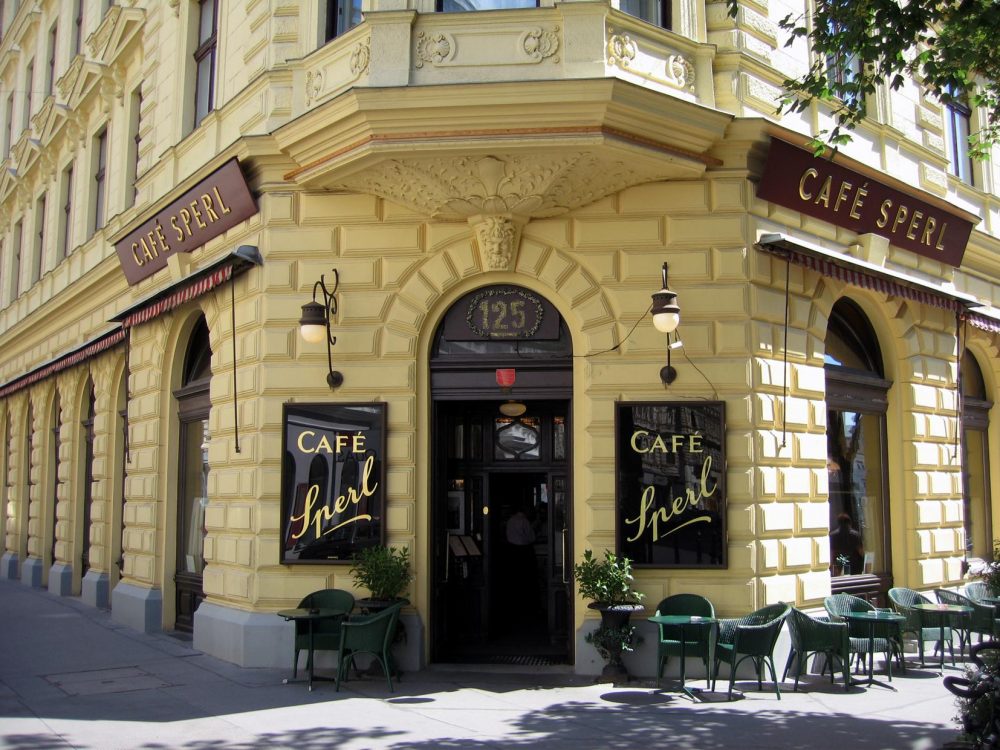
And so the habitués of a subreddit called Accidental Anderson have set out to post pictures of his sources, or places that might well pass for his sources, all over not just Europe, of course — where they found the Viennese cafe at the top of the post and the Berliner delivery van with wagon just above — but America, Asia, the Middle East, and elsewhere.

Much of a location's accidental Andersonian potential comes down to its geometry and its colors: deep reds, bright yellows, and especially pale pinks and greens. Many of Anderson's preferred hues appear in the Gold Crest Resort Motel just above, which may strike a fan as having come right out of an Anderson picture even more so than the motel he actually used in his debut feature Bottle Rocket. The director has since moved on to much finer hostelries, which thus form a strong thread among Accidental Anderson's popular postings: Florida's Don CeSar Hotel (known as the "Pink Lady"), Cuba's Hotel Saratoga, Switzerland's Hotel Belvédère, Italy's Grand Hotel Misurnia.

Berlin's humbler Ostel, a themed tribute to the design sensibilities of the former East Germany, might also resonate with the ever-deepening historical consciousness of Anderson's movies. (Remember The Grand Budapest Hotel's titular building, sadly redone in a utilitarian, faintly Soviet avocado-and-ochre during the film's 1960s passages.)

To think that Anderson came from a place no less impossibly distant from the realm of midcentury Europe than Texas, home of the Dallas music store pictured below. Given his increasing popularity, it's hardly a surprise to see his signature aesthetic being not just reflected but adopted around the world. If life continues to imitate art, Accidental Anderson's contributors will long have their work cut out for them. Pay a visit to Accidental Anderson here.

Related Content:

Wes Anderson Movie Sets Recreated in Cute, Miniature Dioramas

The Perfect Symmetry of Wes Anderson’s Movies

The Geometric Beauty of Akira Kurosawa and Wes Anderson’s Films

Wes Anderson Likes the Color Red (and Yellow)

Based in Seoul, Colin Marshall writes and broadcasts on cities and culture. He’s at work on the book The Stateless City: a Walk through 21st-Century Los Angeles, the video series The City in Cinema, the crowdfunded journalism project Where Is the City of the Future?, and the Los Angeles Review of Books’ Korea Blog. Follow him on Twitter at @colinmarshall or on Facebook.

Accidental Wes Anderson: Every Place in the World with a Wes Anderson Aesthetic Gets Documented by Reddit is a post from: Open Culture. Follow us on Facebook, Twitter, and Google Plus, or get our Daily Email. And don't miss our big collections of Free Online Courses, Free Online Movies, Free eBooksFree Audio Books, Free Foreign Language Lessons, and MOOCs.

28 Jul 20:14

How Much Does It Really Cost to Fly by Private Jet, The World's Best Bars for 2017 and More

by Passport by ForbesLife, Forbes Staff
Passport by ForbesLife chronicles the latest in luxury travel, drinking and dining, fashion—and life's other indulgences.
28 Jul 20:01

Calimocho: The Poor Man's Sangria

by Joseph Meehan
Featured calimocho header

The Calimocho has its roots in the Basque region of Spain, and since gaining a foothold there it made its way through the country and eventually out into the wide world. It’s an incredibly easy-to-make, awesomely refreshing summer cocktail consisting of one part red wine and one part Coca Cola. And if you’re feelin’ yourself, go ahead and put a lime in there to spruce it up a tad. One more thing before we get to it: although you’ll find ‘em served in highballs most often, on a hot summer day this drink deserves the good ol’ red solo cup. We wouldn’t have it any other way for love or money. 

All you need to get started are a 1.5 liter bottle of Coca-Cola, a standard 750 ml bottle of red wine—this ain't the place for the vintage stuff, so we went with Two Buck Chuck—and a couple of limes. Oh, and you're favorite drinking vessel—don't worry, we won't judge you if it's not red and made out of plastic. [H]


1. Pour out half of the Coca-Cola

If you use a 1.5 liter, pouring out half will make room for a full standard size bottle of wine. If you can't find a 1.5 liter bottle, it's alright—just make sure you have equal parts cola and wine. 


2. Pour in the whole bottle of red wine


3. Serve over ice with a slice of lime

Let us know in the comments where you plan to enjoy a Calimocho this summer or what your summer cocktail of choice is.  

Joseph is a creative staffer at Huckberry, and enjoys long walks with his dog and girlfriend in the foothills of Oakland. Captaining the grill with a cigar clamped in his teeth is one of the places he feels most at home. 


28 Jul 19:55

Get a Speeding Ticket, Pay the DA for Better Treatment

by Ed Krayewski

District attorneys' offices across Louisiana are offering pre-trial diversion programs for traffic tickets, according to an investigation by The Lens. Under the programs, the fines associated with the tickets go directly to the DA's office, and drivers can avoid having their tickets treated as moving violations and thus avoid higher insurance premiums.

The hustle reveals what a central role revenue-raising plays in policing.

"This is a complete failure by the Louisiana legislature and court system to instill an accountability or control on prosecutors or sheriffs," New Orleans criminal defense attorney C.J. Mordock, of the Mordock Law Group, tells Reason. "Had an individual assistant district attorney offered this deal, he could be prosecuted. But if a faceless unaccountable bureaucracy does it, life goes on."

Pre-trial diversion programs were created as a way to keep first-time offenders out of the courts, "diverting" them from a trial and offering them a second chance. Some Louisiana parishes don't even bother to require traffic violators to attend online driving schools—so long as they are willing to write a check to the DA's office.

The fact that some moving violations can be downgraded so easily to non-moving violations suggests that they were not moving violations in the first place—that they were always primarily revenue-raising endeavors. The district attorney's website in Caddo Parish illustrates this when it notes that no one ticketed "for any speed which is deemed excessive" would be eligible for the program. But if a speed is not excessive, what reason is there to issue a ticket other than to make money off the motorist?

What makes the situation in Louisiana worse is that it's the only state where public defenders are largely funded through traffic tickets.

Years ago, The Lens noted, public defenders pushed to be allocated more of the money collected through court fees. They were receiving $35 per trial and were asking for $100; eventually they got $45.

That fight led to this delicious quote from E. Pete Adams, executive director of the Louisiana District Attorneys Association: "That was a theft of our portion of the fines and forfeitures. We let them steal less money than they were gonna steal from us."

Forfeiture, of course, could also be considered "theft." It certainly fits the definition a lot better than one component of the criminal justice system trying to get a larger slice of the revenue, particularly when it's the only segment of the system focused on defending the rights of the accused. Shenanigans like pre-trial diversion for traffic tickets support the idea that fines could be seen as a kind of theft too—at least when they're not levied as punishment, or to improve safety, but to fill government coffers.

Louisiana public defenders complained to The Lens that pre-trial diversion for traffic tickets means less funding for their offices, since the proceeds go directly to the DA instead of being shared. But the public defenders should not be funded through tickets to begin with. Neither should DAs or any other element of the criminal justice system. Such perverse incentives should have no place in a system supposedly dedicated to justice.

28 Jul 19:53

The Ridiculously Photogenic Goat

by Miss Cellania

Look at this goat. Just look at it! Redditor arnathor met this goat and had to take a picture to share. According to commenters, the goat has the hair of Gandalf or Tom Petty (personally, I thought of Leon Russell), the smirk of McKayla Maroney or Natalie Dormer, and the general look of Owen Wilson, Jeff Bridges, or Ron Perlman. I can't see Ron Perlman, unless you are thinking of his character in Beauty and the Beast, but he is a ridiculously photogenic goat. -via reddit

28 Jul 19:47

O.J. Simpson's Ford Bronco

Okay, so it wasn't really O.J.'s Bronco — it was his buddy A.C. Cowlings', who famously drove the Juice during the legendary low-speed chase in 1994. Yet most everyone would...

Visit Uncrate for the full post.
28 Jul 19:47

Harley-Davidson Ironhead Rebuild

Harley-Davidson Ironhead Rebuild
Sometimes, even an American icon needs a refresh. A 1957 Harley-Davidson XL Sportster engine — the first year for the model — gets a complete teardown and rebuild by Hagerty's...

Visit Uncrate for the full post.