Shared posts

15 Feb 18:05

G&G Exclusive: A Southern Blues Legend Lives Again

by Dacey Orr

Despite being dubbed the “King of the Slide Guitar,” Elmore James is one of the unsung heroes of modern electric blues music. Born in 1918 in Richland, Mississippi, and a contemporary of Robert Johnson, Elmore recorded a version of Johnson’s “I Believe I’ll Dust My Broom” and his staccato riff is an essential blues lick, one that has had a profound influence on generations of blues guitarists. He moved from the Magnolia State to Chicago, where he and his band the Broom Dusters shared bills with Muddy Waters and Howlin’ Wolf. Just as he was entering one of the seminal periods for Chicago blues, he died of a heart attack in 1963 at the age of 45. But his slashing guitar and his raw, searing vocals forever left a deep imprint on American music. (Listen to our Elmore James playlist below.)


Now, to celebrate what would be James’s 100th birthday on January 26, a host of artists contribute to Strange Angels: In Flight With Elmore James, a record of James covers. Allison Moorer and Shelby Lynne share contrasting harmonies before giving way to a scintillating groove on the title track. Beginning with a burly grunt, Tom Jones blows the doors off with a roaring “Done Somebody Wrong.” Others include Keb’ Mo, Jamey Johnson, Rodney Crowell, and Warren Haynes, who along with ZZ Top’s Billy Gibbons, rips through the highlight “Mean Mistreatin’ Momma.” “Elmore was that bridge between Robert Johnson and Duane Allman,” says Haynes. “His slide guitar style and especially his sound was something no one had ever heard before. When you couple that dirty, nasty sound with his voice, which was equally intense, the result is something that was part of the foundation of rock and roll.”

Get a dose of James’s legend with the Garden & Gun album premiere of Strange Angels: In Flight With Elmore James here.


The post G&G Exclusive: A Southern Blues Legend Lives Again appeared first on Garden & Gun.

15 Feb 18:03

Georgia’s Little Amazon

by Dacey Orr

We stood leaning on our paddles, wearing boonie hats and life vests and the floppy tutus of our kayak skirts. We were posing for a photograph, like so many bright-eyed paddlers before us, ready to slide our boats into the “Little Amazon” of Georgia—the Altamaha River.

It was March 2003, and the river was running high and cold and dark, growling at its banks. This 137-mile serpent of freshwater slithers and kinks across the state toward the coast, delivering the alluvium that helped build the Georgia sea islands—my birthplace. There are bald eagles here, glaring from their roosts, and alligators sun themselves along the banks. Old-growth cypress trees stand as tall as castle turrets, and the depths are storied for century-old sturgeon the size of ships’ cannons. Some even say the river is home to a sea monster: the Altamahaha. A survivor of the Mesozoic era,
not unlike the creature of Loch Ness, “Altie” still swims on a greening billboard near the visitors’ center of Darien, Georgia, urging interstate travelers to stop for a visit.

At that time, I was at the University of Georgia, and this was my spring break, a three-day paddle trip down the Altamaha with three of my closest friends. I had no idea that, a decade later, this waterway would morph into the foundation of my second novel, The River of Kings.

The second afternoon, we stopped to rest at a bend in the river, climbing a small bank in search of shade. There, to our surprise, we found a footpath leading into the woods. We were miles from any known settlements or residences. The Nature Conservancy has called the Altamaha one of the seventy-five Last Great Places on Earth, and this lack of civilization is the main reason. The river is undammed—the largest such river in the South, and one of only about forty major free-flowing rivers left in the country. Roads cross it just five times along its course, and in the nineties, the state outlawed the float houses (“shanty boats”) that once lined the banks. Curious, we followed the trail into the woods. Soon we were crossing the gutted carcass of an alligator gar—a dinosaur of a fish, with armored skin and a toothed snout—left like a warning across our path. A message more powerful than any posted sign.

We kept on.

What we found next stopped us dead. Before us stood a pair of saplings, lashed to form a makeshift arbor over the path. The skulls of small animals dangled on lengths of fishing line, their eye sockets twisting back and forth in the breeze, as if keeping watch. Beyond them stood a rudimentary shed, log built and tin roofed, with a burlap flap for a door.

Because we were fearless and dumb, we decided to explore the place, armed with only a tiny popgun and our overabundant hormones. The shack was empty, thank God. But the question of what it was there for, and why its owners had tried so hard to warn us away, haunts me still.

A decade later, I returned to the Altamaha, intending to write a short story set on the river. I had been gone for years, living and working in Buenos Aires, San Francisco, and Asheville and Wilmington, North Carolina, with fewer visits home than I would have liked. Three months earlier, I had watched my wife and rescued bird dog, Waylon, leave for Texas for good. I felt hollowed out, strange, the ground slippery beneath my feet. I was searching for something firm. A way forward.

We traveled in a powerboat this time, upstream. I was with the men who first led me to the river, and whose love of it remains undiminished. Men I regard as brothers. There was my oldest friend, Whit Dawson, who was on that college paddle trip, and the renowned coastal photographer Ben Galland.

I watched them squint into the wind, the boat pounding up the old bends they knew so well. I have known these men since boyhood, their faces weathered now with the first riverine creases of age and grief. As was mine. We were changed, as was the river, but so much remained. The old creeks and bluffs and sloughs. Our old friendship. Our pain.

So began a rash of research trips, as my short story evolved into a novel. We would search the scrawling waters for landmarks I was writing into the book, visiting Alligator Congress and Rifle Cut and Stud Horse Creek. We would witness what we thought for one surreal moment to be the Altamaha-ha herself—and which, in fact, turned out to be nearly as strange: a large feral hog swimming across the river. We would be trapped far upriver by a grounded boat and have to navigate home by flashlights, watching the bright jewels of alligator eyes burn along the banks. We would search the river for ancient logging equipment and virgin cypress more than a millennium old.

We never found that shack again, but we discovered so much more. Here was a river with its own mythology, complete with Spanish conquistadores and Nazi submarines, mutant catfish and trees born a thousand years before the American Revolution. A river rumored to harbor its own sea monster, not to mention the site of the oldest fortified European settlement in all of North America, Fort Caroline. Here was a river that had abetted the deforestation of my home state, carrying timber rafts the size of basketball courts down to the coastal sawmills. A river itself endangered by pulp mills and nuclear power plants. A river as beautiful and wild and savage as anything left on this earth.

Here was the best medicine of all. Home. 

The post Georgia’s Little Amazon appeared first on Garden & Gun.

15 Feb 18:03

A Year of Southern Travel

by Dacey Orr

Already thinking about a vacation? We don’t blame you. There’s certainly no shortage of things to see and do in the South, but to give you a few ideas, we’re looking ahead to destinations to put on your radar for 2018. Whether you’d like to celebrate three centuries of history with the folks in New Orleans or San Antonio, spend a fall weekend at a new Smoky Mountain resort, explore a Bahamian bonefish paradise from the comfort of a floating mothership, or toast the bourbon renaissance in Kentucky, we’ve compiled a month-by-month guide to a year’s worth of Southern travel. After all, it’s never too early to start planning an adventure.

January

Get off the grid (way off) with a fishing trip to Andros West Side National Park, a pristine Bahamas saltwater wilderness. It’s so remote, you won’t find any traditional lodges here. But as of December, anglers can now bunk down on the Andros Mothership, a new seventy-four-foot Hatteras run by the adventure travel company the Eleven Experience (which also launched another island property, Bahama House, in summer 2017.) Though it’s well off the beaten path, rustic the Mothership is not. Outfitted with three state rooms and open December to May, the floating lodge can accommodate six guests, plus crew and a private chef. Local guides captain custom Beavertail skiffs on daily over-water excursions for the area’s hundred-square-foot schools of bonefish and plentiful tarpon.

photo: Courtesy of Eleven Experience

The Andros Mothership.


February

New Orleans is no stranger to celebrations, so naturally you’ll find plenty on tap as the city marks its Tricentennial in 2018. Events are scheduled throughout the year, starting with a punched-up Carnival. Bacchus (February 11) and Orpheus (February 12) will mark their own anniversaries (fifty and twenty-five years), which means the superkrewes will roll out even more Mardi Gras spectacle. Zulu (February 13) joins the Tricentennial revelry with history-themed floats adorned with the krewe’s signature flare. And fittingly, Rex (February 13)—originator of several Mardi Gras traditions, including its colors of green, gold, and purple—will honor the early people, places, and events that shaped the city from its first century through the Battle of New Orleans in 1815.

photo: Ted Jackson / Nola.com

The Krewe of Orpheus Smoky Mary train.

March 

Whether you call it kitsch or charm, the throwback appeal of the Ruby Falls experience in Chattanooga, Tennessee, is hard to deny. The 145-foot waterfall under Lookout Mountain opened for tours in 1930, and while the falls’ natural good looks needed no modernizing, come spring, the attraction is scheduled to reopen following a $20 million renovation, including the addition of an outdoor observation area, new facilities, and expanded retail space. In town, another old-time favorite, the Chattanooga Choo-Choo, received a welcome jolt of contemporary energy with the opening of Station Street last year. The revamped alleyway, which runs alongside the Choo-Choo exhibit hall, is now pedestrian-only, strung with café lights, and lined with a brewery, a coffee shop, a new guitar museum, and a handful of restaurants and bars, including the excellent Main Street Meats, owned by local culinary lights Erik and Amanda Niel.

photo: Chattanooga Convention & Visitors Bureau

Ruby Falls.

April

On April 4, 1968, Dr. Martin Luther King, Jr., was shot and killed on the balcony of the Lorraine Motel in Memphis. Today, the motel is part of the National Civil Rights Museum campus, and in honor of King’s legacy fifty years after his death, the museum will hold a two-day symposium, MLK50: Where Do We Go From Here? (April 2–3). Based on his final book, the symposium will host a series of panel discussions with some of the nation’s leading civil rights leaders—past and present. April 4 brings a full day of activities, musical performances, and speakers, culminating in An Evening of Storytelling, with guests including the Georgia congressman and Civil Rights icon John Lewis.

photo: Squire Fox

The Lorraine Motel in Memphis, Tennessee.

May

Remember more than the Alamo when San Antonio hits its 300th Anniversary. Throughout 2018, the city, founded on May 1, 1718 as a Catholic Spanish mission, will host more than seven hundred Tricentennial events, including Commemorative Week (May 1–6)—six days of exhibits, concerts, community gatherings, fireworks, and an Air Force Flyover honoring the city’s long military and aviation history. Many of the tricentennial celebrations center around art. Friday’s festivities (May 4) offer citizens and visitors free admission to museums and galleries across the city, and don’t miss “Common Currents,” an innovative new exhibition staged at multiple venues that tasked three hundred local artists with creating a work inspired by each year of San Antonio history.

photo: Buff Strickland

The restored Mission San José in San Antonio.

June

Revisit a Gulf Coast classic in Point Clear, Alabama, when the Grand Hotel completes its 18-month-long renovation. Despite construction, the unflappable staffers welcomed guests throughout 2017 with their usual commitment to Southern hospitality. (The hotel, built in 1847, has shuttered operations only four times in its 170-year history, and it took a civil war, a world war, and two hurricanes.) The top-to-bottom transformation will include a refresh to the property’s guest rooms, and you’ll find newly erected cabanas down by the main pool and bayside beach. The hotel’s trio of restaurants are getting new looks—and menus—too. At Southern Roots, dine on plates of pan-fried soft-shell crab and fresh-caught Gulf grouper, and linger over a nightcap at the restaurant’s just-opened bar, 1847.

photo: Courtesy of Grand Hotel Marriott

Outside dining at the Grand Hotel.

July

Eyeing a trip across the pond? Pull on your Wellies and join 150,000 field sports fanatics at Britain’s Country Land & Business Association (CLA) Game Fair (July 27–29) at historic Ragley Hall. The four-acre, eighteenth-century estate in Warwickshire, England, is just a two-hour train ride from London. The fair, the largest of its kind in the world, celebrates its 60th anniversary this year, so expect even more from its already deep roster of events. Browse Gunmaker’s Row for the newest products from Britain’s Holy Trinity—Purdey, Holland & Holland, and Boss & Co.—and peruse wares from a who’s who of international craftsmen. Shoot clays, wet a line on the Ragley Hall lake, watch the country’s top gundogs compete in the hugely popular field trials, or tour the fair’s new Jubilee Museum, filled with sporting artifacts.

photo: Jake Eastham Images/CLA Game Fair

Each summer, the CLA Game Fair brings field sport fans together in the English countryside.


August

Charlotte, North Carolina’s food scene has been quietly burgeoning as of late. Make plans to get a taste as a trio of new chef-driven restaurants and bars open up in (and around) the Queen City. For starters, master mixologist and whiskey archivist Gary Crunkleton, of Chapel Hill’s much-beloved The Crunkleton, is opening his second location at the corner of 7th Street and Pecan Avenue this summer. Notably, the new Charlotte bar will have a full food menu with a focus on open-hearth cooking, spearheaded by pit master Zach Goodyear. Similarly, when fellow North Carolina native chef William Dissen, of Asheville’s Market Place restaurant, began looking for a location for his sophomore endeavor, he too chose Charlotte. The soon-to-open Haymaker will focus on Appalachian and Piedmont culinary traditions and fronts Romare Bearden Park. Just outside of town, chef Joe Kindred recently opened his second restaurant, Hello, Sailor, on Lake Norman. Kindred’s modern fish camp is an easy drive from downtown, but the lakefront outpost, which opened in December with Charleston charcuterie wunderkind Craig Deihl at the helm, has plenty of dock space for boaters.

photo: Elizabeth Cecil

On the menu at Hello, Sailor.


September

In 2009, there were nineteen distilleries in Kentucky. Today, there are fifty-two and counting. Tip back a glass and celebrate in bourbon country during National Bourbon Heritage Month. For Louisville’s once-dormant Whiskey Row this year is looking bright as it continues to bounce back from a devastating 2015 fire. Brown-Forman will finally welcome visitors to its new 60,000-square-foot Old Forester distillery this spring, and Michter‘s plans to open its own micro-distillery this year, too. Southwest of downtown, the bourbon country cathedral Stitzel-Weller, which reopened to the public in 2014, wrapped up a second phase of renovations to its historic campus in late 2017. And an hour east in Frankfort, Castle & Key Distillery—situated on the exquisitely restored, 113-acre Old Taylor property—hopes to at last raise a glass with guests in August.

photo: Donovan DeFerraro

The Stitzel-Weller Distillery­.

October

Is there a bad time to visit Charleston, South Carolina? That depends on your position on mosquitoes and humidity. But it’s hard to argue with October, especially since come fall, you can sleep in splendor in the long-awaited Hotel Bennett. Billing itself as “the South’s grandest new luxury hotel” and slated to begin taking guests this summer, the nine-story, 179-room boutique property sits on the site of the old county library, a prime piece of peninsula real estate overlooking Marion Square, where you can peruse the city farmers’ market on Saturday mornings from April to November. The rooftop bar will offer views of the Holy City’s church-steeple-dotted skyline, and in a city best experienced on foot, you’ll be within an easy walk to most of the city’s downtown restaurants and attractions. Stroll South of Broad and poke your head into some of Charleston’s most beautiful private dwellings during the Preservation Society’s Fall Tour of Homes (October 2–29), and make time to visit the nearby South Carolina History Society’s new museum inside the renovated Fireproof Building, set to reopen this fall.

photo: Courtesy of Salamander Hotels and Resort - Bennett Hotel

A rendering of the hotel overlooking Charleston’s Marion Square.

November

The hospitality dynamos at Blackberry Farm in Walland, Tennessee, are bringing a new 5,200-acre resort to the Smoky Mountains. The latest projections have the sprawling Blackberry Mountain slated to open in early 2019, but you’ll want to make your reservations early. The eco-conscious resort plans to set aside 2,800 acres for conservation and will offer a wealth of outdoor activities: mountain biking, horseback riding, rock climbing, sporting clays, fly-fishing, and foraging, among others. There’s also a spa, yoga studio, full gym, and an infinity pool that takes advantage of the area’s natural beauty. Recharge in one of the property’s cabins, cottages, or homes before heading up to dinner at one of the Mountain’s two restaurants, Three Sisters and Firetower, which delivers 360-degree views of the Smokies.

December

Once Key West’s commercial fishing hub—a hive of boat builders, shrimpers, fishermen, and dock workers—Stock Island retains much of its historic character even as development creeps up on this unincorporated islet just north of Key West proper. In fact, many locals haul visitors over to Stock Island for a beer and a fish sandwich at Hogfish Bar & Grill—and a taste of the Key West of old. You can celebrate the island’s unique culture with the hometown crowd during the annual I Love Stock Island Festival. Typically held in early December, it includes a trolley tour of island restaurants, a lighted boat parade, live music, a traditional shrimp boil, a crash course in local history via bicycles, open-houses at area galleries, and more. If you go, bunk down at the marina-front Perry Hotel. Though just opened last year, the boatyard-turned-boutique lodging was thoughtfully designed to pay tribute to the island’s rustic roots.

photo: Courtesy of the Perry Hotel

Poolside at the Perry Hotel.

The post A Year of Southern Travel appeared first on Garden & Gun.

15 Feb 18:03

The Best Everyday Bourbons

by Dacey Orr

Looking for a few new bottles for your bar? Stacie Stewart can help. The beverage manager at Whiskey Dry, chef Edward Lee’s soon-to-open Louisville, Kentucky, bourbon-and-burger bar, has spent her career honing her palate in the bourbon capital of the world—from Proof on Main, which puts its bar staff through annual bourbon intensives, to Lee’s MilkWood restaurant. We asked her to share her favorite everyday bottles, all of which cost less than $50.


Baker’s

“Beam has plenty of high-profile products—Jim Beam, Booker’s, Knob Creek, Basil Hayden… Baker’s is the unsung hero. You never hear anybody going on about it, but it’s the smoothest product they make. It’s a little bit on the sweet side, but not a straight-up sugary, candy sweet. It’s rich like sorghum molasses, with a tiny bit of spice. It has this long finish that’s toasty, with a little coffee and earth.”


Henry McKenna Single Barrel

“What I like about this one is the bracing clove-and-mint spice. It catches you off guard, in a good way. There’s also just a little bit of bright, acidic bitter orange. The nose is fresh-cut grass. I don’t want to say it’s creamy, but it has a nice viscosity.”


Ridgemont Reserve 1792 Small Batch

“It’s a high rye whiskey, so you get that spicy rye up front, coupled with burnt sugar and caramel. It has a warm, chocolate roundness, and a nice, smoky finish. The rye and the chocolate together make it a good whiskey to drink at the end of a meal.”


Very Old Barton 90 Proof

“It’s very affordable, but also very well balanced, with a nice, tasty caramel roundness and just a little bit of burn. For an economy whiskey, it’s surprisingly not hot. Jim Murray, in his Whiskey Bible, calls it ‘one of the most dangerously drinkable whiskeys in the world.’”


Wild Turkey Rare Breed

“This is high proof whiskey, but you almost can’t tell. It’s smooth, with very little burn. It’s wheaty and bready like Champagne. The middle of the palate is big, round, and butterscotchy.”

The post The Best Everyday Bourbons appeared first on Garden & Gun.

15 Feb 18:02

Do Cougars Roam the Smoky Mountains?

by Dacey Orr

The scream came from the woods. It was a snowy night in February, 1916, and Tom Sparks, a rancher and part-time moonshiner, was walking the trail back to his cabin, in a remote pasture in what is now the Great Smoky Mountains National Park, 500,000-plus acres of wilderness along the North Carolina-Tennessee border. Another scream soon followed. But it was closer now. Sparks had stopped by this point. Something was following him, he was sure. But he didn’t know what. He hadn’t intended to be gone very long that evening, so he had brought neither his gun nor his dogs. He took out his folding knife. Then, without warning, the panther lunged. It knocked him backward, and bit his wrist and his elbow. But Sparks managed to stab it twice. The animal jumped off him and vanished into the thicket. Bleeding badly, Sparks dashed for his cabin. The panther followed. It grabbed hold of his coat, and Sparks sunk his blade into the cat again. It released him and disappeared, this time for good. “Sparks showed me the scars on his arm and body,”  Horace Kephart, author of Our Southern Highlanders later reported. “They were made by large teeth and claws, beyond doubt.” Kephart suspected that Sparks was telling the truth about the incident. Four years later, a man named Mr. W. Orr killed a panther near what is now Fontana Village, about 20 miles from Sparks’s cabin. The scars found on its body, it was said, matched those left by Sparks’s blade. The animal was the same. The last panther in the Great Smoky Mountains was dead.

For the past hundred years, many Southerners have believed a version of this story about the fate of the panther—otherwise known as the cougar, puma, or mountain lion—in the Great Smoky Mountains. A few years after the attack, the panther was pronounced extinct in the region. But for as long as officials have maintained that the panther is no more, scores of park visitors and locals have insisted otherwise. The debate continues today and has recently been fueled by confirmed panther sightings elsewhere in Tennessee. So where does the truth lie?

Donald Linzey is a wildlife conservation instructor at Virginia Tech who has dedicated 40 years to studying panthers and other mammals in the Smokies. Each year, he investigates from six to eight purported cougar sightings in the park. Many of the reports aren’t credible, he says. But the validity of others is hard to deny—such as when a Knoxville veterinarian, who had treated captive cougars at his practice, spotted one crossing Highway 441 a few years ago. All told, since 1970, Linzey and his team have deemed nearly 200 reports of panthers in the Smokies reliable, he says, along with the credible sightings, photos, and other evidence, such as footprints preserved in mud, confirm that panthers have lived or passed through the park, at least for a short time. But despite the evidence that he has unearthed, there’s reason to doubt whether a sustainable population of panthers still roam the Smokies.

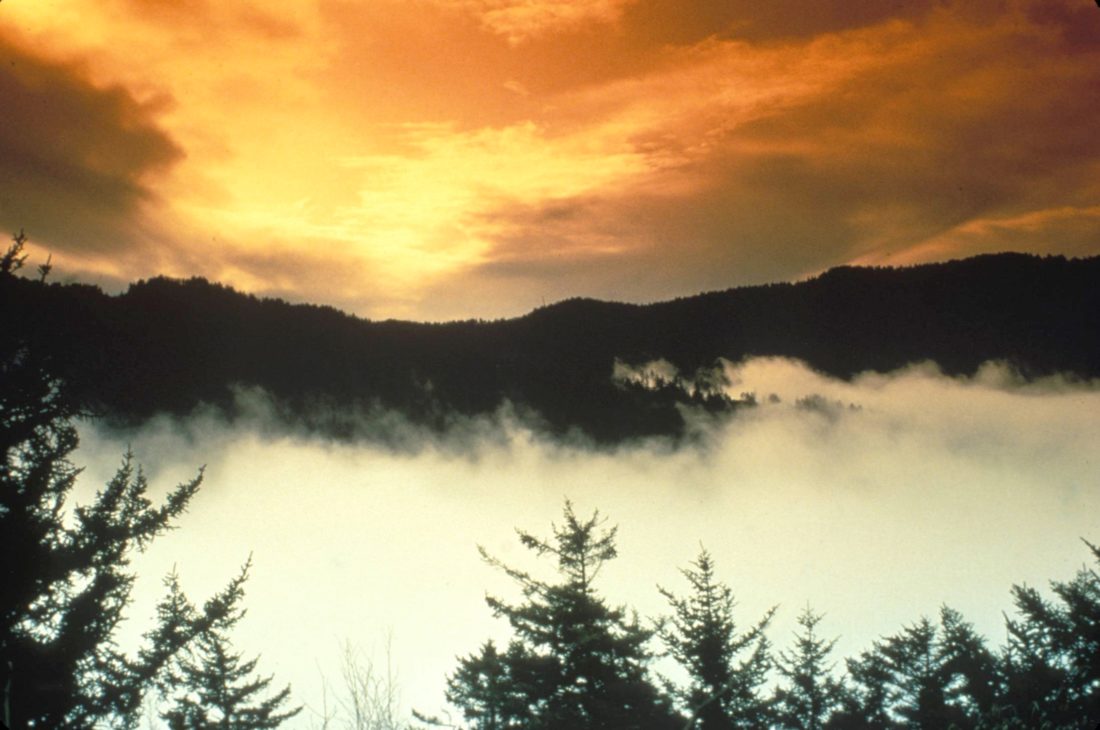
photo: National Park Service

The Great Smoky Mountains.

Over the years, Linzey has set out rubbing pads from one end of the park to the other, in hopes of collecting hair of panthers passing by. “We’ve gotten bobcat; we’ve got bear; we’ve got hog; we’ve got lots of different mammals,” he says. “We just haven’t been able to get any cougar hair.” Trail cameras have proved no more effective. Because of a lack of DNA evidence, Linzey has said that he doubts there’s still a breeding population of big cats in the park. In 1984, a Clemson University researcher attributed the years’ worth of sightings to non-native panthers from the Midwest that had migrated to the park; captive animals that had been released into the wild; or simply false identifications by witnesses—or a combination of them all. But there’s no way to know for sure. “Until we get more evidence, preferably DNA, we’re not going to know where those animals actually came from,” Linzey says.

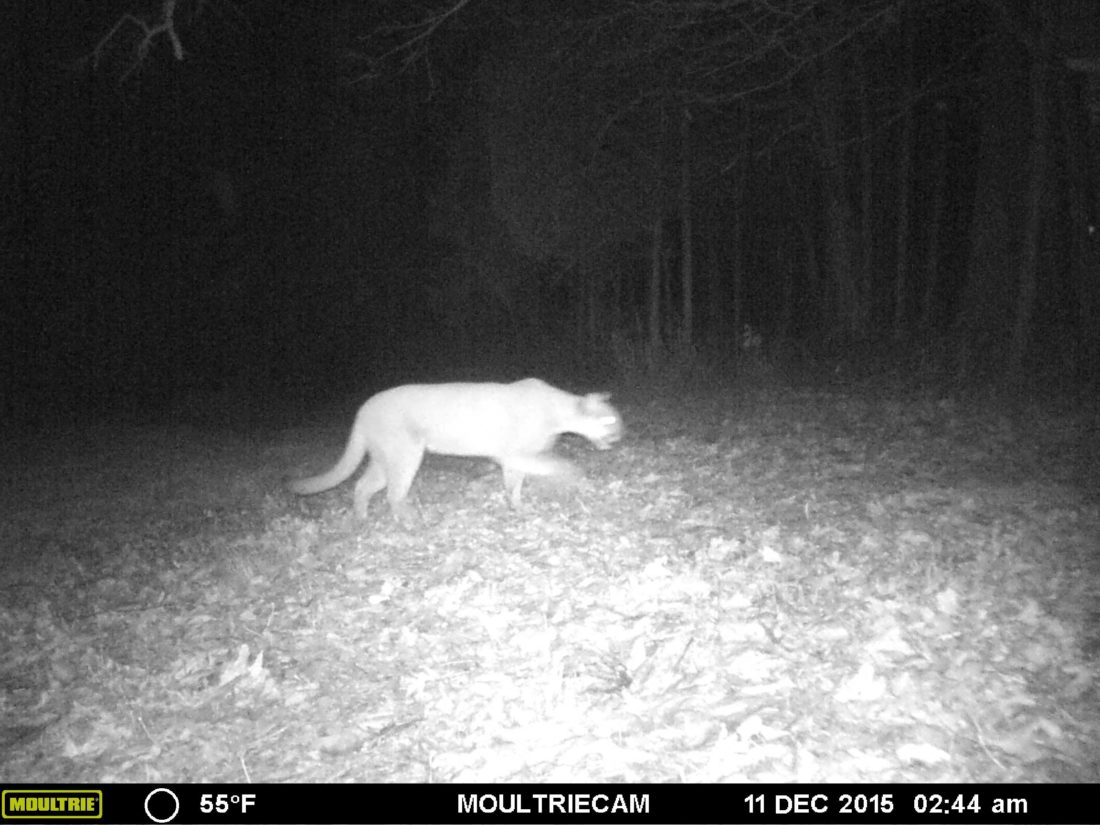
Over the past three years, a growing number of people have come to believe that, if there are indeed panthers in the park, they likely came from the Midwest, a phenomena that has been well documented elsewhere in the country. To wit, in 2015, the Tennessee Wildlife Resource Agency confirmed, for the first time in 100 years, the presence of mountain lions in Tennessee, after a man in Humphreys County—west of Nashville and about 300 miles from the Smokies—captured photos of one on a trail camera. That same year, in Carroll County, DNA from hair samples definitively linked a female panther to populations in South Dakota. There now have been a total of ten confirmed cougar reports in Tennessee. But so far, the TWRA has yet to verify a panther sighting in East Tennessee or the Smokies, much less whether one that may or may not be there originated locally or moved in from elsewhere. The TWRA also notes that there’s no proof that the panthers west of Nashville are there to stay. “Considering that there are large expanses between Tennessee and the established populations, it will likely be a long time before cougars make their home here,” reads the agency’s website.

photo: Courtesy of TWRA trail cam

A cougar sighting in Humphreys County, Tennessee, from December 2015.

There’s a chance, however small, that native panthers remained in the park in the years following the Sparks attack. The debate largely hinges on whether a breeding population survived in a crucial window from about 1900 to 1950, when poaching went largely unchecked and food was in short supply. In 1938, a park naturalist wrote that no cougars could exist in the park because deer were so scarce. Yet the number of panther sightings increased over the following years. In 1977, the the National Park Service conducted a large-scale study to get to the bottom of whether the reports were true. It concluded that panthers may have never gone extinct in the Smokies and had survived in small numbers in inaccessible, mountainous areas. There was insufficient proof, however, that breeding populations existed.

Forty-odd years later, the mystery remains much where the NPS study left off. The panther that attacked Sparks that cold February night in 1916 may well have been the last native cat in the park. Or not. But what’s certain is that the quest to find them there is far from over.

The post Do Cougars Roam the Smoky Mountains? appeared first on Garden & Gun.

15 Feb 18:00

Orien T. Gower House, 1920, Cordele

by Brian Brown

This was built for Orien Thomas Gower, Sr. (1879-1960), who served as judge of the Crisp Judicial Circuit for over sixteen years. I’m grateful to Cindie Craig for allowing me to photograph the wonderful trompe l’oeil ceiling in the dining room. Cindie and her husband Marvin are in the process of restoring the house.

The trompe l’oeil is painted on plaster and though it needs some slight cleaning and a cosmetic touch-up, it’s in amazing condition for its age.

O’Neal School Neighborhood Historic District, National Register of Historic Places

15 Feb 17:56

JUST SOME GOOD OL’ BOYS… | DUKES’ DESTRUCTION OF THE ’69 DODGE CHARGER

by JP
“Did you know that the original script for The Dukes of Hazzard had the General Lee painted grey for the confederacy? It did. Rumor has it that George Barris commented that it would be very hard to see the car in the Georgia woods if it were grey. He suggested that it be painted a […]
15 Feb 17:53

Fly Fishing for Crappie

by Florida Sportsman Editor

Long sticks catch crappie! Cane crappie stick of them all. Cane poles, jigging rods and crappie. When water temps rise to the low poles, often more than 12 feet long, 60s, crappie move into shallow water to be a few weeks earlier and Panhandle lakes will be a few weeks later. Lily pads, dollar pads, branches of fallen trees, cypress knees and boat docks are favorite haunts of crappie looking to deposit their eggs. And fly fishermen will want to get their flies as close to these objects as possible.

Fly or Jig? And Does It Really Matter?

Crappie Fly Fishing Seminar

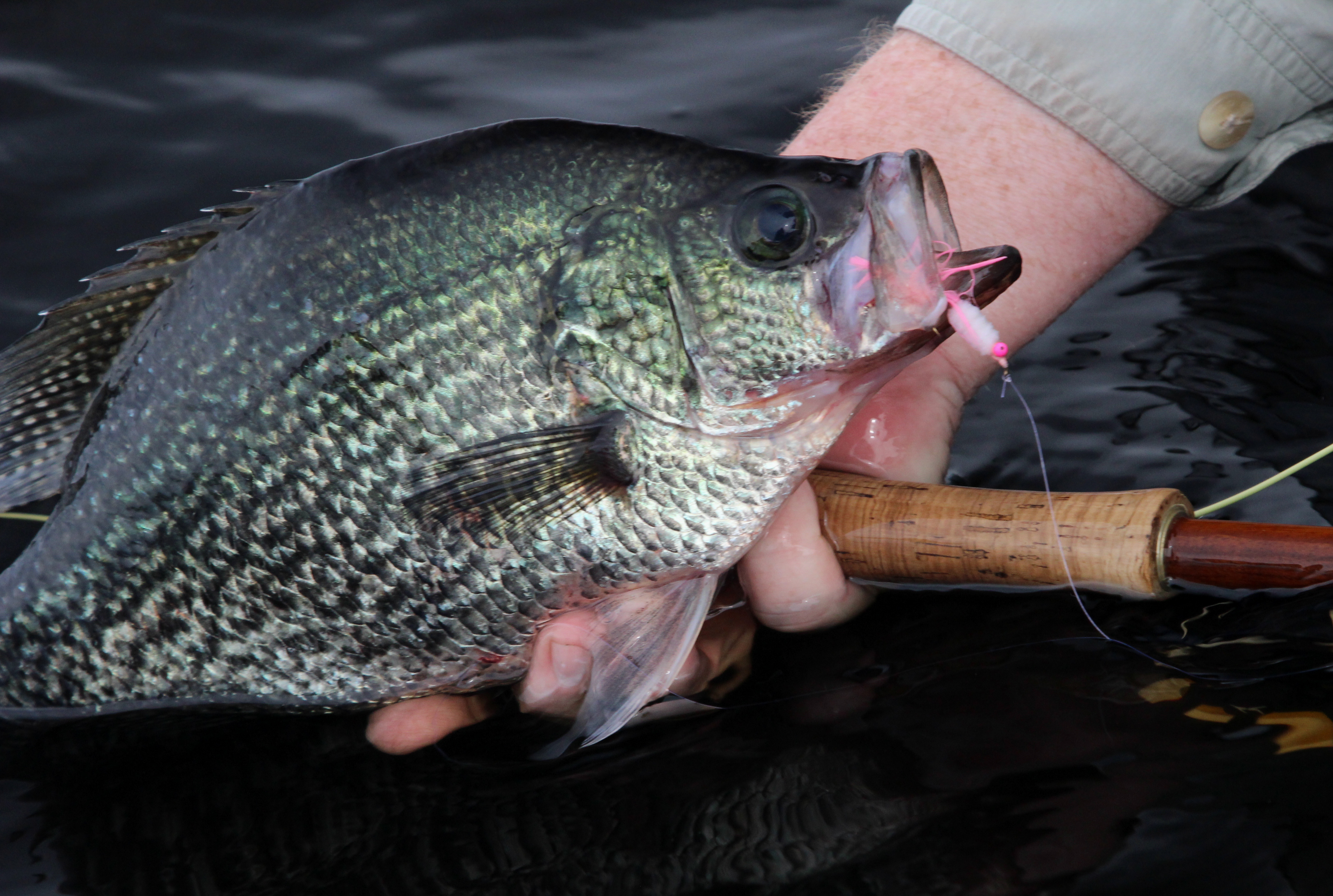
Black crappie, a.k.a. speckled perch or specks, eagerly bite sinking flies like these.


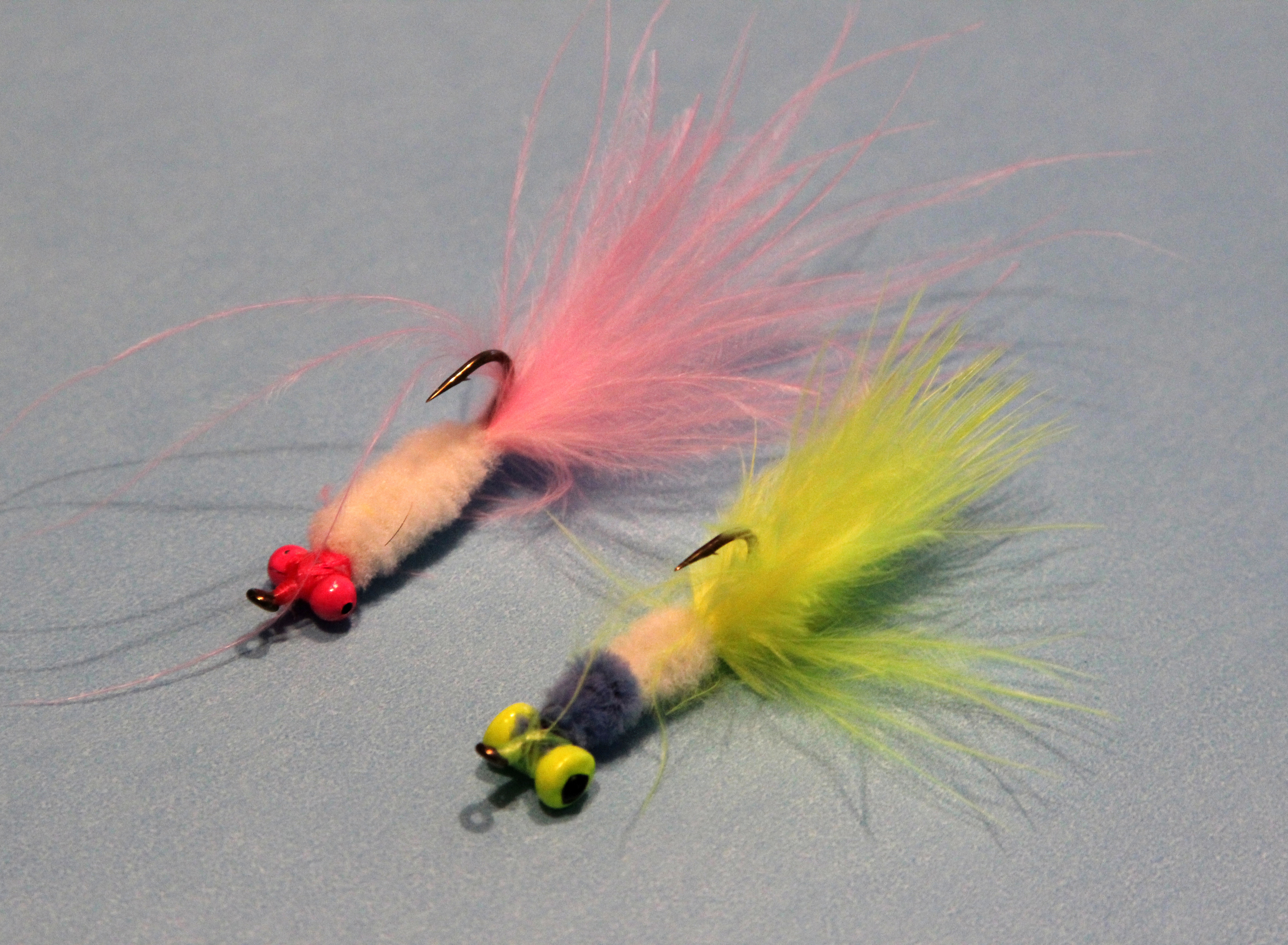
After live minnows, tiny jigs are probably the most frequently fished baits for crappie. It’s possible indeed common, in some areas to use many of these same jigs on a fly rod, whether equipped with a traditional flyline or simply a basic reel holding monofilament line. I prefer to use purpose tied streamers with a chenille body and marabou tail, however. The soft marabou feathers behave more naturally in water than molded soft plastic or yarn.

Jigsheads are molded in specific weights, typically 1/16-or 1/32-ounce for crappie lures. Flies can be tied in this range, or lighter as needed, using lead dumbbell eyes. So long as the fly imitates the size and profile of a minnow, it will probably catch a crappie.
An 8-or 9-foot, 4-or 5-weight fly rod and a fly reel spooled with weight-forward floating line will work well in most situations. Because crappie are found in fresh water, you will not need an anodized, aircraft aluminum reel that will withstand the effects of salt spray. A 2-pound, slab-sided crappie will put up a respectable fight on a light fly rod but the rod’s inherent flex is quite forgiving. An entry-level or chain-store fly rod and reel combo will work well to bring most paper mouthed crappie to the gunnels of your boat.

Presenting the Fly

Flies can be fished in several ways to catch crappie. One method is trolling, simply pulling flies through areas where crappie are staging. This is especially effective in open water, days before crappie move to their shoreline cover for spawning. Another proven method is to quietly move a boat along the shoreline or through lily pads and lower the fly along-
side the pads, matted grass, cypress knees, fallen trees and dock pilings. Start by lowering the fly about a foot into the to animate the fibers. If you don’t have a bite in about five seconds, lower the fly another foot and let it suspend while you jiggle the rod tip. If you still don’t have a bite, lower it yet another foot. After a couple of twitches, slowly raise the fly like a minnow swimming toward the surface. Lift it out of the water and lower
it alongside the next likely object.

One tactic: Set the fly in shoreline pads or other cover and wiggle the rod tip. water and very gently bounce the rod tip Lastly, you might find success casting for crappie in open water. When the fish are suspended around dollar pads in two to four feet, or holding over a channel, they can be readily caught by traditional cast-and-strip fly methods.

The subtle bite of a crappie isn’t a mere tap as would be felt on a jigging rod. Instead, you’ll feel a tug on the fly line. All you have to do is pull back as if you’re stripping line through the guides.

Fly fishing for crappie isn’t just a novelty; it’s a very effective and enjoyable technique.

Where to Go for Crappie?

The following sample of Florida waters comprises the most recent Fish and Wildlife Conservation Com- mission (FWC) Top Spots for Crappie:

Lake Monroe, Lake Talquin, Locholoosa Lake/ Orange Lake, Lake Weohyakapka (Walk-in- Water), Lake Weir, Lake Arbuckle, Lake Marian, Lake Marion, West Lake Tohopekaliga, Lake Kissimmee, Mosaic Fish Management Area, Lake Istokpoga, Lake Tra ord. For more details and access, see myfwc.com/fishing/freshwater.

The post Fly Fishing for Crappie appeared first on Florida Sportsman.

15 Feb 17:53

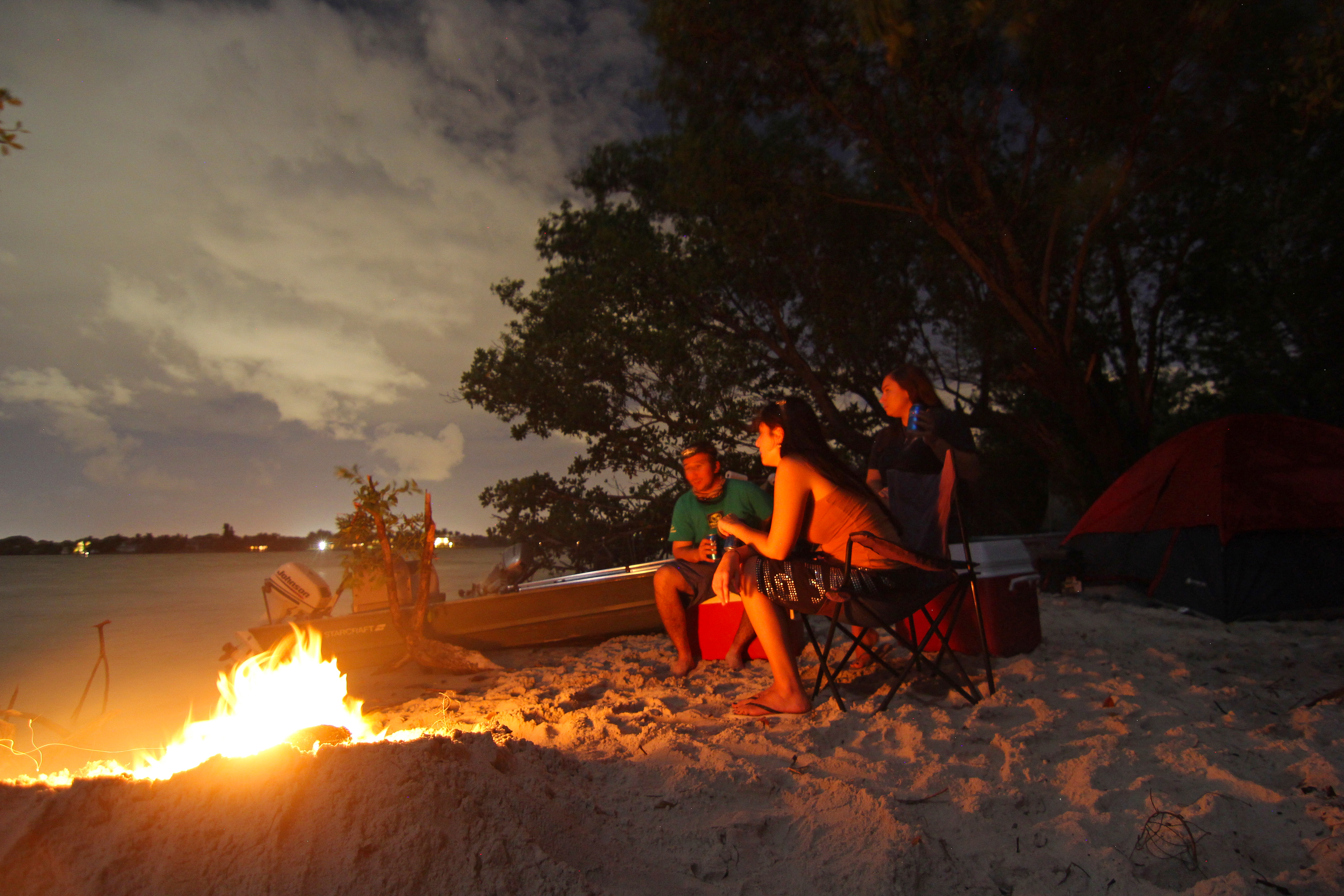
Five Must Visit Campsites for the Florida Fisherman

by Florida Sportsman Editor

Camping and fishing go hand and hand in Florida. With 1,197 miles of coastline, 2,276 miles of tidal shoreline and over 11,000 miles of rivers, streams and waterways, Florida’s outdoor opportunities are endless. If you enjoy both fishing and camping alike, blending these two offers the full experience that Florida has to offer. Though there are many options around the state, here are five notable camp sites every angler should visit.

St. George Island State Park

St. George Island State Park is 1,962 acre barrier island located in the Panhandle, between Apalachicola and Carrabelle, separating Apalachicola Bay from the Gulf of Mexico. The park offers 60 full facility camp sites, only a quarter-mile from both the Gulf and bay. Primitive camping is offered as well, at Gap Point, via the 2.5 mile Gap Point Trail, paddle craft or shallow drafting vessels. Two canoe and kayak launches can be found in the park, as well as paddle craft rentals at the ranger station. Fishing throughout the park offers both Gulf an bay fishing, with catches of redfish, seatrout, flounder and more.

For more information on the park visit: https://www.floridastateparks.org/park-activities/St-George-Island#Camping

Everglades National Park

If you’re looking for an adventure, there is no place like the 1,509,000 acres of Everglades National Park. ENP offers two drive-in frontcountry campsites, the Flamingo Campground and Long Pine Key Campground. The main attraction for most campers is the Backcountry camping in the park. Ground sites, Beach sites and camping platforms (Chickees) are offered. Majority of the sites are only accessible by vessel, with a few, such as Clubhouse Beach accessible to hikers. Hurricane Irma did do some damage to various camping spots, be sure to check with the park about your desired site.

For more information visit: https://www.nps.gov/ever/planyourvisit/camping.htm

Jonathan Dickinson State Park

Close to 11,500 acres, Jonathan Dickinson State Park is found just south of Stuart, on Florida’s east coast. The park offers 136 total campsites for tents and RV’s alike. Located on the Loxahatchee River, this estuary offers both fresh and saltwater fishing opportunities at bass, panfish, juvenile tarpon and snook. There is a boat ramp in the park, as well as canoe and kayak rentals. The park also offers other activities such as hiking and mountain biking.

For more information visit: https://www.floridastateparks.org/park-activities/Jonathan-Dickinson#Camping

Tomoka State Park

This 1,800 acre state park found in Ormond Beach is a peninsula, nestled in between the Tomoka River and the Intracoastal Waterway. Tomoka offers 100 campsites throughout the park, all with grill, water, electric and bathroom access. Tomoka also has a boat ramp that puts you right at the mouth of the Tomoka River. Fishing within the park lends oppKayak and canoe rentals are also available.

For more information visit: https://www.floridastateparks.org/park-activities/Tomoka#Camping

Bahia Honda State Park

Bahia Honda State Park is a 500-acre key found in the Middle Keys. There are 80 camp sites offered, accommodating both tent and RV camping. With the Florida Bay to the West and the Atlantic Ocean to the East, fishing opportunities are endless. There is boat ramp access at the park, boat tours, as well as kayak rentals at the concession in the park. Snorkeling is also allowed in the park, with the shallow water surrounding the park being a great place for beginning snorkelers. The park was effected by Hurricane Irma, please be sure to check with the park for latest up dates on park recovery.

For more information visit: https://www.floridastateparks.org/park-activities/Bahia-Honda#Camping-Boat

The post Five Must Visit Campsites for the Florida Fisherman appeared first on Florida Sportsman.

15 Feb 17:53

Add a Short Fly Rod to Your Arsenal

by Florida Sportsman Editor

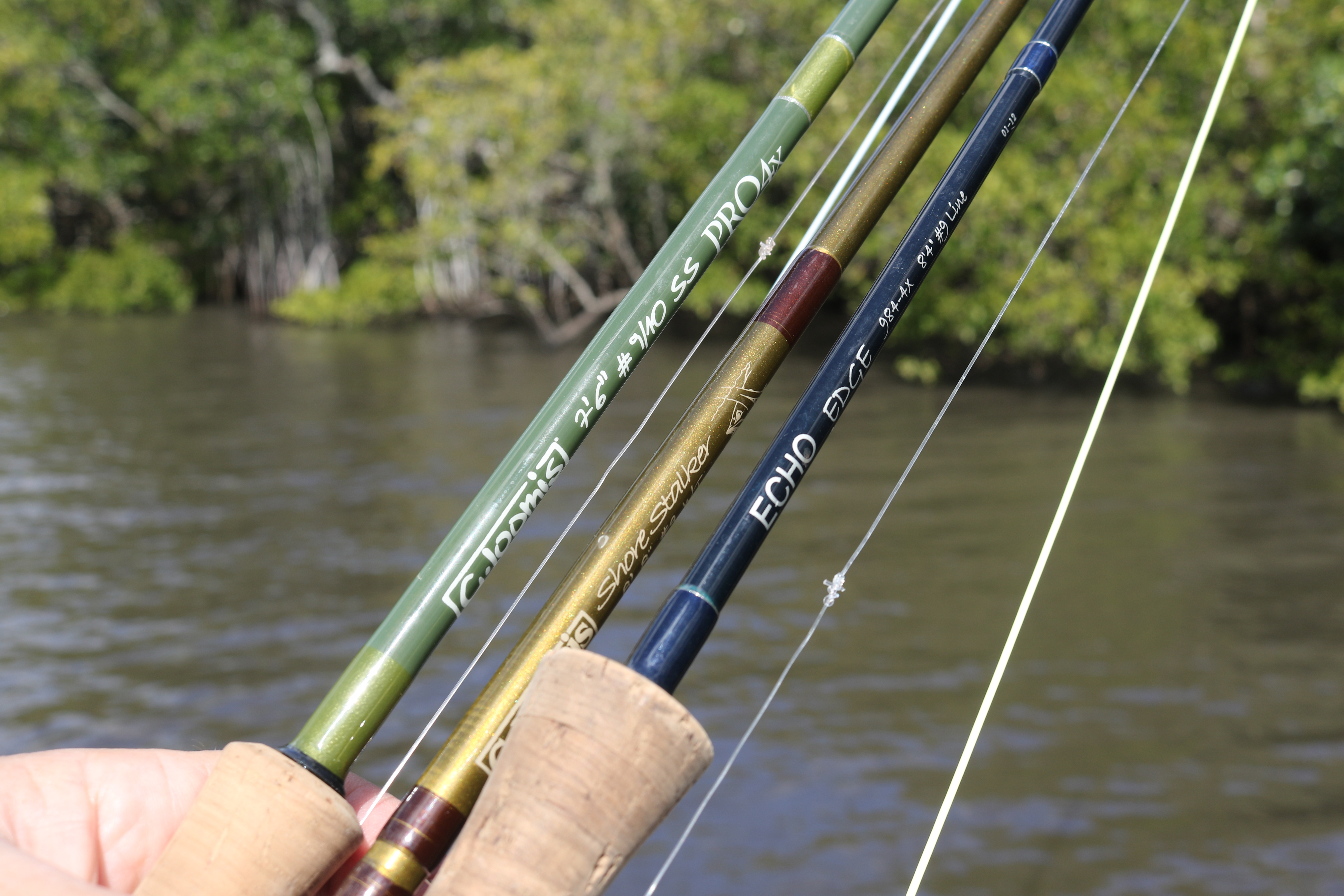
These three members of the “under nine” club are often on the author’s boat.

You’ve probably heard folks call fly rods buggy whips, right? Those folks probably don’t own a flyrod. Or you’ve heard what is my least favorite nickname—“the long rod.” Well, I hope you don’t work a fly rod like a whip, and some of the fly rods out there aren’t so long.

They can be pretty short in fact. And short can be better, in some situations. I fish a variety of short rods, from 7-foot to 8-foot, 4 inches. Though I won’t make recommendations here regarding manufacturer or rod series (but will mention G. Loomis and Echo) I will address the characteristics insofar as casting goes, suggest adjustments in your casting stroke, and reveal the ideal applications for the rods.

A 9-foot length is considered most practical for all-round Florida saltwater fly fishing. It’s also well-suited for bass bugging. A 9-foot rod helps you keep maximum line in the air for long casts. It helps you pick up an appreciable length of line on the water to recast. It also helps you keep a taut line well above “stickups” such as mangrove shoots on the shallows as you fight a fish. But it is not necessarily better for short-to medium-range casting, and can even be a hindrance in close quarters, such as a tree-or brush-lined pond, mangrove creek, and others. Also, you will discover that most short rods are terrific fighting rods—they are less parabolic if built correctly.

Although there are exceptions to the following generalities, the first thing you’ll notice is that a sub-9-footer feels stiff. Not nearly as much flex as the typical 9-footer. You’ll also be under the impression that it is light in the hand, termed “swing weight,” which makes perfect sense because there’s less blank and fewer guides. Upon casting, you may detect increased line speed over your typical 9-foot rods.

My charter customers, especially beginning fly casters, often feel wrist and forearm fatigue after casting the typical 9-foot, 8- or 9-weight rod, for even a short time. I almost always hand them a short rod to compare, and many prefer them, and some actually cast better from the outset. Most can’t achieve great distance anyway—which an experienced caster can achieve with a 9-foot rod—so the 8-foot to 8 1⁄2-footer is ideal.

Short Rod Places

Florida has lots of inshore “backcountry” with the coastal Everglades a prime example, where mostly short casts of 25 to 50 feet to tight cover are called for. I find short rods to be very accurate, and my favorite 7 1⁄2-foot and 8-foot rods allow me to cast tight loops, especially with the sub-9 foot leaders I like.

I often over-line the rods by one line size when casting my biggest, air-resistant poppers and streamers. Upon hooking up, I can muscle a tough fish from the cover very well with the stiffer, short rod. And once close to the boat, I can fight the fish with the butt, and not be as concerned about mistakenly “high-sticking” which with a more limber 9-footer can result in a snapped top section.

I prefer short rods when docklight fishing for snook and seatrout, or bridge fishing for snook and tarpon, too. When the tide is on the high side, there is a more narrow “window” between the planks and the water. With the shortest of my rods, I can better sidearm a tight loop under the dock. Plus, the casts are short, well under 50 feet, both at the docks or around the bridges where I fish. And in both scenarios, I can turn a good fish from the cover better with the stiff, short rod.

Casting Adjustment

Your timing will be out of whack when you first try a short flyrod. The usual “tug” of your line at the end of the back cast is less perceptible. The rodtip bends less after the line straightens fully. If you have a fundamentally proper casting stroke, you may notice that as soon as your line and leader straighten on the forward cast, and you grasp the line with your line hand to stop the shoot of line, the fly may slap down on the water hard. That’s the result of increased line speed. Remedy this by slowing down your speed a bit, and applying less power as you push the rod forward.

To achieve the longest casts, the short rod will hinder you a bit. That can be countered by adding the doublehaul to your cast. It will put a bit more bend in the tip section, and load the rod to the max for increased line speed. Distance will then come more easily. FS

The post Add a Short Fly Rod to Your Arsenal appeared first on Florida Sportsman.

15 Feb 16:05

Yellow Snow Cones - They're Incredible, And Edible!

by Zeon Santos


Yellow Snow Cones by DeepFriedArt

When an Abominable Snowman gets bored things can go south real fast, so when Yeti started to show signs of boredom Mike and Sulley knew they had to find something for him to do- and fast. Since Yeti was always trying to make humans happy so they'd be less afraid of him they decided it would be best if he made some yummy yellow snow cones to give out to the kids and make them smile. So the monsters helped him whip up a batch from an old family recipe, after a talk about cleanliness, food safety and how you should never eat that other yellow snow, of course. Soon Yeti was a Himalayan hit, and the townies promised to include him and come visit him from time to time. Yeti was overjoyed, and excited about having the humans over to his cave again in the future, that is, until he discovered one of them had broken his favorite mug...

Share some warmth and a smile with all the humans you see by wearing this Yellow Snow Cones t-shirt by DeepFriedArt, it's deliciously dorky!

Visit DeepFriedArt's Facebook fan page and Twitter, then head on over to his NeatoShop for more delightful designs:

Do U Kno Da Wae? Amazing Stories From Space Funny Man On Desk My Food Pyramid

View more designs by DeepFriedArt | More Funny T-shirts | New T-Shirts

Are you a professional illustrator or T-shirt designer? Let's chat! Sell your designs on the NeatoShop and get featured in front of tons of potential new fans on Neatorama!

15 Feb 15:29

How To Use Anchor Text To Navigate The High Seas Of Link Building

by Karina Tama - Rutigliano, CommunityVoice
Understanding how to use anchor text effectively is an important piece of your overall link-building strategy.
15 Feb 14:26

Crawfish: 15 Things You Didn’t Know

by David Gladow

It’s crawfish season, and in the South we love a good crawfish boil and a cold beer. There’s nothing like it. So, here’s some fun facts about crawfish to ponder the next time you’re pinching the tails and sucking the heads.

See also:

Oysters: 10 Things You Didn’t Know

The post Crawfish: 15 Things You Didn’t Know appeared first on The Southern Weekend.

15 Feb 12:04

Macallan Launches First U.K. Whisky Lounge

by Felipe Schrieberg, Contributor
The distillery's first lounge in the UK is in a restaurant blessed by Buddhist monks overlooking the Thames.
15 Feb 12:04

Gooding Amelia Auction, 1956 Ferrari 410 Superamerica Series I Coupe, Estimate $5-6 Million

by Mark Ewing, Contributor
Pinin Farina designed and built 12 bodies for the Series I 410 Superamerica, and the car Gooding will offer in Amelia, chassis 0491 SA, is one of them. Estimate is $5 to $6 million.
15 Feb 12:02

Why not both?


Tags: Carrie Underwood

3557 points, 90 comments.

14 Feb 17:08

The 5 Best Arguments Against Immigration—and Why They're Wrong

by Nick Gillespie

No issue is more hotly contested today than immigration, with restrictionists calling for the deportation of illegals and a 50 percent cut in legal immigration.

Here are the five strongest arguments against immigrants and immigration—and why they're wrong.

They take our jobs and lower wages.

President Donald Trump has said that illegals, who are mostly low-skilled, "compete directly against vulnerable American workers" and that reducing legal immigration would "boost wages and ensure open jobs are offered to American workers first."

But as the president himself likes to point out, unemployment across virtually all categories of workers is at or near historic lows, so displacing native-born workers isn't much of an issue. Virtually all economists, regardless of ideology, agree that immigrants, both legal and illegal, have little to no effect on overall wages. The most-vulnerable workers in America are high-school dropouts and economists say that low-skill immigrants from Mexico reduce that group's wages by less than 5 percent—or that they increase drop out wages by almost 1 percent. But it's also true low-skilled immigrants make things cheaper for all Americans by doing jobs such as picking fruit or cleanup on construction sites. And consider this: In the developed world, "There is no correlation between unemployment and immigration rates." Immigrants go to hot economies and they leave when the jobs dry up.

More important, immigrants grow the population, which stimulates economic growth, the only way over the long term to improve standards of living.

They're using massive amounts of welfare.

Since the late 1990s, most legal immigrants and all illegals are barred from receiving means-tested welfare. The only real taxpayer-funded services most immigrants use are emergency medical treatments that account for less than 2 percent of all health-care spending and K-12 education services for their children, who often times are U.S. citizens. For those immigrants who do qualify for programs such as Medicaid, food stamps (SNAP), or supplemental Social Security income (SSI), they use all these programs at lower rates that native-born Americans or naturalized citizens. It's also worth noting that immigrants come here to work, not collect WIC. Legal immigrant men have a labor-force participation rate of about 80 percent, which is 10 points higher than that of natives. Illegal immigrant men have a participation rate of 94 percent, precisely because they can't access welfare.

They don't pay their fair share.

Whether legal or illegal, all immigrants pay sales taxes and property taxes (the latter are factored into the cost of rental units for people who don't own homes). And all legal immigrants pay all the payroll and income taxes that native-born Americans do. Amazingly, most illegals also cough up income and payroll taxes too. That's because most of them use fake Social Security cards and other documents to get hired. Somewhere between 50 percent and two-thirds pay federal income and FICA taxes. In 2010, for instance, administrators of Social Security said that "unauthorized immigrants" contributed $12 billion to Social Security trust funds that they will never be able to get back. According to the Institute on Taxation and Economic Policy, about half of illegals paid state and local taxes worth over $10 billion.

They broke the law to get here and they're bringing all their relatives.

Critics of illegal immigration often say that unauthorized entrants refuse to stand in line and wait for their turn. That's true but misleading. For many immigrants, especially low-skilled immigrants from countries such as Mexico, there is really no line. In 2010, for instance, just 65,000 visas were given to Mexicans, with the overwhelming majority going to close family members such as spouses and minor children. The wait list had 1.4 million people on it, effectively meaning there is no chance of ever getting in the country. Similarly long wait lists exist for the Philippines, China, India, and other countries.

And for all the fear of what restrictionists call "chain migration," legal immigration under the rubric of family reunification consists almost exclusively of U.S. citizens bringing their spouses and unmarried minor children to live here. The only other people that can be brought over are parents, adult children, and siblings. However, due to the backlogs for most countries, that typically takes between 15 and 25 years. If you start trying to bring your sister over when she's 25, you'll be lucky to welcome her by the time she turns 40.

They're not assimilating.

"The melting pot is broken," say anti-immigrant activists, who worry that more foreigners in our midst will destroy American culture because they aren't assimilating the way past waves of newcomers did. The evidence for such pessimism is weak at best. About one-third of Mexican immigrants marry outside their ethnicity or race, the same percentage as in 1990. Successive generations also see massive gains in household income and home-ownership rates, too. And when it comes to learning English, all signs are that Hispanics are less likely to speak Spanish at home than in years past and have higher and higher levels of proficiency in English. By the third generation, just 25 percent of Hispanic households say that Spanish is the dominant language at home.

Americans have always been of two minds when it comes to immigration. On the one hand we all recognize that either we or our ancestors came from somewhere else. On the other hand, we're suspicious of newcomers, especially from different parts of the world than we're used to. With India and China now displacing Mexico as the largest sender countries, that sense of discomfort may continue. But it's also true that 49 percent of Americans believe that immigration helps the economy (versus 40 percent saying it hurts), 60 percent saying it has had no effect on their job, and 72 percent saying that immigrants "take jobs Americans don't want."

Produced by Todd Krainin. Written and narrated by Nick Gillespie. Camera by Jim Epstein.

Subscribe to our YouTube channel.

Like us on Facebook.

Follow us on Twitter.

Subscribe to our podcast at iTunes.

12 Feb 17:03

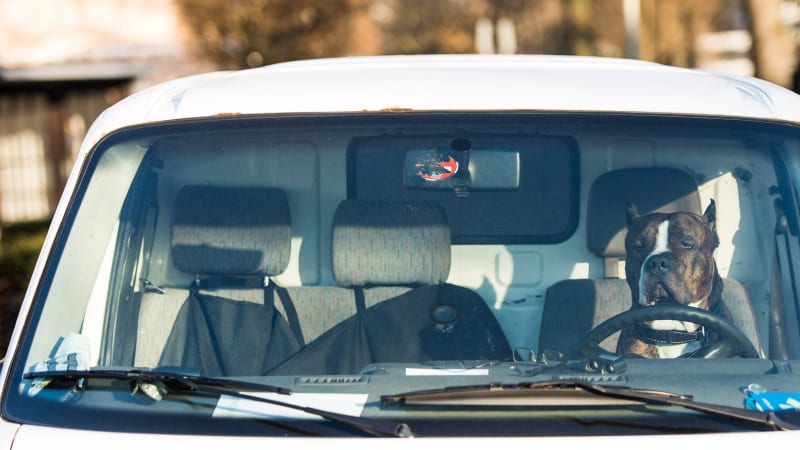
What do Americans want in their cars? More cameras — and dogs

by Jonathon Ramsey

Filed under: Etc.,Marketing/Advertising,Emerging Technologies,Gadgets

Google compiles its first Automotive Trends Report, based on search data from three global markets. Americans' first loves are dogs and cameras.

Continue reading What do Americans want in their cars? More cameras — and dogs

What do Americans want in their cars? More cameras — and dogs originally appeared on Autoblog on Mon, 12 Feb 2018 10:30:00 EST. Please see our terms for use of feeds.

Permalink |  Email this |  Comments
12 Feb 15:46

Magical Photos of Japan’s ‘Decorated Truck’ Subculture

by Ellyn Kail

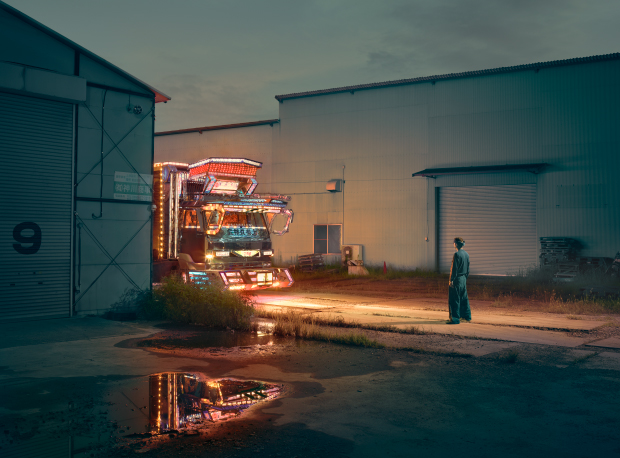
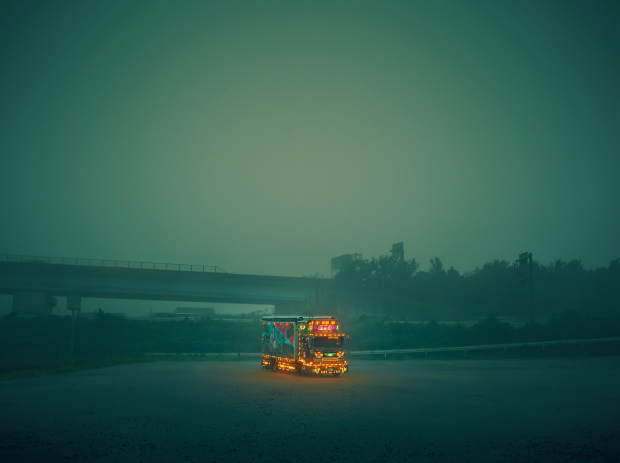
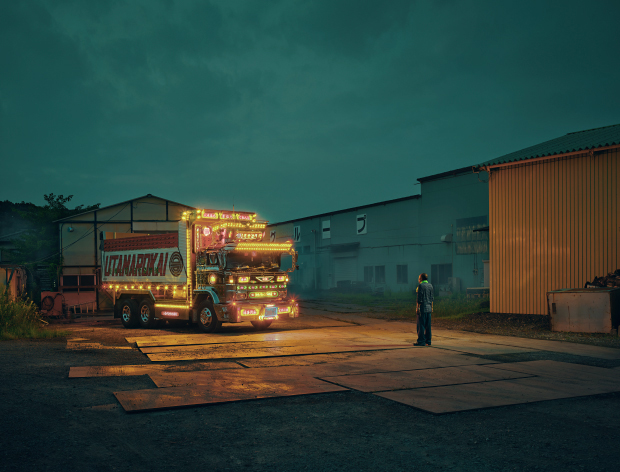
Junichi Tajima runs a waste disposal company in Japan, but he’s not a regular semi-truck driver. He’s one of an estimated six hundred remaining dekotora drivers in the world, and he owns three extravagantly decorated vehicles. Think: chandeliers. Hand-painted murals. Blinking neon lights. Louis Vuitton upholstery.

Mr. Tajima is the chairman of Utamaro-Kai, a national association of dekotora drivers, and he and his colleagues recently met up with London photographer Todd Antony to share their stories.

Dekotora culture dates back to the 1970s, when the comedy-action film series Torakku Yaro took hold of Japanese popular culture. In the beginning, Antony says, drivers decorated their trucks and dreamt of appearing in the movies themselves, and over time, it evolved.

Earlier this year, Mr. Tajima told Great Big Story about the overall message of the Dekotora community. Around the world, truck drivers have a reputation for being rude and aggressive, but that’s just a stereotype. In fact, with the right truck, a driver can make even dark times feel bright— both literally and figuratively.

Following the 2011 tsunami, the drivers of Utamaro-Kai made dozens of trips to Northern Japan to help out with food and aid. They raised money for reconstruction, and they brought in singers to lift the spirits of the young and the elderly.

Antony saw firsthand the pride and joy these men invest in their trucks. During his two days of shooting and filming, he spoke to them with help from his assistant Ian and his fixer Mai, both of whom are fluent in Japanese.

“All of them were really at ease around the camera,” the photographer remembers. “and they’re all very, very proud of their trucks. So much time, effort and money has gone into designing them.”

In fact, a decorated truck can be as expensive as a house in Japan; Antony puts the figure in the $100,000 ballpark. “You can’t worry about money when you modify a truck like this,” Mr. Tajima has said. “The value of a dekotora is more spiritual.”

Surprisingly, Antony’s favorite memory from the trip didn’t have anything to do with being behind the camera. When he wrapped up that first busy day of shooting, the drivers took the crew to a Raman place for food and drinks. It was 107 degrees Fahrenheit that night.

“The interior looked like it had stepped right out of a Wes Anderson movie, all pale pinks and greens, stuck in the 1960s,” the photographer says of the bar. “We spent an hour in there eating, drinking ice cold beer and getting to know each other more.”

The dekotora drivers haven’t seen Antony’s pictures just yet— “Mr. Tajima doesn’t use computers”— but they are on route to Japan at this very moment. “I’ve just printed off all the images for [Mr. Tajima] really large, and they’re on their way to him now,” the photographer tells me via email.

All images © Todd Antony

The post Magical Photos of Japan’s ‘Decorated Truck’ Subculture appeared first on Feature Shoot.

09 Feb 23:06

Name That Orange! The Modern Farmer Guide to Orange Varieties

by Dan Nosowitz
For much of the U.S., the phrase "winter crops" brings to mind only a few options: daikon radishes, Jerusalem artichokes, turnips, maybe some of the hardier brassicas, like cabbage or broccoli.But elsewhere, especially in South Florida and California, winter is a joyful time, because citrus is back in season. This year has been a difficult one for citrus growers. Hurricane Irma, in Florida, is estimated to have reduced the citrus crop by about 21 percent, which would make this the worst season for Florida citrus in decades. In California, a slightly light crop is expected as well, which means citrus may be priced a bit higher than usual this year. But, look, so few things bring us joy in the middle of winter; we’ll ready to pay a bit more for a bite of sunshine.With all that noted, you might be confused by the dozens of different oranges varieties—not citrus as a whole, just oranges—that pop up this time of year. And while the orange may have a reputation as one of the U.S.’s most common and basic fruits (right up there with the apple and banana), it’s actually very special! The orange as we know it is a hybrid of two other citrus trees: the pomelo (which is like a slightly less bitter grapefruit) and the mandarin (which is flat, small, sweet, and orange in color)—it’s not believed to have ever existed in the wild.(Important! Despite being commonly called the “mandarin orange,” the mandarin is not an orange. The mandarin is one of the two parents of the orange, but to be classified as an orange, a citrus fruit must include a mandarin and a pomelo as parents. That disqualifies tangerines (which are a type of mandarin, probably) and satsumas.)Oranges were likely first cultivated in southern China (references to the fruit can be found in region’s literature as far back as 314 BC). They’ve since been hybridized, re-hybridized, and altered so much that there are hundreds of orange varieties throughout the world. This is a guide simply to the most common orange varieties, but trust us, that’s complicated enough.Valencia OrangeAvelina on ShutterstockOddly enough, the valencia orange is not from the city in Spain, but was created in southern California sometime in the mid-19th century. Though it is among the most common oranges in the U.S., it’s also the only major variety to be harvested in the summer; the season runs from March to July. Very sweet, with low acidity and a bright orange color, the valencia is the most common juicing orange, though it’s also eaten.Navel OrangeBy Sann von Ma / Shutterstock.comIt’s not totally clear where the navel orange is from—some say Brazil, some say Portugal—but it’s the most popular orange for eating in the U.S. The navel orange gets its name from the fact that it tries to grow a second orange at its base, which produces an effect somewhat like a human bellybutton. They are often seedless and thus sterile; new navel trees come from cuttings rather than plantings. In flavor, a navel is a bit more bitter than a valencia, but also hardier, with a thicker peel.ClementineWolfgang Lonien on FlickrAha! The adorable little nephew of the orange family. The clementine, named after a French missionary who supposedly discovered the variety in Algeria, is actually a hybrid of a sweet orange (something like a valencia or navel, though we don’t know exactly which one) and the mandarin. Clementines are very tiny, very sweet, seedless, and have a fantastically loose skin and minimal pith, making them easy to peel (no tools required, besides maybe a sharp fingernail to get started), and ideal for eating.TangeloBy Amada44 – Own work, CC BY 3.0, LinkThis is a controversial one, but hear me out. The tangelo is, as its name suggests, a hybrid of the tangerine and the pomelo. And the tangerine is (probably) a type of mandarin. (Or a fruit similar to a mandarin. Nobody really knows, but it’s in the mandarin orbit.) The definition of an “orange” is a hybrid of mandarin and pomelo, so, well, okay, this counts. (And to take it even further, the minneola tangelo is a cross between a tangerine and a grapefruit, but since the grapefruit is a descendent of the pomelo, it still counts.)The tangelo is most easily identified by its reddish skin and the protruding nipple-like thing on the stem end. It’s extremely juicy and sweet, with a very low amount of acid, which makes it an excellent juicing fruit, but the skin is very tight and hard to peel, which makes it trickier to eat raw.Cara Cara OrangeGerrit de Vries on ShutterstockThe prettiest of all oranges is the cara cara. It’s a type of navel orange—it’s sometimes labeled “pink navel” or “red navel”—and was discovered in Venezuela in 1976. It is an all-time great orange, extremely sweet but with a complex sort of berry flavor behind it. And best of all is the color: a luscious pink.Blood OrangeRuslan Ivantsov on FlickrThe blood orange is probably a natural mutation of the regular orange; it has a deep, sinister red flesh which indicates a high level of antioxidants known as anthocyanins. (Most oranges do not have these.) There are a few different types of blood oranges, the most common of which are the moro and sanguinello. Sometimes you’ll be able to see dark blotches on the skin that indicate the deep red within, sometimes not. Blood oranges are not as sweet as the cara cara, but they do have an appealing sort of raspberry flavor to them. Also, their juice is very pretty.Bitter OrangeReika on ShutterstockAn entirely different lineage, but also derived from a hybrid of the pomelo and the mandarin, the bitter orange is sometimes known as a Seville orange or sour orange. Because it’s completely lacking in sweetness, it’s not generally eaten or juiced for standalone drinking. Bitter orange’s peel is extraordinarily fragrant and is often used as a flavoring or spice in its own right; in the UK, it’s common to see it in marmalade. In Europe, this orange is often used to flavor beers, like the Belgian witbier, or as a dessert spice along with clove and cinnamon. The juice is used as a flavoring or marinating ingredient throughout Latin America, especially with pork, as in the Mexican cochinita pibil.Bergamot OrangeSuperheang168 on ShutterstockWhat? This is an orange? Sure is. The bergamot orange, an extract of which is used in Earl Grey tea, is actually a hybrid of the lemon and the bitter orange. It’s usually lime-green or yellowish in color, sometimes smooth and sometimes sort of lumpy, and as with the bitter orange, it’s chock full of seeds. The juice is very, very sour.Lima Orangevia Specialty ProduceOne of the more common examples of what’s called an “acidless orange,” the lima is grown extensively in Brazil. It does not, of course, completely lack acid, but the levels are very low, making this one of the sweeter oranges out there. The flesh is fairly light in color, and it has a thick peel along with some seeds.Heirloom Navel Orangevia Sky ValleySo, this is a weird one. When you hear “heirloom navel,” you’d expect an old variety of the navel orange, perhaps long forgotten. That isn’t really the case; a New York Times article showed that, mostly, heirloom navels are Washington navels, the same variety as other ordinary navels. Because there isn’t really a rule about what is qualifies an orange as “heirloom,” the label isn’t necessarily reliable. But some growers take the name seriously, only using rootstock from sour orange trees, the same way they were grown in the early years of California citrus. This produces a lower yield than using a sweet orange rootstock, but the flavor can be superior. Heirloom navels, at their best, are superbly flavorful; not really different in profile from a regular navel, but with higher sweetness and acidity levels.SaveSaveThe post Name That Orange! The Modern Farmer Guide to Orange Varieties appeared first on Modern Farmer.
09 Feb 17:36

Abs Exercises - Bodyweight only!


Tags: bodyweight, exercsises, getfit

5757 points, 198 comments.

09 Feb 14:14

John Perry Barlow’s Tips for Being a Grown Up

by Patrick Lucas Austin

Yesterday, the nonprofit privacy advocacy organization Electronic Frontier Foundation announced the passing of its founder, John Perry Barlow. He was 70. In addition to his groundbreaking work at EFF and his contributions to the Grateful Dead as a lyricist (Cassidy, anyone?), he established a set of guidelines by…

Read more...

09 Feb 14:10

What Would a Rich Person Do?

by Nick Douglas

My friend once worked as an assistant for a very busy and successful man who was traveling out of the country. Close to his travel date, he realized that his passport was expired, and asked her to handle renewing it. After a lot of research, she reported back: He was going to have to spend a day waiting in a…

Read more...

08 Feb 17:55

How Lewis and Clark Helped Shape American English

by Rosemarie Ostler
article-image

When U.S. President Thomas Jefferson sent former soldiers Meriwether Lewis and William Clark on their cross-continental trek in 1804, he directed them to record every object in their surroundings “worthy of notice… especially those not known in the U.S.” Jefferson had recently purchased the Louisiana Territory from France. The Territory covered a vast region that stretched from New Orleans in the south to Canada in the north, and west as far as the Rockies. It was an area virtually unknown to Americans, and now Jefferson wanted to discover what was out there.

The president knew that future mapmakers, naturalists, and other scientists would rely on the valuable first-hand knowledge that Lewis and Clark collected. He encouraged them to make their observations “with great pains and accuracy … for others as well as yourself.” That meant that every time they encountered an unfamiliar plant, animal, landscape feature, or cultural item—the Louisiana Territory and the western portion of the continent teemed with them—they had to invent a new term. According to Lewis and Clark: Linguistic Pioneers, a 1940 study by Elijah Criswell, more than one thousand words appeared in print for the first time in Lewis and Clark’s journals. Many eventually entered the permanent American English vocabulary.

article-image

The success of the expedition, known as the Corps of Discovery, depended on Lewis and Clark having sharp eyes and good descriptive capabilities. Alan H. Hartley, author of the 2004 book Lewis and Clark Lexicon of Discovery, notes that without word creation skills, “it would have been difficult for them to discuss their discoveries amongst themselves, and even more difficult to convey and explain the discoveries to their sponsors—who had, in many cases, not been far inland from the eastern seaboard.” Carefully worded descriptions were essential.

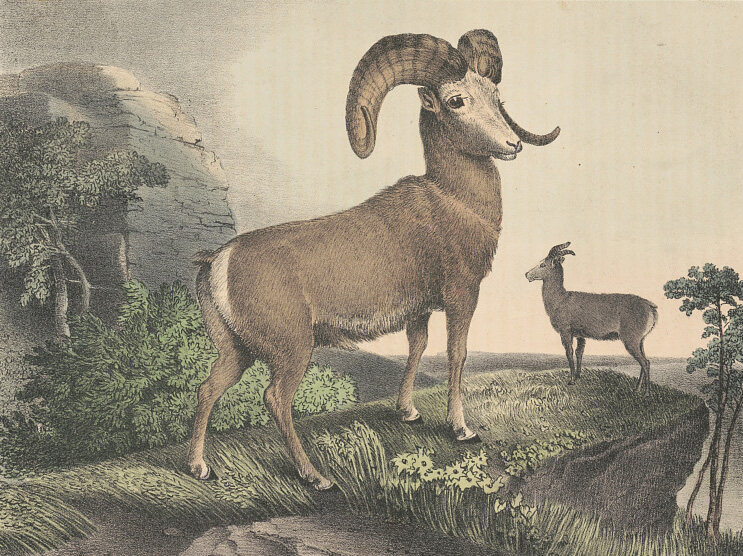
One of Lewis and Clark’s primary methods for creating new terms was naming animals or plants according to some salient feature, whether physical, behavioral, or otherwise. The explorers noticed “a curious kind of deer,” in Clark’s words, “its ears large and long,” that was obviously different from eastern deer. Lewis explains in his journal how they chose a name for it: “The ear and tail of this animal … so well comported with those of the mule … that we have … adapted the appellation of the mule deer.” Lewis called a small swan that he spotted along the Pacific coast the whistling swan because it made “a kind of whistling sound.” A mountain ram with unusually large, twisted horns was named bighorn. Other animals they noticed include tumble-bug (dung beetle), tiger cat (lynx), and leather-wing bat. Plants that received similar treatment include the red elm and the snowberry (“a globular berry … as white as wax”).

Occasionally, Lewis and Clark picked up a name from the French trappers who crisscrossed the region. Few of the terms stuck, but one that did is Yellowstone. Although they started by using the French, they eventually switched to an English translation. Clark uses both the French and the English versions in this line from his journal: “Capt. Lewis concluded to go by land as far as the Rochejhone [roche jaune, ‘yellow rock’] or yellow stone river.”

article-image

Lewis and Clark based some terms on where they found a plant or an animal—sand-hill crane, Osage apple, and various denizens of the prairie, such as prairie lark, prairie hen, prairie wolf (coyote), and prairie dog. They also noted when items were found in buffalo territory. Since the 18th century, Americans had been calling bison buffalo (a word that originally referred to oxen), and Lewis and Clark used that term for the bison they saw on the plains. They created or recorded several words connected with that animal—for example, buffalo grass (where buffalo graze), buffalo berry (found on the upper Missouri in buffalo territory), and buffalo robe (made from buffalo skins).

The explorers often went to great lengths to study a creature closely before deciding what to name it. “Though not self-proclaimed naturalists,” says Hartley, “they were keen observers and de facto naturalists.” They also knew that Jefferson wanted meticulous details. For instance, while the Corps overwintered in Oregon from 1805 to 1806, Lewis spotted what he suspected was a different kind of deer from the mule deer found on the plains, although it looked similar. He writes, “The Black-tailed fallow deer are peculiar to this coast.” The ears, he notes, are “rather larger… than the common deer,” and the horns resemble those of the mule deer. The tail is white, but the hair of the sides and top is “quite black.” Concluding that these deer were a distinct type, he labeled them black-tailed deer. Lewis’s instincts were right. Zoologists later classified the Columbian black-tailed deer (Odocoileus hemionus columbianus) as a subspecies of the mule deer (Odocoileus hemionus).

article-image

Before deciding what to call the grizzly bear, Lewis and Clark studied several pelts and consulted with indigenous people. The men first mention grizzlies in their journals while in present-day Montana. Lewis initially calls them brown or yellow bears, saying their color is “yellowish brown.” Others in the party describe the bear as “whiteish,” and Clark sometimes refers to the creatures as “white bears.” After the men had shot several and taken a close-up look, they realized that the fur was variegated, often featuring silvery tips. Clark started calling the bear grizzly, a word for gray, and Lewis eventually followed suit. Lewis recounts a discussion with a band of Nez Perce in Idaho, who studied “several skins of the bear which we had killed” and concurred that they were members of the species the explorers named grizzly. Lewis concludes in his notes that the bears they had been calling brown or yellow, whiteish, and grizzly are all “the same species or family of bears, which assumes all those colors at different ages and seasons of the year.”

article-image

The Corps of Discovery passed through the territories of many Native American tribes. Besides the Nez Perce, they encountered Mandans, Hidatsas, Lakota Sioux, Shoshones, Chinooks, Arikaras, and others. They often collected information about the region from the people they met, and occasionally adopted and adapted words. Like the French terms, most never made it into the larger vocabulary. One word that’s still current is camas, a lily-like plant with an edible bulb that’s found in the Northwest.

Lewis and Clark also gave English names to several Native American cultural items. They called a tribe’s meeting house a council house, and the place for taking steam baths a sweat lodge or sweat house. “I saw near an old Indian encampment a sweat house covered with earth,” writes Clark in his journal. They also adopted a specific meaning for medicine—something with magical powers—which was probably a translation of the Ojibwe word mashkiki. Lewis writes, “Everything which is incomprehensible to the Indians, they call big medicine.” The word appears in the journals in several combinations, including medicine man, medicine bag, medicine dance, and war medicine. Clark records that some of the party went to see a ceremonial “war medicine” dance while the Corps was camped among the Mandan tribe.

article-image

Lewis and Clark brought back descriptions of many plants, animals, and birds that were unfamiliar to eastern Americans. Occasionally they were rewarded for this valuable contribution to science by having a species named after them. When Lewis noted a “black species of woodpecker about the size of a lark woodpecker,” he predictably called it the black woodpecker, but ornithologist Alexander Wilson called it Lewis’s woodpecker (Melanerpes lewis), the name that appears in his early 19th-century book American Ornithology. Wilson also awarded Clark a bird name. He called Nucifraga columbiana, first described by Clark as “a bird of the woodpecker kind,” Clark’s nutcracker.

Lewis and Clark couldn’t take snapshots of their journey, so they revealed the trans-Missouri west to Americans in the only way they could. They brought back a word picture. Their carefully wrought journals created a lasting record of the territory before American settlement, and laid the groundwork for future expeditions. As Hartley says, “Lewis and Clark broadened greatly the United States’ view of the continent and couldn’t have done so efficiently without new or repurposed vocabulary.”

07 Feb 14:25

Net toss

3929 points, 64 comments.

06 Feb 18:14

slow-roasted sweet potatoes

by deb

I have been obsessed with the Argentinian chef Francis Mallman since I saw his of Chef’s Table episode in 2015. Sure, about the only thing we have in common is a desire to set food on fire, you know, artfully. He does so these days to great acclaim on his private Patagonian island (and 8 other restaurants around the world), accessible through two flights, a five-hour drive, and then 90-minute raft across a lake. I live on a busy block of a crowded city accessible by nearly every format of public transportation, and do so to moderate acclaim (relative mostly to how well the patrons slept that day) under a wispy-by-design gas broiler.

Read more »

06 Feb 18:11

Jean-Paul Sartre’s Concepts of Freedom & “Existential Choice” Explained in an Animated Video Narrated by Stephen Fry

by Josh Jones

The non-existence, or non-importance, of the self has for millennia been an uncontroversial proposition in Eastern thought. But Western thinkers have tended to embrace the concept of the isolated self as, if not sufficient, at least necessary for a coherent account of human life. Yet there are many ways to describe what it means to have a self—an ego, an individual identity. Is the self a product of culture, history, and economy? Is it a collection of subjective experiences to which no one else has access? Is it constituted only in relation to other selves, or in relation to an ultimate, unchanging, all-powerful Self?

For the Existentialists, the self can be a prison, a trap, and a source of great anxiety. Heidegger called selfhood a condition of being “thrown into the world.” By the time we realize where and what we are, according to restrictive categories of historical thought and language, we are already there, inescapably bound to our conditions, forced to perform roles for which we never auditioned. Jean-Paul Sartre took this notion of “thrownness” and gave it his own neurotic stamp. We are indeed tossed into existences against our will, but the real condemnation, he thought, is that once we arrive, we have to make choices. We are doomed to the task of creating ourselves, no matter how limited the options, and there is no possibility of opting out. Even not making choices is a choice.

This extreme kind of free will, as Stephen Fry explains in the short, animated video above, stems from the problem of human nature—there isn’t any. “According to Sartre, there is no design for a human being,” says Fry, or in Sartre’s famous phrase, “existence precedes essence.” There is only the absurdity of arriving in a world with no plan, no God, no universal codes or fixed standards of value: just a dizzying array of decisions to make. And yet, rather than making life trivial, the absurd condition described by Sartre lends substantial weight to all of our choices, for in making them, he claimed, we are not only creating ourselves, but deciding what a human being should be.

Illusions of certainty and necessity obscure the contingent nature of existential choice, both the true inheritance and the unremitting burden of every individual. What we become in life is up to us, Sartre thought, a proposition that causes us a good deal of anguish, since we cannot know the outcome of our choices nor understand the world in which we make them beyond our limited capacity. And yet, we must act, Sartre thought, “as if everyone is watching me.” This is not a pleasing thought, even if, for many, the idea might actually lead to more careful, sober, and deliberative decision-making—that is, when it doesn't lead to paralyzing dread.

Related Content:

A Crash Course in Existentialism: A Short Introduction to Jean-Paul Sartre & Finding Meaning in a Meaningless World

What Is an “Existential Crisis”?: An Animated Video Explains What the Expression Really Means

Existential Philosophy of Kierkegaard, Sartre, Camus Explained with 8-Bit Video Games

Josh Jones is a writer and musician based in Durham, NC. Follow him at @jdmagness

Jean-Paul Sartre’s Concepts of Freedom & “Existential Choice” Explained in an Animated Video Narrated by Stephen Fry is a post from: Open Culture. Follow us on Facebook, Twitter, and Google Plus, or get our Daily Email. And don't miss our big collections of Free Online Courses, Free Online Movies, Free eBooksFree Audio Books, Free Foreign Language Lessons, and MOOCs.

06 Feb 17:57

Plus Hus

Whether it's an office, guest house, or a new abode, Plus Hus gives you 320 square feet to do with what you like. The simple rectangular structure is constructed from...

Visit Uncrate for the full post.
06 Feb 16:15

Ancient virus responsible for human ability to think?


Ancient virus responsible for human ability to think?


(First column, 10th story, link)


06 Feb 16:11

Everyday Trick Shots

3729 points, 91 comments.