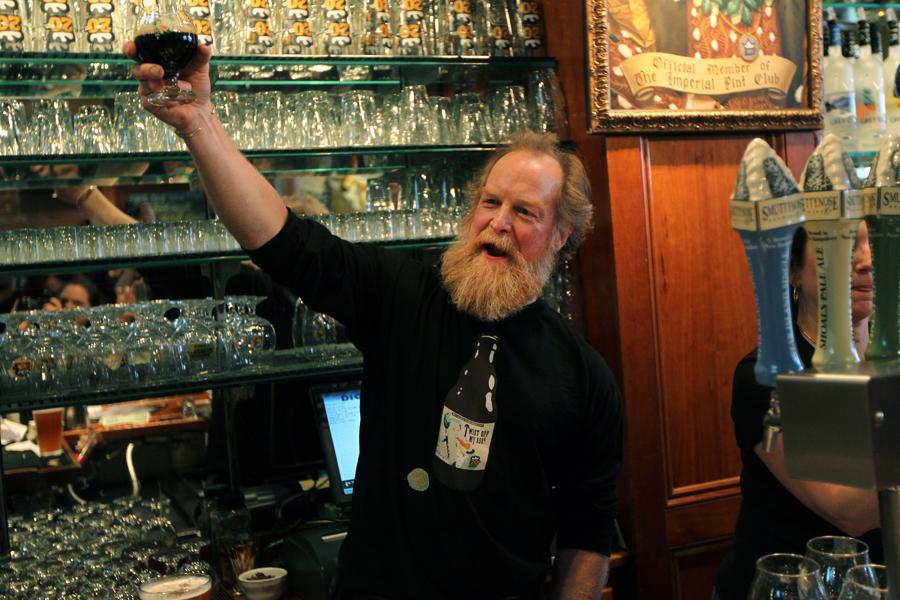
As the lead product designer at WhatsApp, Charlie Deets makes decisions that affect over 1.5 billion users each month. That means solving some unusual challenges, like building a chat interface that even illiterate users can navigate. It also means distinguishing WhatsApp’s visual “stories” feature from similar…
The term “public enemy” first began being used in the United States during the 1920s. The FBI later adopted the term in its early days to describe wanted criminals. Add to this the fact that Prohibition and the Great Depression sent crime rates soaring, and several historians refer to that period of US history as […]
E-flares are a safer alternative to pyrotechnic flares that burn dangerously hot.
When it comes to marine distress flares, compliance with current regulations might not be safe enough for some recreational boat owners. Current regulations call for recreational boats to carry three pyrotechnic handheld flares that can stay lit for 60 seconds. While buying a kit of three flares and stowing it in a locker makes the boat “in compliance” if the U.S Coast Guard inspects the vessel, it’s not the ideal plan. It’s the least expensive plan,
though, and too often that wins. It’s said that safety doesn’t sell, but that attitude may be changing, thanks to e-flares.
For example, Weems & Plath launched The SOS Distress Light in 2015, which is U.S. Coast Guard compliant to replace pyrotechnic flares. At a cost of about $100, that is three times more expensive than a three-pack of pyrotechnic flares, but it is safer, and thousands have been sold. Sirius Signal was the developer of the SOS Distress Light, and after engineering and testing, brought it to Weems & Plath to manufacture and distribute.
“It flashes the SOS light sequence only, and that is the sole purpose of the light, which was the requirement from the Coast Guard,” said Cathie Trogdon, VP of Public Relations and Advertising for Weems & Plath. “If the Coast Guard is to board you, make sure [the light is] working— that the batteries are in the unit so when the officer tests it, it works. People love the idea that they don’t have to go out and buy flares. Our product has a lifetime warranty, and while it is more expensive than some flares, you make up the difference quickly over time.”
SOS Distress Light’s LED flashes up to 60 hours and is visible up to 10 nautical miles out. When paired with a daytime distress flag, which is included with the purchase of an SOS Distress Light, it satisfies the Coast Guard requirements for day and night use in lieu of traditional flares. “These e-flares float and can be hand-held, tethered or hoisted aloft,” Trogdon said. “It operates with three standard C batteries [and] complies with all U.S. Coast Guard requirements for ‘Night Visual Distress Signals’ as found in the Code of Federal Regulations: 46 CFR 161.013.”
Building better e-flares is also the goal of Ocean Signal. The company also builds emergency position indicating radio beacons (EPIRBs) and personal location devices (PLBs) out of its Margate, UK, facility and is owned by ACR. “Electronic is just the smarter way to go,” explained Rich Galasso, National Sales Manager for Ocean Signal. “With the pyrotechnic flares, you are putting a 5,000-degree torch in somebody’s hand in a wet environment on an unstable platform. It’s all problematic. Plus, flares can quickly be out of date and not usable.”
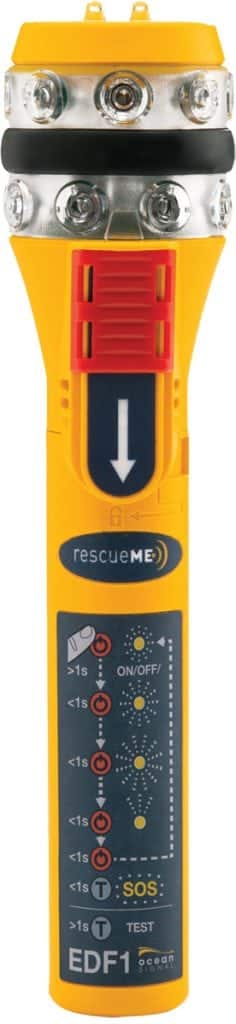
Ocean Signal’s rescueME EDF1 is a perfect complement to the pyrotechnic kit of three e-flares that makes your boat Coast Guard compliant. The rescueME EDF1 is approved to replace pyrotechnic flares in specific circumstances in Finland and Latvia. “An electronic flare is something a child can use,” Galasso said. “It’s a product you are going to use if something really goes bad, and in the end, it will be the product that actually saves your life.”
The rescueME EDF1 is small enough to fit inside a ditch bag or life raft, and its lithium batteries offer enough power for 6 hours, whereas a traditional flare burns for about 30 seconds. The unit can be used repeatedly in any of its four modes ensuring continued visibility is maintained over a longer period. Those modes are Economy, High,Ultra, and Forward Beam, plus SOS signaling. It can be used with one hand, has a visibility range of up to seven miles and is waterproof to 10 meters. “Another big challenge with pyrotechnic flares is disposal of them when they are out of date,” Trogdon said. “People have a difficult time getting rid of pyrotechnic flares legally. In some towns, the city of Annapolis, for instance, the fire department will take them and use them for their own training. But they really have to go to specific incinerators for proper disposal.” Water-logged flare kits wedged in a boat storage compartment underneath the life jackets are common. Or people toss the old kits in their garage, hoping they never see them again. Others, like the reckless and inventive, will light them off on July 4th, which is crazy but true.
Because the SOS Distress Light floats, it can be constantly signaling even when you are in the water. Since a flare only burns from 30 to 60 seconds, the light is much more constant. In addition, because most people first send out a Mayday call by cell phone and VHF, the e-flare is an important way for a Coast Guard vessel to locate the distressed vessel when rescue is imminent.
An actual rescue on January 6, 2017, was aided by the SOS Distress Light. Michael Misianowycz and a friend were rescued by the Coast Guard after their 25-foot center console had trouble. They had departed out of Mobile, Alabama, and when they didn’t return as scheduled, a rescue was initiated. At about 10 miles out, the Coast Guard spotted a light blinking SOS and contacted Misianowycz via VHF handheld. The SOS Distress Light was turned on and the Coast Guard aircrew spotted it using their night vision goggles. The boat capsized almost immediately after the Coast Guard vessel, a 45-foot Metal Shark, picked them up.
by Claire Lower on Skillet, shared by Claire Lower to Lifehacker
For better or worse, cooking will always involve a certain amount of measuring. Usually these measurements are either by mass or volume, but sometimes dimensions come into play, and I am terrible at estimating dimensions.
David Benscoter is an apple detective. Once an investigator for the F.B.I. and the United States Treasury, he has moved from digging into the affairs of corrupt politicians and tax evaders to hunting down the United States's lost apple trees, one variety at a time. Now, in the green expanses of the vast Palouse agricultural area, across parts of Idaho and Washington, Benscoter has found five apples previously believed to be lost, the AP reports.
It all started with a helping hand on a neighbor's orchard. A friend living with a disability asked Benscoter to help her pick apples from an old orchard behind her house—but no one could identify what kind they were. The answer, eventually, was in old county fair records from Whitman County, Washington, which listed multiple types of apple believed to be extinct. In the time since, Benscoter has used maps, family histories, and newspapers to successfully track down more than 20 varieties of wayward apples.
“It’s like a crime scene,” Benscoter told the New York Times last year. “You have to establish that the trees existed, and hope that there’s a paper trail to follow.” In this latest windfall is Shackleford, Saxon Priest, Kittageskee, Ewalt, and McAffee varietals, found peacefully growing in plain sight on trees scattered across the Palouse region.
You might think that one apple resembles another. But apple experts will tell you that there are as many as 50 different identifiers that distinguish one variety from the next, from the length of the stem through to the hue of the skin. To identify the fruit, Benscoter pairs with apple experts from Temperate Orchard Conservancy in Oregon and Fedco Seeds in Maine, comparing their conclusions to old watercolor paintings or descriptions in books.
Today, there are around 4,000 named apple varieties in North America; once upon a time, there were more like 17,000, many of which have been painstakingly recorded. “I just love the history of these old apples and what they meant to the first homesteaders that arrived here in eastern Washington and northern Idaho,” Benscoter told the newswire. “The apple was the most important fruit you could have, and it could be used in so many ways."
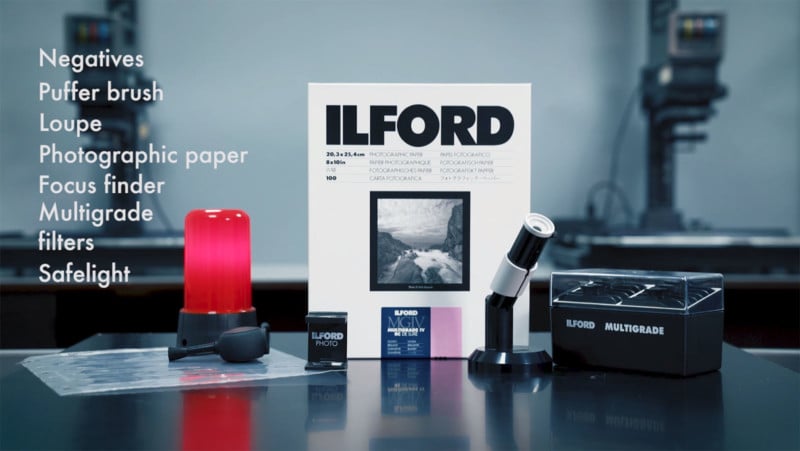
Ilford recently released a popular 8-minute video on how to process black-and-white film yourself, and now the film company is back again with another helpful crash course on how to make a black-and-white print in a darkroom. If you’ve never worked in a darkroom before, this intro is a great way to see what it’s all about.
“There is nothing quite like the magic of seeing your first print appear in the tray,” Ilford says. “If you have always wanted to learn how to make a black and white print in the darkroom then this is the perfect video for you.”
The video is broken down into 7 different sections:
Part 1: What you will need (00:08)
You’ll need to get quite a few resources and materials together before you can start working, including a pitch-black room with enough space to work, an enlarger, chemicals, and a number of smaller tools and items.
In terms of chemicals, you’ll need three (with three trays for them): (1) the Developer that makes the image appear on your photo paper, (2) the Stop bath that stops the development process, and the Fixer that fixes the developed photo, making it permanent.
Part 2: Preparing the chemicals (01:28)
Next, you’ll need to prepare the chemicals you’ll need for your tray, calculating the appropriate ratio of chemical to water for each.
Part 3: Choosing your negative (02:45)
Placing your film strips on a lightbox, use a loupe to choose the one you want to print before placing the strip into a negative carrier to isolate that photo.
Part 4: Focusing your image (03:07)
Place the negative carrier into the enlarger to project your photo onto the easel. Raise and lower the enlarger head to adjust the size of your projected image, and use the focusing wheel and a focus finder to focus it.
Part 5: Setting the aperture (03:33)
Set your enlarger’s lens aperture (Ilford recommends f/8 as a good starting point) and insert your desired filter.
Part 6: Making a test print (03:52)
Setting a timer for increments of a certain number of seconds (Ilford recommends 5), expose one section of a piece of photo paper at a time by covering less and less of the paper during each increment. This is a “test print” that shows you the resulting images produced by different exposure times.
The test print allows you to pick the best exposure time for creating your actual final print. You’ll need to develop, stop, and fix the print before giving it a bath in water.
Part 7: Making the final print (05:26)
Using the exposure time you figured out in Part 6, repeat the same steps to create your final print. Voila! You’ve created a print.
The iPhone’s Settings app is a labyrinth of well-hidden options and useful customizations, but they’re not immediately apparent if you don’t know where to look. Even more confusingly, some of the best settings aren’t in the Settings app at all. Today we’re going to investigate some of the lesser-known iPhone settings. Keep reading to find out more. 1. Invert the Screen Colors We’re all accustomed to how an iPhone looks. The various on-screen menus have used a light grey tone for years. Perhaps you’re getting bored of the color scheme, maybe you just want to create a talking point with...
When the search is on for that perfect job, it can be hard to know where to begin. Websites, mobile apps, social networks, and newspapers all have listings. But, it can be tough to search numerous resources on a regular basis. These job search engines can help you find and apply for the exact type of position you seek. Job Sites for All Types of Work Maybe you want to search for a few different kinds of jobs that you qualify for or just want a broad source. These sites offer job listings for most any type of position and...
At the end of 2017, Facebook boasted a barely-believable 2.2 billion active monthly users. Zuckerberg’s creation now reaches people of all ages in every corner of the global. Indeed, Facebook is so pervasive that people expect you to have an account. If you don’t, you’re seen as an oddball. How dare you fly in the face of the digital world? But if you’re one of the few people in North America or Europe who don’t have a Facebook profile, you’re ahead of the curve. People in the United States are deleting their accounts in record numbers. If you still have...
There are quite a few messaging apps that you can use from the comfort of your computer, but if you’re looking for a quick and easy way to send text messages without whipping out your phone, most US carriers make that pretty easy too. All you have to do is send the message to an email address using an SMS Gateway. Each carrier has an SMS gateway specific to their service, which will convert the email into a text message for you. So what do you need to send that message? You need to know what carrier the recipient is on,...
Since 1897, the Bottled-in-Bond designation has let whiskey consumers know exactly what is in each bottle. It means that a spirit is the product of a single distillery from a...
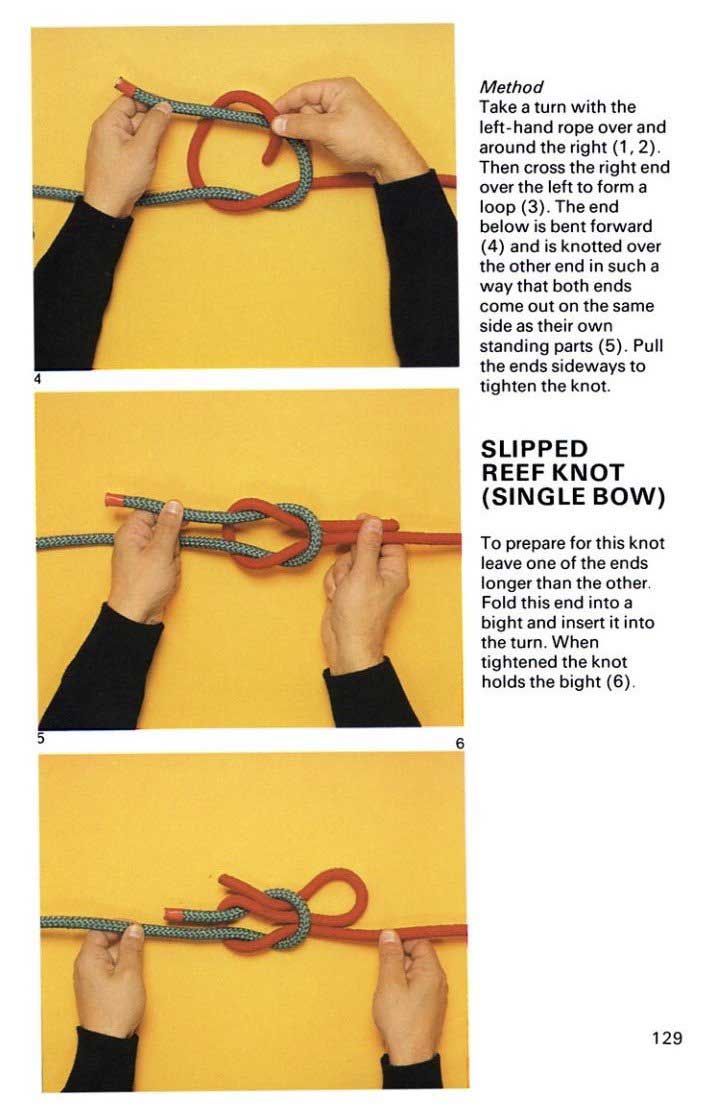
Knots are such fundamental tools, and matching the right job with the right knot is so often essential, the important next step from the Klutz Book is the equally lucid and fairly comprehensive Morrow Guide to Knots. Last week my wife Ryan gave a glad cry at the clarity in the book when she wanted to see a couple ways to tie a clove hitch, and learned that it’s easy to put a slip in a clove hitch for quick release.
Every day of Islands Week, we're profiling one uninhabited island. Find more here.
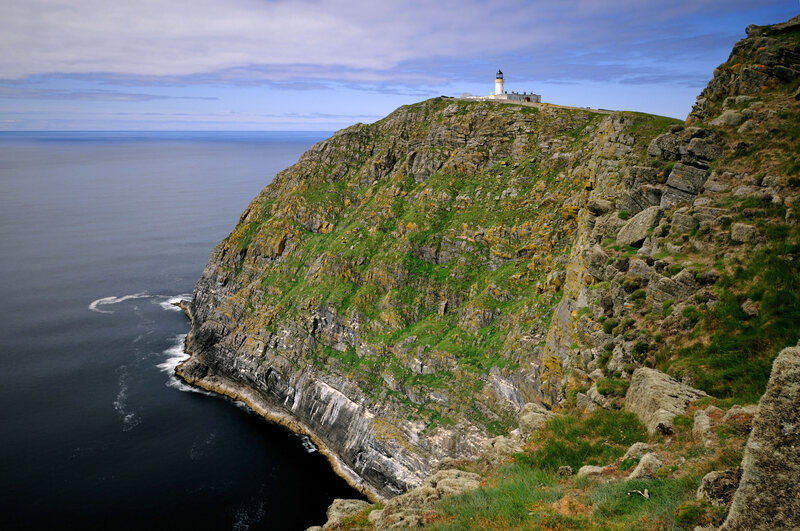
Those who traveled to from mainland Scotland to the island of Barra Head in the 19th century described a journey involving "innumerable jumblings by land and sea." The island is the southernmost in the Outer Hebrides, and is unprotected from the ravages of ocean weather. As the National Trust for Scotland puts it, "the western cliffs plunge with giddying suddenness" down into the sea, and storms slam right into them.
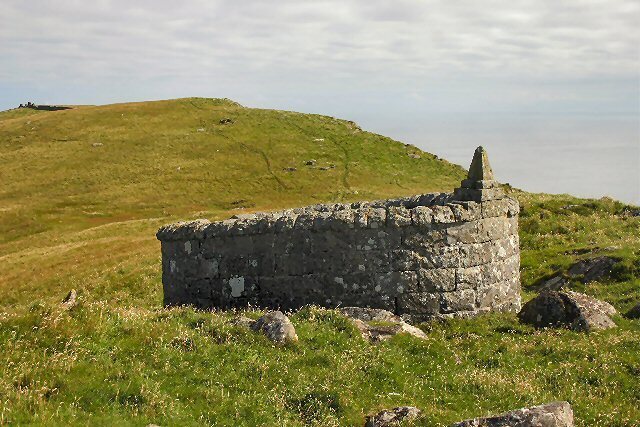
In the fall of 1833, the Barra Head Lighthouse flicked on for the first time, meant to help sailors near those cliffs deal with the extraordinary waves. As settlements rose and fell around it, the lighthouse housed keepers steadily for over a century. Many hosted guests who had come to study the island's flora and fauna, or just to see what life was like. At least one keeper buried family members there, in a small stone-walled cemetery near the tower.
In 1869, the ornithologist H.J. Elwes described looking down from the lighthouse on a blustery day as flocks of birds wheeled in the wind below. "The the air was so thickly crowded with birds as to produce the appearance of a heavy snowstorm," he wrote. "The howling of the tremendous gusts of wind coming up from below as if forced through a blast-pipe made it almost impossible to hear a person speak... It was the grandest sight I ever experienced."
But the lighthouse couldn't save everybody: After World War II, scraps from a Blenheim bomber were found on the face of the cliff. "Apparently, it had crashed in a storm and no one had heard it," the Northern Lighthouse Board reports.
Fans of historic buildings are trying to upgrade and preserve the lighthouse, fearing the storms will bring it down too. But these efforts have been made difficult by how hard it is to land on the island. For now, the light—the highest in all of Scotland—still spins once every thirty seconds, sweeping over the quiet graveyard, the seabird snowstorms, the crumpled bomber, and everything else we left behind.
As part of an effort to make Artificial Intelligence more comprehensible to the broader public, Google has created an educational website Learn with Google AI, which includes, among other things, a new online course called Machine Learning Crash Course. The course provides "exercises, interactive visualizations, and instructional videos that anyone can use to learn and practice [Machine Learning] concepts." To date, more than 18,000 Googlers have enrolled in the course. And now it's available for everyone, everywhere. You can supplement it with other AI courses found in the Relateds below.
Follow Open Culture on Facebook andTwitter and share intelligent media with your friends. Or better yet, sign up for our daily email and get a daily dose of Open Culture in your inbox.
If you'd like to support Open Culture and our mission, please consider making a donation to our site. It's hard to rely 100% on ads, and your contributions will help us provide the best free cultural and educational materials.
Learn how climate change is causing more floods, and how design architecture is being used in Bangkok, Thailand to stop the city from being completely submerged
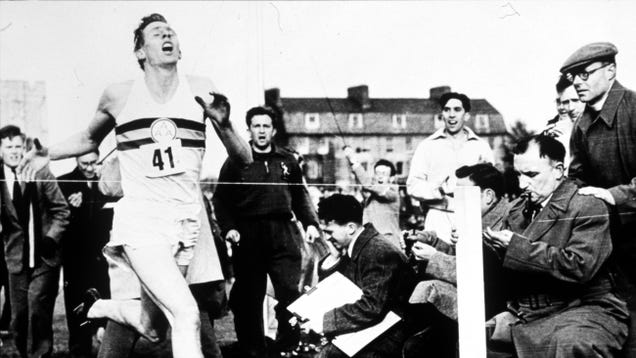
Roger Bannister, who in 1954 became the first person to run a mile in under four minutes—beating John Landy to it by less than two months—died last night in Oxford, England, the same city where he ran 3:59.4 64 years ago. He was 88 years old.
Retirement income security is weak, so American retirement policy encourages paid work among the elderly and Americans tolerate unusually high rates of old age poverty.
In addition to announcing the entry-level Rebel T7 this week, Canon also announced its new EOS 4000D DSLR over in Europe. When the camera is official in the United States, it might become the cheapest DSLR ever launched.
The Canon 4000D is low on both features and build quality. You’ll notice immediately that instead of having a metal lens mount on the front of the body, the camera has a black, all-plastic one (perhaps perfect for the Canon “nifty fifty”). It’s a mount that won’t take a beating as well as other Canon DSLRs, but it should do its job of holding onto a lens.
Inside the 4000D is an 18-megapixel APS-C sensor, down from the 24.1-megapixel one found in the Rebel T7/2000D. The 4000D does feature the same DIGIC 4+ image processor and has the same maximum ISO of 6400 (expandable to 12800). The camera can shoot 3 frames per second continuously with a 9-point autofocus system.
On the back of the 4000D are a 6.8cm (~2.68in) LCD screen and a centrally-mounted optical viewfinder.
Other features of the 4000D include Wi-Fi connectivity, Full HD video recording, in-camera feature guides for beginners, and a battery life of about 500 photos (or 1 hour and 15 minutes of HD Video).
Here’s a chart that compares how the 4000D stacks up against the 2000D/T7:
f/1.8, 1/200s, ISO 800f/1.8, 1/250s, ISO 800f/3.5, 1/250s, ISO 800f/4.0, 1/200s, ISO 400f/2.8, 1/80s, ISO 800f/22, 13s, ISO 200f/8, 1/1000s, ISO 100
DPReview reports that the 4000D will be priced at around £330/€380 for the body only. That price “would equate to somewhere around $385 without tax,” DPReview writes. “That’s the lowest launch price of any DSLR we can remember.”
Canon Rumors reports that the 4000D will be called the Rebel T100 in the United States when it’s officially announced on this side of the pond.
Whether you love them or hate them, there’s no denying it: celebrities, especially those like the Kardashians, have millions of followers because they’re famous for something (or not). But what about the rest of us, the average Joes and Janes of the world, who just want more followers on Instagram and Snapchat? While we may not attain celebrity status, there are a few ways to obtain some success with your Instagram and Snapchat pics. 1. Have a Hook One of the best ways to stand out from the crowd is to be unique and have a hook. Not everyone cares...
Kids playing with guns was seen as no big deal back in the day, and whether they were playing Cowboys and Indians, War or Astronauts versus Aliens guns factored into playtime in a big way.
But we live in a different world these days, one which is far deadlier and full of gun-related controversy as killing sprees reach an all-time high with seemingly no end in sight.
And as the gun-related violence rises the idea of kids playing with guns becomes more taboo, especially when you consider how many kids have been killed by cops or otherwise for waving around a plastic gun.
This Circa Now collection of toy gun commercials from the 50s and 60s seems odd by today's standards, and yet it's important to remember there was a time when kids playing with toy guns didn't lead to tragedy.
Uber and other ride-hailing services like Lyft represent what is likely the greatest innovation in ground transportation since the invention of the automobile. Uber and its innovative rival ride-sharing services will play a very important role in the future of ground transportation in the US and around the world.


 For example, Weems & Plath launched The SOS Distress Light in 2015, which is U.S. Coast Guard compliant to replace pyrotechnic flares. At a cost of about $100, that is three times more expensive than a three-pack of pyrotechnic flares, but it is safer, and thousands have been sold. Sirius Signal was the developer of the SOS Distress Light, and after engineering and testing, brought it to Weems & Plath to manufacture and distribute.






 Since 1897, the Bottled-in-Bond designation has let whiskey consumers know exactly what is in each bottle. It means that a spirit is the product of a single distillery from a...