Shared posts

01 Mar 16:35

7 Essential LinkedIn Profile Tips to Guarantee Success

by Dann Albright
linkedin-profile-tips

Professionals turn to LinkedIn to make connections and search for new opportunities. Knowing how to make your profile stand out is the key to getting noticed. So, if you’re struggling to get noticed, these LinkedIn profile tips should help you attract recruiters.

1. Make Your Headline Specific

With millions of people on LinkedIn, you need to stand out from the crowd. So the first of our LinkedIn profile tips concerns headlines. When you show up in a search, a recruiter will immediately see your headline underneath your name. It’s the sole deciding factor in whether someone will click on you.

If you’re a writer, you won’t want your headline to say: “Freelance Writer.” That’s way too vague. Instead, go with a more detailed headline that clearly states what you do. Use a descriptive headline like “SEO Marketing Copywriter with experience increasing web traffic” would make a recruiter more likely to click on your profile.

2. Get LinkedIn Recommendations

LinkedIn recommendations are a great way to show that you’re a reliable worker. If you don’t know what recommendations are, they’re a positive remark that a coworker, boss, or client writes about you. It gets displayed on your profile for other companies and potential clients to see.

To get a LinkedIn recommendation, you have to request it. It’s best to request recommendations from your current boss, or from a previous manager who you got along well with.

When sending a recommendation request, provide context for the request. Let your manager know that you want to keep your profile updated, and you’d like them to leave feedback on a recent accomplishment or project. Make it your goal to have at least three recommendations on your LinkedIn profile.

3. Join Groups Related to Your Field

One of the best ways to connect with other professionals in your field is through LinkedIn Groups. Joining a Group gives you access to experts and even potential clients.

To search for a Group, head to the LinkedIn search bar. Enter the term you’d like to use to find a Group, and the site will redirect you to the search results page. You’ll want to filter these results by Groups only, so head to the dropdown menu that says More and then click Groups.

LinkedIn Groups Search Results

Once you join, you can get advice from other experts, find new connections, and establish your expertise in your field. In addition to joining Groups, you should also follow these popular companies on LinkedIn to stay updated on some of the biggest influencers.

4. Tell a Story

Your LinkedIn profile shouldn’t look bland. Simply listing your experience and a brief description isn’t enough. LinkedIn leaves lots of room for other details about yourself, and you should definitely take advantage of that.

First, take a look at your profile summary. Use your summary to let your personality and character shine through. Include your biggest achievement, and don’t hesitate to add some creativity.

You should also fill in your list of accomplishments, skills, and try to get some endorsements. Make sure to continually add to these sections as you learn new skills or accomplish big feats. You could also use LinkedIn Skill Assessments to showcase your abilities.

Have any volunteer experience or know another language? Add those in too. The goal is to make your profile as thorough as possible. That way, a recruiter can really get to know you and your story.

5. Add Publications, Videos, and Pictures

On LinkedIn, you aren’t limited to expressing yourself via text. You can add presentations, videos, and pictures to your profile as well. Visual media attracts recruiters to your profile and makes it more memorable. Opt to include an introduction video or a quick clip of your latest presentation.

LinkedIn Publications List Example

You can also choose to link to articles, academic journals, or blog posts that you’ve written. Not only does this help increase the views on those articles, but it also helps prove your proficiency. If you don’t have any articles to link to, you can always write and share a helpful article on LinkedIn itself.

6. Use the Right Keywords

Keywords are the words or phrases that recruiters use to search for potential employees. To find the right keywords for your profile, pretend you’re a recruiter that’s searching for someone in your field. What words would you use to find someone that does what you do?

LinkedIn's keywords your searchers used view

Let’s say you’re a graphic designer who specializes in creating product labels. For this example, you’ll want to include “graphic designer” and “product labeling specialist” as your keywords. You can find even more relevant keywords by searching for a position you would qualify for, and adding some of the words that these posts incorporate.

Sprinkling keywords throughout your headline, projects, publications, summary, and positions can help boost your placement in search results. Just remember not to include too many keywords in your LinkedIn profile. An excessive number of keywords is obvious to recruiters and sounds very unnatural.

After you start adding keywords, you should slowly start getting more views on your profile. You can see who has viewed your LinkedIn profile to find out if the right people are clicking on you.

7. Stay Active on LinkedIn

By liking, sharing, and commenting on posts, you’ll get your name out there even more. Other LinkedIn users will see that you commented on their post, which can spark a new conversation and a connection.

LinkedIn Post Activity

You can also improve your visibility by frequently making posts. These posts obviously have to remain related to your profession—posts about promotions, recent publications, and sharing relevant articles are most appropriate.

LinkedIn Profile Tips to Help You Get Noticed

LinkedIn is more than just a social media site—it’s a method of recruitment. By following the above steps, you’ll see an increased number of potential clients and recruiters flocking to your LinkedIn profile. It’s a great way to start your networking journey.

Do you want to take your LinkedIn use to the next level? Here are some reasons why LinkedIn Premium is worth paying for.

Read the full article: 7 Essential LinkedIn Profile Tips to Guarantee Success

01 Mar 14:23

Giant Circle Towel

by swissmiss

This giant circle towel gets my thumbs up.

01 Mar 11:59

Meet The Delivery Robots Designed For Hitchhiking

by Parmy Olson, Forbes Staff
What if Uber carried robots instead of people? This startup is working on it.
28 Feb 16:39

6 Ways to Improve Work Travel From Expert Road Warriors

by Lelia Gowland, Women@Forbes
Want to know how to travel with greater ease? Hint: it involves dark chocolate.
28 Feb 16:08

Ask The Salty Waitress: What can I do when my friends behave like knuckleheads? 

by The Salty Waitress on The Takeout, shared by Virginia K. Smith to Lifehacker

Salty Waitress is The Takeout’s advice column from a real-life waitress that will teach you how not to behave like a garbage person while dining out—and maybe in real life.

Read more...

28 Feb 16:07

The Sandwich Thief


871 points, 46 comments.

27 Feb 20:44

Twice as nice - Barbra Streisand cloned beloved dog

LOS ANGELES (Reuters) - "If we had the chance to do it all again, tell me would we, could we?" Barbra Streisand had a hit singing this question in "The Way We Were," but when it comes to getting a new pet she does not have to wonder.
27 Feb 18:39

How to Do New Orleans Like a Local

by Dacey Orr

Oretha Castle Haley. Freret. Oak. Remember those street names. Cling to them like the heirlooms they are. No matter how much the corporate hotel chains and the corporate restaurants try to herd you with the rest of the cattle to the usual New Orleans places, resist.

For several generations, marketers and developers have sought to remake the city into a pale, generic version of Anywhere, America. They demolished much of our traditional architecture, ripped out our streetcar lines, and replaced many of our neighborhood streets with elevated expressways. But in recent years, the old New Orleans has come roaring back with a fury, declaring herself a multicentered city of rich, idiosyncratic neighborhoods with their main streets—once centers of commerce—finally enjoying a resurgence.

photo: Cedric Angeles

When they’re not rousing French Quarter crowds, Preservation Hall Jazz Band members Charlie Gabriel (left) and Ben Jaffe relax at spots like High Hat Cafe.

Richard Campanella, the Tulane University professor who has made a career of studying the city’s neighborhoods, points to the Dryades Market, which opened in 1849 and soon started attracting Eastern European Orthodox Jewish merchants. A hundred years later, it had become a major shopping area for black New Orleanians and the site of civil rights protests against its discriminatory hiring practices. Oretha Castle Haley, after whom the street that passes by the market has been renamed, participated in the protests and later became a civil rights leader. 

photo: Cedric Angeles

The patio at Casa Borrega.

Taken collectively, the street’s current offerings exemplify the story of New Orleans (including, fittingly, a series of nonprofits). The Dryades Public Market is now a food hub featuring local wares such as French Truck Coffee. The Southern Food and Beverage Museum features Crescent City–centric collections such as Raymond Bordelon’s gallery of absinthe paraphernalia. Casa Borrega, with its Mexican food and pan-Latin live music, reasserts the long connection between New Orleans and points southwest. James Beard Award nominee Isaac Toups offers his personal approach to regional cuisine at Toups South, while Café Reconcile uses its white beans with shrimp, po’boys, and bananas Foster bread pudding as a means of teaching at-risk youth the skills they need to secure employment in the restaurant industry.

photo: Cedric Angeles

The Stryker cocktail at Cure.

Heading toward Uptown: Freret Street had become an important commercial corridor by the 1920s. After decades of decline, the avenue has bounced back to life as a destination for eating and drinking. Cure helped spearhead the comeback of creative cocktail culture in New Orleans. High Hat Cafe, with its pimento cheese and hot tamales, brings Mississippi Delta notes to a menu that also includes Gumbo Ya-Ya. There are good New Orleanian exponents of national food trends, including regional Italian cuisine (Ancora Pizzeria and Salumeria), hamburgers (the Company Burger), and hot dogs (Dat Dog). For live music on Freret, the choice is Gasa Gasa.

photo: Cedric Angeles

Fine blades at Coutelier Nola.

Oak Street didn’t become a part of New Orleans proper until the city annexed the town of Carrollton in 1874. Some of the old businesses held on while the street declined in the 1980s and ’90s, most notably Haase’s children’s clothing store. But even in Oak’s heyday, you couldn’t have imagined walking into a place like Coutelier Nola, a fine Japanese knife store opened by the chefs Jacqueline Blanchard and Brandt Cox. Simone’s Market, a gourmet food store and café, also reflects the street’s emerging sensibility with its rosemary roast beef and smoked fried chicken sandwiches, while Z’otz Café pours coffee with a bohemian touch.

But if you really want to see a New Orleans that is both totally typical and absolutely singular, go on down to Cowbell at the end of Oak Street for hamburgers, homemade apple pie, and crab boil potatoes—I would guess even most New Orleanians haven’t ventured that far.

The post How to Do New Orleans Like a Local appeared first on Garden & Gun.

27 Feb 18:31

Ban The Box

by Ernie Smith
Ban The Box

Today in Tedium: Thirty years ago, the record industry decided it didn’t want to be the record industry anymore. It wanted to be the CD industry, with maybe some cassettes on the side. It was getting rid of all that vinyl! This situation, oddly enough, may just repeat in 2018—except, this time, not by choice. Best Buy is about to throw out its record racks entirely; Target is making the idea of selling physical CDs less financially advantageous for record labels. It’s a move that’s likely to have a big impact on the industry—and also likely to create some awkward situations at retail, just like dropping all that vinyl did in 1988. Today’s Tedium ponders one of those awkward situations—the longbox, a dumb solution to a dumb problem. — Ernie @ Tedium

Today's GIF comes from a 1992 MTV News report about longboxes, shot at Tower Records' iconic Sunset Strip location.

1968

The year that the National Association of Recording Merchandisers first proposed a 4-inch-by-12-inch standard case for cassette tapes, according to Cash Box. (A standard compact cassette is 4 inches by 2.5 inches.) The report notes that the standard was controversial, but that the alternative to putting records in these massively oversized cases was putting them behind glass, which discouraged the kind of exploration that record stores are known for.

Ban The Box

A cassette tape longbox, as shown in a 1972 patent.

The longbox predates the compact disc by more than a decade, as it turns out

From a distance, it seems like putting a CD or a cassette inside a massive box, of which more than half of it was effectively useless, would be a really questionable choice.

But the record industry had a couple of good reasons for doing so.

First off was the size of the racks the industry used for selling its products. Records, with their covers, had a size of around 12 inches square. As the industry introduced new variations on that technology, it was easier to keep the old racks around than to replace them, so any way you could make a format more modular to fit the existing design would be more desirable from a packaging standpoint.

The other reason was that the portability of the devices—which consumers, of course, loved—was a lot less desirable in a retail environment. Portability means theft, and theft is a big problem when it comes to music, digital or not.

A 1972 patent filing for a 12-inch-high cassette case explained the issue as such:

Tape cartridges such as Cassette tape cartridges are quite expensive, and are presently generally packaged in a carton substantially corresponding in size to the cartridge itself; These cartons function to both protectively enclose the cartridge so that the tapes are not subjected to damage prior to the purchase thereof and to display the cartridge to potential purchasers. The cartons are generally satisfactory, however, the small size thereof permits it to be easily slipped into a coat pocket. Stores, therefore, have experienced considerable pilferage and, as a result, desire a different type of packaging which provides the same advantages as these small size cartons, but which is of a construction or size to discourage this type of pilferage.

The result of this is that, years before the music industry sold compact discs in 12-inch-long boxes, it sold cassette tapes in a similar format. There was even an industry nickname for these boxes, per a 1971 Billboard article, and it was hilarious: They were called “spaghetti” boxes because of their similarity to the cardboard boxes that held actual spaghetti.

While such displays certainly weren’t ideal, they were often cheaper for retailers who didn’t have thousands of dollars to spend on more elaborate anti-theft schemes, which were possible by the 1980s, but not cheap.

Nonetheless, the existence of these boxes highlighted something of an industry conflict within the packaging industry: Paper manufacturers and plastic producers each wanted their materials to be used for cassette casing, because that meant business for the respective industries. (Plastic largely won this round.)

And as the record industry started to embrace the compact disc, the issue of packaging materials would soon be amplified.

1981

The year that the technical development of the compact disc had completed. (That technical work gave us hidden tracks.) That same year, officials at Polygram’s German arm researched ways to package the disc in a way that protected it from the elements while being inexpensive and easy to produce. This led to the creation of the jewel case. The case wasn’t always intuitive for consumers, however. “Tests by consumer panels revealed that not everyone knew immediately how to open the case. And the more firmly it was held, the more difficult it became to open it,” a page on the Philips website states. “The only solution was to teach consumers how to do it. Which helped, because after a few months the complaints disappeared.”

Ban The Box

A Billy Idol longbox. (Discogs)

The debate over packaging that gave us the longbox

Compact disc packaging was basically a nonissue in most of the rest of the world, where unadorned shrink-wrapped jewel cases became the standard fairly quickly.

So why did the U.S. market struggle with this particular issue? To put it simply, industry forces were powerful on all sides. The National Association of Recording Merchandisers had enough collective clout that it could dictate dimensions to the music industry, while the record industry could push whatever standard it wanted.

But why paper, instead of, say, plastic? Well, initially, the format was sold to consumers in a jewel case format, but paper manufacturers, aiming to please retailers, went back to the drawing board, aiming to create alternative approaches, some of which got rid of the jewel case altogether. One factor was cost; Per a 1984 Billboard article, manufacturers were eyeing saving money through the use of paper casing. Another was the existing industry infrastructure. A number of manufacturers saw themselves losing potential business in the shift-over from vinyl to compact discs; selling record stores on packaging that allowed them to keep their original rack designs only sweetened the deal.

This latter point was likely helped along by the fact that a major label, Warner Bros., owned Ivy Hill, one of the most prominent paper suppliers to the music industry during the 1980s and 1990s. Ivy Hill worked with another major paper manufacturer, Shorewood, on different formats for compact disc packaging, some that didn’t use jewel cases at all. The goal? To prove that paper could be used as an alternative to plastic. They tested the format heavily, and decided what they came up with was better than the solution the CD initially launched with.

“The jewel box is not in CD’s future,” argued Adam Somers, Warner Bros. Records’ vice president of creative services, in a 1985 Billboard article.

(Did it prevent disc rot?)

Ban The Box

Prince's "Around the World in the Day," which was designed to use every inch of the longbox format. (Home of Theimer)

This push away from the jewel case soon gained momentum among some of the industry’s biggest stars—Prince was one of the first artists to eschew the jewel case entirely for a CD release—but it was not to be. Instead, most rank-and-file releases used a mixture of a paper box and a jewel case. On cheap releases, the paper wasn't even specially designed. (One reason for this is that not every major label was on board with ditching the jewel box. Polygram, which invented the jewel case, wanted to keep it.)

The situation was good for retailers. It was good for paper manufacturers. It may have even been good for record companies, depending on which ones. But it was bad for the environment, and that eventually caught up to the industry.

“As a consumer, I go into a record store once a week and buy three or four disks. I unpackage them before I go into the house, and every time I do that it strikes me as wasteful and stupid.”

— Robert Simonds, a founder of the record label Rykodisc, explaining to the New York Times why he was launching an anti-longbox movement, which became known as Ban the Box. Rykodisc, which was once of the first CD-only record labels, also had a financial incentive for getting rid of the boxes, per the Times—they were expensive in small quantities for independent record labels. Nonetheless, environmental concerns drove the movement, and Rykodisc was able to get fellow indies like Rhino, SST, Fantasy, and Rounder Records on board—along with public support from acts like R.E.M. and the Grateful Dead.

The turning point for the Ban the Box concept came when artists finally spoke up against excessive packaging

The Ban the Box movement was gaining momentum, with a lot of artists supporting the idea, but getting over the edge of solving the problem didn’t happen until an artist at the peak of his commercial powers stepped up and used his clout to get the ball rolling.

The artist, of course, was Raffi. (Who did you think we were going to say?) The Canadian children’s musician used the opportunity of signing a new contract with MCA Records to demand a no-longbox clause be added to his contract.

Ban The Box

Raffi was a trailblazer. Don't let anyone ever tell you otherwise.

It was a gutsy move, as record stores had basically emphasized that they would not play ball with any efforts to change the packaging. However, the concept fit with Raffi’s M.O.—beyond being a kid’s artist, he was an environmentalist, and the album he was about to release for MCA, Evergreen Everblue [Amazon link], spoke up about his concerns about the environment.

“I simply believe that the excessive packaging of cassettes and CDs can no longer be tolerated in a global environmental crisis. If there's enough pressure from artists and their audience, the buying public, I think record stores will respond by eliminating the long box,” he said in a statement at the time, according to the Los Angeles Times.

Soon, other acts, like Sting, made similar calls for changes on their own albums. R.E.M., an act that had publicly opposed longboxes, ultimately approved of them on the album Out of Time because their label, Warner Bros., successfully convinced the band that it could use the extra space to encourage the passage of the Motor Voter bill—something 99 Percent Invisible covered in great detail a few years ago.

Ban The Box

An Eco-Pak. When in use, the case folds into a standard CD case design. (Discogs)

Warner Bros., which was arguably responsible for taking CD packaging in a paperboard route, did try other routes to balance the need for eco-friendly packaging with record stores’ practical desire to have the packaging match all the other boxes. The solution the label came up with was something called the Eco-Pak, which effectively was a longbox that folded down into a CD case after you had purchased the box. (Above is an example of the case, used by Deee-Lite for their 1992 album Infinity Within.)

It made sense that the company would want to find an approach to please record stores—because major record store chains wouldn’t let up on the issue without a fight. For example, at the time Ban the Box was announced, Tower Records President Russ Solomon was passionate about keeping the box as it was.

“You can't put a $15 item in a little jewel box, and have it lying around in a discount house unattended,” Solomon told the Times in 1990. “The 6-by-12-inch size also allows more graphics to be displayed than the 5-by-6-inch size, and graphics are important in selling the product.”

Solomon was so invested in keeping the boxes that he created recycling stations at the chain’s iconic Sunset Strip store so that people could immediately recycle the longboxes at the store.

And the paper companies that actually produced the boxes banded together, launching a group called the Entertainment Packaging Association in an effort to convince the record industry to stick with paper. That helped lead to the Eco-Pak, which supported their business, along with the similar Digi-Trak packaging technology that Sting used on one of his records. In response, manufacturers of jewel boxes launched an effort of their own, called the Jewel Box Advocates and Manufacturers. It was an out-and-out lobbying war over how we were going to package these discs.

In this situation, jewel box manufacturers ultimately had the upper hand—the plastic cases, nearly 20 percent of which were returned to manufacturers, were simply easier to recycle back into jewel cases—even though they still created lots of waste elsewhere in the stream. On top of that, the rest of the world was using jewel cases already, so they had just one country to convince. (Some bands, like U2, gave consumers a choice—offering Achtung Baby in both a jewel case and a Digi-Trak.)

Ultimately, the pressure on the issue would not let up, and in the end, the record industry went with jewel cases. Record stores, which fought the move tooth-and-nail, had to foot a $200 million bill to account for changes, which included, in some cases, the addition of anti-theft strips on CDs, along with purchasing plastic cases for albums that could be reused later.

“It was a good transition tool that unfortunately stayed around just a little too long,” RIAA spokesman Tim Sites told the Asbury Park Press in 1993 of the longbox.

Soon, record stores switched to plastic casings which looked unusual but did the job, the music industry had some of its most successful years ever, and then the bottom fell out after digital downloads appeared.

It sure put that whole situation into sharp relief, didn’t it?

In some ways, the saga of the longbox really highlights the declining influence that retail has on the music industry as a whole.

Many of the companies that were key figures in the longbox conflict, particularly Tower Records, are no longer operational in the United States, a fact pointed out in great detail by the Colin Hanks documentary All Things Must Pass [Amazon link].

Soon, the rise of online shopping would make the move away from longboxes seem prescient. And just a few years after that, music piracy and downloads cut retailers out of the equation entirely, creating a situation that threatened the long-term prospects of standalone record stores.

And with Best Buy and Target apparently getting sick of the fact that they’re dedicating wide swaths of their stores to products that people don’t buy anymore, we may have finally reached the point in the wide arc of music industry calculus where the compact disc is finally on the the fast track to death, at least in the U.S.

All good things must come to an end. Taylor Swift only releases albums once every other year, and she alone is not enough to sustain reflective polycarbonate forever.

And she certainly wouldn’t have been able to do so with a case that’s largely empty.

27 Feb 18:27

New Orleans pulls 46 tons of Mardi Gras beads from storm drains

(Reuters) - The colorful beaded necklaces that are a signature of New Orleans' annual Mardi Gras celebration have left the city known as "The Big Easy" with a big mess.
27 Feb 18:16

1963 International Harvester Scout Camper

Seemingly 100% original and ripe for restoration, this 1963 International Harvester Scout Camper is a highly collectible oddity. One of only 88 ever made, this 68,000-mile example is one of...

Visit Uncrate for the full post.
27 Feb 18:16

1961 Porsche Junior 108 Tractor

It doesn't have the track-bred prowess or iconic shape of its road-car brothers, but it is a Porsche. And it's just as good at its job. For a tractor, this...

Visit Uncrate for the full post.
27 Feb 17:34

What Dan Barber Is Cooking Up Next: A Seed Company That Puts Flavor First

by Maggie McGrath, Forbes Staff
Chefs have never been able to write a recipe from the seed level -- until now. On Tuesday, Dan Barber and his partners are launching a new seed company that is putting flavor at the forefront -- and filling a need that Big Seed has long ignored.
27 Feb 17:32

Why This Expert Tells Job Hunters: You're Doing It Wrong

by Richard Eisenberg, Contributor
Gary Burnison, CEO of the executive recruiter Korn Ferry, and author of 'Lose the Resume, Land the Job' says job hunters need to find work differently.
27 Feb 17:30

What a Chart of Urine Tells Us About the History of Color Printing

by Sarah Laskow
article-image

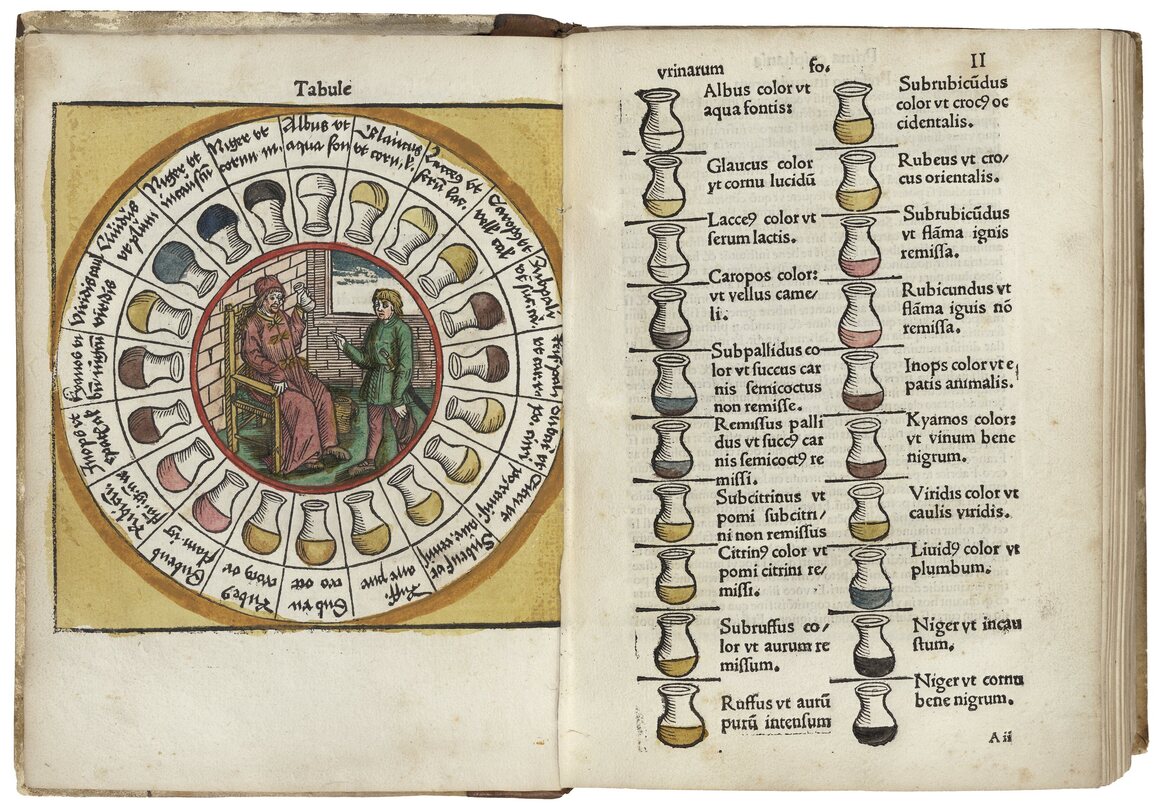
In the early 16th century, books did not include images unless there was a very good reason. “To print images in books at the time required planning, time, and extra money,” says Caroline Duroselle-Melish, a curator at the Folger Shakespeare Library. “They were not simply decorative. An image was a real investment.”

The full-page, color spread (above) in Ulrich Pinder’s medical text, Epiphanie medicorum, printed in 1506 in Nuremberg, Germany, must have seemed crucial to his project. On the left-hand page is a wheel of flasks, each colored a different shade of yellow, pink, black, brown, or greenish blue. Opposite, the same flasks are arranged in rows, with more detail about the colors and what each shade might mean. All the flasks were meant to represent samples of human urine.

At the time, urinalysis had already been practiced for hundreds of years and was on the verge of becoming so popular that people started self-diagnosing their ailments based on the color of their pee. This revolution in home medicine depended in part on printing technology that created access to information once restricted to the medical professionals of the time.

But printing technology was not yet good enough that images could be counted on to reliably convey what they were meant to. “This is a case where you really should read and not only look at the image,” says Duroselle-Melish, who curated the Folger’s new exhibition, Beyond Words: Book Illustration in the Age of Shakespeare, which features Pinder's book alongside more than 80 other illustrated books and prints from the 15th to 18th centuries.

article-image

As far back as 100 B.C., Sanskrit medical texts from South Asia described 20 different types of urine and the ailments they might indicate. In ancient Greece, Hippocrates hypothesized that urine represents a filtrate of the four humors, the balance of which determines a person’s health. He believed it came from the blood and was filtered through the kidneys. As an article in Kidney International notes, this was “a fairly accurate description.”

Although not all of the early work using urine as a diagnostic tool holds up, ancient physicians knew that sweet-tasting urine (a sign of diabetes) or cloudy urine (indicating dehydration, infection, or a host of other things) were causes for concern. By the Roman era, the physician Galen improved on Hippocrates’s analysis, correctly postulating that urine was a filtrate of the blood.

Most diagnoses were made by inspecting urine visually. But physicians also tasted samples, and one influential seventh-century scientist developed a test that used heat to precipitate proteins from urine to provide more information. Urinalysis, according to the Journal of the Royal College of Physicians of Edinburgh, can be considered "the first laboratory test documented in the history of medicine."

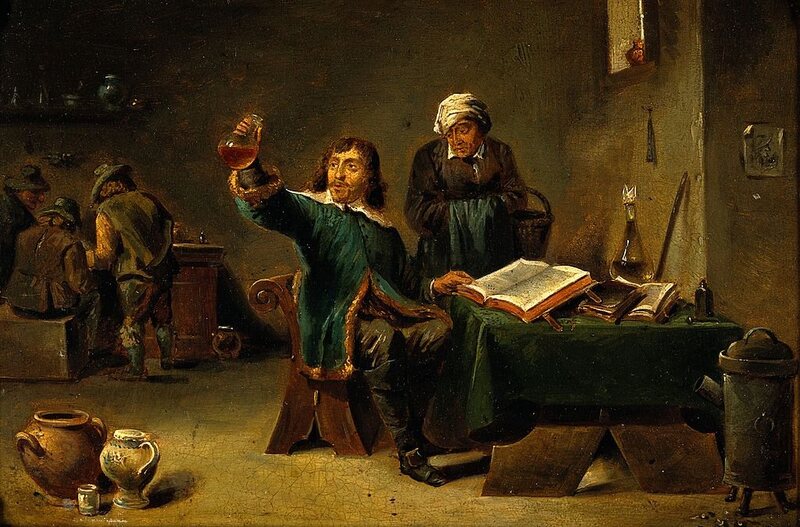
During the Middle Ages, the popularity of urinalysis increased, and it became a primary tool for health assessment. One 12th-century physician invented a special glass vessel used to collect and examine urine samples. Every respectable physician had one, and they became a symbol of the profession.

Soon experts started publishing urine charts as teaching tools. When books were printed in Latin, the secrets of urine stayed within the medical profession, but starting around the time Pinder’s book was published these charts began to be translated out of Latin, which gave more people access to them. Soon, healers with no medical training were offering to diagnose ailments based on pee color alone. By the 17th century, these “pisse prophets” had become so ubiquitous that one writer, Thomas Brian, published a takedown of the whole profession.

article-image

While visual urinalysis is a legitimate diagnostic tool, it was a problem how much the medical profession had come to rely on it. Pisse prophets aside, some physicians were offering diagnoses based on urine samples alone, without ever seeing the patients who provided them. But learning to read urine based on printed charts could be dangerous. As Duroselle-Melish says, printing technology wasn’t up to the task.

“Most of these images were printed in black and white,” she says. “For a lot of these illustrations, color was added after, by hand.”

Look more closely at the chart above: The colors don’t even match from one page to another. Color might have been added to an illustration by a printer, or it might have been commissioned by the owner of a book after purchase. There was no standardization, and while some book publishers created detailed coloring instructions, the artisans who did the work didn't always conform to those specifications.

In this case, the unreliable coloring “makes the identification of the color and the diagnosis difficult,” says Duroselle-Melish. It certainly seemed impressive to have a book with a color illustration, but in this case it was still, in part, just for show. Any physician who wanted to master urinalysis would have to read the Latin, too.

27 Feb 17:14

quick, essential stovetop mac-and-cheese

by deb

A couple years ago, at my second home (the grocery store, alas, not, like, the shore) I was passing through the boxed macaroni and cheese section and realized my son, then five, had grown up so far without ever trying it. I realize some people pat themselves on the back about this, but I’m more skeptical about things. Realistically, by the time my kids grow up, I will have inundated them so with so many kale caesars, farro salads and wholesome slaws, sweet potatoes, and homemade from-scratch birthday cakes they’ll have no choice but to rebel with a steady diet of sugar cereals, frozen pocketed foods, and frosting from a can. Maybe leveling things up earlier on will help avoid this outcome? So I bought a box, made it for dinner that night (with the requisite steamed broccoli on the side, nobody ever tells you how much broccoli you’re going to steam when you become a parent) and oh, I’m sorry, were you waiting for me to call it terrible? A disappointment? A memory from childhood that did not hold up? It was anything but. I love orange cheese powder and I do not wish to keep it to myself any longer.

Read more »

27 Feb 15:29

How Movie Stars Negotiate Their Salaries

by Alicia Adamczyk on Two Cents, shared by Alicia Adamczyk to Lifehacker

Movie stars make a lot of money, a fact you are probably aware of. More than me, for sure, and probably more than you.

Read more...

27 Feb 15:27

And the mother too


Tags: well, played, elon

3667 points, 57 comments.

27 Feb 15:26

20 Online Shopping Sites With Free International Shipping

by Dan Price
free-shipping-sites

The rise of online shopping has made international shipping the conveyor belt of the world. You can order a didgeridoo from Australia and it’ll turn up on your doorstep in Iceland within the week. But, because international shipping doesn’t come cheap it’ll probably cost you a fortune.

Thankfully, there are online shopping sites that offer free international shipping. All of the retailers we’re about to introduce you to offer some form of free international shipping. We’ve even organized them into categories to make it easier to browse…

Note: Depending on your location, you may still have to pay import tax.

Technology Shopping Sites

Are you looking to buy a new speaker or upgrade your laptop? These stores will help.

1. DHGate

dhgate international shipping

DHGate is an international shopping site that specializes in selling no-name products from China. The site is mainly aimed at wholesale buyers rather than regular consumers. Free shipping is available around the world.

2. Newegg

newegg international shipping

American company Newegg is a well-established name in the world of online tech shopping. The site offers many top-of-the-line products at a lower price than you’ll find elsewhere. The company offers free shipping on many products. More than 50 countries are supported, including Canada, Mexico, and most of Europe.

3. YesAsia

yesasia free shipping

YesAsia is an online store for video games. It offers multiple games, consoles, and accessories. The PlayStation 4, Nintendo Switch, Xbox One, Wii U, and Nintendo DS are the most widely supported platforms. There is also some content for PC gamers.

All items on the site are eligible for free international shipping (except posters). However, you’ll need to spend a minimum of $40.

Fashion Shopping Sites

Here are six online shops where you can get your fashion fix.

4. Dorothy Perkins

dorothy perkins free shipping

Dorothy Perkins is a UK-based retailer. It specializes in women’s clothing, but also has an extensive line of childrenswear for both girls and boys.

International shipping to select countries (mainly Europe and the US) is free if you spend more than £50. The company has launched a range of new international sites. If you live in France, the United States, Germany, Ireland, Singapore, Malaysia, or Thailand, you won’t be able to order from the UK site.

5. ASOS

asos shipping

ASOS stocks menswear and womenswear. The clothes are primarily aimed at people between 20 and 35 years old. It offers more than 80,000 individual items. International shipping is free if you spend more than $30.

6. Shopbop

shopbop international shopping site

Shopbop has been owned by Amazon since 2006. It offers luxury brands aimed at people of all ages. If you spend more than $100, the company will ship your order anywhere in the world for free.

7. Strawberrynet

strawberrynet international shipping free

If you’re looking for beauty products, Strawberrynet is the site for you. It specializes in perfumes, makeup, skincare creams, and haircare. If you spend more than $75, Strawberrynet will send your international shipment for free.

8. Feel Unique

feelunique shipping

Feel Unique sells makeup, skincare products, creams and lotions for traveling and beach vacations, perfumes, and some electrical beauty products. Free international delivery is available on orders above $50-$100, depending on where you live.

9. Fy

fy free worldwide shipping

Fy offers unique products from new and emerging designers. You will struggle to find the items available here anywhere else on the web. Expect to see clothes, bags, accessories, handbags, jewelry, and even wall art. Free worldwide shipping is available on all orders.

Entertainment Shopping Sites

Books, CDs, DVDs… it’s possible to get free international shipping on all kinds of entertainment if you know where to look.

10. BetterWorldBooks

betterworldbooks free shipping

BetterWorldBooks sells both new and second-hand books. It also stocks textbooks for college students. The company is based in the UK but offers free shipping around the world. Orders fulfilled by BetterWorldBooks will take 10-21 days. Orders fulfilled by a third-party seller might take up to five weeks.

11. Book Depository

bookdepository shipping

Book Depository is one of the largest online booksellers. It provides more than 17 million titles to choose from. It also offers a few board games. The company’s fulfillment centers are in the UK and Australia. Free shipping is available if you anywhere in Europe, North America, and South America. Some countries in Asia and Africa are also on the list.

12. Deep Discount

deepdiscount worldwide shipping

Most of Deep Discount’s products fall into the entertainment category. The site offers a vast collection of CDs, DVDs, books, video games, and vinyl records (why everyone should start collecting vinyl). You can also find some clothing and fitness gear. Global free shipping is available on orders above $25.

House and Home

Is it time to make your house look like a home? Have a look at these sites.

13. Animi Causa

Animi causa shipping

Animi Causa is arguably the unique site on this list. It specializes in wall decals, tabletop furnishings, furniture, lighting, and kitchenware. The products are typically quite quirky. Free international shipping is available worldwide on orders of $25 or more. Deliveries can take six weeks to arrive.

14. Fishpond

fishpond free shipping internationally

Fishpond is a New Zealand-based company. Its website stocks more than 12 million items. You’ll be able to find everything from arts and crafts to stationery and sunglasses. It offers free worldwide shipping on all orders.

15. Art.com

artcom shipping

As the name suggests, Art.com is a one-stop-shop for paintings, canvases, picture frames, and other home décor. The site offers free international shipping to some countries, include most of North America and Europe. Free shipping is only available on tapestries, laminated items, prints, frames, canvas items, mirrors, and rugs.

Department Stores

Department stores offer products in hundreds of different categories.

16. Marks and Spencer

mands international free shipping

If you live in the US, the UK, Australia, New Zealand, Canada, China, or most of Western Europe, you can enjoy free shipping on Marks and Spencer’s products. Just navigate to your country’s localized Marks and Spencer website. The massive retailer specializes in food, furniture, clothing, and homewares.

17. The Hut

the hut shipping

The Hut is a luxury online department store. Product categories include home accessories, cooking and dining, sports equipment, and toys. Depending on where you live, The Hut offers free shipping worldwide on orders above $20 to $50.

Online Retailers

Still haven’t found the product you’re looking for? These three online behemoths will definitely have you covered.

18. AliExpress

aliexpress free shipping

AliExpress is similar to eBay; it allows third-party sellers to pedal their wares. Unlike Amazon, it does not manufacture its own branded products.

Some items offer free international shipping, but it depends on the seller. Make sure you tick the appropriate box in the filters before starting your search.

If you follow our advice, shopping on AliExpress is perfectly safe.

19. eBay

ebay free shipping

EBay has been at the forefront of online retailing for almost 20 years; it is one of the best international online shopping sites. Thousands of items offer free international shipping, but it varies from seller-to-seller. Just make sure you check before you commit to a purchase.

20. Amazon Prime

amazon prime free shipping

No list of free shipping would be complete without mentioning Amazon Prime. If you pay for a membership, many products on the site will be eligible for free international shipping.

Amazon Prime is not available everywhere, and the price of the subscription varies between countries.

What Other Shopping Sites Offer Free Shipping?

In this article we’ve introduced you to online retailers that offer free international shipping, but there are others out there. Now we want you to add to this list. Which sites do you recommend? How is their customer support?

Before you shop online, make sure you know about the best cashback websites to save money. And for focused stores, check out the best online shopping sites for cheap electronics.

Read the full article: 20 Online Shopping Sites With Free International Shipping

27 Feb 14:53

Not you're average bike ride

2622 points, 108 comments.

27 Feb 14:50

These 11 Military-Issued Items Are Also Available to Civilians

These long-lasting items are built to be used and abused by the military while continuing to perform in extreme conditions — and they're also available to you.

27 Feb 14:42

A Macaroni Recipe From 1784

by Miss Cellania

Jon Townsend (previously at Neatorama) cooks up a little macaroni and cheese from a recipe published in 1784. Along the way, we get a bit of history about the term "macaroni" in the sense that it was used in the song "Yankee Doodle." But that has nothing to do with food. This dish is pretty basic, and sounds delicious.

(YouTube link)

Several comments under the video asked where the nutmeg is. I had never heard of macaroni and cheese with nutmeg, but apparently there are a lot of recipes that call for it. I prefer onions and dry mustard. Townsends has a blog about historical recipes and food for historical reenactments, called Savoring the Past. -via reddit

27 Feb 14:35

The Ultimate Cross-Country Road Trip Is Best Done in a Classic Muscle Car

I ultimately set out from New York with the self-centered scheme of proving to my closest friends and family that I’m better suited for a life lived alone. And to show that the car my dad bought and worked for years to restore was my one-way ticket to achieve real independence.

27 Feb 14:30

Here’s What People Are Searching Google for About You

by Ryan Dube
people-search-google-for

You may be a father, mother, boss, or employee. However you identify, there are people out there searching Google about you. It’s amazing how many life secrets you can learn from a simple Google search.

The Google Autocomplete feature reveals a lot of search trends. What are people “Googling” about you? What are kids searching for about their parents? What do employees want to know about their boss?

The clues might help you build better relationships, improve your career, and it could even improve your family life. Ready for some amazing insights into what other people want to know about you? Let’s start.

Why Is Someone Googling You?

While online, especially when using social networks, it can be easy to forget your digital footprint. How many times have you looked up your own name lately?

The results may surprise you, but they can do a lot more for those who Google about you.

There are different reasons why someone would look you up, but some of the common ones involve social networking.

Just remember, those results provide an often unexpected amount of information to anyone searching for you. Before we discuss those results, here are some of the most common reasons people will look you up with Google Search.

Googling Before You First Meet

First impressions are important, but they can often occur before you’ve ever met a person.

Consider this, you’re about to meet someone, but you’re nervous. You want to leave a good impression, and you think you could use a little help.

By Googling someone, you’ll often get a glimpse into their hobbies and likes via social media channels. It’s a great way to gain information, and you’re not exempt from it.

Googling After Dating

Another reason you might end up a search result comes after dating. Your first date could go wonderfully, but your date might wonder if you’re too good to be true. A small amount of curiosity can turn into them finding all your social networks and other personal details.

This is one reason it’s important to know how to protect your privacy while online dating.

Googling by Employers

While potential employers Google you after an interview may seem unlikely to you, it occurs much more often than you think. Employers value their image, so they’re likely to respond to anyone who might indirectly tarnish it.

Some companies make it a policy to screen social media accounts and any reference on the web while others might check-in after a tip-off.

You don’t want your job security held hostage by a disgruntled coworker. This is why online privacy matters and you should reclaim it.

See What People Google About You

Regardless of what reason caused someone to Google you, it’s important to get a look through their eyes. There are different ways to go about doing this. However, the easiest first step is simply Google your name for yourself.

Depending on how common your name is, the nature of your work, and how active you are on social media all factor into what you’re going to see. If you’re comfortable with the results, you can stop right there.

However, you should do your due diligence to get a truly neutral look through a lens such as a VPN.

Use VPN Browser Add-Ons

Browsing for a VPN that works consistently can prove stressful. If you’re using Firefox, look at the best free VPN for Firefox. However, if you’re using Google Chrome, you’ll be able to use many of the same VPN options just as easily.

Once you’ve decided on one of the reliable VPNs to use, head back to Google. Search for your name and make sure the results haven’t shifted at all.

Use Free Anonymous Proxy Browsers

If you don’t want to use an add-on, you can also use anonymous proxy browsers. There are several proxies you can use but hide.me consistently works and makes it super easy to double-check your information.

On the site, enter Google’s address and choose a proxy located outside your native country.

Once you use Google to search your own information via proxy, you can move onto your response.

How to Respond to People Googling You

Now that you know what others are seeing, you’re probably wondering who’s exactly looking. Take advantage of these ways to find out who’s searching for you online. Even if you can’t figure out who is, between your Google results and mentions, you can begin to shape your privacy actively.

Be Self-Aware of Your Online Footprint

While it’s difficult to advise and provide information relevant to everyone, there are some details you can control.

If you Google yourself, and your results point unquestionably to your social media, personal websites, or work history then consider whether or not you’re leaving the right impression.

You can change your posting habits and the content on any social media or websites you control.

If you find yourself listed erroneously (say wrongful information about your work history) anywhere, you can also reach out via a site’s contact information to try and get it corrected.

Take Active Approaches to Improve Your Privacy

On the other hand, your information is fine, but you might want to keep it private from others. For instance, you don’t want just anyone to stumble onto your public social media page and glean information about you.

Also, be extra careful when linking your phone number to all your accounts. Personal contact information, like phone numbers or addresses are the most common things searched for and misused.

Still, an easy way to stay more private involves learning the privacy controls and protocol for the sites you’re on. These can vary widely between sites, so it’s important to stay informed.

However, it sometimes can be as simple as setting your profile information to private versus public.

Be Aware of What People Google About You

Someone Googling you may have never occurred to you before. But it’s important to know your information is out on the internet. Depending on your lifestyle and comfort levels, your response will differ. The important part is that you know now, and you have options.

Protecting you personal information is easier when you set tiny online habits. For instance, one way to stop Google’s data gathering involves simply avoiding Google and Bing and using alternative search engines that value your privacy.

Read the full article: Here’s What People Are Searching Google for About You

26 Feb 19:06

Beer, Bath & Beyond: 1940

by Dave
March 1940. "Hotel. Austin, Nevada." With a cameo by our stream-drinker. Photo by Arthur Rothstein for the Farm Security Administration. View full size.
26 Feb 17:00

Insane And Creepy Historical Facts They Never Taught You In School

by Zeon Santos

(Image Link)

Unless your history teacher was a real history buff or they had an affinity for the dark side of life your high school and college history courses probably left out most of the creepy bits.

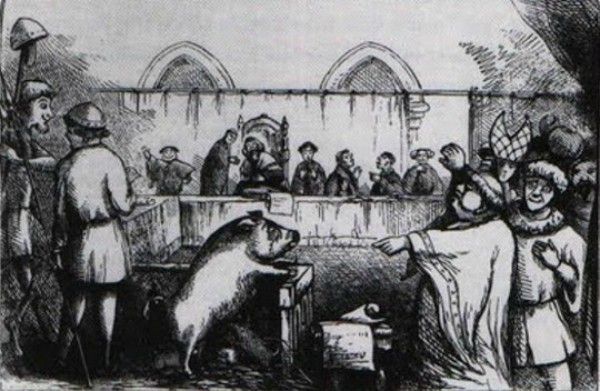
They probably spoke about the Salem witch trials but chose not to touch on the fact that witch trials date back to the Middle Ages and beyond- and that animals were sometimes put on trial for witchcraft too.

(Image Link)

History teachers may touch on the reign of Pope Gregory IX during the 13th century, and mention how he's the guy behind the Papal Inquisition, but they won't tell you how Gregory declared cats part of devil worship- and had them exterminated by the hundreds.

(Image Link)

And even though history teachers will speak of Napoleon's defeat at Waterloo they hardly ever discuss the defeat Napoleon suffered eight years prior- at the paws of a horde of rabbits he was hunting.  

(Image Link)

See 25 Insanely Creepy Historical Facts They Never Taught You In School here

26 Feb 15:44

Grilled Fish for Lenten Fridays

by BarbecueBible.com

What is Lent?
For the 40 days preceding Easter Sunday, many Americans, especially Catholics, observe Lent as an important religious period of the year. The activities of Lent are meant to increase mindfulness, prayer and adherence to certain practices.

How does fish relate to Lent?
One particular way that observers can participate during Lent is to give up red meat on Fridays (or during the entire 40 day period). While that may cancel a weekly Friday cookout for some, we are here to tell you that needn’t be the case!

Grilled Fish Recipes
Even for those who don’t practice a related religion or adhere to Lenten principles, grilling seafood dishes can be a way to break from your red meat routine. The simple flavors of seafood combined with the aroma of smoke make a wonderful dish for any palate. Try the recipes below in place of your next Fish Fry, and share with us on Facebook, Twitter and Instagram!

Fabulous Fish Tacos
This dish is extremely flexible in both its ingredients and cooking methods — whether you prefer planked salmon, seared tuna, or grilled white fish, there’s a combination that will suit you.

Cold-Smoked Salmon
Dinner isn’t the only meal where you may have to alter your menu during Lent! Try smoked salmon with breakfast, in omelets, on its own, or with bagels and cream cheese. You may never go back to breakfast sausage after experiencing this home-smoked salmon.

Shrimp 6 Ways
Fresh shrimp may be hard to come by for any land-locked grillers, but luckily shrimp freezes very well! It’s also great smoked, grilled or even cavemanned. Keep these recipes in your back pocket for a fun Friday option.

Blackened Fish Fillet
Weather is hardly an excuse not to grill for many of our avid readers, but for those of us who may still be experiencing frigid temperatures and need to bring meal prep indoors, you could use this cast iron recipe in the kitchen. It creates a lot of smoke (it’s supposed to!) so you may want to make it on the grill if you can.

The post Grilled Fish for Lenten Fridays appeared first on Barbecuebible.com.

26 Feb 15:39

Nokia 8110 4G First Review: The Matrix Phone Reloaded Is Top Banana

by David Phelan, Contributor
Nokia yesterday revealed its new Original, the Nokia 8110 4G. But can a fresh coat of gaudy yellow paint and a slimmer, slicker design make waves the way the first 8110 did 22 years ago?
26 Feb 15:30

8 Reasons Telegram Is the Only Messaging App You Need

by Dan Price
telegram-messenger

When you think of instant messaging apps, one name will pop into your head before all others: WhatsApp. It’s understandable. It was the first messaging app that was widely adopted around the globe. And, despite the privacy concerns associated with owners Facebook, it regularly receives upgrades, improvements, and new features. But WhatsApp has ruled the roost for too long. Today, there are much better alternatives out there. One of the best alternatives is Telegram. But what makes it so unique? In this piece, we’re going to introduce to some of the features that make it the only instant messaging app...

Read the full article: 8 Reasons Telegram Is the Only Messaging App You Need

26 Feb 15:27

How To Quit Your Job Gracefully

by Aliza Licht, Women@Forbes
Your reputation doesn't follow you everywhere, it gets there before you do. Read Aliza Licht's top 5 tips on how to quit your job gracefully.