KWBaker
Shared posts
How Bad Is Light Pollution? Ask An Astronaut

This Is How a Guide in a Remote National Park Spends His Time
In our Off the Beaten Path series, we're telling the stories of outdoor guides and how they spend their time off. This time in the remote Channel Islands.

Here’s Your Chance to Own the Ultimate Off-Road Truck
You know you want to park this in your driveway.

6 Free Web Apps to Break Instagram Restrictions and Fix Annoyances

There is so much more to Instagram than posting a picture and getting some likes. These free web apps show how to make the best use of the social network by doing things that Instagram won’t let you.
Instagram often feels unnecessarily restrictive in how one can use it. Thankfully, a few developers are bypassing these annoyances with simple apps. So here are a few ways to write well-formatted captions, browse someone’s top posts, or download any post or story.
1. Instaloadgram (Web): AI-Generate Hashtags, Data Export, and Downloads
Instaloadgram is a combination of three tools for Instagram users. It lets you download any content from a profile, it can export data to a spreadsheet, and it can auto-generate smart hashtags.
- Downloading: Instaloadgram is the best download tool for Instagram stories, videos, or photos. Load any public profile to see the latest Stories that are still active, as well as all their posts. Everything has a quick link to download and save it to your hard drive.
- Exporting: You can export data (comments, likes, followers, posts from an account, posts from a hashtag) about any account easily into a spreadsheet to open in Excel. The first 100 entries are free, but you’ll have to pay for more data points.
- AI Hashtags: Upload an image from your hard drive to Instaloadgram, and its smart AI will “see” the image to generate hashtags. Hashtags are based on current trends so that you don’t have to do the hard yards. You can copy all hashtags to the clipboard in one click.
Instaloadgram is a virtual Swiss Army knife of useful apps for Instagram users. It’s also cool that it isn’t a subscription-based program because Instagram often bans such apps. You’re only paying for data export, and that too as per the use case.
2. dgram.xyz (Web): All-in-One Instagram Photo, Video, IGTV Downloader
If Instaloadgram is overkill for your needs, bookmark dgram.xyz to save or download individual Instagram media. This web app downloads any photo, video, IGTV clip, or a user’s full-size display picture. It doesn’t work with Stories on Instagram.
Just copy the link (on any photo or video, tap the Three-dot menu icon > Copy link) and paste it into the box at dgram. You’ll see a preview, and an option to download the HD file.
Of course, dgram is best for downloading other people’s Instagram content. If you’re only concerned about the things you uploaded on the social network, then there are other ways to download and save all your Instagram images easily.
3. Zine (Web): Free Way to Turn Instagram Feed Into a Website
If you’re a photographer or an influencer who primarily uses Instagram for your portfolio, check out Zine. It’s the easiest way to turn any Instagram feed into a website, without any coding, and it’s completely free.
Sign in with your Instagram login, and Zine will fetch the pictures and videos from your account. Customize how you want your website to look by choosing a layout, a font, and the color. You can preview them before making it final.
Once you’re done, you’ll get a free account at the URL “<yourusername>.zine.press” (without the quotes), which even non-Instagram users can check out. The app also lets you upgrade to use your own custom domain name for $7 per month.
Currently, Zine does not import Instagram Stories, so this will be a portfolio of pictures and videos only.
4. Caption Writer (Web): Write Beautifully Formatted Captions
It’s strange that Instagram is such a great app, but it won’t let you compose well-formatted captions. Till the social network fixes it, here’s an easy workaround from developer Igor Samohovets.
The web-based Caption Writer works on both desktop and mobile. Write a caption with whitespaces. emojis, and numbered lists. The character count at the top ensures you don’t exceed the 2200 character limit. Similarly, a hashtag limiter counts down from the maximum 30 hashtags.
Once you’ve composed your caption, tap the Copy button, head to Instagram, and paste it there. Next time you want to use Caption Writer again, tap Clear to restart. There’s no need to sign in or download anything, it’s a free and awesome nifty tool.
Note: In case Samohovets takes down Caption Writer, try Pretty Captions to write formatted Instagram captions. It doesn’t have the character or hashtag countdowns, but it works well.
5. Top 100 Posts (Web): Browse Any Account’s Top 100 Posts
Instagram doesn’t make it easy to browse. When you discover a new user on Instagram, you can check their feed only chronologically. There’s no quick way to see their most popular or most viewed posts. That’s where Top 100 Posts comes in.
Key in the username of any Instagram public profile, or browse through the suggestions for sports brands, tech brands, top users, etc. In a few seconds, Top 100 Posts will show that account’s best photos and videos (excluding Stories).
You can sort those top posts by engagement, the number of likes it got, or the number of comments on that post. The app also has a quick-link to download and save the image.
This is one of the coolest ways to browse Instagram accounts, especially those of influencers or popular brands. You’re also more likely to see personal pictures this way, rather than an endorsement.
6. Linkfru (Web): Create Cool Links for Instagram Bio
Instagram users can only add one link in their bio. With Linkfru, you can use that one link to lead a user to more cool links.
The free Linkfru account creates a custom page for you, with three links that look like buttons. You can customize the text and the URL, as well as the look of your page. Apart from these three links, you can create custom Pages.
Each Linkfru Page has a lot more information than a button. You can add a banner image or a YouTube video that can be played in the page, as well as a headline, a description, and a link. Your users are likely to stay longer in your Linkfru bio if you use videos smartly.
The free account restricts you to three links and three Pages. The premium accounts (starting at $14 per month) include unlimited links and Pages, as well as analytics and insights into user behavior.
Linkfru is only one of several services that offer cool ways to add links to Instagram posts. Others offer more links in the free package, but the Pages feature makes Linkfru worth checking out.
The Hidden Features of Instagram
The apps in this article are all about circumventing Instagram’s restrictions. But there are also some cool features in Instagram that you probably aren’t aware of. Check out these 15 things you didn’t know you could do on Instagram.
Read the full article: 6 Free Web Apps to Break Instagram Restrictions and Fix Annoyances
Carbon Offsetting Flights: How You Can Help Save the World

We fly more than ever. International holidays, business, sporting events, and family visits require us to jump on a flight. Scheduled airline passenger numbers increased from 1.9 billion in 2004 to 4.3 billion in 2018. This figure is expected to rise in coming years.
At the same time, many global travelers are taking an interest in their carbon footprint. One easy way of reducing your carbon footprint is through carbon offsetting schemes.
Sounds interesting? Here are three sites to help you offset your international flights.
What Is Carbon Offsetting?
Carbon offsetting is the process of compensating for carbon dioxide emissions arising from human activity. In this case, it is about how you can offset your carbon footprint when you take a flight.
The idea is that you pay a small amount extra to contribute to schemes that encourage or deliver emissions savings around the globe.
The premise of offsetting international flight emissions isn’t new. In 2009, travelers at San Francisco International Airport had the chance to visit a climate kiosk. The climate kiosk would inform travelers about the footprint of their flight and advise on projects that would offset the carbon emissions.
Unfortunately, it didn’t take off. The lack of clarity regarding the working of offsetting and difficulty figuring out which projects were “good” turned travelers away.
Carbon offsetting is now a lot easier. There are numerous websites advising travelers on offsetting schemes and projects. Carbon offsetting standards also help travelers understand if an offset project is worthwhile.
Here are five other projects you can use to fight climate change.
What Are Carbon Offsetting Standards?
There are different carbon offsetting standards and a lot of offsetting alphabet soup to go along with it. However, the key carbon offsetting standards to consider are the Gold Standard (GS, or GS VERs) and Plan Vivo.
The Gold Standard protects against the most common issues found with carbon offsetting, such as project verification, impermanence, and leakage (just shifting the emissions to another location). The Gold Standard certifies over 1,700 projects across 80 countries. It also requires projects to help the local population as well as reduce carbon. Gold Standard projects consistently help create value, too.
The Plan Vivo Standard is the official certification of the Plan Vivo Foundation. The certification confirms that the carbon offsetting project ensures mutual benefit for the ecosystem, biodiversity, and the local population. This framework allows each aspect to achieve growth. The Plan Vivo Standard covers a spectrum of land management and development projects and like the Gold Standard, helps create value for smaller communities.
1. C-Level Flight Carbon Calculator
The C-Level Flight Carbon Calculator is a very popular carbon offsite calculator. C-Level works closely with the Plan Vivo Foundation to give you a wide range of choice on the offset projects you fund.
Each project is chosen specifically for its benefits to both biodiversity and the local population, and you can track your carbon offset project using the IHS Markit.
Enter your flight details, number of passengers, and payment option, then select Offset Your CO2. You can then choose the project you want to offset your carbon with and complete the payment process.
2. MyClimate![myclimate carbon calculator offset flight]()
The MyClimate carbon offset calculator uses the highest independent quality standards for its carbon offset projects, including the Gold Standard and Plan Vivo. Using these two standards ensures that the carbon offset funds head to the best projects making the most impact, in locations where the difference will truly help.
One handy MyClimate feature is that you can offset carbon for alternative transport methods, and even events, your business, personal projects, cruises, and more.
Head to MyClimate, choose your transportation type or event and enter the requisite details. You can then select from a range of carbon offsetting projects or let MyClimate assign the funds on your behalf.
3. Atmosfair
All Atmosfair carbon offset projects must meet the Gold Standard. Furthermore, the Atmosfair carbon calculator is considered one of the best available, giving a detailed breakdown of your emissions.
Head to the site and select Offset Now. Choose between a flight, a fixed offset (for instance, offsetting your electricity bill), or an event. Enter the relevant information regarding your selection, confirm the payment amount, and continue.
You can select the carbon offsetting projects you want to contribute to on the final page.
Is Carbon Offsetting Flights Effective?
I’m not going to say that carbon offsetting is a magic cure-all. It isn’t. Carbon offsetting is, however, a useful tool to help balance your lifestyle. Offsetting your international flight carbon emissions helps to balance the CO2 books, but other lifestyle changes are important, too.
The important thing to remember is that carbon offsetting isn’t expensive. Offsetting a flight from London to Nairobi only costs an extra $20. In the grand scheme of things, that’s a drop in the ocean; 8 take-away coffees.
Positively, international airlines will begin offsetting carbon emissions automatically in the near future. By 2021, a UN agreement called the Carbon Offsetting and Reduction Scheme for International Aviation (CORSICA), will see airlines account for the carbon offsetting of their passengers. It switches the emphasis back to the airlines to take care of the carbon offsetting, making the entire process easier to manage and vastly more effective.
It isn’t just airlines and international passengers considering their impact on the globe.
In September 2018, Lyft announced it would become one of the largest voluntary carbon offset purchasers. It aims to make all rides using its cars carbon neutral.
Global shipping behemoth, Maersk, is introducing carbon-neutral biofuel, while the rest of the global shipping industry finally begins to catch up with the progress made in aviation.
Want to shift to a more ethical and eco-friendly way of using technology? Take a look at several ways you can recycle electronics and avoid e-waste.
Read the full article: Carbon Offsetting Flights: How You Can Help Save the World
The 5 Best Portable Web Browsers for Your USB Drive
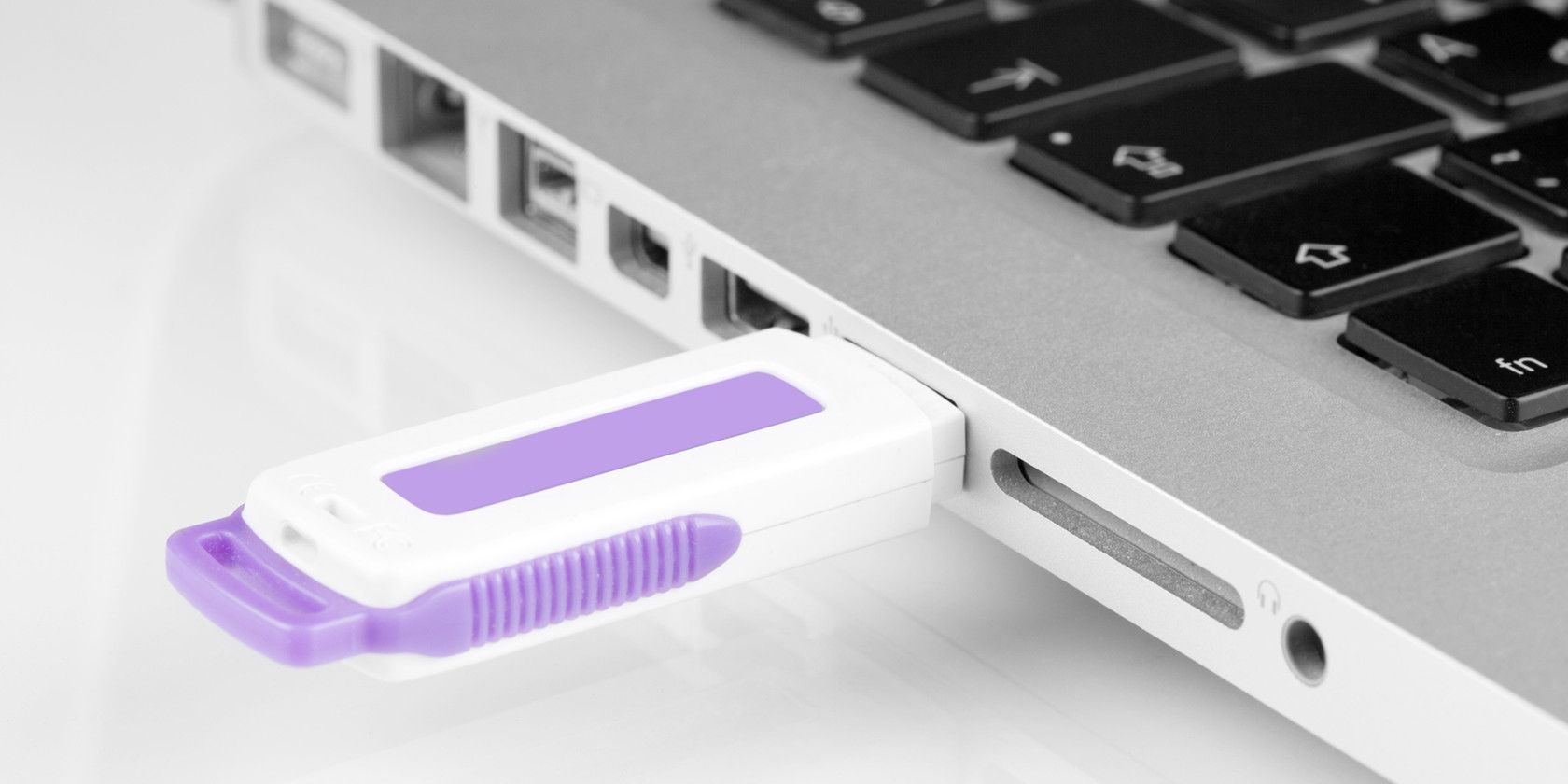
Most computers you use every day will have a web browser pre-installed. However, there are times when you might need to use a portable browser instead.
But which are the best portable web browsers? We’re going to introduce you to five standalone browsers that you can put on a USB drive and take anywhere.
Why Use a Portable Web Browser?
The use cases are more varied than you might think. For example, perhaps your school or office does not allow you to install browser extensions. If you want to use an ad-blocker or a browser-based VPN, that can be a problem.
Or perhaps you like using a niche browser that’s not typically available on public machines. Again, a portable version of the browser might provide the solution.
And remember, portable browsers will still work on all machines which do not allow you to install your own software.
Which Is the Best Portable Browser?
Convinced you about the benefits of keeping a lightweight, portable browser close by on a flash drive? Good. But which one is the best?
Let’s take a look at our top five favorite portable browsers.
1. Opera Portable
Available on: Windows, macOS
Opera offers an easy-to-use standalone portable browser for Windows.
There are no differences between the desktop version and the portable version. That means you can enjoy all Opera’s best features such as ad-blocking, personal newsreader, and the battery saver. All your bookmarks, extensions, and data will only save to your profile on the USB drive, not to the host computer.
You can also make Opera work as a portable web browser for macOS, but it’s a bit trickier to set up:
- Download and mount the image of the regular version of Opera for macOS.
- Drag Opera from the disk image to your USB drive.
- Open the Terminal app and type /Contents/MacOS/Opera -createsingleprofile.
- Press Enter.
There is no portable version of Opera for Linux, though you can use Wine to get the app to work.
Download: Opera Portable for Windows | Opera for macOS (Free)
2. Firefox
Available on: Windows, Linux (with Wine)
A portable version of Firefox for Windows has been available since 2004. It was the first app to become available on the now popular PortableApps.com website. You cannot download it from the main Firefox page.
Most of the best Firefox features are available, including extensions and automatic updating. Due to speed issues when updating an app on a USB drive, you can turn on the update prompt if you wish. The portable version of the browser also lets you access your own bookmarks and preferred settings.
Some of the key differences between the desktop version of Firefox and the standalone browser include the addition of a default profile, the removal of the default browser check at start-up, a location prompt for every download, and the removal of the disk cache.
Firefox Portable will work with Wine on UNIX systems.
Download: Firefox Portable for Windows (Free)
3. Vivaldi Standalone
Available on: Windows
Vivaldi can be deployed as a portable browser on a USB drive. This time, however, the option to create a standalone version of the browser has been coded into the main app’s installer; there is no separate download.
To set up a portable version of Vivaldi, you first need to grab the app from the company’s official website. Once you’ve downloaded it, follow the step-by-step instructions below.
- Run the Vivaldi installer.
- On the first window, select Advanced.
- In the Installation type dropdown menu, select Install standalone.
- Choose a destination folder. You can run it on a USB drive, CD, or even in another Windows directory if you want two versions of the app on your operating system. Do not select the Program Files folder.
- Hit Accept.
Unlike some of the other browsers on this list, your Vivaldi extensions will not be transferred to the portable version of the app. They are encrypted with a computer-specific key.
Download: Vivaldi Standalone for Windows (Free)
4. Avant Browser USB Disk Version
Available on: Windows
Avant Browser USB Disk Version is one of the most lightweight portable web browsers. You will struggle to find any browser on the Windows operating system with lower memory usage.
Some of the browser’s other key features include:
- Video Sniffer: You can download a video off any webpage with a single click.
- Split View: Both the desktop and portable version of Avant offer the Split View feature. You can use it to view—and browse—two different sites at the same time.
- Synced Bookmarks: Your bookmarks will be available on all your Avant apps.
- RSS Reader: If you’re looking for a native and reliable RSS reader, Avant offers a solid solution.
The only significant difference between the desktop browser and the portable browser is where user profiles are saved. On the portable version, they are in the same folder as the Avant app.
Download: Avant Browser USB Disk Version for Windows (Free)
5. Comodo IceDragon
Available on: Windows
Comodo IceDragon is based on Firefox. It has a full desktop version and a portable browser version for Windows.
Of course, Comodo is best known for its anti-virus software, so it’s no surprise to find the browser packed with security features.
The most appealing feature is arguably its secure DNS service. All users can access Comodo’s DNS servers for free. Aside from faster browsing, Comodo’s DNS users will also benefit from malware domain filtering, a real-time block list of harmful websites, and a reduction in DNS poisoning attacks.
In terms of installation, Comodo takes the same approach as Vivaldi. You need to download the regular version of the app, then tick the box labeled Portable version (user profile is stored in destination folder) during the setup process.
Download: Comodo IceDragon for Windows (Free)
Warning: Avoid the Chromium Portable Web Browser
We used to recommend Chromium as one of the best portable browsers; many sites still do. Sadly, it’s no longer a good idea. It hasn’t been updated since July 2017 and runs on Chromium version 61. No further updates are planned.
Older browsers are notorious for being security nightmares. If you run a browser that’s several years old, you’re asking for trouble.
The Best Portable Browser for USB Drives
So, which is the best portable browser? For us, it’s a toss-up between Opera and Firefox. For Windows users, the easy-to-run USB version of Opera is appealing, but long-time Firefox users might struggle to pull themselves away.
To learn more about portable apps, check out our other article on the best portable apps that don’t require installation and our explanation of how portable apps can make your life easier.
Image Credit: karandaev/Depositphotos
Read the full article: The 5 Best Portable Web Browsers for Your USB Drive
Meet the Georgia Trainer at the Pinnacle of Dog Handling
Summertime on the South Dakota prairie is stunningly gorgeous. Hills roll on and on under a giant blue sky, and when the winds gust, the sweet smell of wheat, alfalfa, and corn silage fills the air. Enormous green fields extend nearly forever, studded with bursts of sunflowers. On a clear night you’re bound to see a shooting star.
Soaking it all in from atop Patrón, his Tennessee walking horse, is professional dog trainer and handler Luke Eisenhart. He’s traveled from South Georgia to these cooler climes to work a string of thirty-five English pointers and setters, either for eventual competition or for hunters across the country, as part of his Trachaven Kennels program, which his grandfather Gerald “Pap” Tracy established a half century ago. “I come from a long line of excellent dogmen,” Eisenhart says.
At age seven, Eisenhart began learning from Pap, and his uncle George Tracy, too—both inductees to the National Bird Dog Museum’s Field Trial Hall of Fame. He ran his first campaign then, and his dog Rocky River Rambo won him his first amateur trial. By the time Eisenhart was fifteen, he was training dogs on his own after school, and eventually he took over the business from Pap. “All I’ve ever wanted to do was to work dogs,” Eisenhart, who is now forty-one, says. “I’ve never thought of doing anything else.” That singular focus has made him something of a shooting star himself.
Over the past twenty years, he’s won more than a hundred championships, and after his success in the “shooting dog” category of field trials, he decided to enter the most elite circuit: the All-Age Stakes, in which top dogs of any age can compete. The South is to the All-Age field trials what the SEC is to college football, and so Eisenhart and his family moved from his native Pennsylvania to the epicenter of the action: Albany, Georgia, where his wife, Tammy, was raised.
All of the conditioning, training, and running on wild birds that followed led to triumph. This year Eisenhart won his sixth Purina Top All-Age Handler award, a new record—his mentor Robin Gates held the previous record of five wins. Eisenhart’s biggest victory came in February on a muddy course at Tennessee’s Ames Plantation—the National Championship, the mother of all field trials. He handled Dunn’s Tried N True (call name Jack), a white, orange, and ticked six-year-old pointer owned by Kentucky’s Will and Rita Dunn, to capture the sport’s top award. “Winning the National was the fulfillment of a lifelong dream,” Eisenhart says. “Dogs run for three hours, and during that time there is always a lot that can go wrong.”
Of course, Eisenhart says, “winning is a team effort. Good owners provide good dogs to work, while generous landowners provide access to fields full of wild birds.” He also credits Tommy Davis, his scout—the person who helps keep dogs on track during the trials—who happens to be his father-in-law and a Hall of Famer himself. “He’s a big reason for my success.”
John Rex Gates—who in 1978 became the youngest inductee to the Field Trial Hall of Fame—sees similarities between himself and Eisenhart. “Records live and opinions die,” Gates says, “and Luke’s coming on strong. He knows dogs, he plans his work and works his plan, and his success takes care of itself.” Claudia McNamee, who owns several dogs Eisenhart runs, first met him on the circuit fifteen years ago. “Luke has a quiet confidence that comes from years of smart and hard work,” she says. “He understands how to bring the best out in dogs, and to put them in a position for success. He’s that way with people and horses, too.”
As Eisenhart scans the horizon back in South Dakota, a pointer locks up. Eisenhart likes what he sees, but he knows there are months of preparation ahead. If all goes according to plan, though, it won’t be a surprise to see him return to Ames Plantation come winter.
The post Meet the Georgia Trainer at the Pinnacle of Dog Handling appeared first on Garden & Gun.
Europeans Now Have The Right To Repair – And That Means The Rest Of Us Probably Will Too
As anyone who has been faced with a recently-manufactured household appliance that has broken will know, sometimes they can be surprisingly difficult to fix. In many cases it is not in the interests of manufacturers keen to sell more products to make a device that lasts significantly longer than its warranty period, to design it with dismantling or repairability in mind, or to make spare parts available to extend its life. As hardware hackers we do our best with home-made replacement components, hot glue, and cable ties, but all too often another appliance that should have plenty of life in it heads for the dump.
![Czech waste management workers dismantle scrap washing machines. Tormale [CC BY-SA 3.0].](https://hackaday.com/wp-content/uploads/2019/10/1280px-DVO_4792.jpg)
Let’s dig into the ramifications of this decision which will likely affect markets beyond the EU and hopefully lead to a supply of available parts useful for repair and beyond.
When A Large Customer Adopts Right To Repair, Everybody Does
The right to repair what we own has been a hot topic in our community for many years, and indeed has appeared in these pages many times. The recent legislation will not help in some of the key battlegrounds such as the use of DRM to restrict maintenance of John Deere tractors, but it will have a huge impact upon the domestic appliance market far beyond the EU borders. The union’s member states collectively represent such a significant market that these rules will affect the design of appliances sold in all markets, as the manufacture of these devices is now a global undertaking. Thus it is not unreasonable to expect that, for example, a Korean-made washing machine sold in Paris will have the same underpinnings as one sold in Miami, and that both machines will benefit from the same supply of replacement parts.

The story is not without a sting in the tail though, for within it is the news that those spare parts will not be made available to the consumer, instead they will only be released to the appliance repair trade. We see this as a regressive step, because by restricting repair to an anointed few it is hardly a universal right to repair, however we also expect that the usual online suppliers of appliance parts will happily sell to all comers and that a thriving grey market will spring up to fill any gap in the market. There is also the question of what it might do to the lower end of the appliance market, what would the spare parts burden do to the availability of the sub-$50 Chinese breadmaker for example? We would expect this to solve itself by manufacturers of low-end goods adopting a largely standard library of parts, however a concern is that it might push up the entry level for appliance ownership to the disadvatage of less well-heeled consumers.
That’s The Feelgood News Story, Now What About The Hardware Hacker Community?

So far this has been a consumer story, but what about our world of hardware hackers? Going back to the start of this piece it is likely to mean that in future we more likely to be able to fix those dead appliances that cross our benches, but there is more in it for us. This measure will mean a bonanza of readily-available parts will come to market as spares, and while many of them will be restricted to their intended application there will be plenty that will have utility well beyond. Expect to see more brushless motors, valves, pumps, and more at mass-produced and grey market prices, and start thinking about how you might use them.
As this is being written the news streams are full of environmental protests, from Greta Thunberg to Extinction Rebellion to the Bolivian capital and it’s undeniable that they represent the prevailing zeitgeist. The European Right To Repair laws are not in the name of personal freedom but aimed at reducing environmental impact. There is a sunk cost of carbon emissions and other impacts in every product we produce. It is in the public interest to give each the longest life possible, and on balance this law aims to reduce waste through increased longevity with a repairability mindset. I think it is inevitable that we will see the same ethos spread to other jurisdictions and fields of manufacturing.
A Sleeping Chateau, Untouched since the Revolution, is For Sale

We held our breath as its story unfolded. That of a curious, half-moon shaped castle unlike any other we’d seen before, tucked away in the quiet warmth of Bordeaux’s countryside. Something in our gut told us that this castle, of the many we’ve fallen for, was to be different from the rest – and we were right. The “Château du Bouilh” was tailor made for the last King of France, and has been left virtually untouched since the country’s Revolution, from dusty armchairs to the cobwebbed curtains.
How This Travel Site Makes It Easy For Families To Attend Music Festivals

Ask Hackaday: Does Your Car Need an Internet Killswitch?
Back in the good old days of carburetors and distributors, the game was all about busting door locks and hotwiring the ignition to boost a car. Technology rose up to combat this, you may remember the immobilizer systems that added a chip to the ignition key without which the vehicle could not be started. But alongside antitheft security advances, modern vehicles gained an array of electronic controls covering everything from the entertainment system to steering and brakes. Combine this with Bluetooth, WiFi, and cellular connectivity — it’s unlikely you can purchase a vehicle today without at least one of these built in — and the attack surface has grown far beyond the physical bounds of bumpers and crumple zones surrounding the driver.
Cyberattackers can now compromise vehicles from the comfort of their own homes. This can range from the mundane, like reading location data from the navigation system to more nefarious exploits capable of putting motorists at risk. It raises the question — what can be done to protect these vehicles from unscrupulous types? How can we give the user ultimate control over who has access to the data network that snakes throughout their vehicle? One possible solution I’m looking at today is the addition of internet killswitches.
The Scope of the Problem

This discovery led to the recall of 1.4 million vehicles, with Chrysler sending out firmware upgrades on USB drives to patch the vulnerability. Additionally, a change was made to lock down access to individual Jeeps over the Internet. This measure protects against the intrusion by itself, as the attack can’t proceed without a connection, a measure which will protect unpatched vehicles in the wild. This showed the value of cutting the data link in terms of making a vehicle resistant to attack.
While the hack was limited to Fiat-Chrysler automobiles fitted with Uconnect infotainment systems, it highlighted the broader risks to all connected vehicles. The fact that a hacker was able to remotely target a car over the internet, and interfere with the transmission, brakes, and other functions was a wake-up call for the industry. It made it clear to both automakers and the public that matters of cybersecurity are present on the open road.
A Potential Solution
Flawed code is everywhere, and it’s unrealistic to believe that automakers will ever be able to produce cars with zero vulnerabilities. While over-the-air updates and improved basic security practices will help stem the tide, there will always be the occasional zero-day exploit that sends everyone for a loop. For personal computers, this is considered an acceptable risk. However, a compromised car can put lives at stake. Additionally, while useful, an internet connection is not actually a requirement for a car to provide transportation.
Thus, a useful tool in defending against automotive cyberattacks could be a simple one — give the user the ability to disconnect the vehicle from the internet entirely. While this would shut down streaming radio services and certain other non-essential facilities, it would also make remote attacks impossible. All the tricky firmware hacks in the world are worth naught if you can’t make a connection to the vehicle to deliver the payload, after all.
In order to make this easy, vehicles could ship with an internet killswitch to shutdown all wireless and cellular communication to the vehicle’s systems. It would require a careful and considered design, and ideally would have a standardized form across manufacturers. Naturally, a concerted effort to educate the public in this device’s use would be required. Printing a small note in the back of a 200+ page manual simply won’t cut it.

The benefits of such a device would be manifold, covering concerns of both security and privacy. In the event that an exploit is used in the wild, it would allow users to continue safely driving their cars while waiting for a patch to become available. Compare this to the current status quo where anyone wanting to disable wireless connections to their vehicle would need to navigate software menus different for each make (and possibly model) of vehicle, or go truly old school and start pulling fuses.
The simple fact is that the average person is unlikely to take their car off the road while manufacturers scramble to fix a problem; previous recalls have shown that people are complacent and will drive recalled vehicles with abandon. Some may even choose to drive with their car permanently offline, just in case — akin to those who tape over laptop webcams to evade snooping hackers.
Potential Downsides
Of course, there are potential drawbacks, too. Consumers are notoriously difficult to educate. It’s likely that many will inadvertently activate the switch, before rolling up to their dealership in a fury over their entertainment system which refuses to stream music, or fails to connect their phone for hands-free use. Any IT help desk worker will be familiar with the pain caused by hardware WiFi switches hidden on the sides of laptops, unbeknownst to hapless users. Additionally, if not placed in a clear and obvious location, or if the functionality is hidden deep in a menu system, many drivers will fail to use the system entirely.

Despite this, it seems crazy that modern connected vehicles don’t have a way to quickly and easily shut down their wireless connections. In the same way the Firestone tyre controversy led to tyre pressure monitors becoming mandatory, it may take a widespread controversy to push governments into action. Short of driving around with a cellular jammer, there seems little the average motorist can do to protect themselves against vehicular cyberattacks. If automakers are unable to protect consumers, we may see the community find their own solutions, even if it’s as simple as not paying their cellular service bills.
In the meantime, we wait with bated breath for the next major automotive hack to hit the spotlight. Hopefully measures are in place sooner rather than later, lest we all succumb to hordes of zombie vehicles, a la the Fate of the Furious.
We’d like to hear what you have to say about. Do you think vehicles need a reliable way of toggling the data connections built into them? Is the automotive internet killswitch a reasonable option for mitigating exploits in automobiles or is it merely a bandage on a larger problem that’s not going away anytime soon? How do you think the average consumer would react to the appearance of an “internet off” button on the dashboard? Let us know what you think in the comments below.
GoPro Reveals Dual-Lens, Waterproof GoPro Max with Front Facing Screen

GoPro actually made two announcements today. In addition to unveiling the new GoPro Hero8 Black and Expansion Mods, the company also revealed the new GoPro Max: a dual-lens camera that you can use to shoot regular ultra-wide video, 360° video, or vlog-style content.
The GoPro Max benefits from several improvements over its predecessor, the GoPro Fusion. The GoPro Max is waterproof to 5m (16ft), uses the same foldable mounting arms as the Hero8, benefits from MAX HyperSmooth stabilization, features ‘Digital Lenses’ for a variety of framing options, and boasts a built-in front-facing touchscreen for vlogging.
According to GoPro, the dual-lens setup allows the GoPro Max to be three cameras in one. “MAX can be used as a single lens max stabilized HERO camera, a dual lens 360° camera, or the ultimate vlogging camera—all in one,” reads the release. Resolution maxes out at 5.6K/30p when shooting 360° video or 1440/60p when shooting in HERO mode, and thanks to six build-in mics, the camera promises to capture “true-to-life 360° audio and deliver the best stereo sound ever from a GoPro.”
Here’s a quick video intro to the main features of the new GoPro Max:
Many of the most exciting features of the GoPro Max are powered by its software, rather than the hardware.
“Max HyperSmooth” uses 180° capture to generate “unbreakable stabilization and in-camera horizon leveling” digitally, “Max TimeWarp” automatically adjusts the speed of your video based on motion, scene detection and lighting in both 360° and HERO modes, and “Max SuperView” is the widest of four digital lenses that you can choose from in order to capture the best field of view.
There’s also PowerPano, which captures 270° distortion-free panoramic photos without needing to scan the horizon, and keyframe-based “Reframe” editing has been added to the GoPro app for easy smartphone editing of your 360° Max footage.
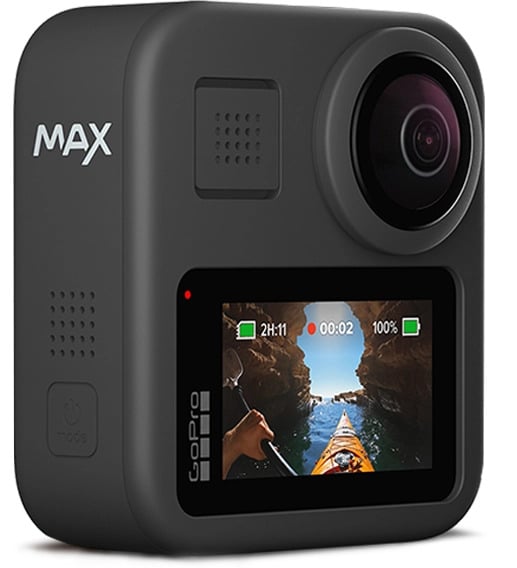
To find out more about the GoPro Max, head over to the GoPro website where you can preorder the camera today for $500, with shipments beginning October 24th and retail availability starting the 25th. Unfortunately the GoPro Max landing page is broken as of this writing, but we expect it to be fixed before too long.
Graphic of how much foreign aid the world receives (by country) from the United States

Inside a Rare-Gun Auction
James, an antique-firearms collector from Corpus Christi, Texas, peers down the barrel of a 1958 silver-and-gold-inlaid Winchester Model 12 with a Monte Carlo stock. We’re making a last-minute pass through the gun-filled preview hall at the Rock Island Auction Company in Rock Island, Illinois. Bidding will soon commence on this, day one of a three-day rare and antique firearms auction, one of the top sales of its kind in the world. I’m here to see what all the excitement is about.
“I learned to appreciate guns from my uncle, a carver of stocks who lived in Austin,” says James, the gleam of nostalgia in his eye mirroring the glow of burled walnut. “My first gun was a Model 12,” though nothing as fine as the exhibition-quality gem now braced against his shoulder.
Like other auction-goers I’ve met so far, James started as a hunter, in his case shooting white-winged dove in the Rio Grande Valley near the border town of McAllen, Texas. He’s older now and his legs aren’t what they used to be, “but if you get out of the game, that’s when they put you under the grass,” he tells me. “Collecting firearms keeps me in the game. What first captivated me was the craftsmanship and beauty of the wood. I don’t buy guns as much for shooting as works of art.”
That’s music to the ears of Rock Island Auction Company president Kevin Hogan, who calls antique and rare firearms “the most underappreciated collectibles on the market.” The 31-year-old and his father, Patrick Hogan, who founded the auction company twenty-five years ago, are on a mission to educate a new generation of collectors about the beauty, craft, and history of investment-class firearms.

photo: Courtesy of Rock Island Auction Company
Rock Island Auction Company president Kevin Hogan introduces an item in the auction hall.
RIAC holds five live auctions each year at its 150,000-square-foot campus, located a mile from the Mississippi River and eight miles south of Davenport, Iowa. This sale, one of three annual Premier Auctions—held in September, December, and May—showcases nearly 3,000 guns, along with some other odds and ends, from antique Bowie knives to a collection of Western spurs. Enthusiasts arrived early for the previous day’s pre-auction party—food, beer, live country-and-western music—and for the chance to don white gloves and handle the rare items. Around 600 people will show up over the course of the auction’s three days, with thousands more bidding online and by phone. Many haul dog-eared copies of the current auction catalog—haul because the three-volume, spiral-bound set weighs nearly ten pounds.
The guns are the main attraction, and Kevin Hogan serves as emcee. He’s brimming with excitement as he prepares to introduce lot #1 of more than 900 up for grabs on the first day. “We make it fun,” he says. “We’ve built a culture of collectors who mark our auction dates in their calendars. They come to Rock Island for the sense of community.”
Hogan introduces the first lot, an 1894 Marlin lever-action rifle, and he’s off to the races. The hall buzzes with bidders and staff members manning a bank of phones and computer screens. The thick-bearded Hogan closes each lot by belting out, “Last call, fair warning, last call and fair warning—SOLD to bidder number….” After twenty-five lots he hands the microphone like a relay baton to his father, one of five other auctioneers rotating in and out of the lineup, and he dashes on at a similar rate—around two lots per minute. They won’t stop for eight more hours.
The pace is dizzying, intensified by the occasional bidding war. Bids for a rare 1847 Walker Colt pistol skyrocket into the hundreds of thousands and are soon stair-stepping in $50,000 increments. The air in the room grows electric as the pauses between bids stretch to the breaking point. Several times in a row, just as Hogan announces, “Last call, fair warning,” a bidder raises his numbered green card, pushing the price ever higher until it tops out at an astounding $1,035,000 including fees.

photo: Courtesy of Rock Island Auction Company
Two rare Winchester slide-action shotguns.
While there are other high-dollar highlights, including a century-old Winchester lever-action rifle originally owned by the author Zane Grey that brings $345,000, plenty of lots sell for a few thousand dollars. A bid of just over $2,800, for example, wins a beautiful 1925 Parker Bros. 12-gauge trap gun.
That night, at a post-auction steak dinner the Hogans host for a few dozen auction regulars, I meet a collector from Mississippi, who explains what draws him to antique firearms. “I grew up in Natchez, where I was surrounded by old buildings and antiques,” he says. “In a place like that, you almost can’t help but develop an interest in fine old things.” These guns, he says, steeped in history, tell the story of America.
Near the end of day two, James from Corpus waves me into a curtained room, where winning bidders get to handle their prizes before RIAC crates them up. He’s animated and smiling ear to ear.
“Did you have some luck?” I ask.
“I sure did!” he says. “Remember that Model 12 I was admiring? I got it for a lot less than I expected.”

photo: Courtesy of Rock Island Auction Company
Engraving on a 1958 Winchester Model 12.
Though the shotgun is already packed for shipping, we look at the catalog photo—at the tobacco-brown stock and the high-relief engraving of a pointer flushing pheasant.
“This is why I collect,” James says. He’s still in the game.
The post Inside a Rare-Gun Auction appeared first on Garden & Gun.
10 Fascinating Parts Of The Day From Around The World
Across cultures and throughout history, many specific features of the day have obtained significant importance. We carve out certain hours of our day to provide us with satisfaction, entertainment, or general peace of mind. Sometimes, we base our entire day on certain groups of hours. Even exact times appearing on the clock developed value to […]
The post 10 Fascinating Parts Of The Day From Around The World appeared first on Listverse.
Quentin Tarantino Explains How to Write & Direct Movies

When Quentin Tarantino debuted in 1992 with Reservoir Dogs, and even more so when he followed it up with the cinematic phenomenon that was Pulp Fiction, the viewers most dubious about the young auteur's cultural staying power dismissed his movies as elevations of style over substance. Whether or not Tarantino has converted all his early critics over the past 27 years, he's certainly demonstrated that style can constitute a substance of its own.
Even many who didn't care for his latest picture, this year's Once Upon a Time in Hollywood, nevertheless expressed gratitude at the release of a lavish, large-scale film packed full of ideas, references, set pieces, and jokes — an increasingly rare achievement, or even aspiration, among non-Tarantino filmmakers. How does he do it? The Director's Chair profile video above, and the accompanying Studio Binder essay by Matt Vasiliauskas, identifies the essential elements that constitute the Tarantinian style and Tarantinian substance.
In the video Tarantino discusses his process: "I was put on Earth to face the blank page," to bring forth ideas from within and place them in new genre contexts, to write one line of dialogue after another and feel the surprise as the script takes turns unexpected even to him. Everything, from conversations to action scenes to expansive wide shots, plays out in his head before he shoots the first frame: "Before I make the movie, I watch the movie." And like all auteurs, he makes the movie he wants to see: “I don’t think the audience is this dumb person lower than me," he has said. "I am the audience.”
A filmmaker looking to follow Tarantino's example must do the following: "Keep it personal," using experiences they've actually had or emotions they've actually felt, even if they present them filtered through "crazy genre world." "Structure like a novel," with the willingness to break free of chronological order. "Think like an actor," since you'll have to work long and hard with them. Shoot "Hong Kong action sequences," two or three moves at a time, so that you can organically change and incorporate what happens along the way. "Keep music in mind," whether that means existing songs that evoke certain times, places, and moods, or original scores like that which Tarantino commissioned for The Hateful Eight from Ennio Morricone.
Morricone is best known for his collaborations with Tarantino's hero Sergio Leone, and like Leone and "all directors working at the top of their game," writes Vasiliauskas, Tarantino "uses the camera as his most powerful storytelling implement," especially when shooting wide. "Whether it’s the Bride battling the Crazy 88 gang in Kill Bill or Django surveying a burned-out home, Tarantino understands the power of the wide-shot to not only create tension, but to utilize the environment in revealing the desires of his characters." But he also gets serious aesthetic and emotional mileage out of extreme close-ups, crash zooms, and point-of-view shots from inside the trunk of a car (or period equivalents thereof).
Above all, this former Manhattan Beach video-store clerk "absorbs movies," and has by his own admission stolen from more films than most of us will watch in our lives. But none of this makes predictable what Tarantino will draw from his real-life and filmgoing experiences and put on the screen next: "I should throw them for a loop," he says in an interview clip included in the video. He means his audience, of course, but before he can throw us for a loop, he has to do it to himself. And whatever thrills and surprises Tarantino will, as we've seen over the course of ten feature films so far, thrill and surprise us even more.
Related Content:
How Quentin Tarantino Steals from Other Movies: A Video Essay
The Films of Quentin Tarantino: Watch Video Essays on Pulp Fiction, Reservoir Dogs, Kill Bill & More
Quentin Tarantino Explains The Art of the Music in His Films
Based in Seoul, Colin Marshall writes and broadcasts on cities, language, and culture. His projects include the book The Stateless City: a Walk through 21st-Century Los Angeles and the video series The City in Cinema. Follow him on Twitter at @colinmarshall or on Facebook.
Quentin Tarantino Explains How to Write & Direct Movies is a post from: Open Culture. Follow us on Facebook, Twitter, and Google Plus, or get our Daily Email. And don't miss our big collections of Free Online Courses, Free Online Movies, Free eBooks, Free Audio Books, Free Foreign Language Lessons, and MOOCs.
Marantz Introduces New Amplifier That Can Stream Almost Anything

Implementing Privacy On Social Media

Divided Germany, 30 Years After the Fall of the Wall

How to Freeze Your Equifax Credit Report Online

The first time I tried to freeze my credit report with Equifax was just after the credit bureau’s data breach. But when I failed to correctly answer the security questions, I was prevented from setting up my new account.
How to Freeze Your TransUnion Credit Report Online

Of the three major US credit reporting agencies, TransUnion was the bureau that gave me the least amount of trouble when I tried to freeze (and unfreeze) my credit.
How to Freeze Your Experian Credit Report Online

Experian’s online credit-freeze system stands apart from those at Equifax and TransUnion for one reason: It doesn’t require you to create an account.
How to Freeze Your Credit Reports

Data breaches happen frequently these days. The simplest way to help prevent thieves from opening accounts in your name is to freeze your credit reports.
How to Unfreeze Your Credit Reports Online

You made the smart decision to freeze your credit. But how do you unfreeze it?
Eight Exceptional Bourbon Values That You Have Probably Never Heard Off!

How This Entrepreneur Went From Door Man to Running a Three Billion Dollar Hotel Empire
Alan Fuerstman is the embodiment of the American Dream. He’s the founder of Montage Hotels & Resorts, a California-based luxury hotel and resort company that has a portfolio of $3 billion. He was listed on the Haute 100, received the Ernst & Young Entrepreneur of the Year Award, serves on advisory boards, and gives back to his community through charity work. He’s married, has four children, and probably owns a beautiful home that might even have a white picket fence.
It wasn’t always this way. Before Fuerstman was an American success story he was a kid from Jersey working weekends as a doorman at the local Marriott. So what was the secret of his success? In interviews over the years, Fuerstman has talked about his life story, work ethic, and management style. Here are some things we can glean from his words.
1. He Got Experience Early
Most people can tell you the first job they ever had, and most of the time the jobs aren’t glamorous. Fuerstman’s case is no exception. As a doorman working weekends, he recently told Inc., he’d call cabs for guests, load luggage, and wipe snow from windshields in the winter. It taught him how to serve people, he said, and he must have done it well. He was soon asked to take on more hours.
2. He Didn’t Decline More Work
A lot of high schoolers would have hemmed and hawed about taking more hours. It could distract from academics. It could interfere with sports – in Fuerstman’s case, his tennis play. It could mean less time hanging out with friends, watching Netflix, or playing Fortnite.
These objections are not unreasonable. As a teen, I probably would have made some of these excuses if my boss asked me to take on more hours. (We didn’t have Fortnite when I was in high school, but we did play a lot of Age of Empires.) But Fuerstman didn’t. He kept studying and playing tennis but also found time to work four or five nights a week at the hotel, in addition to weekends.
He was soon promoted to bellman.
3. He Took the Work Seriously
Most people have done mundane or menial work. I’ve dug graves, bussed tables, and been a garbage man. I’m the first to admit it’s not easy to take pride in such work. Most of us do such work for a paycheck and dream about our next job. This is a mistake, many successful people will tell you.
Melanie Whelan, CEO of SoulCycle, says college grads need to stop thinking about the future and just get to work. You’ll learn more than you realize, she says.
"Get a job and work hard," she told The New York Times in an interview.
You are going to learn a ton in whatever that job is, so don't stress too much about what it is or where it is. Just take a job and put your head down, work hard, raise your hand for anything anybody asks you to do.
How did Fuerstman take his work as a doorman and bellman? “I took it really seriously,” he said in a recent interview.
Fuerstman took it seriously enough to capture the attention of Bob Small, a man who soon became the CEO of Fairmont Hotels and a mentor to Fuerstman.
4. He Didn’t Go to Law School
After graduating from college, many young people quickly find themselves back in school. Some go to grad school, some go to med school, some become lawyers. Many do this simply because they’re not really sure what to do with their lives. (That was basically my story.)
Fuerstman felt the same pull. His plan was to go to law school following his internship with a young US Senator from Delaware named Joe Biden. But Bob Small, who was opening a resort in Mirage, California, posed him a simple question.
"Come on. Do you really want to be a lawyer?" Small asked.
Apparently not. Small offered Fuerstman a full-time job, which he accepted.
5. He Learned the Business
Fuerstman says he took the opportunity to learn the hotel business. How to lead staff, how to keep food and beverages stocked, how to make sure the wheels don’t fall off on busy weekends and holidays.
He enlisted in Marriott’s management training program and was soon a manager at the Newport Beach Marriott. He was 22.
Soon he was recruited to become the general manager of a resort in Arizona.
6. He Learned the Psychology of Leading and Serving
In 2007, after being named the Resort Executive of the Year, Fuerstman discussed his managerial style with The New York Times. In the interview, he explained how he was able to retain employees in a field notorious for its high turnover. One reason he cites is a corporate emphasis on educational and leadership opportunities for staff, which allows them to grow, feel fulfilled, and better serve guests.
Much of the training involves instilling workers with “grace and humility” so they can offer exceptional service. Employees who perform “wow” moments for guests aren’t just recognized but also rewarded.
“It’s simple psychology,” Fuerstman told the Times, “people commit more acts of kindness when they are appreciated for them.”
7. He Raised Capital and Took a Risk
After years of working in the hotel businesses and running resorts, Fuerstman eventually decided he wanted to build his own. That was going to require some serious funding, however. Fortunately, Fuerstman’s vision and experience allowed him to attract enough investors to raise the necessary capital. The venture was a serious risk, of course, but one that has paid off.
He launched his own company in 2002. He quickly decided Laguna Beach was the ideal location for his first hotel. The problem was he couldn’t decide what to call his new company. He hired a publicity company but got nowhere. Stumped, he promised $10,000 to whoever came up with the right name. That failed, too.
“I was getting desperate. I went to an online art reference guide,” he recently told Inc., noting Laguna Beach’s artist colony roots. "I started with the A's, B's, C's ... I got to the M's and saw montage, described as an ‘artful collection or compilation.’"
That’s it, he told himself. He had a name.
The venture was a serious risk, of course, but one that has paid off. Today, Montage consists of eight hotels and resorts, with nine more slated to open by 2021. In 2017, Fuerstman launched Pendry Hotels, a chain he says specializes in "new luxury” that is more design-forward.
This article was originally published on FEE.org. Read the original article.
[Image Credit: Flickr-Pierre Omidyar, CC BY 2.0]

What SEALs and Caesar Teach About Slowing Down
With the exception of some entomologists, few people are fans of cockroaches. We may admire the beauty of a butterfly, the industry of an ant, and the intricacy of a spider’s web, but show us a cockroach, and we’re ready to roll up that magazine we’re reading and swat away.
In 1975, I rented a roach-infested studio apartment on Boston’s Joy Street. It took the roaches a couple of days, but after they had introduced themselves the war was on. Although I squashed them whenever I could, their numbers never diminished. They were fast as the wind and were, like some NFL players, excellent at broken field running.
Once I sprinkled boric acid around my small bed to deter the varmints. That night, as I lay on the bed with my hands contentedly behind my head, a roach dropped from the ceiling and hit me on the chest. (I really wish I were making this up.)
It was disgusting.
Some months later I moved across the country to an apartment on San Diego’s El Cajon Boulevard.
Here again there were roaches, but far fewer of them and quite different from their East Coast cousins. These were California roaches, laid back pests, cool, groovy. They would amble across the kitchen counter, looking for all the world as if they were heading for the beach and saying, “Hey, man, what’s shaking?” While I was in an all-out war with my Boston cockroaches, swatting these chilled dudes brought pangs of guilt.
By now you are probably thinking: Okay, cut to the chase. What’s your point here?
My point is personality types.
Though I despised them, I think I am more a Boston cockroach than a California one. I scoot and scramble through my day. I am definitely not an ambler.
I am what psychologists call a Type A personality. People have told me this several times over the years, and after reading about Type A folks I’ve concluded that part of the description applies to me. I’m self-critical. I don’t often take joy or satisfaction in my accomplishments. I have “high work involvement” and tend to be a workaholic. Some say I don’t know how to relax.
On the other hand, some signs of a Type A personality are foreign to me. I am anything but aggressive, I am not overly competitive, and I am not controlling. (OK, maybe a little on that last one.)
I also possess some characteristics of the Type B personality. I am emotional and expressive.
But I am not, as one description puts it, “laid back.” I am not a California cockroach.
Recently, I was reading for review Brad Thor’s novel Backlash, a self-described thriller about an ex-SEAL on the run and struggling for survival in modern-day Russia. I had a deadline for that review and so was sprinting through those pages as fast as those Boston roaches once raced toward the safety of the baseboards. At least twice in my reading, I came across this SEAL mantra: “Slow is smooth and smooth is fast.”
The saying brought back memories of teaching Latin to homeschoolers, when I would share with them a motto of Augustus Caesar: Festina lente. “Make haste slowly.” Those words, like the ones from the SEALs, imply moving forward at a steady pace, prepared and with a plan.
Like many people, I often feel each day is a race. We run as fast as we can, hurrying and hurrying, and the only finish line is a pillow and the sheets. We rise in the morning, gulp down the coffee, throw on some clothes, and start the race all over again.
So I wondered: Should I take that SEAL axiom and the emperor’s advice and slow down? Find a pace that seems smooth instead of hectic? Maybe if I planned a bit more, or prioritized my daily goals better, or even just deliberately reminded myself a dozen times a day that “slow is smooth and smooth is fast,” I wouldn’t feel quite so harried by obligations and circumstances.
So I’ve decided to give it a go. Maybe old dogs can learn new tricks.
But I also have to acknowledge that my Type A “work involvement” isn’t going anywhere. I can try to rein it in, but part of me will always be running as fast as those Boston roaches.
Oh, well. At least I am harder to swat.
--
[Image Credit: Pixabay]

What’s the Key to American Gothic’s Enduring Fame? An Introduction to the Iconic American Painting

The Last Supper…
The Birth of Venus…
The Mona Lisa…
American Gothic, Grant Wood’s celebrated depiction of two Depression-era Iowa farmers, holds its own against those iconic European works as one of the world’s most parodied artworks.
Vox’s Phil Edwards dispenses with that status quickly in the above video for Overrated, a series that unpacks the reasons behind iconic works’ lasting fame.
By his reckoning, American Gothic’s success hinges on the dual nature of its creator, a native Iowan who traveled extensively in Europe, gravitating to such sophisticated fare as Impressionism, Pointillism, and the work of Flemish master Jan van Eyck.
While he didn’t express satirist and cultural critic H. L. Mencken's overt disdain for his rural-dwelling subjects, his rendering suggests that he perceived them incapable of understanding the appeal of his own rarified pleasures.
As Karal Ann Marling, professor of art history and American studies at the University of Minnesota, writes in The Annals of Iowa:
In the early 1930s, many Iowa farmers suspected that Wood was making fun of them in American Gothic, that he was a pictorial H. L. Mencken castigating a Midwestern "booboisie." (He had, after all, lived in Paris briefly and even grew a beard there!) But by 1933, when American Gothic was exhibited in conjunction with the Chicago Century of Progress Fair, the painting had become a beloved national symbol, second only to Whistler's portrait of his mother in the affections of the public.
Wood, who staged the painting using his sister, his dentist and a “cardboardy frame house” typical of Iowa farms as models, admitted that his intentions weren't entirely noble:
There is satire in it, but only as there is satire in any realistic statement. These are types of people I have known all my life. I tried to characterize them truthfully—to make them more like themselves than they were in actual life.
As the Art Institute of Chicago’s Judith Barter observes in an audio guide accompanying the painting, the dour, overall-clad farmer betrays a bit of vanity, gussying up in a dress shirt and Sunday-Go-To-Meeting jacket while his female companion—Wood never revealed if she was sister, wife, or daughter—accessorizes her tidy apron with a cameo brooch in anticipation of having their likeness captured.
Author Christopher Morley, who first saw American Gothic in 1930, when it won the Norman Wait Harris Bronze Medal at the forty-third Art Institute of Chicago Annual Exhibition of American Paintings and Sculpture, later wrote:
In those sad and yet fanatical faces may be read much of what is Right and what is Wrong with America.
Perhaps we are drawn to the reflection of our own foibles, whether we’re ascetic everyday folks or big-for-our-britches country-born city slickers…
The painting continues to delight the masses in the Art Institute of Chicago's Gallery 263.
And when in Eldon, Iowa be sure to pose in front of the historic American Gothic House, with props kindly supplied by the adjacent American Gothic House Center.
Related Content:
The Models for “American Gothic” Pose in Front of the Iconic Painting (1942)
The Art Institute of Chicago Puts 44,000+ Works of Art Online: View Them in High Resolution
Ayun Halliday is an author, illustrator, theater maker and Chief Primatologist of the East Village Inky zine. Join her in NYC on Monday, October 7 when her monthly book-based variety show, Necromancers of the Public Domaincelebrates the art of Aubrey Beardsley. Follow her @AyunHalliday.
What’s the Key to American Gothic’s Enduring Fame? An Introduction to the Iconic American Painting is a post from: Open Culture. Follow us on Facebook, Twitter, and Google Plus, or get our Daily Email. And don't miss our big collections of Free Online Courses, Free Online Movies, Free eBooks, Free Audio Books, Free Foreign Language Lessons, and MOOCs.
Extra Squishy Stress Turkey

Fall is here and that means that the holidays are right around the corner. Now is the perfect time to start emotionally and physically preparing yourself for all festivities that Fall and Winter have to offer. Today is a great day to take a deep breath and invest in the Extra Squishy Stress Turkey from the NeatoShop.
The Extra Squishy Stress Turkey is perfect for squishing while:
- Looking for cheap holiday airfare.
- Realizing someone ate all the Halloween candy.
- Deciding who will host Thanksgiving.
- Talking to annoying relatives at the dinner table.
- Listening to your Dad talk politics.
- Deciding whose house you will go to for the holidays.
- Holiday shopping.
- Realizing how much you spent on pumpkin lattes.
- Getting through the Fall semester.
- Spending time with those you love.
- And so much more!
Be sure to check out the NeatoShop for more great Office & Desk stuff. New items arriving all the time.
Don't forget to stop by the store to see our large collection of customizable bags and apparel. We specialize in curvy and Big and Tall sizes. We carry baby 6 months all the way to adult 10 XL shirts. We know that fun, fabulous, and holiday loving people come in every size.
Photographer Michael Muller Shoots Sharks and People in the Same Light
Michael Muller has defined his personal style, shooting celebrities and sharks, in one word: bold. Michael Muller has defined his personal style, shooting celebrities and sharks, in one word: bold. Here's a look behind the scenes.

