Shared posts

22 Oct 21:34

Check for Bed Bugs in Your Hotel Room or Apartment: 8 Tips and Tools

by Shianne Edelmayer
check-bed-bugs

Few things strike fear into the hearts of renters and holiday-makers like the words “bed bugs.” When you stay somewhere, you want to have a good night’s sleep.

Unfortunately, bed bugs are small, insidious, and pervasive. Your rental experience or dream vacation can quickly turn into a disaster.

Fortunately, technology has made it easier to avoid, identify, and destroy these pests. Here are the best websites and apps that will help you decide if your hotel room, Airbnb, or apartment has bed bugs.

1. How to Check for Bed Bugs

How to Check for Bed Bugs in Your Apartment or Hotel

Before we run through the websites and apps, we want to do a basic rundown on the best ways to look for bed bugs.

If You’re Renting a New Apartment

  • Try to find online reviews about this apartment building, to see if other renters have complained.
  • Ask the rental company or landlord if there is a history of bed bugs. It’s important to do your diligence.

If You’re Booking a Hotel Room or Airbnb

  • Read online reviews to see if previous guests have complained about bed bugs.
  • Read up on the cancellation policies of the place you’re staying at. If you find bed bugs, you’ll need to rebook your room.

In both of these cases, but especially when entering a room with a used mattress:

  • Do not put your luggage on the bed. Check for bed bugs first.
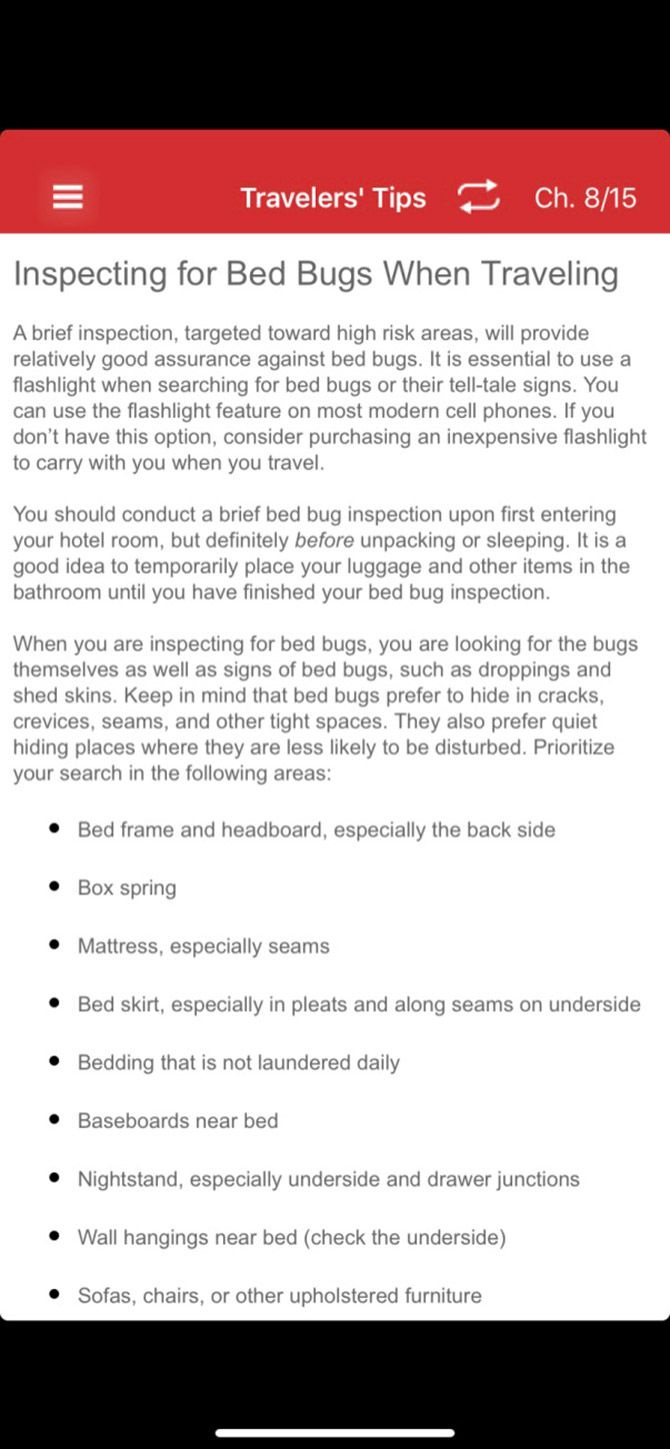
  • Get a small flashlight and check the headboard, the mattress cover, and the piping of the mattress for adult or juvenile bed bugs.
  • Check the mattress for tiny bloodstains. This is a sign of the bed bugs feeding.

If luck prevails, your accommodations will be clean. But what if you do find bed bugs in your hotel room or apartment? What are your options?

2. What Should I Do If I Find Bed Bugs?

What Should I Do If I Find Bed Bugs?

We’re going to keep this section pretty short, as there’s a wealth of information and resources further down on the list. That said, there are a few basic things you should know.

If Your Hotel Has Bed Bugs

  • Go to the front desk and inform the concierge. Either ask them to move you to a new room or book another room at a different hotel yourself.
  • Be warned: Depending on their cancellation policy, you may or may not be charged for this room.

If Your Airbnb Has Bed Bugs

  • Let your host know that there are bed bugs on the premises.
  • If you read the fine print on Airbnb’s TOS, you’ll notice that you may not be able to receive a full refund on your booking if you cancel last minute. This will depend on the Airbnb cancellation policy for that specific accommodation.

If Your Apartment Has Bed Bugs

  • Finding bed bugs in your apartment is both the easiest and most intractable situation on this list.
  • If you’re looking for a place to rent and you haven’t signed a lease yet, you can simply say “thanks but no thanks” to the landlord, then move on.
  • If you’re living in an apartment and you find bed bugs, you need to:
    • Record evidence of the infestation.
    • Immediately report the issue to your landlord.
    • Make sure pest control is called, and a date is set up to deal with the issue.
    • Follow the steps recommended by pest control to remove the infected materials from your apartment.

As you can imagine, all these steps can get expensive very quickly. On the flip side—if you’re a host—a guest bringing bed bugs onto the premises is one of the many risks Airbnb hosts might face.

This is why it’s so important to use tech-based tools ahead of time to rule out problematic buildings. Here are the websites and apps that you can use to make a more informed decision on where to stay.

3. Bed Bug TV

Bed Bug TV is a YouTube channel devoted to all things bed bugs. With new videos posted on a semi-regular basis, Bed Bug TV acts as a resource for people who learn better through visual cues.

Along with its incredibly useful videos on how to find bed bugs, they also run the website BedBug Central, where you can find additional information on how to detect and contain these small insects.

4. Bedbugger.com

Bedbugger.com Front Page

Bedbugger.com is a website devoted to everything and anything on bed bugs. It has been around for a long time, as you can probably tell from its very outdated “look.”

That said, you shouldn’t judge this website by its cover. It’s a useful tool for anyone looking to get a comprehensive understanding of how to get rid of bedbugs and how to protect yourself in the future.

On the website, there are links to useful tools to get rid of bed bugs, along with a community forum of fellow sufferers.

5. The Bedbug Registry

Bed Bug Registry Front Page

The Bedbug Registry is an outdated website that has been around since 2006, but it’s still a useful tool if you want to get an overall idea of “does my apartment have a history of bed bugs?”

Through self-reporting by users, the registry keeps track of bed bug incidents in the US and Canada. You can either look up specific addresses to see if there have been any reports, sign up for bed bug alerts, or check out the bed bug maps.

Please Note:

  • While users are still posting new alerts to this website, The Bedbug Registry website doesn’t look like it’s been updated in some time.
  • There have been extended periods where the search functionality and overall website have suffered errors.
  • The Bedbug Registry also doesn’t verify its reviews, as explained by its FAQ.

If you see multiple reports for bed bugs at the same location, you shouldn’t outright dismiss the report. But you should definitely check the date of the report, to see if it’s recent.

You should also double-check your sources when trying to determine the report’s veracity. The anonymity of the reporting system leaves The Bedbug Registry vulnerable to abuse from malicious actors or rival landlords.

6. TripAdvisor

Trip Advisor Search for Bed Bugs

We know, it seems strange to include TripAdvisor on this list! But TripAdvisor is one of the best, if not the best travel review website that you can use. It’s invaluable when looking up hotels and their issues with bed bugs.

The reviews on TripAdvisor—by and large—are strongly vetted. When you go into the comments section for a place that you want to stay at, chances are high that you can trust the information that’s there.

You can find out about the overall cleanliness of the building, along with any pest control issues that have been reported. Definitely use this website if the question “does my hotel have bed bugs” keeps you up at night.

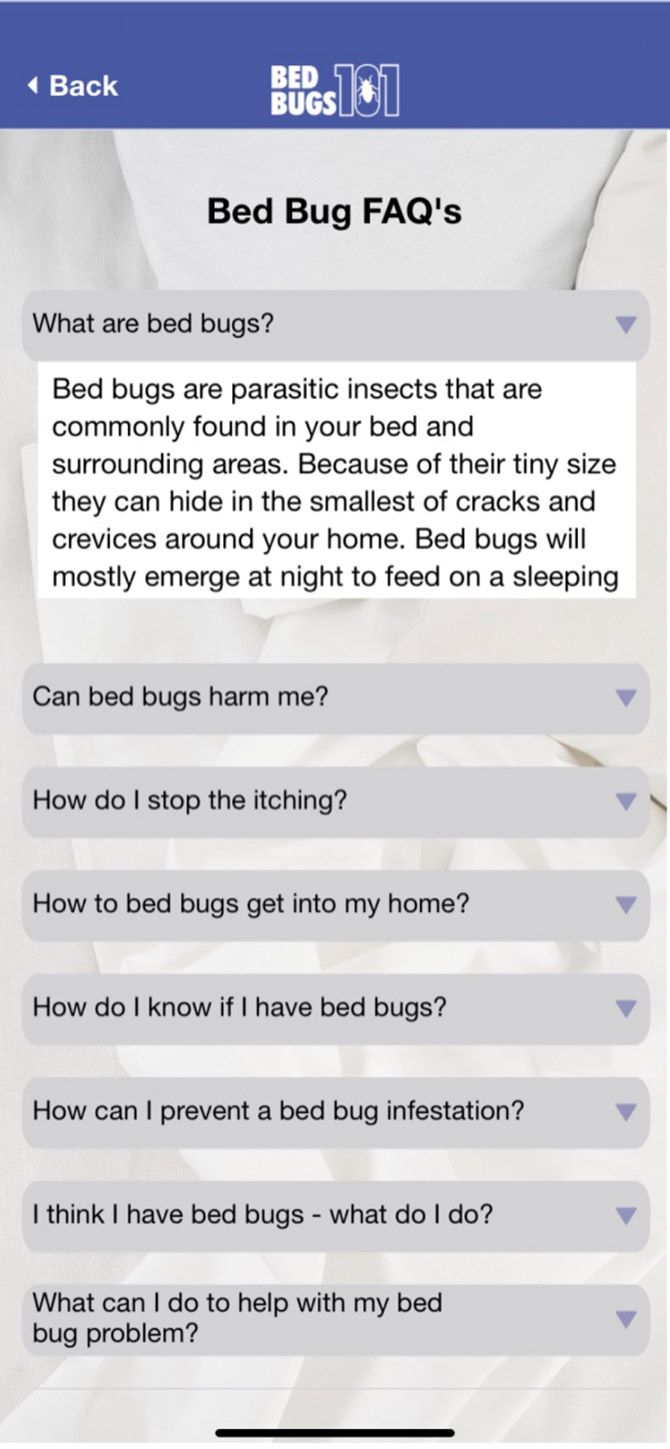
7. BedBugs 101
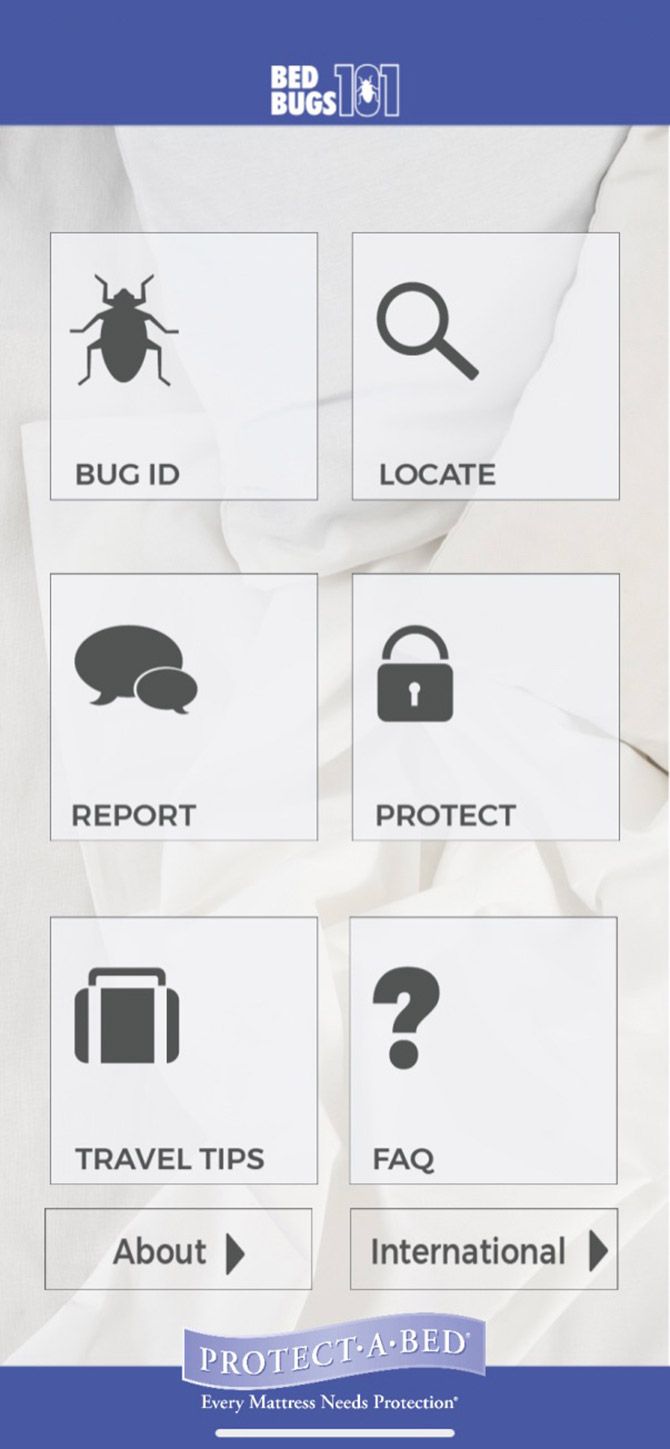
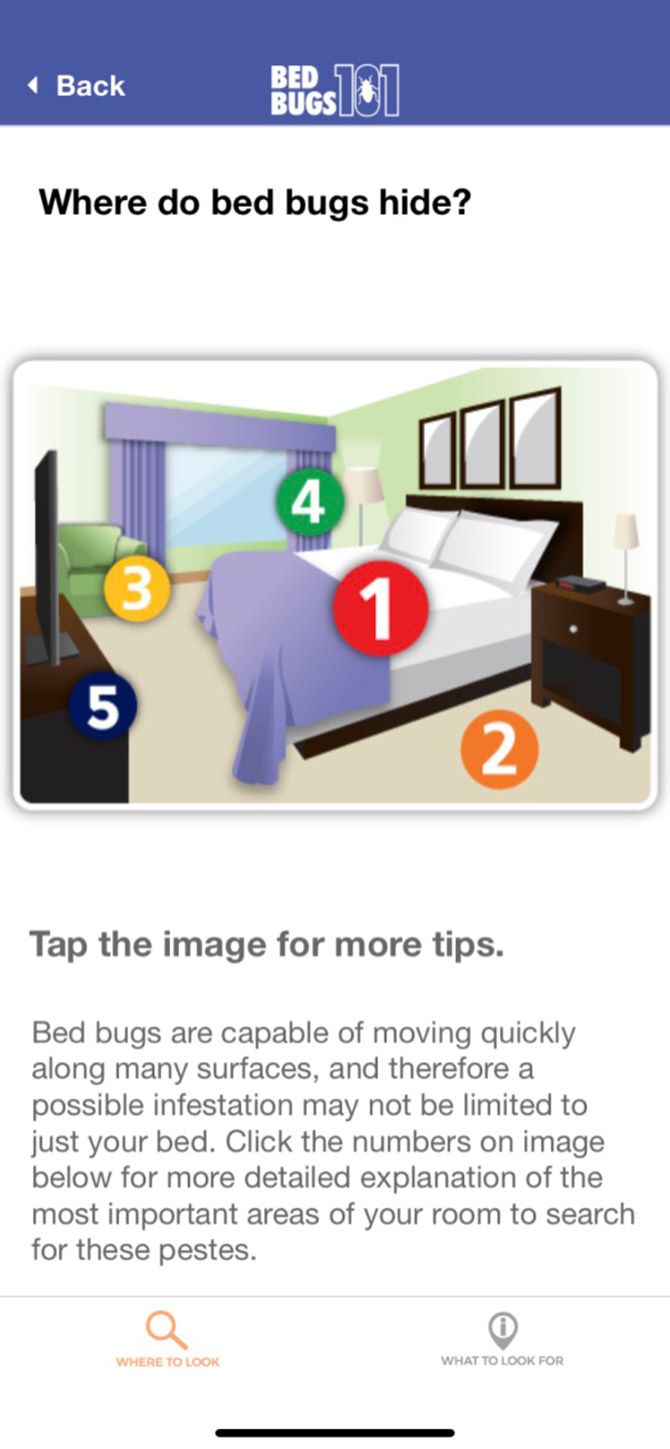
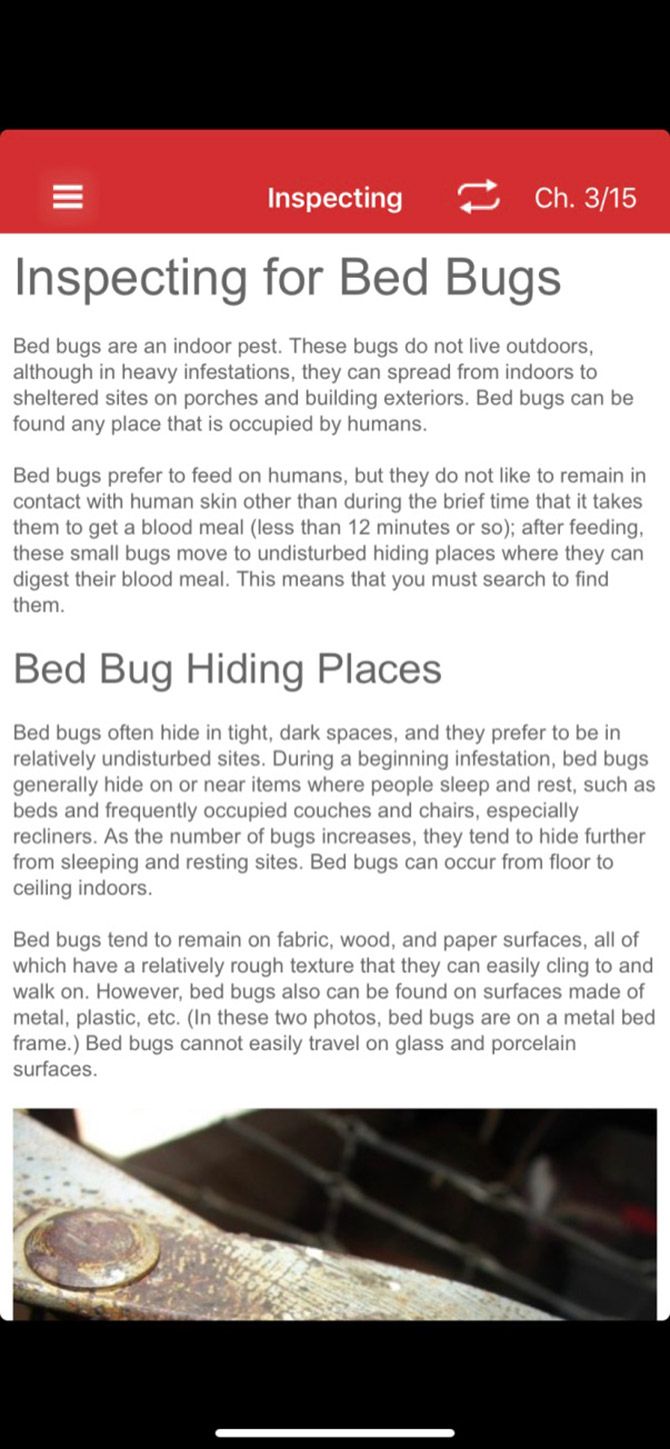
BedBugs 101—run by the company Protect-a-bed—is a great little app for iOS and Android.

The app hasn’t gotten a lot of attention, but it’s a handy reference if you’re actively searching for a new apartment, signing into a hotel room, or checking into an Airbnb. The app contains a lot of easy-to-understand information on how to spot, detect, and disinfect an area with bed bugs.

The only downside to this app? Protect-a-bed is a mattress company, so they have an obvious incentive to promote their products. This might throw you off if you’re looking for an “unbiased” source of information.

Download: BedBugs 101 for Android | iOS (Free)

8. Bed Bug Field Guide
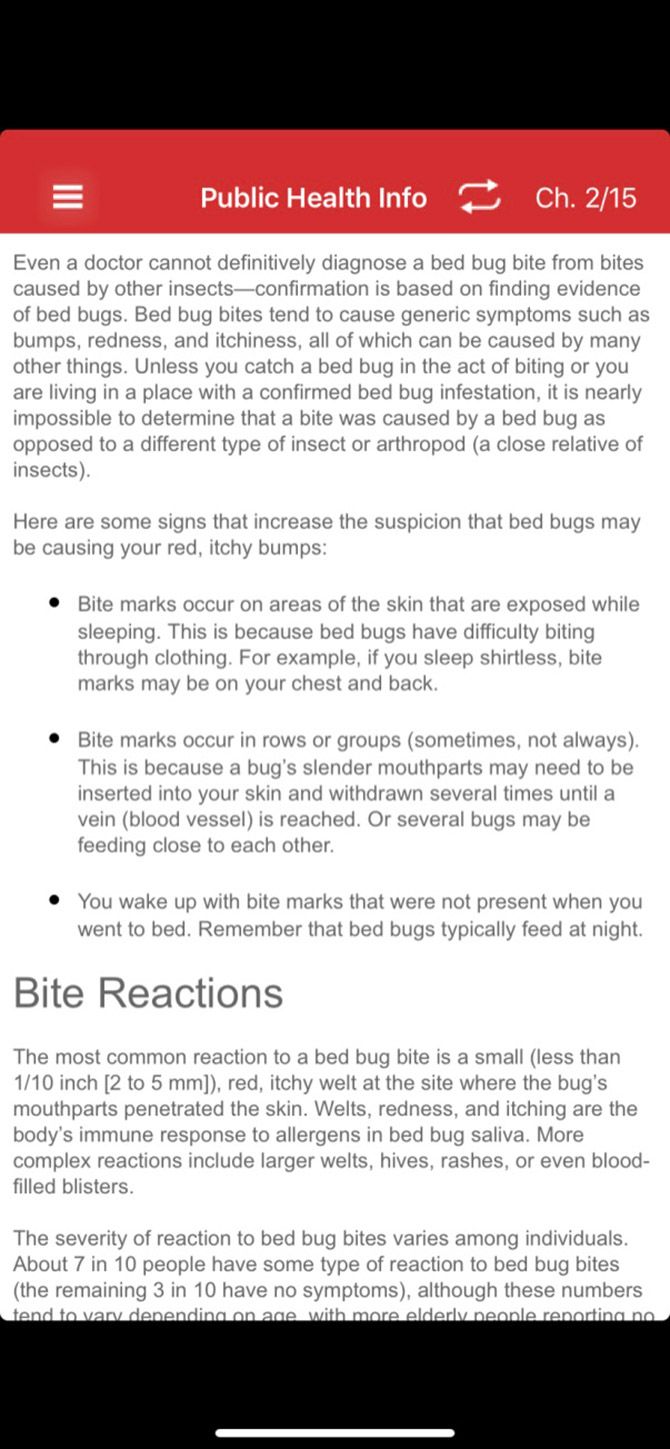
A full-fledged field guide, the simply-named “Bed Bug Field Guide” functions as a mini-encyclopedia on all things bed bugs. It’s a great tool for anyone who wants to get into the details of how to identify these insects and locate them.

Download: Bed Bug Field Guide for Android | iOS (Free)

Beware of Bed Bugs

With these apps and websites on hand—and armed with common sense—you should be able to avoid all but the most unexpected of infestations. You’ll also be well prepared for anything that may go wrong.

However, bed bugs are not the only thing you have to worry about when apartment hunting. You’ll need to actually find the apartment itself: one that has the right location and amenities.

If you’re searching for a new apartment but have had no luck, you can narrow down your search by using some of the best apartment finder websites.

Read the full article: Check for Bed Bugs in Your Hotel Room or Apartment: 8 Tips and Tools

16 Oct 17:41

Calm Co-Founder Michael Acton Smith is sharing his growth tactics at Hustle Con

by The Hustle

This article orginally appeared on hustlecon.com. Want to hear more founding stories like this? Join us at Hustle Con 2019. Tickets on sale here.

With $70m in revenue, Michael Acton Smith’s company imploded. 

The company, Moshi Monsters, had been a breakout success. Over 80 million kids flocked to the site to play with the “Tamagotchi-like monsters” earning in-game funds to spend on customizations. 

“We thought we were gonna build the next Disney,”

Michael recalls the experience in a recent Trends interview with The Hustle founder Sam Parr. 

“And then almost overnight, it just imploded.”

The reason? 

Kids entertainment moves fast. You can be the hottest ticket around one minute, and cold as a cafeteria Salisbury steak the next. Michael and his team experienced this dramatic swing first hand. 

moshi monsters pic
The OG Moshi Monsters webpage.

The collapse was stressful, and it was that stress that inspired Michael’s next breakout (and sustainable) venture:

Calm: The Nike for your Noodle

Michael and his partner Alex Tew founded Calm in 2012. The vision was to provide meditation and mental wellness content as a subscription service. The site was less than perfect at launch — just a woman’s voice reading relaxing stories. 

Today, the sleeping section alone has generated over 140 million listens. 

Calm webpage
The calm Calm landing page.

Michael thinks of Calm like Nike. 50 years ago, running and personal fitness was not top of mind for the general consumer. The same is true with mental wellness and meditation. 

“What I think the best entrepreneurs do is they spot these inflection points in a society where public opinion shifts.”

“And when it shifts, it often doesn’t happen gradually. It happens really quickly. And if you’re surfing that wave when that shift is happening…”

In Calm.com’s case, that shift occurred around 2016. After slogging for the first few years, Calm’s revenue quickly rose from $7m in 2016 to $80m by 2018. 

calm revenues
Can you say, “Hockey Stick?”

Michael attributes this success to changing consumer behavior (mindfulness and meditation are now en vogue), as well as his team — it’s extremely efficient. 

Calm hit $80m in revenue with only 40 employees. Compare that to their competitor Headspace with 250 employees. 

That efficiency also contributed to the company’s early growth. Michael’s team gained 8m downloads without spending a cent on paid marketing. 

The first 5,000 users

Michael shared a short anecdote of how he and Alex gained the first 5,000 users. 

Do nothing
Do nothing for 2 minutes, how hard can it be?

“He [Alex] created a website that was basically just some waves lapping on the beach, and it was called donothingfortwominutes.com. And you literally had to just stare at these waves for two minutes and not move your mouse or tap on the keyboard, and not many people could do it.”

After completing the 2 minutes, users were prompted to enter their email. In 2 weeks, it had captured over 100k email addresses. 

Want to learn more growth tactics Michael and his team used to grow Calm?

See Michael, and 29 other successful founders, speak at this year’s Hustle Con, December 2-3rd in Oakland, CA. 

Early Bird Tickets are on sale nowsave $75.

For more information on the event and tickets click here. 

P.S. Want to see the rest of Michael’s interview with Sam? Read it on Trends. (Get a 2-week trial of Trends for a $1 when you sign up with this link.)

The post Calm Co-Founder Michael Acton Smith is sharing his growth tactics at Hustle Con appeared first on The Hustle.

16 Oct 15:18

Mike Tyson at 53

627 points, 48 comments.

15 Oct 18:20

Professional ‘Pigeon Spookers’ Help Tourists Nail Instagram Photos

by Michael Zhang

Here’s a photo-related job you’ve probably never heard of before: professional “pigeon spooker.” Pay a visit to certain areas of Thailand, and you may come across people who now make a living by helping tourists capture the perfect travel photo by scaring pigeons.

Viral Press reports that the pro pigeon spookers can be found in northern Thailand at the ancient wall in Chiang Mai known as the Tha Pae Gate.

Do a search for #thapaegate on Instagram, and you’ll find that many tourists visit the spot to shoot the same photo concept: themselves standing or walking in front of the wall with a group of pigeons flying through the frame.

What you don’t see in these photos is that many of them were shot with the help of the professional pigeon spookers, who charge about 20 Thai Baht (the equivalent of $0.65) to help stage the shot by getting into position and then stamping their feet or waving their arms to scare pigeons into the air.

One of the 30-year-old pigeon spookers working the location says she takes in around 350 Thai Baht (or $11.50) per day for her services, according to Viral Press.


Image credits: Featured thumbnail photos by Hartmann Linge (licensed under CC BY-SA 3.0) and Louis_Parkerson

15 Oct 17:48

The Heart O’ Texas Fair & Rodeo celebrates 67th anniversary

by Baylor Lariat


The Heart O’ Texas Fair & Rodeo was back in action this week with its display of fair eats, treats and entertainment for thousands of locals and tourists.This year, the fair celebrates its 67th anniversary. The H.O.T Fair & Rodeo is held annually at the Extraco Events Center in Waco, and it had over 193,000 in attendance in 2018.

15 Oct 17:43

Another day, another squalor: US cities are working to curb the rise of dollar stores

by Wes Schlagenhauf

EMILY KASK/AFP/Getty Images

According to the USDA’s most recent survey, around 19m people live in areas that lack access to grocery stores or supermarkets with healthy and affordable food options. These low-income communities are known as food deserts.

Experts say the break-neck expansion of dollar-store chains, which box out local mom-and-pop retailers and grocers that aim to provide fresh food in those neighborhoods, has exacerbated the problem.

Now, a number of US cities are passing laws to curb the mass consumption of off-brand Cheez-Its and pudding packs brought on by dollar-store growth.

You really do get what you pay for

There are about 30k dollar stores in the US today. Per Axios, that’s more than the total number of Walmarts and McDonald’s combined. And discount juggernauts like Dollar Tree and Dollar General — which became the fastest growing retailer in the US in 2018 — have no plans to stop.

Over the years, local newspapers in places like North Dakota and Minnesota have trashed dollar stores for killing home-grown businesses. Now, Alabama’s getting in the mix.

Birmingham — where close to 70% of city residents live in food deserts — has passed 2 laws prohibiting new dollar stores from opening within a mile of an existing location.

Of course, the discount giants disagree

“Our stores provide an affordable and convenient fill-in shopping option for our customers… all while creating more jobs and investing in the communities we serve,” said a Dollar Tree spokesperson.

Nonetheless, buck-o-backlash is picking up steam, and more and more cities, from towns like Hutchinson, Kansas, to big metros like Cleveland are looking to fight the spread.

The post Another day, another squalor: US cities are working to curb the rise of dollar stores appeared first on The Hustle.

15 Oct 17:42

The local TV star who rigged the lottery

by Zachary Crockett


Shortly after 7pm on April 24th, 1980, millions of Pennsylvanians watched intently as a third and final ping-pong ball shot up the tube of a machine on live television.

“And there you have it,” exclaimed the station’s beloved announcer, Nick Perry. “Today’s Pennsylvania lottery daily number: 6-6-6!” 

As the cheesy music faded and the lights dimmed, Perry implored lucky ticket holders at home to claim their prizes: “If you’ve got it, come and get it!

What the public didn’t know was that Perry — along with a rag-tag group made up of co-workers, church friends, and a state lottery official — had fixed the entire thing in his favor. Through an elaborate ruse involving syringes and latex paint, he’d just netted himself and his associates $1.2m ($3.7m today) in winning tickets.

Soon, one of the largest scandals in state lottery history would come crashing down.

The legend of Papa Nick


In the late 1970s, Nick Perry (real name, Nicholas Katsafanas) was Pittsburgh royalty.

A radio and TV veteran of 30 years, Perry was affable, charming, and debonair — tall and tan, with whisked white hair and an ever-present ivory smile.

As an announcer and host for WTAE Channel 4 — Pittsburgh’s leading TV station, and one of the largest local networks in the country — his shows (Polka Party, Championship Bowling, Bowling for Dollars) attracted legions of adoring fans who called him “Papa Nick.”

Nick Perry was beloved by viewers and colleagues alike (AP Photo/Paul Vathis)

A Navy vet and church choir leader, he held the public’s unwavering trust. “He was always surrounded by people who loved him,” a former co-worker later said.

When Pennsylvania launched its daily lottery, in 1977, WTAE won the rights to broadcast the drawings state-wide every night.

And the station could think of no better man to entrust as the drawing’s announcer than Pittsburgh’s golden boy, Nick Perry.

The Daily Number


Dubbed the Daily Number, the draw quickly became the most popular lottery game in the state — and one of the 5 largest in America. Its proceeds, which soared to hundreds of millions of dollars, were the chief revenue source for funding senior citizen programs.

The lottery itself was simple.

An entrant would buy a ticket staking anywhere from $0.50 to $5 on a 3-digit number between 000 and 999, in a specific order.

Every night at 6:59pm, a lottery official would wheel out 3 air-powered machines, each filled with a set of ping-pong balls numbered 0 to 9. On live television, a senior citizen (selected at random from a local elderly home) would remove the cap from the top of each machine, propelling a random numbered ball up a clear plastic chute.

The resulting 3-digit combination was the daily winner. Lucky entrants would receive $500 for every $1 wagered. (In those days, bets were pretty humble; most payouts were in the thousands, not millions, of dollars.)

The Daily Number was one of the most popular television programs in Pennsylvania (1980; GSN/YouTube)

Like most lotteries at the time, the Daily Number followed a tight security protocol.

When not in use, the lottery machines and balls were locked in a WTAE storage room that required 2 keys to open; one was held by the TV station, the other by the state’s lottery bureau. The balls were routinely examined by an independent laboratory, and were only permitted to have a 1.75 milligram variation in mass — about half the weight of an ant.

As the Pittsburgh Post-Gazette once wrote, Pennsylvania lottery’s reputation “rivaled that of ancient Rome’s Vestal Virgins.” The state prided itself on the squeaky clean reputation of its daily drawing, and that of Perry, the man at its helm.

But unbeknownst to them, Perry was scrutinizing flaws in the system — and looking for an opportunity to exploit it.

The scheme


In February of 1980, Perry sparked a friendship with Edward Plevel, a 52-year-old state lottery security officer who was entrusted with guarding the machines and balls.

Once a mutual trust was established, Perry carefully broached the possibility of a fixed lottery: In theory, he told Plevel, if he had access to the storage room, he could weigh down all the balls except a few numbers, dramatically reduce the possible winning combinations, hedge heavy bets on those numbers, and walk away with millions.

Plevel was intrigued, and agreed to give Perry the access he needed. Soon after, Perry began to put his plan into action.

The first step was to find someone he trusted who could create replica sets of the lottery balls. For this, he turned to WTAE’s ex-art director and resident lettering expert, Joseph Bock.

“What would you say if I told you you could make $100k?” Perry allegedly asked Bock at the station one day, according to a later account in the Post-Gazette.

Bock scoffed. “Who do I have to kill?”

Joseph Bock (top) and Fred Luman (bottom) created the weighted balls and later aided in getting them into the machines (Courtesy of the Pennsylvania State Police Museum)

Perry gave Bock 12 syringes and a weighing scale and instructed him to buy 30 ping-pong balls from a sporting goods store identical to those used in the machines.

Following Perry’s instructions, Bock painstakingly replicated each ball by hand — 3 sets, numbered 0 through 9. Then, he set out to find a subtle way to weigh down the balls that weren’t a 4 or a 6.

After experimenting with various substances including talcum powder and water, he settled on a tiny amount of white latex paint — just enough to prevent them from rising up to the top of the machines and getting sucked up into the chutes.

In an untampered lottery, the odds of any 3-digit number were 1 in 1k. If Perry’s plan worked, only the unweighted 4s and 6s would rise to the top, limiting the winning number to 8 possible combinations: 444, 446, 464, 466, 644, 646, 664, and 666.

Everything was in place. Now, all Perry needed to do was place his bets.

Perry couldn’t buy lottery tickets himself — it was too suspicious. So, he met with two childhood friends, Peter and Jack Maragos, at a pew in St. Nicholas Orthodox Church.

Part-owners of a small cigarette vending machine business, the Maragos brothers were intrigued by the thrill of a big payout. They agreed to buy the tickets, and soon roped a third brother, James, and his wife, Jean, into the scheme.

The family unit delegated the stores where they’d purchase tickets, and assembled $20k in cash. Then, they waited for Perry’s command.

The big day


On the morning of April 24, 1980, the Maragos brothers rocketed around Philadelphia in an old white Cadillac.

Targeting small mom-and-pop outlets — places with names like Al and Virginia’s Variety Store, Herman’s Cigar Store, Squirrel Hill Newsstand, and Dew Drop Inn —  they placed thousands of $1 bets on the 8 possible combinations of 4 and 6. 

Peter Maragos, who, along with his brothers, aided in placing fixed lottery bets all over Philadelphia and Pittsburgh (Courtesy of the Pennsylvania State Police Museum)

Meanwhile, Perry finalized his preparations at the studio.

Typically, the senior citizen selected to help with the lottery would run through a practice drawing at 6:30pm, 29 minutes prior to airing. That day, Violet Lowrey, the chosen octogenarian, was carted into a green room upon arrival and remained there until 6:55.

During this time, Bock handed off the weighted balls to another employee in on the fix, stagehand Fred Luman, who furtively swapped them into the machines as Plevel looked the other way.

Once the job was done, Luman rolled the machines out onto the studio floor, gave a nod to Perry, and disappeared into the shadows of the corridor.

At 6:59, the broadcast went live.

To millions of viewers across Pennsylvania, nothing appeared out of the ordinary. Perry was introduced with his usual sign-on — “The man with all the dollars! The kingpin himself!” — and Plevel escorted Lowrey to the machines.

Lowrey removed the cap and the first ball shot up the chute: a 6. Then came ball #2: “Another 6!” exclaimed Perry. Seconds later, the third ball landed. The winning number — 6-6-6 — danced across the screen.

A half-hour later, Bock was back at home, lighting fire to a paint can filled with the 30 weighted ping-pong balls.

A gangster gives a tip


It seemed that Perry and his cronies had pulled off the perfect crime.

The Maragos had selected 6-6-6 on roughly 2.4k of their 14k $1 tickets. With a $500 to $1 payout, the crew was looking at a payout of $1.2m ($3.9m in 2019 dollars) — an unheard-of amount for a state lottery at the time. Over the next few days, the brothers cashed in a few hundred tickets and delivered Perry $35k in cash — once at a cemetery, a second time behind a shopping center.

Unbeknownst to them, there were rumblings on the street that the game had been fixed.

Illegal numbers boss, Tony Grosso, tipped authorities off to a potential fix in the lottery (1977; Grosso family/Wikipedia)

As it turned out, the Maragos brothers had also placed bets with underground bookies, who had noticed the unusually high number of hedges on combinations containing the numbers 4 and 6. They refused to pay out winnings on 6-6-6, and alerted their boss, Tony Grosso.

A convicted numbers boss, Grosso had been running his own $30m-a-year illegal daily lottery on the streets of Pittsburgh for 40 years — and he was happy to tip-off local reporter, Sandy Starobin, of a potential fix in the state lottery, which he considered the competition.

In May 1980, an investigation was opened by Pennsylvania governor, Richard Thornburgh.

Though lottery officials (including Plevel) pooh-poohed the idea of an inside job, investigators received a tip from the owner of the Dew Drop Inn: Weeks earlier, two men in a white Cadillac had bought hundreds of lottery tickets — all combinations of 4 and 6 — and placed a call to a mystery man.

The paper trail and phone records led them to the door of Peter and Jack Maragos, who promptly agreed to testify for the state in exchange for dropped charges. Bock and Luman followed and gave the state two names: Perry and Plevel.

Mugshots of Nick Perry (real name: Nicholas Katsafanas), and Edward Plevel  (Courtesy of the Pennsylvania State Police Museum)

On May 11, 1981, reporters (including Perry’s colleagues at WTAE) gathered at the county courthouse in Harrisburg for a criminal trial against the two men.

Over a week, 25 witnesses — including co-conspirators, shop owners, and angry senior citizens — took the stand. After 6.5 hours of deliberation, a jury of 12 found Perry and Plevel guilty of criminal conspiracy, criminal mischief, theft by deception, and “rigging a publicly exhibited contest.”

Neither man showed emotion as the sentences were read: 3 to 7 years for Perry; 2 to 7 years for Plevel.

As the tanned TV star was led from the courtroom in shackles, his fans grappled with the news. “[It’s like] Joan of Arc being burned at the stake,” one fan wrote in a Post-Gazette op-ed. “I can’t see why a 63-year-old man who has a good living and is established in the community would do something like this.”

The bowling goods salesman


In the aftermath, WTAE lost the rights to air the daily lottery to a rival station, costing it millions of dollars in lost ad revenue. Eventually, authorities would recover most of the money and uncashed lottery tickets.

Bock, Luman, and the Maragos brothers faded from the public eye after 1981 and settled into quiet, less eventful lives. After serving 18 months, Perry and Plevel were released to a halfway house.

Post-prison, Perry found work at Wissman Bowling Supplies, a bowling outfitter that had provided equipment to his hit show, Bowling for Dollars. In 1988, he made a short-lived return to TV to host a new bowling show, but he never reclaimed his former glory.

Weighted “6” balls recreated in a demonstration by the Pennsylvania state police (Courtesy of the Pennsylvania State Police Museum)

When Perry passed away in 2003, at age 86, he was remembered with a two-page spread in the Post-Gazette. He maintained his innocence to the grave.

“Why would I get involved with something like this? For what reason?” he said in a final interview. “I was making good money. They were the best years of my life, actually. I had too many good things going for me.”

The Daily Number game, since renamed the “Pick 3,” now features a security process involving 24-hour video surveillance, RFID-chip-equipped balls, independent auditors, and no less than 6 drawing officials. It brought in $269m in revenue for the state of Pennsylvania in 2018.

Since April 24, 1980, 6-6-6 has been the winning number on 24 occasions — all supposedly scandal-free.

And Pennsylvania lottery officials have since adopted an unofficial slogan: “Be perfect.”

The post The local TV star who rigged the lottery appeared first on The Hustle.

15 Oct 16:20

Diversify Your Gear Options With Old, Manual Focus Lenses

by Kevin Landwer-Johan

The post Diversify Your Gear Options With Old, Manual Focus Lenses appeared first on Digital Photography School. It was authored by Kevin Landwer-Johan.

old-manual-focus-lenses

Photographers like to talk about gear. Discussion about the latest and greatest camera equipment is common. That’s fine to focus on if you think you can improve your photography, or if you like talking about new shiny things. And you have the money to satisfy your desires.

Image: Taken using a 55mm Micro-NIKKOR-P manufactured in about 1970 © Kevin Landwer-Johan

Taken using a 55mm Micro-NIKKOR-P manufactured in about 1970 © Kevin Landwer-Johan

Photographers who can’t afford to keep upgrading their gear tend not to talk about it so much. It can become depressing. Some of them also understand that purchasing the latest camera gear may do very little to improve their photography. Sometimes using older gear invokes more creativity.

What is it about old, manual focus lenses?

I’ve been taking photos for a long time. It was years before I had a camera capable of autofocus, let alone any autofocus lenses. I had to learn the old fashioned way.

This was my first camera and lens – a Nikkormat FTN with a 50mm f/1.4 attached. I continued to use this lens for 27 years until it finally was not in focus all the time. I think it’s worn out; the glass elements are slopping around inside.

Old-Manual-Focus-Lenses

Taken with my phone 🙂 © Kevin Landwer-Johan

Manual focusing is not so difficult. It’s like learning to drive a manual shift car. It takes some practice. Once you can, you never forget how. You may get a little rusty if you haven’t done it for a while, but before long, you’ll be driving along and not thinking about it.

Old lenses were built more solidly and feel different in use. Because of their build quality, they can last longer. Many of them are as sharp, if not sharper, than modern lenses.

Take a look back at some of the famous photographers of the last century. Photographers including Sebastião Salgado, Don McCullin, Henri Cartier-Bresson and others did not rely on modern autofocus lenses.

Image: Taken using my Nikkormat FTN and 50mm lens. Scanned from a slide. © Kevin Landwer-Johan

Taken using my Nikkormat FTN and 50mm lens. Scanned from a slide. © Kevin Landwer-Johan

Using manual focus lenses can help you improve your photography

You have to slow down and think more about what you are doing while using a manual lens. Well, initially, you do. After some practice, you’ll find manual focusing comes pretty naturally.

So much attention in photography is on doing things fast. Manual focus has a bad rap because it’s slower than autofocus. I don’t perceive that this always has to be a negative thing.

Slowing down can help you see more and to think more about what you are doing. Using a manual focus lens can encourage you to become more engrossed in your photography. Without relying on autofocus technology, you have to use alternative means of capturing the photos you want.

Image: Taken using a manual focus 20mm. © Kevin Landwer-Johan
Taken using a manual focus 20mm. © Kevin Landwer-Johan
Creative thinking becomes more to the fore when you do not have autofocus lenses to use. You must consider more carefully what you want to focus on. This is never a bad thing to master.

Learning to prefocus so your subject will be sharp when it’s time to take the photo is a great skill to have. With a manual focus lens, this becomes less optional.

Any of these methods, when practiced enough, will become second nature. You’ll find yourself using them no matter what lens you have on your camera.

Old-Manual-Focus-Lenses

20mm Nikon Lens © Kevin Landwer-Johan

Diversifying your lens options doesn’t have to be expensive

Old lenses are available secondhand almost everywhere at reasonable prices. If you have a new camera with a kit lens and want to add another lens or two, consider buying used.

Picking up an older 50mm lens will not set you back as much as a brand new lens. Depending on what brand camera you have, you may also need to purchase an adapter. This will allow you to mount older lenses to your digital camera. Nikon users have the advantage here.

I was able to keep using my original lens on each camera I upgraded to because Nikon never changed the lens mount. Any older Nikon lens will attach to every Nikon camera. Some very old lenses may lose some metering functionality but otherwise, work very well. Some may also need slight modification.

Adapters are available for just about every camera and lens combination. Once you’ve bought your first old manual focus lens, it may pay to stick to buying the same brand. That way you can use the same adapter.

Image: Taken with a 105mm manual focus lens manufactured around 1973 © Kevin Landwer-Johan
Taken with a 105mm manual focus lens manufactured around 1973 © Kevin Landwer-Johan

Manual focus lens structure and build are much less complicated than autofocus lenses. The higher quality older lenses are sturdy and robust. There are three main things to look out for in second-hand lenses:

  1. Indications that they have been dropped or otherwise mistreated. Dings and heavy scratches on a lens are not a good sign.
  2. Fungus in the lens is another thing to watch for. Dirt on the outside is easy enough to clean off. A lens with fungus on the outside or any of the inner lens elements can be expensive to clean and may well be damaged beyond repair.
  3. Thirdly, the focusing ring can become stiff and hard to turn, particularly if the lens has not been used for a long time. You can repair it, but repairs can become expensive, depending on where you live.
Image: Taken using a manual focus 85mm. © Kevin Landwer-Johan
Taken using a manual focus 85mm. © Kevin Landwer-Johan

I picked up a bag of camera gear at a general household auction years ago. In it was a Nikon FM2 body with an MD4 motor drive. I knew I could sell the drive for $400. The camera had a 135mm lens on it with so much mold you couldn’t see through it. That was worthless. Also in the bag was a 55mm micro Nikkor in lovely condition.

I bought the lot for $250, then sold the camera and motor drive and kept the lens. I made around $350 on the deal, plus I got to keep the lens, which I still love using. If you know what you are buying you can be lucky enough to end up with another lens and it not cost anything.

Old-Manual-Focus-Lenses

Taken using a 55mm Micro-NIKKOR-P manufactured in about 1970 © Kevin Landwer-Johan

Main drawback of older lenses

Build quality and glass are not often a problem in good-quality older lenses. Coatings of lenses have improved over time. Modern lenses have coatings developed for use with digital cameras.

Chromatic aberration, also known as purple fringing, is more prevalent in old lenses. This is because the lens coatings are different. However, post-processing software can often fix the problem pretty well.

Lack of sharpness at wide apertures can sometimes be an issue with older lenses. Avoiding using the widest aperture setting can often alleviate this problem.

Old-Manual-Focus-Lenses

© Kevin Landwer-Johan

Conclusion

Diversifying your gear options with older manual focus lenses is worth considering. If you’re a student on a budget (or anyone else on a budget!), picking up a second-hand lens or two will help you in a number of ways:

  • You’ll be saving money
  • You will have to learn to use manual focus
  • Second-hand lenses keep their resale value more than new lenses
  • Working more slowly will help your photograph in other ways too

When looking to buy older lenses, it’s best to do your research carefully first. There’s no point buying a lens that won’t work with your model of camera. Get on the internet and specifically search for the camera and lens you want to combine. If it can be done, someone has likely blogged about it or posted a video to Youtube already.

 

Do you use old, manual focus lenses? What is your experience with them? Share your experiences and images with us in the comments!

The post Diversify Your Gear Options With Old, Manual Focus Lenses appeared first on Digital Photography School. It was authored by Kevin Landwer-Johan.

15 Oct 15:59

Historic Farmstead, Lowndes County

by Brian Brown

Isolated in the countryside near the Lowndes County ghost town of Delmar, this historic farm is one of the most intact collections of original agricultural structures I’ve ever seen in South Georgia. I’m grateful to Mandy Green Yates for bringing it to my attention. Mandy travels the back roads of South Georgia and North Florida finding lots of places like this. Follow her to see what she finds next.

I believe this was primarily a turpentine camp, as the area was well-known for large scale naval stores production. There would have been tenant houses here at one time, also. The structure above was likely the office for the operation.

My favorite structure is the commissary, which would have served all the needs of this small community.

The shingle-sided barn and water tower are amazing survivors, as well. The owners of the property should be commended for keeping this place in such relatively good condition throughout the years.

15 Oct 15:55

Stossel: The Science Around Male Brains vs. Female Brains

by John Stossel

Lately, we've been hearing that men and women are biologically the same.

A BBC video claims, "There seems to be no purely male brains versus female brains."

"Seems like we're just not that different after all," echoes HuffPost.

Politically correct corporations act as if that were true. When Google engineer James Damore merely suggested that biological differences might explain why half the people in tech are not women, he was fired.

Professor Gina Rippon recently wrote a book that confirms the popular narrative. "New neuroscience that shatters the myth of the female brain" is the subtitle.

Rippon tells Stossel it's important to tell people that that men's and women's brains are the same, so people don't mindlessly follow gender stereotypes.

Stossel pushes back, "It's not natural that in school, more boys want to play football and more girls want to do ballet? I want to run and bang into people."

Rippon responds: "Well, I think actually girls might want to run and bang into people, but because there's an image that girls don't do that, they're stopped from doing that."

That's popular to say, but Stossel has covered research that shows big innate differences. In one experiment, students were blindfolded and then walked through the maze of tunnels. They were then asked which direction they'd moved. Men had a much better sense of that than women.

In another experiment, students were left in a cluttered room to wait. Later, women were much better at remembering all kinds of details about that room. Men were more likely to say: "I dunno, some stuff."

Of course, the students may already have been molded by a sexist society, Stossel notes. But newborns also show gender differences. Boys tend to look longer at objects, like tractor parts, while infant girls stared more at faces.

Stossel asks Rippon about that, who responds: "If you look very closely at the data, a third of the girls actually seem to respond more to the tractor parts than the boys."

"A third," Stossel repeats.

"A third," Rippon replies.

"But two-thirds didn't!" Stossel retorts.

Rippon says the study should be redone. "Do it again with a bigger set of newborns [and] a better controlled set of stimuli."

Evolutionary psychologist Diana Fleischman says there's overwhelming evidence of biological differences.

"Cultures around the world show very similar differences between men and women," she points out. "Men are more likely to seek status, women are more likely to take care of children. Women are more likely to stay in the home. Men are more likely to do dangerous, aggressive things like go to war."

Stossel pushes back: "Because we men have been socialized: 'Work's important!' And you women have been told by your mothers, 'Take care of the kids.'"

"Why would you see that across every culture in the world?" Fleischman responds.

"Even if you look at nonhuman animals…monkeys…they don't have culture, yet there's still these very large differences between males and females," she adds. In those species, too, males focus on war and status, while females nurture children.

Among scientists, these differences are well-accepted, Stossel notes. The journal Neuroscience cited 70 studies that found differences.

Stossel asked Gina about some of the most obvious mental differences.

"I stutter. Most stutterers are boys. It's not a brain difference?"

"Yeah, yeah. There are those kinds of brain differences and I'm definitely not a brain difference denier," Rippon replied.

"It's kind of how you've been presented by much of the media," Stossel responds.

The journal Nature, for example, ran an uncritical review of her book headlined, "Neurosexism: the myth that men and women have different brains."

The Guardian summarized her book with: "Are there any significant differences based on sex alone? The answer, she says, is no."

"Perhaps they haven't read the book," Rippon says.

Fleishman argues: "Gina Rippon seems to be a sex difference denier depending on kind of what audience that she's talking to."

In her speeches, Rippon does say things like: "They're thinking there's differences between men and women. People like me stand up and say 'actually no, there's not.'"

"It's an incredibly alluring message," Fleischman says. "It's really sad that it's not right."

Rippon worries that talk of sex difference will increase sexism, but Fleischman notes that minimizing sex differences can hurt people, too, by pushing them into fields they're not naturally suited for. Politicians pass laws to force "equality."

"Saying that men and women have different aptitudes isn't sexism. It's actually a statement about the true nature of the world," Fleischman says. "If we keep saying that those differences in what men and women choose to do are because of sexism, nobody's going to end up happy with what they're doing, and we're going to keep making laws to remedy what's actually just the result of freedom."

The views expressed in this video are solely those of John Stossel; his independent production company, Stossel Productions; and the people he interviews. The claims and opinions set forth in the video and accompanying text are not necessarily those of Reason.

15 Oct 15:41

Gable Front Farmhouse, Berrien County

by Brian Brown

We pass by these places all the time. An abandoned farmhouse long forgotten may not seem worthy of documentation to some, but this is where the real people of Georgia worked the farms that anchored our economy for much of the 20th century, long before “Big Ag” began squeezing out small farmers. Many will never be identified, but I’m grateful to all of you for the ones that have been through the years. I see a beauty in these places comparable to our finest homes.

15 Oct 15:33

The Final Days of the Fire Lookouts

by Tom Nardi

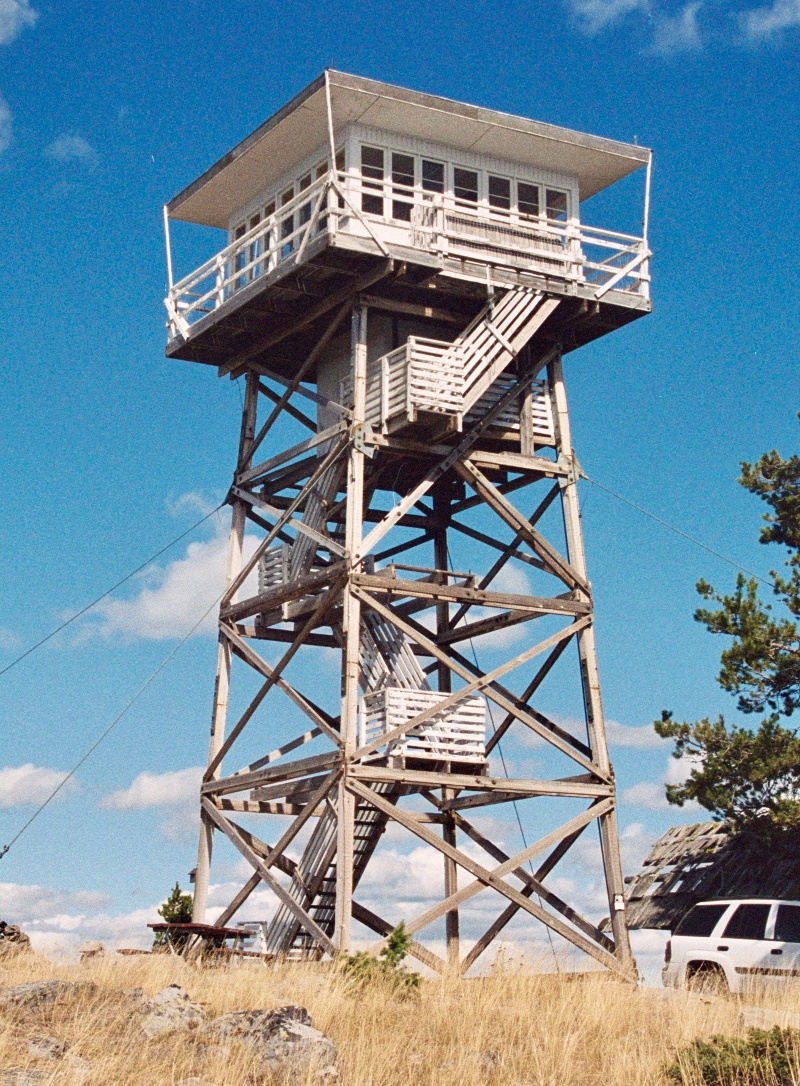
For more than a century, the United States Forest Service has employed men and women to monitor vast swaths of wilderness from isolated lookout towers. Armed with little more than a pair of binoculars and a map, these lookouts served as an early warning system for combating wildfires. Eventually the towers would be equipped with radios, and later still a cellular or satellite connection to the Internet, but beyond that the job of fire lookout has changed little since the 1900s.

Like the lighthouse keepers of old, there’s a certain romance surrounding the fire lookouts. Sitting alone in their tower, the majority of their time is spent looking at a horizon they’ve memorized over years or even decades, carefully watching for the slightest whiff of smoke. The isolation has been a prison for some, and a paradise for others. Author Jack Kerouac spent the summer of 1956 in a lookout tower on Desolation Peak in Washington state, an experience which he wrote about in several works including Desolation Angels.

But slowly, in a change completely imperceptible to the public, the era of the fire lookouts has been drawing to a close. As technology improves, the idea of perching a human on top of a tall tower for months on end seems increasingly archaic. Many are staunchly opposed to the idea of automation replacing human workers, but in the case of the fire lookouts, it’s difficult to argue against it. Computer vision offers an unwavering eye that can detect even the smallest column of smoke amongst acres of woodland, while drones equipped with GPS can pinpoint its location and make on-site assessments without risk to human life.

At one point, the United States Forest Service operated more than 5,000 permanent fire lookout towers, but today that number has dwindled into the hundreds. As this niche job fades even farther into obscurity, let’s take a look at the fire lookout’s most famous tool, and the modern technology poised to replace it.

The Osborne Firefinder

At the most basic level, the job of the fire lookout is to detect and locate the first signs of a possible fire. This boils down to carefully scanning the horizon for signs of smoke, and if seen, plotting the position of the plume on a map and communicating its location to the on-duty fire crews. All a fire lookout actually needs to accomplish this task is a map of the area he or she is monitoring, and ideally a pair of binoculars or a small telescope. Indeed, prior to the 20th century, this would have been the extent of the equipment available.

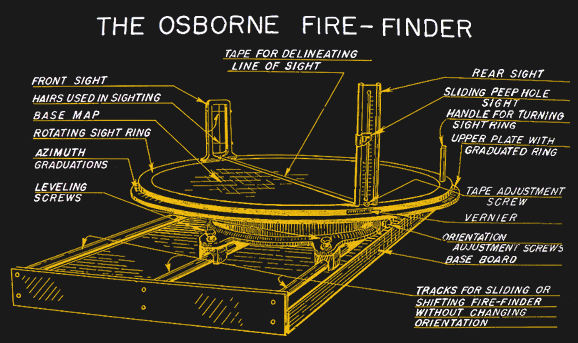
But in 1911, William Bushnell Osborne invented the tool which would ultimately become the hallmark of the fire lookout: the Osborne Firefinder. The device, a type of alidade, featured a large circular map of the surrounding area and a sighting apparatus that rotated above it. Some variations of the Firefinder used what was effectively a rifle scope, but others used a “peep” sight that was nothing more than a strip of metal with a small hole drilled into it. In either case, the operator would rotate the Firefinder until they could see the base of the smoke column through the sights.

The center of the circular map represented the location of the tower, with compass headings marked around the entire circumference. When the smoke was sighted in, the degrees of rotation marked by the Firefinder would correspond to the azimuth of the target. This heading could be forwarded to other nearby towers and, assuming they could see the smoke from their vantage point, allowed for triangulation of the fire’s location.

If there were no other towers in the area, or they were unable to see the smoke from their position, the operator of the Firefinder could employ the elevation measurement marks on the sights to estimate distance. With the compass heading and an idea of how distant the smoke was from the base of the tower, crews on the ground would at least have enough information to start their search.

Back to the Future

The Osborne Firefinder was a simple device with few moving parts, and yet when properly set up and calibrated, allowed fire lookouts to locate potential danger with unparalleled accuracy for the era. Realistically, the United States Forest Service didn’t have a better way of pinpointing the location of a fire until the use of aircraft became practical. But even still, the Firefinder was a compelling option as it was cheap and easy to use.

Moreover, the Firefinder went through its own evolution over the years, with new variations steadily increasing its accuracy and utility. These incremental updates culminated with the 1934 version, of which more than 3,000 were manufactured and distributed to lookout towers both domestically and abroad. Incredibly, this version was still being manufactured in the United States up until 1989.

The prototype SDTDC Firefinder

But by the 2000s, there was a problem. With original Osborne Firefinders still in use all over the country, and the supply of spare parts dwindling, the Forest Service’s San Dimas Technology and Development Center (SDTDC) decided to investigate replicating the vintage devices. The various models of the Firefinder were compared, disassembled, and modeled in AutoCAD. Some slight modifications were made based on input from veteran fire lookouts, and prototypes of the new and improved 2003 model Firefinder were built and tested at the Odell Butte and Green Mountain lookout towers in Oregon.

After the successful test program, Palmquist Tooling in California began manufacturing new Firefinders and replacement parts that were largely backwards compatible with the original models. Upgrades for the modern Firefinders included replacing cast iron components with aluminum to save weight, and the addition of nylon bearings to reduce wear.

Eyes in the Sky

Firefinders, whether original Osborne or the updated SDTDC versions, are still actively being used today. Given the fixed location of the tower as a reference point, they give lookouts a simple and reliable way to determine with reasonable accuracy the coordinates of a potential fire. But the reality is that automated systems can do the same job faster and with a much higher degree of accuracy than any human.

Currently, there are a number of different high-tech approaches being used or considered for fire detection. A new space-based system was just brought online over the summer that uses data from several orbiting spacecraft, including the latest GOES weather satellites, to provide continuous monitoring of potential or ongoing wildfires. With updates being pushed out as quickly as once per minute, the system gives emergency agencies a high-level view of the situation in nearly real-time, allowing for efforts to be coordinated far more efficiently than was possible in the past.

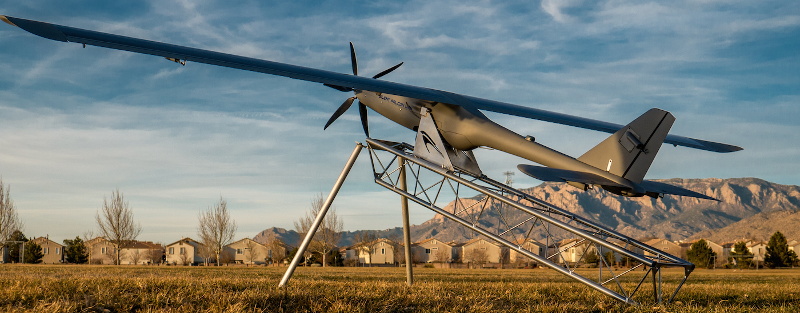
But there’s only so much that can be seen from space. To provide a closer view of conditions on the ground without endangering human life, several small Unmanned Aerial Vehicles (UAVs) have been approved for use in and around active wildfires for the purposes of on-site monitoring. These craft can get far closer to the fire than manned vehicles or firefighters can, and provide crucial information on how best to combat it. Similar UAVs proved invaluable during the blaze at Notre Dame cathedral, and represent something of a revolution in close-quarters firefighting technology.

The Silent Falcon, a solar electric UAV used for wildfire monitoring

Freaks on the Peaks

It’s undeniable that technology has largely supplanted the fire lookouts at this point. The US Forest Service actually rents out many of the towers as summer vacation cabins now, as the task they were built for has been antiquated by satellites and UAVs. But in the parts of the country where the towers are still staffed with self-identified “Freaks on the Peaks”, the old ways are alive and well.

Even with all the modern technology available, human lookouts can still be a viable option. For one, they’re cheap: most fire lookouts are employed only during the summer months and paid an average of $12 USD per hour. Some of the lookouts have been stationed at the same tower for decades, which gives them invaluable experience with the nuances of the land that can be critical in a crisis. Operating conditions also need to be taken into consideration: UAVs have a difficult time flying in the summer thunderstorms which have been known to trigger wildfires.

With time, even these advantages are likely to be overcome by newer and more advanced automated systems. But until then, a small army of men and women will still climb their towers every spring and keep vigil over the forest with little to keep them company beyond an Osborne Firefinder that was likely built decades before they were born.

15 Oct 15:30

Is the Snakehead Epidemic Happening All Over Again?

by Joe Cermele
A northern snakehead comes boatside in the Delaware River near Philadelphia.
A northern snakehead comes boatside in the Delaware River near Philadelphia. (Joe Cermele/)

Earlier this month, an angler fishing a pond in Gwinnett County, Georgia, reeled in an invasive northern snakehead. It was the first confirmed catch of the species in the state. Within days, the story was picked up by many news outlets, even receiving ink with heavy-hitters like the New York Times.

All these news reports bear an uncanny resemblance to the ones published nearly 20 years ago when northern snakeheads were first discovered in the Potomac River near Washington, D.C. Terms such as "frankenfish" have resurfaced. The ability of these fish to "crawl on land" is once again being sensationalized. The overriding tone is one of panic.

But to the anglers who live roughly 500 miles northeast of Gwinnett County, this complete rekindling of the snakehead fire in the media probably comes as a surprise. Because not only are snakeheads old news—but many of the fears harped upon with this latest capture in Georgia have had nearly two decades to be assuaged by first-hand angler encounters, as well as scientific research.

How Are Snakeheads Introduced to New Waters?

If you examine any snakehead stronghold, its ground zero can be linked to a metropolis. South Florida’s bullseye snakeheads were introduced just outside of Miami. Northern snakeheads first appeared near Washington, D.C. There are pockets of established snakeheads in Queens, New York. The fish in New Jersey’s Delaware River were likely dumped around Philadelphia. These cities have large Asian populations, and snakeheads are considered a delicacy in their culture. Illegal importation for food is one means of how these fish end up in U.S. waters. The other is the aquarium trade. Juvenile snakeheads were, and still are, popular pets, once readily available in many stores. Possessing and selling snakeheads is now illegal, but there is still a black market that is typically more accessible in cities.

Take a look at Gwinnett County, Georgia, on Google Maps, and you’ll see that it encompasses the suburbs directly northeast of Atlanta—its southern border is mere miles from downtown. The scenario mirrors the origins of every other snakehead establishment in the country.

Snakeheads thrive in shallow, heavily vegetated waters.
Snakeheads thrive in shallow, heavily vegetated waters. (Joe Cermele/)

Who Is to Blame for the Snakehead Invasion?

The real villains in the on-going snakehead saga are the people dumping them—not the fish. I do not hide my addiction to targeting snakeheads with a rod and reel. I've written about it several times for Field & Stream, and have shot several episodes of my web series, "Hook Shots," while on the hunt for northern snakeheads. Not surprisingly, dozens of people tagged me in links to the Georgia story. My inbox flooded. But as much as I love catching snakeheads, I want to make it clear that I do not condone introducing them to new waters where they did not exist. To crack down on the snakehead "epidemic," more measures must be taken to intercept them before they're dumped, because the truth is that once these fish are already found in the wild, it's often too late.

The Georgia snakehead was caught in a private pond (yet there is no mention of law enforcement tracking down the pond's owner). News reports indicate that the pond drains into a creek that ultimately ends up in "swamp flood plain system." Considering the milder winters in Georgia, and depending on where that flood plain leads, if even just a few fry made their way out of the pond and survived, the Atlanta area could quickly become the next snakehead stronghold.

Can Snakeheads Travel On Dry Land?

As the media did in the early 2000s, they're once again playing up a snakehead's ability to slither across terra firma. It's true that the fish can do this—yet in all my years targeting them, I've never stumbled upon one snakehead out of water, dead or alive.

Snakeheads are not the only species capable of moving over land and surviving for a time out of the water. Native bowfins have this ability; so do American eels. The impression given, however, is that snakeheads are so voracious that they will regularly travel from one body of water to another—and for no particular reason. That’s false. Their ability to travel out of water is a survival mechanism. What might prompt the fish to use this ability is if their home water is drying up or becoming depleted of oxygen or food. Even then, another suitable body of water had better be very, very close; these fish are not wriggling their way down Interstate 95 for 10 miles. And the ground between them and the next body of water had better be soft and moist; they won’t make it very far across a dusty cornfield. Of all the attributes of a snakehead, this one—in my opinion—should be of the least concern.

Snakeheads rely on keen eyesight to hunt, often chasing down topwater lures from up to 10 feet away before striking
Snakeheads rely on keen eyesight to hunt, often chasing down topwater lures from up to 10 feet away before striking (Joe Cermele/)

How Quickly Can Snakeheads Take Over a Body of Water?

What should be more concerning is a snakehead's ability to spawn multiple times a year and establish a population very quickly. Snakeheads have such a stronghold from Virginia through New Jersey that eradication is essentially impossible at this point, considering the length and breadth of the watersheds they inhabit. Assuming these Georgia fish were only dumped in this one Gwinnett County pond, the state may have a shot at wiping them out if they work quickly. According to the 6abc.com story, Georgia DNR already shocked several other snakeheads out of the pond. What's not known is if they reproduced in the pond, or were all illegally dumped in the pond at a mature age. Regardless, it's also worth mentioning that not every confirmed snakehead catch has lead to a population explosion.

Although snakeheads have rooted deeply in Virginia, Florida, Maryland, Delaware, eastern Pennsylvania, and New Jersey, they have been reported in 14 states across the country, ranging as far north as Michigan and as far west as California. In most cases, one or a few are caught in a single body of water and then never seen or caught again, and no large breeding population is ever established. According to South Carolina Division of Natural Resources biologist Dan Rankin, in a recent story on Fox Carolina, there have only been unconfirmed reports of snakeheads in South Carolina. There have been sporadic reports over the years in North Carolina in Lake Wylie (not surprisingly, right outside of Charlotte). Those reports date back as far as 2002. By now, had the fish taken hold, it would be likely that the Charlotte area would have a booming snakehead population on par with those in Washington, D.C. and Philadelphia.

My hope for anglers in Georgia would be that the Gwinnett County capture turns into another one-off incident, but only time will tell. And as it’s very difficult for state officials to sample and shock vast swaths of a watershed, it’s likely that anglers will be the ones doing the telling.

15 Oct 15:30

MIT Engineers: “Da Vinci’s 500 Year-Old Bridge Would Have Worked”

by Franzified

You know that a man is a genius when scientists still marvel at his creations over five centuries later. Leonardo da Vinci was truly a man ahead of his time, as proved by his creations.

Massachusetts Institute of Technology (MIT) engineers have analyzed a bridge designed by Da Vinci in 1502, which is over 500 years ago. The bridge was designed for Sultan Bayezid II, head of the Ottoman Empire, and was intended to connect Istanbul and its neighboring city Galata.

In the end, da Vinci's design wasn't used, but the MIT team has carefully modelled the polymath's design, finding it to be structurally sound – no mean feat, considering it would've been the world's longest bridge at the time, by some distance.

Check out more details of the investigation over at ScienceAlert.

(Image Credit: Gretchen Ertl/ ScienceAlert)

15 Oct 15:28

Mexico's Best Kept Secret Is Still A Little-Known Paradise On The Pacific

by Rob Reed, Contributor
The Thompson Zihuatanejo is a luxury beach hotel with a recent renovation and a reputation for impeccable service that no one seems to know about
14 Oct 18:41

Bayer BrandVoice: The Value Of Pollinators To The Ecosystem And Our Economy

by Bayer Contributor, Bayer
Pollinators are critical to the food system as we know it, but can we quantify their value?
14 Oct 18:21

Top Diversions: September 2019

by Miranda Smith
Featured pantsssss.jpeg?ixlib=rails 2.1

Psychological tricks, the effects of sleep deprivation, and the space between your pants and your shoe—all important subjects to keep up on. And if you subscribe to our mailer (which you definitely should), you know we’re always sharing our favorite articles from Men’s Health, BloombergReddit, and more. Last month, these six stories were the biggest hits. 


Why Six Hours of Sleep Is as Bad as None at All


Why Six Hours of Sleep Is as Bad as None at All

Pocket
 

You’re probably not getting enough sleep—and it’s a bigger deal than you might think. The study outlined in this article found that those who slept for six hours a night for two weeks functioned as poorly as those who were forced to go without any sleep at all for two full days. In other words, cutting into your sleeping hours just a little can have big consequences over time. So get those Zzzzs. And if you’re looking to optimize those hours (we’re talking weighted blankets and a clear mind), check out our guide to better sleep


These Exercises Will Prep You for Perfect Pullups


These Exercises Will Prep You for Perfect Pullups

Men’s Health


Whether pullups have eluded you, or you’re just looking to improve your form, this Men’s Health guide is a foolproof method to building up your arms, back, and shoulders. All those lateral pulldowns, burpees, and reverse planks will be well worth it when you pull off the perfect set. 


Which Psychological Tricks Should Everyone Know About?


Which Psychological Tricks Should Everyone Know About?

Reddit
 

From catching someone in a lie, to turning nerves into excitement, to helping a friend get through a panic attack, this Reddit thread has hundreds of tips for tricking yourself or others into thinking about things differently. 


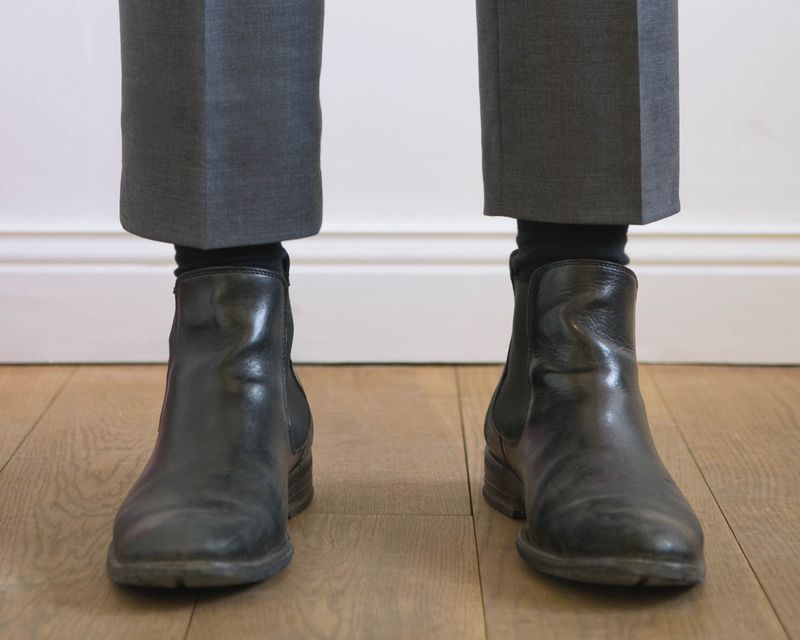
How Long Should Your Pants Be?


A Tailored Guide to the Most Contested Two Inches in Menswear

Bloomberg
 

Break or no break? The space between the hem of your pant leg and your shoe (or lack thereof) has proven itself to be surprisingly controversial in the men’s fashion world. Whether you feel strongly toward a shorter hem, a no-break look, or you typically just wear your pants as they come without thinking twice about it, this Bloomberg article does an effective job of breaking down the options and factors that might cause you to choose one over the other. 


25 Best Scotch Whiskeys You Can Buy in 2019


The 25 Best Scotch Whiskeys You Can Buy in 2019

Gear Patrol


Being the big whiskey fans we are, sharing Gear Patrol’s roundup of this year’s best Scotch whiskeys was a no-brainer. Not only does it offer some unbeatable Scotch recommendations, it’s got tips on how you should buy it, and some of the most important Scotch terms you should know (like, what an independent bottler is). You’re welcome.


https://www.esquire.com/style/mens-fashion/a28879542/reddit-male-fashion-advice/
 

How Reddit’s Male Fashion Advice Became One of the Nicest Places on the Internet
 

Esquire
 

The male fashion advice subreddit has now been going strong for 10 years, and if you haven’t been there yet, it's worth a visit. Sure, you can crowdsource opinions on cuffing t-shirt sleeves or find some killer tips for finding the right tailor, but the best thing about this space is the genuine community that has been built around it. 


>>Next: Top Diversions: August 2019


14 Oct 18:16

3 Lowbrow Beers and the Iconic Men Who Drank Them

by Miranda Smith
Featured lowbrow beer banner.jpg?ixlib=rails 2.1

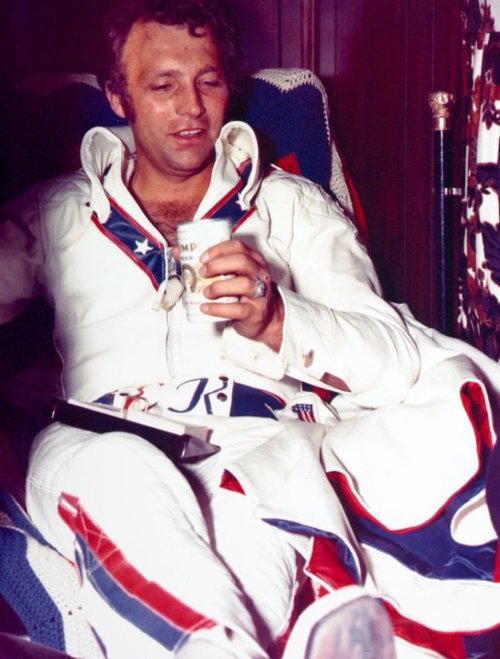
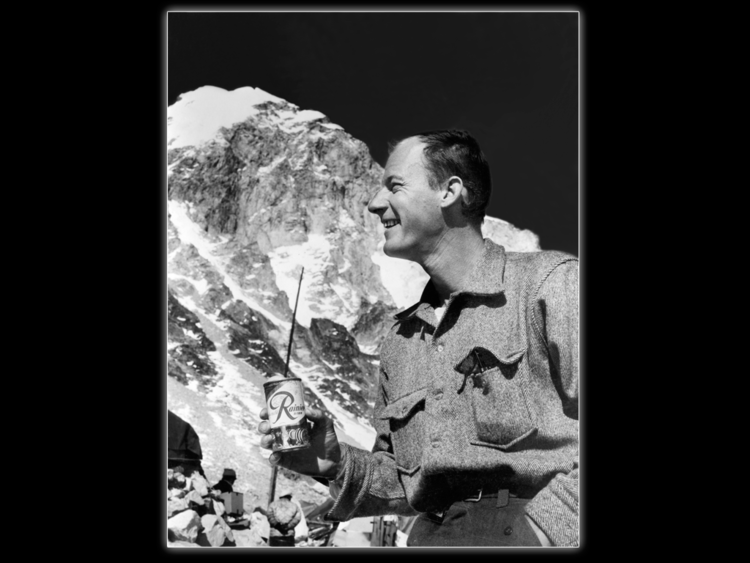
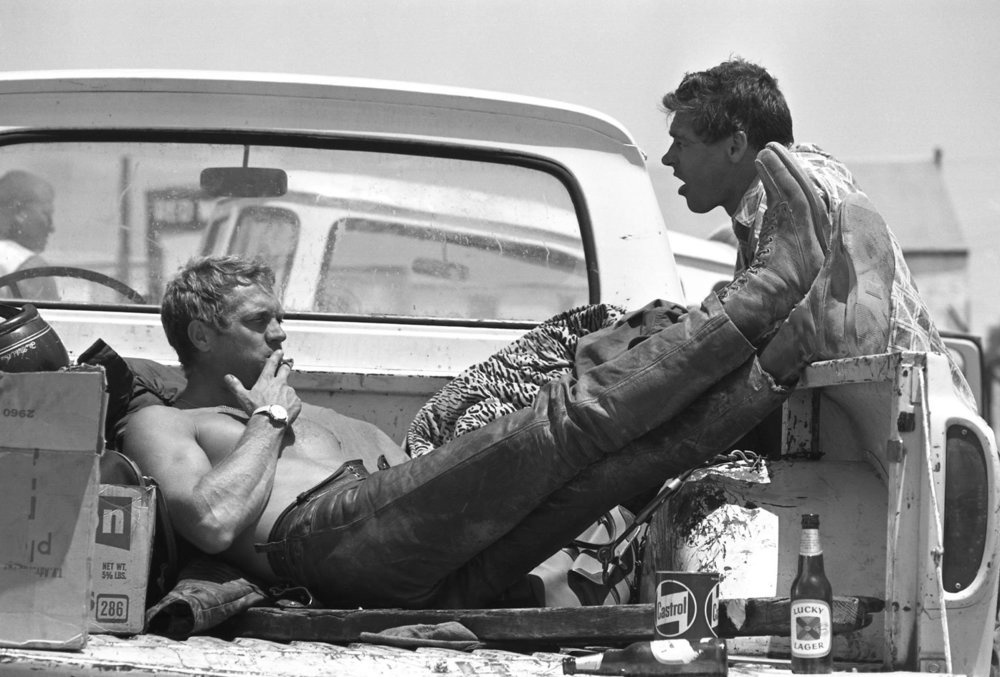
Back when beer was beer, before IPAs ran rampant, and everything on tap had enough ABV to sedate a small elephant—there were just a handful of cans for the everyman that became unlikely icons of their time. Ever wonder what Steve McQueen reached for after a race? What the first American to summit Everest chose to sip in celebration? Well, wonder no more. We’ve done some digging and rounded up a few of our favorite lowbrow beers with highbrow history. Did we leave anything off our list? Leave us a message in the comments below. 


Evel Knievel drinking Olympia


Olympia 


It’s widely accepted in the scientific community that Olympia has one of the simplest, best beer taglines around — “It’s the Water.” The legend Evel Knievel was sponsored by Olympia Beer through most of his career, and the “Clearwater” in Creedence Clearwater Revival comes from an old Olympia advertising campaign. Although the original brewery was closed in 2003, Olympia is still available through Pabst Brewing Co.


Jim Whittaker drinking Rainier


Rainier


In 1963, the first American to summit Mt. Everest (Jim Whittaker—a Seattle native himself) brought a can of Rainier with him. The original brewery dates all the way back to 1854 when it opened under the name “The Washington Brewery,” which was Seattle’s first-ever commercial brewing company. Today, it’s still sold primarily in the Pacific Northwest. 


Steve McQueen Drinking Lucky Lager


Lucky Lager


“One of the World’s Finest Beers,” Lucky Lager was first brewed at The General Brewing Company in San Francisco in 1934. It featured a distinctive red X logo and advertised with the San Francisco Seals through the 30s, 40s, and 50s. Even better—the King of Cool himself was photographed with a bottle. In 2019, Pabst announced that 21st Amendment Brewing would be reviving the brand.


>>Next: The Best Brewery in Every State


14 Oct 18:13

Squirrel Day in Ville Platte

by Dacey Orr

In polite company it’s called “Budget Day,” a nod to the local school system’s nomenclature for the first Friday in October. But everyone knows that’s just putting lipstick on an arboreal rodent. Most folks can’t remember when schools in Louisiana’s Evangeline Parish began closing on the Friday before the opening day of squirrel season, the first Saturday in October, because so many students and teachers were going AWOL. The day has long been enshrined as “Squirrel Day,” and the parish seat of Ville Platte still goes a little nutty. On Squirrel, er, Budget Day, many of its 7,000 citizens head for the woods. Families crowd into old hunting camps along bayous and cypress-clad lakes. Some might hold four generations, and the lilting tones of Cajun French season the atmosphere. In town, Friday night football games are pushed to Thursday night. Banks and businesses close.

photo: Julien Fontenot

A father and son take to the woods near Ville Platte, Louisiana, on the opening weekend of squirrel season.

“It’s crazy,” says Ike Launey, of Industrial Supply, a sporting goods and hardware store in Ville Platte. “The men are all gone to the woods, and more and more women are heading out with them.” Launey is 55 years old, and he’s missed only a single Squirrel Day since he was 10. This year he’ll be out with his two sons, two nephews, a brother and his grandson, and his brother-in-law. “I’d bet half the people in town head for the woods this weekend,” he says. “You can’t keep us out of the woods for the squirrel opener, no way.” 

The community’s devotion to squirrel hunting goes back centuries. Cajuns are the descendants of French-speaking Catholics who were expelled from Acadia, a French colony in Nova Scotia, and when the first families arrived in Louisiana in the 1760s, they found a forbidding wilderness waiting. Each received a paltry store of tools and goods—a gun and ammo, a saw or axe, a few chickens and bags of corn—and were pushed into the woods. Abundant wildlife, including gray and fox squirrels, kept them alive and nourished as their toehold along the bayous turned into the deep roots of Cajun culture.

photo: Julien Fontenot

Teal cooking at a hunt camp, a popular meal the night before the squirrel opener.

Now the weekend is celebrated as a sort of Cajun Passover, part family reunion, part cultural festival, and community tradition through and through. Once, the radio host Paul Harvey chastised the town for letting something as lowly as écureuil—the Cajun French term for “squirrel”—circumvent the education of its children. But it’s a good bet he’d never seen a grandmother and her granddaughter stalk fox squirrels shoulder to shoulder in the big oaks. Or worked through a cast-iron Dutch oven of squirrel étouffée while the accordions play.

“You got two kinds of gravy you can cook with the squirrels,” Launey says. “Brown gravy with the onions, or what we call naked gravy. Just the squirrel, some water, and a little flour to hold it all together. Most of us around here will eat all we can find.”

The post Squirrel Day in Ville Platte appeared first on Garden & Gun.

14 Oct 18:05

Columbus Day Still Needs to Be Defended

by Hunter Derensis

One year ago, I made my debut in The American Conservative describing my alma mater’s efforts to replace Columbus Day with Indigenous People’s Day, a microcosm of the effort to erase the American nation and replace its history with something more “diverse.” The work of these cultural arsonists has, unfortunately, continued nationwide.

Over the past 12 months, New Mexico, Vermont, Maine, and Louisiana have become the newest states to disassociate themselves from Columbus Day and rename the holiday after an amalgamative term for the continent’s native inhabitants. They join a growing list of states and other localities, including Columbus, Ohio. Yes, the explorer’s namesake declined to celebrate him last year, the first non-observance since the city’s founding.

(One place the name change failed was New Hampshire, where a bill passed the state house but died in the senate. Though its failure was not due to a lack of endorsements.)

“My view on this is why would we not want to honor indigenous people?” said Senator Elizabeth Warren in January. “These were the people who were here. These were the people who in Massachusetts reached out and helped the first settlers to Massachusetts Bay colony and helped them survive those first harsh and rugged years.”

Warren masqueraded for decades as someone of native descent, including describing herself as “American Indian” on her 1986 Texas Bar registration card. A 1997 Fordham Law Review article billed her as the “first woman of color” to teach at Harvard Law School. A DNA test last year proved definitively that she is as little as 1/512th American Indian. Her deception shows that she would much rather honor (and identify with) the native people than the European settlers they helped.

“There is power in a name and in who we choose to honor,” said Maine Governor Janet Mills as she signed a bill to recognize Indigenous People’s Day.

But national holidays ought to be just that: national. They should honor the nation’s history, founding, and culture. Holidays are not about inclusion or diversity; they’re about unifying and bonding. They’re about celebrating everything uniquely American, not removing it.

Student groups, however, don’t share that understanding. Reminiscent of my own George Mason University, the student government at the University of Oklahoma voted to remove the Pledge of Allegiance from their congressional agenda and linked it directly to Columbus Day.

“It was written as a celebration of Columbus Day in 1892, and in the city of Norman we don’t celebrate Columbus Day, we celebrate Indigenous People’s Day,” said the student senator who authored the bill. “I was really able to connect with a lot of the international students and them saying thank you for writing it.”

Why are foreign students given precedence over what holidays Americans celebrate? Aren’t they studying here to experience and appreciate our history and culture? Not to the students at GMU or OU, who are taught by professors like Elizabeth Warren to hate anything related to the arrival of Europeans on American shores.

Last year, a week prior to Columbus Day, the century-old bronze statue of Thorfinn Karlsefni in Philadelphia was knocked over into the Schuylkill River. Karlsefni was a Viking explorer, an associate of Leif Erickson, and the father of Snorri Thorfinnson, the first European child born in the Americas. Even without the baggage that discolors Christopher Columbus’ legacy, the Karlsefni statue was still decried as racist and a monument to white supremacy before its defacing.

At its core, the movement to destroy Columbus Day has nothing to do with the Italian explorer’s morally despicable actions in Hispaniola. President Franklin Delano Roosevelt, who established Columbus Day as a federal holiday in 1937, described the real reason in his 1940 celebratory statement:

The courage and the faith and the vision of the Genoese navigator glorify and enrich the drama of the early movement of European people to America. Columbus and his fellow voyagers were the harbingers of later mighty movements of people from Spain, from Columbus’s native Italy and from every country in Europe. And out of the fusion of all these national strains was created the America to which the Old World contributed so magnificently.

The primary motivation of activists (and sometime vandals) who want to institute Indigenous People’s Day is their hatred for European exploration, the original sin of the modern world. Cultural arsonists seek to correct this through a systematic replacement of the descendants of European colonization. Tearing down our nation’s heroes is a first step to tearing down the rest of the historic American nation. Don’t let them.

Happy Columbus Day.

--

This article was republished with permission from The American Conservative.

[Image Credit: Architect of the Capitol, public domain]

14 Oct 17:52

Kanu Private Island

Just a 15-minute boat ride from the coast of Belize, the all-inclusive Kanu Private Island is as exclusive as it gets. The 2.5-acre coral island is wrapped in views of...

Visit Uncrate for the full post.
14 Oct 17:51

Emory 1959 Porsche 356A Coupe

Emory Motorsports specializes in creating Porsche 356's with performance that could only be dreamed of by the car's original engineers. This 1959 356A sunroof coupe is a bespoke build commissioned...

Visit Uncrate for the full post.
14 Oct 17:50

On the menu at Hooters: Chicken, cleavage… and cancer drugs

by Conor Grant

Ethan Miller/Getty Images

Hooters: The restaurant of choice for spicy chicken wings, cold beer, cleavage-baring waitresses, and… cutting-edge cancer drugs?! 

The parent company of the Hooters restaurant chain, Chanticleer Holdings — which lists on the Nasdaq under the ticker “BURG” — combined (via reverse merger) with Sonnet BioTherapeutics, a cancer drug developer. 

If it sounds crazy, it is… 

But that’s the way reverse mergers work, baybeeee

What’s actually going on here? Well, reverse mergers are a way for private companies — like Sonnet BioTherapeutics — to go public without going to all the trouble of holding an IPO. 

Usually, businesses that want to reverse merge look for struggling public companies whose public shell they can inhabit — like hungry, corporate hermit crabs. 

In this case, Sonnet chose a greasy, greasy shell

Chanticleer Holdings made the perfect reverse merger target: The company’s stock has fallen from a high of more than $35 per share to less than $1 per share. 

Some analysts point to an overall decline in the popularity of fast-casual dining as the cause of Hooters’ slump — or maybe a publicly traded chicken wing company built around staring at women’s breasts was just never that cool in the first place

In any case, the company formerly known as Hooters will wear decidedly different corporate clothes — that is, it will go by SONN instead of BURG on the Nasdaq. 

As for the chain of chicken joints? Apparently, it’s not possible to scrub away all that grease overnight: The company plans to spin off its “restaurant assets” into another company that will be owned by current shareholders.

The post On the menu at Hooters: Chicken, cleavage… and cancer drugs appeared first on The Hustle.

14 Oct 16:24

How to Get Back Into the Gym

When you're getting back into the gym after a break, the most important step is getting yourself to the gym. Once you've gotten yourself there, it can be tempting to just jump right back into long, difficult workouts, but you'll actually increase your risk of injury and burnout that way. Instead, start with short workouts and light weights, and gradually work your way up. Maintain your new gym routine by staying hydrated, eating well, getting enough sleep, and treating yourself well.

[Edit]Steps

[Edit]Motivating Yourself to Get to the Gym

  1. Schedule your workouts ahead of time. It can be hard to manage fitting workouts into a busy schedule, but if you already have them blocked off in your week, it feels less optional. When you're just starting, aim for 2 or 3 workouts in a week, and remember they can be short.[1]
    Get Back Into the Gym Step 1.jpg
    • Schedule in rest days between your workouts to let your body recover.
  2. Set realistic goals. If you haven't exercised in months, the odds of you suddenly sticking to a 5-day workout per week schedule are pretty slim. Instead, set goals that actually fit with your life. Remember, working out twice a week for 30 minutes is so much better for you than not working out.[2]
    Get Back Into the Gym Step 2.jpg
    • Even a small amount of exercise is good exercise.
  3. Find the time of day that works for you. Maybe you always find yourself hitting snooze instead of completing those morning workouts, or feel exhausted when you get home from work or school. Experiment with different times. Consider packing your workout clothes in the morning, so you can go straight to the gym after work and avoid the pull of your couch.[3]
    Get Back Into the Gym Step 3.jpg
    • Keep in mind that scheduling a morning workout the day after an evening workout might be too exhausting.
  4. Set out your exercise clothes in advance. Pack your gym bag before you go to work if you plan on exercising in the afternoon. If you plan to workout in the morning, lay out your clothes the night before so they are the first thing you see in the morning.[4]
    Get Back Into the Gym Step 4.jpg
    • Building the habit of exercising through little routines like putting out your clothes makes you exercise without thinking about whether you should do it.
  5. Find a workout buddy. Working out is way more fun if you do it with a friend, and you're more likely to actually get yourself to the gym if you know a friend is waiting for you. It's easy to flake on yourself, but if you know you're letting your friend down, you might find that extra bit of energy to get you in the gym door.[5]
    Get Back Into the Gym Step 5.jpg
    • Working out with someone is also a great way to bond and deepen your friendship.
  6. Join a group or a fitness class at the gym. See if your gym offers spin classes, weight-lifting sessions, yoga groups, or any other kind of fitness that interests you. Working out with a group can be a positive way to motivate yourself.[6]
    Get Back Into the Gym Step 6.jpg
    • Having a scheduled weekly group fitness class is a great way to start out, even if you can only go to the gym once a week.

[Edit]Ramping up Your Workouts Gradually

  1. Warm up for 5-10 minutes before you start your workout. You can warm up by climbing stairs, jogging on the treadmill, using the elliptical, or even just going for a brisk walk before you start your workout. Warming up is super important – not only will it ease you into the workout, but it can prevent you from straining your muscles and getting injured later.[7]
    Get Back Into the Gym Step 7.jpg
    • Try mixing up warm-ups you do so that you don't get bored.
    • One way to make warming up more fun is to listen to music or an audiobook while doing it.
  2. Start with 10 minutes of aerobic exercise and gradually increase. Endurance aerobic exercise, like biking, walking, running, and swimming, is super important for your heart health. Start with a manageable amount, such as 10 minutes per workout, and add on a few minutes per week.[8]
    Get Back Into the Gym Step 8.jpg
    • Completing a short workout can give you a sense of accomplishment, which helps you stay motivated to workout again, and possibly for longer, the next time.
    • Eventually, aim for getting a total of 150 minutes (2 1/2 hours) of moderate to vigorous activity in a week.[9]
  3. Start with light weights and focus on your lifting form. When weightlifting, start out with a weight that you can lift for 8-10 reps without being exhausted. If a weight is too heavy for you to lift while maintaining proper form, than it's too heavy for you to use. Try doing 3-5 sets of these repetitions.[10]
    Get Back Into the Gym Step 9.jpg
    • It can be helpful to take a weight lifting class, see a personal trainer, or watch videos on proper form to learn how to lift weights without injuring yourself.
  4. Add heavier weights and more reps gradually as your muscles get stronger. In future workouts, you can gradually build up by increasing the weight or doing more reps per set. Increase your weight in small increments and never increase the weight to a point where you can't lift with good form. For example, if you were previously lifting for 8 reps per set, you could either move on to or 10 reps per set.[11]
    Get Back Into the Gym Step 10.jpg
    • Building up your strength gradually will lead to more long term gains than exhausting yourself with heavy weights right away.[12]
  5. Listen to your body and modify your workout for comfort. If you're in pain, feel dizzy or nauseous, or have unpleasant shortness of breath, give yourself a break. Don't push yourself to complete a workout that is hurting you, because that won't help in the long run. Switch to lighter weights, fewer reps, or a slower pace, or call it quits for the day.[13]
    Get Back Into the Gym Step 11.jpg
    • The important thing is to make working out a sustainable activity, not to push yourself really hard for a week and then burn out.
  6. Cool down with at least 5 minutes of stretching after your workout. Stretching helps keep your body flexible and injury-free. It will also help cut down on post-workout soreness. Do some basic leg stretches, like toe-touches, lunges, and butterflies. Remember to stretch your back and arms, too.[14]
    Get Back Into the Gym Step 12.jpg
    • Try holding a stretch for about 30 seconds.
    • When you're stretching, it should be mildly uncomfortable, but not painful.[15]
  7. Be patient and proud of yourself. Building up strength, endurance, and fitness takes time, so try not to get frustrated with yourself if you don't see immediate progress. Avoid the temptation to do way-too-difficult workouts before you're ready, because that will just set you back.[16]
    Get Back Into the Gym Step 13.jpg
    • Remember to be proud of yourself for getting back to the gym– this is a big step toward taking better care of yourself.

[Edit]Feeling Good and Maintaining Your Routine

  1. Remember to schedule in rest days. When you're first getting back to the gym, you might want to consider scheduling your workouts with a day in between, for example Monday-Wednesday-Friday. You don't have to be totally inactive during your rest days– do some walking, gentle yoga, or relaxed biking to keep your body moving.[17]
    Get Back Into the Gym Step 14.jpg
    • If you haven't worked out at all in a while, you will see improvements even if you only work out once a week.
  2. Reward yourself for working out with an episode of TV or a cup of coffee. When you're just starting to exercise, it can help motivate yourself with a little reward after exercising. It can be as simple a reward as watching TV or reading a fun book. Try to avoid rewarding yourself with junk food – it's fine to occasionally eat junk food, but it's best to associate exercising with a healthy reward.[18]
    Get Back Into the Gym Step 15.jpg
    • Once you get into the habit of working out, your body will remember the amazing post-workout rush of endorphins, and you'll start to want to workout even without a reward.[19]
  3. Deal with soreness with light movement, stretching, and hot baths. Soreness is really common when you're getting back into working out. The best thing that heals soreness is time, but you can speed it along with some light movement like walking or swimming. Many people also find that relaxing in a hot bath soothes the pain.[20]
    Get Back Into the Gym Step 16.jpg
    • Soreness often sets in 1 or 2 days after your workout, rather than immediately after.
  4. Drink plenty of water to keep your energy levels up. Staying hydrated before, during, and after your workout will help you feel your best. Carry a water bottle around with you so that you remember to drink, and have a glass or two of water at every meal. If you're hydrated throughout the day, you'll feel much better when you're working out.[21]
    Get Back Into the Gym Step 17.jpg
    • As a rough estimate, adult men need about and adult women need about of water per day.[22]
    • If it's hot or you're exercising frequently, you'll need to drink even more water to stay hydrated.
  5. Aim for about 8 hours of sleep per night so that you're ready for the gym. Everyone needs a different amount of sleep, but most people need at least 8. Teenagers tend to need 8-10 hours of sleep per night, while adults will need more like 7-9 hours, and adults over 65 need about 7-8 hours.[23]
    Get Back Into the Gym Step 18.jpg
    • Practice good sleep hygiene by going to bed at the same time each night, shutting off electronics at least 30 minutes before bedtime.
    • The good news is that exercising will help you sleep better.
  6. Fuel your body with a healthy diet of vegetables, whole grains, and protein. When you get back into working out, you'll probably find that you're hungrier. Keep your body fueled and healthy by eating lots of vegetables at every meal (potatoes don't count!), eating whole grains like whole wheat and brown rice, and eating healthy protein.[24]
    Get Back Into the Gym Step 19.jpg
    • Eat high-quality proteins like fish, eggs, chicken, tofu, or beans, rather than processed meats or red meat.[25]
    • If you're trying to build muscle mass, eating protein is helpful. To figure out how much protein you need, check out this protein calculator: https://fnic.nal.usda.gov/fnic/dri-calculator/.
  7. Look at exercising as a gift rather than a punishment. Some people use workouts to punish themselves after eating unhealthy meals, but this strategy can be really detrimental in the long run, because you'll think of exercising as something unpleasant. Instead, try to reframe exercise as something positive you are doing to help your body. Think about the ways exercise can help your life, by letting you relieve stress, sleep better, and get stronger.[26]
    Get Back Into the Gym Step 20.jpg
    • Remember that it's okay to eat an unhealthy meal every now and then – there's no need to beat yourself up about it.
    • If you find yourself struggling a lot with body image and using exercise as a punishment for yourself, you might want to consider talking to a therapist, because our minds need to be healthy just as much as our bodies.
  8. Find an alternative exercise if you really don't like the gym. If you've tried motivating yourself to go to the gym, but find yourself really dreading it, that doesn't mean you have to resign yourself to a life on the couch. Instead, find activities you enjoy. You might hate the gym but love a dance class, a pickup game of basketball, going running in your neighborhood, or hiking on pretty trails.[27]
    Get Back Into the Gym Step 21.jpg
    • There's no need for exercising to be a grueling ordeal that you force yourself to do. Find something fun, so you'll actually want to stick with it.

[Edit]Tips

  • Ditch the “no pain, no gain” mindset. Painful exercise can injure you and won't keep you motivated.[28]
  • Focus on progress, rather than achievement. In real life, exercising isn't a competition.
  • Don't try and make up for a missed workout by going super hard the next time.
  • If you feel preoccupied with feeling guilty about not exercising, or judging your body, work on improving your body image so that you can view yourself with more kindness.

[Edit]References

  1. https://www.mayoclinic.org/healthy-lifestyle/fitness/in-depth/fitness/art-20048269
  2. https://www.nerdfitness.com/blog/how-to-build-your-own-workout-routine/
  3. https://www.besthealthmag.ca/best-you/fitness/start-working-out-again/
  4. https://www.forbes.com/pictures/fjle45iggd/no-5-lay-out-your-workout-clothes-the-night-before-or-sleep-in-them/#5eb93443397b
  5. https://www.besthealthmag.ca/best-you/fitness/start-working-out-again/
  6. https://dailyburn.com/life/fitness/workout-motivation-tips/
  7. https://www.self.com/story/make-bodyweight-exercises-more-challenging-without-weights
  8. https://www.heart.org/en/healthy-living/fitness/fitness-basics/endurance-exercise-aerobic
  9. https://www.heart.org/en/healthy-living/fitness/fitness-basics/endurance-exercise-aerobic
  10. https://www.nerdfitness.com/blog/the-correct-number-of-reps-per-set-in-the-gym/
  11. https://www.nerdfitness.com/blog/the-correct-number-of-reps-per-set-in-the-gym/
  12. https://jamesclear.com/slow-gains
  13. https://www.mayoclinic.org/healthy-lifestyle/fitness/in-depth/fitness/art-20048269
  14. https://www.realsimple.com/health/fitness-exercise/stretching-yoga/stretching-exercises?slide=112989#112989
  15. https://www.livestrong.com/article/438174-why-is-stretching-painful/
  16. https://health.usnews.com/wellness/mind/articles/2017-12-11/how-to-motivate-yourself-to-exercise-when-you-have-depression
  17. https://www.self.com/story/heres-what-a-perfect-week-of-working-out-looks-like
  18. https://www.helpguide.org/articles/healthy-living/how-to-start-exercising-and-stick-to-it.htm
  19. https://dailyburn.com/life/fitness/workout-motivation-tips/
  20. https://www.webmd.com/fitness-exercise/features/sore-muscles-dont-stop-exercising#3
  21. https://www.hprc-online.org/articles/staying-hydrated-during-exercise
  22. https://www.usgs.gov/special-topic/water-science-school/science/water-you-water-and-human-body?qt-science_center_objects=0#qt-science_center_objects
  23. https://www.sleepfoundation.org/excessive-sleepiness/support/how-much-sleep-do-we-really-need
  24. https://www.health.harvard.edu/staying-healthy/comparison-of-healthy-eating-plate-and-usda-myplate
  25. https://www.health.harvard.edu/staying-healthy/comparison-of-healthy-eating-plate-and-usda-myplate
  26. https://www.tennessean.com/story/opinion/2014/08/18/exercise-never-used-punishment/14189291/
  27. https://www.helpguide.org/articles/healthy-living/how-to-start-exercising-and-stick-to-it.htm
  28. https://www.boston.com/culture/health/2012/11/17/when-returning-to-exercise-build-up-gradually
10 Oct 17:40

Gift Tax Return Lessons: Common Mistakes And Tips For Your Gift Tax Return

by Martin Shenkman, Contributor
Gift tax returns seem simple but they aren't. There are different options for what and how to report. Consider these planning pointers in evaluating and reviewing your 2018 return that was just filed or for planning the 2019 return that may be needed for your pre-2020 election planning in 2019.
10 Oct 17:37

Pappy Van Winkle Announces 2019 Releases

by Brad Japhe, Contributor
Pappy Van Winkle just announced its 2019 releases. Here's what you can hope to find this November at a liquor store near you.
10 Oct 17:26

Where to Stay: Old Edwards Inn and Spa

by Emma Hunt
Falls cottages

Photograph courtesy of Old Edwards Inn & Spa

“Come on in! I’ll get y’all some Champagne,” calls a bellman. My husband and I have arrived at Old Edwards Inn and Spa in downtown Highlands, North Carolina, for a quick getaway. After a busy week, this kind of welcome is just what we need. We settle into rocking chairs on the front porch of the lobby and sip our Champagne. Despite being on a plateau in the Appalachians, our surroundings—gently sloping lawns, lush trees, and winding walkways bordered by shrubs and flower gardens—remind us of the English countryside.

The original inn now known as Old Edwards dates back more than 130 years. It was once a boardinghouse, then a hotel. But a change of ownership in 2001 and a $150 million expansion in 2013 catapulted it to the upper echelons of American resorts. The property occupies several city blocks and includes numerous cottages, two restaurants, two cocktail lounges, a famed spa, a large fitness center, a boutique, two outdoor heated mineral pools and whirlpools, and a nearby golf course.

Heated whirlpool at Hickory

Photograph courtesy of Old Edwards Inn and Spa

Our cottage suite is a blend of historic and modern, with dark hardwood floors, an antique desk and chair, and a cozy sitting area with a touch-of-a-button fire in a stone fireplace. The private porch looks onto tall evergreens and is just steps from a pool and Jacuzzi. The bathroom beckons with a large soaking tub, a rainfall shower with multiple jets, heated floors, and a towel warmer. It’s an invitation to unwind.

For dinner, we head to Madison’s, the resort’s signature restaurant. Located just off the main lobby, it’s casual yet elegant. Our table overlooks the wine garden, complete with a footbridge, fountains, and wine-tasting area. After starting our meal with house-made pimento cheese, we enjoy a bacon-wrapped quail appetizer, followed by roasted halibut with broccolini and a seared ribeye so tender it’s served with a butter knife. After finishing our wine, we return to our cottage to find that turndown service has left little homemade cookies for a sweet ending to the evening.

Guests enjoy cocktails at the spa’s cafe

Photograph courtesy of Old Edwards Inn and Spa

In the morning, I head to ground zero for Old Edwards devotees: the spa. After checking in, an attendant escorts me to get robed, then shows me the waiting area with a fireplace, plush seating, and a selection of hot teas and infused waters. Off to the side, guests enjoy light fare and wine in the spa cafe. Even pre-treatment, it’s a sanctuary of relaxation.

Soon my massage therapist, Nalu, escorts me to a treatment room. My fifty-minute customized massage is deeply relaxing, featuring an essential oil blend with eucalyptus and rosemary that Nalu selects when I mention feeling an oncoming head cold. Afterward, I practically float out to the meditation area, which is essentially a sleeping porch with giant chaise lounges and a fountain. Nalu encourages me to stay as long as I like to enjoy the steam room, sauna, whirlpool, and fourteen-head rainfall showers. There’s no rush.

She’s right: There really isn’t any rush when you’re on “mountain time,” a phrase used often here. Sip a glass of Champagne at the Lodge. Indulge in a leisurely gourmet meal. Soak in the whirlpool. Fall asleep on the porch. No one is in a hurry. And really, isn’t that the greatest luxury of all?

445 Main Street, Highlands, North Carolina • (866) 526-8008 • oldedwardsinn.com

While You’re There

Natural Splendor
Close to downtown Highlands, Sunset Rock offers the perfect vantage point from which to watch a sunset or enjoy a panoramic view of fall leaves. Trailhead parking is across the street from the Highlands Nature Center, and the entire hike is 1.2 miles round-trip. 

The post Where to Stay: Old Edwards Inn and Spa appeared first on Atlanta Magazine.

10 Oct 17:25

'I hate going back to the U.S.': 69-year-old left Utah for Portugal, where you can live well on $2,000 month...


'I hate going back to the U.S.': 69-year-old left Utah for Portugal, where you can live well on $2,000 month...


(Third column, 12th story, link)


10 Oct 15:00

Puerto de Altura (Progreso Pier) in Progreso, Mexico

Arches of the pier.

It would take the average adult about 90 minutes to have a leisurely walk from the start to the end of this four-mile (6.5-kilometer) pier, one of the longest in the world. 

The first wooden pier in Progreso was built in the 1930s, with several expansions leading to its eventual length of about 1.2 miles (2 kilometers). In the late 1980s, a major overhaul saw the existing structure completely replaced with concrete, and an almost four-fold expansion to get it to its impressive current total by 1989. The first ship to have docked in this renovated pier, now separated into sections called respectively Fiscal Pier and High Port depending on their use, was the Mexican-flagged Náuticas.

Originally designed for cargo ships, the pier saw itself expanded further (wider, in this case) to start welcoming an increasing number of cruise and passenger ships anchoring in Progreso. This beach city’s reputation has grown in recent decades, as it is one of the few Caribbean beaches in Mexico located outside the major, and sometimes overcrowded, Riviera Maya corridor. Additionally, the growth of nearby Mérida has made Progreso a favorite holiday getaway for the nearly one million Meridanos currently living in the state capital.

The High Port is named after its arched, elevated base that rises over the water level. This design means that water and sediment are allowed to move under it. The Fiscal Pier however, is actually settled on the seabed, which has lead to major environmental and erosion impact on the nearby beach.

The Puerto de Altura's engineering and impressive length have lead to it becoming a major touristic attraction in Progreso, to the degree that a smaller pier was built next to it for sightseeing. This second pier, known as *El Muelle de Chocolate* ("The Chocolate Pier", not after confectionery but after a Mexican slang expression where "chocolate" means "fake") has helped highlight the High Port's engineering further. While the Chocolate Pier has required several structural repairs since being built, the Puerto de Altura in its current state has only needed minor renovations.

10 Oct 15:00

Throwback Thursday: How the Springfield Saint Compares to Other AR-15 Platforms

by Glen Zediker

I am pretty well known as a huge DIY AR-15 advocate, and also for some of the full-custom projects I’ve…Read More >

The post Throwback Thursday: How the Springfield Saint Compares to Other AR-15 Platforms appeared first on The Shooter's Log.