Shared posts

07 Feb 00:21

The Photographer’s Ephemeris Adds User-Friendly Location Tagging with ‘what3words’ Support

by DL Cade

The Photographer’s Ephemeris—one of the most popular location scouting apps on the market—has just added support for a user-friendly type of location tagging called “what3words.” The update should make it easier for landscape and outdoor photographers to save and share their exact photo location no matter where on Earth they’re shooting from.

What3words is a “geocode system” that’s meant to be very precise without being as confusing or difficult to use as latitude & longitude. Instead of coordinates made up of two numbers that go all the way to six decimal places, what3words has assigned a unique 3-word code to every 3m x 3m square of the Earth.

So every 10-square-feet of surface area on our planet has an “address” that is made up of three random words—i.e. Energetic.Emotional.Subway—which is ostensibly much more user-friendly than GPS coordinates, without losing a ton of precision. And as of Tuesday, you can look up and save locations in TPE app using this three-word address:

The update went live two days ago on both the iOS and Android versions of TPE. Now, you can either enter the what3words address and get a pin, or enter the latitude and longitude and see the what3words address for that location. And for those people outside the US, it’s worth noting that what3words supports a total of 40 languages, with “more on the way.”

“Sometimes moving 10 feet to the left makes the difference between a haphazard snap and a great photograph,” reads the announcement by TPE. “Having an easy way to communicate the right spot is a real benefit.”

To learn more about this new feature and how it might help you better scout and plan for your photo shoots off the beaten path, head over to The Photographers Ephemeris website.

07 Feb 00:12

Sprinter Lite? Mercedes-Benz Channels VW With Cool And Compact Weekender Camper Van

by Bill Roberson, Contributor
With Volkswagen inexplicably not importing its cool new California pop-top campervan to the U.S., Mercedes-Benz is moving to fill the gap with the minivan-sized Weekender.
07 Feb 00:10

The First Wood Frame House Built North Of San Francisco Is For Sale

by Regina Cole, Contributor
The Cooper House, a strong as when it was built in 1851, is on the market for only the second time in its long life.
07 Feb 00:07

The Battle Over America's Soul

by Boris Zelkin

As I watched the president’s State of the Union address on Tuesday night, I couldn’t help but notice that division was the order of the evening. But the divisions on display were not merely political in the ordinary sense of policy differences.

Abortion, immigration, education, and other important policy concerns continue to inspire heated disagreements, filled with passions that too often become rancorous. But policy differences always have, and probably always will, do that. In a society as diverse and inclusive as ours, with as many competing perspectives and interests as we inevitably will have, there are always debates to be had – and passions necessarily are going to be inflamed. Passionate people disagree passionately, but over time, the hope is that political solutions are achieved.

Passionate, even angry debate is foundational to republicanism.

These are not the kinds of divisions that give me pause.

The division I saw on display at the State of the Union – and see everywhere around me, from office water-coolers to coffee shops and dinner tables – is a deeper one that goes to the heart of our nation.

It’s not an issue or even a set of issues that divides us. It’s not ordinary partisanship. Nor is it even how we feel about President Trump. It’s a division based on the kind of lens through which we view America herself.

There exists a cultural fissure that has been expanding for some time between those who see the United States of America as a foundationally evil country and those who see it as a fundamentally good one.

Between those who see the United States as merely one among many countries, no better (though, possibly, worse) than the others and those of us who see it as an exceptional country, deserving our affection not only because it is ours, but because it is good.

It is a struggle, in short, between those who see nothing but racism and suffering and those who acknowledge these but are able, nevertheless, to see America as a beacon of hope for humanity, regardless of race or creed – to use Ronald Reagan’s term, a “shining city on a hill.”

That division exists between those for whom the American flag and the Pledge of Allegiance are a call for showing indignation at a history they view as encapsulating injustice, and those who see those same symbols representing the best possible aspirations of the human spirit – concentrated representations of the just ideals towards which to strive, and symbols of hope and possibility.

In short, there exists a division as to the nature of the American soul.

Ultimately, despite all my past philippics decrying the rise of political tribalism and Manichaeism, I feel that on this issue, one cannot stand on the sidelines. One must choose.

So.

Do you see America as a nation that, despite its flaws, is the greatest nation on earth, or do you see it as nothing but flaws made manifest?

That’s the difference between us.

Those are the two visions that do battle for our nation’s soul.

Choose one.

--

This article has been republished with permission from American Greatness.

[Image Credit: U.S. Marine Corps-Pfc. Cory D. Polom, public domain]

06 Feb 23:58

2020 Ford GT Liquid Carbon Coupe

Ford is continuing to refine the Ford GT even as it nears the end of its extremely limited production run. The new Liquid Carbon edition adds a striking raw carbon...

Visit Uncrate for the full post.
04 Feb 15:02

Nicolas Cage’s Upcoming Movie Where He Plays Himself Will Be Released In 2021

by David Hookstead
Will you see it?
04 Feb 12:45

Seabird Watchdogs Equipped With Radar-Detecting Trackers Could Help Stop Illegal Fishing

by Ariella Simke, Contributor
Researchers strapped satellite-trackers to long-range seabirds in hopes of uncovering illegal fishing vessels in the southern Indian Ocean that have previously gone undetected.
04 Feb 12:36

5 Dirt Cheap Land Rovers You Could (But Probably Shouldn’t) Buy

You absolutely do not need an aging Land Rover in your life. But, man, these cheap ones are alluring...

04 Feb 12:10

Old Rotary Phone Gets Called Into Action

by Kristina Panos

The more glass we punch with our fingertips, the more we miss fun physical interfaces like the rotary phone. Sure, they took forever to dial, and you did not want to be one of those kids stuck with one during the transition to DTMF, especially if you were trying to be the 9th caller to a radio station, but the solidly electromechanical experience of it all was just cool, okay? The sound and the heft made them seem so adult.

[Tal O] gets it. He’s all but finished bringing this old girl into the 21st century without giving anything away on her surface. Inside are some things you’d expect, like a SIM800 GSM module for the telephony part, and an ESP32 to count the pulses from the dialer and communicate between it and the GSM module. But it also has a few things we haven’t seen before. The entire journey is outlined in a five-part video series, and we’ve got part one dialed in for you after the break.

Although [Tal] got the ringer working to prove it could be done, he didn’t want to have a separate 12V circuit just to run the bells. Also, the bells and their electromagnets take up a lot of space, so he compromised with an mp3 of a rotary ringer. [Tal] also wanted a way to have dialed-number feedback without cutting up the phone to add a screen, so he found a text-to-speech library and made the phone speak each number aloud as soon as it’s dialed. It uses the same internal speaker as the ringer, but we think it would be neat if the feedback came through the handset speaker.

If [Tal] is looking for another modern convenience to add to this phone, how about speed dial?

04 Feb 12:03

4 Tips to Choose the Right Lens for your Photography

by Karthika Gupta

The post 4 Tips to Choose the Right Lens for your Photography appeared first on Digital Photography School. It was authored by Karthika Gupta.

tips-to-choose-the-right-lens-in-photography

A few years ago, I came across the term ‘gear lust.’ Suddenly all those feelings of wanting, dreaming, and lusting over the latest and greatest lens and cameras that I would see in glossy magazines and catalogs were categorized as a known condition. How could I choose the right lens to use and buy for my photography when there were so many options out there?

Did I really need to choose? Couldn’t I just buy everything and make myself a happy camper?

Pretty soon, I came crashing down to earth and realized that buying every single lens out there was not practical and near impossible given my finances and photography budget.

So, I learned fairly quickly how to understand my photographic needs and choose a lens that best fits that need – from a usability, functionality and budget perspective.

DPS Choosing The Right Lens Karthika Gupta

Here are some tips on how you can choose the right lens that works for you, based on your photography style, needs, and budget. Remember, these are all very individualistic, so make sure you are honest when answering these questions.

1. Understand your photography style

When we are starting out as photographers, there is a need to master everything. And rightfully so.

The early stages of learning any art form is one of exploration, and we should try everything out there.

When I first started, I was exploring different genres and editing styles. I explored moody to black and white, to light and airy, and everything in between.

I soon found myself gravitating towards a light bright airy style. This meant photographing wide open and using a lot of natural light in my photos. I realized that my lens needed to be fast to focus and let me photograph wide open at apertures of around f/1.2 through f/2.

These needs saw me gravitating towards prime lenses. I found that they worked well for me in post-processing for the style that I wanted to focus on too.

So I invested in the Canon 50mm f/1.2 L and a Canon 24-70mm f/2.8 L. Now, 9 years later, I still have both of these lenses and use them consistently.

Even though my genre and specialization have changed slightly, my photography style has remained fairly consistent. So these lenses have served me well.

DPS Choosing The Right Lens Karthika Gupta

Taken with my beloved 50mm f/1.2

So, take the time to understand what photography style works for you and then try out different lenses. Do you prefer working with zoom lens, or are primes more your style?

You will find that choosing the right lens for your style of photography becomes much easier when you take the time to understand what your photography style is rather than buying something and then adjusting your style to match the gear you have.

DPS Choosing The Right Lens 24-70mm Karthika Gupta

My 24-70mm f/2.8 lives on my camera 80% of the time. This is the lens I choose in a giffy because I know it gives me what I am looking for.

2. Understand your photography needs

When I first started photography, I considered myself a family and lifestyle photographer. Soon I added newborn and weddings into the mix.

I quickly realized that while I love kids, I just could not handle newborn photos. Newborn shoots take a lot of time and a lot of patience, waiting on babies to be cooperative.

However, I found my sweet spot with weddings and lifestyle photos.

As I tried out different lenses for this type of work, I quickly realized that speed and wide angles were important for family photos and weddings. With weddings, I often found myself in the back of the room, taking photos of the couple at the altar or interacting with family and loved ones. As I did not want to intrude on these special moments, I found that a lens with a good zoom was pertinent.

With this realization, I invested in the Canon 70-200mm f/2.8 because this lens had everything I was looking for – the zoom and speed.

DPS Choosing The Right Lens Karthika Gupta

Taken with the 70-200mm f/2.8 shot – I will love this lens till the day I die!

DPS Choosing The Right Lens 70-200mm Karthika Gupta

Choosing the right lens sometimes is like choosing your favorite child! You cannot voice it publicly but you know which one is the favorite!

I also found myself renting the Canon 35mm f/1.4 for larger weddings to take wide-angle photos. My second shooter would use this lens to get a different angle as we photographed side-by-side.

So, take the time to understand your photography needs. Do you want to focus on close-up portraits or do you want wide-angle photos of architecture? Perhaps you want to experiment with street photography? Do you want to do more macro or wildlife photos?

Choosing the right lens will become a breeze when you really narrow down what your photography needs are.

DPS Choosing The Right Lens Karthika Gupta

3. Acknowledge your budget

If you have to pick only one lens because of your budget, understand that it is perfectly okay, and even the top photographers do that occasionally. The amount of gear you own does not equate to skill and proficiency.

For my very first photoshoot, I rented a Canon EF 50mm f/1.4 lens and used that with my Canon 24-70mm f/2.8. I had no idea what I was doing other than the fact that I had read that the nifty-fifty was the best thing since sliced bread!

I hated that lens and couldn’t wait to return it. Fast forward a few years, and once I had the understanding and the budget, I invested in the L version of the 50mm. It is now my favorite lens for portraits of any kind. The bokeh from this lens is pure magic!

DPS Choosing The Right Lens Canon 24-70 Karthika Gupta

My 24-70mm f/2.8 is almost 9 years old. It has been readjusted multiple times by Canon Professional Services, but I will never get rid of it. It delivers day-in and day-out!

You can get creative with what you have.

Change up your angle. Change up the focal length by moving closer or backing out.

No matter what the limitations, for the most part, you can make it work.

4. Find the happy match between lens and photographer

This is the million-dollar question, isn’t it? With so many choices out there, what lens should you choose, and when? Investing in camera gear should always be a healthy balance between need, wants, and budget. The last thing you want is a closet full of gear that you never use.

Rent or borrow a lens that interests you so you can test it out for yourself first before outlaying a big amount of money on something that may not suit your needs.

An example of this is the Sigma 135mm f1.8 I was interested in buying. It is an incredible lens. I was so tempted to buy it having heard about its awesomeness from all my photographer friends. However, when I had a chance to test it out, I realized that I get a lot of the same results from my 70-200mm f2.8 for the way I was using it. So it would have been an unnecessary addition to my gear.

DPS Choosing The Right Lens Sigma 135mm Karthika Gupta

Selling off your unwanted gear is always an option, but it’s better to get it right to start with. Remember, needs and styles constantly change, and that is fairly common among photographers. That way, if you find yourself needing the same lens down the road, you can always keep using what you have or upgrade to a newer version.

As I slowly move away from weddings and more towards travel and culture, my needs have changed. I want to travel light and wanted the most bang for the gear I lug halfway around the world. Hence, I choose lenses that fit that need.

I’ve been lucky, because the lenses I chose for my initial needs, still suit my new needs. My go-to lenses are the 24-70mm f/2.8, 50mm f/1.2 and 70-200mm f/2.8. I find that this combination works the best for travel portraits, wide-angle landscapes as well as the occasional wildlife photos.

Good gear is essential for a good photographer, but expensive gear does not make a good photographer.

If you only have a kit lens and cannot afford anything else, that’s perfectly okay. Master your craft with what you have, and when the time is right, choose the right lens based on what you need and what you can afford, not on what is the latest/coolest gadget on the market.

You may also like: 

Photography Gear You Will Need for Different Types of Photo Shoots

Do you have any other tips to choose the right lens for your photography? If so, please share in the comments section.

The post 4 Tips to Choose the Right Lens for your Photography appeared first on Digital Photography School. It was authored by Karthika Gupta.


04 Feb 12:03

Cleaning Up: How A 27-Year-Old College Dropout Turned His Late Dad’s Business Into A Laundry Service Worth $150 Million

by Amy Feldman, Forbes Staff
Yaakoub Hijazi dropped out of college at age 19 to save his late dad's faltering business. Now 27, he's built it into New York City's premier hotel laundry service.
02 Feb 16:11

Ducati Adds a Pair of Pro Models to the Scrambler Lineup

Bringing new style to the company's scrambler line.

31 Jan 16:59

Two Founders Go From Growing Mushrooms In College To Building Out A National Brand

by Esha Chhabra, Contributor
Back to Roots—famous for their grow-your-own-kits— is going mainstream, launching in Walmarts across the country.
31 Jan 16:55

Headbanger’s Ball

by The Conversation US

By Joanna McKittrick, University of California San Diego and Jae-Young Jung, University of California, San Francisco


Slamming a beak against the trunk of a tree would seem like an activity that would cause headaches, jaw aches and serious neck and brain injuries. Yet woodpeckers can do this 20 times per second and suffer no ill effects.

Woodpeckers are found in forested areas worldwide, except in Australia. These birds have the unusual ability to use their beaks to hammer into the trunks of trees to make holes to extract insects and sap. Even more impressive they do this without hurting themselves.

About this feature

In our efforts to bring you more fascinatingly Tedious content, we’ll now be publishing a weekly piece from The Conversation US, an excellent site focused on bringing academic thought to the broader world.

We are materials scientists who study biological substances like bones, skins, feathers and shells found in nature. We are interested in the skull and tongue bone structure of woodpeckers, because we think their unusual anatomy could yield insights that could help researchers develop better protective head gear for humans.

Concussions in people

Woodpeckers endure many high impact shocks to their heads as they peck. They have strong tail feathers and claws that help them keep their balance as their head moves toward the tree trunk at 7 meters—23 feet—per second. Then, when their beak strikes, their heads slow down at about 1,200 times the force of gravity (g). All of this occurs without the woodpecker sustaining concussions or brain damage.

A concussion is a form of traumatic brain injury caused by repeated blows to the head. It is a common occurrence and happens frequently during contact sports like football or hockey. Repeated traumatic brain injury eventually causes a progressive brain disorder, chronic traumatic encephalopathy (CTE), which is irreversible and results in symptoms such as memory loss, depression, impulsivity, aggressiveness and suicidal behavior.

The National Football League says concussions in football players occur at 80 g. So how do woodpeckers survive repeated 1,200 g impacts without harming their brain?

We have looked for the key secrets of the woodpecker’s ability to tolerate the high impact during the hammering. We studied the micro-structures of bones and then did a biomechanical analysis on the head.

The impact of wood pecking ripples through the head, neck and body of the bird. The woodpecker must close its eyes as its beak hits the tree or its eyeballs would pop out.

The impact of wood pecking ripples through the head, neck and body of the bird. The woodpecker must close its eyes as its beak hits the tree or its eyeballs would pop out.

Unusual skull bone and tongue bone structures

By comparing the skulls of woodpeckers and chickens, we discovered that woodpeckers have impact-absorbing adaptations that other birds do not have. This includes specialized skull bones, neck muscles, beaks and tongue bones.

The skull bones have a different chemical composition and density. For example, one structural adaptation is achieved through increasing the accumulation of minerals in the bones to make them stiffer and stronger compared to other birds. Surprisingly, the skull bone is very thin and there is less fluid that separates the brain from the skull bone than in other birds and animals. That would suggest that the skull is adapted to be harder and tougher at the same time.

Typically in the real-world materials science, there is a general trade-off between hardness and toughness. However, having both hard and tough materials on the head lessens the amount of impact transferred to the brain. A second different is that woodpeckers have less internal fluid surrounding the brain than other big animals. This helps to limit the motion of the brain during the pecking. The reduced amount of fluid has an effect that is analogous to the yolk of a hard-boiled egg, which won’t get damaged by shaking, compared to the yolk of a raw, uncooked egg.

Woodpeckers also have a bone embedded in their tongue that helps to extract insects from the trees. The unusual tongue wraps around the back of the skull and anchors at the front between the eyes. This configuration lets the tongue and its bone act as a spring, dampening the physical force and related vibrations.

Different types of bone

The stiffness and strength of a typical skeletal bone is due to a dense sheath of compact bone that encapsulated a porous, spongy bone. But the woodpecker’s tongue bone has the opposite structure: a flexible sheath and a harder core bone. This inside-out configuration provides better flexibility and can absorb higher impacts and vibrations.

Our work suggests that the woodpecker’s unusual skull and tongue bones are an example of impact-resistant structures essential for protecting the woodpecker’s brain during pecking behavior.

Currently, biologists and neuroscientists are actively working on studying the woodpecker’s brain to see if there is any pathological evidence of brain injuries—like CTE in humans. We hope this research reveals whether there are other protective or healing mechanisms at play at the level of tissues or cells in woodpecker brains which will, we hope, reveal how to protect and heal human brain injuries.

About the authors

Professor Joanna McKittrick, a pioneering engineer at the University of California San Diego and a renowned expert in materials science, passed away Nov. 15, 2019, shortly after completing this piece. She was 65. She was a passionate advocate for women and underrepresented students in STEM and a thoughtful mentor. A celebration of her life will be held on Friday, Jan. 31, 2020, beginning at 4 p.m. at the UC San Diego Faculty Club.

Joanna McKittrick, Professor of Mechanical and Aerospace Engineering, University of California San Diego and Jae-Young Jung, Postdoctoral Scholar of Orthopedic Surgery, University of California, San Francisco

This article is republished from The Conversation under a Creative Commons license. Read the original article.

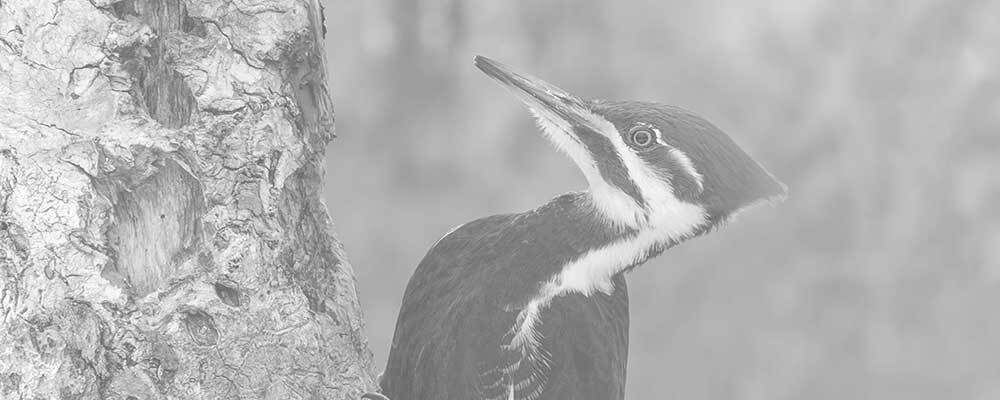
Above: A male pileated woodpecker. (FotoRequest/Shutterstock.com)

31 Jan 16:41

The Revivalists’ Music Guide to New Orleans

by Dacey Orr

“New Orleans is a music culture town,” says Revivalists frontman David Shaw. “It’s not a music business town.” What he means is that creativity and connection tend to grow organically—or at least that’s how it happened for the Revivalists when the band formed more than a dozen years ago. Jams and workshops around town (and even a serendipitous bike run-in on the street) brought the chart-topping eight-piece together in 2007, and their roots-rock music, including the 2016 hit “Wish I Knew You,” has since led them far beyond the Crescent City limits. From international tours to music festival appearances and, most recently, a recording session at Muscle Shoals for their new EP and documentary, both named Made in Muscle Shoals, the band continues to gain far-reaching momentum. But at its core, the Revivalists will always be a New Orleans band—a title they wear proudly. “You’ve got to be yourself, and celebrate your differences: That’s New Orleans in a nutshell,” Shaw says. “We all come from different musical backgrounds, different familial backgrounds, different cultural backgrounds, different religious backgrounds. There’s a lot of diversity. That’s really what makes the city special, and I think that’s what makes our band special, too.” 

Zackery Michael David Shaw, center, and the Revivalists.

With so much to see in the Big Easy, we asked Shaw to break down a few must-visit music spots for travelers passing through. Here are seven of his favorites (with a few bites to eat along the way). 


Tipitina’s 
501 Napoleon Avenue

Founded in 1977, Tipitina’s takes its name from a song by the R&B pianist Professor Longhair, who performed at the venue from its inception until his death in 1980. Today, the venue’s foundation supports music education for Louisianans of all ages—Revivalists guitarist Zack Feinburg first met the group’s drummer, Andrew Campanelli, at one of Tipitina’s Sunday workshops—and the Garden District haunt remains a favorite for Shaw. “It’s hallowed ground,” he says. “There’s really not a bad place in the house to stand and watch the show.”

Justen Williams, 343 Media

The Howlin’ Wolf
907 S. Peters Street

“The Howlin’ Wolf is a great place to go catch a show—and it was very integral in our growth,” Shaw explains, noting that the club’s management also managed the Revivalists during their early days as a band. Now, he treasures the Warehouse District venue for its eclectic lineups. “They’ll host super jams, niche out-of-town acts that only play once or twice a year, and guys from much bigger bands who come in to do side projects.” 

Rebecca Todd and NewOrleansOnline.com

The Spotted Cat
623 Frenchmen Street

Plan to make a night of club-hopping on Frenchman Street, where a two-block stretch of tiny venues keep live music ringing late into the night. At the Spotted Cat, the hopping jazz district’s crown jewel, expect old-school sounds and an intimate atmosphere. “It has the hottest jazz you’ve heard in a long time—fusion, Dixieland, straight-up, hot gypsy jazz—and people spilling out into the street,” Shaw says. Top-notch instrumentalism makes this a hotspot for aficionados of the genre, both off-stage and on. “You’re not gonna be up there performing unless you’re a real player.

Paul Broussard and NewOrleansOnline.com

The Apple Barrel
609 Frenchmen Street

Break up the trek across Frenchman Street with a bite at Adolfo’s, a Creole Italian restaurant, then venture downstairs to the Apple Barrel for a song or two. “It’s a true hole in the wall, which I just love,” Shaw says. “Some of my favorite artists play there,” including the local legends and regular performers Jack Sledge, a songwriter, and pedal steel player Dave Easley. The venue’s first-rate acoustics make it a popular spot for live recordings, too. Just be prepared for tight quarters. “It’s half the size of your living room,” jokes Shaw. “It’s very, very small. There’s room for the band and like, four people—and the band is playing on top of each other.” 

Cheryl Gerber and NewOrleansOnline.com

Maple Leaf Bar
8316 Oak Street

Tuesdays at this Uptown spot are well worth staying out on a school night for: That’s when the Grammy-winning Rebirth Brass Band has a standing gig, cranking out their signature blend of funk, hip-hop, jazz, and New Orleans soul. But the Maple Leaf’s real draw is the consistent roster of up-and-coming local talent. “You can always hear New Orleans music at the Maple Leaf,” Shaw says. “It’s hot and sweaty, and it just smells like history.” Already in the neighborhood? Fuel up next door at Jacques Imo’s, where Shaw orders the stuffed shrimp and recommends first-timers try the alligator cheesecake—seriously. “It’s famous.”


Vaughan’s Lounge
4229 Dauphine Street

For twenty years, the famed trumpeter Kermit Ruffins held down a weekly residency at this Bywater mainstay, and it’s easy to see what kept him coming back. “It’s a hidden gem,” Shaw says. “You can hear anything from jazz to blues to a brass band up in there.” Shaw recommends checking the schedule for a set from hometown heroes Corey Henry & the Treme Funktet

Zack Smith and NewOrleansOnline.com

Preservation Hall
726 Saint Peter Street

No visit to the Crescent City is complete without a trek to this beloved institution, which was established in 1961 as a haven for traditional New Orleans jazz. Home to the world-renowned Preservation Hall Jazz Band, the venue hosts shows almost every night of the year and runs programs for the next generation of jazz musicians, too. “Its history is unmatched,” Shaw says. “It’s just a special place. For the rest of your life, every time you think about New Orleans, you’ll think about the particular kind of magic that you felt inside Preservation Hall.”

Zack Smith and NewOrleansOnline.com The Preservation Hall All Stars.

The post The Revivalists’ Music Guide to New Orleans appeared first on Garden & Gun.

31 Jan 16:19

Book Freak #34: Kurt Vonnegut’s Advice For Better Living

by mark

Book Freak is a weekly newsletter with cognitive tools you can use to improve the quality of your life. Subscribe here.

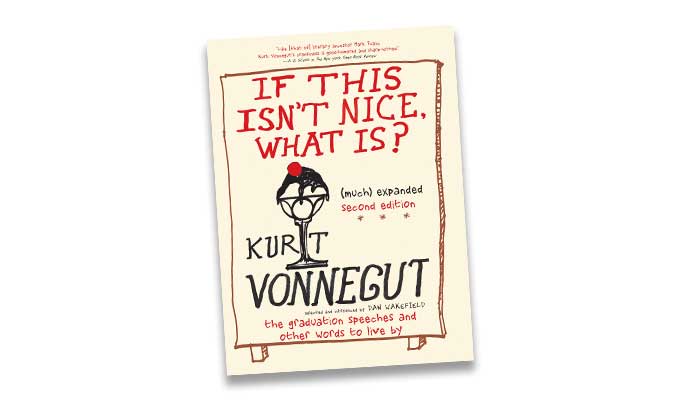
Even though he never graduated from college, Kurt Vonnegut is as well known for his commencement addresses as he is for his novels. Here are four pieces of advice from a collection of Vonnegut’s graduation speeches called If This Isn’t Nice, What Is?
Get off the internet and experience life
“Don’t try to make yourself an extended family out of ghosts on the Internet. Get yourself a Harley and join the Hells Angels instead.”
Accept the wounds of ugly ideas
“So it is not too much to ask of Americans that they not be censors, that they run the risk of being deeply wounded by ideas so that we may all be free. If we are wounded by an ugly idea, we must count it as part of the cost of freedom and, like American heroes in the days gone by, bravely carry on.”
Appreciate very simple occasions
“He said that when things are going really well we should be sure to notice it. He was talking about very simple occasions, not great victories. Maybe drinking lemonade under a shade tree, or smelling the aroma of a bakery, or fishing, or listening to music coming from a concert hall while standing in the dark outside, or, dare I say, after a kiss. He told me that it was important at such times to say out loud, ‘If this isn’t nice, what is?”
Be aware
“Notice when you’re happy, and know when you’ve got enough.”

Available from Amazon

31 Jan 15:59

7 Great Trout Flies You Can Tie Using Wild-Game Fur and Feathers

by Morgan Lyle
Materials gleaned from the woods are the source of many classic trout flies.
Materials gleaned from the woods are the source of many classic trout flies. (Morgan Lyle/)

A friend and fishing mentor in Utica, New York, used to say that if he saw a deer, rabbit, or fox while on his way to the stream, he would use a fly that had some of that animal in it. A rabbit, for example, might inspire him to fish a Gold-Ribbed Hare’s Ear. He called it omenology.

John was half-serious at best; he was usually quite strategic in his choice of fly. Still, I liked thinking there might be some kind of symbiosis between the wildlife in the woods and the trout in the streams. After all, many time-tested and beloved fly patterns rely on wild fur and feathers.

I guess it’s more likely that our fly-designing ancestors used feathers and fur they acquired when hunting because it was readily available (along with plumage and hair from domestic animals in the barnyard). But they must have enjoyed realizing that the grayish-brown fur on a hare’s face was the same color as a mayfly nymph, or that the finely banded barbs of Hungarian partridge breast feathers would make enticing, spidery fly legs.

This wild rainbow from New York’s Catskill Mountains was feeding on all-but-invisible midges when someone drifted an Usual over its head. A blob of hot orange thread and shaggy snowshoe hare’s foot fur, the Usual is a fly with origins in the woods that trout often can’t resist.
This wild rainbow from New York’s Catskill Mountains was feeding on all-but-invisible midges when someone drifted an Usual over its head. A blob of hot orange thread and shaggy snowshoe hare’s foot fur, the Usual is a fly with origins in the woods that trout often can’t resist. (Morgan Lyle/)

Grouse, pheasant, woodcock, wood duck, goose, mallard, rabbit, deer, bear, moose, fox, opossum—all and more have contributed ingredients to fishing flies over the years. Saving the hides and skins for fly-tying is a nice example of using every part of the game you take. It can also give you more options in your tying. For example, I prefer to pluck from a full hare’s mask than to use prepackaged hare’s mask fur, because I can take advantage of its palette of brown, tan, gray, and almost-black.

Prepping the parts for storage in your tying room may require a bit of research, but if you already dress your own game, you probably won’t be intimidated. Even if you don’t hunt, you can easily buy these materials, and there’s something organic and cool about tying with them. Here’s a small assortment of proven patterns that rely on some of our trout’s wild dry-land neighbors.

1. Deer Hair Emerger

The Deer Hair Emerger makes use of hare's mask and black-tailed deer hair. It works well for surface feeding trout.
The Deer Hair Emerger makes use of hare's mask and black-tailed deer hair. It works well for surface feeding trout. (Morgan Lyle/)
  • <b>Hook:</b> #12-16 Daiichi 1155 or similar curved-shank hook
  • <b>Thread:</b> Brown 6/0 (140 denier)
  • <b>Wing:</b> Coastal deer hair (black-tailed deer)
  • <b>Body:</b> Hare’s mask dubbing

The Deer Hair Emerger (DHE) is the fly I use for surface-feeding trout. I’ll tie on something else only when I see rock-solid evidence that it’s necessary. The DHE doesn’t lie horizontally on the water like most dry flies, but instead pokes its back end down through the surface, like a Klinkhamer Special. The man who popularized this style of fly, writer and artist Bob Wyatt, thinks the submerged abdomen makes it more visible and therefore effective. But this simple pattern’s other attributes can’t be denied. The buggy brown hare’s mask body, ribbed with the tying thread for segmentation, looks like the shuck of a nymph, and the sprig of deer hair seems to suggest the emerging fly’s wings and limbs.

The deer hair used here is from a blacktail deer and it’s sold as “coastal deer hair;” whitetail body hair is probably too thick. Calf tail is a pretty good substitute, and Wyatt uses snowshoe hare’s foot fur for the wing on the DHE in size 18 or smaller.

2. Frenchie

When tying a Frenchie, the author prefers to use pheasant tail barbs instead of coq de Leon feathers.
When tying a Frenchie, the author prefers to use pheasant tail barbs instead of coq de Leon feathers. (Morgan Lyle/)
  • <b>Hook:</b> #12-18 standard nymph hook
  • <b>Weight:</b> Ten wraps of .015 wire
  • <b>Bead:</b> Tungsten
  • <b>Thread:</b> Red 8/0 (70 denier)
  • <b>Body and tail:</b> Six pheasant tail feather fibers
  • <b>Rib:</b> Fine gold or copper wire
  • <b>Hot spot:</b> Pink Senyo’s Laser Yarn and tying thread

The brown, micro-fuzzy barbs of pheasant tail feathers make fantastic bodies for nymphs and wet flies. You could pretty much just wind some onto a hook and make a perfect blue-winged olive nymph, as Frank Sawyer did with his Pheasant Tail pattern. Americans gussied up Sawyer’s fly with a peacock herl thorax and various kinds of legs. Europeans modified Sawyer’s bug, too. They gave it a heavy, shiny bead and a hot spot of bright dubbing, and used it to score points in flyfishing tournaments. Lance Egan introduced this style of fly to American anglers, recreational as well as competitive, and somewhere along the line, it was named the Frenchie.

Egan’s Frenchie has a tail made of barbs from coq de Leon feathers. It looks great, but I’ve always liked the way pheasant tail barb tips imitated insect tails, so I use them instead. It works just fine. So whether you prefer the Sawyer Pheasant Tail, the American Pheasant Tail, or the Frenchie, and you hunt pheasants or know someone who does, save the tail feathers.

3. Partridge and Yellow

If it's hard to tell what surface-feeding trout are biting, try the Partridge and Yellow.
If it's hard to tell what surface-feeding trout are biting, try the Partridge and Yellow. (Morgan Lyle/)
  • <b>Hook:</b> #10-14 Daiichi 1550 or similar wet fly hook
  • <b>Thread:</b> Yellow Pearsall’s Gossamer Silk
  • <b>Thorax:</b> Hare’s ear dubbing
  • <b>Hackle: </b>Gray Hungarian partridge breast feather, barbs about as long as the hook

Upland birds are the source of what has come to be known as soft hackles—both as a material and a fly style. Grouse, pheasant, and Hungarian partridge breast feathers have barbs that wiggle and wave in the water, looking for all the world like the flailing limbs of a struggling insect. Nineteenth-century English and Scottish anglers developed the soft-hackle fly style: a slim body, a sparse feather collar from a game bird, and often nothing else. The Partridge and Yellow (and its siblings, Partridge and Green, and Partridge and Orange) are usually fished a few inches deep and are thought to suggest hatching mayflies or caddis. They can be great in those mystifying moments when trout are rising but won’t touch your dry flies. They’re also great general-purpose flies to try when there’s no more obvious choice.

4. Muddler Minnow

Just about all the materials on the Muddler Minnow are from the woods.
Just about all the materials on the Muddler Minnow are from the woods. (Morgan Lyle/)
  • <b>Hook:</b> #2-12 4X-long streamer hook
  • <b>Thread:</b> Tan 6/0 (140 denier)
  • <b>Body:</b> Gold sparkle braid
  • <b>Underwing: </b>Gray squirrel tail hair
  • <b>Tail and Wing:</b> Slips from matched turkey wing quills
  • <b>Collar and Head:</b> Spun deer hair

Not much on the Muddler Minnow doesn’t come from the woods. It’s got a wing and tail from turkey quills; an underwing of gray squirrel tail hair; and a head and collar of deer body hair. Only the tinsel body isn’t covered by fish and game laws. It’s an ancestor to modern flies like the Sex Dungeon, and it catches fish the same ways newer flies do: a bit of flash, a bulky profile, and a tightly-packed head that pushes water and announces its presence. You can use them, small and large, for trout and bass. They’re usually swum underwater and do an especially good job imitating sculpins, but a Muddler can also be a great grasshopper fly, fished on the surface. Rub in some floatant, slam it near the bank, and with any luck, you’ll see a boil instead of a sip.

Read Next: Flyfishing Tips for Catching Late-Summer Trout on Terrestrials

5. The Usual

The Usual is made from the hair on a snowshoe hare's foot, which is naturally waterproof.
The Usual is made from the hair on a snowshoe hare's foot, which is naturally waterproof. (Morgan Lyle/)
  • <b>Hook:</b> #10-16 standard dry-fly hook
  • <b>Thread:</b> Hot orange or similar to hair color, 8/0 (70 denier)
  • <b>Tail and Wing:</b> Hair snipped from the center of a snowshoe hare’s foot
  • <b>Body:</b> Thread dubbed with hare’s foot underfur

This unruly blob of a fly hatched in the Adirondacks decades ago and has been catching trout ever since. It’s made of nothing but hot orange thread and snowshoe hare’s foot—hair for the tail and the “wing,” if you can call it that, and underfur for the sparsely dubbed body. Whether the hot orange thread or the snowshoe hare is the part the fish like, I can’t say. It certainly doesn’t look like most mayflies or caddisflies. Nonetheless, it works very well. Because snowshoe hare fur is naturally waterproof, I don’t use any floatant on this fly, but I do squeeze it dry every few drifts.

6. Pine Squirrel Leech

Pine Squirrel fur is a better match than domestic rabbit fur for imitating natural forage.
Pine Squirrel fur is a better match than domestic rabbit fur for imitating natural forage. (Morgan Lyle/)
  • <b>Hook: </b>#4-8 Mustad 9674 or your favorite 4X long streamer hook
  • <b>Thread: </b>6/0 (140 denier), tyer’s choice of color
  • <b>Bead: </b>Tungsten cone, color to contrast or complement fly color
  • <b>Weight:</b> Ten wraps of .020 lead wire or substitute
  • <b>Tail and Palmered Body:</b> Pine squirrel fur (also known as the North American red squirrel)

The Bunny Leech is a great fly for big trout and other species, and the Pine Squirrel Leech is constructed the same way, except it’s made of strips of pine squirrel hide rather than domestic rabbit. The hair is much shorter. The leather is much thinner. It’s much easier to cast, and probably a better match to most of the forage fish in trout streams and bass ponds. Like rabbit fur, the soft fur of the pine squirrel moves in a most lifelike way in the water, which is probably the key to its success. The fact that it has enough bulk to “push water” and looks like a fish from below, as well as from the side, also probably helps.

Read Next: Fishing Knots: How to Tie the Six Strongest

7. Bucktail Deceiver

This classic saltwater fly comes straight from the deer woods.
This classic saltwater fly comes straight from the deer woods. (Morgan Lyle/)
  • <b>Hook:</b> #2/0-4 Mustad S74S or similar 4X long stainless hook
  • <b>Body:</b> Bucktail (the tail hair of a whitetail deer), tyer’s choice of color
  • <b>Flash: </b>Angel hair (optional)
  • <b>Thread: </b>Fine monofilament

We’ve mostly been talking about trout flies. But Jersey Shore fly guru Bob Popovics sometimes makes Bucktail Deceivers that are bigger than most of the trout I catch. The fly is a variation on the legendary Lefty’s Deceiver, but instead of having a bucktail body and a tail of rooster feathers, Bob’s fly is bucktail-only. Tying one is a bit of a project and involves a lot of messy trimming, but the result is a durable, three-dimensional fly that’s easy to cast and has great action in the water. It’s my favorite pattern for fishing Long Island beaches for striped bass and bluefish—on hook sizes 2 to 2/0, with a body and tail size ranging from 3 to 6 inches long. The best single color is white, but other colors and combinations of colors are great, too. They’re also excellent flies for large bass, northern pike, or musky, and I’ve tied them as small as size 6 for trout fishing. Pretty much any fish that eats smaller fish can be caught on the Bucktail Deceiver. Deer hunters, each tail is a fly box full of patterns. Use darker hair from the top side for the backs of your streamers and the white for the bellies. The hair also takes dye well, and from that point on, the possibilities are endless.

31 Jan 15:59

Why The Colour Of Whisky Doesn’t Really Matter

by George Koutsakis, Contributor
Dark whiskies are perceived as deep, complex, high quality. And lighter ones are shunned. That shouldn't be the case.
30 Jan 15:03

A dog owner bought a $6 million Super Bowl ad for the veterinary school that saved his beloved pet's life

While tuned into the Super Bowl this Sunday, you might see an ad for veterinary research featuring a very, very good boy. That's Scout, and here's his story. David MacNeil, CEO of car accessory manufacturer WeatherTech, found out that his golden retriever ...
30 Jan 14:59

How To Spend Two Days In Seattle

by DeMarco Williams, Contributor
Sample as many cultural and culinary gems as possible around the Emerald City with Forbes Travel Guide's 48-hour itinerary.
27 Jan 19:49

Buying A Blender? Here’s What You Should Know

by Andrew Chapados
Blender shopping is more complex than you may think. Here's a guide to make sure you get exactly what you need, for whatever you blend.
27 Jan 19:42

REVIEW: "THE WHISPERERS" (!967) STARRING EDITH EVANS; KINO LORBER BLU-RAY RELEASE

by nospam@example.com (Cinema Retro)


“ARE YOU THERE?”

By Raymond Benson

Writer/director/actor Bryan Forbes was a major force in the British film industry for several decades, having started in the 1950s at times as an actor in films and then in other instances as a screenwriter, and then he moved into directing (his astonishing directorial debut, Whistle Down the Wind, was released in 1961). Forbes made several good pictures, the most famous probably being The Stepford Wives in the 70s.

Forbes also had connections to the world of James Bond. Forbes’ first screenwriting duties were for Albert R. Broccoli’s Warwick Films in the 1950s. When Forbes began writing novels, his literary agent was none other than Peter Janson-Smith, who had been Ian Fleming’s agent. Astute Bond fans will also spot other connections in The Whisperers, such as a John Barry score, and the appearance of Robin Bailey, the actor who, in the pre-credits sequence of You Only Live Twice, plays the Foreign Secretary mediating between the Russians and the Americans (“May I ask what motive our Russian friends would have for wishing to destroy American spacecraft?”).

The Whisperers, released in 1967, was a solid art-house hit starring Dame Edith Evans, earning her a third Oscar nomination in the four years between 1963-1967, this one for lead actress, the other two for supporting (for Tom Jones and The Chalk Garden). While she didn’t win the Oscar for The Whisperers, she did win the BAFTA, the Golden Globe, the New York Film Critics Award, and the National Board of Review Award. Evans was a major star of the British stage, but she made only a few films very early in her career (mostly the 30s) and late (the 60s).

The story is rather dreary and harkens back to the “kitchen-sink dramas” of the late 50s/early 60s that came out of Britain. It’s shot in black and white and focuses on a poor, working class neighborhood in a small town in the north of England. Margaret Ross (Evans) is old, lives alone, is on her way to a case of Alzheimer’s (a term not known then), and is delusional. Every time she enters her flat, she calls out, “Are you there?” because she hears voices in the pipes and walls. The place is a dump full of junk, stacks of newspapers and rotting books, and clutter that would scare anyone away. Her scoundrel husband, Archie (Eric Portman), ran off two decades earlier, and her grown son, Charlie (Ronald Fraser), is a crook who is sent to jail shortly after hiding a stash of stolen cash in his mother’s flat. Mrs. Ross continually lies to the National Assistance agent, although she probably believes the stories she tells. Her discovery of Charlie’s money changes things, though, and before long, estranged husband Archie returns to take advantage of the woman. Things do not go well.

As a statement on the condition of poverty in England at the time, The Whisperers is a potent social problem film. Evans indeed delivers a powerful performance as a paranoid, frightened woman at the end of her rope. Tellingly, the National Assistance was revamped into the Supplementary Benefit around the time the movie was made.

Kino Lorber’s 1920x1080p high definition restoration suitably displays Gerry Turpin’s monochrome cinematography that illustrates the bleakness of Mrs. Ross’ world. There are English subtitles for the hearing-impaired, as well as an audio commentary by film historian Kat Ellinger. The only supplements are trailers for this and other Kino Lorber titles.

The Whisperers might be depressing, but it’s also example of fine British talent in the form of both Forbes and Evans at the top of their games.

CLICK HERE TO ORDER FROM AMAZON

27 Jan 15:43

Vino Nobile Royalty - Boscarelli And Poliziano

by Tom Hyland, Contributor
Vino Nobile di Montepulciano is one of Tuscany’s most iconic and historic red wines.
26 Jan 17:24

These Science Comics Were Made To Be Read On Smartphone Screens

by Eva Amsen, Contributor
In Science We Trust is new series of comics all about the lives of historic scientists and it was exclusively designed for reading on smartphones and other small devices.
26 Jan 17:22

3-Year Old Boy Becomes the Youngest Member of Mensa

by John Farrier

Do you have an IQ in the top 2% of the human population? If you do, you should apply to join Mensa, the international organization of geniuses.

Its youngest member is 3-year old Muhammad Haryz Nadzim, a Malaysian toddler who lives in the United Kingdom. He recently joined after scoring 142 on an IQ test. That's in the 99.7th percentile for the test. The New York Post quotes his mother, Nur Anira Asyikin:

Asyikin, an engineer living in the northeast city of Durham, said the family knew Nadzim was special even before Mensa took notice — and she calls him her “little brainbox.”
“We are so proud and happy for Haryz,” Asyikin said. “He’s not only good at academics, but he’s just like other children who love playing and growing up. We know he will give so much back to society in the future.” [...]
“He’s very much your typical 3-year-old,” Asyikin said. “He really loves painting and reading books, really anything arts and crafts. He loves playing with Legos and Play-Doh especially.”

-via Marginal Revolution | Photo: Facebook

26 Jan 17:20

“Super Bowl” of python removal draws 750 participants to The Everglades

by Jodie Wagner
Eighty invasive pythons were removed from The Everglades as part of the Florida Python Challenge™ 2020 Python Bowl. A 62-pound Burmese python took the top prize in its category Saturday at the Florida Python Challenge™ 2020 Python Bowl. The hefty ...
25 Jan 13:06

Can You Name The Seven Wonders Of The World? Most People Can’t Name All Seven

by James Asquith, Contributor
What are the seven wonders of the world? Seven Ancient wonders of the world. What are the Seven new wonders of the world? It may be more tricky than you think to name all seven though—until of course reading this article. From the Great pyramid to the Great Wall of china, what are the seven wonders
24 Jan 22:28

Minut Smart Home Alarm

There are a lot of DIY home security systems on the market. Nearly all of them use cameras. The Minut is a privacy-focused option that won't be looking over your...

Visit Uncrate for the full post.
24 Jan 22:27

Artist Flooded with Requests After Offering to ‘Remove Your Ex’ for $10 Per Photo

by DL Cade

An artist on Twitter struck retouching gold recently when she offered up a simple service: she’ll edit your ex out of any photo you send her for just $10 per pic. She’s since received over 800 replies, forcing her to raise her rate… to $15.

The artist is Twitter user @hexappeaI, and the whole thing started with the seemingly innocuous tweet below. “For $10 I will edit your ex out of your photo,” reads the Tweet, alongside a sample before-and-after photo. “Serious inquiries only.”

Typically, her Tweets get a few likes, retweets, or replies each, rarely hitting double digits in any one category. But a lot of people must want to scrub the memory of their ex from their photos, and a lot of those people must spend time on Twitter, because this particular tweet has received over 160K likes, 18K+ retweets, and over 800 replies as of this writing

Obviously not every one of those 800 was a request for Photoshopping, but plenty of queries came in, and satisfied customers soon started posting their results:

Another retoucher even got in on the action, jumping in on the replies with this freebie:

Of course, not all of the Photoshop jobs were perfect. The example she herself posted left in a shoe, for example:

And a few responders decided to use the opportunity for a little bit Soviet history lesson on the original “please remove this person from my photos” request:

But overall, people seem pleased with the results… which is particularly impressive given that @hexappeaI is doing all of this using an app on her phone. No Photoshop skills required:

Sadly, business is so good that she’s had to raise her rate. The $10 early bird special has run out, and new inquiries will need to pony up 15 bucks to get their ex removed. No worries though, if you got your request in before the update, she’ll grandfather you into introductory price:

As absurd as this all sounds, you have to give credit where credit is due: a simple tweet and a smartphone app has probably earned her hundreds of dollars. Laugh or scoff if you must, but she saw a gap in the market that needed filling… Content Aware Filling, that is.

(via Acid Cow)

24 Jan 16:23

How to Soak Up New York City in Scorsese’s ‘The Irishman’ Style

by The MNC Editorial Team
How to Soak Up New York City in Scorsese’s ‘The Irishman’ Style
Bamonte’s. Nacho La Puente /