Shared posts

29 Apr 19:22

All I Need to Know I Learned from Photography

by DL Cade

As any photo enthusiast will tell you (sometimes without you even asking), the benefits of photography go far beyond the ability to capture a moment or immortalize an expression. It goes beyond a mere understanding of color, or composition, or the ability to see the extraordinary hiding inside of an ordinary scene.

For those of us lucky enough to stumble into this all-consuming hobby, everything about the way we look at the world has changed.

Dorothea Lange said it simply: “A camera teaches you how to see without a camera.”

But today I want to go a step further. Looking back over the almost-decade that I’ve spent taking pictures and writing about people who take pictures and working for the people who make the cameras that other people use to take pictures, I realize that photography has taught me far more than “how to see.” From the cliché to the mildly profound, for better or worse, some life lessons make the most sense to me—in fact, they only make sense to me—when translated into the language of exposure, composition, and form.

So I sat down one day not long ago on an empty red eye from Atlanta to Seattle to try and get a few of these lessons down on paper. The list went something like this:

1. A person’s eyes will tell you far more than their words, and faster.

2. The lens through which you see the world is equally capable of revealing and distorting reality.

3. Shift your point of view often. The same exact situation can look drastically different with even the slightest change in perspective.

4. There’s a world of difference between looking and seeing.

5. Pay attention: some of the most spectacular moments come and go in the blink of an eye.

6. Sometimes the best you can do is find the right place and wait around for the right time. This is a great excuse to spend countless hours in beautiful places.

7. Keep your life (and compositions) uncluttered.

8. It’s our imperfections that make us human. Remove or conceal too many of them and you’ll fall into the uncanny valley.

9. Every success is the result of countless hours of trial-and-error. You’ll be a much happier person if you learn to expect 1,000 failed attempts for every keeper.

10. Even the most uninspiring circumstances can yield stunning results if you know where, and how, to look. When in doubt, get closer.

11. There are two types of people in the world: those who argue endlessly about the “right” way to do something, and those who are actually doing that thing. Try to be the second type.

12. The most creative people are also the most insecure; they doubt, question, and challenge themselves constantly. More often than not, over-confidence is synonymous with a lack of self-awareness.

13. Raw reality usually needs a little bit of editing before it makes sense. But never forget that you control the sliders.

14. You’ll be amazed how quickly your life can improve when you put in the effort to “get out of Auto.”

15. The whole point of a negative is to turn it into a positive.

That’s what I came up with. I’d love to hear what you guys—especially those with many more years under their belt—would want to add.

As I see it, the value in any hobby, profession, or passion isn’t limited to the results you produce or the accolades you accumulate. In fact, I’d argue that these things make up the minority. The real gift of picking up a camera comes in the form of people you’ll meet, experiences you’ll sign up for, perspectives you’ll earn, and, yes, maybe even a few life lessons you’ll learn along the way.

Once in a while—though certainly not often enough–I try my best to remember that.


All credit for this idea goes to Robert Fulghum, whose 1986 essay and book “All I Need to Know I Learned in Kindergarten” remains one of the most life-affirming bits of simple wisdom this writer has ever read.


About the author: DL Cade is an art, science and technology writer, and the former Editor in Chief of PetaPixel. When he’s not writing essays like this one or reviewing the latest tech for creatives, you’ll find him working in Vision Sciences at the University of Washington, publishing the weekly Triple Point newsletter, or sharing personal essays on Medium.


Image credits: Header photo by Eddie Junior, CC0.

21 Jan 22:44

Moto Guzzi Introduces Centenario Editions of the Revised V7 and V85 TT Models – UPDATED With Pricing and Availability (Bike Reports) (News)

by Dirck Edge
The new Moto Guzzi V7 was announced earlier with a displacement increase to 850cc, among other changes. The V85 TT Adventure model receives some minor updates for 2021, including tubeless tire compatibility and a small bump in low-end and midrange torque. Both of these revised models will also be getting limited-edition Centenario editions. The changes […]
17 Jan 01:58

18 free movies to stream right now: Die Hard, Django Unchained, The Big Short, more - CNET

by Rick Broida
You don't need a subscription to Netflix, Hulu or HBO Max to enjoy some genuinely great films, including several Oscar winners.
16 Jan 00:51

Meet the Tequila Train, a Luxe Ride to Mexico That Serves Bottomless Tipples of Your Favorite Agave Spirit

by Rachel Cormack
16 Jan 00:32

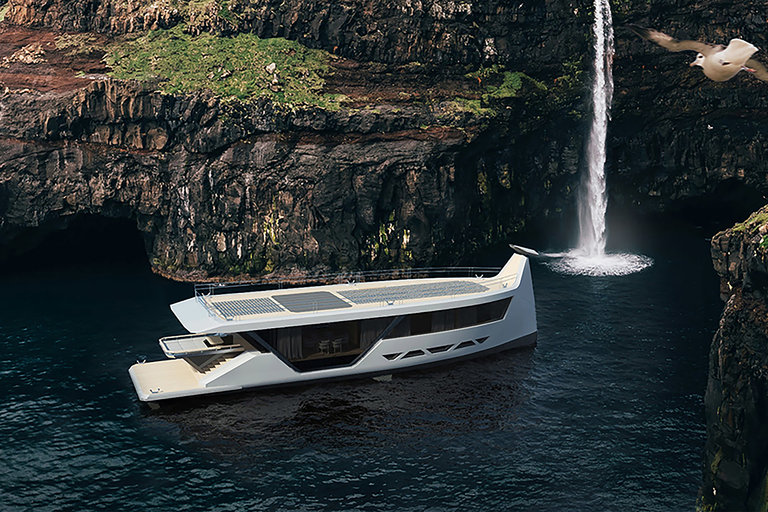
Drakkar S Smartyacht Concept

Aspiring sailors will be able to leave the dock soon than expected with the Drakkar S Smartyacht. The 85-foot concept is equipped with an autopilot system that is controlled by...

Visit Uncrate for the full post.
13 Jan 13:47

World’s Poorest President


Tags: president, uruguay, charity, Jos\u00e9 Mujica

10424 points, 560 comments.

13 Jan 13:45

This dog's incredible technique to retrieve its ball from a tree


Tags: Dog

522 points, 29 comments.

13 Jan 13:42

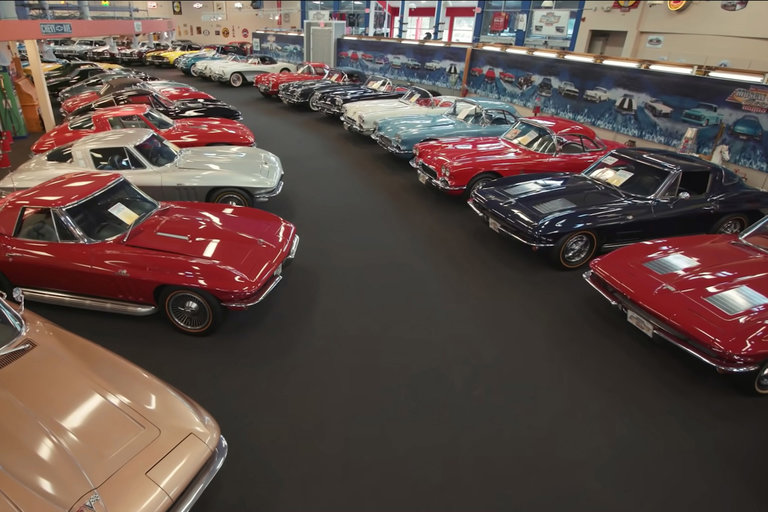
Muscle Car Museum Auction

Florida construction and real estate developer Rick Treworgy's first love was automobiles. He started wheeling and dealing at age 14, and although his career was in a different area, he...

Visit Uncrate for the full post.
13 Jan 06:00

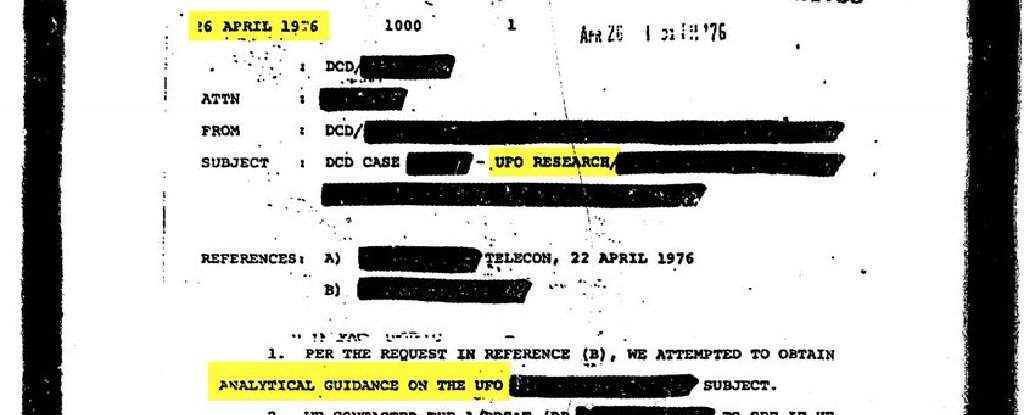
Every Single Document The CIA Says It Has on UFOs Is Now Available to Download

by Peter Dockrill

Get saving.

12 Jan 21:28

This Company is Making Wholly Original, Affordable, Customizable Medium Format Film Cameras

by Jaron Schneider

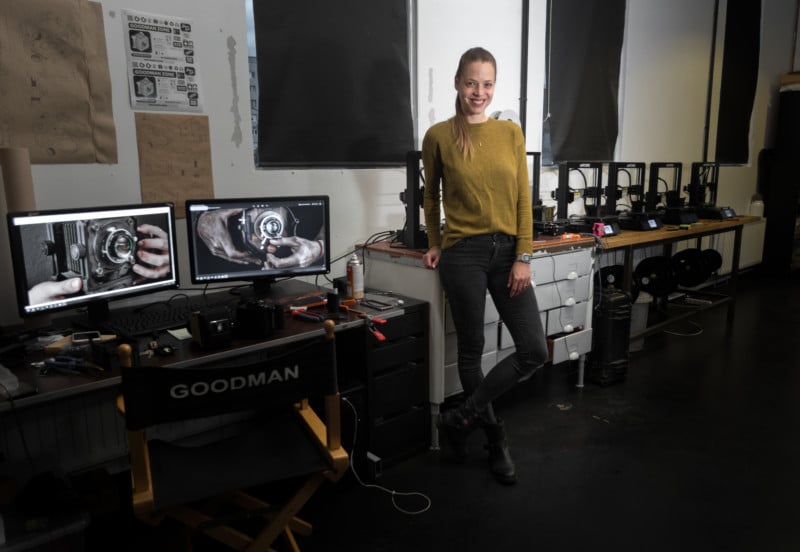
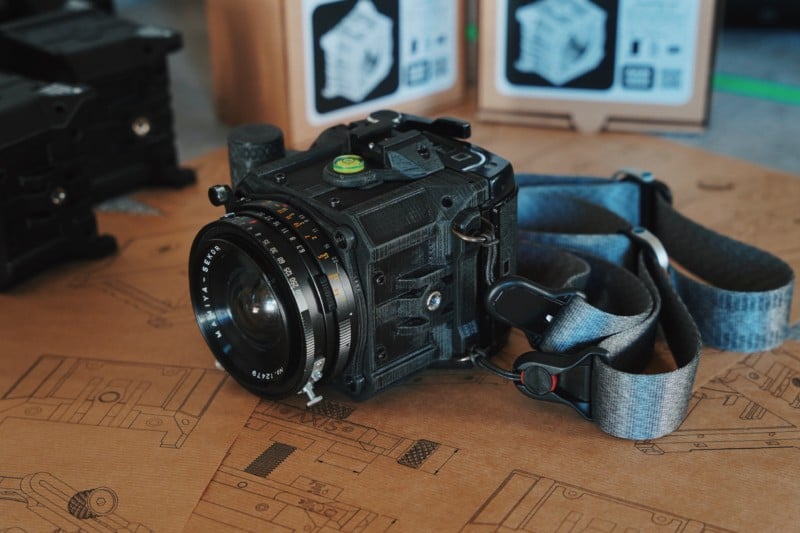
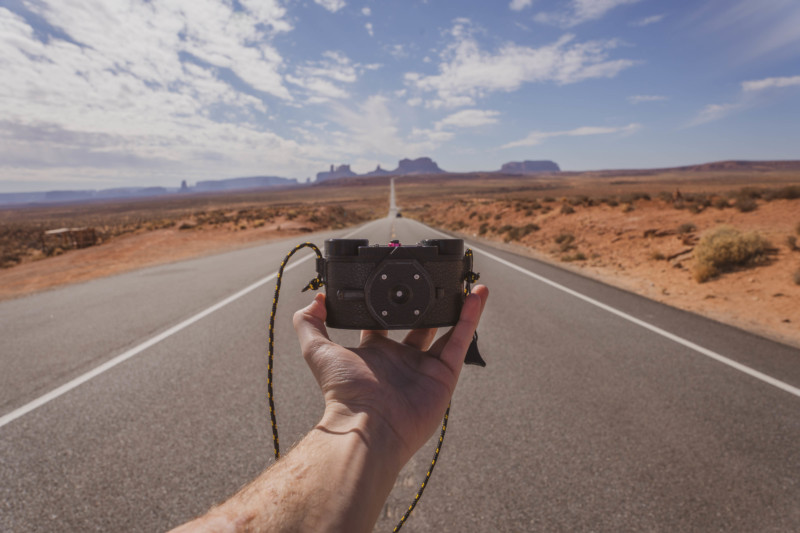
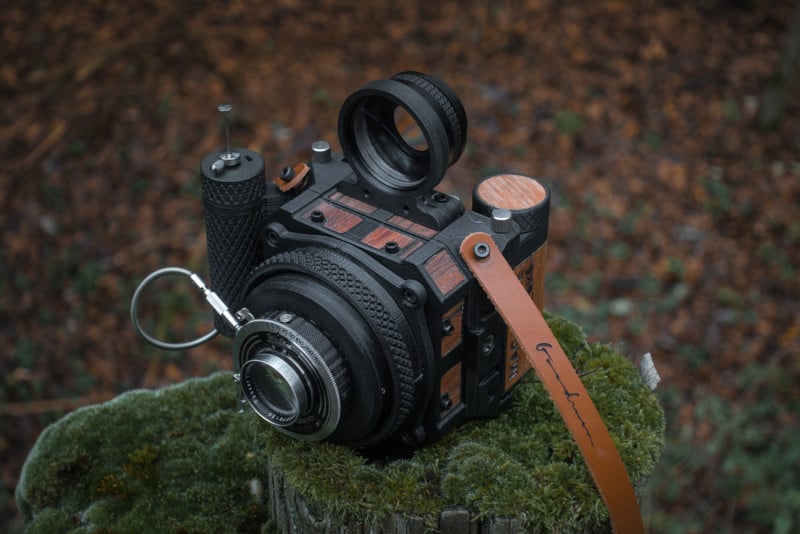
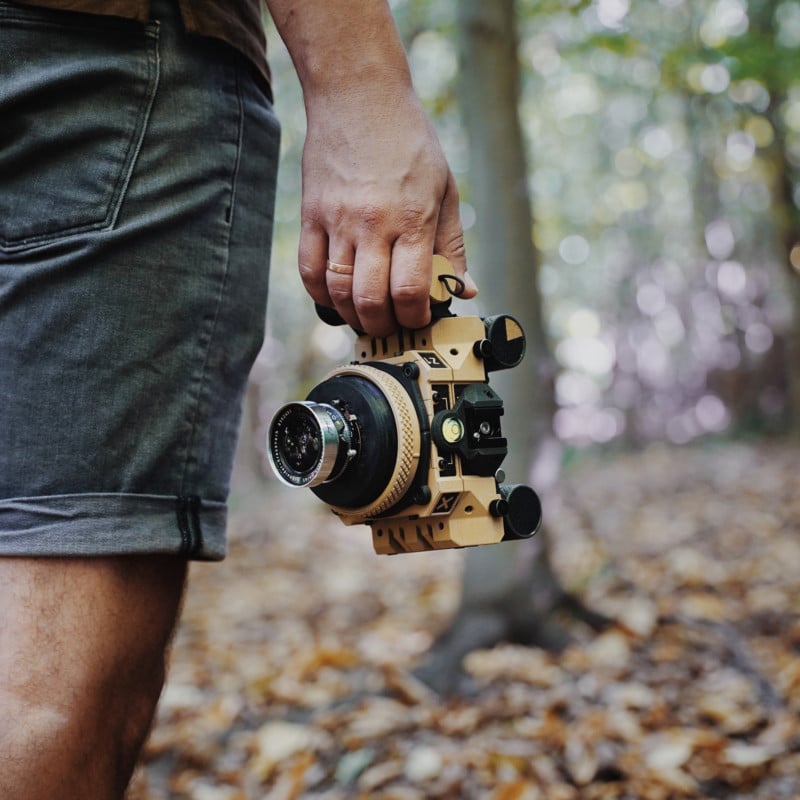
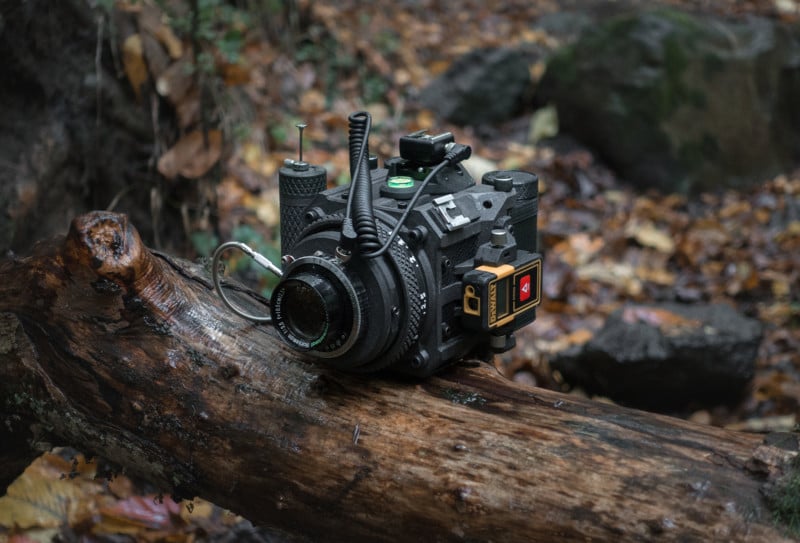
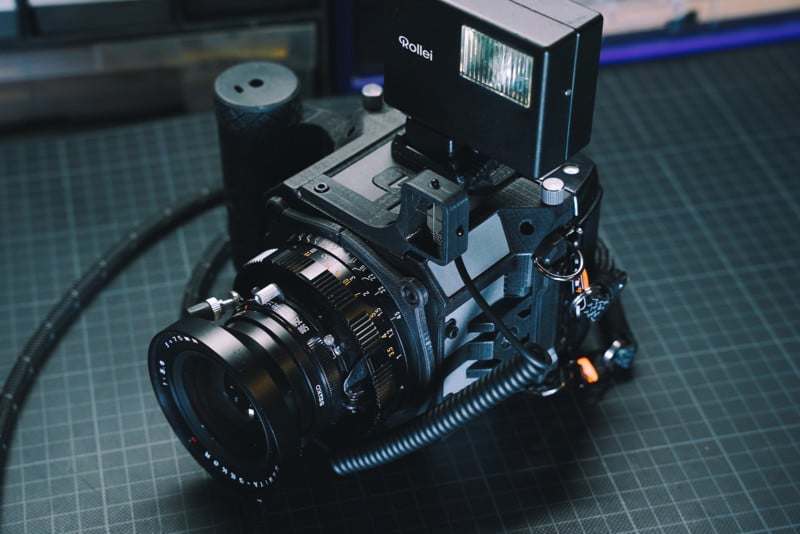
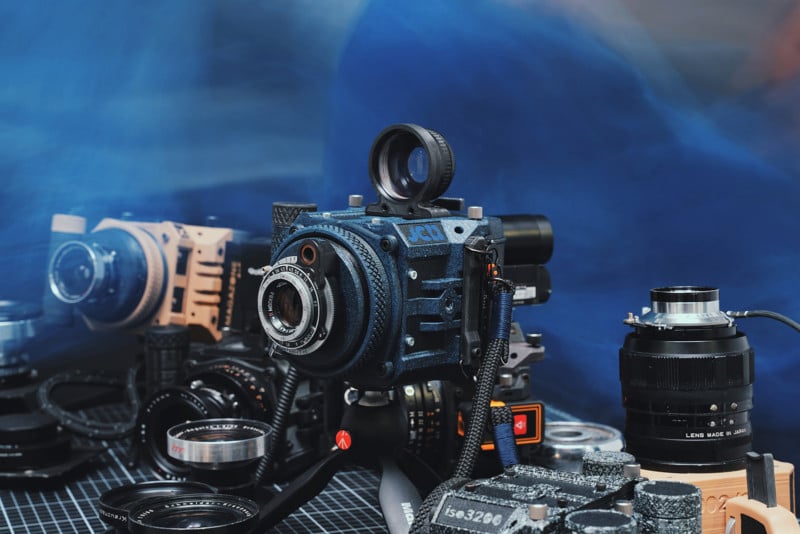
In 2016 and again in 2018, PetaPixel featured the work of Dora Goodman, a woman who was adding hand-crafted elements to analog cameras. Fast forward to 2021, and Goodman has gone steps further and finally created cameras of her own design.

When Goodman started her project almost five years ago the business was built around reskinning cameras with wood, leather, or any special material. Though a handcrafted process, the cameras were still Nikon, Pentacon, Hasselblad, or whichever brand but were just redesigned aesthetically.

Goodman and her team always dreamt of being more than a reskin service.

“We always had the dream to leave a mark in the analog photo industry and we really wanted to create actually our own cameras,” she tells PetaPixel. “Our first trials were the wooden cameras (I mean totally made out of wood), which we still love, but then we realized that is a huge amount of work and very slow, so we could not build a business only on this, even if our community loved it.”

In recent years, 3D printing has become more accessible at a low cost, and Goodman decided to look into that as a possible way to expand her business.

“We started to experiment and it turned out that this technology is working great for us! It resulted for us in cameras that function perfectly and also look great,” she says, smiling. “It is a continuously developing technology and we love that it is so flexible, it almost has no boundaries – people are printing everything from organs to houses.”

Using 3D printing has allowed Goodman and her team additional advantages over building everything from wood by hand.

“Thanks to this method, we can continuously upgrade our cameras, anytime we have a new idea we make a design, print it and in a few hours we see if it is working or if it looks good,” she explains. “It’s easy to tweak and fine-tune our products.”

No longer is it a challenge to find specific parts.

“We love that when we have an idea that we need something special accessory for a camera, we do not need to hunt for that, but we can design and print it. It is so cool! The process is fast, effective, and cost-efficient, which can result in the affordable cameras we sell.”

Goodman is focusing her business on 3D printed cameras now, and has released two custom, unique Goodman originals that she hopes will let them leave their mark on the analog photography world.

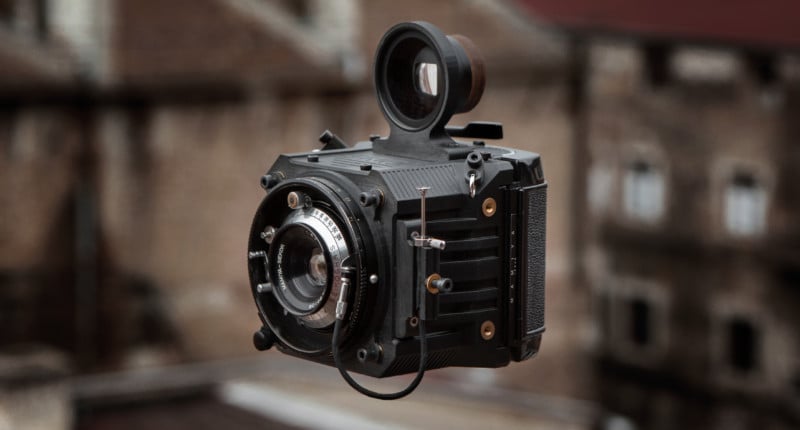
The Goodman Zone Medium Format Camera

Launched in October of 2019, the Goodman Zone Camera is available open-source but also it is possible to order from Goodman’s online store. Goodman says that she and her team understand that it is not always easy to find new or used medium format film cameras in good condition and also at a good price, so when they designed this camera the goal was to provide a professional and affordable medium format camera an entry-level price to give everyone the opportunity to try out medium format photography.

Processed with VSCO with c8 preset

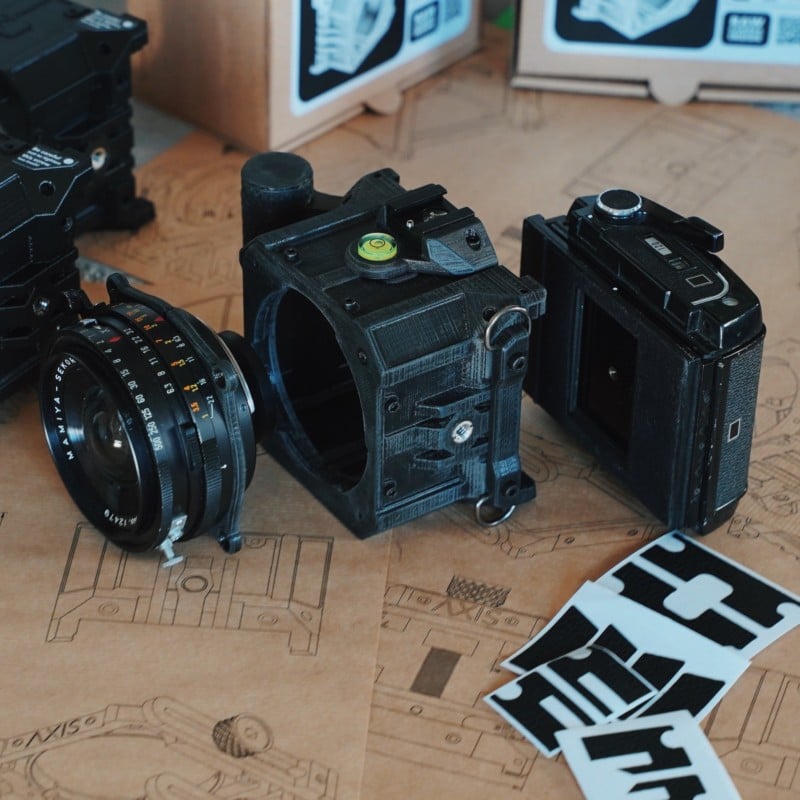
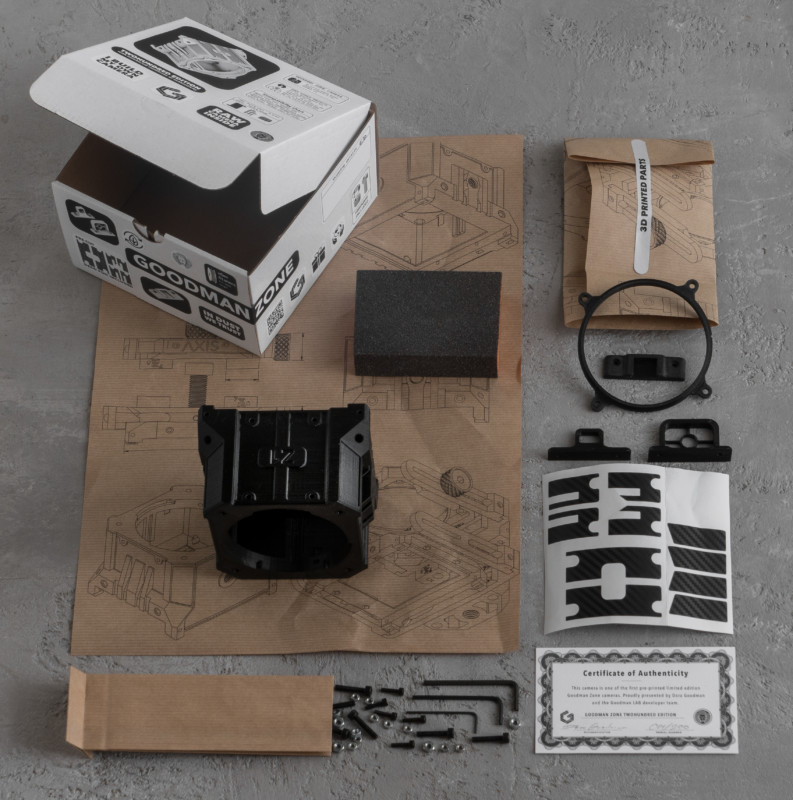
“Originally, we designed it to work with the Mamiya RB67 back and Mamiya Press Lenses. In the first year it was available only in a DIY kit, meaning that all the parts are pre-printed and all the necessary hardware, tools, etc are included in the package, and you just need to sit down, take some time for yourself and assemble your own camera,” she explains.

“Building your own camera is such a special process, we definitely recommend to every photographer to experience this joy it gives, and that special bond you will have with this camera.”

As Goodman alluded to, thanks to the process of how they make their cameras, building out a design never has to be a “finished” process.

“Since then we are always developing the Zone, we launched a lot of small accessories, and in the last few months, the biggest development was a helical lens adapter with ground glass (also 3d printed) that makes it possible to attach a wider variety of lenses now to the Zone. Also now in January we are launching the Goodman 6×6 Magazine, a 3D printed back that fits our Zone, so from now it will have an alternative to the Mamiya rb67 back.”

Just in the last month, Goodman launched the ability for customers to order pre-assembled cameras, as they realized not everyone has the time and patience to build their own.

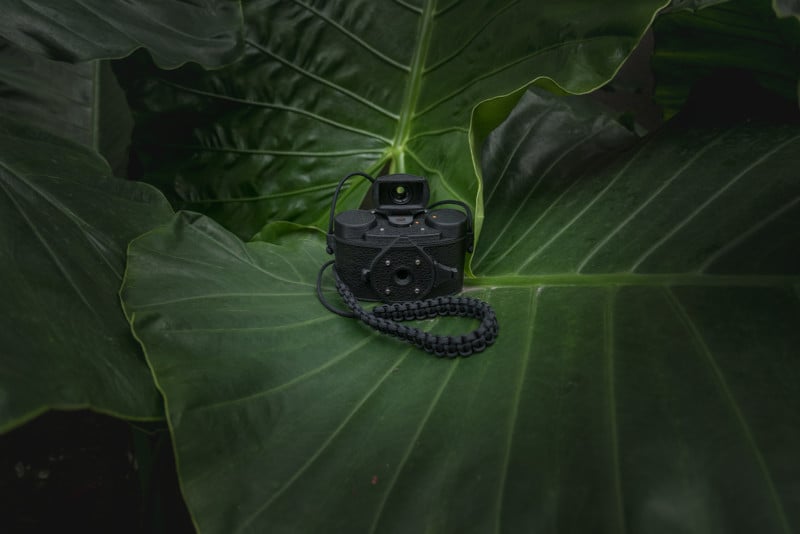
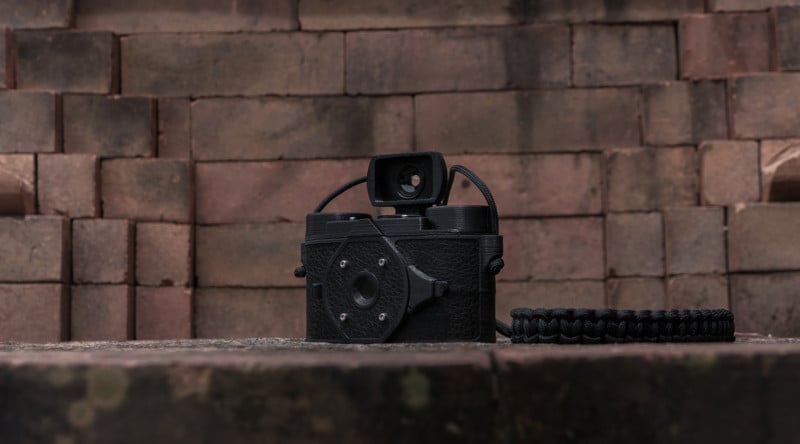
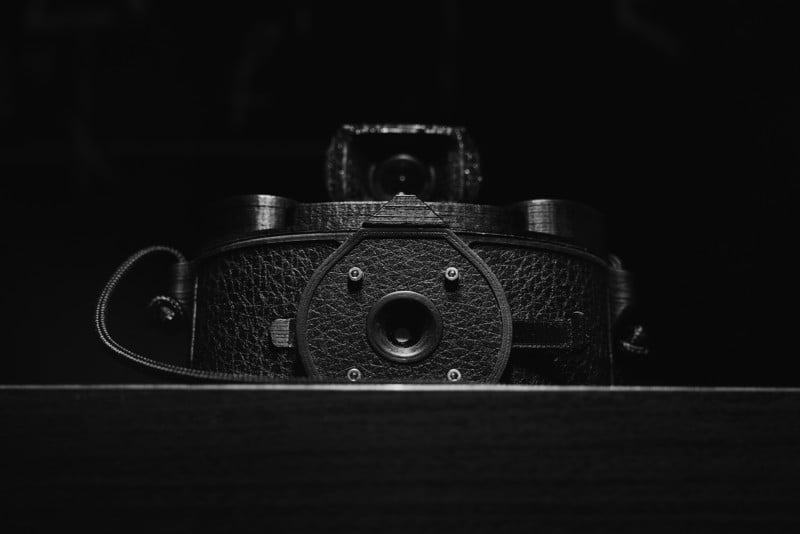
The Scura 3D Printed Pinhole Camera

Goodman’s second camera offering is available in 35mm or 6×6 formats and was launched in March of 2020. Just like with the Zone, the Scura is available as open-source so you can build it yourself, a DIY kit or, now, as a fully assembled camera and is recommended for both beginners and advanced photographers who are looking to experience the unique world of pinhole photography.

The tiny camera obscura was designed with a special curved back, so the light can reach the film evenly, which results in distortion-free images. Furthermore, it has a laser-drilled pinhole plate with a microscopic accuracy that is a perfectly even and smooth cut,” Goodman says. “It is a fun yet powerful pocket camera for capturing moments. A camera with a simple, easily manageable mechanism and minimalist design. The Scura pocket camera is tiny and super lightweight (only 0.2 kg) so it easily fits into your pocket in any condition.”

Custom Cameras

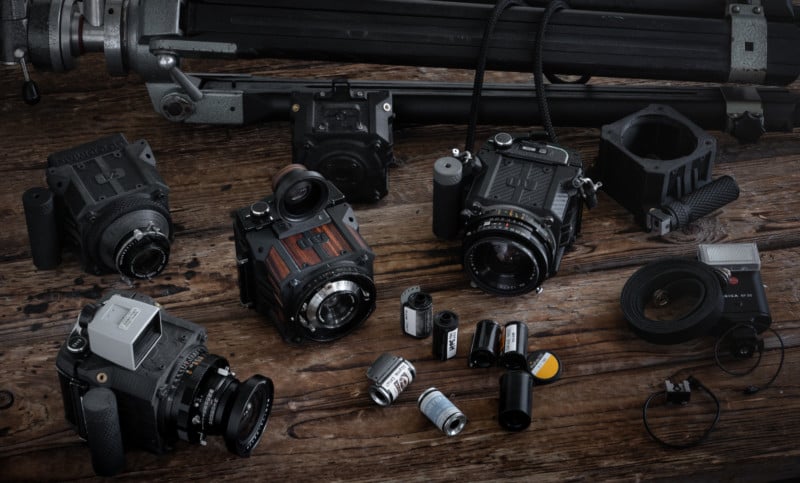
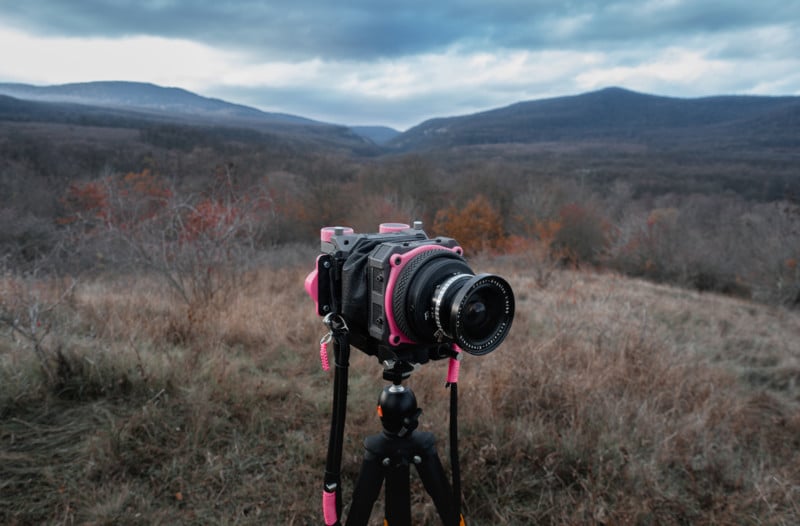
For 2021, Goodman says their goal is to create custom cameras based on the Goodman Zone body.

“We get a lot of requests from our community to build them a whole setup so they do not need to hunt lenses and backs. We want to make each of these requests special with our ideas like a special accessory, color, wooden inlay, etc, so all will be different and there will be only one from these custom editions.

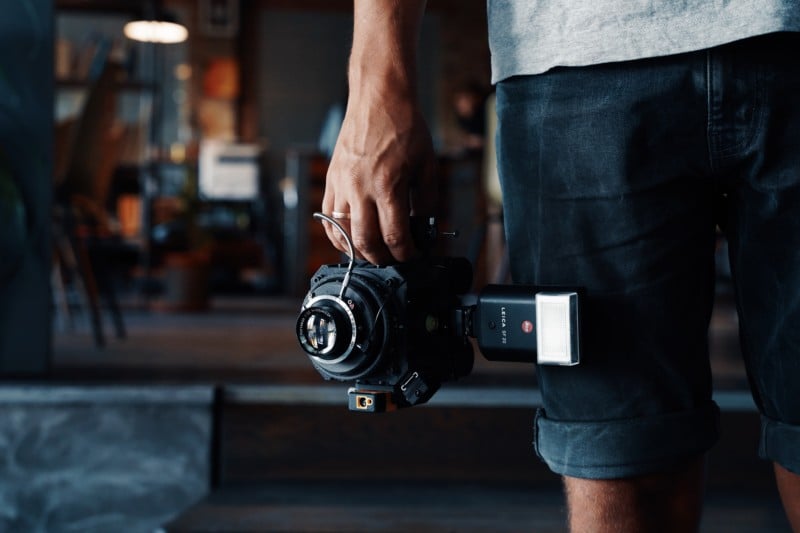
Below are a few examples of custom cameras Goodman and her team have already completed.

“We love combining different materials and also we love to experience with the endless possibility of 3D printing,” she says.

In addition to the cameras, Goodman says they enjoy tinkering with other interesting gadget ideas.

“On the side, we always experiment with 3D printing and we love to create any kind of gadget that actually comes into our mind. For example, we developed a 3D printed gimbal that you can use with your smartphone and with a plastic bottle, or our recent innovation is a cold brew coffee maker (that is not launched yet but will be in a month), that is such a cool thing, and does actually make really great coffee!”

Goodman’s choice to not only offer cameras as a DIY or fully-assembled but also as open-source for anyone to build shows a dedication to making photography available to anyone, anywhere, simply for the love of the craft.

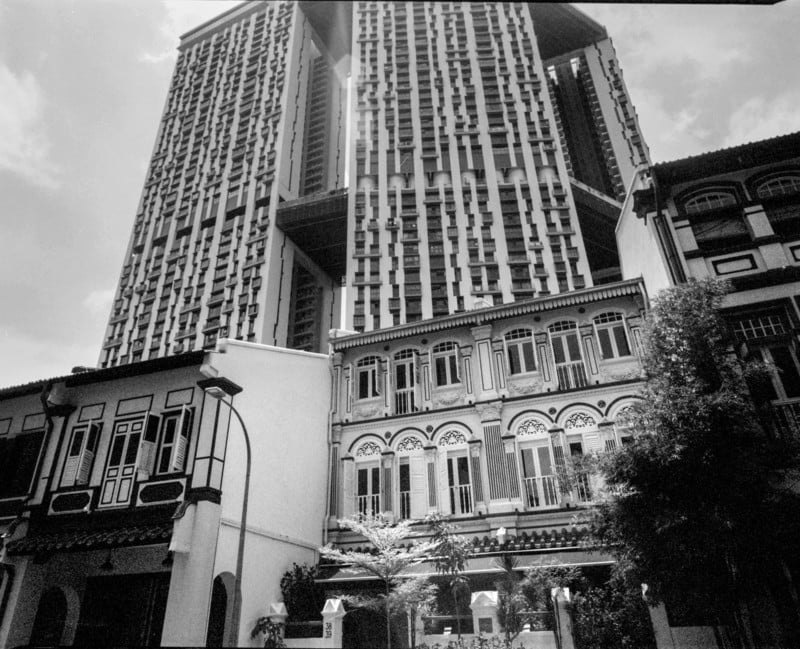
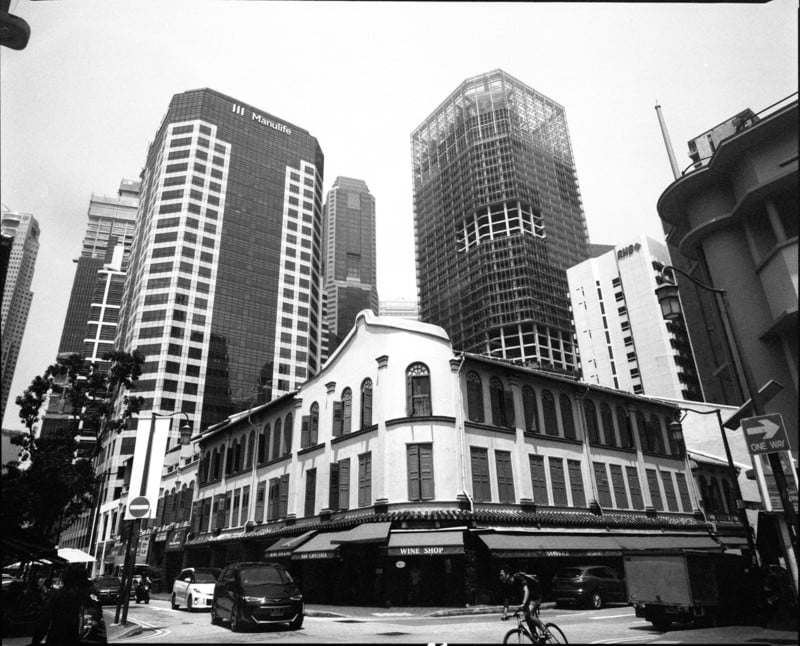
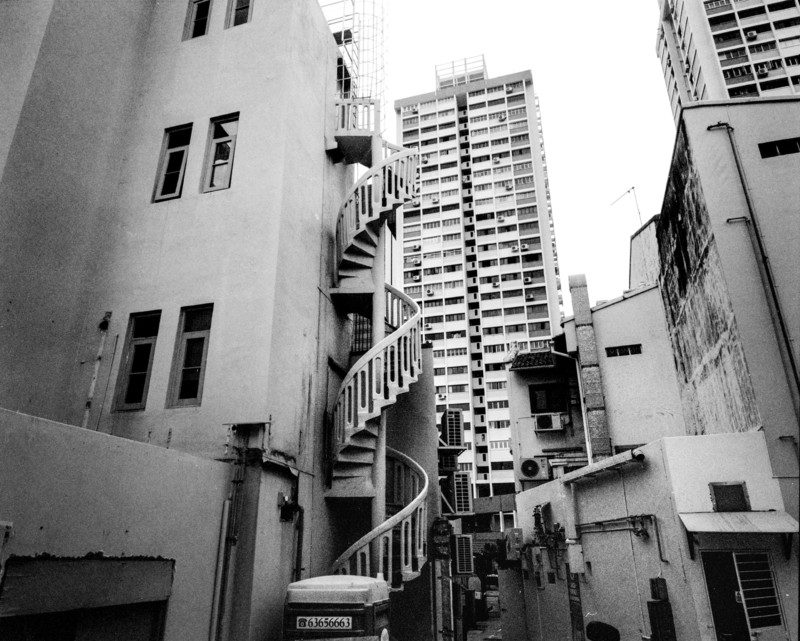
Below, Goodman provided a set of images taken with the Goodman Zone camera:

To look at the full Goodman camera offerings, check out their online store here. You can also follow Dora and her work on Instagram.


Image credits: All photos courtesy Dora Goodman and used with permission.

12 Jan 18:18

School Evacuated After Student Brings Antique Dinner Plate

by Lenore Skenazy
dreamstime_xxl_38294269

The students were evacuated to the football field as Hazmat teams rushed to the scene. The local prosecutor was alerted, as were the police. Responders entered the building and went room by room. What calamity beset Haddon Township High School in New Jersey's Camden County last week? A bomb threat? A gas leak? Anthrax?

Worse. Dinnerware.

Specifically, Fiestaware, the colorful plates that took the U.S. by storm during the Great Depression. A sophomore had brought a quarter-size piece to his science class, because some of the plates were originally glazed with a red color that contained uranium oxide (at least until our war effort required uranium for the atom bomb, at which point the government confiscated them). The student had received a Geiger counter for Christmas and was going to do a little experiment in class.

That was on January 4. His teacher thanked him for bringing in the sample. By January 8, someone had determined the plate was a biohazard.

At 11:15 a.m., The Chery Hill Courier-Post first reported, the students were evacuated. The sophomore (whose name was not disclosed to the media) wasn't one of them because, due to COVID-19 protocols, he attends school in person only on Mondays and Thursdays.

But he did not go unnoticed. By 2:00 p.m. there were six vehicles, lights flashing, in front of the student's home, including one from the Camden County Prosecutor's Office, according to The Philadelphia Inquirer.

The teen emerged to explain that the whole response, "Was a dramatic over-exaggeration… I gave them a quarter-size [piece of plate] that was enclosed in plastic so it couldn't be tampered with that gave off less radiation than most things you can find in an antique store. It was intended to be used as a source for calibrating Geiger counters."

Instead it became a source for calibrating school board over-reactivity. While the evacuated kids were allowed back into school after half an hour, the school board released a notice that a student had brought a "potentially dangerous substance" into the school.

If I were a mom there, I'd assume the teen brought in a vial of ricin—not a chip off the most collected dinnerware in America.

No less dramatically, Haddon Township Superintendent Robert Fisicaro issued a statement announcing, "No injuries were reported."

The prosecutor nonetheless asked the public to contact the police "if you have any information that could help this investigation."

I actually do have some information: "There is no record of anyone ever becoming sick from manufacturing or using radioactive Fiestaware," according to ScienceNotes.org.

The whole incident calls to mind the evacuation of Totino-Grace High School in Fridley, Minnesota, several years back because of a "chemical spill."

That is, a student had broken a thermometer.

And frankly, both these incidents remind me of the kabuki concern shown by fire and police departments when a child is discovered waiting in a car for a short time, neither freezing nor boiling, while their parents run an errand. Here's one example: A child who snoozed for 20 minutes while his parents bought Christmas lights was rushed to the hospital in an ambulance, even though everyone could see he was fine.

Sometimes, a wait is just a wait, and a plate is just a plate.

12 Jan 18:18

Herd Of Elk Running Along Beach Captured In Wild Video

by Lauryn Overhultz
'What the heck'
12 Jan 17:41

The Land Cruiser Is Going Away, But Lexus May Have Big Off-Road Plans

The Land Cruiser leaves America in 2021, but Toyota's luxury brand seems poised to pick up the off-road torch.

12 Jan 17:40

6 Ways to Measure Your Body Fat

by Brett and Kate McKay

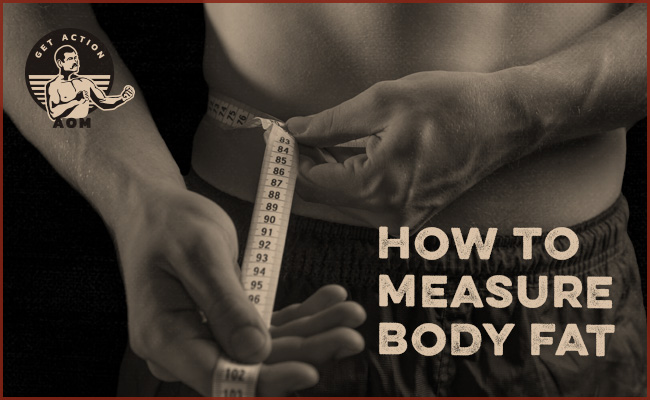
man measuring waist with tape measure.

If you’re like a lot of dudes, your goal for the coming year is “to lose weight.”

Really though, you don’t want to lose weight, you want to lose fat. And this distinction matters because it relates to how you’re going to measure progress towards your goal. 

The most common way to measure fat loss is with a garden variety bathroom scale. But the number on a scale represents your overall body weight, which includes not only your fat, but also your muscles, bones, organs, and lots and lots of water.

Because a scale doesn’t only measure fat gain/loss, it doesn’t always give you an accurate picture of your progress. You may be feeling and looking trimmer, but find that you’ve gained a couple pounds when you hop on the scale. So have you gained fat, or does this added weight represent a gain in muscle or water? 

After a weekend of eating salty restaurant food, you can put on a few pounds of impermanent water weight that you’ll shed in a matter of days.

If you’ve been putting on muscle, which is heavier than fat, it’s possible to look like you’ve lost weight while actually gaining it.

Given these fluctuations and inaccuracies, it’s useful to move beyond the standard scale and isolate and track the measurement of your body fat percentage alone. Below we’ll give you the rundown on the different methods that can be used to do so.

What Should My Body Fat Percentage Be?

Before we get into how to measure your body fat percentage, let’s talk about the number you should be aiming for. You’ll find different charts out there giving you breakdowns of healthy-to-unhealthy body fat percentages. Here’s the body fat percentage chart from the American Council on Exercise:

Description Body fat % (women) Body fat % (men)
Athletes 14%–20% 6%–13%
Fitness 21%–24% 14%–17%
Acceptable 25%–31% 18%–24%
Obesity >32% >25%

These are, of course, just general recommendations. The big takeaway is that if you’re a dude and your body fat percentage is greater than 24%, you should probably work on losing some body fat. For insight on how to lose weight, I’d recommend the following AoM articles and podcasts:

If you’re not above 24%, I’d say it’s up to you and your personal goals/desires/commitment-level as to where you’d like your body fat to be. Take it from someone who attempted to reduce his body fat to the 6%-13% range: it’s hard. You’ll be hungry. You’ll be cranky. You’ll be distracted at work. Your performance in the gym will suffer (contrary to popular belief, you can’t get both ripped and strong at the same time). I aborted that mission about a month into it. I can’t imagine what it must be like to be a bodybuilder who aims to get down to just “essential body fat” which is like 3%-5%. There’s a reason they only go that low for competitions and don’t look like that the rest of the year. It’s not healthy or sustainable.

Since that experiment in trying to look shredded, I’ve decided to keep my body fat percentage in the 15-17% range. Sure, I don’t look like Brad Pitt in Fight Club, but I feel good and am happy with how I look. It works for me. Peg a goal that works for you.

6 Ways to Measure Body Fat

There are a bunch of different ways to measure body fat. Each method has varying degrees of accuracy and costs — generally, the more expensive your body fat measurement tool, the more accurate the measurement. Keep in mind though, that with every method, even the most expensive, there’s always a margin of error.

Below we go through the most common body fat measuring methods, ordered from most accessible and least costly to least accessible and most costly. 

Tape Measure Method

The tape measure method is the cheapest and most accessible method to measure your body fat. All you need is a measuring tape; companies make ones specifically for measuring the body, but any soft measuring tape will work.

Despite its simplicity, research says that, when done correctly, the error rate for the tape measure method can be as low as 2.5–4.5% body fat, which is nearly as low as the most expensive, high-tech methods on this list. Accuracy depends mainly on the accuracy of your measurements. 

There are two ways to get a body fat percentage based on tape measure measurements: 1) the US Navy Body Fat Formula, or 2) the YMCA Body Fat Formula.

For men, the US Navy Body Fat Formula requires two measurements (all measurements should be done in inches and pounds):

Neck: The neck tape measurement measures the neck’s circumference immediately above the Adam’s apple. 

Waist: The waist tape measurement measures the circumference of the narrowest waist level, located midway between the lowest rib and the top of the hip bone. 

After you get those measurements, insert them into this formula:

Body Fat Percentage (%) = 86.010 x log10 (abdomen – neck) – 70.041 x log10 (height) + 36.76

Or, if you don’t want to bust out your slide ruler to calculate your body fat, just insert your measurements into this online US Navy Body Fat Formula Calculator.

The YMCA Body Fat Formula just requires you to measure your waist circumference. 

For men, the YMCA Formula looks like this:

Men’s Body Fat Percent = – 98.42 + 4.15a – 0.082b / b

Where a = waist measurement in inches and b = your weight in pounds.

Or you can just input your measurements into an online YMCA Body Fat Formula Calculator.

Body Fat Calipers

The second most affordable and accessible way to measure body fat percentage is using a body fat caliper. With this little tool, you pinch and grab as big of a skinfold as you can and pull it away from your body. You then use the calipers to measure the thickness of that skinfold. By taking skinfold measurements in different parts of your body and putting them into a formula, you can get a rough idea of your total body fat percentage. You can buy a body fat caliper on Amazon for $5

The downside of body fat calipers is that using them is kind of hard to do; proper execution feels a little squiggy. In my experience, I’m always wondering, “Did I get all the fat? Did I pinch far enough? Did I pinch it out too far?” Also, depending on the formula you use, you’ll need someone else to take the measurements because there are areas where you can’t reach and do the measurement yourself. If you don’t want to ask your wife to pinch and measure your back fat, this might not be the method for you.

There are two formulas/methodologies you can use to measure your body fat with calipers: the three site test and the seven site test.  

I personally have used the three site test because it’s easy to self-administer; you’re just making measurements of your chest, abdomen, and thigh. The seven site test will require a partner. Whichever way you go, the caliper you buy should give you detailed instructions on where and how to use it, as well as a formula/chart for what your measurements mean. 

When used correctly, body fat calipers have an error range of 3.5%-5%.

Body Fat Scales

For years now, scales that not only measure your overall weight, but also your body’s percentage of fat (and water and muscle) have been available on the consumer market. These scales make this measurement by passing an electrical current through your body (you don’t feel anything). Since body fat is resistant to electricity, the scale can measure your body’s percentage of it by noting where the current meets resistance.

Scales that measure body fat vary in cost, starting from around $20 and going on up to close to $100. There really doesn’t seem to be a huge difference in the accuracy or features along this range, so an affordable yet well-reviewed model like this one is a fine pick.

Body fat scales are great because they’re incredibly easy to use. You just step on the scale and wait a few seconds as you get zapped with electricity, and the scale spits out your body fat percentage. The fact that the scale also measures your water percentage helps in discerning whether a bit of overall weight gain means you’ve gotten fatter or are just bloated that day.

Accuracy can vary from a 3.8%-5% error in body fat. Accuracy can be thrown off by the quality of your scale or the amount of water you’re carrying (while the scale will isolate fat and water percentage measurements, the latter can still mess a bit with the former).

Despite the accuracy issues, the body fat scale is my go-to method for tracking my body fat, thanks to its ease of use. I know I’m not going to be motivated to measure myself with tape or calipers on the regular, while using a scale is stupid simple. 

3D Body Scanners

Now we’re starting to get into the more expensive and less accessible methods to measure body fat. In recent years, 3D body scanners that can calculate body fat have been made available to consumers. These devices use infrared sensors that rotate around your body to create a digital map of it. An algorithm is then applied to these measurements to calculate body fat percentage and other body tissue compositions.

3D scanners have an error rate of 4% body fat. 

3D body scanners are easy to use and have a high “cool” factor. The downside is that they’re not very accessible. It used to be you’d have to go to somebody’s imaging business to get your body scanned in 3D. These days, a company called Naked has made 3D body scanners available for home use, but buying one will set you back $1,400. Another company called ShapeScale is taking preorders on a 3D body scanner that costs $500. 

If you’re a fitness tech geek and have money to burn, a home 3D scanner might be for you.

The Bod Pod

The Bod Pod is an egg-looking pod thing that you sit in. Air pressure sensors measure the volume of air displaced by your body, and further calculations can then determine your body fat percentage. With an error rate that hovers around just 2-4%, accuracy is pretty dang good.

The average guy doesn’t need that kind of exactitude, and the average guy probably won’t be able/willing to avail themselves to a Bod Pod anyway. These contraptions aren’t very accessible, and usually only available at universities and research centers. You can find the nearest Bod Pod to you with this tool. The cost is about $75 a session. 

Dual-Energy X-Ray Absorptiometry (DEXA Scan)

In recent years, I’ve been reading about biohacker-types using DEXA scans to measure their body composition. DEXA is short for dual-energy x-ray absorptiometry, and as the name implies, it uses two types of x-rays to measure your body fat percentage as well as bone, muscle, and water composition. 

The scan takes about 10 minutes and has an error rate of 2.5%-3.5%. 

The downsides of DEXA scans are accessibility and cost. Like the Bod Pod, they’re usually only available at universities, hospitals, and body imaging facilities. The best way to find a place you can get a DEXA scan is to Google “[name of big city near you] + DEXA scan.”

Costs vary. I’ve found DEXA scans for as little as $70 to as much as a few hundred dollars in Oklahoma. 

Consistency Counts

Whichever method you choose to measure your body fat, you have to be consistent with it, continually using the same method, at the same intervals, at the same time of day.

You’ll find different recommendations out there on how often you should weigh/measure yourself, but I’d personally recommend doing it weekly. Given the way that certain meals and workouts create changes in your body composition (e.g., you’re invariably going to weigh more the day after lifting weights because the resulting inflammation causes you to retain water), monitoring day-to day-fluctuations isn’t especially useful; yet, you want to check in on your body often enough to remain mindful of whether your fat level is trending up or down. While even once-a-week measurements can be prone to meaningless fluctuations, over the months they give you useful, accurate trend lines as to how you’re doing. 

If you do decide to measure yourself weekly, always do so on the same day of the week; I like Fridays, because I tend to eat more on the weekend, which creates a temporary weight gain (largely water) in the subsequent days. 

In addition to measuring yourself at regular intervals, you should also do your measurements at the same time of day. Body composition fluctuates throughout the day, as eating and drinking causes muscles to store glycogen and water. If you measured your body fat in the morning one day and then in the evening the next, you’re going to get significantly different results. 

Create your own routine, stick with it, and track your progress (and regressions — there will always be some and that’s okay!) over time. 

The post 6 Ways to Measure Your Body Fat appeared first on The Art of Manliness.

12 Jan 17:39

At This Banana Farm, the Bunches Grow in 430 Shapes and Sizes

by MEENAKSHI J

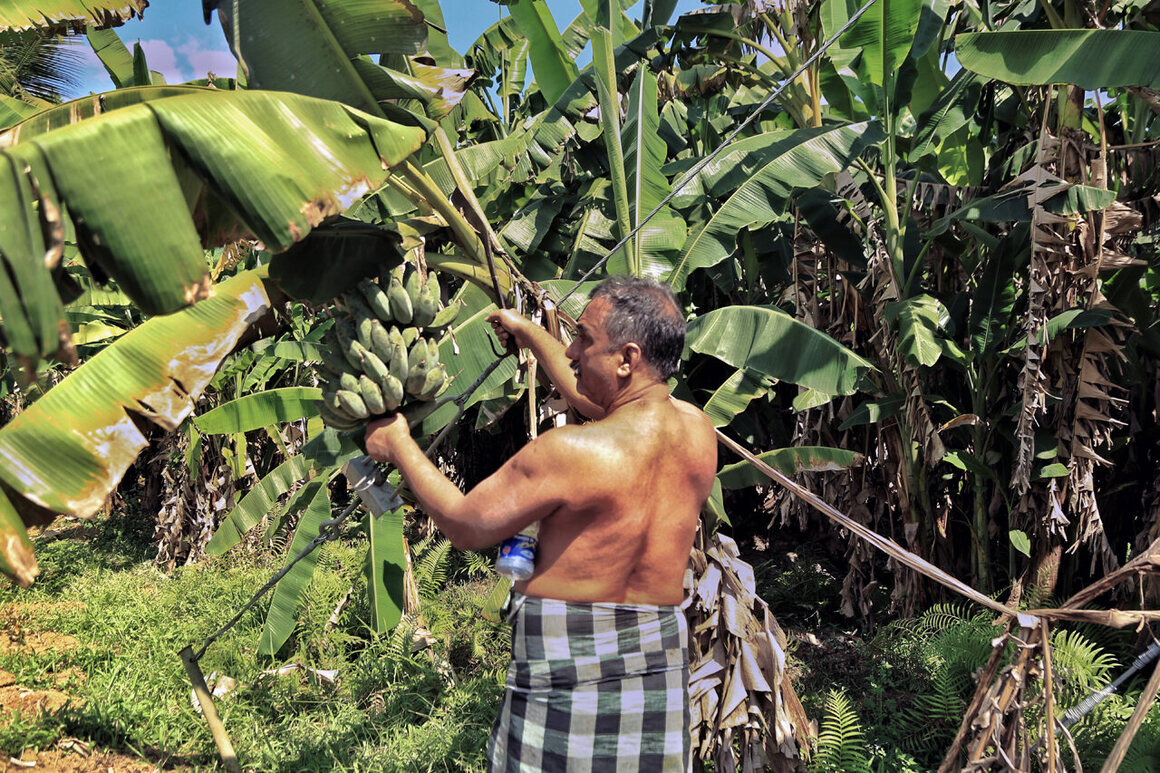
In his backyard in Kerala, India, Vinod Sahadevan Nair, 60, grows bananas and plantains and rears chickens and ducks. Situated as it is in an agrarian region, abutting the biodiverse Western Ghats, his farm may seem typical. But a walk through his four acres reveals bananas growing in every conceivable shape, size, and hue: from deep red to turquoise blue. An avid farmer since the age of 12, Vinod has conscientiously collected some 430 varieties of banana over the past 30 years.

Vinod’s farming practices were not always so quixotic. As a youngster, he pitched in and spent weekends helping his father tend their coconuts and the 10 to 11 banana varieties that they grew. This was typical for the area—unlike in banana-importing countries, where people know only the Cavendish banana, Indian markets generally sell at least a dozen different types. A bright student, Vinod graduated college with a degree in physics and picked up a web-designer job in Kochi, 150 miles north of his village, Parassala. Still, on weekends, he returned to visit his family and help on the farm.

article-image

In 2012, Vinod approached one of the agricultural institutes in his home state to procure a few native suckers (shoots arising from a banana tree’s roots, which are used for replanting). But a staff member turned him away and refused to answer his questions. This spurred Vinod to seek banana knowledge on his own. He skimmed the internet, wrote letters and emails to other agricultural institutes in India, and traveled great lengths of the country to procure exotic varieties. A banana empire was born.

It was his mother's death in late 2015, though, that forced him to permanently move to Parassala to take care of his father. He also decided to plunge full-time into farming, and acquired a few acres for banana cultivation.

India produces close to 29 million tonnes of bananas every year, of which it exports a mere 1 percent. Blessed with abundant rainfall, sunshine, and fertile, loamy soil, the southern pockets of India, as well as its northeastern region, have long been a crucible for banana cultivation. After Southeast Asia, the country is considered a source of the fruit's origins and biodiversity.

article-image

Vinod says bananas are one of the most profitable crops in Kerala, and one of the easiest to grow, requiring minimal maintenance. He uses one grove for commercial cultivation of the nendran banana, which is used extensively in Kerala cuisine and often fetches a good price. “But I wanted to do something quirky with the rest of the banana plantation,” he says.

Over the last five years, Vinod has traversed almost every state in India, bringing back new banana suckers and taking notes in a journal. From Assam and Meghalaya in the northeast he collected the native malbhog and seeded varieties such as the bhimkal. Agricultural institutes provided him with suckers of the blue java and pisang jari buaya (native to Southeast Asia), as well as other international varieties.

Apart from helping Vinod reap profits, the groves have become a treasure trove (the fruit and the tree are revered in India, often used in religious ceremonies) and a one-of-a-kind pitstop for children and amateur banana farmers to learn about native, exotic, as well as endangered bananas—as there are always 15 to 18 varieties in bloom.

article-image

Although bananas are ubiquitous throughout India, a soaring banana tree with 12-foot clusters of hanging fruits is quite rare. Which is why Vinod considers the 1,000-finger banana, which is also known as pisang seribu in Malay, or ayiram poovan locally, and purportedly bears up to 1,000 small, 1.5-2 inch fruits, one of his prized possessions. “It enchants anyone who visits,” says Vinod of the family members, fellow farmers, and even curious travelers who regularly toured the grove before the pandemic. Yet, he confesses that his love for the nendran—used in Kerala to make everything from baby food to chips—is unparalleled.

Vinod now sells the local varieties in the nearest market and gifts the exotic ones to friends and relatives. He doesn’t accept donations for the suckers, nor does he charge. He believes he is sharing green heritage when bartering (he often asks for a new variety in exchange), and that not everything is about money and accolades.

article-image

Nevertheless, this quirky quest has facilitated his entry into the Limca Book of Records, recognition of being a “progressive farmer” from the National Research Centre for Banana, and invitations to banana exhibitions and fairs. He has also inspired his son, Abaneesh, and village children to take up farming. They fondly call him vazhachettan, or the plantain man.

“I've had just one unpleasant experience that triggered this innate passion,” says Vinod. “Otherwise, the people I have met, the institutes I visited, and the interactions we have had over the years have always been educative and pleasant, enriching my banana quest.”

12 Jan 17:16

Top 10 Waterfowling Quotes

by Sporting Classics Daily

The most profound statements come through icy whispers in early morning blinds.

The post Top 10 Waterfowling Quotes appeared first on Sporting Classics Daily.

12 Jan 17:05

Man Who Stormed Capitol Regrets Nothing Because His Dating Profile Blew Up

by Brianna Lyman
'I have no regrets'
12 Jan 17:00

Man Has Two More Guesses At Lost Password. If He Guesses Right, He Instantly Makes $220 Million

by Jordan Lancaster
'I would just lay in bed and think about it'
05 Jan 18:28

The official state trees of America

by /u/countdookee
05 Jan 16:06

The Wyman Hotel

Located on Silverton's main street, the Wyman Hotel brings contemporary urban vibes to the rugged Colorado landscapes. The property is housed in a 1902 landmark building and fuses its heritage...

Visit Uncrate for the full post.
05 Jan 15:51

Orange and Alexandria Railroad Culvert in Springfield, Virginia

Civil War-era tunnel at Lake Accotink Park.

Tucked away in the woods of this family-friendly park is a hidden passage that few people know of and fewer still manage to find. This Civil War-era culvert served as a hiding place for Confederates prior to raids on the Orange & Alexandria Railroad, which once passed directly over the culvert. 

The railroad, which ran between Gordonsville in central Virginia and the port city of Alexandria, provided a strategic mechanism for the movement of troops and supplies for the Union army. Numerous accounts exist of Confederate forces attempting to disrupt the railroad line during the war.

General J.E.B. Stuart directed an attack on December 28, 1862, in which the Confederates damaged rails and cut telegraph lines at nearby Burke Station. 

On another occasion, a group of 12 men under General Fitzhugh Lee were ordered by Stuart to burn the wooden trestle over Accotink Creek. It was later repaired. 

The following year, a series of raids were conducted by Major John S. Mosby’s Rangers and Confederate civilians in which tracks were torn up with the hopes of derailing trains. After a derailment attempt failed on July 26, 1863, Union General George G. Meade enacted severe punishment on the civilians involved. To protect the railroad, several Union regiments camped out near the tracks. 

Relic hunters have chiseled out one of two keystone bricks in the culvert marked with the letters "CSA" (Confederate States of America). Another brick inscribed with the year "1862" was removed from the culvert by park rangers and is on display at Lake Accotink Park Visitor's Center.

An impressive railroad trestle stands in the main part of the park, but it's not part of the original trestle. The park also features a large dam, a carousel, and a large picnic area, but this obscure tunnel is a hidden gem worth seeking out.

04 Jan 07:49

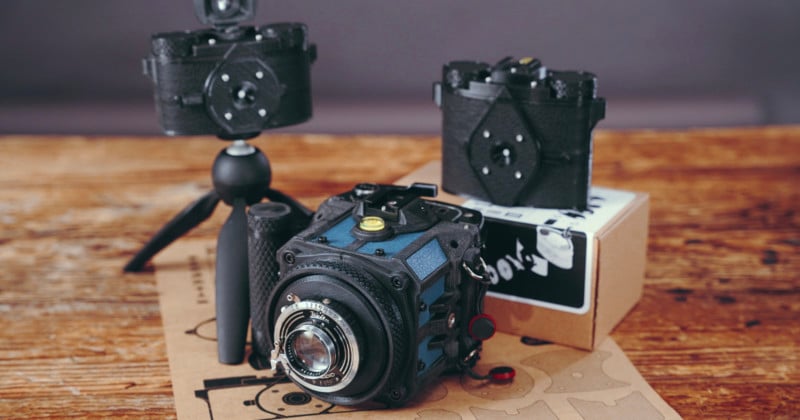
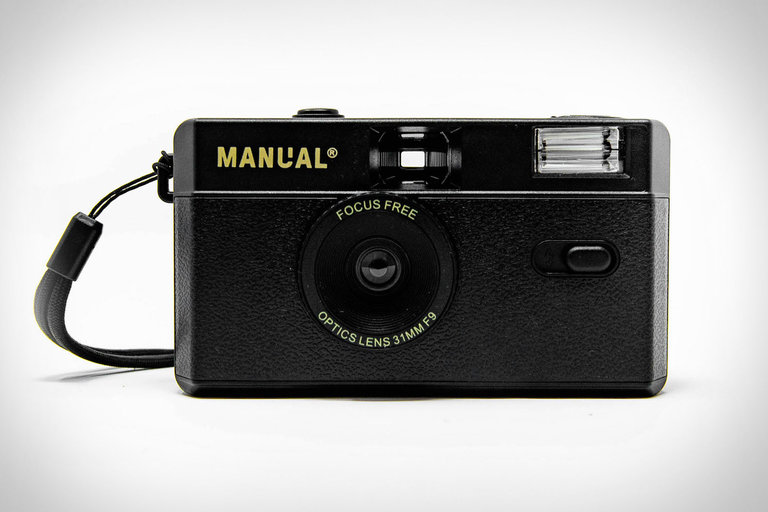
Manual Reusable Camera_001

The start of a new year is a great time to get into analog photography, and Manual's Reusable Camera_001 is an easy way to do so. Designed for simplicity, it...

Visit Uncrate for the full post.
04 Jan 07:44

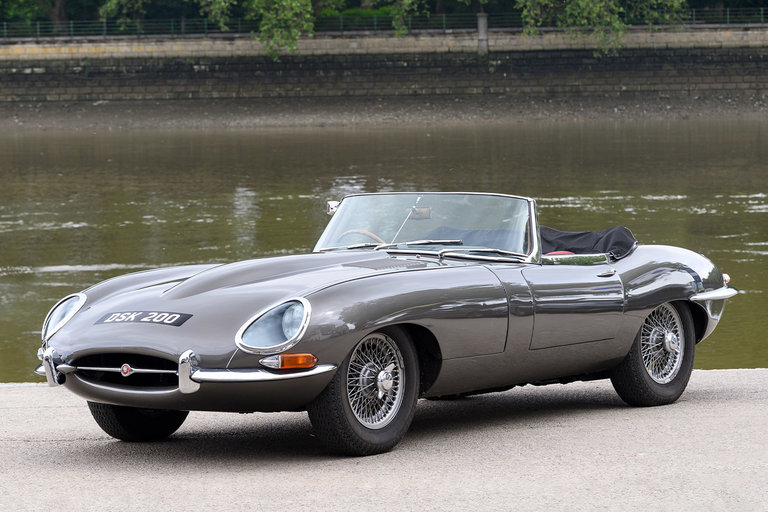
1961 Jaguar E-Type Series 1 Roadster

The epitome of British motoring, this 1961 Jaguar E-Type will be going to a new owner November 6.

Visit Uncrate for the full post.
04 Jan 07:39

7 Steps to Tidying Your Digital Life

by Thorin Klosowski
7 Steps to Tidying Your Digital Life

We live our digital lives across a variety of apps, devices, and accounts. On each of those, a breadcrumb connects back to you. The more breadcrumbs you have out in the world, the easier it is to trace your activity, whether for advertising or identity theft. Installing a password manager and enabling two-factor authentication can go a long way. But spending 30 minutes once a year closing accounts and deleting what you don’t need can further prevent any funny business, paving the way not just for improved privacy but better performance as well.

04 Jan 07:38

The Magnet 0018 subscriber supplement: Garage punk gem

by Mark Frauenfelder
GARAGE PUNK

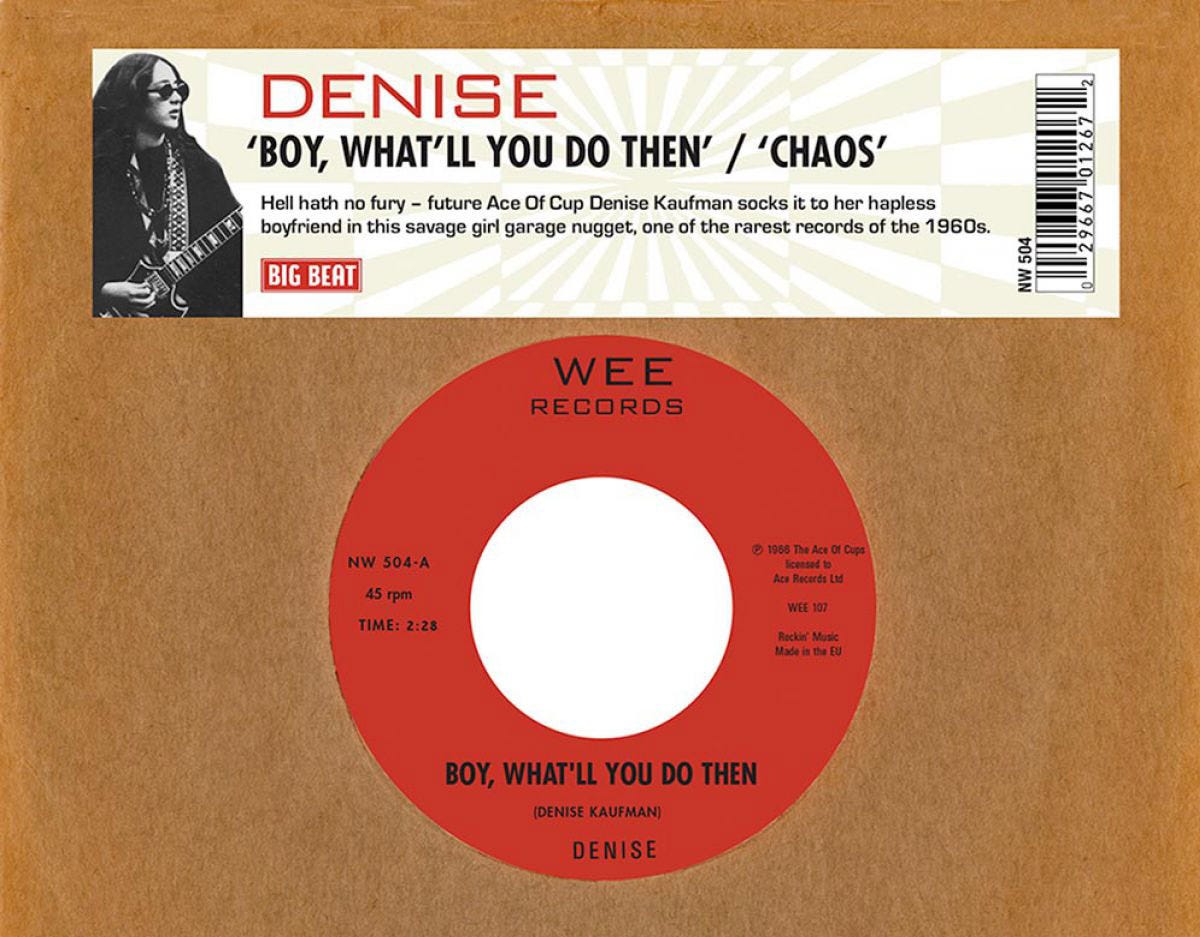
Boy, What'll You Do Then? (1966)

I’ve been friends with Denise Kaufman for about 30 years, and every time we talk, I learn something delightfully surprising about her. I knew she was a Merry Prankster on Ken Kesey’s bus in the 1960s (her name was Mary Microgram). I knew she was in Ace of Cups, possibly the first all-female rock band, which sha…

Read more

04 Jan 07:35

The Magnet 0018: The quiet horror of procedural generation

by Mark Frauenfelder
THE BACKROOMS

The quiet horror of procedural generation

The original Backrooms image posted on 4chan in 2019

That feeling from being the only one in a building is called kenopsia. The Dictionary of Obscure Sorrows defines kenopsia as “the eerie, forlorn atmosphere of a place that’s usually bustling with people but is now abandoned and quiet.” Photos of kenopsic places — abandoned shopping malls, empty airports, school hallways late at night, and other lonely places that evoke feelings of disassociation and disquiet — are popular online. The most famous kenopsic photo is the one of The Backrooms.

According to Know Your Meme, The Backrooms originated on 4chan in 2019 when someone posted a photo, taken at an uneasy angle, of a dingy yellow room illuminated by fluorescent lights. There’s no furniture or people. The wallpaper, reminiscent of a 1980s hotel conference room, is mismatched. The carpeting has large stains. A divider at the far end hints at an entrance to another, possibly similar room. A 4chan reader’s comment about the photo marks the first use of The Backrooms:

If you're not careful and no-clip out of reality in wrong areas, you'll end up in the backrooms, where it’s nothing but the stink of moist carpet, the madness of mono-yellow, and endless background noise of fluorescent lights at maximum hum-buzz, and approximately six hundred million square miles of randomly segmented empty rooms to be trapped in. God save you if you hear something wandering around nearby, because it sure as hell has heard you…

The Backrooms quickly spread beyond 4chan. In the weeks and months to follow, people wrote programs that simulated the “six hundred million square miles of randomly segmented empty rooms.” Some of these panic-inducing mazes became the basis for Backrooms games, the object of which is to escape without going crazy.

The Backrooms also inspired a wiki, called Backrooms Database. It’s a collaborative writing site where fans “create new Levels, Entities, Objects, Tales, and the rest of the lore, to create a cohesive universe.” You can read reports from members of the M.E.G. (Major Explorers’ Group) who have ventured deep into the Backrooms and have taken photos of newly discovered rooms and hallways (all of which are, of course, kenopsic) and cataloged the lifeforms that inhabit the lower levels, such as skin stealers, hounds, and facelings.

The Backrooms reminds me of “Report on an Unidentified Space Station,” a 1982 short story by J.G. Ballard about a crew of space travelers who make an emergency landing on an abandoned space station. (I read it in the excellent Semiotext(e) SF anthology from 1989, edited by Rudy Rucker, Robert Anton Wilson, and Peter Lambhorn Wilson.) The story is told in the form of eight “survey reports.” In the first report, the nameless author gives their first impression of the spacecraft:

Although of elderly construction it is soundly designed and in good working order, and seems to have been used in recent times as a transit depot for travelers resting at mid-point in their journeys. Its interior consists of a series of open passenger concourses, with comfortably equipped lounges and waiting rooms. As yet we have not been able to locate the bridge or control centre. We assume that the station was one of many satellite drogues surrounding a large command unit, and was abandoned when a decline in traffic left it surplus to the needs of the parent transit system

They estimate the station to be 500 meters across. But as they explore its well-lit lounges and hallways, they slowly realize that the station is much larger than they initially surmised. From “Survey Report 2”:
We began by setting out across the central passenger concourse that separates the two hemispheres of the station. This wide deck is furnished with thousands of tables and chairs. But on reaching the high partition doors 200 metres away we discovered that the restaurant deck is only a modest annex to a far larger concourse. An immense roof three storeys high extends across an open expanse of lounges and promenades. We explored several of the imposing staircases, each equipped with a substantial mezzanine, and found that they lead to identical concourses above and below.
The space station has clearly been used as a vast transit facility, comfortably accommodating many thousands of passengers. There are no crew quarters or crowd control posts. The absence of even a single cabin indicates that this army of passengers spent only a brief time here before being moved on, and must have been remarkable self-disciplined or under powerful restraint.

They revise their estimation of the size of the station to be one mile in diameter. With each subsequent report, they realize the station is vastly larger than they’d imagined.

In the ninth and final report, the scout estimates the diameter of the space station to be at least 15,000 light-years:

We have accepted the limitless size of the station, and this awareness fills us with feelings that are almost religious. Our instruments confirm what we have long suspected, that the empty space across which we traveled from our own solar system in fact lies within the interior of the station, one of many vast lacunae set in its endlessly curving walls.

The Backrooms, and Ballard’s story, made me curious about procedural generation, a process that can be used to automatically create endless virtual architecture, among other things. (Check out the Procedural Generation subreddit for lots of cool examples of what can be done with procedural generation.) A specific procedural generation technique called a “wave function collapse algorithm” is commonly used to create worlds like The Backrooms. This beginner’s guide to “wave function collapse algorithms” helped me understand how they work.

Here’s a video of an infinite city built using the wave function collapse algorithm:

This video of a city built from a limited set of architectural elements combined in endlessly different ways feels very much like Ballard’s space station. Near the end of the video, you can see how the buildings are generated in realtime as you approach the edge of the city. There’s no escape from this place.

It’s not surprising that kenopsic spaces have become a phenomenon in the era of COVID-19. They represent the millions of unused schools, theaters, office buildings, museums, and libraries worldwide. Just thinking about them triggers a sense of Ballardian dread. Here’s hoping we find our way out of this space station we’ve all been trapped in for the past year.


This is the free issue of The Magnet. Here’s a preview of this week’s subscriber issue, which has items about a choose-your-own-adventure book about 2020, how camera lenses work, touring while zooming, and a garage punk song my friend recorded in 1966.


Thanks for reading! The Magnet is written by Mark Frauenfelder and edited by Carla Sinclair.
04 Jan 07:27

The pandemic minted 50 new billionaires in the healthcare sector

by Trung T. Phan

Sharp suits defined the rise of Wall Street, while hoodies and Patagonia vests were a sign of Silicon Valley’s riches.

Well, now it’s the lab coat’s time to shine.

According to Forbes, there were 50 new billionaires — scientists, researchers, and doctors — in the healthcare sector this year.

The majority of these billionaires are from China…

… the site of the COVID-19 outbreak and home to more than 30 new “3-comma club” members.

Here are other notable members:

  • The team behind Pfizer’s vaccine: Uğur Şahin (net worth = $4.2B) — a Turkish physician — founded Germany-based BioNTech in 2008 with his wife, Özlem Türeci, the company’s chief medical doctor. The team partnered with Pfizer on a vaccine.
  • The Moderna team: Three billionaires were minted from the other major vaccine. Stéphane Bancel ($4.1B) is the CEO, while Timothy Springer ($2.0B) and Robert Langer ($1.5B) are professors at Harvard and MIT, respectively, who both made early investments in Moderna.
  • The vial maker: Stevanato Group is “the world’s second-largest producer of glass vials and a prominent supplier of vials for more than 40 Covid-19 vaccines.” Its president, Sergio Stevanato, is worth $1.8B
  • The lab man: From antibody tests to vaccine trials, Cincinnati-based Medspace does it all. Its founder and CEO, August Troendle, is worth $1.3B.

04 Jan 07:24

Our best Sunday stories of 2020

by The Hustle
A roundup of our readers’ favorite longform features this year — and a few that didn’t make the cut.
This edition of The Hustle was brought to you by Magic Spoon… the closest cereal can get to being magic.
The Hustle Issue #140
The Hustle, Sunday, January 3, 2021
Sunday, January 3, 2021
The Hustle is proud to deliver original longform journalism to your inbox every Sunday. This work would not be possible without the support of our sponsor, Magic Spoon. Please support them so we can continue to bring you the most interesting stories you’ll find anywhere.

The Hustle’s best Sunday stories of 2020

A roundup of our readers’ favorite longform features this year — and a few that didn’t make the cut.

BY Zachary Crockett

At The Hustle, we generally like to stay out of our stories and let the characters do the talking. 

But this week, I’m going to break the 4th wall.

I launched our Sunday email back in April of 2018 with a deceivingly simple goal: To send out one long-ish business/tech feature per week.

Since then, our team has put out 139 Sunday stories. 

We’ve gone deep on some pretty odd stuff: an economist who won the lottery 14 times, trust funds for pets, drunk shopping, the fake Amazon review economy, free car giveaways at malls, and even a yodeler who sued Yahoo.

For a typical Sunday story, I’ll conduct 5-10+ interviews, run surveys, comb through datasets and newspaper archives, and make visuals (animations, illustrations, charts, graphs, comics).

I get help from an incredibly smart editor (Brad Wolverton), a back-end coding wizard (Kaylee Jenzen), the maestro of our Monday-Friday email (Trung Phan), and a growing stable of talented freelancers.

Our typical Sunday email has a 47% open rate and is read by 600k+ people. The web versions often attract hundreds of thousands of views.

For this email, I wanted to focus on some of our favorite work from 2020, along with some stories that didn’t make the cut.

Our favorite Sunday stories of 2020

In 2020, our team wrote 52 Sunday stories that collectively totaled 93,887 words. Some highlights:

  • 16 stories made the front page of Hacker News
  • 5 articles received option inquiries for film and TV
  • Our reporting helped raise $75k+ to assist small business owners and rideshare drivers
  • Our stories led to dozens of podcast & radio features, including interviews with Slate Money, NPR, and Radio New Zealand
  • We received citations and pick-ups in CNN, The Washington Post, The Today Show, and many other outlets

We wrote about everything from Warren Buffett’s chocolate obsession to the sleaziness of the cruise ship industry.

But 5 stories in particular stood out.

1. The man feeding a remote Alaska town with a Costco card and a ship (May 3, 2020)

Summary: When Gustavus, Alaska, was cut off from its grocery supply chain, one resident decided to take matters into his own hands.

Why I like it: Sometimes, the hardest (and most important) part of the Sunday process is finding a story worth telling. This was a completely original piece of reporting, sourced through virtual town hall meetings in remote Alaska and conversations with the town’s 446 residents.

It’s a story about ingenuity in the face of insane logistical and geographical barriers. But it’s also an ode to the camaraderie of isolated communities.

It was our most widely read story of 2020 and was picked up by nearly every major news outlet in the country.

2. The economics of all-you-can-eat buffets (January 26, 2020)

Summary: How does an industry that encourages its customers to maximize consumption stay in business? We looked at the dollars and cents behind these strange culinary institutions.

Why I like it: I’m obsessed with digging into the economics of ridiculous everyday things. This one was particularly enjoyable. 

I had a lot of fun doing the math on precisely how much food you have to eat to “beat” the buffet. It was also a treat to learn about all the tricks buffet owners use to maximize revenue, from front-loading carb-heavy dishes to using smaller plates.

3. The economics of vending machines (October 4, 2020)

Summary: The pandemic has boosted interest in vending machine ownership. But just how lucrative is the business? We spoke to 20+ operators to find out.

Why I like it: I talked to more than 20 vending machine owners all over the US for this story, joined multiple private vending machine Facebook groups, and collected a dataset that shed some light on the per-unit economics of these weird machines.

I’d always wondered who (if anyone) was making money on these things. The answer turned out to be a bit more complex than I thought.

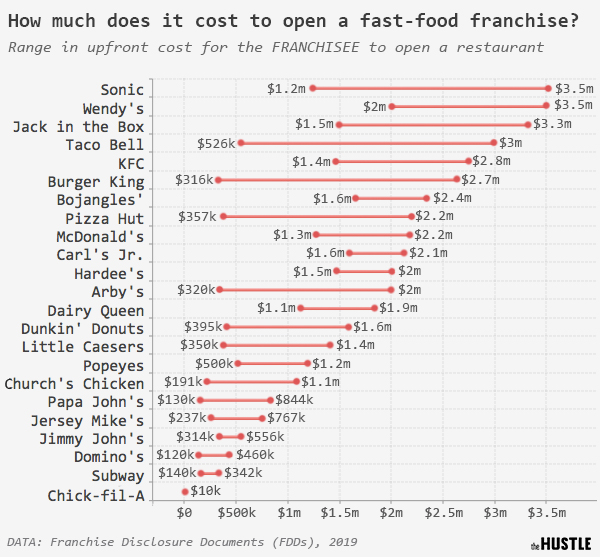
4. Why it only costs $10k to ‘own’ a Chick-fil-A franchise (January 19, 2020)

Summary: The chicken chain is known for having the lowest entry cost of any major fast-food franchise — but there’s a catch.

Why I like it: This was one of the more ambitious stories I’ve tackled in one week, as it called for a dozen interviews with franchise owners and an analysis of 20+ financial disclosure documents.

It was also a heavy lift on the visual side, involving Excel, Photoshop, Illustrator, and a lot of custom formatting. 

5. Amid a pandemic, Uber drivers choose between health and livelihood (March 22, 2020)

Summary: We surveyed and interviewed more than 50 full-time rideshare drivers via phone, email, Facebook Messenger, and text, piecing together a sampling of how the pandemic affected earnings.

Why I like it: This wasn’t our most popular story, but it was one of our most important, chronicling the day-to-day experiences of “essential” independent contractors during the pandemic. 

To this day, I’m still in touch with a few of the folks I surveyed or talked to in the course of my reporting. And our readers came through big time, donating more than $25k to the drivers featured in the story.

Honorable mentions

You can read through the archive of all our 2020 Sunday stories here.

A few Sunday story rejects

For every Sunday story we publish, there are 10-15 that don’t make the cut for various reasons.

These rejected story leads go into a cold, dark place I like to call the story graveyard. It’s basically a Google Doc full of hundreds of “rabbit holes” I’ve gone down — kind of like a reporter’s equivalent to R&D.

Here are a few stories that didn’t quite pan out in 2020:

Why an investor bought $1m in nickels

Back in 2011, a Dallas-based hedge fund manager named Kyle Bass made an unorthodox investment: He bought 20m nickels (a total of $1m) from the Federal Reserve.

Why?

Back then, the raw scrap value of the metals in one nickel was 6.8 cents — more than the face value of the coin itself.

Unfortunately for Bass, melting coins has been illegal in the US since 2007, so scrapping nickels for a profit wasn’t in the cards. And neither was our story. 

What makes a Stradivarius worth $1m+?

Combing through newspaper archives is one of my favorite ways to find a story. Sometimes, a truly bizarre clip inspires an idea.

Earlier this year, I came across an article from 1999 detailing an incident in which the famed musician Yo-Yo Ma forgot his cello in the trunk of an NYC cab. The instrument — a 1733 Stradivari creation worth $2.5m — sparked a city-wide manhunt.

Ma’s cello was actually worth small potatoes compared to some other legendary stringed instruments:

  • The Lady Blunt violin, considered to be one of the best-preserved Stradivari violins on Earth, fetched $15.9m at auction in 2011.
  • The Vieuxtemps Guarneri violin, built in 1741, went for $16m in 2012.

In the course of my research, I found a study that showed violists couldn’t tell the difference between a $1m+ violin and a cheaper new one in a blind sound sample test.

I set out to trace how Strads became so highly coveted. This included phone Skype calls with a Kentucky-based auctioneer and a rare instrument appraiser from Italy.

Ultimately though, I decided the story didn’t have a wide enough appeal.

The business of extremely expensive fish

The Asian arowana fish is often called the “Lamborghini of the sea” — and with good reason.

The fish is an endangered species but also a highly desirable status symbol in China, where collectors pay upwards of $10k — and as much as $300k — for certain species.

Asian arowana are a $200m/year global industry, and owners go to great lengths to protect and supercharge their fish:

  • They buy 400+ gallon tanks with high-security fences.
  • They hire arowana bodyguards and private motorcades when the fish are transported.
  • They give their fish plastic surgery, shelling out $60 for eye lifts and $90 for chin tucks.

I scrapped this one after failing to secure an interview with an arowana dealer. (If you know anyone, shoot me an email!)

Share & discuss this story on:
FACEBOOK OUR WEBSITE
TWITTER POCKET
SPONSORED

Scoop up some Magic Spoon during their 48 Hour Flash Sale (starting right now) 

Now that the-year-that-shall-not-be-named is finally over, most of us are thinking the same thing: 

Should we, like, start trying to be healthy again?

Bathroom scale says… ding ding ding!

But we still want to indulge, which is why Magic Spoon is a must-have on our 2021 shopping list — their healthy cereals taste exactly like our childhood faves, minus all the sugary junk. 

What makes MS so Magic?

  • 110 calories per serving
  • Zero sugar
  • 3g net carbs
  • 11g protein
  • Zero gluten, grains, soy, or standard cereal junk

We’re not the only ones who love it — they’ve got 15,000 5-star reviews and a no-questions-asked full refund policy

Use code HUSTLE to get $5 off during their 48-hour flash sale here:

Order Magic Spoon →
How do you like today’s story?

hate it

meh

love it
Today’s email was brought to you by Zachary Crockett, Brad Wolverton, and Bobby Durben.
PODCAST JOBS ADVERTISE CONTACT US
Facebook Youtube Instagram Trends
2131 THEO DR. STE F, AUSTIN, TX 78723, UNITED STATES • 415.506.7210
Never want to hear from us again? Break our hearts and unsubscribe.
The Hustle

04 Jan 07:10

11 Tips That Will Add 20 Feet to Your Fly Cast

by T. Edward Nickens
For longer fly casts, you’ll need to go beyond 10 o’clock on the backcast.
For longer fly casts, you’ll need to go beyond 10 o’clock on the backcast. (Glittenberg/Pixabay/)

It doesn’t matter if you’re fishing for headwaters trout or bluewater sailfish, there are times when launching a cast at maximum distance is the only way to put a fly on the dinner plate of your target fish. And since learning how to bomb out long casts requires tight loops and line speed, it’s a skill that helps when casting at shorter distances with a challenging wind.

The good news for novice to intermediate casters is that every step listed below will help improve your fishing skills on its own. But put together four or five of these tips, and you’ll be amazed at how quickly your fly heads for the next county.

1. Move the Fly, Cut the Slack

It’s the bane of both beginner and experienced casters alike: You must have zero slack in the line before picking the line off the water and making the first backcast. Zero. The best way to make it happen is to point the rod directly at the water, pull out the slack until the fly moves just a smidge, then start the backcast. A little bit of slack can be fixed on a shorter cast. But on a longer cast, just a slight bit of droop will magnify into larger and larger loops. Point the rod, move the fly, start the cast.

2. Forget About 10-2 Casting

The standard issue 10-o’clock-to-2-o’clock casting stroke won’t get the cake baked when you’re trying to reach distant fish. For long-haul casting, you’ll need to move the rod tip over a longer plane to develop line speed. Just be aware that the fly line follows the rod tip. To prevent the loops and tails that come when casting lots of line in an arc, engage the shoulder on both the forward and back casts to keep the rod tip moving in a straight line.

3. Let the Fly Rod Do Its Job

The best rods are capable of greater feats than I can wring out of them, which leads me to a line I tell folks all the time: You’re holding hundreds of dollars—maybe a thousand dollars—worth of technology and materials in your hand, so let the rod work. It’s amazing how much farther you can cast when you slow down, concentrate on feeling the rod load, and apply smooth power to the cast. Watch and feel and listen to the rod, and you’ll get your money’s worth with long-distance casting.

4. Watch Your Backcast…Literally

The backcast should be a near mirror image of the forward cast. If you spot widening loops or waves and wiggles in the line, restart the cast. Cast sidearm, and watch how the line responds to your movements as it straightens out behind you. You might pick up on issues such as dropping your rod tip by seeing how the fly line is shaped on the backcast.

5. Dial in on the Double Haul

If you don’t know how to double haul, learn. You simply won’t reach out and touch distant targets without a solid, smooth pull on the line on both the forward and backcasts.

Read Next: How to Double Haul with a Fly Rod

6. Don’t Rotate Your Wrist

I recently signed up for a one-on-one video fly casting lesson with fly-rod ace Pete Kuntzer at the Orvis Virtual Casting Instruction Program, and it took Kuntzer about three seconds to pick up on a casting goof I would never have uncovered. On the backcast, I was rotating my wrist outward ever so slightly, which was putting a funky behind-the-head twist in the line where I might never have seen it. It was robbing my line of its straight-line force and speed, and cutting into the delivery distance. Kuntzer counseled me to watch my rod hand as it moved past my eyes, and focus on the ridgeline of my middle knuckles to keep my wrist from rotating.

7. Accelerate Everything

One of the secrets to tight loops and maximum line speed is a concentration on acceleration. At the beginning of both the forward and backcasts, don’t suddenly pour on the power, but smoothly accelerate the power stroke. And the same with a haul or double haul. One key to maximizing distance is to iron out all the wiggles and bobbles in the line, and smooth acceleration will get you there.

8. Minimize Your False Casts

It’s tempting to false cast four or five times to watch your line distance increase, but too much false casting causes you to “carry” too much line, meaning you have to keep, and manage, all that line moving through the air. That increases the chance for mistakes, such as dropping your rod tip slightly or drifting on the back cast. With a ton of line in the air, every mistake is magnified, and once the running line of the fly line is in the air, it’s very difficult to change your aim. You’ll carry less line by trying to limit false casting to three casts. By then you should have the entire line head out of the rod tip—and a little more—setting you up for a shooting the final distance.

9. Cut the “Creep”

Creep is what happens you start the forward cast before the line straightens out behind you. It’s easy to slip into the practice: You shoot an awesomely tight forward loop, power back for the backcast, but you just can’t wait to see the line again so you bring the rod forward too quickly. Bear in mind that you have to stop the rod on the backcast for just as long as you do on the forward cast. And perhaps a bit longer if you shoot line with a haul.

10. Catch the Drift

To maximize the length of the power stroke, learn to drift the rod tip on the back cast. You still have to come to a complete stop at the end of the cast, but once you do that, all the fundamental mechanics of bringing the line back in a tight straight loop are in play. Now you gently drift your hand back a bit—keeping the rod tip in the same plane—to give you a little extra runway and oomph on the forward cast.

11. Aim High

At 20 feet, you can aim the fly like a rifle shot, straight at the target. At 40 feet, you might aim at basketball-rim-height to allow the fly to settle where you want it. At 50 feet, 60 feet, and beyond, you’d better throw a little elevation into the ballistics. You have to give the fly line time and space to unroll, so shift the trajectory of the forward cast high—like treetop level high.

04 Jan 07:07

Best Dog Food Delivery Services for 2025

by Chowhound Staff
With these dog food delivery services, you can give your pup the gift of fresh, healthy meals delivered to your door.