Over the last few years, our smartphones have become the cameras we use most — even for photographers. But that hasn’t stopped companies big and small from trying to upset the order of things. Ubiquiti Labs — a new part of Ubiquiti Networks, which has (until now) mostly made mesh Wi-Fi products — is the latest to try to take the simplicity and, well, ubiquity of “mobile photography” to the next level with a new $399 wearable camera called FrontRow.
FrontRow is actually two cameras — one on the “back” that uses a 8-megapixel sensor, and one on the “front” that’s just 5 megapixels — plus a 2-inch circular LCD touchscreen. This is all packed into a pendant the size of a half-dollar coin. (Or smaller than a fidget spinner, if you don’t get...
There are a million and one services for voice transcription on the market. But even with just one job to do, I’ve never seen a service that can handle the long tail of vocabulary used in the real world. This is particularly challenging if you’re a startup trying to sell your service to enterprises that rely on accurate transcription for their operations. Read More
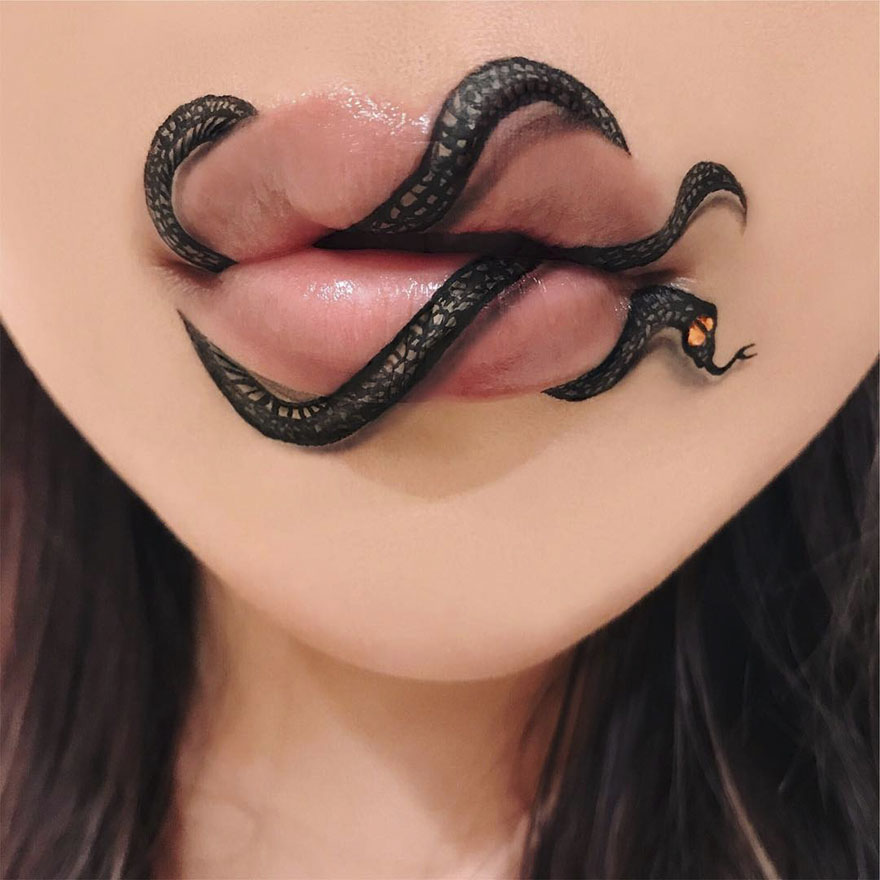
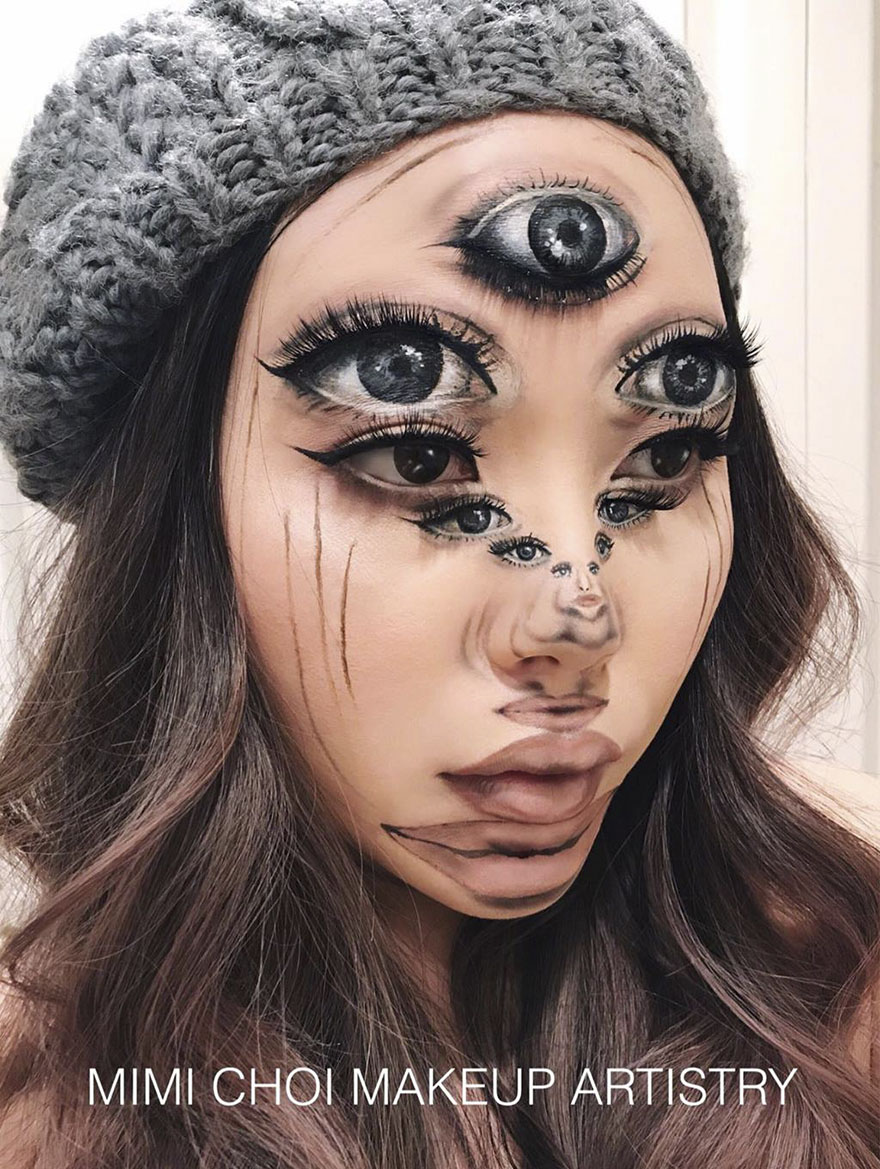
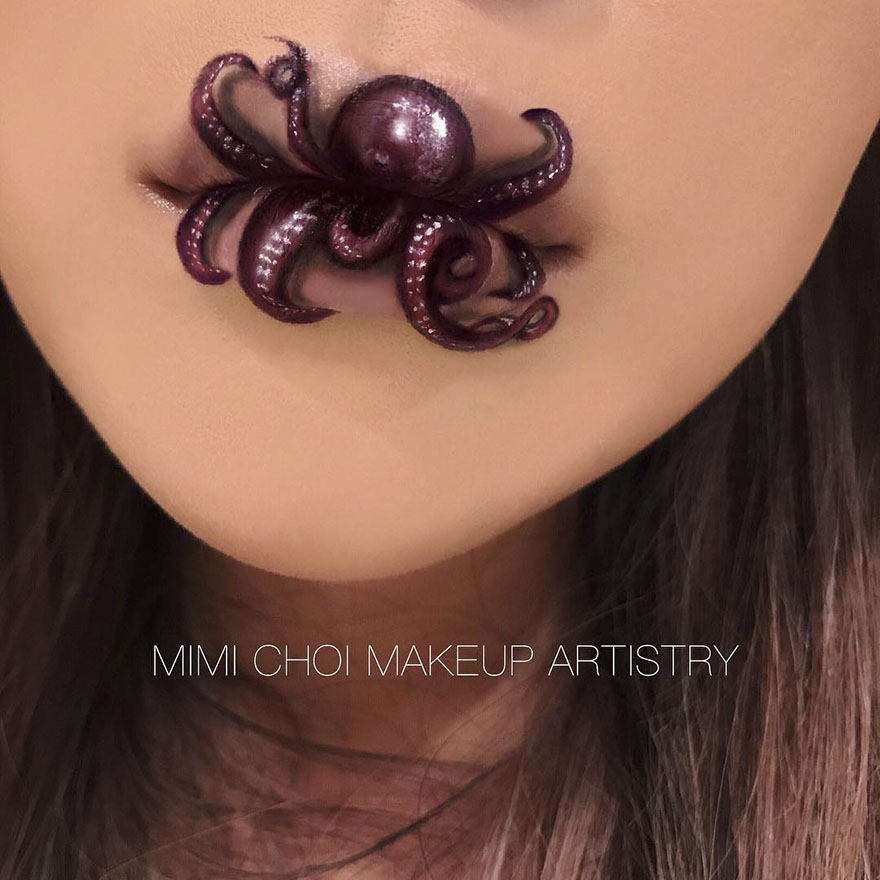
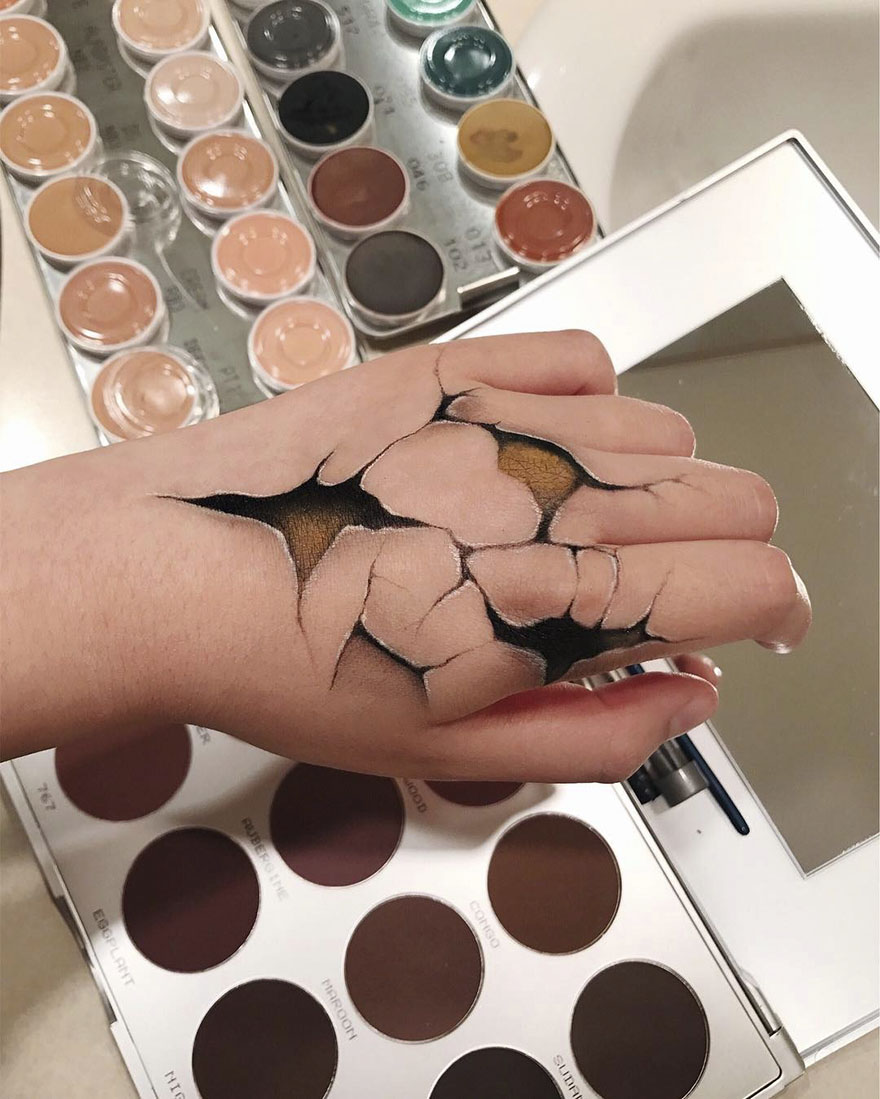
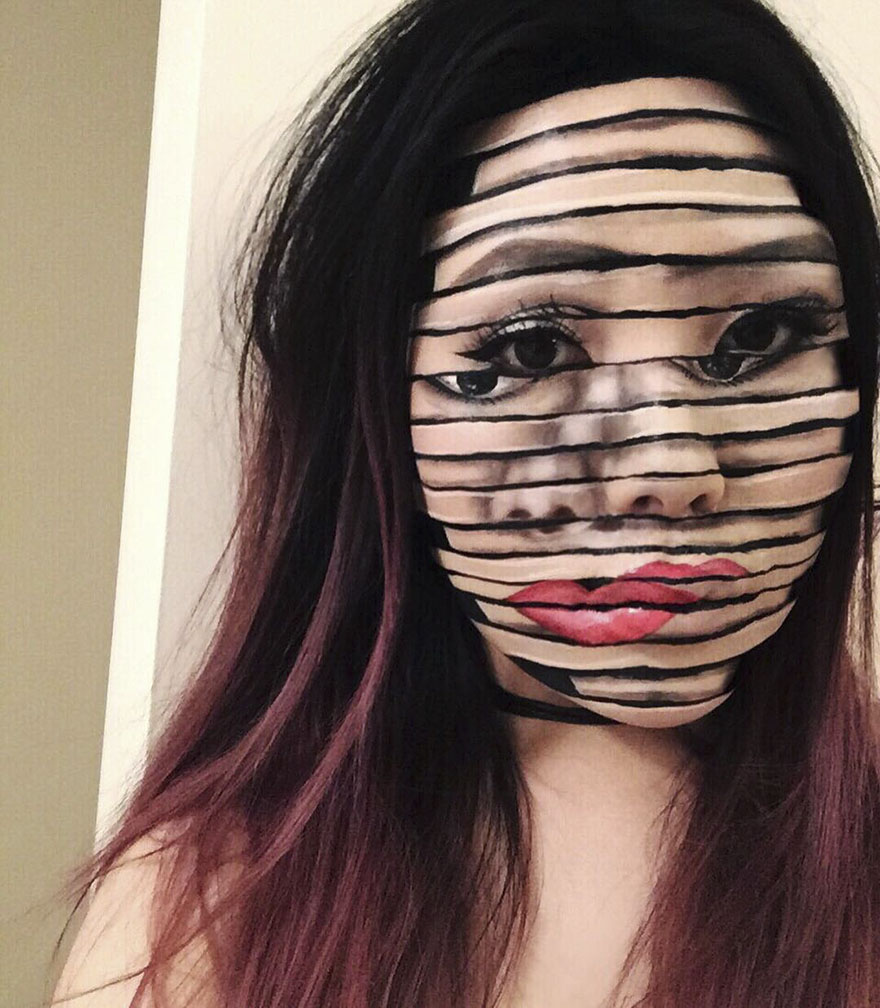
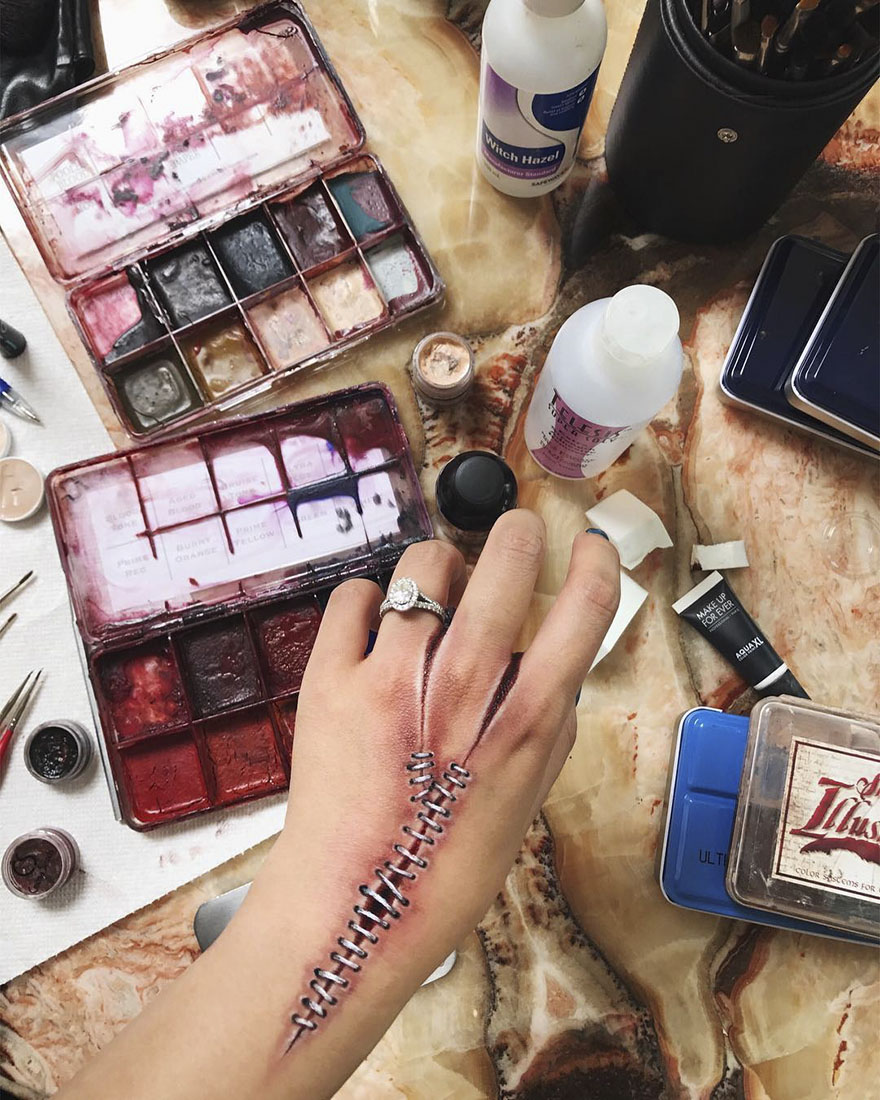
Véritable spécialiste du maquillage, cette artiste crée des illusions d’optique terrifiantes de réalisme. Des têtes découpées ou transformées en scènes d’horreur… Bienvenue dans le monde imaginaire de Mimi Choi !
Pour certaines personnes le maquillage, c’est quelques petites retouches pour améliorer son apparence. Pour d’autres, à l’instar de l’artiste canadienne Mimi Choi, c’est une toute autre philosophie. Douée d’un véritable talent pour les illusions d’optique, cette dernière s’est spécialisée dans la création de make-ups effrayants et ultra-réalistes.
Des réalisations qui étonnent et qui ont offert à Mimi Choi une belle notoriété : son compte Instagram est désormais suivi par plus de 320 000 abonnés et chacune de ses photos sont likées des dizaines de milliers de fois. Une belle revanche pour cette ancienne professeure des écoles qui sentait sa créativité partir en fumée avant de décider de se lancer à corps perdu dans sa véritable passion : le maquillage artistique.
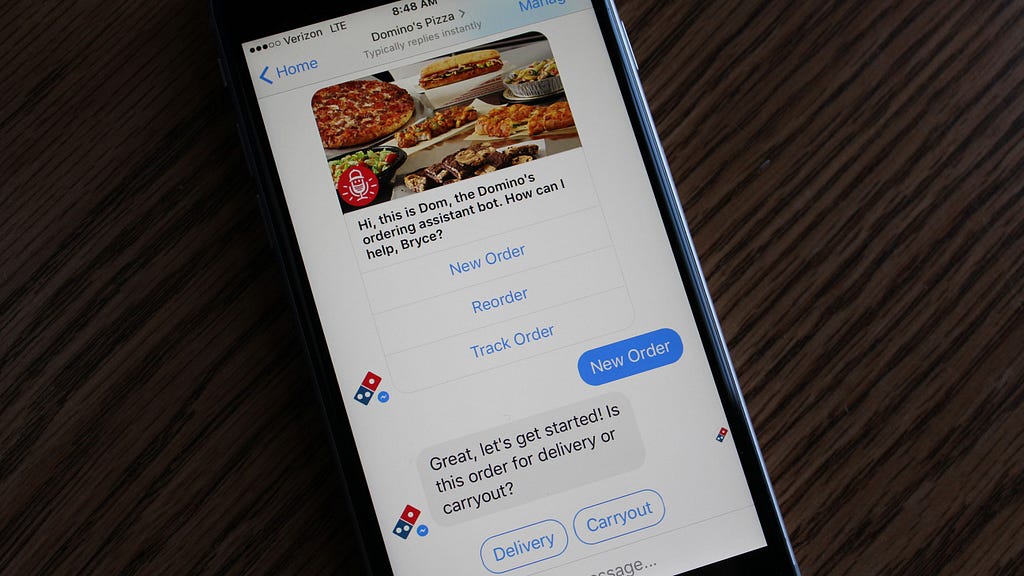
This direction has a huge effect of many branches of technology, esp. web or apps design, but mostly on the communication between brands and customers. That’s also one of the main reasons for chatbots’ increasing popularity. Most brands are doing their best to create them in a way that seems more persona than product.
While creating a chatbot, many of us are mostly focused on the topic of a conversation. We think about which questions should be asked, when, and what answers make sense. Many companies forget to tailor the scenario to the specific situation with the specific customer. While customers are different, they have something in common - each of them demands a fully natural form of interaction with a brand. We are more willing to visit places where the service has a personable attitude and doesn’t use formal expressions.
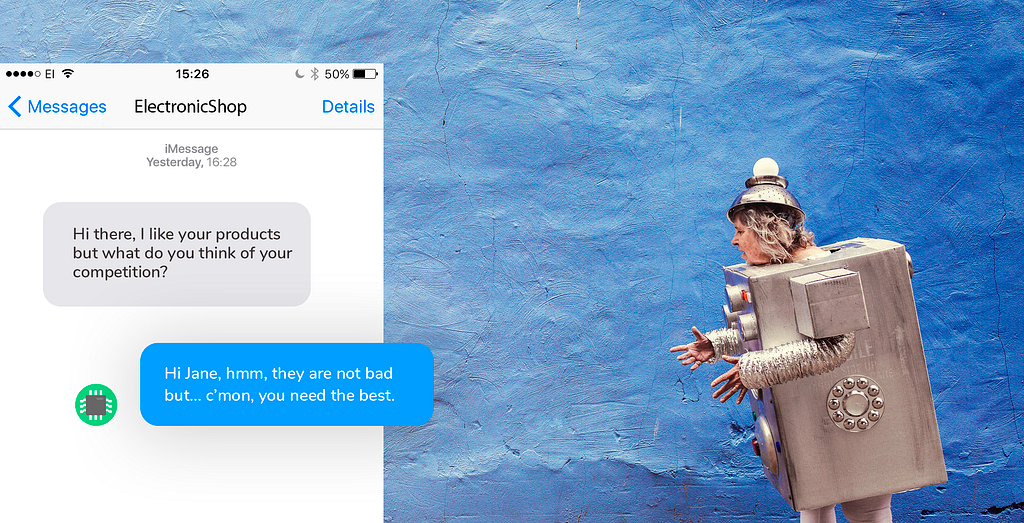
Currently, the main issue with chatbots is that customers tend to treat them as a robot and don’t feel comfortable during these conservations. As a result, sometimes customer service running bots is not necessarily faster or more attractive than other methods. Most people think that chatting with bots is only based on giving them commands.
Creating a chatbot with a specific character is easier said than done. However, it’s crucial for modern brands. On the other hand, only chatbots with a clearly-defined personality are able to prove their intelligence and convince customers to talk with them in an honest way.
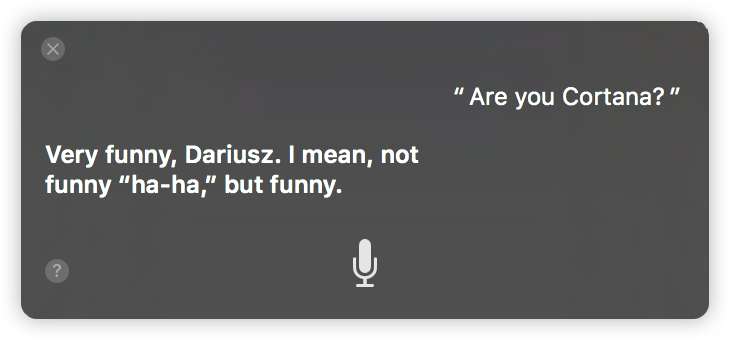
Let’s look at an example of a bot with a specific character. Once, we did an experiment with my colleague and asked Siri if she is Cortana…
Siri seemed to become jealous. Now we know that she doesn’t like when users mistake her name with another AI assistant. What is more, Siri’s reaction is in line with the Apple brand, which is known from its individuality.
Therefore, we can definitely say that Siri has a character.
The best practices to create a chatbot with a character
Before you start to design your chatbots, you should go back the basics and thoroughly analyze all conversations with customers which have happened to date. Use all the sources you have, such as your live chat solution’s archives, contact center recordings and correspondences, if needed. The bot conversation’s scenario should be based on your knowledge about the customers. If not, your bot won’t be helpful for them.
You should be fully aware of your customers’ languages, their questions and issues. On the other hand, you ought to analyze your customer service employees’ answers as well — which of them elicit positive or negative emotions from your clients. In first step, you don’t have to prepare the scenarios for all cases. Focus on these matters which are repeatable and your employees must answer them over and over again.
Choose the conversations in which your customers were the most satisfied. Preparing the branches in a conversation tree should be based mainly on these experiences.
There are a lot of ways to ask chatbots to make a reservation for a film in the cinema. But this number is limitless and certain keywords keep repeating. If the movie is mostly for millennials, try to add some common sayings for this target audience to the scenario. But note that a brand’s chatbot for millennials doesn’t have to always be a laid-back, immature twentysomething named Harry.
Don’t try to create a chatbot which completely mimics your brand image. It should be your brand ambassador but not a member of your management board. Analyzing past conversations with your customers, you should know exactly which features your customers like the most during the conversations with your customer service employees. Next, do your best to implement them in the chatbots’ scenarios. When you’ve designed a bot, check several dozen times how the conversation runs. You have to be completely sure that the scenario is correct before you make it public.
Observing advances in artificial intelligence, we may predict that in the nearest future chatbots will be one of the main things to manage in creating a company’s brand. They even have the potential to replace the traditional ‘user interface’, becoming something more crucial for human-brand interaction.
I’m the Head of Research & Development at LiveChat. We’ve recently rolled out BotEngine, a chatbot factory that will allow any business to benefit from artificial intelligence. BotEngine beta version is now open and free to use.
Current VR might not be as convincing as the Matrix, but this Google Tango app lets you peer into the real world as if you were Neo himself.
The Tango Martix Scanner from VR and AR developer Null Real uses the special cameras fitted to Tango-ready Android phones to turn the walls, floors and ceilings of the environment around you into the virtual data streams that Keanu Reeves sees towards the end of the legendary 1999 sci-fi flick. You can walk around the room and peer into the camera as if you were really in the Martix. Pretty cool, huh?
Null Real is working on some other interesting projects too, like position tracking for mobile-based VR with no external sensors.
Google and other tech companies have come up with glasses and contact lenses for the purposes of AR, but Omega Ophthalmics is taking a much more invasive approach by using surgically implanted lenses to create a space for augmented reality inside the eye. Read More
Sometimes a clean energy innovation is on par with the standard version, so choosing between the two can be tough. When it comes to Tesla’s newest solar product, however, the choice is clear.
The first Tesla solar roofs have been installed, and they are beautiful. Ask the most high-profile owner of the roof: Elon Musk. On the Q2 August 2 earnings call for Tesla, Musk said that both he and Tesla CTO Jeffrey B. Straubel already have working solar roofs installed. He also provided unretouched photos of the installed solar tiles to showcase their aesthetic appeal.
image credit: Teslaimage credit: TeslaIn May Musk told the world that the solar tiles were about to be on sale, and that delivery in the U.S. would begin in late 2017. Only 16 days after they began taking pre-orders in May, Tesla was out of stock. The tiles are currently back-ordered well into 2018. Musk had promised that the solar roof would ultimately be cheaper than a traditional version; a claim that appears to be borne out thus far. Add in the infinity warranty for the tiles, and it’s hard to make a coherent argument against them.
How the newest features on Facebook Messenger can help an automotive dealership
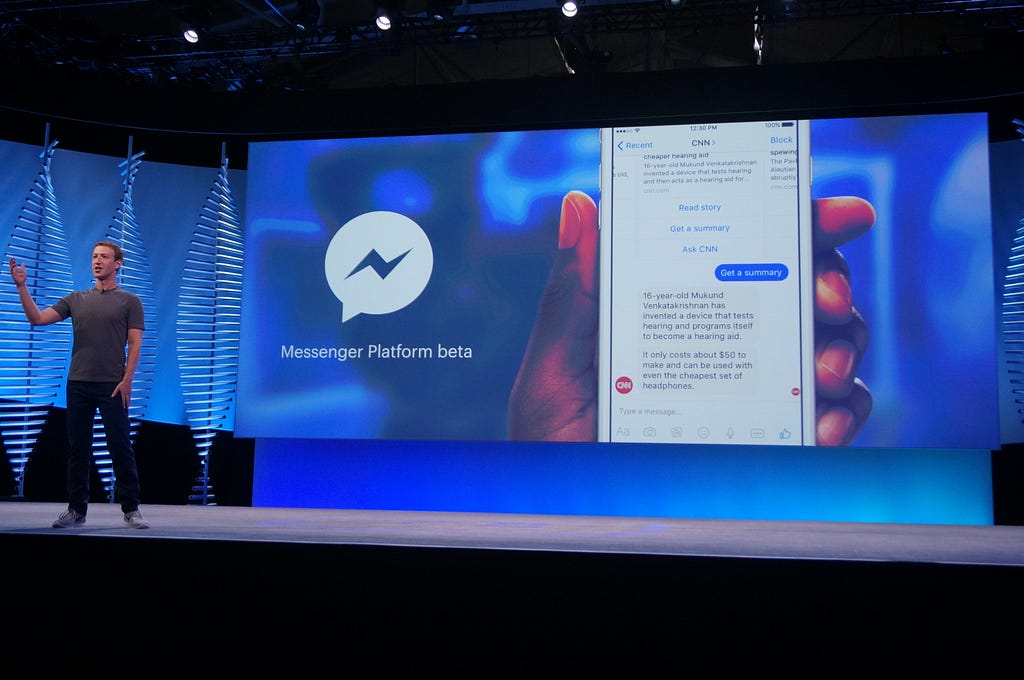
Over the past year or so, since Facebook announced Chat bots for the Messenger platform, we have seen a proliferation of bots both good and bad. Facebook has also been rapidly improving the platforms to make the chat bots more ubiquitous. Here, I intend to introduce few of the newer features introduced by Facebook and talk about how these can make a positive impact on an automotive dealership using a chat bot such as Pulse Chat.
1. The Bot Discover tab
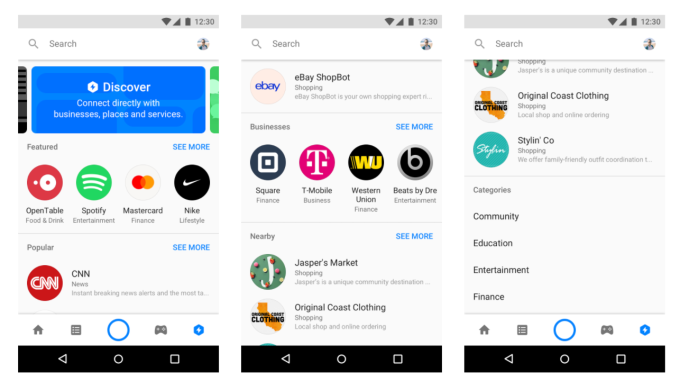
The discover tab helps a user find bots, nearby places and businesses to message. This is the place where businesses live in messenger.
This tab allows you to explore bots by category, recent activity and featured experiences without searching. This helps bots and businesses to engage with the community, by providing a dedicated interface.
Messenger’s new Discovery tab
The bots in this tab are classified into categories like entertainment, finance, food and drink, health and fitness, news and productivity, making it convenient for customers to find the best bot which satisfies their requirement. Before this feature, we as users had to spend time on choosing the bot which suits us the most, trying out several ones. This gives the customer a further personalized content experience faster.
Most importantly this tab also has non — bot, business accounts, accommodating the businesses to promote themselves. Any Facebook Page that has messaging enabled and has earned Facebook’s responsiveness badge can apply to appear in the Discover tab.
2. Group Bots and Chat Extensions
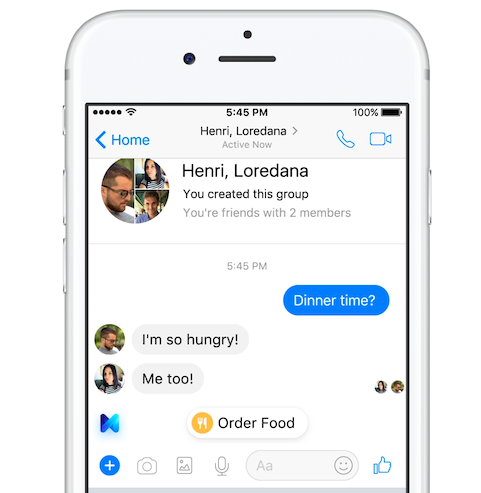
Until the introduction of “Group bots” with Messenger Chat Extensions the bot experience that Facebook Messenger provided was one to one (1:1), with this newest feature it has become more advanced and exciting. Chat extensions allow multiple users within a single bot conversation. This gives bots a better understanding as to what the user is trying to ask, thus, reduces the risk of misunderstanding what user posts, which is a general drawback seen in messenger bots.
Chat extensions in groups — Group Bot
Messenger is now robust enough to analyze the conversation and give a suggestion accordingly. Here are some examples,
“Wanna catch a movie tonight?” Tickets buying bots.
“Let’s get away this weekend?” Travel suggestion bots.
Further, chat extensions can be added to your groups, which will facilitate many extra features like, sharing music via your favorite apps like Spotify without having the app opened. Additionally you can add the Score, OpenTable, Food Network, the National Basketball Association, The Wall Street Journal and Kayak to your group with just a click of a button.
Chat Extensions in Messenger
You also can share the bots with friends like you used to share content in Messenger.
Share Bots in Messenger
Also, Messenger allows you to send and receive updates from task trackers and manage documents collaboratively, allowing group planning. This feature allows many businesses to reach their customer base more effectively. The product manager for messenger, Kemal El Moujahid expressed this idea on these features.
“Messenger offers businesses new ways to engage with their community and potential customers. Whether it’s raising awareness for a brand, enabling transactions, acquiring new customers, or delivering superior customer service, Messenger can be a core part of business solutions.”
3. Messenger Advert — In-app ads
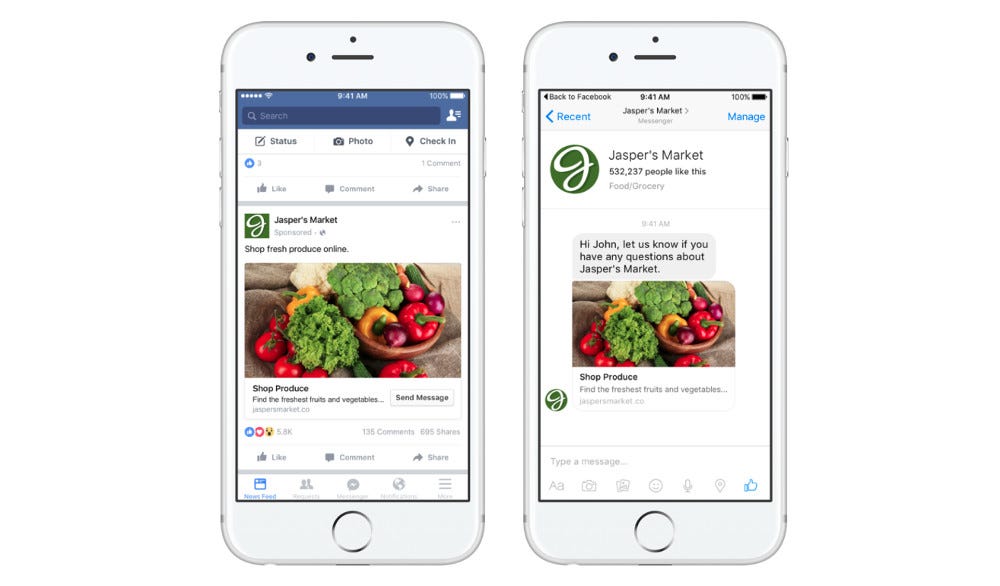
Messenger is now a destination for advertisements (these ads can be from a website, Facebook or Instagram). Once the ‘send message’ option is clicked, a Messenger thread will be open up , and you will be able to see a configured message or a copy of the ad you clicked.
Messenger advert — Messenger as a destination for ads
May be you can offer a discount to a customer with a personalized touch, once the advert is clicked by the customer, he will be directed to a messenger conversation with the discount coupon.
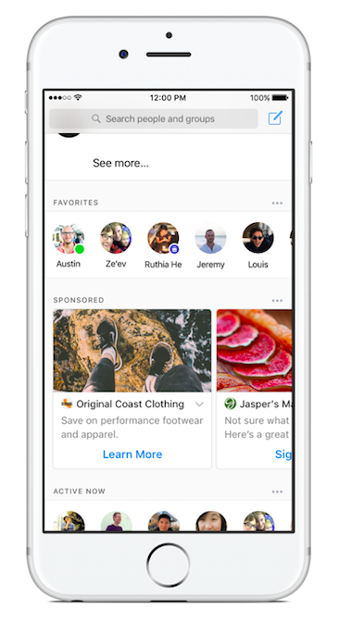
Additionally, Messenger now has its’ own section for advertisements. Aforementioned is a stimulating introduction for the businesses out there. However, it is not very pleasing for the regular users (Who wants to see more ads?) As a remedy for this; the Messenger users will have the option of removing the advertisements (Though, they will be replaced with a new one.)
Sponsored section of Messenger dedicated for adverts
4. Seamless In-app Payments
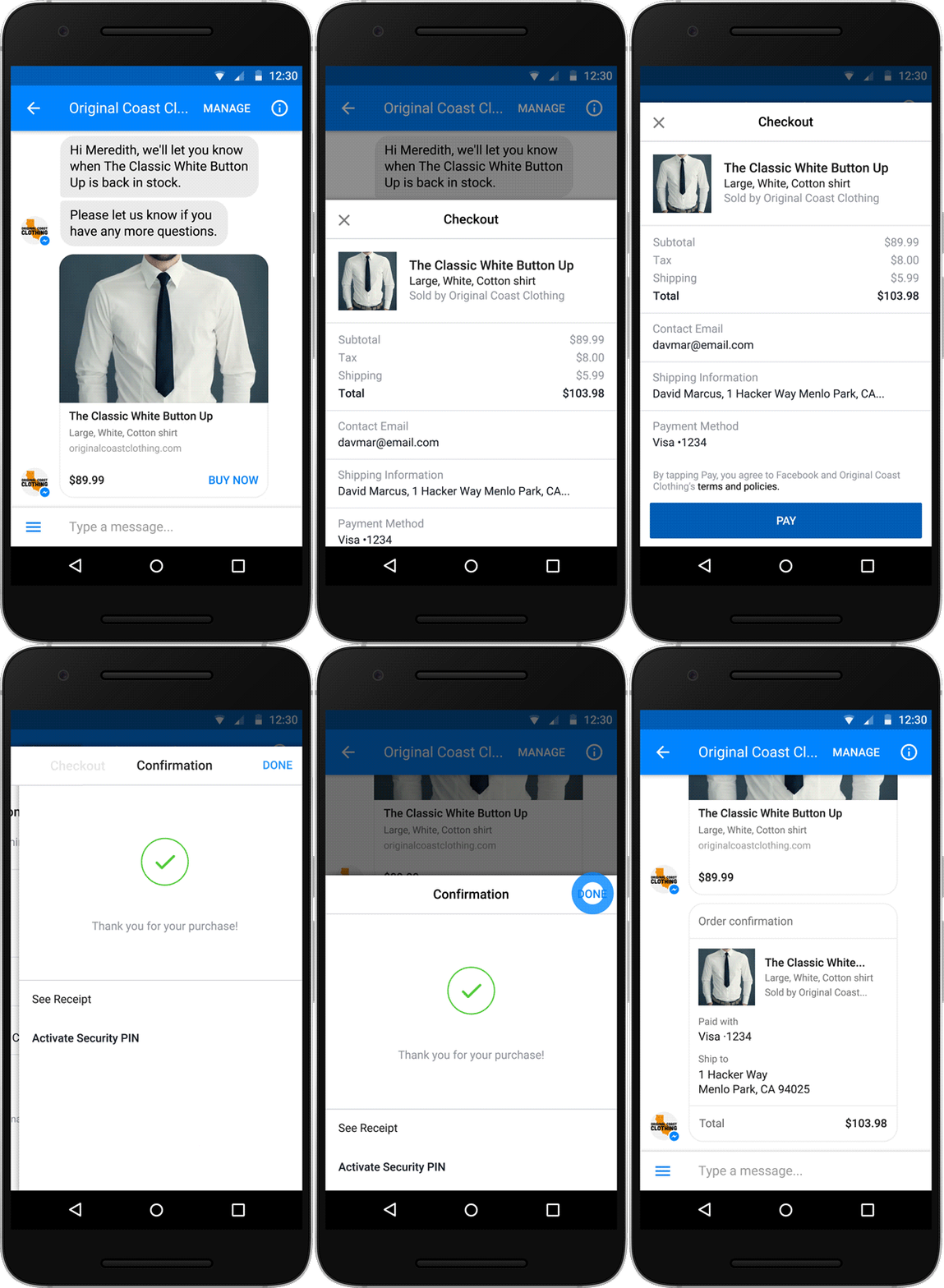
Messenger 2.1 makes payments less demanding to setup and more consistent for individuals to checkout. Presently, consumers can pay utilizing a single step process through Messenger web view. Payments on Messenger is still in beta and accessible in the US. This sure is a feature which is anticipated by many, and is capable of enhancing customer experience.
In-app Payments in Messenger
5. Call-To-Action (CTA) Buttons
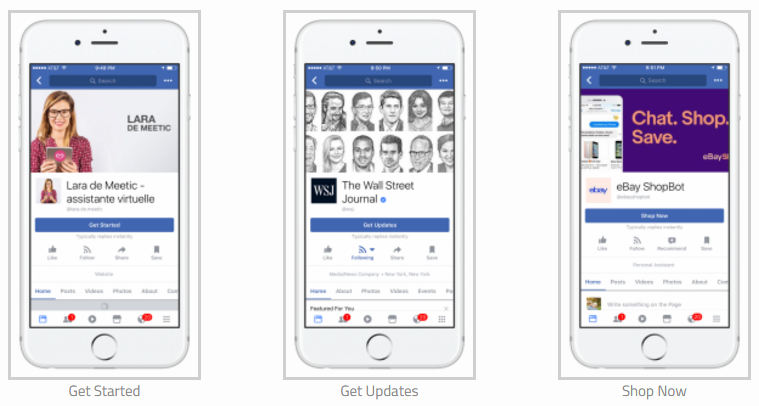
Further improving the customer experience, five new Call to Action buttons are now available for business pages, (making it 6 CTA choices in total) namely, ‘Send Message’, ‘Shop Now’, ‘Get Support’, ‘Get Updates’, ‘Play Now’, and ‘Get Started’. This addition will allow the users to foreknowledge on what to expect once they start a conversation with the particular page.
New CTA Button Additions
Chat bots allow businesses to exploit wide spread and inexpensive customer reach through messenger. The customer focus can vary from very basic to advanced customers, yet lies within a reachable circle through this kind of updates from messenger, which allows conversations to be more systematic, intelligent and interesting. Messenger bots do offer specialized services, answering common customer service questions and streamline product purchases yielding a larger competitive advantage to your company.
Dealerships and the newest additions
Car Dealers spend thousands of dollars per month on Social Media advertising. A Car Dealer Chat bot completes your Facebook marketing sales funnel by providing a new stream of untapped leads from a platform already in everyone’s back pocket.
A bot which is designed for dealerships removes barriers by immediately providing contact information for each car shopper and a way for your brand to communicate with them. You can utilize the Discover tab to find the most suitable dealership bot for you. You will see a whole list of dealership related bots once the category is picked, you can make your choice after venturing the available bots.
Messenger in app payments also can be used to enhance the customer experience by allowing the customer to make a payment via messenger, in a use case like making an advance payment. The customer can view all the payment related details once the payment is done successfully, without even having to visit the store.
Further, the page of a dealership can be customized with the most suitable CTA button, giving the user a better understanding of what kind of a reply he is going to receive back, reducing the time that he will have to spend on pondering on the kind of answer he will get.
How cool will that be to have a Messenger bot for your dealership, which allows your customers to shop, pay, share with your dealer groups, get support/ updates about related to deals, discounts, and dealerships? We at Pulse are waiting to fuse these newest additions to Pulse Chat, providing your customer the best customer experience.
After a rise in acid attacks in London, with some against food delivery riders last month, Deliveroo is now providing its workers with helmet-mounted cameras. Since the attacks, over 70 Deliveroo riders have said they do not want to complete a delivery because of safety fears, reports the BBC. The initial trial of helmet cameras will be offered in the Hackney area of East London, a trouble spot, and will allow riders to film evidence in case of future attacks. A new security feature allowing riders to raise concerns about specific addresses — which is shared with the company and local authorities — has also been introduced in the Deliveroo app.
Additionally, Deliveroo promised to hire 50 new employees to focus on rider safety. "The...
Tesla’s Model 3 is unique in a lot of ways, but one that stood out among the early reviews and photos was the dashboard, which is essentially unbroken by instrumentation save for that single, large 15-inch touchscreen that sits in the middle next to the steering wheel. We have photos of the dash and its various screens, but a Tesla fan put together an interactive simulation of the… Read More
La libéralisation du format Thunderbolt 3 a probablement bousculé un peu les choses, alors que la plupart des boîtiers de cartes graphiques externes coûtent de véritables petites fortunes, l’arrivée d’un standard utilisable librement risque de pousser sur le marché des solutions beaucoup plus accessibles.
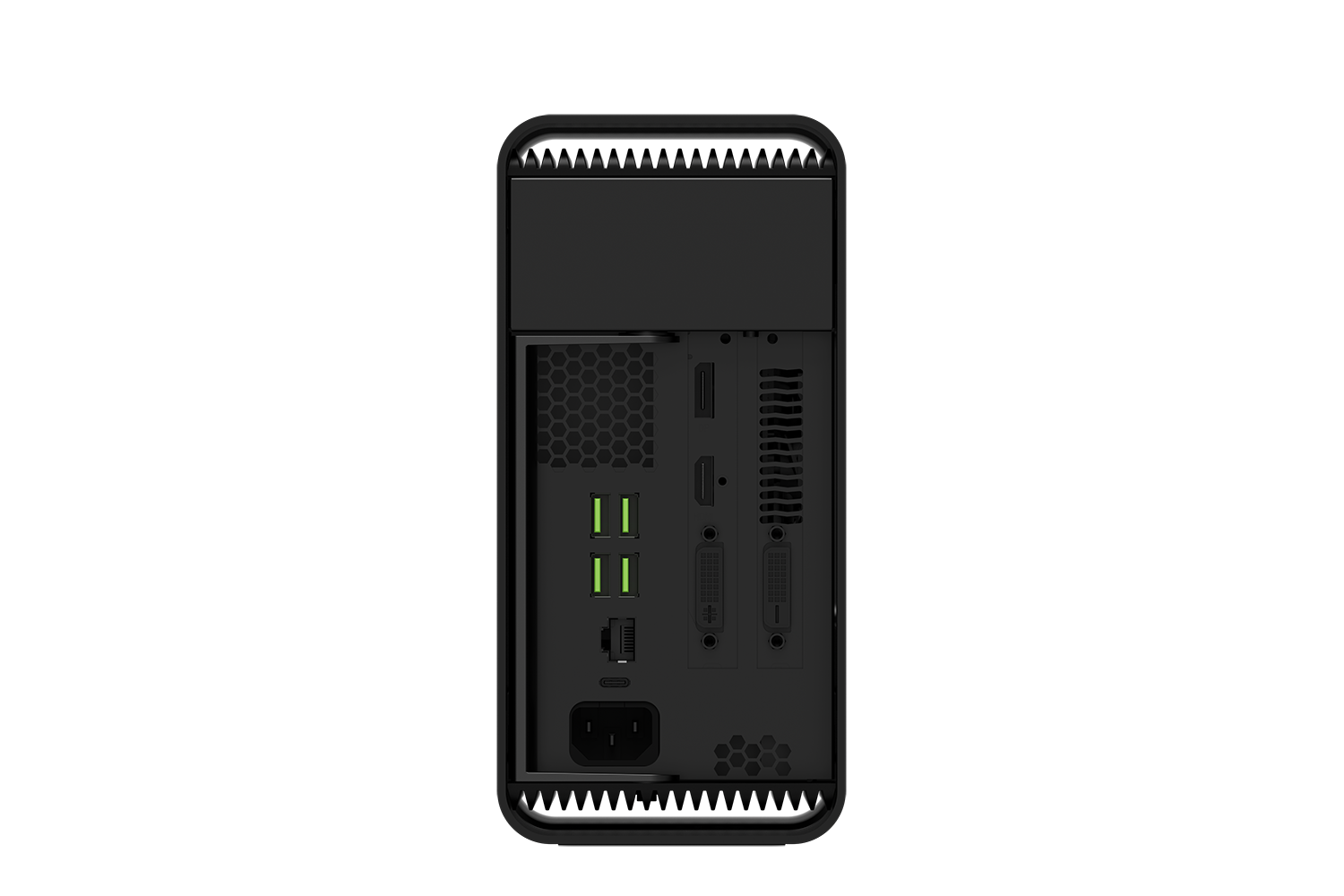
Les solutions graphiques externes de type boitier ou dock, permettent d’ajouter les capacités de calcul et d’affichage d’une carte graphique performante de PC de bureau à un portable ou un MiniPC classique au travers d’une connexion spécialisée. Avec l’ouverture du Thunderbolt 3, le nombre de machines qui vont employer ce type de connecteur va probablement rapidement augmenter, ce qui fait bien les affaires des fabricants de solutions graphiques comme AMD ou Nvidia qui vont pouvoir trouver de nouvelles cibles pour leurs puces graphiques.
Avec des solutions graphiques externes, on peut profiter du meilleur des deux mondes : Utiliser en mobilité un portable classique avec une bonne autonomie mais dénué de circuit graphique avancé et le connecter en mode sédentaire à un boitier externe qui lui apportera des fonctions 3D puissantes mais également toute la connectique nécessaires pour exploiter totalement son engin : Ports USB pour connecter des périphériques de saisie, port réseau Ethernet, sortie vidéo et même un retour d’alimentation pour recharger la batterie du portable.
Ce type de dispositif est donc parfait pour étendre les capacités de son portable en mode bureau et une seule prise lui suffit ce qui permet de vraiment profiter rapidement de toutes ses capacités.
Ce travail avec des sociétés externes se dirige pour le moment vers des usages professionnels, les cartes Titan Xp et Quadro sont visées par la marque. Mais cela aura évidemment des retombées plus générales. Quand des constructeurs de boîtiers s’empareront du sujet, quand il mettront bout à bout leur expérience dans la conception d’alimentations adaptées, de la connectique nécessaire et de boîtiers, le tarif de ces engins devrait largement baisser.
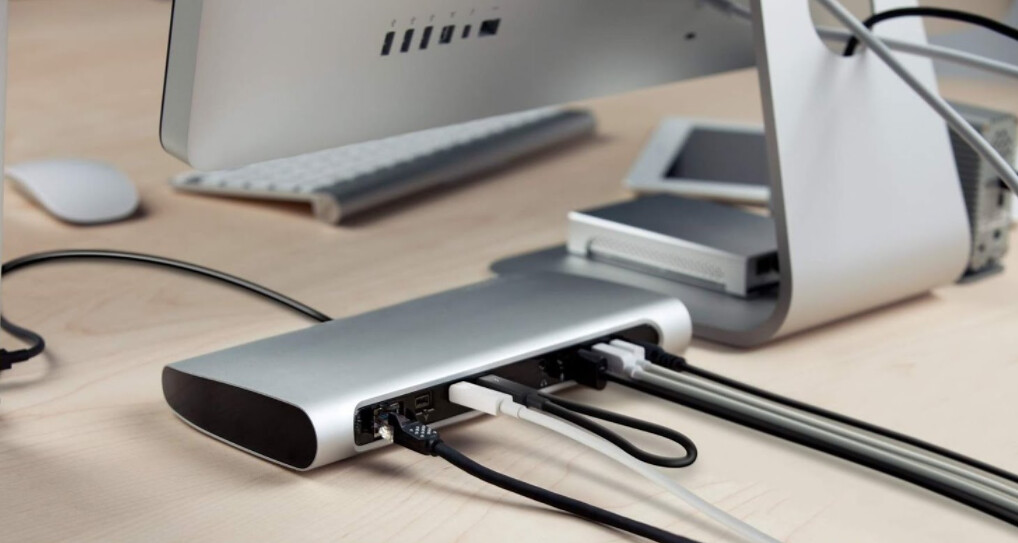
Un dock Thunderbolt 3 de Belkin
Il est difficile de concevoir que ce type d’appareil coûte encore aujourd’hui souvent plus de 450€ et qu’un dock Thunderbolt 3 coûte au bas mot 299€. La disparition des royalties liées à l’usage du format d’Intel devrait baisser la note et surtout attirer plus de concurrence. On devrait donc voir les prix s’affaisser rapidement.
The Robbe and Martelé trunk bar set instantly transforms your living room into a high class bar. This exquisite leather and wood trunk is stocked with everything from a 12 bottle wine rack to top quality bar accouterments like silver plated Martelé drinkware.
Roads aren’t the stagnant strips of concrete and asphalt they appear to be. They’re constantly changing. Traffic lights are added and removed, stop-and-go intersections turn into roundabouts, a typically quiet street turns into a construction zone. It’s happening everywhere, all the time.
Human drivers might be able adjust to this dynamic environment, but autonomous vehicles need extra help. They need maps. But not just any old map will do, say the three founders behind Lvl5, a new mapping and localization startup that launched publicly today.
high-definition 3D maps that are constantly refreshing
Lvl5 was founded in December by Andrew Kouri and Erik Reed, who both worked on Tesla’s Autopilot team, and George Tall, a computer vision...
New Vision is a startup spinning out of the South China University of Guangzhou China showing their plastics based flexible AMOLED technology using an oxide TFT backplate, enabling entirely new designs of electronics as new categories of products with flexible unbreakable displays can be made. Nuvision currently shows 400ppi Flexible AMOLED but they will also be able to soon present Flexible OLED with pixel densities of up to 1000ppi. Filmed at the I-Zone startups and New Tech Demos area at the SID Display Week.
Badgelife is the celebration of electronic conference badges, a way of life that involves spending far too much time handling the logistics of electronics manufacturing, and an awesome hashtag on Twitter. Badgelife isn’t a new thing; it’s been around for a few years, but every summer we see a massive uptick in the lead up to Def Con.
For the last few years, the designers and engineers deep into Badgelife have had the same conversation dozens of times. One person says, “you know, someone should build a badge that’s a quadcopter.” Another person replies, “Can you imagine how annoying that would be? You’d be putting ten thousand people in a room during the closing ceremonies at DefCon, and a few dozen people would have quadcopters. It would be horrible” Yes, there have been plans to build a quadcopter badge for the last few years, but cooler heads prevailed.
Someone finally did it. The wearable electronic conference badge that’s also a quadcopter is finally here. It’s the work of [b1un7], and it’s going to be exactly as annoying as you would expect.
This badge is actually two PCBs, the first being the quadcopter itself, the second being the joystick/controller. The quad is shaped like the familiar jolly roger found in most Whiskey Pirate badges ([b1un7] hangs with that crew), and the controller is a pirate’s treasure map loaded up with joysticks, buttons, and radios. The motors for this quad appear to be brushed, not brushless, and it looks like the arms of the quad have some space for obnoxiously bright LEDs.
This is an awesome badge but it’s still [b1un7]’s first attempt at making a badge. Right now, there’s still a bit of work to do — there’s only one week until Defcon — but with any luck [b1un7] will have 25 of these wearable electronic conference badges buzzing around. It’s a terible idea and we love it.
When it comes to getting the juice out of a Juicero pack, it seems that your bare hands can do the job just as quickly as the $400 high-tech machine designed specifically to do the job. Now, Juicero is shutting down.
Mark my words — The back half of 2017 will be the year that chatbots enter mainstream media.
However, just like the website and the app, there are certain principles that we must adhere to, ensuring our creation is effective and valuable to our audience/customer.
Millennials are now the largest consumer group in the market place (if you want to know more about this, head over here.)
These creatures like to have fun when they interact with a company or brand. When creating a bot, One way to satisfy this is to give your bot a quirky persona (make it like Jay Z, if you wish.)
Now, you should have an idea about who your target market is. You should also understand the main personality types that are associated with this market.
From this knowledge, create your bot to represent this personality. For example, if your target market involves young and ‘hip’ teenagers, then using colloquial language isn’t just ok, it’s beneficial.
For example: “What’s up man!?”, “Gimme a sec…” you get my drift.
It’s no secret that chatbot technology is not quite good enough to answer EVERYTHING, so a way around this is to 1) let your audience know you cannot answer everything and 2) give them options regarding what your bot can answer.
A perfect way to do this is to provide a message along the following lines:
“Just so you know [insert name here] I can answer questions related to the following…” (Remember point one though, please do not create a boring sentence like this!)
Then actually give you audience the opportunity to select one of these options by using buttons or quick replies. Your audience will benefit, because they will receive value instantly.
3. This ain’t email. Keep it short and sharp
Let me pose you this question: Why doesn’t email marketing work?
Answer: Am email takes too long to read and are they are generally impersonal (there are obviously other reasons, but let’s focus on this for now)
When creating a chatbot, do not fall into the trap of long messages. Keep it short, sweet and to the point. Your audience is interacting with a chatbot because they want something from it right here, right now. Don’t make it complicated by adding useless jargon or edge case language.
Answer the questions posed by your audience. No more, no less.
4. Have a proactive focus, rather than reactive
Too many of the current chatbots are purely focused on answering audience questions in a reactive manner. Meaning they are waiting for the consumer to make the first move.
Why is this a problem you ask? Well, the majority of consumers are actually looking for value before they do ANYTHING. So, based on how your audience has previously interacted with your bot, why not send them content/information that is relevant to them?
Push more interactive content out to your audience, and I guarantee that your chatbot interaction rate will increase dramatically.
5. Make it fun!
Just so we’re clear — I do not have an obsession with Jay Z. He just so happens to have a few great GIFs ;)
People crave excitement. So, why not make your bot the thing that they can gather such excitement from? Along with a quirky persona, ensure that you have he required functionality that allows your audience to have fun with your bot. This can range from witty replies, to conversational games.
Regardless of the benefit of your bot (engagement, sell products etc) the fun aspect can and should be included.
If you have found this beneficial, please like and share below.
If you have anything you would like to add, I’d love to hear from you! Simply leave a comment below and I will get back to you. Alternatively, reach out to me on twitter.
Le 4 juillet dernier, Cap Digital recevait Sophie Pène, Anne-Sophie Taillandier, Cédric Mora et Jean-Baptiste Soufron pour étudier à quatre voix le Règlement Général sur la Protection des Données (RGPD) qui entrera en vigueur en 2018 dans toute l’Union Européenne. Retour sur une soirée d’échange et de partage qui a permis de dégager le sens de ce dispositif, son histoire et ses perspectives.
« Le nouveau RGPD, c’est un changement de business model qu’il faut voir comme une opportunité de se démarquer ». Dès le début des échanges, Anne-Sophie Taillandier donne le ton de la soirée : si la réglementation européenne est souvent perçue par les entreprises comme une contrainte supplémentaire (avec obligation de mise en conformité dès le 27 mai 2018), le RGPD porte aussi en lui de nombreuses opportunités stratégiques. Avec en premier lieu, l’enjeu fondamental de la dataliteracy. A l’heure où 54% des citoyens européens se déclarent plus vigilants qu’auparavant sur la protection de leurs données personnelles en ligne, la question de la confiance ne peut plus être ignorée. Dans le domaine de la publicité, par exemple, médias et annonceurs font face à des bloqueurs d’annonces (ad-blocker) qui témoignent de la prudence des utilisateurs. Si les entreprises montrent où les données sont stockées et comment elles sont utilisées, alors les utilisateurs seront plus à même de livrer celles dont ils estiment l’utilisation utile, sans recourir à des techniques de contournement.
Regagner en confiance et en compétitivité
C’est bien là l’esprit de ce règlement qui offre la possibilité aux entreprises d’impulser un changement culturel vers une meilleure protection des données personnelles au profit des utilisateurs ET de la valeur d’usage de leurs produits et services numériques. « On est sur un principe d’écologie des données. Il faut maintenant ne récupérer que les données dont on a besoin« , insiste Jean-Baptiste Souffron pour marquer les esprits. Il s’agit de mettre un terme à la période des habitudes minimales en termes de protection des données personnelles, précise Sophie Pène, afin que les entreprises se pensent comme de véritables « info-structures » responsables. Et sur cette question, l’Union européenne compte bien se donner les moyens de son ambition. Le RGPD imposera ainsi à chaque entreprise de se doter d’un Digital Privacy Officer (DPO) – en remplacement du Correspondant Informatique et Libertés (CIL) créé par la loi de 1978. En cas de non-respect de la loi, les sanctions seront renforcées – jusqu’à 4% du chiffre d’affaire annuel mondial pour une multinationale. De quoi inquiéter tous les acteurs en place, des PME jusqu’aux GAFA.
Assurer la portabilité des données
Le RGPD tente donc de remettre les citoyens au cœur du jeu. Ces derniers doivent jouir pleinement de la propriété de leurs données afin qu’ils ne soient pas captifs d’écosystèmes fermés, comme c’est souvent le cas aujourd’hui. Le nouveau règlement intègre à ce titre la notion de portabilité des données qui entend restituer aux individus les données collectées lors de l’utilisation de services sur internet, pour leurs usages personnels ou pour les transférer vers un autre service.
C’est ce qu’a rappelé Cédric Mora en évoquant le travail de la start-up CosyCloud, dans laquelle a récemment investi la MAIF, qui prône la possibilité pour chaque citoyen d’avoir à disposition un serveur personnel sur lequel stocker ses données et en garder le contrôle. Si l’objectif est louable, Jean-Baptiste Soufron souligne les enjeux techniques que soulève ce principe de portabilité : « La donnée n’est pas quelque chose de fluide, qui passe d’une plateforme à une autre facilement, parce qu’il n’y a pas de standard en portabilité. Si je demande à Whatsapp de transférer mes données à Snapchat, c’est compliqué. Alors imaginez si je veux les transmettre à 1 000 start-up ! ». Il reste aussi à évaluer comment la fluidité et la portabilité des données seront de nature à redistribuer les cartes du jeu de la concurrence, dans un contexte de domination des plateformes.
Privacy by design : penser données dès la naissance d’un projet
De même, le RGPD défend le principe du privacy by design. Chère à Margrethe Vestager, commissaire européenne en charge de la concurrence, cette notion obligera les entreprises à mettre la protection des données au cœur de leur réflexion, dès la naissance d’un projet. L’enjeu : produire des outils et services numériques qui protègent mieux nos données personnelles, en garantissent l’utilisation minimale utile et s’interdisent de recueillir des données non nécessaires. C’est ce que défend la start-up Snips, labellisée par Cap Digital et lauréate du Concours Mondial de l’Innovation en 2014, qui propose d’utiliser l’intelligence artificielle de chaque objet connecté pour anticiper le comportement de l’utilisateur. Un process qui permet de lui proposer les applications dont il a besoin sans lui faire perdre de temps et sans utilisation excessive de ses données personnelles.
Un texte vivant…
Si ces grands principes sont désormais figés dans la loi, les intervenants ont cependant insisté sur le fait que le RGPD est un règlement vivant. Le texte continuera d’évoluer en même temps que les technologies qu’il régule. Cette condition est nécessaire pour stimuler la réflexion et établir une nouvelle culture responsable de la protection des données personnelles à laquelle aspire l’Europe.
En cela, le RGPD ne propose en rien des solutions clef-en-main pour les entreprises. « N’attendez pas de solutions toutes faites » met en garde Sophie Pène. Entreprises et organisations doivent maintenant discuter ensemble afin de mieux définir le nouveau modèle qu’elles souhaitent voir émerger et qui leur permette de respecter le règlement européen et de regagner la confiance des utilisateurs.
… dont on mesure déjà quelques limites
Enfin, notons que le RGPD ne traite que des données personnelles et pas des autres types de données, comme celles produites par les machines et capteurs. C’est là l’une des faiblesses du texte qui laisse s’échapper de son radar les enjeux liés aux croisements des données personnelles et non-personnelles. Autre lacune : le règlement reste flou sur la nécessaire transparence des algorithmes, véritable serpent de mer de la politique numérique européenne face auquel les États peinent à apporter une réponse commune. Jean-Baptiste Soufron a également rappelé le risque d’émergence, sur fond de lutte contre le terrorisme, d’une société du contrôle permanent par les nouvelles technologies et souligne à ce titre la portée hautement politique des questions soulevées par le RGPD… auxquelles le texte ne répond finalement pas. Dès lors, si le RGPD offre une véritable mise à jour de la loi informatique et libertés de 1978 et introduit de nouveaux concepts centraux, il ne semble être que la première pierre d’un édifice juridique qui reste à construire. Construction à laquelle nous devons tous prendre part, collectivement Le pôle Cap Digital réfléchit déjà aux formes de réflexion et de mobilisation les plus adaptées pour avancer sur quelques-unes des pistes évoquées le 4 juillet.
Depuis quelques années, les minions sont partout. Sur des bornes d’incendie, sur des tuyaux, en gâteaux, en tatouages ou sur du vernis à ongles. Alors que Moi, moche et méchant 3 est actuellement sir nos écrans, à Córdoba en Argentine, la street artist Lu Yorlano vient de transformer des bornes-stationnement de la ville en une armée de Minions. Une réalisation de street marketing commandée par Universal Pictures pour promouvoir la sortie des nouvelles aventures de Gru et des Minions. Dans l’esprit, on avait adoré ce silo à grain dans l’Indiana transformé en Minion géant. Décidément, les petits bonhommes jaunes n’ont pas fini de squatter notre quotidien.
LG shows their ultra-thin 77” OLED wallpaper display, the thinnest in the world, displays with speakers built-in, and other leading display technology such as the LG Mobile and VR displays such as a bezel-less 5.5" 4K smartphone display, Plastic Flexible or Conformed OLED displays for upcoming Flexible Smartphones, 31.5" 4K HDR narrow bezel PC Monitor, 10bit Curved 37.5" WQHD+ display, 14" 4K for the laptop market, 31.5" 8K Display, in-touch systems on 14", 15", 23.8" laptop displays for the 2-in-1 market. LG also shows some automotive displays such as a conformed 12.3" plastic OLED display, 12.3" 60% Transparent OLED for the automobile HUD market, LCD and OLED display as a hybrid 12.3 MLD where LCD can be the background and the OLED can show the needle. A 6.13" mirror display. They also show a 55" FHD 40% Transparent OLED Display. Filmed at SID Display Week.
Prague, Czech Republic-based artist Filip Hodas, AKA Hoodass, creates gorgeous 3D renderings, inspiring himself from elements from pop culture and video games. In this new series of artwork, he portrays decaying pop culture icons as he thinks they’d look in a dystopian future. Check ’em all out below! (After the “read more” link if you’re reading this from the front page!
The Panoptic Studio is a new body scanner created by researchers at Carnegie Mellon University that will be used to understand body language in real situations. The scanner, which looks like something Doc Brown would stick Marty in to prevent him from committing fratricide, creates hundreds of videos of participants inside the massive dome interacting, talking, and arguing. The team has… Read More
Dani Clode is a grad student at London’s Royal College of Art (RCA) and her latest creation is something called The Third Thumb: a 3D-printed prosthetic that does exactly what its name suggests. “The origin of the word 'prosthesis' meant 'to add, put on to,’ so not to fix or replace, but to extend,” Clode told Dezeen. “The Third Thumb is inspired by this word origin, exploring human augmentation and aiming to reframe prosthetics as extensions of the body.”
It’s absolutely unnecessary stuff, and I love it.
The thumb straps on to the side of your hand, and connects to a bracelet containing wires and servos. The wearer controls it using pressure sensors that sit under the soles of their feet. If they press down with one foot the thumb will...
Cantonné à être commercialisé sur le marché chinois, l'assistant vocal intelligent du géant de l'e-commerce ne reconnait - pour l'instant - que le Mandarin. Avec cette initiative, Alibaba est en retard sur ses concurrents, notamment JD.com et Baidu.

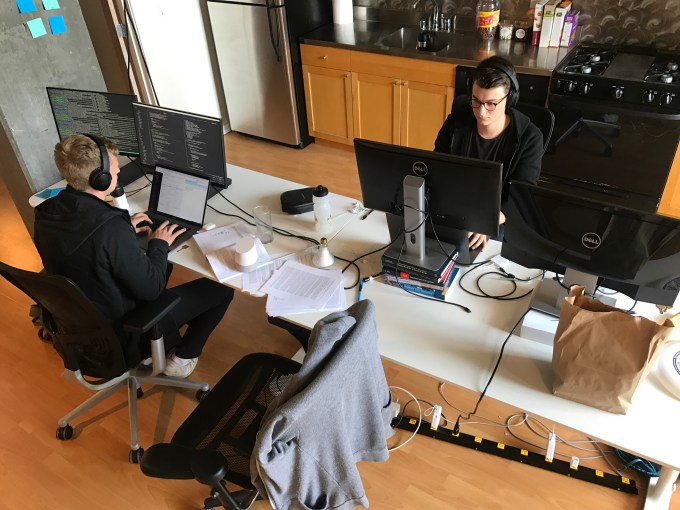 There are a million and one services for voice transcription on the market. But even with just one job to do, I’ve never seen a service that can handle the long tail of vocabulary used in the real world. This is particularly challenging if you’re a startup trying to sell your service to enterprises that rely on accurate transcription for their operations.
















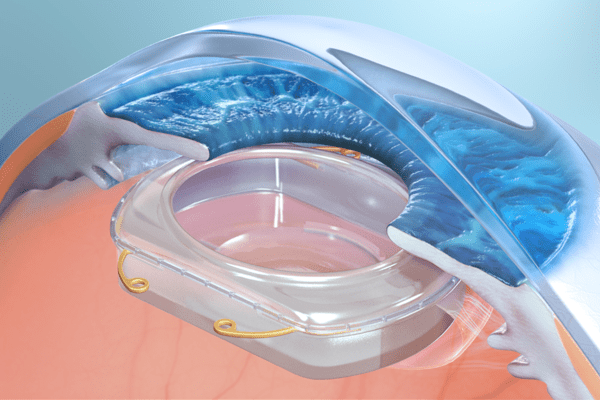 Google and other tech companies have come up with glasses and contact lenses for the purposes of AR, but Omega Ophthalmics is taking a much more invasive approach by using surgically implanted lenses to create a space for augmented reality inside the eye.






 Tesla’s Model 3 is unique in a lot of ways, but one that stood out among the early reviews and photos was the dashboard, which is essentially unbroken by instrumentation save for that single, large 15-inch touchscreen that sits in the middle next to the steering wheel. We have photos of the dash and its various screens, but a Tesla fan put together an interactive simulation of the…





















 The Panoptic Studio is a new body scanner created by researchers at Carnegie Mellon University that will be used to understand body language in real situations. The scanner, which looks like something Doc Brown would stick Marty in to prevent him from committing fratricide, creates hundreds of videos of participants inside the massive dome interacting, talking, and arguing. The team has…