For years, businesses, governments, and researchers have struggled with a persistent problem: How to extract usable data from Portable Document Format (PDF) files. These digital documents serve as containers for everything from scientific research to government records, but their rigid formats often trap the data inside, making it difficult for machines to read and analyze.
"Part of the problem is that PDFs are a creature of a time when print layout was a big influence on publishing software, and PDFs are more of a 'print' product than a digital one," Derek Willis, a lecturer in Data and Computational Journalism at the University of Maryland, wrote in an email to Ars Technica. "The main issue is that many PDFs are simply pictures of information, which means you need Optical Character Recognition software to turn those pictures into data, especially when the original is old or includes handwriting."
Computational journalism is a field where traditional reporting techniques merge with data analysis, coding, and algorithmic thinking to uncover stories that might otherwise remain hidden in large datasets, which makes unlocking that data a particular interest for Willis.
Tesla's stock tumbled by almost 16 percent on Monday, driven by widespread pessimism over the EV maker's plummeting sales numbers worldwide.
Wall Street analysts lowered their price targets significantly, expecting the stock to slide even further. Tesla's losses have been so staggering over the last couple of weeks, the company has wiped out all of its gains since president Donald Trump was elected in November. Its stocks are currently down over 55 percent since hitting a record high in mid-December.
The carmaker's CEO Elon Musk has felt the hurt too, wiping out over $120 billion of his net worth since reaching an all-time high late last year. Today alone, Tesla's sliding stock has cost the entrepreneur a whopping $12 billion.
Meanwhile, Musk has taken to his social media platform X-formerly-Twitter in a desperate attempt to drum up excitement for his embattled carmaker.
While Tesla's stock was getting hammered, Musk was retweeting posts that gushed over Tesla being the "best car" and tales of the company's plagued driver assistance feature saving them from a crash.
Anger over his endorsement of far-right extremism and two Nazi salutes during Trump's inauguration celebration has begun to spill over, with waves of protests and vandalism hitting Tesla dealerships across the country.
The man to blame for the outpouring of negative sentiment has since tried to play the victim card, while senselessly blaming other billionaires for Tesla's disastrous stock performance.
"Heartfelt thanks to everyone supporting Tesla," Musk wrote, "despite many attacks against our stores and offices."
Tesla's massive slide was accompanied by a widespread and extended outage of Musk's social media platform X-formerly-Twitter.
Without offering any evidence, the billionaire blamed a "massive cyberattack."
"We get attacked every day, but this was done with a lot of resources," Musk tweeted. "Either a large, co-ordinated group and/or a country is involved."
Considering the sheer number of enemies Musk has made, it's not exactly a stretch to imagine somebody had it out for the platform.
"What we've been seeing is consistent with what we've seen in past denial of service attacks, rather than a configuration or coding error in the platform," Netblocks director Alp Toker told the BBC, referring to a type of attack that takes down websites by overwhelming them with traffic.
Other social media users suggested Musk may have orchestrated the outage to distract from the company's woes.
It's not just Tesla and Musk feeling the hurt. US stocks plunged today overall, the worst day for the Nasdaq and Dow since 2022, as Yahoo Finance reports.
Trump's trade war has sparked widespread uncertainty and market pessimism. Over the weekend, the president refused to rule out the possibility of a recession, describing the economy as going through a "period of transition."
And Musk is happily doing his bidding, leading mass layoffs of federal government workers. The billionaire has been accused of stuffing his pockets and using his newfound influence in the White House to secure plush governmentcontracts for his businesses.
But Tesla investors aren't impressed with his performance, accusing Musk of being far too distracted by his government rampage. A poll by retail stock-trading platform StockTwits conducted earlier this month revealed that 60 percent of respondent investors said that "Musk's White House focus" is "hurting Tesla," as Business Insider reports.
"We think shareholders have legitimate concerns about Elon Musk being spread too thin and it's become clear he's now spending more time on DOGE than anything else," CFRA Research senior equity analyst Garrett Nelson told BI.
"The truth of the matter is the company should be run by somebody who isn't so political and can bring the brand back, if that's possible," Tesla investor Ross Gerber told the outlet last month.
Tesla's disastrous day leaves plenty of questions unanswered. Is this just a temporary blip, or are investors looking for a more permanent readjustment?
Musk has bet big on the carmaker's plans for rolling out a robotaxi service. But given the company's financials, Tesla appears to have far bigger fires to put out before it can deliver on that promise.
If you’ve ever watched a sci-fi movie where doctors use futuristic technology to see inside the human body in real time, then Medivis’ augmented reality surgery might feel like it’s straight out of the future. But it’s real—and it’s happening now.
Using Microsoft’s HoloLens 2, this groundbreaking technology overlays 3D MRI scans onto a patient’s body, allowing surgeons to see tumors, blood vessels, and other critical structures before they even make an incision. It’s like having a holographic X-ray that comes to life right in front of you. Watch the video and see how augmented reality is making surgery safer and smarter!
if you’re in Brussels and looking for something to do this Thursday night, come out to my book talk!
…As always, the searchable archive of all past issues is here. Please please subscribe here to support ChinAI under a Guardian/Wikipedia-style tipping model (everyone gets the same content but those who can pay support access for all AND compensation for awesome ChinAI contributors).
Context: There’s been a lot of noise about Chinese firms racing to adopt DeepSeek, but can Chinese AI chip companies support the deployment of DeepSeek models? This AItechtalk article (link to original Chinese) analyzes the capabilities of Chinese AI chip outfits (e.g., Cambricon, Moore Threads, Enflame, etc) to support inference services for DeepSeek models. One crucial distinction: whether the chips support a distilled version of DeepSeek1 — a smaller-sized model with a few billion or dozens of billions of parameters, which reduces deployment costs — or the full-parameter version of DeepSeek (with a parameter count as high as 671 billion).
Key Takeaways: With nearly 20 Chinese chip companies rushing to announce that their products could support DeepSeek’s models, one important point of clarification is needed: can your chips the full-parameter version or just the distilled version?
Running the full-powered version of DeepSeek requires more than just one server rack of 8 cards, presenting challenges for Chinese chip firms that struggle to run multiple high-performance servers in parallel. On these interconnection problems, senior AI chip engineer Jack relays, “It will be difficult to do it, and there may be no end in sight to successfully adapting to the full-parameter version of DeepSeek.”
In contrast, Chinese AI chips face no issues with supporting the distilled version of DeepSeek. And perhaps we shouldn’t be so quick to discount the distilled versions. “I once thought that adapting a distilled version of DeepSeek model was not very valuable, and many engineers also preferred the full-blooded version of DeepSeek, but now my thoughts have changed.” Bo Lin, who has more than 20 years of experience in the chip industry, said, “The distilled version of the model can meet the chat needs of ordinary users, which is of great significance to the dissemination of AI.”
Despite the accuracy limitations, Jack also stated that distilled models can significantly boost the capabilities of edge AI: “With a distilled version of DeepSeek, for example, a particular application scenario that could only deploy a 7B model before can now achieve the performance of a 14B model.”
Why do Chinese AI chip companies trail Nvidia on this front? We’ve mentioned the issue of interconnections within and between server racks (Nvidia’s NVLink is a key strength here). Let’s get deeper into the details:
Chinese AI chips do not support FP8 data representations, which is a common method to reduce the memory footprint of AI applications. By contrast, in 2022, Nvidia’s H100 chip already supported FP8. Since Chinese AI chips only support FP16, deploying DeepSeek requires twice the storage and memory footprint, increasing the need for more cards.
Bo Lin, the chip industry veteran, is very blunt about the fact that the latest Chineese AI chips do not support FP8: “This shows that many people who make AI chips in China do not understand AI.”
From the article: “After DeepSeek exploded, we wanted to adapt it with a card from a domestic AI chip company.” Boyuan, a practitioner at a Chinese intelligent computing center, said, “But the reality is that if the (inference) performance of DeepSeek on an (Nvidia) A100 is 100 points, this domestic card only provides a few points of performance, and even if it is optimized, it only has a performance of around 10 percent that of the A100.”
I’ll conclude with some granular figures to keep an eye on going forward.
One useful indicator is the inference processing speeds of these chips (when running DeepSeek models, for instance). You want to get to at least 20 tokens per second to provide a satisfactory user experience; this results in a first word latency of 1-1.4 seconds.
AItechtalk learned that “current leading Chinese AI chip companies have only achieved 10 tokens/s…to adapt to the full-parameter version of DeepSeek.” Though, the piece also cites some reports by Chinese AI chip companies that they’ve achieved 25 tokens per second in intelligent computing centers in deploying the full-parameter version of DeepSeek.
Many of AItechtalk’s sources suggested that Chinese companies wouldn’t get to the 25 tokens/s mark until the end of the month.
Note: Jack, Bo Lin, and Boyuan in the article are all pseudonyms.
For The Verge, Justine Calma revisits America’s first generation of semiconductor manufacturers:
The industry employed many women and young people from Hispanic and Asian immigrant families who’d previously worked in canneries that were closing up shop as Americans started importing more fresh fruit. The factories offered a new kind of assembly line work that you didn’t need a degree or much training to land. But a lack of appropriate safety measures left workers vulnerable to a slurry of chemicals that posed dire health risks. Over the years, many of the workers had miscarriages, including Yvette.
Now, as the U.S. is building out new semiconductor manufacturing factories, CHIPS Communities United — a a coalition organizing for the safe and responsible implementation of the CHIPS Act — has “published a letter to semiconductor industry execs asking them to sign legally binding community benefit agreements when they build new fabs. They asked companies to replace chemicals that can cause cancer, miscarriages, birth defects, and fetal brain damage.”
The Intellectual [知识分子] did a helpful summary of Dalian University of Technology’s annual report on China’s R&D spending. The comparison of R&D intensity levels between China and G7 countries was especially useful. China sits in the middle of the G7 countries on this metric, with a R&D investment intensity of 2.54%, which trails the U.S., Japan, Germany, and the United Kingdom.
By Zeyi Yang, this is a portal-opening Wired article that profiles Candise Lin, a California-based social media influencer who “scours the Chinese internet looking for a new celebrity feud, the hottest meme, or perhaps a viral college dorm challenge, which she then translates into English and explains in a minute-long video.”
As Josef Burton, former US diplomat who follows Lin on Instagram, captures the significance of this portal, “China is presented as this completely othered place where no one jokes around, this censored, barren hell space that’s all hyper propaganda … But no, people joke around. Daily life exists. Memes exist.”
Robyn Mak’s Reuters commentary applies some of the key takeaways from my argument about China’s “diffusion deficit.” One interesting tidbit: “Last year, more than 60% of 500 small and medium sized (Chinese) enterprises polled are only in the ‘early’ stages of digitisation, using basic data management and IT applications.”
Thank you for reading and engaging.
These are Jeff Ding's (sometimes) weekly translations of Chinese-language musings on AI and related topics. Jeff is an Assistant Professor of Political Science at George Washington University.
Check out the archive of all past issues here & please subscribe here to support ChinAI under a Guardian/Wikipedia-style tipping model (everyone gets the same content but those who can pay for a subscription will support access for all).
Also! Listen to narrations of the ChinAI Newsletter in podcast format here.
From the article: “A distilled DeepSeek model uses the data generated by DeepSeek-R1 to fine-tune other models. The parameters range from a few billion to dozens of billions, such as DeepSeek-R1-Distill-Qwen-1.5B/7B/14B/32B, DeepSeek R1-Distill-Llama-8B/70B.”
Сybercrime has been growing, and hackers are invading your systems and networks to steal data, install malware, and more. So why do these individuals commit attacks in cyberspace? The way to gain a better understanding of the mindset of different types of hackers is to be able to better protect yourself as a business, as a government and as an individual.
In this article, we will look at the most common psychological profiles of hackers in general and try to determine what drives cybercriminals. We’ll look at financial motivation, ideology, ego, curiosity and boredom, revenge, and more. Knowing the diverse reasons they have will help strengthen cybersecurity strategies.
Financial and Material Gain
One of the most common motivations for hackers is financial or material gain. Cyberattacks provide opportunities to make money quickly and anonymously. Even basic ransomware campaigns that encrypt files can net thousands of dollars in cryptocurrency from a single business.
Selling stolen data is also lucrative - full identities and financial information often fetch over $1,000 per record on dark web marketplaces. The profits only increase for more sensitive data like healthcare records, intellectual property, or classified government information. This black market economy fuels many financially driven attacks.
Crime as a Service business model also eliminates the barriers to monetising cybercrime. Aspiring hackers now have the ability to rent the malware, tools or botnets needed to launch a DDoS attack or a card fraud scam. It is a ‘cybercrime gig economy’ where hackers do not require advanced technical skills to make money.
As IT security trends evolve, the rewards of cybercrime continue to grow while the risks remain relatively low. Proving that a cybercriminal operates across multiple jurisdictions and borders is hard for law enforcement to do. Many financially motivated hackers are betting correctly that a successful attack is worth taking the low risk of any consequences. The money is there, and the barriers to entry are low, so it is no surprise that many hackers are lured by the money.
Ideology and Espionage
Nation state hacking groups also carry out cyberattacks, but they are typically motivated by ideology, espionage or geopolitical interests instead of just profits. These state sponsored groups have resources, capabilities and targets that set them apart from traditional cybercriminals.
Groups linked to countries like China, Russia, Iran and North Korea routinely infiltrate foreign corporations, governments and critical infrastructure systems. The goal is to steal classified information for military and economic advantages.
Attacks related to government espionage have targeted nuclear power plants, electrical grids, government agencies, defense contractors and more. The rise of state sponsored hacking greatly expands the traditional scope of cybercrime.
Ideological hacktivists also attack to advance political agendas, albeit without the resources of nation-state groups. Anonymous and spinoff collectives like LulzSec have claimed responsibility for high-profile denial-of-service attacks, data leaks and website defacements against targets ranging CIA.
While these ideological attacks may not be as technically sophisticated or prolonged, they can still be highly disruptive. Distributed denial-of-service (DDoS) campaigns that overwhelm sites with junk traffic remain a popular tactic for political hacktivists.
Understanding the motives between state sponsored groups and hacktivists can better inform defenses for likely targets. Their attacks are often more focused on disrupting operations or manipulating public perception to advance ideological causes rather than just stealing data or demanding ransoms.
Ego and Fame
In an anonymous world, hacking can appeal to individuals seeking infamy, notoriety and ego boosts. Being the first to exploit a major vulnerability or compromise a high-value target earns significant respect and credibility amongst the cybercriminals underground.
Some hackers even incorporate ego and status into their public personas. Figures like Eugene Kaspersky and Kevin Mitnick achieved mainstream name recognition during their indictments for hacking-related crimes. Other hackers like Guccifer 2.0 maintain blogs to discuss their latest data leaks and taunt victims.
The media itself fuels this cycle by portraying cybercriminals as eccentric masterminds. Of course, the reality is often more unimpressive – most common attacks rely on simplistic methods, reused malware toolkits and vulnerable targets.
However, we have a psychological desire for recognition. Journalists on the receiving end of a hack may be tipped off in advance so that the attack can be hyped up. Or they might tweet about a major exploit on social media before releasing proof of concept code. These public theatrics all feed egos.
Also, in the development of malware and vulnerabilities, underground credibility comes into play. Exploits or 0-day attacks sell for premium rates on criminal marketplaces before software vendors patch the software. Elite technical skills are shown in the capability to compromise systems in ways that defenses can’t react to.
Many hackers undoubtedly get intrinsic satisfaction from overcoming complex security controls. Outsmarting Fortune 500 security teams feeds egos and reputations no matter the underlying motive.
Curiosity and Boredom
For less experienced hackers, curiosity and boredom can be big motivators, especially among younger demographics like students. This helps explain some opportunistic cyber-vandalism, such as website defacements.
In these cases, novice hackers often want to test their abilities more than cause real damage. Breaking into insecure websites feeds intellectual curiosity even if no data is actually stolen. It creates challenges to learn new techniques like SQL injection attacks, cross-site scripting and other web app exploits.
These hackers were curious to explore cybersecurity topics through both legal and illegal methods. On the one hand, many students participate in capture-the-flag competitions, security meetups and hackathons to experiment freely. However, some also turn to unauthorised penetration testing against websites or networks.
Although curious hackers don’t have malicious intent, what they do is very serious. If no data is changed, but there is unauthorised access, public trust and relationships will be shaken. However, there may be reasons to respond to hackers who are more curious than greedy or ideologically motivated.
For some hackers, more experienced, boredom also plays a role on the other end. When basic vulnerabilities such as SQLi or XSS get old and not as novel, then more advanced hackers can start targeting IoT devices, industrial control systems and other specialized victims.
Even though they may not have a financial payoff, these under-protected systems bring forth new challenges to stave off boredom. To compromise an industrial network or an embedded healthcare device is not the same expertise as is required for typical enterprise IT environments. Intellectual curiosity and technical skills are being targeted on operational technology and critical infrastructure feeds.
Of course, these attacks also carry graver damage potential, given the lack of monitoring and oversight. While the hacker's motivation may just be alleviating boredom, the implications spotlight the risks of under-secured networks.
Revenge
Revenge represents another common personal motivation behind cyberattacks. Disgruntled employees or angry spouses may seek to destroy data, leak documents, and disrupt operations at a specific organisation or individual that wronged them.
In one high-profile example, a Saudi Arabian hacker named OxOmar compromised over 15,000 Israeli credit card details before leaking them online. He posted, "Free Saudi's credit cards!". This attack followed similar data dumps from hacktivist groups like Anonymous.
In other cases, former employees turn to hacking tools for retaliation after being fired. Attackers with intimate knowledge of internal networks and systems can cause disproportionate damage through targeted sabotage. Even simple actions like deleting records, misconfiguring servers or wiping workstations demonstrate the security risks of insider threats.
Romantic partners (both former and current) also hack one another more frequently through spyware, location tracking and device monitoring. Physical abuse often extends to digital spheres to control and monitor victims during relationships or even after breakups.
While cyberattacks from nation states and cybercriminals dominate headlines, hacking tied to personal vendettas can be just as devastating. Understanding these motivations alongside safeguards against insider threats strengthens resilience.
Mental Illness and Disorders
Mental health disorders represent another potential factor behind malicious cyber activities. However, it is critical not to overgeneralise or make armchair diagnoses that further stigmatise conditions. Most individuals with mental illnesses are not hackers, and most hackers likely do not have these disorders.
Nonetheless, obsessive personality traits and neurodiverse conditions that manifest in social disorders, impulsivity or addictive behaviors can motivate certain attacks. Hacking may act as an outlet for aggression, obsession and lack of empathy in some cases.
Several infamous cybercriminals have shown potential symptoms of Asperger’s syndrome, narcissistic personality disorder or obsessive-compulsive disorder. Figures like Gary McKinnon and Michael Calce exhibited obsessive traits around technology and hacking from a young age.
Again, this motivation captures only a tiny subset of attackers. Speculating on mental health conditions among hackers should not reinforce inaccurate stereotypes. Additionally, these disorders typically interact with other motivations like curiosity rather than directly causing criminal behaviour alone. However, understanding how mental illnesses may remove inhibitions provides some insight into the mindsets of especially aggressive attackers.
Ethical Implications and Deterrence
Analyzing hacker motivations has ethical implications too. Curiosity-driven students may deserve school sanctions rather than criminal charges. Insider threats from former employees demand responses that are similar to traditional cybercrime.
The compulsive, addictive behaviors implicated in certain mental illnesses also raise issues of agency and consent. Incarceration may be less appropriate than rehabilitation programmes in these complex cases when hacking manifests from disorders rather than malicious intentions.
Incorporating motivational psychology into cybersecurity policies can shape better deterrence, though. For example, emphasising legal penalties may deter financially driven crime but have little impact on ideological hacktivists. Public awareness campaigns regarding ethics and consequences might deter students from hacking for curiosity but not profit-driven cybercriminals.
Understanding the motives behind attacks can inform security controls as well. Strong access management policies mitigate insider threats while anonymising payment systems hamper financially motivated hacking. Implementing controls to match likely adversary motivations boosts efficiency.
Research Limitations
However, there is a lack of even datasets and reliance on self-reporting in current research on hacker motivations. Most empirical studies have mainly relied on rather small samples of students in academic computing programs that are more likely to emphasise curiosity than criminality.
Moreover, most of the psychological assessments of cybercriminals are based on prosecuted cases. Hackers who find themselves in court documents may have very different traits than those who get away with it. Selection bias skews many empirical findings.
Another is survey data and interviews with anonymous hackers. Nevertheless, these studies again rely on honest self-reporting by unreliable narrators.
In reality, the motivations of an individual are likely to be numerous, many overlapping. Hackers’ mindsets are driven by curiosity, profit, ideology and other factors, some of which prevail over other factors, situationally. Granular differentiation between different hacker typologies would be possible to a greater extent if better-standardised assessments were available.
Conclusion
The motivations of hackers cover a wide spectrum from financial gain to ideology, curiosity, ego and others. Technical defenses attempt to block vectors, and combined with these vast psychological profiles, they strengthen the ability to prevent and respond.
There are very different incentives and goals for cybercriminals compared with state-sponsored groups, insiders, hacktivists, or script kiddies. The security teams can get a granular analysis of behavioral motivations and be able to implement targeted controls that reflect possible threats. Additionally, calibrated deterrence policies for compulsion or rational choice are made possible.
Of course, even with a robust behavioral profile of hacker psychology, the human element at the centre of these attacks makes prediction very difficult. The desire for money, change, mischief and mayhem is as enduring as technology changes. Knowing these motivators can help organisations keep up with developing tools and tactics on the cybercriminal underground, even as they change.
Specifically, they found hidden proprietary Bluetooth HCI (Host Controller Interface) commands used to read & write controller memory, and typically used for debugging. However, they could also facilitate supply chain attacks, the concealment of backdoors in the chipset, or the execution of more sophisticated attacks. Tarlogic initially called it a “backdoor”, but some disputed the claim (more on that later), and the company eventually issued an update downgrading it to a “hidden” feature:
We would like to clarify that it is more appropriate to refer to the presence of proprietary HCI commands—which allow operations such as reading and modifying memory in the ESP32 controller—as a “hidden feature” rather than a “backdoor.”
The use of these commands could facilitate supply chain attacks, the concealment of backdoors in the chipset, or the execution of more sophisticated attacks. Over the coming weeks, we will publish further technical details on this matter.
According to the researchers, bad actors could potentially infect not only the ESP32 chips themselves, but devices that connect to them through Bluetooth such as smartphones or even medical devices:
Exploitation of this hidden functionality would allow hostile actors to conduct impersonation attacks and permanently infect sensitive devices such as mobile phones, computers, smart locks or medical equipment by bypassing code audit controls.
That looks scary, especially since over one billion ESP32 devices are in the wild. Let’s have a closer look.
Tools used for discovery included a LibUSB-based Bluetooth device driver and Scapy sockets developed by Antonio Vazquez from Tarlogic, and ROM ELF documentation from Espressif. These allowed them to enable raw access to Bluetooth traffic, and after reverse-engineering work, they eventually discovered 29 undocumented HCI commands in the ESP32 Bluetooth firmware. Those commands can be used to read and write RAM and Flash, MAC address spoofing, and LMP/LLCP packet injection.
Demo code from TarlogicList of hidden ESP32 Vendor-specific HCI commands
The ESP32 Bluetooth security vulnerability has its own CVE (CVE-2025-27840) with a medium severity score of 6.8 points. Targlogic says they will provide more technical details later, and still need specific hardware that will allow them to implement advanced attacks.
What the researchers highlight (vendor-specific HCI commands to read & write controller memory) is a common design pattern found in other Bluetooth chips from other vendors as well, such as Broadcom, Cypress, and Texas Instruments. Vendor-specific commands in Bluetooth effectively constitute a “private API”, and a company’s choice to not publicly document their private API does not constitute a “backdoor”.
Backdoor claims aside, they also tried to assess whether this feature constitutes a security vulnerability. The short answer is that it depends. The longer answer explains that it’s not a vulnerability for customers who do not make a distinction between the privileges of the Host and the Controller. However, it would be for a customer who does not want a compromised userspace on the Host to automatically guarantee a compromised Bluetooth Controller firmware. In any case, they consider use of VSCs granting the capability to read and write memory, flash, or registers is a bad security design, but it impacts all Bluetooth vendors.
Australian startup Cortical Labs has launched what it's calling the "world’s first code deployable biological computer."
The shoe box-sized device, dubbed CL1, is a notable departure from a conventional computer, and uses human brain cells to run fluid neural networks.
In 2022, Cortical Labs made a big splash after teaching human brain cells in a petri dish how to play the video game "Pong."
The CL1, however, is a fundamentally different approach, as New Atlas reports. It makes use of hundreds of thousands of tiny neurons, roughly the size of an ant brain each, which are cultivated inside a "nutrient rich solution" and spread out across a silicon chip, according to the company's website.
Through a combination of "hard silicon and soft tissue," the company claims that owners can "deploy code directly to the real neurons" to "solve today's most difficult challenges."
"A simple way to describe it would be like a body in a box, but it has filtration for waves, it has where the media is stored, it has pumps to keep everything circulating, gas mixing, and of course temperature control," Cortical Labs chief science officer Brett Kagan told New Atlas late last year.
Whether it will actually prove useful remains to be seen, but Kagan is excited for scientists to get their hands on the tech.
"There's so many different options," he told Australian broadcaster ABC News, suggesting it could be used for "disease modelling, or drug testing."
"The large majority of drugs for neurological and psychiatric diseases that enter clinical trial testing fail, because there’s so much more nuance when it comes to the brain — but you can actually see that nuance when you test with these tools," Kagan told New Atlas. "Our hope is that we’re able to replace significant areas of animal testing with this."
For now, the company is selling the device as a way to train "biological AI," meaning neural networks that rely on actual neurons. In other words, the neurons can be "taught" via the silicon chip.
"The only thing that has 'generalized intelligence'... are biological brains," Kagan told ABC. "What humans, mice, cats and birds can do [that AI can't] is infer from very small amounts of data and then make complex decisions."
But the CL1 isn't about to disrupt the entire AI field overnight.
"We're not here to try and replace the things that the current AI methods do well," Kagan added.
Nonetheless, the approach could have some key advantages. For instance, the neurons only use a few watts of power, compared to infamously power-hungry AI chips that require orders of magnitude more than that.
Apart from selling the CL1, Cortical Labs is also looking to sell compute via the cloud, using its own assembled racks of the unusual computers.
In short, while it sounds like an exciting new take on conventional computers, Cortical Labs still has a lot to prove, especially when it comes to teaching neurons not unlike an AI.
"I know where it's coming from, because it is clear that these human neuronal networks learn remarkably fast," University of Queensland biologist and stem cell research specialist Ernst Wolvetang told ABC.
"At this stage I would like to reserve my judgement, because, learning Pong is one thing, but making complex decisions is another," he added.
The latest evidence suggests that Mars used to be a wet world covered in oceans, with astronomers uncovering not just icy remnants of this period, but signs of entire reservoirs of liquid water still lurking beneath the planet's arid surface.
But we're still far from having a complete picture of what the Martian climate looked like billions of years ago, before these oceans dried up.
Now, however, the chance discovery of pale yet unremarkable looking rocks by NASA's Perseverance rover suggest that the Red Planet was not only wet, but much warmer than once believed, according to a new study published in the journal Communications Earth & Environment.
"These rocks are very different from anything we've seen on Mars before," coauthor Roger Wiens, professor of Earth, atmospheric, and planetary sciences at Purdue University, said in a statement. "They're enigmas."
It's a discovery long in the making. The rocks, in the form of pebbles, were actually spotted the day that the Perseverance rover landed on the planet four years ago — but scientists had so much on their plate at the time that the objects went overlooked.
But these pale oddities just kept turning up — over 4,000 of them, in fact, the researchers said. And on a planet as unremittingly monochromatic as Mars, any deviation from the color palette could be significant. Thus, later on, when the team found larger versions of the ashen stones strewn above the bedrock in the Jezero crater, they decided to finally take a closer look.
To investigate, the team used the laser equipped on Perseverance's SuperCam instrument, the state-of-the-art camera that forms the WALL-Elooking head of the rover.
What they found was that these loose "float rocks" — so named because they come from somewhere else and not from the local bedrock — were composed of a suspiciously high amount of aluminum associated with a mineral called kaolinite. And here's the kicker: kaolinite, along with other uncovered minerals like spinel, typically form in the kinds of warm and wet environments that microbial lifeforms thrive in.
"On Earth, these minerals form where there is intense rainfall and a warm climate or in hydrothermal systems such as hot springs. Both environments are ideal conditions for life as we know it," Wiens explained. "These minerals are what's left behind when rock has been in flowing water for eons. Over time, the warm water leaches away all the elements except those that are really insoluble, leaving behind what we found on Mars."
"It's fascinating," Wiens added. "It's unexpected on a cold, dry planet like Mars." Wiens suggests that the kaolinite discovery means that "a lot of the water is still there, on Mars, bound up in the minerals."
To follow up, the team is trying to determine where the rocks came from in order to study them "in place," which would allow them to test how they formed.
La Maison de luxe domine le Customer Experience Excellence 2024 établi par le cabinet d'audit et de conseil KPMG France. Une première pour une Maison de luxe.
SID Display Week 2025 is coming to San Jose, CA, May 11–16. Last year’s event was a whirlwind of groundbreaking innovations. While I managed to share insights on Jade Bird Display’s MicroLED Compensation, I’ve been sitting on information and photos on many other companies from Display Week 2024. With this year’s show right around the corner, it’s time to dust off those notes and many photos and write about the display and optics technology I found at last year’s Display Week, which was so interesting that I want to go back again this year.
For this article, I’m going to cover the LCOS-related companies I met with at Display Week. I plan on writing three or four articles to cover everything I saw on MicroLEDs, OLEDs, and Optics from Display Week 2024. I learned about a lot of AR/MR-related developments at Display Week 2024 and why I am going to it again this year. As I discussed in SPIE AR/VR/MR 2025 Next Week (with comments on CES, Display Week, & AWE), each conference tends to cover different aspects of displays and optics for AR/VR/MR. I will be mixing in some information from these other conferences that pertain to technology, as shown at Display Week 2024.
Partnering with SID and Discount Code
I’ve partnered with SID to share my insights from Display Week — past, present, and future. If you’re planning to attend Display Week, SID has provided the code DW25KARL for a free exhibit hall pass — don’t miss the chance to explore the latest innovations shaping the future of displays.
LCOS is still the display of choice for full-color waveguide AR glasses designs
While (mostly green only) MicroLEDs seem to garner most of the attention these days, they are still expensive and relatively low resolution, and the roadmap to full-color still has some uncertainties. OLEDs, for physics reasons, don’t work with waveguides.
LCOS is still the display technology of choice for full-color, higher-resolution, and larger FoV (>30 °) waveguide AR glasses. The key reasons include:
Cost (relative to MIcroLED and DLP) and availability
Resolution and variety of resolutions and form factors
Optical design experience leading to size reductions
Full color for a little more than monochrome
Color is still a big problem for MicroLEDs
Brightness/efficiency with waveguides (due to relatively low étendue)
Much lower étendue than MicroLEDs
Field sequential color (FSC) results in a smaller pixel and thus a smaller device for better étendue. FSC can have color breakup due to eye movement.
LCOS’s étendue advantages (over MicroLED)
Something often overlooked when comparing LCOS to MicroLEDs is the issue of étendue. Most of the LED (large or small) output Lambertian (somewhat diffuse) light (for more on étendue, Lambertian, and related topics, see Collimation, Étendue, Nits (Background for Understanding Brightness). Waveguides can only accept highly collimated light, and their entrance pupils are relatively small. With MicroLEDs, the difference between the emitter size and pixel pitch allows for some collimation with microlens arrays (MLAs). However, with LCOS, the area of the illuminating LEDs sets the étendue limit. The area of the LCOS’s illuminating LEDs is much smaller than the area of the MicroLED displays. This results in LCOS with LED illumination coupling much more efficiently into waveguides.
MicroLED’s big efficiency advantage over LCOS is that MicroLED’s power consumption is roughly proportional to the Average Pixel Value (APV, also known as Average Pixel Lit = APL) of the whole image. With most LCOS designs, the whole display is illuminated regardless of the AVP. In many, if not most, AR applications, the AVP is likely to be less than 10%; otherwise, the display would block out the real world. However, there is a design dilemma of what to do if it is possible to display a high AVP image. A MicroLED with an AVP of 100% can consume and thus have to dissipate several times the power of an LCOS design for the same brightness. One approach, as used on many larger OLED displays, would be to limit the overall brightness based on content.
The chart below was created by Bernard Kress (of SPIE and Google and formerly a technical leader on Microsoft Hololens 1 &2). The charts show different types of display content and their typical APV/APL for different types of glasses/content. On the other axis, power usage is displayed. The chart gives a rough idea of the concept of power consumption versus content (APV/APL) at a high level.
A key point on the chart is where MicroLED (red line) and ordinary LCOS (cyan/light-blue line) cross at about 12% APL. For small APL, the advantage of MicroLEDs to turn off most of the pixels “wins,” but above ~12%, LCOS, with its étendue advantage, wins. Kress shows “local dimming,” which uses arrays of mini-LEDs to illuminate LCOS (green line), significantly moving the crossover point. How much local dimming helps is a function of a lot of factors, including the size of the mini-LEDs, the number of LEDs that are arrayed, and the location of the content. As Kress’s chart shows, with miniLED local dimming LCOS, the crossover moves to about ~3%.
Meta’ Zonal Illumination (= Local Dimming) Non-Emissive Displays for AR Glass of LCOS
Between Display Week 2024 and AR/VR/MR 2025, Meta has presented papers on LCOS, MicroLEDs, and Laser Beam Scanning (LBS) for use in AR. In other words, they cover everything, or as I have said on many occasions, “In Mixed Reality, if you can dream of it, Meta has tried it.” After all, Meta is spending about $1B per month on MR.
Fenglin Peng of Meta’s Reality Labs presented Zonal Illumination Non-Emissive Displays for AR Glass. They discussed what Meta calls “Zonal Illumination,” which is local dimming. They show 12 x 12 (144) dimming zones. What was shown was an R&D proof of concept. I suspect the 12 x 12 array of mini-LEDs is too large to be what is known as being “étendue-matched” to the entrance pupil of the waveguide. If the array is too large, then due to étendue, part of the light will not couple in and will be lost.
Avegant Spotlight (Local Dimming)
Avegant showed a more modest but aimed at a real product (compared to Meta’s research study) 3 x 3 segmented illumination at SPIE AR/VR/MR in January 2024. The diagram below combines several of Avegant’s concepts, including segmented diming and a “reflective waveguide” to eliminate the large PBS and LED illumination for a small form factor. Avegant said that the LED array is small enough to be étendue-match. However, the small number of segments will mean that it will only work well if the content is not spread over the whole display area.
Ultra High Brightness Color Sequential Front-lit LCOS by Himax (at Display Week 2024)
Ultra High Brightness Color Sequential Front-lit LCOS by Himax Yuet-Wing LI from Himax presented Himax’s front-lit LCOS to reduce the size of the LCOS projector engine. Their design uses a “polarized waveguide,” which is likely different from the “reflective waveguide” used by Avegant in their Spotlight design (discussed above). You should also note that the Himax illumination waveguide is against the panel, whereas in the Avegant design, the light passes through the projection optics to illuminate the panel.
FocaLight small LCOS engine (at CES and AR/VR/MR 2025)
On the subject of small LCOS engines, at both CES and AR/VR/MR 2025, a new company, Focal Light, showed an LCOS projector engine that they say is only 0.7cc (right). I don’t know how they achieved this size, but it is about half the size of the engines shown in the Himax presentation and Avegant’s engines.
Citizen Fine Device Myota Development Center – FLCOS and other LCOS Foundary (Display Week 2024)
Citizen, most famous for watches, has many different divisions/groups. Citizen Fine Devices (CFD) started developing FLCOS (ferroelectric-LCOS, also known as fast-LCOS) device manufacturing for Displaytech. This was sold to Micron, which, in turn, sold it to Citizen. So now Citizen sells the FLCOS devices that it manufactures. Citizen also provides foundry services to make Twisted Nematic (Tn) and Vertically Aligned Nematic (Van) liquid crystal LCOS designs for other companies.
CFD showed many different devices and applications for its FLCOS technology, which is used for both display and electronic shutters (lower left). CFD also makes Quarter Waveplates and high-speed shutters that could be useful components for use in Mixed Reality.
FLCOS has the advantage of being about 10X faster than Tn with similar cell geometries. The big downside of FLCOS is that when it is “DC-Balanced,” it produces a “negative image,” and thus, the illumination must be turned off about ½ the time. Tn and Van LCOS, when DC-balanced, produce a positive image, so the light does not have to be turned off while balancing. The DC balancing problem was a big problem for very bright projectors, but it is less of an issue for LED-illuminated small projectors in AR, where the LEDs can be driven harder for a shorter time period.
CFD claims FLCOS has an advantage over Tn and Van in terms of “cross-talk” (right), which I think is their term for “lateral fields.” Lateral fields occur when light and dark pixels are next to each other, which causes electric field lines to go between the adjacent pixels rather than between the pixel mirror and the ITO coating of the top glass. These lateral fields can cause adjacent pixels to bleed together, particularly when the values are very different.
Creal Using FLCOS (AR/VR/MR 2025)
Creal, which is developing a Light Field headset, is leveraging the switching speed of FLCOS (likely from CFD) to produce time-sequential light fields for its headset device. While Creal has not reduced the headset to its final form factor, it has been showing continuous progress in developing its technology. The photographs below are from their private room at AR/VR/MR 2025.
RaonTech LCOS (plus some OLED and MicroLED development) at Display Week 2024
Raontech’s main business is LCOS, and I see many companies using their panels. At SID Display Week 2024, they showed AR glasses made by Singularity, Geding, and Lumus using their LCOS devices.
The picture below shows their many LCOS panels, plus some work they have jointly developed with Micro-OLED and MicroLED companies, where RaonTech designed the CMOS backplane for controlling the pixels.
VitreaLab has developed a “quantum light chip” that routes laser light for illuminating either LCOS or small LCDs used in VR. Lasers output light with near zero etendue, which results in the light coupling very efficiently into waveguides or other optics with extremely low losses.
Their booth at Display Week 2024 included a demonstration of their technology using an LCOS device with a Digilens waveguide (below).
Meta’s laser routing “photonic integrated circuit,” with Zonal Illumination and using FLCOS (AR/VR/MR 2024)
In another example that proves my statement, “if you can dream of it, Meta has tried it,” Meta Labs, in a presentation at AR/VR/MR 2025, showed a similar photonic integrated circuit (PIC) for routing lasers to illuminate LCOS. At least superficially, it looks a lot like VitreaLabs PLC.
In Meta Lab’s design, the PIC illuminates the LCOS device with routed polarized laser light, which passes back through the PIC after the LCOS has modulated the light. Meta’s presentation goes on to discuss the concept of selective dimming with the PIC and the fact that FLCOS would be a good LCOS technology to use with their PIC illumination.
Conclusion
MicroLEDs get most of the attention these days in optical see-through (OST) mixed reality. However, LCOS involves a lot of “physics,” particularly when it comes to using waveguides. Companies are still innovating to make smaller and more efficient LCOS designs.
Additionally, Meta is spending over $1B/month with multiple teams of researchers. They cover all bases for displays and optics for mixed reality. At AR/VR/MR 2025, they presented papers showing MicroLEDs, Laser Beam Scanning (LBS), and LCOS/FLCOS, thus my “If you can dream it, Meta has tried it” saying.
Thales met en garde contre les risques de dépendance aux satellites privés. La fiabilité de Starlink est remise en cause, alors que son dirigeant, Elon Musk, brouille les frontières entre patron d'entreprise et conseiller politique.
L'apiculture traditionnelle repose sur des méthodes manuelles pour surveiller l'état des ruches et la santé des colonies. Cela implique des inspections régulières pour vérifier le poids, la température interne, l'humidité et l'activité des abeilles. Cependant, cette approche nécessite des déplacements fréquents et peut perturber les colonies, augmentant ainsi le stress des abeilles.
L'apiculture connectée : Une révolution pour les apiculteurs
L'apiculture connectée révolutionne la manière dont les apiculteurs gèrent leurs ruches en intégrant des technologies modernes pour surveiller et optimiser la santé des colonies. Cette approche, souvent désignée sous le terme d'apiculture de précision, repose sur l'utilisation de capteurs et de dispositifs connectés pour collecter des données en temps réel et à distance, permettant ainsi une gestion plus efficace et proactive des ruchers.
Les avancées technologiques au service des apiculteurs
Parmi les innovations majeures, les balances connectées jouent un rôle crucial. Elles mesurent à distance et en temps réel le poids des ruches, fournissant des indications précieuses sur la production de miel, l'activité des butineuses et la santé générale de la colonie. Par exemple, une augmentation rapide du poids peut signaler une miellée abondante, tandis qu'une diminution soudaine pourrait indiquer un essaimage ou un problème sanitaire.
SYMES : Créateur de solutions d'apiculture connectée
Spécialisé dans la conception d'objets électroniques et l'IoT, SYMES a développé des solutions d'apiculture connectée pour répondre aux besoins des apiculteurs modernes. En combinant son expertise en électronique et en systèmes embarqués, SYMES a conçu des balances connectées permettant de surveiller à distance le poids, la température et l'humidité des ruches.
Ces dispositifs, à la fois robustes, légers et précis, offrent une vision détaillée de l'état de chaque colonie, aidant les apiculteurs à anticiper les besoins des abeilles et à intervenir rapidement en cas d'anomalie. Grâce à une surveillance continue, ces balances permettent également de détecter l'inclinaison des ruches, les chocs éventuels et les déplacements anormaux.
Des solutions conçues pour HoneyInstruments
Fort de son expertise dans la conception électronique, SYMES a collaboré avec HoneyInstruments pour développer des solutions d'apiculture connectée sur mesure. En s'appuyant sur les besoins spécifiques des apiculteurs, SYMES a conçu des balances connectées innovantes qui permettent à HoneyInstruments d'offrir des produits fiables, simples, et fonctionnels à leurs clients apiculteurs. Ces balances fonctionnent avec une application mobile intuitive et une plateforme cloud performante. Grâce à cette connectivité, les apiculteurs peuvent suivre en temps réel le poids des ruches et d'autres paramètres essentiels, directement depuis leur smartphone ou leur ordinateur.
Les avantages de l'apiculture connectée
L'adoption de technologies connectées dans l'apiculture présente plusieurs bénéfices :
Surveillance en temps réel : Les capteurs fournissent des données instantanées sur divers paramètres tels que le poids, la température et l'humidité de la ruche.
Réduction des interventions manuelles : Grâce aux informations collectées, les apiculteurs peuvent limiter les inspections physiques, réduisant ainsi le stress pour les abeilles.
Prévention proactive : La détection précoce des anomalies permet d'agir rapidement pour prévenir des problèmes majeurs, tels que les maladies ou les infestations.
Optimisation de la production : En comprenant mieux les cycles de production et les besoins des colonies, il est possible d'améliorer les rendements en miel.
Réduction des coûts d'exploitation : En limitant les déplacements inutiles grâce à la surveillance à distance, les apiculteurs réduisent leurs dépenses en carburant et en temps de travail, tout en optimisant leurs ressources opérationnelles.
Intégration avec des outils numériques performants
Les balances connectées conçues par SYMES pour HoneyInstruments s'intègrent parfaitement avec des plateformes de gestion apicole telles que Beekube et Beeperf. Ces solutions permettent aux apiculteurs de :
Centraliser les données provenant de différents capteurs.
Visualiser les tendances de poids et d'autres paramètres essentiels depuis une interface unique.
Optimiser la gestion quotidienne des ruchers grâce à des alertes intelligentes et une analyse approfondie des données.
Vers une apiculture durable et efficace
En combinant tradition et innovation, l'apiculture connectée ouvre la voie à une gestion plus durable et efficiente des abeilles. Les données précises et en temps réel permettent de prendre des décisions éclairées, contribuant ainsi à la préservation des colonies et à la pérennité de la production apicole. Pour les apiculteurs souhaitant adopter ces nouvelles technologies, il est essentiel de choisir des équipements fiables et adaptés à leurs besoins spécifiques.
L'apiculture connectée transforme la gestion des ruchers grâce à des technologies modernes qui optimisent la surveillance et la productivité des colonies. SYMES contribue à cette évolution en développant des balances connectées performantes, utilisées par HoneyInstruments pour offrir des solutions adaptées aux apiculteurs modernes.
En conclusion, l'apiculture connectée représente une évolution majeure dans la manière de pratiquer l'apiculture, alliant respect des traditions et apport des technologies modernes pour le bénéfice des abeilles et des apiculteurs !
L'Internet des objets (IoT) a révolutionné les secteurs du divertissement et de l'hôtellerie, améliorant les expériences clients de manière inimaginable. Des chambres d'hôtel intelligentes qui s'adaptent aux préférences des clients aux expériences interactives dans les parcs à thème qui anticipent les besoins des visiteurs, l'IoT crée un environnement connecté sans couture, mettant l'accent sur la commodité et la personnalisation. Cette technologie améliore non seulement l'efficacité opérationnelle, mais redéfinit également la façon dont les clients interagissent avec les services de divertissement et d'hôtellerie.
Casinos, une expérience de jeu plus personnalisée
Les casinos utilisent l'IoT pour offrir des services personnalisés et améliorer l'efficacité. Les tables de jeu intelligentes et les machines à sous reconnaissent les préférences des joueurs, permettant des transitions fluides et fournissant des mises à jour en temps réel sur les jeux, promotions et récompenses.
L'IoT renforce également la sécurité avec une surveillance alimentée par l'IA et la reconnaissance faciale, détectant instantanément toute activité suspecte. Les systèmes de gestion de la foule optimisent l'agencement des sols et l'emplacement des jeux pour maximiser l'engagement.
Dans les espaces d'hospitalité, l'IoT personnalise les réglages des chambres et les recommandations de repas. Les paiements sans contact et la commande mobile simplifient le service, réduisant les temps d'attente et améliorant la commodité.
Cependant, bien que l'IoT améliore l'expérience des casinos terrestres, de nombreux joueurs préfèrent la commodité et les récompenses souvent plus importantes offertes par les casinos en ligne. François Leclerc, une figure respectée de la communauté des jeux, a noté que de nombreux meilleur casino en ligne francais attirent les joueurs grâce à des paiements plus rapides, le support de divers modes de paiement, l'accès à des milliers de jeux vérifiables, des mesures de sécurité robustes et des avantages attractifs tels que des récompenses de bienvenue, des tours gratuits, des offres de cashback et des bonus de dépôt.
Alors que l'IoT continue d'évoluer et façonne l'expérience des casinos en personne, les casinos en ligne ont adopté la technologie pour offrir aux joueurs des expériences tout aussi personnalisées et pratiques, garantissant leur compétitivité dans le paysage des jeux moderne.
Hôtels intelligents, des séjours personnalisés comme jamais auparavant
Les hôtels ont adopté l'IoT pour offrir aux clients un séjour plus confortable et sur mesure. La technologie des chambres intelligentes permet aux clients de contrôler l'éclairage, la température et même les options de divertissement par commandes vocales ou applications mobiles. Les préférences personnalisées peuvent être enregistrées et appliquées automatiquement pour les visiteurs réguliers, garantissant que chaque séjour soit unique.
L'IoT améliore également la commodité des clients avec des enregistrements sans contact intelligents et l'entrée sans clé dans les chambres. Les applications mobiles permettent aux clients d'accéder à leurs chambres via leurs smartphones, tandis que les miroirs intelligents avec écrans intégrés offrent des mises à jour météo, des actualités et des recommandations de divertissement, personnalisées selon la localisation et les préférences.
En coulisses, l'IoT aide à optimiser les opérations hôtelières. Les systèmes de gestion de l'énergie ajustent la température des chambres en fonction de l'occupation, réduisant les déchets. Les alertes de maintenance prédictive préviennent le personnel des problèmes potentiels, assurant un service fluide et efficace.
Parcs à thème, attractions plus intelligentes et moins d'attente
L'IoT améliore les parcs à thème en rendant les attractions plus interactives et en réduisant les temps d'attente. Les dispositifs portables et bracelets RFID permettent aux visiteurs d'accéder aux manèges, d'effectuer des achats et de suivre leur famille dans le parc. Ils offrent aussi des recommandations personnalisées basées sur les préférences et les données de foule en temps réel.
La gestion des files d'attente est optimisée avec des systèmes intelligents qui ajustent la disponibilité des manèges, redirigeant les visiteurs vers des zones moins encombrées. Certains parcs proposent une file d'attente virtuelle, permettant aux visiteurs d'explorer pendant l'attente.
La sécurité est renforcée avec des systèmes de surveillance intelligents utilisant l'IA pour détecter les préoccupations et alerter immédiatement les équipes. Les paiements sans contact simplifient les transactions, réduisant l'utilisation de cash et améliorant l'efficacité.
Concerts et événements en direct, améliorer l'engagement du public
Les lieux de divertissement en direct exploitent l'IoT pour créer des expériences plus immersives et engageantes pour les participants. Les bracelets intelligents et les applications mobiles offrent des mises à jour en temps réel sur les événements, guidant les invités vers leurs sièges, affichant les horaires et proposant des recommandations personnalisées pour des produits dérivés ou des repas.
Les systèmes d'éclairage et de son, alimentés par l'IoT, s'ajustent à l'énergie de la foule pour améliorer l'atmosphère des performances. Les stades et arénas connectés utilisent également l'IoT pour optimiser la logistique, comme la direction des fans vers les places de parking et la gestion des files d'attente aux toilettes et aux stands de restauration. Pour les organisateurs, l'IoT fournit des données utiles sur le comportement des participants, permettant d'améliorer les événements et d'optimiser les revenus.
À l'avenir: l'avenir de l'IoT dans le divertissement et l'hôtellerie
L'IoT continuera d'innover dans les secteurs du divertissement et de l'hôtellerie. Les analyses basées sur l'IA amélioreront la personnalisation, anticipant les besoins des clients. Les interfaces vocales et gestuelles deviendront courantes, permettant une interaction sans contact. La durabilité deviendra également un aspect clé, avec des initiatives pour gérer l'énergie, réduire les déchets et économiser l'eau, minimisant l'impact environnemental tout en offrant une expérience client optimale. L'IoT redéfinit l'interaction des clients avec les services, en mettant l'accent sur la commodité, la personnalisation et l'innovation.
Prévention des dangers liés aux jeux d'argent
Les jeux d'argent et de hasard comportent des risques et peuvent être dangereux : pertes d'argent, conflits familiaux, problèmes émotionnels et de santé mentale. Les jeux d'argent peuvent également créer une dépendance.
Établissez des limites, surveillez vos habitudes et demandez de l'aide si nécessaire.
Niantic's Scaniverse is now available as an app for Quest 3 and Quest 3S on the Horizon Store, not just WebXR anymore.
The Scaniverse mobile app for iOS/iPadOS and Android lets you scan real world 3D scenes for free, leveraging on-device processing. In December Niantic launched an Into The Scaniverse WebXR site to let you view them, and those created by others around the world, in VR via the Horizon OS web browser on Quest 3 and Quest 3S.
Now, Into The Scaniverse is also available as an app on the Horizon Store, supporting Quest 3 and Quest 3S.
Niantic claims Scaniverse has the world’s largest collection of Gaussian splats, with over 50,000 scenes from 120 countries. The VR interface lets you browse them on a 3D globe interface marking their capture location.
0:00
/1:08
1×
Scaniverse has been around for three years now, and originally used traditional 3D scanning techniques, leveraging and requiring the LiDAR depth sensor of iPhone Pro and iPad Pro models. Two years ago it was upgraded to work without LiDAR, leveraging advancements in computer vision depth estimation. And last year Scaniverse got its most significant upgrade yet: switching from a traditional 3D stack to Gaussian splatting.
Gaussian splats offer higher fidelity scans, with accurate lighting and reflections. And whereas previous Scaniverse scans only included one specific object, splats include a representation of the background - and this makes them ideal for viewing in VR.
Trying out Into The Scaniverse, I found that the quality of the subjects, the central objects being scanned, is very impressive for on-device scans, while the background is significantly lower detail than what you'd find in Varjo Teleport and Meta's Horizon Hyperscape Demo. But Varjo Teleport is $30/month, and Horizon Hyperscape is only a demo of six scenes, while Scaniverse is completely free. And while Varjo Teleport scans take between 30 minutes and 24 hours, Scaniverse completes in a matter of single-digit minutes, at least on a high end phone.
You can download the Scaniverse scanning app on the App Store for Apple mobile devices or the Google Play Store for Android mobile devices, and you can view Scaniverse splats on your Quest 3 or Quest 3S at the WebXR site or now with the Horizon Store app.
Meta says suppliers across the world are now "heavily pursuing" producing optical-grade silicon carbide, the "wonder material" that made the Orion AR glasses prototype's relatively wide field of view possible.
The Orion prototype, presented at Meta Connect 2024 back in September, stunned the world by achieving what no other fully-integrated transparent AR device in true glasses form factor ever has: a relatively wide field of view, 70 degrees diagonal. Other AR glasses cap out at around 50 degrees, at most.
To reach this relatively remarkable field of view, Orion uses silicon carbide lenses. The primary bottleneck for the field of view of transparent AR is the refractive index of the lens, and silicon carbide has the highest of any known visibly transparent material, 2.7, compared to 1.8 for glass. As such, Meta describes silicon carbide as a "wonder material" for AR.
But there's a problem: producing optical-grade silicon carbide is incredibly complex and expensive, and there is no established commercial-scale supply chain for it. Because of this, Meta admitted at Connect that to sell Orion as a product, it would have to be priced above $10,000.
This is why Meta described Orion as "a time machine that lets us live in the future", and why it isn't being made into a product at all.
Instead, Meta is building a separate AR glasses product, codenamed Artemis, that the company revealed to The Verge's Alex Heath will use glass, the same as Snap Spectacles and earlier AR devices like HoloLens and Magic Leap. This means that Meta's Artemis, reportedly set to launch in 2027, will not have the signature wide field of view of Orion.
Now, in a new blog post explaining the advantages of silicon carbide waveguides for AR, Meta is suggesting that the overwhelmingly positive reception of Orion from the tech industry has led suppliers across the world to accelerate their plans for producing optical-grade silicon carbide.
“Orion proved that silicon carbide is a viable option for AR glasses,” says Meta Reality Labs' Director of Research Science Barry Silverstein, “and we’re now seeing interest across the supply chain on three different continents where they’re heavily pursuing this as an opportunity. Silicon carbide will come out on top. It’s just a matter of time in my book.”
“Suppliers are very excited by the new opportunity of manufacturing optical-grade silicon carbide—after all, each waveguide lens represents a large amount of material relative to an electronic chip, and all of their existing capabilities apply to this new space,” adds Silverstein. “Filling your factory is essential, and scaling your factory is the dream. The size of the wafer matters, too: The bigger the wafer, the lower the cost—but the complexity of the process also goes up. That said, we’ve seen suppliers move from four-inch to eight-inch wafers, and some are working on precursors to 12-inch wafers, which would yield exponentially more pairs of AR glasses.”
Meta notes that it's "still early days", and Silverstein cautions that there’s "still a lot of work left to be done", strongly suggesting that the plan to use glass in the first product still hasn't changed. But the implication seems to be that the company's timeline for one day eventually releasing AR glasses with silicon carbide lenses, and thus Orion's field of view, may be narrowing.
“The world is awake now,” adds Silverstein. “We’ve successfully shown that silicon carbide can flex across electronics and photonics. It’s a material that could have future applications in quantum computing. And we’re seeing signs that it’s possible to significantly reduce the cost. There’s a lot of work left to be done, but the potential upside here is huge.”
Lucid dreaming is the state of becoming aware one is dreaming while still being within the dream. To what end? That awareness may allow one to influence the dream itself, and the possibilities of that are obvious and compelling enough that plenty of clever and curious people have formed some sort of interest in this direction. Now there are some indications that VR might be a useful tool in helping people achieve lucid dreaming.
The research paper (Virtual reality training of lucid dreaming) is far from laying out a conclusive roadmap, but there’s enough there to make the case that VR is at least worth a look as a serious tool in the quest for lucid dreaming.
One method of using VR in this way hinges on the idea that engaging in immersive VR content can create mild dissociative experiences, and this can help guide and encourage users to perform “reality checks”. VR can help such reality checks become second nature (or at least more familiar and natural), which may help one to become aware of a dream state when it occurs.
Another method uses VR as a way to induce a mental state that is more conducive to lucid dreaming. As mentioned, engaging in immersive VR can induce mild dissociative experiences, so VR slowly guides one into a more receptive state before falling asleep. Since sleeping in VR is absolutely a thing, perhaps an enterprising hacker with a healthy curiosity in lucid dreaming might be inspired to experiment with combining them.
It is estimated that about 80 million people worldwide live with a tremor. For example, those who live with Parkinson's disease. The involuntary periodic movements sometimes strongly affect how patients are able to perform daily activities, such as drinking from a glass or writing.
See yourself as the world sees you with the True Image Reflection Mirror! No more flipped reflections – just an accurate, distortion-free view. A K-beauty favorite, this precision-engineered mirror offers adjustable angles for the perfect look. Finally, a mirror that tells the truth!
Cellid Inc. has emerged as a standout innovator at Mobile World Congress 2025 in Barcelona, showcasing their cutting-edge spectacle-type AR glasses that promise to make augmented reality more accessible and practical for everyday use.
While several AR wearables captured attention at the event, Cellid’s approach to lightweight, unobtrusive AR is a refreshing take on a crowded industry.
Making AR as Natural as Wearing Glasses
Cellid’s booth drew consistent crowds eager to experience their reference design for spectacle-type AR glasses.
What makes these glasses particularly impressive is their form factor – as thin and light as ordinary eyeglass lenses while delivering crisp, clear augmented imagery. The company has achieved this through their world’s largest viewing angle glass waveguide technology and full-color plastic waveguides: both on display at MWC.
According to IDC’s “Worldwide Augmented and Virtual Reality Hardware Forecast,” the technology trend is expected to shift from mobile devices to AR/MR glasses as computing evolves toward more user-friendly and personalised experiences.
Cellid appears well-positioned for this transition with their focus on integrating cutting-edge AR display hardware with real-world spatial recognition software.
Visitors to Cellid’s booth were able to participate in interactive demonstrations featuring real-world applications of the reference design announced last November, showcasing how their lightweight AR glasses could seamlessly integrate into daily life. The company’s “Blending of Physical and Digital World” approach emphasises making exceptional information tools more accessible, practical, and convenient.
Other Notable AR Innovations at MWC 2025
While Cellid stood out for their practical, everyday approach to AR glasses, other significant AR wearables also made waves at MWC 2025:
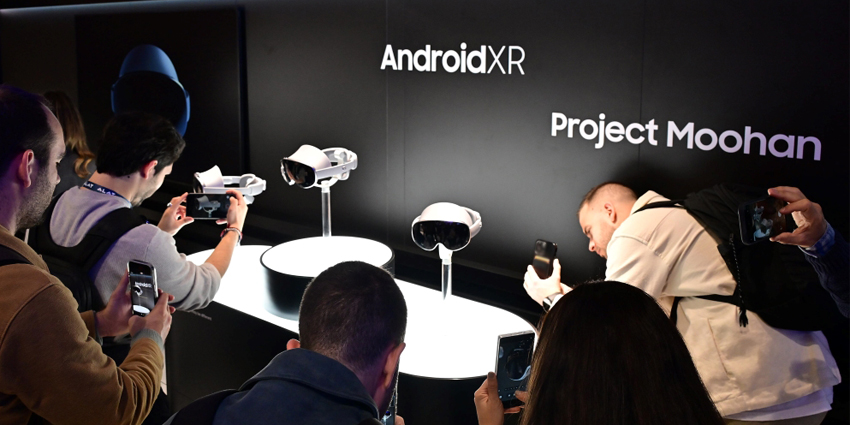
Samsung, Qualcomm, and Google’s collaborative Moohan headset generated buzz with its impressive 3,000 DPI micro-OLED displays and Snapdragon XR2+ Gen 2 chipset. Though positioned as a more immersive mixed reality solution at an expected price point of $999, the Moohan represents the high-end of the AR/XR spectrum compared to Cellid’s more accessible approach.
MICROOLED, Quanta Computer, and STMicroelectronics introduced their ActiveLook-enabled AR smart glasses reference design, focusing on delivering “mission-critical information in real-time and on the move” for sports and outdoor activities. These glasses emphasize low power consumption and practical utility, aligning somewhat with Cellid’s philosophy but targeting more specific use cases.
Perhaps most futuristic was XPANCEO’s display of smart contact lens prototypes, including versions with health monitoring capabilities and AR functionality. While still years from mainstream adoption, these prototypes hint at a possible long-term future for AR wearables.
NTT QONOQ devices showcased both enterprise and consumer-focused AR smart glasses, with their MiRZA wearable leveraging Qualcomm’s Snapdragon AR2 Gen 1 chipset for workplace applications. While impressive technologically, these appear more specialized than Cellid’s everyday glasses approach.
The AR Landscape: Consumer Convenience and Industrial Innovation
Cellid’s presence at MWC 2025 underscores the growing importance of making AR technology accessible and practical for widespread adoption. By focusing on creating AR glasses that look and feel like regular eyewear, while delivering meaningful augmented experiences, Cellid addresses one of the barriers to widespread AR adoption: the comfort and social acceptability of wearing the technology.
Beyond consumer applications, the industrial and enterprise potential for these lightweight AR solutions is substantial.
While Samsung’s Moohan and NTT QONOQ’s MiRZA target specific enterprise use cases with more specialised hardware, Cellid’s approach could factor in everyday workplace scenarios where unobtrusive AR integration is essential. From architects visualiaing building designs on-site to healthcare professionals accessing patient data while maintaining natural patient interactions; truly glasses-like AR wearables open possibilities that bulkier devices cannot match.
The convergence of different AR approaches at MWC 2025 – from Cellid’s practical eyewear and ActiveLook’s sports-focused glasses to NTT’s enterprise solutions and XPANCEO’s futuristic contact lenses – suggests an industry maturing beyond one-size-fits-all solutions. This diversification signals AR’s transition from novelty technology to purpose-built tools for specific contexts and needs.
As competition intensifies and technology advances, we’re seeing specialized development paths addressing different segments of the market. Cellid’s spectacle-type AR glasses represent a particularly promising direction for mainstream adoption, potentially serving as the catalyst that finally brings augmented reality into everyday life—not as an occasionally used special device, but as a natural extension of how we already engage with the world through traditional eyewear.
The performance of photovoltaic systems (PV) in northern conditions has been measured at the University of Oulu, Finland, with two research infrastructures comprising 40 solar panels, including a unique panel carousel system on the roof of the Linnanmaa campus for research purposes.
Two main manufacturers dominate the EV (electric vehicle) market: Tesla, which is most popular in Europe and North America, and BYD, which leads the Chinese EV market. However, both manufacturers have released limited data about their batteries, so the mechanical structure and characteristics of these battery cells have remained mysterious. To compare the batteries used by each manufacturer and better understand how EV batteries function overall, a team of researchers took one of each apart.
Les États-Unis lâchent prise sur la surveillance des hackers russes et stoppent leur opération offensive dans le cyberespace contre le Kremlin. Washington est pourtant une cible privilégiée du renseignement russe.
Distressing news and traumatic stories can cause stress and anxiety—not only in humans, but also in AI language models, such as ChatGPT. Researchers from the University of Zurich and the University Hospital of Psychiatry Zurich have now shown that these models, like humans, respond to therapy: an elevated "anxiety level" in GPT-4 can be "calmed down" using mindfulness-based relaxation techniques.
This week at Mobile World Congress 2025, XPANCEO continues its legacy of drip-feeding details about its emerging AR smart contact lens portfolio at leading industry events.
The firm commonly attends leading XR events to showcase prototypes of its futuristic AR product, which may not be available today but could be a glimpse of XR tomorrow.
At MWC 2025, XPANCEO updated the status of its emerging technology promise by unveiling three new smart contact lens prototypes.
The prototypes include an AR contact lens that supports a wireless powering companion with a charging case.
Another prototype contains a built-in Intraocular Pressure (IOP) sensor, which accurately replicates the human eye and integrates AI to aid in early glaucoma detection—a particularly interesting potential use case for healthcare.
A further healthcare use case comes via the third AR contact lens, which contains biochemical sensors that measure body parameters directly from tear fluid, therefore eliminating the need for blood draws. According to XPANCEO, the biosensing smart contact lens can monitor health factors such as glucose levels, various hormones, and vitamins B1, B2, B3, E, and D.
XPANCEO notes an interest in boosting personal health management and early detection of illnesses. While the technology is still emerging, healthcare and patient care appear to be key focus areas for the innovative firm.
In addition to its new prototypes, XPANCEO is also showing updates to its AR Vision smart glasses, which feature a new integrated microdisplay for immersive visualizations.
XPANCEO’s Year of Innovation
In 2024, XPANCEO significantly increased its presence at various events, emphasizing its portfolio updates as the AR smart glasses trend emerged. This offers a potential glimpse into the future of AR wearables even before smart glasses become mainstream.
For instance, at last year’s Mobile World Congress, XPANCEO showcased four prototypes of smart contact lenses, one of which featured advanced XR capabilities.
Later, at GITEX Global 2024, the company presented AR contact lens prototypes, including a “Smart Contact Lens for AR Vision” that delivers high-quality AR images while consuming minimal microwatts of power.
In addition to the lenses, XPANCEO introduced a framework called Data Reading, which provides real-time interactable information to devices. This data can include device control inputs and biometric information.
Furthermore, at the AWE Asia conference, XPANCEO unveiled five advanced prototypes of AR smart contact lenses. The company presented different versions designed for various use cases, allowing participants to see the devices up close.
In recognition of its innovative prototype technology, XPANCEO won the Best in Business Award for Healthcare and the Photonics Middle East Brilliance Award in 2024. The firm claims that its technology will become fully functional by late 2026.
Plongez dans l’analyse de la plus importante cyberattaque financière jamais réalisée, où les hackeur·se·s sont parvenu·e·s à dérober 1,4 milliard de dollars en une unique transaction malveillante. Un cas d’étude crucial pour les développeur·se·s et expert·e·s en cybersécurité sur l’importance de la sécurisation des transactions financières.
MWC 2025 is proving itself to be a hotbed for XR innovation. Several major firms are taking to the event to showcase the latest in their AR/VR/MR endeavours, with a headline-stealing showcase coming via Samsung’s Moohan exhibition.
At MWC 2025, Samsung showcased many products, from its mobile AI suite to new smartphones. However, a common talking point is its Moohan headset, and this week is no different as Samsung had three headsets on display at the event for looking only.
The device comes as a cross-collaboration between Samsung, Qualcomm, and Google, with Qualcomm providing a chipset foundation and Google working to deploy its much-touted AndroidXR framework on the upcoming headset.
While attendees could not get hands-on with the devices and few details were mentioned, the confident showcase brought many eyes as Samsung seriously stakes its claim in XR following years of speculation.
While MWC 2025 only gave attendees a glimpse of the upcoming headset, here is everything readers need to know about the upcoming device.
Details Specifications and Speculations
This joint venture between Samsung and Google is set to compete with the Meta Quest and Apple Vision Pro. At Galaxy Unpacked 2025, Samsung set the stage for bringing powerful AI integration to mixed reality, potentially setting a new standard for XR devices.
The micro-OLED displays boast an impressive 3,000 DPI resolution, significantly outperforming the Meta Quest 3’s 1,200 DPI, while the Qualcomm Snapdragon XR2+ Gen 2 chipset ensures smooth performance across applications.
The hardware design reflects Samsung’s ecosystem-first approach. The headset features a lightweight frame with plush padding and innovative, magnetically removable light seals. It’s engineered to work seamlessly with smartphones and smart home devices, facilitating natural transitions between virtual and physical interactions.
Other key design features include a lightweight frame with premium build quality, magnetic light seals for customizable immersion, plush padding for extended wear comfort, automatic IPD adjustment via eye tracking, and smart device integration built into the core design.
Moohan is notably lighter than the Apple Vision Pro’s 600-gram weight while maintaining premium build quality and connectivity features.
Moreover, Samsung’s extensive technology ecosystem can help introduce its large Galaxy user base to XR wearables. Additionally, with support from divisions like Samsung Heavy Industries, the potential for the Moohan device to make an impact is significant, especially since existing users and hardware are already in place across various sectors, not just in the consumer market.
While companies like Meta dominate the market, focusing on social media, XR, and emerging AI solutions, Samsung offers a competitive edge through its robust hardware and associated AI portfolio. This provides a promising avenue for competition in the industry.
With an expected price point of around $999, Moohan strategically positions itself between Meta’s Quest 3 ($499) and Apple’s Vision Pro ($3,499) and should be available later this year.
AndriodXR and Google’s Influence
Google has announced Android XR, an operating system designed for extended reality devices and services. The company describes it as the “next generation of computing.” Notably, Google is developing this XR OS in collaboration with Samsung and other significant players in the XR industry, such as Qualcomm, Sony, XREAL, Magic Leap, and Lynx.
In an official press release, Google stated, “We are opening a path for developing a wide array of Android XR devices to meet the diverse needs of people and businesses.”
The launch of the Android XR ecosystem comes alongside Meta’s Horizon OS and Apple’s visionOS, positioning Google and its partners to unite several major players in the emerging technology field and create a competitive alternative to Apple and Meta’s offerings.
The Android XR OS is designed to advance the future of AI, augmented reality, and virtual reality applications on headsets and smart glasses. The current version of Android XR is available for developers in a preview stage, with a broader release expected in the future. Developers working with Android XR can utilize familiar tools such as ARCore, Android Studio, Jetpack Compose, Unity, and OpenXR to begin their projects.
Details about the Moohan device are slim and still emerging, but if Samsung debuts the product this year, the XR marketplace could hit new heights as veteran vendors react to the landmark.
Last year, we’ve featured a super cheap smart ring – BLE, accelerometer, heart sensor, and a battery, all in a tiny package that fits on your finger. Back when we covered it, we expected either reverse-engineering of stock firmware, or development of a custom firmware outright. Now, you might be overjoyed to learn that [Wesley Ellis] has written a Python client for the ring’s stock firmware.
Thanks to lack of any encryption whatsoever, you can simply collect the data from your ring, no pairing necessary, and [Wesley]’s work takes care of the tricky bits. So, if you want to start collecting data from this ring right now, integrate it into anything you want, such as your smart home or exoskeleton project, this client is enough. A few firmware secrets remain – for instance, the specific way that the ring keep track of day phases, or SPO2 intricacies. But there’s certainly enough here for you to get started with.
This program will work as long as your ring uses the QRing app – should be easy to check right in the store listing. Want to pick up the mantle and crack open the few remaining secrets? Everything is open-source, and there’s a notepad that follows the OG reverse-engineering journey, too. If you need a reminder on what this ring is cool for, here’s our original article on it.





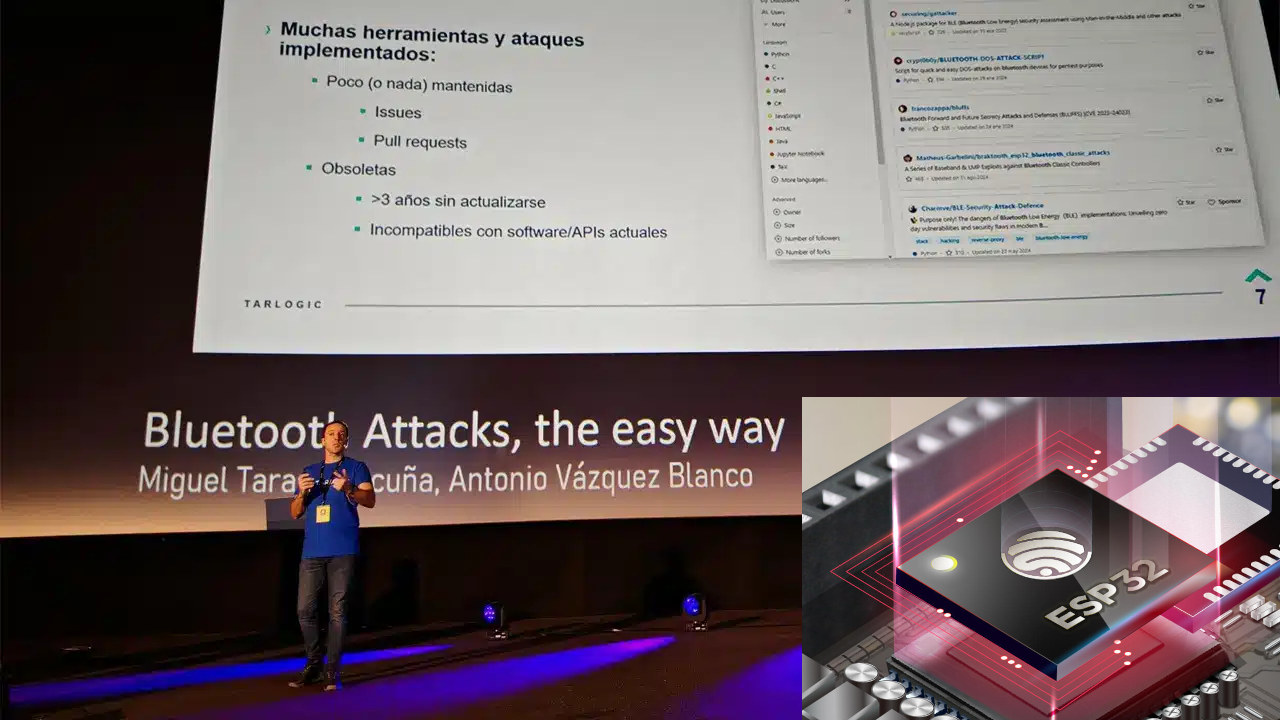
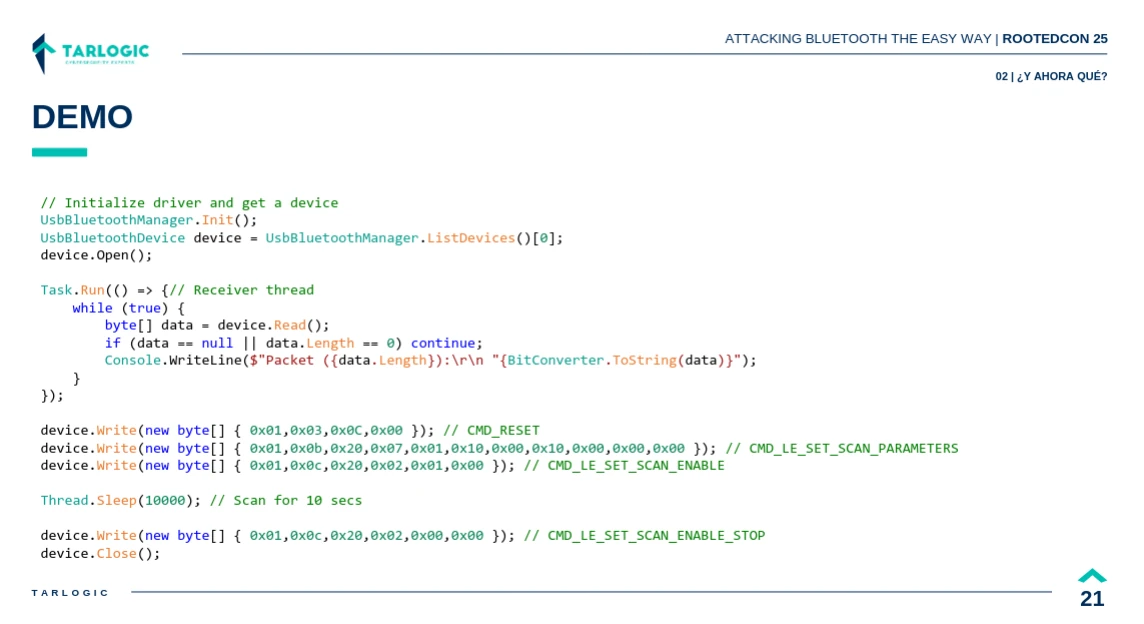
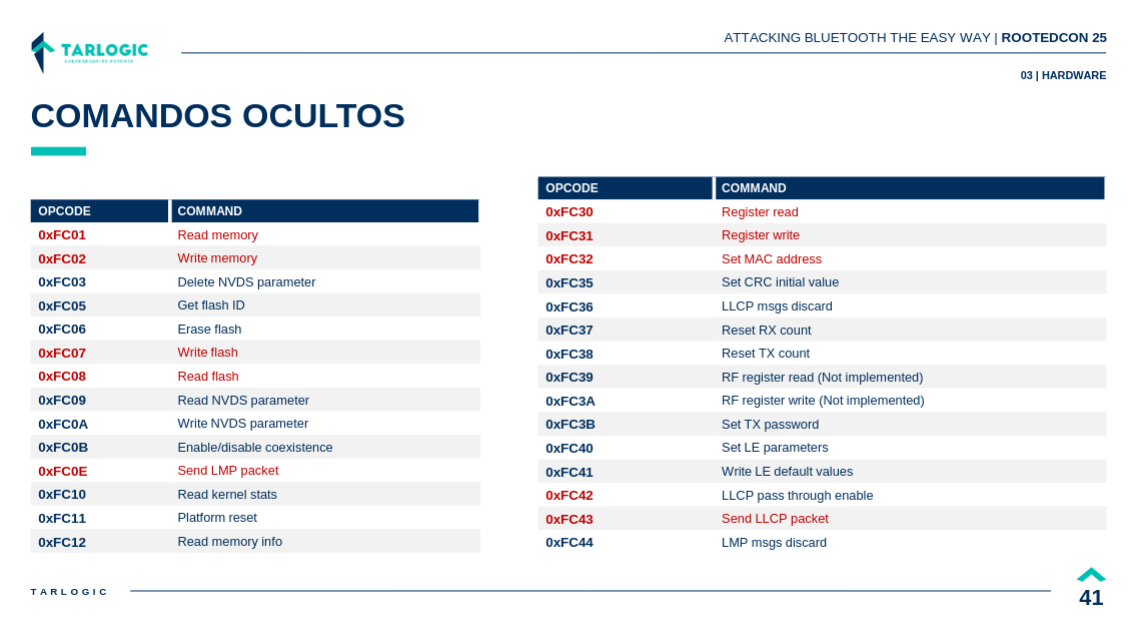





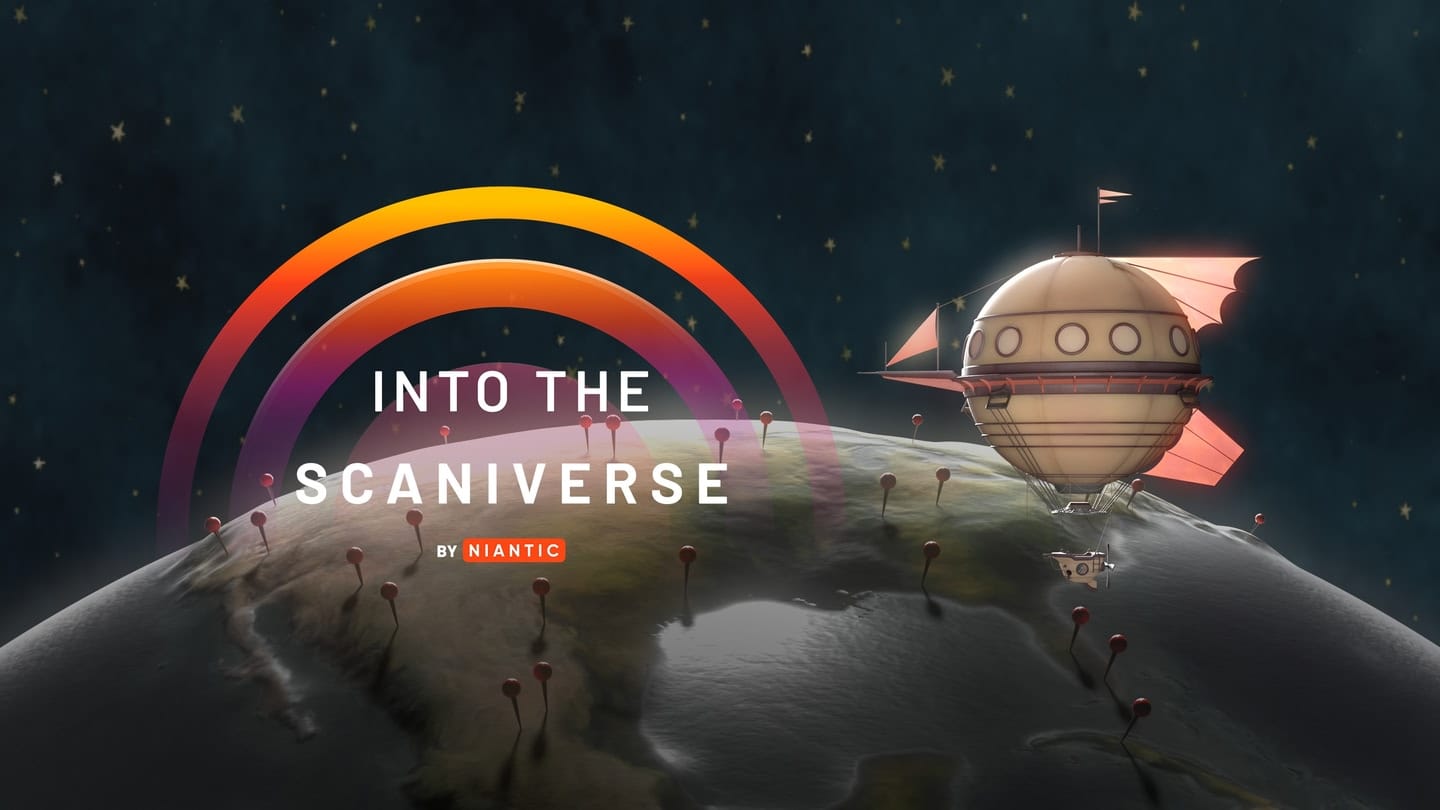
 UploadVRDavid Heaney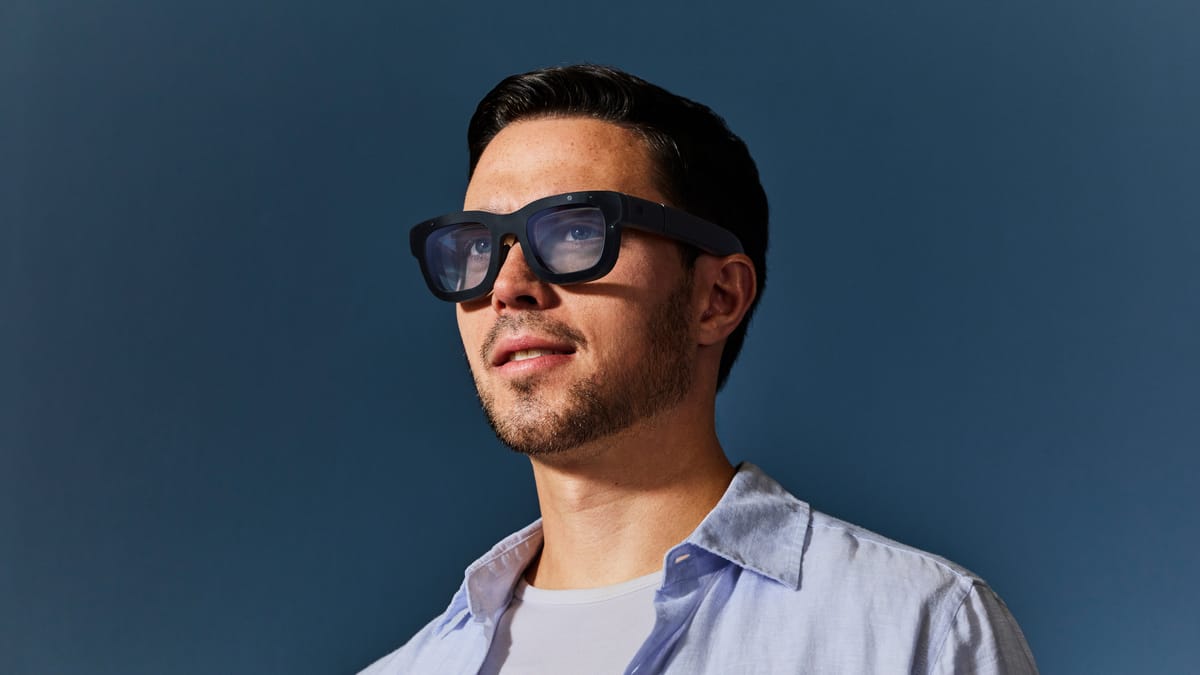
 UploadVRDavid Heaney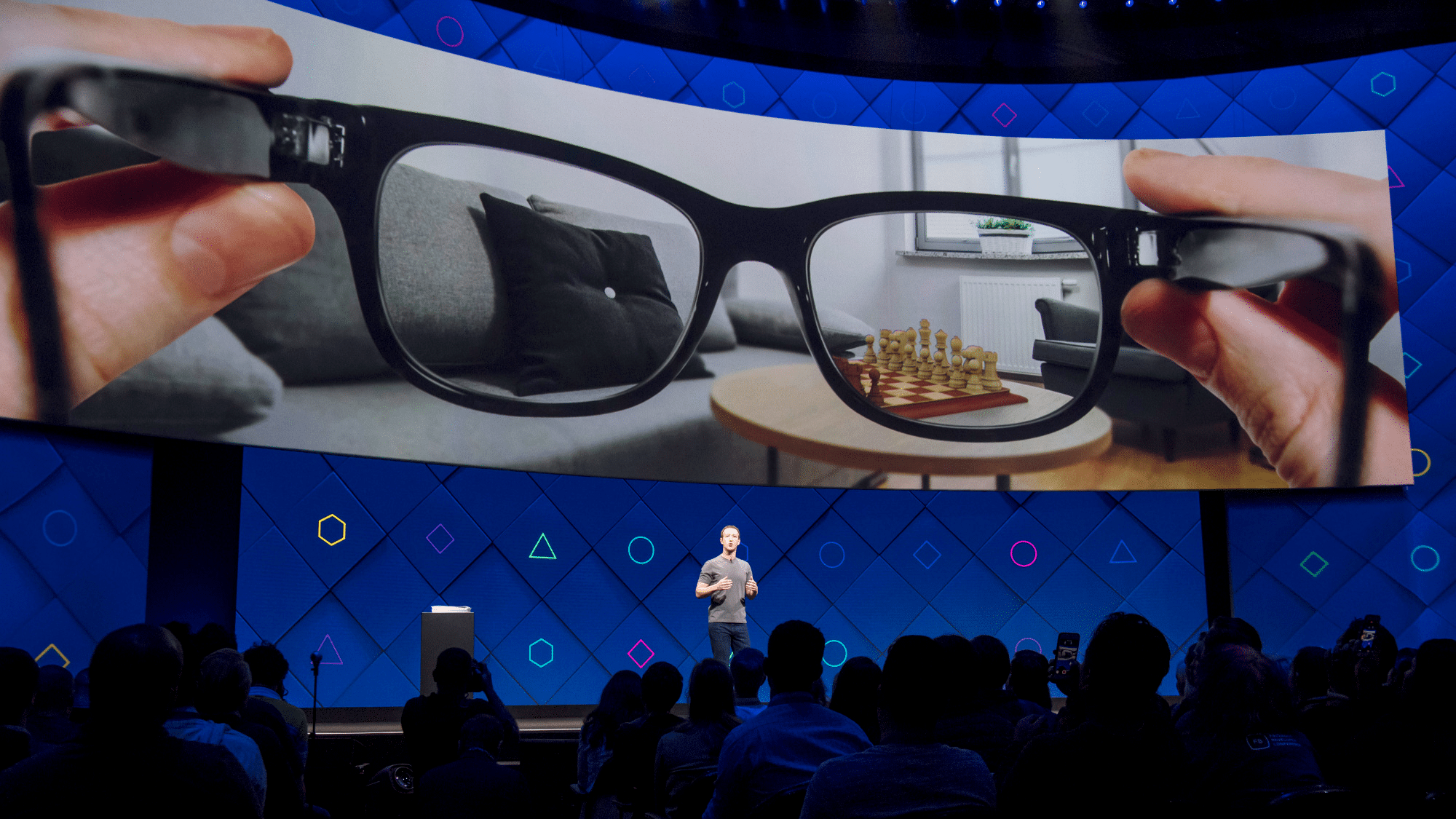
 UploadVRAlex Coulombe