There was one survivor from Air India flight AI171. He sat in seat 11A.
There was one survivor from Air India flight AI171. He sat in seat 11A.
Le Mans Ultimate, an official game for the FIA World Endurance Championship, enters full release next month on SteamVR.
Previously released last year on Steam Early Access, Le Mans Ultimate by Studio 397 will reach version 1.0 on July 22. Announced before this year's famous 24-hour race kicks off, this landmark update also introduces two free 2025 cars, the Aston Martin Valkyrie LMH and Mercedes-AMG LMGT3, alongside promised improvements to polish and performance. All 2025 official liveries will be included for free too.
While this won't be available at Version 1.0's release, Studio 397 also confirmed that Le Mans Ultimate will add the European Le Mans Series. This category also sees the introduction of both the Le Mans Prototype 2 (LMP2) and LMP3 class vehicles, and three famous circuits: Silverstone, Paul Ricard (Le Castellet) and Circuit de Barcelona-Catalunya. Pricing and a release window will be shared “in the coming months.”
As for what's next, the developer confirmed it's planning further updates following Version 1.0. That includes a single-player career mode that's “currently in early production,” letting you take on roles within set teams and progress through the ranks while making “career-impacting choices based on race results.” Driver swaps are also mentioned, and a Q1 2026 release is targeted.
Version 1.0 arrives on July 22 on Steam with PC VR support, and it's out now in early access.
À VivaTech 2025, l’IA ne s’est pas contentée de faire le show : elle a dessiné les contours d’un nouveau rapport de force. Lancement d’une bataille industrielle et culturelle, dans la continuité du Sommet pour l’action sur l’intelligence artificielle. Sur les scènes de VivaTech, cette année, les ambitions ne sont plus feutrées. La France, et […]
The post VivaTech 2025 : la France accélère dans la course à l’IA first appeared on Méta-media | La révolution de l'information.


The startup paradox: grow big by starting small
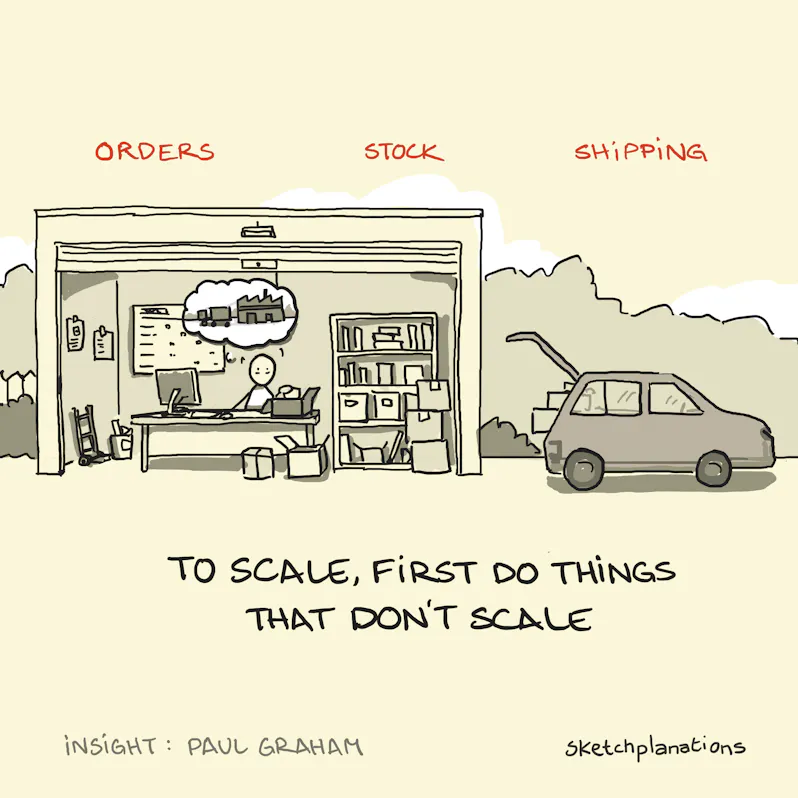
One of the seeming contradictions in a company's journey is that, as Paul Graham, founder of Y Combinator, points out in a well-known essay, to get your company operating at scale, you first have to do things that don't scale.
Why does this sometimes seem like a contradiction? If we picture large, successful tech companies, it's easy to imagine all sorts of clever technology and automation that makes everything work automatically. How else would you serve thousands, if not millions, of users simultaneously? In the early days, it's easy to think of a new offering or feature, or even the very core of the business, as "that's too manual, we can't do that," and then keep building and guessing.
But the reality is that doing things that don't scale at first is the way many companies get to massive scale.
Brian Chesky, founder of Airbnb, shared a classic do things that don't scale example. In the early days, he and his cofounder went door-to-door to the first users of the platform, photographing apartments and asking customers what they could do better. They processed and uploaded photos manually, managing with spreadsheets and some hired help until they later automated the process.
Here are some of the advantages I've seen of starting with things that don't scale:
It doesn't have to be your whole business—it could be a new feature or tool. If your platform would eventually generate a dashboard automatically, maybe the first ones you just create by hand. If you need to manage people's availability, you can start with a calendar on a whiteboard.
Marketplaces that operate at thousands of transactions a day started with a spreadsheet and a phone.
Jeff Bezos packed and delivered the first books shipped by Amazon.
Hewlett-Packard famously started in a garage.
If your business is already at scale and you want to try something new, see if you can run it manually for a small group of users first. If you can make it work for them—fine-tuning out all the issues—then there's a good chance you can scale it more widely.
I've personally made the mistake of aiming for scale too early. At my first startup, we spent longer than we should have building what we thought was needed for a system that worked automatically, rather than just getting started—even if it meant taking more manual steps.
I've also been part of successful new products and services that we initially ran manually, using spreadsheets and people's effort, before fully automating them, sometimes many months later.
As Brian Chesky says: Do it until it hurts, then automate it away.
Robots like Atlas, Spot, and Stretch have amazed people with natural, life-like agility and body balance. What they were lacking, though, was a way to quickly connect this natural movement to perception—the robotic equivalent of the reflexes that let you catch a ball or duck in an instant to avoid getting hit.
So, a team of scientists at ETH Zürich got busy fixing this problem. “I wanted to fuse perception and body movement,” said Yuntao Ma, a roboticist who led a team developing an AI-powered, badminton-playing robot.
Amid all the Gemini hype at Google I/O last month, the company also turned one of its experiments into a (kind of) real product. Project Starline was reborn as Google Beam, a 3D video conferencing system that makes it look like you're in the same room with the other party. Google said HP would reveal the first Beam setup, and now it has. The HP Dimension is coming this year, and the price tag is a predictably hefty $24,999.
Google Beam calls for a lot of advanced hardware, so the high price isn't a surprise. The HP Dimension uses six high-speed cameras positioned around the display to capture the speaker from multiple angles. This visual data is then fed into Google's proprietary volumetric video model, which merges the streams together into a 3D reconstruction of the speaker.
Eventually, there will be Beam systems of various sizes, but the HP model comes with a big 65-inch display. All Beam systems will use light field screen technology, which can show the volumetric model in 3D, eliminating the need to wear a headset or glasses for the 3D effect. Google says Beam can show minute details at 60 fps with millimeter-scale precision.
Développé par Madh93, cet outil en Go baptisé Prxy résout un problème que beaucoup d’entre nous subissent en silence à savoir comment accéder proprement à ses services auto-hébergés sans transformer sa connexion en passoire ou en goulot d’étranglement. L’idée, c’est du split-tunneling application par application, une approche chirurgicale qui évite les compromis habituels.

We all love combat robotics for its creative problem solving; trying to fit drivetrains and weapon systems in a small and light package is never as simple as it appears to be. When you get to the real lightweights… throw everything you know out the window! [Shoverobotics] saw this as a barrier for getting into the 150g weight class, so he created the combat robotics platform named Project SVRN.
You want 4-wheel drive? It’s got it! Wedge or a Grabber? Of course! Anything else you can imagine? Feel free to add and modify the platform to your heart’s content! Controlled by a Malenki Nano, a receiver and motor controller combo board, the SVRN platform allows anyone to get into fairyweight fights with almost no experience.
With 4 N10 motors giving quick control, the platform acts as an excellent platform for various bot designs. Though the electronics and structure are rather simple, the most important and impressive part of Project SVRN is the detailed documentation for every part of building the bot. You can find and follow the documentation yourself from [Shoverobotics]’s Printables page here!
If you already know every type of coil found in your old Grav-Synthesized Vex-Flux from your Whatsamacallit this might not be needed for you, but many people trying to get into making need a ramp to shoot for the stars. For those needing more technical know-how in combat robotics, check out Kitten Mittens, a bot that uses its weapon for locomotion!
Les annonces se succèdent pour Wandercraft, après plus d’une décennie consacrée à la robotique de rééducation, l’entreprise s’engage désormais dans l’industrialisation de ses solutions, avec l’objectif d’élargir leur usage à la mobilité personnelle et aux environnements industriels. À la croisée de l’intelligence artificielle, de la mécatronique avancée et du soin, Wandercraft entend incarner un modèle …
L’article Wandercraft : l’exosquelette français qui entre dans l’ère industrielle avec une levée de 75 millions de dollars est apparu en premier sur FRENCHWEB.FR.
À Paris, Jensen Huang a livré une vision industrielle et distribuée de l’IA, dans laquelle l’Europe joue désormais un rôle central. Un changement d’échelle soutenu par des investissements massifs dans les infrastructures, une ouverture vers l’écosystème local, et une relecture du data center devenu “usine à tokens”. Il fallait écouter attentivement les inflexions, plus encore …
L’article Vivatech : Nvidia structure l’Europe de l’IA, Emmanuel Macron verrouille le narratif souverain est apparu en premier sur FRENCHWEB.FR.

Researchers say there could be over $1 trillion worth of platinum lurking under the surface of the Moon — a major lunar bounty waiting to be mined.
As detailed in a paper published in the journal Planetary and Space Science, independent researcher Jayanth Chennamangalam and his team determined that out of around 1.3 million craters lining the Moon's surface with diameters greater than 0.6 miles across, almost 6,500 were created by asteroids that contain commercial quantities of platinum, among other valuable ores like palladium or iridium.
To the researchers, the draw isn't just the promise of immense wealth; the proceeds of mining these ores could be used to explore space.
"Today, astronomy is done to satiate our curiosity," Chennamangalam told New Scientist, a surprisingly cynical statement that's bound to raise eyebrows among researchers. "It has very few practical applications and is mostly paid for by taxpayer money, meaning that research funding is at the mercy of governmental policy."
"If we can monetise space resources — be it on the Moon or on asteroids — private enterprises will invest in the exploration of the solar system," he added.
Chennamangalam, who holds a PhD in astrophysics and was a postdoc at the University of Oxford, found that there could be a "lot more craters on the moon with ore-bearing asteroidal remnants than there are accessible ore-bearing asteroids."
Mining these craters would be significantly simpler than traveling to distant asteroids, which most of the time don't have enough gravity for mining operations.
But whether plundering the Moon for profit would even be legal remains a far murkier question. As New Scientist points out, the Outer Space Treaty, which was signed in 1967, sets strict rules for space resource mining, stopping any nation from claiming or occupying the "Moon and other celestial bodies."
However, experts say those rules could still allow for governments to find loopholes and still claim licensing rights to extract resources.
In an effort to ratify international rules, the US established the Artemis Accords, a non-binding framework. However, neither China nor Russia has signed it, leaving its authority murky.
In short, the race to the surface of the Moon is on — a tight competition that could be decided between the US and China by the end of this decade, especially if a fortune in precious metals is at play.
More on the Moon: Elon Boasts of Huge Starship Improvements Immediately Before It Blows Up Spectacularly
The post Scientists Say There's Over a Trillion Dollars of Platinum Waiting to Be Extracted From the Moon's Craters appeared first on Futurism.

More and more young people are gunning to become influencers — but certain personality types appear more likely to pursue it as a career than others, which could explain a lot about the chaotic and outrageous industry.
It's a worthwhile line of inquiry. Back in 2019, a Lego-sponsored survey found that among 3,000 kids in the US, UK, and China, a full third said they wanted to be influencers, while only 11 percent indicated an interest in becoming an astronaut.
What does that immensely powerful trend mean for society? In a new study published in the journal Telematics and Informatics, researchers from Poland's University of Wrocław and Oxford found that young people who are extraverted, self-involved, and — quelle surprise — dramatic were more likely to aspire to being an influencer than their more introverted and calmer counterparts.
After recruiting nearly 800 participants aged 16 and 17 — roughly half of whom were Polish, with the other half based in the United Kingdom — the researchers posed a battery of questions to their teen subjects about their career goals and their dream jobs.
The participants were also given questionnaires that measured how strongly they exhibit the "Big Five" personality traits — openness, conscientiousness, extroversion, agreeableness, and neuroticism — as well as how histrionic, or dramatic, they are.
As the researchers found, those with heightened extraversion, narcissism, and histrionics — a tendency to be dramatic and expressive about it, basically — were more likely to be interested in the influencer life. Those traits correlate to a desire to be seen and validated by others in much the same way as with theater kids — suggesting, perhaps, that the student thespians of today may be the influencers of tomorrow.
Though there's been some research into how audiences perceive the personalities of content creators, this study appears to be the first that looks into the traits the drive people to become influencers — or wannabe influencer, at least, since the career is anything but a slam dunk for most who attempt it.
More on personality: Hawk Tuah Girl Says She’s Horrified by What Happened With Her Crypto Launch
The post Scientists Figured Out the Personality Traits of Influencers, and It Could Explain a Lot appeared first on Futurism.
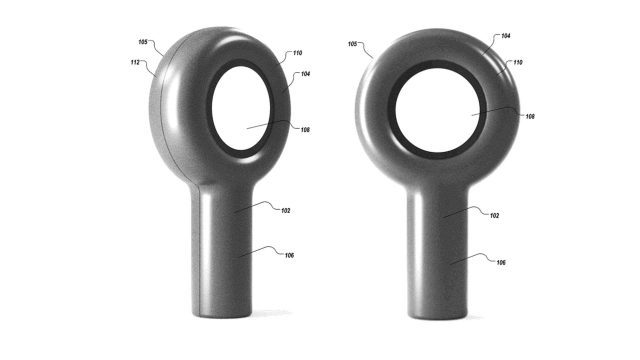
Robert Kalin, co-founder and former CEO of online marketplace Etsy, is reportedly building a hand-held, magnifying glass-like XR device.
As discovered by Low Pass, Kalin’s new startup Dopple Works is developing a mixed reality device reportedly called ‘Loop’. An application for the device just passed through the FCC, which could mean it’s nearing release.
As FCC applications typical go, details have been heavily redacted, noting only that Loop is “a portable, battery-powered device that has Wifi and Bluetooth connectivity as well as NFC functionality,” Low Pass reports, additionally noting Loop is rated IP65 for dust and light water exposure.
There’s no telling what the alleged device looks like presently, however a patent from Dopple Works was published for a ‘Dedicated hand-held spatial computing device’, which included a number of images alongside some standard boiler plate of intended use cases.
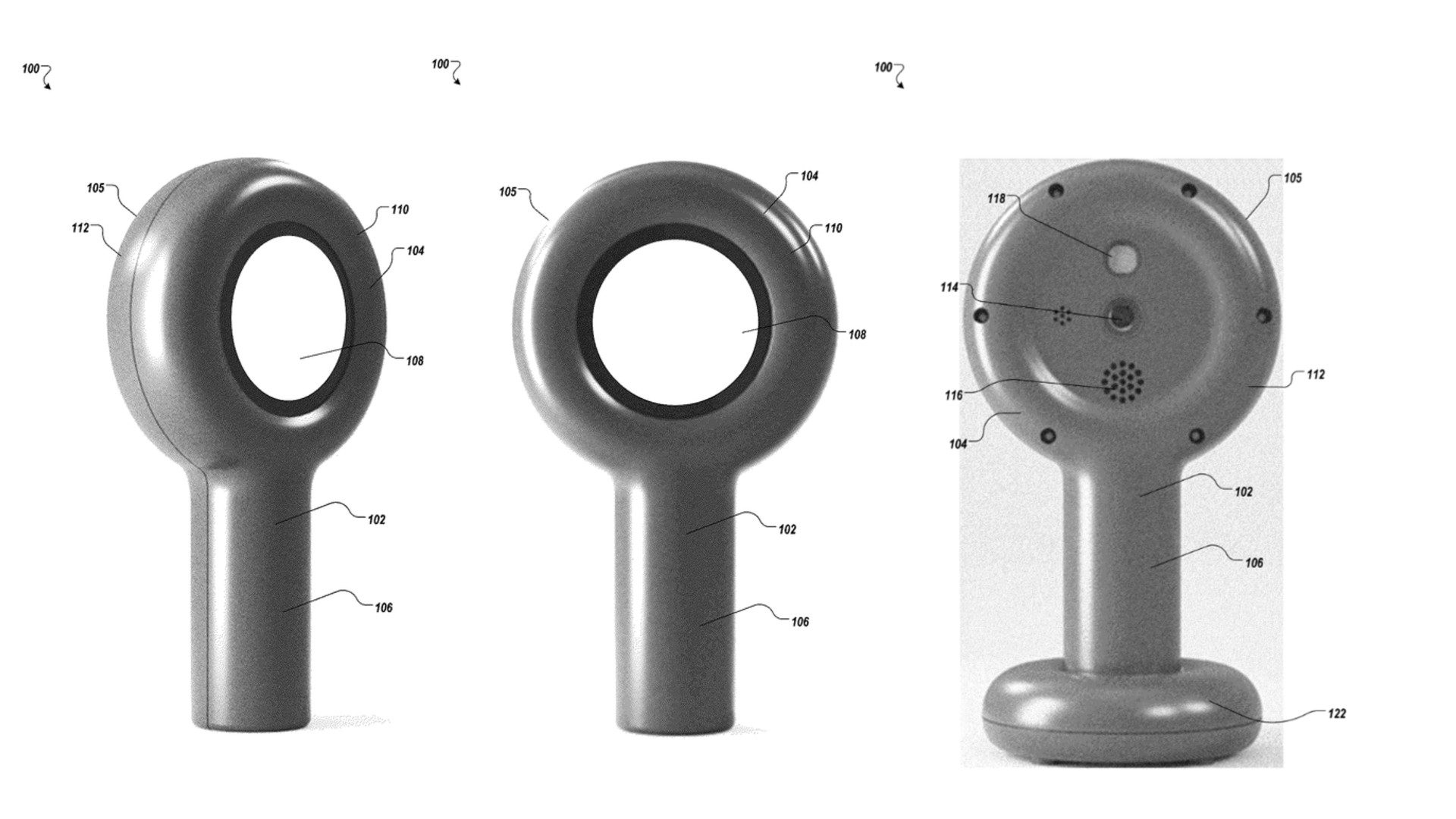
Notably, it appears the device could rest in a dedicated cradle in the upright position, possibly suggesting it’s the main recharging method.
Additionally, the patent illustrates there may include a number of features, including a 6DOF tracking sensor, microphone, camera, speaker, and possibly also eye-tracking.
It’s uncertain whether the user would hold the device up to their eye, like a monocle, or farther away from them like a magnifying glass, as no mention of lens is made.
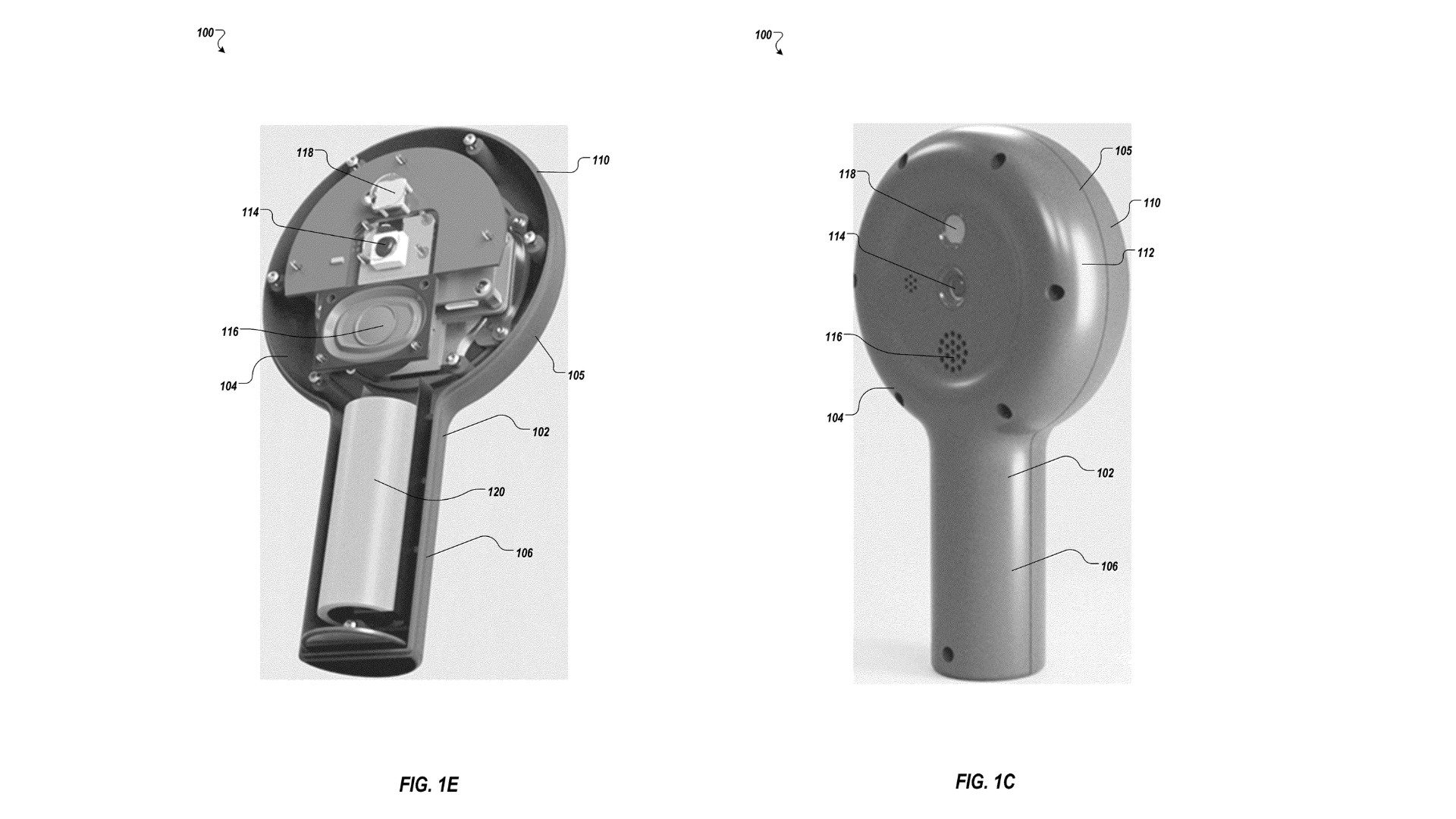
As for content, the patent covers nearly everything you’d expect, from games to educational use cases, with the latter being the most likely target. A trademark application filed by Dopple Works describes the company as creating an ‘electronic learning toy’.
As discovered by Low Pass, Dopple Works’ is made up of several former engineers who worked on social VR platforms Mozilla Hubs and AltspaceVR, both of which are now defunct. Dopple Works CTO Geoff Chatterton was previously Head of Hardware at Paypal before joining the company; Chatterton also previously worked at Apple, Dell and smartwatch startup Wimm Labs, which was acquired by Google in 2013.
That said, creating a magnifying glass-style device without a lens like a standard XR headset has some unique benefits, but also its fair share of drawbacks. It could allow kids of any age to interact with mixed reality without worry of a headset not correctly fitting. Its simple design could also encourage casual play sessions.
On the other hand, if Loop is a ‘magic window’ of sorts meant to be held away from the user’s eye, it could be pretty similar to the type of augmented reality experiences you can already have on a smartphone—making content the device’s key differentiator.
The post Etsy Co-founder is Reportedly Building a Wild Magnifying Glass-like XR Device appeared first on Road to VR.
At I/O, Google presented its vision of Android XR. But the "Android XR" that runs on headsets is not the "Android XR" that runs on smart glasses.
The name Android XR was actually first reported by Business Insider's Hugh Langley 18 months before Google officially revealed it. According to that report, Google internally called an operating system for headsets "Android XR", and a much simpler OS for glasses "Android micro XR".
I bring this up because since officially revealing the two platforms in December, Google has instead referred to them as one "Android XR". Samsung's device is an "Android XR headset", while the prototype smart glasses with a small HUD it showed at TED and I/O were "Android XR glasses".
This is both confusing and misleading. Because in reality, these are two completely different software platforms.
The Android XR that runs on headsets is an extension of the Android experience you have on your phone or tablet, fully standalone, with access to the Play Store and a full-fledged developer SDK.
The Android XR that runs on smart glasses, on the other hand, is a highly cut-down version of Android that Google has not announced any SDK or platform for, where your phone handles a lot of the computing, similar to the Ray-Ban Meta glasses.
Sure, these two platforms both have the same AOSP at the core, and yes you'll find some of the same Google services on both. But the similarities end there.
Imagine if Apple had presented the Apple Watch as running "iOS", or if Meta described the Ray-Ban Meta glasses as running Horizon OS. That's the equivalent of Google describing these smart glasses as running Android XR.
I imagine Google's strategy here is driven by the success of Ray-Ban Meta, the major hype around Meta's Orion prototype, and the poor public reception to the first-generation Apple Vision Pro. Essentially, I suspect the company is intentionally trying to present its headsets and glasses work under one hype banner, rather than disclosing the distinction between these two platforms.
 UploadVRDavid Heaney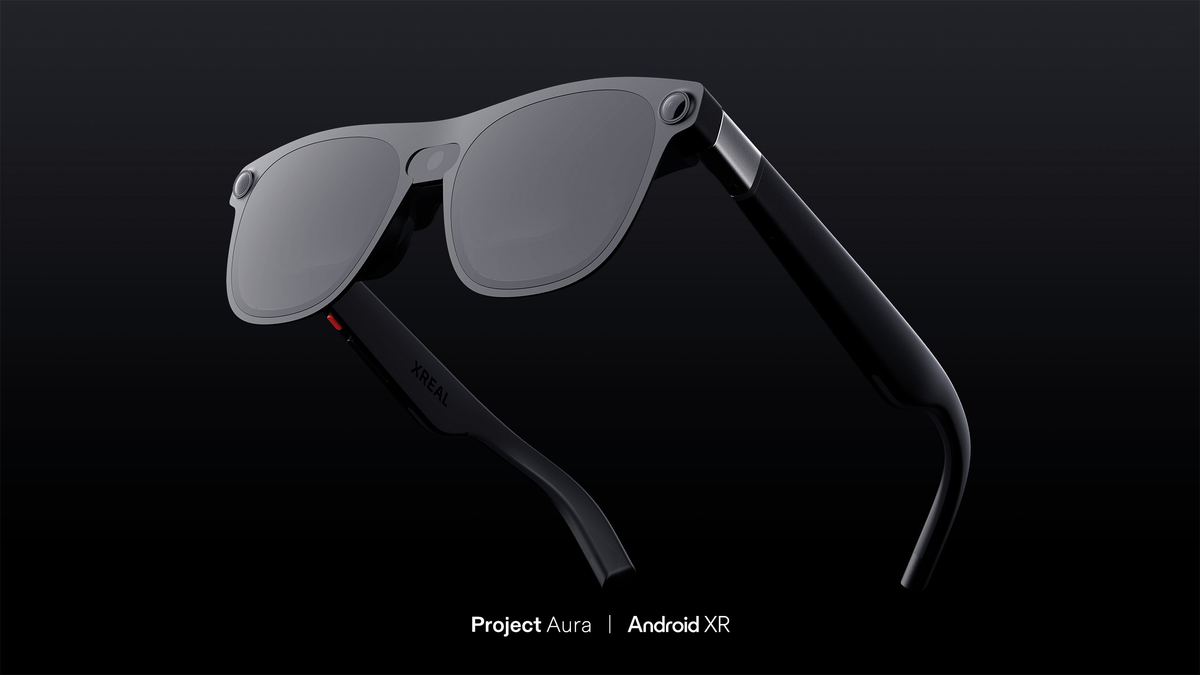
You could argue that the words "headset" and "glasses" will make the difference obvious for consumers. But the distinction between these device categories became blurred with the reveal of Xreal's Project Aura. Aura is designed to resemble sunglasses from certain angles, but powered by a tethered compute puck running the headset version of Android XR.
This means that there are two completely different meanings of "Android XR glasses". There are Android XR glasses, of the kind that will take on Ray-Ban Meta, and there are Android XR glasses, of the kind that Meta and Apple will take on with their next headsets.
So we'll soon be in a world where you can buy Android XR glasses, or glasses that run Android XR, and they're completely different software platforms. This will obviously lead to confusion.
When a developer releases an interesting app "for Android XR", will consumers with no understanding of the difference between "Android XR glasses" and Xreal Aura understand that buying Warby Parker glasses won't give them access to said app? Do all developers understand that the Android XR apps they might build will not run on the simple smart glasses?
As a reader of UploadVR, these distinctions may seem obvious to you. But the nature and limitations of XR headsets and smart glasses are not widely known by the general public.
 UploadVRDavid Heaney
The solution here is to give the operating system for smart glasses its own name. Google could repurpose the "Glass OS" name it used for Glass, for example, or use a name like "Glasses OS", akin to how it calls its smartwatch platform Wear OS.
Of course, no hardware company has actually launched any "Android XR" product yet, and it's possible the marketing and PR around these products will make the distinction I bring up crystal clear. But given Google's messaging so far, I worry that clear positioning is not the company's priority.
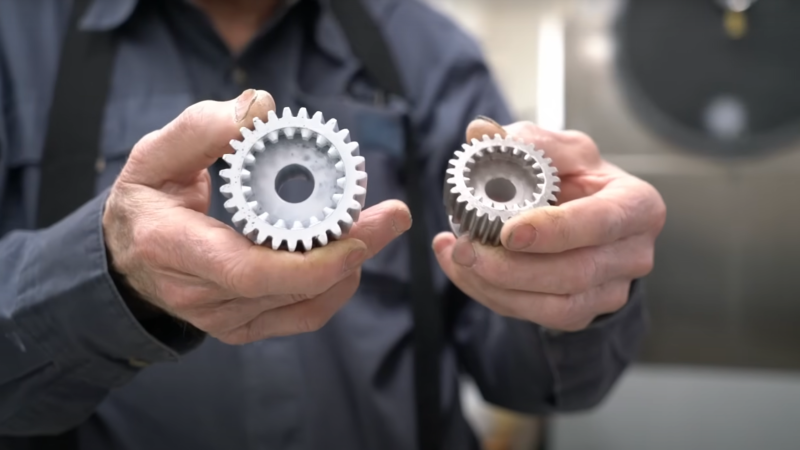
For all the remarkable improvements we’ve seen in desktop 3D printers, metal printers have tended to stay out of reach for hackers, mostly because they usually rely on precise and expensive laser systems. This makes it all the more refreshing to see [Dan Gelbart]’s demonstration of Rapidia’s cast-to-sinter method, which goes from SLA prints to ceramic or metal models.
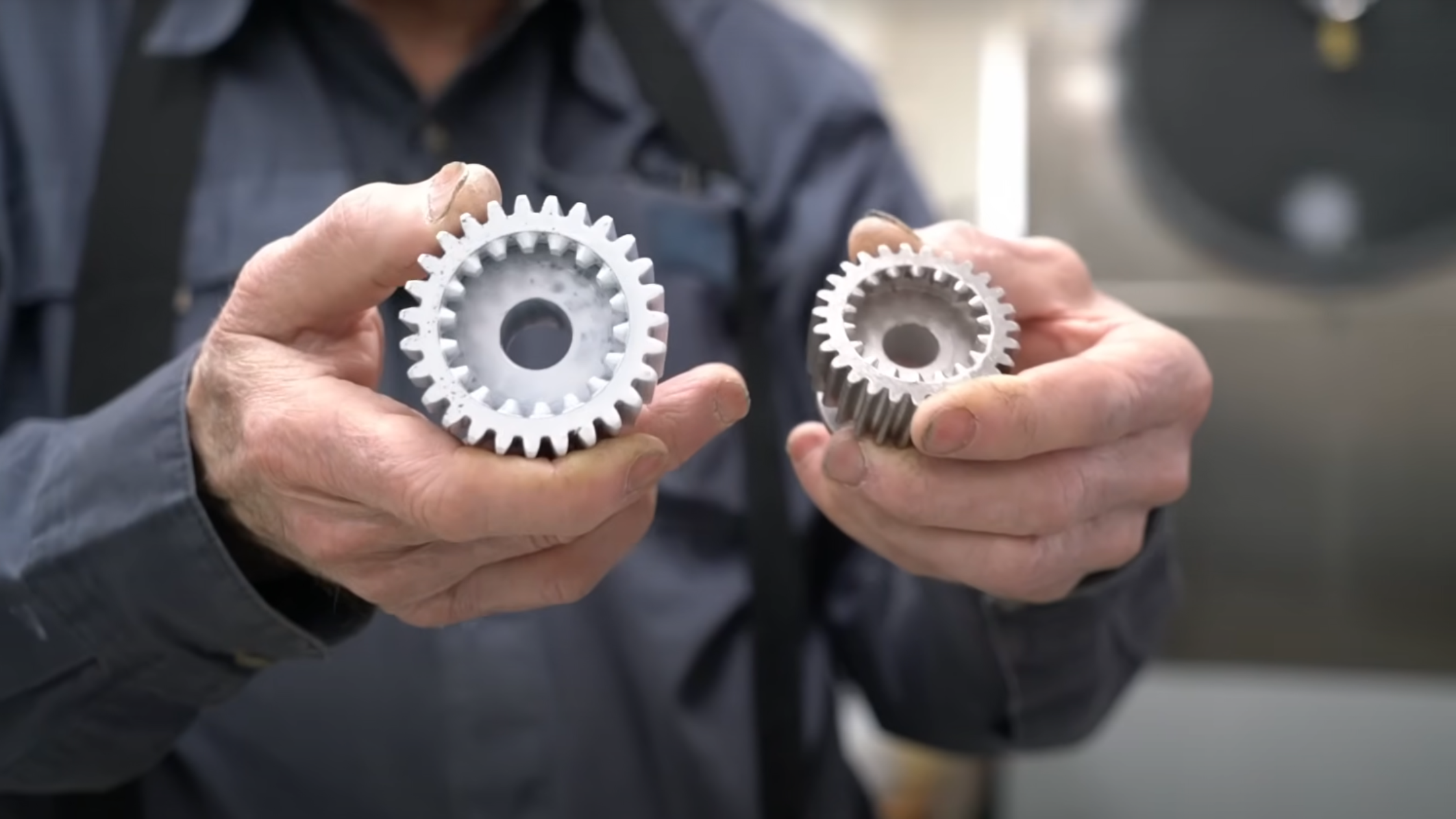
The process began by printing the model in resin, scaled up by 19% to account for shrinkage. [Dan] then used the resin print to make a mold out of silicone rubber, after first painting the model to keep chemicals from the resin from inhibiting the silicone’s polymerization. Once the silicone had set, he cut the original model out of the mold and prepared the mold for pouring. He made a slurry out of metal powder and a water-based binder and poured this into the mold, then froze the mold and its contents at -40 ℃. The resulting mixture of metal powder and ice forms a composite much stronger than pure ice, from which [Dan] was able to forcefully peel back the silicone mold without damaging the part. Next, the still-frozen part was freeze-dried for twenty hours, then finally treated in a vacuum sintering oven for twelve hours to make the final part. The video below the break shows the process.
A significant advantage of this method is that it can produce parts with much higher resolution and better surface finish than other methods. The silicone mold is precise enough that the final print’s quality is mostly determined by the fineness of the metal powder used, and it’s easy to reach micron-scale resolution. The most expensive part of the process is the vacuum sintering furnace, but [Dan] notes that if you only want ceramic and not metal parts, a much cheaper ceramic sintering oven will work better.
We’ve seen sintering-based metal printers a few times before, as well a few more esoteric methods. We’ve also covered a few of [Dan]’s previous videos on mechanical prototyping methods and building a precision CNC lathe.
Thanks to [Eric R Mockler] for the tip!
Alors que les projecteurs s’éteignent sur le Festival de Cannes, une autre révolution se joue loin des tapis rouges : celle de la génération vidéo par intelligence artificielle. Avec VO3, son nouvel outil bluffant, Google pousse encore plus loin les limites de la création automatisée. Vidéos réalistes, sons d’ambiance, dialogues… on peut désormais produire une séquence complète, seul devant son ordinateur, sans caméras, sans acteurs, sans décor.
Dans cet édito, je reviens sur l’évolution fulgurante de ces technologies, leurs implications concrètes pour les métiers du cinéma et de l’audiovisuel, mais aussi sur les dérives potentielles, entre fausses vidéos virales et manipulation de l’opinion. L’IA ne va pas tuer le cinéma — du moins pas tout de suite — mais elle va sûrement le transformer en profondeur.
-----------
♥️ Vous aimez ce podcast ? Soutenez-le !
https://donorbox.org/monde-numerique
🗞️ Abonnez-vous à la newsletter :
https://mondenumerique.substack.com
📹 Abonnez-vous à la chaîne YouTube :
https://www.youtube.com/@mondenumerique
Hébergé par Audiomeans. Visitez audiomeans.fr/politique-de-confidentialite pour plus d'informations.
I don't know about you, but I love sushi. We didn't have a Japanese restaurant in the town where I grew up until I hit my 20s. A conversation around sushi was always, "You eat raw fish?!" accompanied by "ew" s and amazement. Of course, since then, I've learned it's delicious.
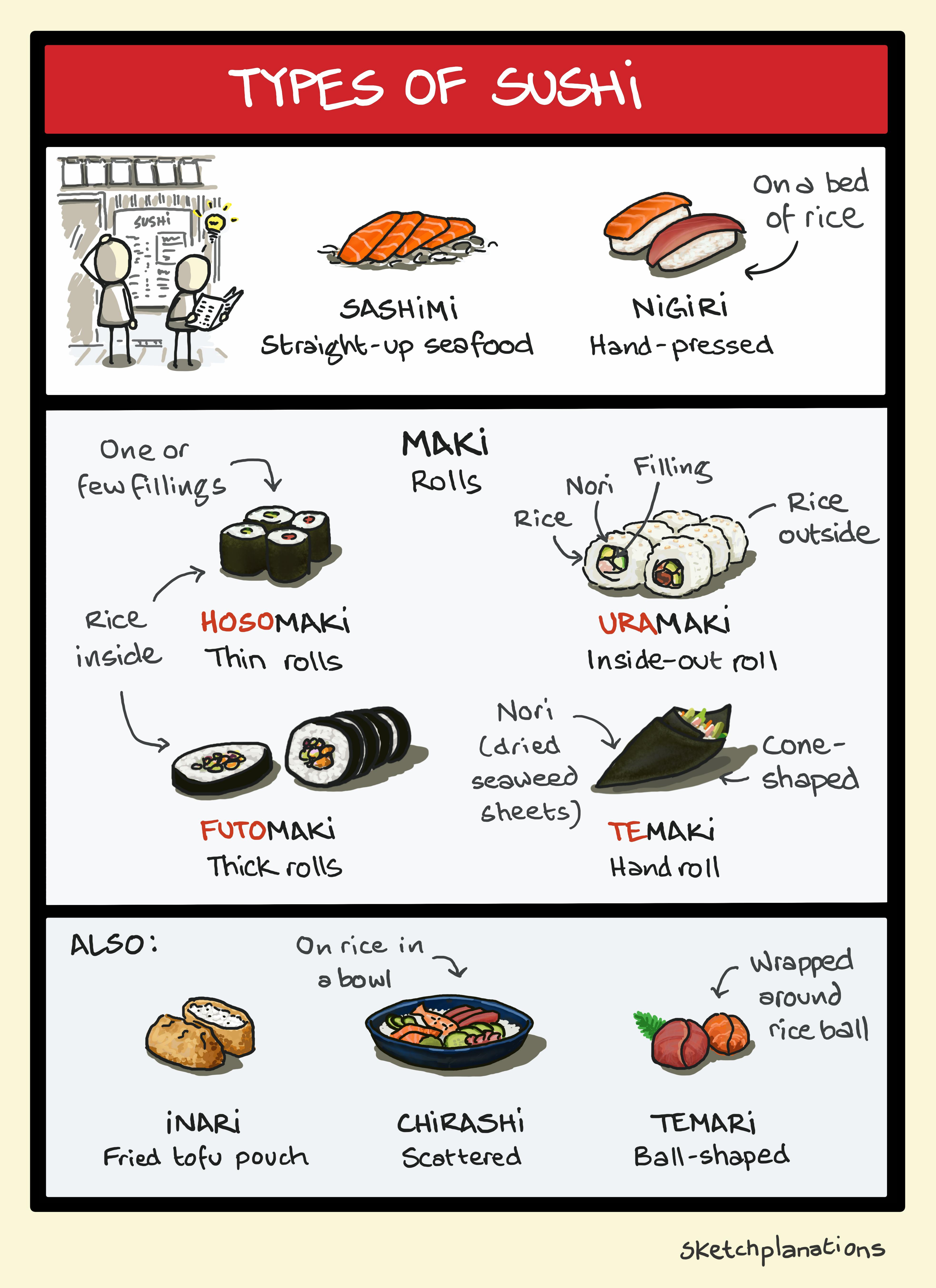
It took me a little while to become familiar with the various types of sushi and how to decipher a sushi menu. I have a lot still to learn, but I wanted to capture the common sushi types—with names and pictures—in case it helps others. I'm not an expert, so if you've got wisdom to share, feel free to write to me.
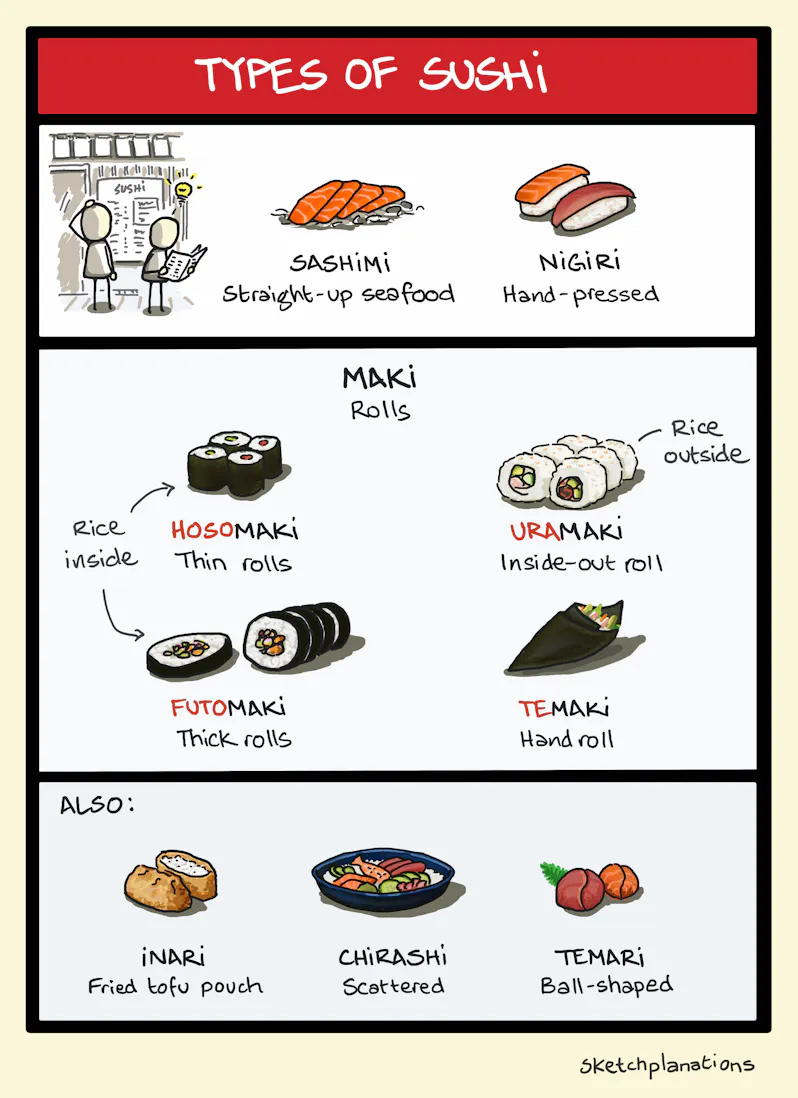
Here's the breakdown reflected in the sketch:
Sashimi
Raw fish or seafood served on its own or with simple garnishes. Sashimi is not technically sushi, as there's no rice, but it's a classic that's virtually synonymous with sushi.
Nigiri
A shaped piece of seasoned sushi rice with a slice of fish or other topping laid on top. I've seen the literal translation of nigiri as something like "two hands to make rice ball food."
Maki
Maki means "rolled" and refers to sushi wrapped in sheets of nori (dried seaweed). Classic maki rolls have the nori on the outside and are sliced into mouthful-sized pieces. The genius of maki, much like the genius of the sandwich, is that it allows you to eat the delicious filling by only touching the nori with your fingers. Here are a few types:
Hosomaki - Thin rolls
Hosomaki are typically filled with just one ingredient, such as tuna or cucumber. Tekka maki ( tuna roll) was popular in casinos and was sometimes called the "casino roll."
Futomaki - Thick rolls
Futomaki are much larger than hosomaki and can have several fillings inside. They're often served at festivals and celebrations.
Uramaki - Inside-out rolls
Uramaki was developed with the California roll and have the rice on the outside, hiding the nori. They're medium-sized and can fit a few more fillings than hosomaki. Incidentally, several people claim to have invented the California roll. Since the California roll, an amazing variety of rolls have been created, such as the rainbow, dragon, spicy tuna, caterpillar, Philadelphia, spider, and others.
Temaki - Hand rolls
Meaning "roll in hand", the temaki is a little like the burrito of sushi. Wrapping the nori around the filling in a cone shape makes it easy to hold.
Inari
Named after a Shinto god said to ride a fox and love fried tofu, inari are pouches of fried tofu filled with sushi rice and other fillings.
Chirashi
Meaning scattered, chirashi is a sushi plate where the chef lays the main ingredients on top of a bed of rice in a bowl.
Temari
Temari are small, decorative sushi balls. A small ball of rice is wrapped in fish or vegetables, making an amazing-looking snack.
The language of sushi is vast, but if you're not fluent yet, I hope this provides a few pointers.
If you want to try making your own, which is both fun and delicious, I recommend: Let's Make Sushi! by Chef Andy Matsuda
I also created this version with additional callouts.

BidenCash est désormais hors service. La « marketplace », spécialisée dans la revente de cartes bancaires volées, était l'une des plus actives du dark web. Dans une opération conjointe avec les autorités néerlandaises, le FBI a saisi plus de 145 domaines. Un message s’affiche désormais : « Ce site a été saisi par les autorités. »
Paris accueillera l’événement majeur du retail en Europe : NRF 2025: Retail’s Big Show Europe. 📆 Du 16 au 18 septembre 2025 à Paris. Porté par Comexposium et la NRF, ce nouveau format est né de la fusion entre le savoir-faire de Paris Retail Week et la renommée internationale du NRF Retail’s Big Show de …
L’article NRF 2025 : Retail’s Big Show Europe, Le rendez-vous majeur du retail est apparu en premier sur FRENCHWEB.FR.
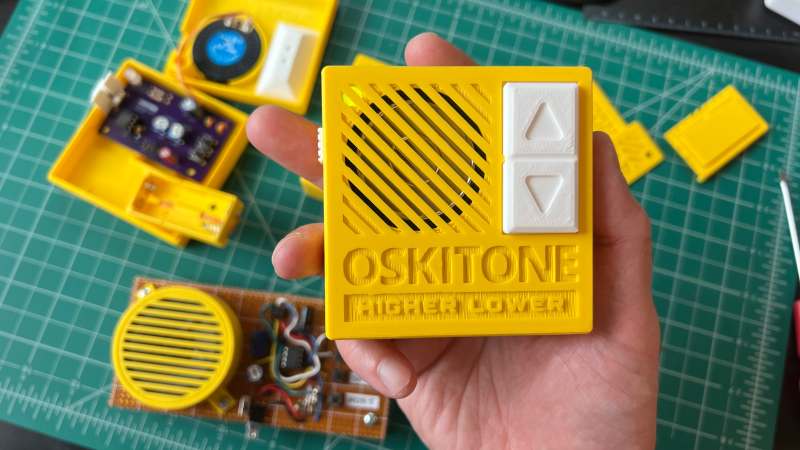
[Tommy] has a great write-up about designing and building a minimalistic handheld electronic game called
“Higher Lower”. It’s an audio-driven game in which the unit plays two tones and asks the player to choose whether the second tone was higher in pitch, or lower. The game relies on 3D printed components and minimal electronics, limiting player input to two buttons and output to whatever a speaker stuck to an output pin from an ATtiny85 can generate.
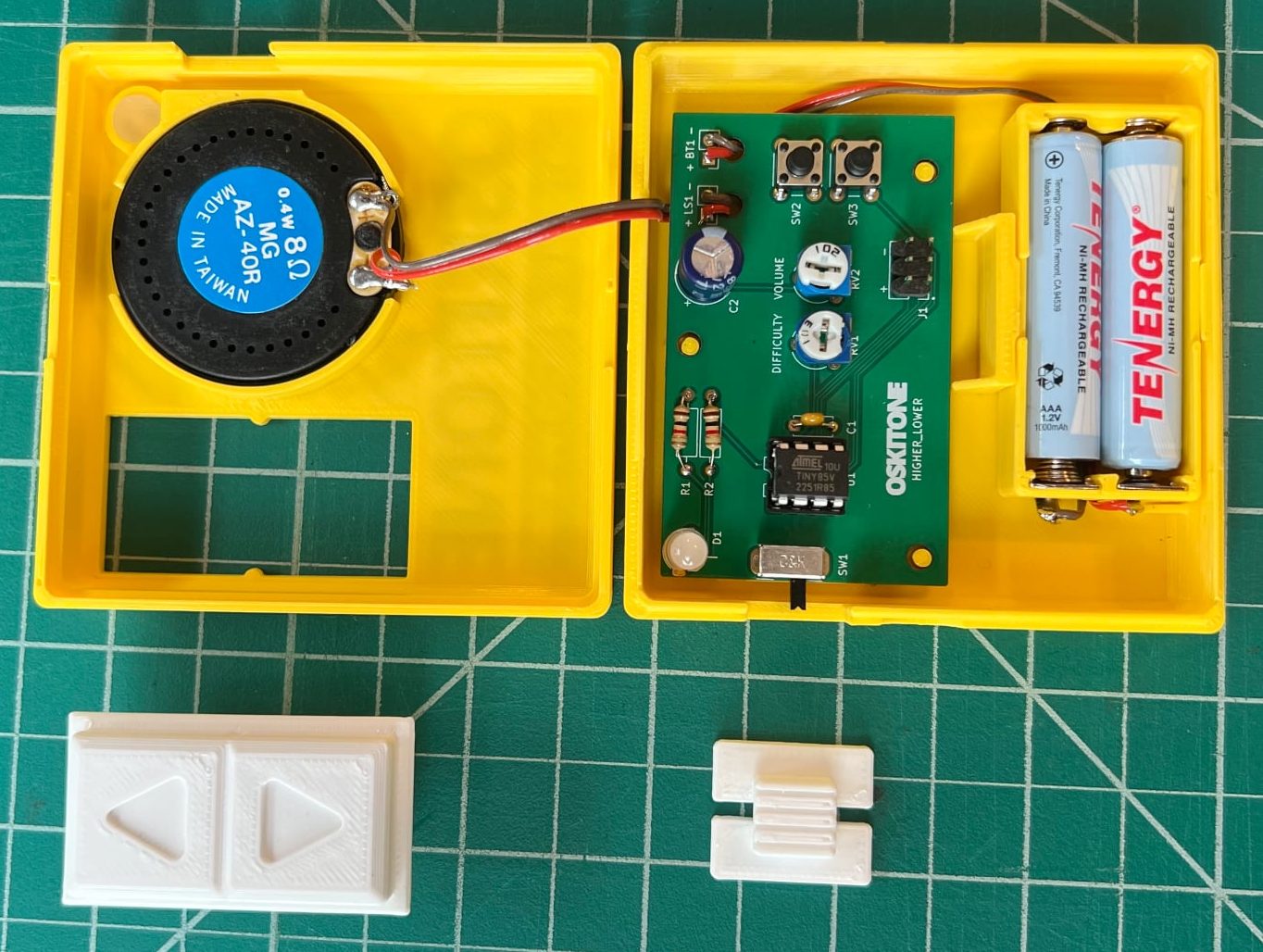
Gameplay may be straightforward, but working with so little raises a number of design challenges. How does one best communicate game state (and things like scoring) with audio tones only? What’s the optimal way to generate a random seed when the best source of meaningful, zero-extra-components entropy (timing of player input) happens after the game has already started? What’s the most efficient way to turn a clear glue stick into a bunch of identical little light pipes? [Tommy] goes into great detail for each of these, and more.
In addition to the hardware and enclosure design, [Tommy] has tried new things on the software end of things. He found that using tools intended to develop for the Arduboy DIY handheld console along with a hardware emulator made for a very tight feedback loop during development. Being able to work on the software side without actually needing the hardware and chip programmer at hand was also flexible and convenient.
We’ve seen [Tommy]’s work before about his synth kits, and as usual his observations and shared insights about bringing an idea from concept to kit-worthy product are absolutely worth a read.
You can find all the design files on the GitHub repository, but Higher Lower is also available as a reasonably-priced kit with great documentation suitable for anyone with an interest. Watch it in action in the video below.